The Living Room Rug Mistake Almost Everyone Makes (And What to Do Instead)
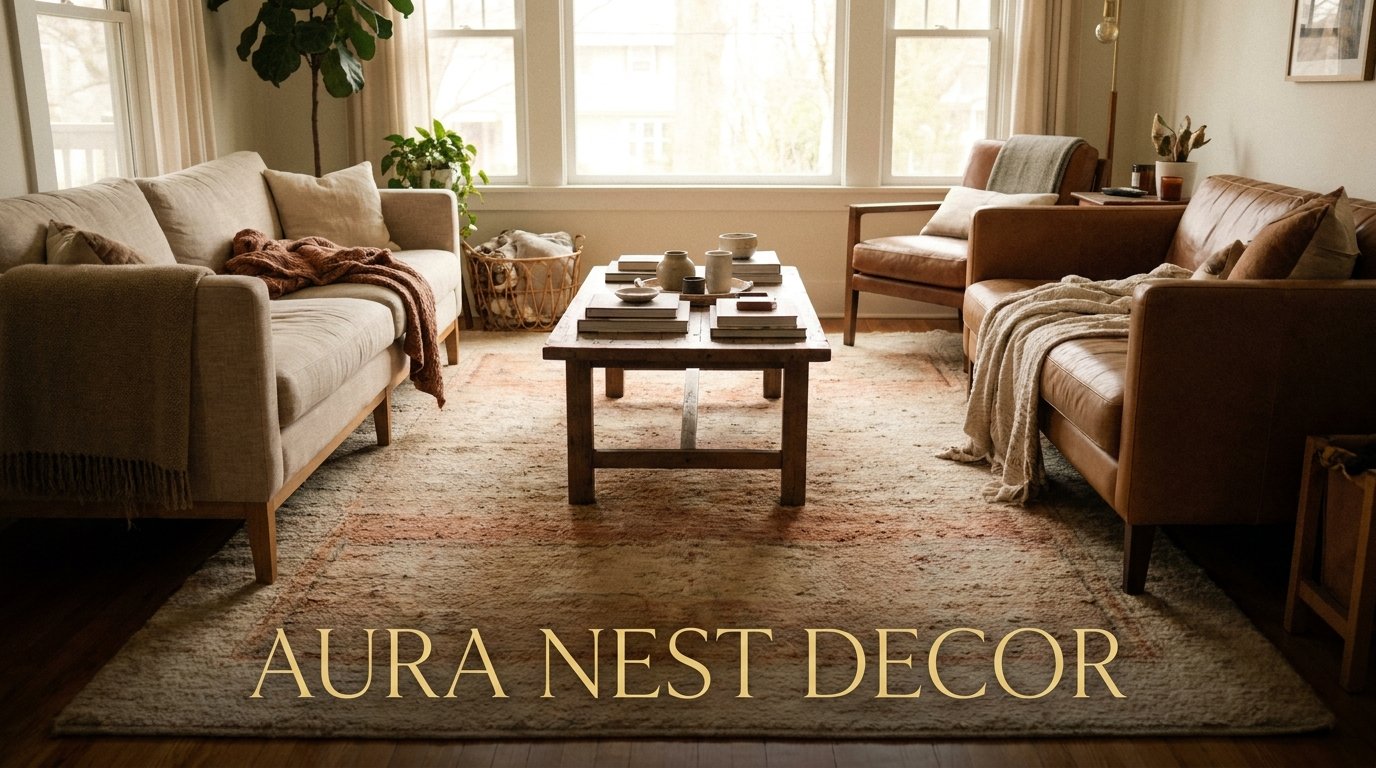
My friend Sarah stood in her beautifully furnished living room — brand new sofa, perfect cushions, gorgeous coffee table — and said, “Why does it still feel like a waiting room?” I looked down. The rug. Six inches too small, floating in the middle of the floor like it was embarrassed to be there.
That’s the thing nobody tells you when you start decorating. The rug isn’t an accessory. It’s the foundation everything else sits on. Get it wrong and the whole room feels off in a way you can’t quite name. Get it right and suddenly everything looks like it belongs.

—
1. Why Your Room Feels “Off” and the Rug Is Almost Always Why
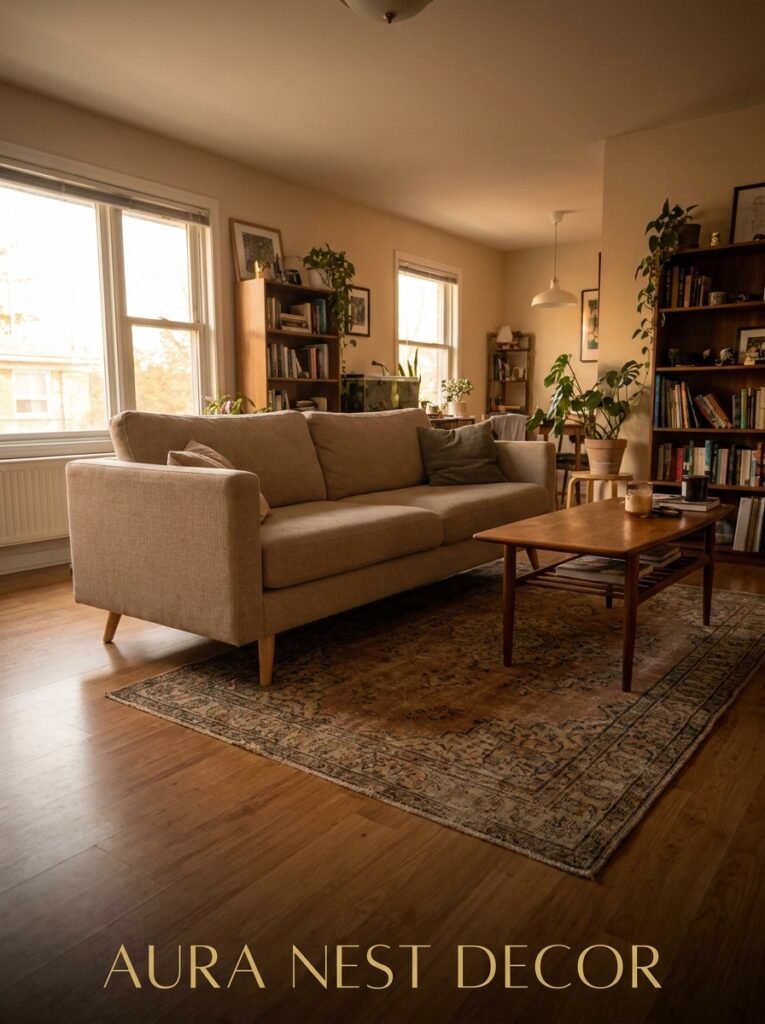
Here’s what’s happening in most living rooms right now: the rug is too small. Not a little too small. WAY too small. People buy an 5×8 for a room that needs an 8×10, and then the sofa legs hover off the edge and the whole seating area looks like it’s floating adrift on a sea of bare floor.
The rule most designers will tell you — and I fully agree — is that ALL front legs of your seating should sit on the rug. At minimum. Ideally the whole sofa is on it, or at least the front two legs of every chair and sofa in the grouping. This creates what designers call a “visual anchor.” I call it the thing that makes a room feel like a room and not a furniture showroom.
If you’re in a standard UK living room or an American open-plan space, you probably need bigger than you think. Like, considerably bigger. Go up one size from whatever you’re currently considering and you’ll almost always be right.
“The rug isn’t an accessory. It’s the foundation everything else sits on. Get it wrong and the whole room feels off in a way you can’t name.”
A good trick: use painter’s tape on your floor before you buy. Mark out the rug dimensions and live with it for a day. You’ll immediately see whether it works or not. This saved me from a very expensive mistake last year.
—
2. The Rug Material That’s Actually Worth What You Pay For
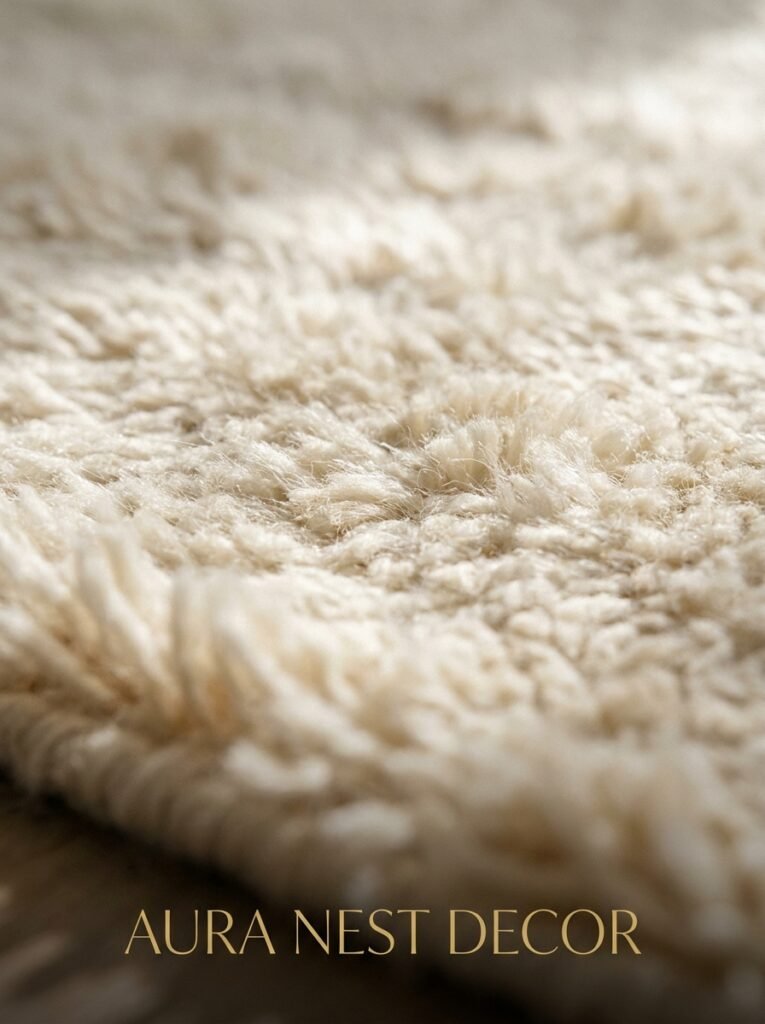
Wool. Full stop. If you can afford a wool rug, get one.
I know that sounds simple but there’s a reason every interior designer I’ve ever spoken to says the same thing. Wool rugs don’t flatten the way synthetic ones do. They bounce back after the sofa’s been sitting on them for three years. They regulate temperature slightly — warmer in winter, not sticky in summer — and they age in a way that looks BETTER rather than just worn out. A five-year-old synthetic rug looks like a five-year-old synthetic rug. A five-year-old wool rug looks lived-in and rich.
That said — not everyone has the budget for it, and I’m not going to pretend otherwise. A good-quality polypropylene rug can actually be pretty decent if you pick one with a tight weave and avoid anything that feels like carpet offcuts. The tell is the back. Flip it over. If you can see light through it, it’ll flatten within six months.
Jute and sisal are gorgeous but they’re not what I’d pick for a main living room rug if you’ve got kids or pets or, honestly, if anyone’s going to be sitting on the floor. They’re scratchy and they don’t clean well. Beautiful in photos though.
—
3. The Specific Color That’s Quietly Winning Every Living Room Right Now
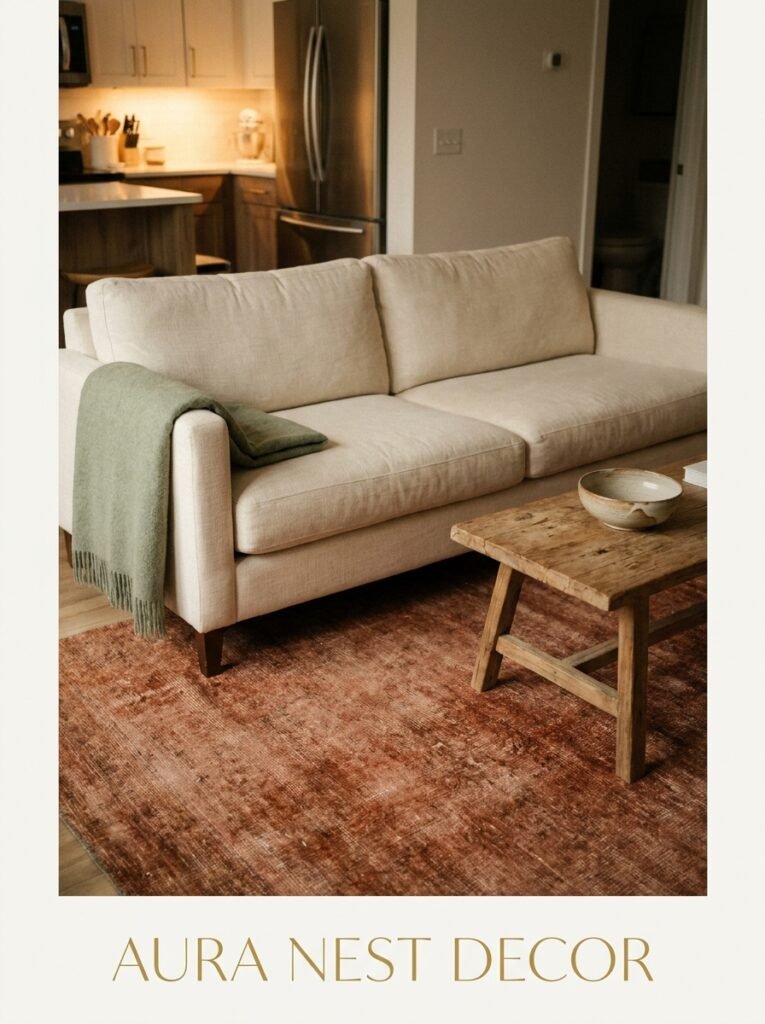
Not beige. Not grey. It’s warm terracotta and dusty clay tones — and before you say that sounds too bold, hear me out.
The reason the grey-and-white rug trend felt dated so quickly is that it photographed well but it never actually FELT warm. Neutral shouldn’t mean cold. Terracotta, rust, burnt sienna — these read as neutral in a room but they add the kind of warmth that grey simply doesn’t have. A clay-toned rug makes cream walls feel intentional. It makes wooden furniture feel like it was always there.
In the UK especially, where natural light is a precious and unpredictable thing, a warm-toned rug can do more for a living room than six floor lamps.
But honestly? The best rug color is the one that you won’t be tired of in two years. And in my experience, people tire of very trendy, very specific patterns faster than they tire of a beautiful solid or a subtle texture. Something to think about.
—
4. The Pattern Rule That Nobody Teaches You but Changes Everything
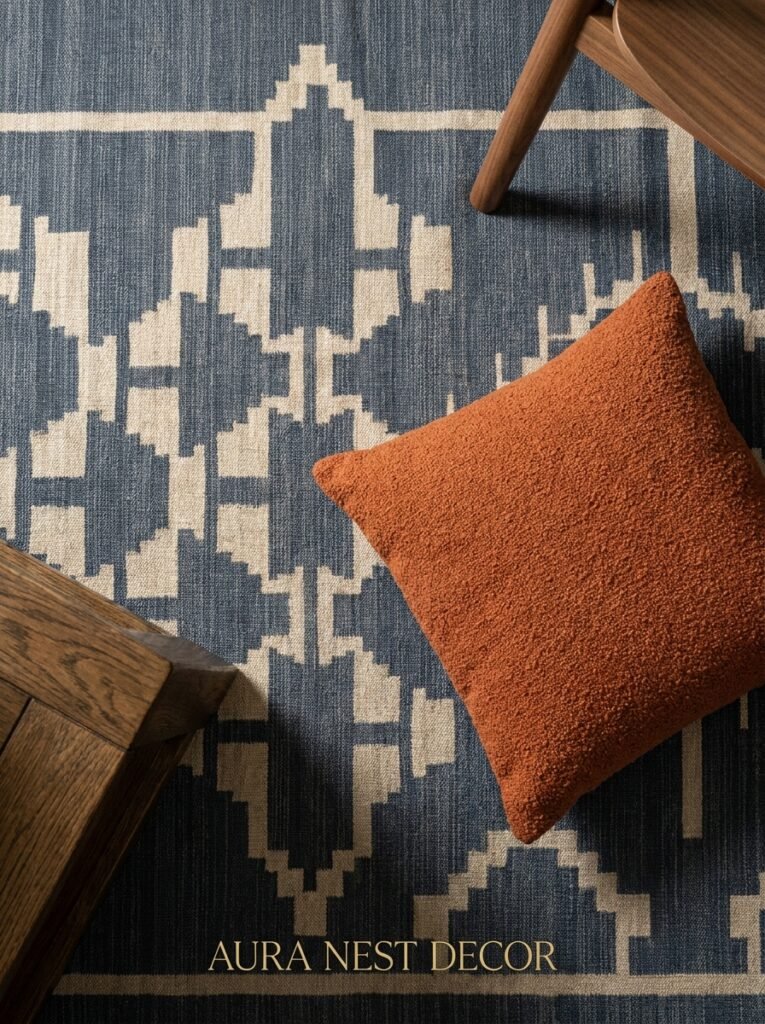
If your sofa has a strong pattern, your rug should be more subtle. If your sofa is a solid, you can go bolder with the rug. This sounds obvious, but it’s surprising how often people put a busy geometric rug under a patterned sofa and then wonder why the room feels visually exhausting.
The exception is if you KNOW what you’re doing — like you’re deliberately layering patterns with intention and a shared color story holding it together. Some people pull this off beautifully. Most of us, if we’re honest, don’t.
My personal take? A textured solid rug — something with a slight woven pattern, a boucle, a low-pile with visible weave — gives you visual interest without the commitment of a full pattern. It’s not the most exciting choice but it’s the one I’ve never once regretted.
“Neutral shouldn’t mean cold. A clay-toned rug makes cream walls feel intentional. It makes wooden furniture feel like it was always there.”
Side note — if you’ve got small kids, avoid anything with a very light pile that shows every footprint. You’ll go quietly mad.
—
5. The Rug Pad Conversation Nobody Wants to Have (But You Need to)
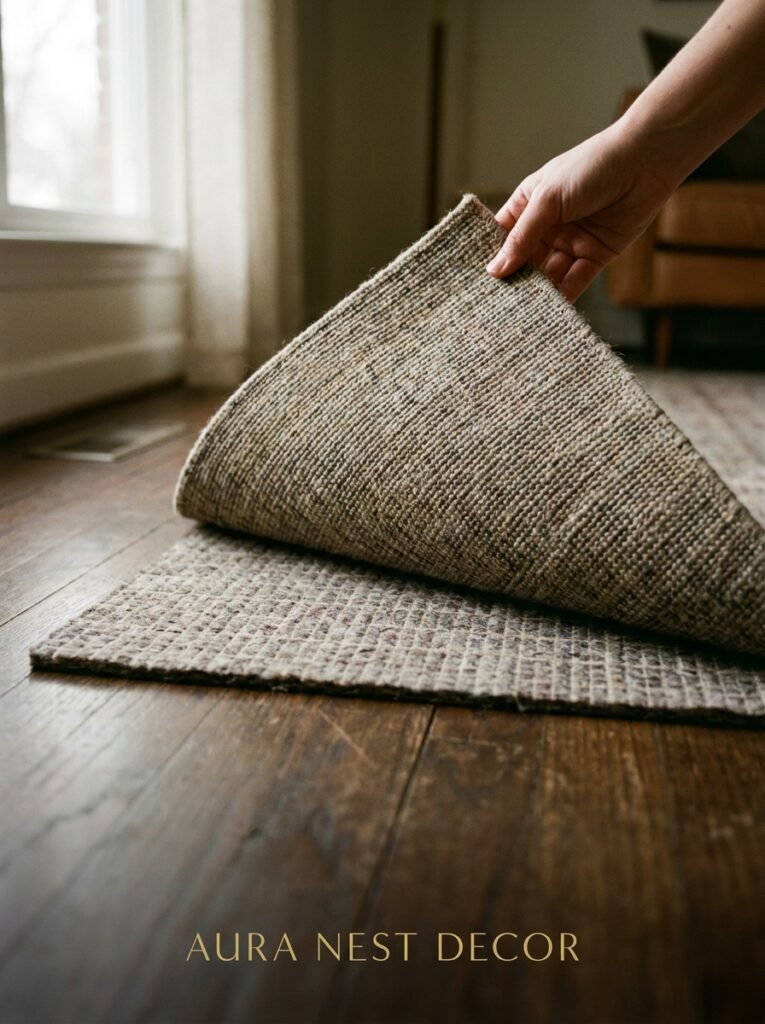
Rug pads are boring. They’re not fun to buy. Nobody pins them on Pinterest.
But if you skip the rug pad, your rug WILL shift. It will bunch at the corners and become a tripping hazard, the pile will flatten faster because it’s getting no cushioning from below, and in about eighteen months it’ll look tired in a way that has nothing to do with the rug itself.
Get a pad that’s slightly smaller than your rug — an inch smaller on all sides is the rule — so it doesn’t peek out around the edges. The non-slip rubber-and-felt combination ones are the best. Not just rubber (too grippy, can damage hardwood), not just felt (too slidey). The combination. Worth the extra cost.
In rental properties — both in the US and UK — rug pads are especially important because you’re often dealing with laminate or slightly slippery flooring that a rug alone just won’t grip.
—
6. When Layering Two Rugs Is Actually the Right Answer
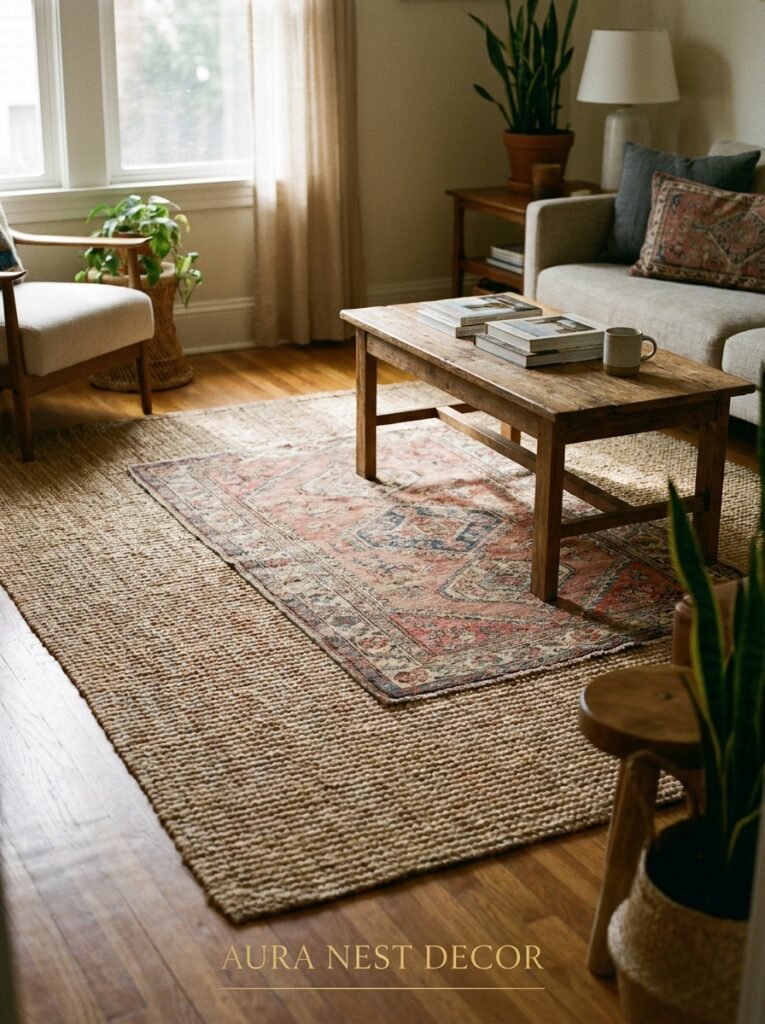
This was a Pinterest trend a few years ago that I thought I’d hate. Reader, I was wrong.
Layering a smaller, more decorative rug on top of a larger jute or sisal base is legitimately brilliant for two reasons. One, it makes your space feel more collected and styled without trying too hard. Two, it’s actually practical — you get the size coverage from the base rug and the softness and personality from the top rug, and you can swap the top one out seasonally without buying an entirely new large-format rug.
The only way it goes wrong is if the top rug is too similar in color to the base rug. You lose the distinction and it just looks like a slightly chaotic pile on the floor. Make them clearly different — a natural jute underneath with a deep-toned, patterned wool on top works well. Or a solid base with a vintage-style rug on top.
You don’t even need expensive rugs for both layers. The base rug can absolutely be budget. The top rug is where you spend.
—
7. The Rug Style That Works in Every Single Living Room (Even If You Think It Won’t)
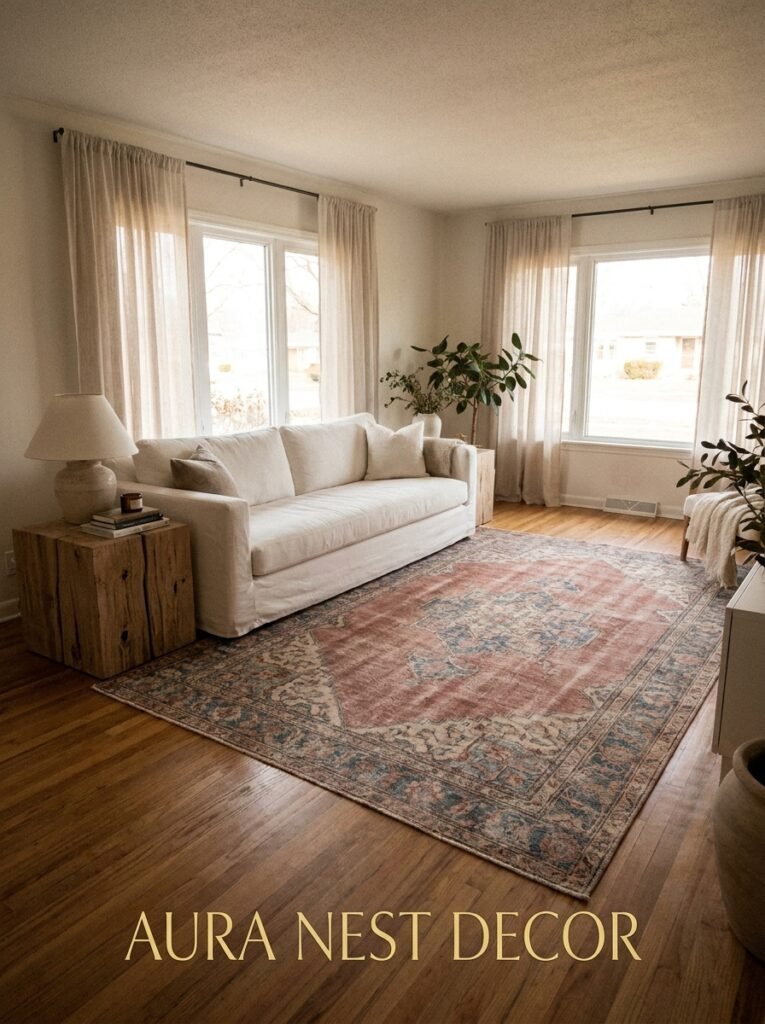
A vintage or vintage-inspired Persian rug.
Okay, not literally every room. But almost. They work in modern spaces because the age and patina contrast beautifully with clean lines. They work in traditional spaces because they feel like they belong. They work in maximalist rooms and they work in minimalist ones. They’re remarkably versatile and the reason you keep seeing them everywhere is that they haven’t been trendy — they’ve been CONSISTENTLY good.
Hand-knotted vintage rugs can be genuinely expensive, but there are excellent machine-made reproductions that capture the same color story without the price tag. If you’re buying new, look for muted, slightly faded tones rather than bold bright traditional patterns — the more washed-out, chalky versions are what translate so well into modern homes.
UK vintage markets and American estate sales are both brilliant sources for the real thing if you’re patient.
—
8. How to Clean a Living Room Rug Without Ruining It
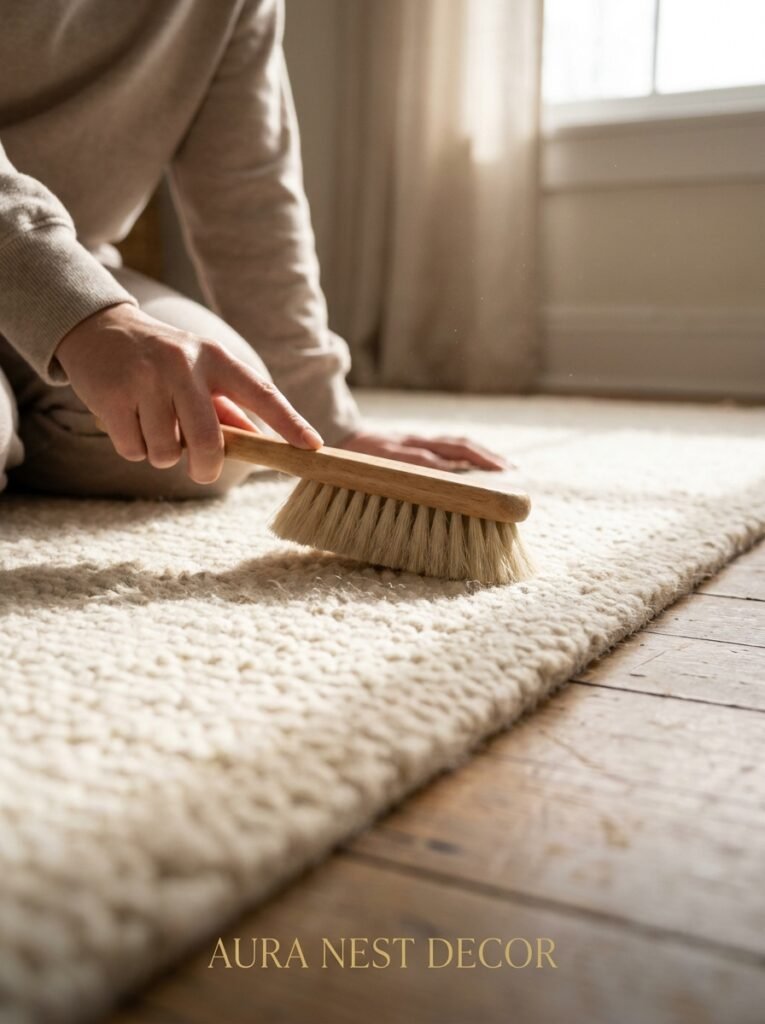
This is the section I wish someone had showed me before I used the wrong thing on a wool rug and watched it shrink before my eyes.
First rule: never soak a wool rug. Don’t steam clean it at home. Don’t use anything with bleach or harsh enzymes. When something spills — and something will spill — blot immediately, don’t rub, and use cold water or a small amount of diluted white wine vinegar. The rubbing is what sets the stain and damages the pile. Blot and be patient.
For regular maintenance, a decent vacuum with the beater bar turned OFF is what you want. The beater bar is aggressive on pile rugs and it’ll wreck the surface over time.
Synthetic rugs are more forgiving. You can use most standard carpet cleaners and they’ll handle the odd steam clean fine. But even with synthetic, the blot-don’t-rub rule still applies.
And once or twice a year, take it outside and give it a proper beat. Old-fashioned and slightly satisfying in a way that vacuuming isn’t.
“A hand-knotted vintage rug can work in a modern space, a traditional space, a maximalist room and a minimalist one. They haven’t been trendy — they’ve been consistently good.”
—
9. The Shape Nobody Considers but Probably Should
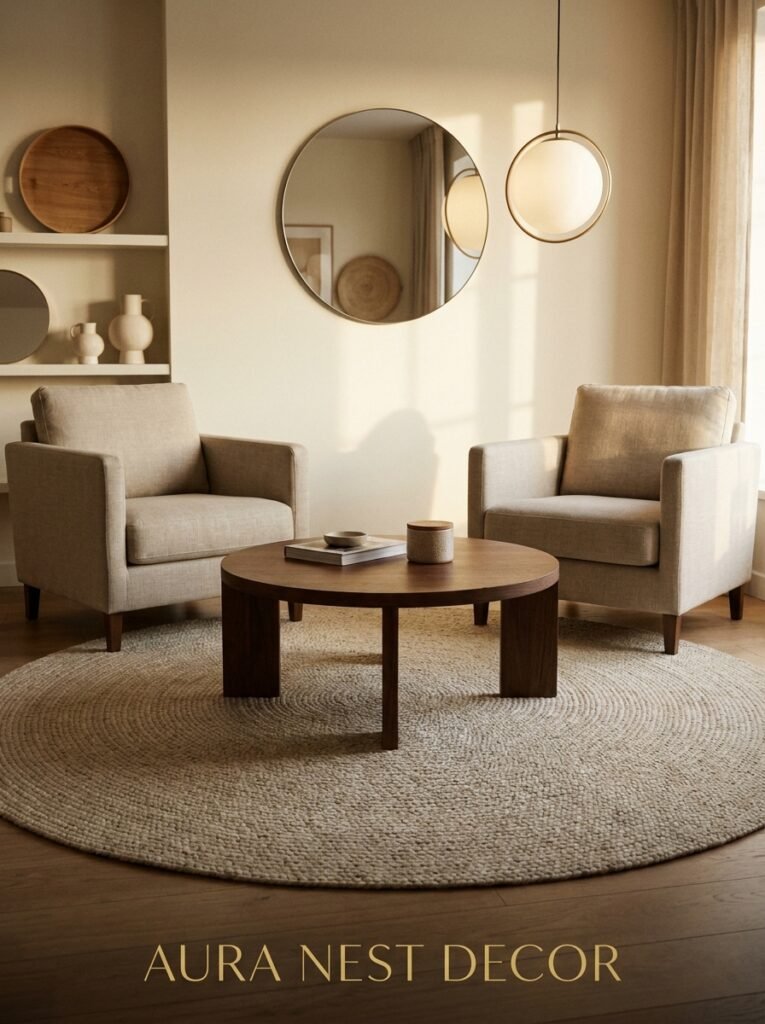
Round rugs. I’m serious.
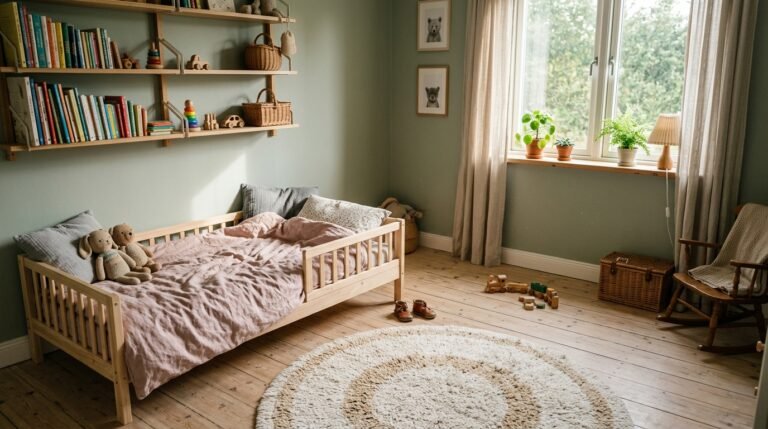
Most people buy rectangular rugs because that’s what you’re supposed to do, right? But a large round rug in a living room — particularly under a round coffee table, or in a smaller room where a rectangle would feel too rigid — can completely change the energy. It’s softer. Less boxy. It breaks up the grid of the furniture in a way that feels relaxed.
In an awkward room shape, a round rug can actually solve layout problems that a rectangle makes worse. UK Victorian terraced houses with their long, narrow reception rooms are a great example — a round rug in the seating area and another in the reading nook can define two zones better than any rectangle could.
Don’t dismiss it without trying the painter’s tape trick first.
—
10. The Size Chart That Finally Makes Sense
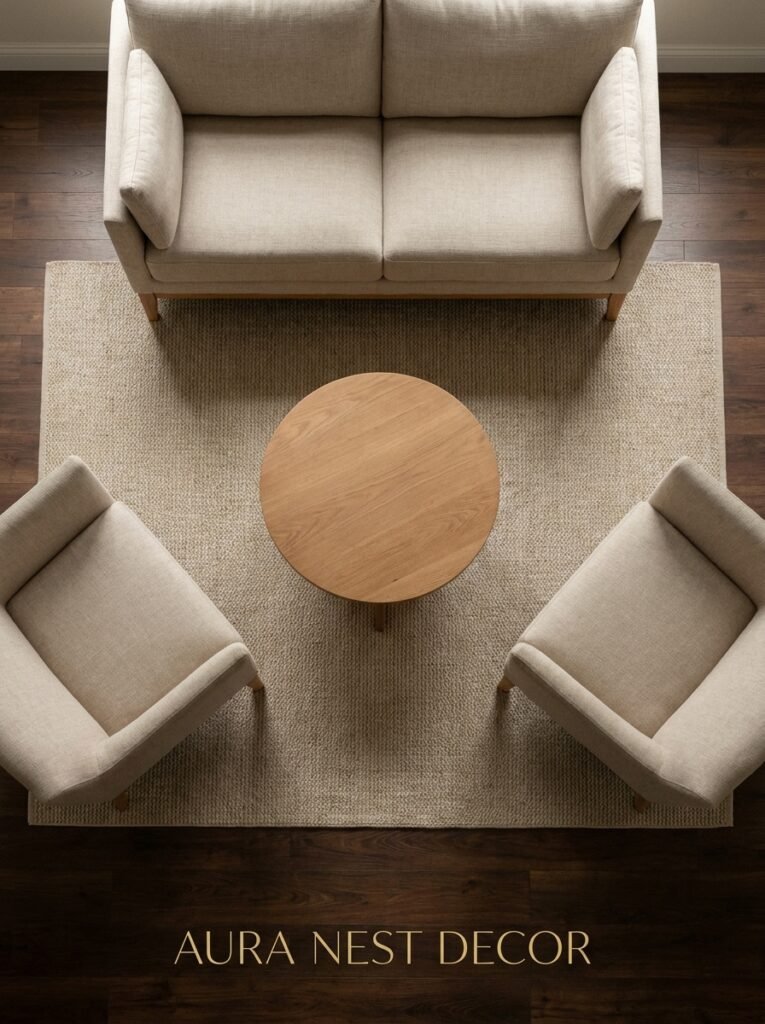
Forget trying to remember rug size rules. Here’s what actually works:
For a standard living room seating area, you want a rug where the front legs of all your seating sit on it. That usually means:
- Small apartments/rooms: 6×9 minimum
- Medium living rooms: 8×10 is the workhorse size
- Larger open-plan spaces: 9×12 or larger — most people go too small here
Measure your seating arrangement FIRST. Then measure to leave roughly 18 inches of bare floor between the rug edge and the wall. If your rug is any closer to the wall than that, it reads as fitted carpet. You want the floor to breathe a little.
And if you’re doing a dining room adjacent — separate topic, but — the rule is all four legs of every chair ON the rug when pushed in. Much bigger than people expect.
—
11. The Lighting Trick That Makes Your Rug Look Three Times More Expensive
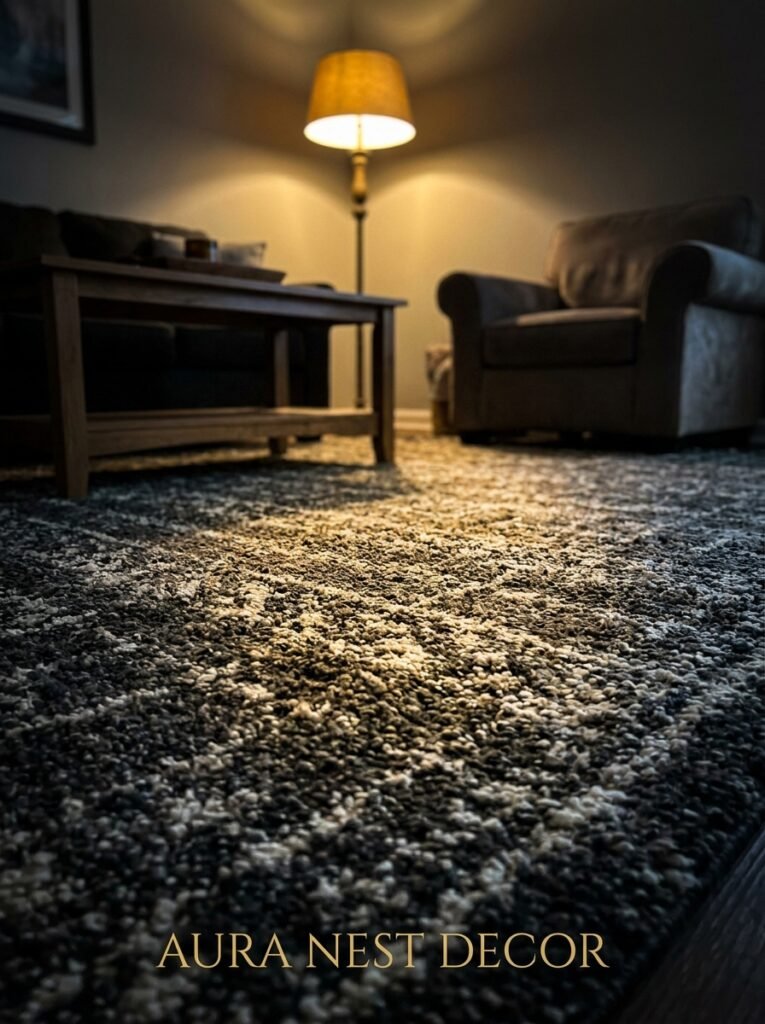
This is not specifically about rugs but it’s too relevant to skip.
Low light, positioned at a slight angle to the floor, makes texture pop. A rug that looks flat in overhead ceiling light looks rich and dimensional in the amber glow of a floor lamp at dusk. If you’ve spent money on a beautiful textured wool rug and you’re lighting it with a single overhead fixture, you’re genuinely not seeing what you bought.
Put a floor lamp in the corner of the room. Keep it on in the evenings. The difference in how both the rug AND the room look is almost unfair for how easy it is.
Edison bulbs, warm white LEDs (2700K is the sweet spot), anything that casts that slightly golden quality — they’re all doing the same job. Making everything look better at the hour when you’re actually IN the room.
—
12. What to Do When You Love a Rug but It Doesn’t Quite Work Yet
Give it time. Seriously.
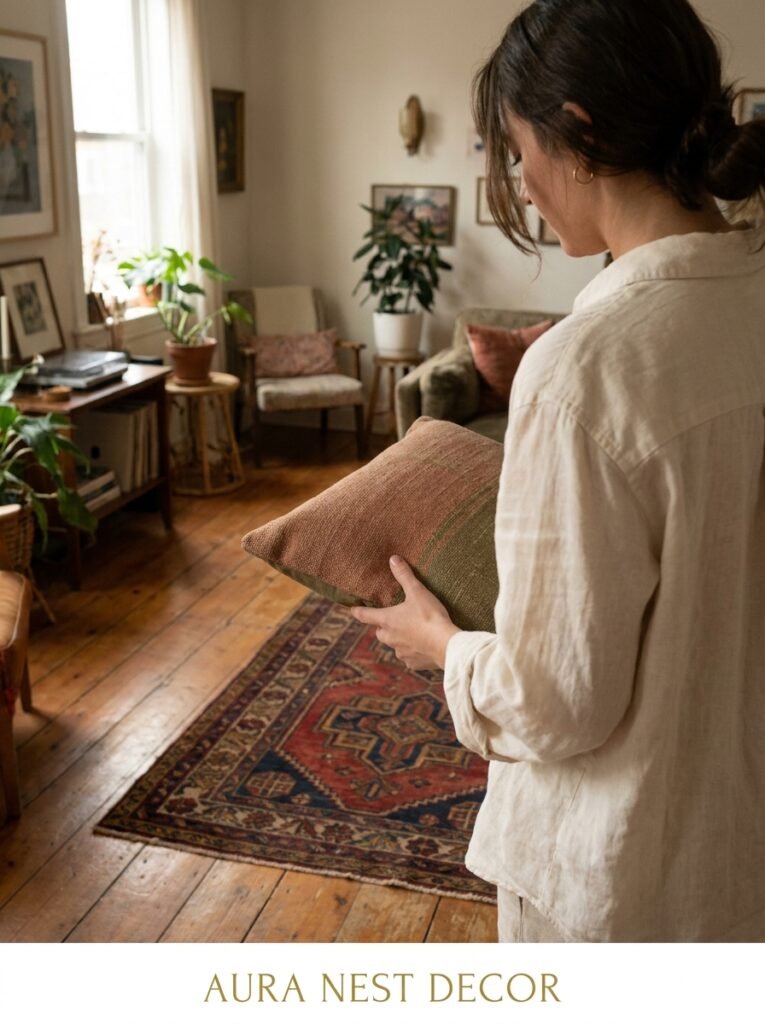
A new rug — especially a wool one — needs to settle. The pile flattens and redistributes under foot traffic over the first few weeks. Colors look slightly different once they’ve lived with your light. What felt slightly off in week one often resolves itself by week four, once the room’s had a chance to breathe around it.
That said, if after a month it still feels wrong, trust that feeling. But before you return it, try rearranging the furniture first. A rug that felt random with one layout can feel anchored and intentional with a simple rotation of the sofa. This happens more than you’d think.
And if all else fails, try the layer. A smaller, bolder rug on top can rescue a base rug that’s just not doing enough on its own.
—
❓ FAQ
Q: How do I know what size rug to buy for my living room? A: Measure your seating arrangement first, not your room. You want all the front legs of your sofa and chairs sitting on the rug, with about 18 inches of bare floor visible between the rug edge and the wall. When in doubt, go up one size — almost everyone buys too small.
Q: Can I put a rug on top of carpet? A: You can, and it actually works better than most people expect. Use a thinner, flatter rug rather than a thick pile one, and make sure the underlying carpet isn’t too plush or the whole thing will shift. A rug pad designed for carpet-on-carpet use (they do exist) helps a lot.
Q: How often should I clean my living room rug? A: Vacuum weekly with the beater bar off for a wool rug. Spot clean immediately when things spill. A professional deep clean once a year is ideal for a wool rug you’re planning to keep long-term — it genuinely extends the life of the rug and keeps it looking like itself rather than a slightly greyer version of itself.
—
💭 Final Thoughts
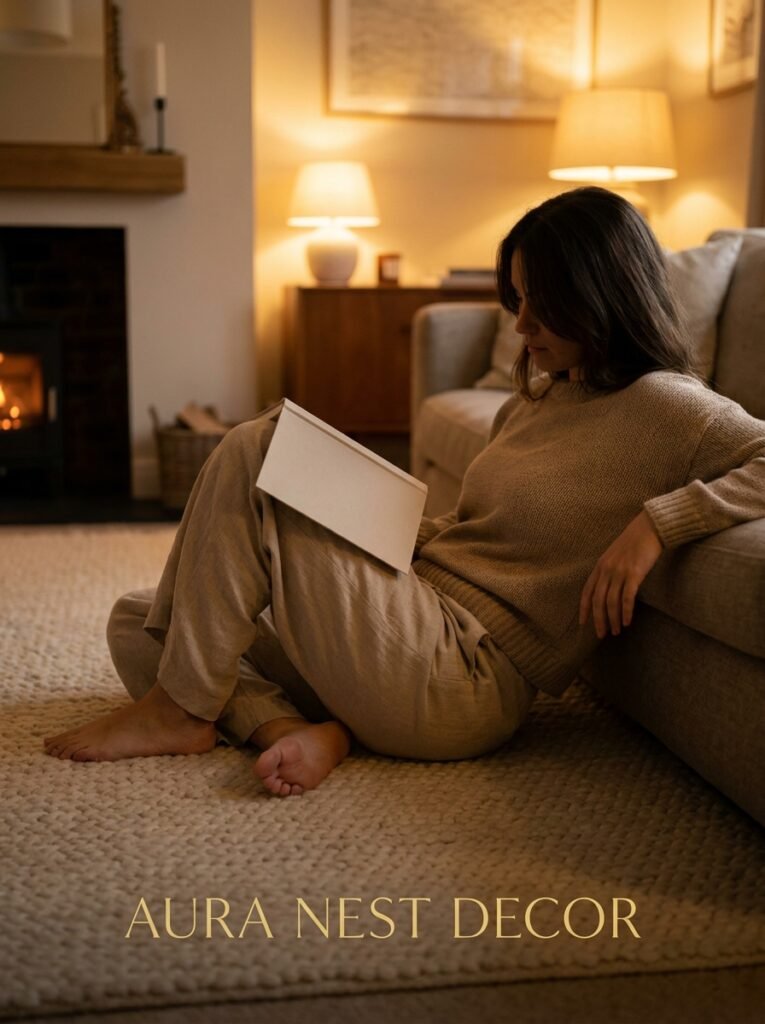
A good rug is one of those purchases where you feel the difference the moment you get it right. Not in some dramatic, photoshoot way — just in the small daily way of walking into your living room and feeling like it’s properly yours.
Don’t rush it, don’t size down to save money, and don’t talk yourself out of the one you actually love because you’re worried it’s “too much.” It’s usually not.
What’s the one thing that’s been stopping you from finding the right rug for your space?