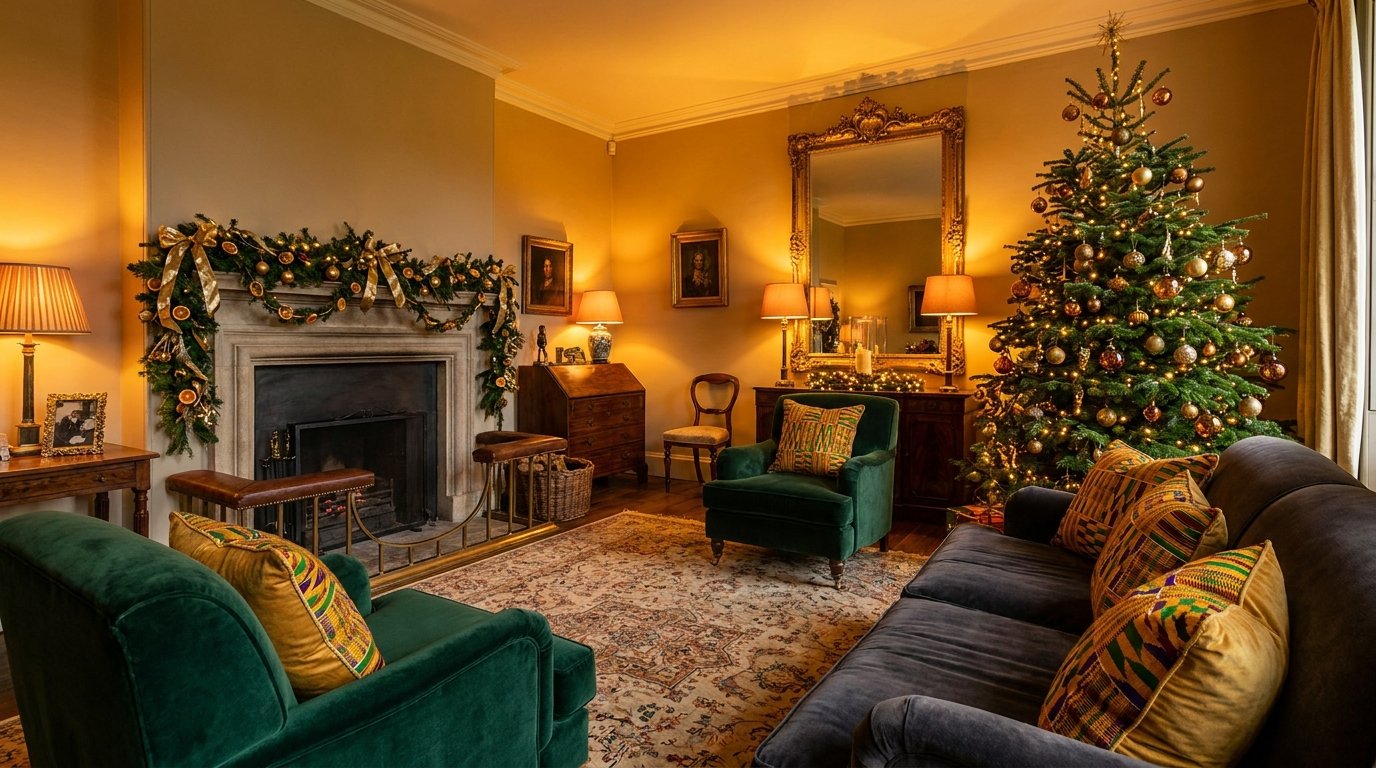
Christmas in the Living Room: Decorating Ideas That Actually Reflect You
My friend Dominique called me in early November, genuinely stressed. She’d been scrolling Pinterest for an hour and everything she saved looked like the same Scandinavian farmhouse she’d never actually live in. Beige linen, dried pampas grass, a single white candle. Beautiful, sure. But not HER.
And honestly? I get it. There’s a whole version of Christmas decor content that assumes everyone starts from the same aesthetic place — and a lot of us don’t. So this is for the people who want their home to feel unmistakably theirs this season. Bold, warm, layered, specific. The kind of living room that says something when people walk in.
—
1. Start With Your Color Story — And Don’t Default to Red and Green
Here’s the thing about red and green: they’re fine. Classic, even. But they’re also the default, and defaults are rarely interesting.
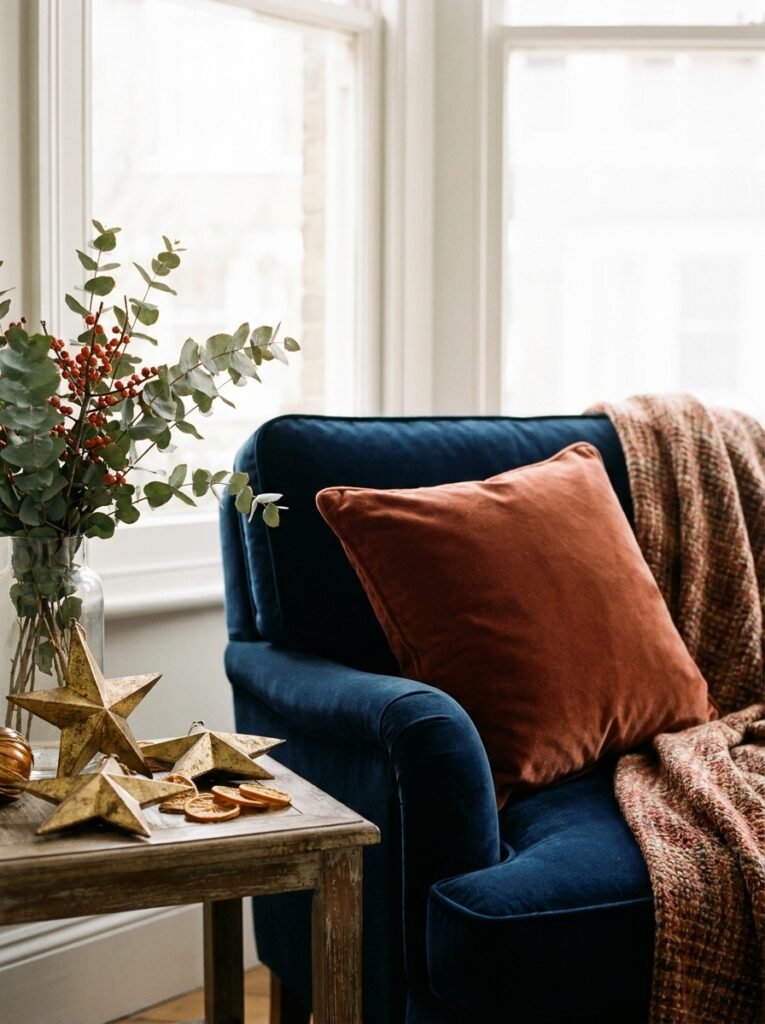
A lot of the most stunning living rooms I’ve seen decorated for Christmas lean into jewel tones. Deep emerald against a warm mahogany bookshelf. Burgundy and gold on a dark velvet sofa. Sapphire blue with brass accents that catch the tree lights at night. These combinations feel rich, intentional, and genuinely luxurious — not like you just pulled a pre-packaged kit off a shelf.
If your walls are already a warm neutral, try building your whole palette from one unexpected anchor color. Plum, maybe. Or a really deep teal. Layer in metallics — gold, bronze, copper — and suddenly the room doesn’t just say “Christmas,” it says something specific about you.
“The most beautiful holiday rooms aren’t Christmas rooms. They’re YOUR rooms dressed for Christmas.”
Short on inspiration? Pull from your existing decor. What’s already in the room? What tones does your furniture sit in? Christmas doesn’t have to fight the room — it can deepen it.
—
2. The Mantle Isn’t Just a Shelf, It’s Your Opening Statement
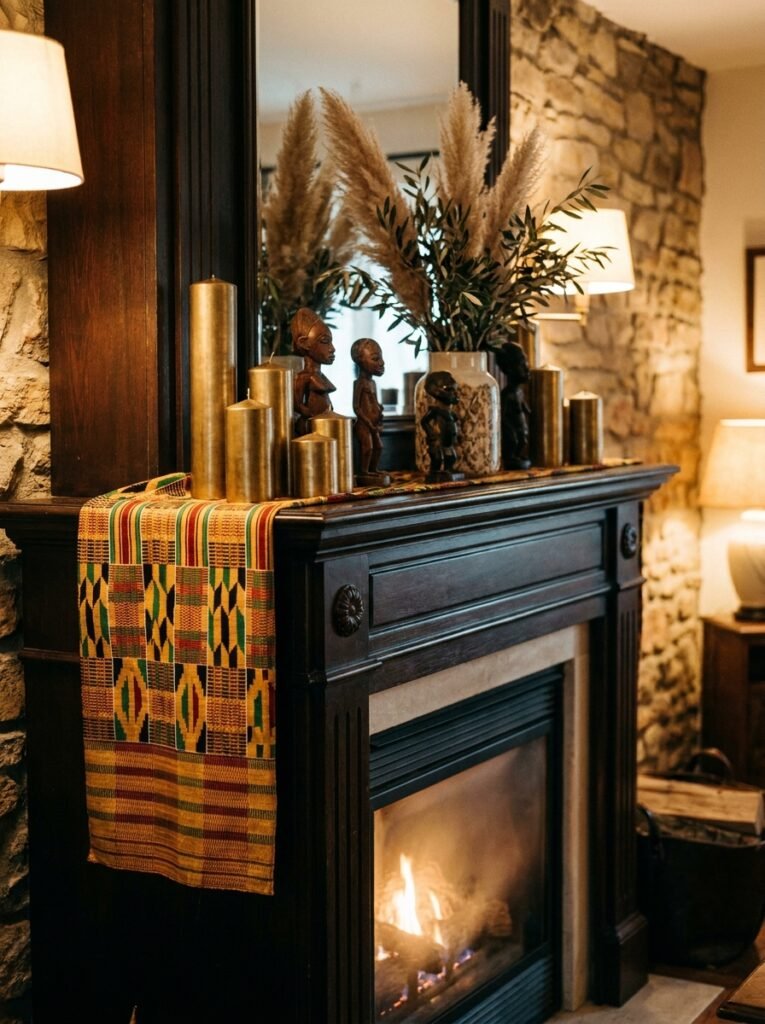
Walk into a room and tell me your eye doesn’t go straight to the fireplace. It always does. Which means whatever you put up there is basically the cover of your holiday home — it sets the tone for everything else.
I’ve seen mantles draped in fresh pine garland and nothing else, and it looked incredible. I’ve also seen a mantle with just three oversized candles in varying heights, surrounded by loose dried oranges and a few sprigs of eucalyptus, and that looked incredible too.
What doesn’t work? Overcrowding. Too many competing things fighting for attention. A Christmas mantle should have a clear focal point — maybe it’s a statement mirror with holly tucked behind the frame, maybe it’s a piece of artwork that you leave up all year but frame differently for the season. Build around ONE hero element, then layer everything else to support it.
Dried citrus is underrated, by the way. Sliced oranges and clementines dried in the oven at around 200°F — they smell incredible, they look stunning against dark greenery, and they last the entire season without wilting. Side note: this might genuinely be my favorite December kitchen project.
—
3. When Your Tree Should Match the Room, Not the Other Way Around
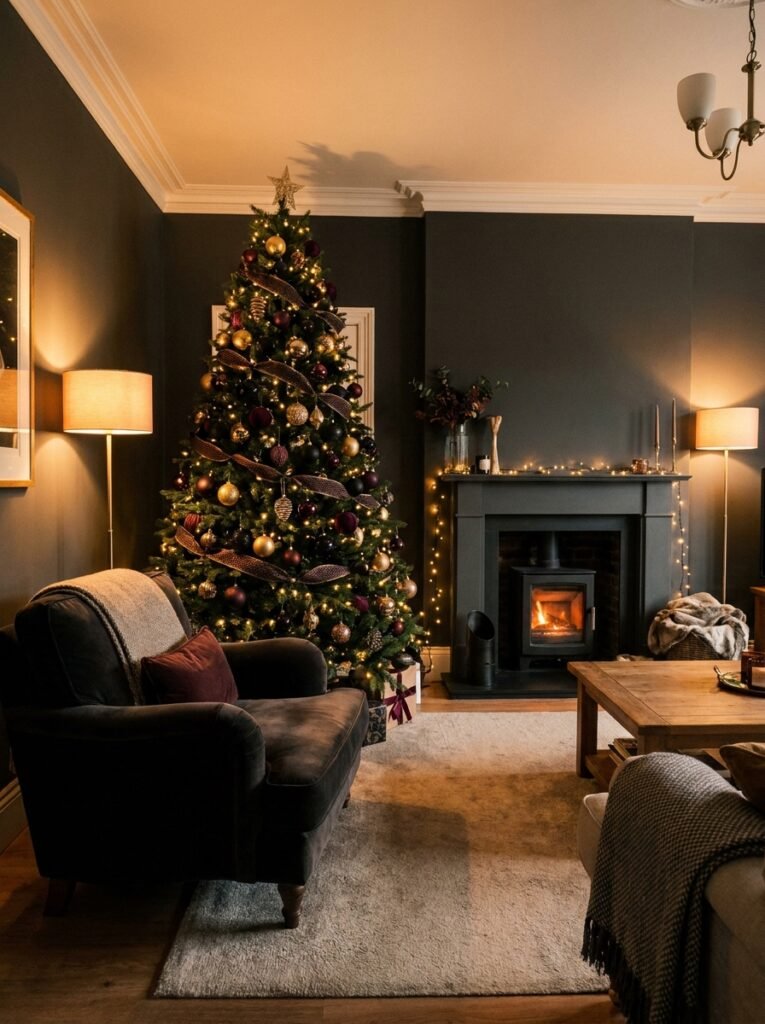
A lot of people buy a Christmas tree and then sort of… decorate around it. The tree becomes the starting point. But what if you worked backwards — decided what the room should feel like first, THEN styled the tree to match?
So if your living room is warm tones, dark wood, jewel-colored throws — your tree should pull those same colors. Deep red and gold ornaments. Velvet ribbon in hunter green. No white or silver, which would read cold against all that warmth.
If your room is more moody and dramatic — dark walls, bold art, sculptural furniture — go for a tree that leans into that. All-black ornaments with antique gold. Dried flowers woven through the branches. No tinsel, no bows, nothing cute. Just striking.
The tree should look like it grew in that room. Not like it wandered in from somewhere else.
—
4. What African Textiles Actually Do to a Christmas Living Room
Okay, this is the section I really wanted to write. Because this is where things get interesting.
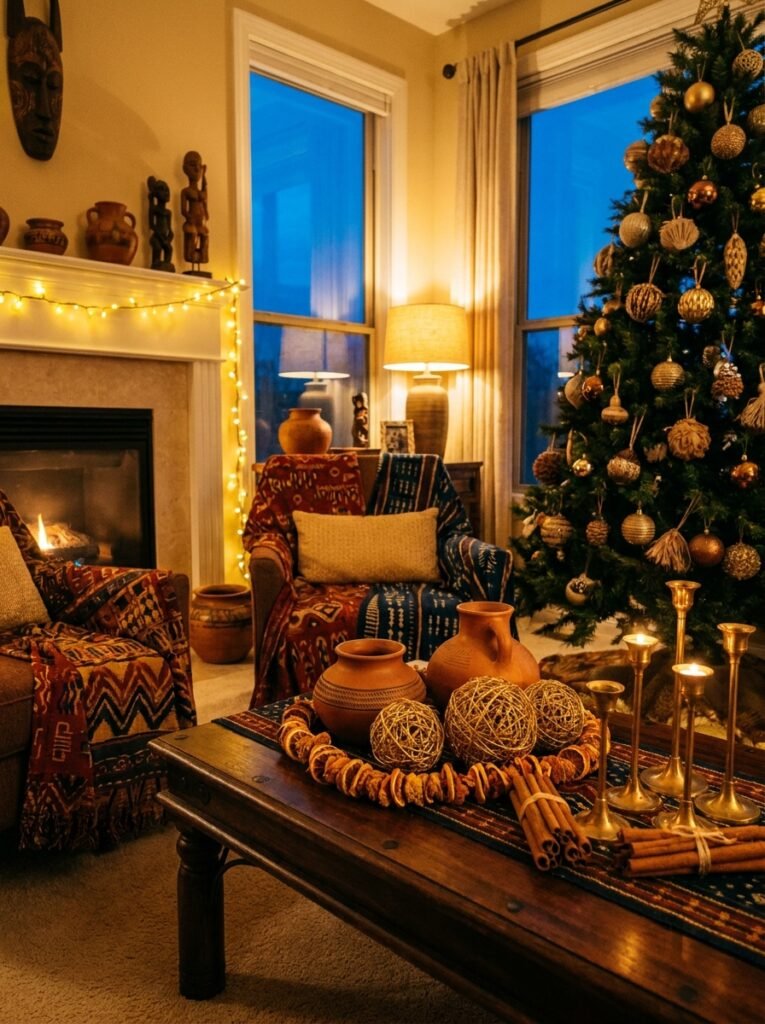
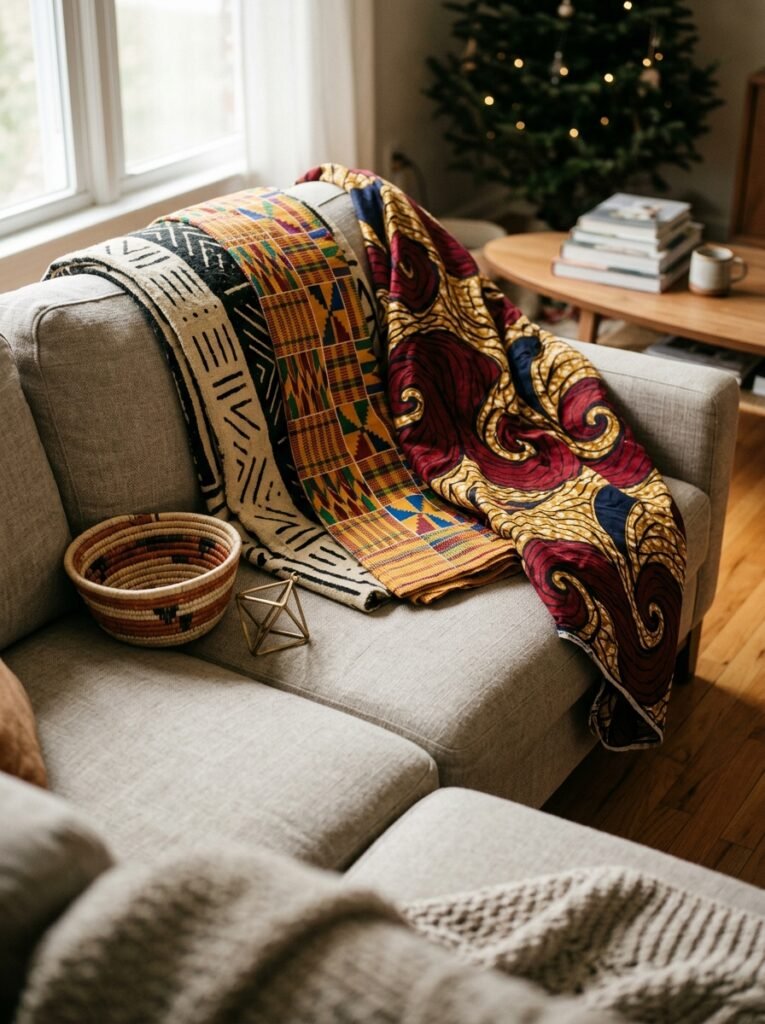
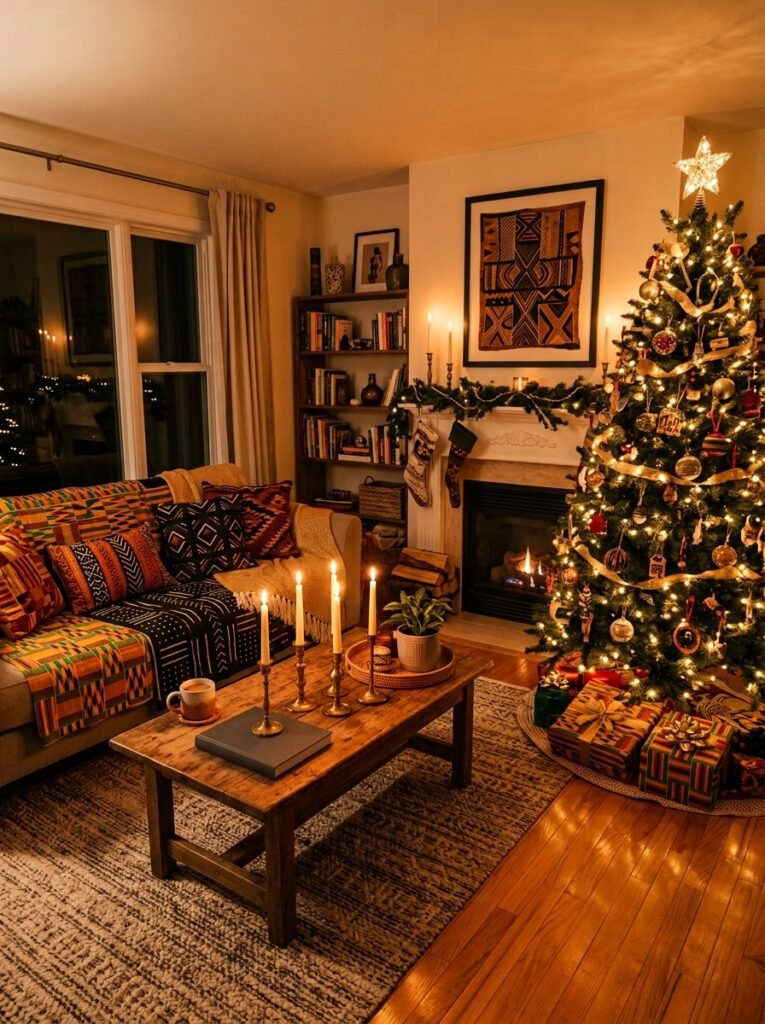
Kente cloth, Ankara prints, mudcloth — these aren’t just cultural references, they’re genuinely extraordinary textiles that do something specific in a Christmas room. The geometric patterns read as intentional and graphic. The color combinations — especially in traditional Kente, with its gold and black and green — are almost designed to work with holiday palettes.
A mudcloth throw draped over the sofa arm alongside your usual Christmas cushions doesn’t look out of place. It looks considered. Like someone with actual taste lives there.
You can also bring these textiles in through table runners (if your living room has a console), framed fabric panels used as temporary wall art, or even as gift wrap on decorative parcels under the tree. The parcels don’t need to be real gifts. They’re part of the styling. A few beautifully wrapped boxes in coordinating prints elevate the whole look.
The key is treating these textiles with the same visual respect as anything else in the room — not as an afterthought, not as the only “cultural” element, just as one beautiful part of a layered space.
—
5. Candles: The Part Everyone Gets Wrong
Not the choosing. Everyone can pick a nice candle. The PLACEMENT.
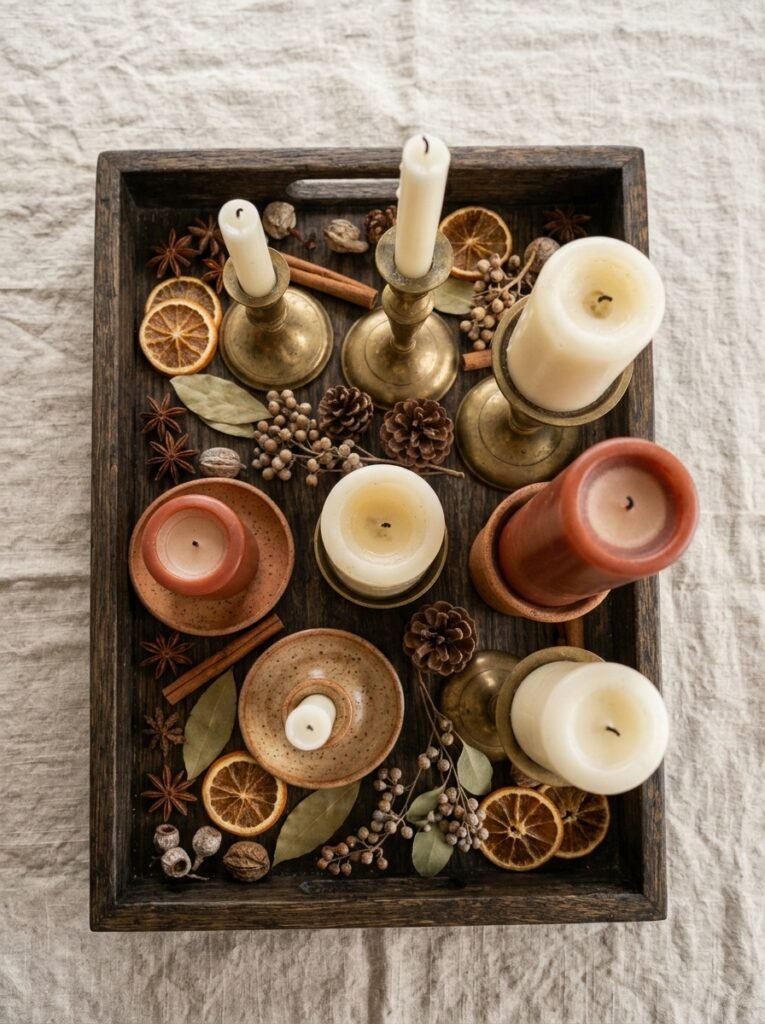
Most people cluster candles together. Three candles on the coffee table, done. And while that’s fine, it doesn’t make the most of what candlelight actually does — which is create depth, dimension, and the kind of amber warmth that makes a room feel genuinely alive at night.
Spread them out. One tall pillar candle on the mantle. A cluster of votives on the windowsill. A single wide candle on the bookshelf between a couple of books. Then when you light everything at once — maybe 6pm, maybe later — the whole room glows from multiple points, and it feels like something out of a film. In the best way.
“Candlelight at dusk does more for a Christmas room than any decoration you could buy.”
Scent matters too, obviously. But not ALL the candles should be scented or the room becomes overwhelming. Pick one or two scented ones (something warm — spiced amber, clove, sandalwood, cedar), and let the rest be unscented pillar candles.
—
6. The Sofa as a Styling Surface
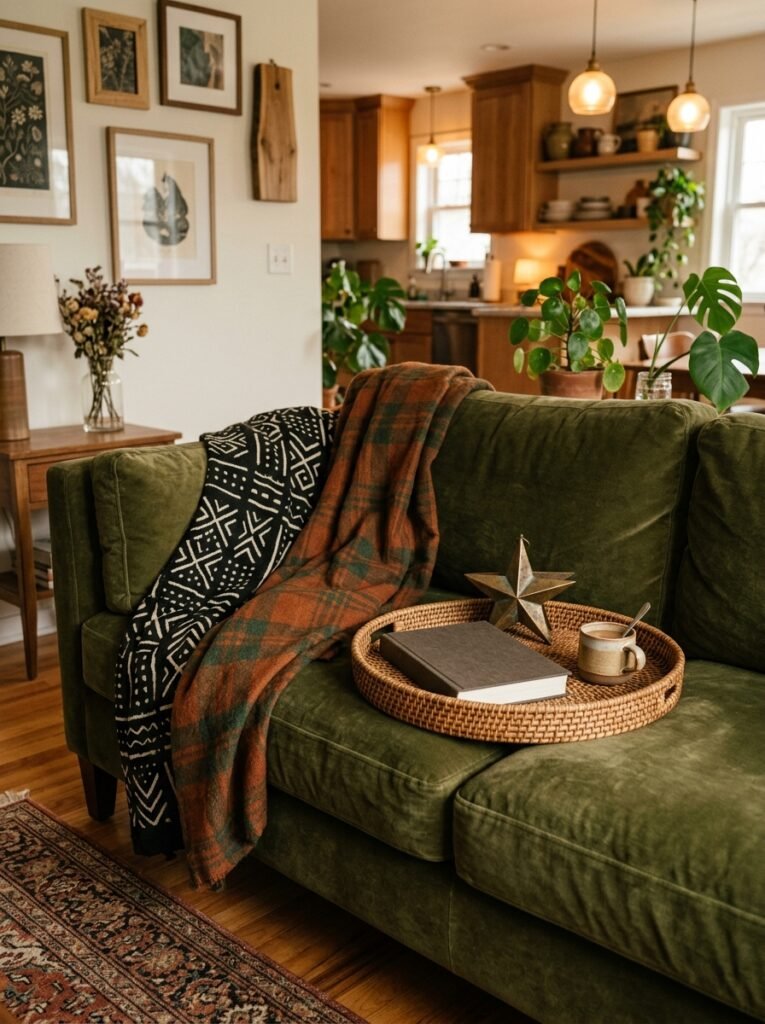
Your sofa is doing a LOT of decorative work in December and most people don’t take full advantage. This is basically a giant piece of furniture covered in soft material — it’s a huge styling opportunity.
Layer the cushions differently than you do the rest of the year. Add a couple of velvet cushions in your Christmas color palette. Throw a heavier blanket or two over the back or arm — something that reads seasonal, even if it’s just a richer texture than your usual one.
But here’s the thing: don’t make it too symmetrical. Real people sit on sofas. The cushions shift, the throws crumple a bit. Let that happen. A slightly tousled sofa looks lived-in and cozy; an overly perfect one looks like a furniture showroom.
One thing I love — and this works especially well in darker, richer rooms — is adding a single oversized velvet cushion in deep burgundy or forest green, slightly off-center, and letting it anchor the whole look. The room suddenly has a new focal point. Everything else just supports it.
—
7. Using Dark Walls as a Decorating ADVANTAGE
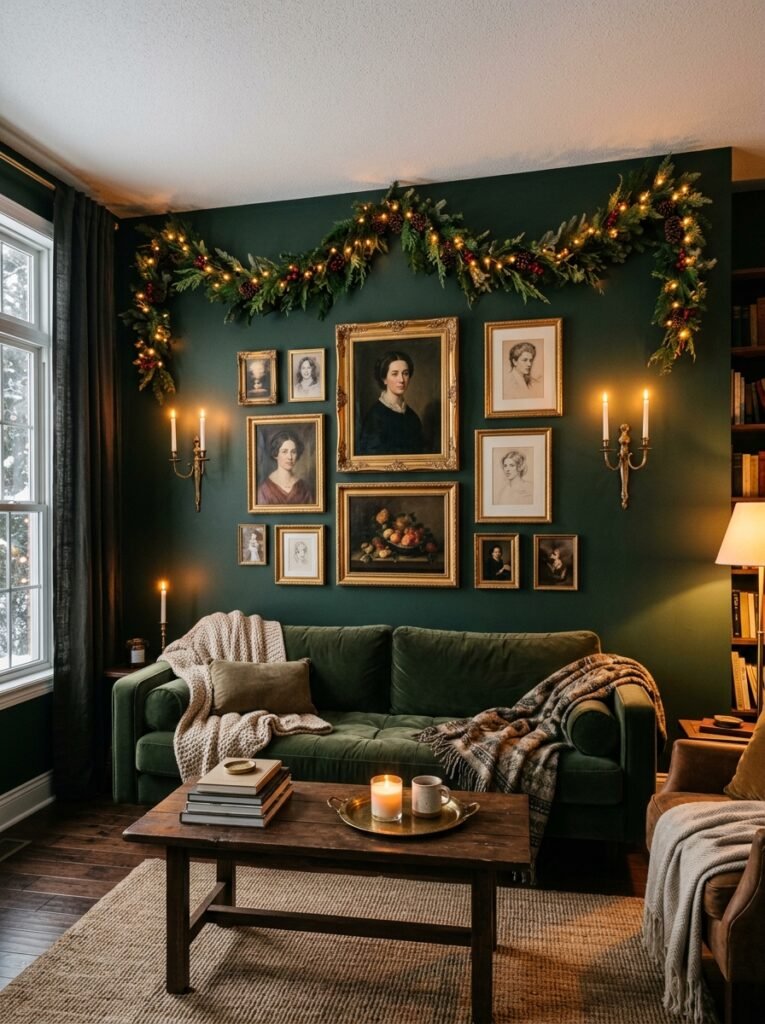
If your walls are dark — dark grey, navy, forest green, charcoal, deep terracotta — first of all, good for you. And second: Christmas was basically designed for dark walls.
Light ornaments glow differently against dark walls. String lights have more contrast. White snowflake window decals become genuinely striking. Gold and brass accents read as WARM instead of bright. The whole room becomes more cinematic.
Don’t fight the drama of a dark wall with too many pale, pastel decorations. Lean in. Deep berries and dark greenery. Rich metallics. Velvet everything. Let the room be moody and opulent and a little bit like a Victorian Christmas card — which is, honestly, a great thing to be.
And if your walls are light? You can create that same depth artificially, by keeping the overhead lights off in the evenings and relying entirely on lamps, candles, and fairy lights. The ceiling disappears, the room contracts, and suddenly even a cream-painted living room feels intimate and warm.
—
8. What to Do with the Space Under the Tree (Without It Looking Sad)

Bare tree bases look unfinished. It’s just… a stand. Nobody wants to look at a stand.
The classic solution is a tree skirt, and that works. But there’s a more interesting approach: build a vignette around the base of the tree. Start with a large round basket or wooden bowl turned upside down to create height variation. Add a few wrapped parcels in coordinating paper — some solid, some patterned. Tuck in a few loose pinecones. Maybe a small lantern with a battery tea light inside.
The point is: the base of the tree should feel like it’s PART of the room, not just a holding area for gifts.
If you’ve got kids, obviously that changes things once presents start appearing. But until then? It’s a styling surface.
—
9. The Window Nobody’s Paying Attention To
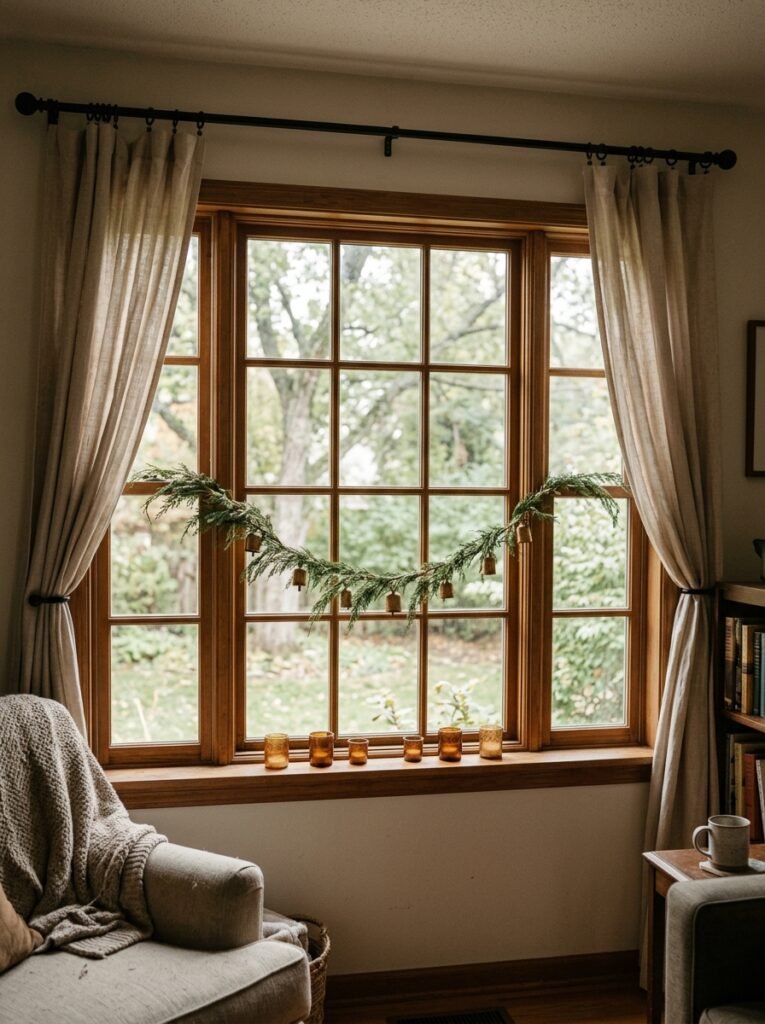
Every piece of content about Christmas living rooms focuses on the tree and the mantle. And yes, those matter. But the windows? Genuinely underused.
A simple wreath hung at the center of a sash window, visible from the street, looks like something from a classic Christmas card. From inside, it frames the view. From outside, it tells the whole street something beautiful lives there.
Or go the other direction entirely — string thin fairy lights along the top of the window frame and let them drape slightly like a curtain of light. At night, with everything else in the room glowing too, it’s almost overwhelming in the best way. That amber glow of warm bulbs against a dark December night outside — there’s nothing better.
—
10. Christmas Art and the Rule About Leaving It Up All Year
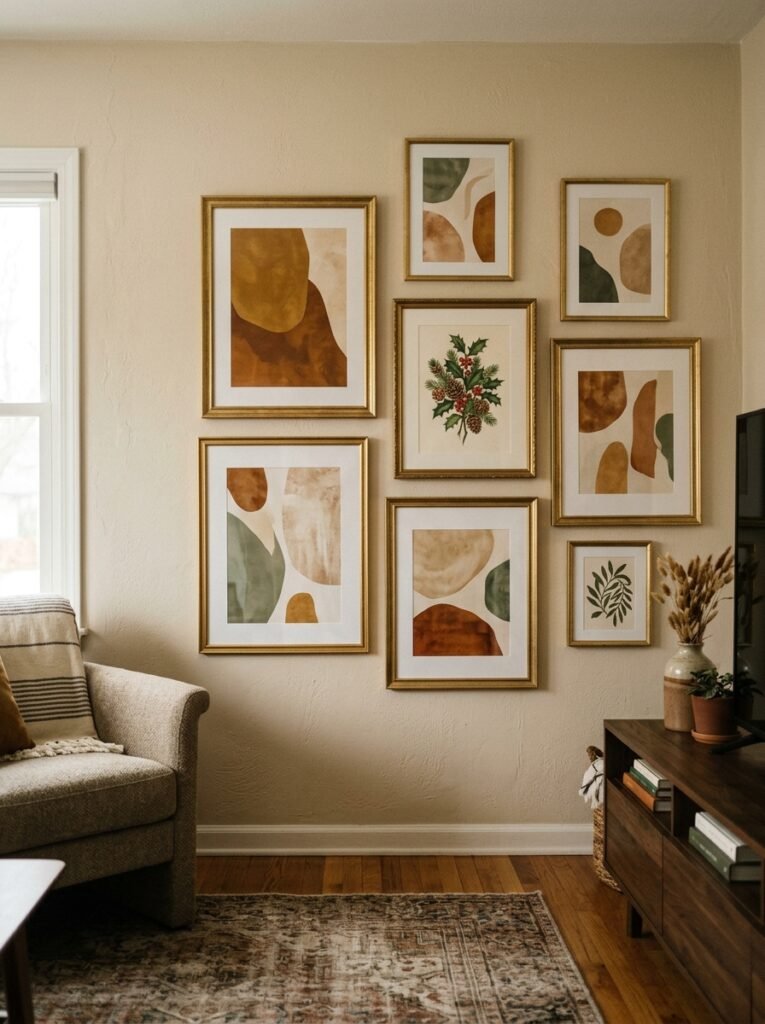
Here’s my mild take: most Christmas-specific wall art is not good enough to be on your wall for a month. The mass-produced “Joy” signs, the glittery snowflake prints — they look dated fast and they fight with the other art you’ve actually chosen for the room.
Instead, keep your real art up. Frame a piece of Christmas-adjacent imagery that you actually love — a botanical print with red berries, a moody winter landscape that you found at a market, a piece with gold leaf that catches the light. Something that says “winter” rather than screaming “Christmas” specifically.
Or, and this is my actual favorite option: take down one or two of your usual pieces for December and replace them with large framed fabric panels — maybe in that Ankara or mudcloth you’ve been collecting, maybe in a deep jewel-toned abstract print. Refresh the walls for the season without buying anything new.
—
11. The Smell of the Room Is Part of the Decor
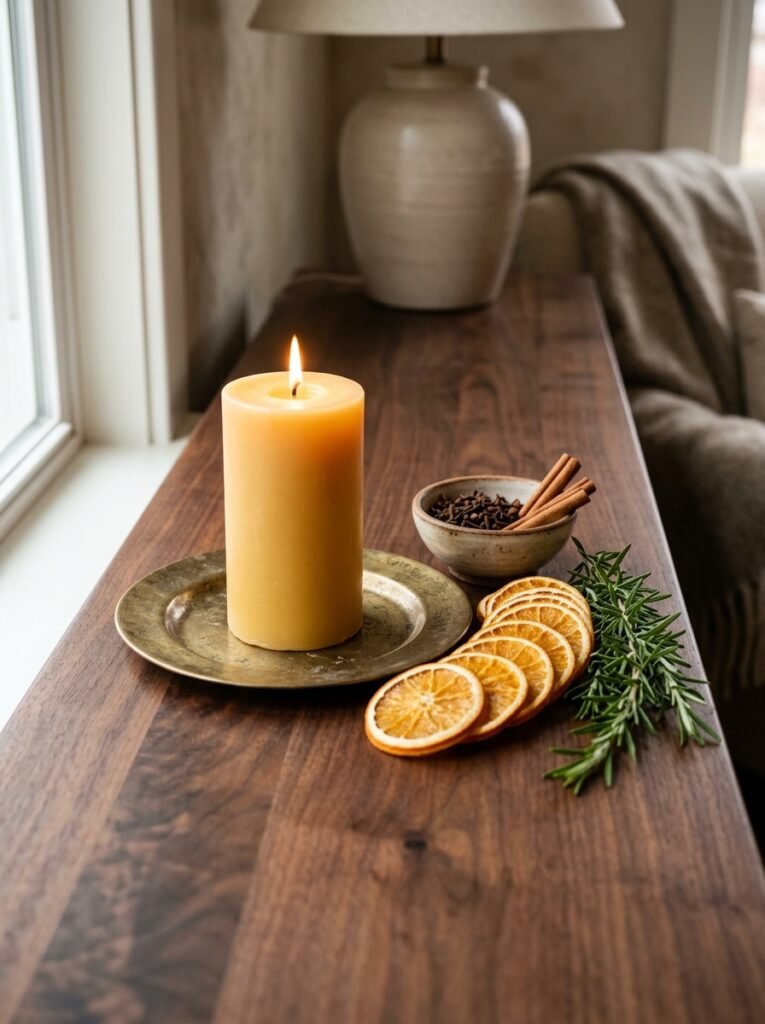
I know this sounds like I’ve gone off topic. I haven’t.
When someone walks into your living room on Christmas Eve, what hits them first isn’t the tree. It’s the smell. And if the room smells like nothing, or worse, like the dog or last night’s cooking — you’ve lost the opening moment.
Fresh pine or eucalyptus garland is the easiest fix. It smells incredible and it doesn’t need to be a huge dramatic piece — even a small swag across the mantle releases scent into a room. You can also simmer a pot of water on the stove with cinnamon sticks, orange peel, cloves, and a star anise — it’ll drift through the whole ground floor and make the house smell like Christmas in about twenty minutes.
“Scent is the thing guests remember when they try to describe your home to someone else.”
Candles help, but they’re secondary. The real magic comes from natural sources — things that are actually IN the room, releasing scent slowly, all day.
—
12. The Little Moments That Actually Make It Feel Like Christmas
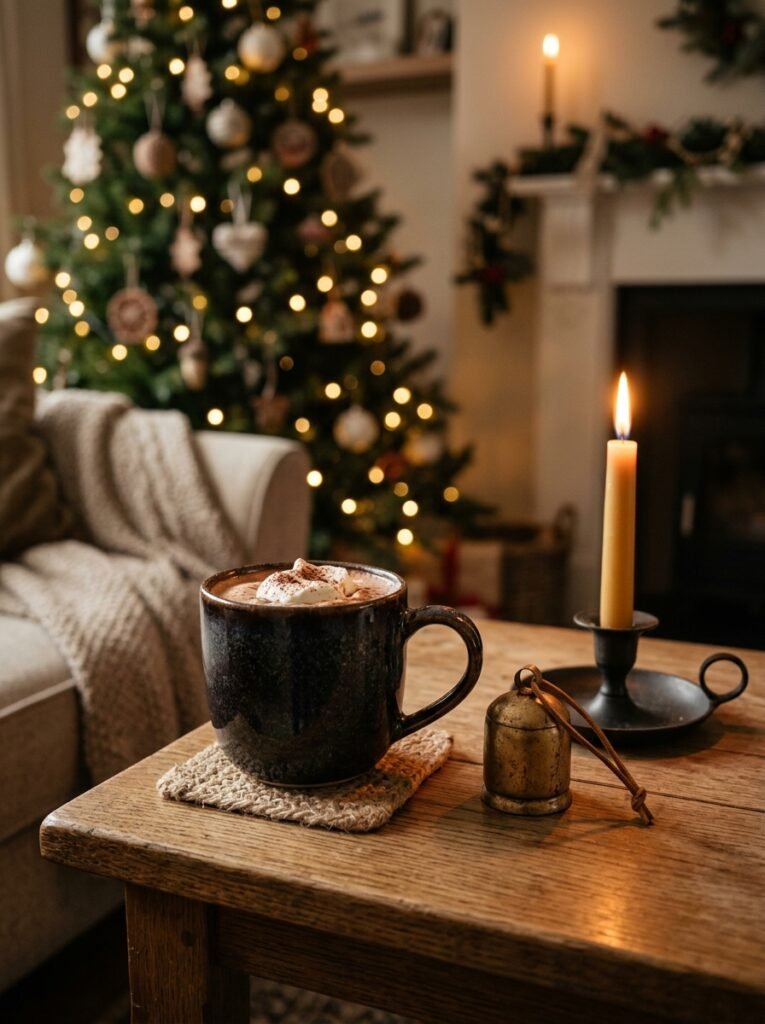
Here’s the thing about Christmas decor. All the big elements — the tree, the mantle, the cushions — they set the scene. But it’s actually the small moments that make a room feel genuinely festive.
A small ceramic deer tucked between two books on the shelf. A bowl of clementines and walnuts on the coffee table, real ones, that people can actually eat. A string of lights looped loosely along the top of a picture rail. A single pillar candle in a wide glass jar on the window ledge. The good tablecloth on the side table, just because.
These things cost almost nothing. They take minutes. And they’re the details that people notice without knowing why they notice them — they just think “this room feels wonderful” without being able to point to any single thing.
That’s the goal, honestly. Not a showroom. A room that makes people feel something.
—
❓ FAQ
Q: How do I make my Christmas decor look cohesive without everything matching perfectly? A: Pick two or three colors and repeat them throughout the room — on the tree, the cushions, the mantle, anywhere you add a decorative element. They don’t need to be exactly the same shade, just in the same family. That repetition creates cohesion even when nothing literally matches.
Q: How can I incorporate cultural elements without it looking like a “theme”? A: Treat your cultural textiles and objects the same way you’d treat any quality decorative piece — with intention and placement, not just quantity. One beautiful mudcloth throw styled thoughtfully looks far more considered than six pieces crammed in together. It’s about quality of placement, not volume.
Q: My living room is small — how do I decorate for Christmas without it feeling cluttered? A: Go vertical. A slim tree, tall candles, a wreath on the wall. Avoid spreading decorations across every surface — choose three or four key spots and style those well, then leave everything else intentionally clear. Restraint in a small room always reads as confidence.
—
💭 Final Thoughts
Christmas decorating is really just an invitation to pay attention to your home — to think about how it feels, what it says, what it does to the people who walk in. The best holiday living rooms aren’t the ones that have the most stuff. They’re the ones that feel most like the person who lives there.
So skip the default. Start with what you actually love. What color makes you feel something? What texture do you keep reaching for? What would make your living room feel like yours — not anybody else’s?
That’s where your Christmas decor starts.