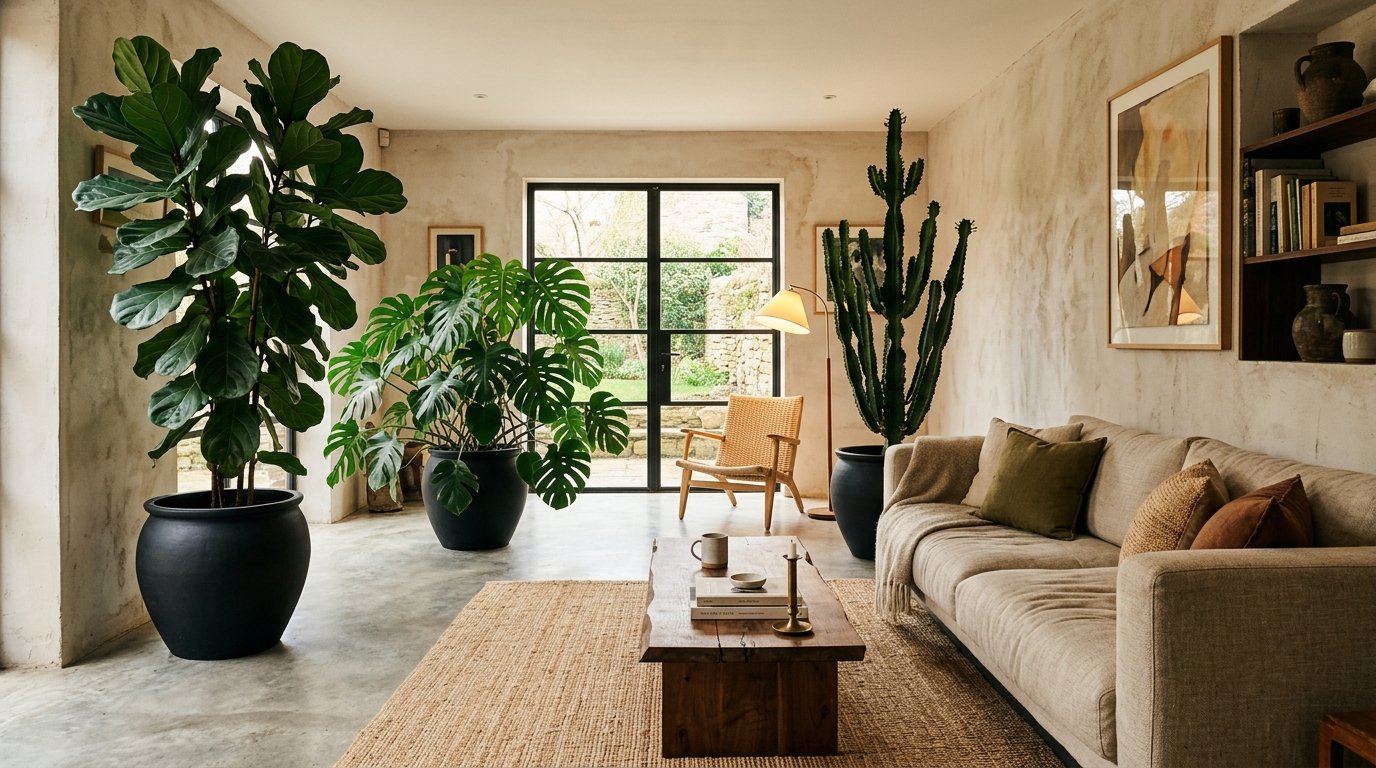
Why Your Living Room Plants Are Probably Boring (And How to Fix That)
My friend looked at my living room last spring and said, “You have a lot of plants, but it kind of just looks like… a waiting room.” And I stood there for a second. Looked around. Realized she was completely right.
—
1. The Reason Most Plant Styling Falls Flat Before You Even Buy Anything
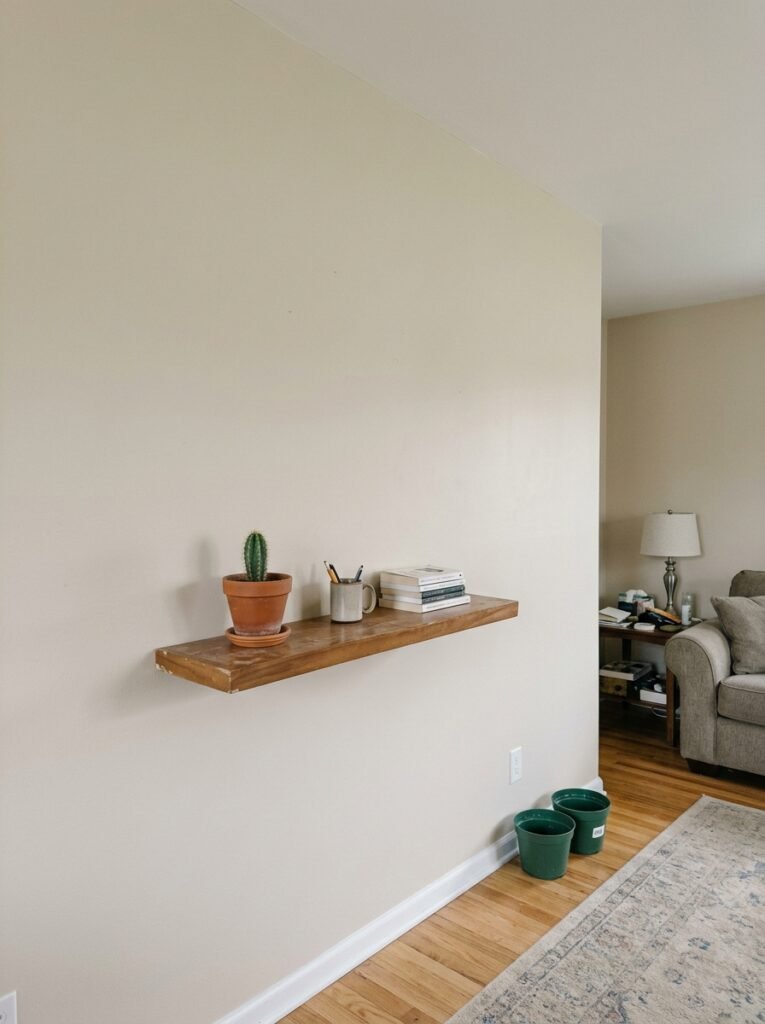
Here’s the thing nobody tells you. Adding plants to a room and styling with plants are two completely different skills, and most of us are doing the first one while thinking we’re doing the second.
A plant on a windowsill is just a plant on a windowsill. Grouped with intention, placed at an unexpected height, or used to interrupt a line of sight across the room — that’s when it becomes design. Avant-garde plant styling isn’t about buying weird-looking specimens no one’s ever heard of (though honestly? Sometimes that helps). It’s about treating your plants the way you’d treat any other design object. With purpose. With a bit of drama.
I spent a long time adding plants and wondering why my living room still felt kind of… beige, personality-wise. The plants were healthy. They were fine. But “fine” is not what we’re going for here.
The turning point was realizing I’d been placing everything at the same height, the same distance from walls, the same ceramic pot situation. Safe. Predictable. Forgettable.
—
2. The Height Rule Nobody Talks About Enough
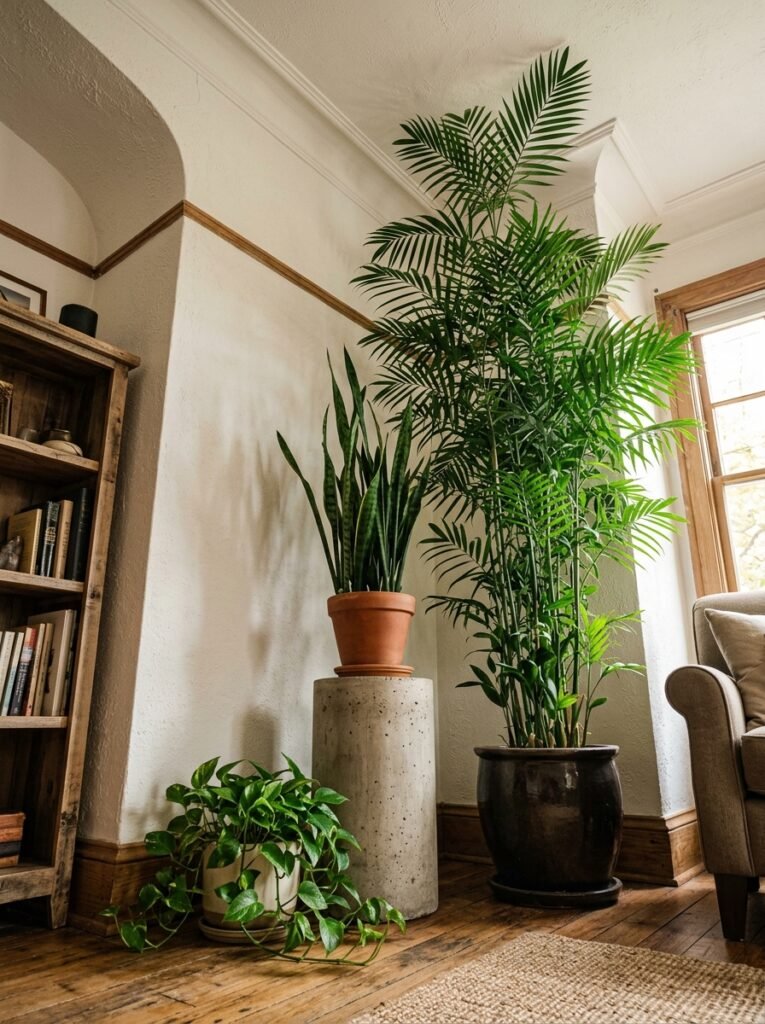
Almost every plant in almost every living room is between knee height and shoulder height. And that’s exactly why rooms look normal instead of interesting.
Go lower than you think is right. A wide, sculptural succulent almost on the floor — like, genuinely close to the floor, on a tiny riser or even directly on a flagstone or slate tile — does something weird and good to a room’s proportions. It makes everything above it look intentional.
“The moment you break the expected eye line is the moment the room actually wakes up.”
And go higher too. Way higher. A plant on top of a tall bookshelf or cabinet, trailing something downward — pothos, heartleaf philodendron, string of pearls if you’ve got the light — turns a flat vertical surface into something alive. Not in a “plant shelf” Pinterest-grid kind of way. In a “this room clearly belongs to someone with a point of view” kind of way.
The ceiling is not as far away as you think. Use it.
—
3. Why an Olive Tree in the Corner Is the Move Everyone’s Copying But Still Works
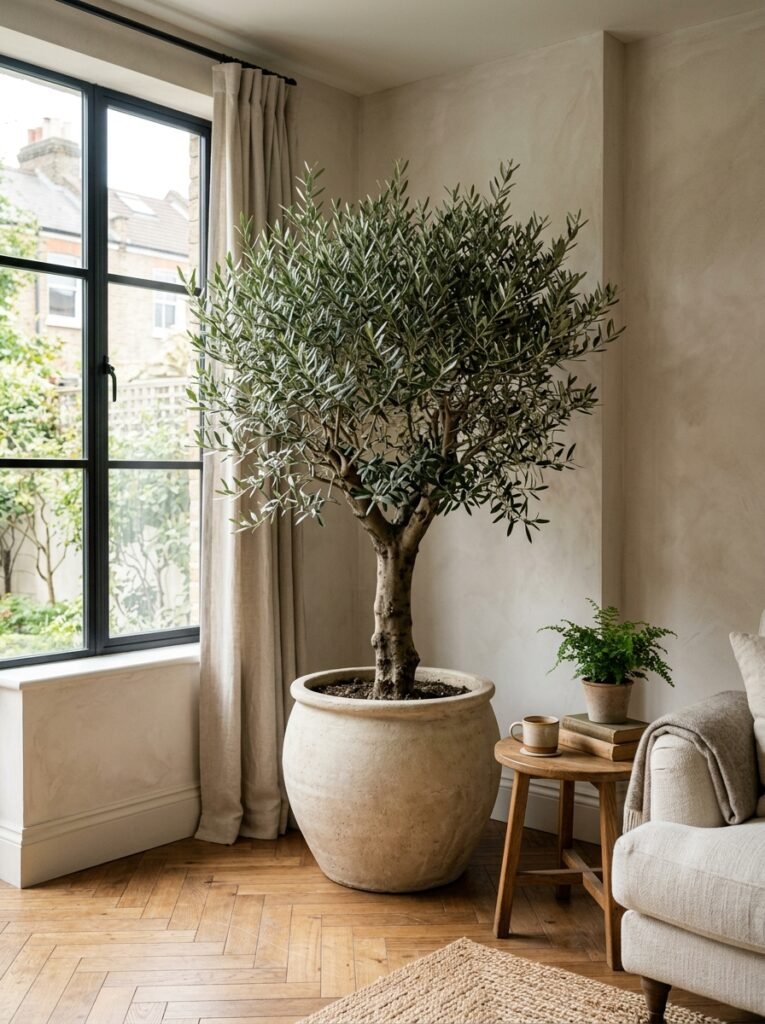
I know, I know. You’ve seen the olive tree in the living room corner everywhere. All over design accounts, all over saved boards, it feels almost overdone. But here’s why it keeps working — it doesn’t look like a houseplant.
That’s the secret. Olive trees have a trunk. They have structure. They’re silvery-green and a little rough-looking, not glossy and tropical. In a living room, they read more like sculpture than like the potted spider plant your mum had in the 80s. Pair one with raw linen, a stone side table, matte terracotta, and something Mediterranean happens that’s hard to achieve any other way.
The avant-garde move with an olive tree isn’t buying one. It’s placing it OFF-center, pulling it slightly away from the wall so it floats, and resisting every urge to put anything else near it. Let it be weird and alone. It’s better that way.
If you can’t get an olive tree where you are, a Ficus Audrey gets you almost there. Less gnarled, but that same not-quite-tropical energy.
—
4. The Sculptural Plant Nobody’s Talking About in Design Circles Yet
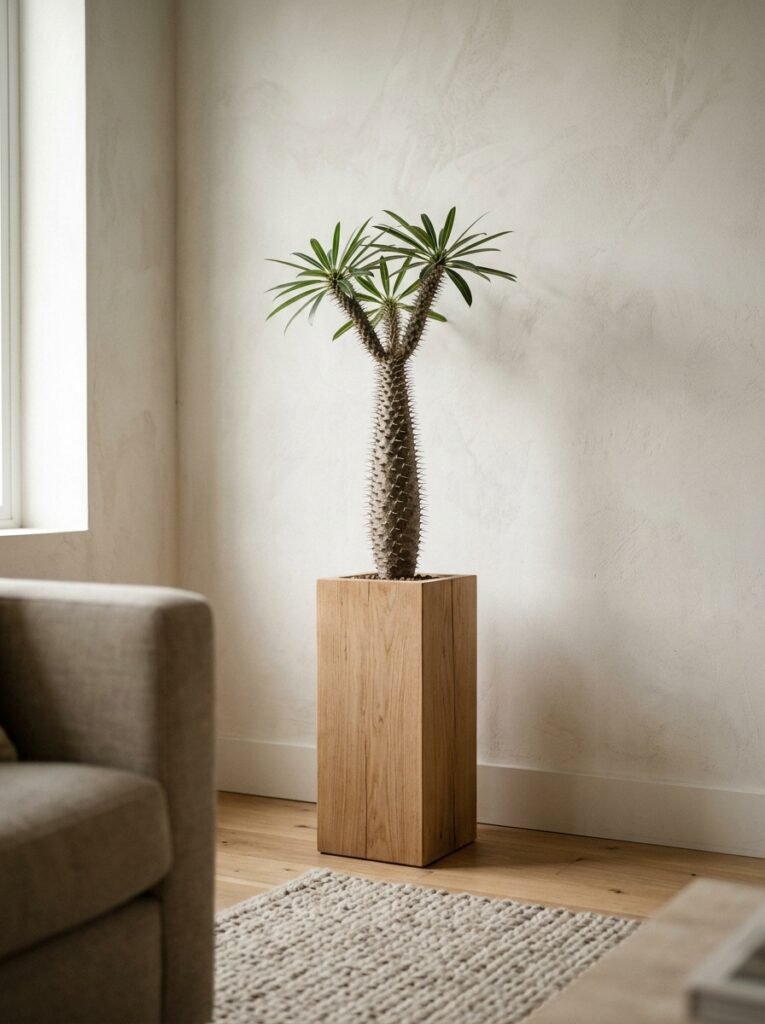
Can we talk about Euphorbia for a second?
Not the little poinsettia-adjacent ones. I mean the tall, brutalist, almost architectural ones — Euphorbia trigona, Euphorbia ammak — that look like they’d be more at home in a contemporary art gallery than a Victorian semi-detached. These things are STUNNING and people are sleeping on them.
They grow vertically. They’re structural. They have this alien quality that somehow, against a white plaster wall or next to a low-slung midcentury sofa, looks like it was commissioned to be there. They don’t demand much. They want sun and to be left alone, which makes them highly compatible with most homeowners’ actual lifestyles.
Side note — they’re also mildly toxic so if you’ve got cats or small children doing floor-level chaos, probably keep this one on a high shelf or just admire it in this article.
But for the right room? Nothing announces “I think about design” quite like a six-foot Euphorbia in an angular cement pot placed where you’d normally expect a floor lamp.
—
5. Pots Are Doing More Work Than You’re Giving Them Credit For
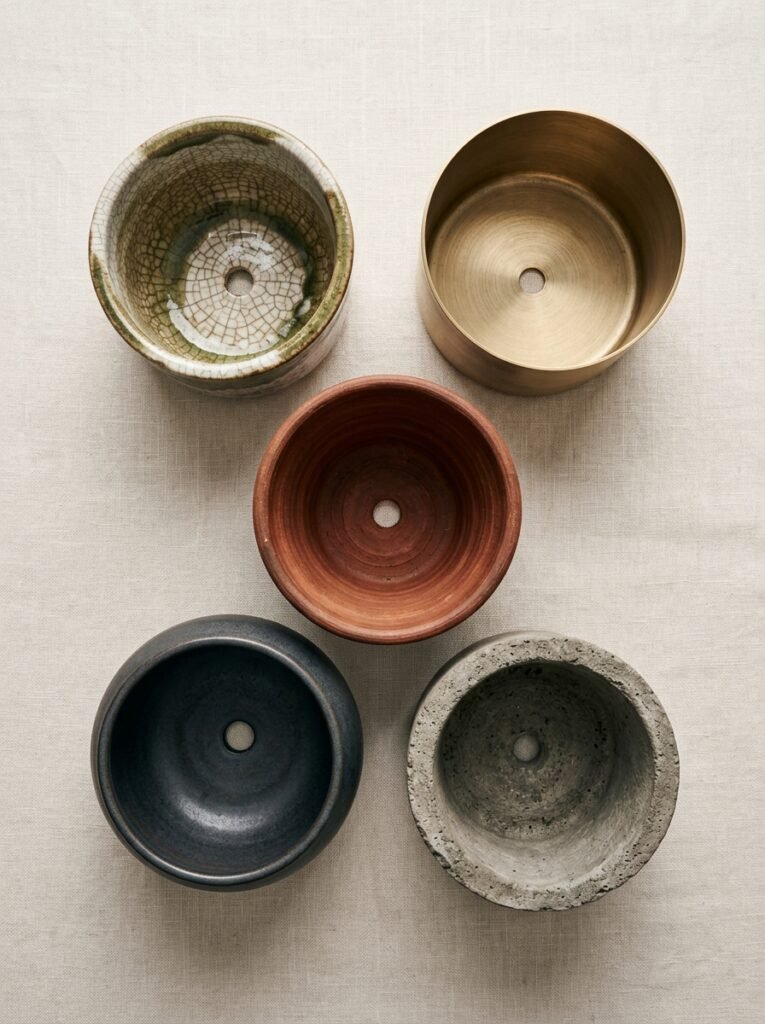
The plant is maybe 40% of the statement. The pot is the other 60% and most people treat it like an afterthought.
I’ve seen beautiful, genuinely interesting plants — a sculptural snake plant, an impressive monstera with real fenestration — stuck in plastic nursery grow pots or worse, those slightly too-shiny glazed pots in colors that go with nothing. It cancels out everything the plant is trying to do.
Right now the pot textures that are doing something genuinely interesting: raw concrete with visible aggregate, wabi-sabi crackle glaze, unfinished terracotta that hasn’t been sealed (so it goes patchy with moisture, which is the POINT), hand-thrown ceramic with irregular rims. The common thread? Imperfection. Things that look like they were made by a person, not a factory mold.
“An imperfect pot around a beautiful plant looks like a decision. A shiny perfect pot looks like a purchase.”
If you’ve got a tight budget, this is actually good news. Plain unsealed terracotta from a garden center is cheap and it looks incredible. Stop buying the glazed ones.
—
6. The Grouping Strategy That Actually Looks Considered, Not Cluttered
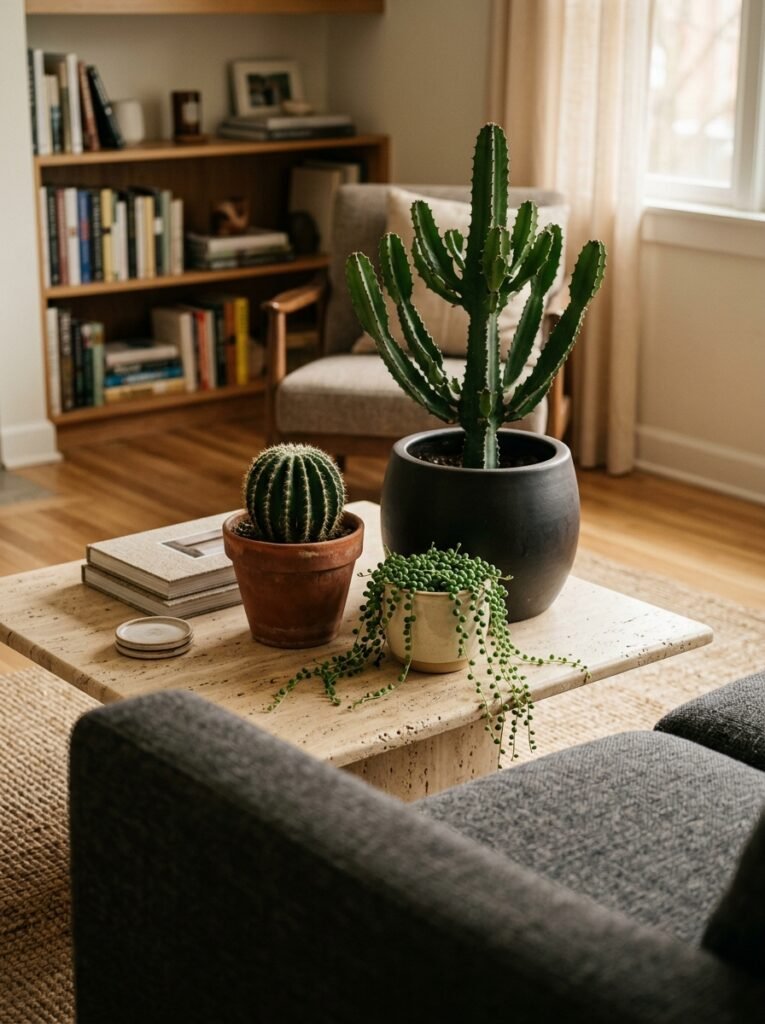
Here’s where people go wrong with multiples. They put things in odd numbers (good, that advice is correct) but they make them the same species in different sizes, or different species in the same pot style, and it still comes out looking like… a collection, not a composition.
Real groupings that work have what I’d call contrast tension. One thing tall and architectural, one thing low and spreading, one thing trailing downward if there’s something elevated nearby. Different textures. Different shades of green — and I mean dramatically different, like a dark near-black ZZ plant next to a silvery-green eucalyptus next to something lime-bright like a golden pothos in a really shaded corner.
What you’re building is a tiny ecosystem that looks like it developed naturally, even though you obviously staged it. Which sounds contradictory. It’s not. Natural-looking compositions have been thought about HARD.
Vary the pot materials too. Concrete next to terracotta next to a woven basket liner. Not all three the same. Ever.
—
7. Using Plants to Redirect How People Move Through Your Room
This one sounds strange but stay with me.
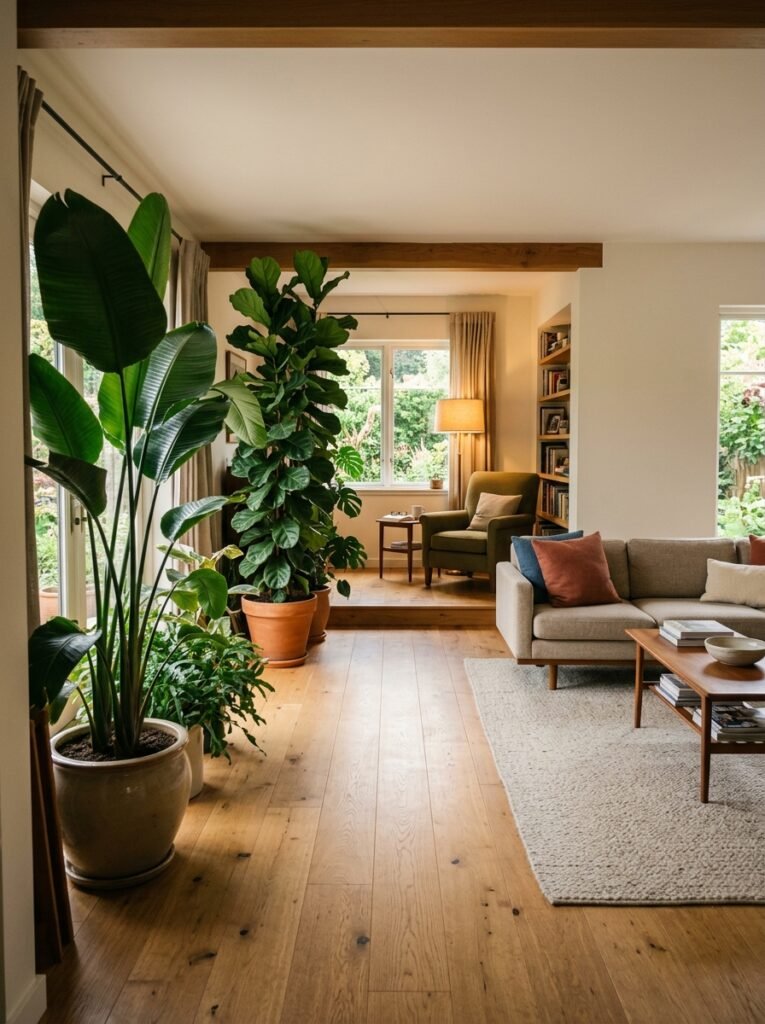
Plants can act as soft architecture. A tall plant or a cluster of plants positioned between a seating area and the room’s entry point creates what interior designers call a “threshold moment” — this little psychological beat where you register that you’re moving into a different zone. It’s subtle. Guests won’t notice they’ve noticed it. But the room will feel more deliberate than rooms that are just… furniture arranged in a space.
In smaller British living rooms especially, where you’re often working with a through-lounge layout or a front room that functions as both entrance and sitting space, this trick is genuinely useful. A cluster of plants doesn’t eat square footage the way a room divider does, but it does some of the same spatial work.
I’ve done this with a cluster of three plants at slightly different heights — one on the floor, one on a low stool, one on a slimline plant stand — and the effect is like a visual full stop before the sofa area. It works, and I’m slightly embarrassed it took me this long to try it.
—
8. The One Plant That Makes Any Dark British Room Feel Alive
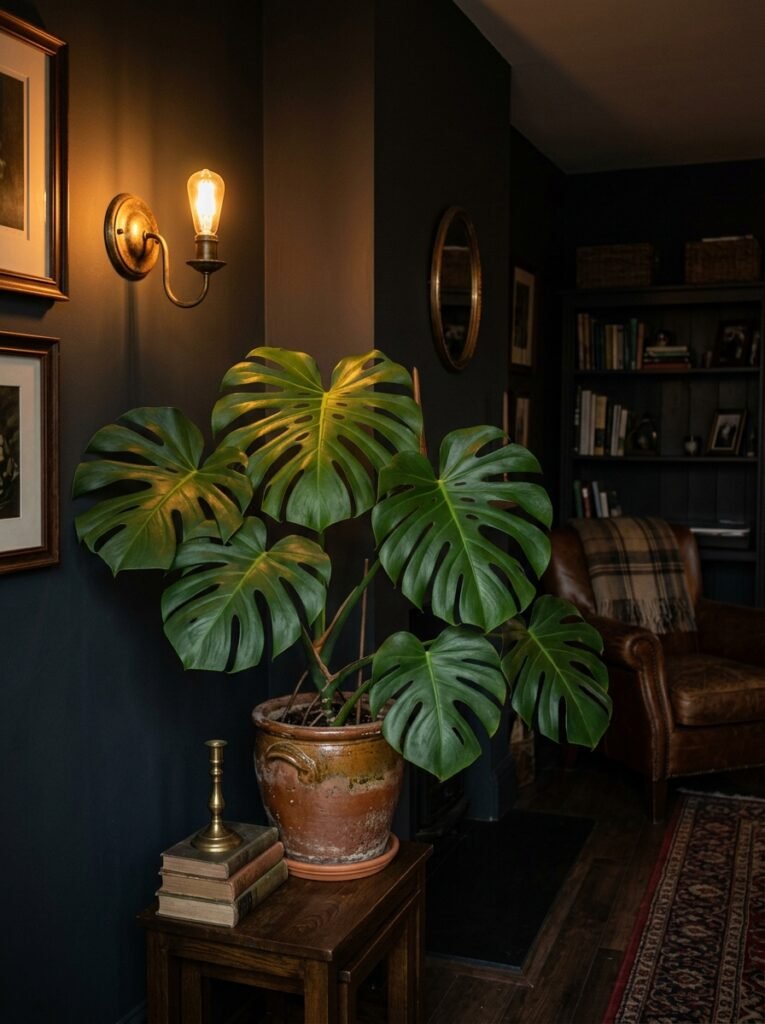
Low light. High humidity from ancient sash windows that never quite seal. Walls painted in something beautiful and dark because you were brave about it but now the room absorbs light like a sponge. This is a very specific problem that a lot of UK homeowners are living with.
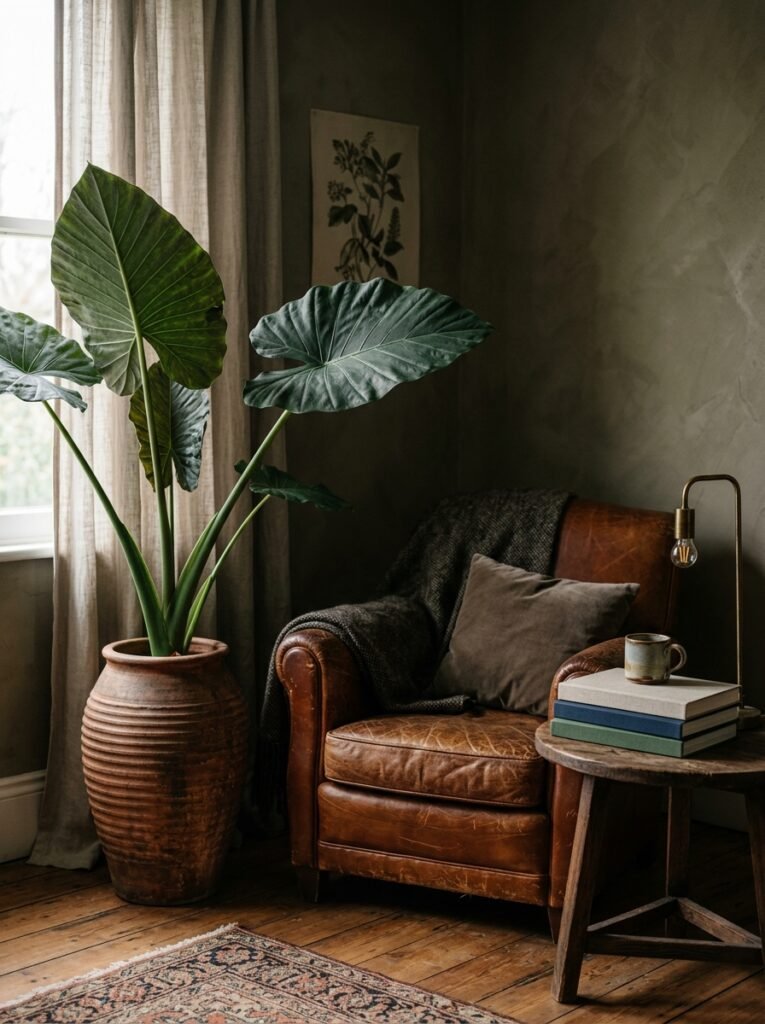
Cast iron plants — Aspidistra elatior — were literally invented for this situation. Victorian conservatories. Dark hallways in Georgian townhouses. They don’t want your direct sun. They actually do better without it. And that deep, architectural foliage in a really good matte pot against a forest green or inky blue wall? That’s a look.
They’re slow growers, which means whatever you’re buying is essentially what you’ve got. So size up when you’re purchasing. Don’t wait for it to grow into the statement — buy the statement.
Also: cast iron plants don’t need fussing. They’re not going to punish you for forgetting to water them for three weeks, which honestly makes them avant-garde in a different way entirely. The easiest rebellious plant in the room.
—
9. Hanging Plants Done the Way That Doesn’t Look Like a 1970s Macramé Corner
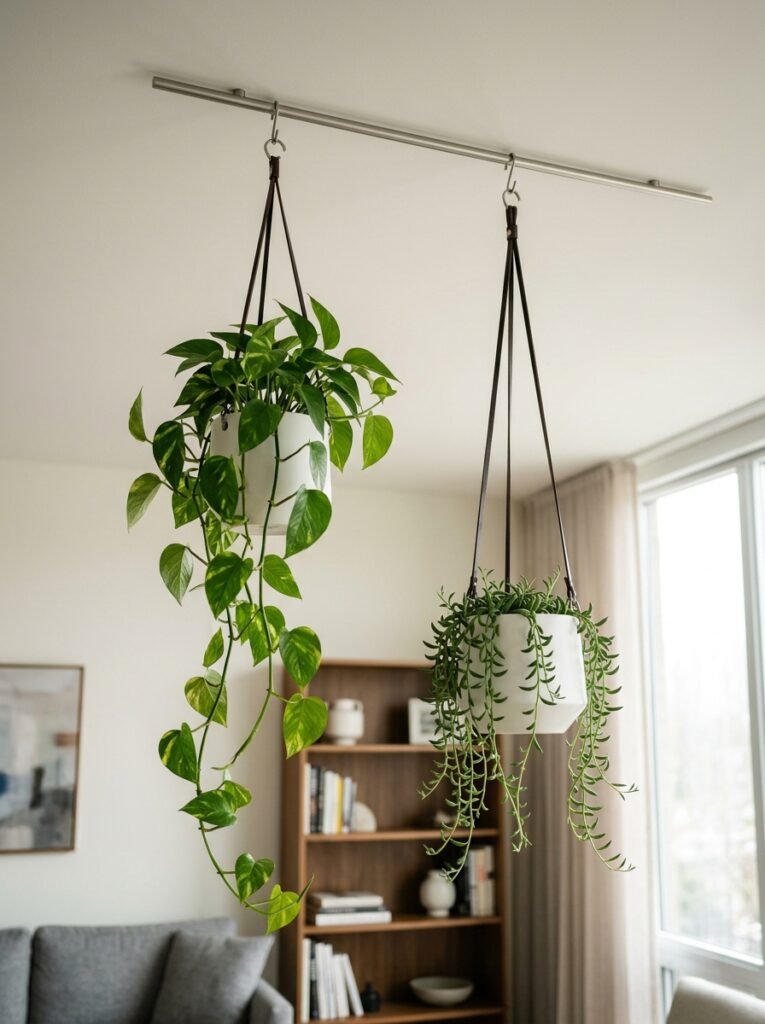
Hanging plants are back, but the version that’s actually interesting right now isn’t the macramé hangers overflowing with pothos (although I do love you, pothos). It’s more architectural than that.
Think: a single long trailing plant on a simple brass hook, or a ceiling-mounted rail system with multiple simple hooks at different heights, letting the plants hang at staggered lengths. No matching hangers. No symmetry. The plants themselves become the visual event.
“When you stop trying to make everything match, the room starts to look like it belongs to someone interesting.”
What trails well and looks genuinely striking: string of hearts, scindapsus pictus (that silvery-grey, almost dusty leaf), rhipsalis — which looks like someone took a cactus and told it to relax. These aren’t your average trailing plants. They have personality.
The key is restraint. One or two ceiling plants that are genuinely special, hung where they interact with the light source or frame a view. Not a ceiling covered in them. Avant-garde is about editing as much as adding.
—
10. The Color Theory Angle That Changes How You Choose Plants
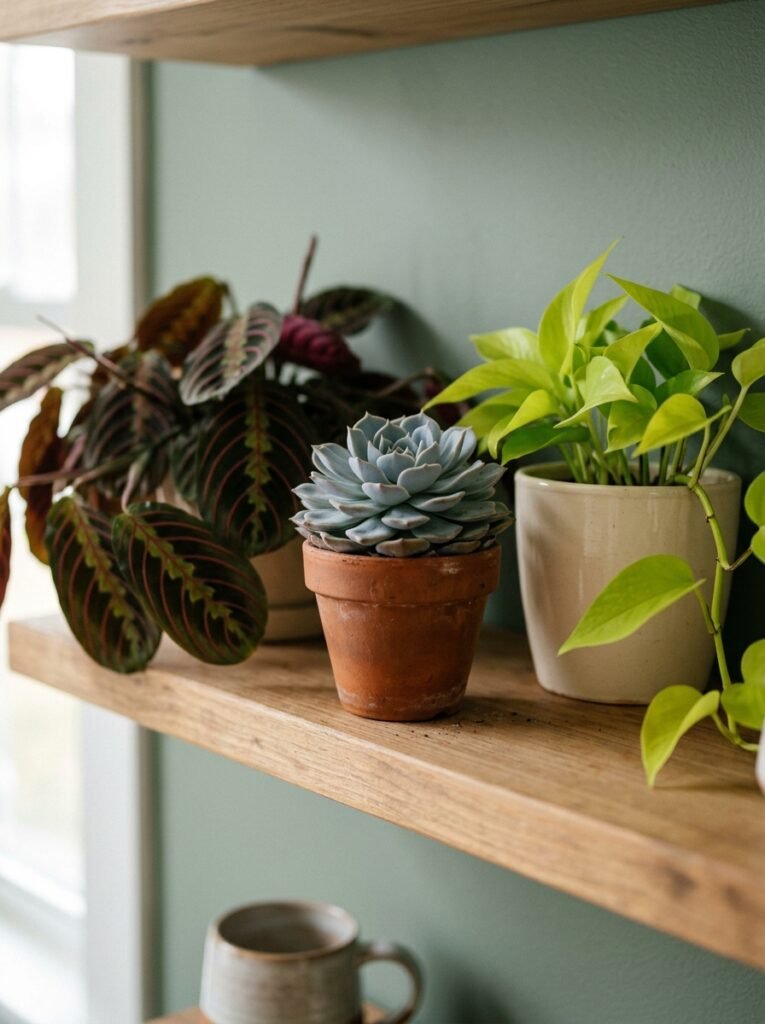
Most people choose plants based on care requirements or availability. Which is practical. But if you’re thinking about a room the way a designer thinks about it, you’d also be choosing plants based on their color’s relationship to your existing palette.
Dark rooms with warm paint colors — ochres, terracottas, deep reds — look extraordinary with silver-leaved plants. Pilea cadierei (aluminum plant), scindapsus, dusty grey succulents. The cool metallic leaf tone creates this contrast against warm walls that’s kind of electric.
Rooms leaning neutral or cool — stone, grey, white — can take bolder green tones, even almost garish ones. A lime-green alocasia or the improbable chartreuse of a neon pothos suddenly looks sophisticated because the room isn’t fighting it for attention.
And rooms with a lot of natural wood? Go dark and glossy. ZZ plants, rubber plants, Ficus elastica burgundy. The deep tones pick up the richness of the wood without clashing. It’s the same logic as pairing colors in an outfit, honestly.
—
11. Treating Your Plant Arrangement Like an Art Installation (Not Like a Shelf Display)
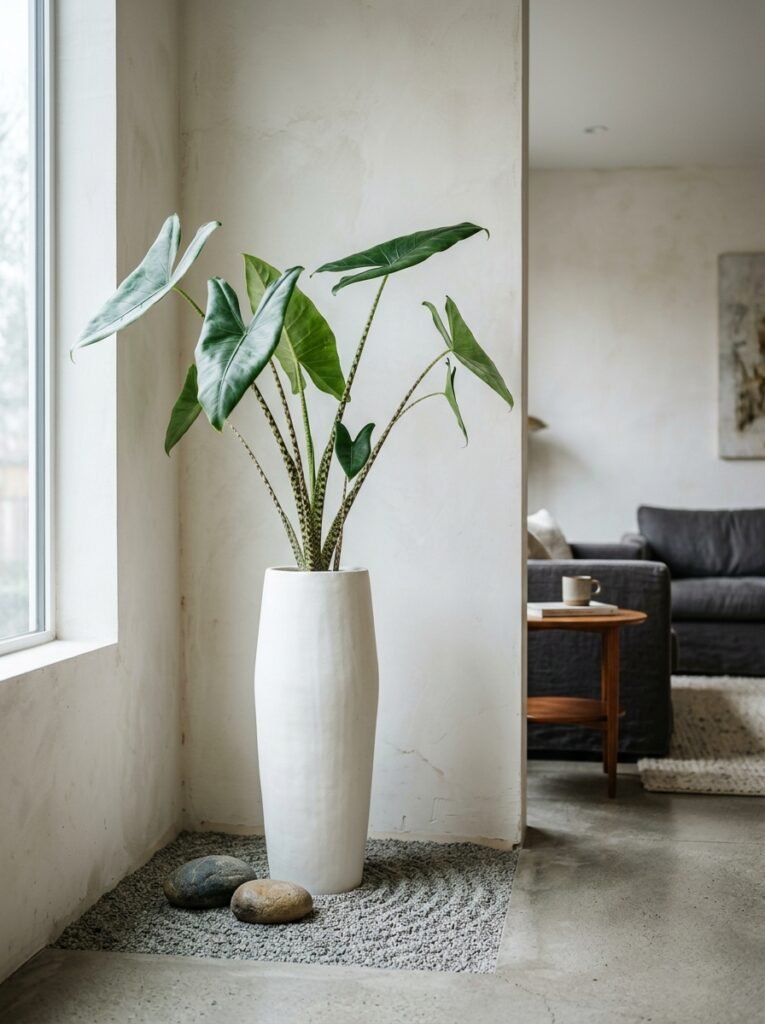
Here’s the mindset shift that genuinely changed how I approach all of this. Avant-garde design — in any medium — is interested in surprise. In small violations of expectation. In making you look twice.
A plant placed where you’d expect art. Art hung where you’d expect a plant. A plant growing in something that isn’t technically a pot (a concrete mixing tub, a vintage colander with drainage added, a narrow metal duct — weird, but committed people have done this and it looks GREAT). A single dramatically large plant where you’d expect a collection of small things.
The question to ask yourself, room by room, is: what would a very confident designer put HERE that would make a visitor slightly confused for one second before realizing it’s genius? That one second of confusion is the thing you’re after. That’s the avant-garde moment.
Don’t be afraid of that pause. Be afraid of the room that doesn’t cause it.
—
12. Why Buying One Expensive Plant is Better Than Ten Mediocre Ones
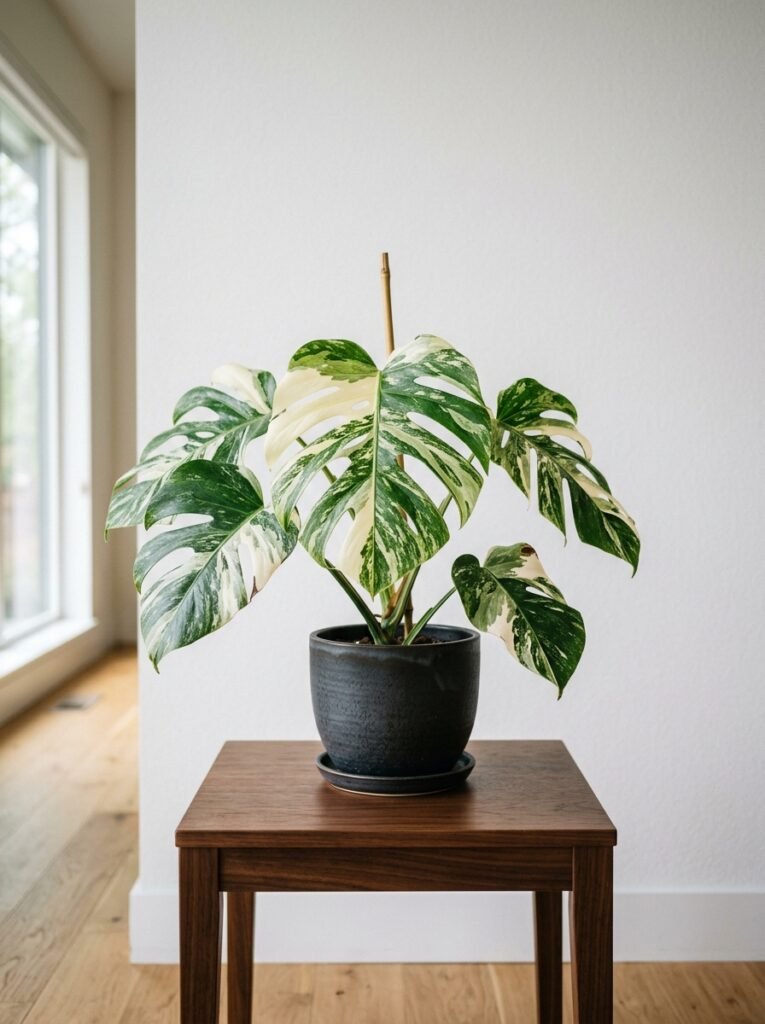
I’m going to say something that might be unpopular. Stop buying plant after plant after plant trying to build impact through quantity. It almost never works that way.
One genuinely impressive specimen — a large fiddle leaf fig with a real trunk (not a little stick), a mature monstera deliciosa with actual fenestration on the leaves, a birch fig with a sculptural canopy — does more for a room than a dozen small plants crowded on a shelf.
Save up. Buy the big one. Give it space to breathe and make it the point of the whole room. The plants-as-wallpaper approach can work, but it takes so much more skill and so much more money than people realize. Starting with one knockout specimen and building slowly and deliberately around it is almost always the better path.
And honestly? Plants are alive. They change. They grow into their space. Buying one good one and watching it become part of the room over a year — that’s satisfying in a way buying ten small ones never quite is.
—
❓ FAQ
Q: What are the best low-maintenance plants for an avant-garde living room look? A: Euphorbia varieties, ZZ plants, cast iron plants, and sansevieria are all genuinely sculptural and genuinely hard to kill. The key is picking the right pot and giving them space — even the most architectural plant gets lost if it’s crammed into a busy corner.
Q: How do I make plants look intentional in a small living room? A: Edit ruthlessly. One or two plants placed with real thought — at an unexpected height, in a pot that works with your room’s palette, with space around them — will always look better than many plants stuffed in. Small rooms especially reward restraint.
Q: Can avant-garde plant styling work in a traditional or period home? A: Absolutely, and the contrast is actually part of the appeal. A brutalist Euphorbia in a Georgian interior, or a trailing scindapsus against original Victorian tilework — the tension between old architecture and modern plant styling creates something genuinely interesting. Don’t match the era. Let them argue a little.
—
💭 Final Thoughts
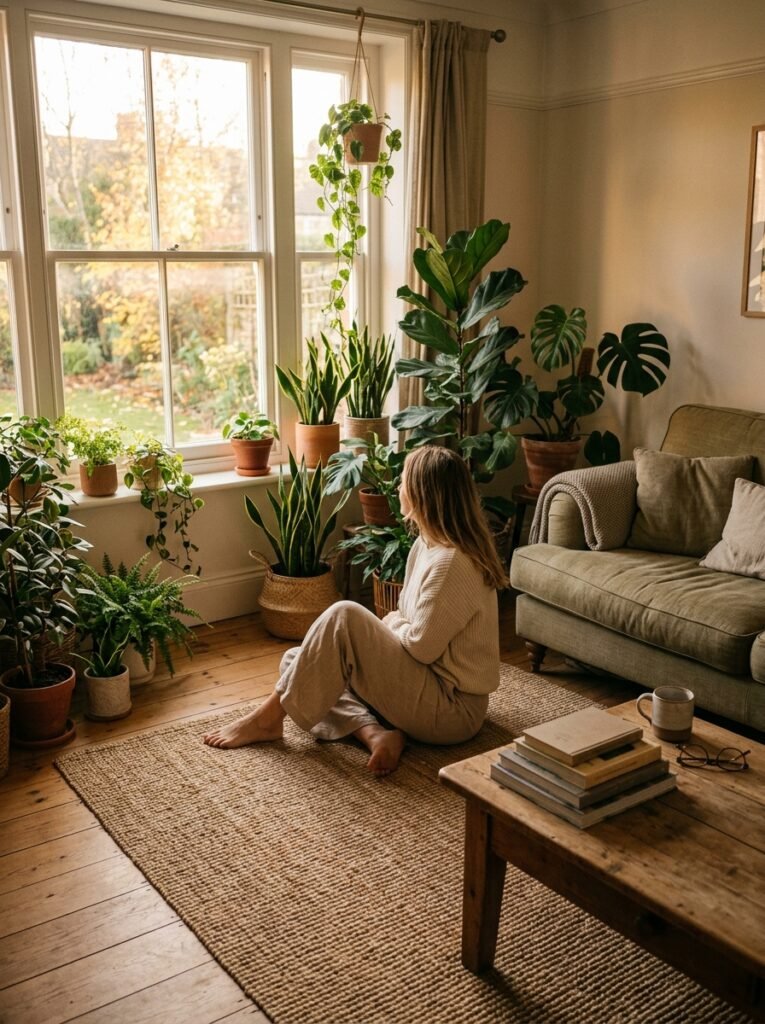
None of this has to happen all at once. The best plant-styled rooms I’ve seen were built over months, sometimes years, with things moved around constantly until they felt right. The avant-garde part isn’t really the plants themselves — it’s the willingness to keep asking whether something could be placed more boldly.
What would you change in your living room right now if you weren’t worried about whether it “made sense”?