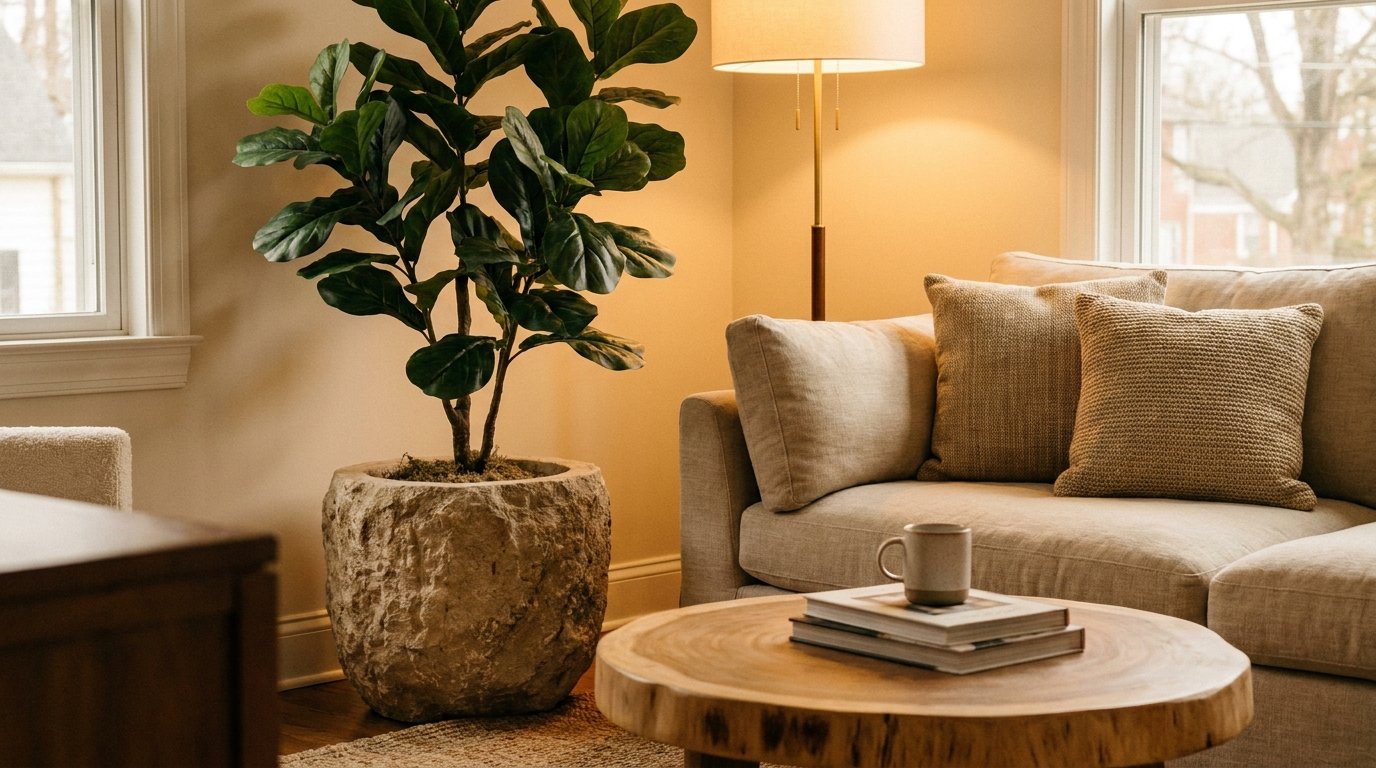
Fake Plants That Look So Real Your Guests Will Actually Touch Them (And That’s the Goal)
My friend Sara reached out and grabbed a trailing vine hanging over my bookshelf last spring, rubbed the leaf between her fingers, and then just stood there looking vaguely betrayed. “That’s NOT real?” She’d been coming over for two years.
That’s the moment I knew I’d figured something out.
—
1. Why the “Artificial Plants Are Tacky” Rule Died Quietly — And Nobody Told Us
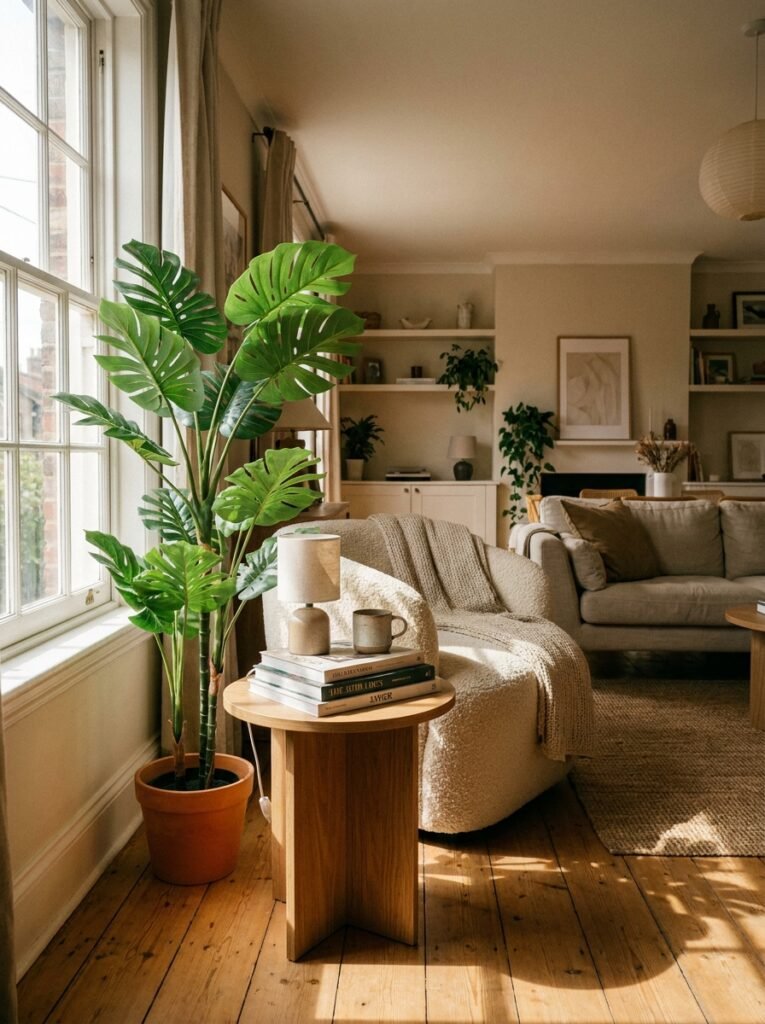
Somewhere in the last few years, the quality gap between real and fake just… closed. Not entirely, not across the board, but enough that the old rule stopped being useful. The plants that were landing in living rooms started being made from materials that bend, have irregular leaf shapes, and catch the light the same way a real monstera does on a cloudy Tuesday morning.
The reputation problem was always the shiny leaves. That waxy, too-green, stiff plastic look that screamed “gas station lobby.” And honestly? Some still look like that. But the options that don’t are everywhere now, and they’re what we’re talking about here. Silk, preserved botanicals, poured latex, hand-painted stems — the materials got serious.
And the design community shifted too. Living rooms are doing more work than ever — they’re offices, playrooms, meditation corners. Keeping anything alive in a room that faces north or gets completely different light in winter versus summer can feel impossible. People stopped apologizing for the solution.
—
2. The One Spot in Every Living Room That Transforms With a Tall Plant (No Water Required)
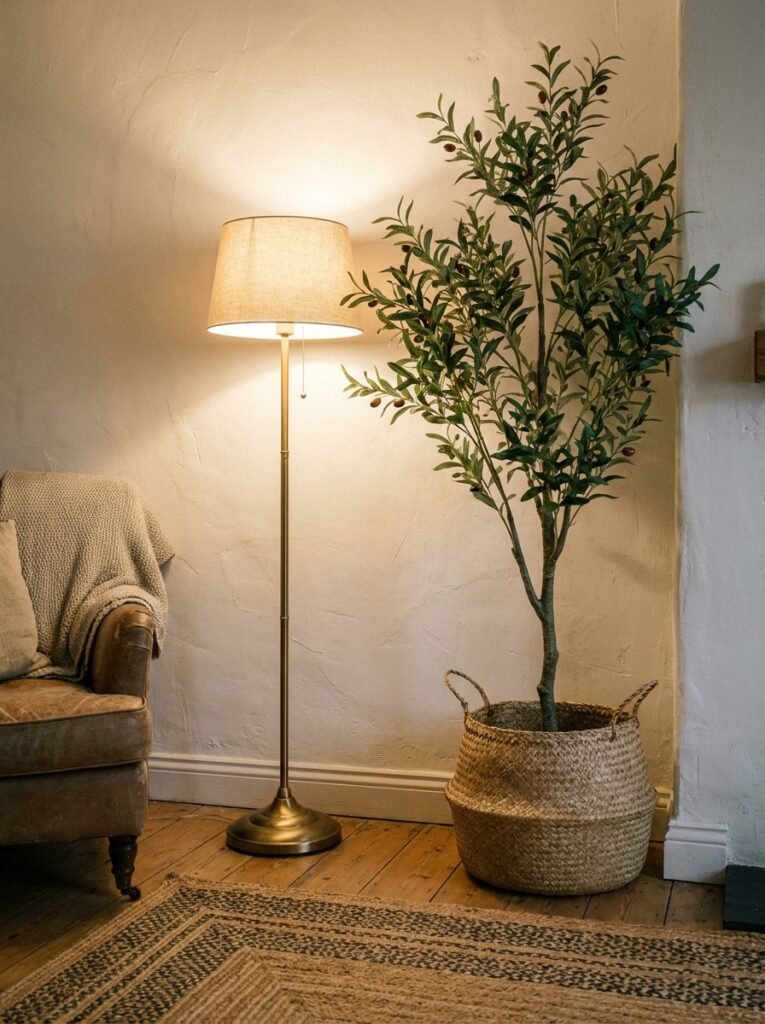
You probably already know this corner. The one that feels visually unfinished even after you’ve moved the sofa six times and tried two different rugs. It’s almost always a vertical problem — the room has no upward movement there, and your eye just drops.
A tall faux plant fixes this in a way that almost nothing else does. Not a lamp, not art, not a stack of books. Height WITH organic shape.
“The corner that’s been bothering you for two years? A six-foot faux fiddle leaf fig. I’m not even being dramatic. It will work.”
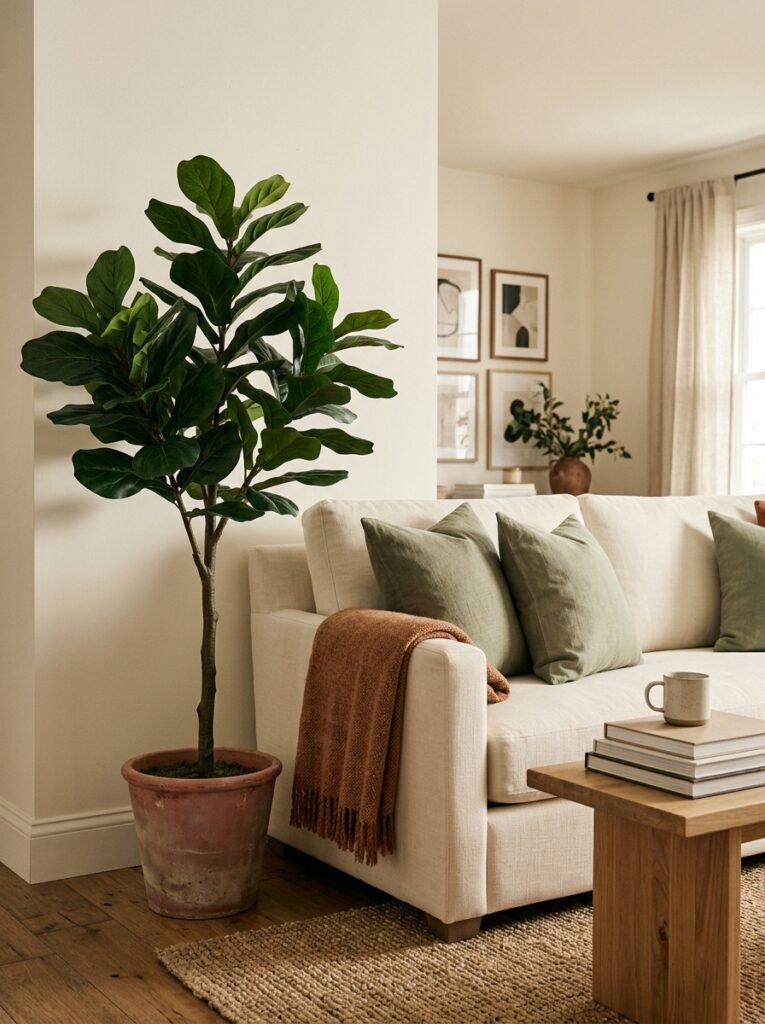
What actually works: a faux fiddle leaf fig or olive tree in the 5-to-6-foot range, in a simple terracotta or matte ceramic pot, sitting on the floor. No plant stand needed. You want the pot to look like it belongs there, like you didn’t try too hard. Rough texture on the pot is your friend because it reads as intentional and grounded.
The key thing people miss: don’t push it all the way into the corner. Pull it forward about six inches. It changes how the whole room reads. Suddenly it’s a feature, not furniture you squeezed in.
—
3. What Makes a Fake Plant Look Real (Hint: It’s Not the Plant)
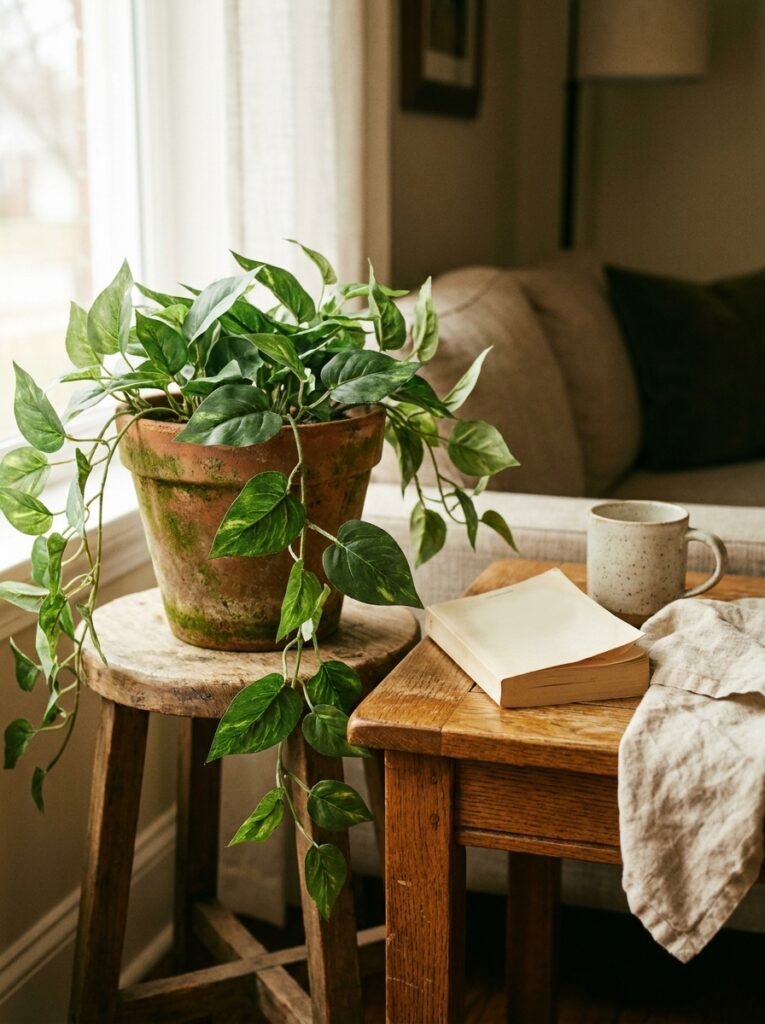
Here’s something that took me an embarrassingly long time to figure out. The plant itself is maybe fifty percent of the equation. The other fifty percent is how you style it.
Real plants look lived-in. They have a pot with a drainage hole, sometimes a saucer with a water ring on it. The soil has texture, maybe a little unevenness. They’re not centered perfectly. They lean slightly.
So you recreate that. Get a bag of real soil or preserved moss and top-dress the pot. This one thing alone will fool people at a glance and even sometimes up close. The moss is warm and slightly imperfect, and it reads as alive because it basically still is.
Then: don’t center the plant in its pot. Tuck it slightly toward the back. Add a small decorative stone or two. The slight asymmetry does something psychological — our brains associate perfectly centered things with manufactured, and slightly off-center things with nature.
And the pot matters enormously. Glossy white says “I’m fake.” Aged terracotta, rough-thrown stoneware, woven baskets — these say “I’m cared for.”
—
4. The Trailing Plant Trick That Makes Your Shelves Look Like a Set Designer Did Them
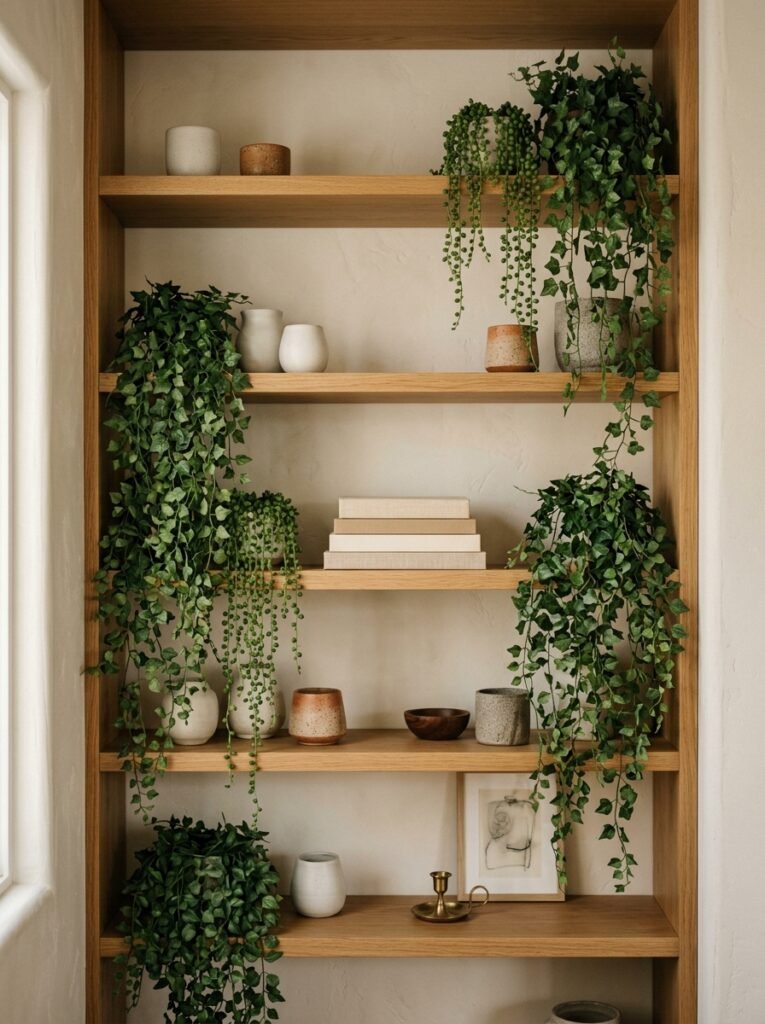
Bookshelves are where artificial plants genuinely earn their keep over real ones, and the reason is practical. Real trailing plants need light and moisture and regular rotation. Bookshelves are usually dark, often against interior walls, and nobody’s rotating plants on a shelf full of books.
But a good faux trailing plant — a pothos, an ivy, a string of pearls — draped down the side of a shelf and tucked between books? It’s the thing that makes a shelf look styled rather than just full.
The longer the trail, the better. Don’t be conservative with it. You want it to feel like the plant grew there, like it’s been there long enough to go a bit wild. Wrap a strand or two around the spine of a book. Let one trail down far enough to brush the shelf below.
“Shelves styled with trailing faux plants have this specific quality — they look collected and personal, like the room belongs to someone who actually lives in it.”
One pot, one plant, but multiple strands going in different directions. That’s the move.
—
5. The Mistake That Makes Even Expensive Faux Plants Look Cheap
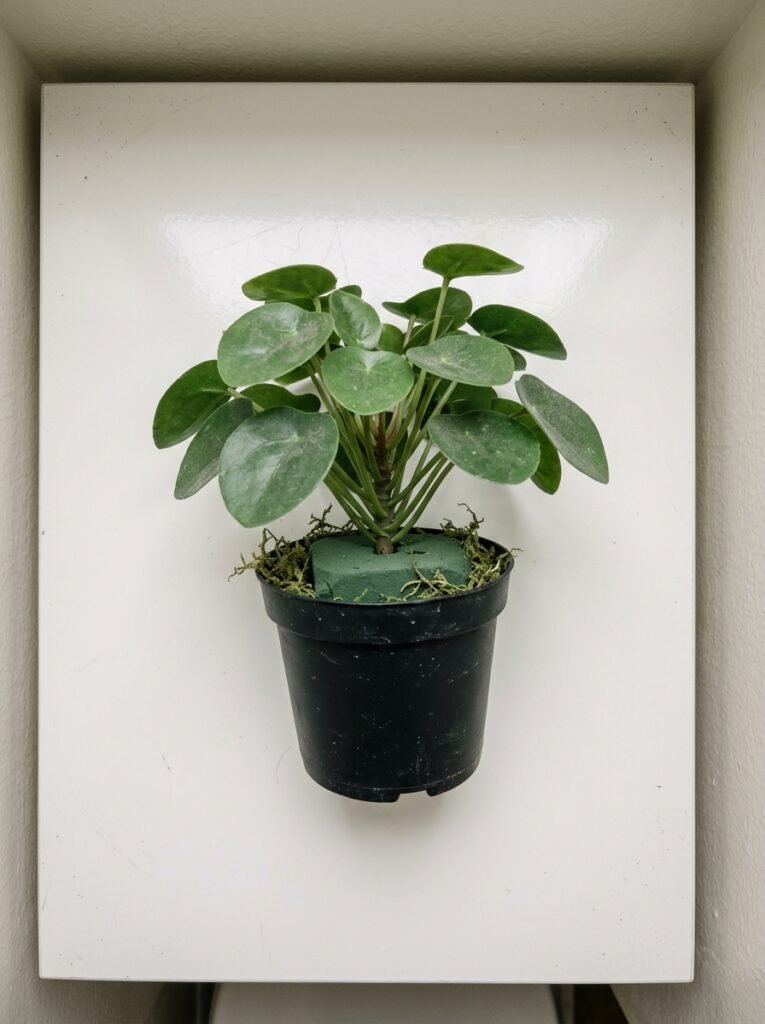
Buying a perfectly symmetrical, perfectly shaped plant and then keeping it perfectly symmetrical and perfectly shaped.
Real plants don’t grow evenly. One branch leans toward the light. A few leaves face down. The tallest stem curves slightly. When you’re unboxing a new artificial plant, reshape it before it goes anywhere near your room. Physically bend the stems. Pull some leaves down. Rotate others so they’re not all facing the same direction. Spread the branches so there’s actual negative space between them — that open, airy quality that real plants have.
This takes five minutes and it’s the difference between “that’s so pretty” and “wait, is that fake?”
Side note — if you’ve already put yours out and it still looks a bit stiff, you can take it down and reshape it right now. No shame. I restyled the same plant three times before I got it right.
—
6. Small Faux Plants That Are Doing Heavy Lifting in the Trendiest Living Rooms
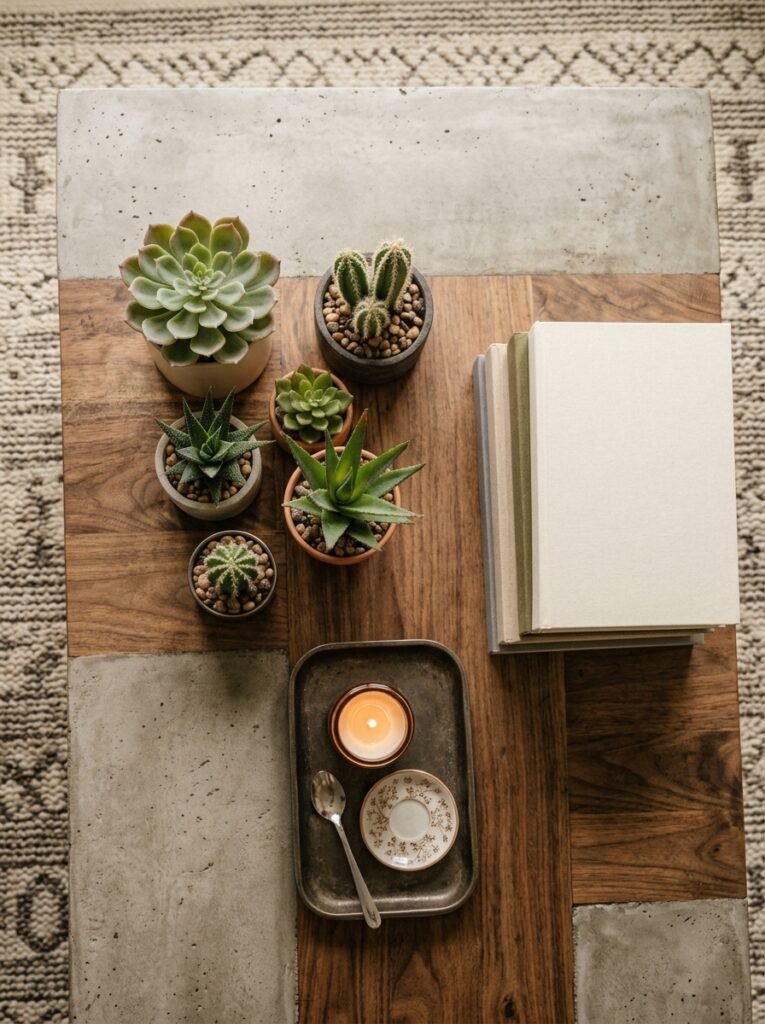
Not every artificial plant situation needs to be a statement piece. Sometimes the best thing you can do for a living room is add small moments of green in unexpected places.
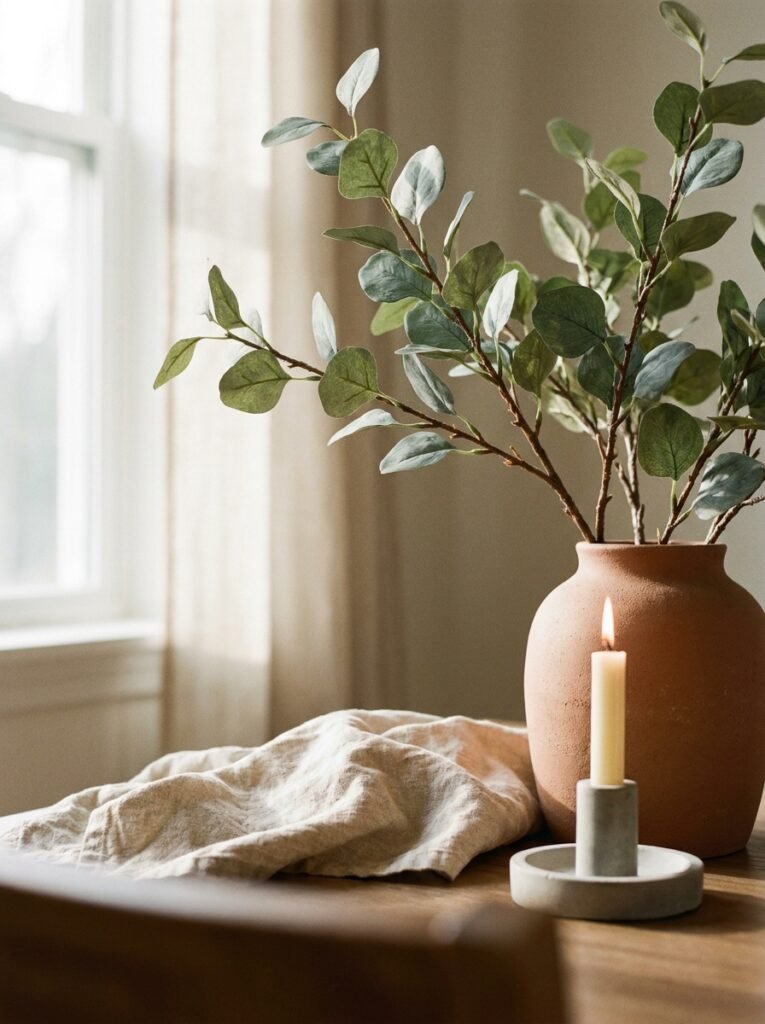
A tiny faux succulent cluster on a side table next to a stack of hardbacks. A single preserved eucalyptus stem in a narrow bud vase on the mantel. A compact faux ZZ plant tucked into a corner of a built-in shelf where real light never reaches.
These small additions do something subtle but powerful — they bring the room into the “curated” category without screaming for attention. They say: someone thought about this space carefully. Every surface tells a story.
The current style moment is particularly fond of preserved and dried botanicals mixed in with faux green plants. Pampas grass, dried seed pods, bleached branches. These are technically not alive and never were (or aren’t anymore), but they have a warmth and texture that feels deeply organic. Mix them in freely.
—
7. The Color Combinations That Make Faux Plants Look Intentional, Not Accidental
Green is not one color. This seems obvious until you’re standing in front of a wall of artificial plants trying to figure out why some look good together and some look wrong.
The fake plants that read as cheap often have a color that’s too saturated, too uniformly bright. Real leaves have variation — lighter undersides, slightly yellowed older leaves, new growth that’s almost lime green. When you’re shopping for faux plants, look for that variation IN the individual leaves, not just across different plants.
When mixing multiple faux plants in a living room (and you should mix them, singular plants look lonely), pair deep glossy greens with matte silvery greens. A dark fiddle leaf next to a pale eucalyptus. The contrast makes both look more real because real plant collections are never monotone.
And consider pot color as part of the green palette. Deep forest green in the plant needs a warm pot — terracotta, aged brass, warm wood. Pale silvery green can go into something cooler — concrete, matte black, bleached ceramic.
—
8. If Your Living Room Gets Almost No Natural Light, Here’s the Plant Strategy That Actually Works
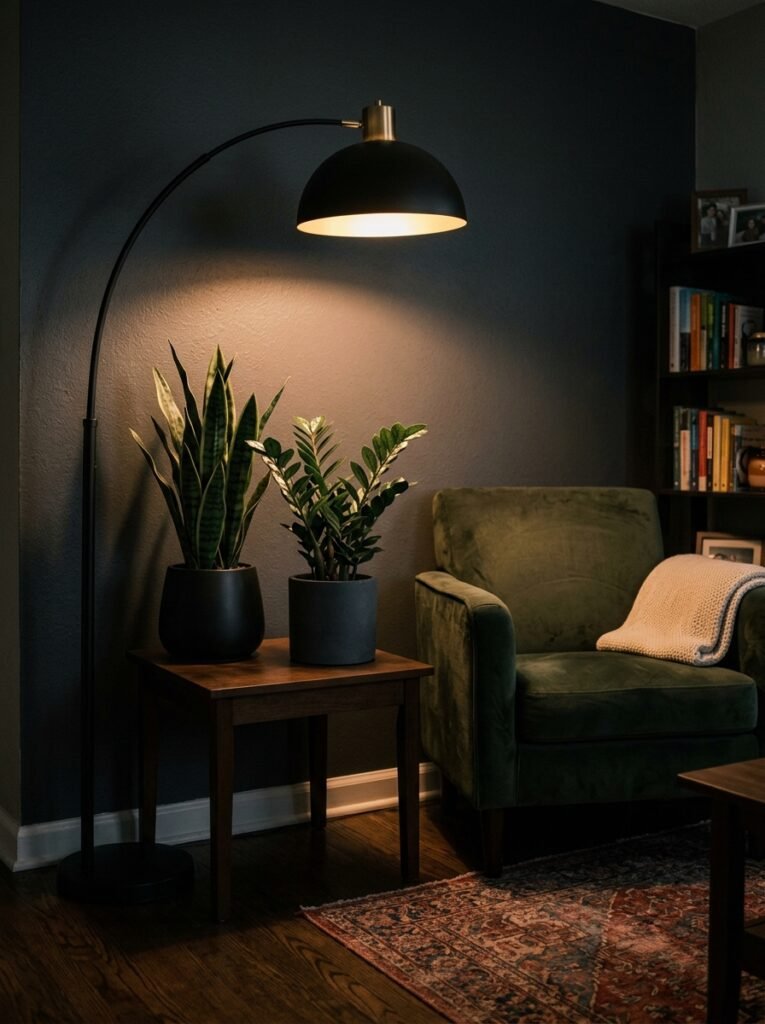
North-facing room. Basement conversion. That one spot by the TV where no window light ever reaches. These spaces DESERVE plants too, and artificial is genuinely the right answer — not the compromise answer.
The strategy that works best in dark rooms is going slightly wilder with size and quantity. A single small plant in a dark corner just looks sad. But a considered grouping? A tall floor plant, a trailing plant on a side table, a small sculptural plant on the coffee table — that reads as a design decision. An atmosphere.
Dark rooms actually benefit from more plant presence, not less, because the organic shapes break up what can otherwise feel like a heavy, dim space. The green doesn’t need light to work — it’s doing its visual job regardless.
“In a room that gets almost no sun, three well-placed artificial plants will do more for the feeling of the space than a new rug. I’ve tested this theory more times than I’d like to admit.”
One more thing: in dark rooms, pot choice matters even more. Go lighter — white, cream, warm pale terracotta. The contrast between a light pot and a dark room makes the plant visible and intentional rather than swallowed by the shadows.
—
9. The “Real Plant Graveyard” Problem (And Why Some of Us Just Need to Accept the Alternative)
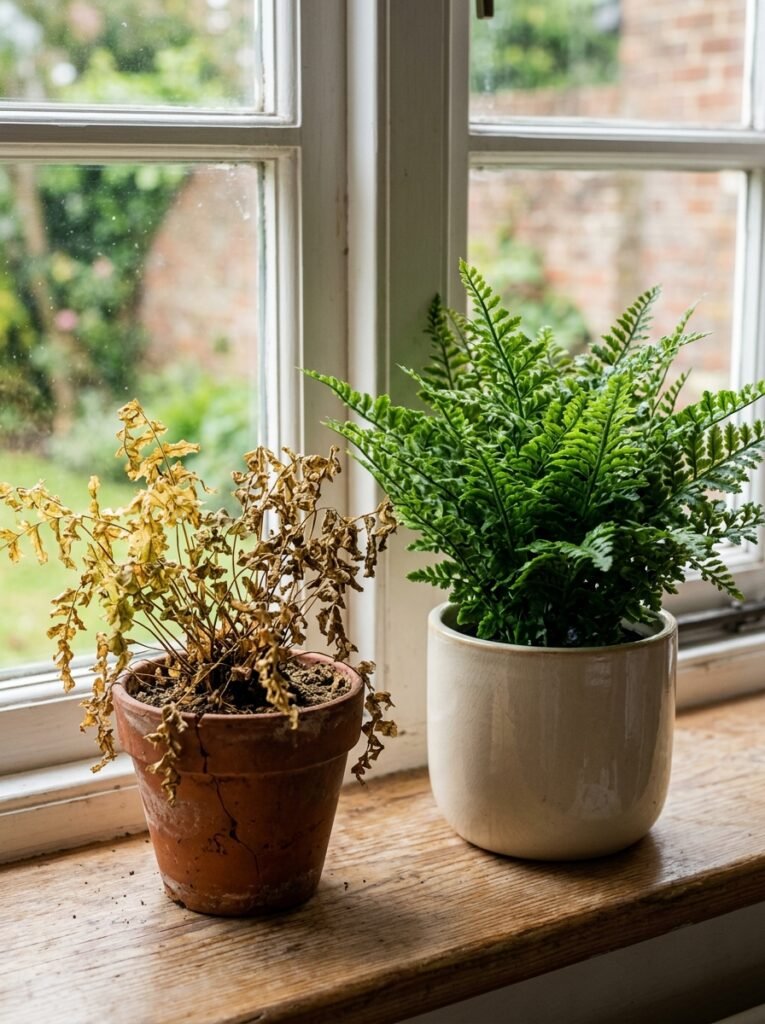
I’ve killed a peace lily. I’ve killed a snake plant. I killed a CACTUS once, which I still can’t fully explain. Some of us are just not plant people, and the shame spiral of buying something beautiful and watching it slowly decline is genuinely not fun.
The answer isn’t to give up on having green in your home. Plants in a living room serve a real psychological function — they soften hard edges, they bring something alive (or alive-adjacent) into a space that’s mostly made of manufactured things. You feel the difference even when you don’t notice you’re noticing it.
And honestly, the environmental guilt calculation is more complicated than it sounds. A high-quality artificial plant that lasts ten or fifteen years might well have a smaller footprint than buying and replacing real plants every few months. Not a certainty, but worth mentioning.
Buy the faux plant. Style it well. Stop apologizing.
—
10. What the Best-Looking Living Rooms on Pinterest Are Actually Doing With Artificial Plants
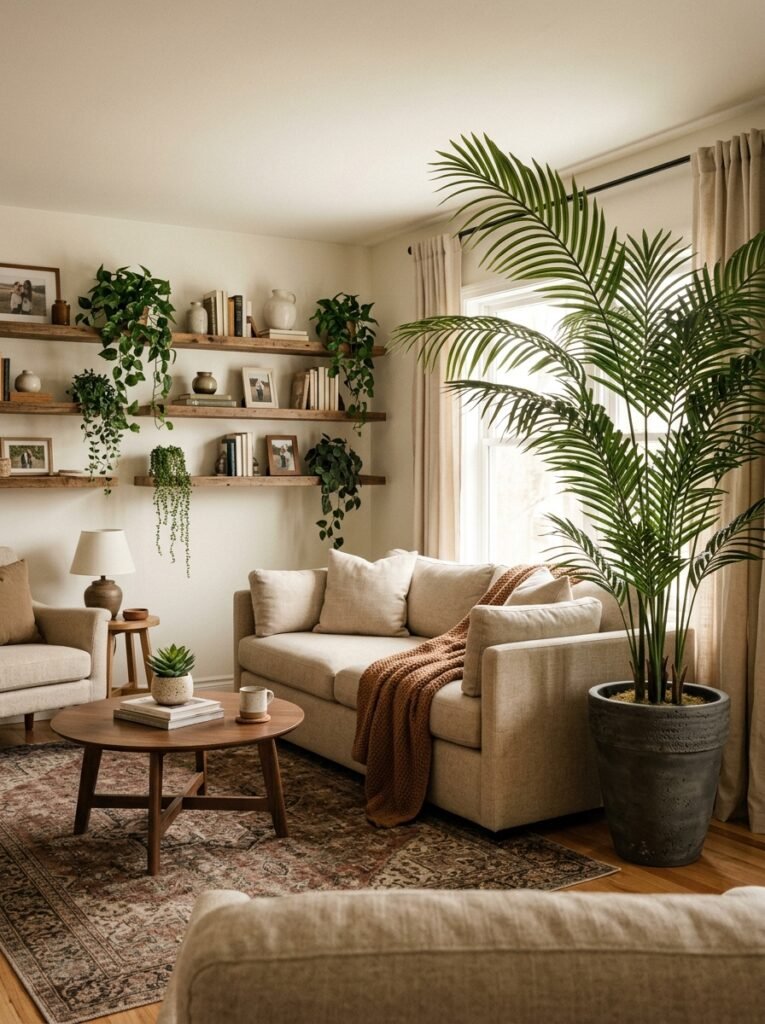
There’s a styling pattern that shows up constantly in the rooms that get saved millions of times, and it’s not what most people think. It’s not one big dramatic plant. It’s layers.
A tall plant in the corner. Something trailing from a shelf mid-height. Something small and sculptural at eye level when you’re sitting down — on the coffee table or a low side table. Three levels of green, varied textures, varied pot materials.
This layered approach tricks the eye in the same way real plant-filled rooms do, where plants accumulate over time at whatever height they fit. It looks collected, not decorated. There’s a difference and people feel it immediately even if they can’t name it.
The other thing those rooms do: they don’t match the pots. Different heights, different materials, one or two different pot colors. A matching pot set says “kit.” Mismatched says “these plants arrived here at different times from different places.”
—
11. The Style Rules That Actually Apply to Both US and UK Living Rooms (And the One Place They Differ)
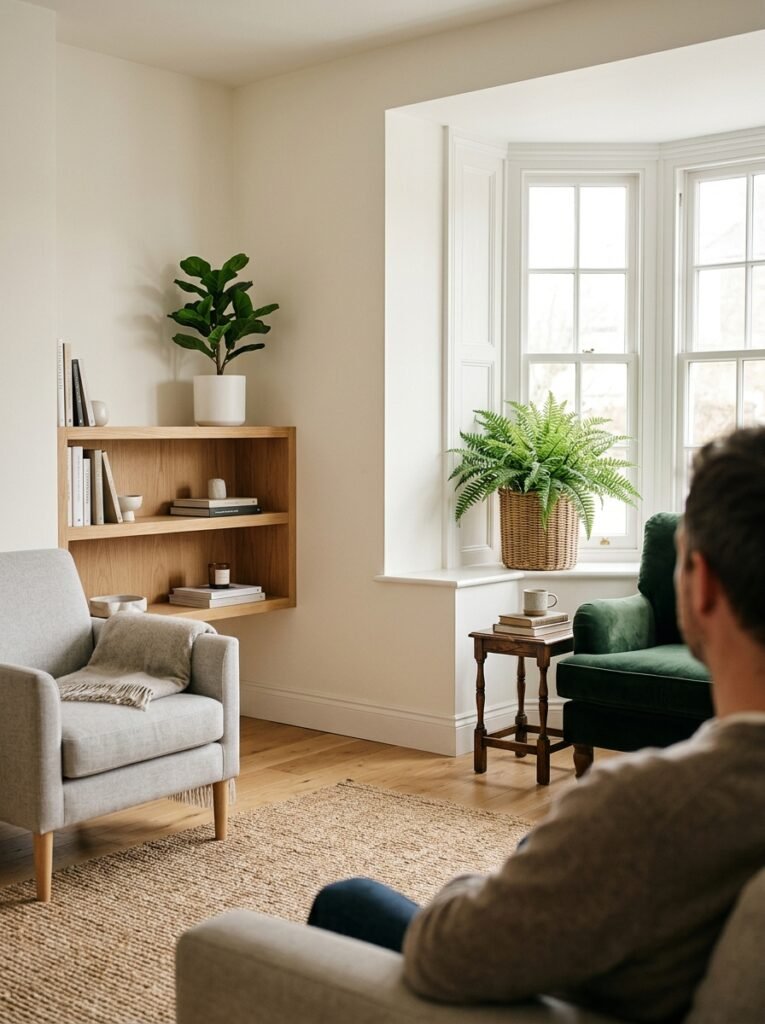
American living rooms tend to go bigger — larger plants, more dramatic placement, a willingness to put a six-foot tree next to the sofa and commit. UK living rooms are often slightly smaller and more layered, working with alcoves, period features, fireplaces, bay windows. The plants end up in different spots but they’re doing the same job.
What works in both: the layered approach, the mismatched pots, the top-dressing with moss, the reshaped stems. That’s universal.
Where they slightly diverge: British rooms lean more toward softer textures — ferns, eucalyptus, trailing ivy — which sit well in period properties with original cornicing and fireplaces. American rooms are currently very into the bold, architectural shapes — the fiddle leaf, the monstera, the bird of paradise — which suit the higher ceilings and open-plan layouts that are common in newer builds.
But honestly? These are tendencies, not rules. Put whatever plant you want in your living room. It’s your room.
—
12. How to Tell If a Faux Plant Is Worth Buying Before You Get It Home
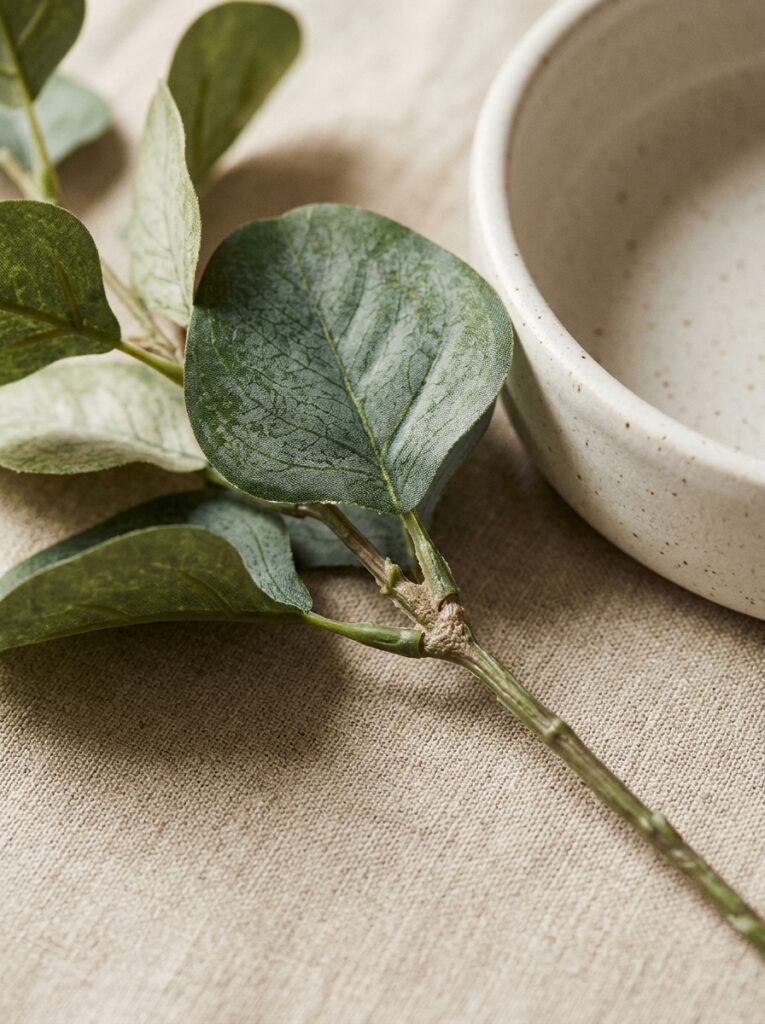
The test I use when shopping: look at the leaf undersides. Cheap plants have flat, uniformly colored undersides that look stamped. Good plants have subtle variation there — slightly lighter, slightly different texture, sometimes a faint vein pattern continuing underneath.
Also: feel the stems. Do they hold their position when bent? Can you angle a branch and have it stay? Flexible wire inside the stem is a sign of quality and it matters for styling.
And go close. Like, actually close. The way your guests will if they’re curious. Does it hold up? Is there texture in the leaves or are they glassy and flat? Texture is realism. Flat is plastic.
The plants worth buying are often not the cheapest ones. But they’re not always the most expensive either. Mid-range, with those three checks, gets you somewhere you’ll be happy with for years.
—
❓ FAQ
Q: Do artificial plants look tacky in a nice living room? A: They really don’t anymore, as long as you choose quality and style them thoughtfully. The key is avoiding stiff, shiny-leafed plants and going for ones with natural variation in color and texture. A well-styled faux plant in a beautiful pot reads as intentional interior design, not a shortcut.
Q: What’s the most convincing artificial plant for a living room? A: Trailing pothos and ivy tend to fool people consistently because the leaf shapes are simple and the trailing form is naturally irregular. Fiddle leaf figs have also improved enormously in quality. Whatever you choose, top-dress with real moss and reshape the stems — that matters as much as the plant itself.
Q: How do you clean artificial plants without ruining them? A: For most faux plants, a light dusting with a soft cloth or a very gentle pass with a hair dryer on the cool setting works well. For silk plants, a slightly damp cloth on each leaf is fine. Avoid anything abrasive, and if the plant has a lot of small leaves, a can of compressed air does the job quickly. Don’t submerge them in water.
—
💭 Final Thoughts
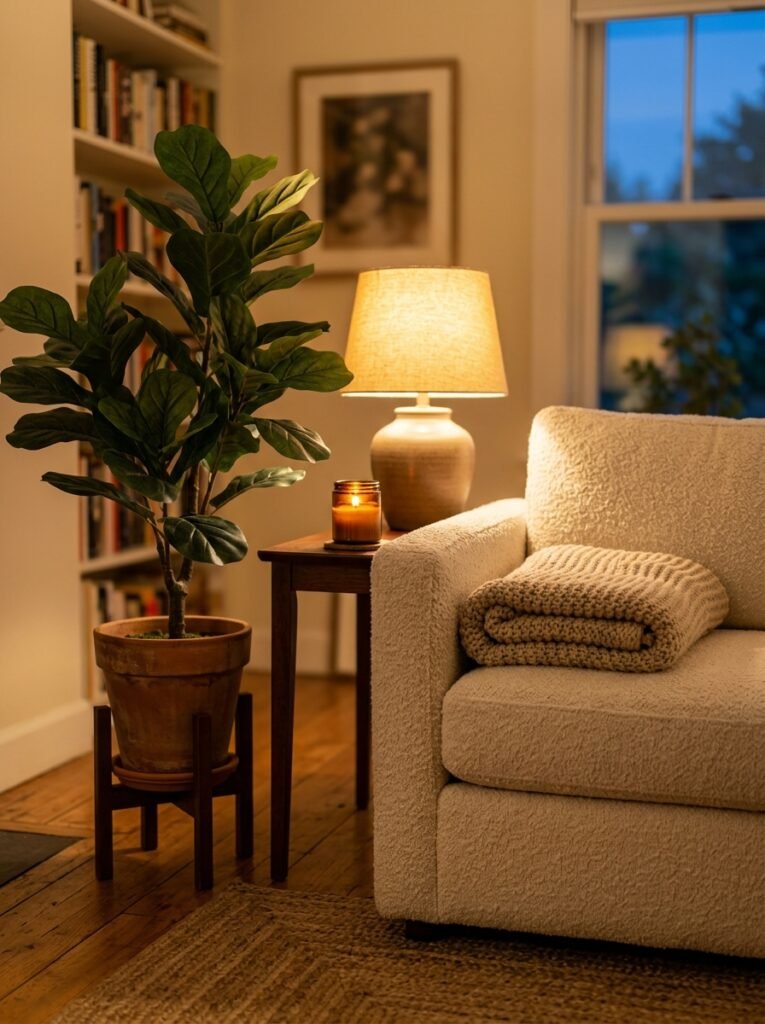
There’s something kind of freeing about committing fully to artificial plants and just… not making it a big thing. Your living room can have the green, the texture, the organic softness — without the watering schedules and the inevitable slow decline of the plant you forgot about during a busy month.
Sara still talks about the vine. She’s thinking about getting one for her own place now.
Does it matter, in the end, whether a leaf is real if the room it’s in feels alive?