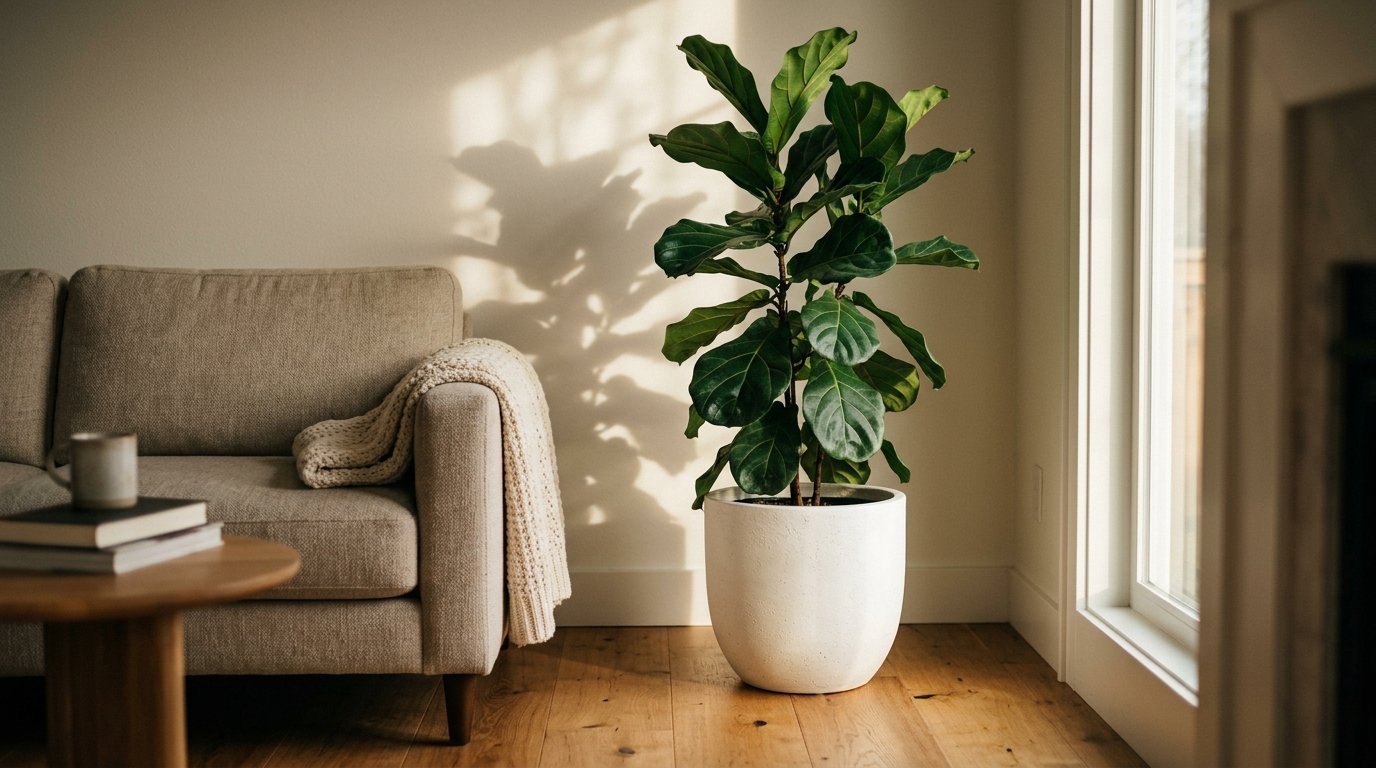
The Plant That Changed How My Entire Living Room Felt (And Why I Wish I’d Done It Sooner)
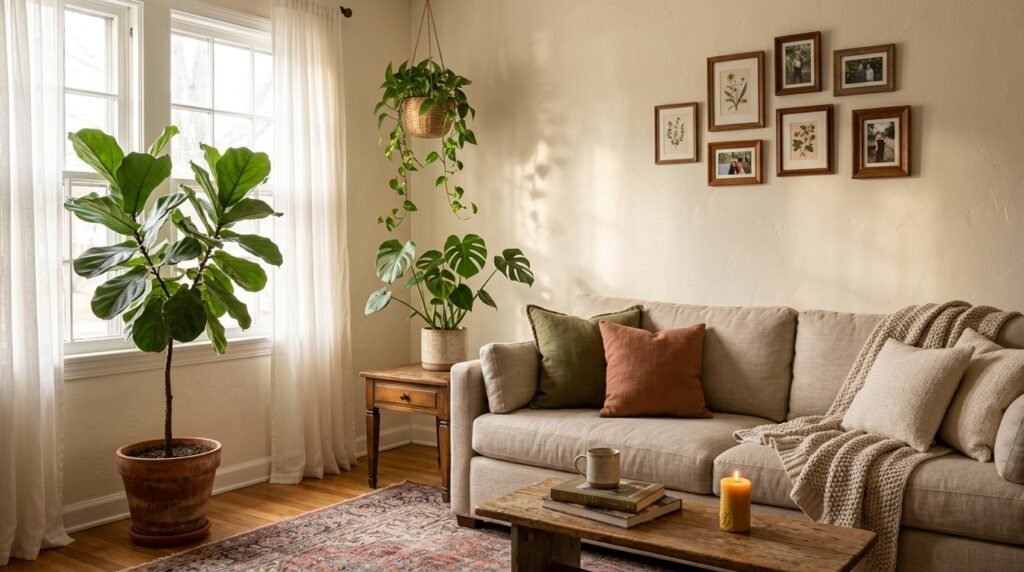
A friend came over last spring and the first thing she said was, “Why does your living room feel so alive now?” I’d moved in three plants. That was it. Three plants, new spots, and suddenly the room had this quality I’d been chasing for two years with throw pillows and paint samples.
So let me tell you everything I figured out.
—
1. The Spot Everyone Ignores That Plants Were Basically Made For
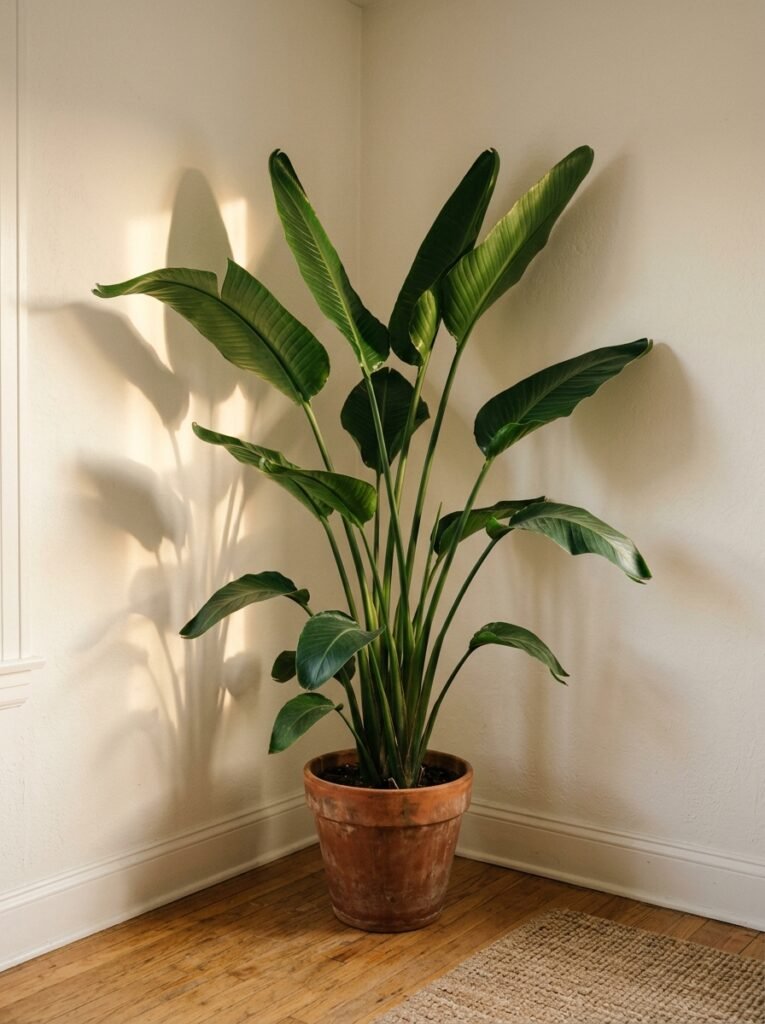
The corner. The sad, forgotten corner.
We put floor lamps there. We stack books we mean to read. We let the Roomba get trapped there. But here’s what I’ve slowly realized — a tall, architectural plant in a corner does something no piece of furniture can do. It fills vertical space without closing the room off. A fiddle leaf fig, a rubber plant, a large bird of paradise. Any of them will turn a dead zone into what designers call an “anchor point” without you having to spend a fortune.
The trick is scale. Most people buy small and plan to wait. But a plant that’s already 4 to 5 feet does the visual work immediately, and you’re not staring at a sad little stick in a pot for eighteen months wondering why the room still looks unfinished.
“A tall plant in a corner does something no piece of furniture can do — it fills vertical space without closing the room off.”
Don’t overthink the pot. A simple terracotta or a matte white ceramic. The plant is the statement.
—
2. Why Your Living Room Probably Needs Something Trailing, Not Standing
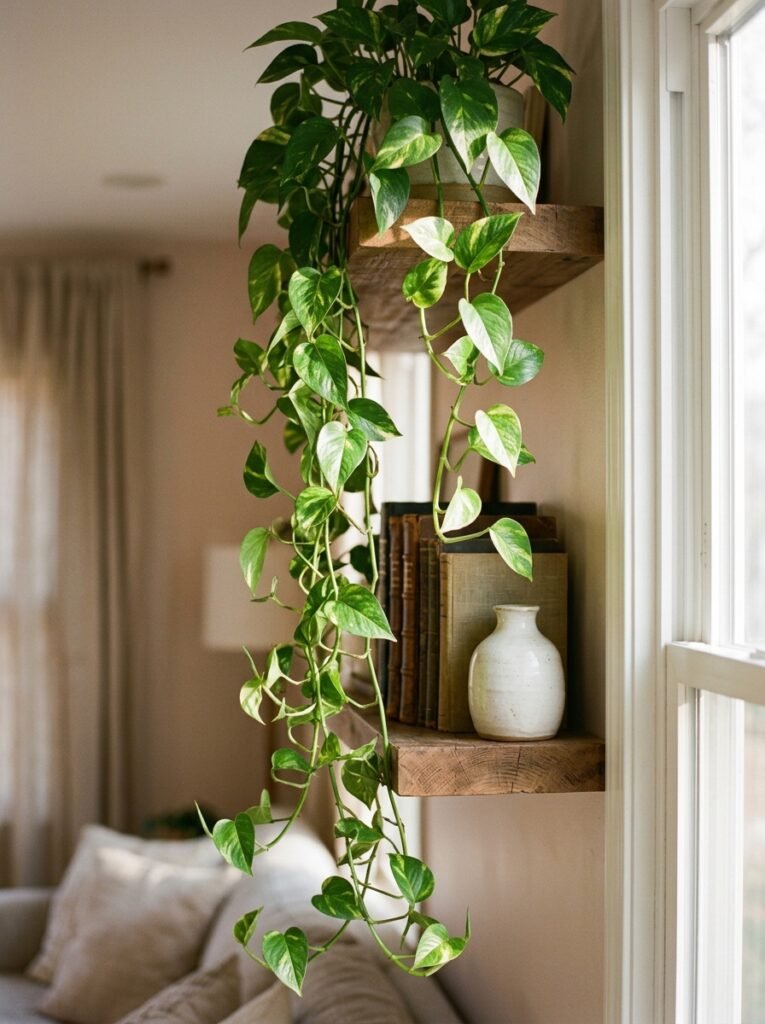
Standing plants get all the attention. Trailing plants do all the emotional work.
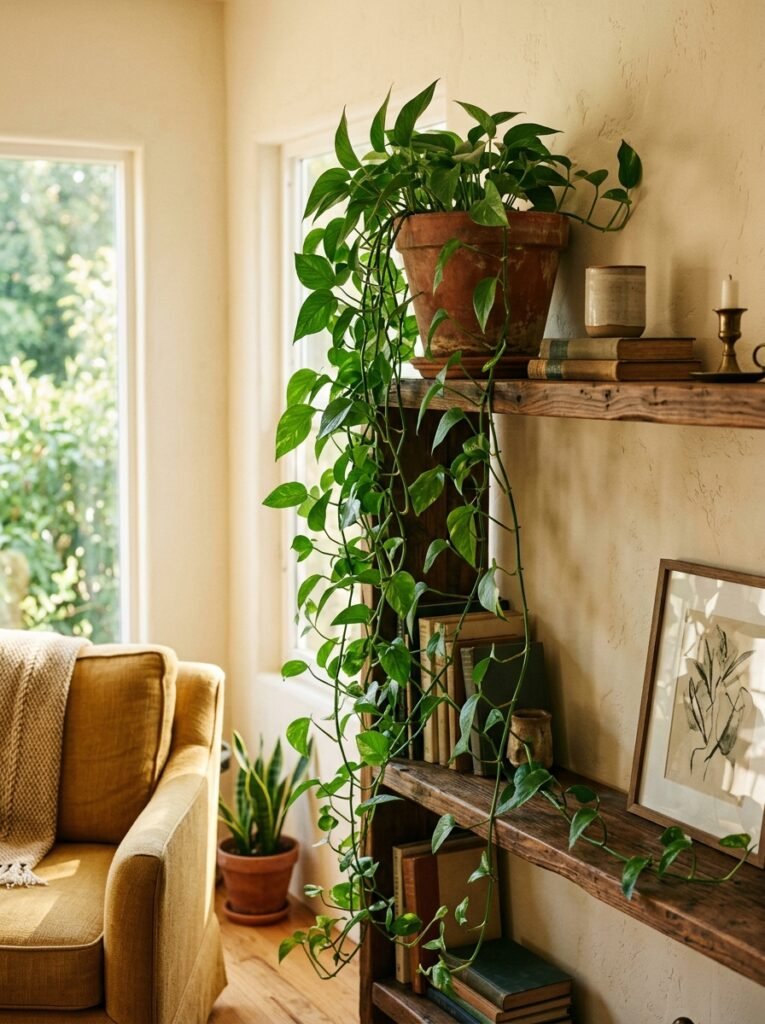
There’s something about a pothos or a heartleaf philodendron tumbling off a shelf or spilling over the edge of a bookcase that makes a room feel genuinely lived in. Not staged. Not “styled.” Lived in. That’s the thing I was missing for ages — everything in my room was pointing UP or sitting flat. Nothing was moving, visually. Trailing plants add this sense of softness and motion that you can’t manufacture with textiles.
Put a trailing plant on the highest shelf you own. Let it go. Don’t trim it into submission. The longer those vines get, the better the room looks, and that’s a rare decorating rule where doing less is literally the better choice.
Both the US and UK have totally different average humidity levels by region, by the way — so if you’re in a dryer part of the country (or a very centrally heated British flat in January), pothos and philodendrons are your most forgiving options. They don’t care. They thrive on neglect in a way that honestly feels like a personality trait.
—
3. The Light Problem Nobody Admits Until They’ve Killed Three Plants
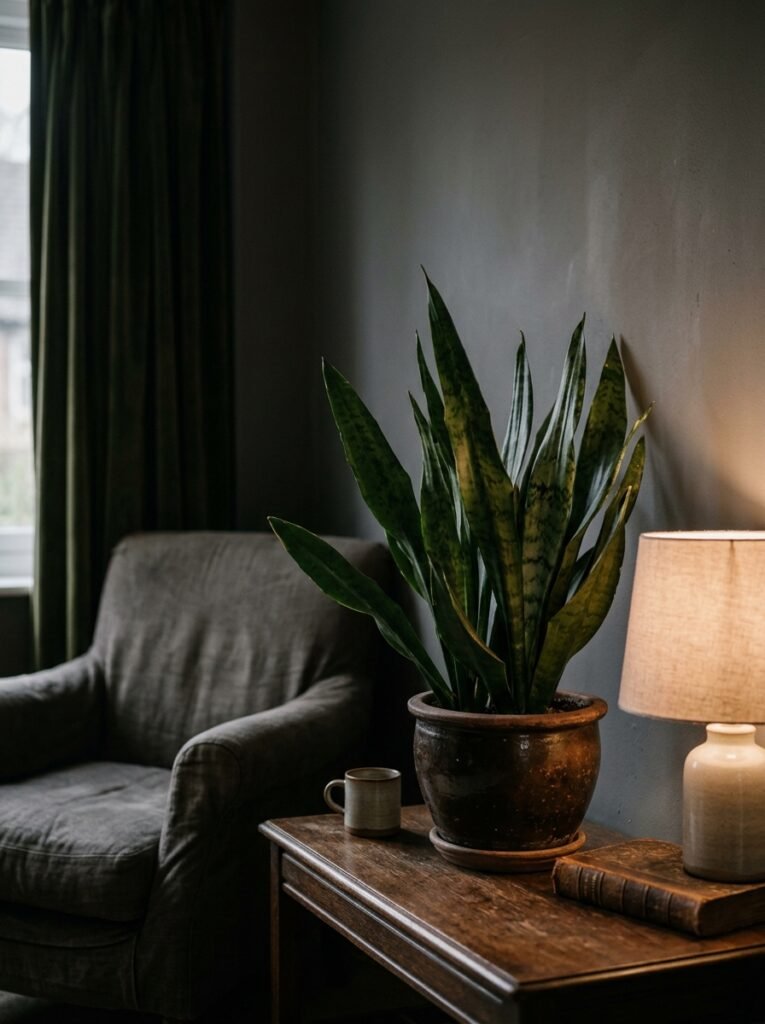
Not gonna lie — I’ve murdered some beautiful plants by pretending my living room got more light than it did.
Natural light is the one thing you can’t fake, and most living rooms don’t get as much as we think. A north-facing room in a British terrace house in November? That’s essentially a cave. A south-facing apartment in Chicago in July? That’s almost too much. The mistake people make is buying the plant they WANT and then hoping for the best.
So here’s the honest shortlist for low-light living rooms: ZZ plants, cast iron plants, pothos (again, they’re everywhere for a reason), and snake plants. They’re not boring choices. A big, mature snake plant in a beautiful pot is genuinely architectural. A ZZ plant has this dark, waxy leaf that photographs SO well and glows even in dim corners.
For rooms with good natural light — east-facing windows especially — you get to play more. Monsteras, rubber plants, peace lilies, fiddle leaf figs if you’re brave or just reckless like me.
—
4. How to Style a Plant Grouping So It Looks Curated, Not Cluttered
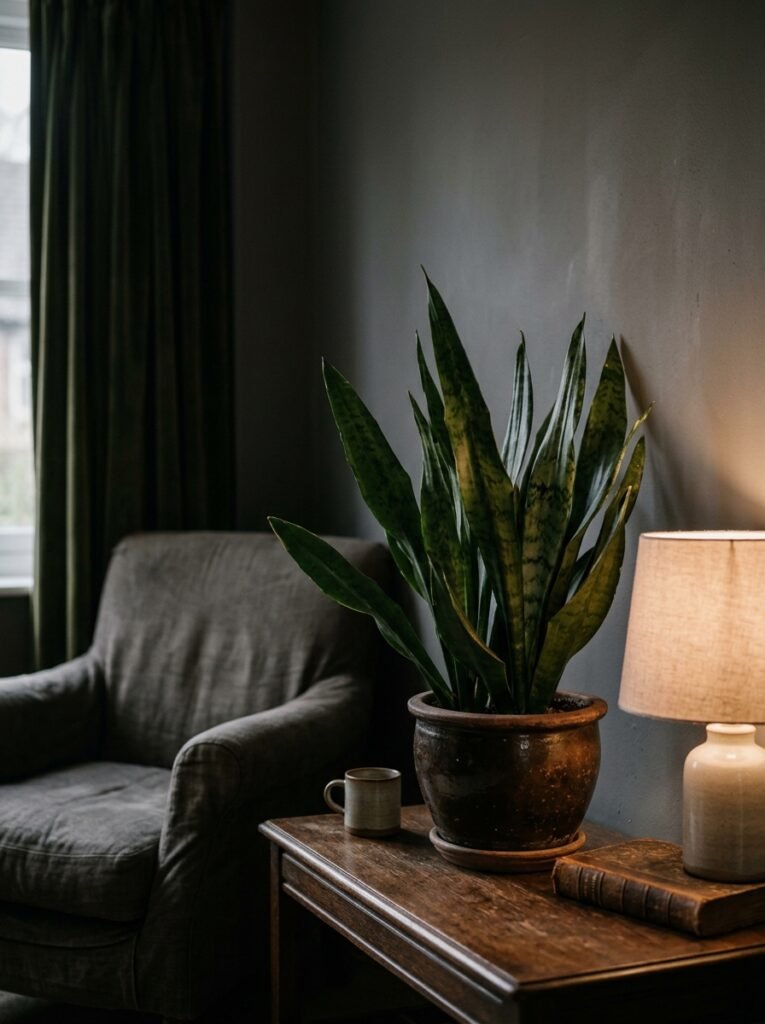
One plant is a statement. Two plants is a pair. Three or more is either a collection or a mess — and the difference is almost entirely about HEIGHT variation.
If everything sits at the same level, the eye doesn’t know where to go. You need a tall one, a mid-height one, and something low or trailing. That’s the whole formula. You don’t need to match species, you don’t need to match pot colors (though keeping them in the same tonal family — all terracotta, or all neutrals, or all black — helps), you just need height variation.
I styled a grouping near my television and it’s the best thing I’ve done to that corner of the room. Most people put nothing near the TV because they don’t want it to compete. But plants don’t compete with screens — they frame them. There’s a difference.
“Plants don’t compete with screens — they frame them. And that’s a difference worth understanding.”
Side note — odd numbers always look more organic than even. Three plants, five plants, seven. Don’t ask me why, it just works.
—
5. The One Type of Shelf Styling That Actually Gets Saved on Pinterest
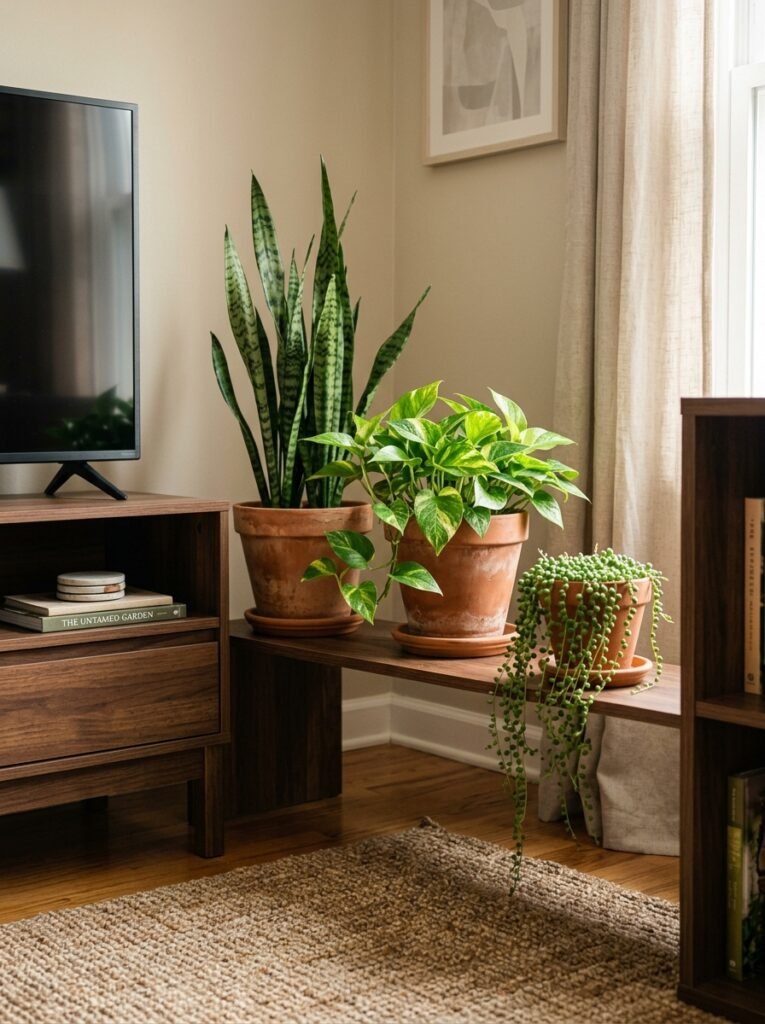
I’ve spent an embarrassing amount of time studying which shelf styling photos get saved and which ones don’t. And the ones that blow up almost always have this in common: there’s a plant breaking the horizontal line of the shelf.
Shelves are very linear. Books, objects, candles — they all sit in a row. A plant that’s either trailing DOWN or growing UP breaks that line and immediately makes the shelf look intentional rather than just… full. A small trailing plant on the second shelf down, spilling slightly onto the shelf below it. A little potted succulent tucked between two books. Even a single stem in a bud vase counts.
This sounds minor. It isn’t. It’s one of those small things that separates a shelf that looks like a shop display from one that looks like a home.
—
6. What to Do If You’re Renting and Can’t Make Holes in the Walls
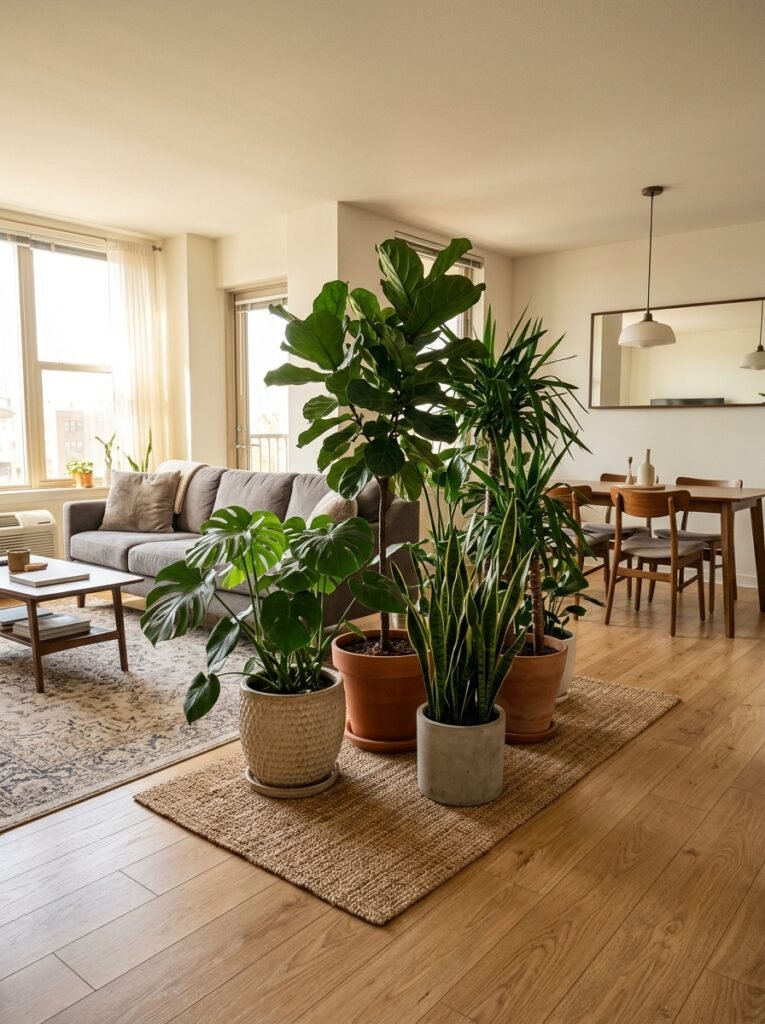
This is actually more of an opportunity than a limitation.
When you can’t hang things, you’re forced to think in three dimensions instead of two. Floor plants become more important. Furniture placement matters more. And plants — floor plants especially — become your primary tool for defining zones and adding height without touching a single wall.
In an open-plan living room, a cluster of tall plants can actually function as a soft divider between the sitting area and the dining area. Not a wall, obviously, but a visual boundary. It reads as intentional design, not a workaround.
If you’ve got a windowsill, a long rectangular planter with a mix of small plants looks incredible and uses what you already have. British sash windows especially — they’re basically built for a row of plants.
—
7. The Color Conversation About Plants That Nobody Has
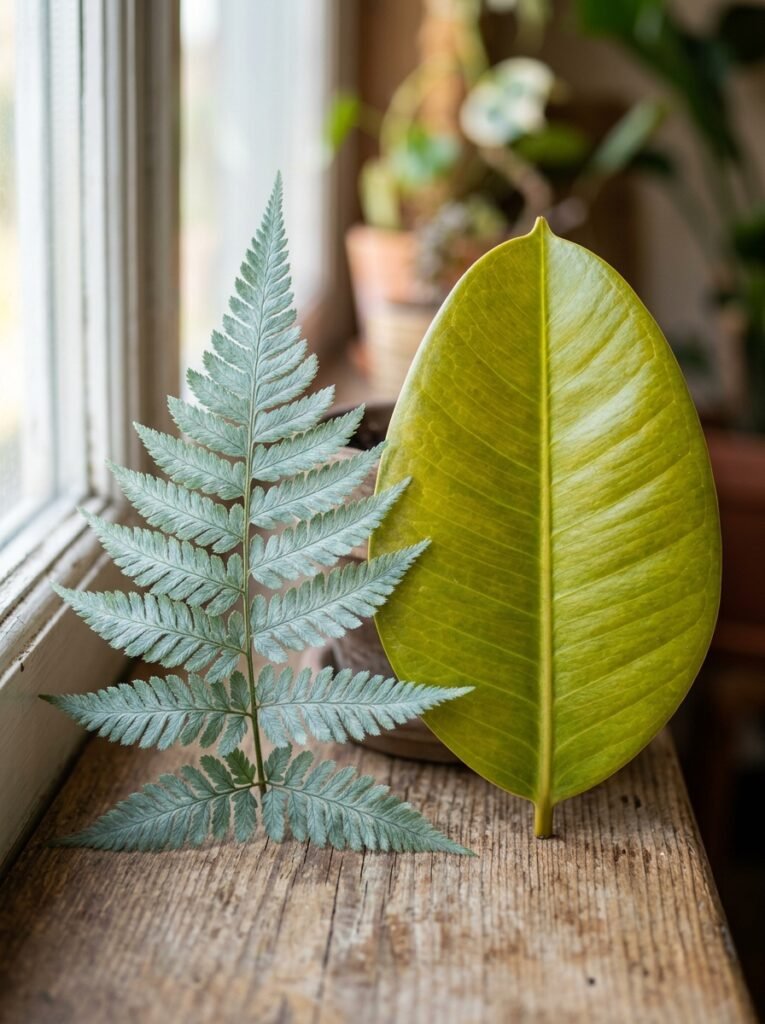
We talk about plants like they’re a neutral. They’re not.
Green has a temperature. Cool greens (think ferns, certain pothos varieties, maidenhair if you’re brave) lean slightly blue-grey and sit beautifully in rooms that have a lot of white, pale grey, or linen tones. Warm greens (rubber plants, fiddle leaf figs, ZZ plants) lean slightly yellow-brown and feel at home in rooms with wood tones, terracotta, cream, and amber.
This matters more than most people think. A rubber plant in a cool grey room can feel slightly off without you being able to articulate why. A maidenhair fern in a warm, wood-heavy space does the same. Or maybe it’s the opposite, honestly — but once you start noticing the undertone of your plants’ leaves, you can’t unsee it.
—
8. When to Let the Plant Be the ONLY Thing on That Surface
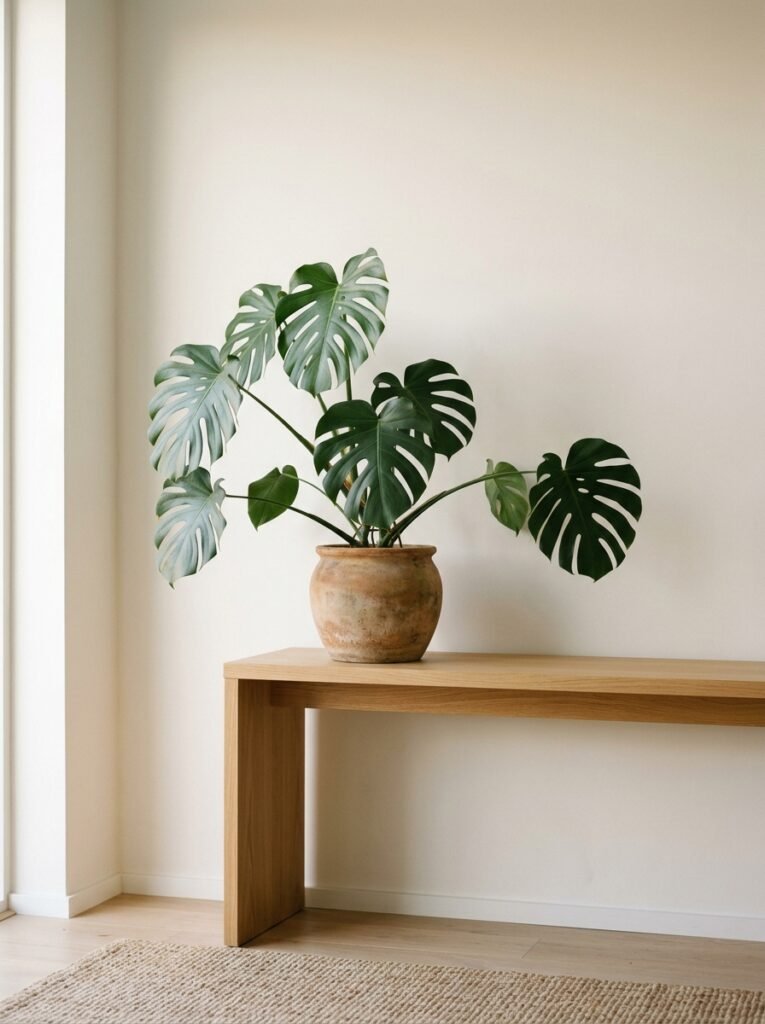
I spent years over-styling. Every surface had a tray, a candle, a book, a small object from a holiday. It looked intentional but it read as exhausting.
Sometimes the bravest thing you can do is put a beautiful plant on a surface and leave everything else off it. A big monstera on a side table with nothing else. A single fiddle leaf in a terracotta pot on an otherwise empty console. The negative space around it makes the plant look twice as good and the room feel twice as calm.
Not every surface needs to “do” something. That’s the lesson. Some surfaces just need to hold one beautiful living thing.
—
9. The Seasonal Switch That Costs Almost Nothing
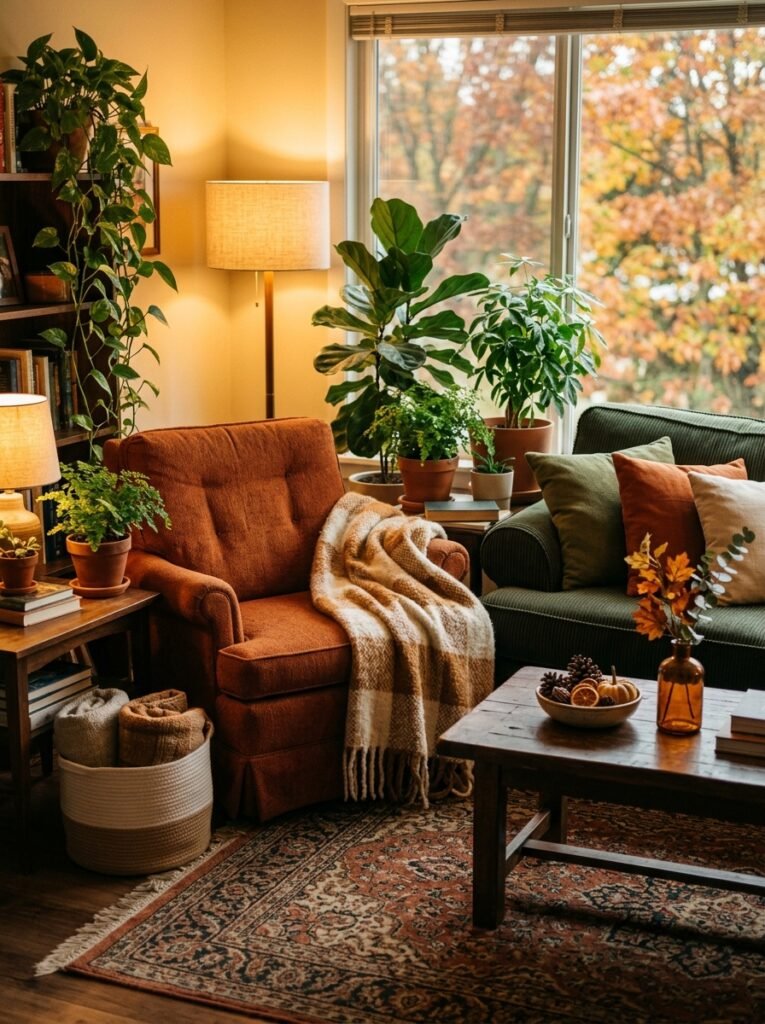
Most people buy plants and keep them in the same spot forever. Which is fine! But there’s something genuinely exciting about treating your plants the way you treat textiles — moving things around seasonally.
In autumn and winter, I pull my plants closer to the seating area. Closer to the sofa, closer to the armchairs. It makes the room feel denser and warmer, which is exactly what a grey November in the UK or a cold January in the Midwest calls for.
In spring and summer, they migrate towards the windows, towards the light, slightly more spread out. The room breathes differently.
It costs nothing. It takes twenty minutes. And it genuinely makes the room feel like it shifts with the season rather than sitting frozen in whatever configuration you landed on in February.
“Treating your plants the way you treat textiles — moving them seasonally — costs nothing and makes the room feel alive twice a year.”
—
10. The Plant That Gets Overlooked Because It Sounds Too Basic
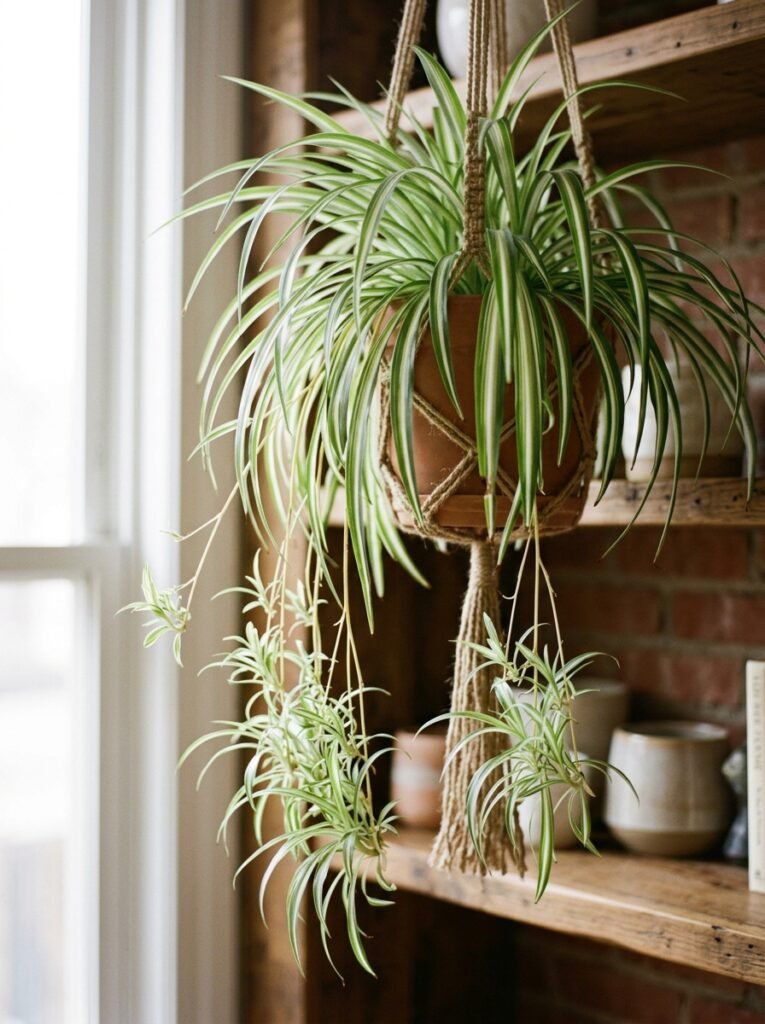
The spider plant. I know.
But hear me out. A fully mature spider plant in a hanging basket — or better, in a pot on a high shelf where the babies trail down over the edge — is one of the most genuinely beautiful things you can put in a living room. The variegated leaves catch light in a way that fancier, trendier plants don’t. The cascading babies look almost like a botanical illustration come to life. And it’s nearly impossible to kill.
The reason people overlook it is because their mum had one in 1993 in a very brown kitchen. But strip away the nostalgia and look at it fresh: arching, trailing, variegated, low-maintenance. That’s a great plant. Don’t let the associations put you off.
—
11. Why the Pot Matters More Than You Think (And the Material I Keep Going Back To)
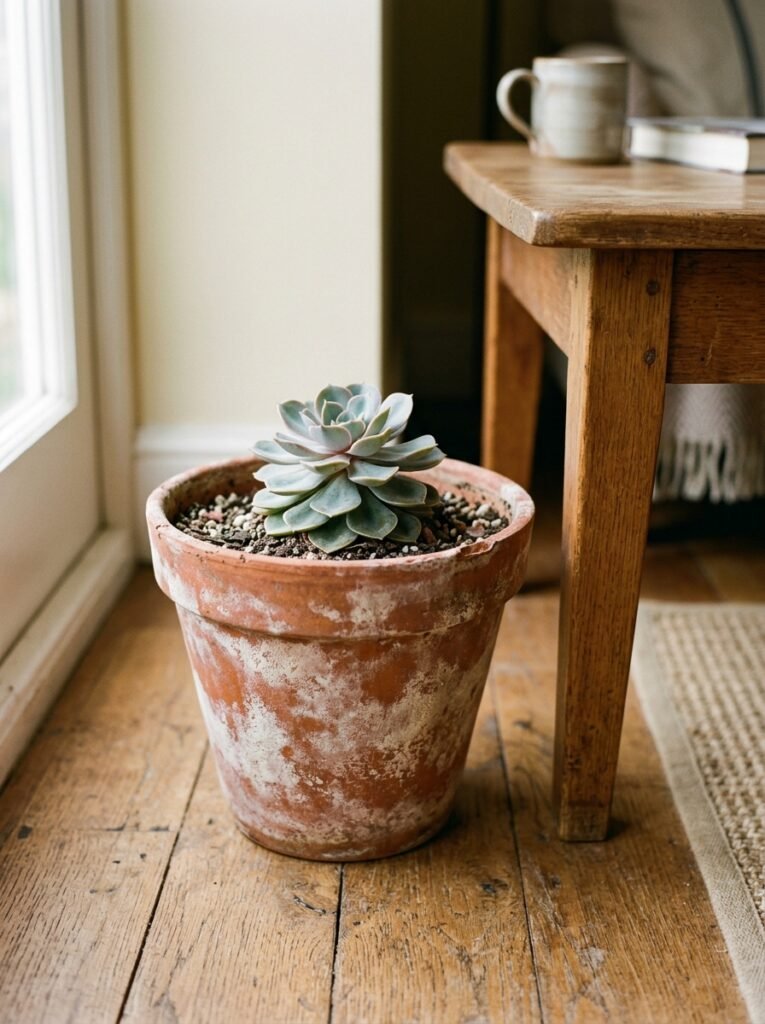
There’s a version of this where you buy a beautiful plant and put it in the nursery plastic pot and set it down and it immediately looks like you haven’t finished. The pot is the outfit. The plant is the person. The outfit matters.
For living rooms specifically, I keep going back to terracotta — especially for warmer, earthier spaces — and matte glazed ceramics for rooms that are cooler or more minimal. Terracotta breathes (which the plant likes anyway) and it ages beautifully, developing this soft white mineral bloom over time that actually looks better than new.
The one rule I’d give: pot color should connect to something else in the room. A terracotta pot echoes a warm wood floor. A sage green glazed pot picks up the cushion on the sofa. It doesn’t have to match. It just has to rhyme.
—
12. The Reason Living Rooms With Plants Feel Different — Actually Different
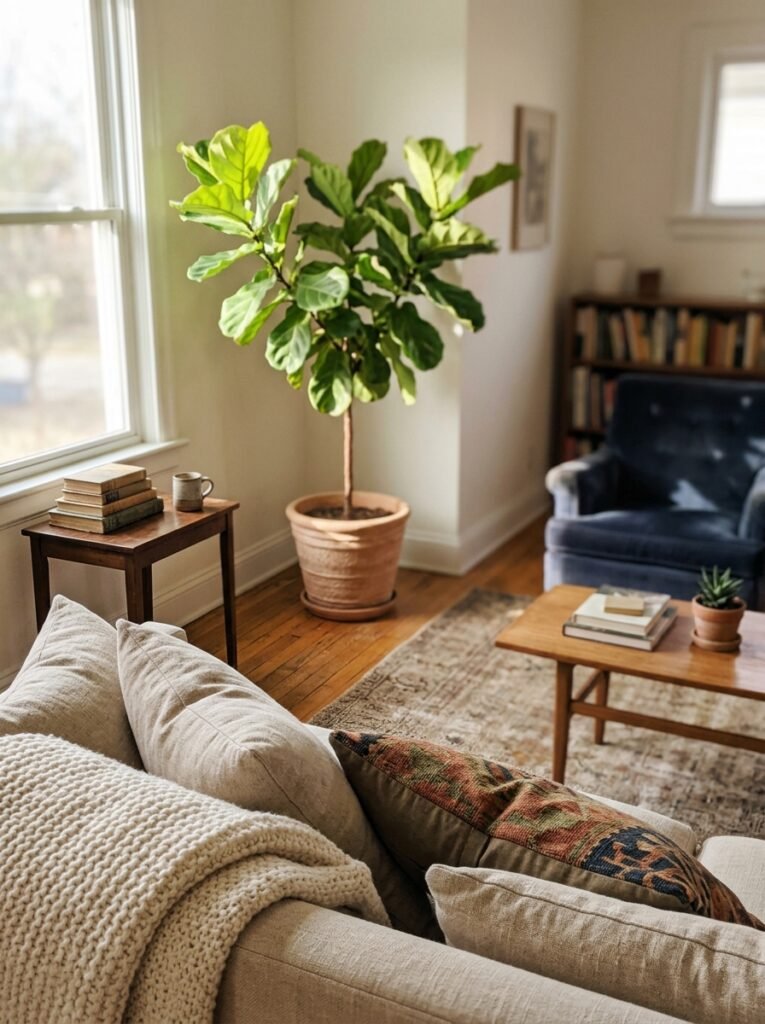
I’ve thought about this more than is probably healthy.
We respond to living things. That’s not poetic, it’s biological. A room with plants feels different from a room without them at a level below conscious aesthetics — there’s movement when the air shifts, there’s growth, there’s something happening. A perfectly styled room without plants can feel like a photograph of a room. Add a plant, and it starts feeling like a room.
That’s what my friend was picking up on. Not a design principle. Just the presence of something alive.
Start with one. Put it somewhere you can see it from the sofa. Let it be the thing that’s slightly imperfect, slightly wild, slightly in charge of that corner.
You’ll wonder why you waited.
—
❓ FAQ
Q: What are the best low-maintenance plants for a living room with low light? A: Snake plants, ZZ plants, and pothos are your best bet — they’ll survive in genuinely dim conditions and still look good doing it. Cast iron plants (aptly named) are another strong option if you want something with a different leaf shape. Avoid anything labeled “full sun” or you’ll just be setting yourself up for disappointment.
Q: How many plants is too many for a living room? A: Honestly, there’s no ceiling as long as you’re varying the height and keeping the pots cohesive. Where it tips into “too many” is when every surface has a plant AND objects — that’s when it starts feeling crowded. If you want a lot of plants, consider letting some surfaces hold just the plant and nothing else.
Q: Do living room plants really make a difference to how a room looks, or is it just a trend? A: Plants have been part of interior design for centuries — this isn’t a trend, it’s just having a moment. The reason rooms with plants feel warmer and more “finished” is partly visual (texture, vertical interest, softness) and partly something more instinctive. Rooms with living things in them just read differently to the human eye. So yes, they make a real difference.
—
💭 Final Thoughts
There’s no single plant that fixes a room, and that’s kind of the point — it’s about the way you start paying attention to the space differently once you bring something living into it. You start noticing the light, the corners, the surfaces you’ve stopped seeing.
The best living room plant advice I ever got was to stop thinking about what will “look good” and start thinking about what will actually survive and grow in the specific light you actually have.
Because a thriving, slightly unruly, clearly-doing-well plant is always going to look better than a struggling one in a prettier pot.
What’s the one spot in your living room that you’ve never quite figured out — and could a plant be the answer?