The Corners of Your Living Room Are Doing Nothing — Here’s How Plants Change That
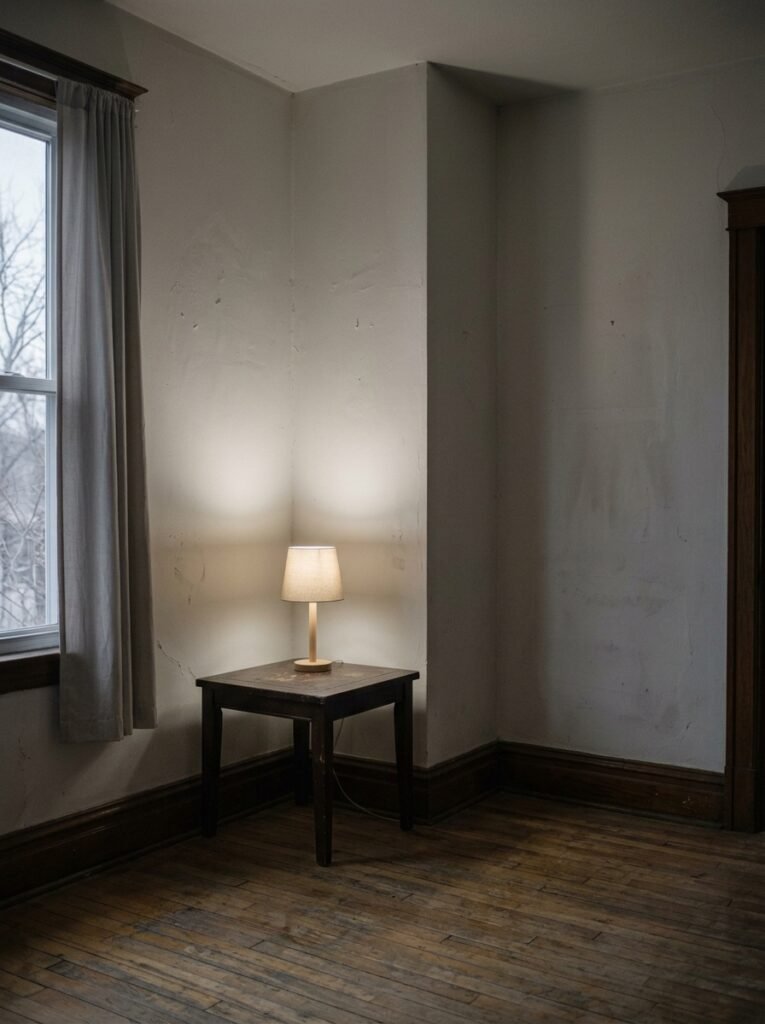
My friend looked at my living room and said, “Why does it feel like that corner is apologizing for existing?” And honestly? She was right. There was a lamp. A sad lamp. And nothing else.
—
1. Why Corners Feel Awkward (And Why Plants Are the Weird, Perfect Fix)
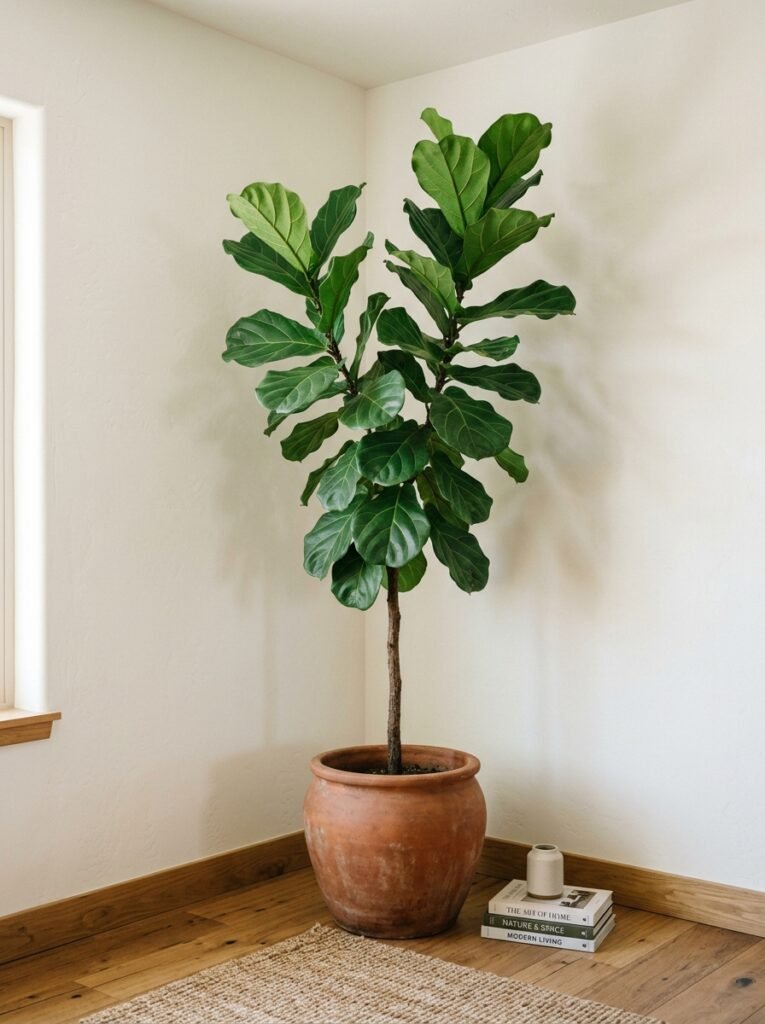
Corners are architecturally weird. They’re the spot where two walls gave up on each other, and most of us respond by shoving a floor lamp there and calling it done. But here’s what I’ve figured out after rearranging my living room more times than I care to admit — corners don’t need furniture. They need presence.
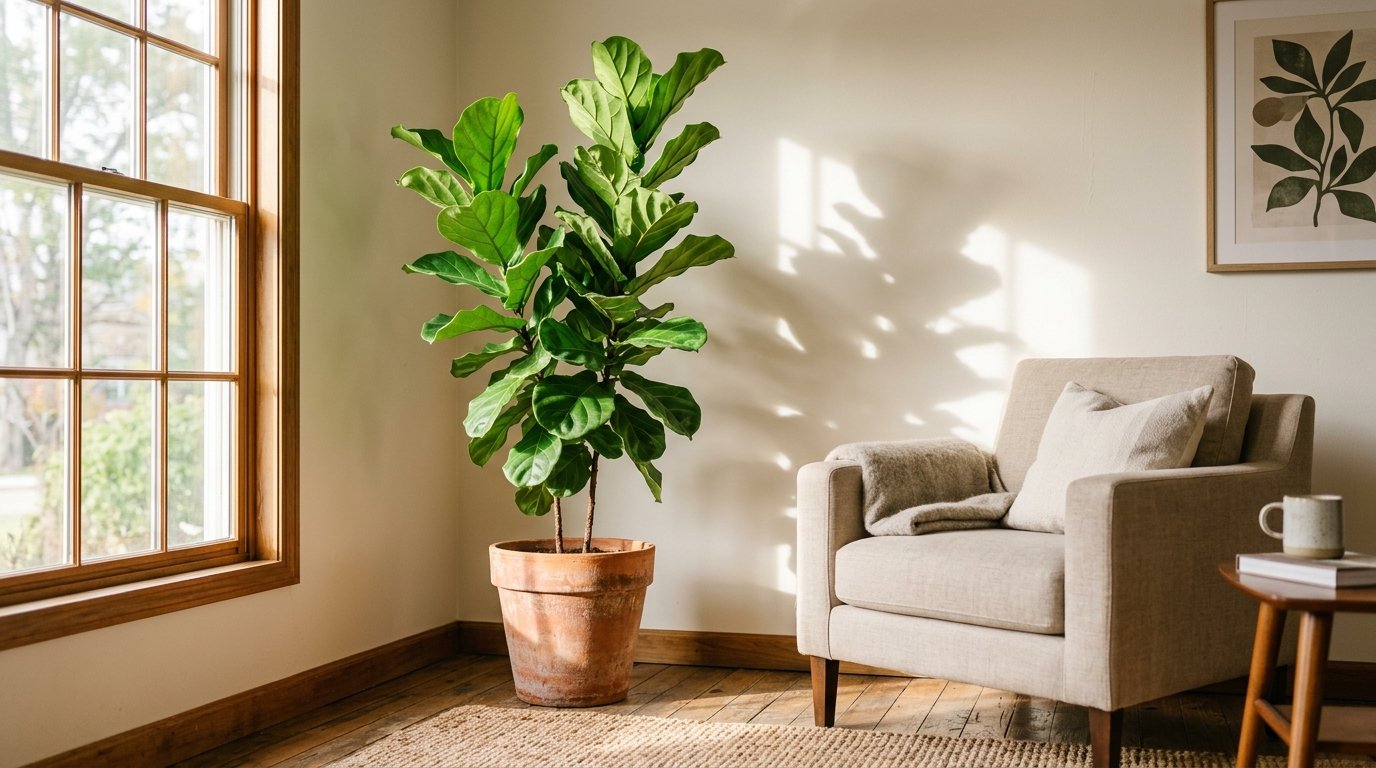
Plants give you that. A tall fiddle leaf fig in the corner of a room doesn’t just fill space, it does something almost structural. Your eye lands on it and thinks: intentional. The whole room reads differently because of one decision made in a spot that used to hold nothing but air and guilt.
And the best part? You don’t need a massive plant or a massive budget. You need the right plant in the right corner, and that’s genuinely all. More on that in a second.
“Your eye lands on it and thinks: intentional. The whole room reads differently because of one decision made in a spot that used to hold nothing but air and guilt.”
—
2. The Light Situation — Before You Buy a Single Leaf
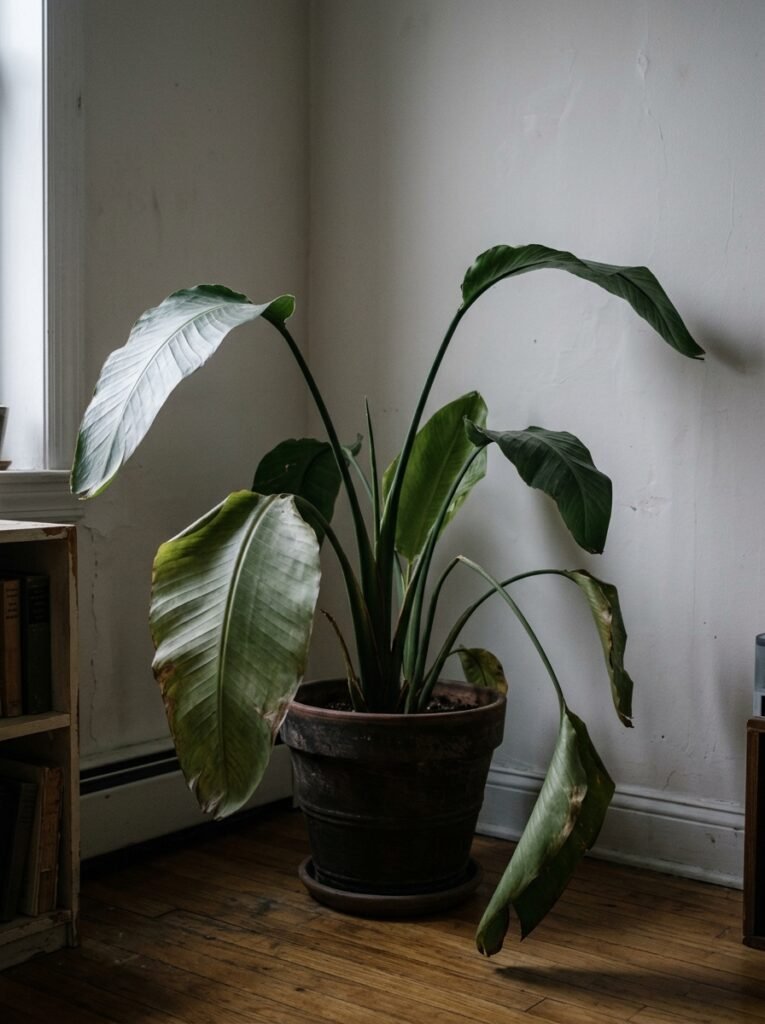
Stop. Don’t buy the plant yet.
I made this mistake. Bought a gorgeous Bird of Paradise on impulse because it looked incredible in the shop, brought it home, put it in my north-facing corner, and watched it slowly, miserably decline over three months. It’s not a fun thing to witness.
Light is everything. Corners tend to be darker than the rest of the room — they’re furthest from windows, and natural light doesn’t bend around furniture. So before you fall in love with a plant at the shop, go home and actually stand in your corner at different times of day. Is there bright indirect light filtering in? Barely any? None?
Bright, indirect light (that lovely diffused glow that doesn’t hit the wall directly) opens up a lot of options. Low light corners are honestly fine too, but you’ll want to lean toward pothos, ZZ plants, cast iron plants, or peace lilies. They’re not giving up — they’re just adapted to work with less, and in a dim corner they can look incredibly lush.
—
3. The Tall Plant Effect — Going Vertical Before You Go Wide
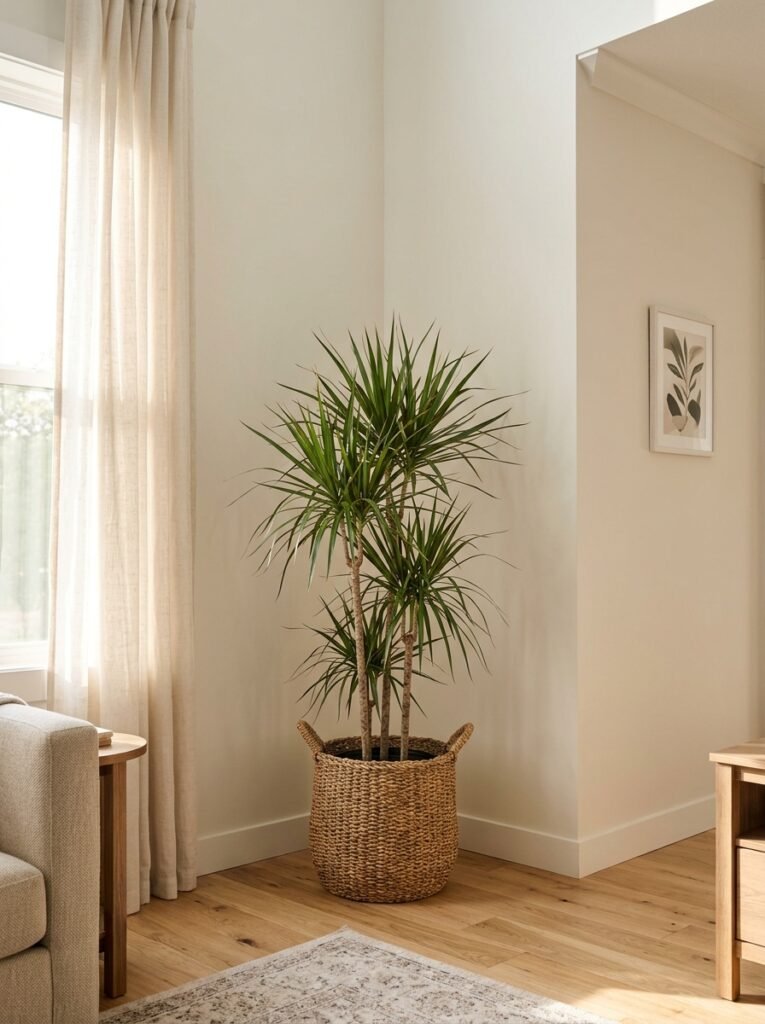
Here’s the move that changes everything: go tall first.
A plant that reaches somewhere between 4 and 6 feet does something that no shelf, no side table, no piece of art can quite replicate. It pulls the eye upward. Rooms with tall plants feel bigger. Not metaphorically — actually bigger, because your brain registers the vertical space in a way it doesn’t when everything in the room sits below eye level.
The classics for this are fiddle leaf fig (obviously, it’s been having a moment for like a decade and honestly it deserves it), snake plants in tall cylindrical pots, and dracaenas. But a bamboo palm is underrated for this purpose. It gets that height AND gives you this soft, tropical layering that reads warm and full.
One thing I’d say: don’t put a tall plant in a small, generic nursery pot. The pot matters almost as much as the plant. A terracotta pot with good texture, or a woven seagrass basket, or a matte black ceramic — that’s what makes it look like you meant it.
—
4. The Layering Trick Nobody Tells You About
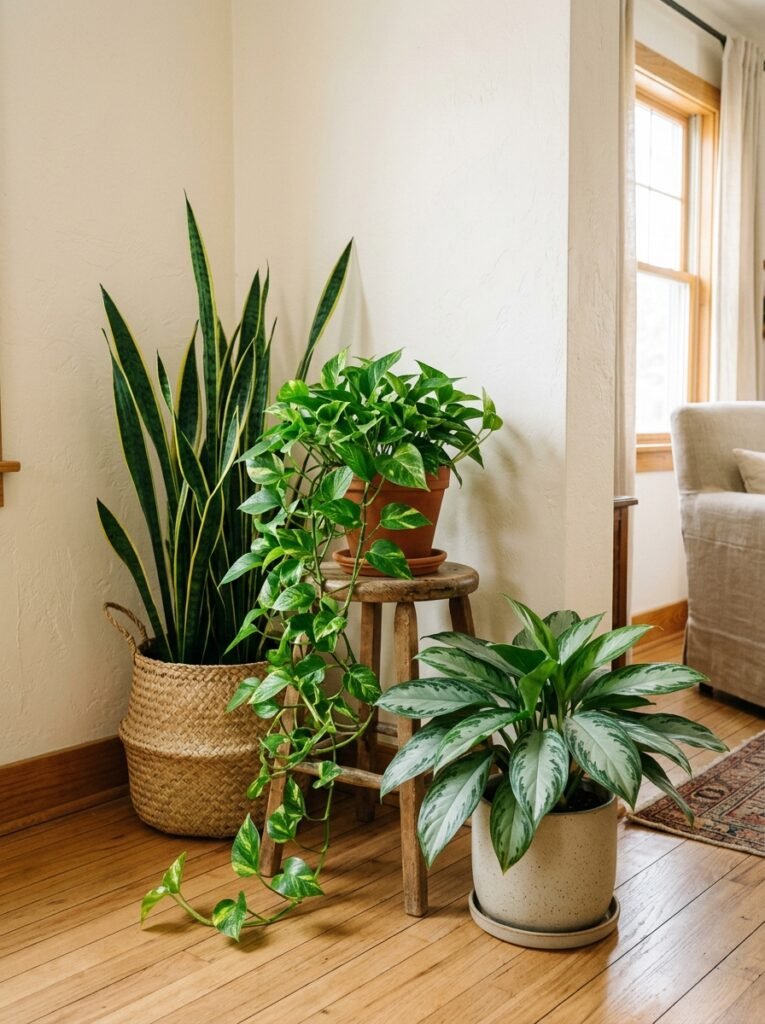
You know what looks better than one plant in a corner? Probably not three plants randomly placed in a corner.
But a grouped arrangement? With actual thought given to height variation? That’s different. That’s the thing that looks like a magazine photo.
The rule is simple: use odd numbers and go high, medium, low. A tall snake plant in a woven basket, a medium-height trailing pothos on a small wooden stool, and a low, wide-leaved plant at floor level — something like a Chinese evergreen. Those three together create a kind of natural cascade. Your eye moves through the arrangement. It’s dynamic.
Side note — the stool thing is genuinely useful and I think it’s slept on. A small stool or a wooden crate brings a plant up to mid-height without you having to buy a specifically medium-sized plant, which are sometimes hard to find and always more expensive than a small one.
—
5. The Color of the Pot Is Not a Small Decision
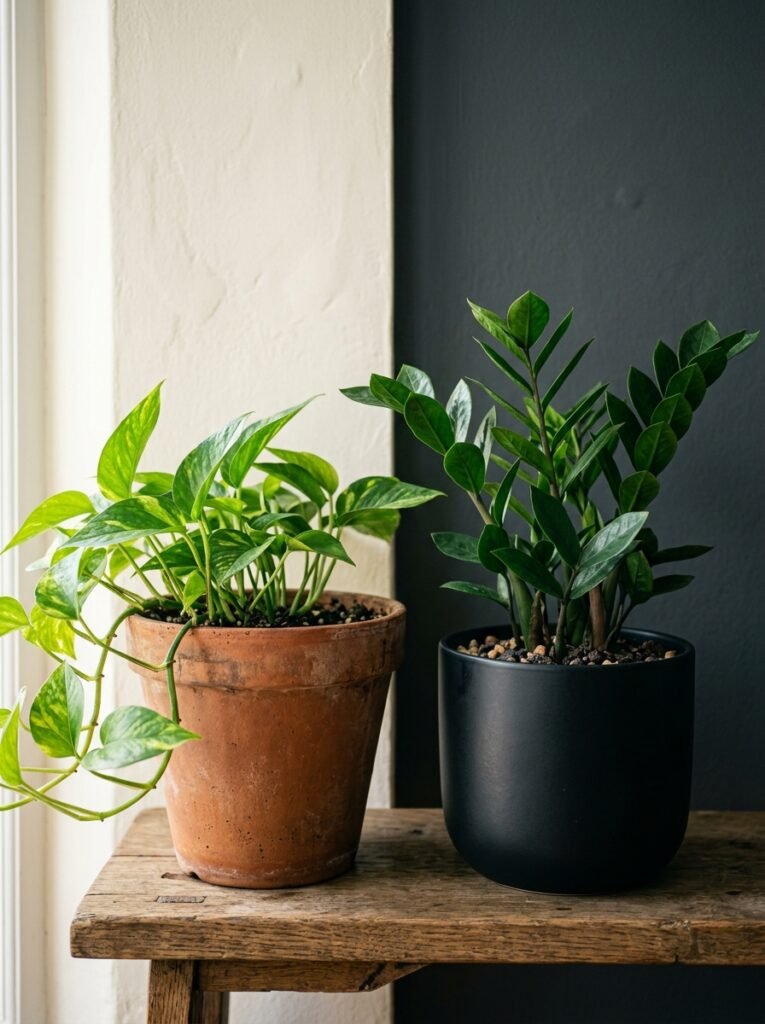
I spent two years thinking pots were an afterthought. They’re not.
The pot color either grounds a corner or blows it up in ways that are hard to explain until you see it happen. Here’s what I’ve noticed after a frankly embarrassing number of plant styling experiments:
Warm rooms with ochres, terracottas, and wood tones? Go with earthy ceramics — reds, tans, creams, raw clay. The plants look like they grew there.
Cooler rooms with greys, whites, and blues? Matte black, slate, or a dusty sage green pot does something really elegant. It contrasts without clashing.
The mistake most people make is going white on everything. White pots aren’t neutral. They read as clinical in a lot of rooms, and in corners especially, they can make the plant look displayed rather than lived-in. And lived-in is the vibe we’re going for.
“White pots aren’t neutral. They read as clinical in a lot of rooms — and lived-in is the vibe we’re going for.”
—
6. For Rooms With Almost No Natural Light — You’ve Got More Options Than You Think
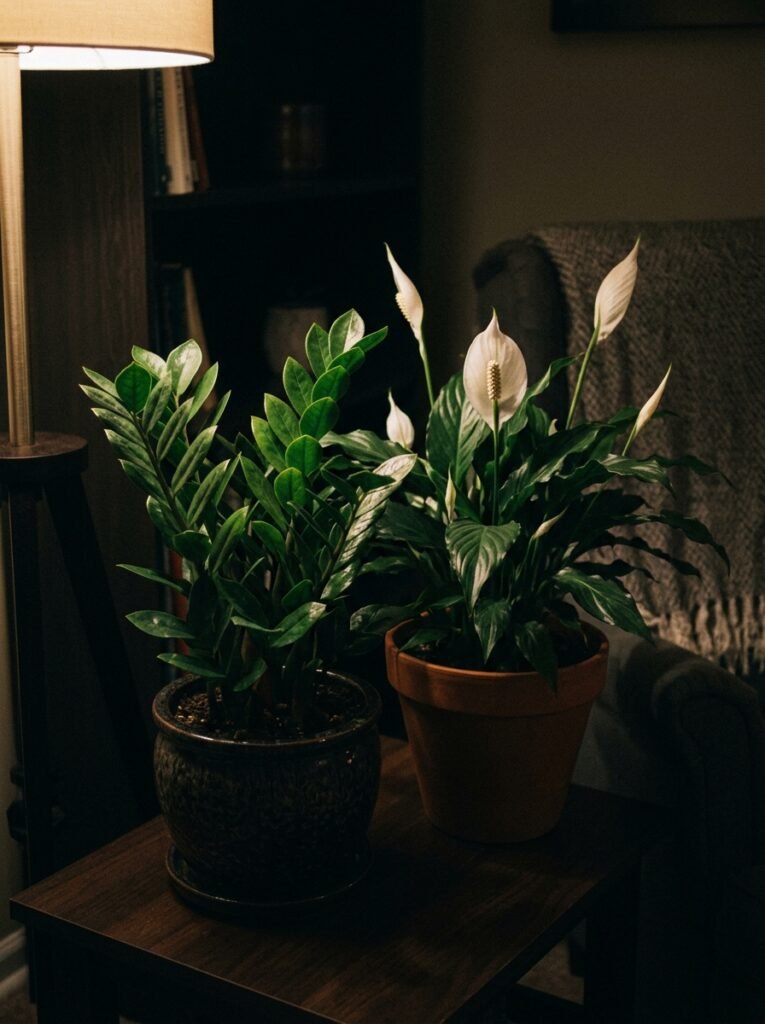
Not gonna lie, I used to think low-light rooms were a plant dead zone. I was so wrong.
Cast iron plants — and the name is not ironic, they’re basically indestructible — will sit in a dim corner and look healthy and full for years. ZZ plants have this waxy, almost sculptural quality that looks deliberately modern in low light conditions. Peace lilies are lush and soft and they’ll actually bloom even in fairly dark spots.
There’s also the option of a fake plant in a low-light corner, and I’ll say it without shame: a really high-quality faux plant in a beautiful pot, in a corner where nothing would survive anyway, is a completely valid choice. The key word is quality. If it looks fake from across the room, it’s working against you.
—
7. The Hanging Plant Idea That Actually Works in Corners
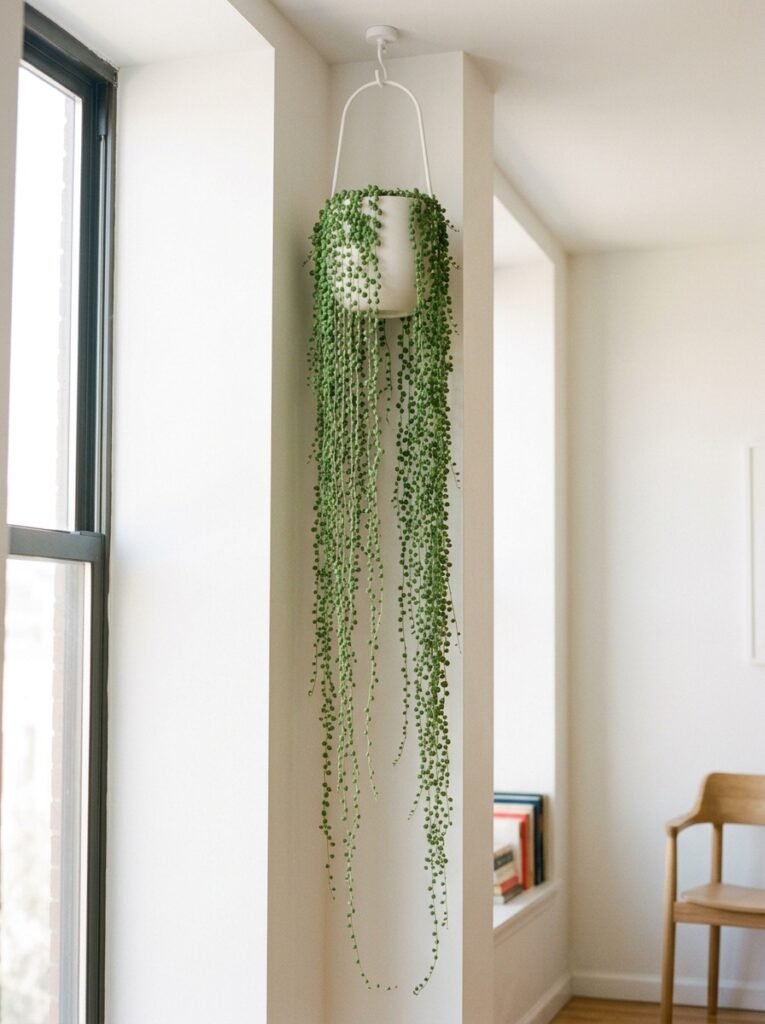
Most hanging plant tutorials assume you’ve got a window nearby. Corners don’t usually have that.
But here’s what does work: a ceiling hook or a tension rod between two walls (depending on your corner type), with a trailing plant in a hanging pot that cascades downward. String of pearls, pothos, heartleaf philodendron — plants that want to trail rather than stand up.
This works BEST when you’ve got some overhead height to play with. High ceilings? A hanging plant in a corner goes from nice idea to genuinely stunning. The plant hangs, the trails reach down toward floor level, and the whole corner becomes this sort of vertical installation.
In UK homes especially, where ceiling heights in older Victorian or Edwardian terraces can be generously tall, this is worth trying. It uses the height in a way most people’s furniture never does.
—
8. The Shelf-and-Plant Combo That Makes Corners Feel Built-In
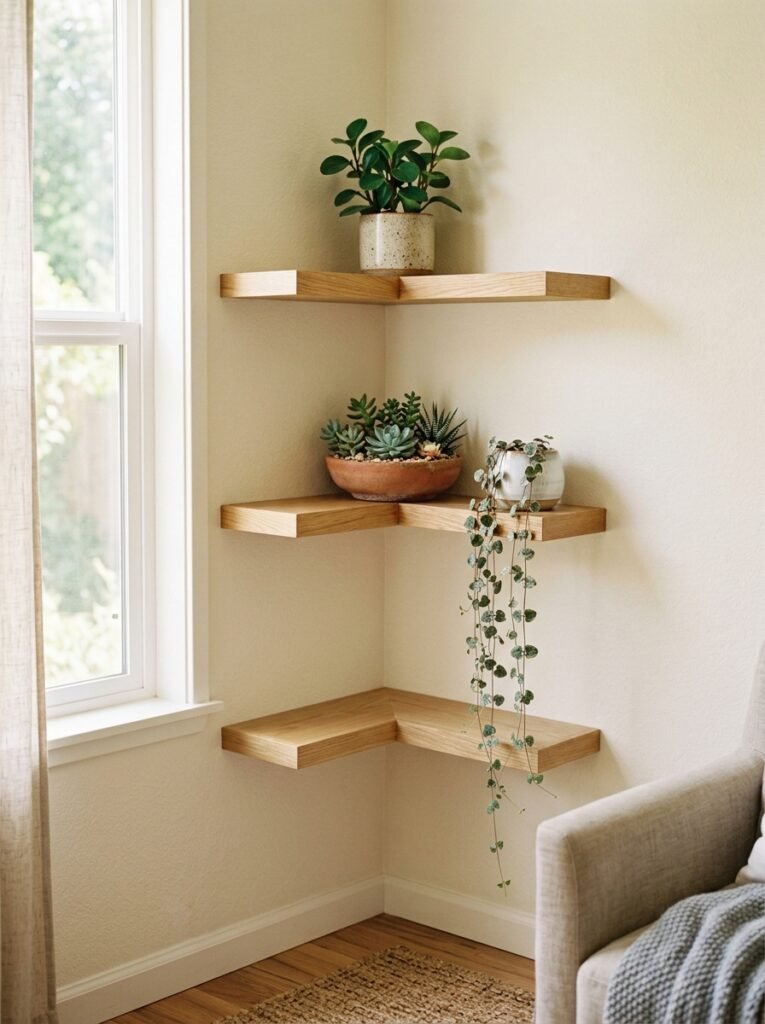
If you don’t want to commit to one large plant, there’s another route — and I actually think this one has more personality.
A narrow corner shelf unit, or even two or three floating shelves installed at different heights in the corner, gives you a structure to play with. You can mix small plants with objects — a stack of books, a candle, a ceramic piece — and the result feels curated rather than decorated.
The trick is keeping the plants as the dominant element. If the shelves look like a collection of stuff with some plants thrown in, it won’t read well. The plants should be the through-line. Everything else is supporting cast.
Small options that work beautifully on shelves: baby rubber plants, small ZZ plants, string of hearts, air plants (they don’t even need soil, which sort of feels like cheating in the best way), or a cluster of small terracotta pots with succulents.
—
9. What to Put Underneath a Tall Corner Plant
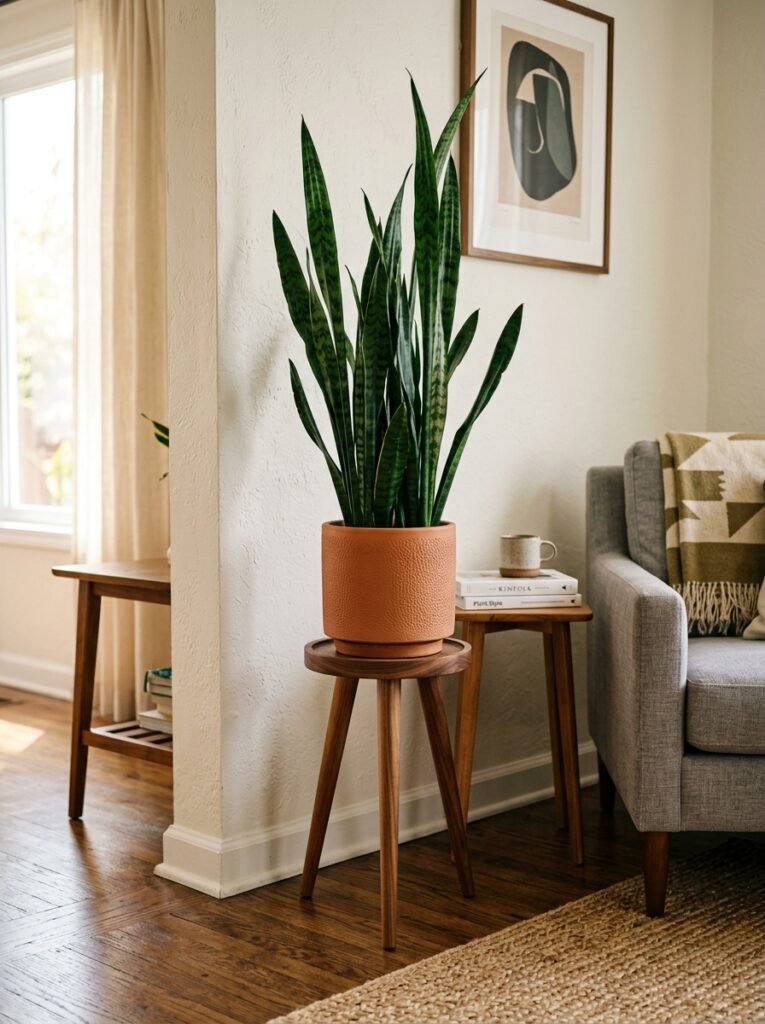
The base situation is underrated. Almost criminally so.
When a tall plant sits directly on the floor in a plain pot, it looks fine. But when it sits on something — a wooden plant stand, a rattan tray, a smooth stone slab, even a pile of artfully stacked wooden discs — the whole arrangement looks finished in a way that’s hard to put into words.
Plant stands are having a real moment right now, and for good reason. They create visual separation between the pot and the floor, which tricks the eye into thinking the plant takes up more intentional space. A mid-century style tripod stand with a tall snake plant is the kind of thing that makes guests say “oh, where did you get that?” even though the stand cost less than the plant.
—
10. Seasonal Rotation — The Idea Most Plant People Skip
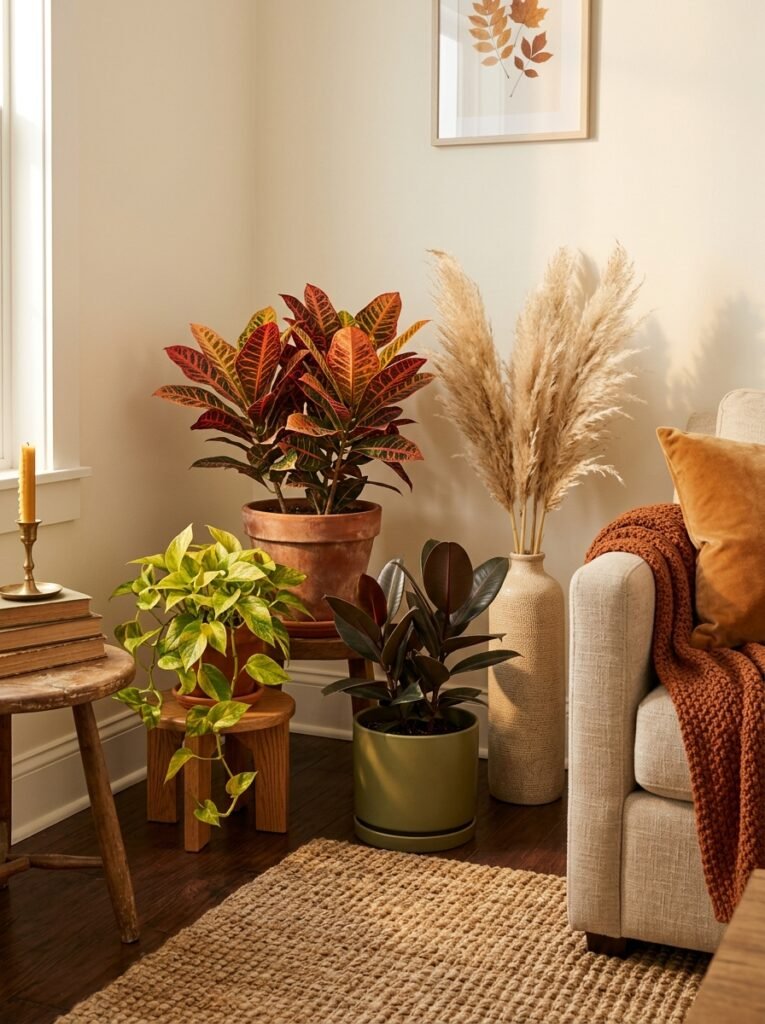
This is something I started doing almost by accident and now I can’t stop.
Corners don’t have to be permanent. In spring and summer, a lush, leafy tropical plant might feel right — something with big, glossy leaves that drinks up the longer days. In autumn, you can swap in plants with deeper tones, warm terracotta tones, or even just add dried pampas grass or a few dried botanical stems alongside a living plant for that warm, layered autumn feeling.
Winter’s trickier for plants in corners, honestly, because light levels drop and heating systems dry the air out. That’s the season when I’ll sometimes supplement with a beautiful dried arrangement rather than fight to keep something alive in low-humidity air.
It’s not high effort. It’s just thinking of your corner as a seasonally evolving spot rather than a set-it-and-forget-it decision.
“Think of your corner as a seasonally evolving spot rather than a set-it-and-forget-it decision.”
—
11. The One Thing That Makes a Corner Plant Grouping Feel Expensive
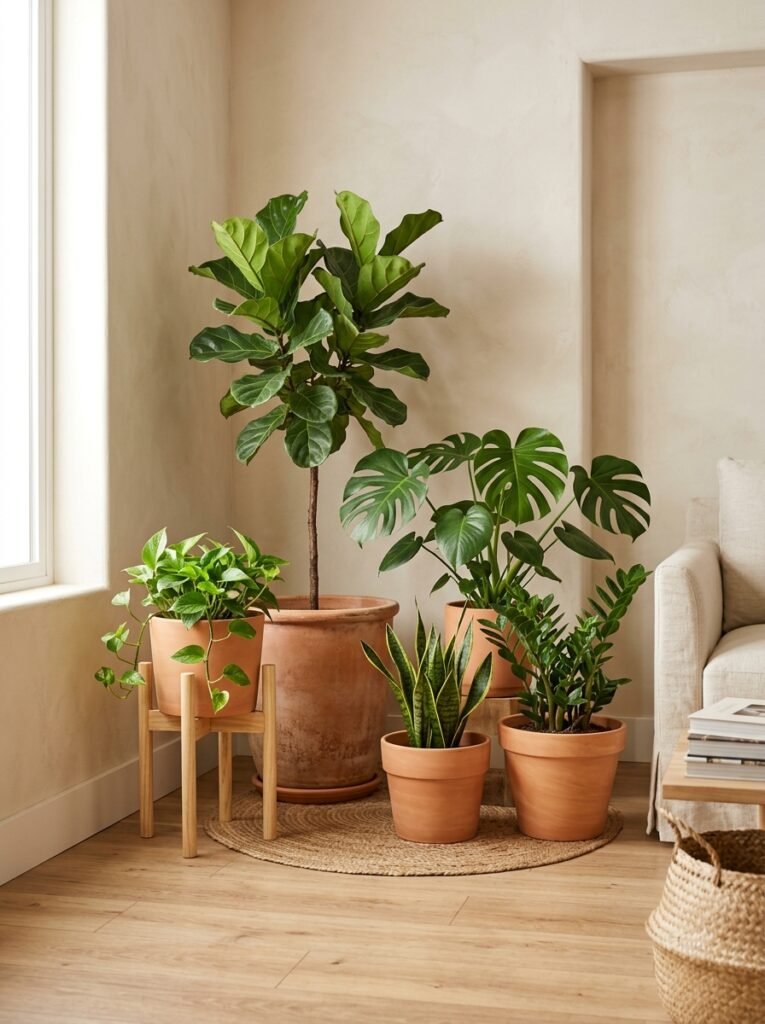
There’s a trick designers use that I’ve only recently started applying in my own home. And it’s almost embarrassingly simple.
Repetition of one element.
Not the same plant repeated. But one consistent element — the same pot material, say, or the same color family — that runs through all the plants in a group. Three plants in different shapes and sizes, but all in terracotta? Cohesive. Three plants in wildly different pots with no connection between them? Chaotic, and not in a good way.
Same idea applies to the stands or risers. If you’ve got two plants at different heights and both are on rattan risers, the eye reads them as a set. That’s design shorthand for “someone thought about this.” And that’s the feeling we’re after.
—
12. The Corner That Made Me Rethink the Whole Room
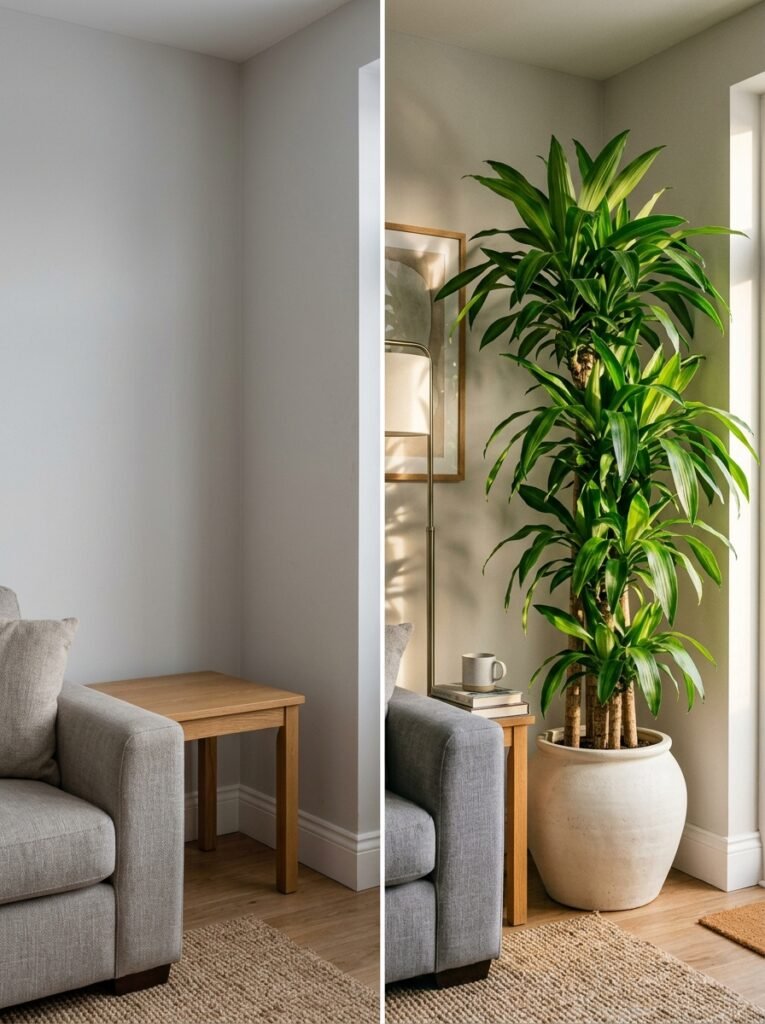
I’ll leave you with this. Last autumn, I moved a single large dracaena from the side of my sofa to the far corner of my living room. That’s it. That was the whole change.
The room felt completely different. The corner — which had been visually dead for two years — became the anchor of the space. The sofa arrangement suddenly made more sense because there was something in the corner to orient toward. My friend, who’d made the comment about the apologizing corner, came over a few weeks later and said the room felt like a different place.
It wasn’t. It was the same furniture, the same rug, the same everything. Just one plant in the right corner, doing what plants somehow always manage to do — making a space feel like someone actually lives there.
—
❓ FAQ
Q: What’s the best plant for a dark living room corner with almost no natural light? A: ZZ plants and cast iron plants are genuinely your best bet — they’re adapted to low-light conditions and are difficult to kill even with minimal care. Peace lilies are another solid choice and they’ll even flower in low light, which feels like a small miracle honestly. Just avoid anything tropical or sun-loving and you’ll be fine.
Q: How do I stop my corner plant grouping from looking cluttered? A: The easiest fix is to pull back on the number of pots and vary the height more dramatically. Three plants with obvious height differences — tall, medium, low — almost always look cleaner than five plants at similar levels. Also, sticking to one pot material or color across the group creates cohesion without any extra effort.
Q: Can I use a fake plant in a corner and make it look real? A: Yes, but quality is everything. A high-quality faux plant with realistic leaf texture and natural variation in color will fool most people from a distance. Avoid anything with leaves that are too uniformly green or too shiny. Adding a real pot with some actual soil on top can also help sell the effect if you’re worried about it looking staged.
—
💭 Final Thoughts
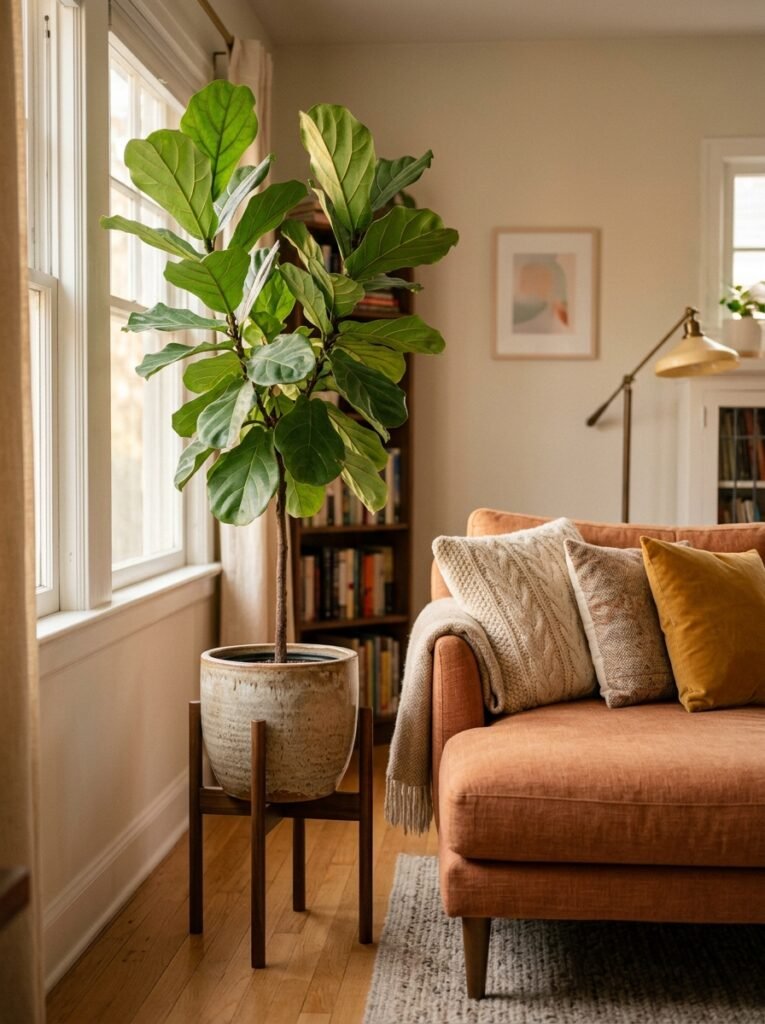
Corners are the part of your home that nobody thinks about until they suddenly do. One plant, one decent pot, a little thought about light — and that dead zone becomes the thing people notice first when they walk in. It’s a small change that somehow doesn’t feel small at all.
What’s the corner in your living room that’s been quietly waiting for something?