Why Your Living Room Finally Needs to Go Full Jungle (And How to Actually Pull It Off)
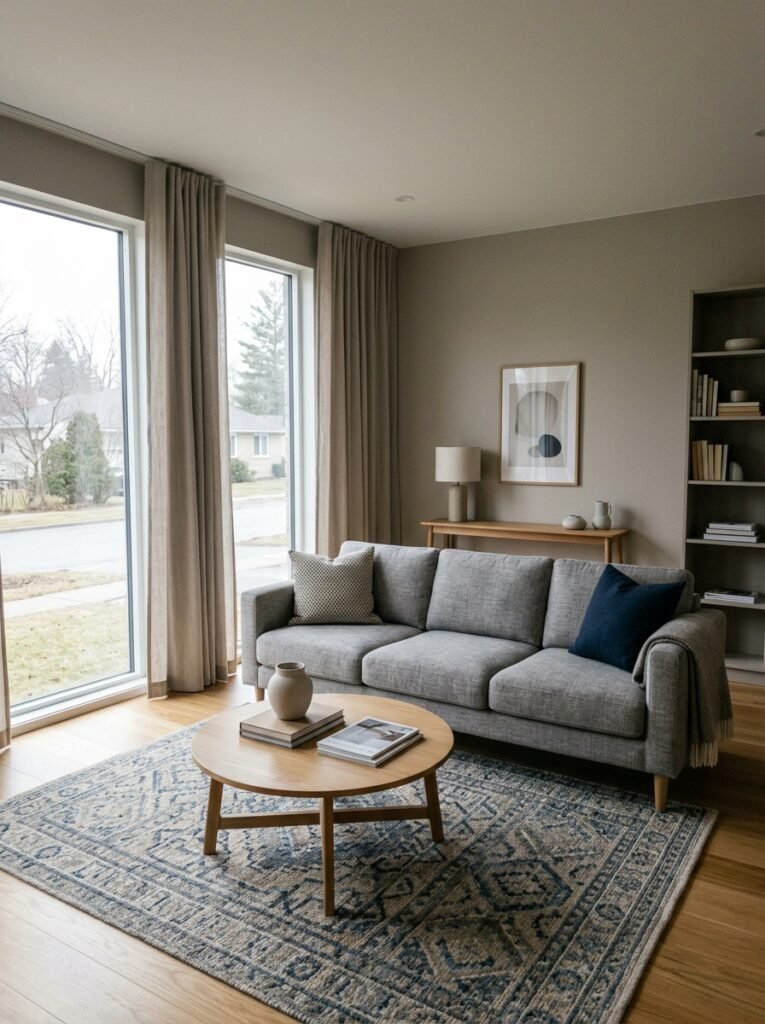
My friend texted me a photo of her living room last spring and said “something’s wrong but I don’t know what.” I looked at it for about ten seconds. Beautiful sofa. Great rug. Nice curtains. And then I got it — not a single living thing in the room. Not one.
That’s it. That’s the problem more people have than they’d ever admit.
—
1. The Real Reason Plant-Free Rooms Feel Slightly Off
There’s this thing that happens in a room with no plants. It looks finished but it doesn’t feel finished. Like a cake that’s been iced perfectly but nobody put any candles on it. You can’t always name it when you’re standing in the room, but your body knows something’s missing.
Plants do something that furniture genuinely can’t. They move. Slightly, barely — but they do. A leaf catches the draft from an open window, a vine droops a little on a warm afternoon, and suddenly the room has a kind of quiet life to it that no throw pillow on earth can replicate.
And the good news is you don’t need a lot. One big statement plant can change the whole feeling of a corner. Three small ones on a shelf can make it feel like someone actually lives there. You don’t have to go full botanical garden, but I’d argue that zero is the only wrong answer here.
“A leaf catches the draft from an open window and suddenly the room has a kind of quiet life to it that no throw pillow on earth can replicate.”
—
2. The Plant That Keeps Showing Up in Every Beautiful Living Room Right Now
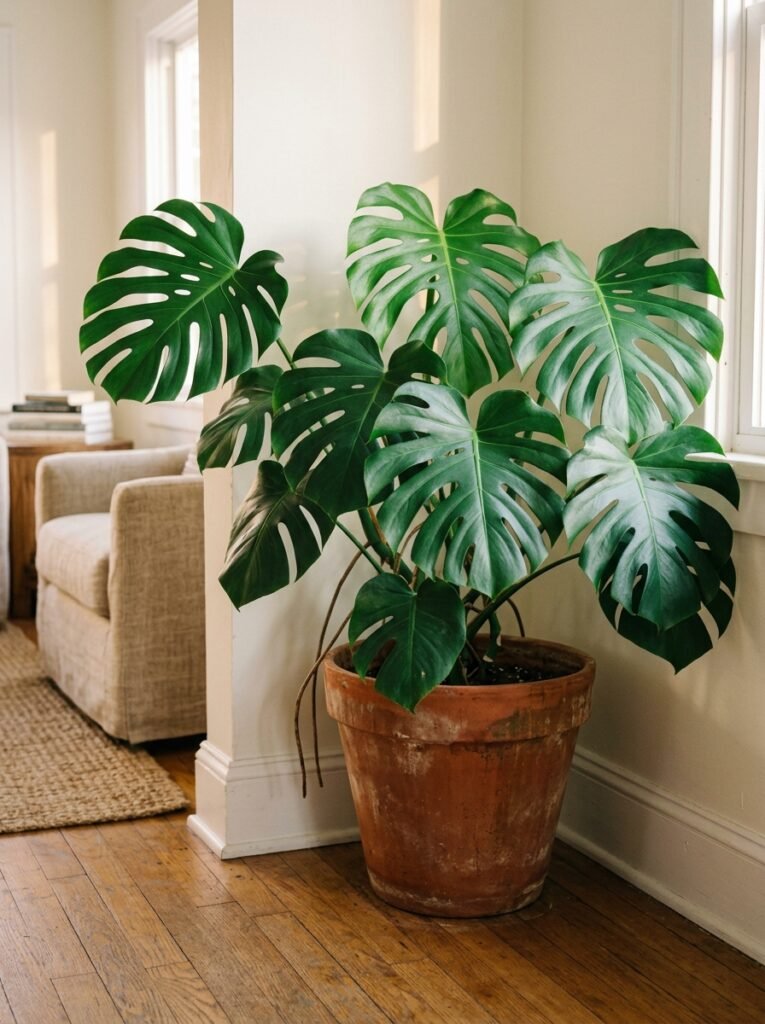
It’s the fiddle leaf fig. No wait — okay, it used to be the fiddle leaf fig. That was five years ago and honestly it’s had its moment.
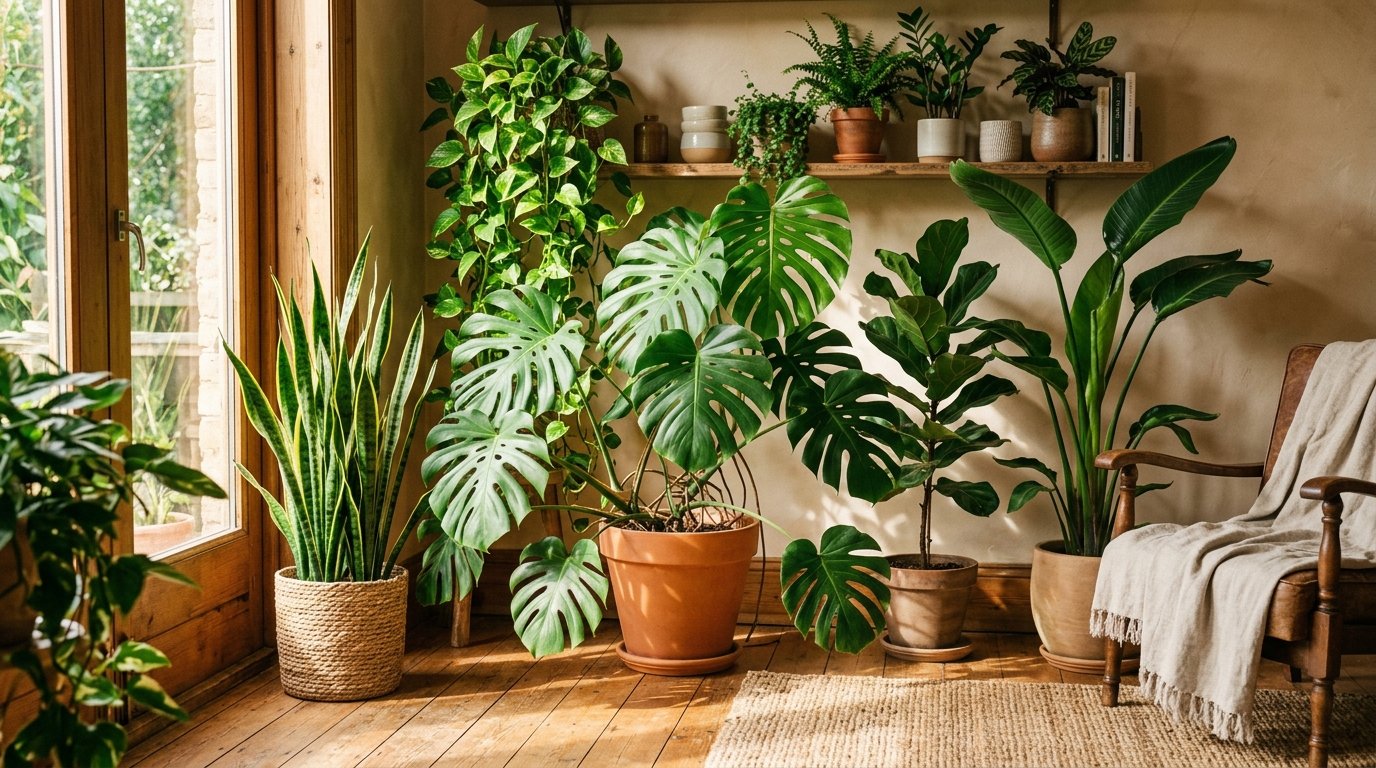
What I keep seeing everywhere now, and what I personally think looks incredible, is the monstera deliciosa. But not the tiny grocery store version. I mean the one that’s been in the same terracotta pot for two years and has gotten slightly out of control and has those huge split leaves that catch the light like something out of a film set. THAT monstera.
The reason it works so well in a living room specifically is the scale. Most living rooms have at least one corner that’s too big for a floor lamp and too awkward for another chair. A large monstera fills that space with something that actually earns its place. It becomes furniture, almost. Structural. It’s doing real design work, not just sitting there looking decorative.
Side note — if you’ve killed monsteras before, it’s probably overwatering. They want to be almost ignored. Water once a week in summer, once every two weeks in winter, never let them sit in standing water, and they’ll basically take care of themselves. Not gonna lie, I’ve forgotten about mine for three weeks and it looked fine. Better than fine.
—
3. How to Style a High Shelf When You’ve Run Out of Books
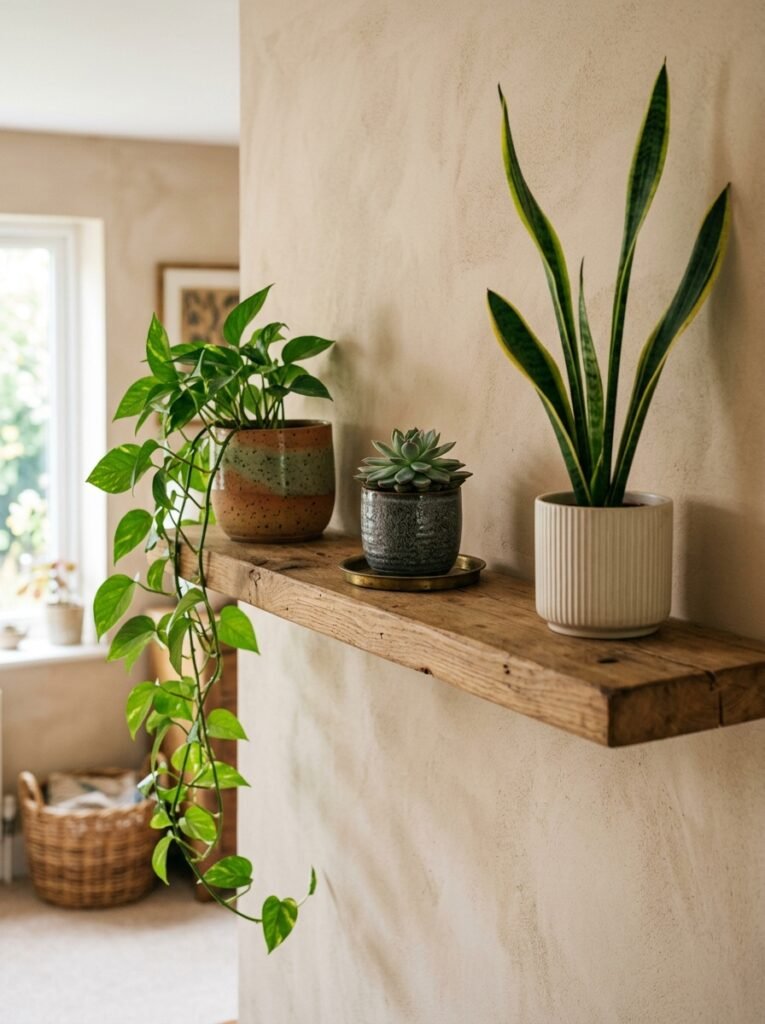
High shelves are where most living rooms lose the plot entirely. Either they’re crammed with books and random objects that don’t belong there, or they’ve got three artfully placed items that look like a show home nobody lives in.
Plants are the answer. Specifically, trailing plants.
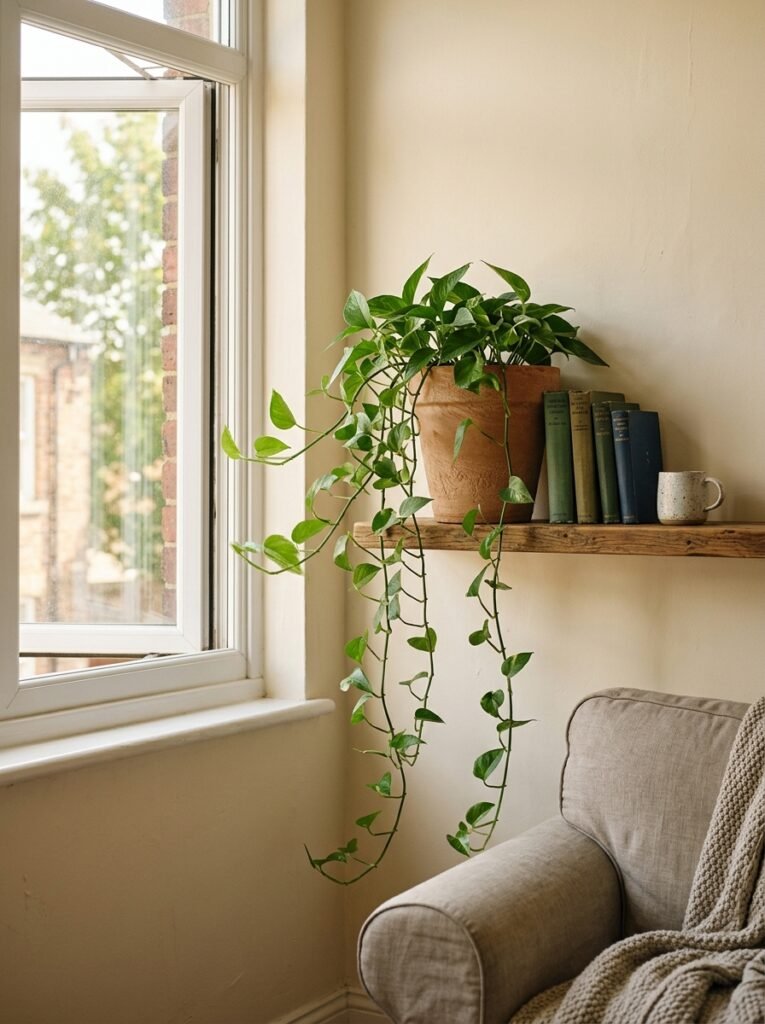
Pothos, string of hearts, tradescantia — anything that will drape downward and soften the edge of the shelf. The goal isn’t perfect. The goal is “this grew here naturally over time.” You want one end of the shelf with a trailing plant, maybe a small succulent in the middle, and something with height like a snake plant or a small dracaena at the other end. Asymmetry on purpose. Not mirrored, not balanced, just lived-in.
The DIY part here is simple: most trailing plants propagate extremely easily in water. You can take a cutting from a friend’s pothos, stick it in a small glass jar on a windowsill for two or three weeks until it roots, then pot it up. Free plant. Great conversation piece while it’s in the jar. Genuinely satisfying in a way that’s hard to explain until you do it.
—
4. What to Put Plants IN When You Don’t Want to Buy More Pots
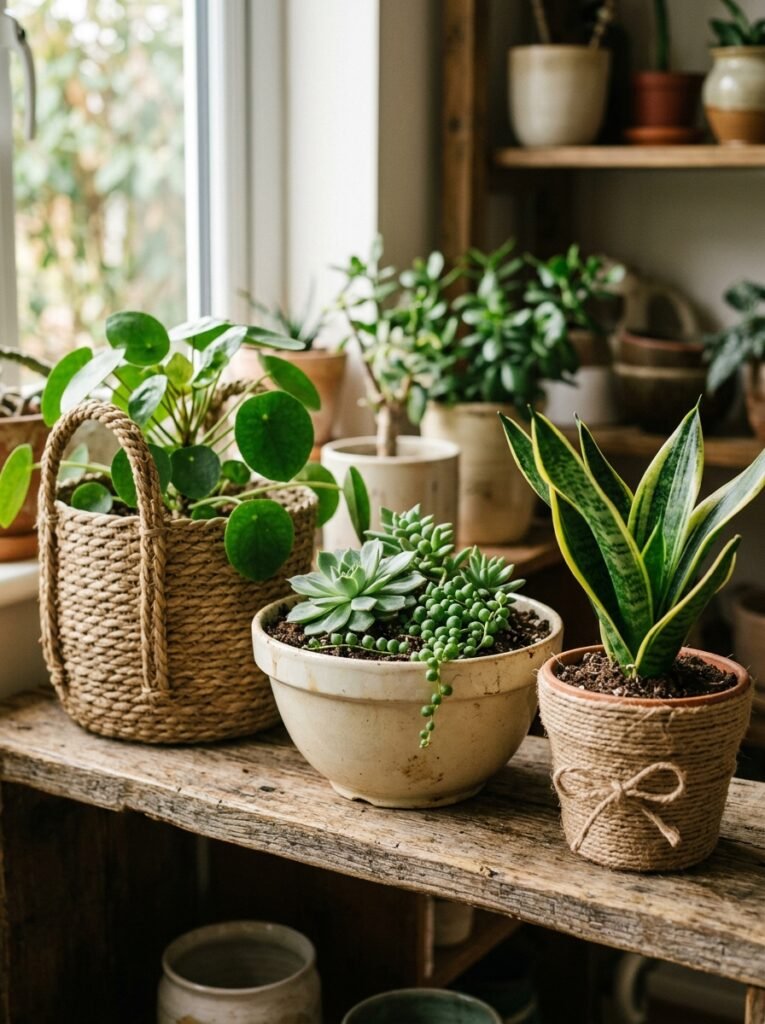
This is where it gets fun, honestly.
The container matters almost as much as the plant itself. A beautiful plant in a bad pot can look fine. The same plant in an interesting container can look genuinely special. But “interesting” doesn’t have to mean expensive.
Woven seagrass baskets are the classic choice — they’re everywhere, they work with everything, and they hide the ugly plastic nursery pots that plants usually come in (you just drop the nursery pot straight in without repotting, which also means less risk of killing it). But there are other options worth trying.
An old ceramic mixing bowl. A wide wooden crate. A galvanized metal bucket if your room leans more industrial. Even a plain terracotta pot that you’ve wrapped in jute twine from the bottom to halfway up — takes about fifteen minutes and the result is surprisingly good. Or, and this is genuinely my favorite DIY project for a plant pot, take a plain clay pot and paint the bottom third in matte black. That’s it. It looks architectural. People always ask about it.
The only rule is that your container needs drainage or you need to be very careful about how much you water. Root rot is quiet and it’s fatal.
—
5. The Corner Styling Formula That Actually Works
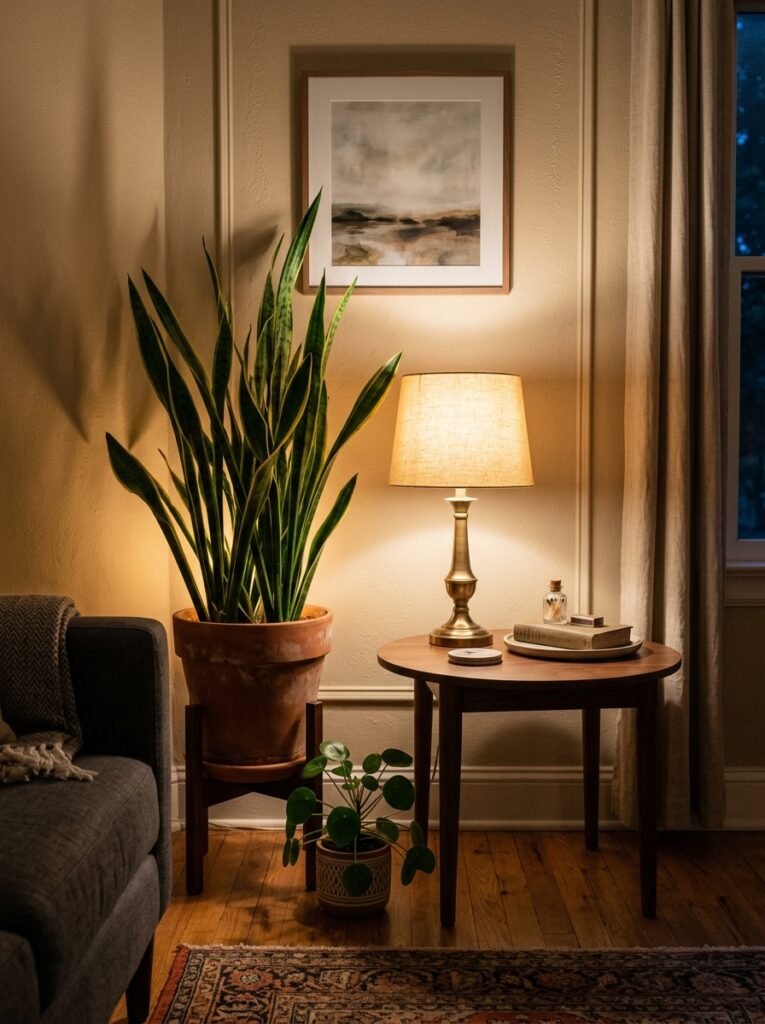
Every living room has That One Corner. You know the one. Slightly too dark, slightly too empty, and you’ve tried putting a floor lamp there but it still looks sad.
Here’s what works: three different heights, and at least one of them is a plant.
Tall thing (this could be the plant — a large snake plant or a kentia palm works beautifully here), medium thing (a side table with a lamp OR a shorter plant on a stool), small thing on the floor or on the medium surface. Done. That’s the whole formula.
The plant doing height work in a corner doesn’t need to be dramatic. A snake plant in a dark corner is actually perfect — they don’t need much light, they grow straight up, and the architectural shape of the leaves does something really interesting when there’s a floor lamp nearby casting shadows upward. It looks intentional. Because it is.
“Three different heights, and at least one of them is a plant. That’s the whole formula.”
—
6. The DIY Propagation Station That Looks Like Décor
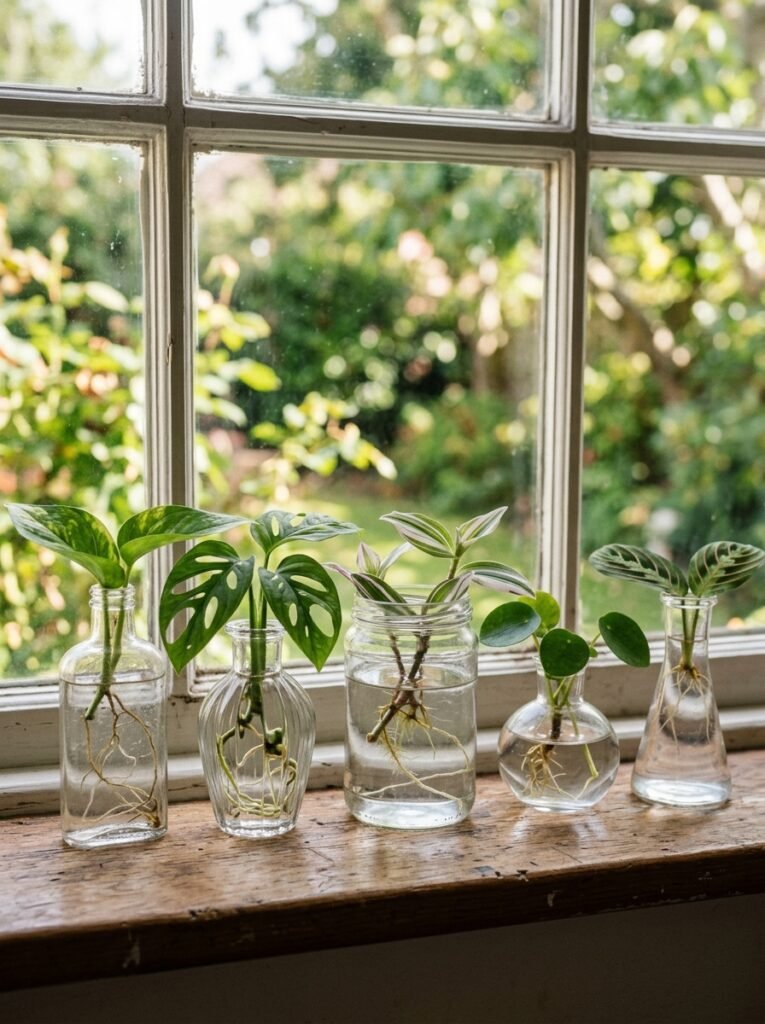
Okay so this one is very easy and also genuinely looks beautiful in a living room even if you don’t care about propagating plants at all — you just want the aesthetic.
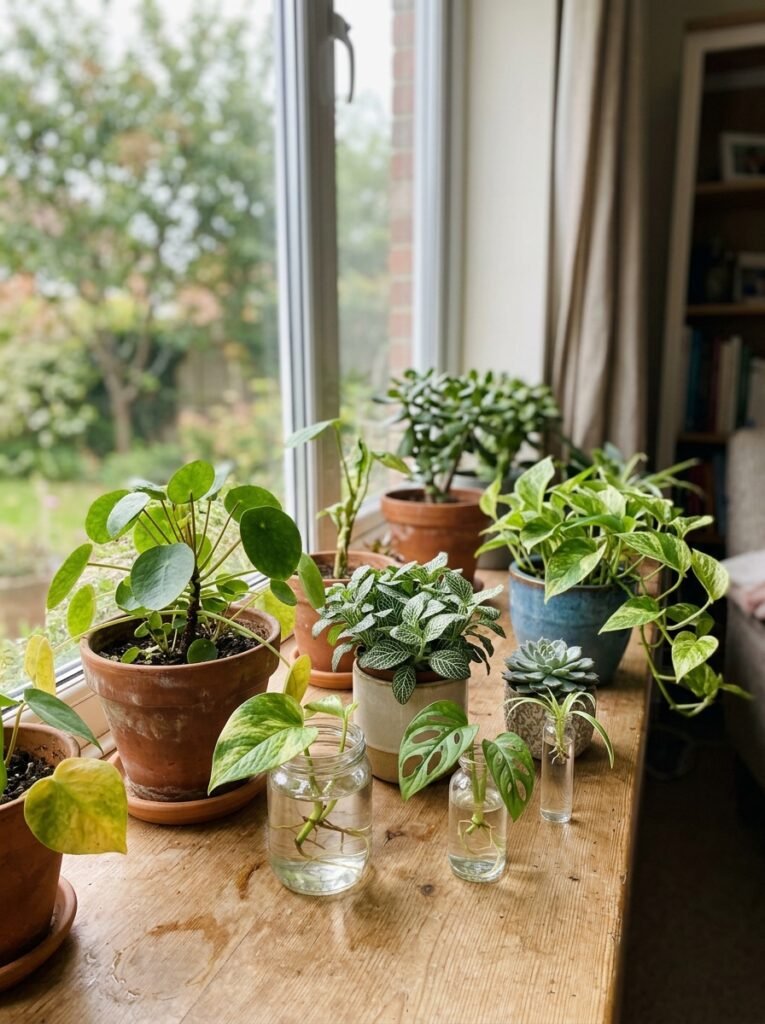
Take four or five glass vessels. They don’t need to match, they kind of shouldn’t match. A small clear vase, a wine bottle, a vintage medicine bottle, a plain glass jar — whatever you have. Line them up on a windowsill or a shelf with decent light. Put cuttings in each one. Pothos, tradescantia, African violet, spider plant babies, whatever you’ve got or can get from a friend.
The cuttings root in water. While they’re rooting they look beautiful — these little green stems suspended in clear water in mismatched glass vessels. They catch the light. They change as they grow. Every week it looks slightly different, which is the thing about live decor that still gets me: it evolves.
And once they’ve rooted, you pot them up and start new cuttings. It becomes this quiet, ongoing thing in the corner of your room. Very satisfying. Very low cost. Genuinely good-looking.
—
7. The One Rule for Making Plants Look Designed Instead of Accidental
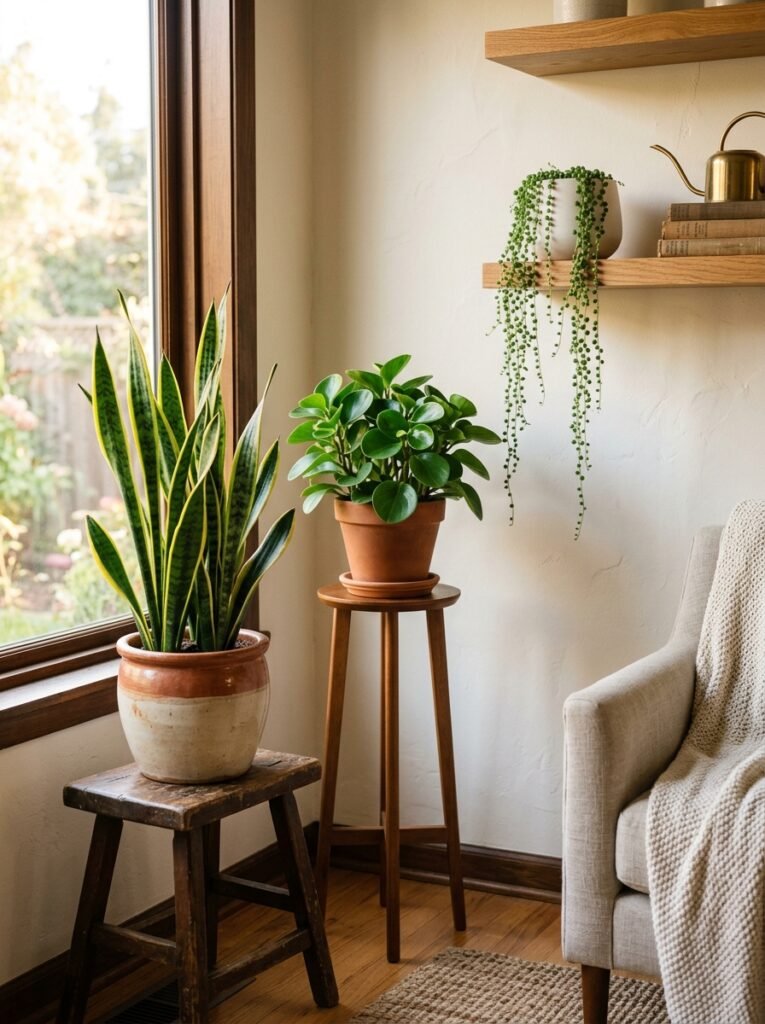
Group them in odd numbers. I know everyone says this, but I’m saying it again because it’s true and people keep putting two plants next to each other and wondering why it looks weird.
One plant looks intentional. Three plants look like a curated moment. Two plants look like you bought one and then bought another one and didn’t have a plan.
But more important than the number is the variety. You want contrast. Not just different species, different SHAPES. Something tall and upright next to something round and full next to something trailing or spreading. A snake plant next to a round-leafed peperomia next to a small trailing string of pearls — that grouping has movement, has texture, has visual interest. Three round bushy plants of similar height just look like triplets. Which is cute if that’s the vibe, but usually it’s not.
The other thing worth saying: different pot heights matter as much as different plant heights. A plant on a stool, a plant in a tall pedestal pot, a plant sitting directly on the floor — same effect. Your eye travels up and down and around the grouping, which is exactly what you want.
—
8. Plants That Survive British and American Winters Without Drama
This is a practical section because it needs to be. A lot of “beautiful plant” content is made in California or in a perfectly lit studio apartment where the windows get light all day. Most of us don’t have that.
If you’re in the UK or in a colder part of the US where winter light is genuinely poor for months at a time — north-facing rooms, gloomy Novembers, radiators that dry out the air — your plant choices need to reflect that.
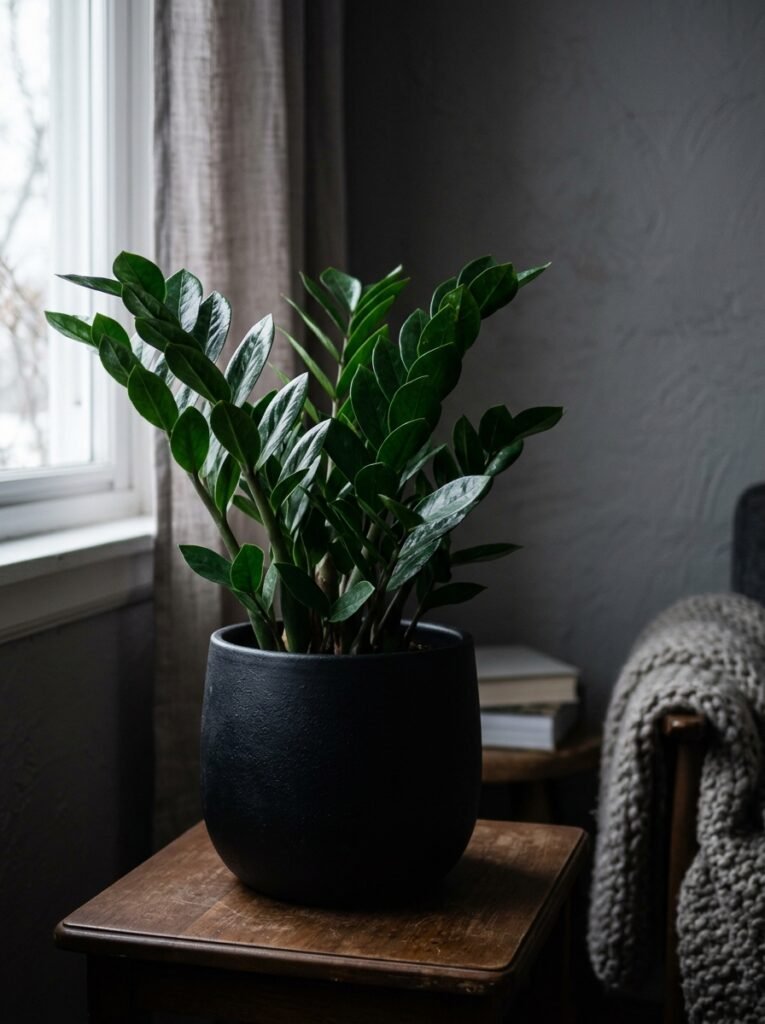
Cast iron plants. They’re called that for a reason. ZZ plants. Snake plants, again — I keep coming back to them because they genuinely thrive on neglect and low light. Pothos in almost any variety. Heartleaf philodendrons, which are different from the fiddle leaf in that they don’t immediately die if you look at them wrong.
None of these are boring choices, by the way. A large ZZ plant in a matte black pot in a low-light corner looks incredibly chic. It has these glossy dark leaves that reflect light back at you. It doesn’t need watering more than twice a month. It’s the plant equivalent of the low-maintenance friend who also somehow always looks great.
—
9. The Hanging Plant Moment That Changes a Ceiling-Heavy Room
Some living rooms have great proportions. Others have ceilings that feel either too high or too low and you don’t know what to do about it.
Hanging plants are part of the answer, but the HOW matters a lot.
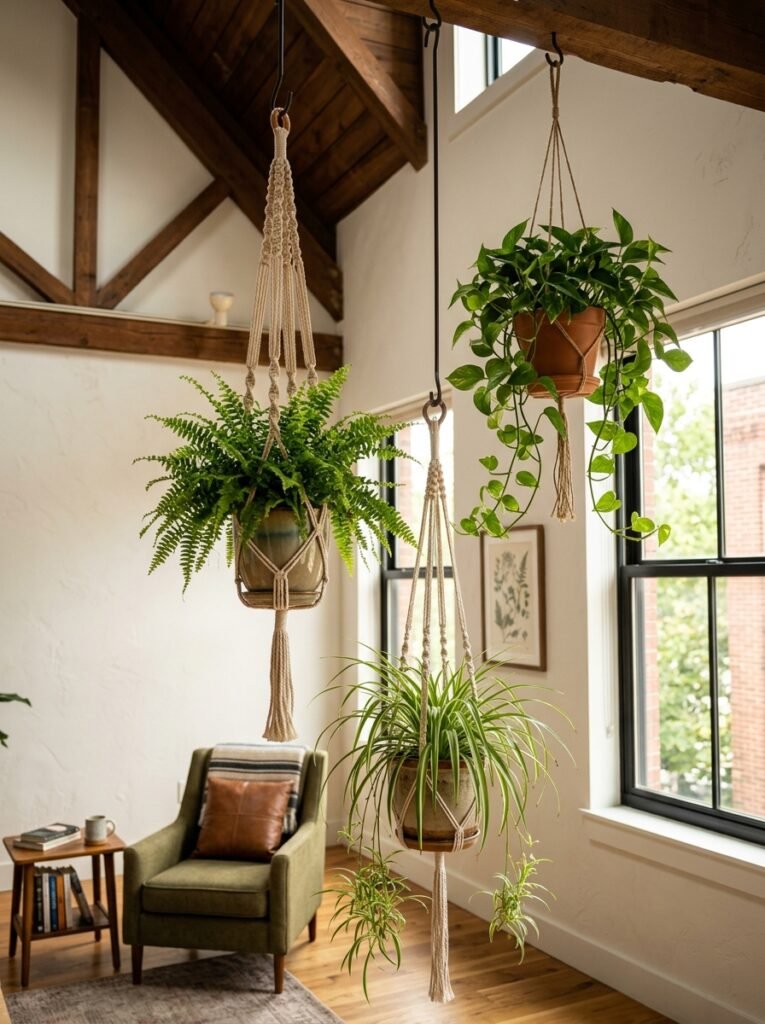
For high ceilings — hang plants at different lengths. Not one plant at the same height on three hooks in a row. Stagger them. Let one hang low, one in the middle, one higher. It pulls the ceiling down visually in the best way, gives the room layers instead of just height.
For lower ceilings — I’d actually avoid hanging plants entirely and instead go for plants on very tall stands or pedestal plant holders. You get the vertical element without making the ceiling feel more crowded.
The DIY version of a hanging planter is genuinely simple: macramé. I know, I know, it sounds very 1973 or very 2017 depending on your reference point. But a basic plant hanger with a simple knot pattern takes about an hour to make with cotton rope from a craft shop, it costs almost nothing, and hanging a trailing pothos or a small fern in it against a white wall is exactly the sort of thing that gets saved on Pinterest ten thousand times. Because it works.
“A basic macramé plant hanger takes about an hour to make and costs almost nothing, but a trailing pothos hanging in it against a white wall is exactly the sort of thing that gets saved on Pinterest ten thousand times.”
—
10. How to Use Plants to Break Up the Sofa Wall Problem
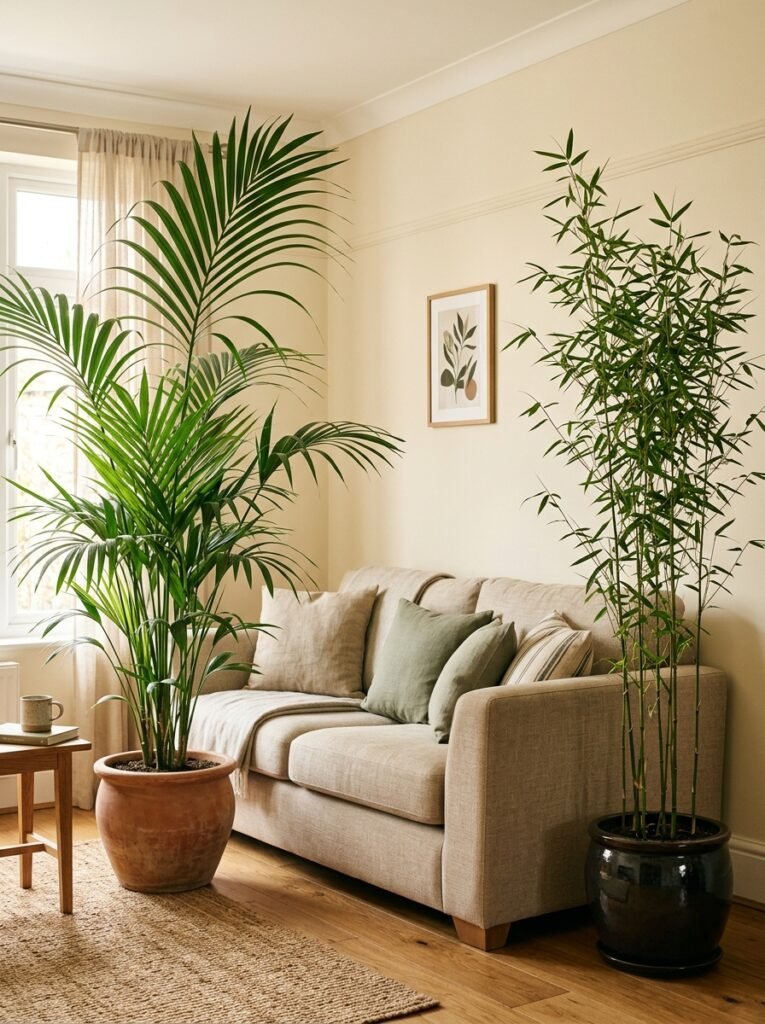
The sofa wall. You know what I mean — that long stretch of wall behind or to the side of the sofa that always looks slightly blank no matter how many prints you hang on it.
Plants positioned at either end of a sofa do something really specific and good. They frame it. Like soft, living bookends. You don’t need two matching plants — actually it looks better if they’re different — but having some kind of greenery at each end of the seating area makes the whole thing feel pulled together without trying too hard.
I’ve also seen this done brilliantly with one tall plant behind the sofa at one end, like a large palm or even a bamboo in a ceramic pot, and it creates this layered backdrop that makes the sofa look like it belongs in a magazine. It’s almost theatrical. And it completely solves the blank wall problem without adding a single extra frame to the walls.
—
11. The Small Shelf Moment That Makes a Big Impact
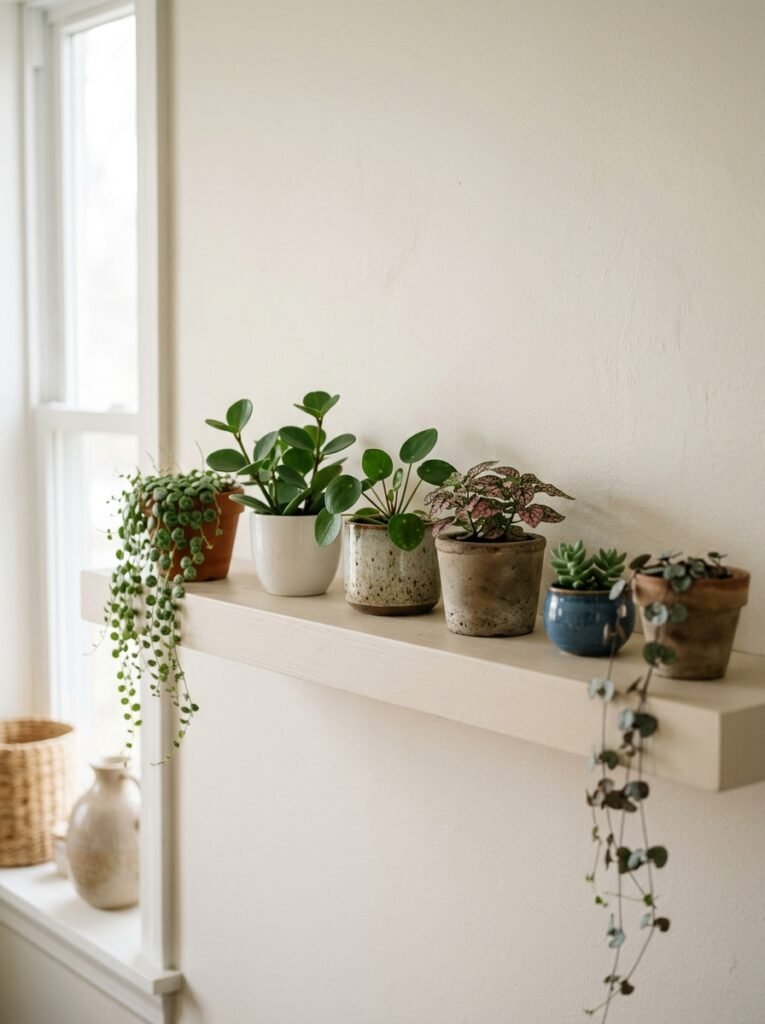
Tiny plants on tiny shelves get undersold constantly. Everyone wants the big statement plant, the floor-to-ceiling monstera, the dramatic fiddle leaf. But some of the most beautiful plant styling I’ve ever seen has been on a small floating shelf in a corner with three plants that are, honestly, each smaller than a coffee mug.
Succulents are the obvious choice here but I’d push you to try something with a bit more visual drama. A small string of turtles. A tiny peperomia hope with its round little leaves. A mini polka dot plant with its pink-splattered leaves. These have personality. They look like they were collected over time, which is sort of the whole point of that shelf.
DIY option: a single long floating shelf at around eye level, painted in the same colour as your wall so it almost disappears, with five or six small plants in different small pots spaced unevenly along it. It feels like a living art installation. Costs almost nothing to put together if you’re making your own cuttings. Looks like something from a very expensive home styling magazine.
—
12. The Thing Nobody Tells You About Plants as Living Room Décor
Here’s the honest bit.
Plants die. Some of them die despite doing everything right, and some of them die because you forgot about them for a month during a busy patch and there’s nothing to be done about it. This is normal. It’s not a character flaw.
The people with beautiful plant-filled homes aren’t people who are naturally gifted at keeping plants alive. They’re people who tried a lot of plants, figured out which ones work in their specific light conditions, and stopped feeling guilty about the ones that didn’t make it. That’s it.
Start with the indestructibles — pothos, snake plant, ZZ plant, spider plant — and build confidence from there. Once you’ve kept something alive for a year, you’ll have a feel for it. You’ll know when a plant needs water before you even check the soil. You’ll notice when the leaves are telling you something. And you’ll have enough cuttings from your thriving plants to experiment with new spots without spending anything.
The goal isn’t a perfect botanical display. The goal is a living room that feels like yours. Slightly imperfect, genuinely alive, and interesting in all the ways that only living things can be.
—
❓ FAQ
Q: What are the best indoor plants for low-light living rooms? A: Snake plants, ZZ plants, pothos, and cast iron plants are all genuinely excellent in low-light conditions — not just “they’ll survive” but actually thrive and look good. Heartleaf philodendrons are also worth trying if you want something with a trailing habit. Avoid anything described as “needing bright indirect light” if your room is north-facing or genuinely dim.
Q: How do I style indoor plants without making my living room look messy? A: The two main things are odd-number groupings and variety in height and shape. Three plants of different sizes in containers with a consistent color palette (all terracotta, all white, all black, or even mixed neutrals) will look curated rather than chaotic. Resist the urge to fill every surface — negative space around plant groupings actually makes them look more intentional.
Q: What’s the easiest DIY planter project for a beginner? A: The propagation station in glass vessels is genuinely the easiest and most forgiving — no tools, no materials you don’t already have, looks beautiful while the plants are rooting, and produces free plants. If you want something you can make rather than just arrange, wrapping a plain terracotta pot in jute twine takes about fifteen minutes, costs almost nothing, and the result looks lovely on a wooden shelf or side table.
—
💭 Final Thoughts
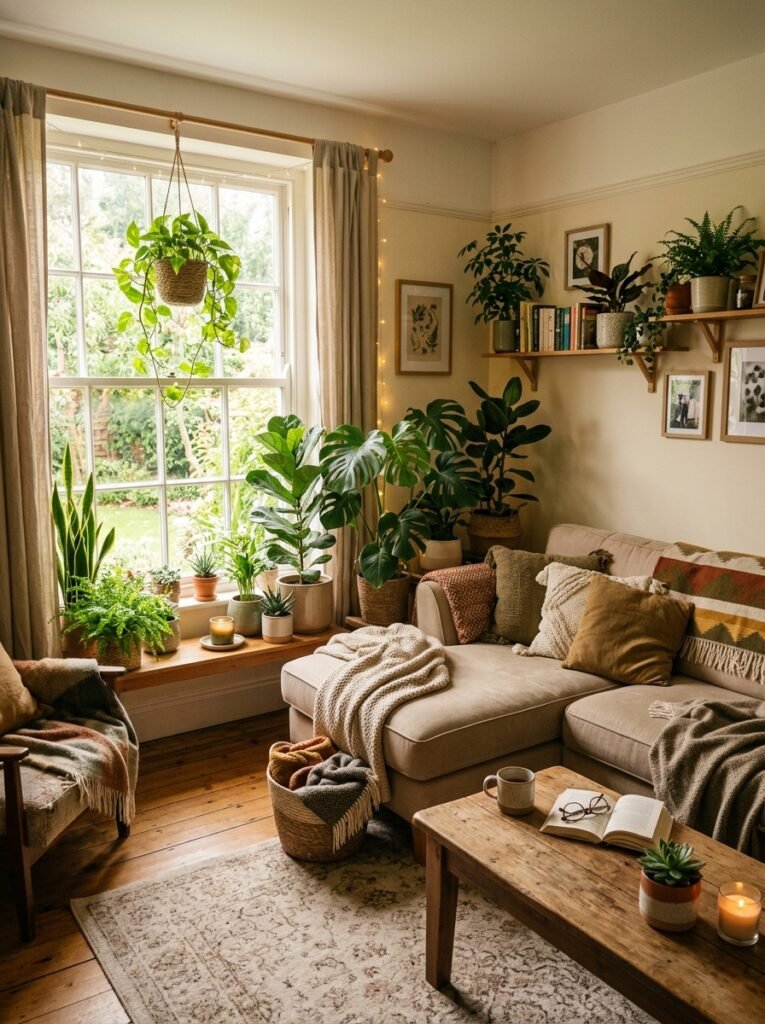
A living room with plants in it is just different from one without. Warmer, somehow. More like somewhere people actually spend time and less like somewhere people just pass through. You don’t need to spend much or plan much — you just need to start with one plant in one spot and see how the room changes.
What’s the corner in your living room that’s been bothering you the longest?