The Living Room Plant Glow-Up That Actually Worked (And What Flopped Badly)
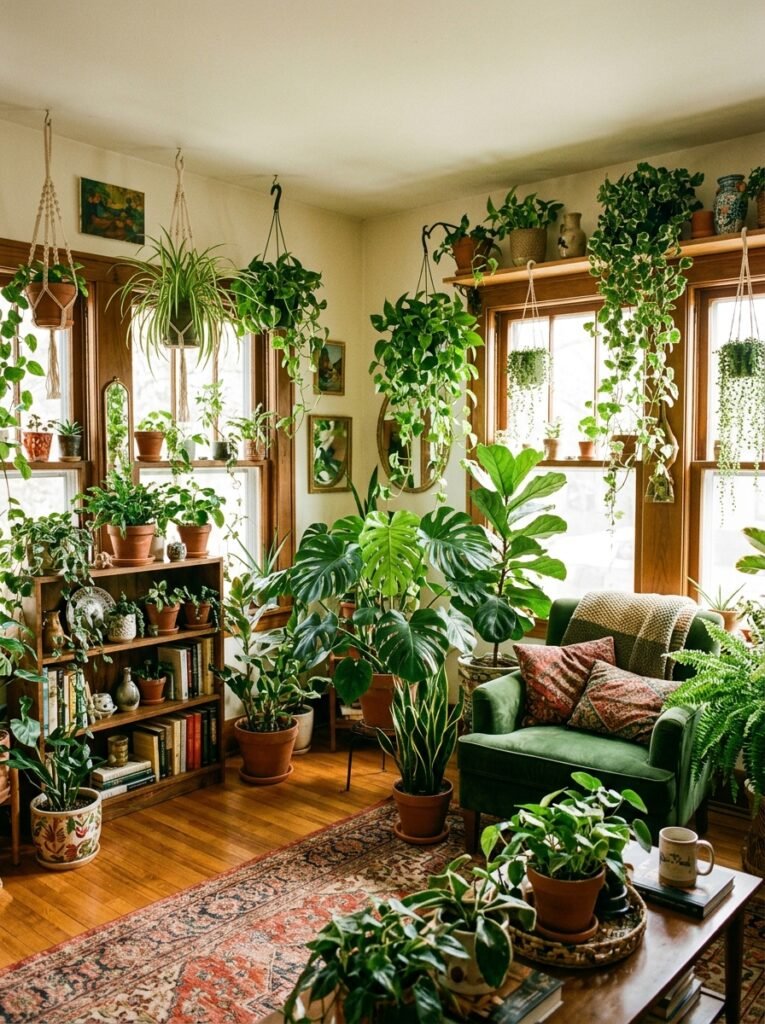
My friend Jess texted me a photo of her living room last spring — plants everywhere, absolutely chaotic, and somehow completely perfect. “What did you do?” I asked. “Honestly I just stopped being scared of them,” she said.
That hit different than I expected.
—
1. Why Most Living Rooms Have a Plant Problem (And It’s Not the Plants)
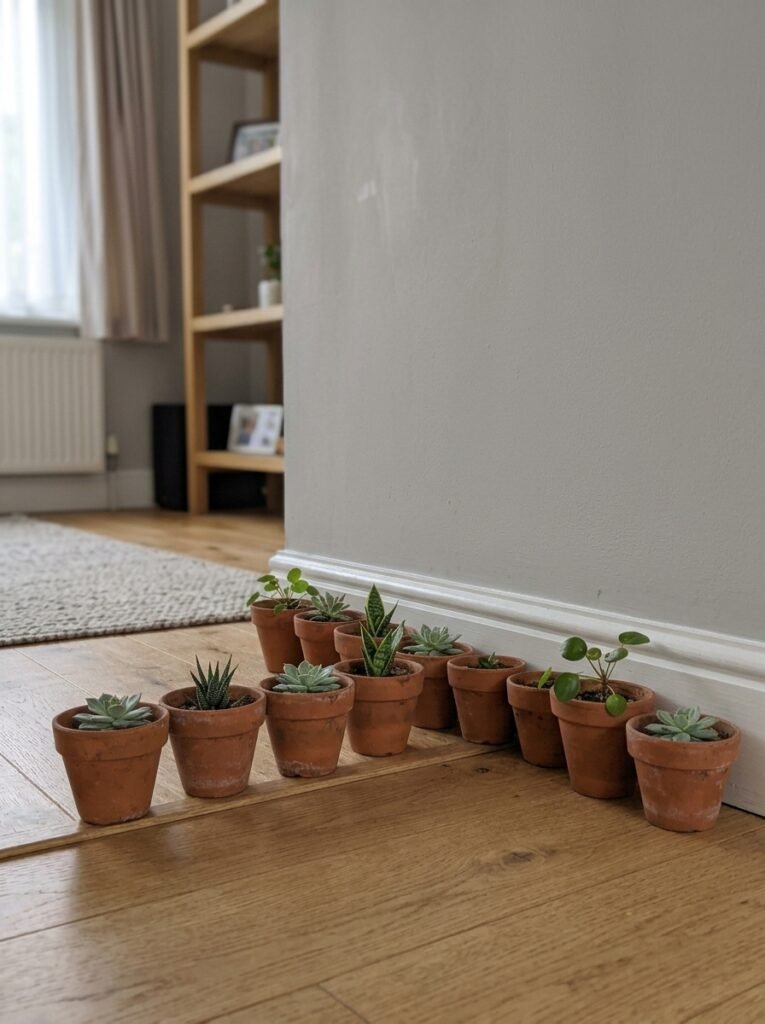
Here’s the thing nobody says out loud: most plant-filled living rooms look cluttered, not curated. And the reason isn’t too many plants. It’s that the plants are all sitting on the floor in a row, like they’re waiting for a bus.
I’ve done this. I’m not throwing shade, I did it for YEARS. Little terracotta pots lined up along the skirting board, looking very shy and unconvincing. The room doesn’t breathe when everything lives at one level. Your eye has nowhere to travel.
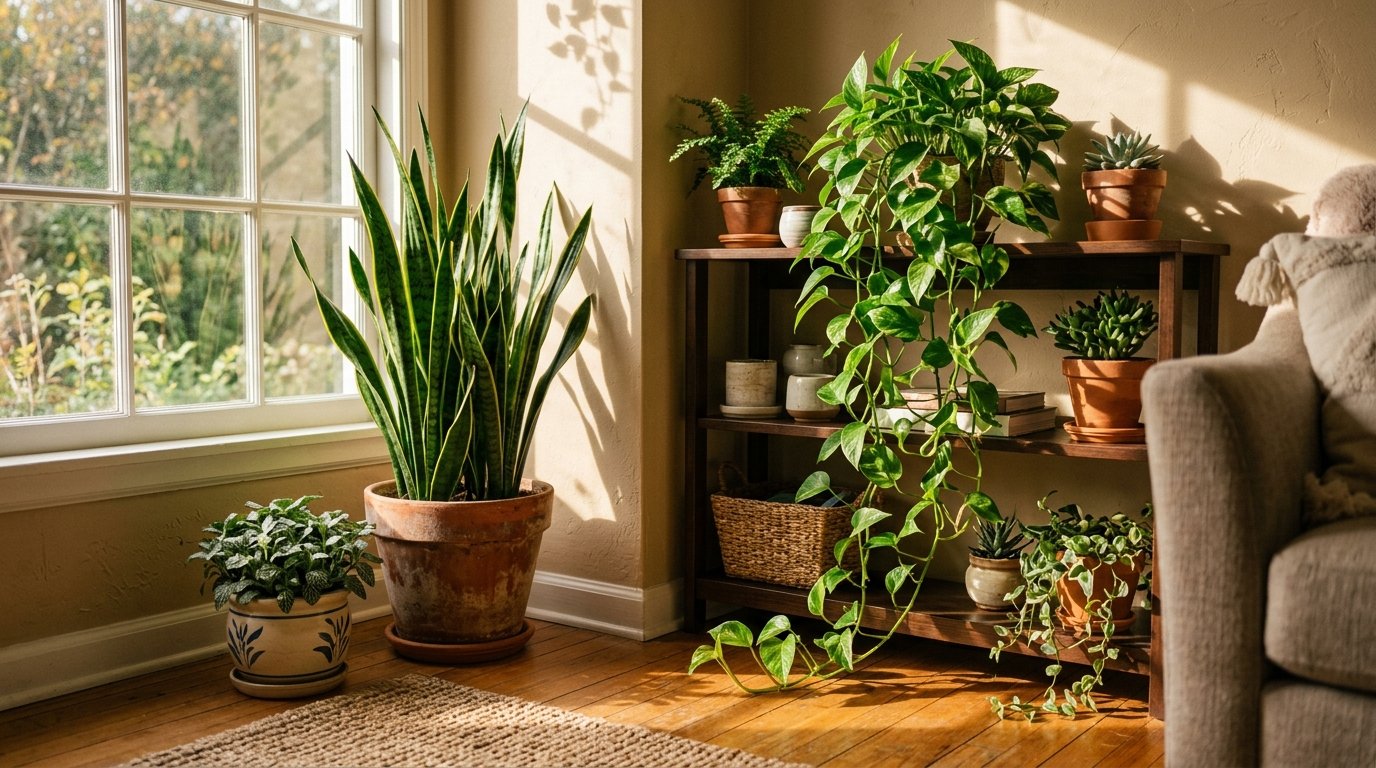
The fix is dead simple — treat your plants like furniture. Some things go high, some go low, some go in the middle. A tall snake plant earns its corner the same way an armchair does. A trailing pothos needs to be somewhere up high so the vines actually have room to do their thing, cascading down like they mean it.
Don’t think of it as “adding plants.” Think of it as adding living architecture.
—
2. The Corner That Changes the Whole Room
Every living room has one corner that’s doing absolutely nothing. You know the one. Maybe there’s a sad side table there, or worse — nothing at all.
That corner is where a large plant belongs.
“A tall, lush plant in a bare corner doesn’t fill a space — it earns it.”
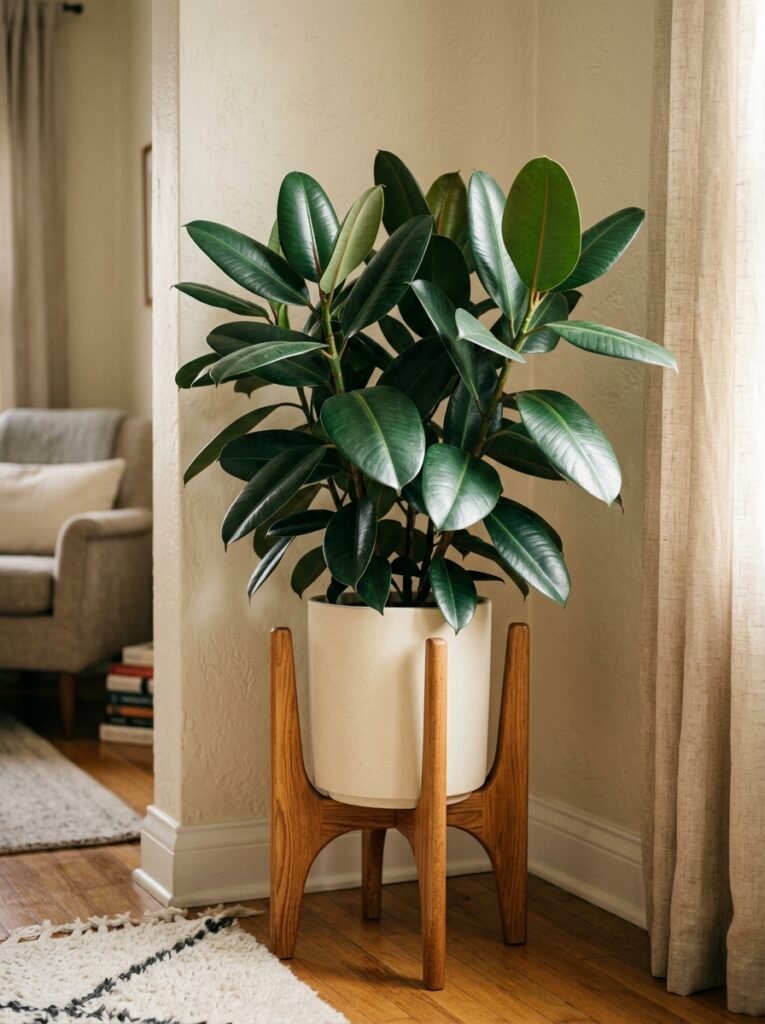
I’m talking about something with real presence. A fiddle leaf fig if you’ve got good light and nerves of steel (they’re dramatic and fussy, not gonna lie). A bird of paradise if your room leans tropical and relaxed. A large rubber plant if you want something sculptural and actually forgiving — I’ve neglected mine through two house moves and it’s somehow thriving.
The pot matters almost as much as the plant. A slim, pale ceramic on a sculptural wooden stand reads completely different from the same plant plonked in a basic nursery pot. Spend money on the pot. Genuinely. A beautiful pot on a bad day will still look good.
—
3. What Happens When You Actually Let a Plant Trail
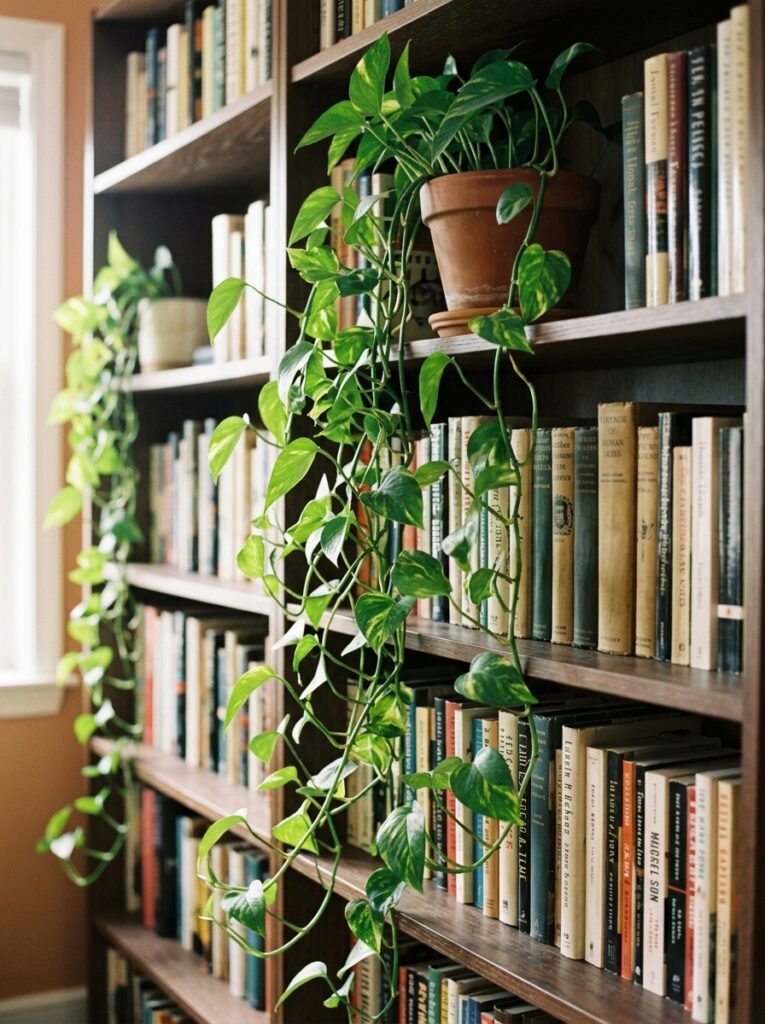
Okay so this took me embarrassingly long to figure out. I kept trimming my pothos to keep it looking “tidy.” A friend walked in, looked at it, and said “why are you punishing it?”
She was right.
Trailing plants are meant to trail. When you let a pothos, a string of pearls, or a heartleaf philodendron go, actually GO — the effect in a living room is kind of incredible. It softens shelves, it adds movement, it makes a room feel lived in and loved, not staged.
The best spots for trailing plants in a living room: the top of a bookshelf with vines spilling down the spines of books. A wall-mounted shelf just above eye level. The top of a tall wardrobe or media unit. Anywhere they can reach toward light and drape naturally.
Don’t rush it either. These plants grow slowly, and honestly, watching a new vine appear week by week is one of the small quiet pleasures I wasn’t expecting.
—
4. The Shelf Situation — Because a Styled Shelf Changes Everything
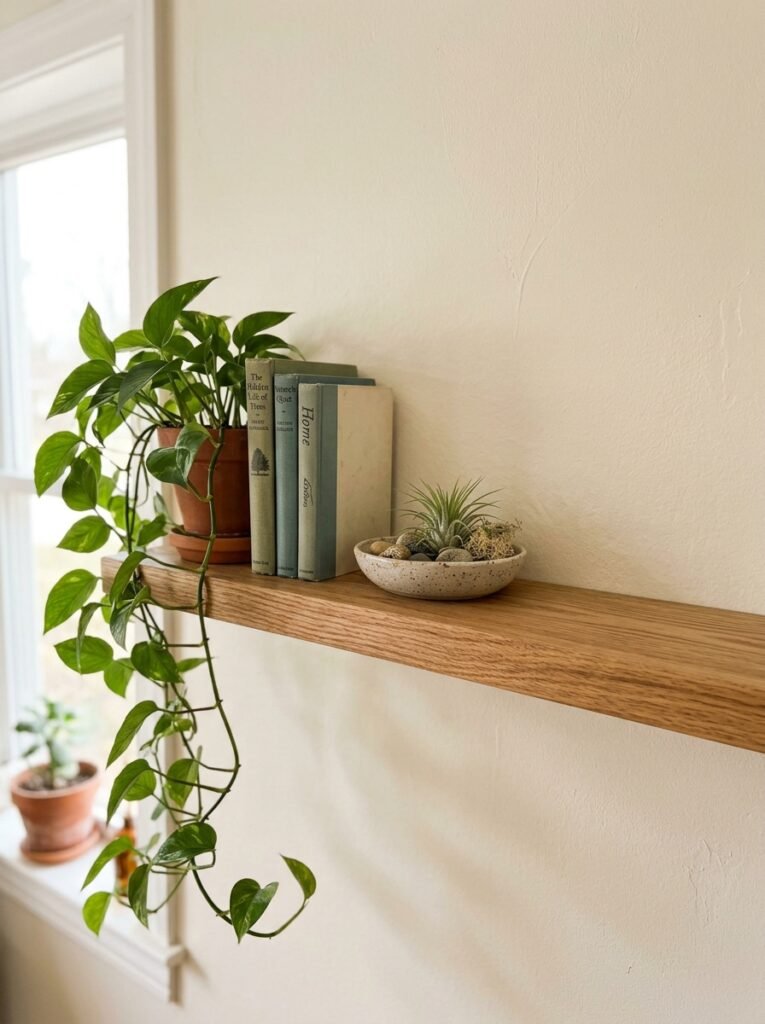
A shelf without a plant is a shelf with a personality problem. Harsh? Maybe. But I believe it.
The trick to styling a shelf with plants isn’t packing it. It’s leaving deliberate gaps so the eye can rest. One small pot tucked between books, one trailing vine on the far left, one small air plant in a ceramic dish near the middle — and then nothing for a stretch. The negative space makes the plants look intentional.
I’m also a big fan of mixing heights on shelves. A short, rotund little cactus next to a bunch of taller books, with one trailing plant edging out over the shelf lip — that variation is what makes a shelf feel like it was styled by a person and not assembled from a catalogue.
Side note — if your shelf is dark, don’t put a light-hungry plant there. I learned this the hard way with a gorgeous calathea that basically dissolved within two months. Match the plant to the light, not to the look.
—
5. The Color You’re Probably Not Using Enough Of
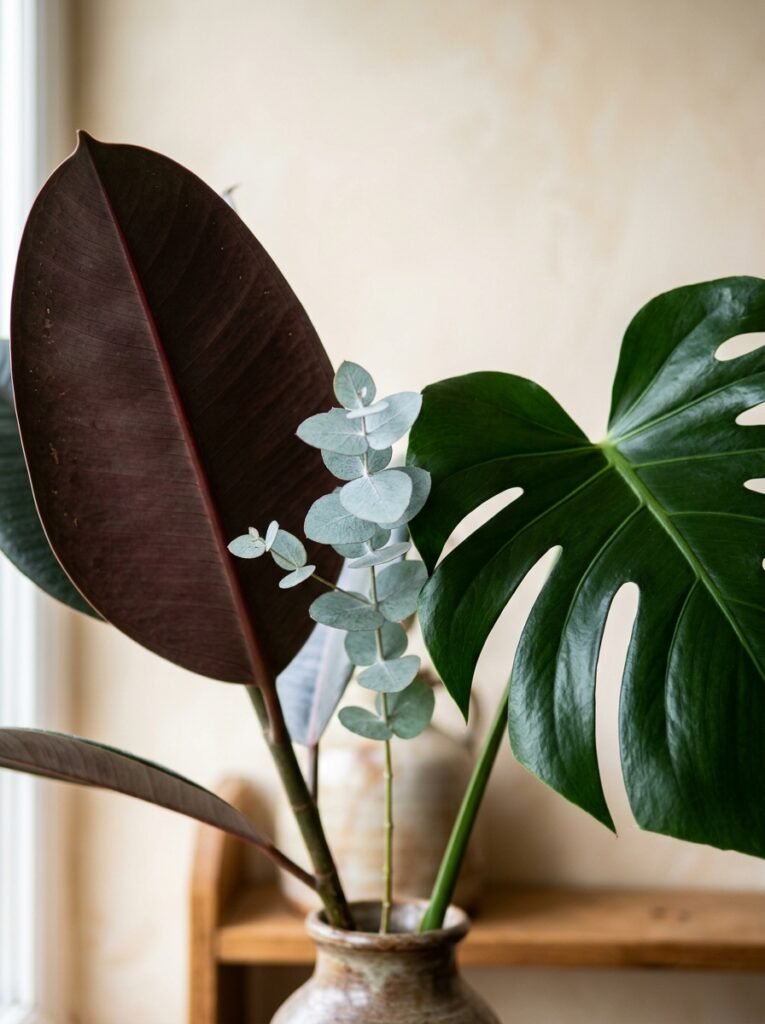
Green is the obvious answer, sure. But green on green on green gets visually flat fast. The living rooms that look genuinely stunning on any moodboard have plants with varied leaf color, texture, and shape.
A burgundy-leaved rubber plant against a cream wall. The almost-silver sheen on a eucalyptus. The deep, waxy green of a monstera next to something fine and feathery like an asparagus fern. The contrast between a dark, glossy leaf and a pale, matte one.
“It’s not about having more plants. It’s about having plants that actually talk to each other across the room.”
This is the thing interiors people call “visual tension” — and plants create it naturally if you let them. You don’t need to overthink it. Just don’t buy five plants that look exactly the same.
—
6. Small Living Room? This Changes the Calculation
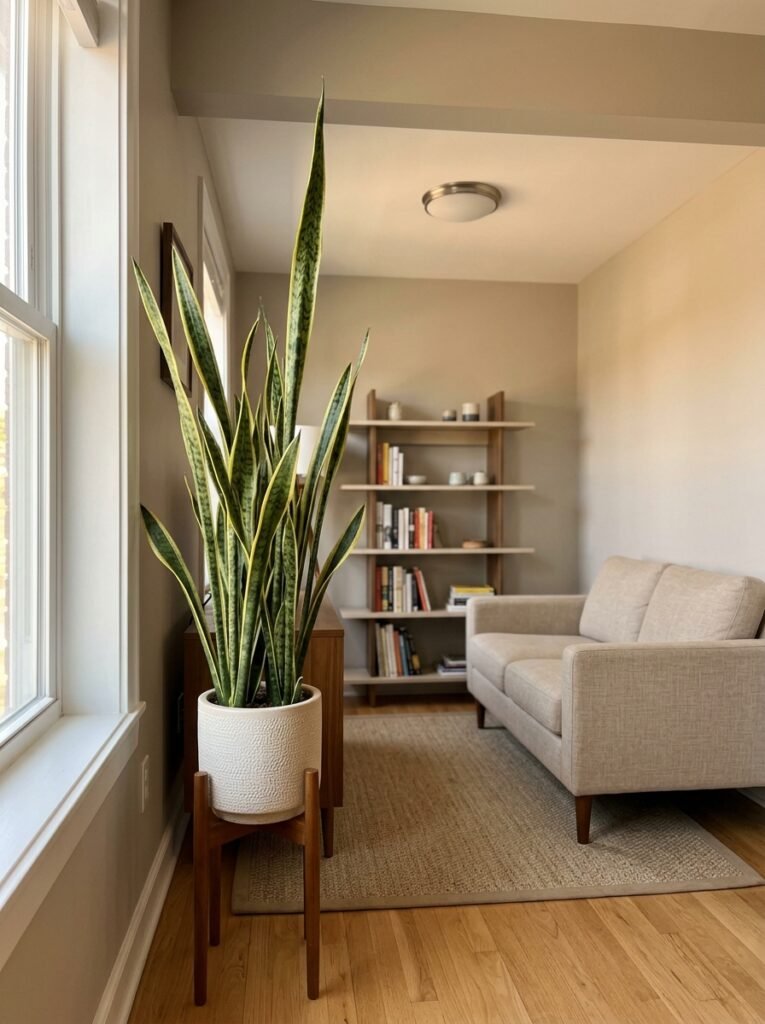
Not everyone’s working with a big open-plan space. Some of us have a living room the size of a generous wardrobe, and that’s fine. Plants in a small room need to earn their square footage.
The best approach I’ve found: go vertical.
A tall, slim plant — snake plant, yucca, tall dracaena — reads vertical and draws the eye upward, making a low-ceilinged room feel taller. It takes up a tiny footprint but has significant visual presence. In a small British terrace living room especially, this trick is genuinely game-changing.
Wall-mounted planters are worth considering too. A few small pots mounted at varying heights on one wall adds greenery without eating into floor space. And hanging plants from a ceiling hook — a hoya, a string of hearts, something delicate — adds life to a room without adding any visual weight at floor level.
Small rooms don’t need fewer plants. They need smarter placement.
—
7. The One Plant Combination That Always Photographs Well
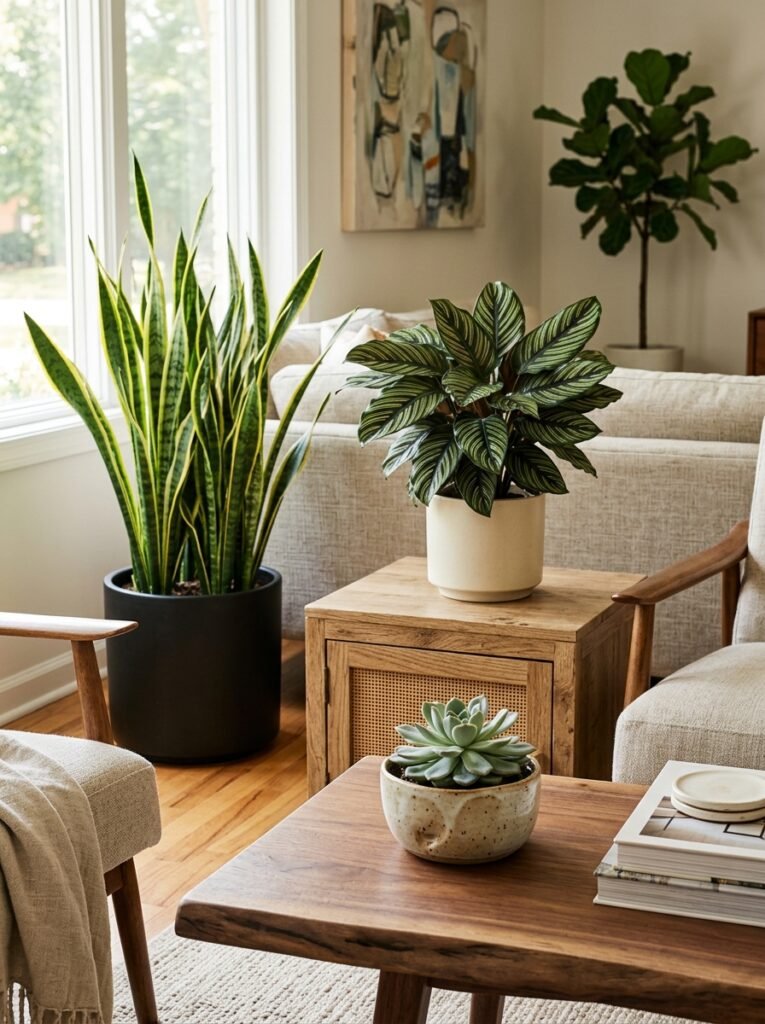
If you’re pinning, posting, or just want your living room to look genuinely editorial, this combination works every single time — and I mean EVERY time.
One large statement plant. One medium textured plant. One small, interesting plant in an unexpected pot.
It’s not a formula, it’s just how the eye works. Three scales, three textures, one cohesive idea. A tall snake plant in a matte black pot, a furry-leaved African violet or a compact calathea on a side table, and a single succulent in a handmade ceramic pinch pot on the coffee table. Done. It photographs like a magazine spread and takes maybe twenty minutes to arrange.
The “unexpected pot” thing matters more than people realize. An interesting vessel — a vintage jam jar, a woven basket with a liner, a piece of vintage pottery — turns a basic plant into an object. It adds character. It makes people ask “where did you get that?” which is, honestly, the highest compliment in home decor.
—
8. Why British and American Living Rooms Need Slightly Different Plant Strategies
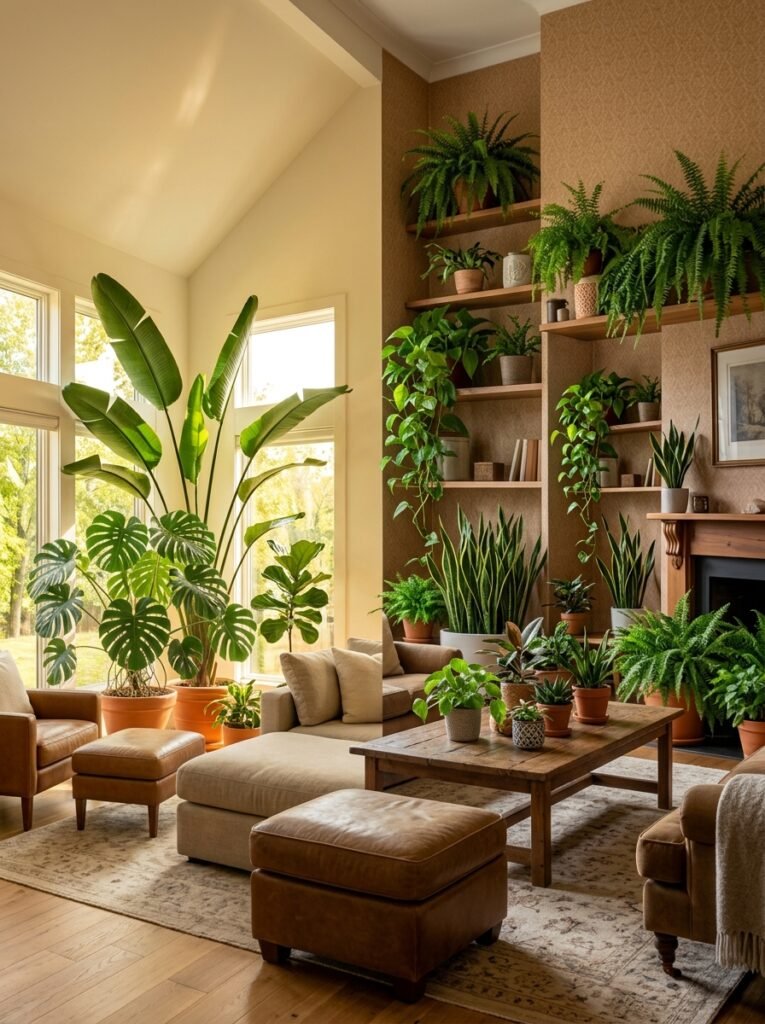
This might sound obvious but it took me a while to actually think it through. Light is different. Architecture is different. The way a room is USED is different.
In the US, especially in sunbelt states, living rooms often get direct afternoon sun through large windows. That’s tropical plant heaven — monstera, bird of paradise, fiddle leaf fig, anything that wants heat and brightness.
British living rooms, though? Often north-facing, with Victorian or Edwardian sash windows that give beautiful but limited light. Cast iron radiators that create warm dry patches. Lower ceilings in older terraces.
For UK rooms: ZZ plants, snake plants, pothos, and peace lilies are the reliable workhorses. They genuinely don’t need much light and they don’t sulk when the heating goes on in October and drops the humidity. Boston ferns are beautiful but they’ll protest loudly in a centrally heated British flat. Just so you know.
For sunnier American rooms, the temptation is to go BIG with the tropical stuff and honestly — lean into it. Nothing fills a double-height American living room corner like a ten-foot bird of paradise with leaves the size of a dinner table.
—
9. Pots, Stands, and the Accessories That Nobody Talks About Enough
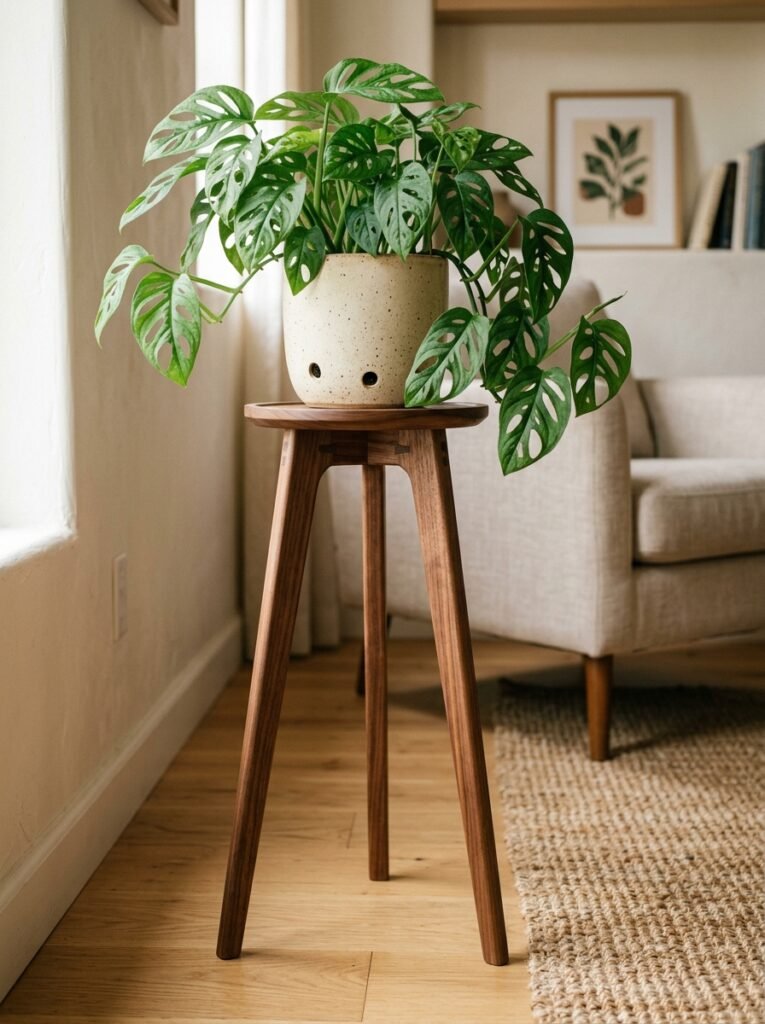
The pot situation deserves its own section because it really is that important.
Here’s my current thinking on pots: the more interesting the plant shape, the simpler the pot. The simpler the plant, the more the pot can do some work.
A monstera with those huge architectural leaves? It wants a simple, pale ceramic or a plain woven basket. The leaves are the art. A small, plain succulent that doesn’t do much visually? Put it in something amazing. A handmade glazed bowl, a little brass container, a sculptural concrete vessel.
Plant stands are also having a genuine moment and honestly they deserve it. A slim wooden tripod stand lifts a plant off the floor, gives it its own zone, and makes even a medium-sized plant feel like a considered choice rather than something you just put down and forgot. They’re also cheap relatively speaking and they move easily, so you can experiment with placement without committing.
“The right stand makes a medium plant look like a decision. Which is exactly what you want your living room to feel like — decided.”
—
10. Real Talk on Maintenance (Because Nobody Wants a Living Room Full of Dying Things)
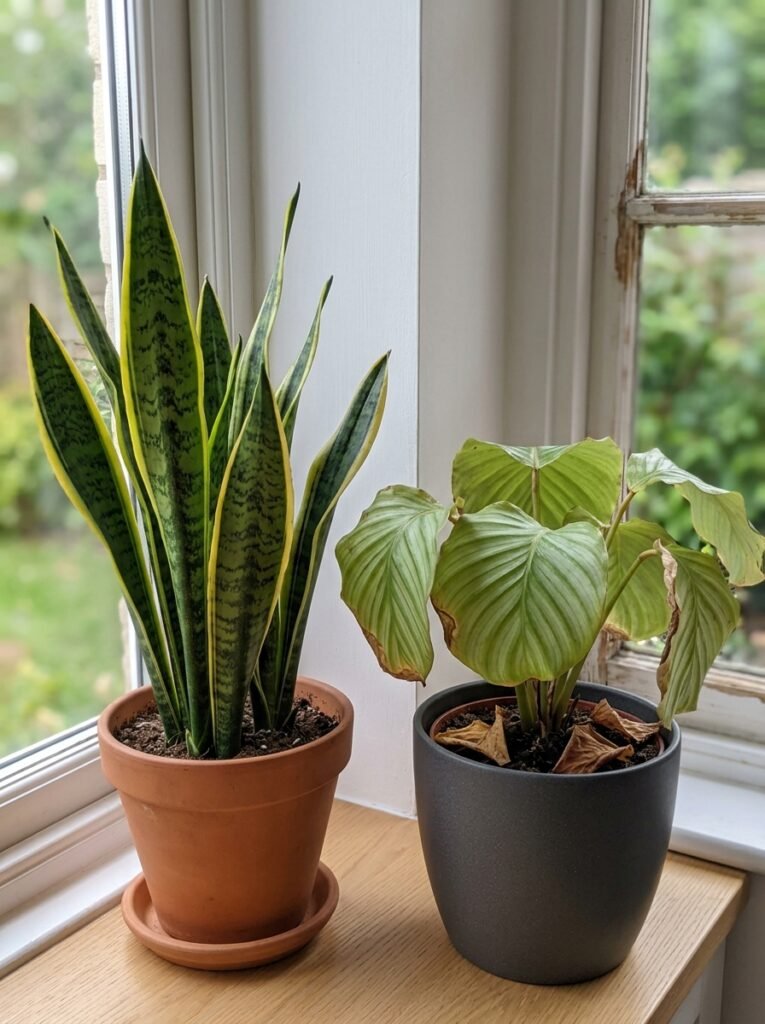
I have to say this because it’s the part of the “plant inspo” content ecosystem that gets glossed over constantly.
Beautiful plants require some degree of attention. Not obsession. But attention.
The plants most likely to survive in a living room without you thinking about them constantly: snake plant, ZZ plant, pothos, spider plant, cast iron plant (aptly named). These are genuinely hard to kill. I’ve tested this personally and involuntarily.
The plants most likely to look stunning in a photo and then gradually become very sad: fiddle leaf fig, calathea, maidenhair fern, peace lily left near a radiator. These aren’t bad plants — they’re just specific. They want particular things and they’ll let you know when they don’t get them, usually by dropping leaves dramatically.
Match the plant to your actual lifestyle. Not your aspirational lifestyle. If you travel a lot, go for drought-tolerant. If you forget to water for three weeks at a stretch (guilty), get a snake plant and be at peace with that.
—
11. The Mood a Living Room Plant Actually Sets
This is the part I think about most, honestly.
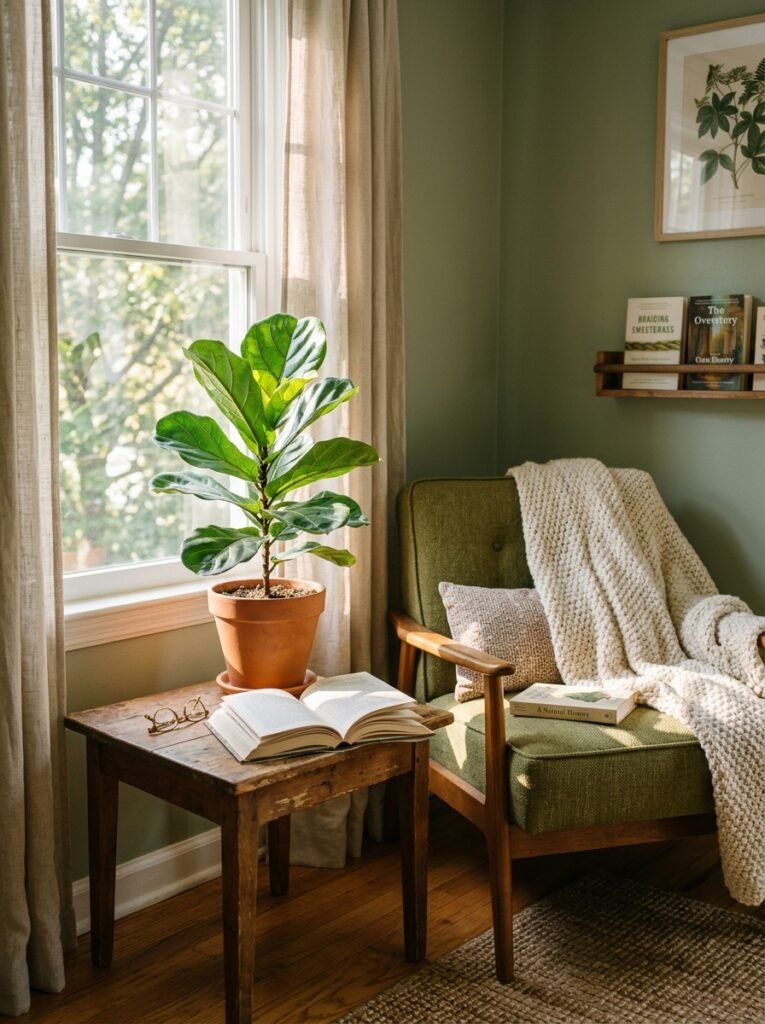
Plants in a living room aren’t just decorative. They do something to the feeling of a room that I can’t fully explain but I feel immediately when I walk into someone’s home and they’ve got it right. It’s something about a room breathing. The air feels softer. The light reflects off leaves in a way that no lamp exactly replicates — that specific kind of dappled, shifting light that makes you want to sit down with a book and just be there for a while.
There’s research on this, sure — biophilic design, all that — but honestly you don’t need to know the science to feel the difference.
A single beautiful, healthy plant in a well-lit corner does more for the mood of a living room than most things you’d spend significantly more money on.
And a whole considered collection of them — trailing, standing, shelved, hanging — turns a living room into a place people don’t want to leave. Which is, at the end of the day, the whole point.
—
12. Starting Over vs. Starting From Where You Are
Not everyone is starting from scratch. Some people have three sad plants they’re loyal to and want to work around them. That’s a completely valid starting point.
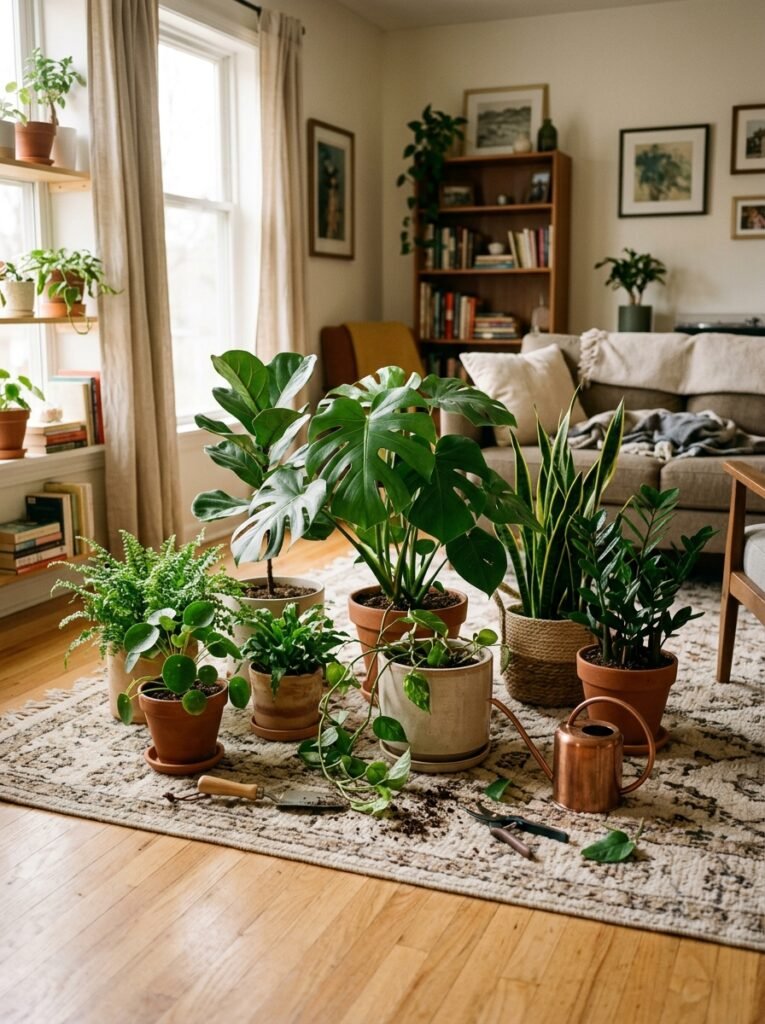
If that’s you, here’s what I’d do: pull ALL your current plants to the center of the room. Look at what you’ve got. Consider the shapes, the sizes, the leaf textures. Then figure out where you’ve got light and where you don’t. Then put them back deliberately — not just where they were before, but where they actually make sense visually AND for their needs.
Sometimes a rearrangement does more than buying anything new.
But if you are adding plants — start with one large statement plant and one trailing plant. That’s enough to change a room. You can build from there slowly, which is much more satisfying anyway.
Because a living room with plants isn’t a project you finish. It’s something that keeps evolving, keeps growing, keeps surprising you. Which, honestly, is exactly what a living room should do.
—
❓ FAQ
Q: What’s the best plant for a living room with low light? A: Snake plants and ZZ plants are your safest bet — they’ll genuinely tolerate very low light without giving up on you. Pothos is another brilliant option, especially for shelves and hanging positions. Just don’t expect fast growth in dim rooms; these plants will survive but they won’t exactly put on a show.
Q: How do I stop my living room plants from looking cluttered? A: The key is variation in height, and leaving actual negative space between plants rather than grouping everything together. Treat each plant like a piece of furniture with its own zone. And be honest about how many you have — sometimes editing down to fewer, better-placed plants makes a bigger impact than adding more.
Q: Are big plants worth the cost in a small living room? A: Often yes, because one large plant reads as a design decision while five small ones can just look like clutter. A tall snake plant or dracaena in a slim form takes up minimal floor space but creates huge visual impact. In a small room, strategic scale matters more than quantity.
—
💭 Final Thoughts
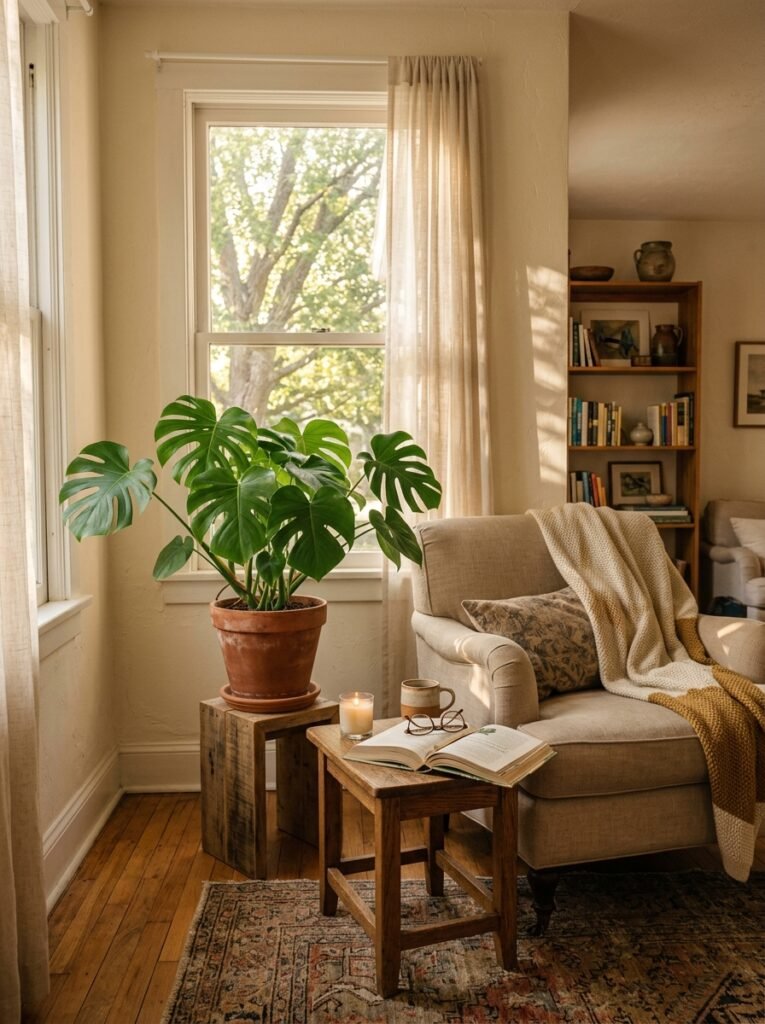
I think we underestimate what a plant does to a room. Not the aesthetic — I mean the actual feeling of being in a space that has something living in it. Something that was different last week and will be different next week. There’s a kind of warmth in that you really can’t buy or replicate any other way.
Start with one plant you actually love, put it somewhere it’ll thrive, and see what happens next.
What’s the one corner of your living room that’s been empty way too long?