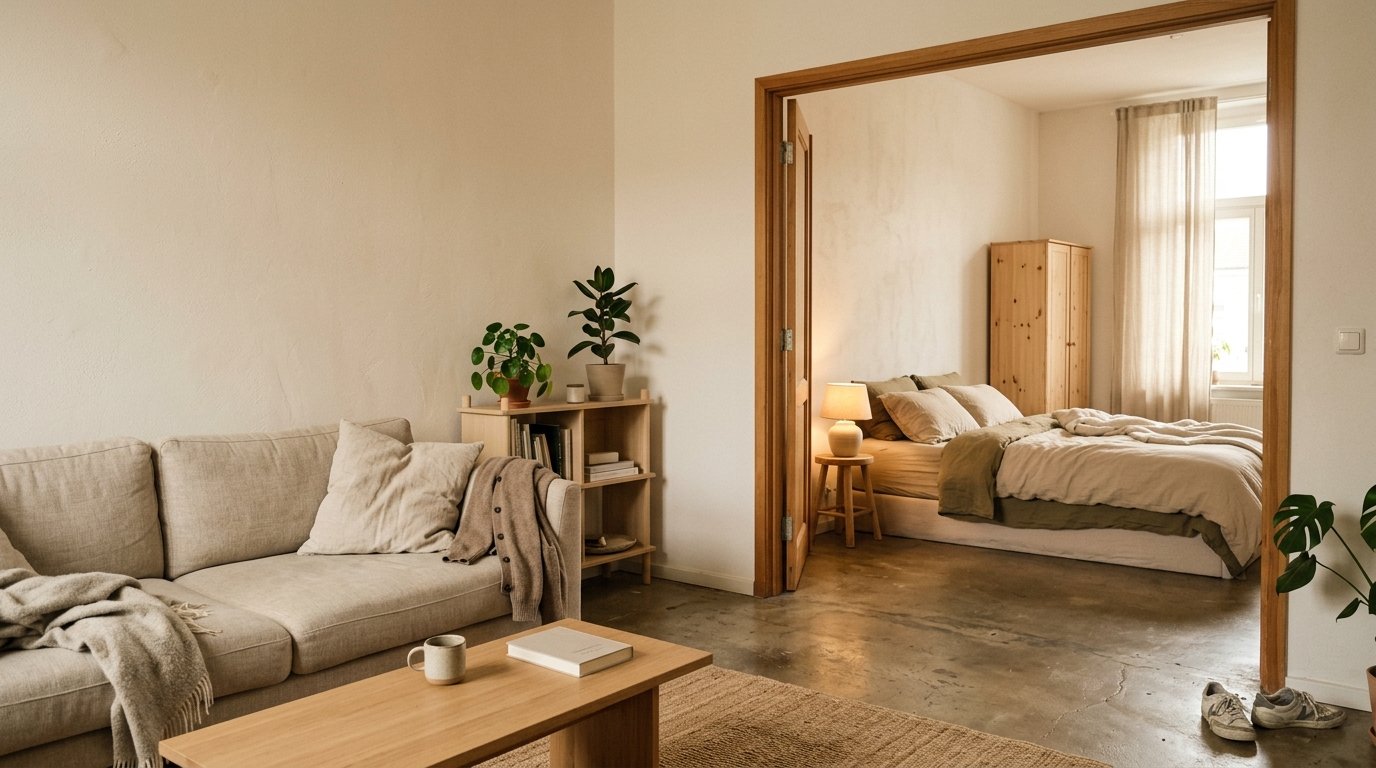
The Quiet Art of Doing Less: Budget Minimalist Ideas That Actually Make Your Living Room and Bedroom Feel Finished
My friend Cara walked into my flat last spring and said, “How do you make nothing look like something?” I didn’t have a great answer at the time. But I’ve been thinking about it ever since.
—
1. The Myth That Minimalism Requires Expensive Furniture
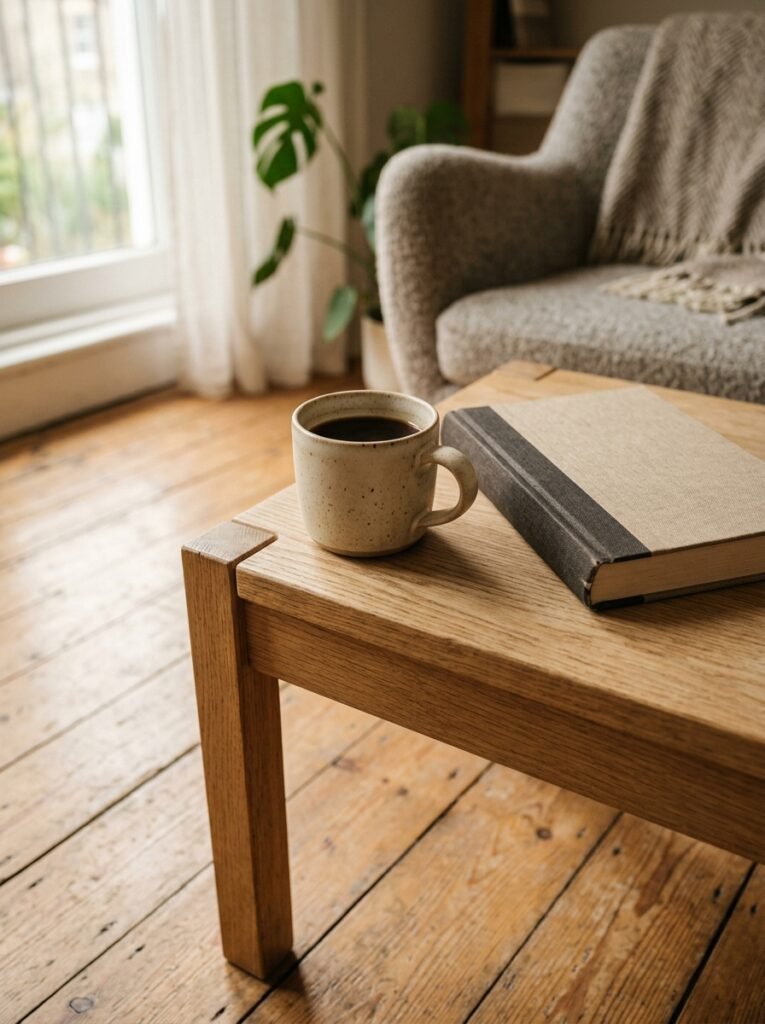
Here’s what nobody tells you upfront: minimalism doesn’t cost more. It costs less. The whole point is that you stop buying things. The problem is that somewhere along the way, “minimalist aesthetic” got hijacked by design accounts selling you £400 side tables with one curved leg and calling it “intentional.”
Real minimalism is the opposite of that. It’s keeping the worn linen sofa because the shape is right, and just stopping there. It’s not filling the corner. Not buying the matching set. Not finishing the room in a way that looks “done” — because done is not the goal.
And once you let go of the idea that you need specific things to make it work? The whole thing becomes incredibly cheap to pull off. You’re editing, not shopping.
“Minimalism isn’t a look you buy into — it’s stuff you stop buying.”
The budget version of this style is, honestly, more authentic than the expensive version. Because the expensive version is just maximalism with better lighting.
—
2. The One Wall Decision That Changes Everything in a Living Room
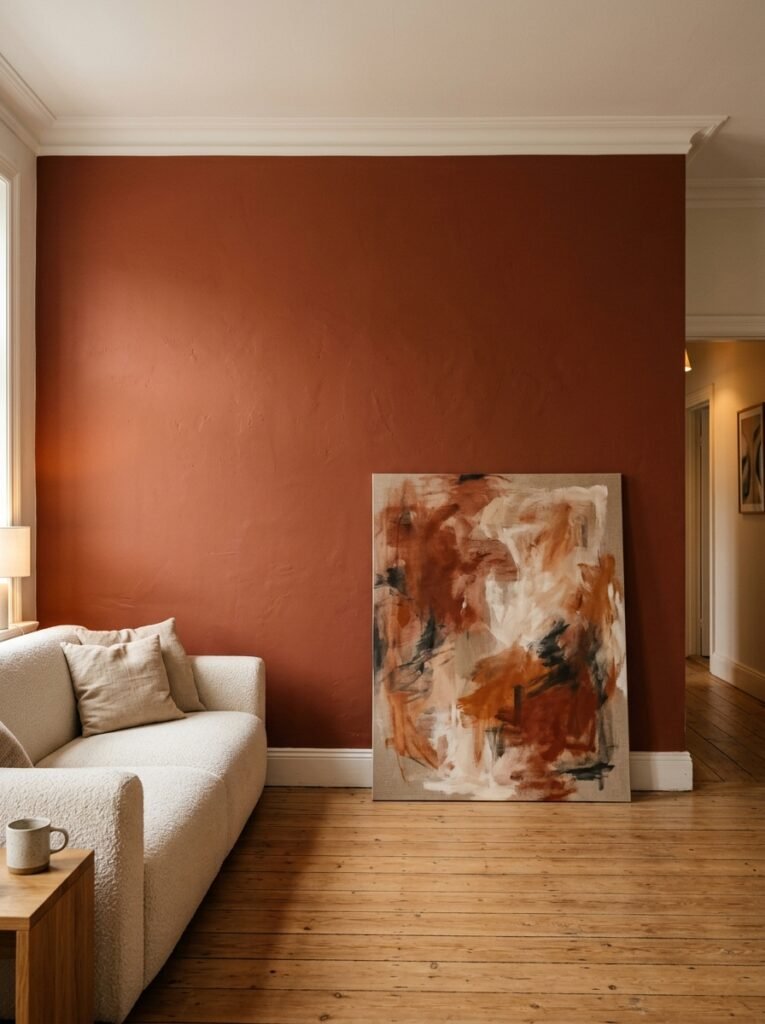
Pick one wall. Just one. That’s your focal point, and everything else in the room needs to settle down and let that wall do its thing.
This is the move that makes budget living rooms look curated instead of unfinished. When you’ve got four walls all competing — gallery wall here, mirror there, shelves on another — the eye doesn’t know where to land and the room feels chaotic no matter how neutral your palette is.
So. One wall gets the attention. Maybe it’s the wall behind your sofa, painted a shade deeper than the others — not dramatic, just grounded. Maybe it’s one large framed print, properly sized (so many people undersize their art and then wonder why the room looks weirdly empty even when there’s stuff in it). Maybe it’s a simple floating shelf, one plant, one object, space around it.
The other three walls? Nearly nothing. That contrast is the whole trick.
It costs next to nothing to implement. A can of paint for the feature wall — maybe £20/$25 — and suddenly the room has a spine.
—
3. Why Your Bedroom Probably Has Too Much Furniture
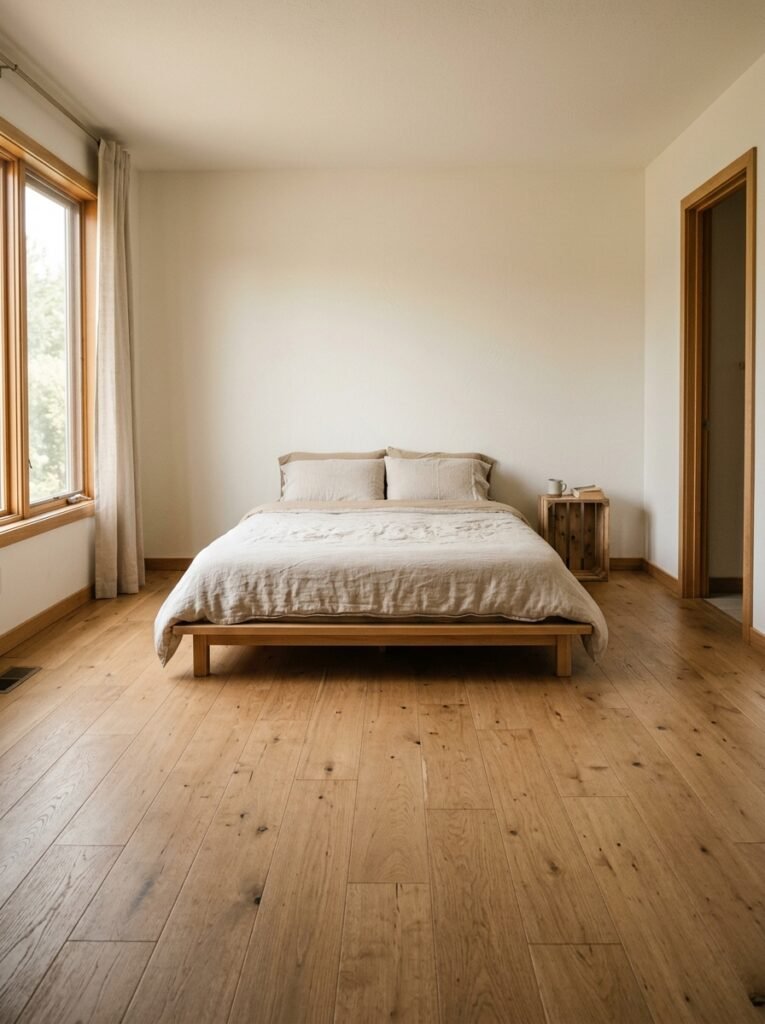
Take one thing out. I’m serious, just try it.
Most bedrooms I’ve seen — and this includes some genuinely lovely homes — have a bedside table on both sides, a dresser, maybe a bench at the foot of the bed, possibly a chair that nobody sits in but everyone has, a lamp, another lamp, and suddenly the room is doing so much visual work that you wake up already tired.
Minimalism in a bedroom isn’t about emptiness. It’s about the bed being the room. Full stop.
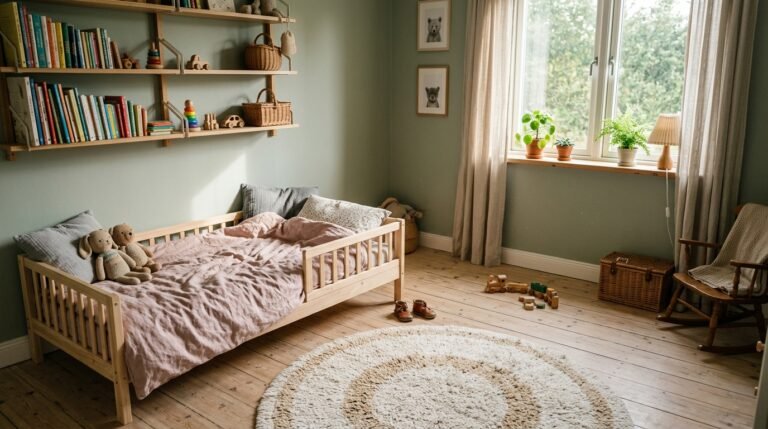
If you’ve got a small bedroom — and honestly most UK bedrooms are not large — try one bedside table instead of two. It looks intentional and asymmetrical, which is actually more interesting than matched pairs. Or ditch the bench. Keep the floor clear. Let there be a little bit of wall visible on either side of the headboard.
The savings aren’t just in what you don’t buy going forward. They’re in what you remove.
—
4. The Colour That Keeps Showing Up in Every Beautiful Budget Bedroom Right Now
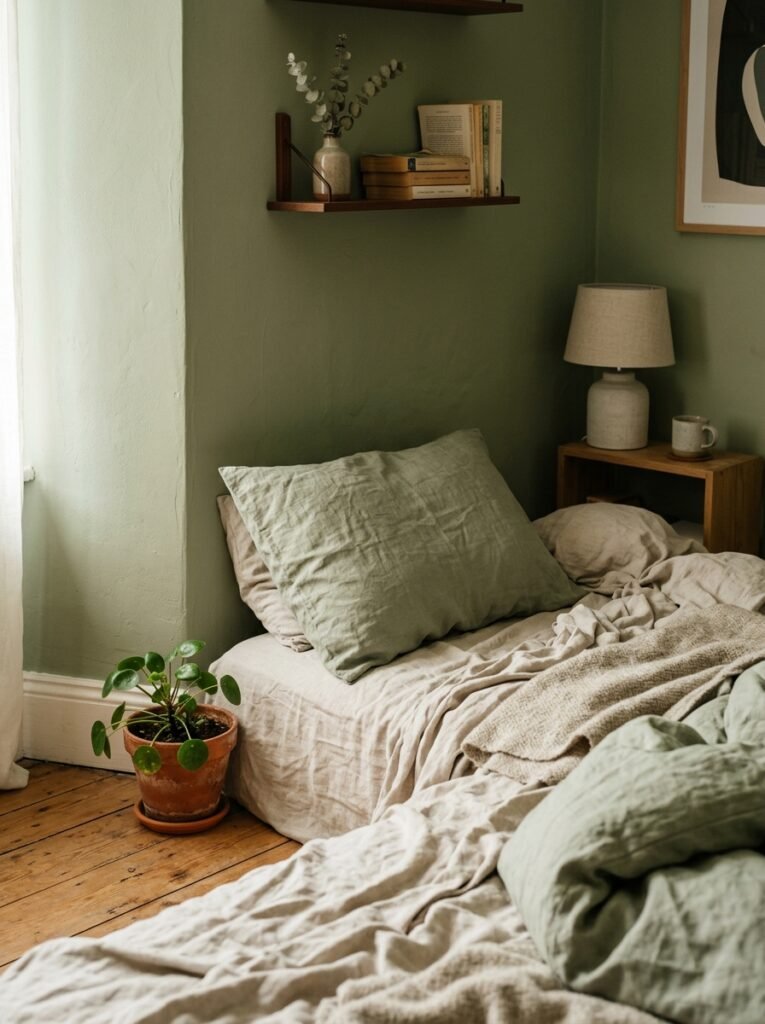
Warm white. Not cool, not grey-white, not the slightly green-tinted white that comes out of a paint tin looking nothing like the swatch. WARM white — the kind that looks like it’s been kissed by the sun at 4pm.
Side note — I spent about three weeks agonising over this for my own bedroom and I could not understand why my walls looked flat and a bit clinical. It was the undertone. The paint had a blue-grey undertone and was bouncing cold light around the room. Switched to a warm white with a yellow or pink undertone (test patches first, always, please) and the whole room shifted. Same furniture, same rug, same lamps. Completely different feeling.
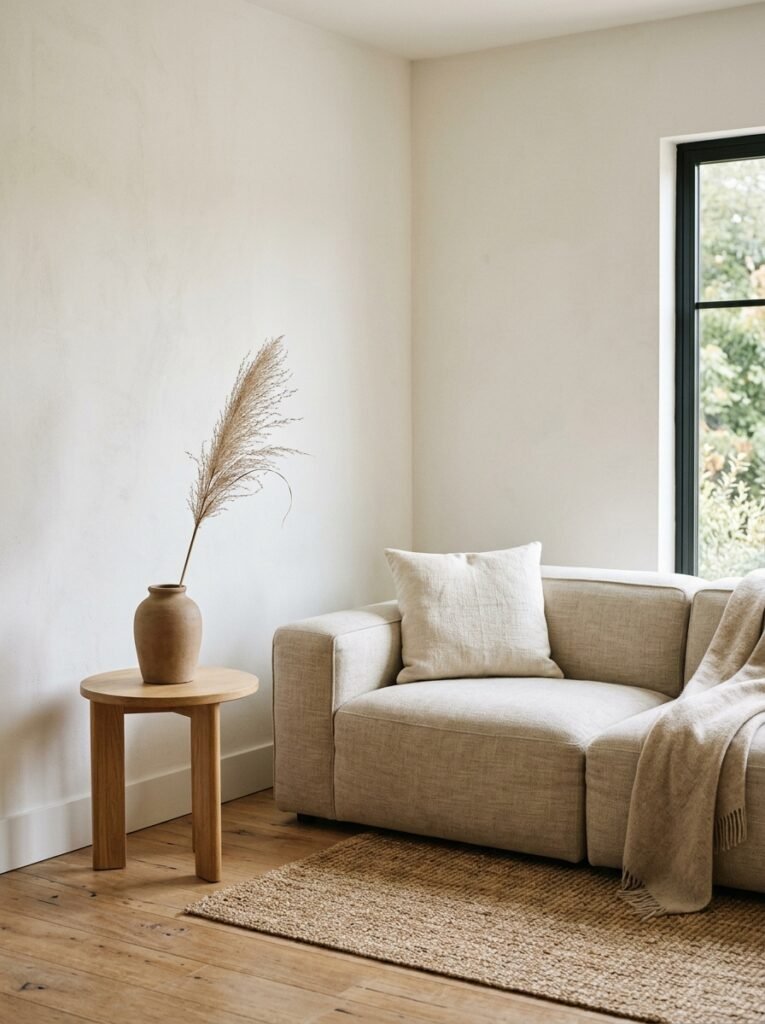
In a living room, warm white walls let your wood tones and natural textures do all the work. A rattan lamp. A linen cushion. A jute rug. These things practically glow against warm white — they look expensive and collected, not cheap and thrown together.
And if you’re renting and can’t paint? A large warm-toned rug will do some of this work for you. Not all of it, but some.
—
5. Rethinking the Living Room Rug (The One You Probably Already Own)
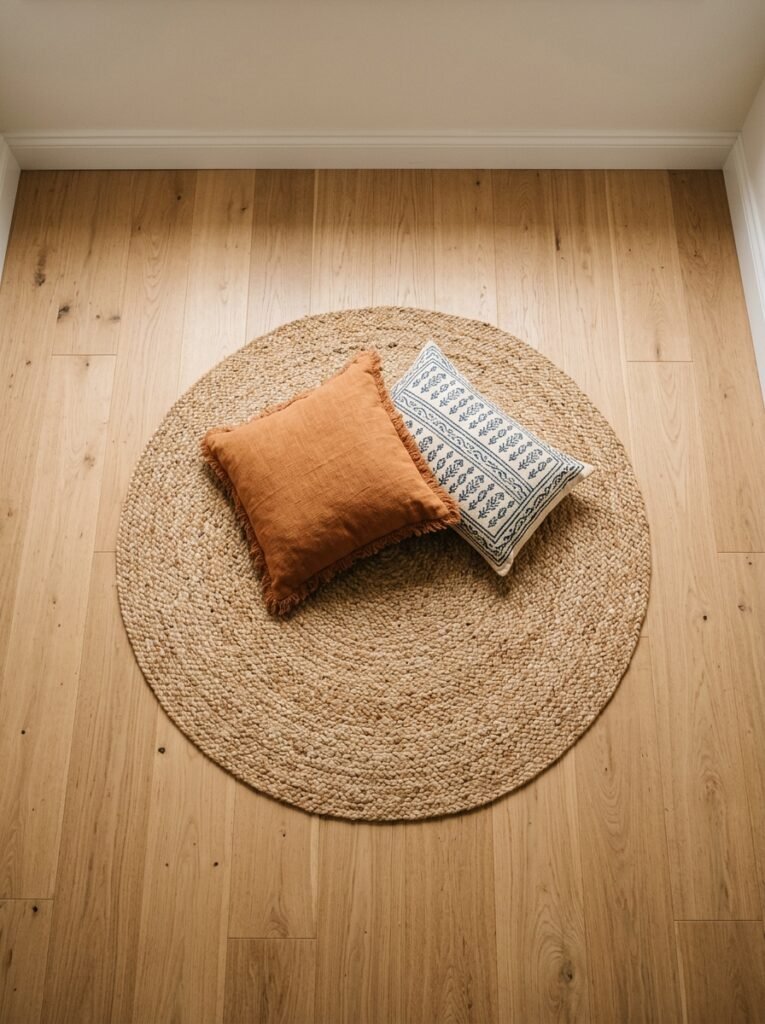
Is your rug too small? Yes. Yes it probably is.
This is one of the most common mistakes in living rooms and it doesn’t matter whether you’re going for minimalist or not — a rug that doesn’t anchor the space makes the whole room look like the furniture is floating anxiously. Front legs at least on the rug. All legs on the rug if the size allows.
But here’s the budget angle. You don’t necessarily need a new rug. If yours is too small, you can layer it — a smaller patterned or textured rug over a larger flat-weave or jute base. This is cheaper than one big rug and creates this incredibly effective grounded look. Jute or natural fibre as the base layer is easy to find affordably and works with basically every aesthetic. The top layer can be almost anything.
“The rug doesn’t have to be beautiful. It has to be big enough to mean something.”
If you DO need a new one, go neutral and go as large as your budget allows. You’ll always wish you went bigger. Always.
—
6. The Shelf Styling Method That Never Goes Wrong
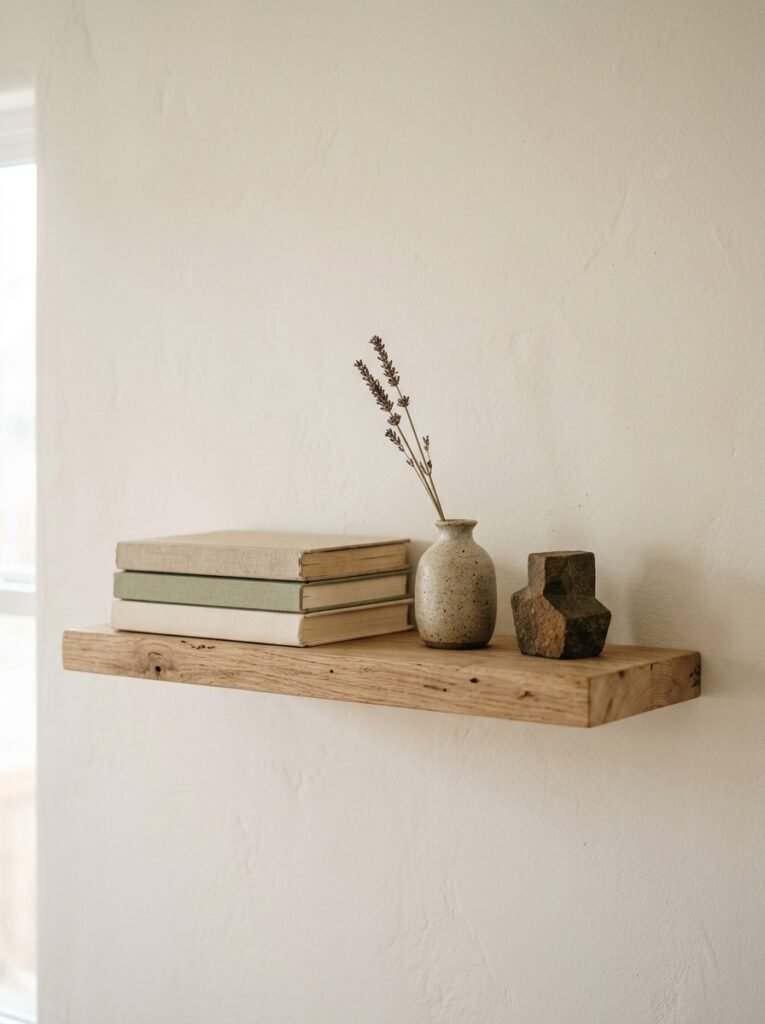
One object. One plant. One empty space.
That’s it. That’s the formula. Or it’s not a formula exactly, it’s more like a ratio — every shelf should have more empty space than stuff on it. Most people pack shelves instinctively, filling gaps the way you’d fill awkward silences, and then the shelf looks cluttered even when everything on it is pretty.
The minimalist shelf is about restraint. You pick the three things that earn their place and everything else gets put away. And “put away” doesn’t mean it’s gone forever, it means it’s not currently on display and that’s actually fine.
For budget styling: a single stem in a glass bottle. A small stack of books turned spine-in (this is controversial but I’m standing by it — the uniform cream pages look SO much more intentional than a rainbow of spines). One thing with texture, like a small stone or a piece of driftwood or a ceramic cup you like.
Costs nothing. Takes ten minutes. Looks considered.
—
7. The Lighting Trick That’s Cheaper Than Any Furniture Upgrade
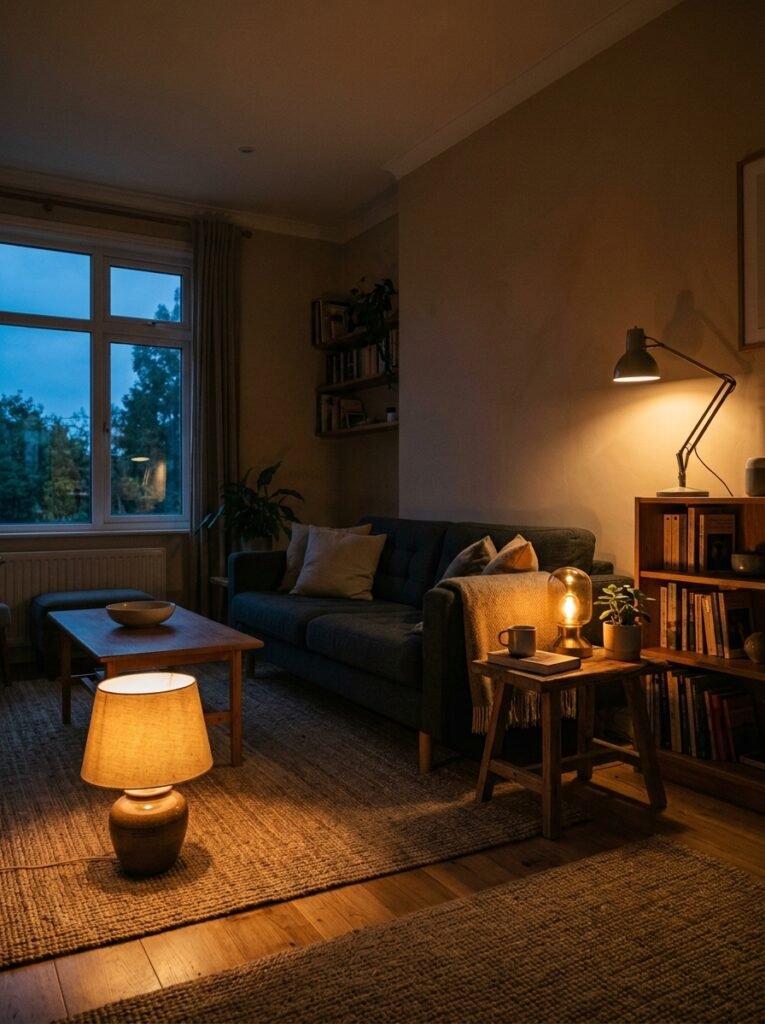
Lose the overhead light. Or at least stop using it as your only source.
Overhead lighting in most living rooms and bedrooms is flat, harsh, and has absolutely no interest in making you or your home look good. It’s there for functionality — to find things in the dark — not atmosphere.
What you want is the amber glow of a small lamp at eye level in the corner of the room at 8pm. Or a string of simple bulbs draped somewhere low. Or a single plug-in wall sconce that took maybe fifteen minutes to install and no electrician.
In the bedroom, this matters EVEN MORE. If your only light is the overhead, the room will never feel like a retreat. Never. It’ll feel like a hotel you don’t like yet.
Lamps. Multiple, low, warm-bulbed. Not a big upgrade in price — a decent small lamp can be found secondhand for almost nothing — but an enormous upgrade in how the room feels after dark.
And minimalism works hand-in-hand with this because fewer items means each light source illuminates less, so the shadows are more dramatic, the shapes more interesting. The room gets moody instead of bare.
—
8. What Actually Makes a Minimalist Room Feel Warm (Not Cold and Sad)
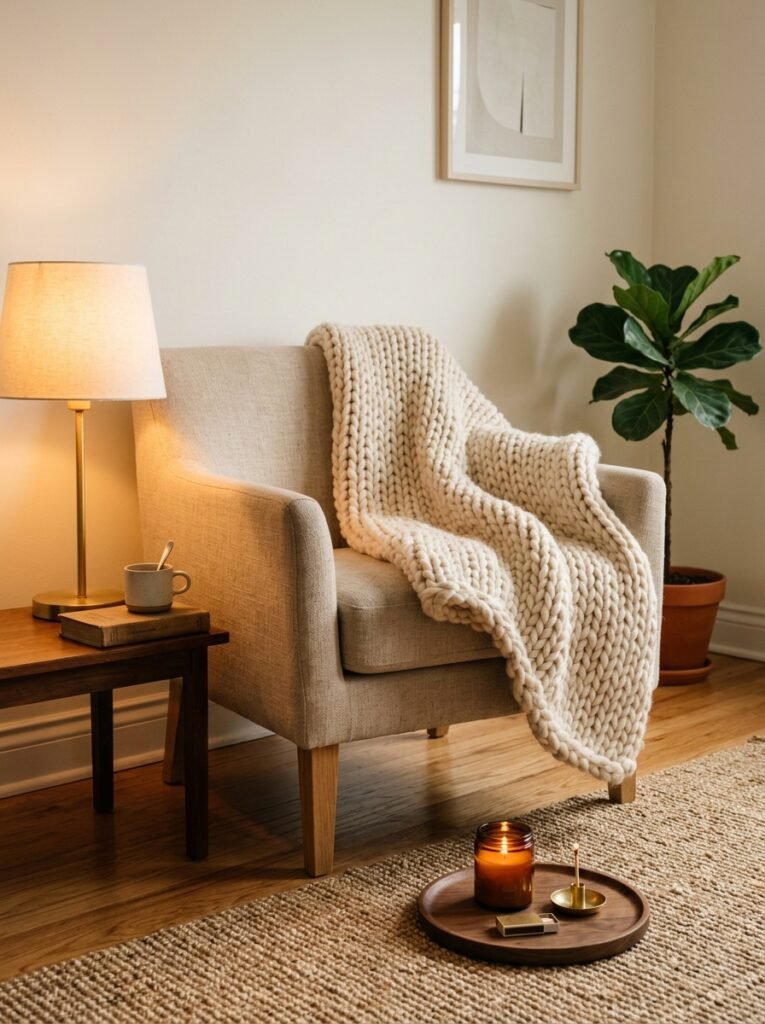
Texture. That’s the whole answer.
When you take away clutter, colour, and pattern, texture is what stops a room from feeling like a showroom or — worse — someone’s sad apartment they haven’t settled into yet. You need things that invite touch. Things the eye can rest on.
A chunky knit throw (draped casually, not folded perfectly). A linen duvet cover that’s slightly rumpled. A rough terracotta pot for your plant. A wooden tray with visibly uneven grain. None of this is expensive. All of it is the difference between a room that photographs as beautiful and a room that FEELS beautiful when you’re standing in it.
The key is contrast of textures, not contrast of colours. When everything’s roughly neutral, you can still have a lot going on visually — smooth ceramic next to coarse jute next to soft cotton next to matte wood. That interplay gives the eye something without overwhelming it.
—
9. The Bedroom Linen Swap That Costs Under £40/$50
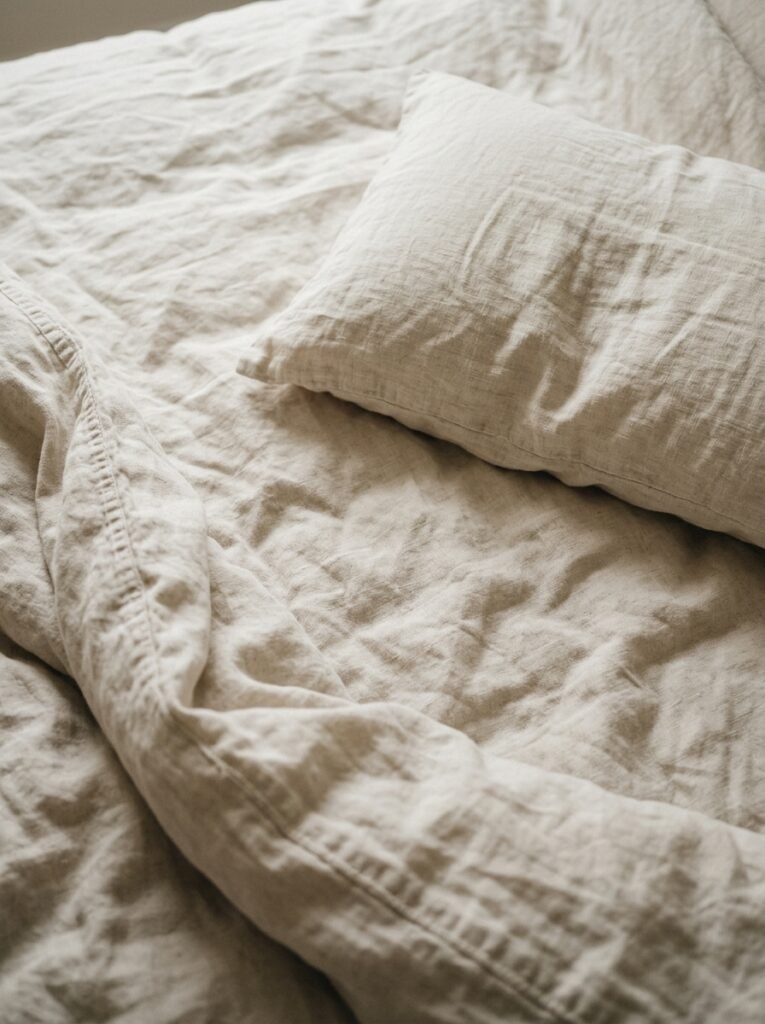
White linen. Or warm oat. Either one.
I don’t care what duvet cover you have right now — and I say that gently — but if you want one single change that makes your bedroom look like a page from a Scandinavian interiors magazine, it’s this. A simple, plain linen or linen-blend duvet cover and pillowcases in white or natural.
No pattern. No stripe. No florals (unless that’s genuinely your whole thing, in which case ignore me). Just plain.
It’s easy to find on a budget. There are linen-blend options that look and feel nearly identical to 100% linen at half the price. And the effect is instant — the bed becomes this calm, clean anchor and everything else in the room is allowed to be simple.
“A plain linen duvet cover is doing more work than any throw pillow arrangement you’ve ever attempted.”
Wash it slightly wrinkled. Don’t iron it. That slight texture is the point.
—
10. The Thing You Can DIY That Actually Looks Good
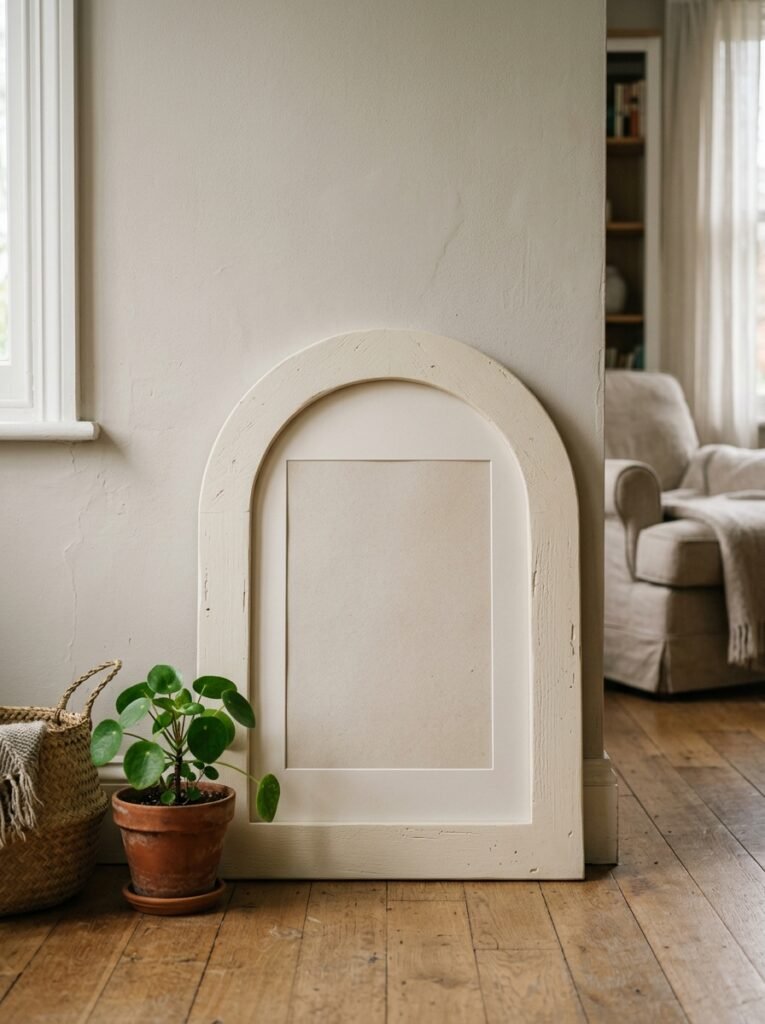
A large-scale abstract print. Hear me out.
Art is one of the biggest budget sinkholes in interior styling. A single decent-sized print can run you £60-150/$75-200, and that’s before framing. But in a minimalist room, you need something on the wall — one thing, remember, the focal wall — and it needs to be big enough to matter.
So. Watercolour wash on a large sheet of watercolour paper or even thick card. You don’t have to be an artist. You genuinely don’t. One or two colours, both diluted, swept across the page in broad strokes. Let it bleed. Frame it in a simple thin black or natural wood frame from a charity shop or discount home store.
This works because abstract art with limited palette fits the minimalist aesthetic better than most purchased prints anyway. And there’s something about knowing you made it that makes the room feel more personal and less like a mood board.
Alternatively — a single large piece of black-and-white photography printed at a copy shop in the largest format they offer. Maybe £5-10/$8-12. Frame it. Done.
—
11. The Plants-to-Empty-Space Ratio That Actually Works
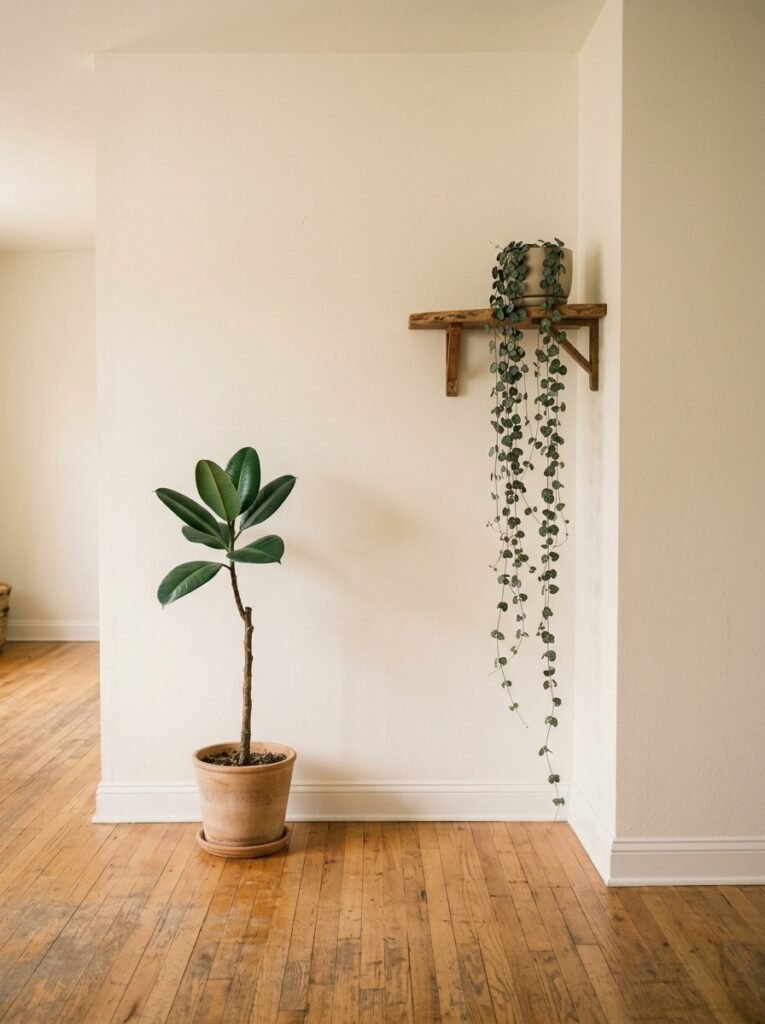
Two plants per room. Occasionally three. Not seven, not a whole “plant corner” (I know, I know — I love plant corners too and I’m sorry for this opinion).
In a minimalist living room or bedroom, plants earn their place by being singular and a bit unexpected — one large-leafed plant in the corner that you didn’t need to fill but chose to, because it’s alive and slow and changes slightly every week. Or one trailing plant on a high shelf, spilling just enough.
When every corner has a plant, the plants become background noise. When there’s one or two, they’re characters.
Practicalities: pothos and snake plants are basically indestructible, look great, stay affordable, and tolerate the low light that most UK rooms have for half the year. Low drama, high effect. They don’t need to be in expensive pots either — plain terracotta is arguably better for this aesthetic than anything glazed and perfect.
—
12. The Room That Never Quite Feels Finished (And Why That’s Fine)
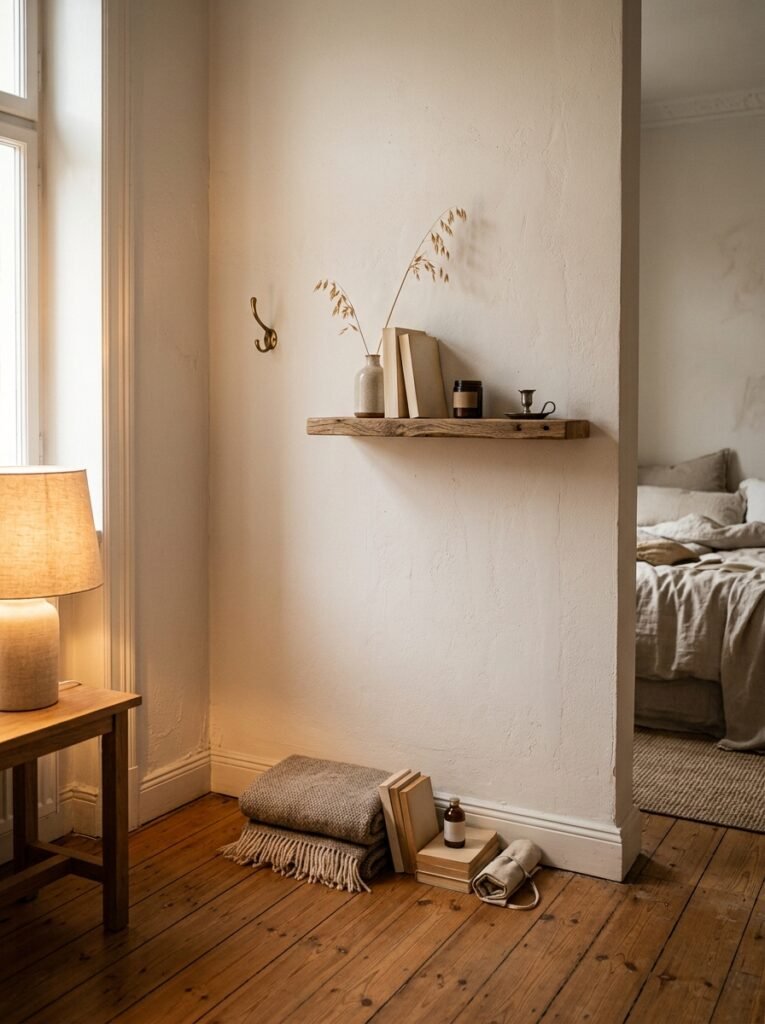
The best minimalist rooms I’ve ever been in have one thing in common: they don’t look finished. There’s always one slightly unresolved corner, one surface that’s a bit bare, one thing that feels like it might still be in progress.
And I think that’s actually the secret. Rooms that look aggressively “done” feel like nobody lives there. The slightly unresolved minimalist room feels inhabited. It feels like it belongs to someone real who made real choices with real constraints.
Budget minimalism is the most authentic version of this aesthetic because you’re not going out and buying a complete vision — you’re building something slowly, removing things as much as adding them, living with gaps until you find what actually belongs there.
Don’t rush the corners. Don’t fill space just because it’s empty. Empty is a choice too, and it’s free.
—
❓ FAQ
Q: How do I start a minimalist living room if my space is already full of stuff? A: Start by removing, not buying. Pull everything off your shelves and out of your corners, then only put back what you actually like and what genuinely has a function. What’s left over should be stored, donated, or sold — and you’ll probably be surprised how little you actually miss.
Q: Can minimalist decor work in a rented flat where I can’t paint the walls? A: Yes, absolutely. Focus on what you can control — furniture placement, textiles, lighting, and one strong focal piece on the main wall (a large print or oversized mirror does the heavy lifting here). A large warm-toned rug also shifts the feel of a room dramatically without touching the walls.
Q: What’s the single most effective cheap change for a bedroom that feels cluttered? A: Remove one piece of furniture — usually the one item you walk past every day but don’t really use. Often it’s a chair, a bench, or one of two bedside tables. The floor space it creates will immediately make the room feel calmer and more deliberate.
—
💭 Final Thoughts
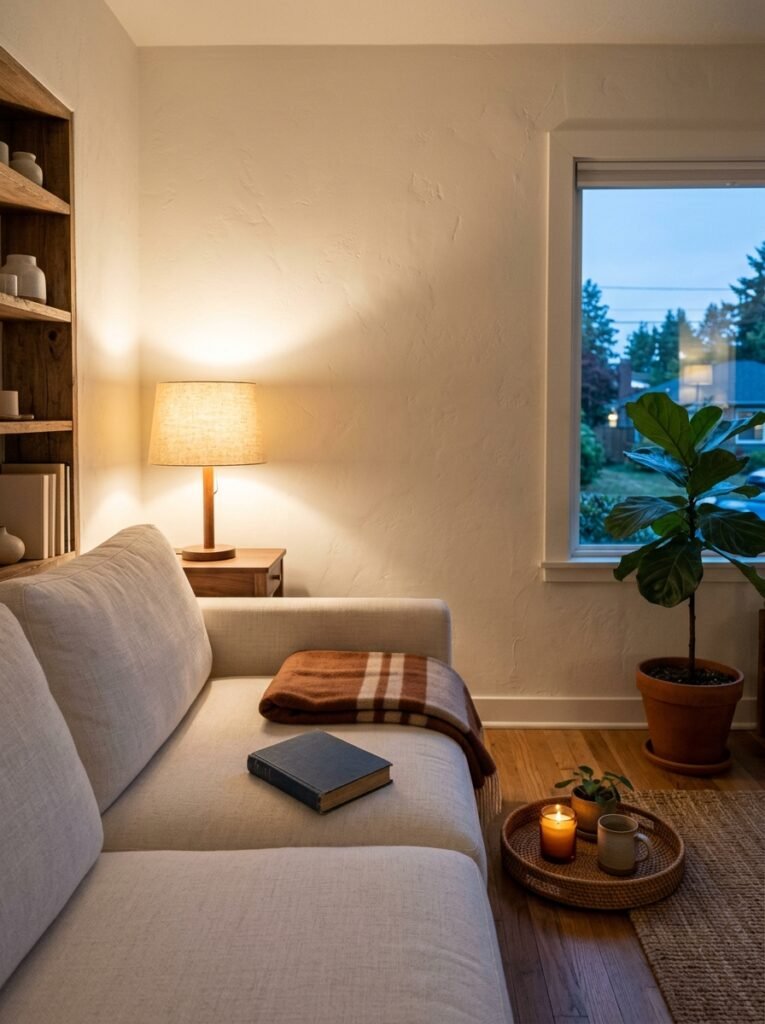
There’s no grand purchase at the end of this road. No single item that completes the room. Minimalism on a budget is mostly about getting comfortable with less, which sounds simple but takes longer than you’d expect — because we’re wired to think more means better.
The rooms that stay with you are usually the quiet ones. The ones where you walked in and felt something settle.
What’s the one thing in your living room or bedroom you’d move out tomorrow if you stopped being attached to it?