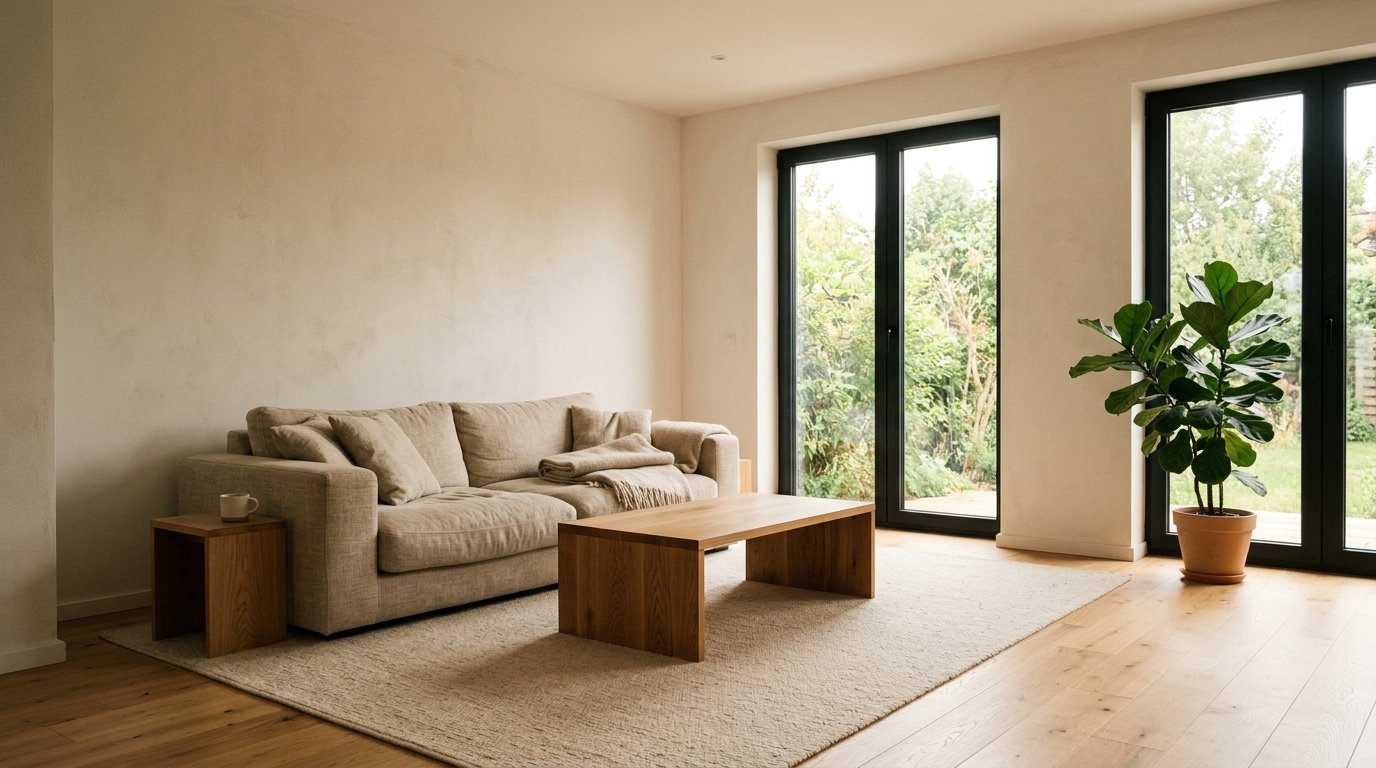
The Living Room That Finally Stopped Feeling Like Too Much
My friend Cara walked into my living room last spring and said, “oh, it’s so calm in here.” And I stood there for a second because — that wasn’t always true. Like, at all.
—
1. Why Most Living Rooms Feel Cluttered Even After You’ve Cleaned Them
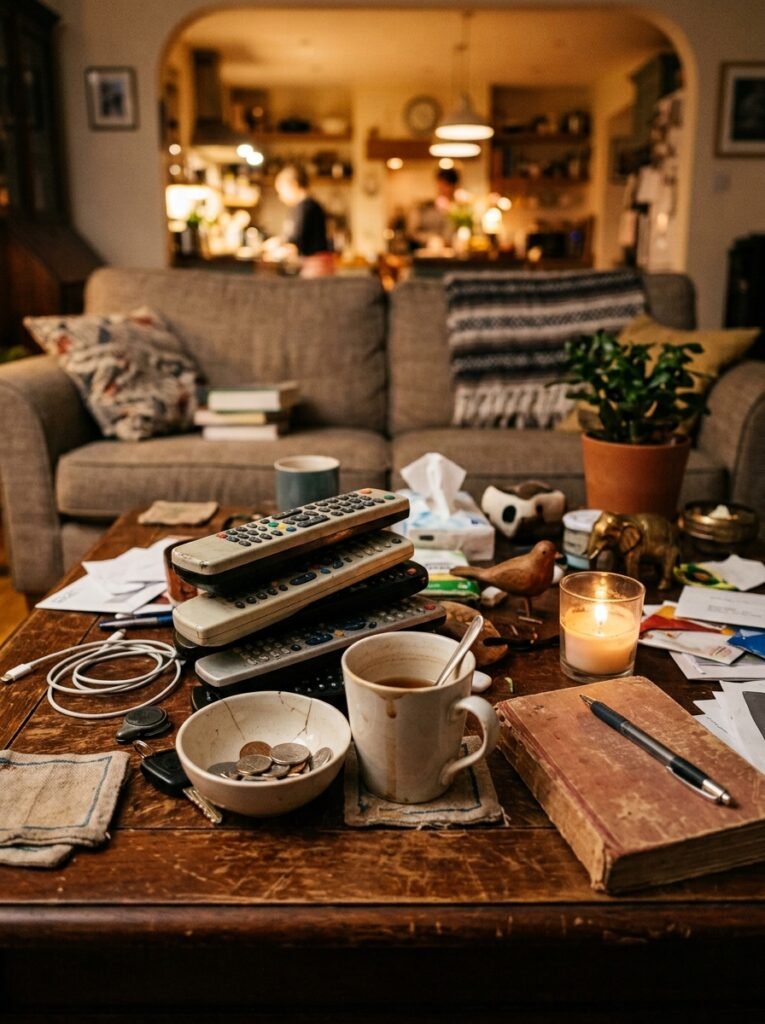
Here’s the thing nobody tells you: clutter isn’t always physical. Sometimes a room feels busy because there’s too much visual noise — too many competing colors, too many things asking for your attention at once. You can have a spotless room that still feels exhausting to be in, and that’s not a cleaning problem. That’s a design problem.
Minimalism isn’t about having less stuff. I mean, it can be. But what it’s really about is giving each thing in your room ROOM to breathe. When every object has space around it, your eye can actually rest. And a room your eyes can rest in? That’s what people call a calm space. That’s what Cara noticed.
The first shift I made wasn’t throwing anything out. It was just stopping. I stopped adding. No new throw pillows, no new side table, no “oh this would look perfect” impulse buys. Just a pause. That pause alone changed the feel of the room more than I expected it to.
—
2. The Sofa Choice That Does Most of the Heavy Lifting
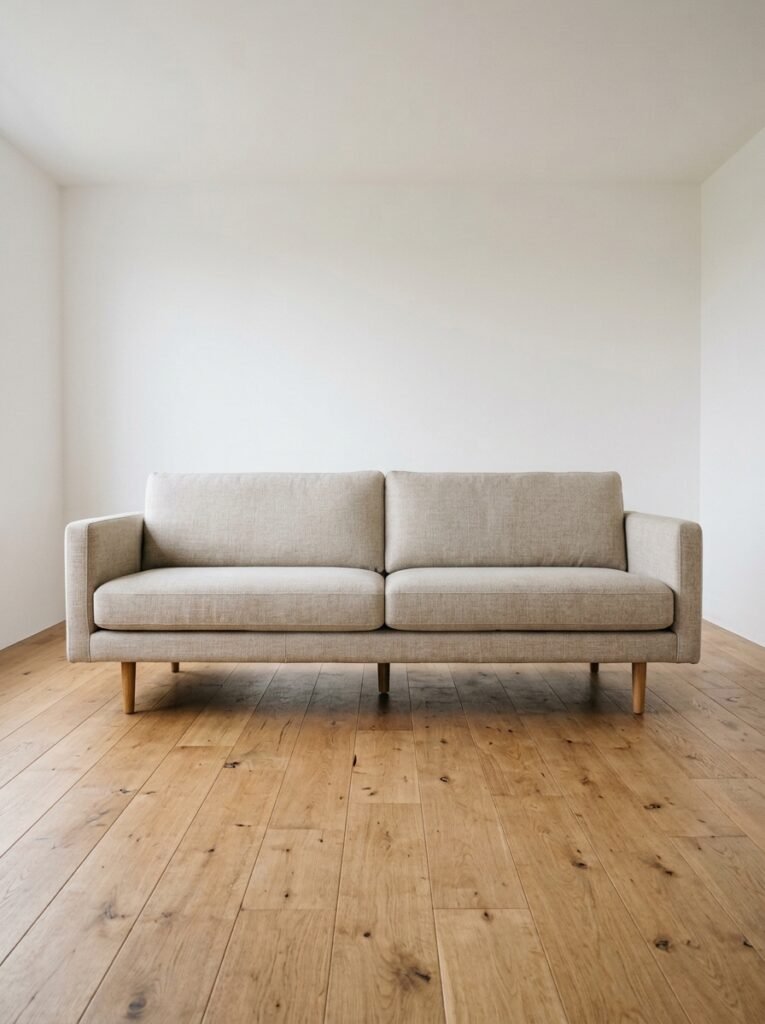
If you’re working toward a more minimal living room, the sofa does a lot of work. A bulky, heavily patterned sofa in a dark color can anchor a room in a way that makes everything else feel like it’s fighting for space. I’m not saying you need a white linen sofa (which, honestly, if you have kids or a dog — let’s not). But a sofa in a quieter, more neutral tone gives everything else around it permission to breathe.
Boucle, oatmeal linen, greige, even a soft sage green — these work in both compact British terraced living rooms and more open-plan American spaces. The shape matters too. Low-profile sofas without heavy arms or thick cushion roll tend to read as lighter in a room, even if they’re technically the same size.
“A sofa in a quieter tone gives everything else around it permission to breathe.”
And don’t underestimate leg height. A sofa you can see under — even just a few inches of floor visible beneath — makes a room feel visually larger. It sounds like such a tiny thing. It’s not.
—
3. The Color That Keeps Showing Up in Every Beautiful Minimal Living Room Right Now
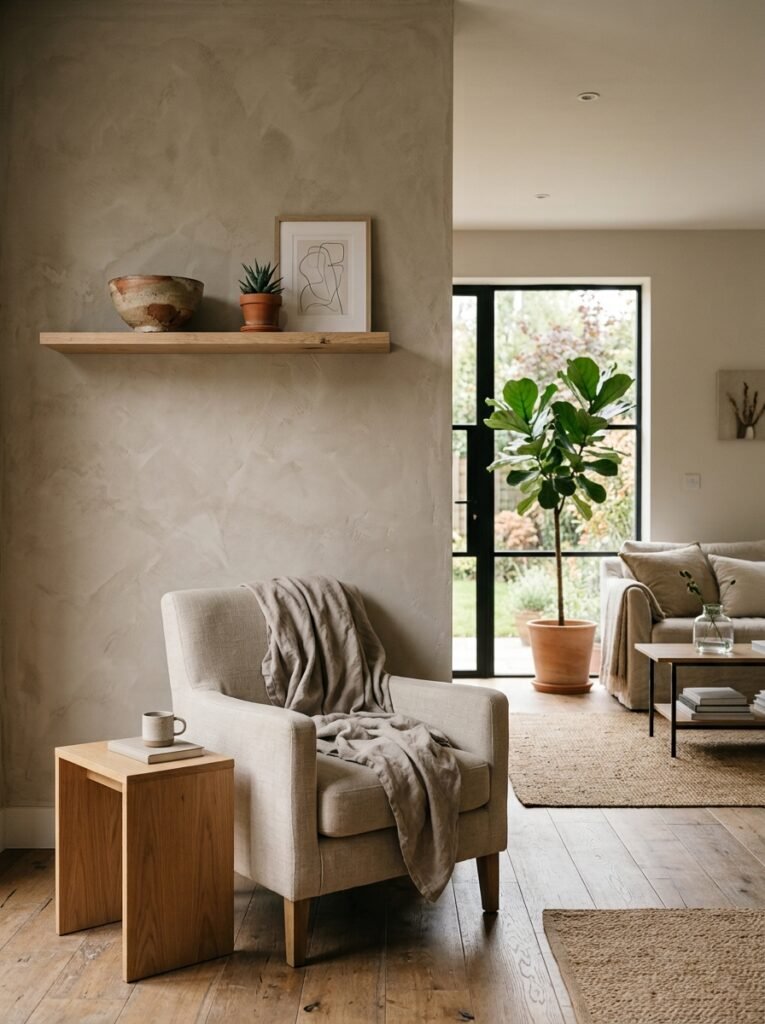
It’s warm white. Not stark, cold, blue-toned white — that stuff feels like a hospital corridor in winter. I mean the creamy, slightly warm whites that look completely different at 7am under natural light than they do at 7pm under a lamp. That shift through the day is kind of the whole point.
Warm whites on walls give you a neutral backdrop that doesn’t compete with anything. They don’t shout. And because they read differently depending on the hour and the light source, the room actually feels like it changes through the day, which is something I find genuinely satisfying.
In the UK especially, where natural light is often working against you for like eight months of the year, a warm white bounces what little light you do have around the room in a way that cooler colors just don’t. American homes with bigger south-facing windows can pull this off even more dramatically — just gorgeous.
—
4. The One Rule That Makes a Tiny Shelf Look Intentional
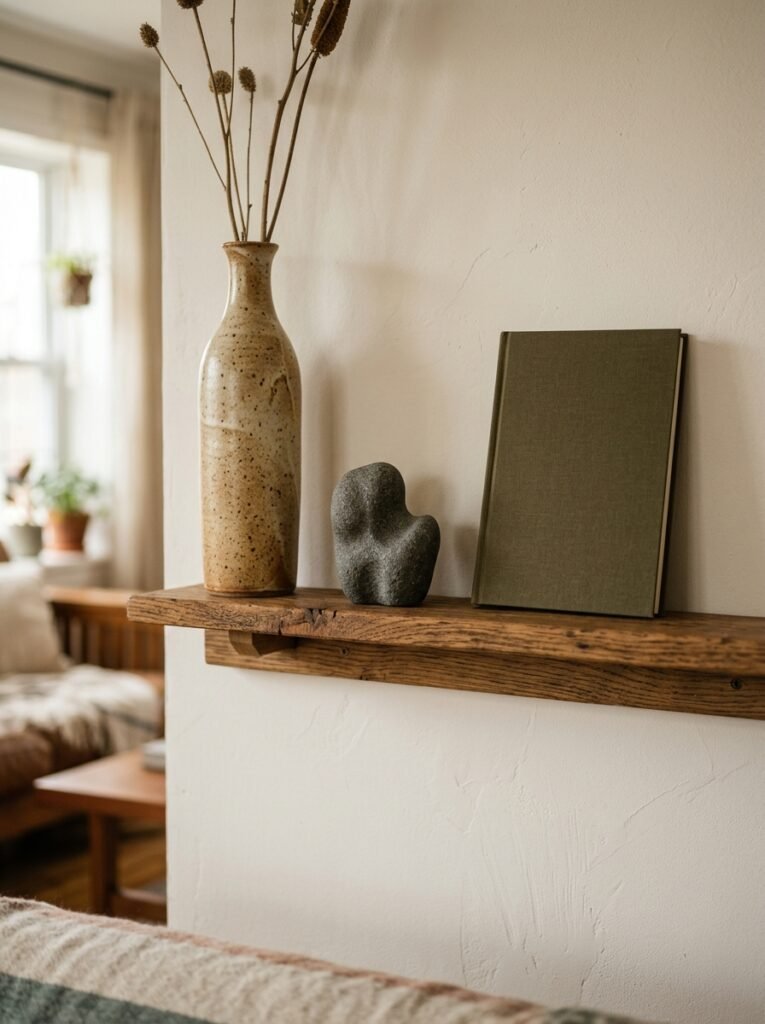
Three is too many. I know, everyone says odd numbers are the rule in styling. And fine, maybe for some things. But on a shelf? Two objects, well chosen, with deliberate space between them, will ALWAYS look more intentional than three crowded ones.
A small sculptural vase and a single art book laid flat. A textured bowl and one trailing plant. Two things with visual contrast — maybe one matte, one glossy, one tall and one low — and then just empty shelf behind them. That negative space isn’t emptiness. It’s part of the composition.
Side note — I wasted a lot of money buying “shelf filler” things before I figured this out. A little embarrassing in retrospect.
—
5. What to Do With the Coffee Table (Most People Get This Wrong)
The coffee table is where visual clutter goes to thrive. It’s magnetic. Remotes, coasters, half-read books, that candle you’ve been burning all week, your keys, the dog’s toy somehow — it all ends up there.
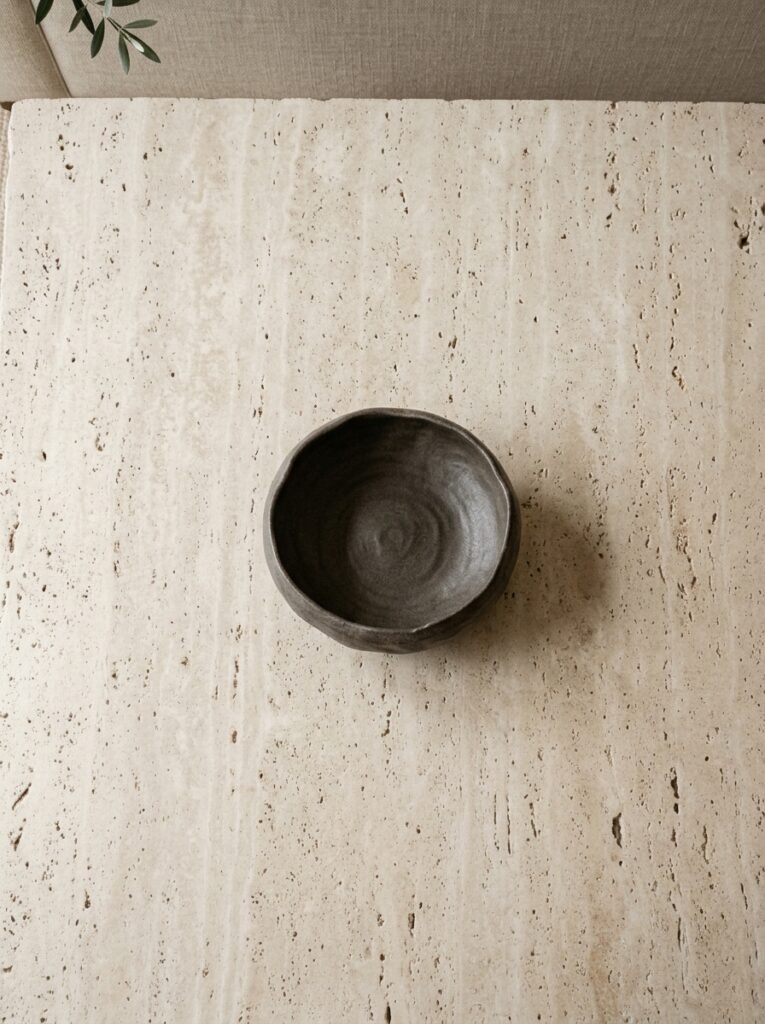
For a more minimal approach, try treating the coffee table as a still life. Decide what lives there and what doesn’t, and keep it to three objects maximum. A tray helps enormously because it contains things visually, turning “random stuff” into “a grouped thing.” Inside the tray: one candle, one small decorative object. Maybe a little stack of books if the table is larger. That’s it.
The rest? It finds another home. Not another surface — an actual home, like a drawer or a basket.
And honestly, a coffee table you can see mostly empty is one of the most peaceful things in a living room. I don’t know why it took me so long to realize that.
—
6. Lighting Is Doing More Work Than You Think
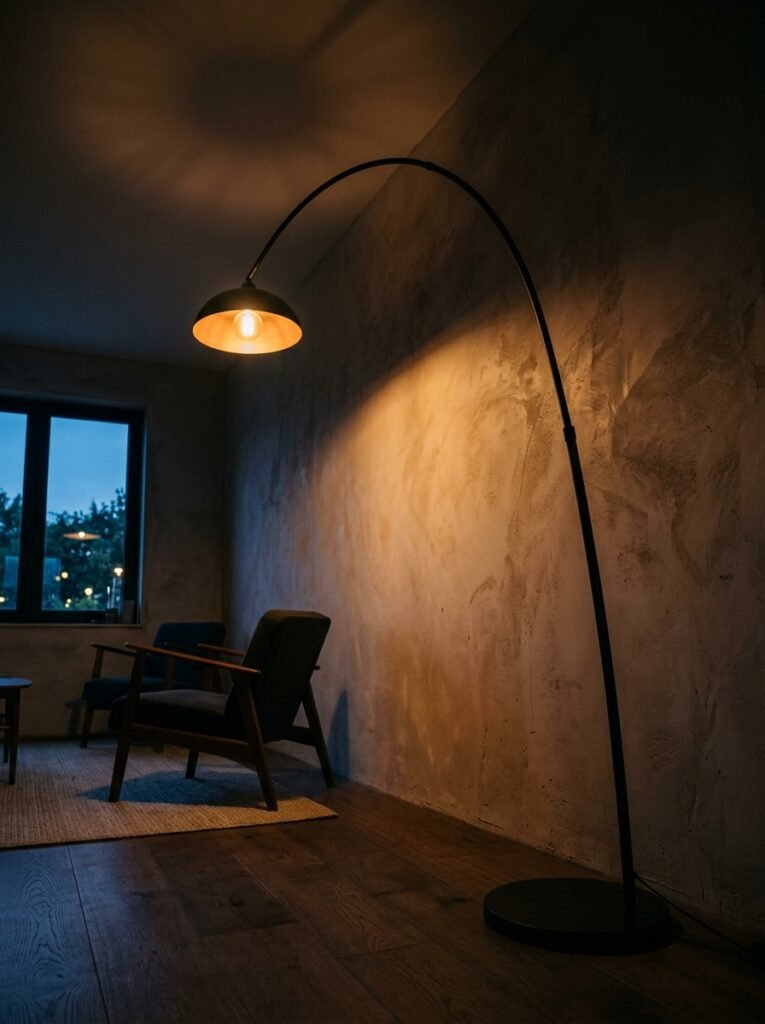
Overhead lighting is the enemy of a cozy, minimal living room. I’m sorry. I know it’s the default. But a single overhead light in the center of the ceiling flattens the whole room and makes it look like a waiting room. You can have the most beautifully curated space and a flat overhead light will undo it.
“A single overhead light in the center of the ceiling flattens the whole room and makes it look like a waiting room.”
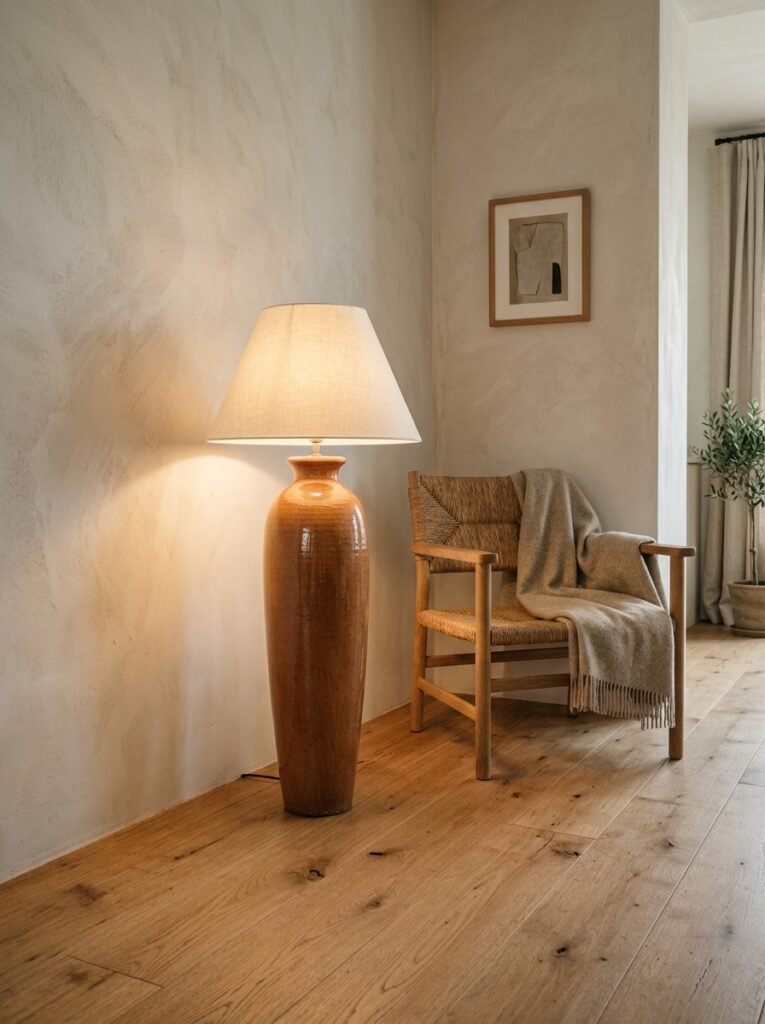
The fix isn’t expensive. A floor lamp in the corner, angled slightly toward the ceiling or at the wall — that alone changes the mood completely. Add a table lamp on a side table if you have one, something warm-toned. The amber glow of a warm bulb at dusk makes even a very plain room feel deliberate and warm.
Layer your light sources low and across the room rather than coming from one central point above. This is one of those things that interior designers know and never really explain to anyone, and it makes such a difference I could scream about it a little.
—
7. The Rug Mistake Almost Everyone Makes in a Minimal Room
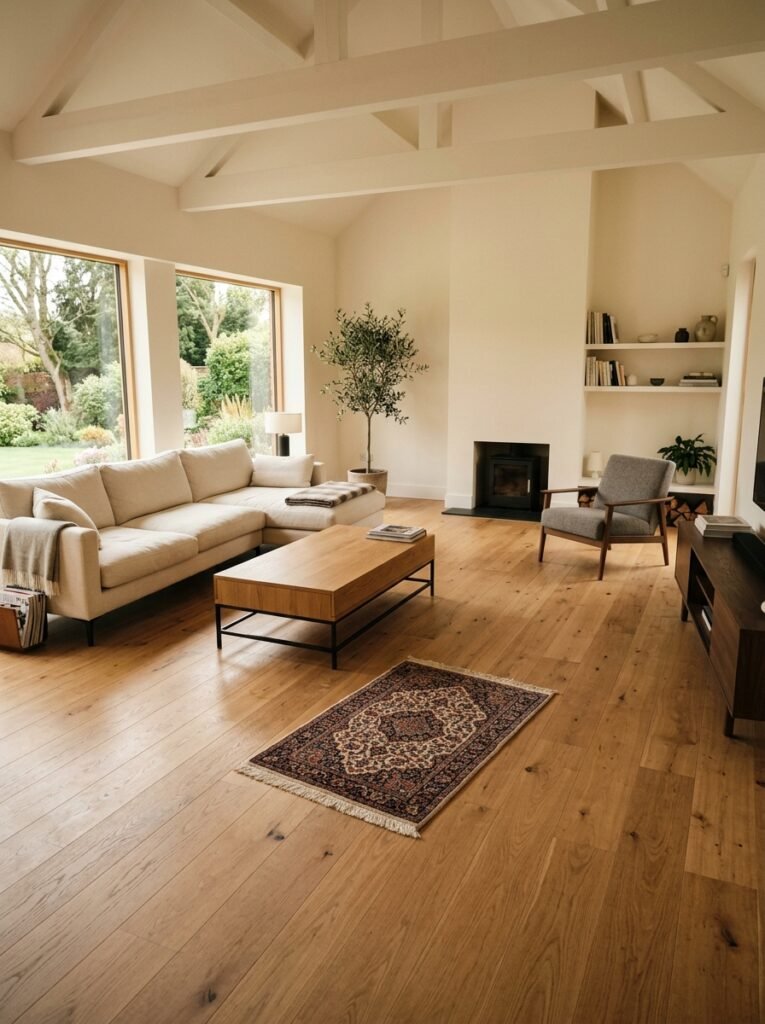
They go too small. It’s the most common mistake and it genuinely makes rooms look worse, not better. A rug that only fits under the coffee table, leaving the sofa legs floating on bare floor — that’s the issue. It cuts the room up visually and makes everything look unconnected.
In a minimal living room especially, where you don’t have a lot of decorative noise to distract the eye, the rug needs to be large enough that the sofa’s front legs at least sit on it. Ideally the whole sofa. The rug unifies the seating area and makes it feel like one intentional zone rather than several unrelated pieces of furniture just sort of existing near each other.
A natural fiber rug — jute, sisal, something woven and textured — keeps things grounded and tactile without adding pattern or color. It just quietly does its job. Which, in a minimal room, is exactly what you want.
—
8. How Much Art Is Too Much (And Where to Stop)
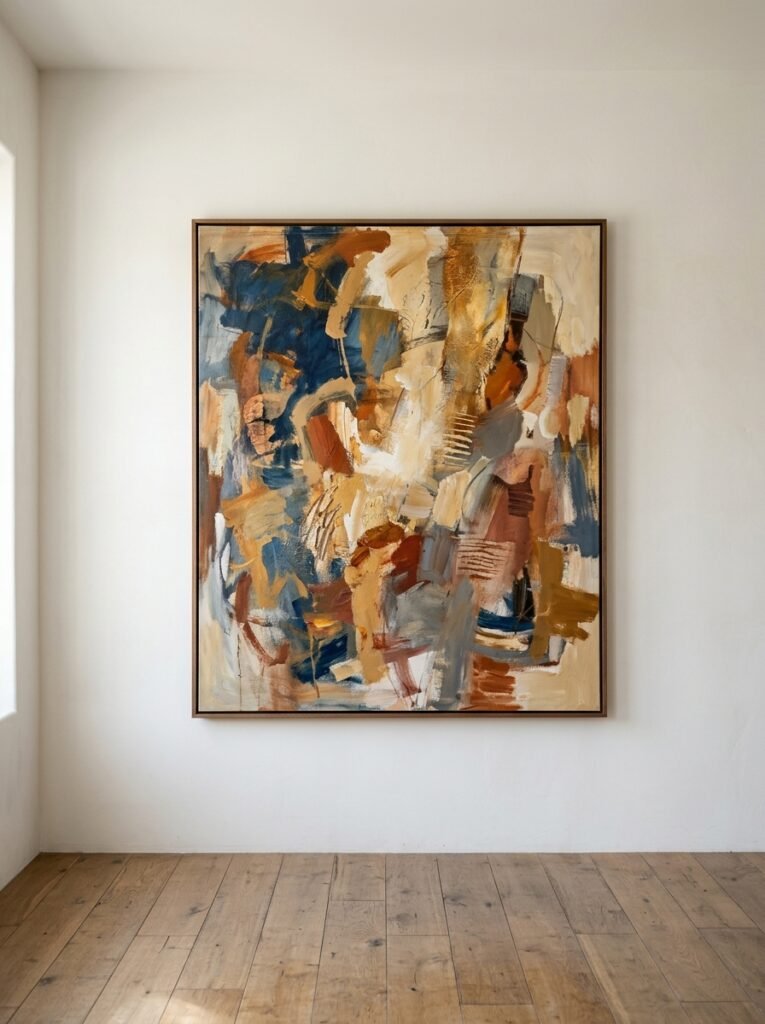
One large piece. Or maybe two if the wall is genuinely long and you’re placing them carefully. That’s it for a minimal living room that actually works.
I know gallery walls are still everywhere on Pinterest, and some of them look great — but they work against minimalism. Full stop. A gallery wall, by its very nature, is a lot of things in one place. The opposite of breathing room.
One large artwork, hung at eye level, with proper space around it — not squeezed into a corner, not competing with a lamp — reads as confident. Like whoever lives in this house made a choice and stuck with it. That’s the vibe minimalism is going for, honestly. Intentional. Unhurried.
Abstract art with a limited palette works particularly well because it adds personality without adding color chaos. You don’t need it to match the room exactly — you just need it not to clash.
—
9. The Surprising Thing That Adds Warmth Without Visual Clutter
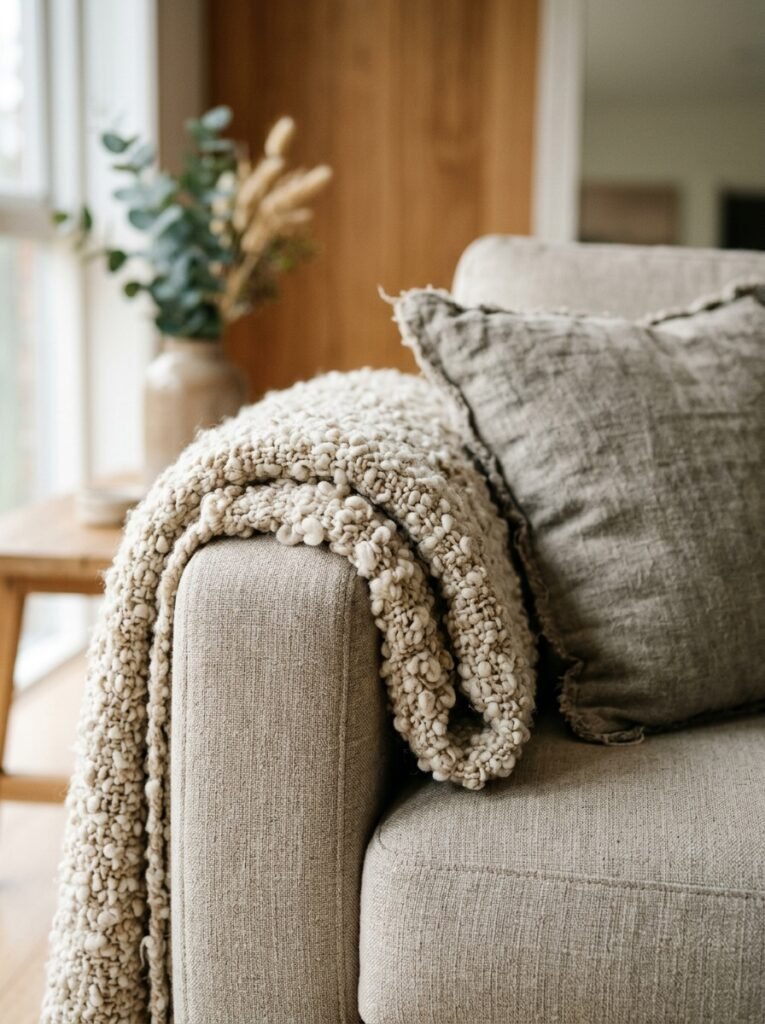
Texture. Always texture. This is the secret ingredient in minimal spaces, because you can’t rely on pattern or color variety to make a room feel interesting and lived-in. Texture does that work instead.
A chunky knit throw draped (casually, not folded perfectly) over the arm of the sofa. A linen cushion cover instead of a polyester one. A smooth concrete or ceramic lamp base next to a rough-woven basket. You’re not looking at these things and thinking “texture” — you’re just feeling like the room is interesting, somehow. Layered, even though it’s simple.
This is what separates a minimal room that feels cool and human from one that feels like a staged show home nobody actually lives in. That staged quality? It comes from everything being smooth and flat. Bring in texture and the room wakes up.
—
10. Plants: One Honest Rule
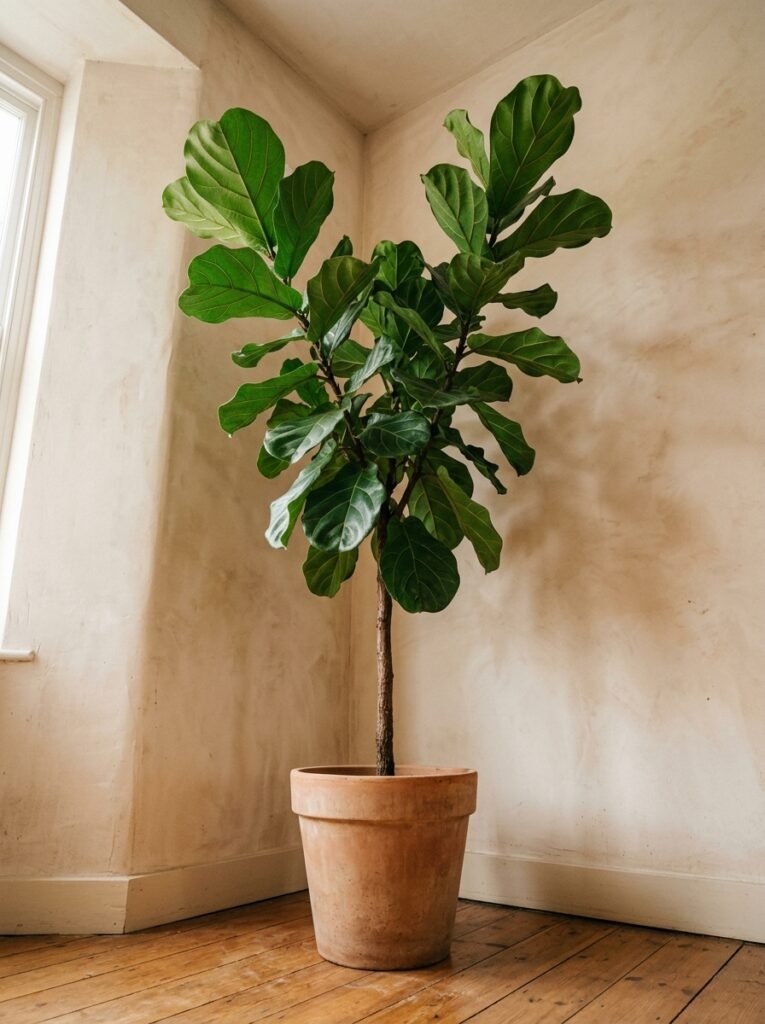
One big plant beats five small ones. Every time.
A large fiddle leaf, a generous monstera, a trailing pothos in a decent-sized pot — one of these placed in a corner or by a window will do more for a minimal room than a collection of little succulents dotted around every surface. Those small plants, honestly, they just become more visual clutter when you’re trying to simplify.
Go big or go single, basically. One plant, given its own moment.
“One big plant beats five small ones. Every time.”
A good-looking pot matters too — plain terracotta, matte ceramic, something simple. Not a fussy decorative pot with a pattern on it, because then the pot becomes a thing you’re looking at and it doesn’t need to be.
—
11. The Floor and What You’re Doing With It
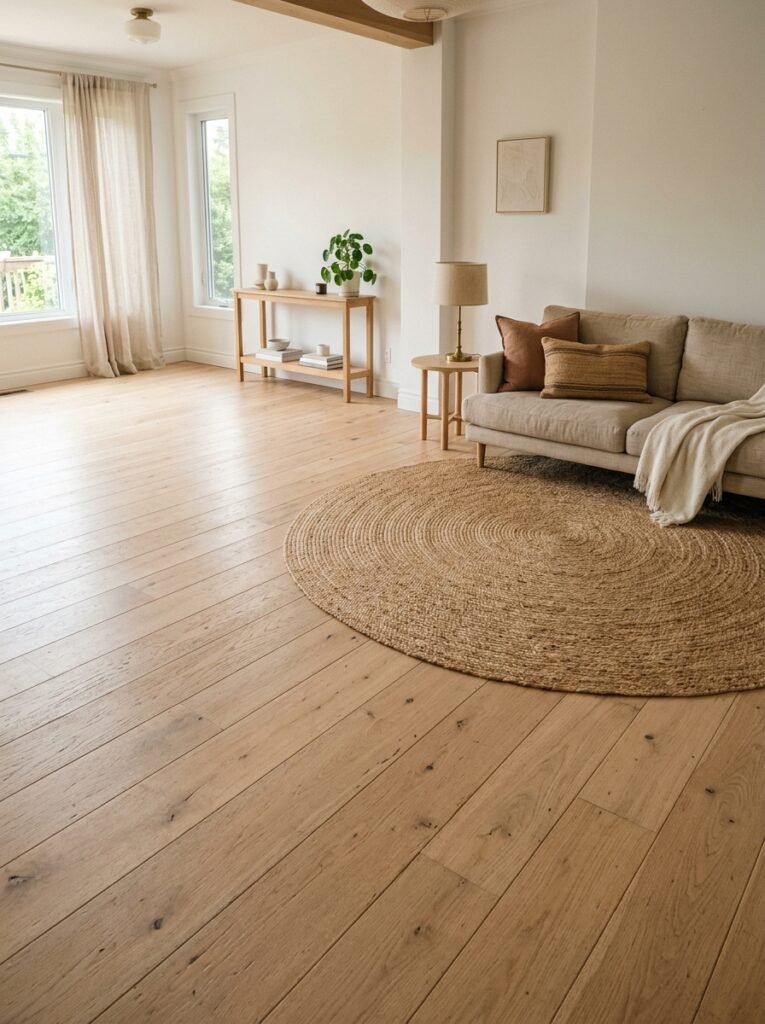
Leave the floor clear. This sounds obvious. It’s not, in practice.
Bags by the sofa, shoes that didn’t quite make it to the entryway, that basket of magazines from three months ago — all of it lives on the floor and all of it makes a room feel small and disorganized. In a minimal living room, clear floor = space = calm. It’s the most immediate thing you can do.
If you’ve got baskets or storage that lives in the living room, they need to be tucked, not scattered. One basket with blankets, pushed against the wall or sitting on a low shelf. Not three baskets in different spots doing different jobs. Containment is the word.
British terraced homes and apartment living rooms especially feel this — floor space is precious and every bit of clear floor makes the room feel more generous than it actually is.
—
12. The Final Edit You Have to Do With Fresh Eyes
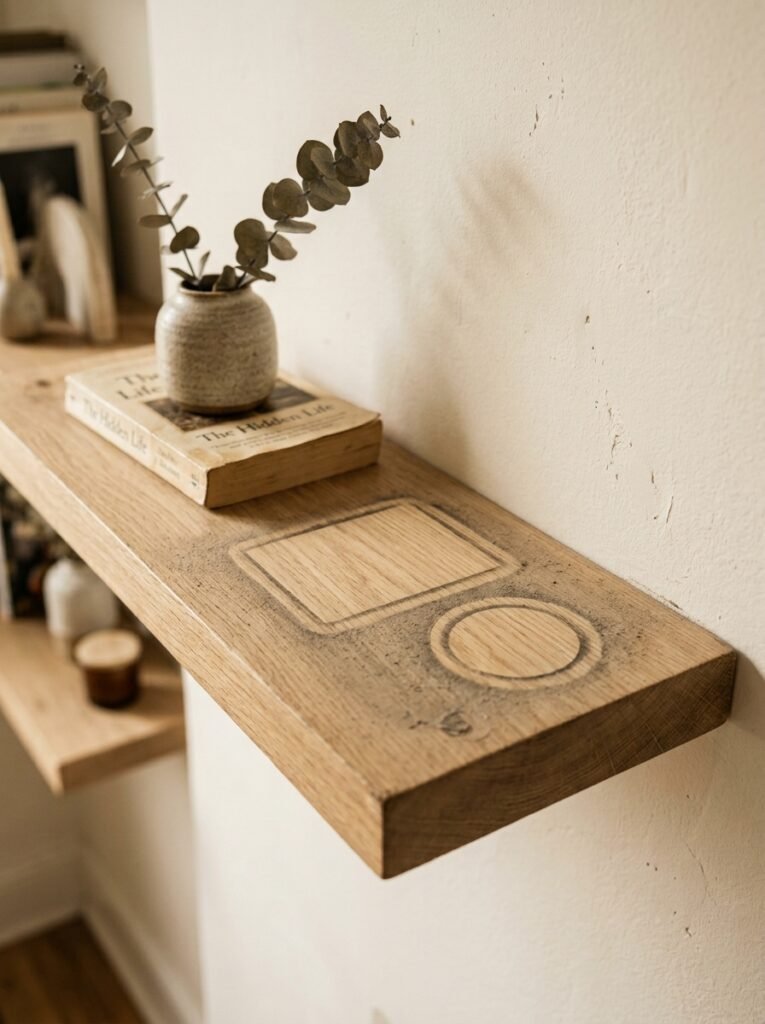
Walk out of the room. Actually leave. Come back in and look at it like you’ve never seen it before. What’s the first thing your eye lands on? Is it something you chose intentionally, or is it something that just… ended up there?
That’s your edit. Whatever your eye snags on that you didn’t choose — that’s probably what needs to go. Not hidden, not rearranged. Gone, or at least out of the room.
This is the step most people skip because it’s a little uncomfortable. Taking something out of the room feels like loss, even if you don’t even like the thing that much. But a living room that’s been genuinely edited — not just tidied, but actually decided upon — feels completely different to live in. Lighter. More yours.
I do this every few months now. It’s kind of satisfying, not gonna lie.
—
❓ FAQ
Q: Does minimalist decor work in a small British living room or does it make it feel empty? A: Minimalism actually suits small rooms really well — it removes the visual weight that makes tight spaces feel cramped. The key is choosing a few good pieces over many small ones, keeping floor space clear, and using warm lighting to stop it reading as cold or stark.
Q: What if I have kids or pets — can I still do minimalist decor? A: Honestly, yes, but you have to be realistic about what “minimal” means in your house. It’s less about magazine perfection and more about reducing unnecessary things and having good storage systems so the room can reset easily. Washable slipcovers and a storage ottoman go a long way.
Q: Do I need to repaint to achieve a more minimal feel? A: Not necessarily. Decluttering, rearranging furniture, and changing lighting can do a lot before you touch the walls. But if your walls are a strong or busy color, a warmer neutral will make the overall shift significantly easier and more impactful.
—
💭 Final Thoughts
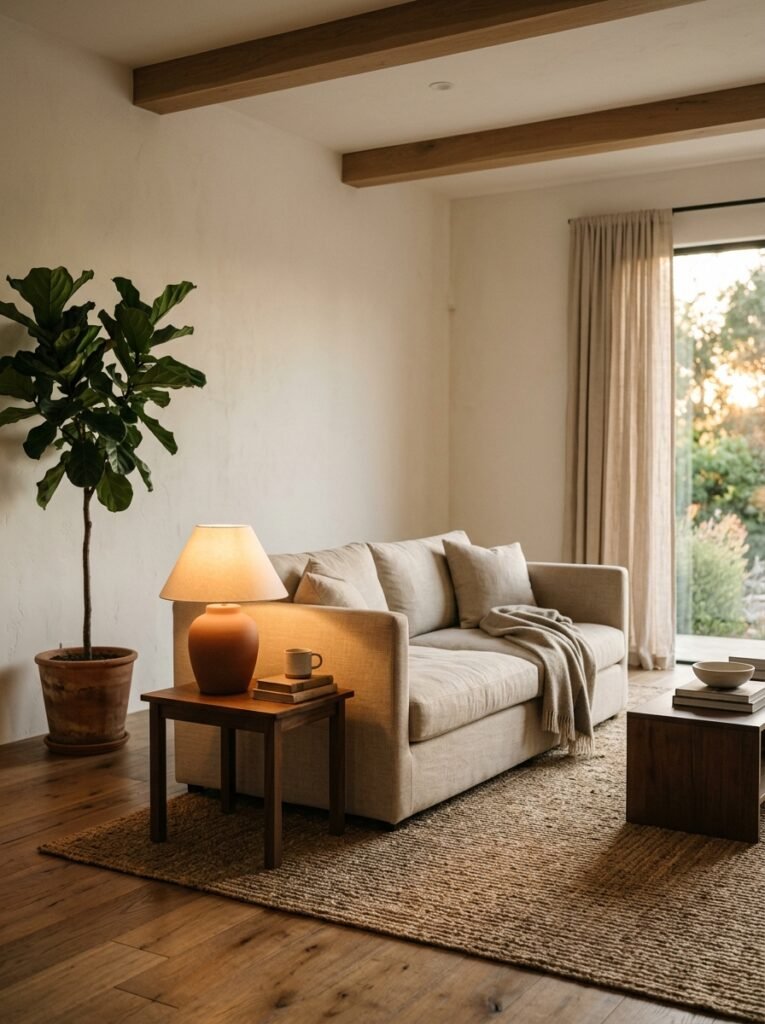
Minimalism in a living room isn’t really about subtraction for its own sake. It’s about ending up with a room that feels like it was chosen, not accumulated. Calm and real and a little bit yours.
Start with one thing. Move it, remove it, change it. See what happens. What’s one thing in your living room right now that you never actually chose?