The Case for a Christmas Living Room That Says More With Less
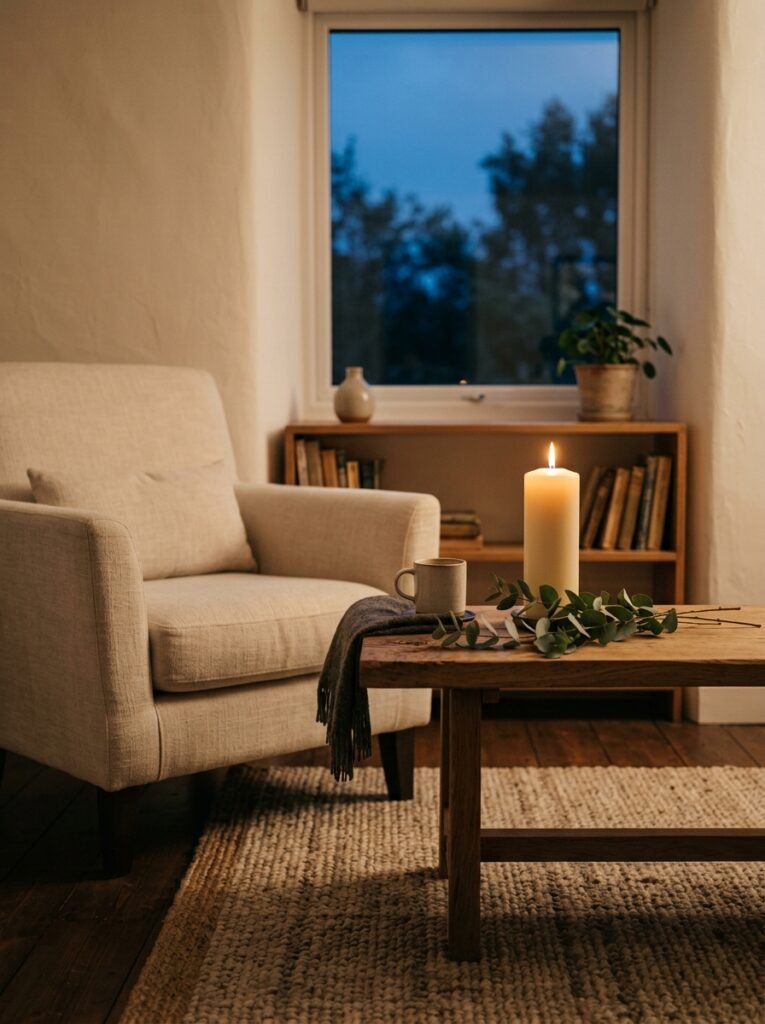
My friend looked around my living room last December and said, “Wait — is this it?” And honestly? That was the best compliment she could’ve given me.
—
1. Why Minimalist Christmas Decor Hits Differently Than You Think
There’s this moment that happens every January. You’re undecorating, and you realize you’ve spent an entire month stepping around a snowman figurine collection you don’t even like. It just… appeared. From a box. Because it always appears from that box.
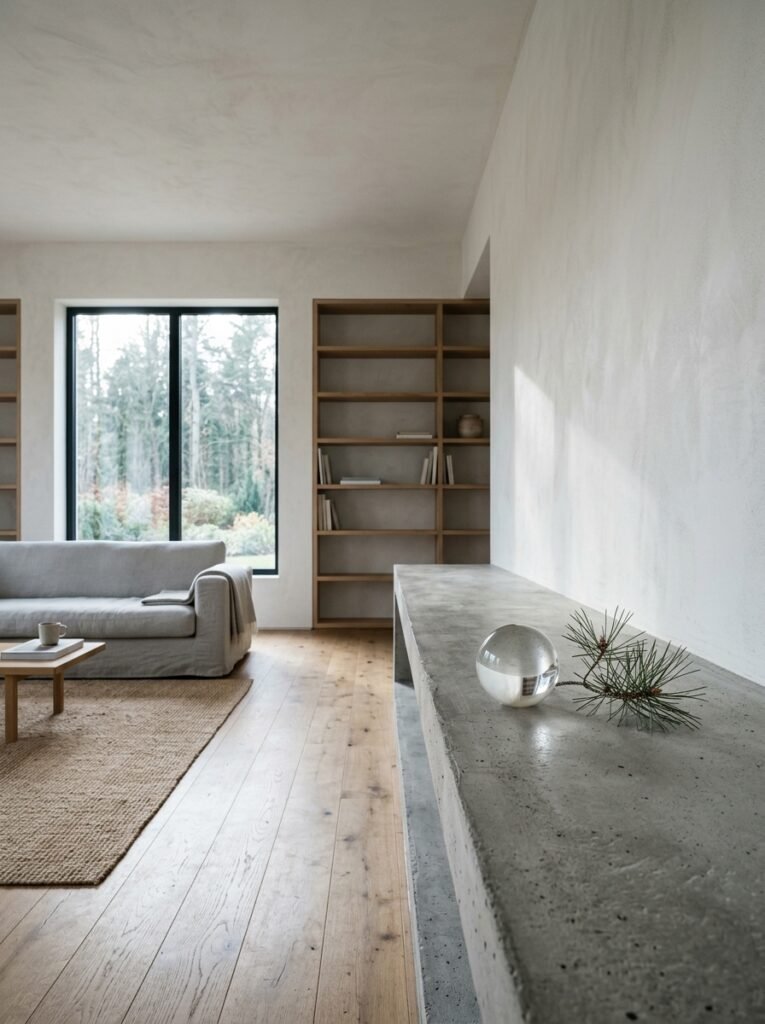
Minimalist Christmas decor isn’t about being cold or contrarian. It’s not a personality statement or a rejection of festivity. It’s actually the opposite — it’s about keeping only the things that genuinely move you. The stuff that makes you stop and actually look.
When you strip everything back, what’s left has to earn its place. And the things that earn their place? They tend to be beautiful.
“A living room with three intentional Christmas touches will always look more styled than one drowning in decorations. Always.”
I didn’t believe this until I lived it. Now I can’t go back.
—
2. The First Thing to Do Is Actually Remove Something You Already Have
Before you buy a single candle or hang one sprig of anything, take a look at your living room as it is right now and ask yourself what normally lives there that you’d actually move for Christmas.
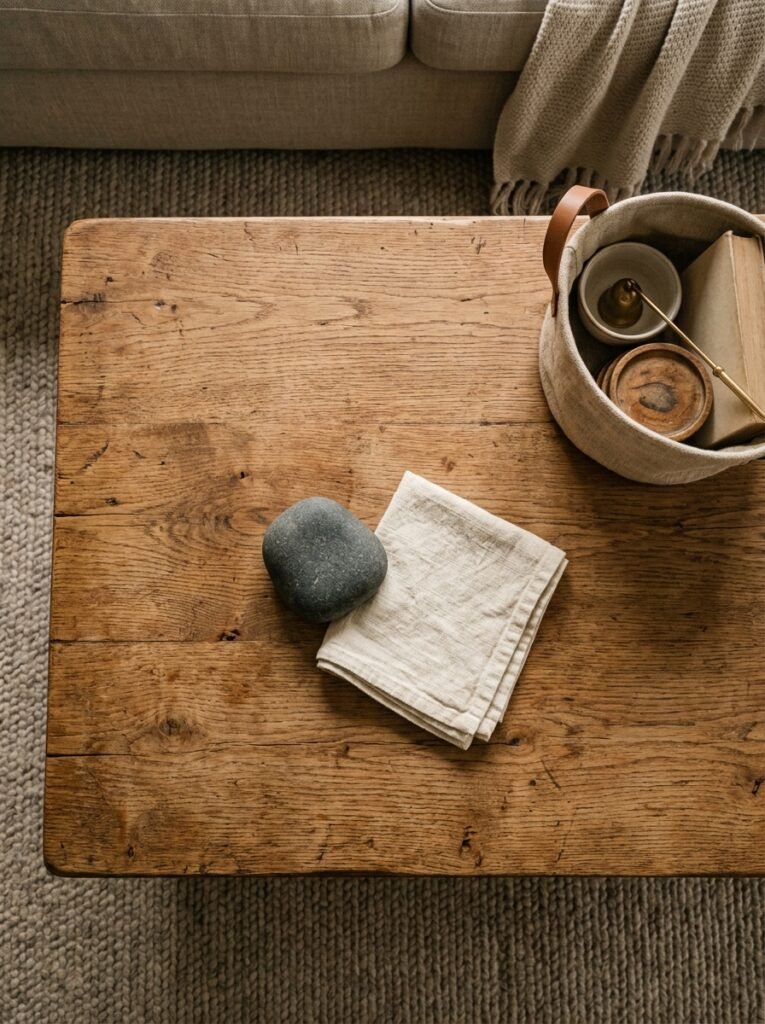
Because here’s the thing: minimalist Christmas decor doesn’t mean adding less. It means temporarily swapping out your everyday pieces for things that feel more seasonal — and often more intentional — while keeping the room breathing.
That chunky ceramic vase you love? Gone for December, replaced by something tall and sculptural with dried branches. The stack of novels on the coffee table? Pare it down to one. A beautiful one. Maybe with a sprig of eucalyptus laid across it.
The edit always comes before the addition.
—
3. The Color Palette That Makes Minimalist Christmas Feel Rich, Not Sad
Neutral Christmas is not beige Christmas. That distinction matters.
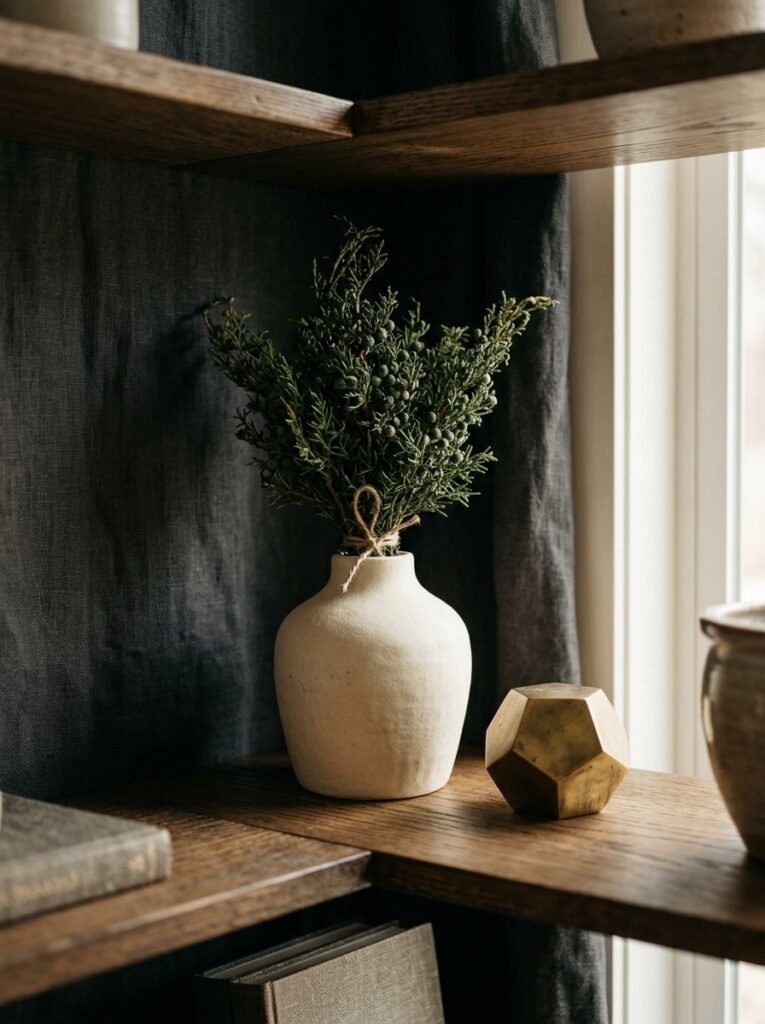
The palettes that work: deep forest green against cream linen. Matte black candlesticks on pale oak. Warm terracotta with touches of aged brass. Ivory white layered with cool grey and one punch of deep burgundy. These combinations feel expensive without trying.
What to avoid — and this is a strong opinion — is the all-white approach without texture. White on white with a few silver ornaments ends up looking like a hotel lobby rather than a home. The secret is texture doing the work that color normally does. A chunky knit throw. A linen cushion with visible weave. A rough-hewn wooden tray.
One thing I’d add: if you live in a home with warm wood tones and exposed brick — I’m looking at you, UK Victorian terrace owners — lean INTO the warm side of the palette. You’ve got built-in atmosphere. Don’t fight it with stark whites.
—
4. The Tree Question (Because Everyone Has One)
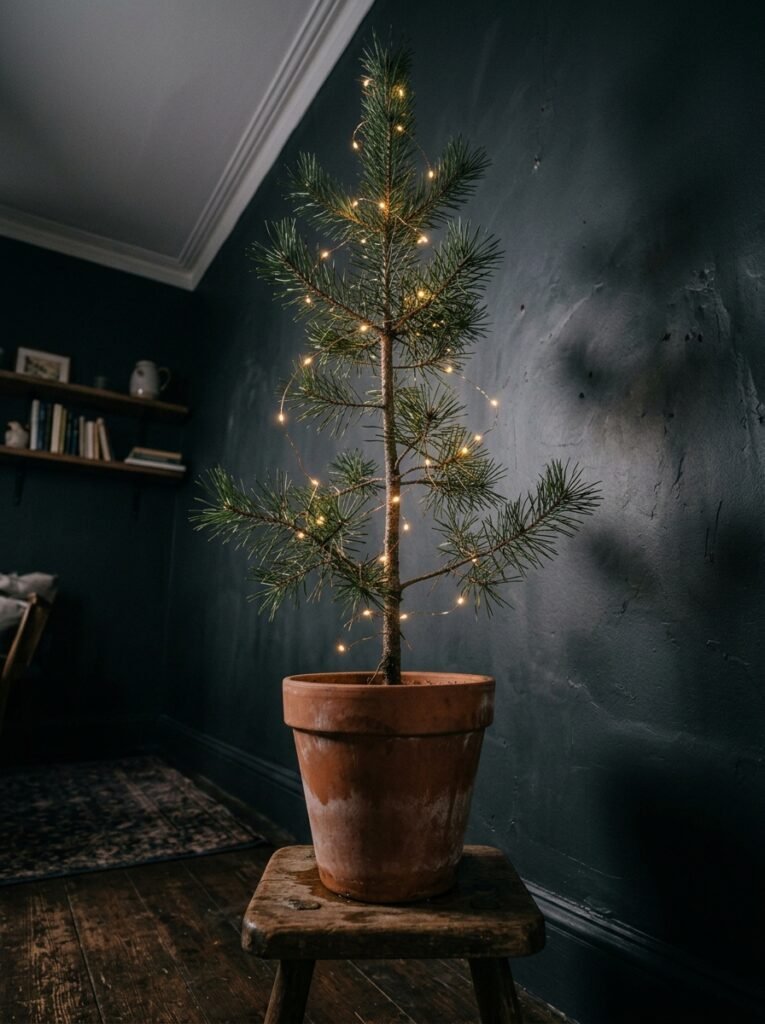
Do you even need a full tree?
Don’t close the tab. Hear me out.
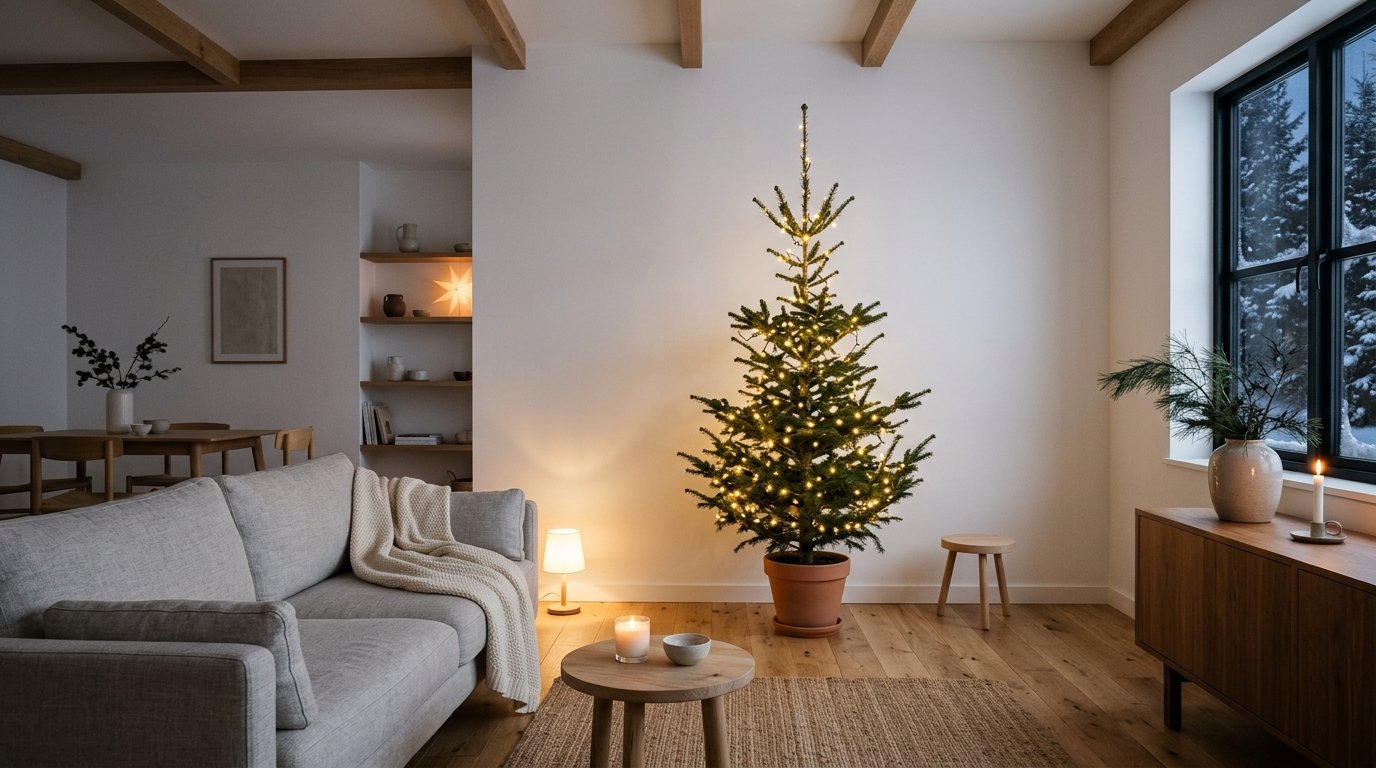
A small, slender tree in a terracotta pot, sitting on a wooden stool in the corner, strung with a single line of warm bulb lights — that can be MORE of a statement than a six-foot fir covered in 200 ornaments. The scale is unexpected. The negative space around it becomes part of the composition.
That said, if you love a full tree, a minimalist Christmas still works. The rule is just this: one type of ornament, two at most. A tree hung with only wooden spheres and a strand of warm lights looks intentional. A tree with wooden spheres PLUS glass baubles PLUS tinsel PLUS a knitted star PLUS the ones your kids made in 2014 looks like the tree ate itself.
Pick a direction. Commit.
“The ornaments you edit OUT of your Christmas tree are doing just as much design work as the ones you leave on.”
—
5. Candles Are Doing Heavy Lifting and You Should Let Them
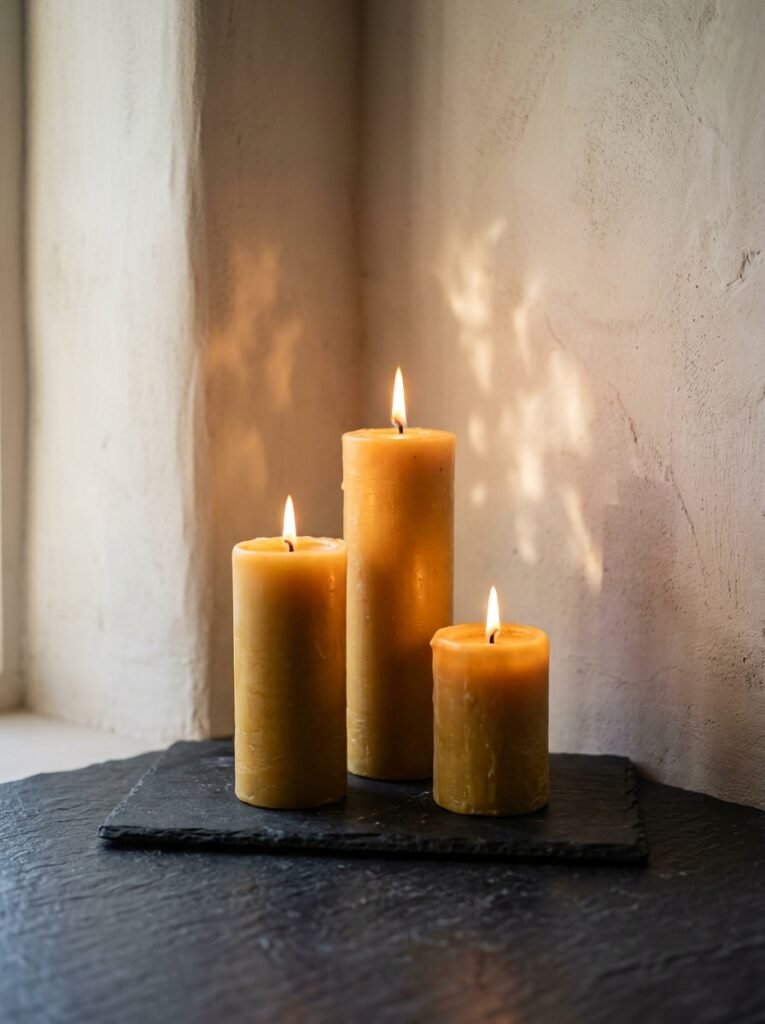
Candles are the real engine of a minimalist Christmas living room. Not in a woo-woo way — in a very practical, very effective way.
A cluster of white or cream pillar candles at varying heights on a simple wooden board transforms a coffee table into something that could genuinely be in a magazine. The light they throw — low, amber, slightly unsteady — does things that no overhead lighting can replicate. And at 6pm on a dark December evening in Edinburgh or Michigan, that amber glow is genuinely mood-altering.
Wax type: go for unscented or lightly scented if you’re grouping several together. Three strongly scented candles competing in one room makes the whole house smell like a candle shop had an argument with itself.
Side note — if you’re using candle holders, odd numbers always look better than even. Three or five. It’s not a rule I made up, it’s just how the eye works.
—
6. Greenery That Costs Almost Nothing and Looks Like You Tried Hard
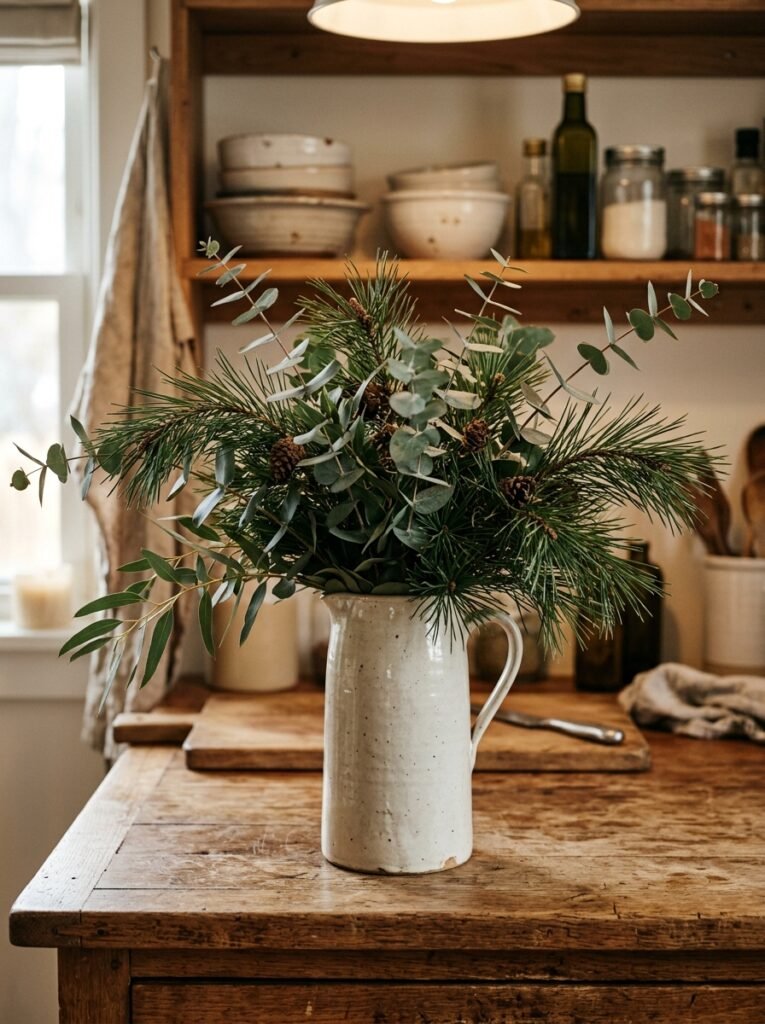
Fresh greenery is the most underrated minimalist Christmas tool. Genuinely. A few stems of eucalyptus, some sprigs of pine, a small branch of holly — these things cost very little from a florist or garden center, and they do extraordinary things in a room.
Lay a long sprig of eucalyptus across a white mantelpiece shelf with a single brass candlestick at one end. Done. That’s your mantle decor.
Tuck a small bundle of pine into a ceramic bud vase on the windowsill. Done. That’s your windowsill moment.
The scent alone is worth it. Walking into a room that smells faintly of pine and eucalyptus — that IS Christmas, before you even see the tree.
What makes this feel minimalist rather than just sparse: keep the greenery in simple, monochromatic containers. No decorative novelty pots. A white ceramic, a simple glass cylinder, a dark stoneware vessel. Let the green be the star.
—
7. The Mantelpiece Arrangement That Won’t Drive You Crazy to Undo
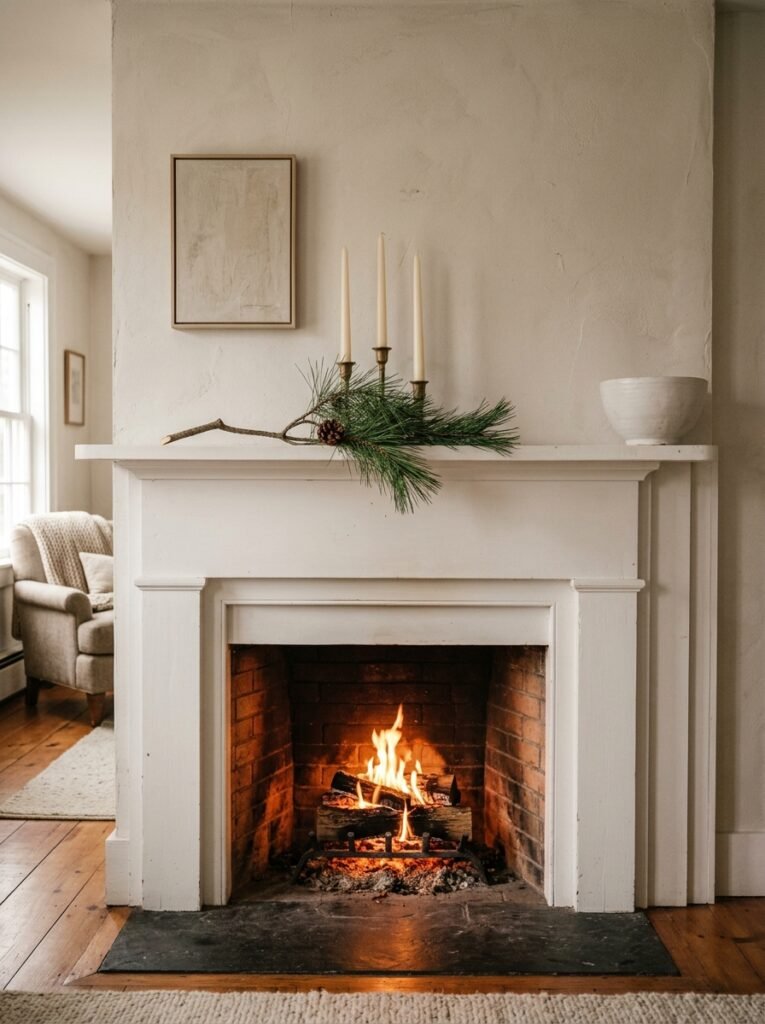
Mantlepieces are where minimalist Christmas either succeeds brilliantly or collapses into chaos. Most people overload them because they’re there and flat and begging to be filled.
The composition I keep coming back to: asymmetry. A tall element on one side (a simple lantern, a cluster of pillar candles, a vase with branches), something low and wide in the middle (a spread of greenery, a simple wooden tray), and then deliberately NOTHING on the other third of the mantle. Just clean shelf.
That empty space isn’t laziness. It’s design.
If you’ve got a working fireplace — lucky you, genuinely — the fire does the heavy lifting and the mantle should be quieter, not busier. A couple of objects and some greenery is plenty when there’s actual flame below.
—
8. Textiles Are Secretly Your Fastest Christmas Swap
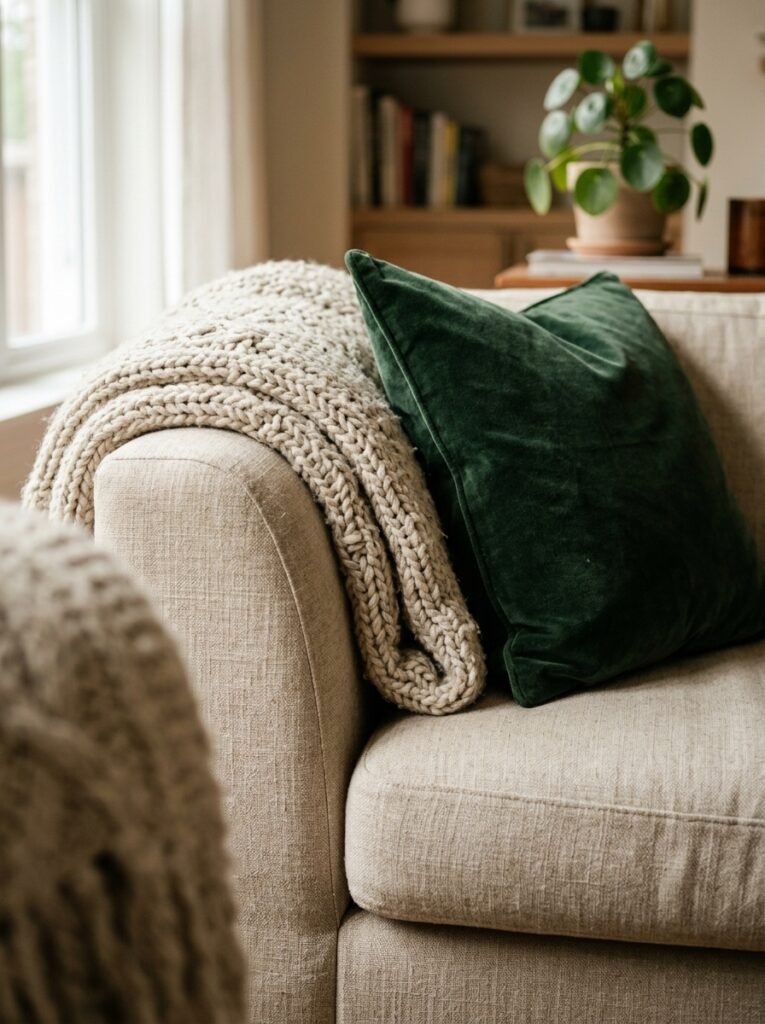
One of the quickest ways to shift a room into Christmas-mode without adding a single piece of decor: change a cushion cover or throw.
This sounds small. It isn’t.
A deep green velvet cushion on a cream sofa. A chunky knitted throw in oatmeal draped over the arm of a chair. Even just adding a plaid (not the garish kind — a muted, heritage-style plaid in greens and burgundy) to a footstool. These things read Christmas immediately and effortlessly, and they come down in January without leaving a single mark.
The advantage over figurines, wreaths, and stocking holders: they’re also just nice things. You’re not storing them, you’re using them. I’ve got a dark green velvet cushion that I genuinely pull out from September and don’t put away until March, because it looks good with winter light and I refuse to apologize for that.
—
9. Lighting — The Difference Between “Cosy” and “Actually Beautiful”
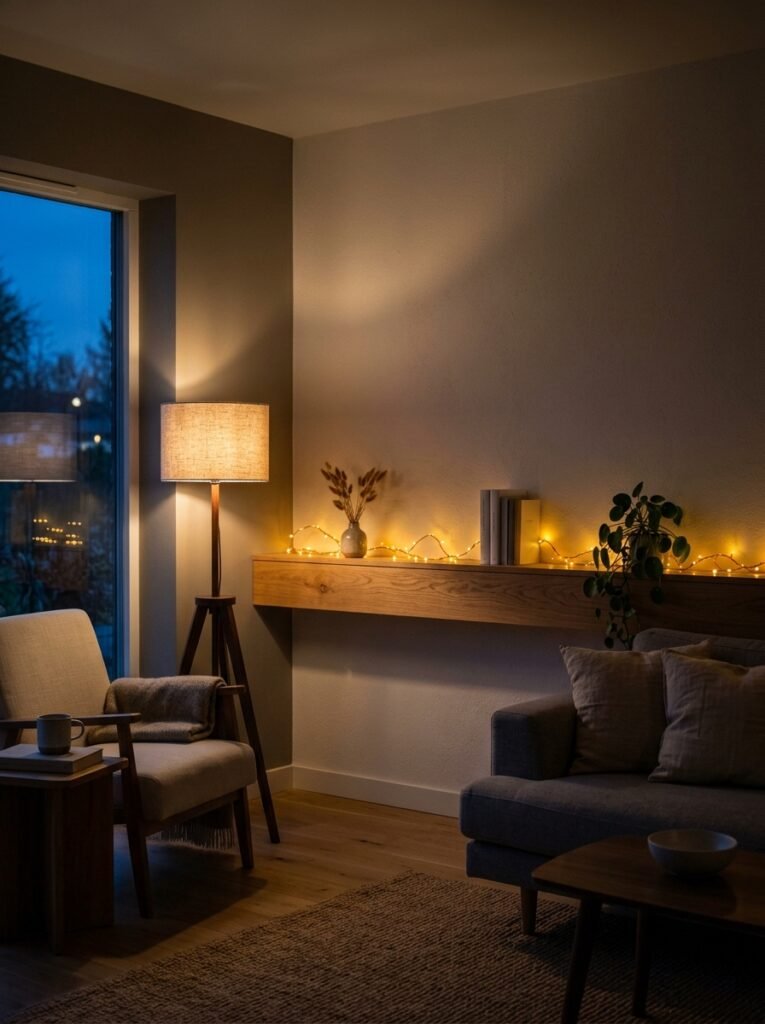
I’ve said this before and I’ll say it again: overhead lights are Christmas decor’s worst enemy.
In December, in a living room, you want to be lighting from LOW and from MULTIPLE SMALL SOURCES rather than from one bright point above everyone’s heads. That means candles, yes. But also a floor lamp in the corner on its lowest setting. A small table lamp with a warm bulb. A string of very warm (not cool white — warm) fairy lights tucked behind a plant or along a windowsill.
“Layer your light sources so no single one dominates the room, and your Christmas decor will photograph beautifully even on the nights it isn’t trying.”
The difference this makes is not subtle. The same objects — the same greenery, the same candles, the same tree — look completely different under warm layered light versus a cold overhead bulb. It’s almost unfair how much the light does.
One note for US readers: those cool-white LED string lights that flood the market right now? They look great on outdoor trees, terrible in a living room. Seek out the warm amber ones. The filament-style bulb strings especially. Worth every penny.
—
10. The Coffee Table as a Christmas Composition
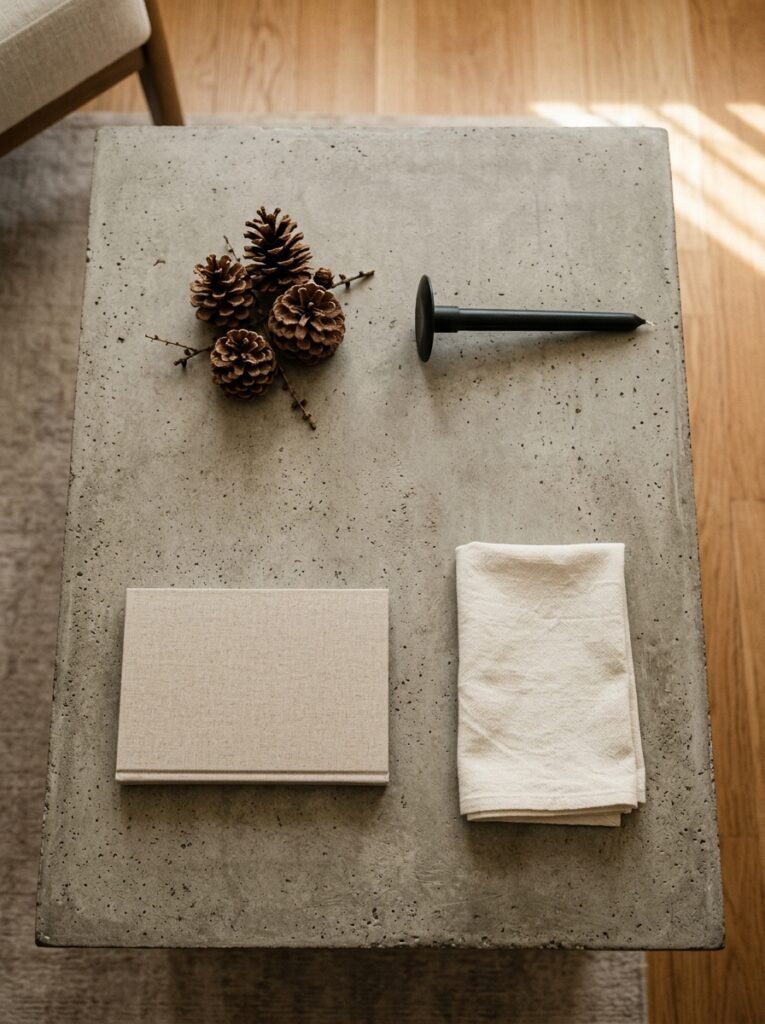
The coffee table is often the most neglected surface in a Christmas living room, and it’s also the one with the most potential.
You don’t need a “Christmas centerpiece” in the traditional sense — a bowl of ornaments, a fake snow arrangement, whatever. What you need is to think of the table as a tray composition.
Use an actual tray to corral the objects (this automatically makes a collection look intentional). Inside the tray: two or three pillar candles at different heights, maybe a small pine cone or two, a few dried orange slices if you’re feeling festive, one small piece of greenery. Outside the tray, but on the table: a single beautiful book and nothing else.
That’s it. That’s a styled coffee table that photographs beautifully and doesn’t feel cluttered. The tray does a lot of psychological work — it tells the eye “this is deliberate, these things belong together.”
—
11. What to Do About Christmas Cards Without Losing the Plot
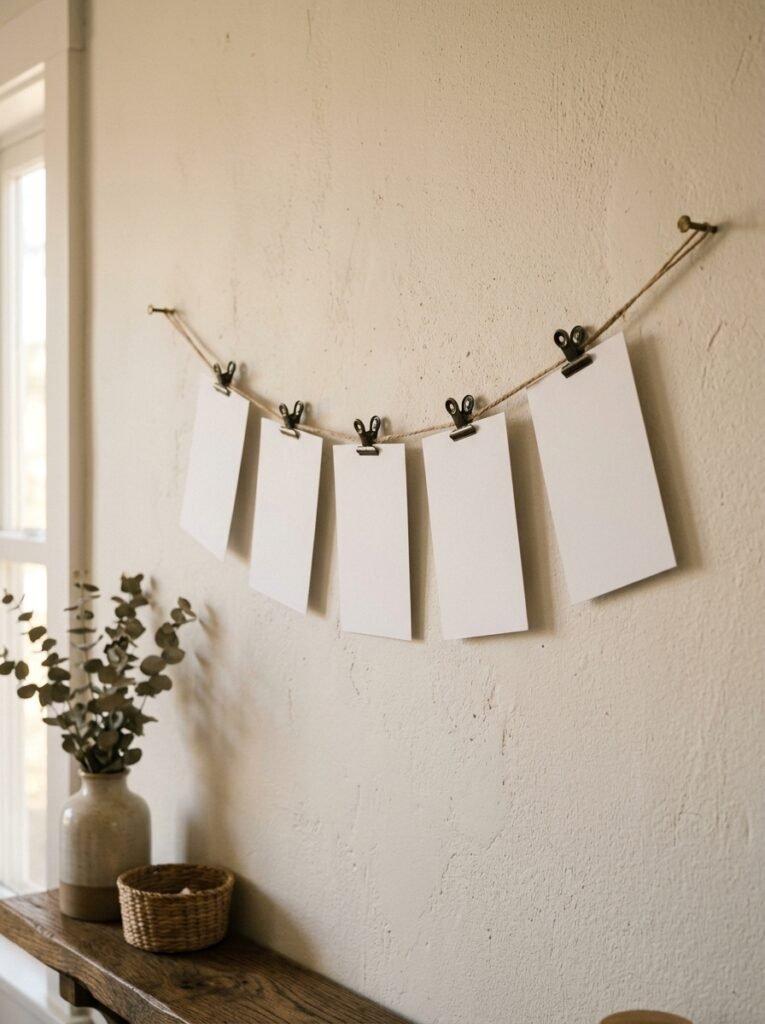
Ah. Christmas cards. The thing nobody talks about in minimalist Christmas articles.
Here’s the honest truth: a pile of cards on the mantel or stuffed between cushions looks messy, and I think we all know it. But throwing them in a drawer feels wrong too — people sent them, they matter.
A few options that actually work: a simple piece of twine or ribbon strung across a wall or between two hooks, cards clipped on with small wooden pegs. It looks deliberate. It looks a bit artisan. It IS actually easy. Alternatively, a wooden or metal letter holder on a sideboard, cards stood up neatly inside — same principle. Contained, not cluttered.
The key is giving the cards ONE place, not letting them colonize every flat surface. One designated spot, beautifully arranged, and then you’ve honored both the cards and the room.
—
12. The Finishing Touch Nobody Thinks to Add (But Should)
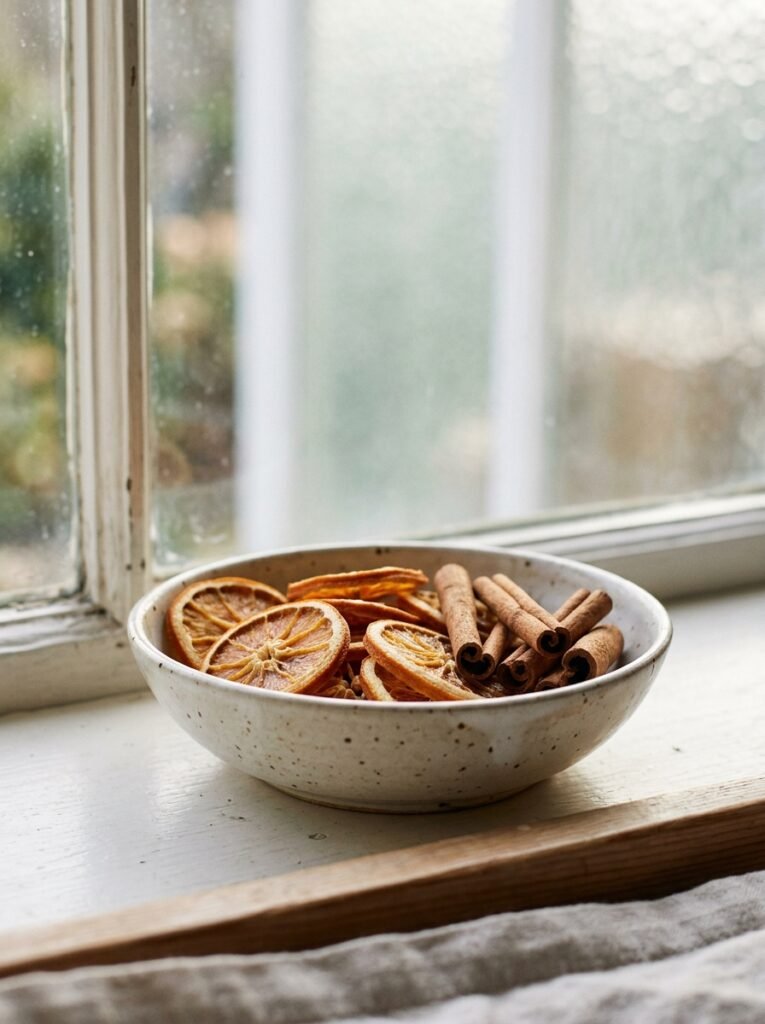
Scent. Real, considered scent — not synthetic, not overpowering.
A small bowl of dried orange peel and cinnamon sticks on the coffee table. Eucalyptus in a vase warming next to a candle. A few cloves pressed into a satsuma sitting on a wooden board. These things smell unambiguously like Christmas without a single string of tinsel in sight.
This is the thing guests notice first, even before they look around the room. And it’s the thing they can’t quite name when they say your home feels so lovely and Christmassy. They’re not thinking about your curated ornaments or your perfectly layered lighting. They smelled cinnamon at the door and they were already sold.
Scent is the most underused tool in home decor. Full stop. And at Christmas, when the outside world is cold and grey, walking into a warm room that smells of oranges and pine is actually transporting.
That’s the goal, isn’t it? Make the room feel like somewhere you want to stay.
—
❓ FAQ
Q: Can minimalist Christmas decor still feel festive and not just cold and empty? A: Absolutely — and that’s the whole point. The key is warmth over quantity. Candles, fresh greenery, layered warm lighting, and seasonal textures like velvet and chunky knits create genuine festive atmosphere without visual clutter. It feels cosy, not clinical, when you get the lighting and scent right.
Q: How do I make a minimalist Christmas work when I have kids who want the full decorating experience? A: Give the kids one zone that’s completely theirs — a small tree in their room, a dedicated corner, or even just the window ledge — where they can go wild. The shared living space stays pared back, and honestly, children often respond well to a clear “this is your Christmas space” because it feels special and claimed.
Q: What’s the best way to transition a normal-looking living room into minimalist Christmas decor without spending much? A: Start by editing what’s already there — remove everyday clutter and a few decorative objects to create space. Then add just three things: fresh greenery, a cluster of candles, and one seasonal textile swap (a throw or a cushion). That combination costs very little and changes a room remarkably fast.
—
💭 Final Thoughts
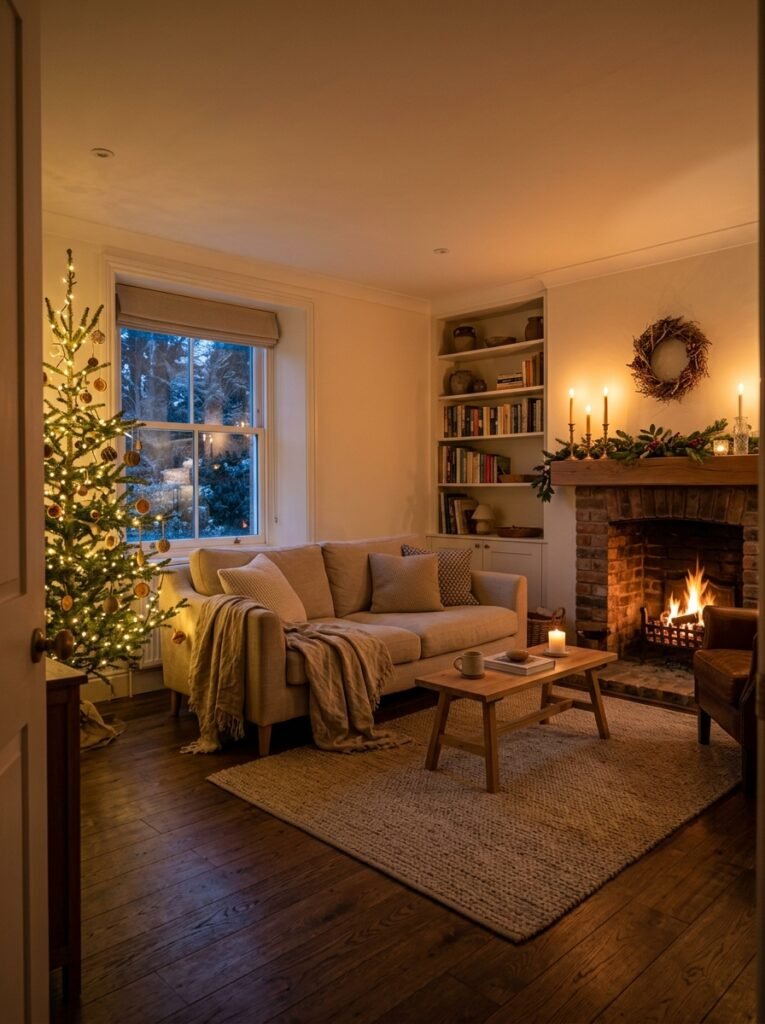
A minimalist Christmas living room isn’t a compromise. It’s a choice — a deliberate, confident one that says you know what you love and you’re not filling space just to fill it. There’s something genuinely peaceful about sitting in a room that’s beautiful because of what it contains, not despite it.
What would you take OUT of your living room this Christmas if you gave yourself permission?