The Tiny Living Room That Looks Like a Design Magazine (Without Spending a Fortune)
A friend walked into my apartment last spring and said, “Wait — how does this feel so much bigger than it is?” I didn’t have a great answer for her then. But I’ve been thinking about it ever since, and now I think I do.
—
1. The Minimalist Trap Nobody Warns You About
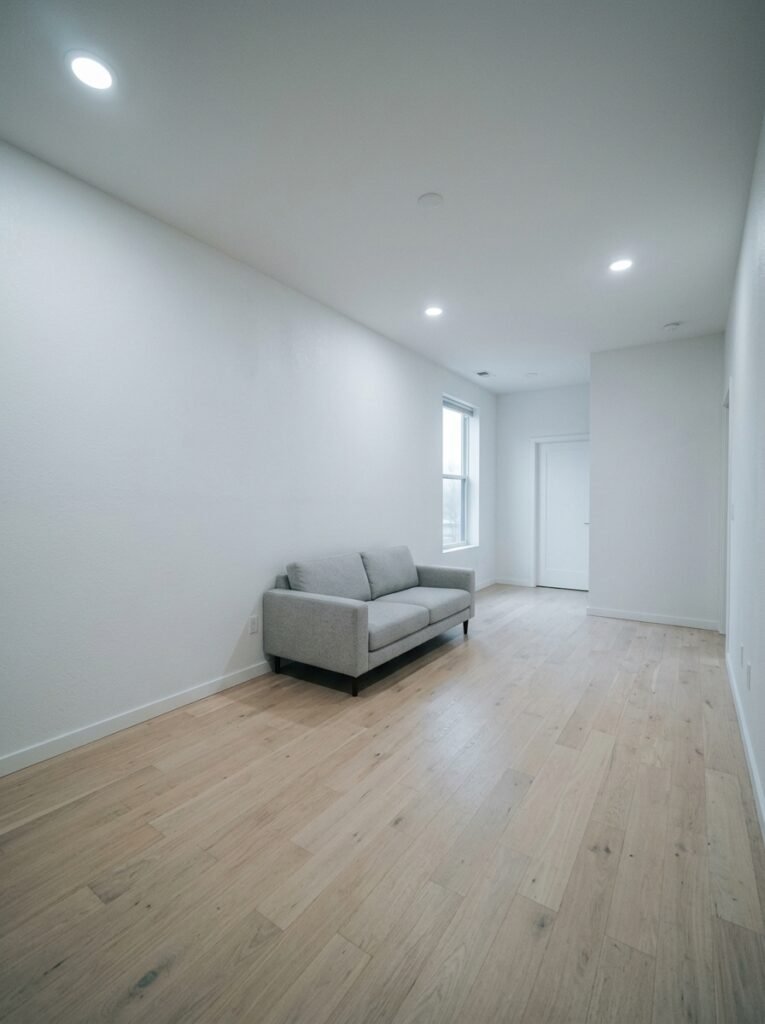
Here’s the thing most minimalist apartment guides won’t tell you: empty isn’t the same as calm. I learned this the hard way after I Marie Kondo’d my whole living room and ended up with a beige box that felt cold and a little sad. Not serene. Just… absent.
Real minimalism in a small living room isn’t about having less. It’s about having the RIGHT things, arranged with intention, so that each piece gets space to breathe and actually means something. One good lamp beats five mediocre ones every single time.
The trap is thinking you need to strip everything back to almost nothing. What you actually need is restraint — which is completely different. Restraint says: I CHOSE this. Empty says: I gave up.
So if you’ve tried minimalism before and found it cold, stay with me here. Because that’s a styling problem, not a philosophy problem.
“Empty isn’t peaceful. Empty is just empty. The goal is intentional — and those two things feel completely different when you’re living in a space.”
—
2. Why Your Sofa Is Probably in the Wrong Spot
Pull it away from the wall.
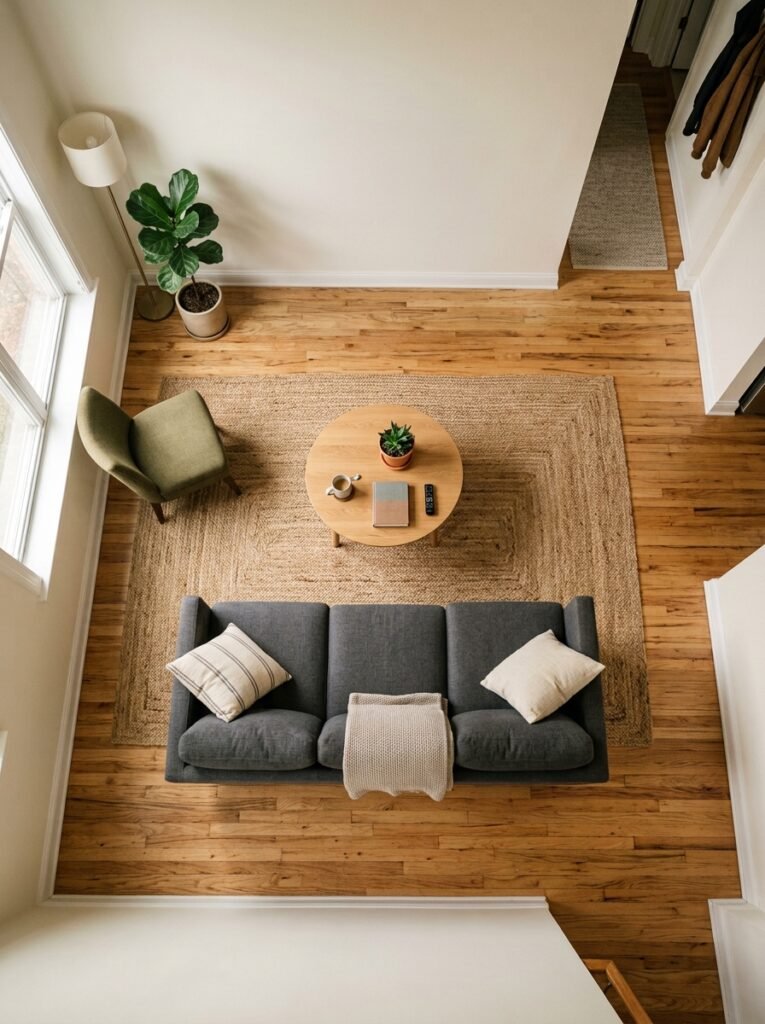
I know. You don’t think you have room. But hear me out — floating your sofa even six inches off the wall creates a visual boundary that your eye reads as “designed space” rather than “furniture pushed to the side.” It gives the room a center. A sense of arrangement rather than storage.
This is one of those changes that costs nothing and genuinely changes how a room feels. In a small apartment especially, the instinct is to press everything against the perimeter to maximize floor space. But all that does is create a hollow, awkward middle and a room that looks like a waiting area.
Try it for a weekend. Pull the sofa forward, angle a chair slightly toward it, and put a rug underneath to anchor the whole grouping. You’re creating a conversation zone — and weirdly, that makes the room feel bigger, not smaller, because it has a reason for existing.
—
3. The Color That Keeps Showing Up in Every Beautiful Minimal Living Room Right Now
It’s not white. Well, not JUST white.
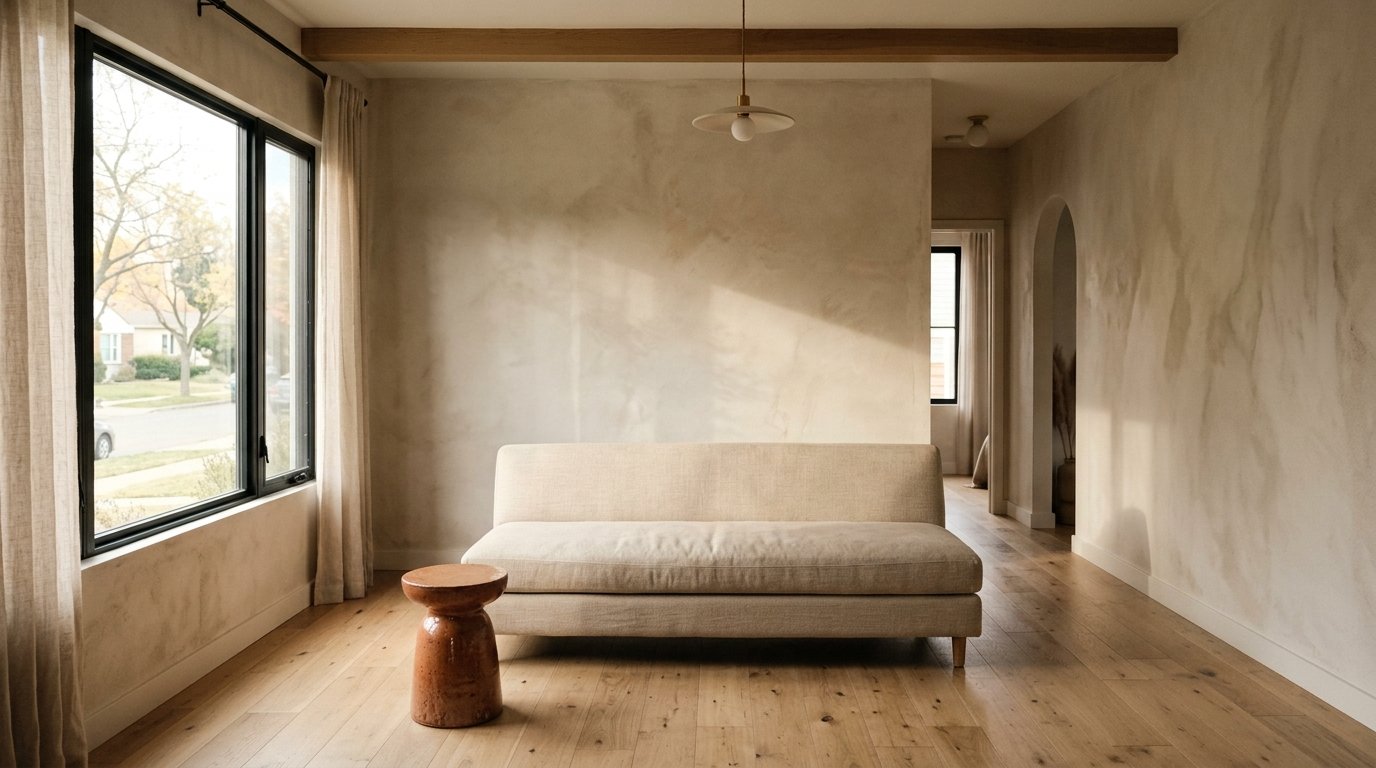
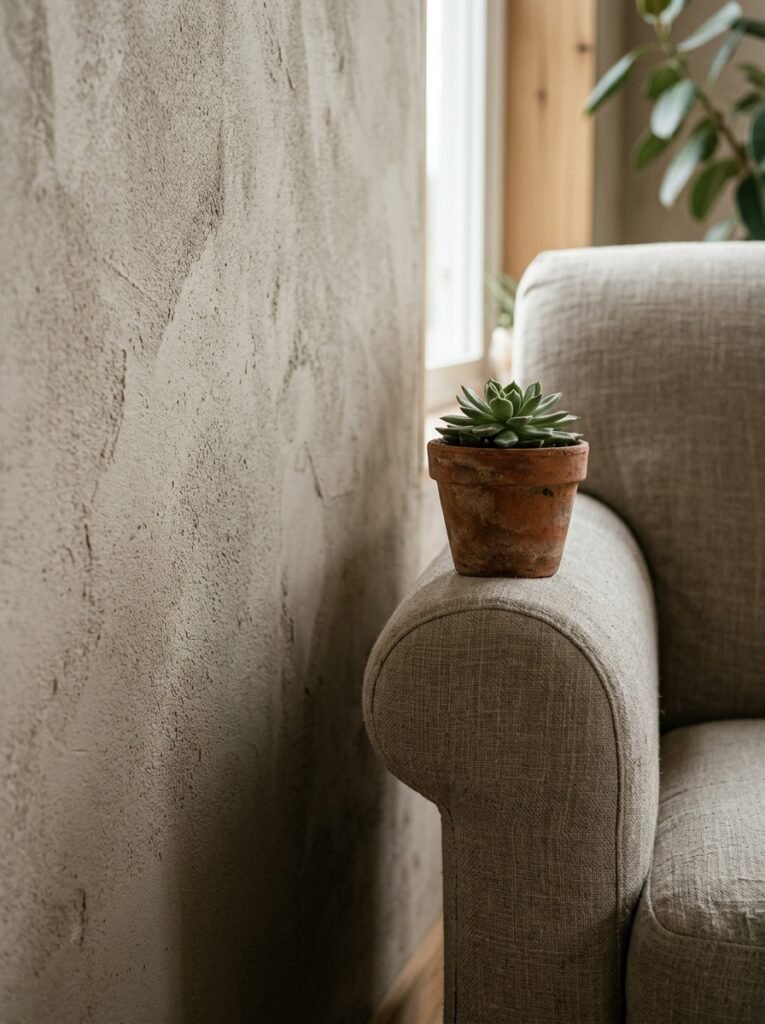
The rooms that stop you mid-scroll right now tend to use what I’d call “warm nothing” — an off-white or very pale stone shade on walls, grounded by one deeper tone somewhere else. A clay-colored cushion. A terracotta throw. A single piece of art with a deep rust or mushroom tone.
Cool grays have had their moment and — not gonna lie — I think they’re done. What’s working now is the palette that looks like a Scandinavian farmhouse met a Moroccan market and had very tasteful children. Warm. Textural. Still simple.
And the key is that you don’t match it. You layer it. The off-white wall, the warm wood shelf, the linen sofa, the single dark accent. Each one just a step or two away from the others. Nothing jarring, nothing matchy-matchy. It just… coheres.
—
4. One Rule That Makes Any Tiny Room Feel Intentional
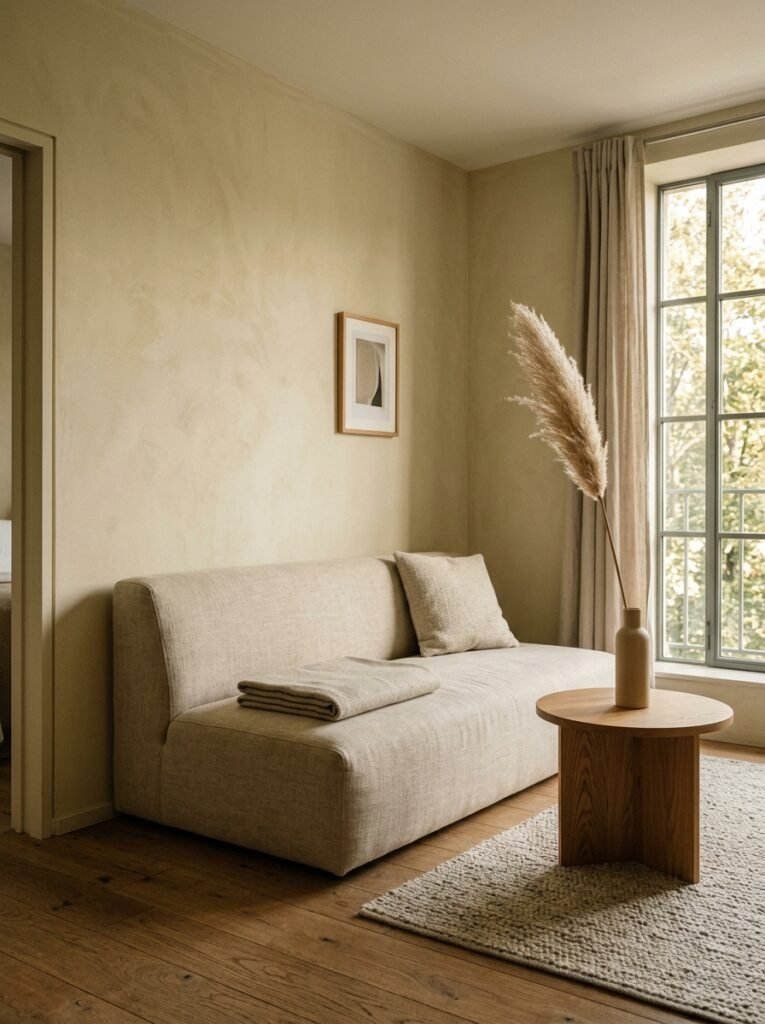
Everything needs a reason to be there.
That’s it. That’s the rule. If you can’t immediately explain WHY that little decorative basket is on that shelf, or why those three different-sized candles are on the coffee table, or why the plant is in that specific corner — then one of you needs to move.
This sounds harsh but it’s actually freeing. Because once you apply this filter, you stop guilt-tripping yourself about the stuff that’s just… drifted in over the years. The random gifts. The impulse buys. The stuff you kept because it felt wasteful to donate. Give yourself permission to clear it. Donate it. Let it go to someone whose space it actually belongs in.
What’s left is a room full of things with intention behind them. And intention reads as style, even when the individual pieces are simple or cheap.
—
5. The Lighting Situation That Changes Everything (Seriously, Stop Relying on Overhead Lights)
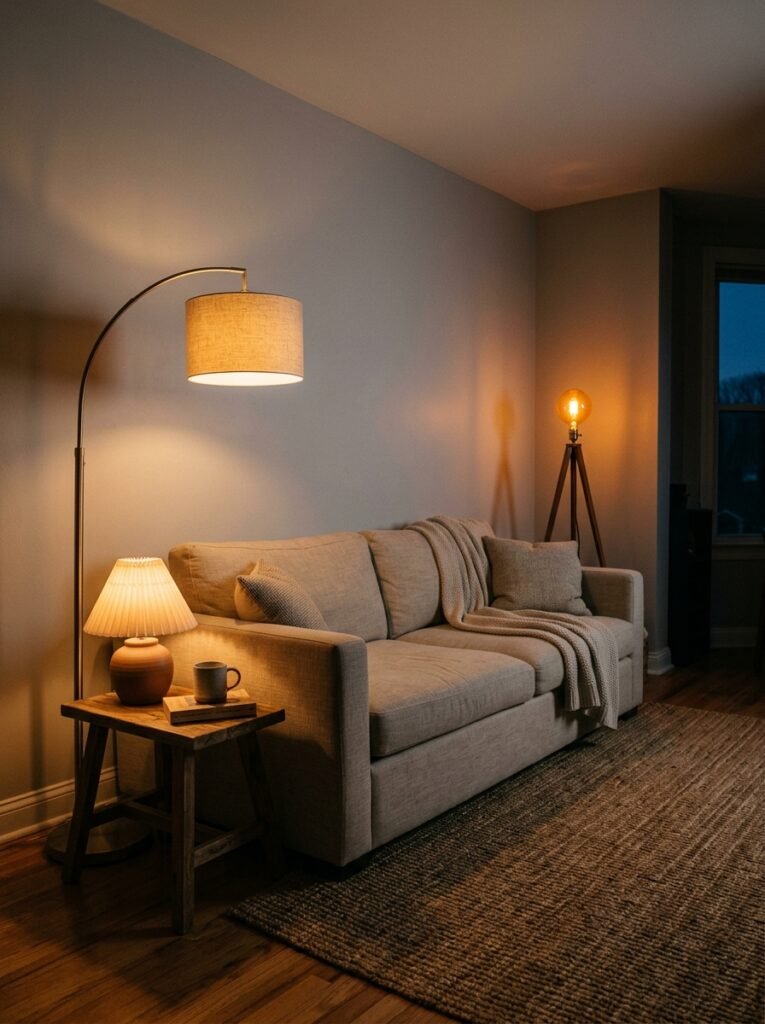
Overhead lighting in a small apartment living room is almost always a mistake. It flattens the space, casts harsh shadows downward, and makes everything feel like a dentist’s office — sorry, but it’s true.
What you want is layers of light at different heights. A floor lamp in the corner. A small lamp on a side table or shelf. Maybe a string of warm-toned LED lights tucked somewhere unexpected — behind a shelf, along a windowsill, wherever. The amber glow of an Edison bulb at 7pm in a tiny flat is doing more decorating than any throw pillow you’ll ever buy.
The goal is pools of light across the room, not even illumination of everything. Shadows in a small space are your friend. They create depth. They make the room feel like it extends further than it does.
Swap the cool white bulbs for warm ones. Do it this weekend. It costs almost nothing and the difference is actually kind of shocking.
“Three small lamps beat one overhead light every single time. Pools of warmth make a room feel like it has corners worth exploring.”
—
6. Why a Single Large Rug Will Do More Than a Gallery Wall
Gallery walls are everywhere and I get it — they’re personal, they’re interesting, they fill vertical space. But in a truly small living room? A single large piece of art (or even a oversized mirror) will do more for the space than twelve framed things competing for attention.
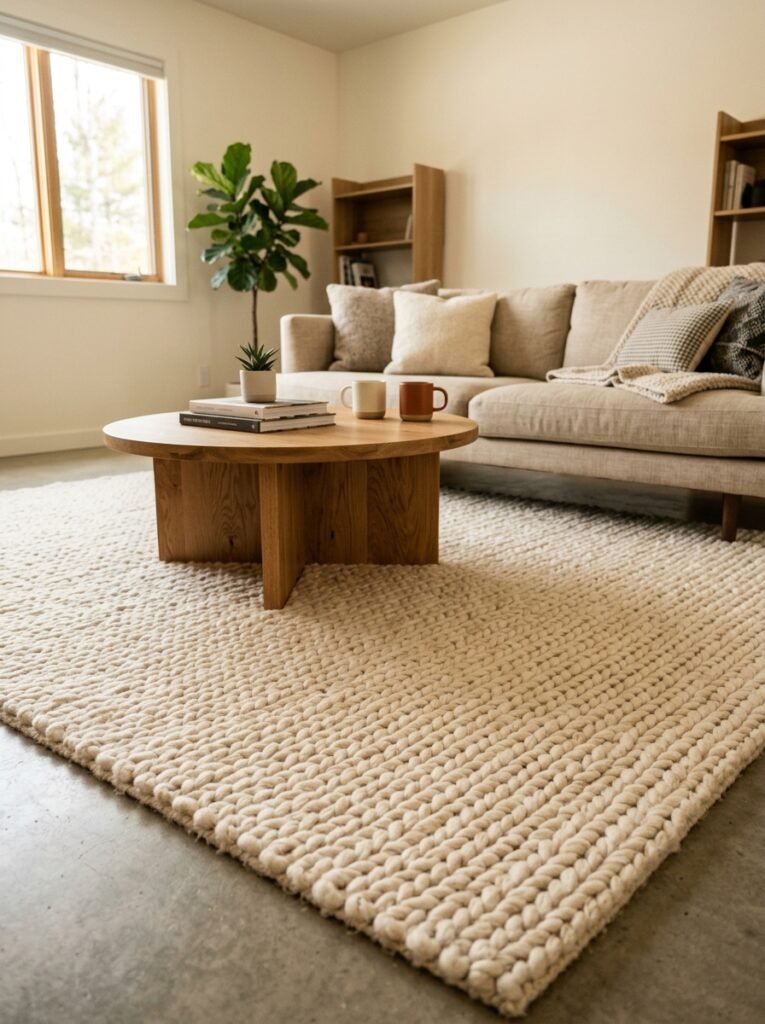
Same logic applies to rugs. One generously sized rug — bigger than you think you need — that sits under the front legs of all your main furniture grounds the entire room. It says: this is one space, one room, one intentional zone. A small rug plonked in the middle just looks like a mat. And multiple small rugs in a tiny space? Chaos.
Size up. Genuinely. If you think you need a 5×7, get a 6×9. The slightly-too-big rug is almost always better than the slightly-too-small one. The room will thank you.
And if you want texture — because you should, texture is everything in a minimal space — a woven jute or flat-weave wool rug will carry the whole room without adding visual noise.
—
7. The Shelf Styling Secret That Has Nothing to Do With Aesthetics
Don’t style your shelves until you know what you actually use.
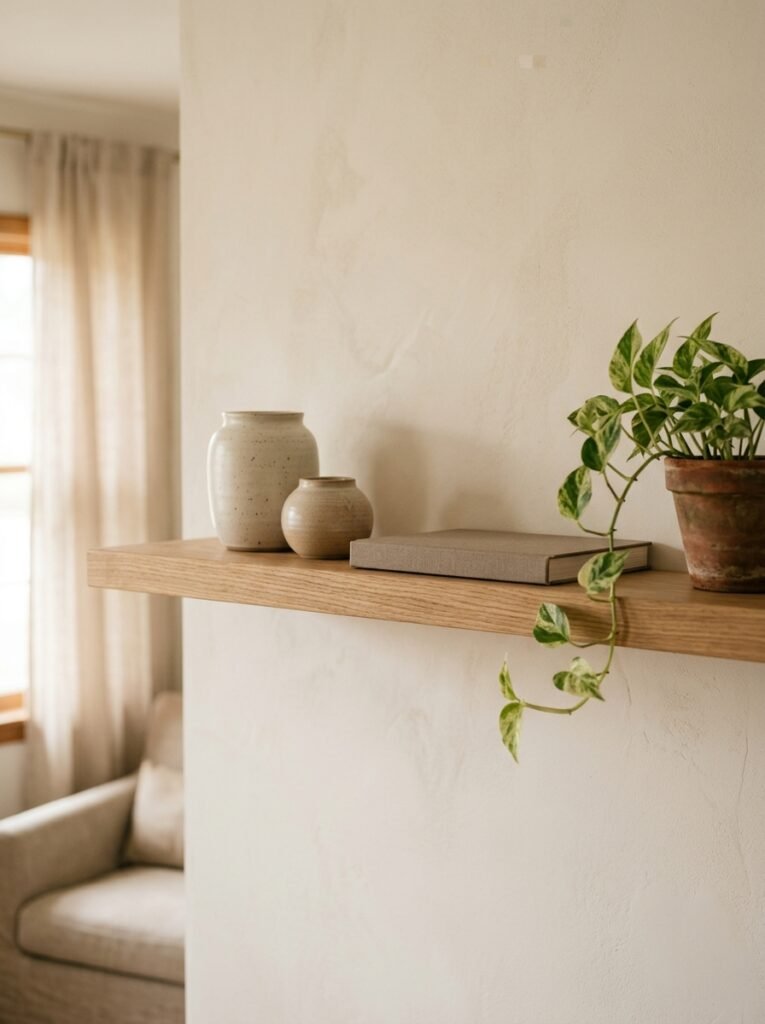
I mean it. Before you start curating pretty stacks of books and little vessels and trailing plants, live in your space for a bit and notice what you reach for constantly versus what just sits there. Because the worst thing you can do is style a shelf so beautifully that you’re afraid to actually use it.
Minimalist shelf styling in a small living room has one real goal: things that are functional AND considered. A few books you love and actually re-read. One or two objects that are genuinely meaningful (not just vaguely pretty). Maybe a plant if you’re going to actually water it. And then — space. Deliberate empty space. Because the gaps are part of the composition.
Side note — this is also why one large plant in a corner often works better than five small ones scattered everywhere. One big fiddle leaf or monstera says “I know what I’m doing.” Five little succulents on various surfaces just says “I tried.”
—
8. The Furniture Piece Most People Skip (That Does the Most Work)
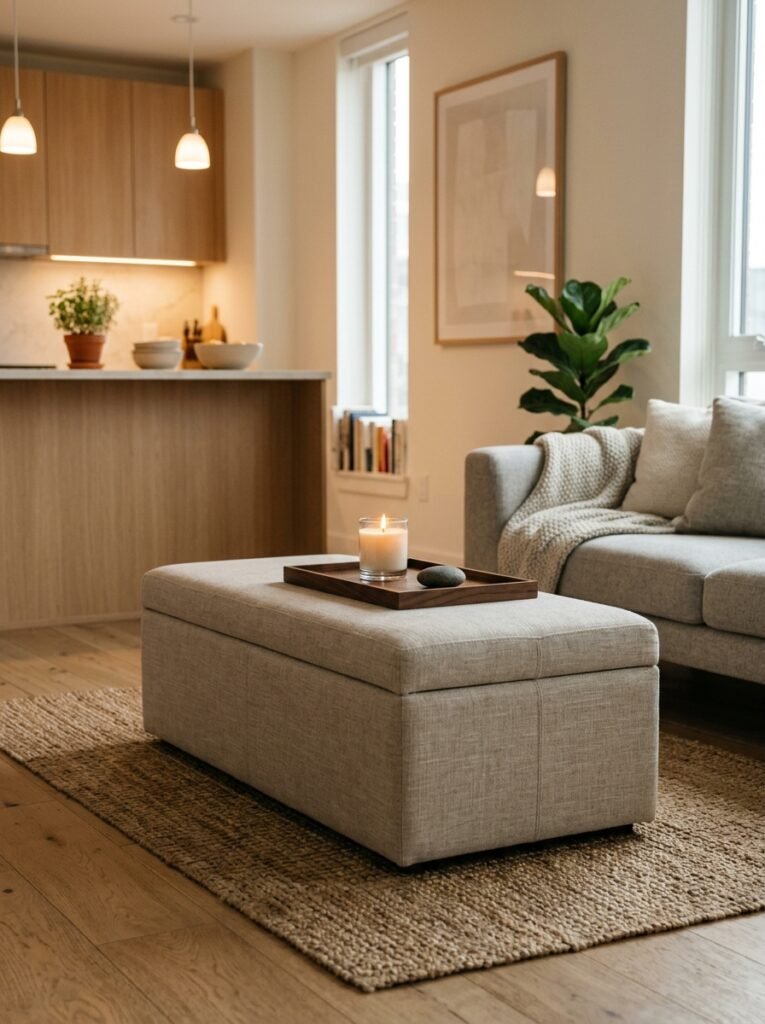
An ottoman. A proper, oversized, lidded storage ottoman in the center of your living room.
Or, if not an ottoman, a coffee table with storage underneath. Something that doubles up without looking like it’s trying to double up.
In a minimalist apartment living room, your furniture has to work harder than it does in a bigger space. That means hidden storage in things that look like purely aesthetic choices. The bench at the foot of a sofa that actually holds blankets. The side table with a drawer that holds remote controls and charging cables and all the other stuff that would otherwise just live on every surface.
This is how minimal spaces actually stay minimal. Not through having less stuff — through having smarter places to put the stuff you actually need.
—
9. Why Curtains Are the Most Underestimated Thing in a Small Room
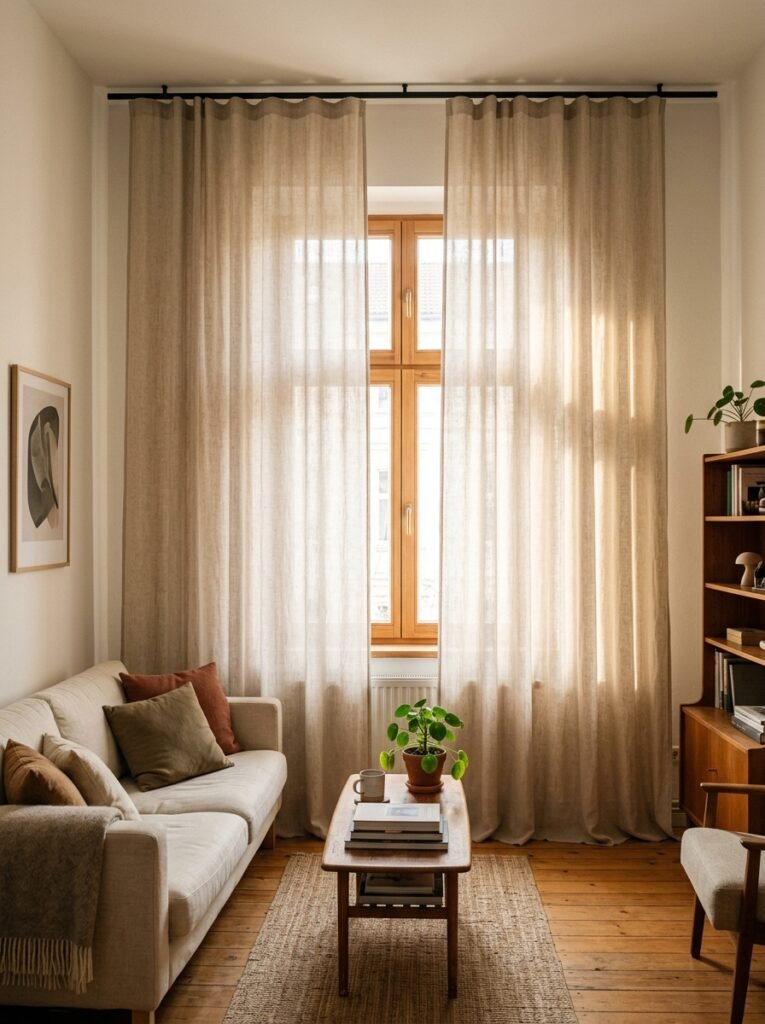
Hang them HIGH. And wide.
Not just at the window frame — above it, as close to the ceiling as you can get away with. And wider than the window on both sides, so that when they’re open, ALL the glass is exposed and the curtains frame the window like a statement rather than just covering it.
This does two things. The height draws the eye upward, making the ceiling feel taller than it is. And the width — when the curtains are pulled back — makes the window look dramatically bigger, which brings in more light, which makes the whole room feel more spacious.
Linen curtains in an off-white or very pale natural tone are almost never wrong in a minimal apartment. They move slightly in a breeze. They let light filter through even when closed. They’re simple enough to not compete with anything else in the room and quietly beautiful enough to make the whole space feel a bit more considered.
—
10. The Clutter Nobody Talks About (It’s Not What You Think)
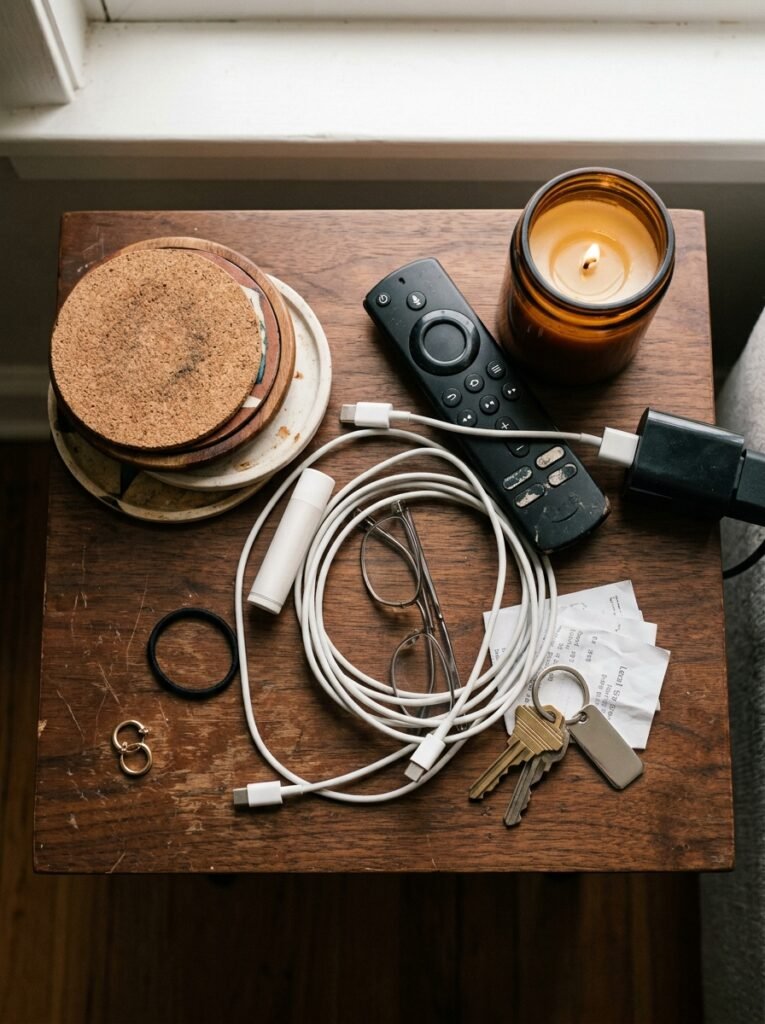
Visual clutter doesn’t come from having too many things. It comes from having too many different things.
Ten objects in three different styles, three different colors, three different materials — that’s visually exhausting. Ten objects that share a material or a tone? Suddenly that’s a collection.
This is the part where I’d normally say something like “find your aesthetic” — but that’s a bit much, honestly. What I’d actually say is: notice what you already own that you genuinely love, find the common thread, and let go of the things that don’t share it.
Maybe you’re drawn to wood and stone and rough linen. Maybe it’s matte black metal and clean white ceramics. Maybe it’s warm terracotta and brass and dried botanicals. Whatever it is — lean into THAT, and resist the urge to add things that are cute but don’t belong to the same world.
Coherence. That’s what a minimalist living room is actually built on.
“Coherence is the thing that makes a simple room look styled and a cluttered room look chaotic. It’s not about how much you own — it’s about whether it all speaks the same language.”
—
11. Mirrors: How to Use Them Without Making It Look Like a Gym
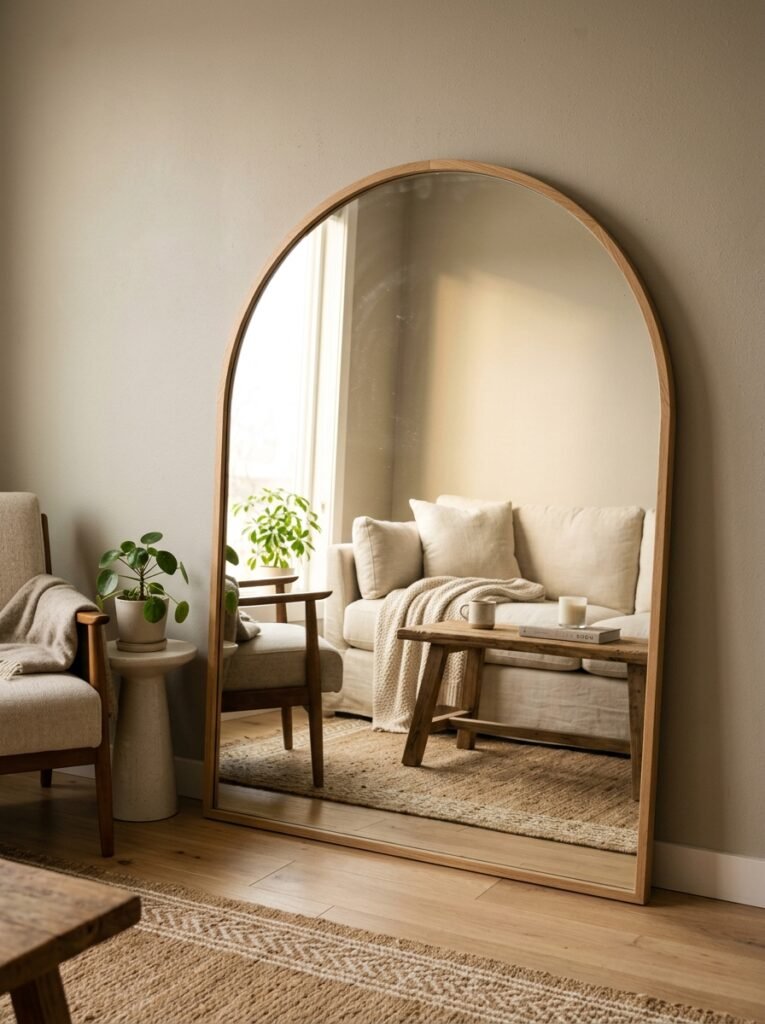
One large mirror, well placed, can genuinely change the scale of a small living room. But there are rules.
Don’t hang a mirror directly opposite the front door — it’s a bit disorienting and, depending on the room, can just bounce a cluttered view back at you. Instead, place it where it catches light from a window. Ideally, a large mirror on the wall perpendicular to your main window will pull natural light deeper into the room and create the illusion of a window where there isn’t one.
Shape matters too. A round or arched mirror in a small living room tends to feel more intentional and less “I read this on a blog” than a large rectangular one. Though a really beautiful oversized rectangular mirror, leaned against the wall rather than hung, has a sort of casual editorial quality that works incredibly well in a minimal space.
Don’t cluster mirrors. One is a design choice. Two is starting to look like you’re obsessed with your reflection.
—
12. The Thing That Actually Makes a Minimal Room Feel Lived In
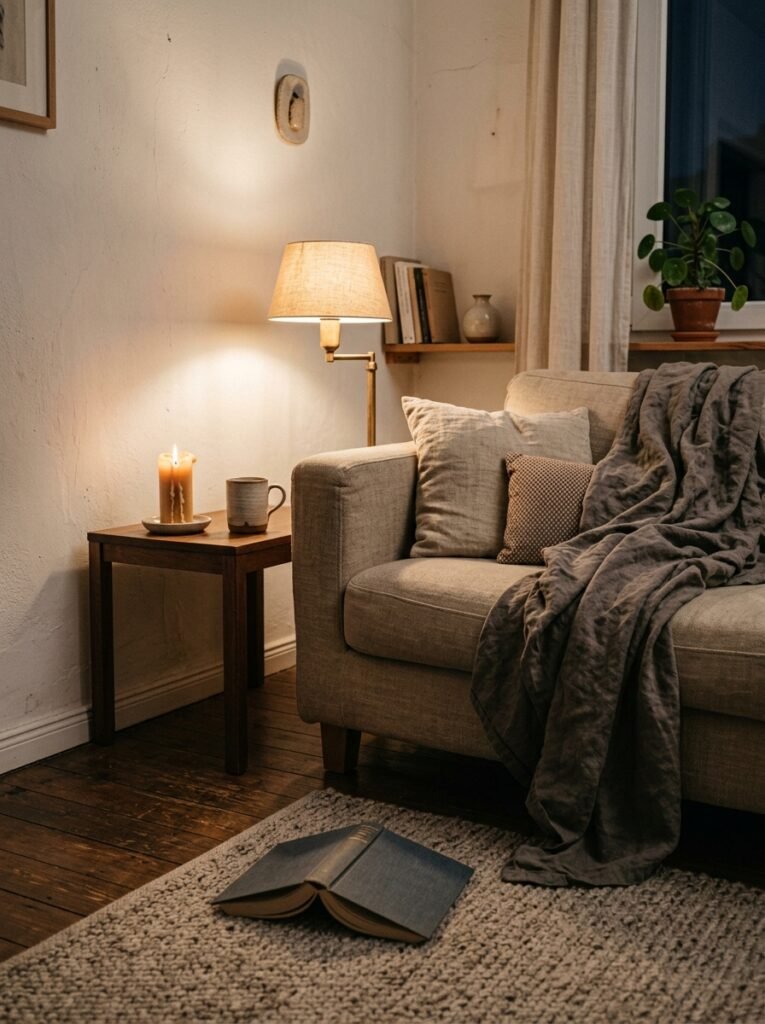
Texture. Just texture.
Not color, not pattern, not statement pieces. Texture is the thing that stops a minimal living room from feeling cold or show-home perfect in a bad way.
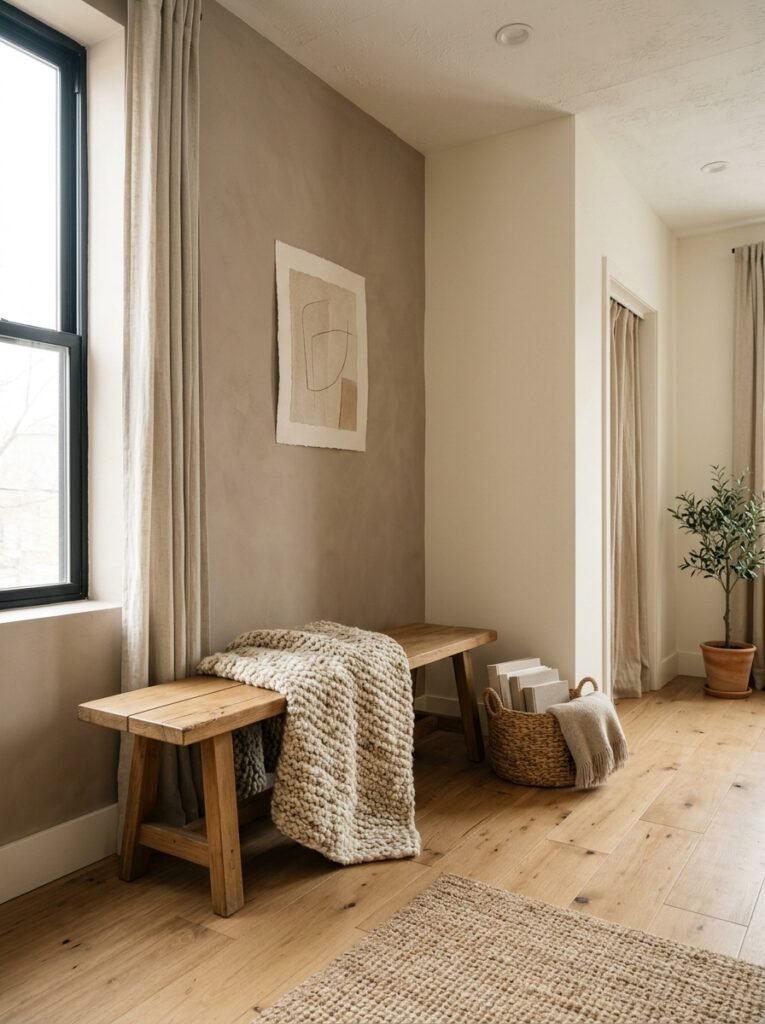
A rough linen throw over the arm of a sofa. A knitted cushion cover. A clay vase with slightly uneven edges. A wooden bowl on the coffee table. A basket on the floor by the sofa. None of these things are visual noise — they don’t compete or distract — but they add this layer of tactile interest that makes you want to actually sit down and stay.
The rooms that feel the best to be in aren’t the ones that photograph perfectly from every angle. They’re the ones that feel like someone with good taste actually LIVES there. Texture is what does that. It’s what makes the difference between “beautiful” and “warm.”
—
❓ FAQ
Q: How do you make a minimalist living room feel cozy and not cold? A: Texture and warm lighting are your two biggest tools. Layer linen, wool, and natural wood, and swap cool overhead bulbs for warm-toned lamps at different heights. The goal is restraint, not emptiness — meaningful objects rather than bare surfaces.
Q: What’s the best furniture layout for a small apartment living room? A: Float your sofa away from the wall (even slightly), use a large rug to anchor the grouping, and face your main seating toward a focal point — whether that’s a fireplace, a window, or a piece of art. Avoid pressing everything to the perimeter; it makes the space feel like a waiting room rather than a room someone designed.
Q: How many decorative items should you have in a minimalist living room? A: There’s no magic number, but the rule I come back to is: can you explain why each thing is there? If yes, keep it. If you have to think too hard — or if the honest answer is “it just ended up there” — it’s probably time to let it go. Fewer things with clear intention always feels better than a certain quantity of things.
—
💭 Final Thoughts
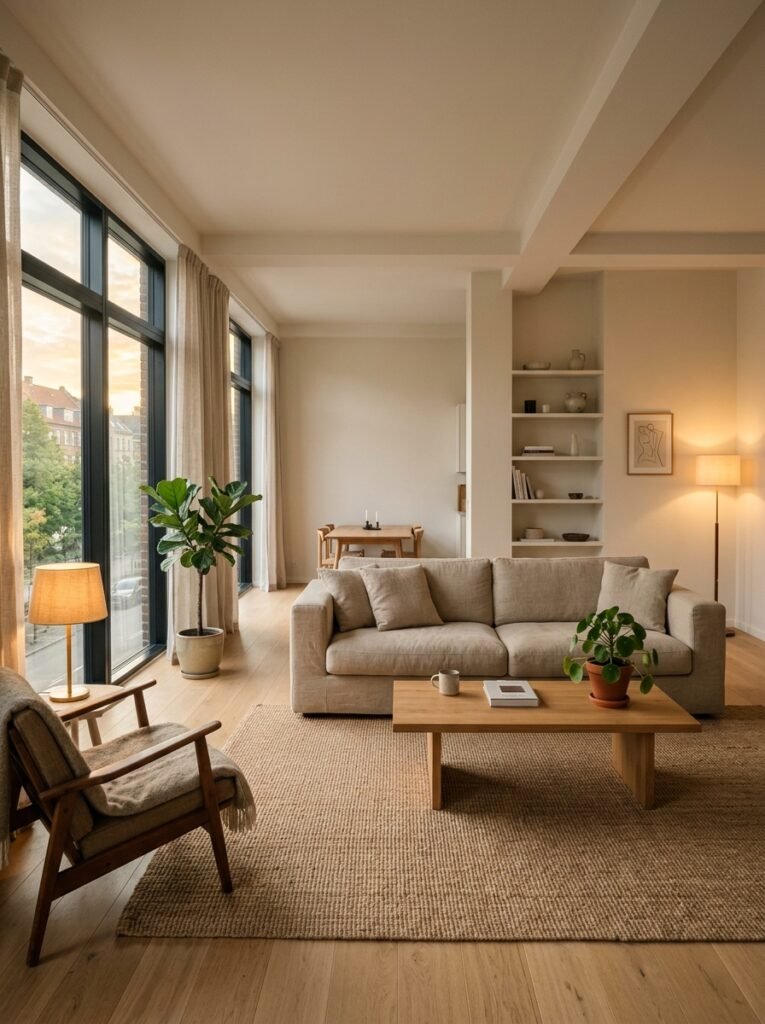
The best minimalist living rooms I’ve ever been in didn’t feel sparse. They felt decided. Like someone thought it through and then stopped adding things — which, honestly, is the harder skill. You can always add more. Knowing when to stop is the real work. Is there one thing in your living room right now that you’ve been meaning to move for months and just… haven’t?