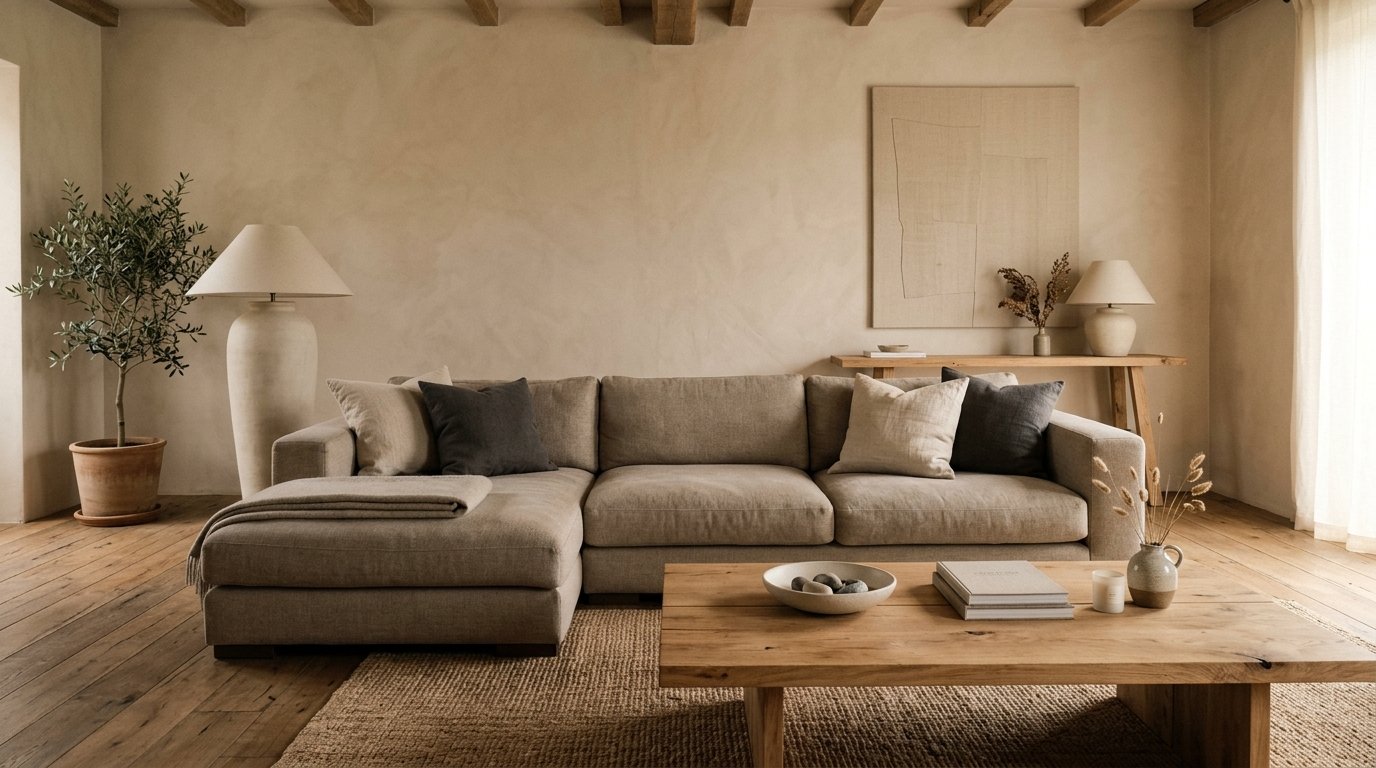
Why the Most Stunning Living Rooms Right Now Have Almost Nothing in Them
My friend walked into my living room last year and said, “Did you just move in?” And I’d lived there for three years.
That was the moment I knew I’d actually done it. I’d landed on something that felt so intentional, so calm, so right — that it looked like I hadn’t tried at all.
—
1. The Lie We’ve All Believed About “Neutral” Meaning Boring
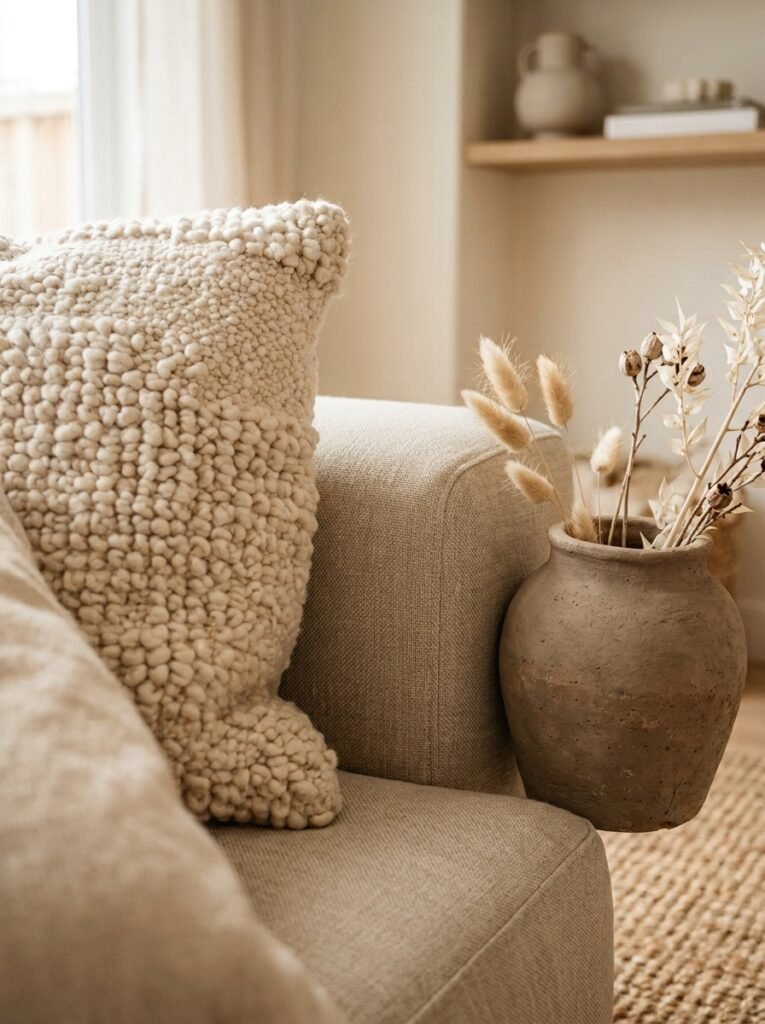
Neutral doesn’t mean beige soup. It doesn’t mean a room that looks like a catalogue nobody ordered from, or a space that’s been so sanded down it has no personality left.
Here’s what neutral actually means in a room that works: it means the bones of the space get to breathe. The architecture gets to speak. That window you never noticed? Suddenly it’s the whole point of the room.
I spent years adding things to try and make rooms feel alive. A throw here, a print there, another plant, another cushion, another lamp “to warm things up.” And every single time I added something, the room got busier and somehow felt smaller.
The pivot to minimalist neutral wasn’t a design trend I followed. It was an exhausted decision.
“The room that finally felt like me was the one where I stopped adding things and started removing them.”
And honestly? That’s the truth nobody on a home decor shopping haul video is going to tell you.
—
2. The Warm White vs. Cool White War — And Why You Need to Pick a Side
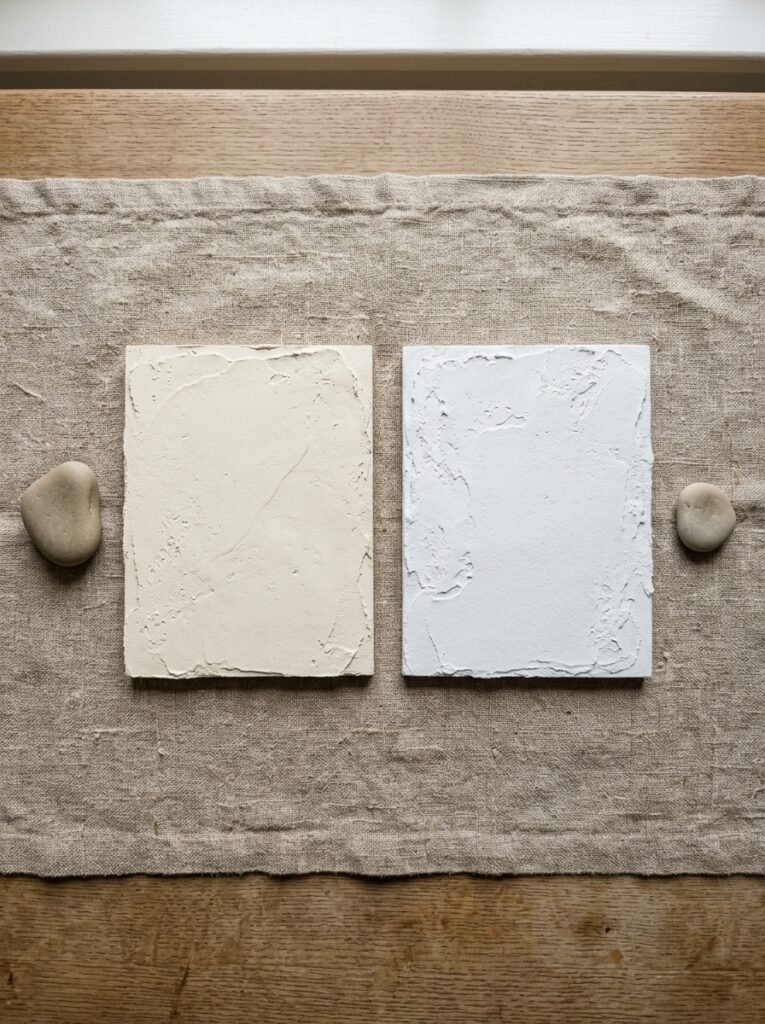
People don’t talk about this enough. There are two completely different directions you can take a neutral room, and if you mix them by accident, the whole thing looks off and you won’t know why. You’ll just feel vaguely uncomfortable sitting in it.
Warm whites lean cream, ivory, oat. They play beautifully with wood tones, linen, jute, anything that feels like it came from outside. A warm-white room in the afternoon light is genuinely one of the coziest places a human being can be.
Cool whites go grey, blue-white, almost silver. They’re sharper, more architectural. They feel more like a gallery space than a cottage, which isn’t worse — it’s just different. They work beautifully with concrete, matte black, stone surfaces, raw plaster.
Pick one. Commit. And then make sure every fabric, every painted wall, every soft furnishing is pulling in the same temperature direction. Mix a cool-white linen sofa into a warm-white room and I promise you, something will feel wrong even if you can’t name it.
—
3. The Sofa Rule That Minimalist Rooms Get Away With Breaking
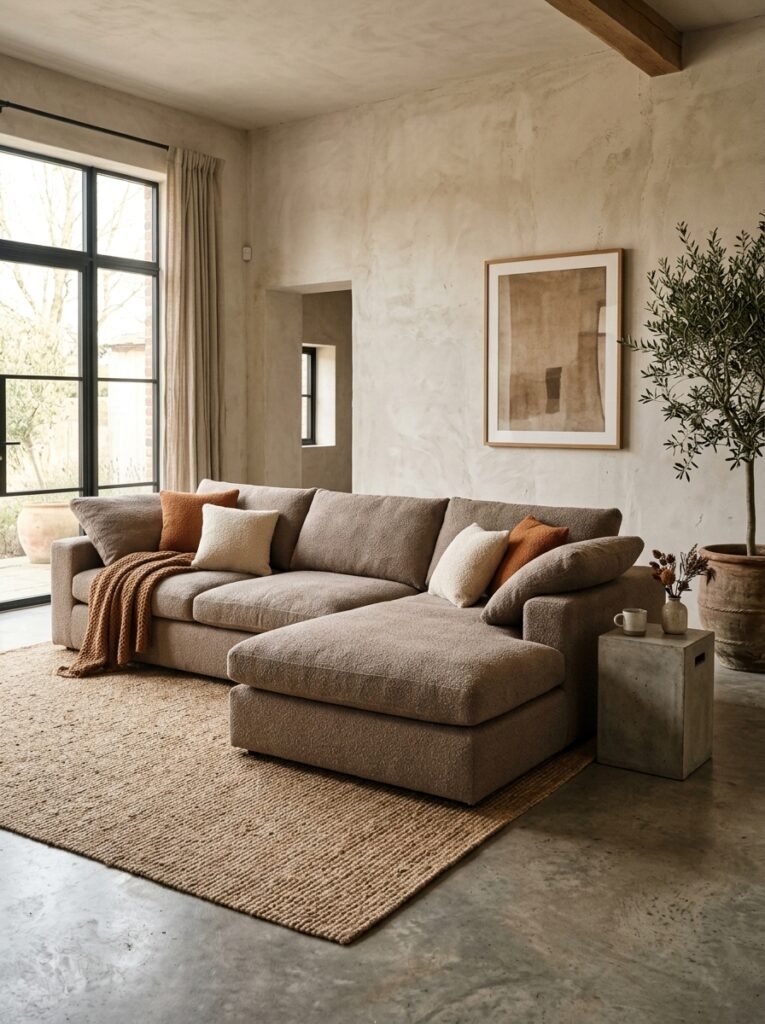
In a more maximalist space, your sofa can be wild. It can be emerald green or covered in a pattern. It has other things to compete with, so it doesn’t have to do all the heavy lifting.
In a minimalist neutral room, your sofa IS the room. It’s probably the first thing anyone sees and it’s almost certainly the largest piece of furniture in there. So you can’t afford for it to be an afterthought.
The interesting rule? Texture over color. Always.
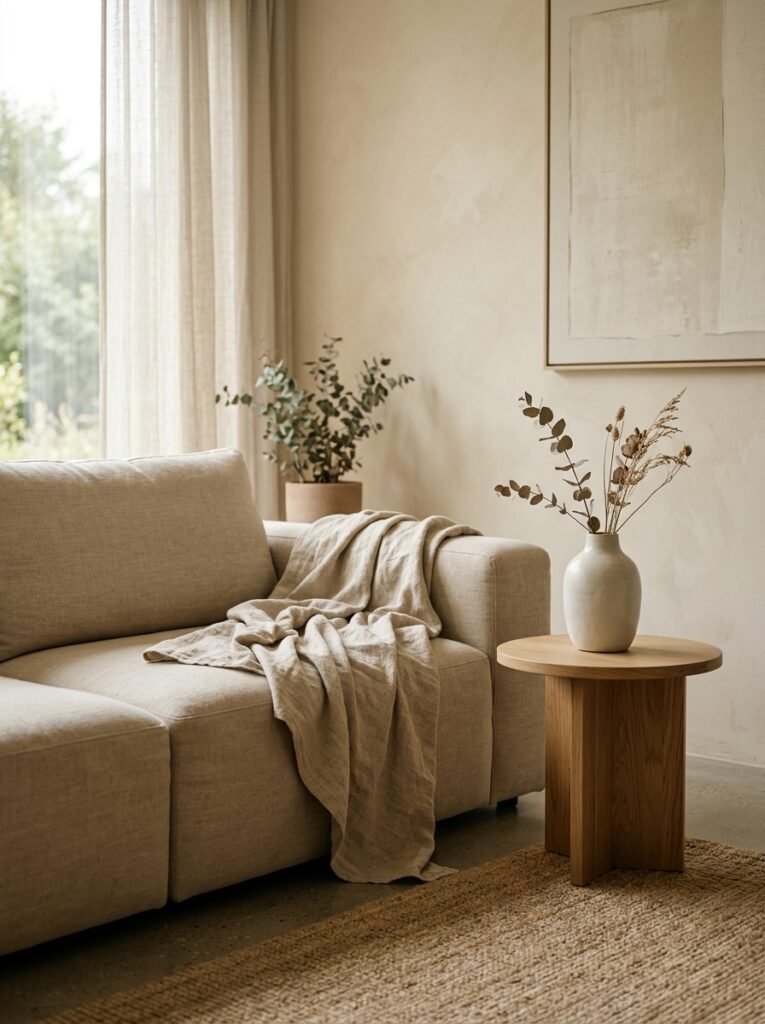
A flat, smooth-fabric sofa in cream is fine. A sofa in a slightly nubby, loosely woven linen fabric in nearly the same cream? Completely different energy. The texture catches light differently at different times of day. Morning light makes it look almost golden. Lamplight in the evening makes it look warm and heavy in the best way.
Don’t go looking for interesting color. Go looking for interesting texture. That’s the move.
—
4. The Color That Keeps Showing Up in Every Beautiful Neutral Room Right Now
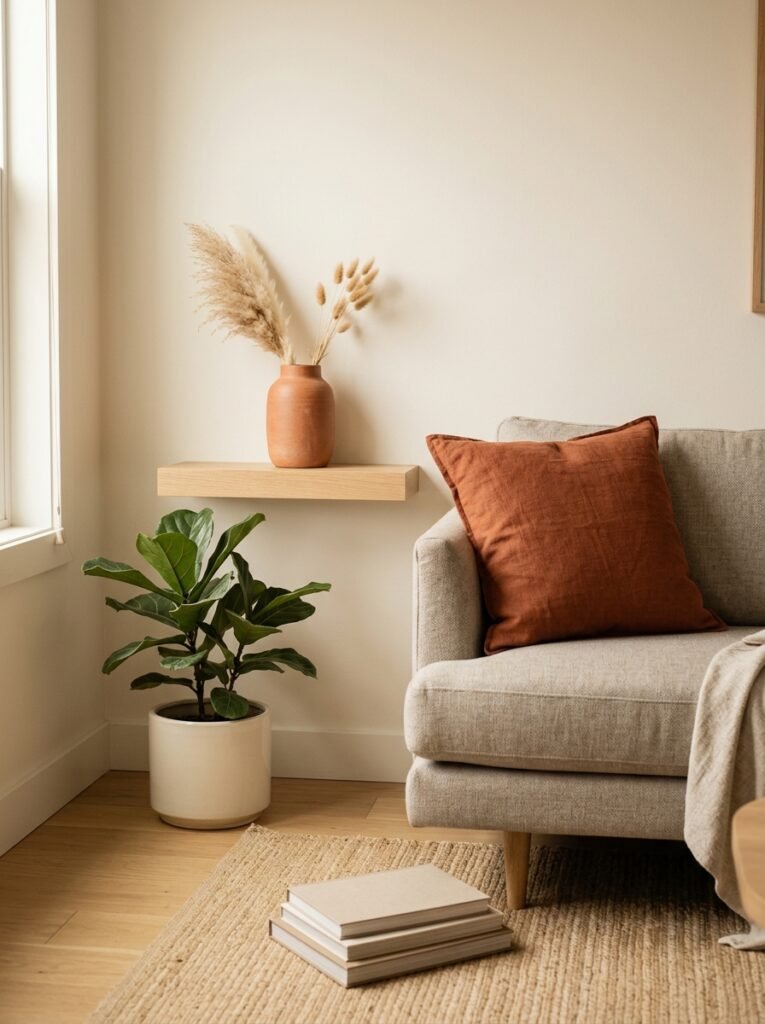
Warm terracotta is everywhere and I’m not even a little bit sorry about it.
Not orange. Not rust (though rust is also great). Proper dusty, muted, slightly-faded terracotta — the color of a clay pot that’s been sitting in a Mediterranean courtyard for about forty years. That color.
As an accent in a neutral room, it does something magic. It keeps the whole space from feeling cold or clinical. One terracotta-toned cushion, a small ceramic pot, a single throw draped over an armchair — and suddenly the room has warmth without being chaotic.
The reason it works so well against neutrals is that it reads as natural. It’s the color of earth and clay and old tile. Your brain recognizes it as something that came from outside, and something about that feels settled and right.
“One terracotta ceramic on an otherwise empty shelf will do more for a neutral room than six mismatched decorative objects ever could.”
If terracotta isn’t your thing (and I get it, it’s not for everyone), try warm sage green instead. Same principle — muted, earthy, slightly dusty. NOT bright, NOT saturated.
—
5. The One Rule That Makes Any Bare Shelf Feel Intentional and Not Just Empty
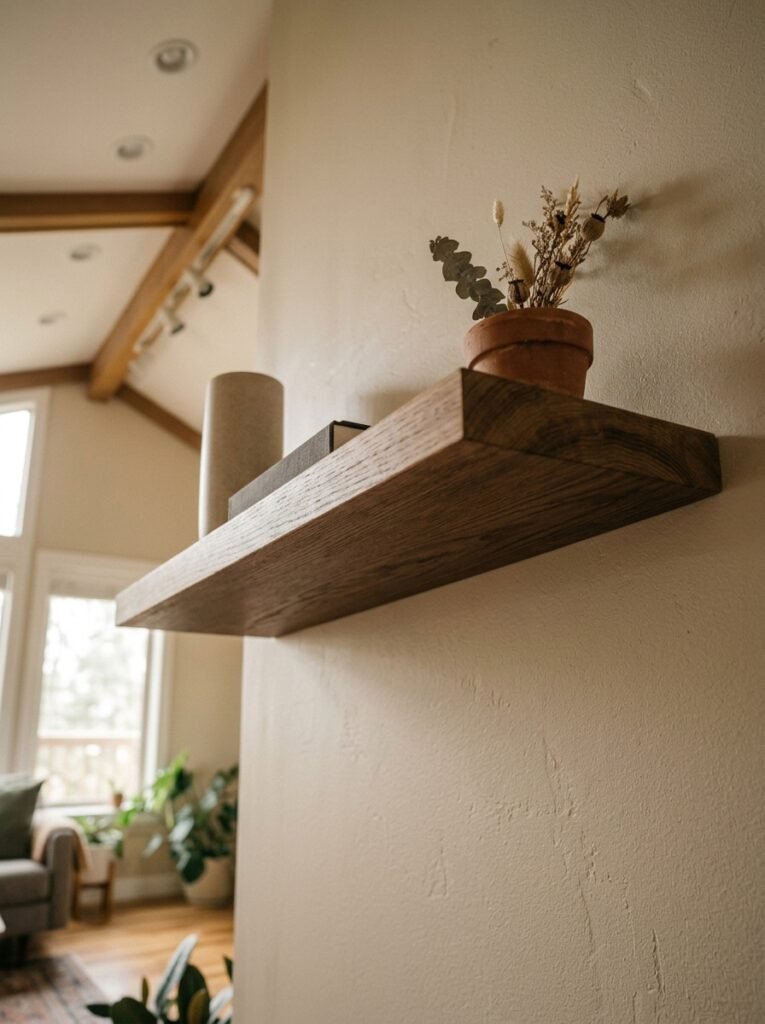
Minimalist rooms live and die by how the shelves are styled. Because when everything else is stripped back, the shelves are where you’re saying the most.
Here’s the rule I came to after embarrassing amounts of trial and error: odd numbers, varied heights, one organic element.
Three objects are almost always better than four. Five is better than six. And at least one of those objects should have come from outside — a smooth rock, a piece of driftwood, a branch you genuinely thought was beautiful. Something that couldn’t have been manufactured.
But more important than all of that? Leave actual empty space on the shelf. On purpose. Deliberately. Empty shelf space in a minimalist room isn’t a shelf that needs more stuff. It IS the styling.
The eye needs somewhere to rest. Give it space to breathe and suddenly the objects you DO have look like they mean something.
—
6. Rugs That Actually Anchor a Room Without Shouting
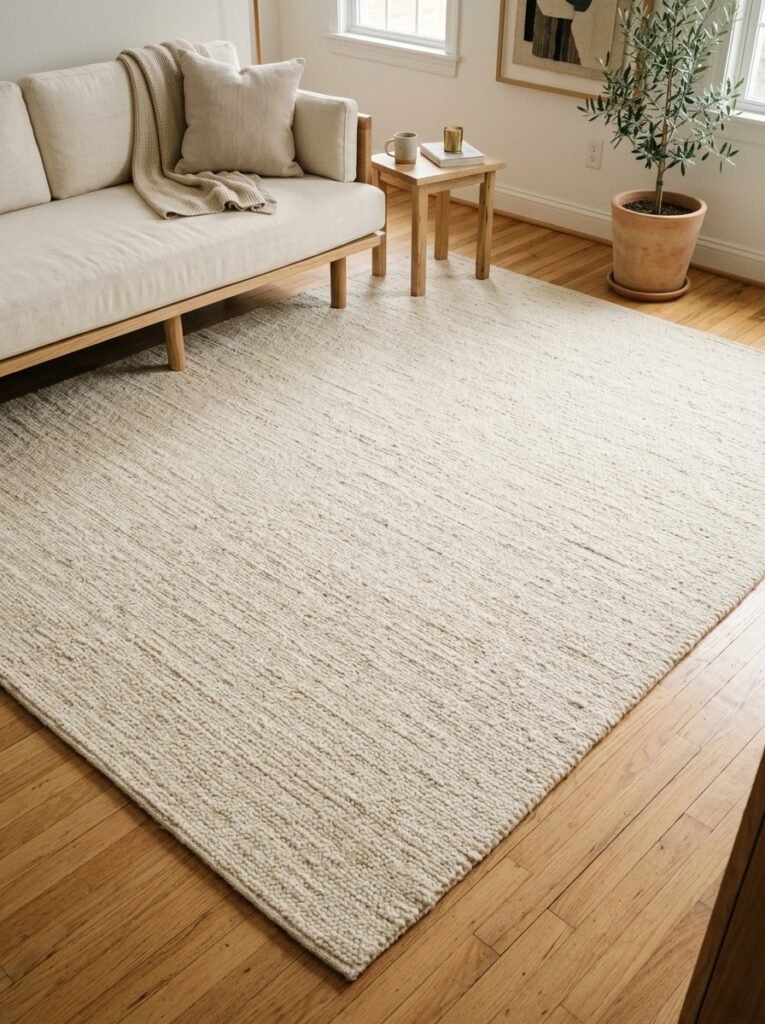
A lot of people go low-contrast in their neutral room and then choose a rug that completely undermines it. A loud pattern, a bright stripe, something that immediately pulls focus in a way the rest of the room wasn’t designed for.
In a minimalist neutral space, the rug wants to feel like part of the floor. Which sounds strange, but stick with me.
A natural-fiber rug — woven jute, sea grass, undyed wool — in a tone that’s very close to your floor color creates this seamless, layered feeling. You know the rug is there. You feel it under your feet. But it doesn’t announce itself. It just adds warmth and texture quietly, which is exactly what a neutral room needs more of.
If you want pattern (and there’s nothing wrong with wanting pattern), go for a very low-contrast geometric or a tone-on-tone weave. Something subtle. The kind of pattern you notice more the longer you look at it, not from across the room.
Size matters enormously, by the way. Too small and the whole seating area floats disconnectedly. The rug should be large enough that at least the front legs of every sofa and chair sit on it. That’s what anchors everything into one unified space.
—
7. Why the Right Kind of Nothing on the Walls Works Harder Than Art
Okay, hear me out.
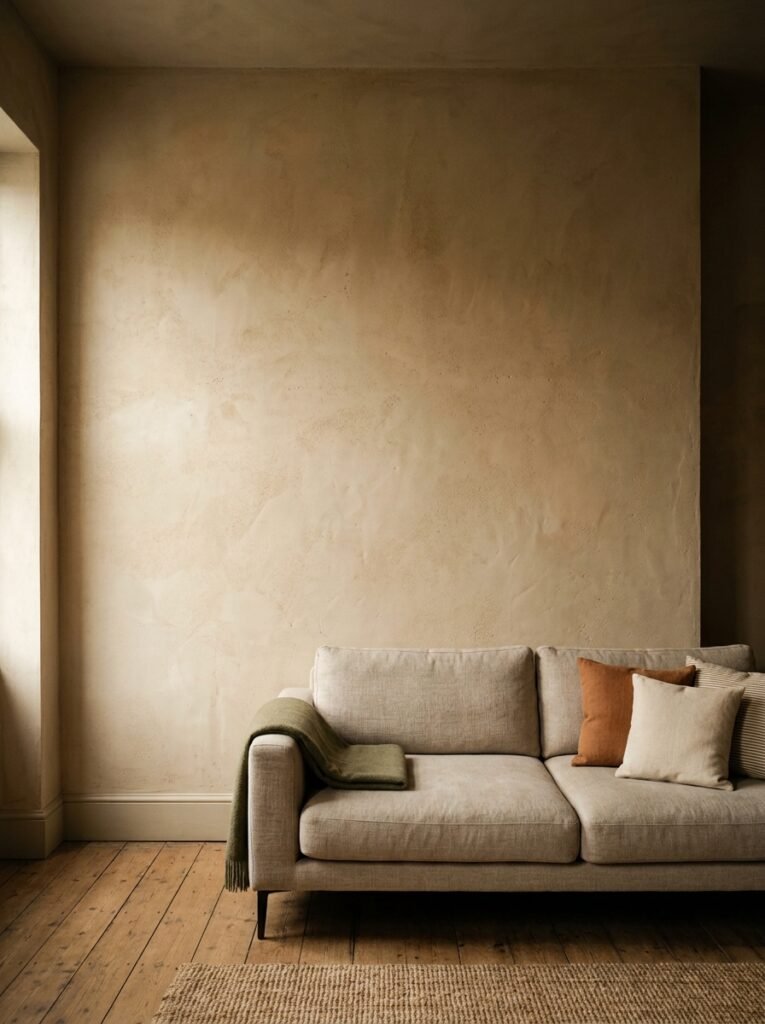
I’m not anti-art. I love art. But in a minimalist neutral room, one large piece of art on an otherwise completely empty wall is so much more powerful than a gallery wall, a series of small prints, or (god forbid) a word sign.
The white space around the art becomes part of the composition. You’re not just looking at the art. You’re looking at the art in a context of calm, and that calm makes the art better.
What tends to work really well in neutral rooms: abstract pieces in ochre, clay tones, or warm greys. Line drawings. Photographs in warm tones — think golden light, natural textures, landscapes. Anything that feels related to the natural world.
What tends to not work: high-saturation color, complex figurative painting, anything very busy. It’s not that those things aren’t beautiful. They just fight the room.
One piece. Give it space. Let the walls breathe around it.
—
8. The Lighting Layer Nobody Talks About (But Everyone Notices When It’s Missing)
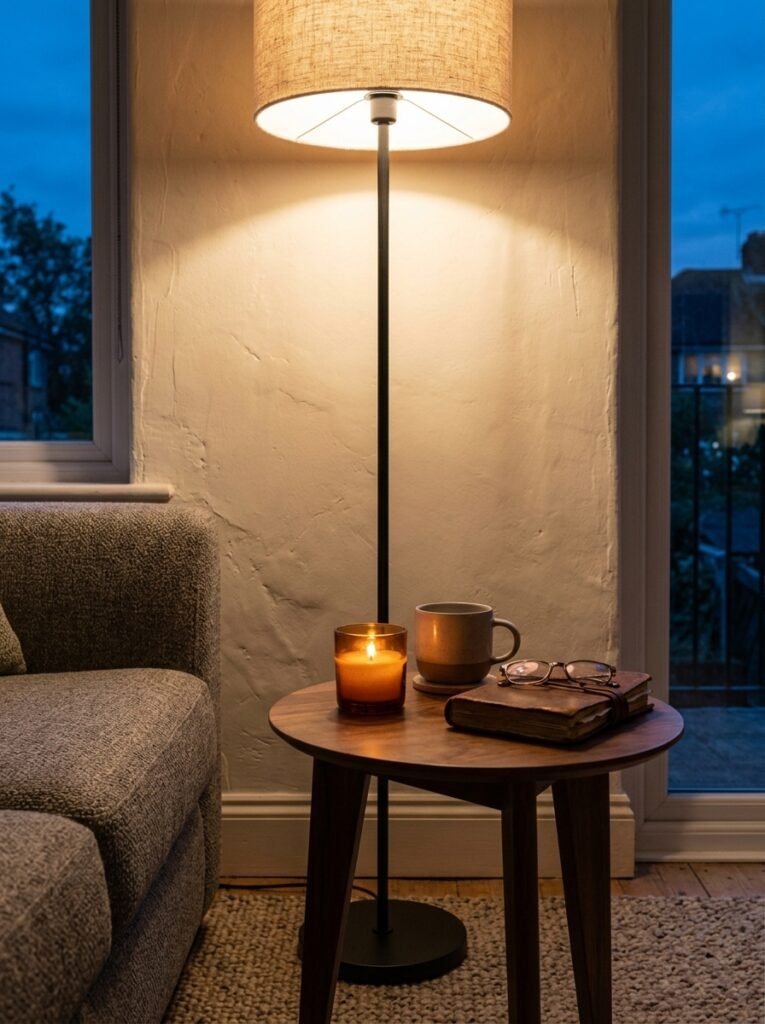
Overhead lighting ruins neutral rooms. I will die on this hill.
Harsh, flat, ceiling-mounted light makes a neutral room look washed out and institutional. All those beautiful warm textures you’ve spent time and money on? Flattened. Gone. The room looks the same whether it’s cozy or clinical.
You need layers. Multiple light sources at different heights.
A floor lamp in the corner — particularly one with a linen or paper shade that diffuses the light softly. A table lamp or two, preferably at sofa-side height. Candles if you’re not lazy about it (and I often am, so no judgment there). And if you can, a pendant light or a wall light somewhere that adds warmth at mid-height rather than blasting everything from above.
“The amber glow from a corner lamp at 7pm is doing more for your neutral room than any accessory you’ve ever bought.”
Dimmable bulbs are genuinely the best money you’ll spend on a room. The difference between that lamp on full brightness and dialed down to 60% in the evening is the difference between a room that feels nice and a room that feels like somewhere you never want to leave.
—
9. Plants in a Neutral Room — The Only Version That Actually Works
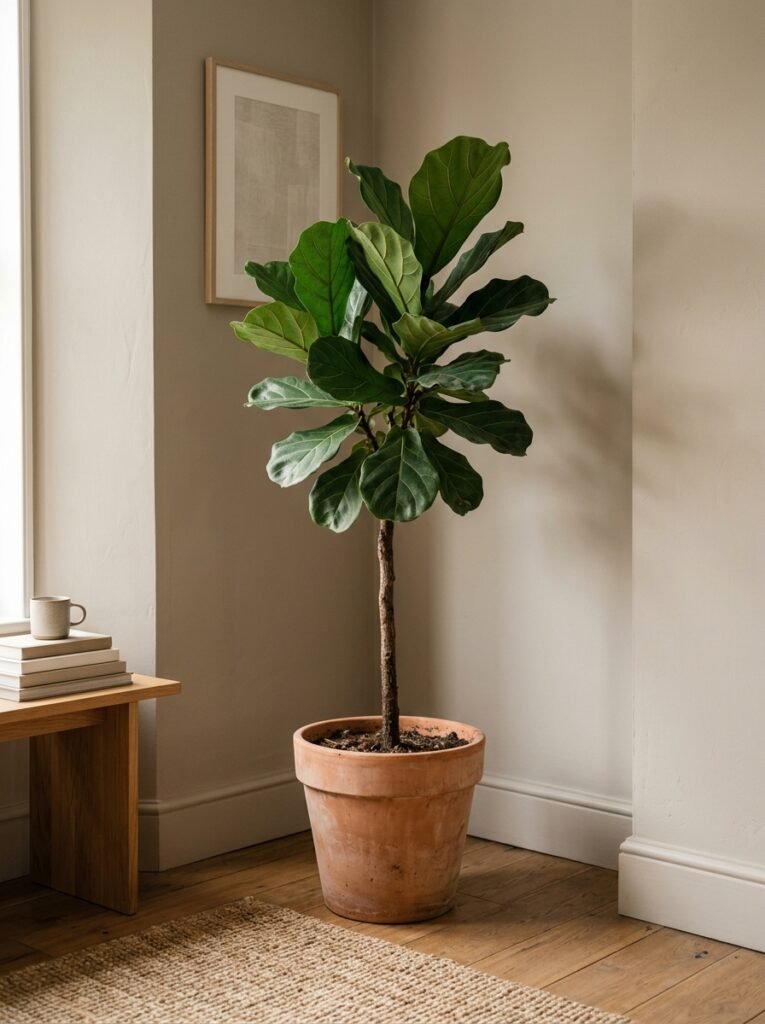
Every aesthetic corner of the internet tells you to add a big leafy plant and call it a day. And sure, plants are wonderful. But in a carefully considered neutral room, HOW you use plants matters more than whether you use them.
Avoid anything too tropical-looking — huge glossy leaves, very bright greens. It’s not that they’re ugly. They just fight the muted, earthy palette you’ve built.
What works: plants with softer, more architectural silhouettes. A tall, branchy indoor tree in a simple clay pot. Dried grasses in a stone vase (controversial but I love them, they’re beautiful). A single stem arrangement — just one or two stems — in a handmade ceramic with a slightly irregular shape.
Less is more. One plant, styled right, beats six plants scattered around the room every single time.
—
10. The Throw Blanket Philosophy for Rooms That Don’t Look Overdone
In any room but especially neutral ones, throw blankets are where people go wrong fast.
You don’t need three. You need one. And it needs to be the right one.
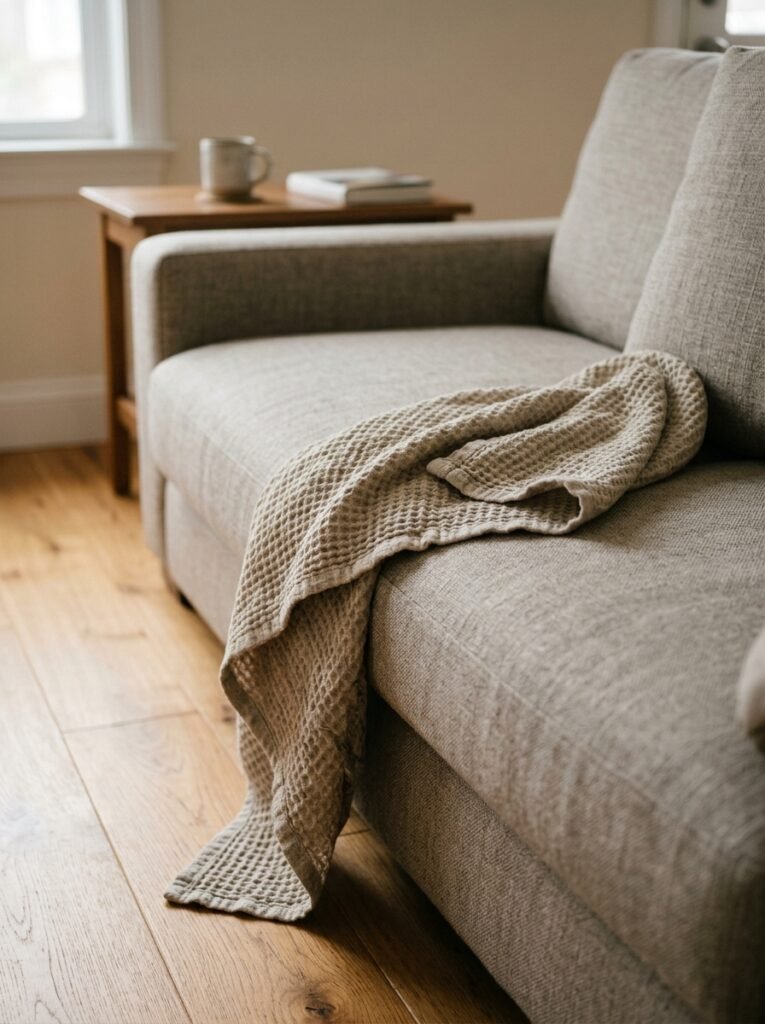
Look for weight and texture — a chunky knit in oat or stone, a waffle-weave cotton in off-white, a heavyweight linen in warm cream. Something with actual physical substance, not a thin microfibre throw that looks like it cost four pounds at a supermarket.
How you place it matters too. Don’t fold it neatly. Don’t drape it over the back of the sofa in a perfect fan shape. Casually pull one corner down, leave it slightly rumpled, like someone just stood up from under it. Because that’s what makes a neutral room feel lived in rather than staged. And that’s the whole challenge of minimalist decor — it has to feel like a human being actually lives there, not like a show home with the heat off.
—
11. The Coffee Table Trap (And How to Not Fall Into It)
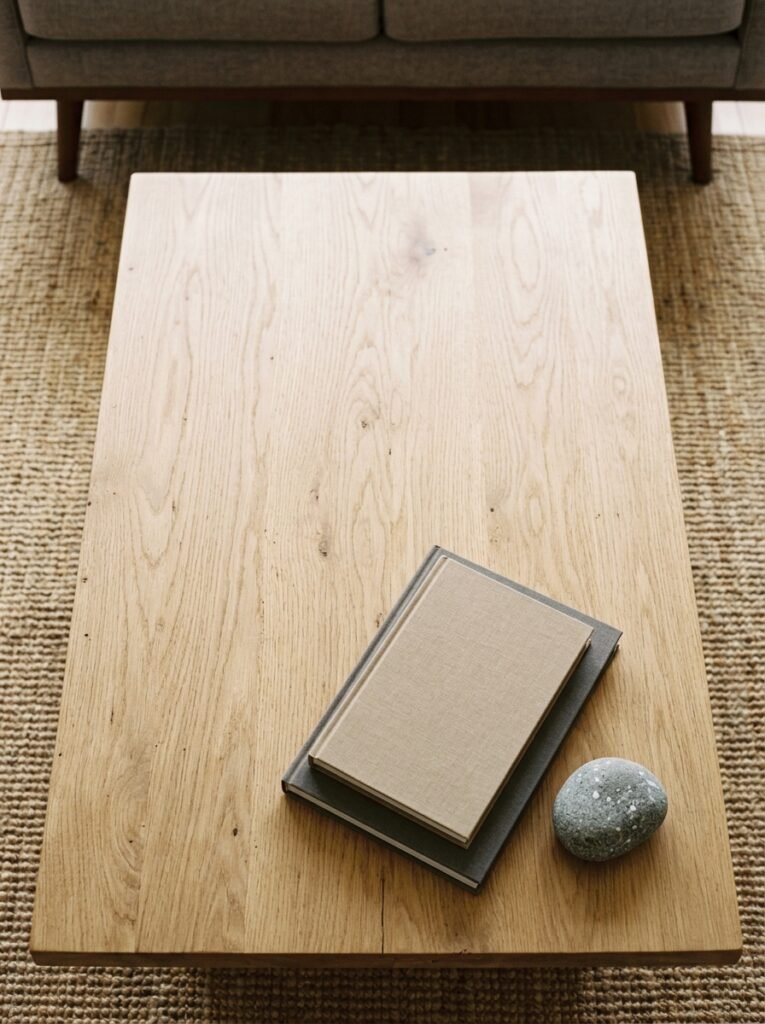
Coffee tables in minimalist neutral rooms almost always become dumping grounds. Remotes, coasters, three books that are there for aesthetics but you’re not reading, a candle, a small tray, a plant, a random stone… and suddenly you’ve got a pile.
The rule I now follow: choose a tray, and that tray is the only zone on the table that gets styled. Everything else is banned. Or actually stored somewhere.
In the tray: one candle, one small object, done. Maybe a single book with an interesting cover face-up if you feel you need a third element. And the tray itself should be simple — matte stone, raw wood, woven seagrass.
Also consider what the coffee table IS, not just what’s on it. An organic, irregular-shaped table — something with a slight imperfection, a natural edge, an uneven stone top — adds interest in a room that’s otherwise very controlled. That irregularity is what saves the room from feeling sterile.
—
12. The Final Layer That Makes a Neutral Room Feel Like Yours
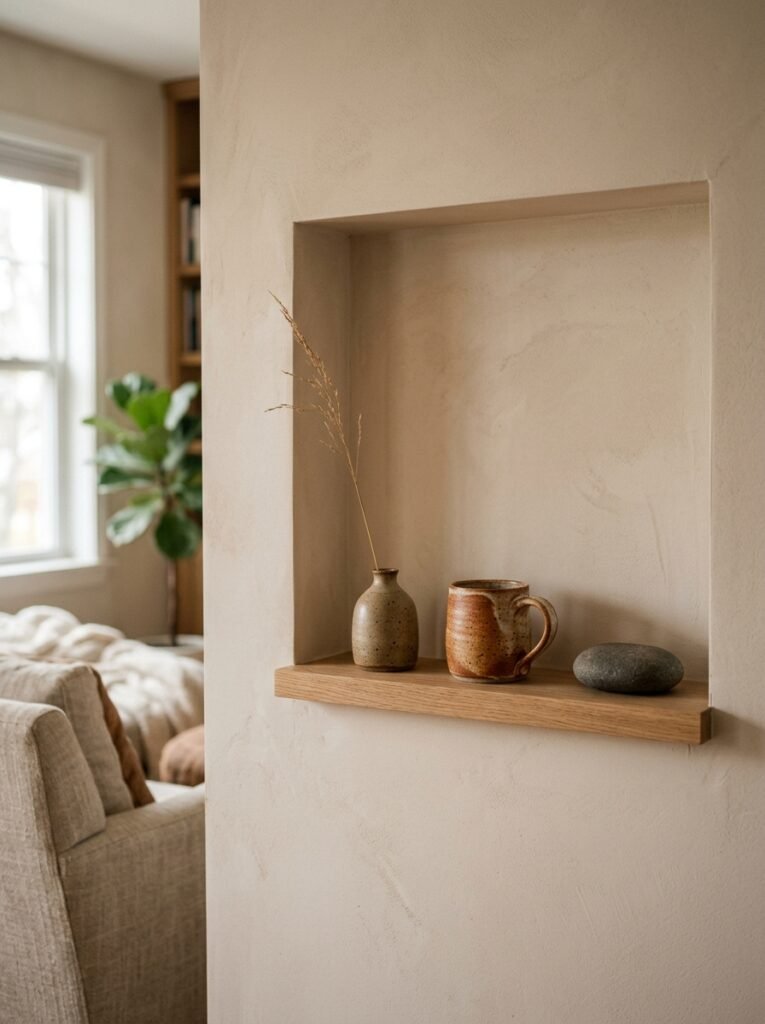
Here’s the thing nobody tells you about minimalist neutral decorating: the hardest part isn’t removing things. It’s deciding which things stay.
Because the things that stay? They have to MEAN something. Or at least feel like they do.
That’s what separates a neutral room that feels serene and intentional from one that feels empty and sad. The things you keep are chosen. A few books you actually love. A ceramic piece made by a maker you found at a market. A photo that’s genuinely meaningful rather than just decorative.
Minimalism isn’t about having less for its own sake. It’s about having less so that the things you do have can actually be seen. Can actually matter. When everything is on display, nothing stands out. When you edit ruthlessly, the stuff that remains starts to tell a story.
And that’s the living room you want. One that tells YOUR story — quietly, without shouting.
—
❓ FAQ
Q: How do I stop a minimalist neutral living room from looking cold or uninviting? A: It’s almost always a texture problem. Smooth, flat surfaces in neutral tones do read as cold. The fix is layering materials — woven linen, natural wood, chunky knit, matte ceramics — so the room has physical warmth even when the color palette is quiet. Warm-toned lighting at lower levels also makes an enormous difference, especially in the evenings.
Q: What’s the best neutral wall color for a living room in the UK where natural light is limited? A: Avoid pure white — it tends to look flat and slightly dingy in lower-light rooms. Look for warm off-whites or pale limewash tones with a slight yellow or pink undertone. These hold their warmth even when natural light is minimal, whereas cool whites and greys can turn a bit grim on an overcast British afternoon (which is, let’s be real, most of them).
Q: How many decorative objects is too many in a minimalist living room? A: There’s no fixed number, but a useful test is this: if you can’t name WHY each object is there, it probably doesn’t belong. Start by removing everything, then bring items back in one by one and genuinely ask whether it adds something. Stop when removing anything would make the room feel less like itself, not just less full. That’s your number.
—
💭 Final Thoughts
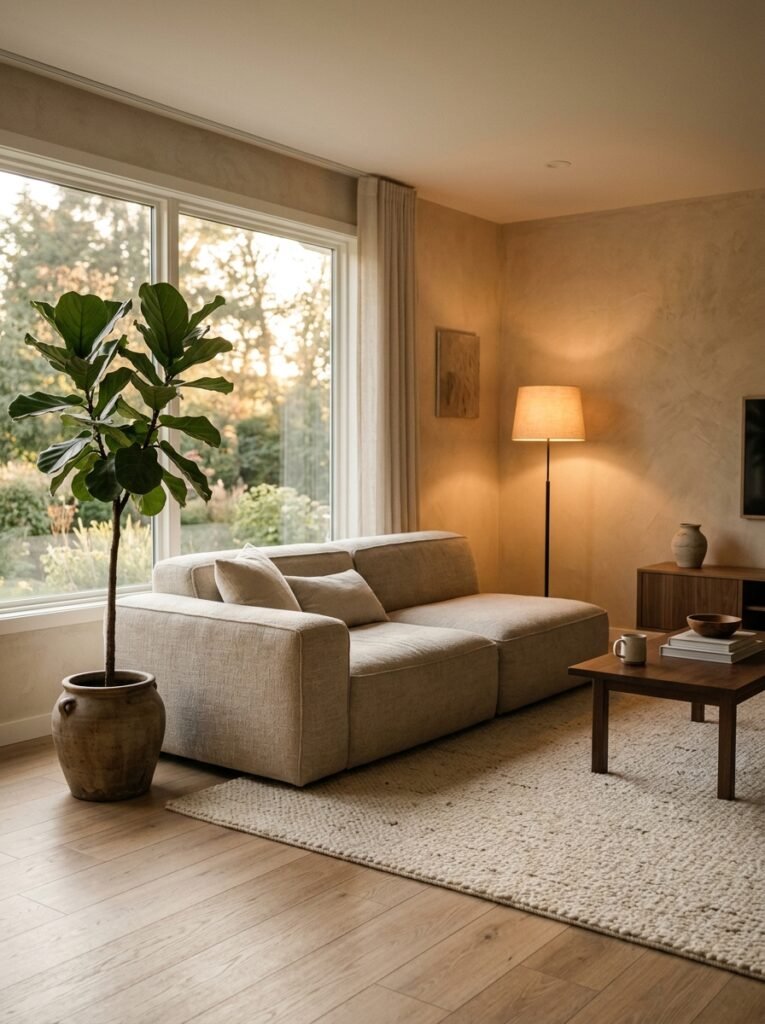
There’s a specific kind of quiet that a well-done neutral room has. Not emptiness — not absence. More like the silence after someone finishes a really good sentence. Everything you need is there, and nothing is trying too hard.
It takes longer to get there than you’d think, and it involves a lot of removing things you paid for and loved, which is genuinely uncomfortable. But when you hit it — when you sit down one evening and the lamp is on and the room just feels RIGHT — you’ll understand why people become slightly obsessed with this.
So what’s the one thing cluttering your living room right now that you could quietly move somewhere else and probably never miss?