The Rustic Minimalist Christmas Living Room That Actually Looks Good (Not Just “Simple”)
My friend walked into my living room last December and said, “Wait — is this your Christmas decor or did you just forget to decorate?” And honestly? That was the best compliment she could’ve given me.
Because that’s the tension, right? Minimalist Christmas decor can go one of two ways. Either it looks intentional and quietly beautiful, or it looks like you ran out of time and gave up on the tinsel. This guide is about the first kind.
—
1. Why “Rustic Minimalist” Is the Hardest Style to Get Wrong
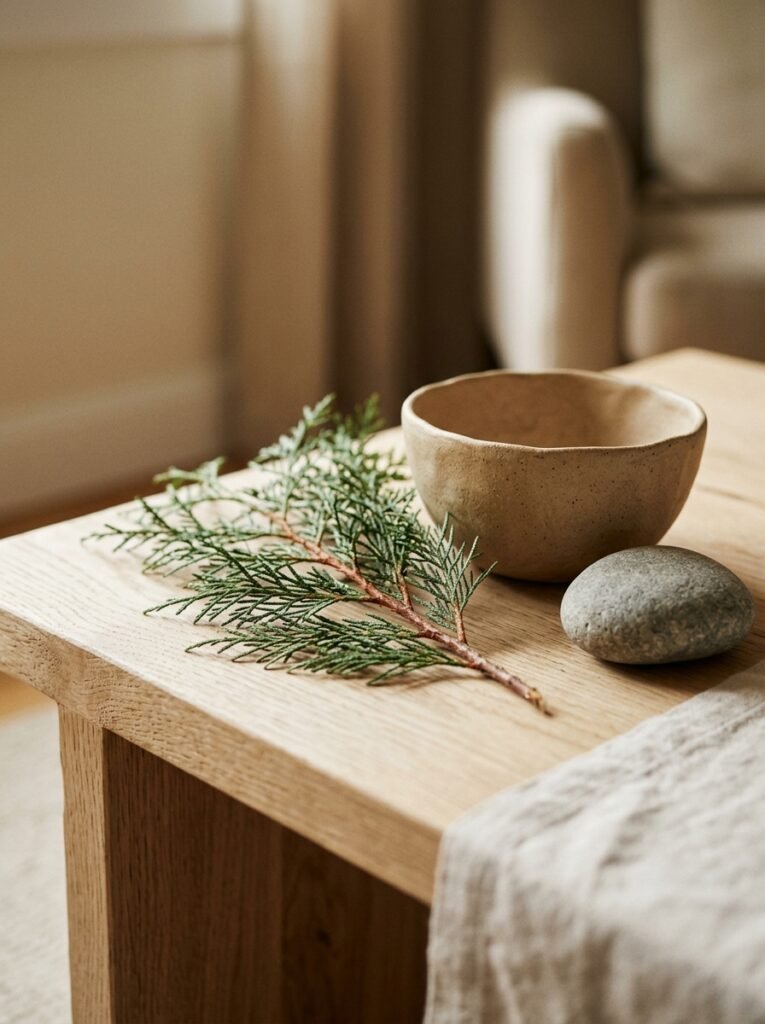
Most people think minimalist means less work. It doesn’t. It means every single thing you put out has to pull its weight, because there’s nowhere to hide.
But here’s the thing about adding rustic to the equation — it saves you. Rustic textures (raw wood, undyed wool, dried botanicals) are forgiving in a way that sleek minimalism isn’t. A rough-edged wooden tray doesn’t demand perfection. It already looks like it belongs somewhere quiet and cold and real.
So when people say “rustic minimalist,” what they usually mean is: intentional, natural, a little bit worn, not trying too hard. Think a single candle in a clay holder on a windowsill. A wreath made of eucalyptus and bare twigs rather than glitter-sprayed plastic. The feeling of a very old farmhouse in December, where Christmas crept in rather than exploded.
That’s the target. And it’s achievable even in a flat in Manchester or a suburban home in Ohio.
“Rustic minimalism works because the imperfections ARE the decor. Stop fighting the roughness — it’s doing more work than you think.”
—
2. The Only Palette You Actually Need This Year
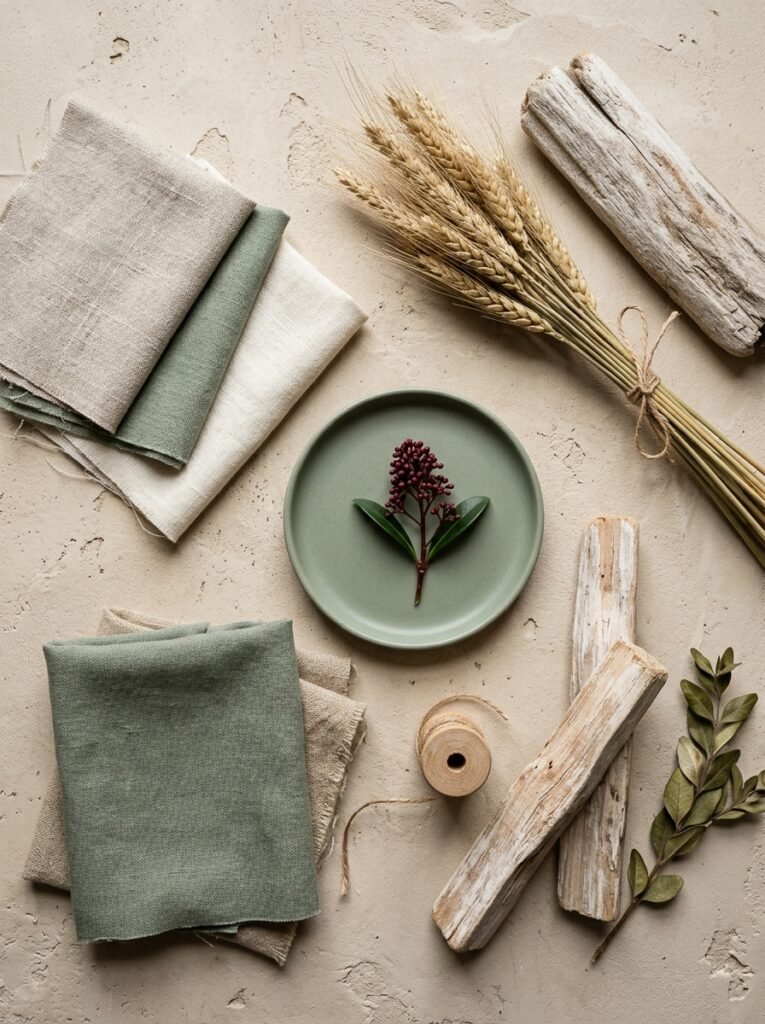
Forget red and green. You’re not doing that.
The palette that keeps showing up in every beautiful rustic minimalist living room right now is this: warm cream, deep forest green, raw wood tones, and one deliberate pop of muted terracotta or rust. That’s it. Five colors, used sparingly.
Cream does the heavy lifting. It bounces the candlelight, it makes greenery look more alive, and it stops the whole thing from feeling like a dentist’s waiting room decorated for the holidays. Forest green — actual deep, moody green — is the anchor. Think frosted pine needles, not cartoon Christmas trees.
The terracotta is the move most people miss. Just one or two objects: a small thrown pot holding dried grasses, a rust-colored taper candle. It warms the whole palette up without being obvious about it.
Wood stays raw wherever possible. No spray paint, no gold finish. Just wood.
—
3. The Fireplace Moment Everyone Keeps Pinning (and How to Actually Do It)
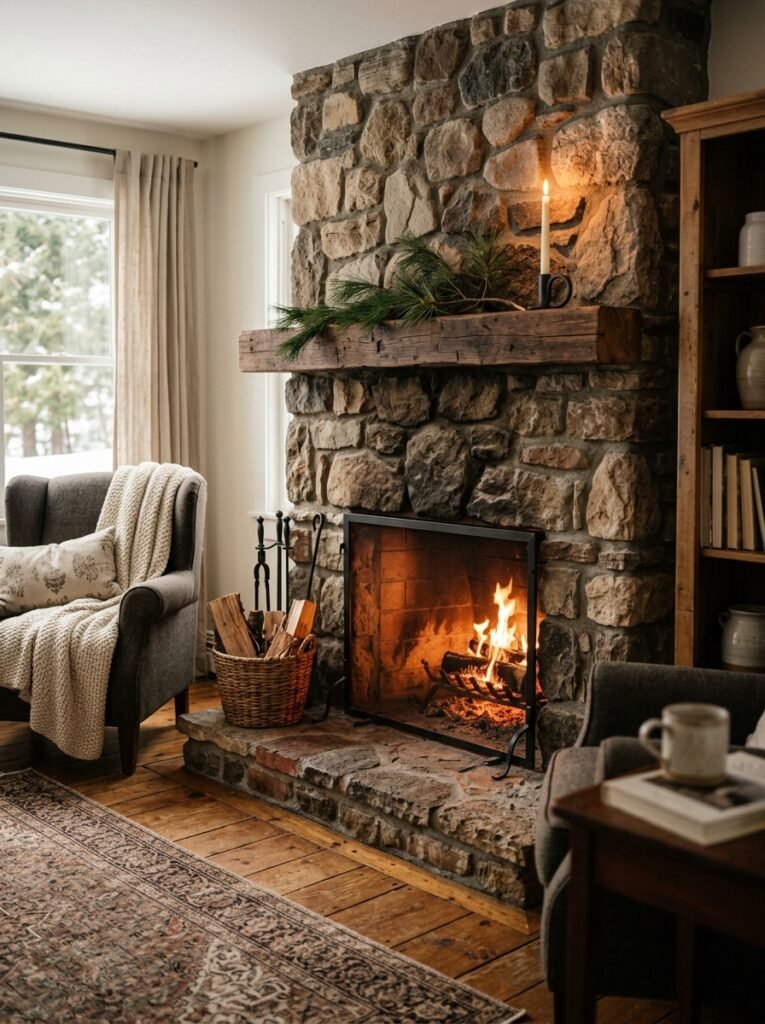
If you have a fireplace, stop reading and go look at it. Because that mantel is where this whole aesthetic is going to live or die.
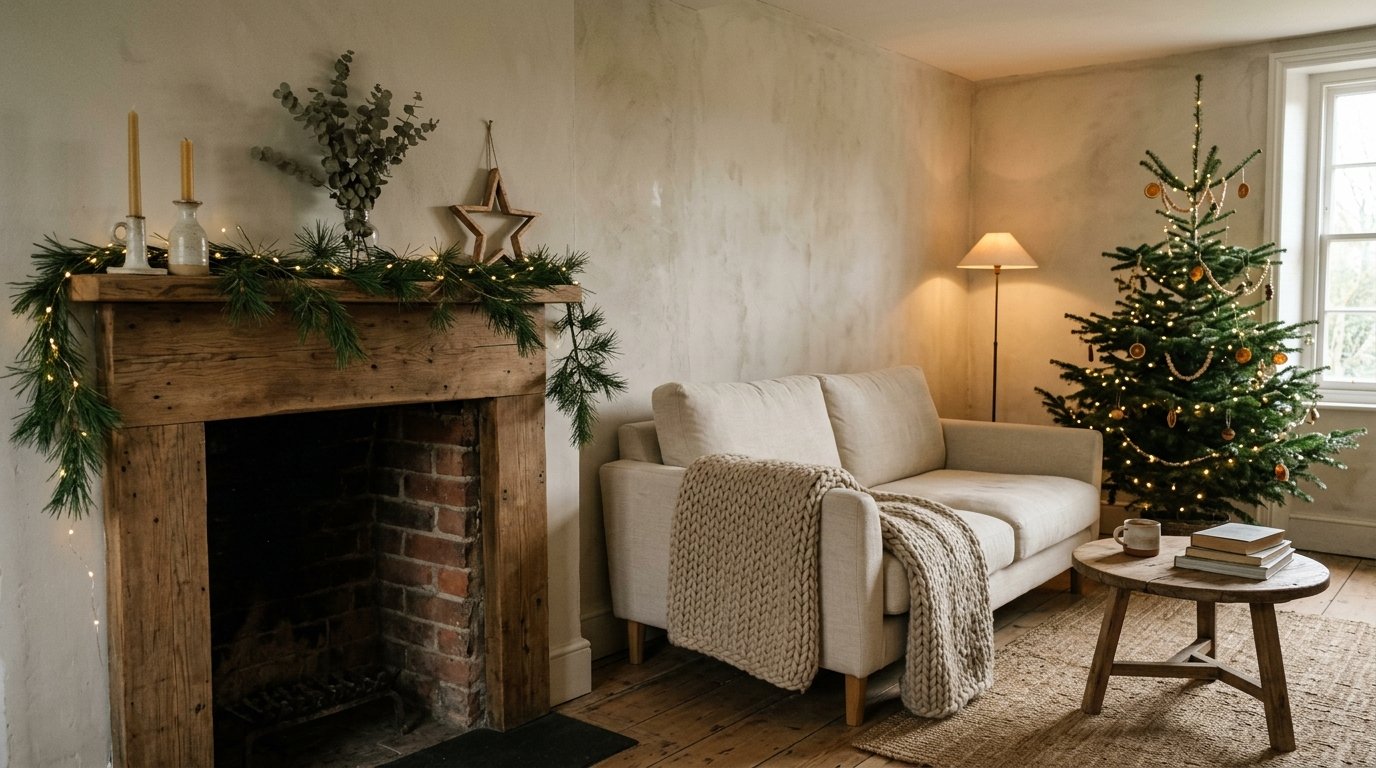
The look: one continuous garland of real or dried greenery, draped asymmetrically — slightly heavier on one side. No tinsel. No matching ornaments hung at even intervals. Maybe three white or cream pillar candles in varying heights, grouped together rather than spread out. One small wooden object. Done.
The reason asymmetry matters so much here is that symmetry reads as formal, and formal kills rustic. Real nature isn’t symmetrical. A forest doesn’t grow in neat pairs. Let the garland fall the way it wants to fall.
If you don’t have a fireplace — lots of us don’t — take this same principle and apply it to a console table, a bookshelf, or even a windowsill. A long, deep windowsill with a short candle, a sprig of holly, and a small stack of old books in linen covers? That’s a mantel moment.
—
4. The Mistake That Makes Minimalist Christmas Look Cold Instead of Calm
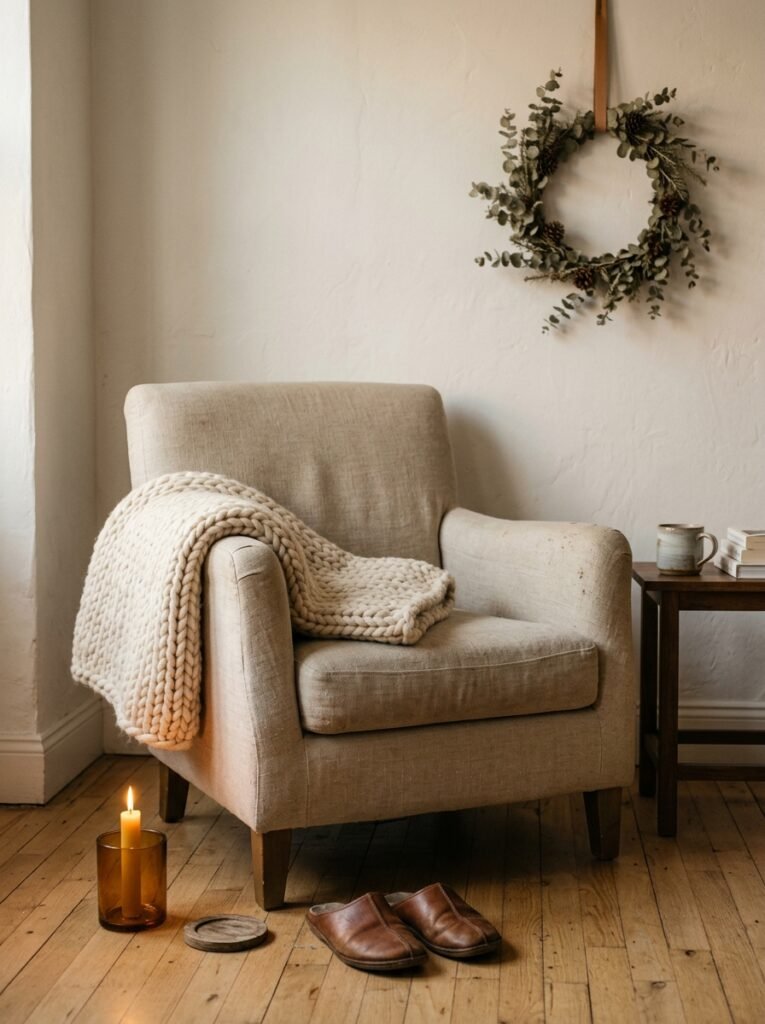
Lighting. It’s almost always lighting.
You can do everything else right — the right palette, the right textures, the beautifully arranged greenery — and then turn on your overhead lights and kill all of it.
Overhead lighting at full brightness during the winter holidays is a crime I will die on this hill about. You need warm, low, layered light. The amber glow of an Edison bulb at 7pm. Small clusters of battery-operated warm-white fairy lights tucked inside a glass jar or wound through dried orange slices. Candles — real ones, as many as feels safe.
The psychological effect of low lighting on Christmas decor is HUGE and almost no one talks about it. Decor that looks mediocre in bright overhead light looks genuinely magical at 60% brightness with three candles lit. The shadows do the decorating for you.
So before you buy a single new ornament, buy a dimmer switch or some warm-white bulbs. It’s the cheapest upgrade that matters most.
—
5. What to Do With the Christmas Tree When You’re Going Minimal
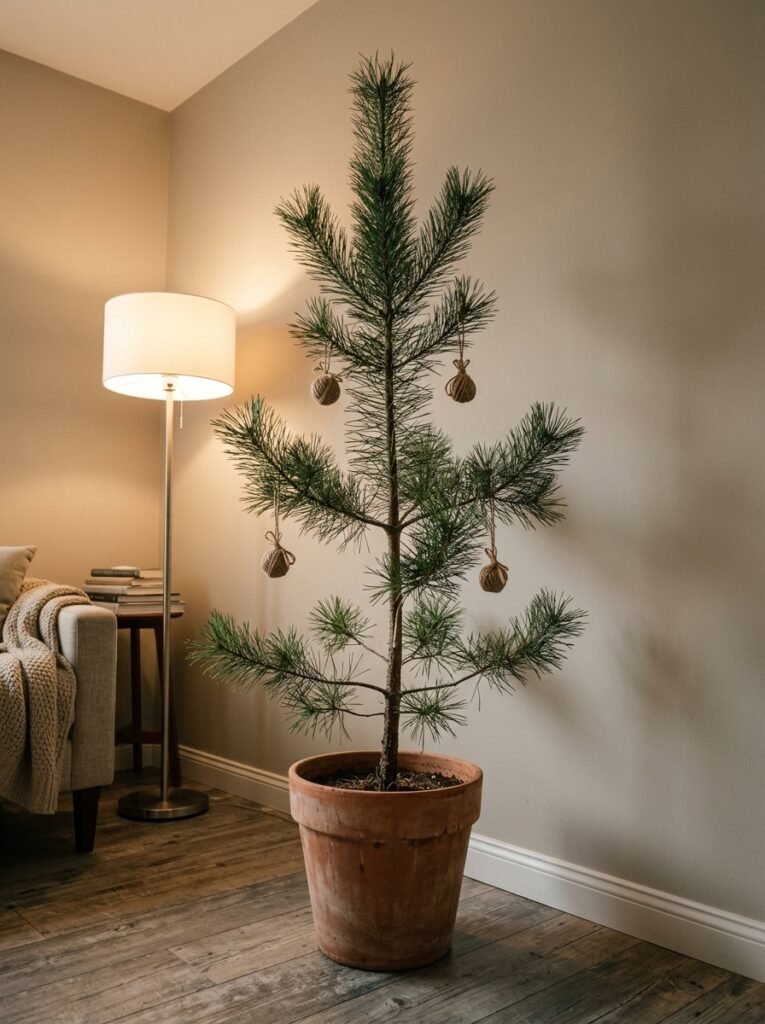
The tree is the hardest part. People get weird about trees.
Here’s my take: a smaller tree, done well, beats a huge tree done halfway. A 4-foot or 5-foot tree in a simple terracotta pot or a wooden crate, decorated with intention, is more beautiful than a 7-foot tree loaded with everything you’ve accumulated over fifteen years of Christmas mornings.
For a rustic minimalist tree, the ornaments should feel like they came from nature or at least look like it. Dried orange slices. Cinnamon sticks tied with undyed linen twine. Wooden stars, unpainted or very lightly stained. A handful of clear glass baubles that pick up the candlelight. That’s genuinely enough.
No tinsel. I know, I know. But no tinsel.
If you want lights, go with a single strand of warm-white fairy lights wound loosely through the branches — not packed in tight, not flashing. Just a soft suggestion of light, like the tree is lit from inside somehow. And leave some branches bare. The bare branches are part of it.
“The bare branches aren’t a gap you forgot to fill. They’re the negative space that makes everything else breathe.”
—
6. Dried Florals Are Doing Something Extraordinary Right Now
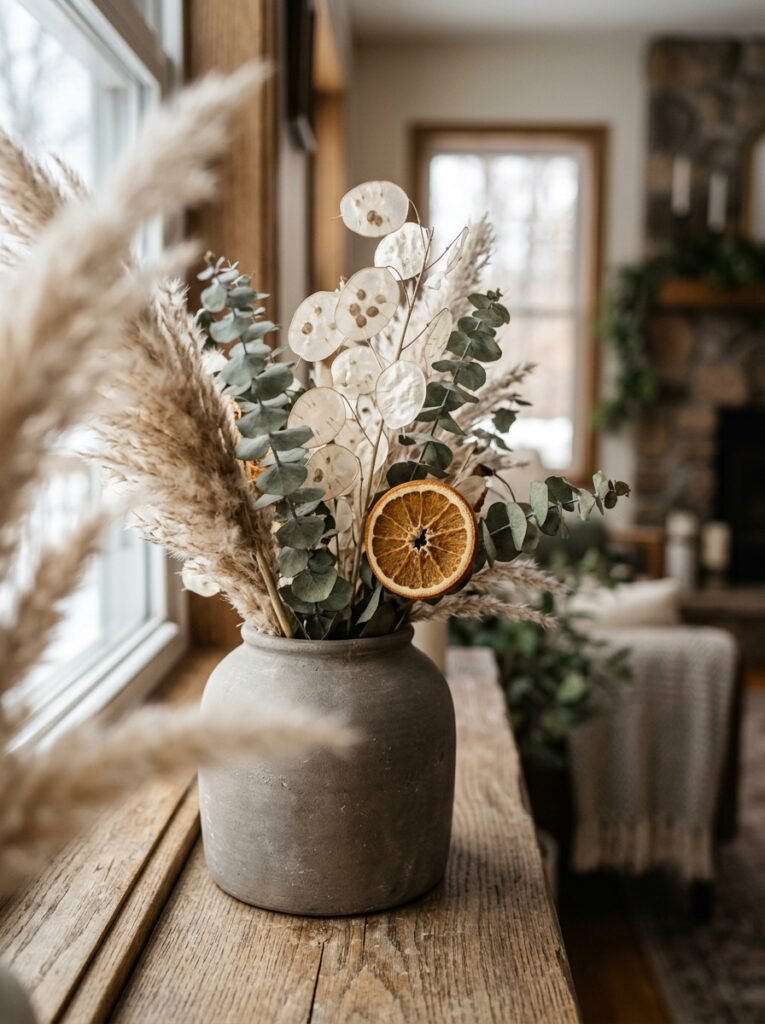
Not a trend. An upgrade.
Dried botanicals — pampas grass, cotton stems, preserved eucalyptus, honesty seed pods, dried ferns — are genuinely having a moment in rustic Christmas decor, and they deserve every bit of it. They last forever, they’re inexpensive, and they look somehow both ancient and very current.
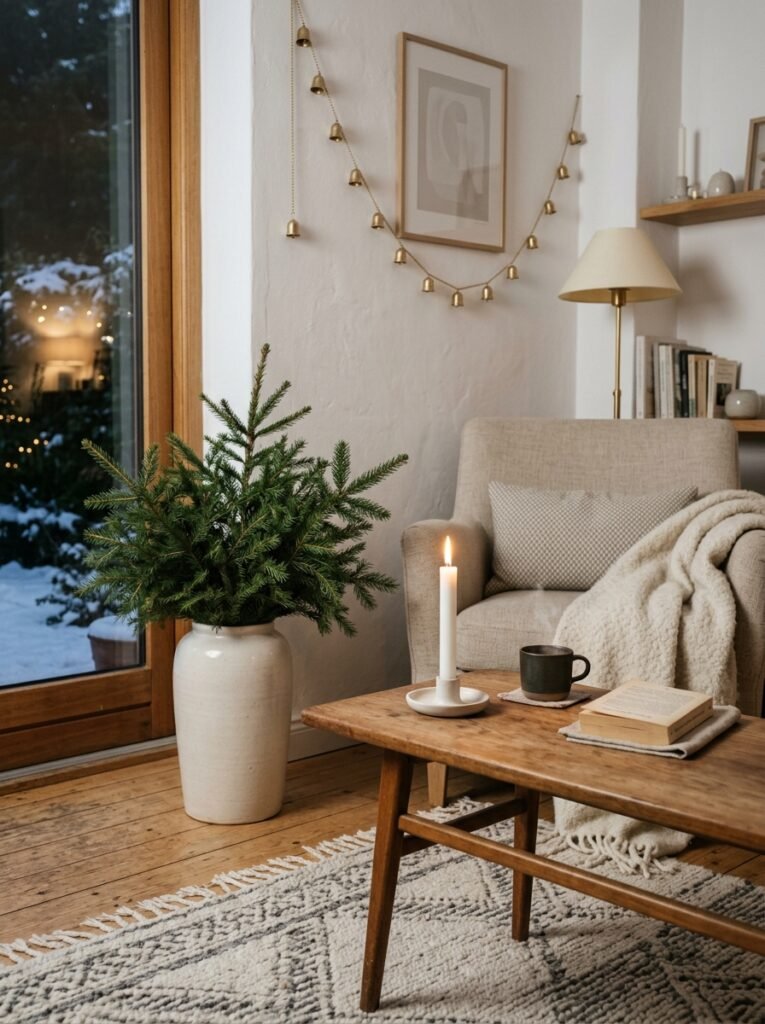
A tall dried cotton stem in a clay vase next to the Christmas tree? Yes. A wreath made from dried citrus slices, seed heads, and a few sprigs of preserved eucalyptus on your front door? Absolutely yes.
The reason they work so well in a minimalist context is that they don’t demand attention. They sit quietly and look beautiful and don’t need water or fussing over. Which, honestly, is the whole vibe we’re going for.
Side note — if you can get your hands on some dried orange or lemon slices, use them everywhere. Hang them on the tree, tuck them into the garland, stack a few on a small plate with a cinnamon stick. The smell, when they warm up near a candle, is deeply Christmassy in the least artificial way possible.
—
7. The One-Shelf Rule for People Who Hate Clutter (But Still Want It to Feel Festive)
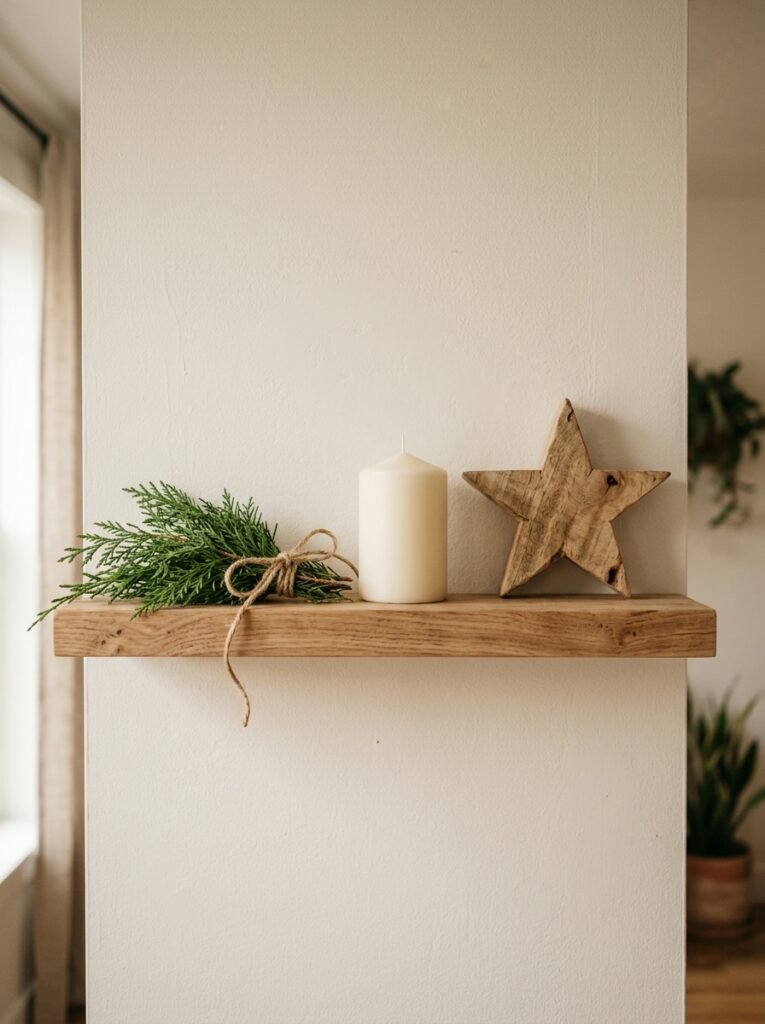
This is for the people who love the idea of minimalist Christmas decor but still find themselves anxious about things looking too bare.
Pick one surface in your living room — one shelf, one side table, one windowsill — and make that your Christmas vignette. Everything goes there. One small gathered piece of greenery, one candle, one small meaningful object, one texture (a bit of folded linen, a pinecone, whatever feels right). That’s your Christmas.
The relief of containing it all to one place is real. You don’t have to stress about the rest of the room. The rest of the room stays calm and you’ve got one corner that says “yes, we know it’s December.”
It also makes the decor feel more purposeful — like it was thought about rather than scattered. Which, for the rustic minimalist look, is exactly right.
—
8. Greenery That Smells Like It Costs More Than It Does
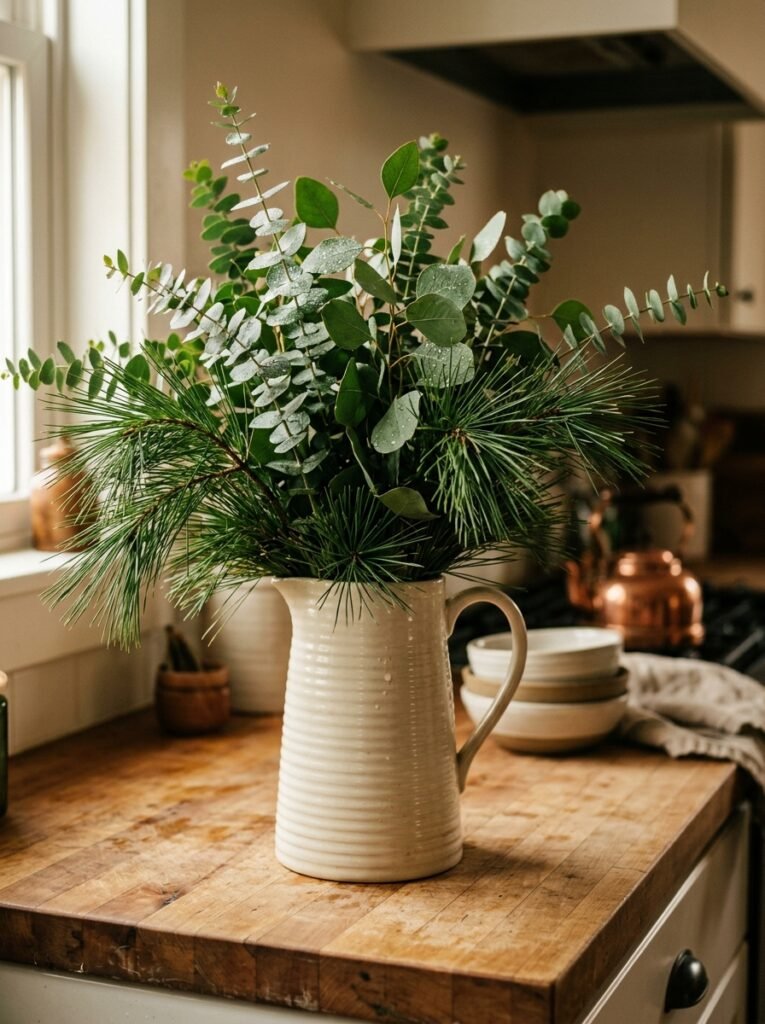
Real greenery is the shortcut nobody tells you about.
A bundle of fresh pine, a few eucalyptus stems, some holly branches — none of this is expensive if you buy it loose at a market or florist rather than pre-arranged. And the impact is completely disproportionate to the cost. Your whole living room will smell like a forest, which is what December should smell like, and everything looks more alive and real.
Even if your entire living room is pared back and quiet, real greenery laid across a coffee table or propped in a tall vase will make it feel abundant. That’s the paradox of it — you’re adding very little, but it fills the room up somehow.
The varieties that work best for this look: noble fir (beautiful blue-green, holds well), eucalyptus in any variety, magnolia branches with their dark glossy leaves, pine boughs, and bare silver birch branches for height and drama. Mix two or three rather than committing to just one.
—
9. Throws and Textiles Are Doing More Christmas Decorating Than You Realize
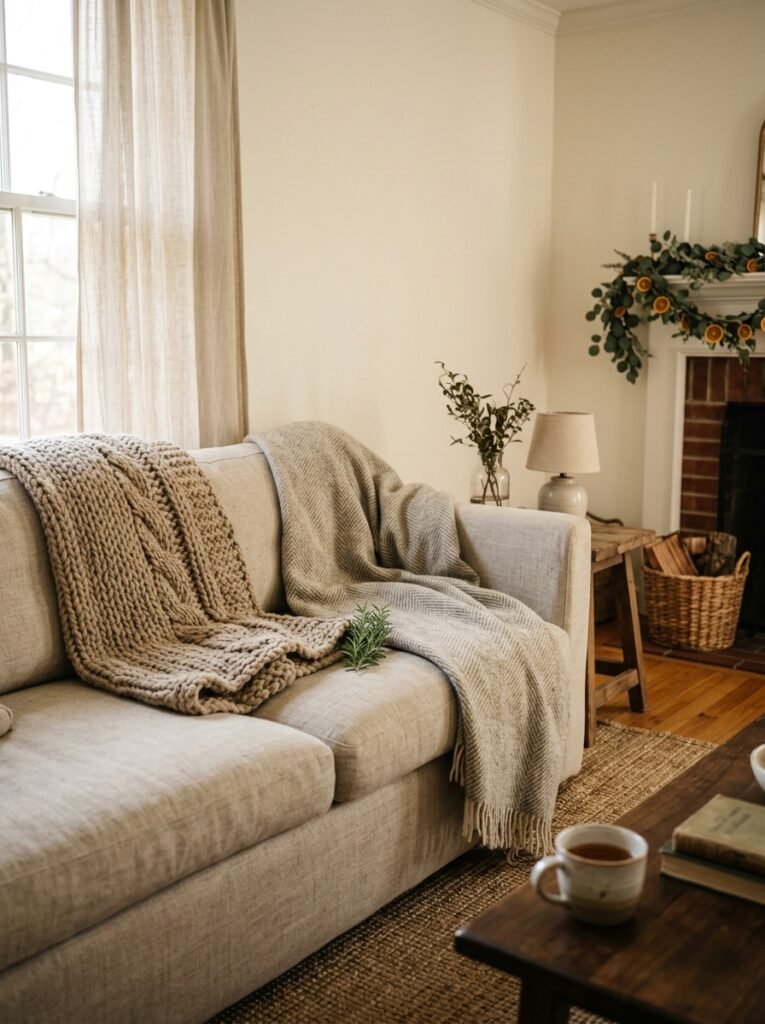
Here’s something I didn’t understand for a long time: the textiles in your living room ARE part of your Christmas decor.
Swapping out a light summer-weight throw for a heavy cream chunky knit, adding a sheepskin over the arm of a chair, layering a plaid wool blanket — these aren’t just cozy choices. They’re visual choices that say “winter is here and we’re ready for it.”
For the rustic minimalist look, keep the colors in line with your palette: cream, oat, soft grey, deep forest plaid in muted tones. A chunky woven throw in undyed natural wool is maybe the single most useful thing you can add to a living room in December. It costs almost nothing if you find the right spot to buy it, it photographs beautifully, and it makes the whole room feel warmer before you’ve lit a single candle.
Don’t underestimate the floor, either. A woven jute rug layered under a softer sheepskin creates that kind of layered, grounded warmth that’s very hard to achieve any other way.
“The throw you toss over the sofa at 6pm isn’t an afterthought. In December, it’s part of the whole picture.”
—
10. The Color That Keeps Showing Up in Every Beautiful Rustic Christmas Room Right Now

It’s not red. It’s not even green.
It’s the deep, dusty, almost-burgundy shade of dried rose hips in winter. A very muted, dried-out crimson. Think less Santa, more medieval tapestry — or more accurately, more dried botanical, more antique. It shows up in velvet cushions in the right shade, in a cluster of dark dried berries woven into a wreath, in the deep wax of a hand-dipped taper candle.
What makes it different from regular Christmas red is that it doesn’t shout. It whispers. And in a minimalist room, whispering is everything.
If you want one intentional color accent in an otherwise neutral room this Christmas, make it that shade. One velvet cushion. One cluster of berries. One candle. You’ll feel it shift the whole room without quite being able to explain why.
—
11. Scent as Decor (Because You’re Using All Five Senses This Year)
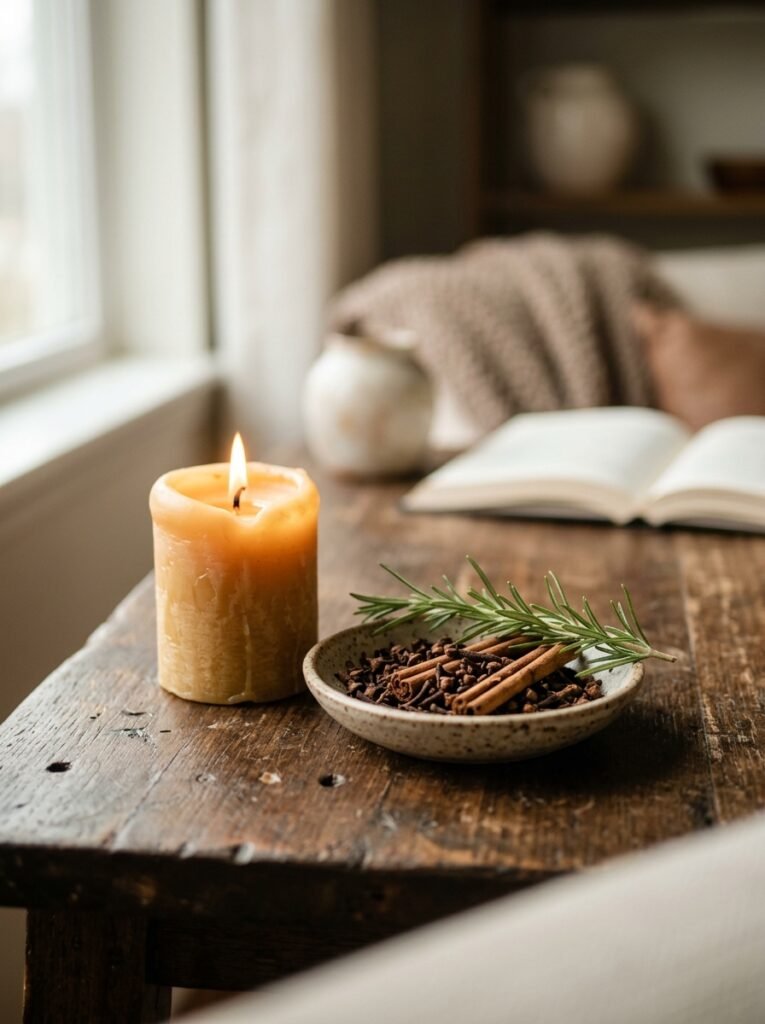
A room can look perfect and feel wrong if it doesn’t smell right. And it can look only okay and feel incredible if the scent is perfect.
For a rustic minimalist Christmas, the scent should be natural and a little complex — not the synthetic “Christmas candle” smell that comes in a cheap glass jar. Think: wood smoke, pine resin, clove, cardamom, real beeswax candles, dried orange, cedar.
Beeswax candles are the big one. They smell extraordinary when they burn — faintly sweet, like honey and warmth — and they look beautiful, especially in raw or unfinished tones. A cluster of beeswax tapers in a simple holder is genuinely some of the best decor you can put on a table.
Beyond candles, simmer pots are underrated. A small pot on the stove with orange slices, cinnamon sticks, star anise, and a splash of vanilla extract will scent your entire downstairs within twenty minutes. It’s not a candle, it costs almost nothing, and the smell is completely different from anything synthetic. Your living room will feel like December in the best possible way.
—
12. The Edit That Actually Makes the Whole Look Work
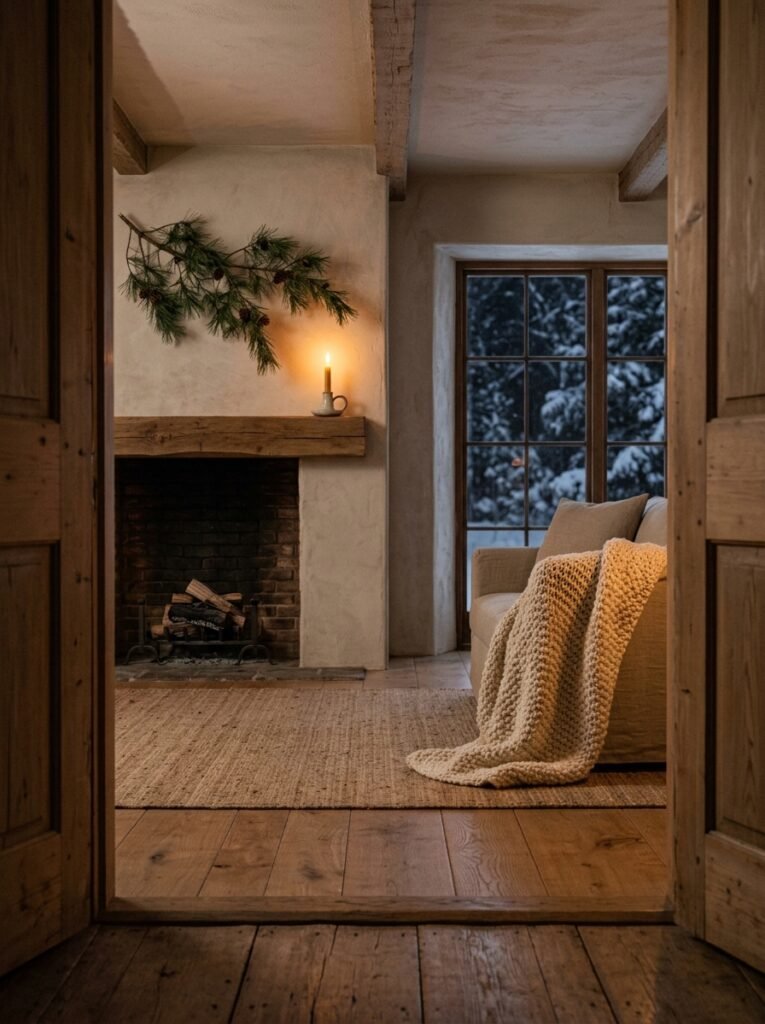
Here’s where most people fail: they add the good stuff but don’t remove the everyday stuff.
Minimalist Christmas decor doesn’t live alongside clutter. You have to do the edit first. Clear off the coffee table except for your intentional vignette. Put away the random cushions that don’t fit the palette. Box up the things on the mantel that have nothing to do with December.
I know it sounds obvious, but nobody actually does it. They add the beautiful eucalyptus garland and then there’s still a stack of unopened mail next to it and a charging cable trailing across the shelf. And then they wonder why it doesn’t look like the photo.
The edit is the decor. Or at least, it’s the first layer of it. Clear first, then add back only what’s intentional. Give each object some breathing room. Let the negative space do its thing.
Half of the beautiful Pinterest photos you’ve saved aren’t beautiful because of what’s IN them. They’re beautiful because of what was removed before the photo was taken.
—
❓ FAQ
Q: Can I do rustic minimalist Christmas decor on a small budget? A: Yes, honestly more than most styles. The whole point is using fewer objects and leaning on natural materials — fresh greenery, dried botanicals, candles, and textiles you might already own. Focus your spending on one or two quality pieces (a really good throw, some proper beeswax candles) and source the rest from markets, garden centres, or even your own garden.
Q: How do I make my living room feel Christmassy without it looking overdone? A: Scent and lighting first — those two things do the emotional work that decorations sometimes try to do with volume. Then add one strong vignette (a styled shelf or mantel), some real greenery, and a textile swap. You don’t need more than that for a room to feel like December.
Q: What’s the difference between minimalist Christmas decor and just not decorating? A: Intention. One carefully chosen stem of eucalyptus in a clay vase is decorated. A bare room with nothing isn’t. The difference is that every object you’ve placed was a decision — and that decision shows. It’s the same way a single good piece of art on a wall reads very differently from a completely bare wall.
—
💭 Final Thoughts
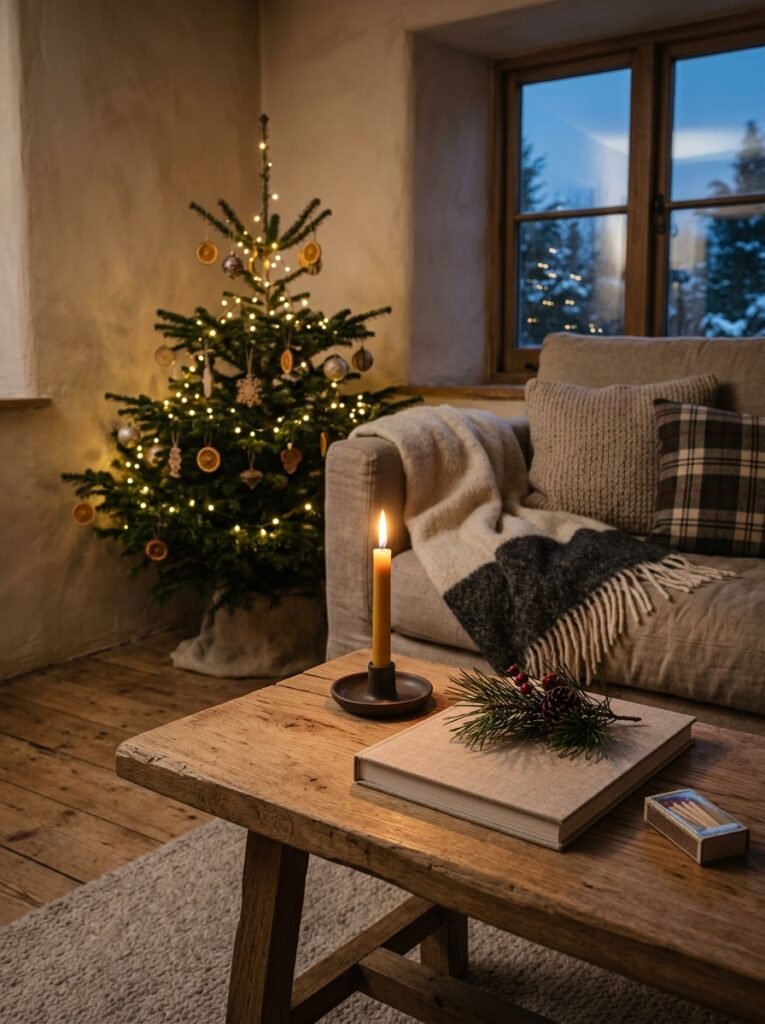
There’s something I keep coming back to about this whole approach — the idea that restraint is its own kind of abundance. A room that’s quiet and beautiful and smells of beeswax and pine in December doesn’t feel empty. It feels held.
This isn’t about spending less or decorating less. It’s about caring more about what actually stays. And that’s a pretty good philosophy for December in general, honestly.
So — what’s the one thing you’d actually miss if you took it away? Start there.