
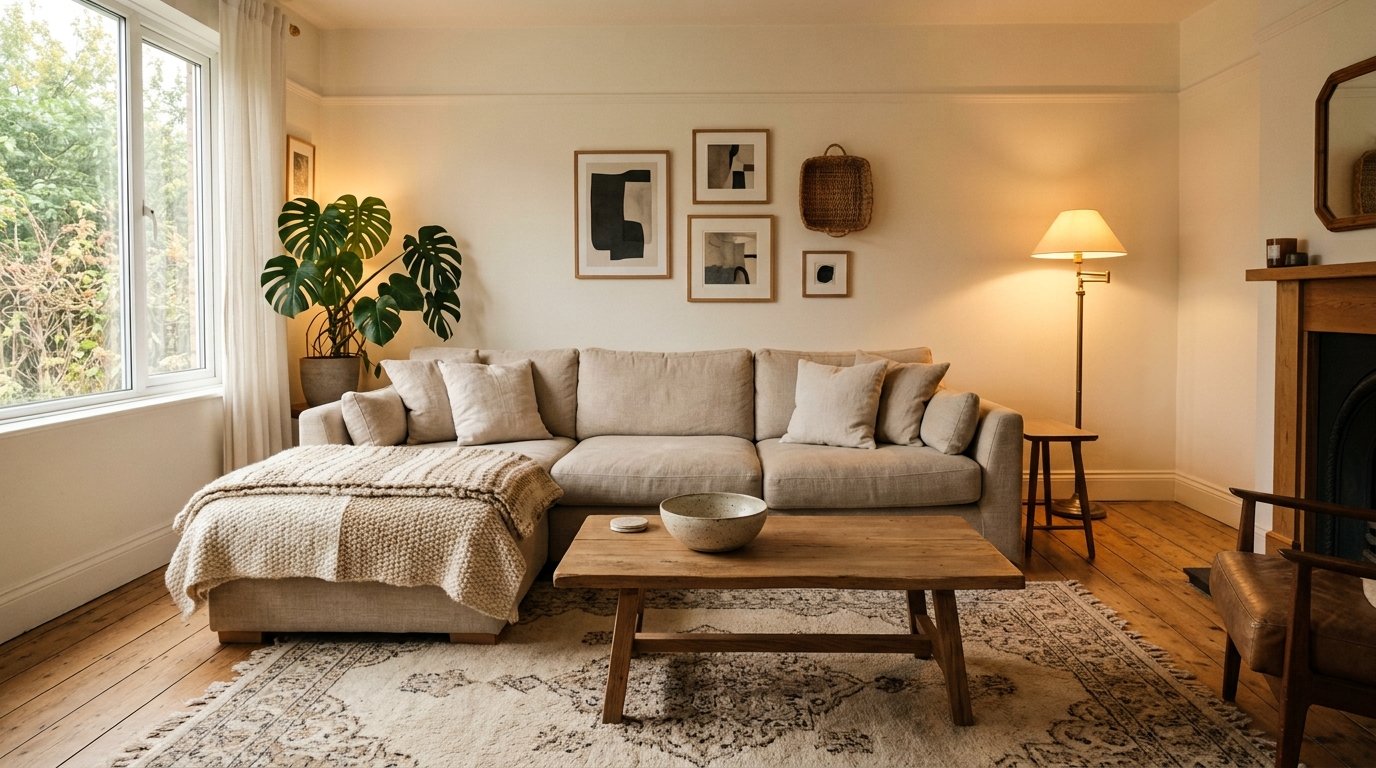
The Living Room Makeover That Cost Less Than You Think (And Looks Like It Didn’t)
My friend came over last autumn and just stood in my doorway for a second. She didn’t say “oh wow” or “I love what you’ve done.” She just went quiet and then said, “this feels like somewhere.” That’s the thing, isn’t it? The best living rooms don’t scream at you. They just feel like somewhere.
—
1. The First Thing People See Isn’t What You Think It Is
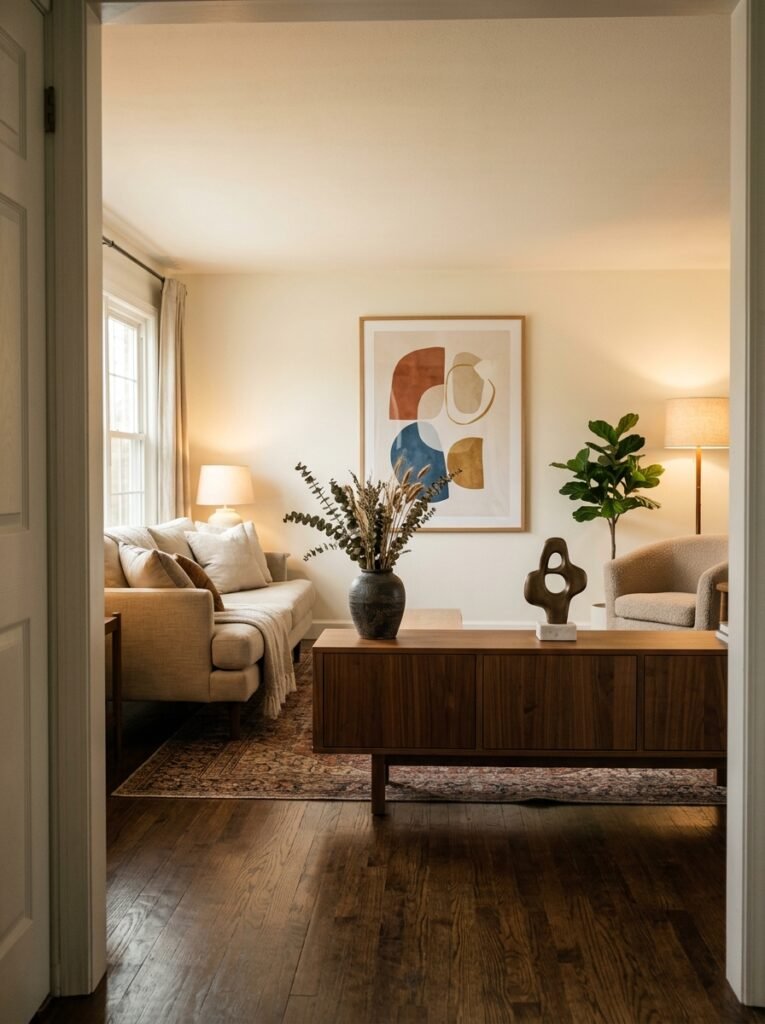
It’s not your sofa. It’s not the artwork. It’s the light — specifically, where the shadows fall and whether they feel safe or harsh.
Most people spend weeks agonising over furniture and then plug in a single overhead bulb that washes everything out. Flat light makes even expensive rooms feel sad. And the fix isn’t complicated at all.
You want at least two light sources in the lower half of the room. A floor lamp with a warm bulb in the corner. A small lamp on a side table. Something that makes the amber hit the walls around 6pm and just… stays there. That glow does more for a living room than any cushion, any rug, any gallery wall you’ve ever pinned.
The overhead light is for cleaning. Not for living.
“Flat light makes even expensive rooms feel sad — and the fix costs less than you’d think.”
Don’t underestimate this. Seriously. Sort the lighting before you buy anything else.
—
2. Why Your Sofa Placement Might Be Quietly Ruining Everything
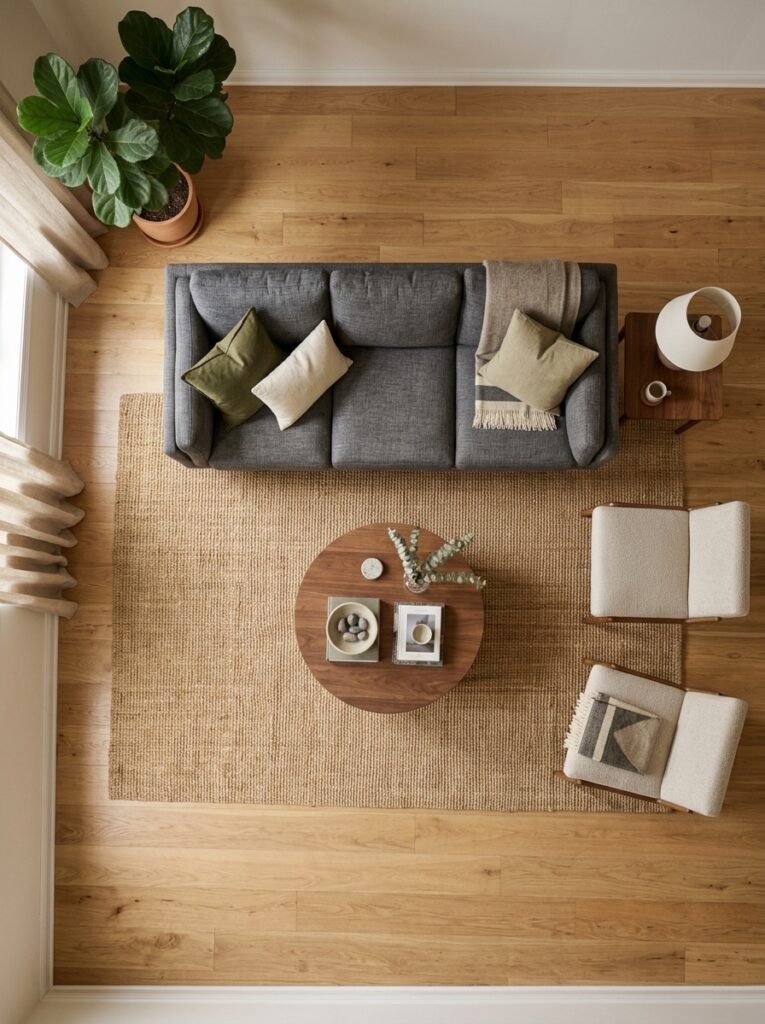
Most sofas in most living rooms are pushed against a wall. I get it. It feels logical, it maximises floor space, it’s how furniture comes arranged in showrooms. But it’s almost always wrong.
Pulling your sofa even eight to twelve inches off the wall changes the entire energy of the room. The space stops feeling like a waiting room and starts feeling like a living room. It creates a sense of depth. It tricks the eye into thinking the room is bigger, which sounds backwards but is absolutely true.
If you’re in a smaller flat — a London flat, say, where every inch matters — try floating just the front legs of the sofa off the rug. You get the effect without sacrificing space. And it doesn’t cost a thing to try, which is always my favourite kind of decorating advice.
—
3. The Rug Size Everyone Gets Wrong (And the One That Actually Works)
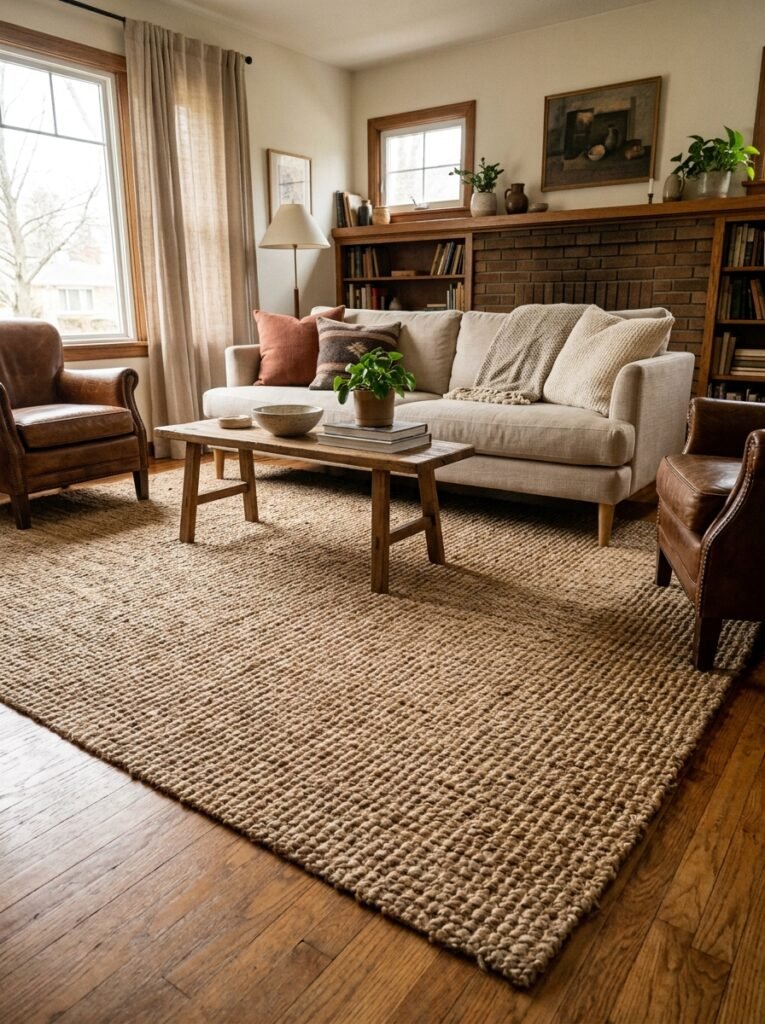
Too small. Every time. The rug is always too small.
A rug that only fits under the coffee table, leaving all four sofa legs marooned on bare floor, isn’t anchoring anything — it’s just a little island floating in the middle of the room, and it makes the whole space feel unmoored. You want a rug that’s big enough for at least the front legs of every major seating piece to sit on. Ideally all of them.
For a standard living room, that usually means going bigger than feels right in the shop. Way bigger. A large woven jute rug, a chunky wool one, a faded vintage-style flatweave — whatever your aesthetic — it should practically fill the seating area. It should feel generous. Rugs are where people get cautious and they really shouldn’t be.
Side note: layering a smaller textured rug on top of a larger neutral one is genuinely one of the easiest ways to add depth and warmth without committing to one expensive statement piece.
—
4. The Color That Keeps Showing Up in Every Beautiful Living Room Right Now
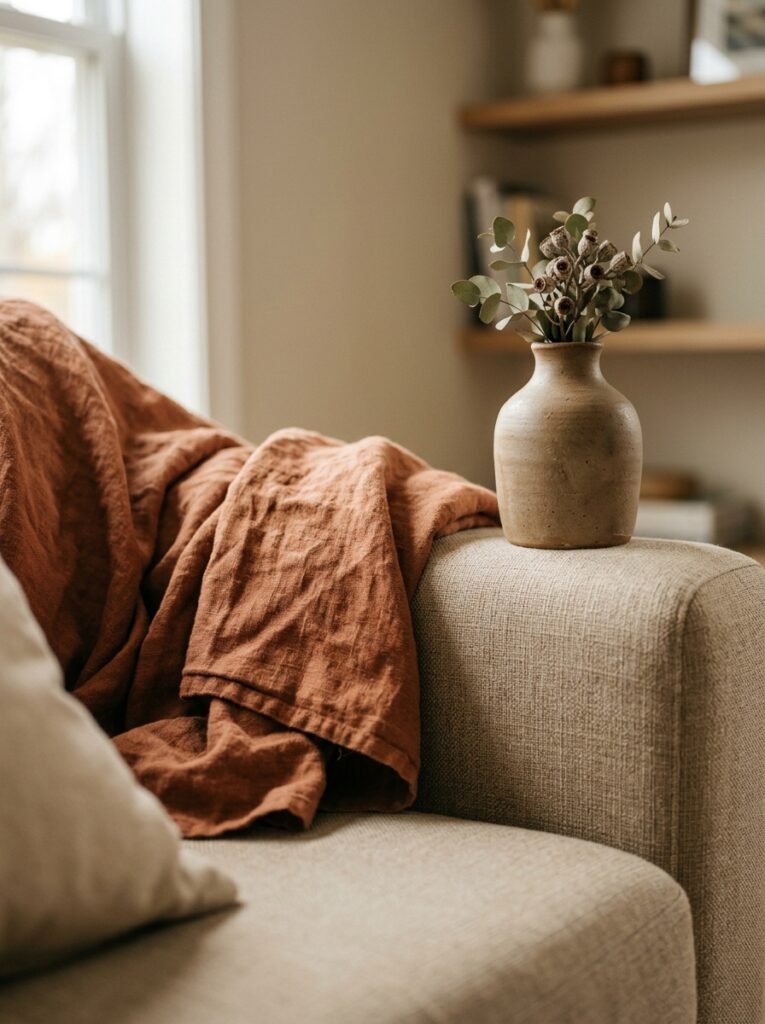
Warm white isn’t it anymore. Not really.
What’s showing up everywhere — and I mean everywhere, on both sides of the Atlantic — is a kind of off-white with a sandy or putty undertone. Not beige exactly, not cream exactly. Something in between that looks different depending on the time of day, and that photographs beautifully in natural light. In the morning it’s almost warm grey. By noon it’s soft butter. At sunset it goes this quiet sort of caramel and it’s genuinely lovely.
The reason it works is that it doesn’t compete. Your artwork, your textiles, your plants — they all get to be the thing. The walls just hold space.
But honestly? The color that works BEST is whatever you’ll actually commit to. I’ve seen dark green living rooms that felt like a warm hug and bright white rooms that were crisp and alive. The paint color isn’t the magic. The intention behind it is.
—
5. One Small Object That Changes How the Whole Room Reads
A mirror. Specifically a mirror in an unexpected spot.
Not above the fireplace (too expected, too formal). Not centered on a bare wall (too deliberate). Try leaning a large mirror against the wall in a corner, slightly at an angle, behind a plant or a lamp. Or hang a small, interesting-shaped mirror somewhere no one would think to put one — beside a doorway, low on a wall near a reading nook, above a console table that’s actually a little too short for it.
Mirrors do two things people forget about: they bounce light into corners that would otherwise go dark, and they create visual intrigue. You’re not just decorating — you’re making someone turn their head slightly and think “hm.” That tiny moment of surprise is what makes a room memorable.
“The best decorating decisions make someone turn their head slightly and think ‘hm.’ That tiny surprise is everything.”
Also, a good mirror makes a small living room feel like it exhales. Can’t recommend enough.
—
6. The Thing Stylists Do That Nobody Talks About
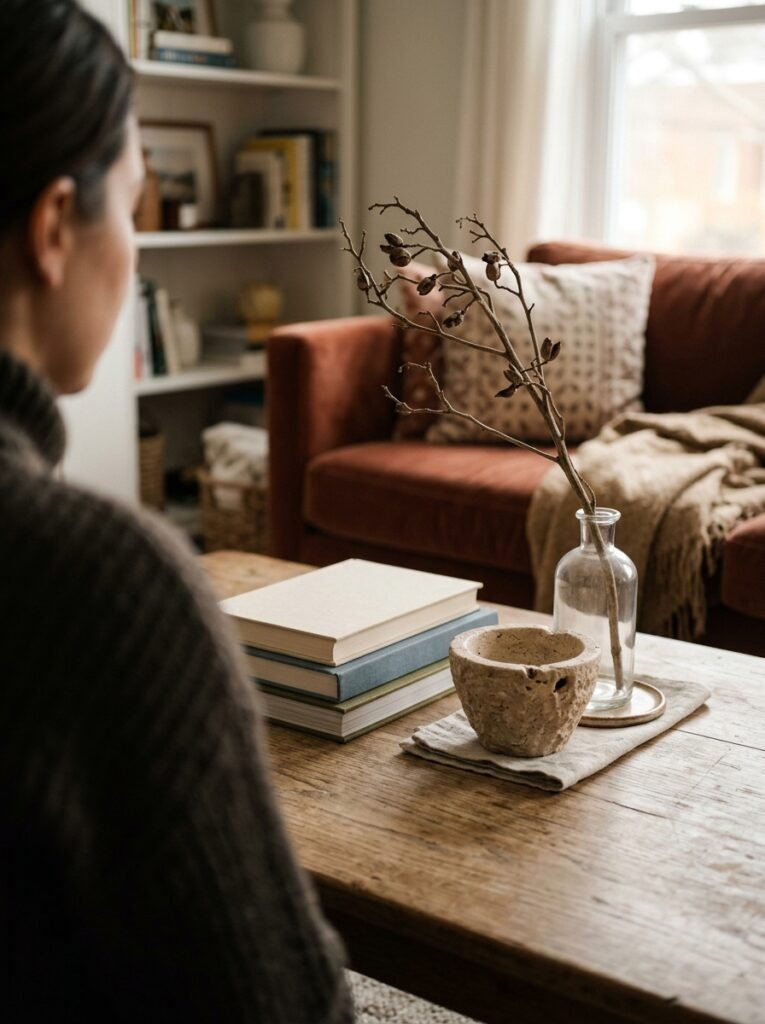
They edit. Constantly.
The difference between a room that looks styled and one that looks cluttered isn’t the stuff in it, it’s how much has been taken OUT. Most of us add when we should subtract. We buy a new cushion, add a throw, pick up a candle, find a pretty tray — and slowly the room accumulates until it stops feeling curated and starts feeling like a jumble sale.
Real talk: every few months, take everything off your shelves and surfaces. Everything. And then only put back what you actually love looking at.
You’ll be surprised how much you put back less. And the room will breathe again. The pieces that stay will finally have space to be seen.
This is free, it takes an afternoon, and it’s probably the most effective decorating advice I’ve ever taken. The edit IS the decoration.
—
7. How to Make a Cheap Bookshelf Look Like It Came From Somewhere Nice
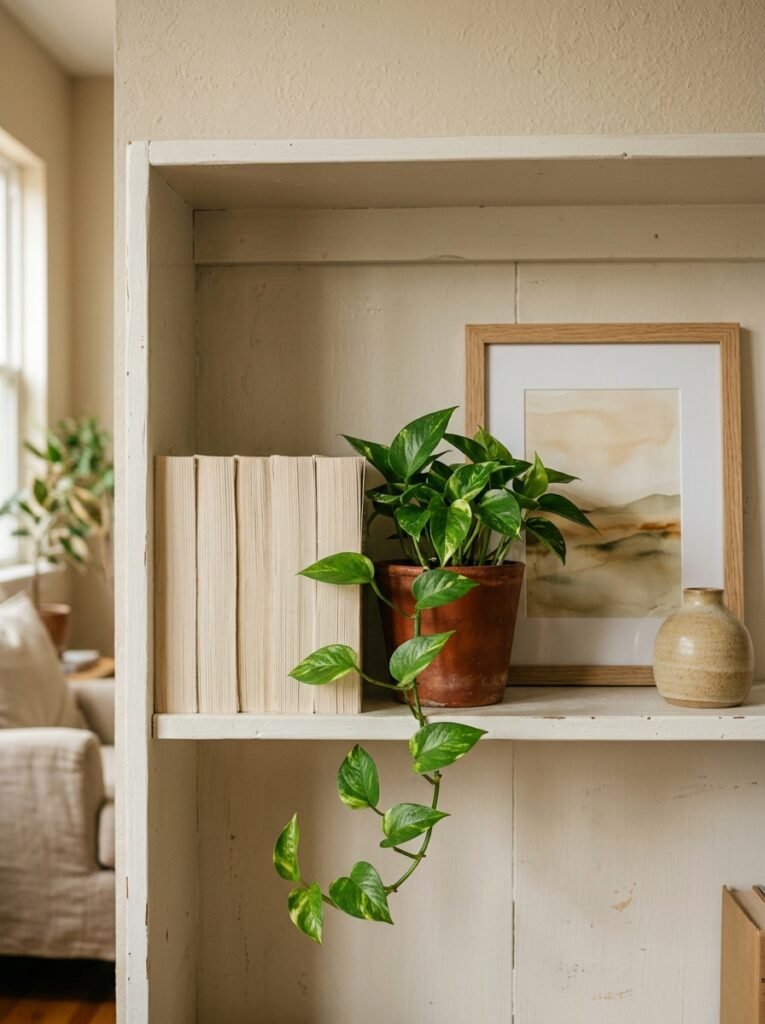
Don’t shelve everything spine-out. Turn some books with the pages facing forward — the raw paper edges create this lovely organic, textural look that’s very much having a moment. Stack some horizontally. Leave gaps. Put one object, just one, on each shelf section: a small plant, a rock, a little framed photo turned sideways.
The trick is it can’t look too arranged. If it looks too perfect it looks like a showroom. You want it to look like things landed there over time, lovingly, and happened to look good together. That takes more thought than a random arrangement, which is the great irony of casual-looking decor.
Also, edit the books themselves. A row of spines in similar tones — cream, brown, green, aged paperback yellows — looks intentional. A random rainbow of colours from every genre and decade looks hectic. You don’t have to get rid of books you love, just rotate what’s displayed.
—
8. The One Rule That Makes Any Tiny Room Feel Intentional
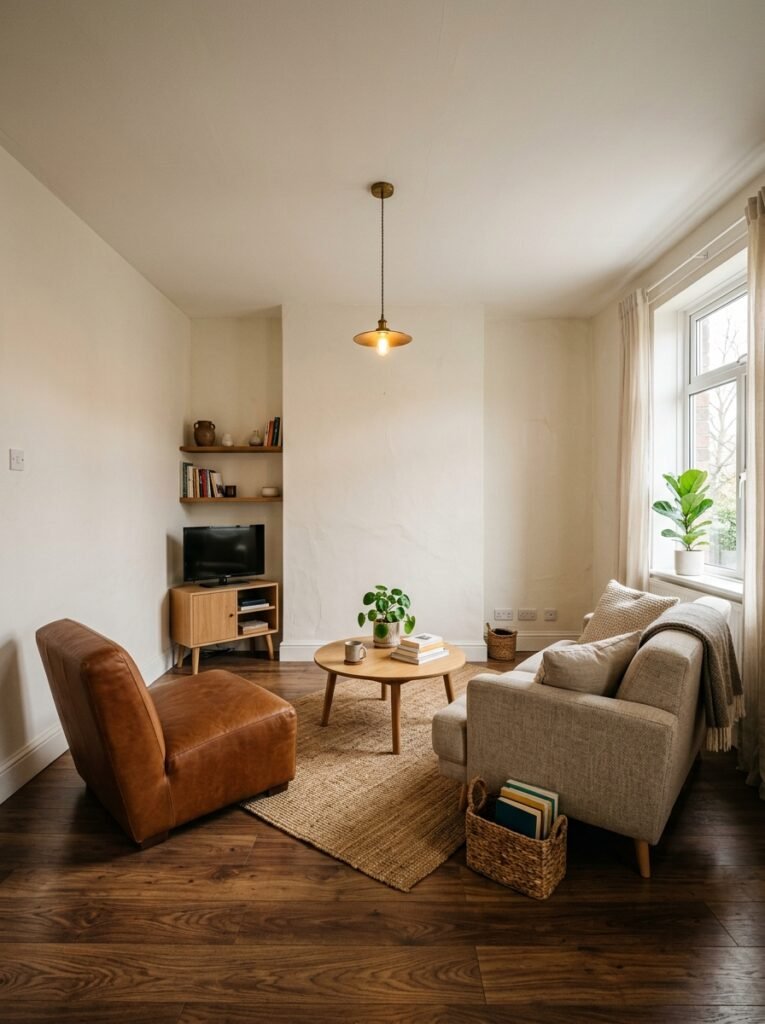
One focal point. ONE.
Not a gallery wall AND a statement sofa AND a huge patterned rug AND a bold ceiling. Pick one thing in the room to be the star and let everything else support it. In a small room especially, this is the difference between “cosy” and “cramped.”
If the sofa is your moment, keep the walls simple. If the art is your moment, keep the sofa neutral. If the fireplace is your moment — and it often is, especially in older British homes where the fireplace is basically structural to the room’s soul — then don’t fight it. Style TO it, not against it.
This is genuinely hard for people who love design because we want all the things. But restraint is a skill and it pays off.
—
9. Why Textiles Are Doing More Heavy Lifting Than Your Furniture
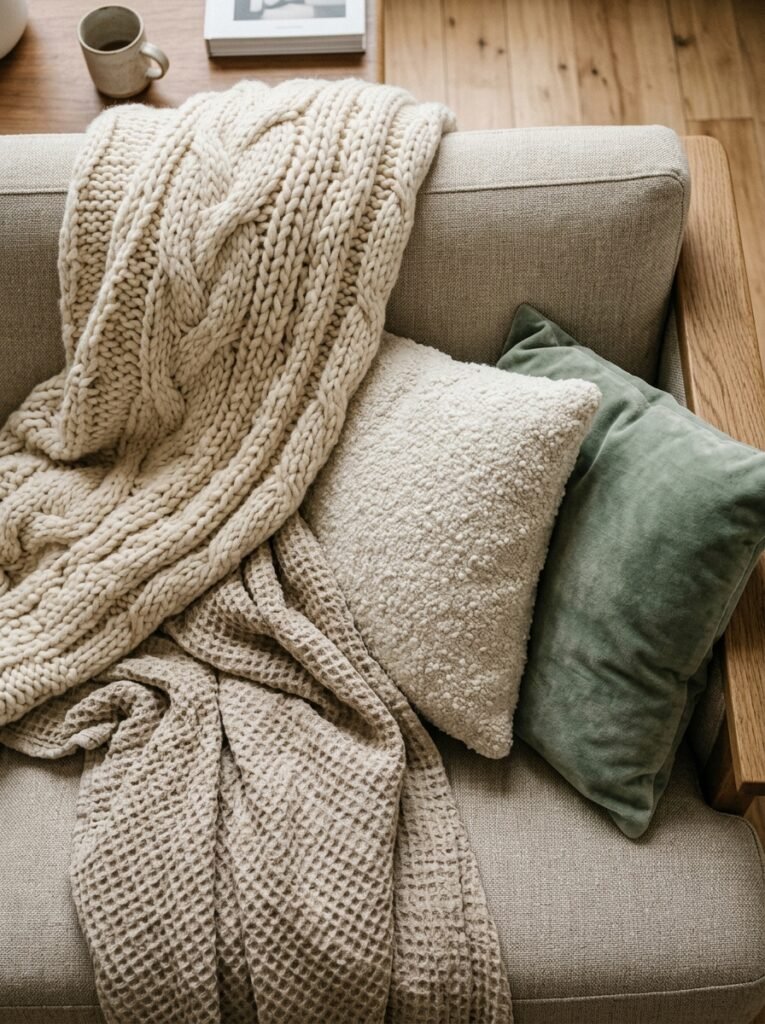
Cold rooms — rooms that feel a bit distant, a bit corporate even — usually suffer from a lack of softness. Not warmth in terms of color necessarily, but tactile softness. Nothing to reach out and touch.
A chunky knit throw draped over one arm of the sofa. A velvet cushion with a slightly crumpled cover. A linen curtain that puddles very slightly on the floor. These aren’t luxury items, most of them, but they communicate abundance and ease in a way that hard surfaces simply can’t.
And here’s the thing that took me way too long to learn: you can have a totally neutral room, zero color, and it will still feel rich if the textures are interesting. Linen against wool against jute against polished wood against matte ceramic. The eye moves. The hand wants to reach out. That’s what makes a room feel lived in and loved.
—
10. The Plant Placement Trick Interior Designers Actually Use
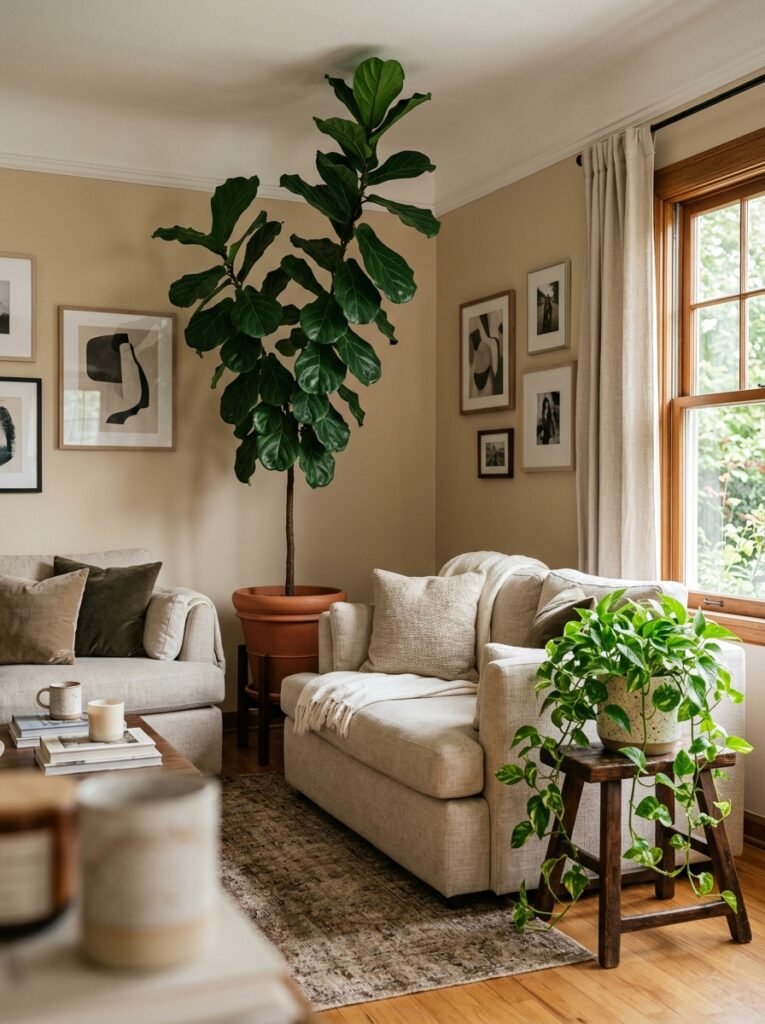
Not on the windowsill. I know. Everyone puts plants on windowsills and yes, fine, they get the light — but a row of little plants along a window ledge looks more like a kitchen than a living room, and it does nothing for the space overall.
Try one LARGE plant in an unexpected spot. A tall fiddle leaf or a big monstera in the corner that would otherwise just be dead space. Or a trailing plant on a high shelf, with the vines coming down like they’re slowly taking over. That sense of scale — one big living thing rather than ten small ones — changes the feeling of a room completely.
“One large plant in the right corner does more for a living room than ten small ones scattered around.”
Also: a plant next to a lamp at night, with the shadow it throws onto the wall, is genuinely one of the most beautiful free things you can do with a living room.
—
11. The Gallery Wall Advice You Haven’t Heard Yet
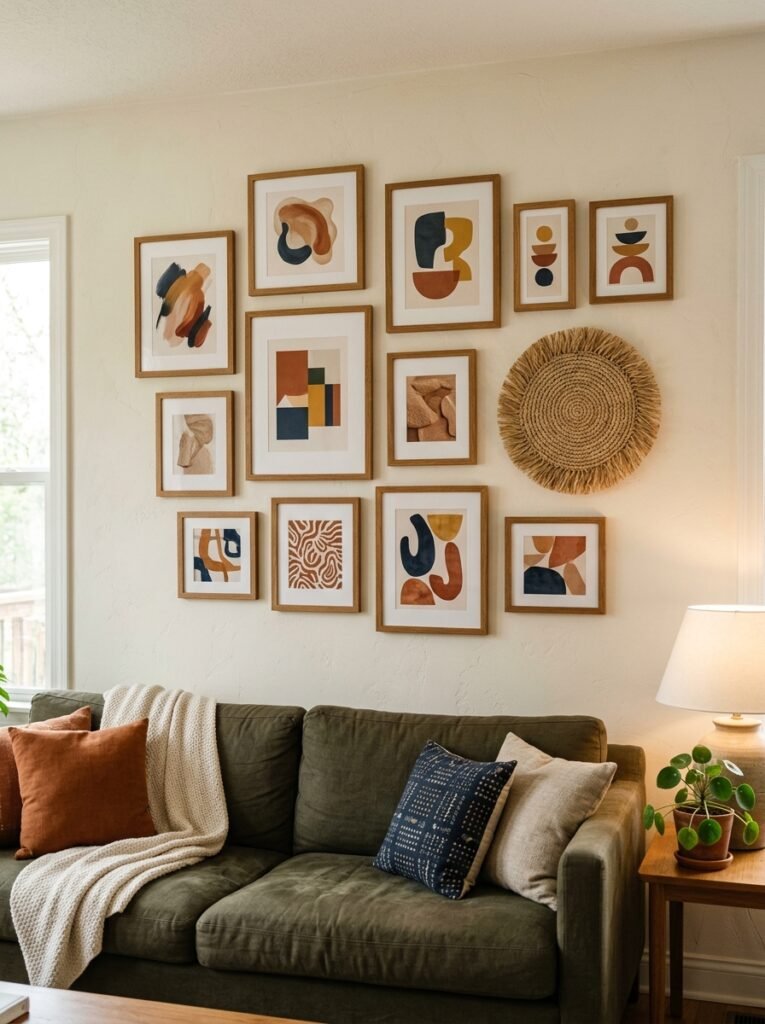
The thing that makes gallery walls work isn’t the frames or the art. It’s the SPACE between them.
People hang art too close together because it feels safer, more cohesive. But when prints and photos are crammed together there’s no room for the eye to rest, and the whole arrangement starts to read as wallpaper — texture without meaning. The negative space between pieces is part of the composition.
Also, and I feel strongly about this: mix your frame weights. One chunky dark wood frame next to a thin brass one next to a frameless canvas. The variation is what keeps it from looking like a catalogue page. Matchy-matchy gallery walls look fine. Mixed ones look like they were collected, and collected is always more interesting than purchased.
If you’re not sure about arrangement, lay everything on the floor first. Photograph it from above. Adjust until it feels right, THEN put nails in. Saves a lot of patching.
—
12. What a Living Room Actually Needs to Feel Like Yours
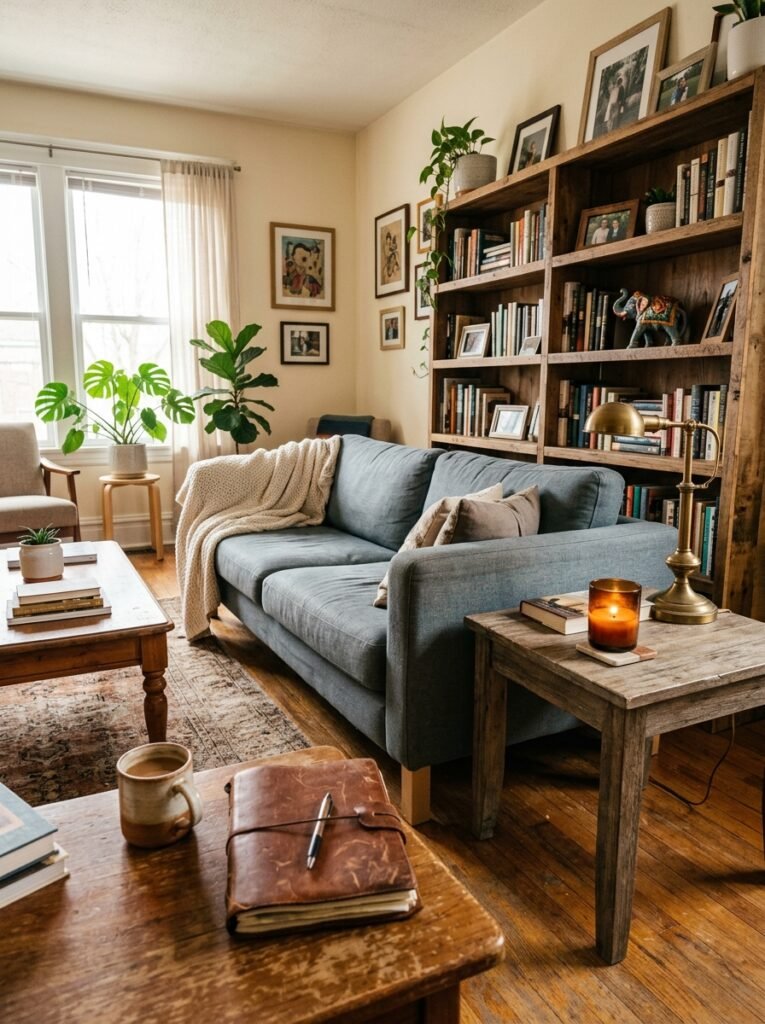
Something that can’t be bought anywhere.
I mean that specifically — not as a concept, but literally. The weird little object from a car boot sale that you can’t explain why you love. The photo that isn’t framed beautifully but matters. The book that’s on the coffee table because you’re actually reading it, not because it looks good.
Perfectly styled rooms can feel hollow. You’ve seen them — on Pinterest, in magazines, sometimes in friends’ houses where everything is so intentional it feels slightly tense. Beautiful but not quite… inhabitable.
The rooms that really stop you are the ones where the styling is good AND there are signs of an actual human being. A dog-eared novel. A blanket that’s slightly off-centre because someone used it yesterday. A mug that’s been washed a thousand times. These don’t ruin the aesthetic — they complete it.
You’re not decorating a showroom. You’re making a place that feels like somewhere. And that last 10% — the personal, the imperfect, the genuinely yours — nobody can tell you how to get it. You already have it. You just have to leave it out.
—
❓ FAQ
Q: What’s the easiest and cheapest living room upgrade that actually makes a difference? A: Lighting, honestly — swapping out bright white bulbs for warm-toned ones (around 2700K) in floor lamps and side lamps costs next to nothing and changes the feeling of a room instantly. It’s the most underrated change most people haven’t made yet.
Q: How do I make my small living room feel bigger without knocking down walls? A: Pull furniture slightly away from the walls, choose one large rug instead of a small one (counterintuitive, but it works), and add a mirror to bounce light into darker corners. Also edit ruthlessly — clutter shrinks space faster than square footage does.
Q: How do I make my living room look more expensive than it actually is? A: Layer textures, keep your palette relatively restrained, and take things away rather than adding more. A few quality-looking pieces with breathing room between them always reads more expensive than a room full of things competing for attention.
—
💭 Final Thoughts
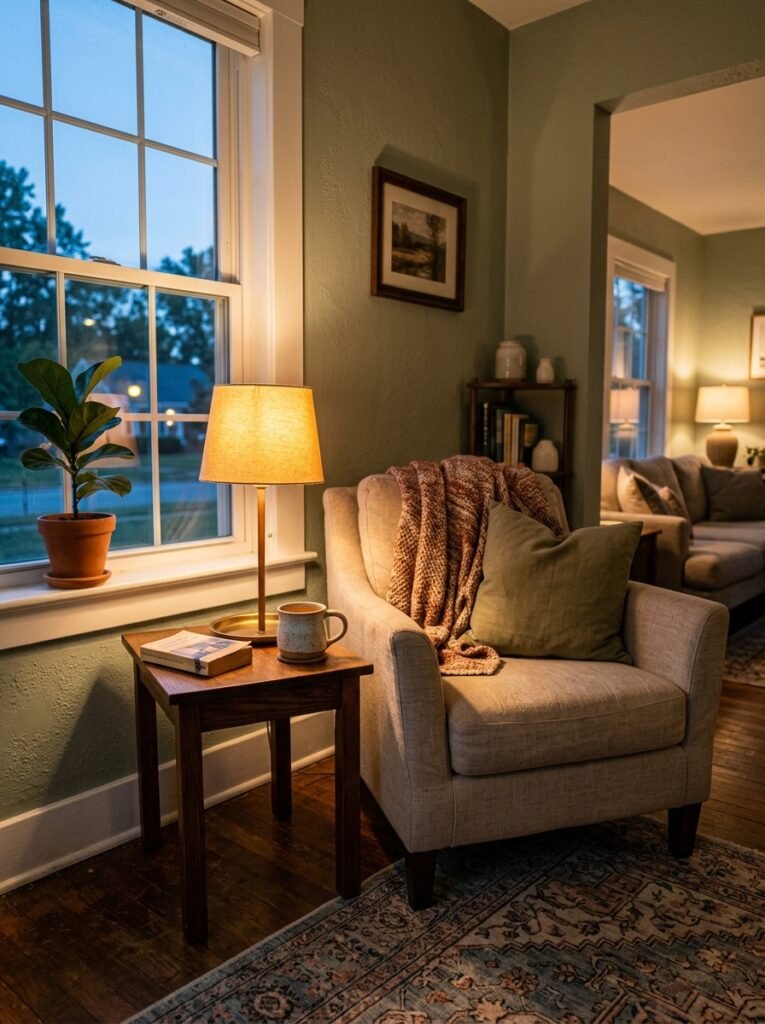
Living rooms are strange because they’re supposed to do everything at once — impress guests, comfort family, hold the chaos of actual daily life, and somehow still look good in photos. It’s a lot to ask of one room.
But here’s what I keep coming back to: the rooms that feel the most beautiful are never the ones that look the most finished. They’re the ones that feel like someone actually lives there and likes it. Like someone made choices on purpose and then stopped worrying about it.
What would your living room look and feel like if you stopped trying to get it right — and just started making it yours?