
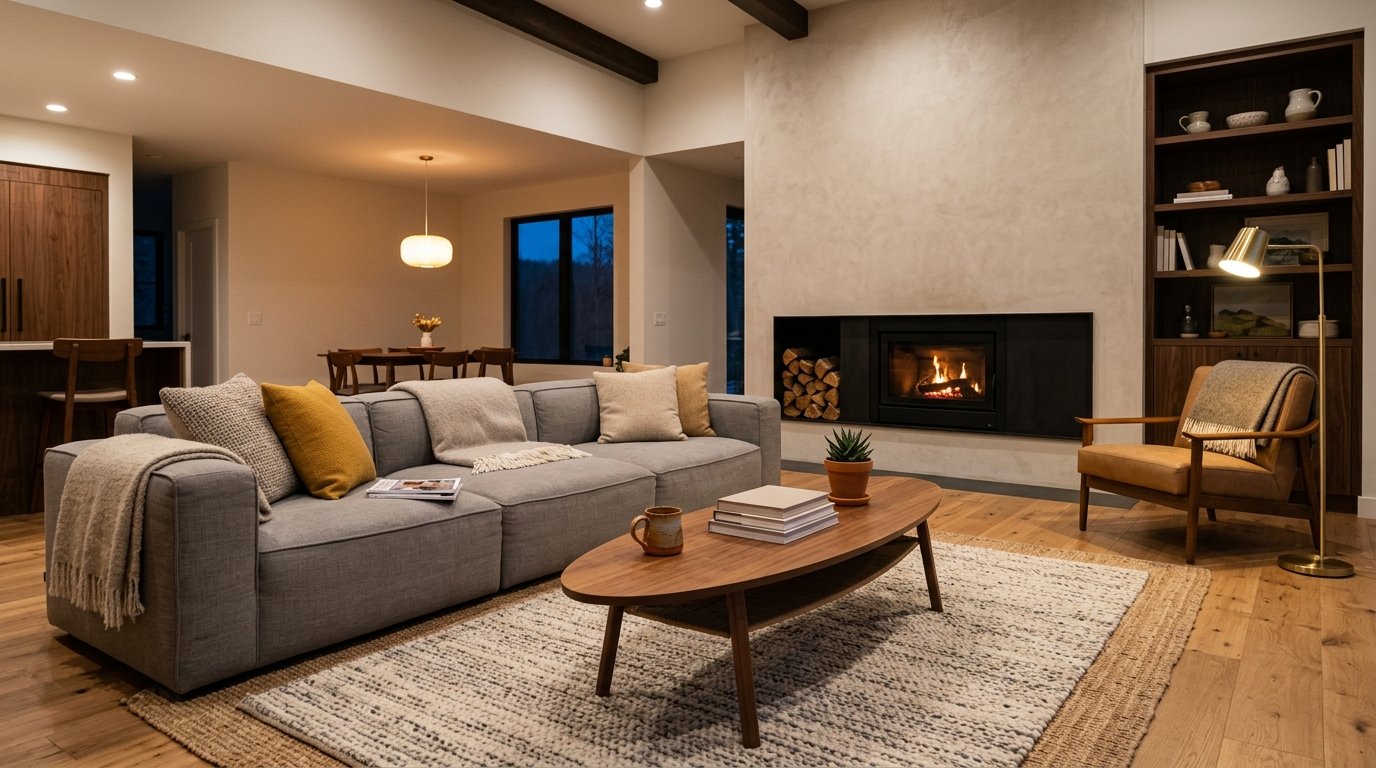
The Modern Living Room Makeover Nobody Tells You About (Because They Don’t Want You to Know How Simple It Is)
My friend texted me a photo of her living room with “help???” and honestly? I got it immediately. It wasn’t ugly. It wasn’t even bad. It was just… nothing. Beige sofa, beige walls, a coffee table that had clearly been chosen because it fit, not because anyone loved it. The room worked. It just didn’t feel like anything at all.
That’s the modern living room problem nobody talks about enough.
—
1. Why “Modern” Doesn’t Mean What You Think It Means Anymore
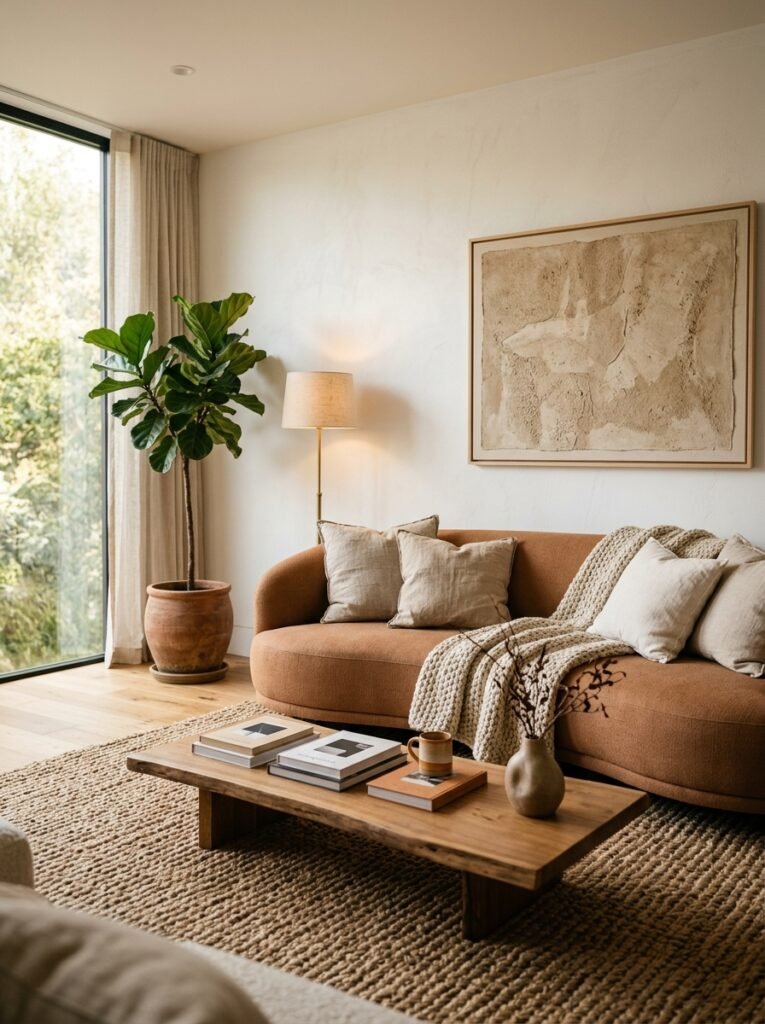
Here’s the thing about modern design right now — it’s not cold. It’s not that 2015 aesthetic of white walls and sharp edges and a single orchid on a marble surface. That version of modern is done. What’s taking over is something warmer, messier in the best way, and honestly a lot easier to actually live in.
Modern in 2024 means clean lines AND texture. It means a neutral palette that still has personality. It means furniture that looks intentional, not sterile. The rooms showing up everywhere right now have this quality of being edited, not emptied — like someone thought carefully about what stays and what goes, rather than just clearing everything out and calling it minimal.
And the biggest shift? People want their living rooms to feel cozy and modern at the same time. Which used to be considered a contradiction. Now it’s the goal.
“Modern doesn’t mean cold anymore. The best living rooms right now feel like someone actually lives there — and thought hard about it.”
—
2. The Color That Keeps Showing Up in Every Beautiful Living Room Right Now
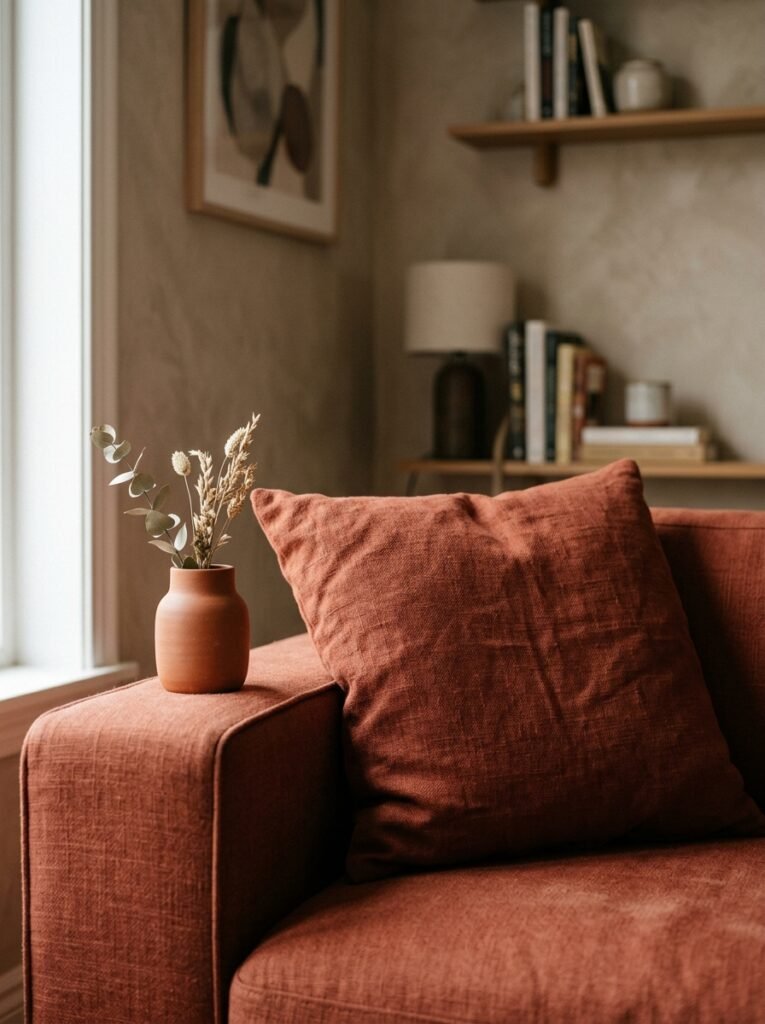
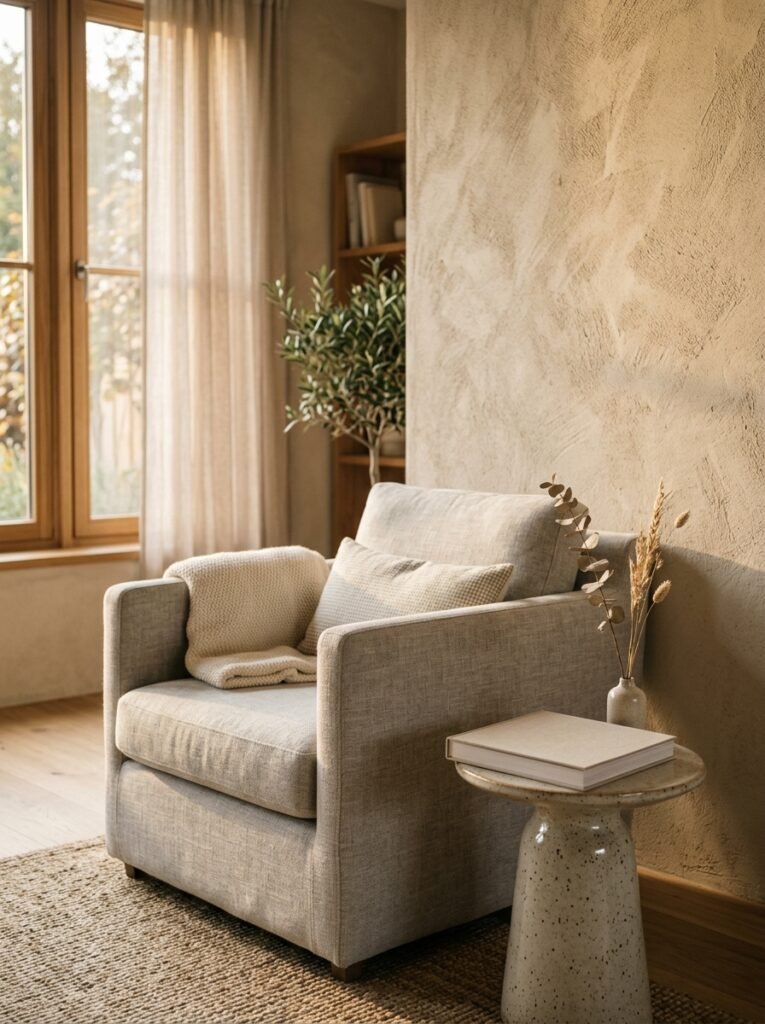
Warm white. Not bright white, not cream exactly — that specific, slightly-toasted shade that does something magical to natural light. You’ll see it on walls, on linen sofas, on chunky knit throws draped just so over the arm of a chair.
But here’s where it gets interesting. The rooms that ACTUALLY look good don’t stop at warm white. They pick one deeper anchor color and let it work hard. A terracotta accent wall behind the sofa. A dusty sage velvet cushion. One piece of dark walnut furniture that grounds the whole room.
The combination I keep seeing — and keep recommending — is warm white base, one earthy mid-tone (think clay, moss, rust), and then one hit of something slightly unexpected. A navy cushion in an otherwise sand-toned room. A deep forest green lamp in a room that’s all warm neutrals. That one unexpected note is what makes a room feel designed rather than assembled.
Side note — if you’re painting your walls and you’re scared, go one shade warmer than you think you should. You can always go lighter. You almost never regret going warmer.
—
3. The Furniture Mistake That Makes Every Modern Room Feel Cheap
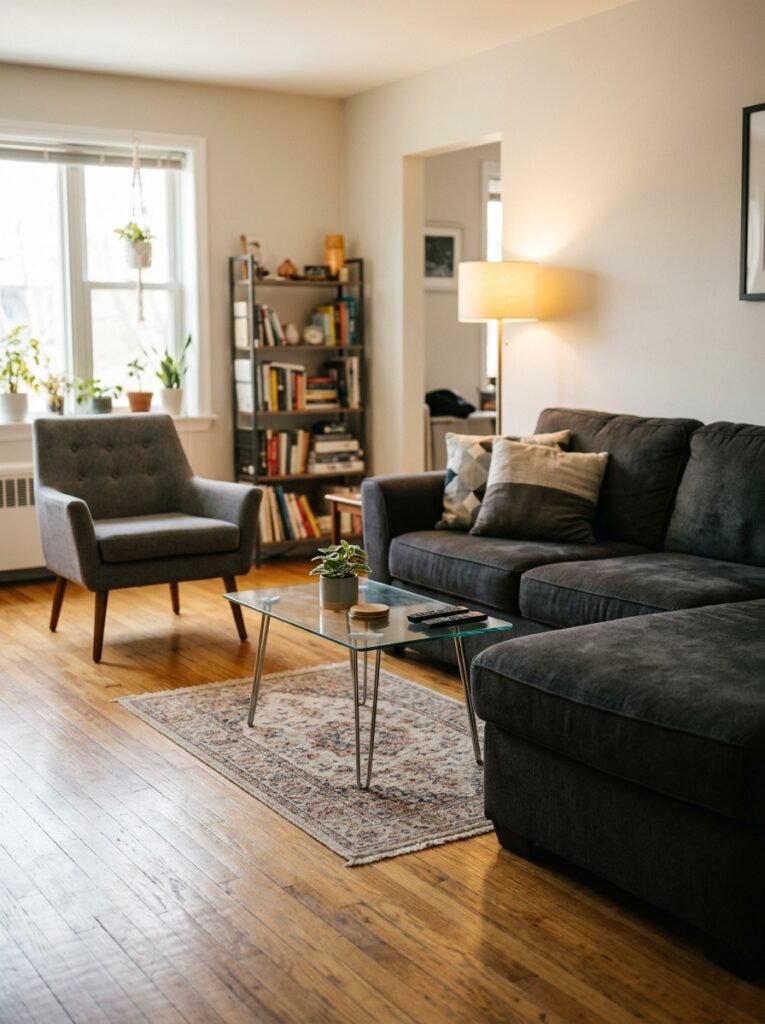
All the furniture is the same height.
That’s it. That’s the mistake. When your sofa, your armchairs, your console table, and your shelves all hover at roughly the same level, the room reads flat. It doesn’t matter how much you spent on individual pieces — everything just sits there at the same altitude and nothing catches your eye.
Modern rooms that work have intentional height variation. A tall floor lamp next to a low-slung sofa. A high shelf on one wall, a squat sideboard on the other. A piece of art hung high enough that you actually have to look up at it.
The eye needs somewhere to travel. And it can’t travel if everything’s lined up at the same level like they’re waiting for a school photo.
—
4. What No One Says About “Mixing Old and New” (But Everyone Is Doing It)
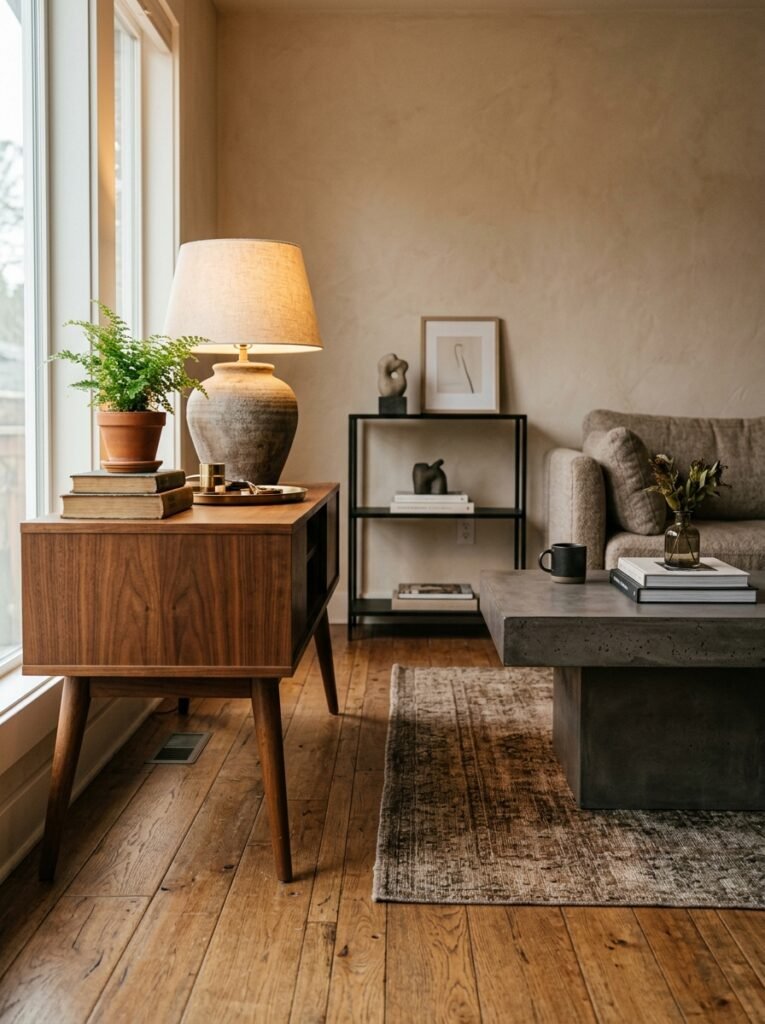
Every interior designer will tell you to mix old and new. Very few of them tell you HOW, specifically, without it looking like a charity shop situation.
The trick is contrast ratio. One or two vintage or vintage-adjacent pieces against a mostly modern background. Not fifty-fifty. Not three vintage to three modern. You want the old pieces to feel like they wandered in from somewhere interesting, not like they’re competing with the modern stuff.
My personal rule: one piece of furniture that has some history or character (a slightly worn leather armchair, a wooden side table with actual grain), and then one object — a piece of pottery, a lamp, a framed print — that’s clearly from another era. Everything else? Clean, modern, simple. Let those two pieces do the talking.
The mix also works in reverse. A very clean modern sofa in a room that has old-house architectural details — cornicing, a fireplace, original floors — doesn’t need much help. The bones of the room do the vintage job for you.
—
5. Lighting: The One Change That Actually Makes a Room Feel Different
Not gonna lie, this is where most people are getting it wrong and they don’t even know it.
Overhead lighting from a single ceiling fixture is doing incredible damage to living rooms across the US and UK. It’s flat. It’s institutional. It makes everyone and everything look slightly tired.
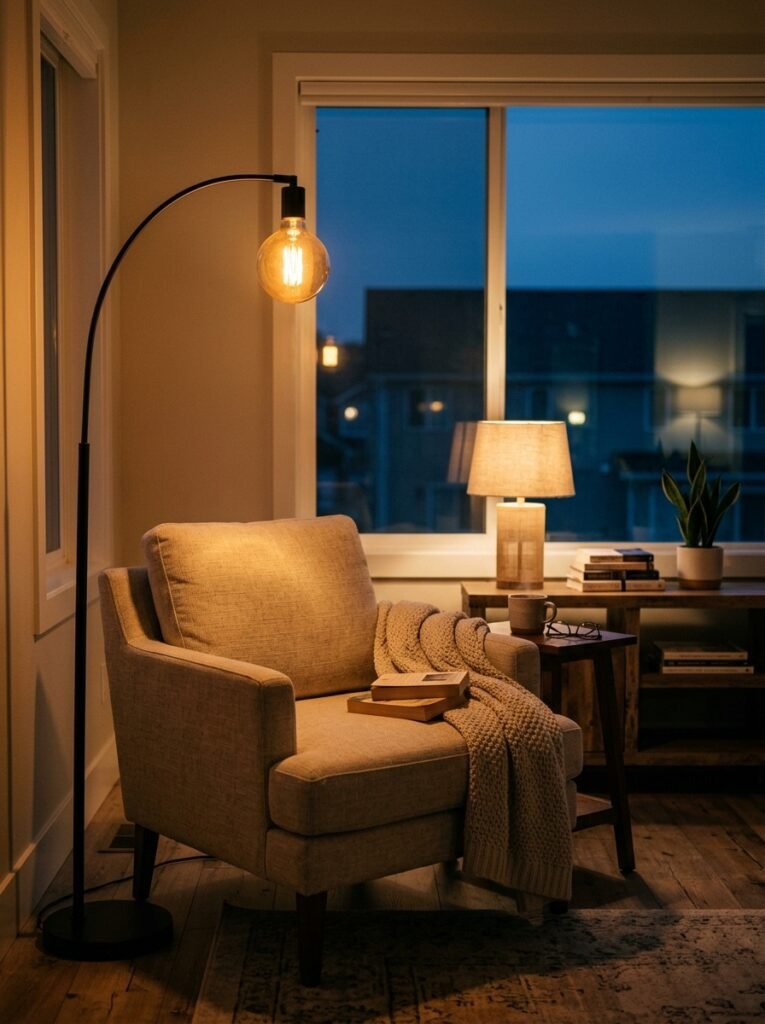
Modern living rooms layer their light. You want:
- A floor lamp in at least one corner, ideally with a warm-toned bulb
- Something on a lower surface — a table lamp, a small rechargeable light — that creates a pool of warmth at eye level when you’re sitting
- Optional but excellent: a pendant or a wall sconce if your space allows it
The ceiling light? It’s for cleaning and finding things. Turn it off when you’re actually in the room in the evening. The difference is IMMEDIATE and honestly kind of embarrassing that it took most of us so long to figure this out.
That amber glow from a lamp tucked in the corner at 7pm in November? That’s the whole mood. That IS modern coziness.
“Turn off your overhead light tonight. Just try it. The room you’ve been trying to decorate has been there the whole time, hiding under bad lighting.”
—
6. The Rule About Rugs That Designers Don’t Make Obvious Enough
Too small. Every time, almost without exception, the rug is too small.
A rug that only fits under the coffee table and leaves all the furniture legs floating on bare floor isn’t anchoring the room — it’s just sitting in the middle of it looking confused. The sofa legs should be on the rug. At least the front legs. Ideally all four. This is what makes a seating area feel like a defined, intentional space rather than a collection of furniture that happens to share a room.
Go bigger than you think you need. And if you’re in a smaller room and genuinely can’t fit a large rug, go layered instead — a smaller textured rug over a larger flat-weave or natural fiber one. It adds depth, it adds warmth, and it solves the “too small” problem beautifully.
Texture matters too. A woven jute rug reads completely differently from a soft low-pile one. Neither is wrong, but they’re not interchangeable — pick based on how you want the room to feel underfoot and visually, not just based on price.
—
7. The Gallery Wall Is Back, But Not the Way You Decorated It in 2018
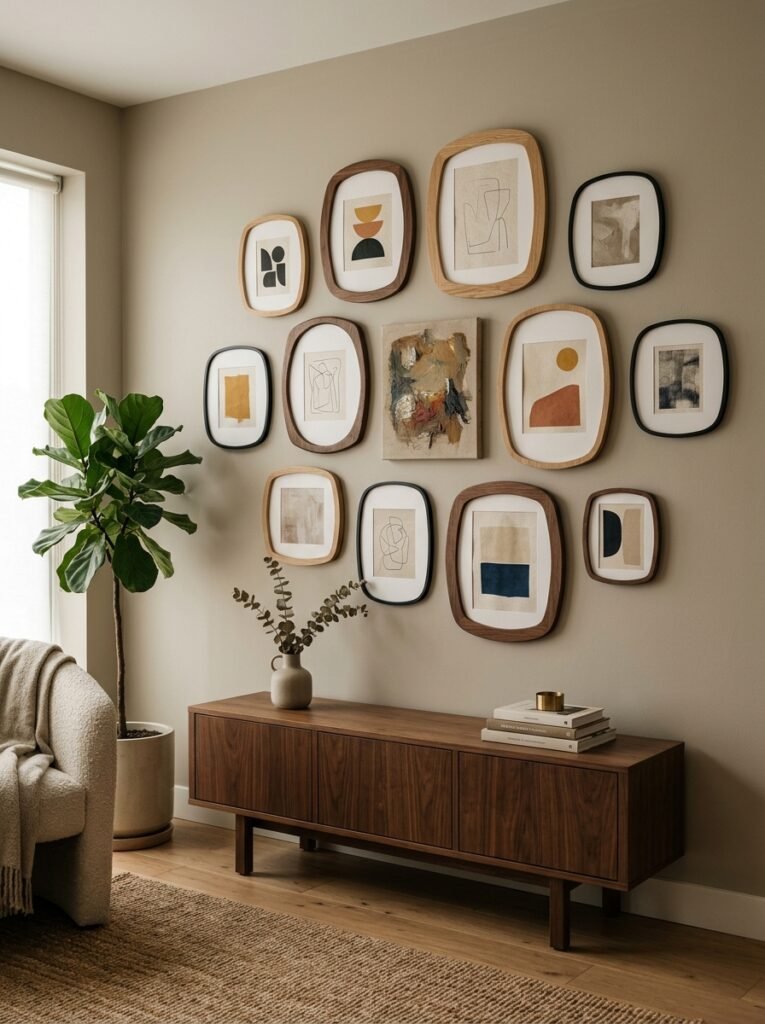
I know. We all thought we were done with gallery walls. But they’re back and they look completely different — and honestly better.
The current version is less “collect every print I love and hang them in a grid” and more curated, breathing, considered. Fewer frames. More space between them. A mix of sizes that doesn’t follow a formula. And crucially — not every piece is a framed print. There are objects hung on walls now. Small shelves with a single piece of pottery on them. A woven piece. Something three-dimensional that creates shadow and depth.
The key difference from the old gallery wall: restraint. You’re not filling a wall, you’re creating a moment on it. Five pieces that you love and that relate to each other in some way — material, color, feeling — will always beat fifteen pieces stuck up with no clear intention.
And please, for the love of everything: hang things higher than you think looks right. Art hung too low is the gallery wall equivalent of the too-small rug.
—
8. The Sofa Color Everyone’s Afraid of (and Shouldn’t Be)
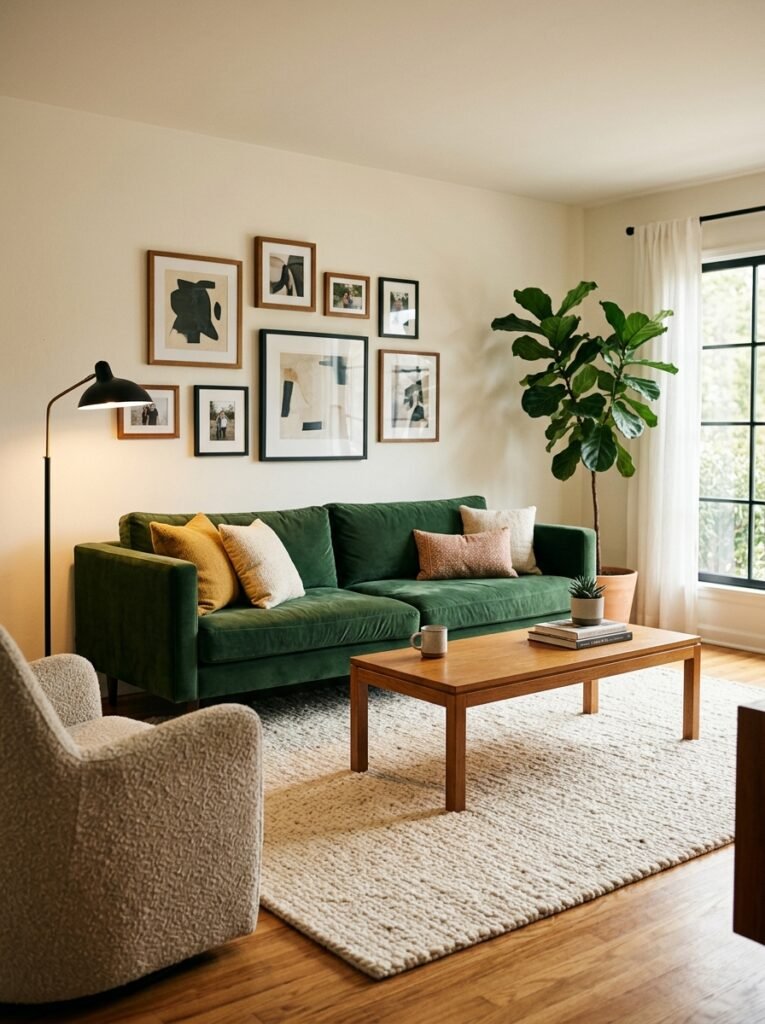
Anything that isn’t grey or beige.
I know those feel safe. I know they work with everything. But I’ve been in a LOT of living rooms lately — in real life and through photos — and the ones that stay with me, the ones that feel like somewhere you’d genuinely want to spend time, have sofas with actual color or character.
A warm caramel leather that looks better the more worn it gets. A deep sage green velvet that shifts color in different lights. A dusty mauve linen that you wouldn’t expect to love but do, immediately. These sofas are the backbone of a room. They give you something to build around, something to react to.
The scared version is the grey sofa with colorful cushions. Which works! But it’s also the option that keeps you safe when you could be doing something more interesting.
—
9. Shelf Styling That Doesn’t Make You Cringe a Week Later
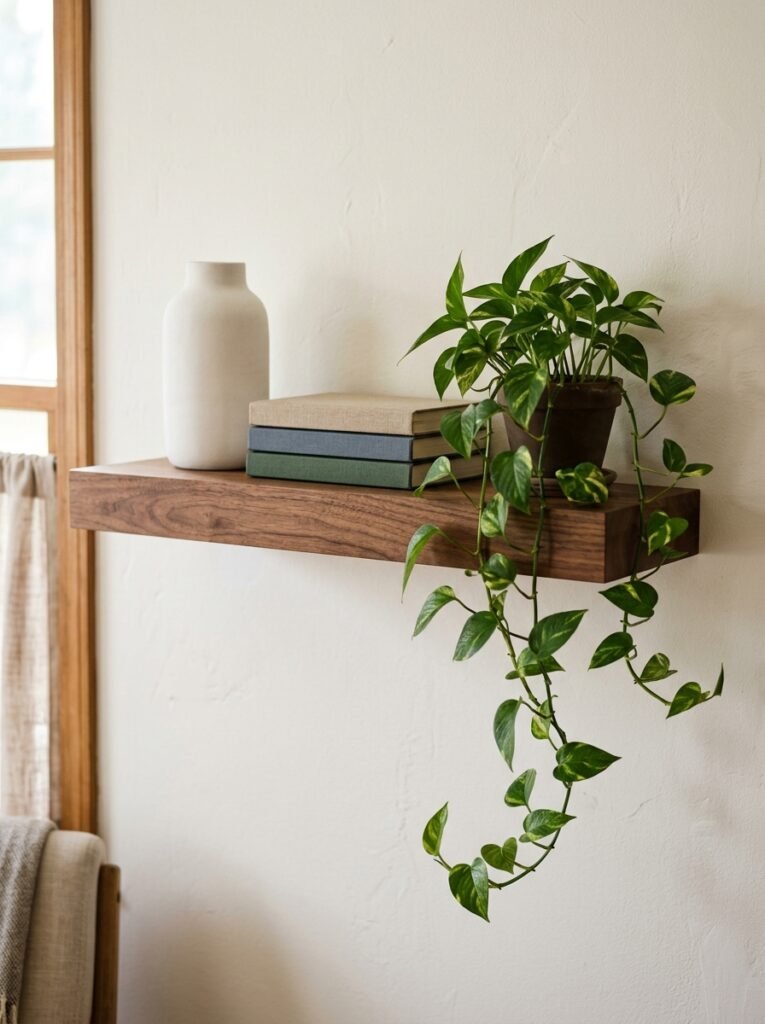
The problem with most styled shelves is they’re too even. Every level has something on it. Every object is roughly the same size. Every grouping has a plant-a-book-a-candle in a formula that got on Pinterest in about 2017 and somehow never left.
Real, good shelf styling has gaps. Some levels that are almost empty. Objects grouped with actual thought — this thing next to this thing because they relate, not because they balance. And height variation within each shelf, not just across shelves.
Pull a few things OFF. Seriously, remove half of what’s on there and see how the remaining pieces breathe. The shelf that looks best is usually the one where you edited down until it felt too sparse, and then added just one thing back.
“The shelf that looks best is usually the one where you almost put back less.”
—
10. Why Your Living Room Doesn’t Feel “Finished” (It’s Not What You Think)
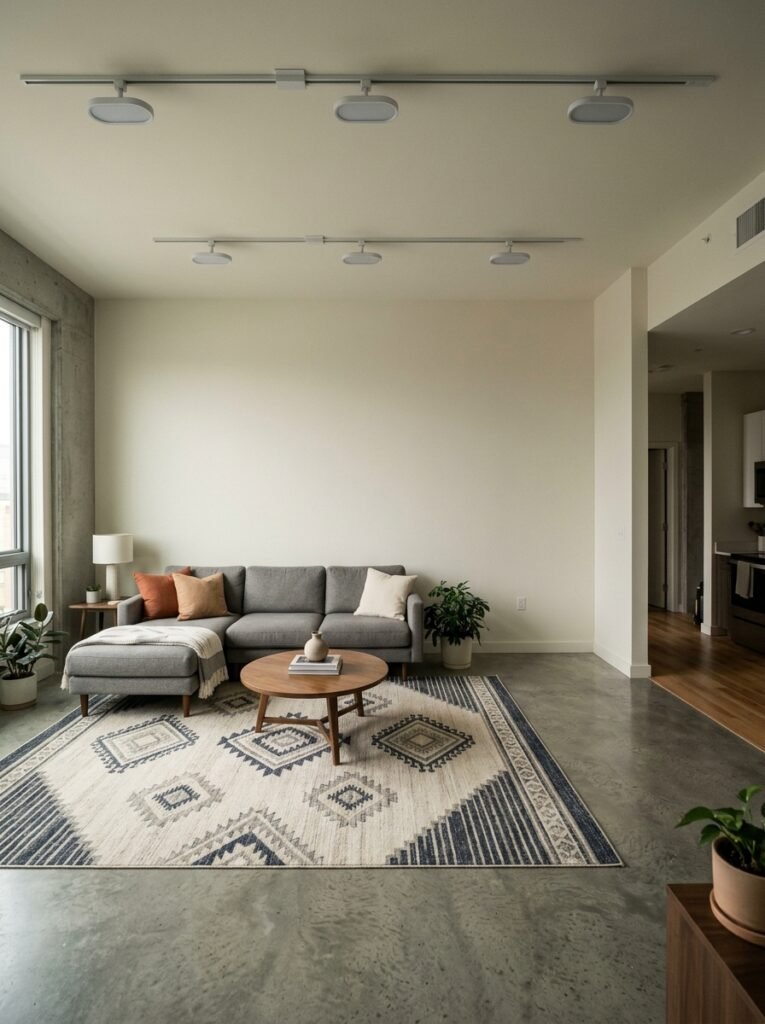
It’s probably not a missing piece of furniture. It’s not the wrong paint color. It’s not that you need more stuff.
It’s greenery. Or the absence of it.
Plants do something to a room that no object can replicate — they make it feel inhabited, in the best possible way. Not manicured and staged, but actually alive. A large-leafed plant in a corner that’s struggling for light. Something trailing off a shelf. A small sculptural cactus on the windowsill that asks nothing of you.
You don’t need to become a plant person. You need maybe two, three plants in a living room to get the effect. One tall, one smaller. Real if you can manage it, high-quality faux if you genuinely can’t. The difference in how a room feels with and without greenery is not subtle.
—
11. The One Thing That Dates a Living Room Faster Than Anything Else
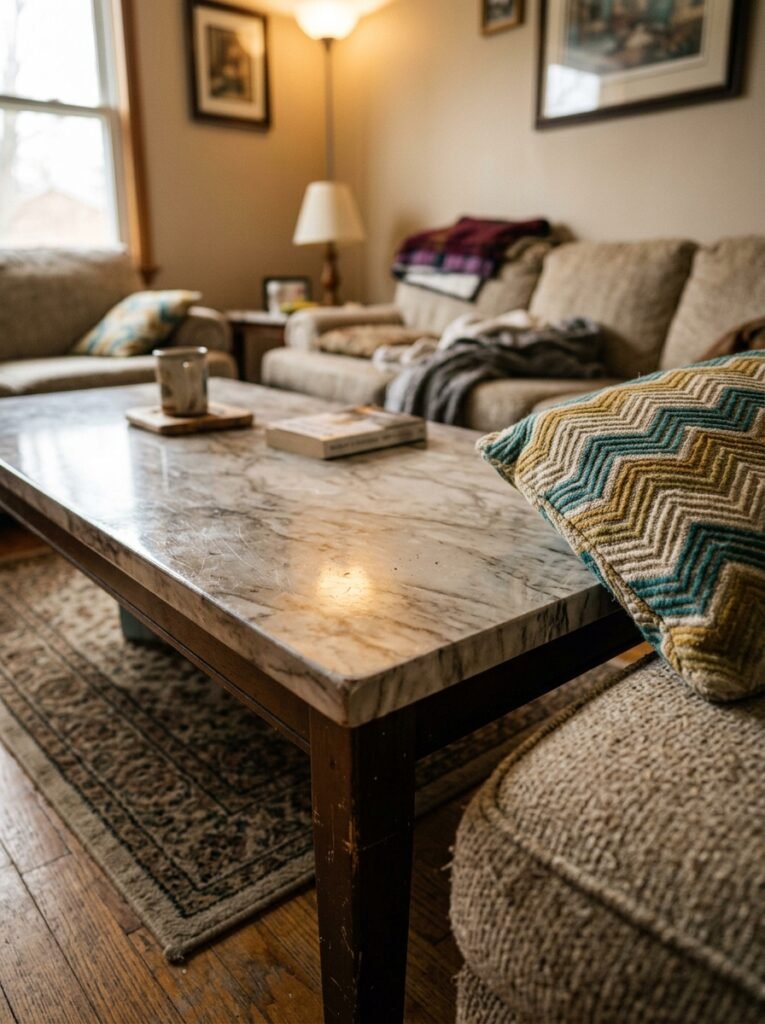
Matching furniture sets.
The sofa, the loveseat, and the armchair — all from the same range, all the same fabric, all clearly bought in one transaction. It looks like a showroom. Actually, it looks like the idea of a living room rather than an actual one.
Modern rooms don’t match, they coordinate. The sofa and armchair might be different shapes, different materials, connected only by a shared color family or a similar sense of scale. The coffee table doesn’t match the side tables — it contrasts with them, or complements them in material without mirroring them exactly.
Buying mismatched furniture is also, not coincidentally, often cheaper. You’re shopping more slowly, more thoughtfully, one piece at a time. Which usually means you end up with things you actually love rather than things that were convenient to buy together.
—
12. The Small Move That Changes How Every Guest Experiences Your Living Room
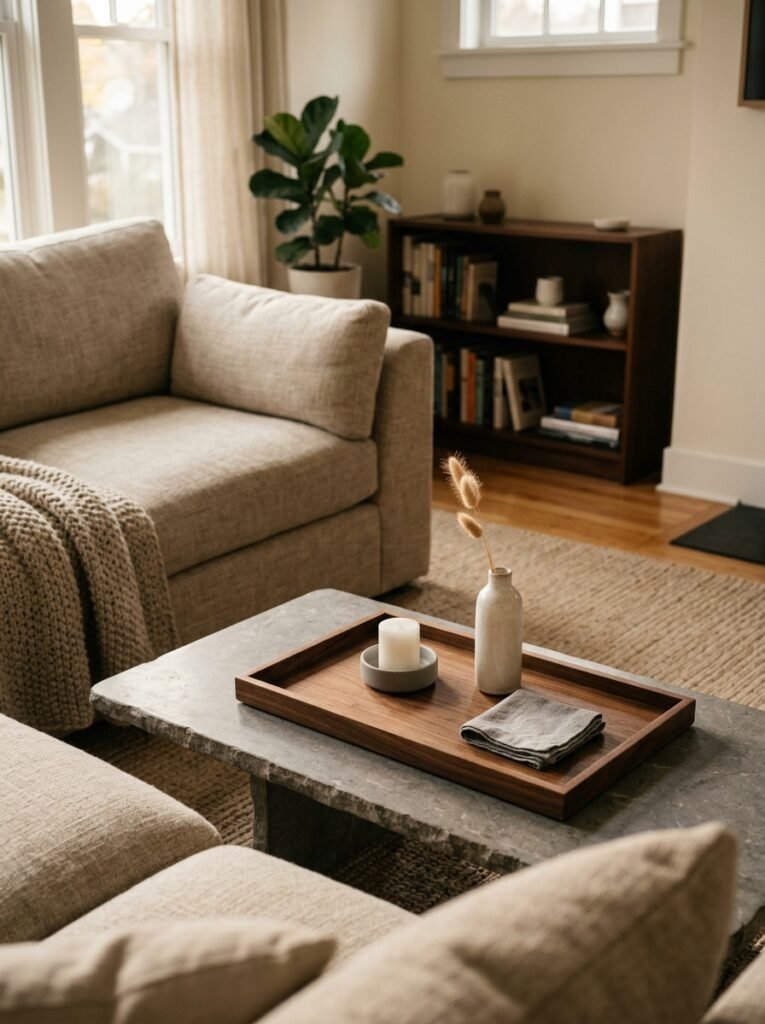
Before anyone arrives, you’ll straighten cushions and light a candle and maybe stress about whether there’s enough seating. But the single move that makes the most difference? It’s not any of that.
It’s the angle of things.
A sofa angled slightly away from the wall — even just a few inches — signals that the room was arranged for conversation, not just for fitting furniture along perimeters. A chair turned slightly toward the sofa rather than facing the television. The coffee table not perfectly centered but pulled a bit closer to the main seating.
These small angles and adjustments make a room feel like it was designed around people rather than around walls. And guests feel it without knowing why. The room just feels comfortable, considered, good to be in. Which is, ultimately, the entire point of a living room.
Not just one that looks good in a photo. One that actually feels good to be inside.
—
❓ FAQ
Q: How do I make my living room look modern without it feeling cold or too minimal? A: Texture is your best friend here. Lean on natural materials — linen, wool, wood, wicker — and layer them. A room can have very clean lines and still feel warm if the surfaces are touchable and the lighting is soft rather than overhead. One or two plants help more than you’d think.
Q: What’s the biggest mistake people make when styling a modern living room on a budget? A: Buying everything at once from the same place. It’s the fastest way to get a room that looks “fine” but has no personality. A slower approach — adding one piece at a time, mixing price points, not worrying about sets — almost always results in a more interesting space, often for less money overall.
Q: How do I know if my living room needs more furniture or less? A: Stand in the doorway and look. If the room feels busy and your eye doesn’t know where to rest, it probably needs less. If there’s an emptiness that makes the space feel purposeless or awkward — not peaceful, but hollow — it likely needs one more thoughtful piece. The difference between “edited” and “empty” is usually one anchor object: a rug, a large plant, a piece of art.
—
💭 Final Thoughts
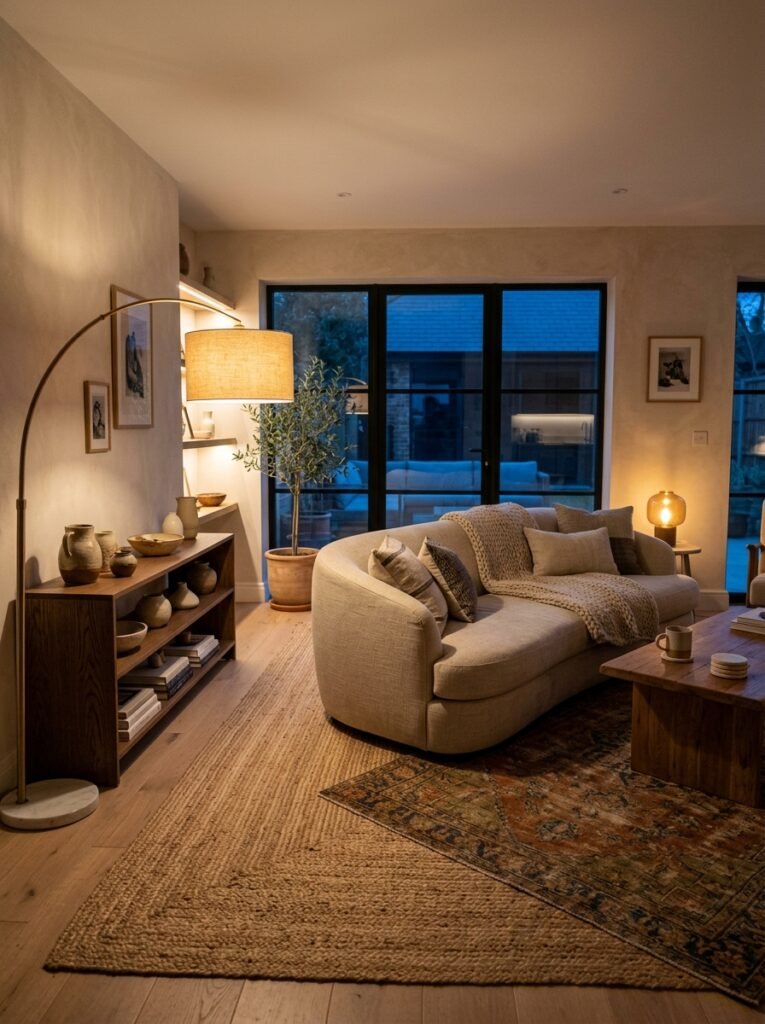
A modern living room isn’t a look you achieve and then maintain forever. It shifts as you do — as you find new things you love, as the light in your flat or house changes with the seasons, as your life stops looking like it did a few years ago. The rooms that feel really GOOD are the ones that give you permission to change your mind.
So maybe the question isn’t “what does a modern living room look like?” Maybe it’s “what does this room want to be for me, specifically, right now?”
What’s the one thing in your living room you’ve always wanted to change but talked yourself out of?