
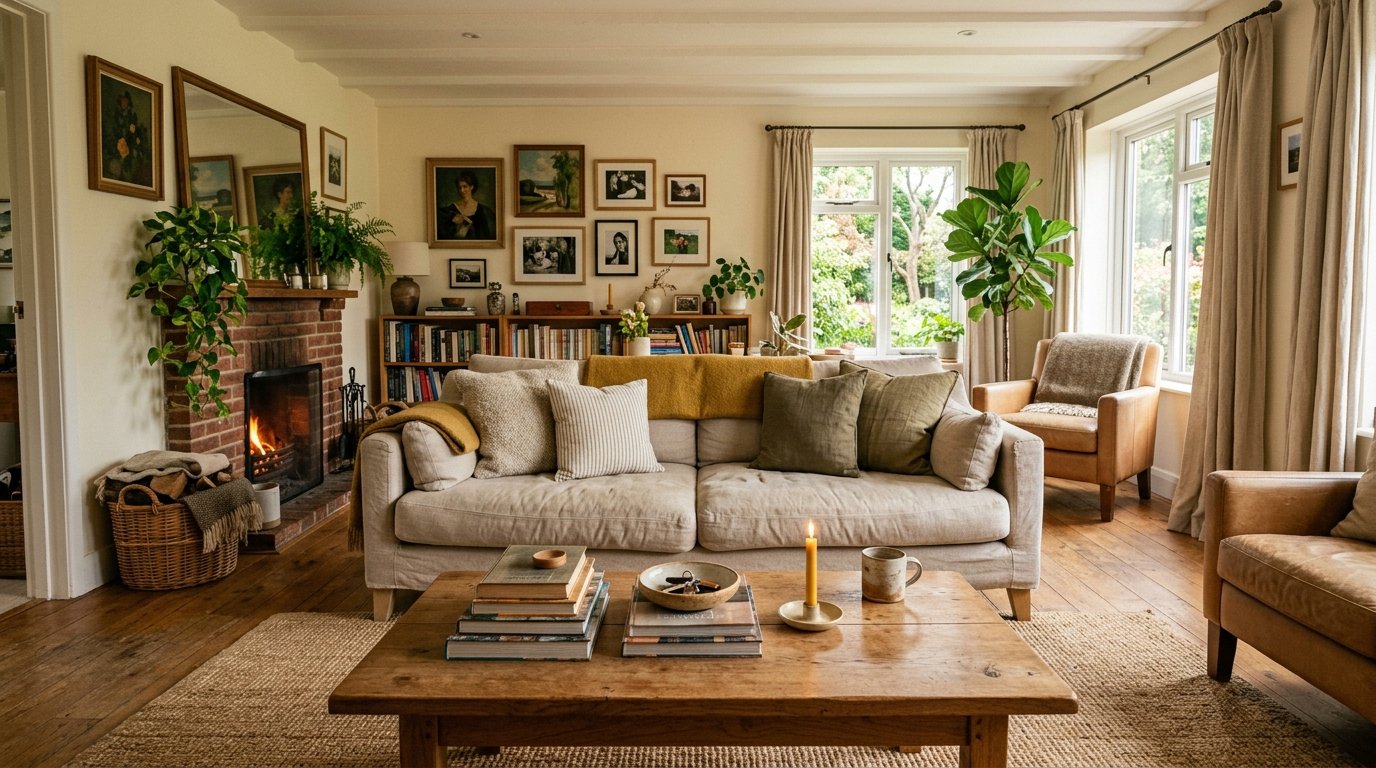
The Living Room Makeover That Cost Less Than You Think (And Looked Better Than Pinterest)
My friend looked at my living room last spring and said, “It’s giving… waiting room.” And honestly? She wasn’t wrong.
I’d accumulated stuff over years without any real intention behind it. A sofa I liked in the shop. A rug that was on sale. Cushions from three different eras of my taste. The room worked but it didn’t feel like anything. No mood, no story, no reason to stay in it longer than you had to.
So I started over. Not with money — I didn’t have loads of that. But with actual intention, a few solid principles, and the willingness to admit that most of what I owned wasn’t worth keeping.
Here’s everything I figured out.
—
1. The First Thing to Fix Isn’t the Furniture — It’s the Light
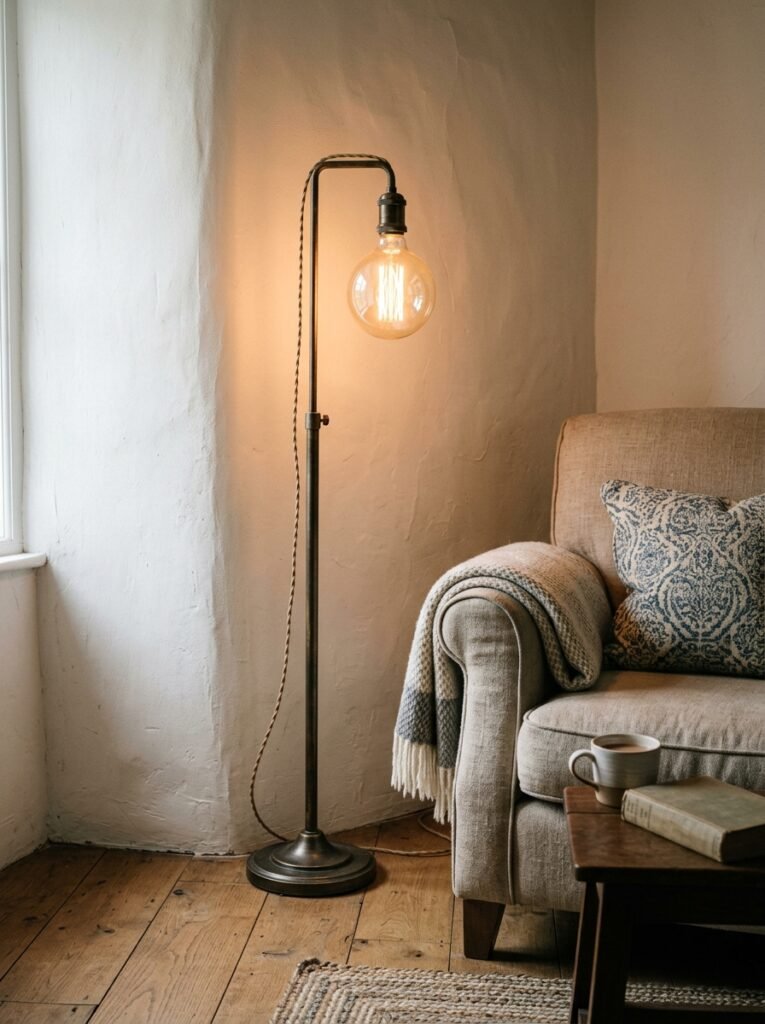
Everyone goes straight to the sofa. New sofa, fresh room, done. But the sofa isn’t what’s making your living room feel flat. Nine times out of ten, it’s the overhead light.
That single central ceiling bulb is doing your room so much harm. It casts flat, shadowless light across everything — no warmth, no depth, no atmosphere. The room looks like somewhere you fill out paperwork.
The fix isn’t complicated. You add layers. A floor lamp in the corner that casts that warm amber glow around 7pm. A table lamp on a sideboard or shelf. Maybe a small plug-in sconce if you want something wall-level. The goal isn’t to flood the room with light — it’s to create these little pockets of warmth that make you want to sink into the sofa at 9pm and not move.
And turn the overhead off. Just try it one evening. You’ll never want to go back.
“The sofa isn’t what’s making your living room feel flat. Nine times out of ten, it’s the overhead light.”
—
2. The Colour That Keeps Showing Up in Every Beautiful Living Room Right Now
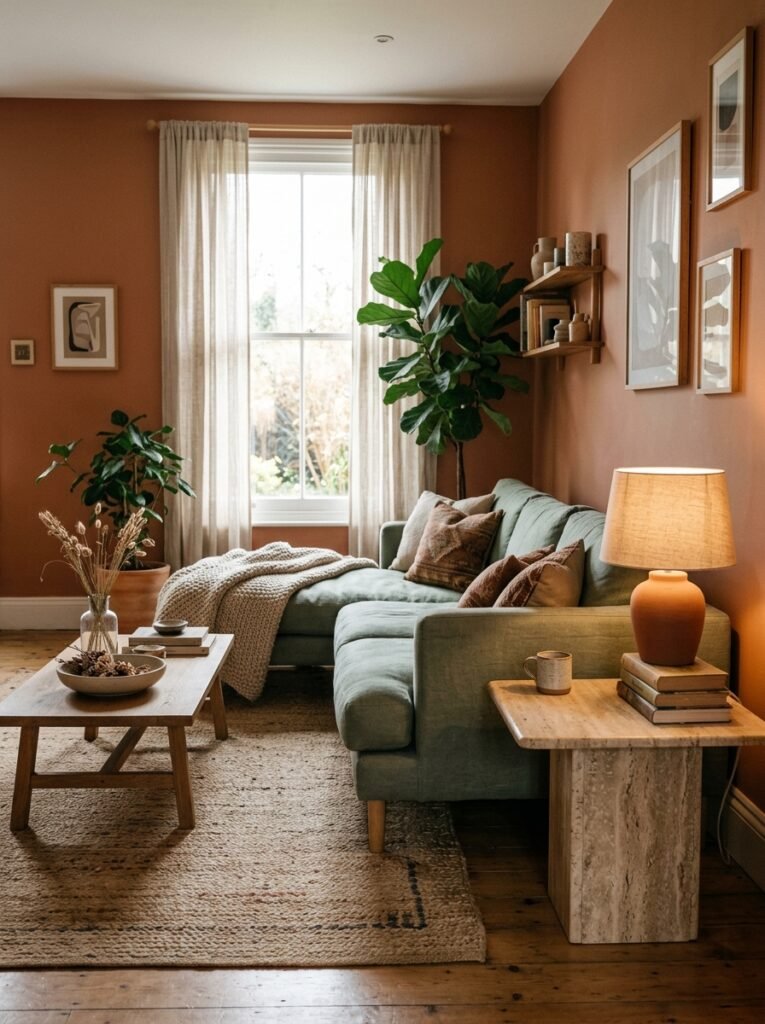
Not grey. Not greige. Not even the endless parade of “warm white.”
I’m talking about a kind of soft, earthy terracotta — not the aggressively orange version you’re picturing, the pale, dusty, almost-clay one that reads more like a blush or a warm stone. It shows up in a cushion, in a throw, in the tones of a wool rug, in the glaze of a ceramic vase. It’s not a bold choice, which is exactly why it works. It grounds a room without dominating it.
Pair it with off-white walls and natural linen or aged wood tones and suddenly everything looks considered. Intentional. Like you actually thought about what goes together rather than just buying whatever was in the sale section.
The British version of this tends toward the cooler, more muted end — think faded brick rather than desert. The American version goes a touch richer and sunnier. Both work. Pick the one that fits your light.
—
3. Why a “Floating” Sofa Changes the Whole Energy of the Room
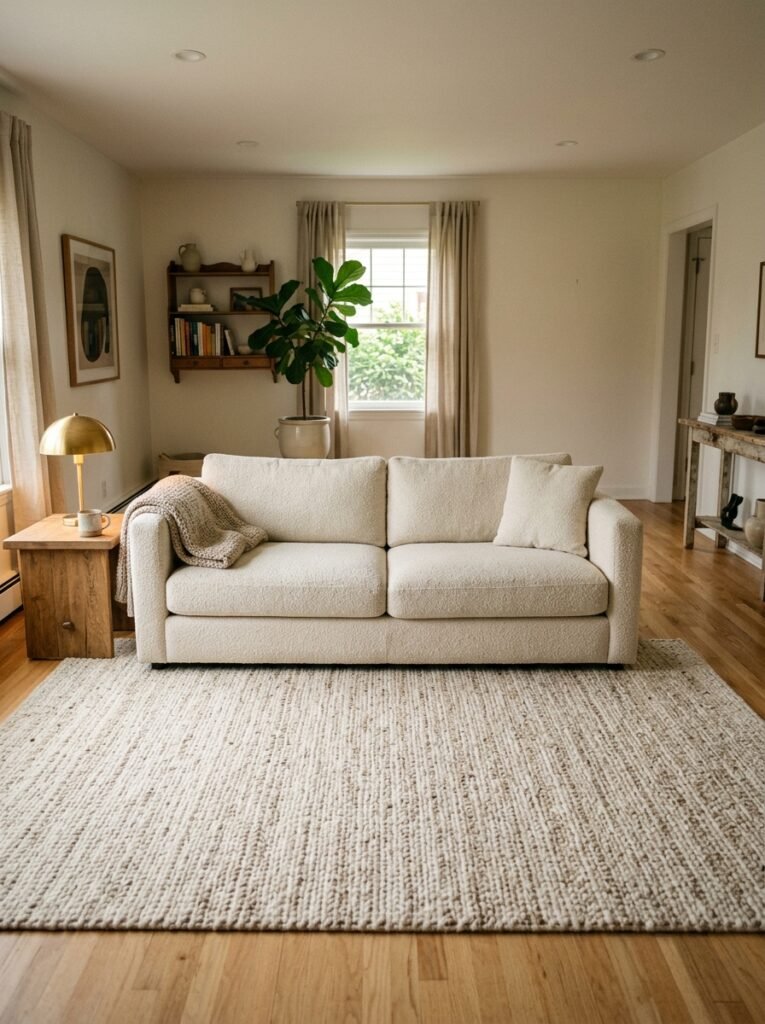
This one makes people nervous. Pulling the sofa away from the wall feels wrong at first, like you’re wasting space that should be used.
But here’s the thing. A sofa shoved against a wall makes a room feel like a queue. Everything lined up, everything against the perimeter, with this weird empty void in the middle that no one knows what to do with. It reads as unfinished even when it’s fully furnished.
When you pull the sofa off the wall — even just a few inches, though ideally closer to 12 to 18 — the whole room exhales. A small rug underneath anchors it, a coffee table in front gives it purpose, and the space behind becomes an intentional gap rather than a mistake. Suddenly the seating feels like a destination. Like the middle of the room is where things happen.
Try it before you decide it won’t work. Most people who try it never go back either.
—
4. The Gallery Wall Rule Nobody Talks About (But Makes the Difference)
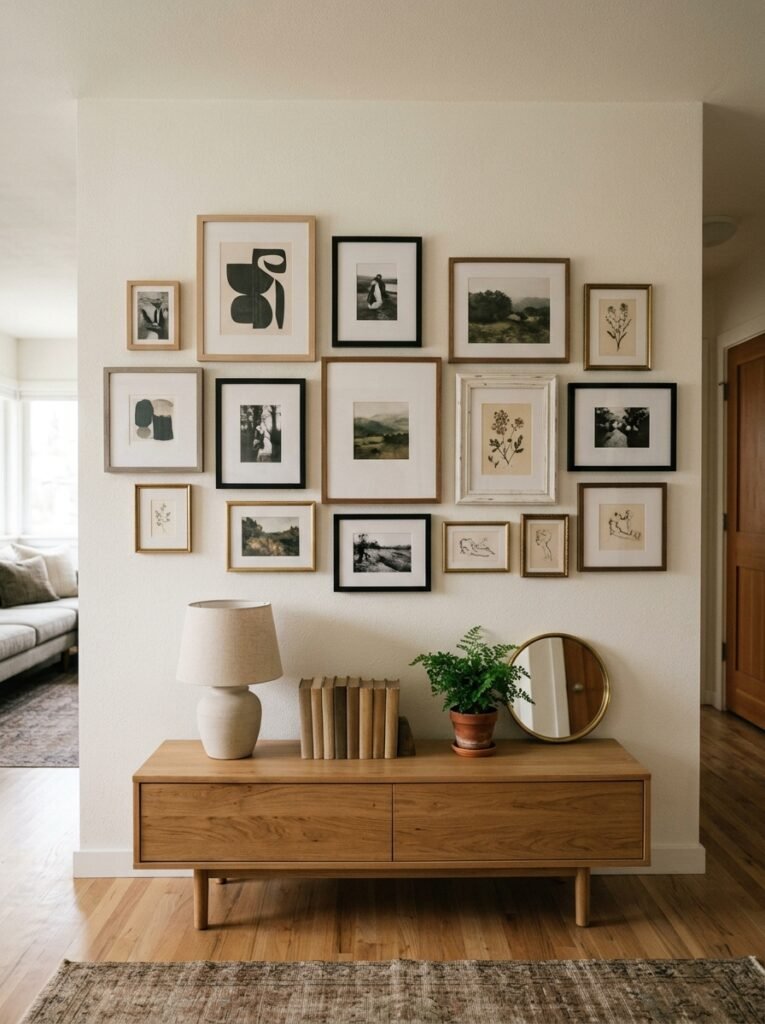
Gallery walls go wrong for one reason almost every time. The frames don’t relate to each other.
Not in style — they can be different styles. Not in colour — they can mix. But in weight. If you put a tiny 4×6 print next to a big A2 poster next to a medium circle mirror, it looks restless. Like the wall is arguing with itself. Every piece is competing for attention and none of them win.
The fix is hierarchy. One large anchor piece — or two medium pieces that sit close enough to read as a pair. Then smaller pieces grouped around or beneath, with consistent-ish gaps between frames. Odd numbers tend to work better than even ones, don’t ask me why, they just do.
And please, I’m begging you — get them level. Or intentionally wildly off-level for that deliberate artsy look. The in-between, slightly-crooked-but-trying-to-be-straight? That’s the one that haunts people.
—
5. The Rug Size Everyone Gets Wrong (And Why It Matters More Than the Rug Itself)
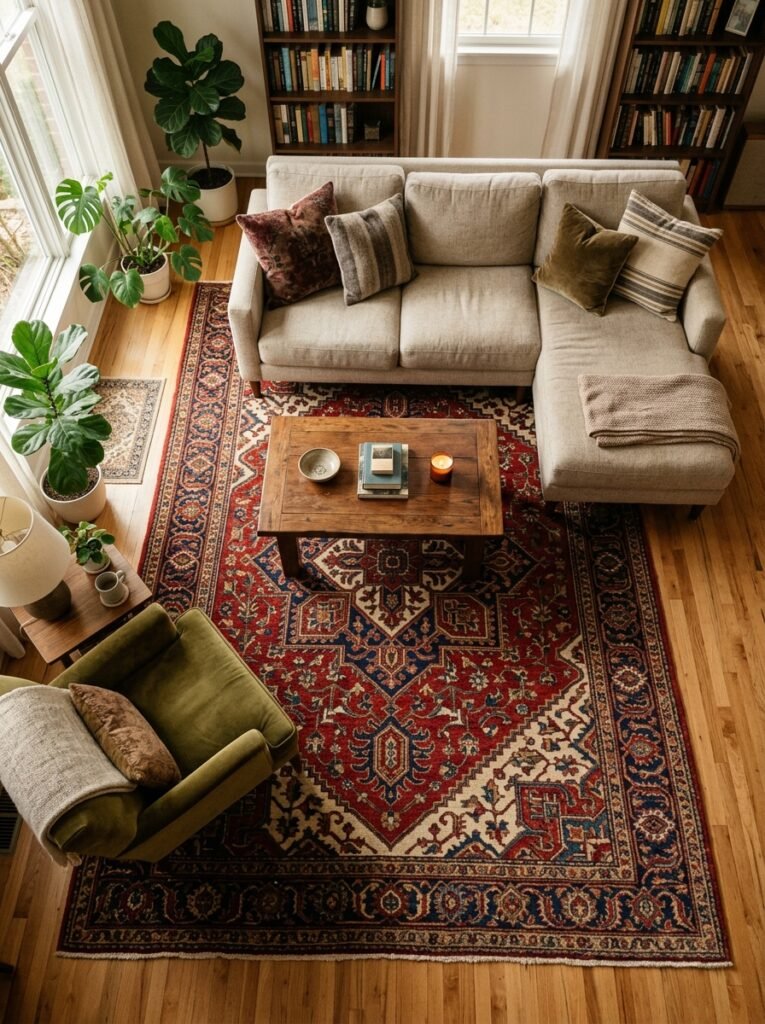
Too small. Always too small.
This is probably the single most common mistake in living room decorating and I’ve made it twice myself before I finally understood why it happens. A rug looks big in the shop. Then you get it home, put it in the room, and it sits there like a tiny island in the middle of the floor with furniture looming around it.
The standard advice is that the front legs of the sofa and main chairs should sit on the rug. If they don’t — if the rug ends right in front of the furniture and leaves everything floating around it — the room will look smaller and somehow more cramped, not less.
When you’re measuring, go bigger than feels comfortable. That thing that makes you a little nervous when you think about the price? That’s probably the right size.
“A rug looks big in the shop. Then you get it home, put it in the room, and it sits there like a tiny island.”
—
6. What Actually Makes a Living Room Feel “Cosy” (It’s Not the Throws)
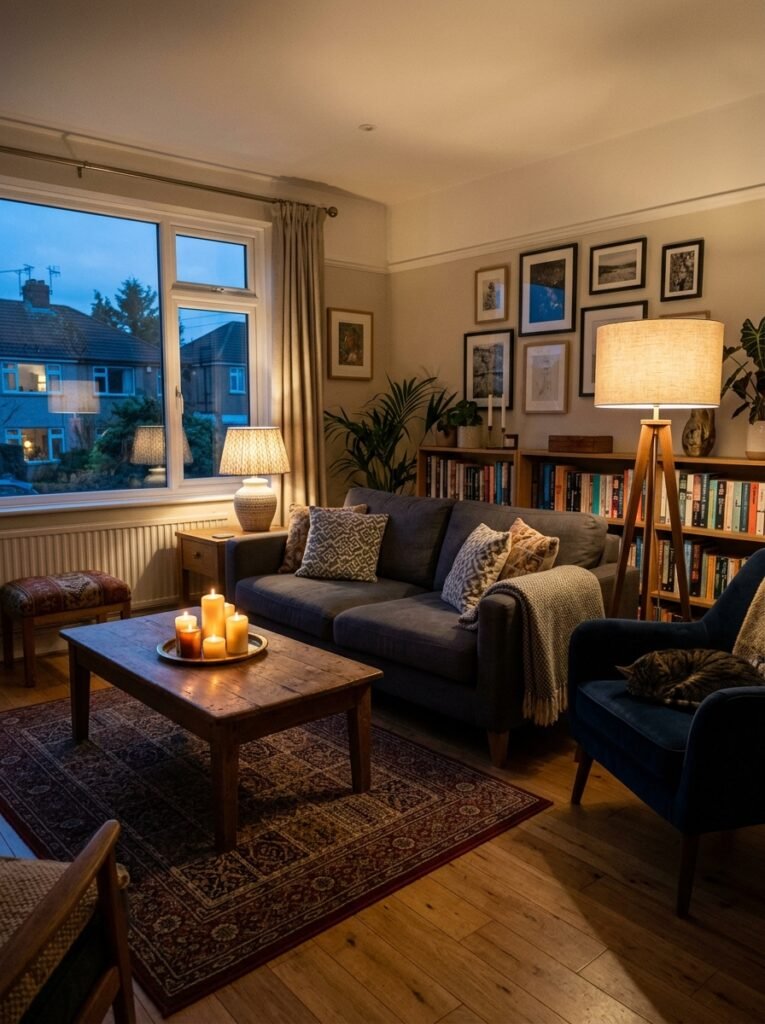
Okay, I like a throw as much as anyone. But the pursuit of cosy doesn’t begin and end with a chunky knit draped over the arm of the sofa.
Real cosiness comes from enclosure. The feeling that the space holds you rather than exposes you. And you create enclosure through height and softness — bookshelves that reach toward the ceiling, curtains hung high and wide, plants that get tall enough to have actual presence in the room.
Low ceilings can work WITH you here if you let them. In a lot of British terraced houses, the living room ceiling is fairly low, and that can feel oppressive or cosy depending entirely on the choices you make around it. Dark walls? Suddenly it’s a cave in the best way. A deep bottle green or a warm charcoal read as intentional in a low-ceiling room in a way they just don’t in a loft.
American homes with open plans have the opposite challenge — all that air to fill. The answer there is usually more furniture groupings, not bigger single pieces, and probably more rugs than you think you need.
—
7. The One Rule That Makes Any Tiny Room Feel Intentional
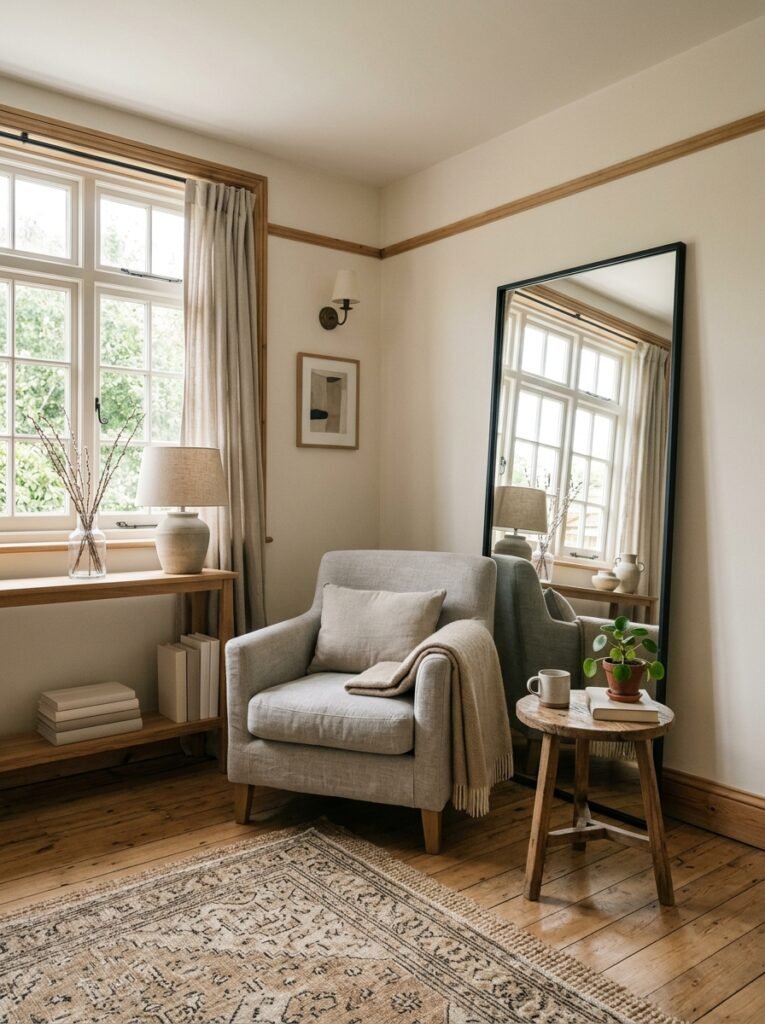
Edit. Brutally, lovingly, without mercy.
A small living room doesn’t need fewer things to look good — it needs fewer things to look intentional. There’s a difference. A room stripped bare looks sad. A room with exactly the right objects, spaced thoughtfully, with breathing room between each one? That looks like a boutique hotel. Or a really beautiful flat in East London. Take your pick.
The stuff that goes is usually: the things you kept because you couldn’t be bothered to decide about them. That decorative basket holding nothing. The side table you never use that’s covered in three things you put there “just for now.” The extra cushion that doesn’t quite match but you tell yourself adds texture.
Start a “maybe” pile. Leave it for two weeks. If you didn’t miss a single item, the decision’s been made for you.
—
8. Curtains Are Doing More Work Than You Realise — Are Yours Earning It?
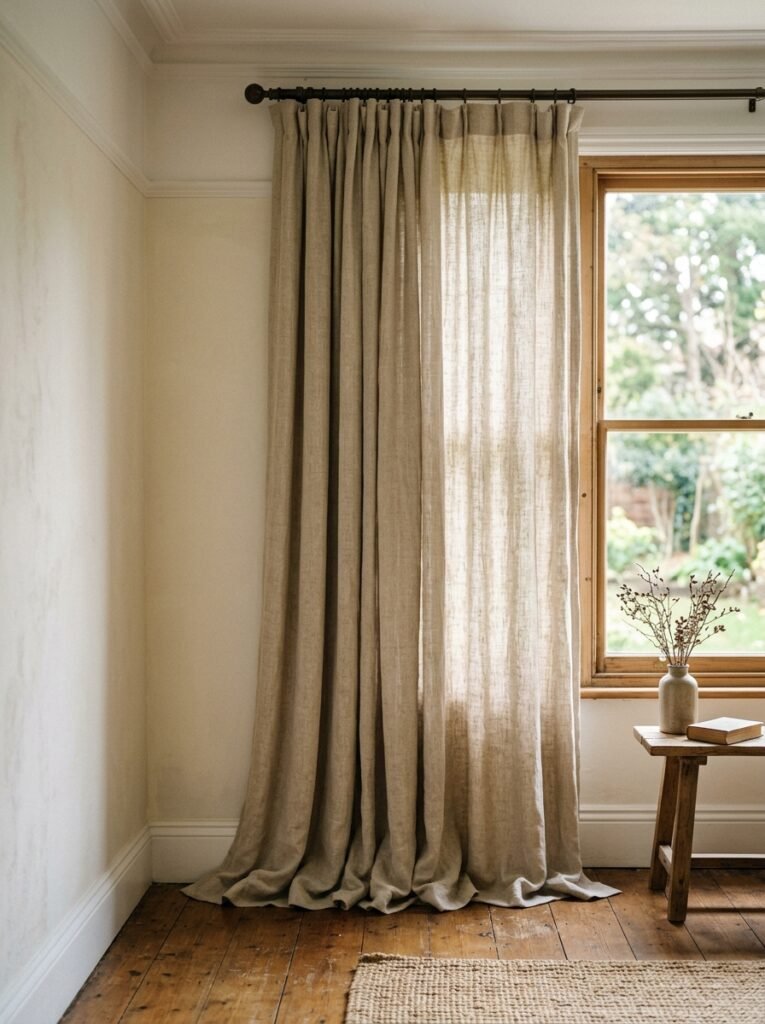
Bad curtains are one of those things that’s hard to spot until you see the difference. You’ve looked at your windows so many times they’ve become wallpaper, so to speak.
Here’s the checklist I’d actually run through:
- Are they hung high enough? Mount the rod as close to the ceiling as possible, not 2 inches above the window frame.
- Are they wide enough? When open, the curtains should clear the glass almost entirely — not eat into the window and block the light.
- Do they pool or hang just right? Curtains that stop half an inch above the floor look like they shrank. Let them graze. Or go full pool if you’re feeling dramatic.
- Do they have enough weight? Thin, cheap curtain fabric falls badly and transmits light unevenly. Lined curtains, or at minimum thicker fabric, make a visual difference that’s startling.
This is one of those changes that costs real money if you’re replacing everything. But even switching from short, unlined curtains to long, lined ones can make a room look ten times more finished.
—
9. The Shelf Styling Trick That’s Actually Achievable at Home
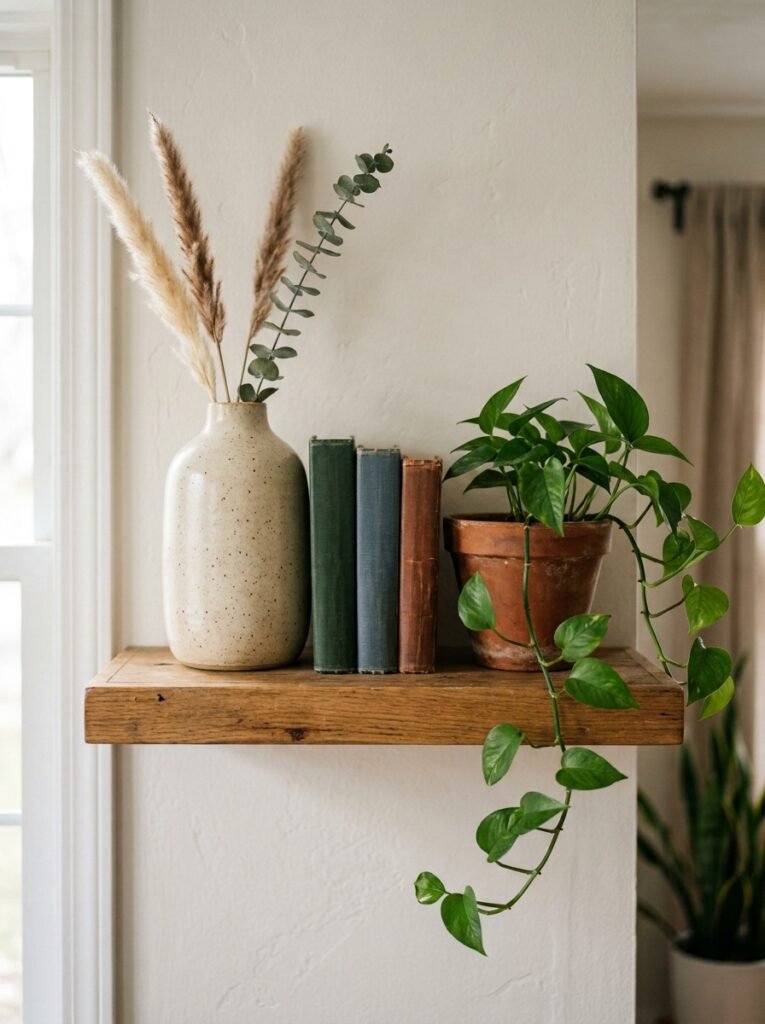
Interior designers style shelves in this very specific way that looks effortless and is actually quite calculated. I spent ages trying to reverse-engineer it.
The trick is thirds. Not every shelf, but as a general principle — one third books (or tall items), one third mid-height objects, one third breathing space. That blank space isn’t empty, it’s rest. It’s where the eye goes to pause before it moves on.
And lean things. A print leaned against books looks better than a print mounted on a shelf, almost always. Something about the casual angle reads as real and lived-in rather than arranged-for-a-photoshoot.
Side note — if every shelf is completely full, the effect is claustrophobic unless you have actual floor-to-ceiling library vibes happening deliberately. Half-full shelves, styled with intention, will always beat crammed shelves stuffed with sentimental objects from 2009.
—
10. How to Mix Old and New Without It Looking Like a Mistake
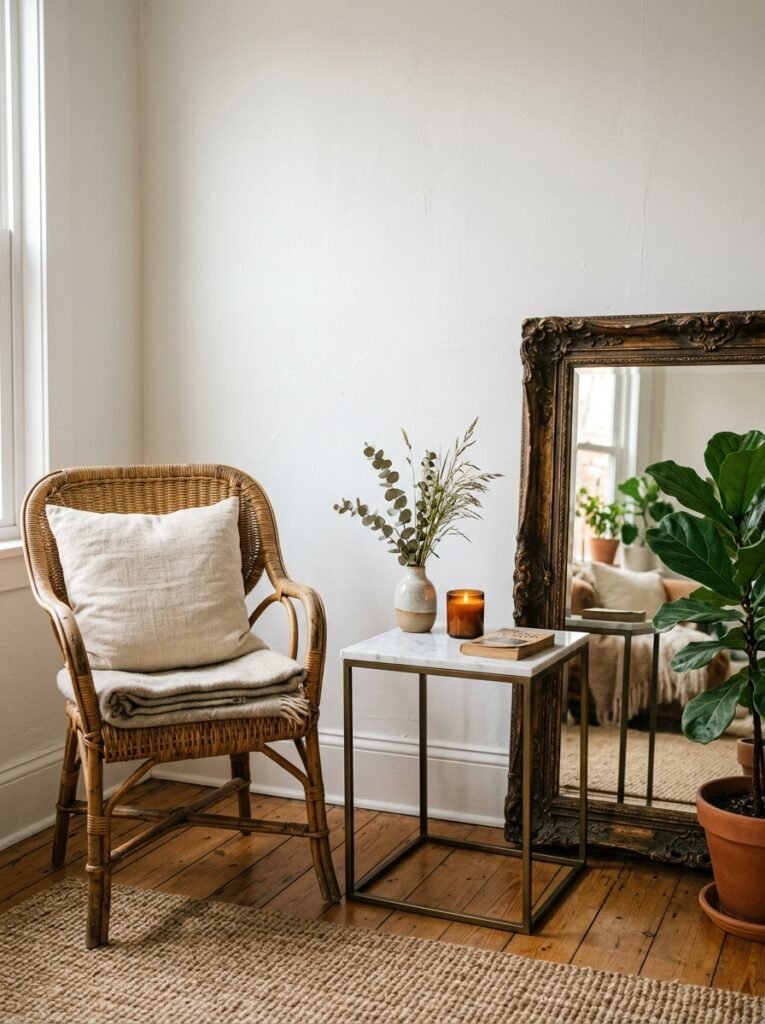
This one’s kind of a confidence game, honestly.
New furniture with new accessories with new décor looks like a showroom. Old with old looks like a museum. But a vintage wooden side table next to a contemporary sofa, or a new clean-lined bookcase styled with antique ceramics — that’s the combination that makes a room feel like a person lives in it. Like you live in it.
The rule, if there is one: pick a consistent finish family and let everything else vary. Warm wood tones, aged brass, matte terracotta — if those are your metals and naturals, then modern shapes and vintage shapes can coexist without argument. Or go cool — brushed silver, pale ash, soft linen — same principle.
What doesn’t work is mixing finish families, not vintage vs new. Warm brass next to chrome next to black steel, all in the same eyeline? That’s the thing making your room look unfinished, not the age of the furniture.
“New furniture with new accessories looks like a showroom. Old with old looks like a museum. That mix in between is where a room starts to feel like someone actually lives there.”
—
11. The Overlooked Corner That’s Probably Making Your Room Look Unfinished
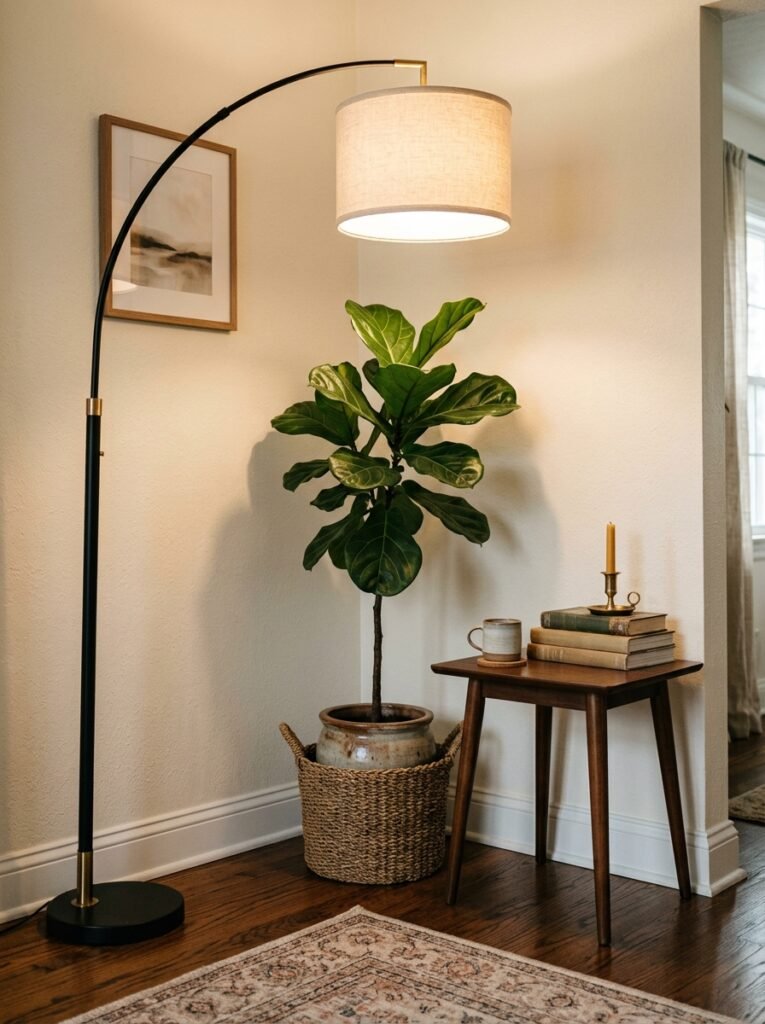
There’s a corner in most living rooms — you know the one — that has nothing in it. Maybe a plant you keep meaning to do something with. Or a floor lamp that got stuck there because you didn’t know where else to put it and now just… lives there.
Corners are opportunities and most people treat them like dead zones.
A tall plant (I mean genuinely tall, not a succulent on a shelf) in the corner adds life and vertical height in a way that almost nothing else does. Add a small table beside it, even a low stool, with something on it — a book, a candle, a small ceramic thing you love. Now it’s a vignette. A tiny composed scene that rewards anyone who looks at it, and makes the whole room feel considered rather than accidental.
You can do this with a corner lamp and a low basket below it. Or a ladder shelf leaned against the wall with objects on the rungs. The point is to make the corner deliberate, not just filled.
—
12. The Thing Worth Spending Actual Money On (And What You Can Go Cheap On)
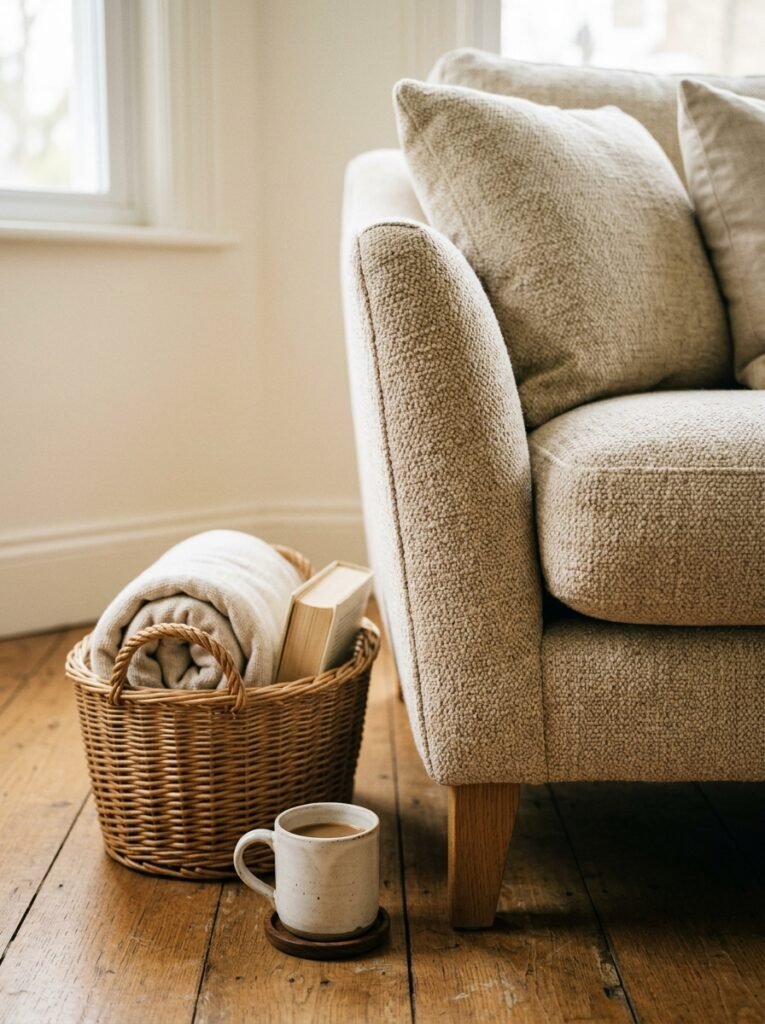
I’ll be direct about this because I’ve made expensive mistakes trying to save money in the wrong places.
Spend on: the sofa, the main rug, the curtains, and the lighting. These four things are doing the heavy structural work of the room. A sofa that sags after two years, a rug that pills and flattens, curtains that look cheap in natural light — these things undermine everything else you do, no matter how many clever accessories you add.
Go more affordable on: cushion covers (easy to update seasonally), small decorative objects, artwork if you buy prints rather than originals, side tables, and trays. These are the pieces you’ll swap out as your taste evolves anyway, and spending a lot on them means you feel guilty replacing them.
The trap most people fall into is inverting this — saving on the sofa because “we can always upgrade later” and spending on accessories because they’re more immediately fun. Later almost never comes. And in the meantime you’re living with a sofa that doesn’t quite work, dressed up with expensive cushions that can’t save it.
Buy the good sofa. Sort the rest out gradually.
—
❓ FAQ
Q: What’s the easiest first change to make in a living room that immediately makes it look better? A: Change your light. Specifically, add a floor lamp or table lamp and turn off the overhead. It costs relatively little and the difference is almost immediate — the room goes from flat to warm in about ten seconds.
Q: How do I make a rented home feel more like my own without making permanent changes? A: Rugs, lighting, curtains, and plants are your best tools — none of them require any drilling or permission. A well-placed large rug, a floor lamp, long curtains on a tension rod, and a tall plant in the corner will transform a rental flat in a weekend. Focus on layers and texture rather than paint.
Q: How often should you actually redecorate your living room? A: There’s no rule, but most designers will say a light refresh every few years — new cushions, swap accessories, maybe repaint — is enough to stop a room feeling stale. Full redecorations every decade or so for most people. The key is not letting “I’ll do it properly later” stop you from making small improvements now, because later tends to stay later.
—
💭 Final Thoughts
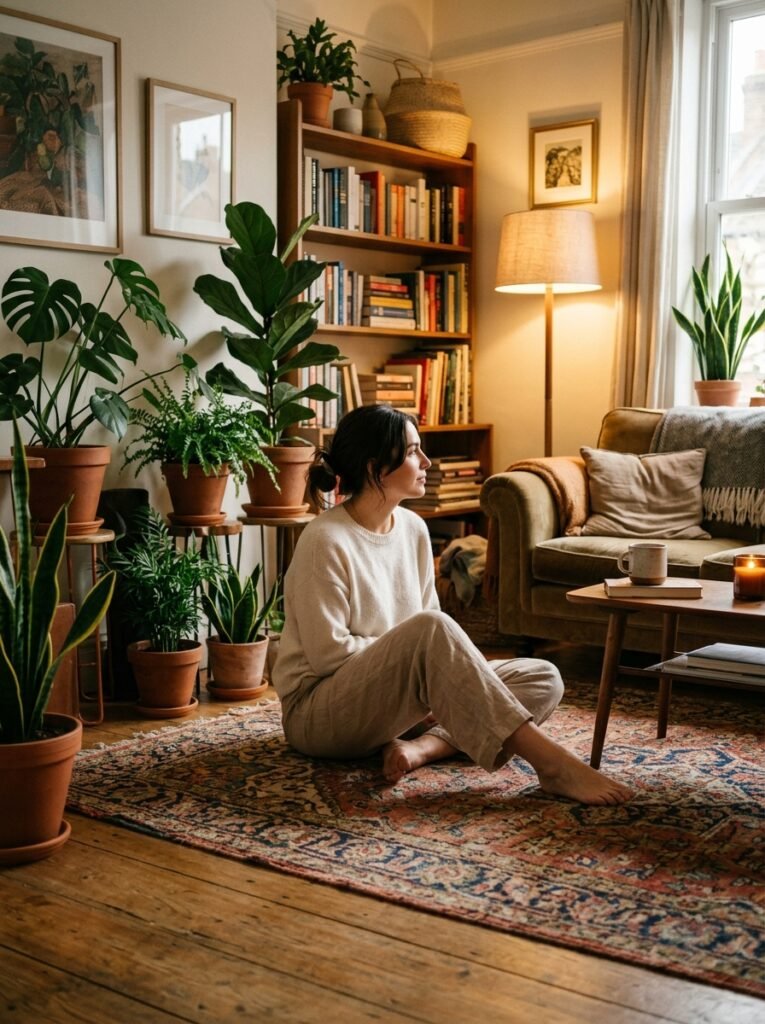
A living room that feels good doesn’t need a budget or a renovation. It needs attention — the kind where you actually look at what’s in the room and decide whether each thing is earning its place. That’s harder than it sounds, because we stop seeing our own spaces after a while. But once you start seeing it again, the solutions tend to be simpler than you feared.
So what’s the one corner of your living room you’ve been quietly ignoring?