
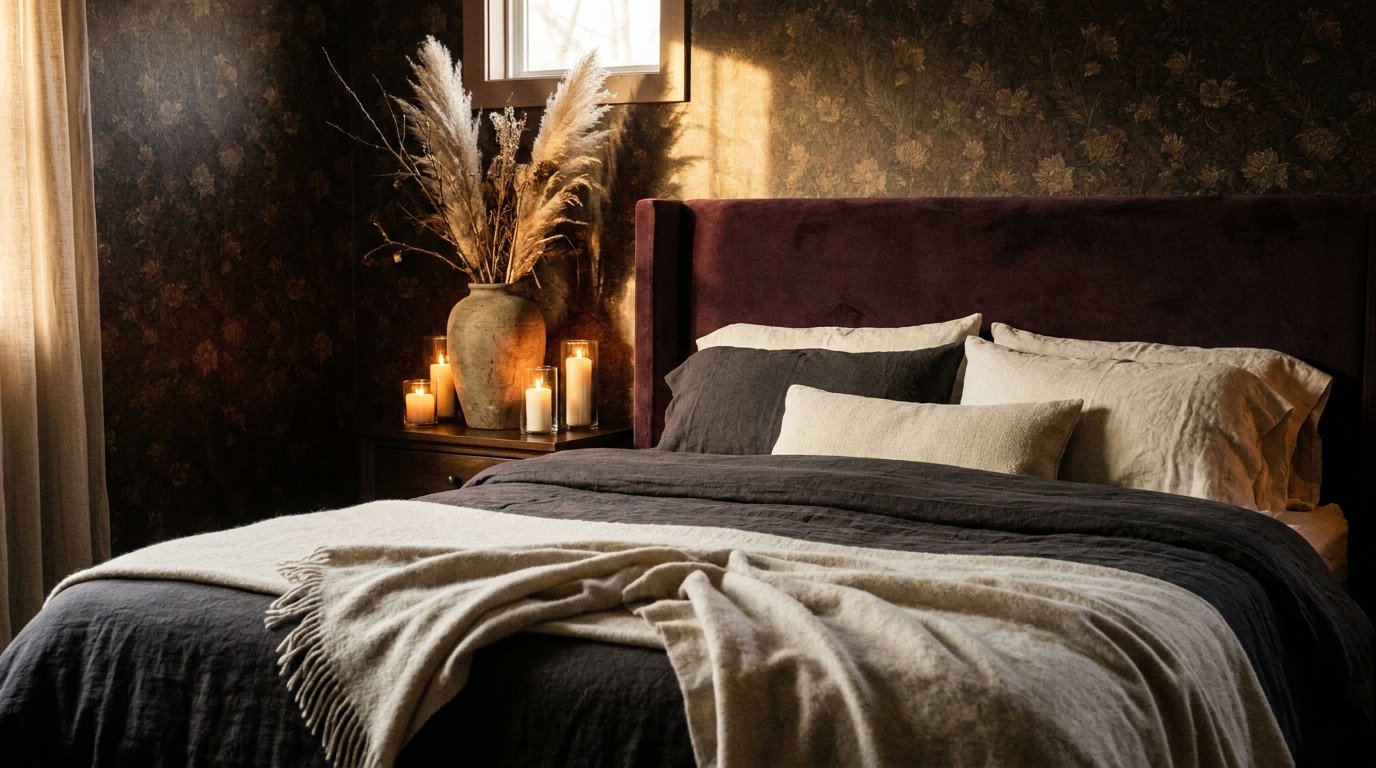
Dark Feminine Bedroom Decor: The Moody, Gorgeous Room You’ve Been Scared to Actually Create
My friend walked into my bedroom last year and said, “Oh, so you’re doing that now.” She meant it as a question. I took it as a compliment.
—
1. Why “Dark Feminine” Hits Different Than Just Painting a Wall Black
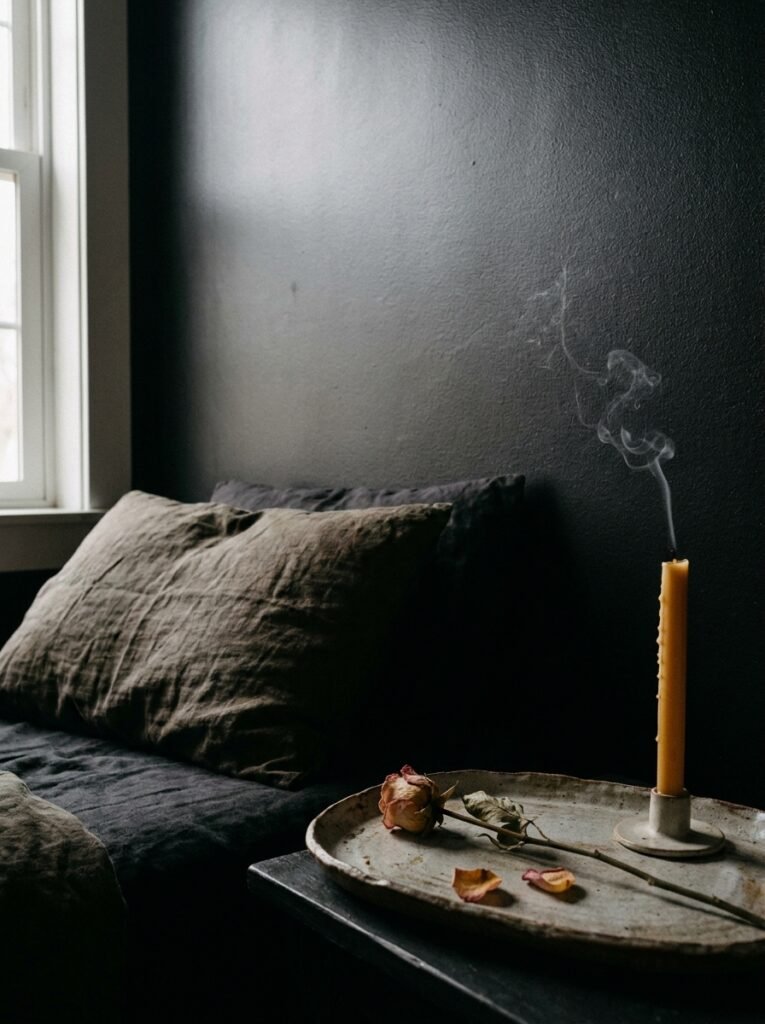
There’s a version of dark bedroom decor that looks like a teenager’s phase. And there’s a version that looks like a woman who knows exactly who she is walked through a velvet curtain and decided to stay.
The difference isn’t really about color. It’s about intention.
Dark feminine design is layered. It’s moody without being depressing, dramatic without being loud, soft in places you don’t expect. Think deep plum walls meeting bone-white linen. Think a single brass candleholder on a dark wood nightstand that you picked up at a car boot sale six years ago. It’s not a “look” you can assemble in an afternoon — it’s a feeling you build slowly.
What makes it distinctly feminine (and I use that word loosely, warmly, not prescriptively) is the deliberate combination of something hard and something tender placed right next to each other. A dark wall with a gauzy curtain billowing across it. A heavy iron bed frame piled with dusty rose pillows.
That tension. That’s the whole thing.
—
2. The Wall Color That’s Replacing Charcoal Gray in Every Gorgeous Dark Bedroom Right Now
Charcoal had its moment. It’s not over, but it’s crowded.
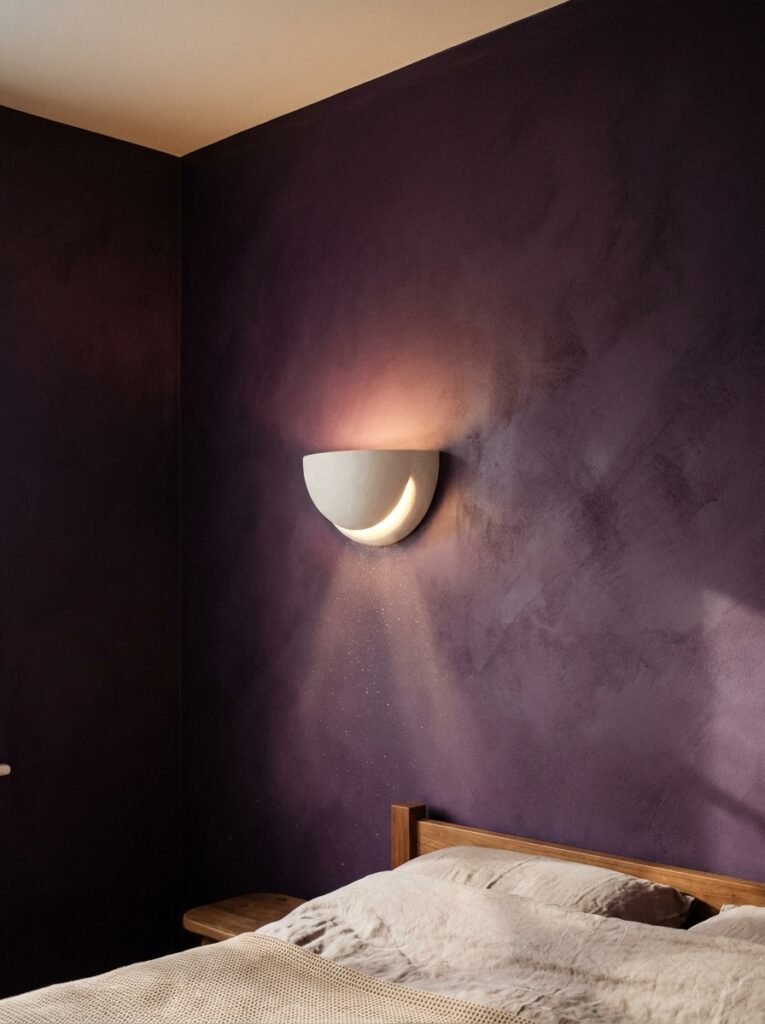
The color taking over? Deep, dusty plum. Or a warm, almost chocolatey aubergine. Not purple-purple — nothing garish — but that bruised, complex tone that shifts from brown to violet depending on how the light hits it.
“The best dark wall colors aren’t one color at all — they move. Morning light makes them brown, candlelight makes them wine, and somehow that’s exactly the point.”
In north-facing UK bedrooms (which, let’s be honest, is most of us), this actually works BETTER than going gray. Gray in low light just looks sad. A warm dark plum in low light looks intentional and rich. It absorbs the room in a way that makes the space feel held rather than shrunk.
For American bedrooms with more light — especially open-plan or south-facing rooms — you can push darker, deeper. Near-black with a warm brown or red undertone. Something that reads black at noon and burgundy at 7pm.
Test it at night. Seriously, don’t choose a dark paint color by looking at it in daylight — that’s how you end up with a wall that looks like a bruise rather than a brooding statement.
—
3. The Bedding Formula That Makes a Dark Room Feel Lush, Not Heavy
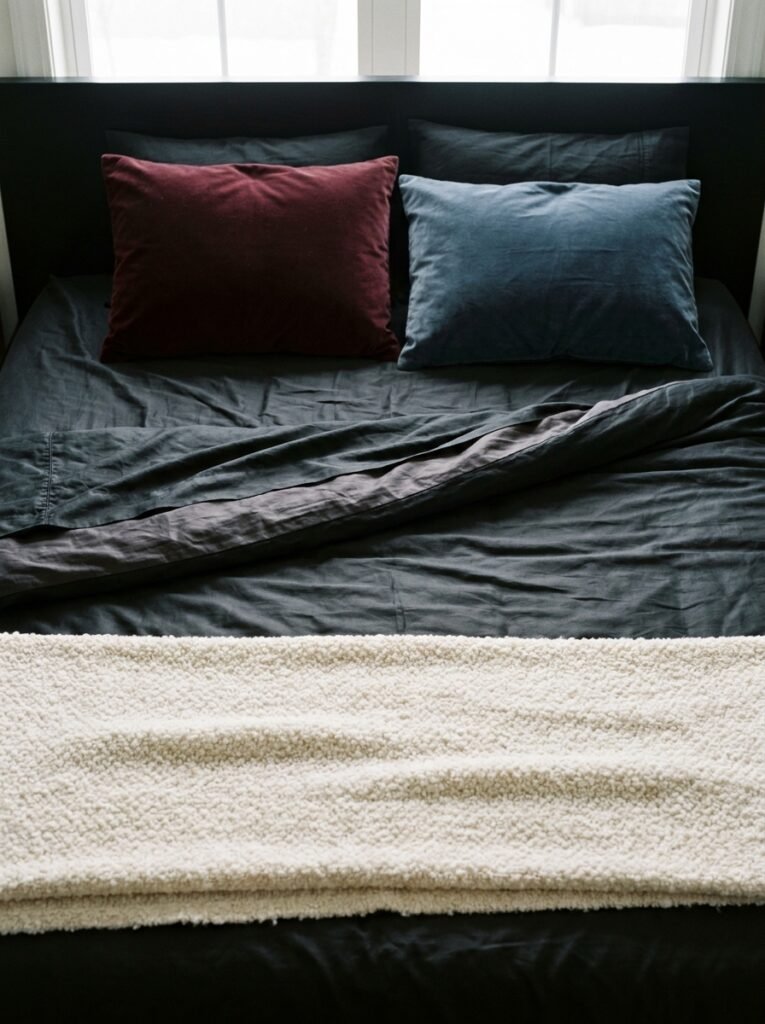
Here’s where people go wrong. They paint the walls dark and then pile on dark bedding and wonder why the room looks like a cave.
The trick with dark feminine styling is contrast, but soft contrast. Not stark white against black. More like… a weathered bone, a dusty blush, an aged ivory. Textures that catch light rather than fabrics that disappear into the wall.
Linen is your best friend here, genuinely. It has this almost organic texture that adds visual warmth even in neutral tones. A flax-colored linen duvet cover on a deep plum-walled room? Stunning. Add a throw in a faded rose or terracotta and suddenly the whole thing feels lived-in and beautiful rather than designed.
One rule I actually believe in: layer at least three different fabric textures on the bed. Not because some style guide said so, but because it looks the way soft things feel, if that makes sense. Smooth, nubby, and slightly sheer all in one place. Velvet cushion, linen sheets, a loose-knit blanket folded at the foot. Done.
—
4. The Furniture Finish That Elevates a Dark Feminine Room Without Matching Everything
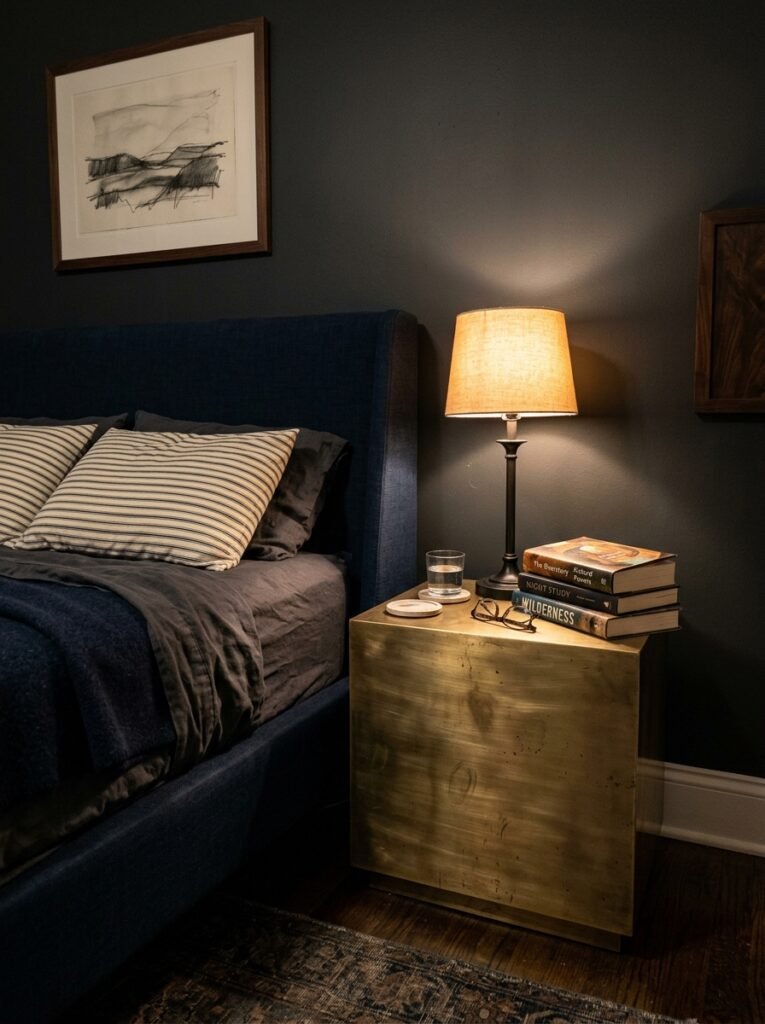
Matching bedroom furniture sets are kind of the enemy here.
What you want instead is a mix of dark and warm. A darker bed frame — dark wood, dark metal, dark cane — paired with a natural wood nightstand that’s a completely different tone. Or a bleached, driftwood-ish piece next to a dark iron frame. The contrast keeps it from feeling like a catalog page.
Curved furniture does something for dark rooms specifically. A rounded mirror, a curved bedside table, a softly arched headboard — they all pull back against the heaviness of the walls. Hard lines make dark rooms feel oppressive. Curves make them feel romantic.
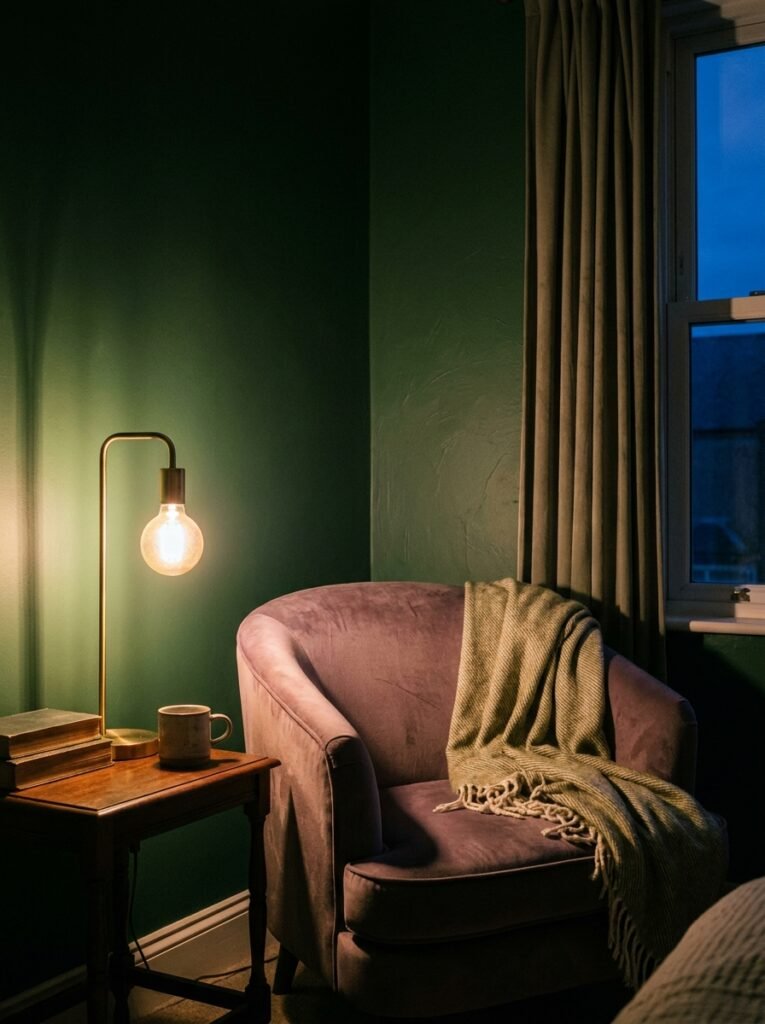
Brass is the metal that goes with everything in this palette. Not gold — brass. Slightly warm, slightly aged. A brass reading lamp, a brass-handled drawer on an otherwise plain nightstand. Small doses. You don’t need much.
—
5. The Lighting Secret Nobody Talks About in Dark Bedroom Guides
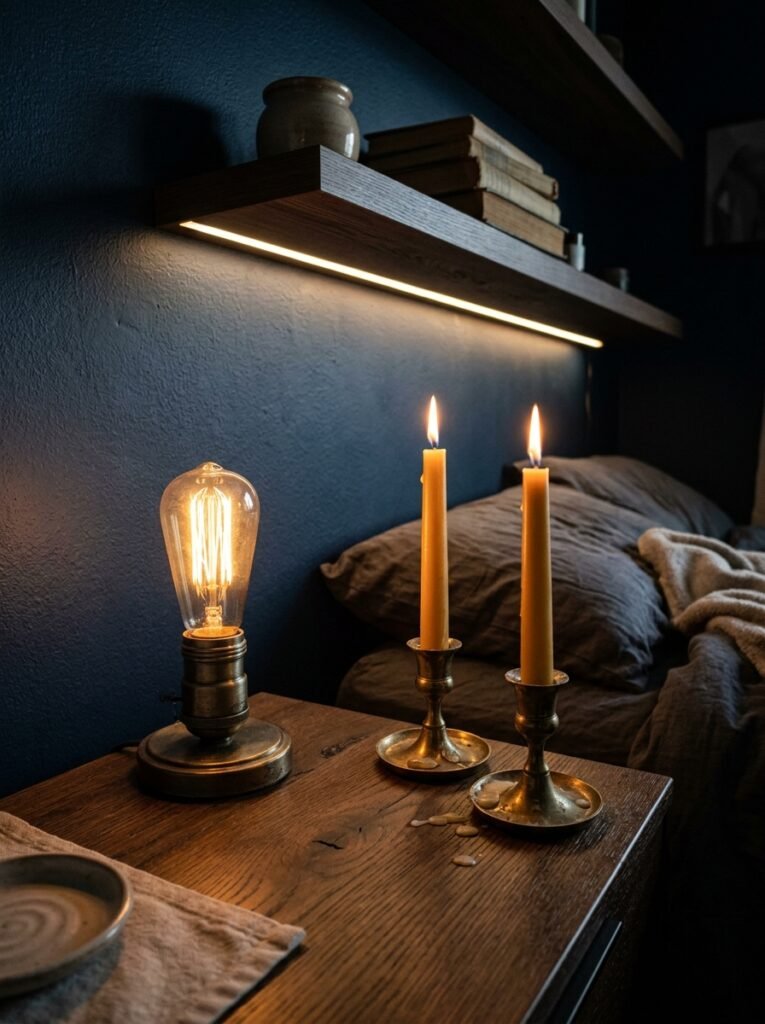
Overhead lighting is DEAD in a dark bedroom. I cannot stress this enough.
One bright overhead light in a dark-walled room is the fastest way to make it look like an interrogation room. The whole mood collapses. You’ve spent time and money creating this beautiful moody space and then you turn on the ceiling fixture and it’s over.
What you want instead: layers of warm light at different heights. A small lamp on each nightstand. A low-wattage floor lamp in a corner. Candles on a dresser, not for decoration — actually lit. Fairy lights strung along a curtain rod or tucked inside a glass vessel on a shelf.
The bulb temperature matters a lot. You want warm white, not cool white. Around 2700K if you’re buying smart bulbs and have the option to choose. The difference between a room that feels like a cozy cave and one that feels like a cold spa is often literally just the bulb.
“Overhead lighting is the fastest way to ruin a dark bedroom. One dimmer switch and a pair of warm nightstand lamps will do more for the mood than anything else in this article.”
Side note — dimmers. If you’re renting and can’t install a dimmer, a smart plug with a dim function will change your life. Or a lamp with a built-in dimmer switch. I’m serious about this.
—
6. Why Mirrors in Dark Rooms Work Differently Than You Expect
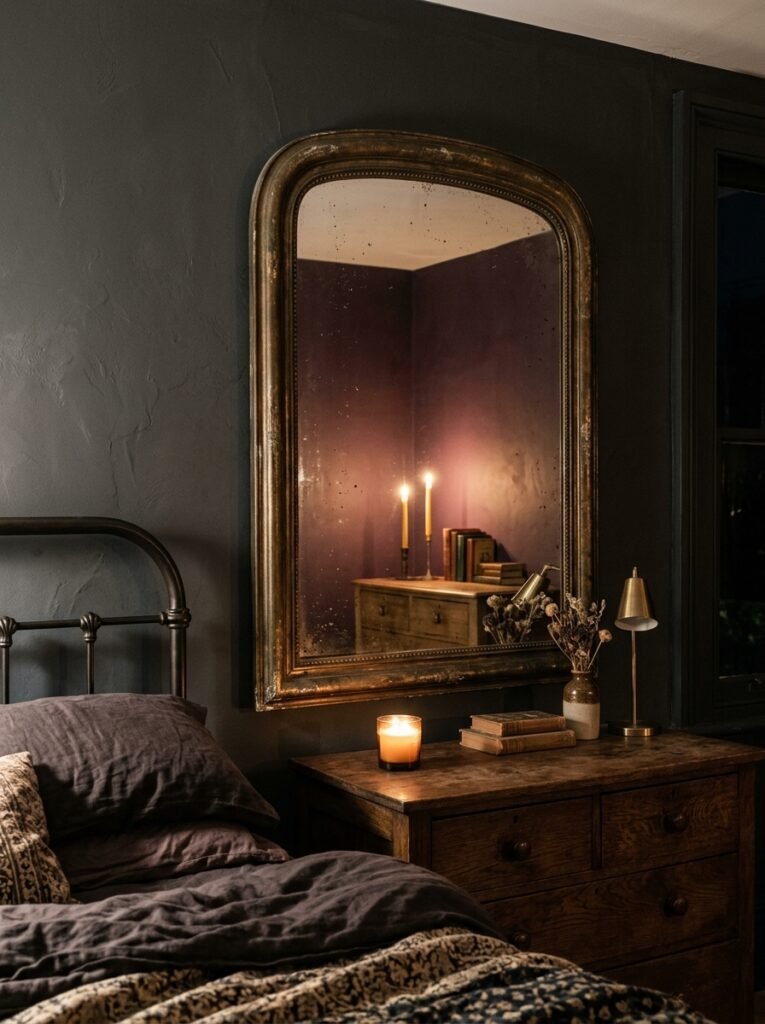
Most people hear “dark room” and think mirrors will help because they bounce light. And they do — but that’s not why you use them in a dark feminine bedroom.
You use them because of the reflection itself. A large, slightly vintage-framed mirror in a dark room doesn’t just add light, it adds depth. The image in the mirror looks richer, darker, more layered than the room itself somehow. It’s that thing where a photograph of a dark room often looks more beautiful than being in it — the mirror creates a similar effect in real life.
Frames matter enormously. An ornate gilded frame, a simple dark wood oval, a smoky antique mirror that doesn’t reflect perfectly — all of these are great. A plain rectangular frameless mirror from a big box store is not. The frame is the decoration, basically.
—
7. The Plants That Actually Belong in a Moody Bedroom Palette
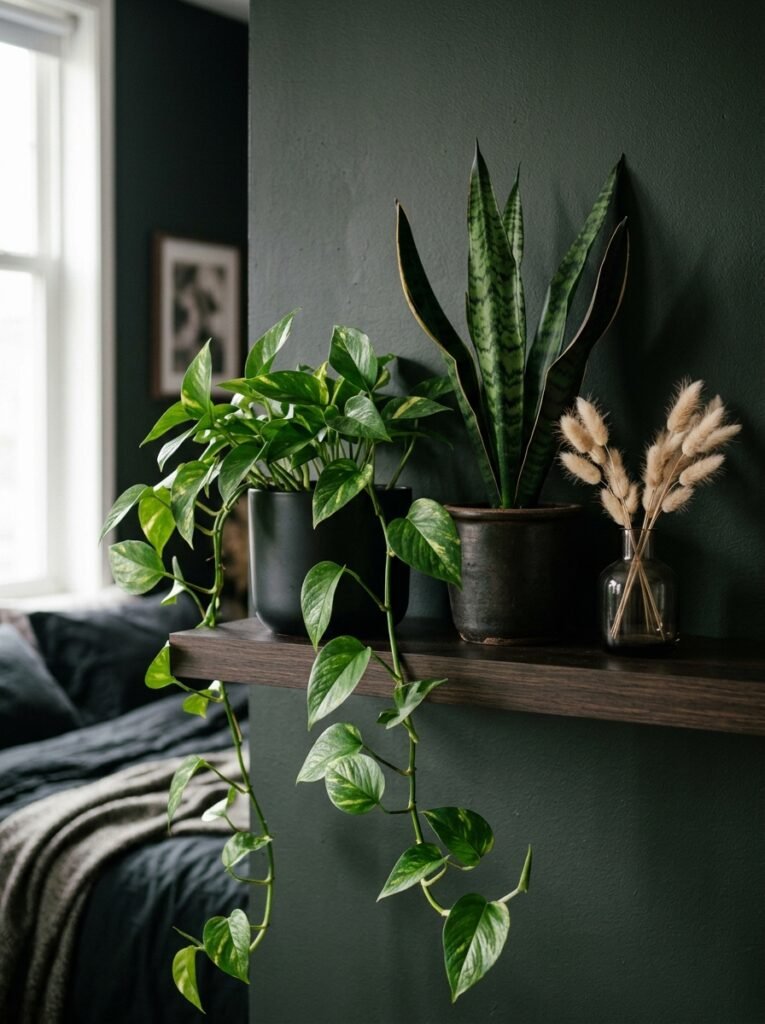
Not all plants work in a dark feminine bedroom. I know that sounds ridiculous — a plant is a plant — but hear me out.
Bright, tropical green plants with big glossy leaves can look slightly off against deep wall colors. They’re almost too cheerful. What works better here are plants with darker, more complex coloring. Deep burgundy-leafed plants — there are a few species with leaves that almost look black in low light. Trailing plants in dark or terracotta pots. Dried botanicals in moody tones: dried pampas in a blush or natural tone, dried florals in deep plum or dusty rose, a single dried branch in a tall narrow vase.
Honestly? Dried flowers work BETTER in a dark room than fresh ones. Fresh flowers need brightness to show off their color. Dried botanicals lean into the moody, slightly time-worn quality that’s exactly the aesthetic you’re after.
A small snake plant in a dark matte pot. A trailing plant spilling off a high shelf. Neither needs much light, both look good in this palette.
—
8. How to Layer Scent Into a Dark Feminine Room So It Feels Complete
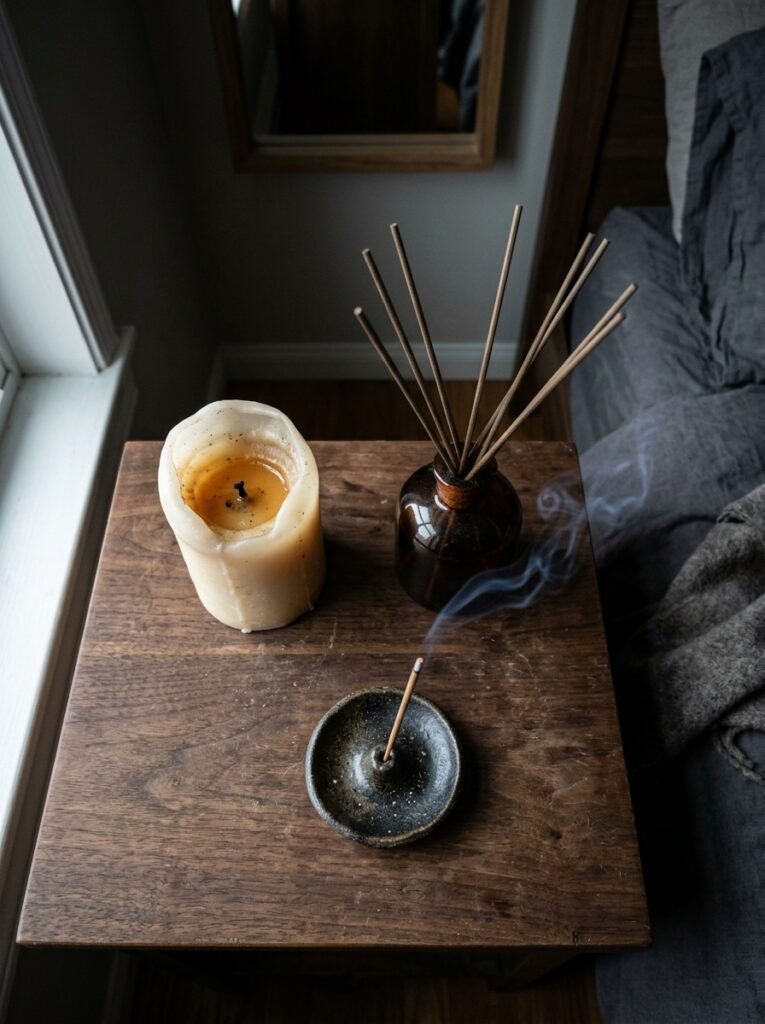
This is the detail that sounds a bit extra until you do it and realize you can’t go back.
A dark feminine bedroom should smell as intentional as it looks. Not perfumey or overwhelming — more like… a specific atmospheric quality. Warm, a little woody, slightly dark. Think oud, sandalwood, fig, black tea, or something with a faint smokiness.
Candles are the obvious answer but wax melts actually give you more control over intensity. A reed diffuser in a corner keeps a low, constant background scent without you having to think about it.
The point is that scent is the thing that completes an atmosphere in a way that no amount of visual styling can. You walk into a room that smells right and your whole body relaxes. The combination of the visual mood AND the olfactory mood is the full experience. And most people skip the second half entirely.
—
9. Curtains and Textiles: The Choices That Either Make or Ruin the Whole Room
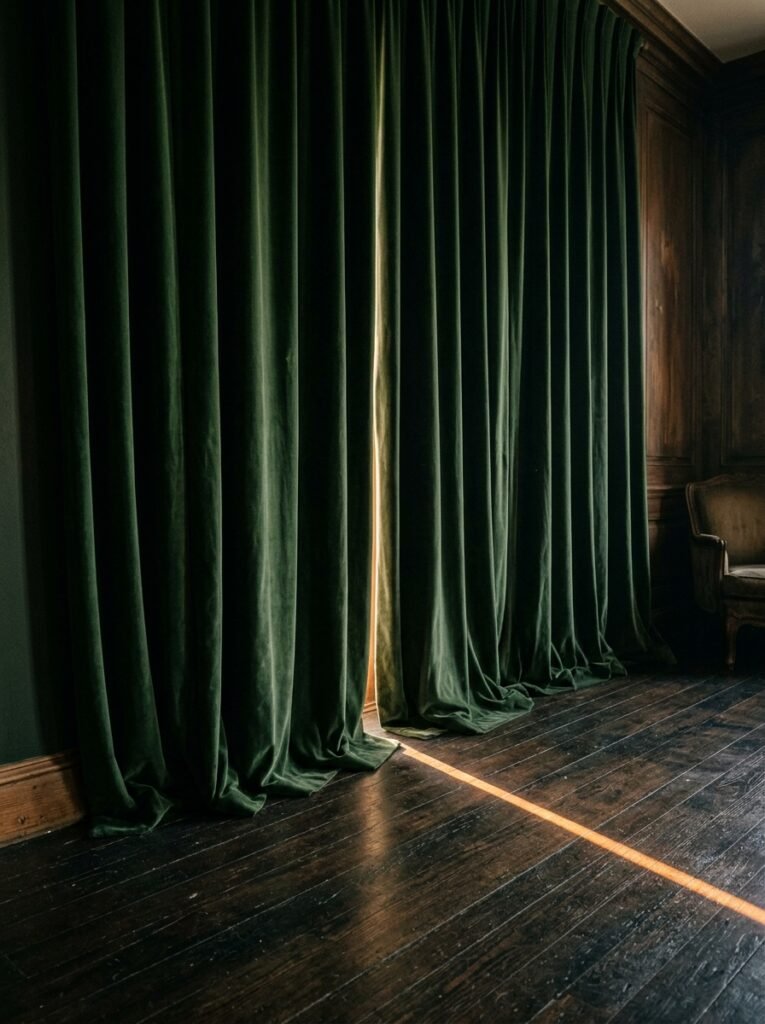
Curtains in a dark bedroom are load-bearing elements. They’re not an afterthought.
The best curtains for this aesthetic are floor-length, and I mean actually floor-length — pooling slightly at the bottom, or at minimum just kissing the floor. Short curtains in a dark feminine room look wrong in a way that’s hard to explain but very hard to unsee once you notice it.
“Curtains that pool slightly on the floor don’t look messy — they look like something from a painting. It’s one of those things that’s technically ‘wrong’ and completely right.”
Heavy velvet curtains in a dark tone (deep emerald, midnight navy, aubergine) are spectacular and also practical — they block light really well, which is actually great if you’re a late sleeper or have a bedroom that faces east. But if that feels like too much darkness, a sheer underneath a heavier drape gives you the best of both — gauzy softness against the wall during the day, drama and blackout when pulled.
For non-UK readers: blackout linings are widely available as add-ons to any curtain panel. Worth it every single time in a bedroom.
—
10. The Small Details That Signal “Intentional” Rather Than “Dark for Dark’s Sake”
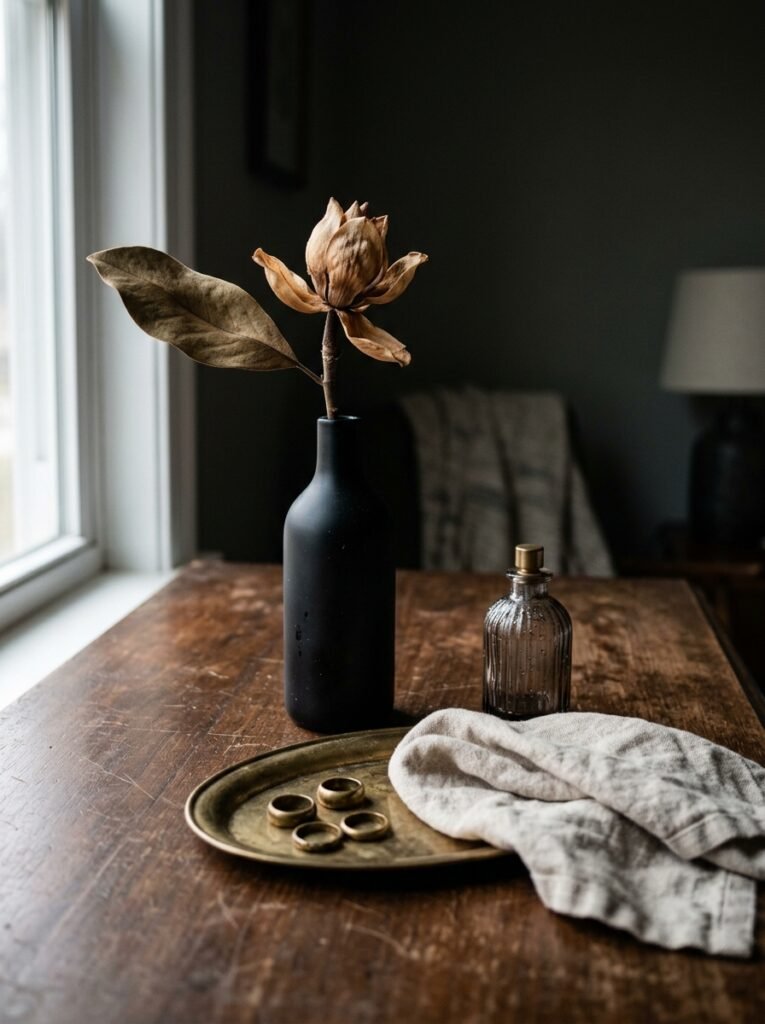
This is sort of the make-or-break category.
Books stacked on the nightstand with their spines facing away (the pages showing) — that slightly editorial look. A single perfume bottle on a tray rather than a cluster of random things. A framed piece of art that isn’t just a print everyone has, but something slightly unusual. An interesting object — a piece of pottery, a small sculpture, something old — placed deliberately.
Trays. Genuinely, a small dark or brass tray corrals things on a nightstand or dresser and instantly makes them look curated. Without it: chaos. With it: styled.
The other big one is cord management. A beautiful dark bedroom with white charging cables dangling off the nightstand is a vibe killer. Dark cable clips, a nightstand with a built-in cable hole, or even tucking the cable behind the nightstand is worth the five minutes.
Small things. But they accumulate.
—
11. The One Piece You Should Save Up For (It Changes Everything)
If you’re going to spend more on one single piece in a dark feminine bedroom, make it the headboard. Specifically: an upholstered headboard, floor-to-ceiling or close to it, in a dark, textured fabric.
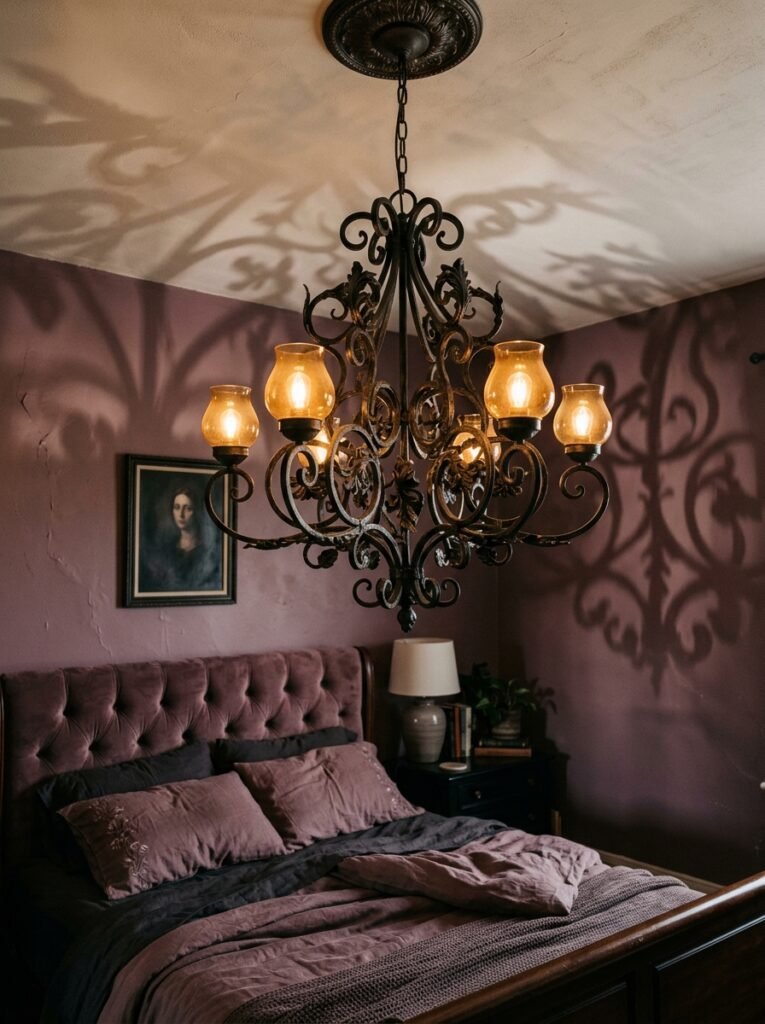
I’m not exaggerating when I say this is probably the highest-impact single purchase for this aesthetic. A tall upholstered headboard in deep charcoal velvet, or dark taupe boucle, or even a deep forest green linen — it anchors the entire room. The bed becomes the focal point it’s supposed to be. Everything else arranges itself around it.
If a full reupholstered headboard isn’t in the budget right now, a wall-mounted panel of fabric or a DIY padded panel achieves a similar effect for a fraction of the cost. Many people have done this beautifully with a piece of dark fabric stretched over a thin board. It genuinely looks stunning if you choose the right fabric.
But if you’re saving up for one piece. That’s the one.
—
12. The Styling Mistake Most People Make When They Finally Go Dark
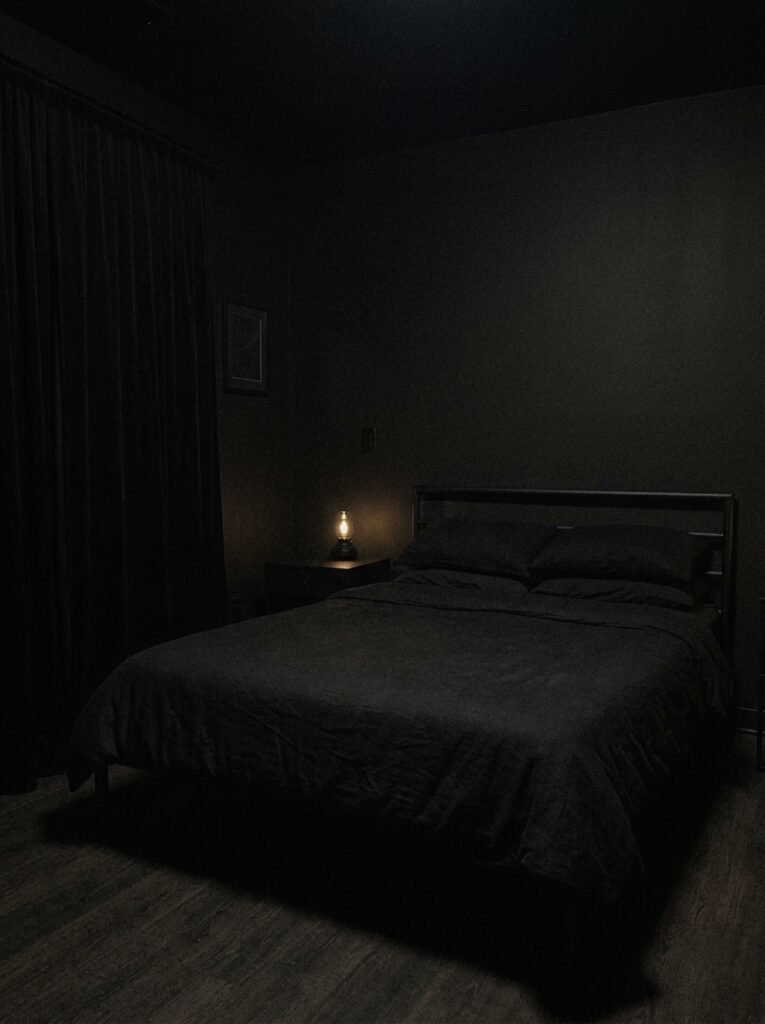
They stop halfway.
I see this constantly — someone paints one wall deep and leaves the other three beige. Or they add dark bedding but keep the blond wood furniture and bright white curtains. And then they look at the room and feel like something’s off, but they’re not sure what it is.
What’s off is that the room doesn’t know what it is yet. Dark feminine decor isn’t a single statement piece — it’s a conversation between all the elements. If some of the room is dark and intentional and others are just… leftover from before, the whole thing reads as unfinished.
You don’t have to go dark on every surface. But you need to acknowledge the dark elements in every part of the room. A light piece of furniture next to a dark wall works — if that furniture has a dark detail, or a dark object placed on it. The connection needs to be visible.
Go all the way. Or don’t start. That’s honestly my take.
—
❓ FAQ
Q: Will a dark bedroom make a small room look smaller? A: Not necessarily, and here’s why this deserves a longer answer than “no.” Dark walls remove the visual boundary of the room — you stop seeing where the walls are and start seeing the space itself. Many people find small dark bedrooms feel more like a cocoon than a box, which reads as cozy rather than cramped. The key is to keep larger pieces (furniture, bedding) lighter in tone to maintain contrast.
Q: Is dark feminine decor hard to change later if I get tired of it? A: Dark paint is only slightly harder to cover than light paint — you’d likely need a primer coat and two coats of the new color, same as you would going from any saturated hue to white. The bigger investment is really in the soft furnishings (curtains, bedding) which are easy to swap. Paint a whole room, live in it for a while. You might surprise yourself with how much you love it.
Q: Can I do dark feminine decor in a rented property where I can’t paint? A: Completely, and actually it’s a great exercise in understanding how much color painting the walls actually IS versus what you can achieve with everything else. Dark, heavy curtains, dark bed frame, layered moody textiles, warm lighting, and deliberate accessories will take you a long way. Some people also use removable wallpaper in darker tones — it’s come a long way in quality and realistic texture over the last few years.
—
💭 Final Thoughts
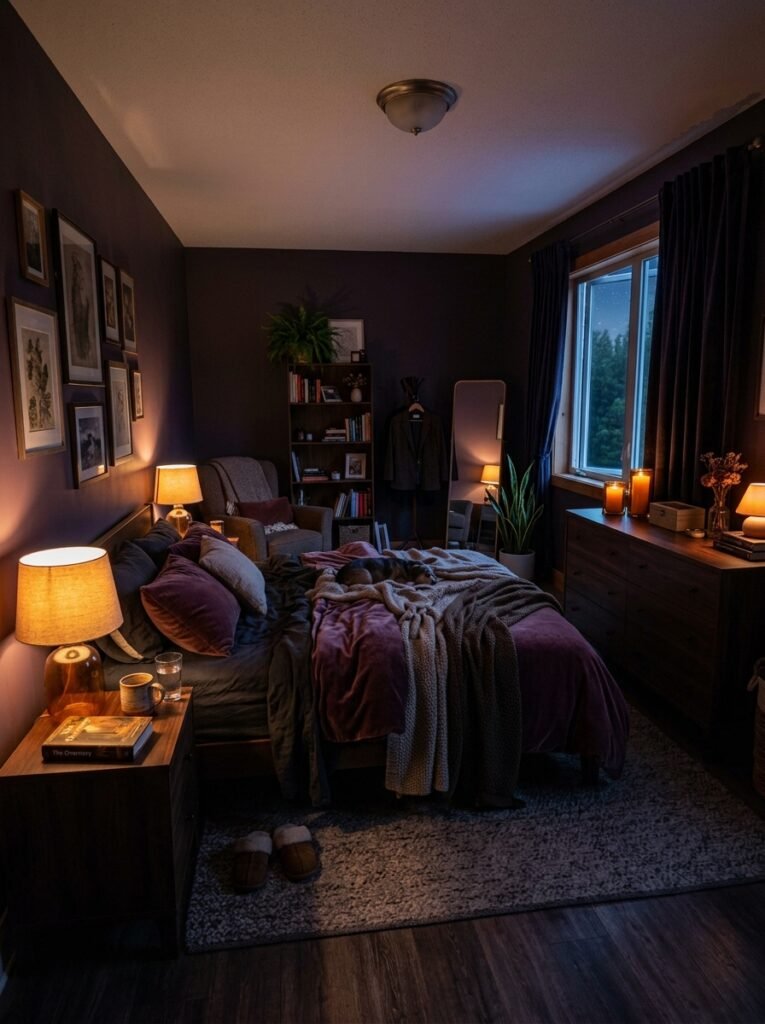
Dark feminine bedroom decor isn’t a trend, really. It’s more like permission — to stop defaulting to light, to stop playing it safe with a palette because you’re worried it’s too much. A beautiful dark room doesn’t feel like too much once you’re in it. It feels like finally.
The room you’ve been half-imagining for years is closer than you think. What’s the piece you’d start with?