
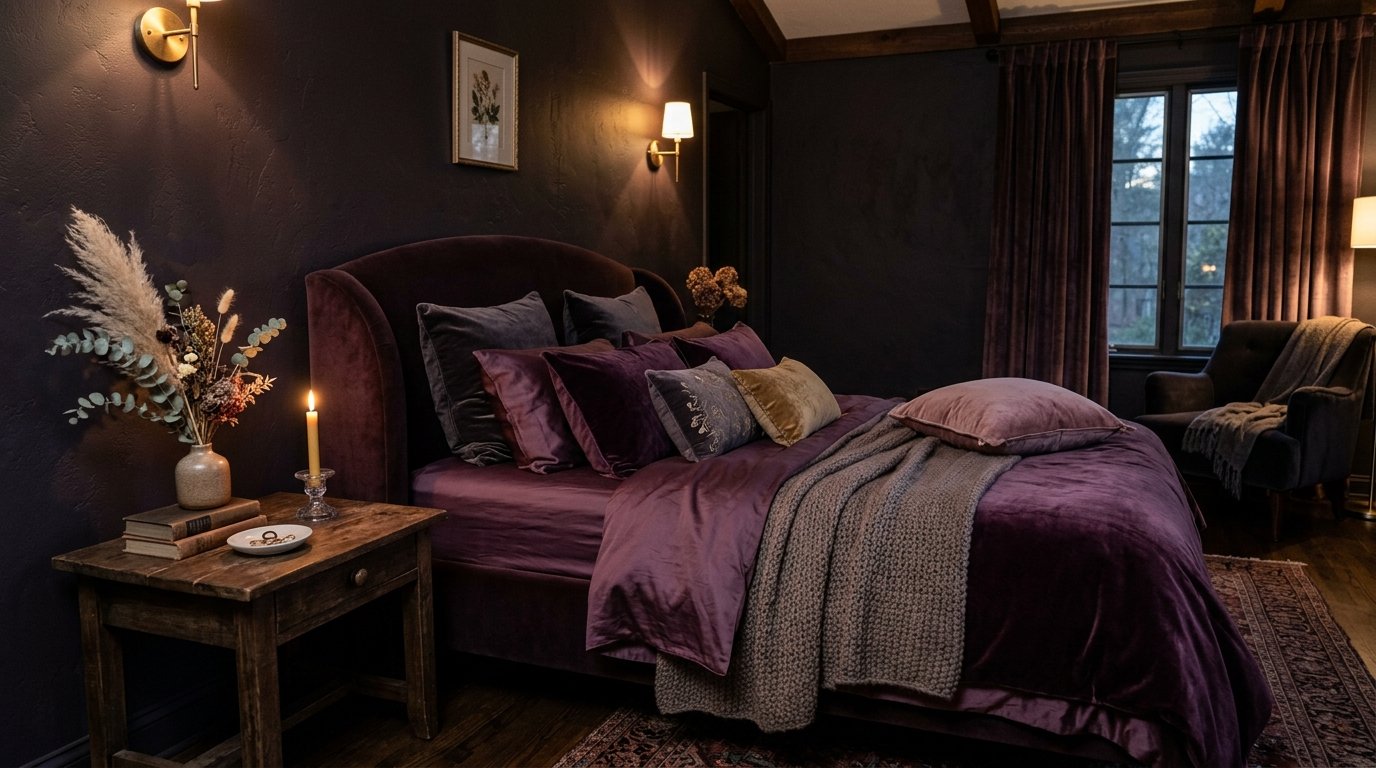
Dark Feminine Bedroom Decor: How to Make a Room That Feels Like a Secret
Someone in my life once told me my bedroom looked like “a forest at midnight” and meant it as a concern. I took it as the highest compliment I’d ever received about a room.
—
1. Why “Dark Feminine” Hits Different Than Just Painting the Walls Black
Dark feminine decor is having a serious moment and honestly, I get why. There’s something about a room that doesn’t apologize for itself — that wraps around you instead of presenting itself for evaluation. It’s moody. It’s layered. And no, it’s not goth, it’s not “just dark,” and it’s not trying to scare anyone.
The difference between a dark room and a dark feminine room is texture, softness, intention. You can have charcoal walls and brass candlesticks and still have a space that feels completely plush and personal. The feminine part comes from the layering — the way you pile things, the way the light moves across different surfaces at different times of day, the way the room feels like it has a PERSONALITY.
A lot of people shy away from this aesthetic because they’re worried it’ll feel oppressive or small. It won’t, if you do it thoughtfully. And I’m going to walk you through exactly how.
—
2. The Wall Color That Actually Works (and It’s Not What Instagram Keeps Showing You)
Everyone defaults to charcoal. Or that one shade of deep navy that’s on every mood board from 2021. And look — those work. But if you want something that genuinely takes your breath away when you walk in, go for deep plum, dark forest green, or a saturated burgundy with brown undertones.
The secret is undertone. A dark green with grey undertones reads sophisticated and almost neutral in low light. A burgundy with too much pink in it will feel harsh against warm wood. The ones that ALWAYS work are the ones that lean earthy — like the color you’d find inside an old library or at the back of a jewelry box.
“The right dark paint doesn’t make a room feel smaller. It makes the walls disappear entirely.”
Test your shortlisted colors at night under your actual bedroom lamp, not in daylight. This is the mistake everyone makes. Colors shift dramatically, and a moody plum that looks perfect at noon can look almost purple-pink at 10pm depending on your bulbs.
—
3. The Fabric Rule That Separates a Dark Bedroom From a Cave
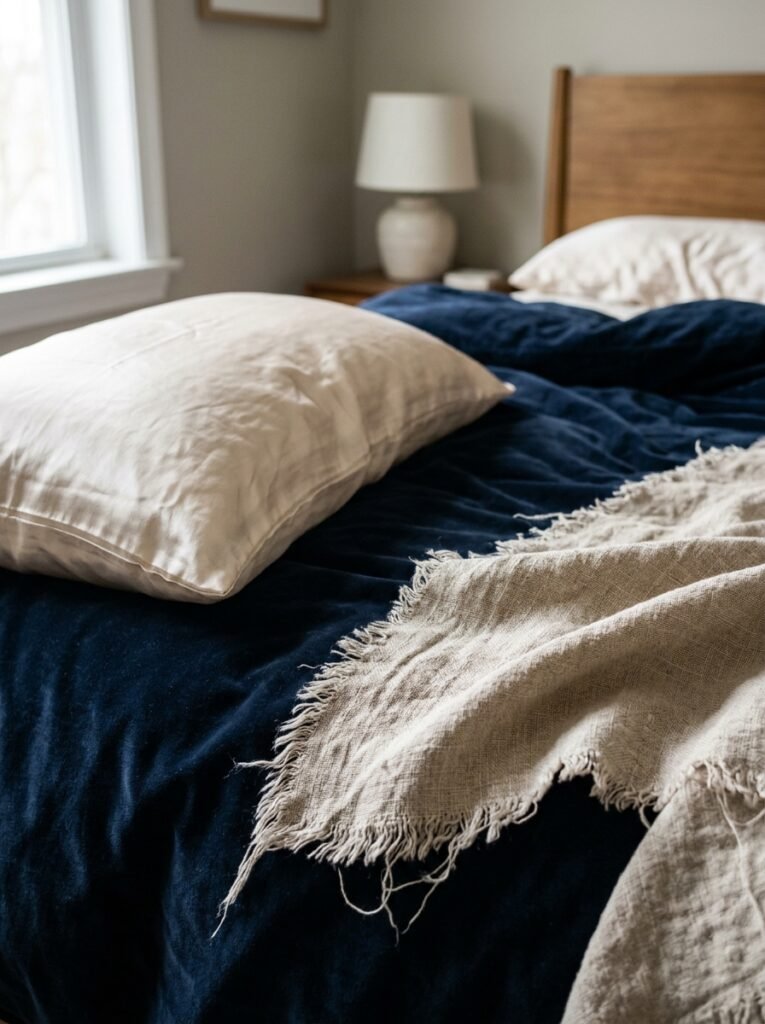
Here’s where people get it wrong: they do the dark walls, buy a dark duvet, get dark curtains, and then stand in the doorway and wonder why it feels depressing rather than dramatic.
You need contrast in texture, not just color.
Think velvet against linen. A chunky knit throw over a smooth satin-finish pillow. Sheer curtains layered UNDER heavier drapes so when morning light hits, you get this incredible diffused glow rather than a blackout effect. It’s the difference between a room that absorbs all the light and a room that plays with it.
For bedding specifically — a deep-toned duvet in velvet or brushed cotton, with two or three pillows in a lighter, more muted version of the same palette. Dusty rose, warm greige, faded terracotta. These lighter fabric tones stop the bed from disappearing into the wall, and they’re the thing that makes the room feel decidedly feminine rather than just dark.
—
4. Lighting That Does the Work Your Decor Can’t
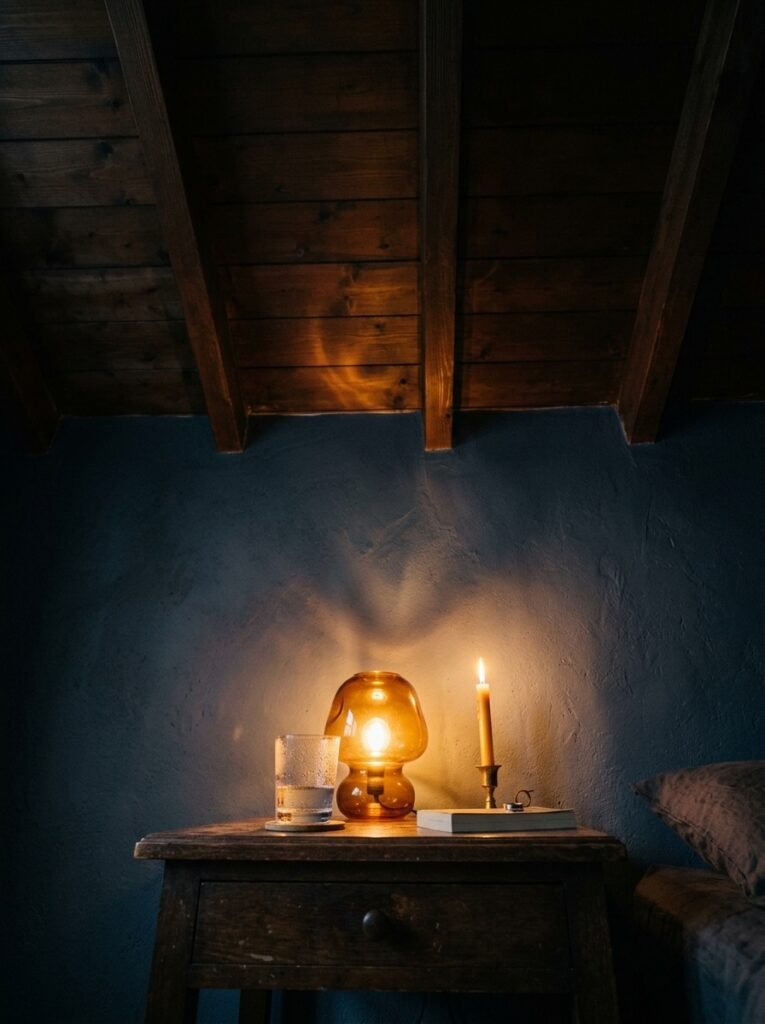
Overhead lighting is not your friend here. I’m going to be very direct about that. A single ceiling fixture flooding a dark bedroom with bright white light is design sabotage.
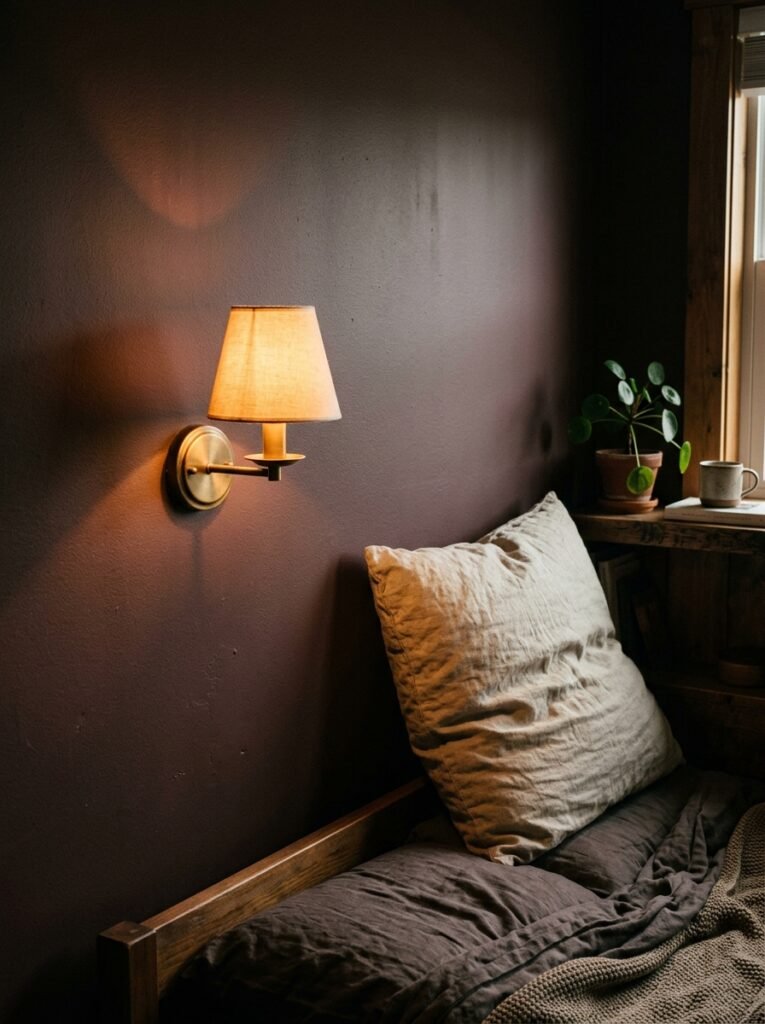
You want multiple light sources at different heights. A floor lamp in the corner throwing a pool of amber upward. A small table lamp on each bedside table — ideally with a linen or fabric shade that diffuses the bulb rather than projecting it. And candles. ACTUAL candles, or very good flameless ones if you’re cautious, because the flicker matters more than I can tell you.
Side note — the color temperature of your bulbs is something most people never even think about and it changes EVERYTHING. Warm white, around 2700K, is what you’re after. Anything cooler will make your dark walls look flat and a bit sad. Anything too yellow will clash with cooler paint tones. 2700K is the sweet spot, it’s the amber glow of an Edison bulb at 7pm that makes everything look like a painting.
Dimmer switches, if you can manage the installation. Non-negotiable, in my opinion.
“Every dark bedroom that actually works has at least four light sources. Every single one.”
—
5. The Furniture Finish That Makes or Breaks the Whole Look
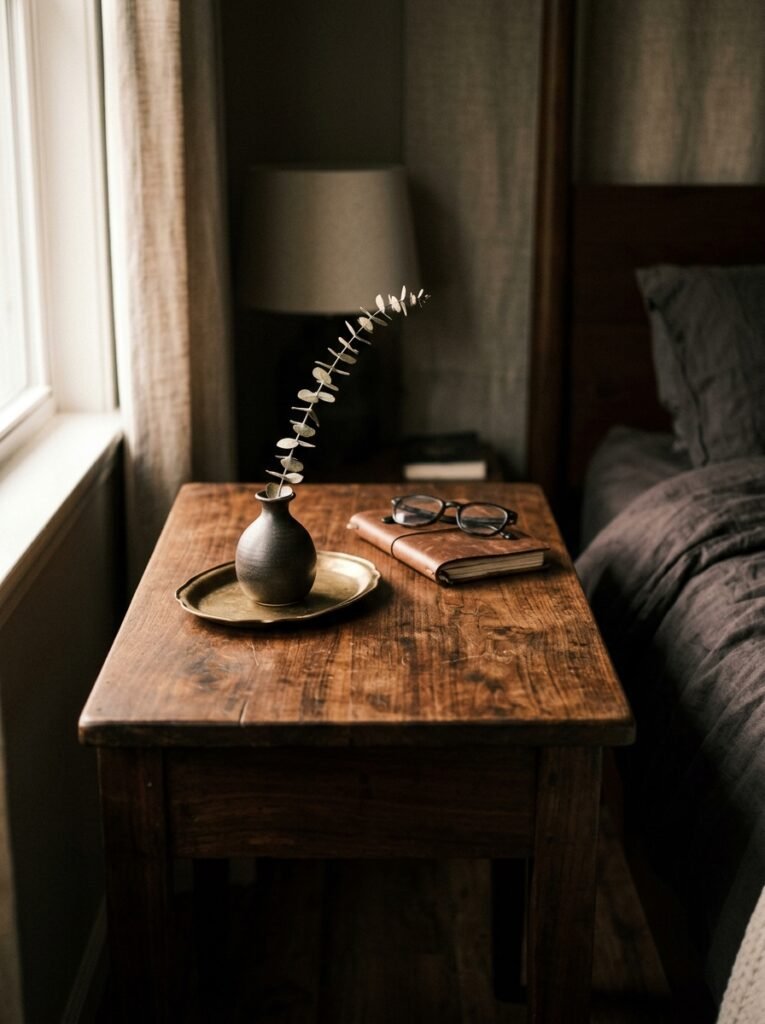
Dark walls need warmth in the furniture or the room will feel cold in a bad way — not mysterious, just stark. Aged brass, antique gold, weathered wood with rich grain — these are your best friends.
Not chrome. Not bright silver. Not high-gloss black lacquer unless you’re very, very intentional about it (and even then, use it sparingly as an accent).
Dark walnut wood with a matte finish is probably the most versatile choice for a dark feminine bedroom. It’s warm, it’s classic, it reads slightly vintage without being costume-y. Pair it with aged brass hardware on a dresser or a side table and you’ve got the foundation that lets everything else layer on top.
Some people go full antique — ornate headboards, carved side tables, a cheval mirror in a dark frame. That can look incredible. Others prefer cleaner lines with just the warm material choices doing the work. Both work. The mistake is mixing cool and warm metals throughout — pick a metal tone and stick with it.
—
6. One Plant That Changes the Energy of the Entire Room
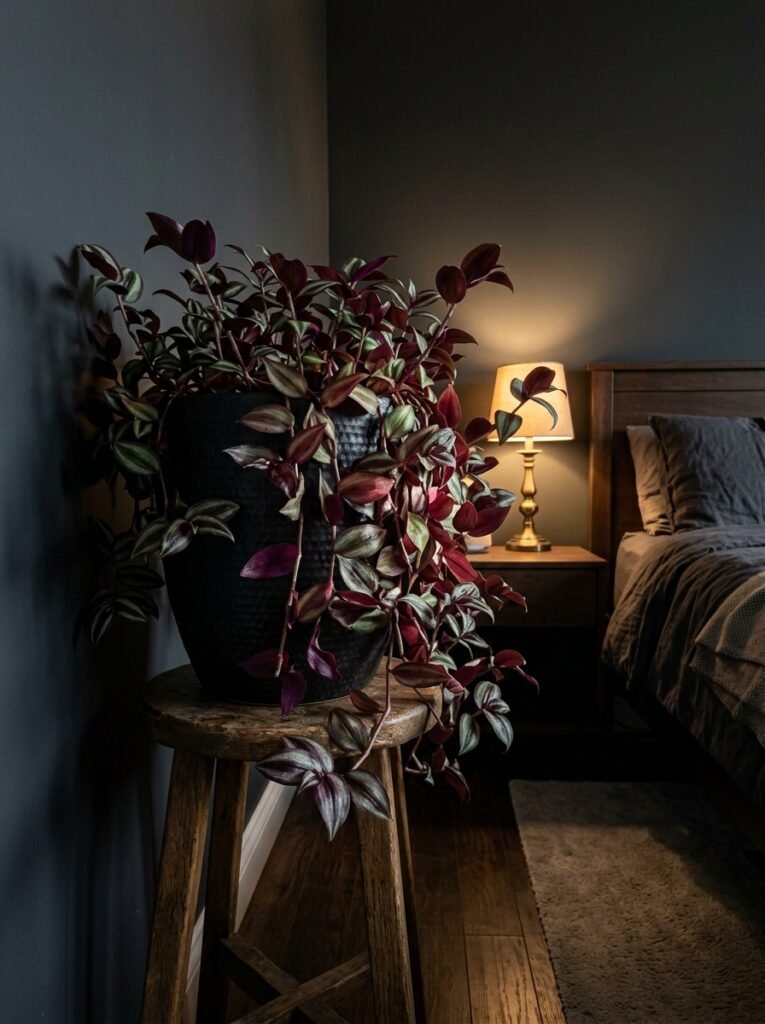
I know, I know. Plant recommendations in a decor article. But hear me out, because this is specific.
A large trailing plant — a pothos, a heartleaf philodendron, something with long soft vines — placed high on a shelf or hung from the ceiling in the corner of a dark bedroom does something no other decor element can do. It breaks up the weight of a dark room with something alive and organic. The green against a deep wall color is genuinely dramatic. And the trailing quality of it means it grows and changes and the room changes with it, which is weirdly compelling to live with.
If you’re in a low-light situation (inevitable with heavy drapes), pothos and heartleaf philodendrons genuinely thrive in near-darkness. They’re basically built for this aesthetic. One large one is better than several small ones — you want presence, not a cluttered windowsill.
—
7. The Mirror Trick That Works in Every Dark Room
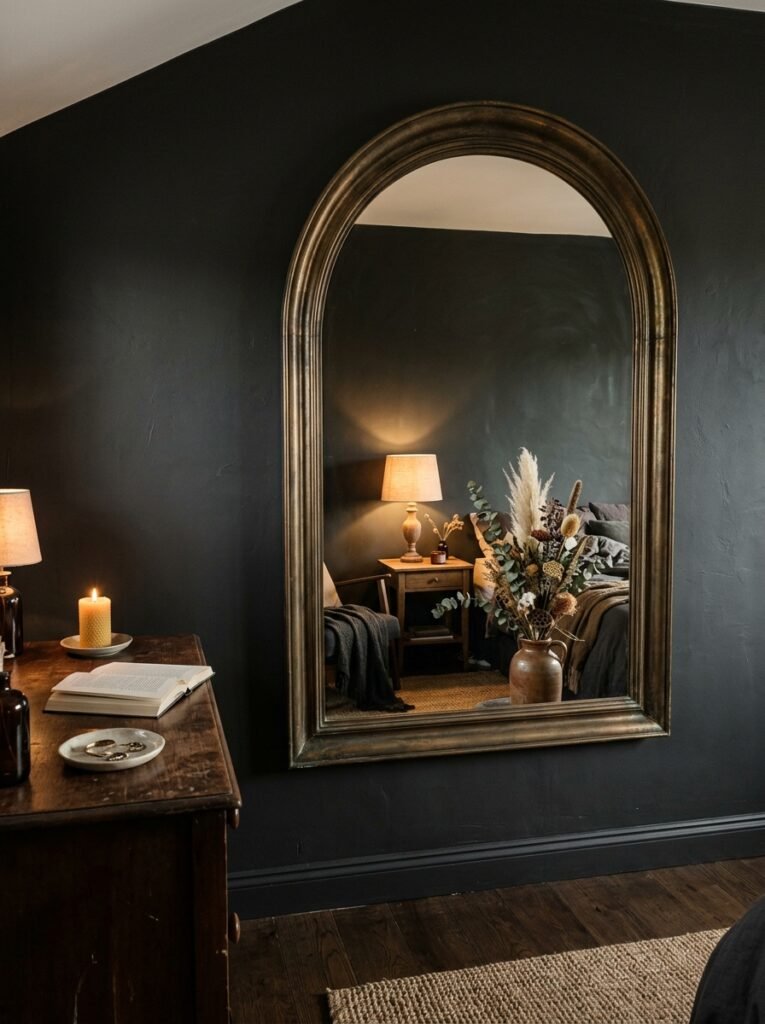
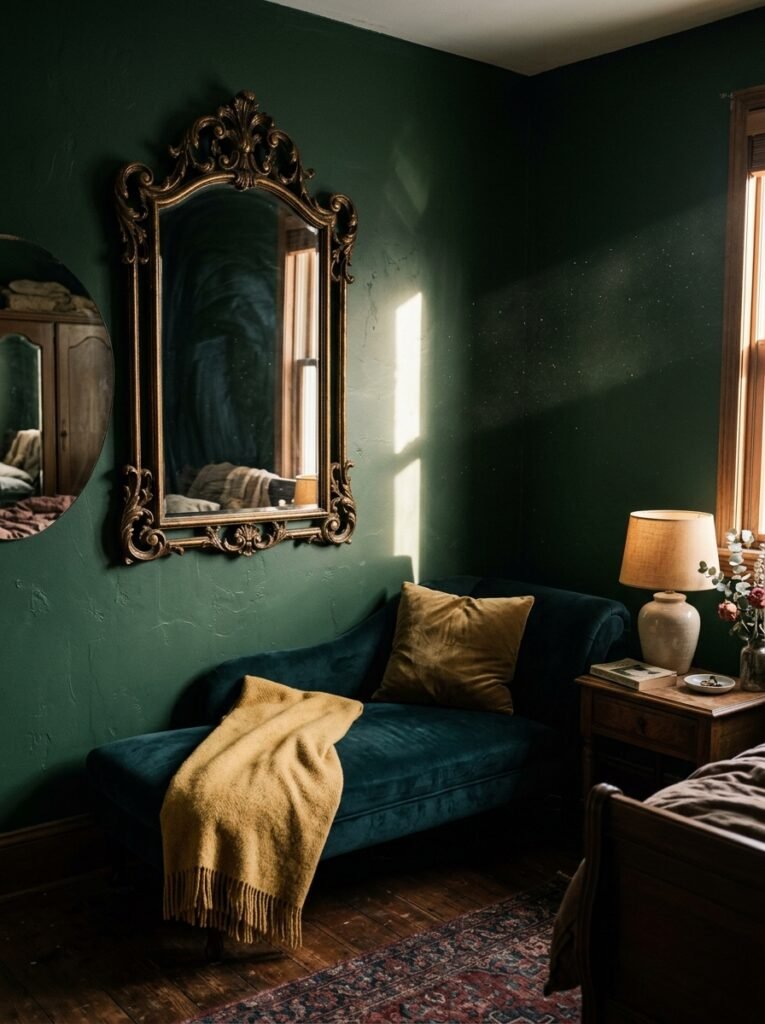
Mirrors are doing double duty in a dark feminine bedroom. Yes, they’re functional. But in a moody, low-light room, a large mirror — especially one with a dark, aged, or ornate frame — reflects candlelight and lamp glow in a way that makes the whole room feel like it has more depth.
The placement matters more than the mirror itself. Lean it against the wall rather than hanging it, if you can — there’s something about a leaned mirror that feels more casual and intentional at the same time. Slightly off-center. Not perfectly straight.
A floor-length mirror in a dark iron or oxidized brass frame, leaning against a deep green or burgundy wall? That’s the image. That’s the pin. Honestly, that’s the room.
—
8. Scent as the Final Layer of a Feminine Dark Room
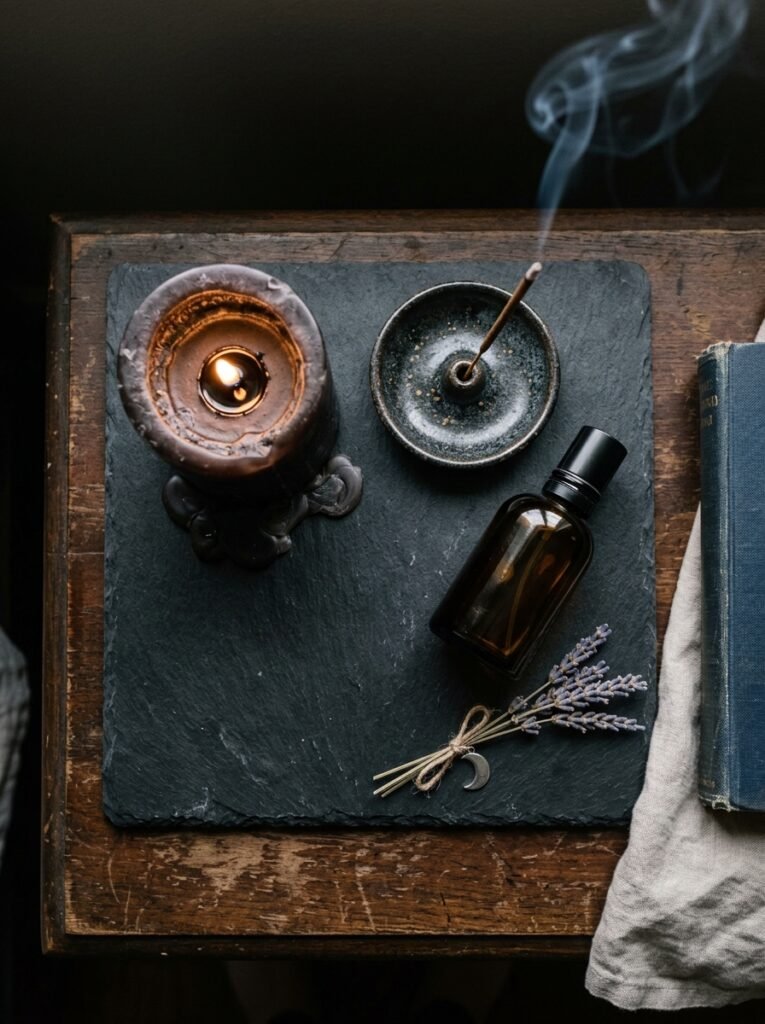
This might sound like I’m going too far but I’m not.
A bedroom with incredible scent is remembered. It’s part of the experience in a way that’s visceral and immediate in a way that no visual detail can be. And for a dark feminine room specifically, scent is the thing that tips it over from “beautiful to look at” into “feels like an entire world.”
Dark, warm fragrance notes: oud, amber, sandalwood, black rose, fig, patchouli, smoke. Not all of them at once, obviously. A reed diffuser or wax melt in a scent with two or three of those notes sitting on a shelf or dresser adds something that photographs can’t capture but that you’ll feel the second you walk through the door.
Wax melts in a small electric burner are my actual preference because the scent throw is stronger and more consistent. The little terracotta or ceramic ones with a tealight underneath also look beautiful in a dark room — the glow of the flame through the holder makes them part of the visual, not just background.
—
9. The Textile Layer That Most People Skip Entirely
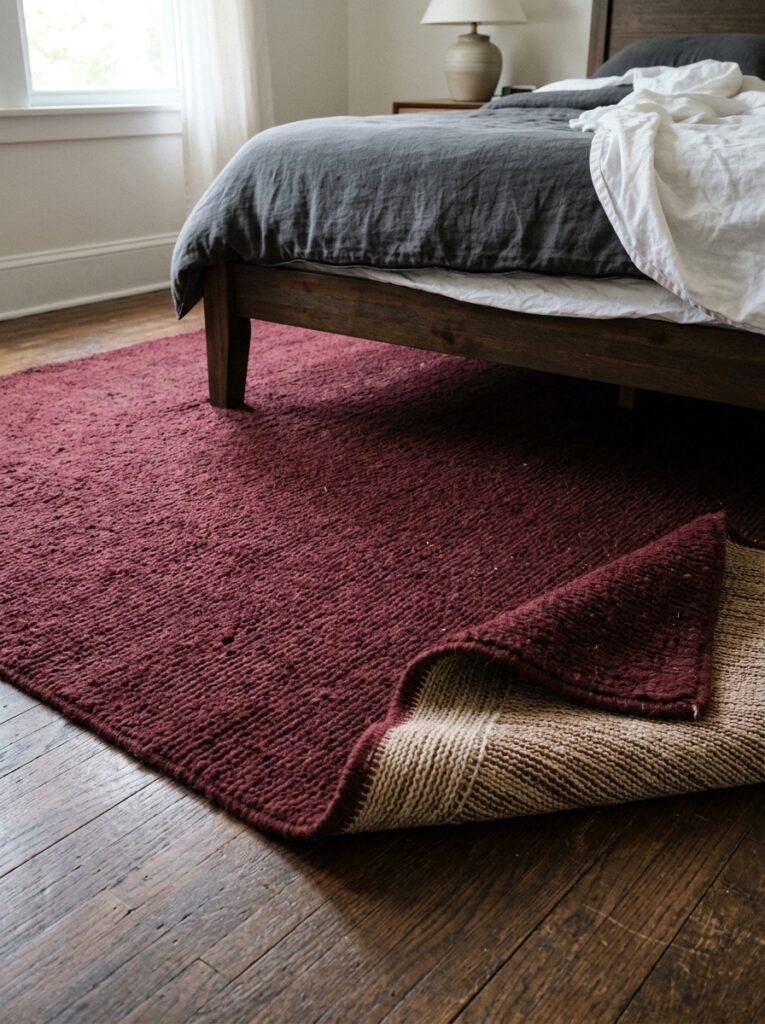
A bedroom rug.
I say this with some urgency because the number of dark feminine bedrooms I see on Pinterest that are beautifully styled from the waist up and then have bare floorboards or a totally wrong rug at foot-level — it’s a lot.
The rug should be large. Bigger than you think. It should extend at least 18 inches on either side of the bed so when you step out in the morning, your feet land on it, not the floor. And in a dark feminine room, the texture of the rug matters as much as the color.
A deep Persian-style rug with faded reds and golds works beautifully. A large shaggy rug in a warm cream or dusty rose grounds the room without competing with the walls. A woven wool rug in charcoal or dark terracotta. What you don’t want is anything thin, anything with a busy geometric pattern in bright colors, or anything that looks like it belongs in a coastal house.
“The rug is the warmth that lives at the bottom of the room. Get it wrong and the whole thing floats.”
—
10. Headboard as Architecture — Not Just a Pillow Background
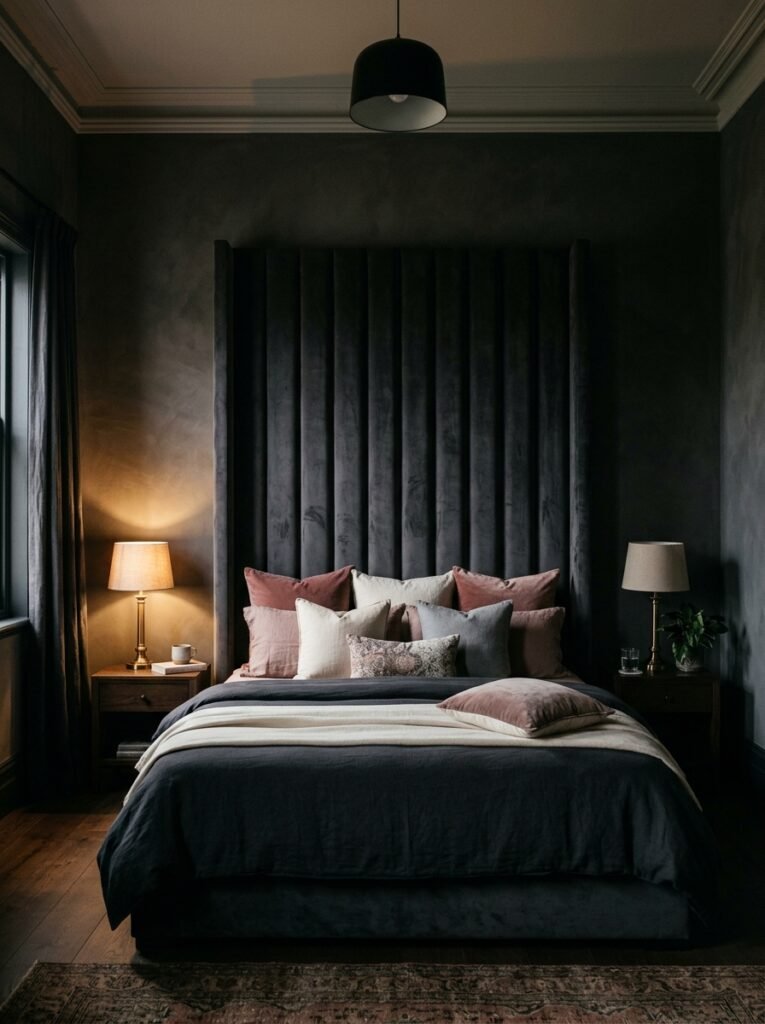
In a dark feminine bedroom, the headboard is often the centerpiece. It’s the thing that anchors the bed to the room, and if you get a strong headboard, you can actually keep everything else simpler.
An upholstered headboard in dark velvet, deep teal, or rich charcoal. A tall, arched headboard that creates that cathedral-window silhouette when the room is lit at night. A rattan headboard in a dark stain for something slightly more relaxed and earthy. Or — and this is genuinely underrated — an antique iron headboard with visible patina, black with a hint of bronze.
What I’d avoid is anything upholstered in white or cream. It’ll fight the rest of the palette constantly. And anything too low — in a dark room with dark bedding, a low headboard just disappears. Go tall, go textured, go specific.
—
11. The One Styling Detail That Elevates a Bedside Table From Functional to Beautiful
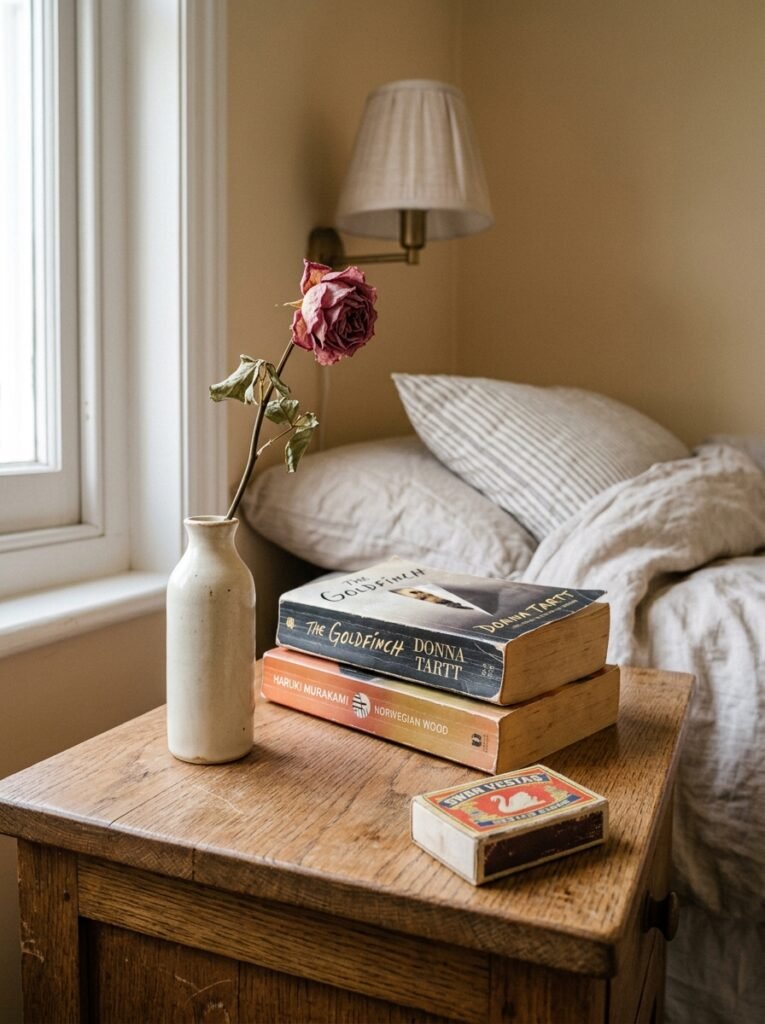
The bedside table setup in a dark feminine bedroom can look like a little altar, which I mean entirely as a compliment.
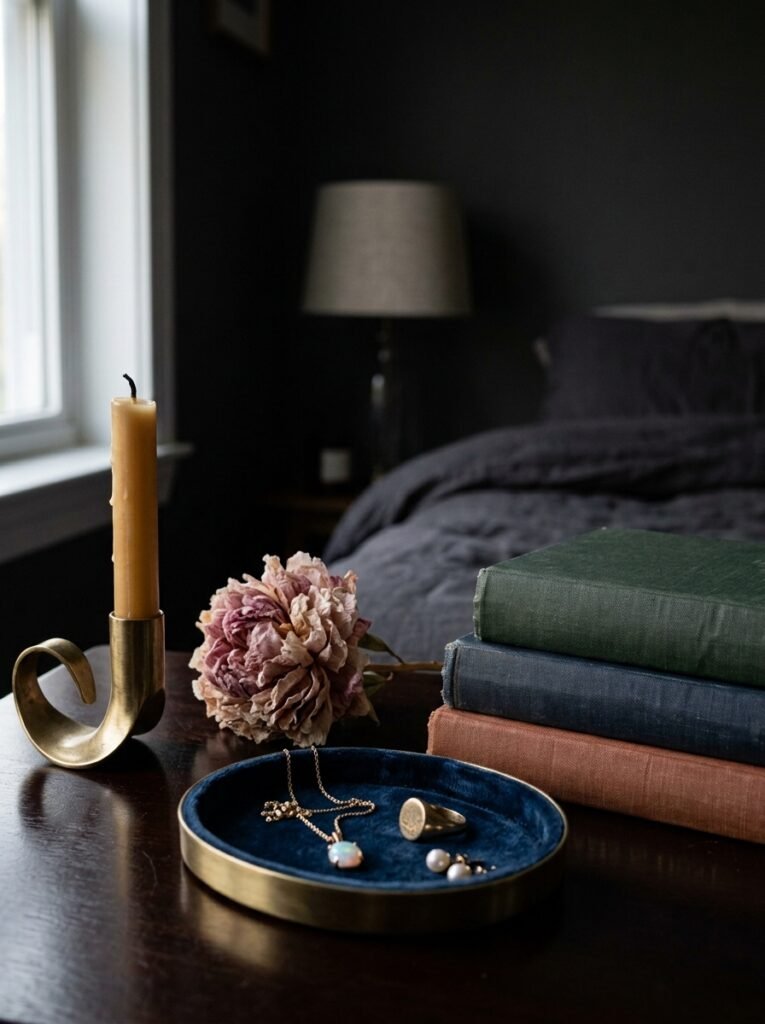
Here’s what you want on a bedside table in this aesthetic: a lamp with a dark or linen shade, one tall candle (either in a glass vessel or on a small brass holder), something with height and organic texture — a small dried flower arrangement, a stem of dried pampas, a single sprig of eucalyptus in a dark vase. Then one or two small objects that have personal meaning, a crystal, a small stack of books, something found on a walk. A scent element — small candle, small diffuser.
Not a phone charger draped across the surface, not a pile of receipts, not six things that don’t talk to each other. Edit it down. Dark rooms are about intention.
That’s kind of the whole philosophy in one sentence, actually. Dark rooms are about intention. Every single thing in the room is more visible in contrast to the darkness, so everything matters more.
—
12. The Small British Touches That Make This Aesthetic Feel Complete
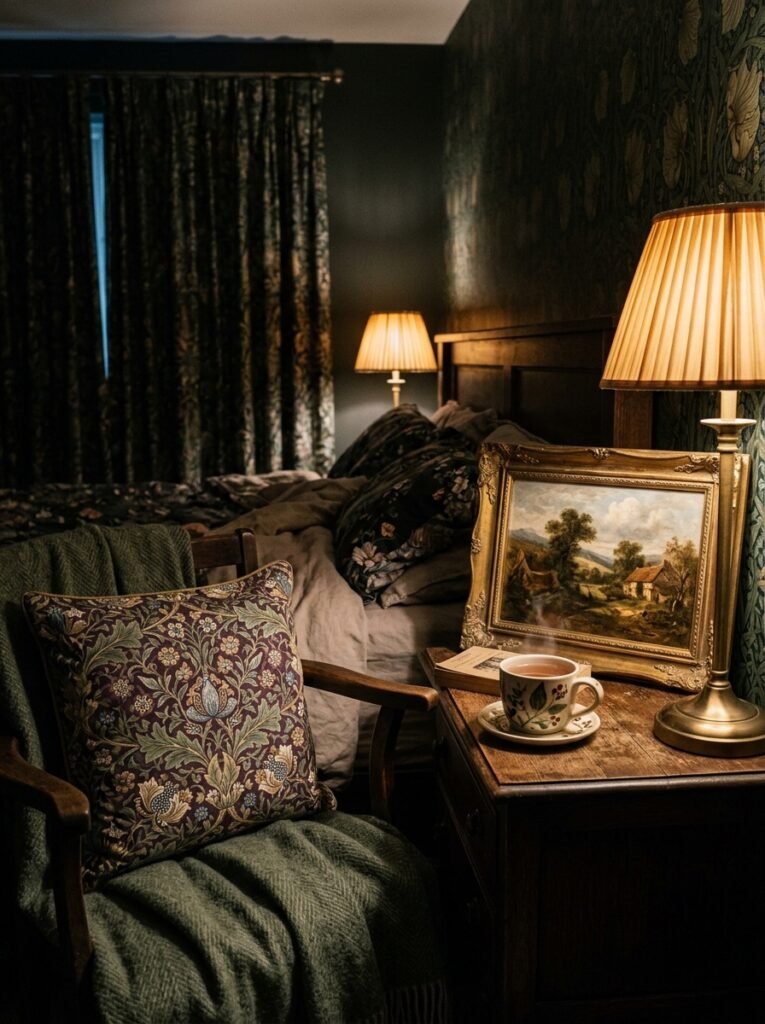
Something I find really interesting is how naturally the dark feminine aesthetic works in older UK homes — Victorian terraces, Edwardian semis, anything with high ceilings, picture rails, original cornicing. Those architectural details were MADE for this palette.
If you’re in the UK and you’ve got original features, lean into them completely. Paint the cornicing the same dark color as the walls — don’t pick it out in white like everyone defaults to. It creates that immersive, enveloping effect that’s so central to this look. Use the picture rail to hang artwork and mirrors, layered slightly off-center. Let the imperfections of old plaster walls show through a dark paint finish — that slight texture only adds to it.
And for American homes with less architectural detail — add it through the textiles and the art. A single large-scale print in a dark ornate frame. A tapestry or large woven hanging above the headboard. Crown molding, if you’re up for a weekend project, even simple profiles make a huge difference once they’re painted the same deep color as the walls.
—
❓ FAQ
Q: Will a dark bedroom make my space feel too small? A: Not if you work with mirrors, multiple light sources, and contrast in your textiles. Dark walls actually dissolve the sense of boundaries in a room — they make it feel like the room goes on longer than it does, rather than closing in. The issue is usually lighting, not the color itself.
Q: What’s the best dark paint color for a bedroom with very little natural light? A: Deep forest green or dark teal with grey undertones tends to perform better in low-light rooms than very warm or very cool dark shades. They hold their depth without going flat or looking muddy. Test samples at night under your lamplight before committing — daytime testing is basically useless for this.
Q: Can I do dark feminine decor in a rented flat without painting the walls? A: Absolutely. Dark curtains going floor to ceiling, a large dark headboard, a statement rug, dark velvet cushions and throws, dramatic bedside styling — you can create almost the full effect through soft furnishings alone. A large piece of artwork in a dark ornate frame hung on a neutral wall also does more than you’d think.
—
💭 Final Thoughts
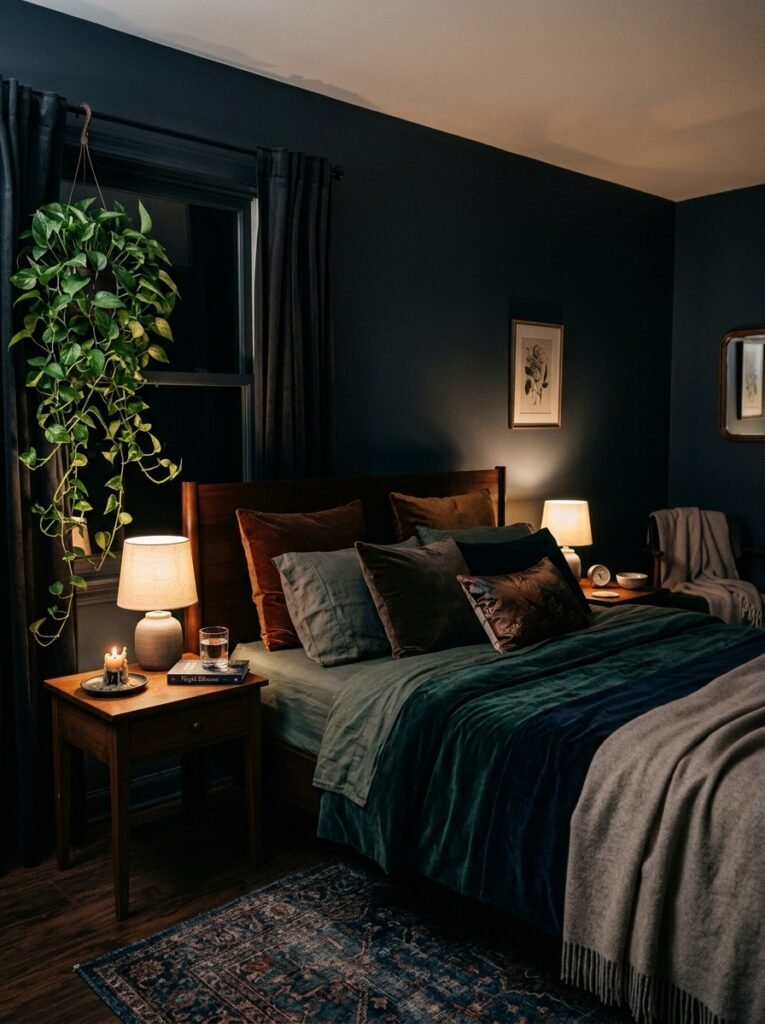
Dark feminine decor isn’t a trend in the way a lot of things are trends. It’s an orientation — a decision to make your bedroom feel like it belongs to you, specifically, rather than to some neutral idea of what a bedroom should look like. It takes a little courage, especially that first time you crack open a tin of something deep and moody and roll it onto the wall.
But the rooms that result from that courage? You’ll never want to leave them.
Is your bedroom a place you actually want to be in, or is it just somewhere you sleep?