
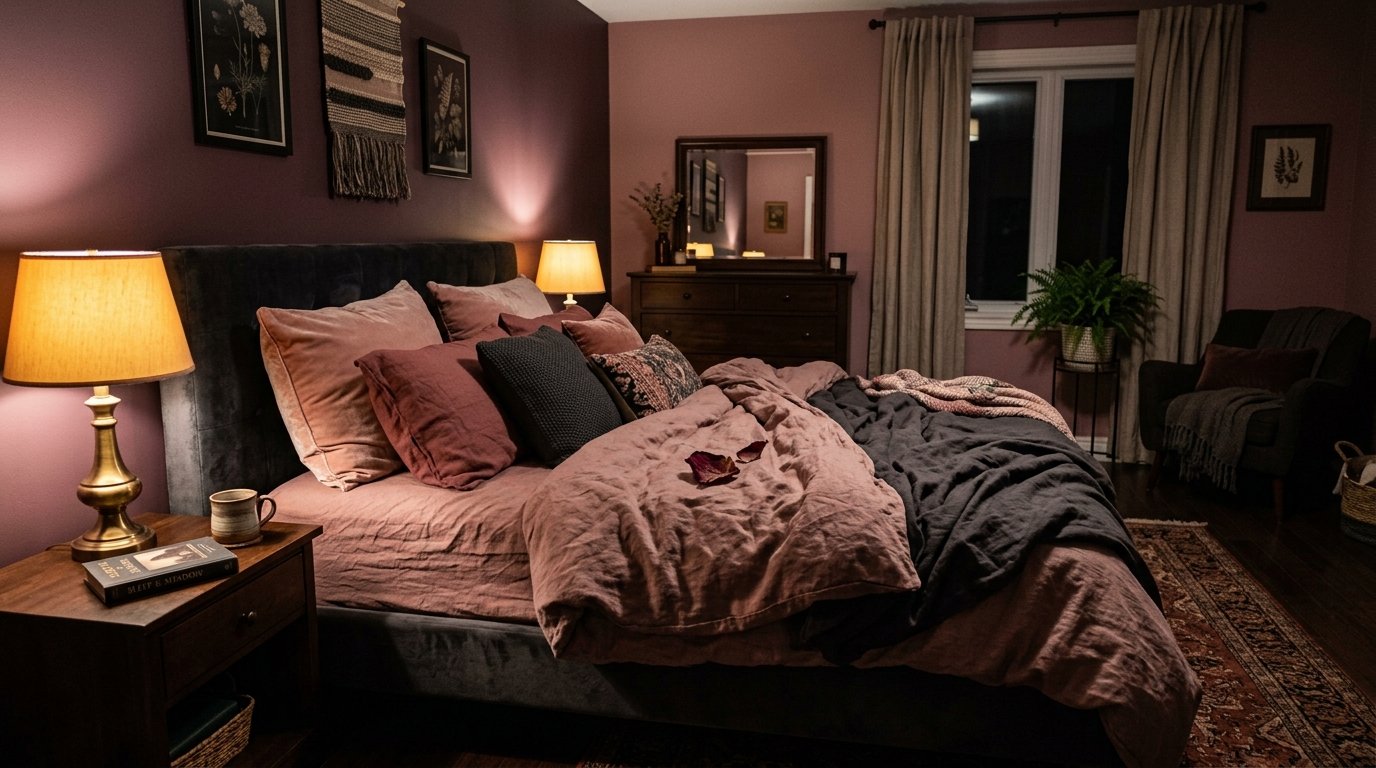
Dark Feminine Pink: The Bedroom Aesthetic That’s Equal Parts Silk and Shadow
My friend Emma texted me a photo last year — her bedroom wall, freshly painted in this deep, dusty rose — and said “I don’t know if I love it or if I made a huge mistake.” Reader, she loved it. And now I can’t stop thinking about that color.
—
1. Why “Dark Feminine” Hits Different Than Just “Pink”
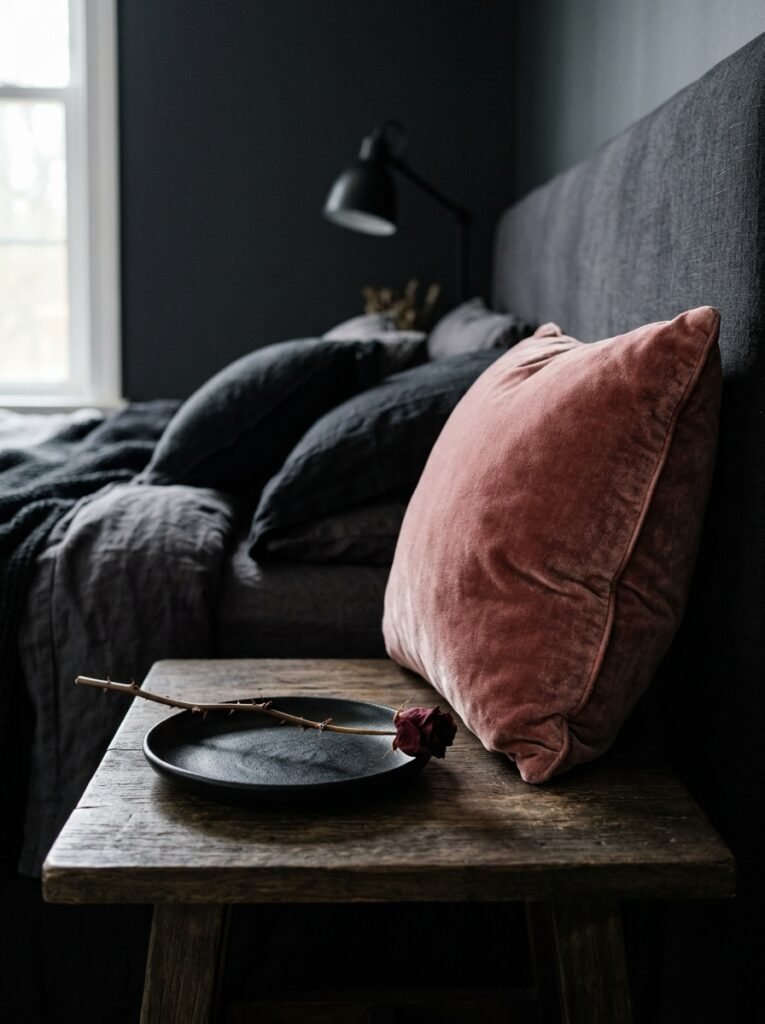
Here’s the thing. Pink bedrooms have been around forever. Bubblegum walls, fluffy everything, that particular shade of blush that showed up everywhere around 2017 and then immediately felt tired. Dark feminine pink isn’t that.
It’s the difference between cotton candy and red wine. One is sweet and forgettable, the other stays with you.
Dark feminine as an aesthetic leans into contradiction — softness with depth, prettiness with edge, comfort with intention. The pink here isn’t trying to be cute. It’s confident. A dusty mauve, a deep burgundy-rose, a terracotta-flushed plum — these are colors that don’t apologize for themselves.
And that energy? It translates into a bedroom that actually feels like a sanctuary. Not a room that was decorated, but a room that was CHOSEN.
—
2. The Exact Shades That Make This Work (and the Ones That Don’t)
Not all pink is going to get you there. This is where a lot of people stumble.
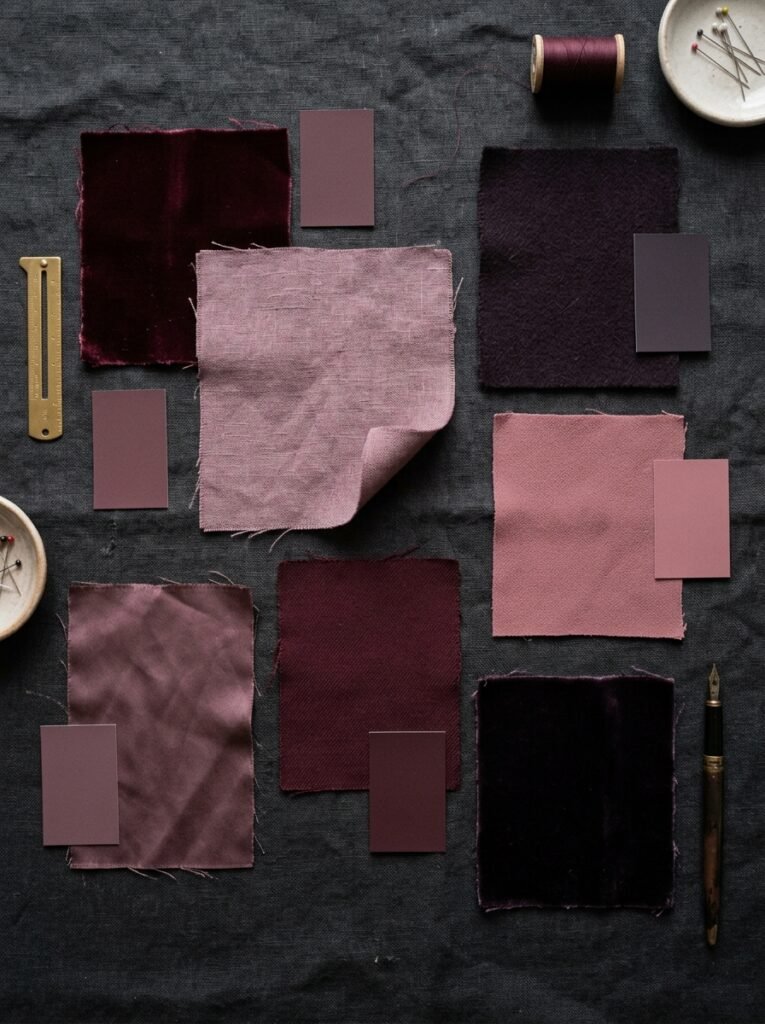
You’re looking for pink with weight. Warmth. A little darkness baked into it — not in a gothic way, necessarily, but in a way that means the color doesn’t disappear when the sun goes down.
“The right pink for a dark feminine bedroom should look like it has a secret.”
Think deep rose, antique mauve, blush that’s been smoked a little, dusty pink with gray undertones rather than white. Warm, not cool. Moody, not muddy.
What doesn’t work: anything with too much white in it (it’ll read nursery immediately), anything leaning neon or coral (too cheerful, wrong vibe), and anything that looks great in afternoon light and then turns vaguely orange at night. Test your paint under lamplight. Seriously — this is the step people skip and then regret.
British readers, I find that older UK homes with lower ceilings actually pull off these dark, rich shades brilliantly. The proportions work in your favor. American readers with bigger rooms sometimes need to go even deeper to avoid the color looking washed out.
—
3. The Bedframe Choice That Does Most of the Heavy Lifting
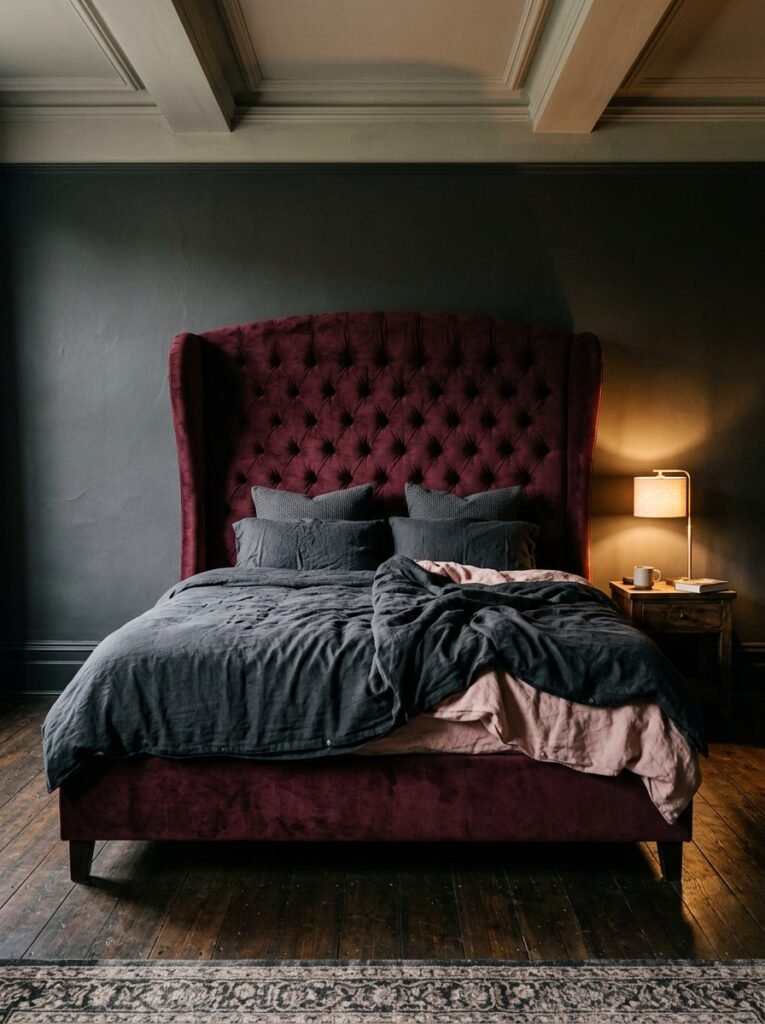
Your bedframe is the anchor. Full stop.
For a dark feminine bedroom, you’ve got two directions that both work in completely different ways.
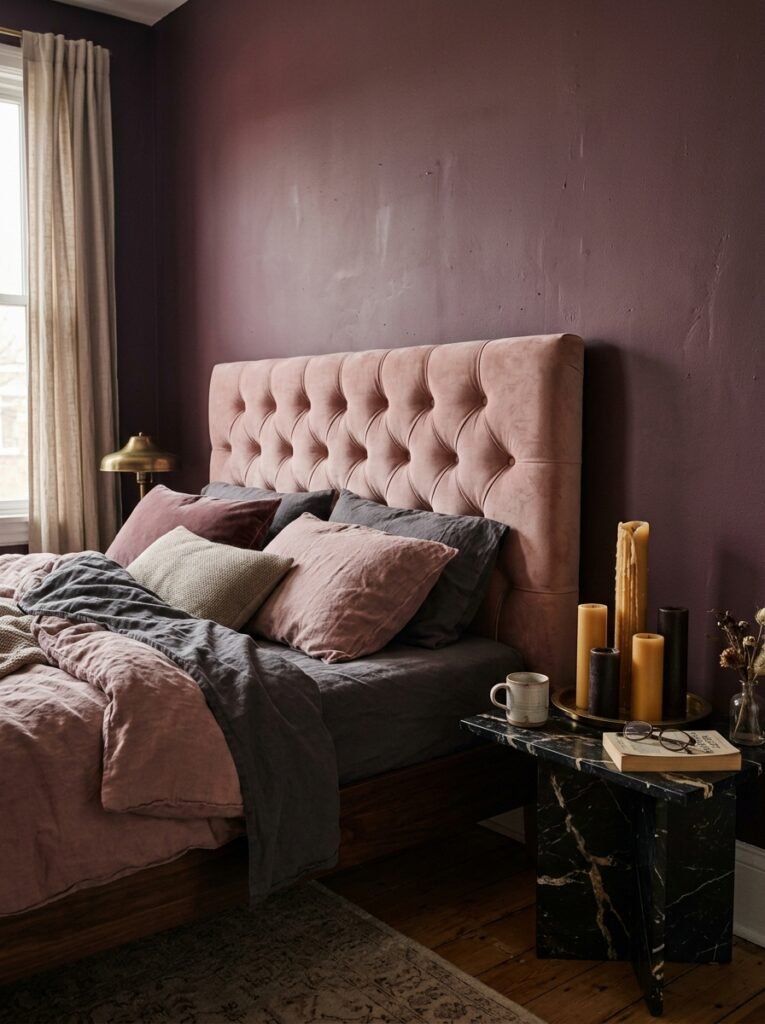
First: an upholstered bedframe in a deep velvet — dark green, charcoal, or even a deep burgundy that plays off the pink walls. The texture of velvet does something in low light that’s genuinely hard to describe. It absorbs and reflects at the same time. Rich without being showy.
Second: wrought iron or brass. A vintage-style metal bedframe in an aged brass or matte black brings structure to all that softness. It’s the visual equivalent of a bold eyebrow — it holds the whole face together.
What I’d steer away from: very light wood tones. They tend to pull the room toward cottagecore or Scandi minimalism, which is lovely but fights the dark feminine energy. If you already have a light oak bedframe you love, lean hard into contrast elsewhere and add weight through textiles and lighting.
—
4. Layering Textiles So It Feels Like Something You Fall Into
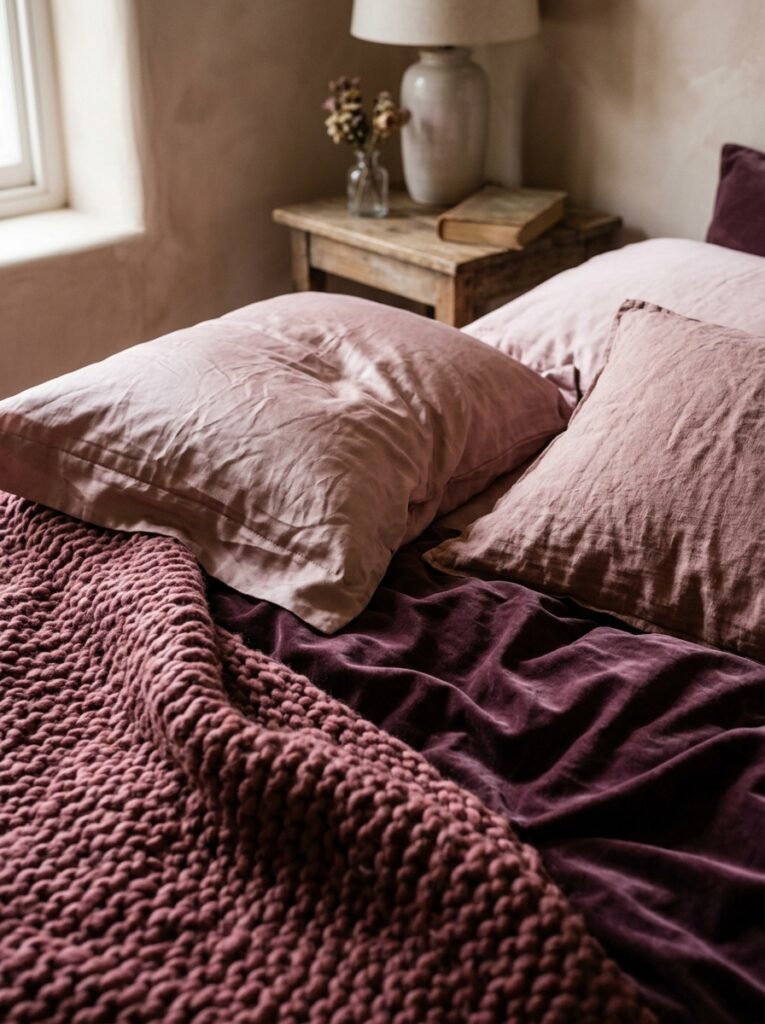
Okay, this is where the room either lives or dies, and it’s also the most fun part so bear with me because I have a LOT of feelings about bedding.
The goal is depth through layering. Not maximalism necessarily — just enough visual texture that the bed looks like something pulled from a very stylish boutique hotel, or honestly, a slightly dramatic period film.
Start with a base duvet in a deep, muted tone — think charcoal, deep forest, or a burgundy if you’re going full commitment. Then layer a textured throw across the foot of the bed. Waffle-knit linen, faux fur, velvet — pick one texture that’s unexpected.
Pillows: you don’t need twenty. You need the right five. Two sleeping pillows in soft pink or antique linen. Two larger accent pillows in a dark, contrasting tone. One bolster or cylindrical pillow in a rich fabric — silk-effect, velvet, something with a little shine. Done.
Side note — a slight mismatch in pillow fabrics is not a problem, it’s ACTUALLY what makes it look styled and not staged. Perfectly matching sets look fake.
—
5. Lighting That Turns Your Bedroom into a Cave in the Best Possible Way
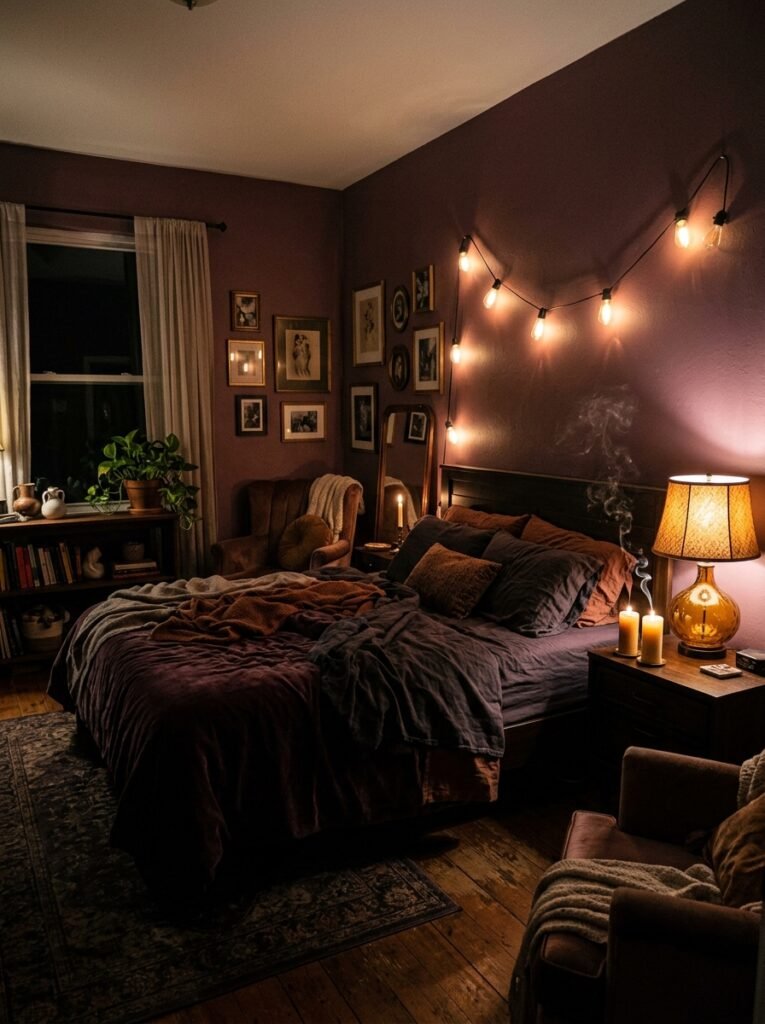
Bad lighting will kill any beautiful room. This is not an opinion, this is fact.
For dark feminine pink, you want the amber glow of an Edison-style bulb at 7pm — low, warm, directional. Not overhead light (unless it’s a statement pendant that deserves to be there), not cool white LED strips, not a harsh bedside lamp with a thin white shade that throws light everywhere.
Think about layers here too. A plug-in sconce or two flanking the bed. A smaller table lamp on the dresser for ambient glow. If you’re going for a slightly dramatic effect, a floor lamp in a deep corner with a fabric shade that filters the light.
Candles. Yes, real ones — unscented or lightly scented. The flicker does something that no bulb has ever replicated. A few pillar candles on a dark tray on the dresser, or small tapers in simple holders. Don’t overthink it.
“Overhead lights are fine in a kitchen. In a dark feminine bedroom, they’re the enemy.”
UK homes often have ceiling lights in every room without bedside points — if that’s your situation, a good dimmer switch and some extension cords are your best friends here.
—
6. The Mirror That Actually Belongs in This Room
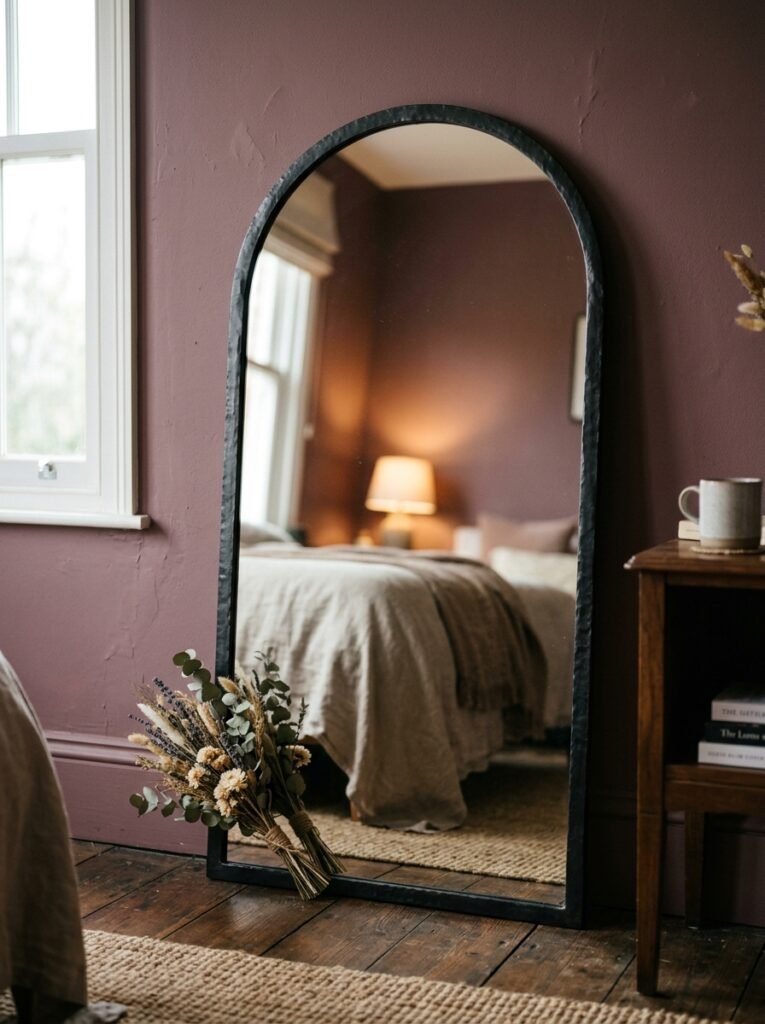
A mirror is doing more work than you probably give it credit for. In a room this intentional, the wrong mirror completely breaks the spell.
What you want: something with character. An arched mirror in aged brass or matte black. An ornate vintage-style frame in a tarnished gold. A full-length mirror with a dark wooden frame propped casually against the wall.
What you don’t want: frameless modern mirrors, or those circular plain mirrors that feel like they belong in a bathroom. Too clean. Too nothing.
The mirror should feel like it was found somewhere, even if it wasn’t. That’s the dark feminine rule of antiques — they look earned.
—
7. Plants That Don’t Seem Out of Place in a Moody Pink Room
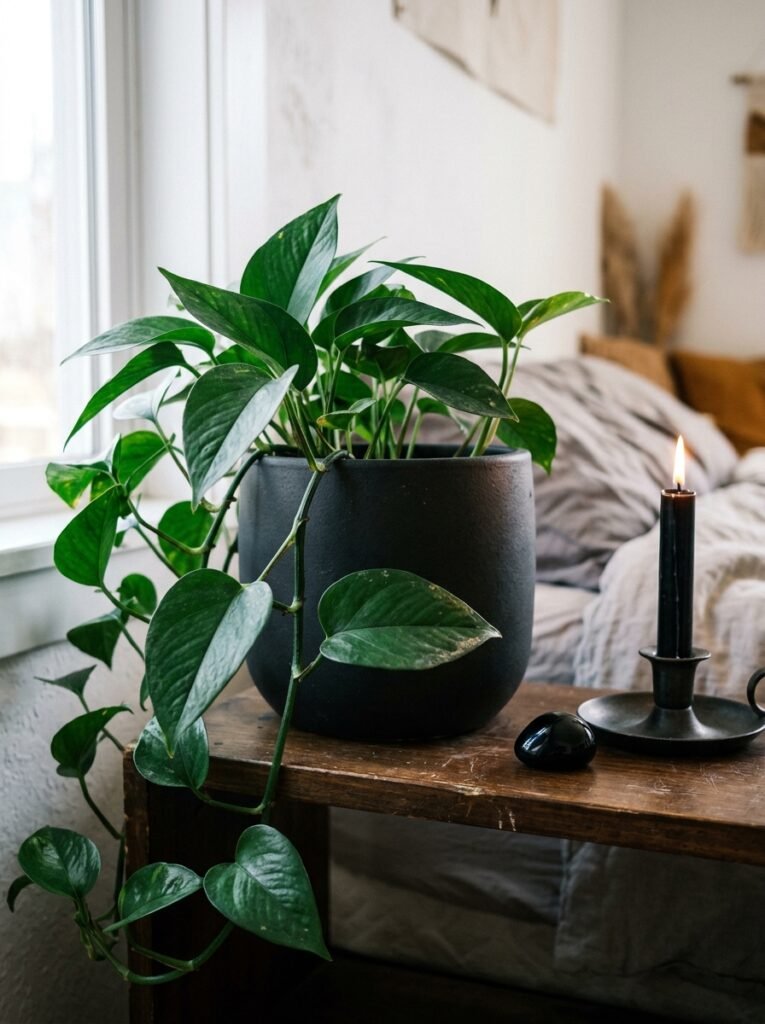
I know, I know. Not every plant belongs here. A bright little succulent in a terracotta pot looks wrong in this room. So does a cheerful tropical something in a nursery pot.
But the right plants completely ELEVATE the whole thing. Dark, dramatic foliage — think deep green leaves with a slight gloss, or a dried pampas arrangement in a black or dark ceramic vase. Trailing plants that sprawl a bit — they add a kind of organic chaos that keeps the room from feeling too precious.
Dead or dried botanicals, honestly? Yes. Dried roses, dried lavender bunches, even dark seed pods in a vase — they lean into the slightly gothic undertones without going full Halloween.
A ceramic planter in a matte finish — deep green, terracotta, charcoal — will keep the plant from feeling like an afterthought.
—
8. The Unexpected Surface That Ties the Room Together
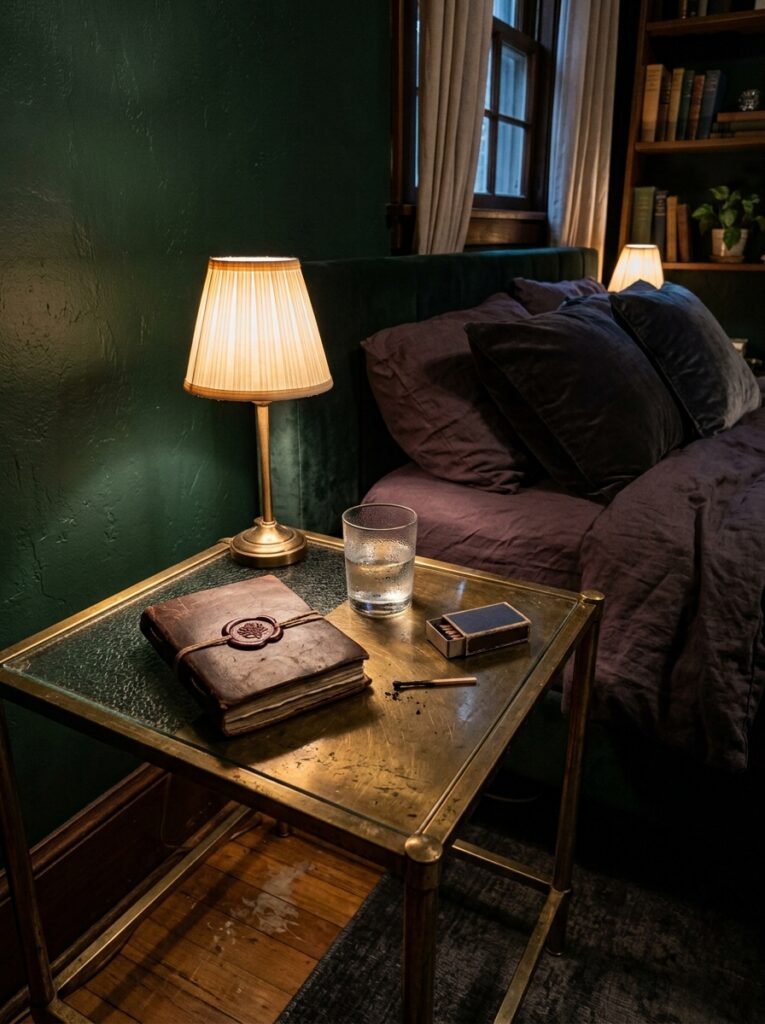
There’s usually one piece in a beautifully styled room that’s not obviously decorative but does all the quiet work. In a dark feminine bedroom, it’s often the nightstand.
Skip the matching set. A single sculptural nightstand — asymmetrical if you like, or different on each side — in something dark or metallic adds personality. A small vintage side table in painted black. A dark rattan piece with a draped cloth on top. Something marble or stone in a deep tone.
What goes on it matters as much as the piece itself. A small lamp (see section 5). One or two books with interesting spines. A bud vase with a single stem or dried branch. A small tray for rings and whatever else you drop at midnight.
Less is significantly more. Every item should be able to justify its presence.
—
9. Wall Texture, Wallpaper, and the Case for Doing Something Bold Behind the Bed
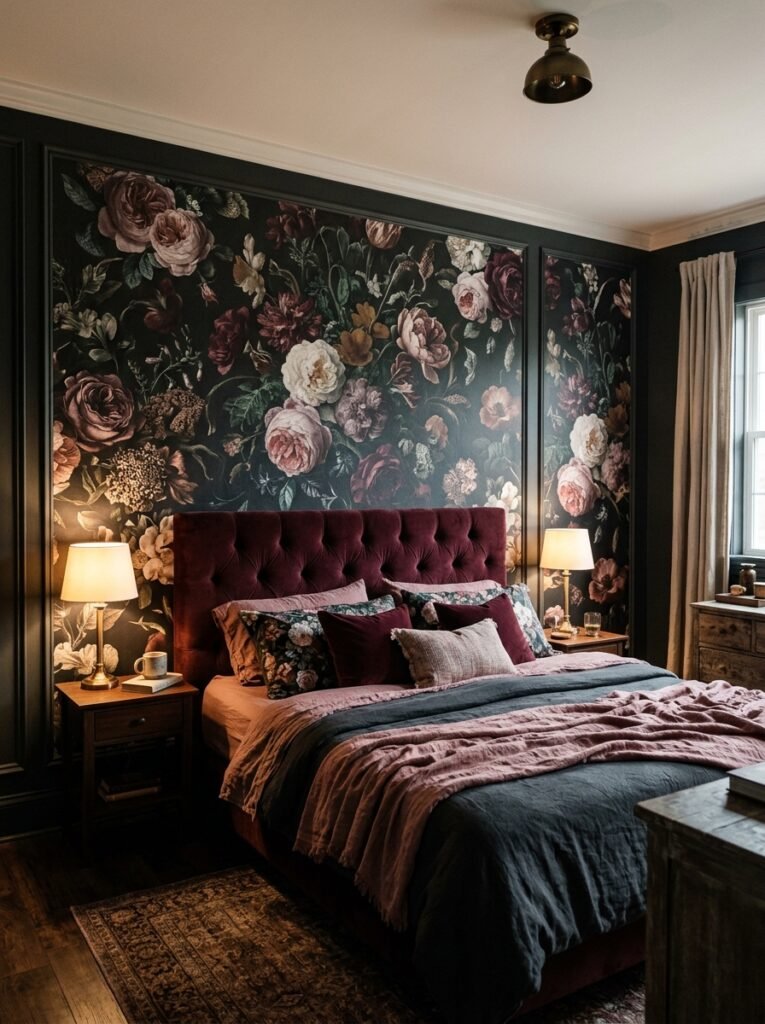
If painting the whole room feels too much, the accent wall — specifically behind the headboard — is your in.
Dark floral wallpaper on a single wall is maybe the most powerful move you can make in a bedroom like this. Deep ground color — forest green, nearly-black navy, dark plum — with oversized florals in dusty pink, burgundy, and antique cream. It’s maximalist in the best sense. The room gets a focal point, and everything else can stay relatively calm.
Or: textured plaster effect paint. It’s having a moment (the Italian walls moment isn’t over, I’m sorry, it’s still going), and in a deep rose or terracotta pink it adds depth that flat paint just can’t achieve.
Or — and this is the dry, understated option I actually kind of love — just do NOTHING extra on the walls. Let the color do the work. Let the art do the work. Sometimes the restraint is the whole point.
“The most confident rooms don’t try to explain themselves.”
—
10. Rugs, Floors, and What’s Happening at Ground Level
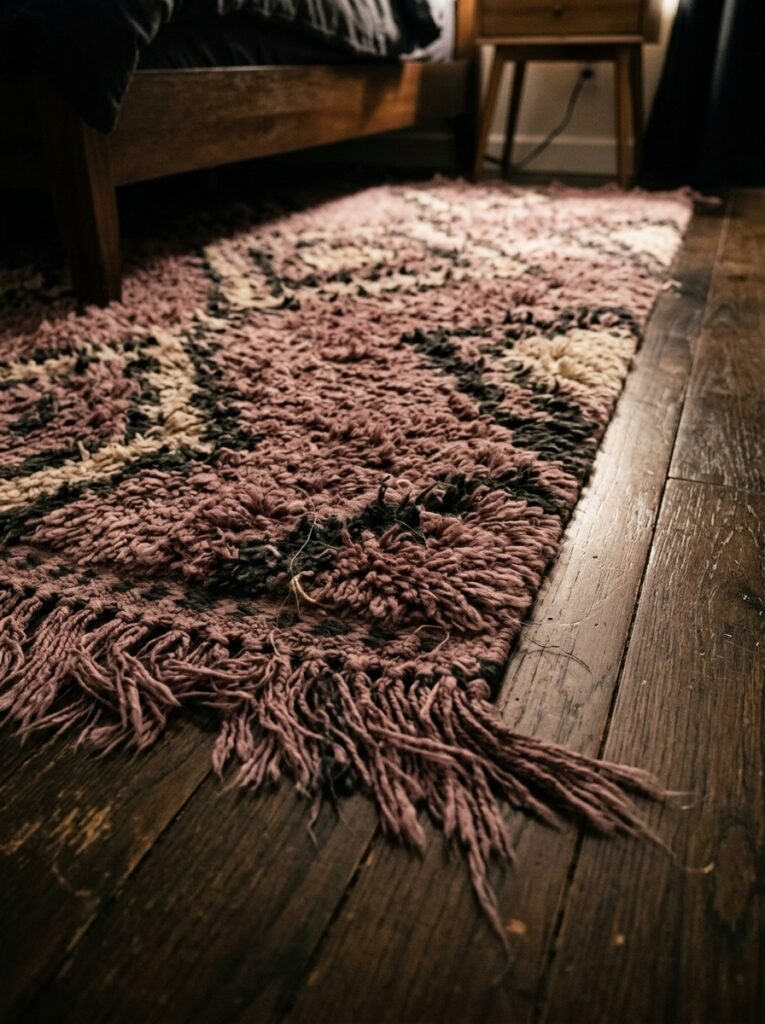
People forget about the floor. I do it too, honestly — you style the bed, the walls, the lighting, and then suddenly you’re standing on a sad beige carpet wondering why the room feels off.
In a dark feminine room, the floor needs to hold its own. If you’ve got hardwood, you’re in good shape — add a large, dark-toned rug with texture, something handwoven or with a bit of pattern. A deep plum, dusty rose, or dark neutral rug in a traditional or slightly worn style works beautifully.
If you’ve got carpet (UK readers, I see you), a large rug layered on top can totally transform the feel. A woven jute or dark kilim-style rug over a neutral carpet gives you that layered, settled-in feeling.
Size matters more than people realize. Too small and the rug floats. Aim for a rug that reaches under at least the front legs of the bed and extends past the sides — it grounds the whole space.
—
11. Art That Fits Without Trying Too Hard
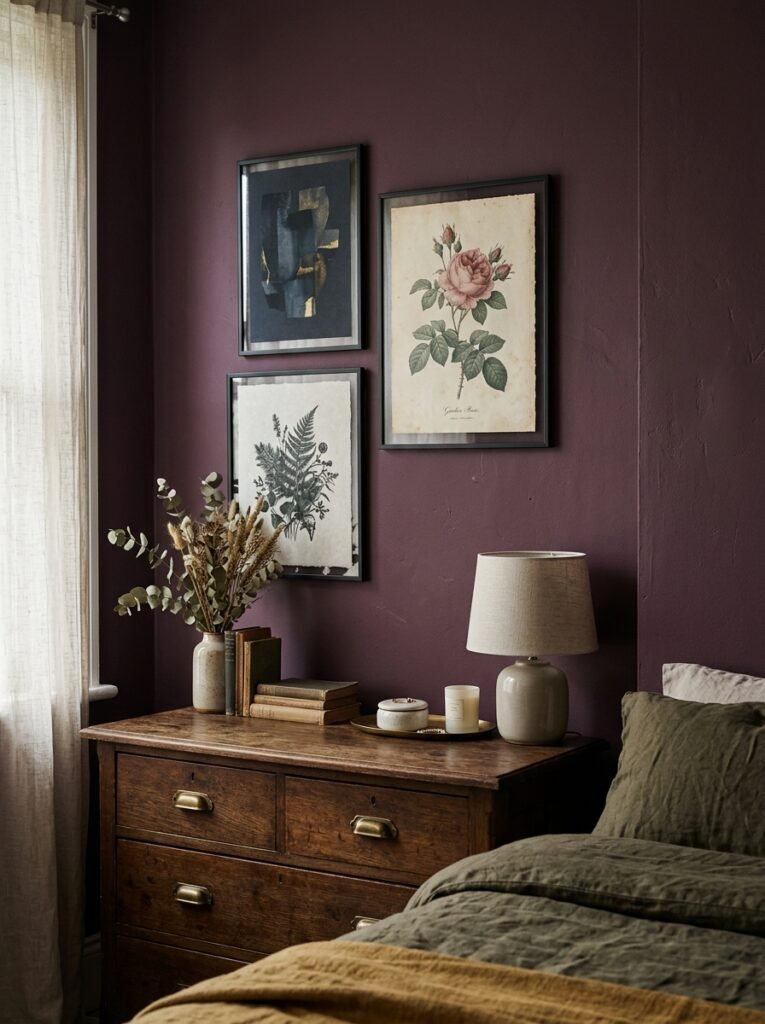
The art in this room should feel personal but not random. Dark feminine bedrooms tend to gravitate toward a specific visual language — botanical illustrations in aged frames, figurative work in deep tones, abstract pieces where burgundy or dusty pink appears almost by accident.
Gallery walls work here if they’re cohesive. Same frame style, or at least same tone (all dark wood, all black, all brass). Mix sizes but keep the arrangement intentional — not Pinterest-random-scattered, more like a controlled deliberateness.
Single large-format art is even better if you can find something you genuinely love. One strong piece above a dresser, in a deep ornate frame, says more than eight small prints arranged nervously.
And if you’re in the UK with tall Victorian walls — lean into that height. Stack art vertically. Use the wall.
—
12. The Small Details That Make People Stop and Notice
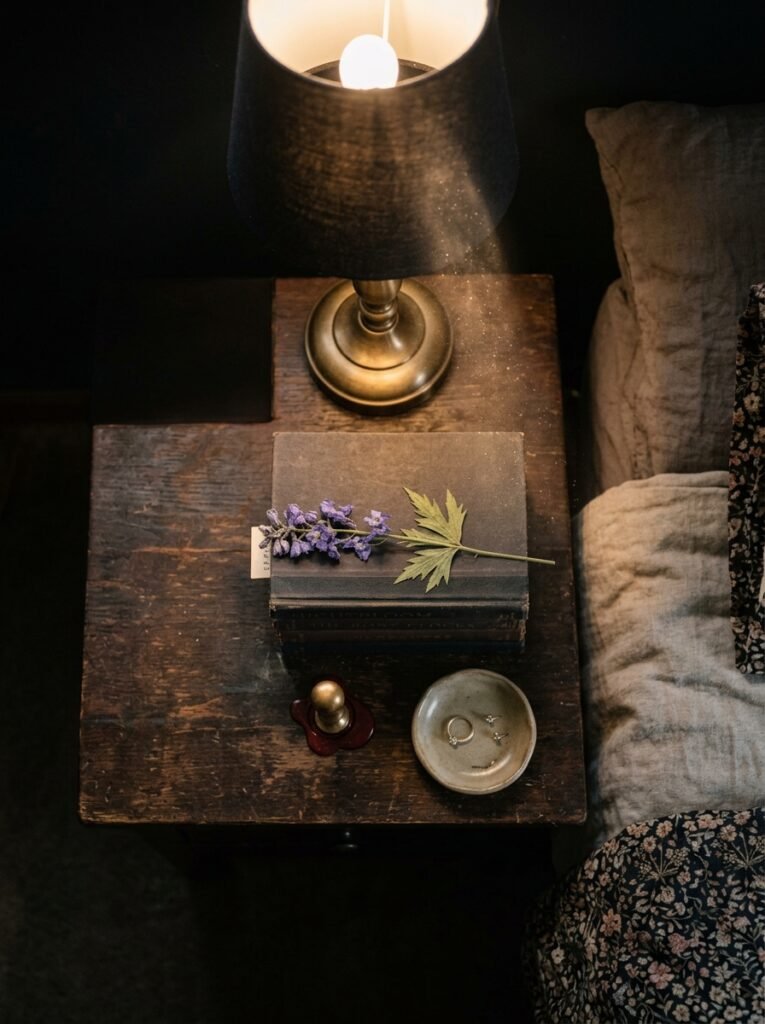
It’s always the small things. Not the bedframe or the paint color — those are foundations. What people actually comment on is the tiny stuff.
A glass perfume bottle catching lamplight on the dresser. A stack of dark-spined books on the nightstand. Small sculptural objects in ceramic or stone. A drawer handle in tarnished brass. A linen runner across the top of the dresser.
These details aren’t expensive. But they’re curated. And curation is what makes a room feel like someone actually LIVES there and loves it, versus a room that was styled and forgotten.
Dark feminine isn’t about buying a lot of things. It’s about choosing fewer things that mean something — objects with texture, with patina, with a feeling.
—
❓ FAQ
Q: Can I do a dark feminine pink bedroom in a small room without it feeling claustrophobic? A: Yes, but it does require some intentionality. Keep the floor clear — a lot of dark, layered rooms feel small because of clutter, not color. Go deep on one wall or just textiles if you’re worried, and use well-placed mirrors to bounce light around. A small room can feel incredibly cozy with a dark feminine approach, which isn’t always a bad thing.
Q: What colors do I pair with dark pink walls so the room doesn’t look one-note? A: Deep greens, charcoal, aged gold or brass, and warm off-whites are your anchors. Burgundy works if you’re willing to commit. Avoid anything too bright or too cool-toned — they’ll fight the warmth of the pink rather than deepen it.
Q: Is dark feminine pink a passing trend or is it going to stick around? A: Honestly? The specific colors shift but the underlying aesthetic — moody, feminine, intentional, a little dramatic — has been coming and going in interior design for decades. Victorian parlors. Art Nouveau. The 1970s rich earth tone moment. It always comes back, usually better than before. I wouldn’t hesitate.
—
💭 Final Thoughts
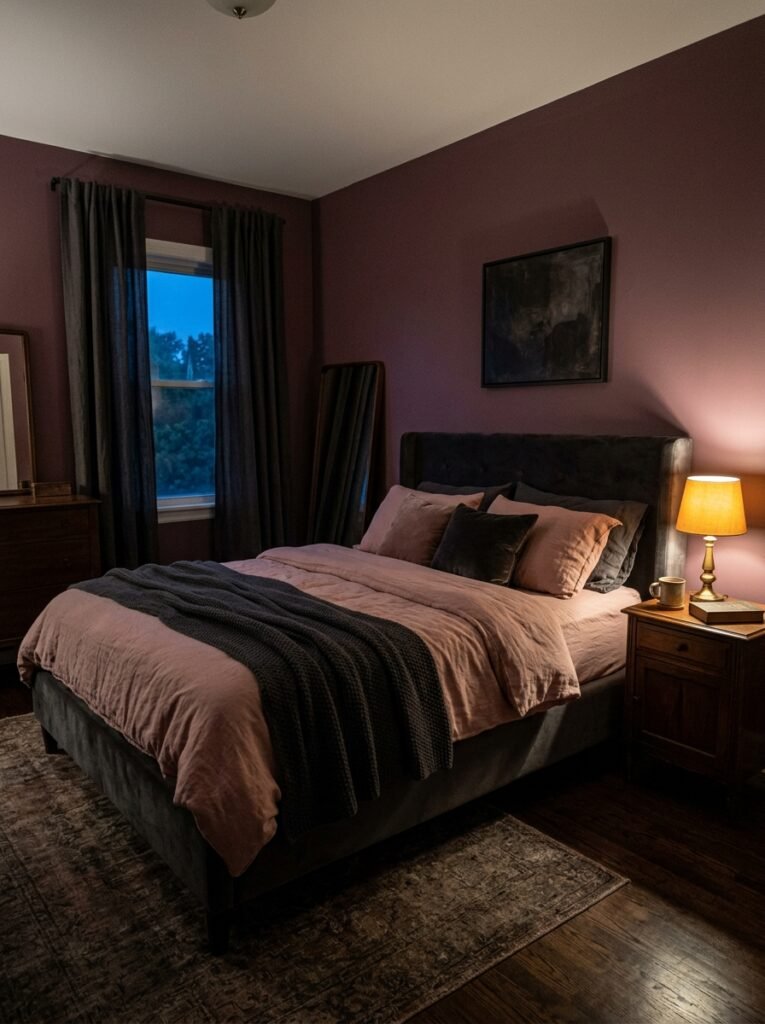
A dark feminine bedroom is really just a room that takes itself seriously. The soft stuff is still there — the textures, the warmth, the pink — but it’s not apologizing for wanting to be more than pretty. And I think that’s kind of the whole point.
Emma still has that wall, by the way. She painted the second wall last month.
What would you put up first — the bedframe or the lighting?