
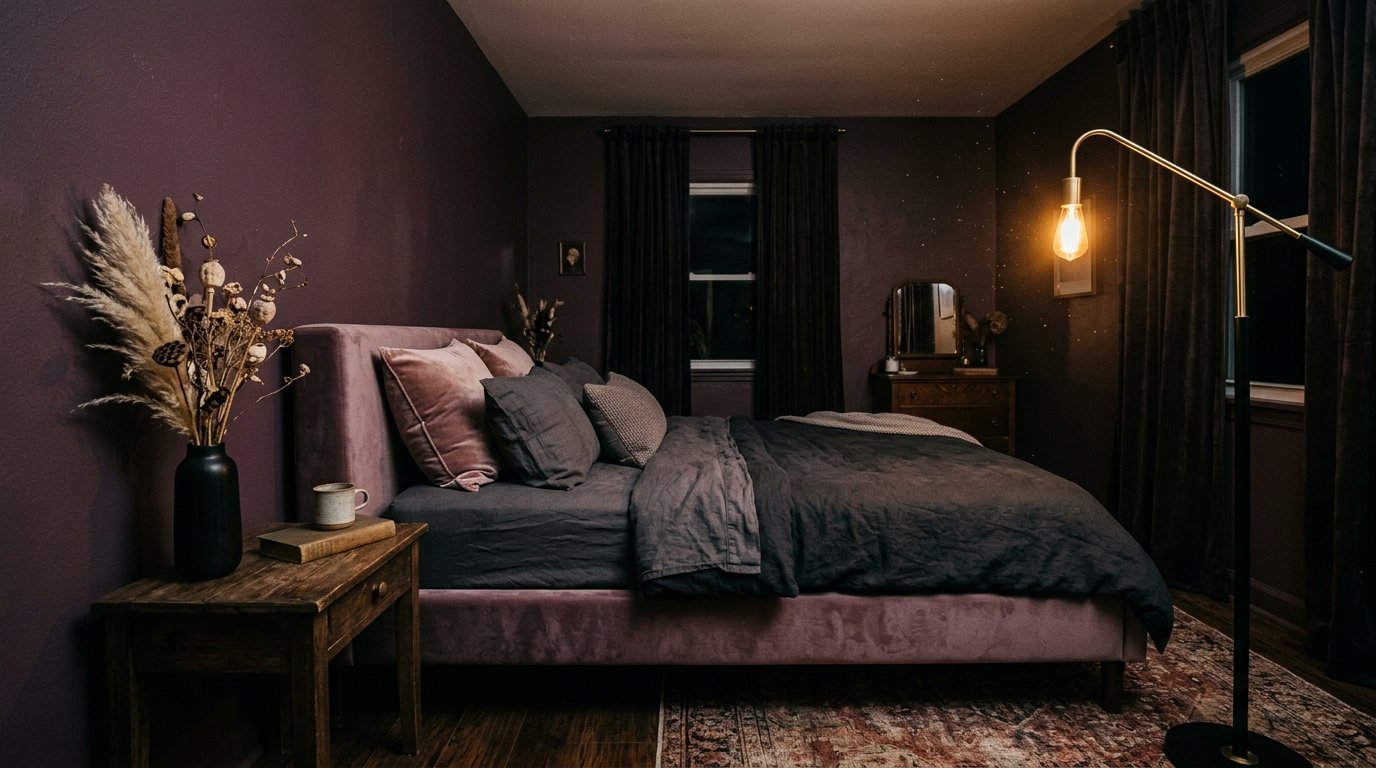
Dark Feminine Bedroom Ideas That Feel Powerful, Not Gloomy
My friend looked at my bedroom last spring and said, “it’s giving witch cottage but make it fashion.” And honestly? That’s the best compliment I’ve ever received about a room I’ve decorated.
—
1. Why Dark Feminine Isn’t What You Think It Is
Let’s get one thing straight. Dark feminine isn’t about black walls and gothic candelabras. Well — sometimes it is, and that’s valid. But the aesthetic is so much wider than that.
It’s about rooms that feel like they belong to a woman who knows herself. Deep, moody colors. Textures you want to run your fingers along. Lighting that doesn’t try too hard but somehow makes everything look better. There’s this quality in a well-done dark feminine room where it feels INHABITED — not staged, not magazine-perfect, but like someone who has actual opinions lives there.
The modern version of this has moved away from anything overly Victorian or theatrical. It’s more restrained now, more confident. Less “I’m trying to be mysterious” and more “I just am.”
“The best dark feminine rooms don’t look dramatic. They look decided.”
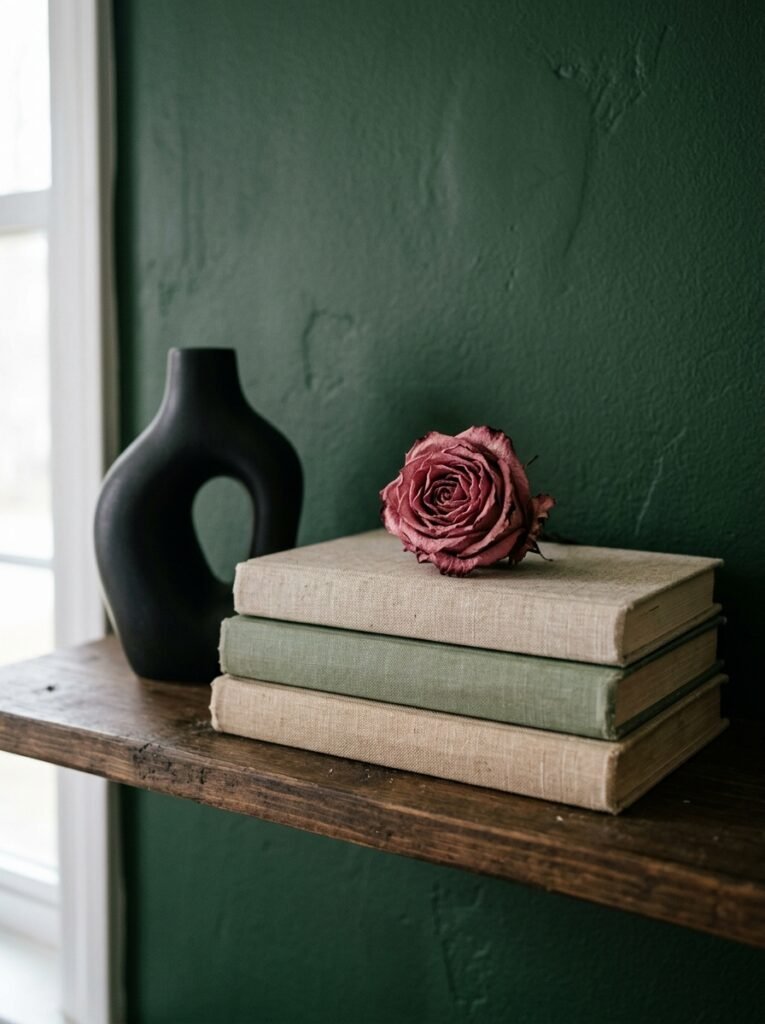
The color stories have shifted too. We’re not just talking burgundy and black anymore. Warm espresso browns, dusty mauves, the kind of green that looks like dried sage on a windowsill. These are the colors doing the heavy lifting right now.
—
2. The Wall Color That’s Replacing Black in Every Moody Bedroom
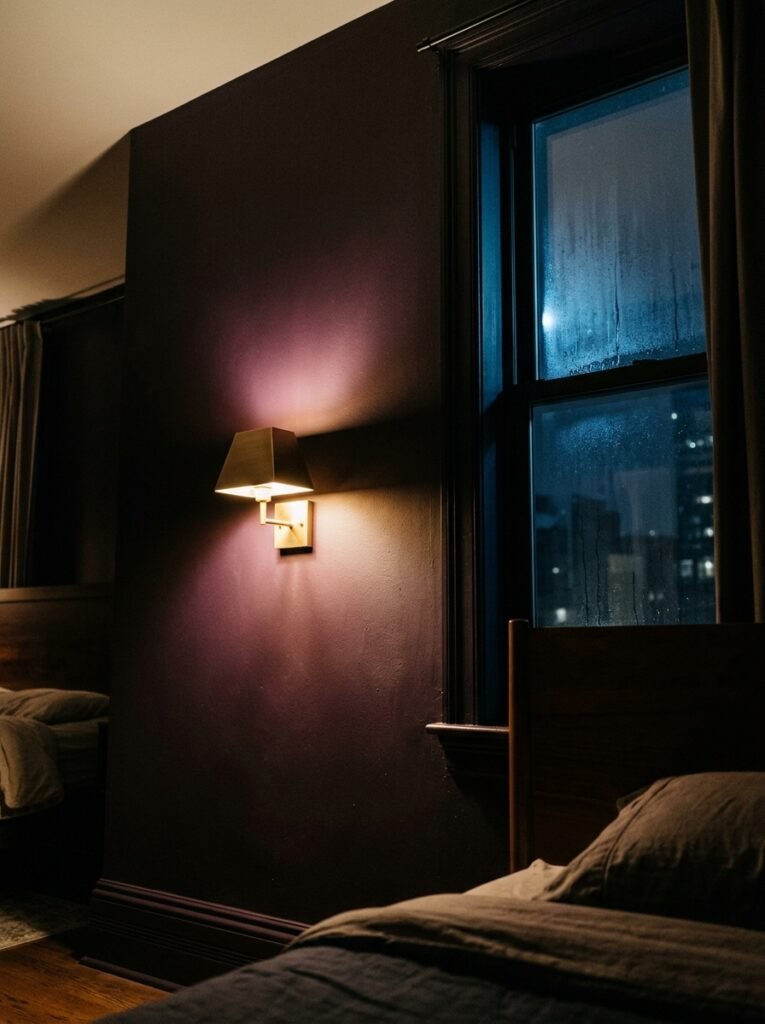
Everyone jumps straight to black. And look, a black bedroom can be stunning. But there’s a reason so many designers keep reaching for deep plum, charcoal-green, or a shade called something like “midnight clay” — it’s because these colors breathe.
Black can flatten a space if you’re not careful. But a deep aubergine at dusk? It shifts. It looks different at 8am in natural light than it does at 9pm with one lamp on, and that quality is what makes a room feel alive.
For smaller UK bedrooms especially — and a lot of us are working with rooms that aren’t exactly sprawling — a deep earthy tone on the walls reads as cozy rather than claustrophobic, which black sometimes doesn’t. The trick is to not paint everything. One statement wall behind the bed, maybe the ceiling if you’re feeling brave. Let the other walls breathe in a complementary neutral — a warm off-white or a faded greige.
If you want a specific direction: go warm-dark rather than cool-dark. Warm darks (plum, terracotta-black, deep brown-red) feel romantic. Cool darks (slate, blue-grey, icy charcoal) feel more editorial and cold. Both are beautiful, just different moods entirely.
—
3. Textures That Do More Work Than Any Paint Color
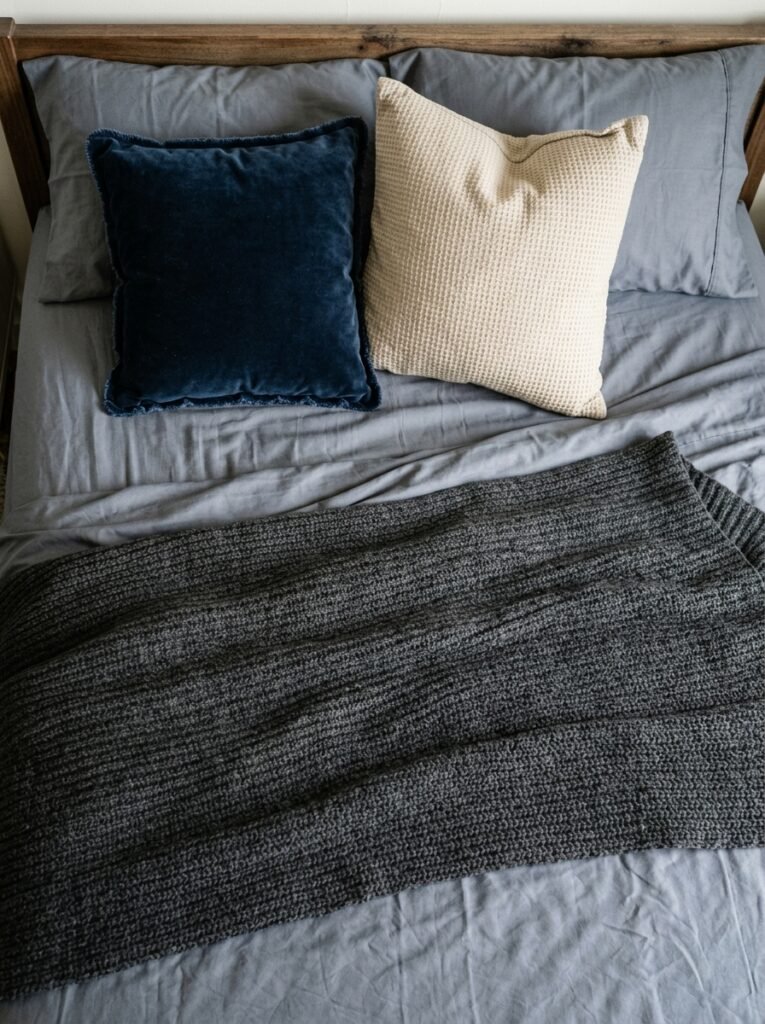
Here’s the thing about dark rooms — texture is everything. Without it, a dark-walled room just looks like a dark room. WITH it, it looks intentional.
Velvet is the obvious answer and it’s obvious because it works. A velvet headboard in ink blue or forest green against a deep wall is almost unfairly beautiful. But don’t stop there.
Layer in:
- A chunky boucle throw that looks expensive but wasn’t
- Matte linen pillowcases — not crisp white, but warm cream or dusty rose
- A woven jute or wool rug with visible texture rather than something flat and smooth
- Raw wood on a bedside table, nightstand, or floating shelf
The contrast is the point. Rough against smooth. Matte against the occasional gloss. A ceramic vase next to a soft pillow. Side note — I genuinely didn’t understand texture layering until I started doing it wrong for a while first, so don’t be discouraged if your first attempt feels a bit “random pile of things.”
“A dark room without texture is just dark. Texture is what makes it feel like somewhere you’d want to stay.”
—
4. The Lighting Setup That Changes the Whole Room
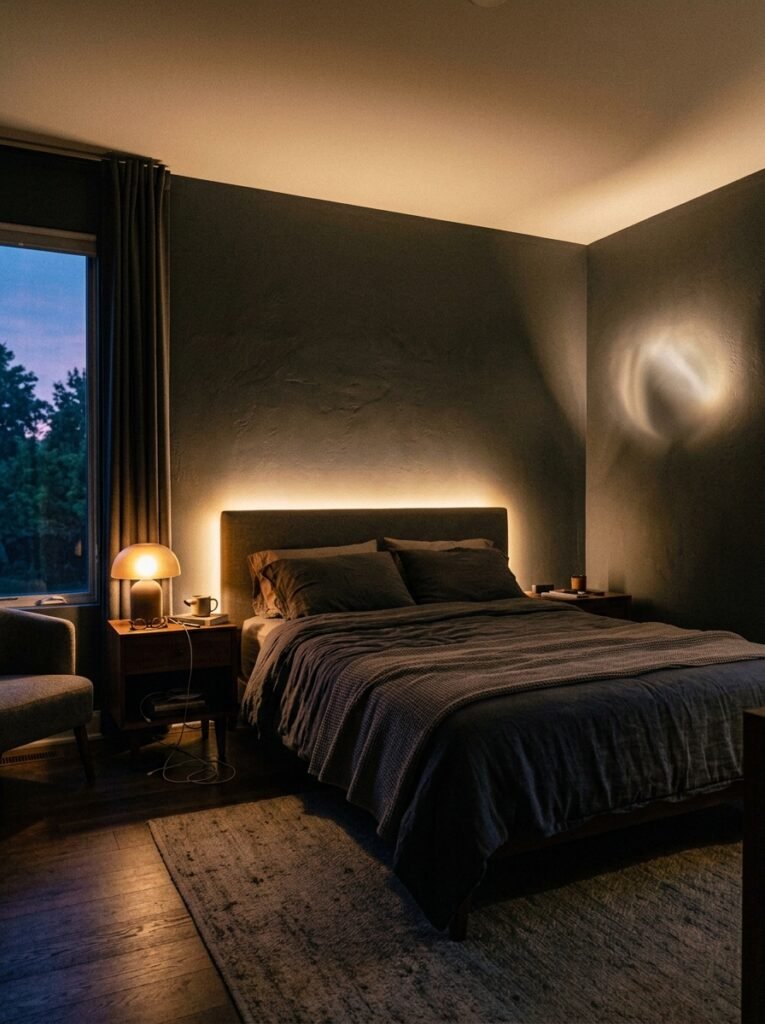
Overhead lighting in a bedroom is almost always a mistake. I’ll stand by that. A single ceiling fixture blasting light downward flattens everything — the textures you’ve carefully chosen, the paint color that shifts in different light, all of it. Gone.
In a dark feminine bedroom, lighting has to be layered and deliberate.
The amber glow of a small lamp at 7pm does something a ring light or bright overhead simply can’t. You want multiple light sources, all of them low. Bedside lamps with warm bulbs (look for 2700K on the packaging — that’s the golden, almost candlelight range). A small table lamp in a corner. Fairy lights wound loosely around a headboard or trailing behind a mirror if you want something softer.
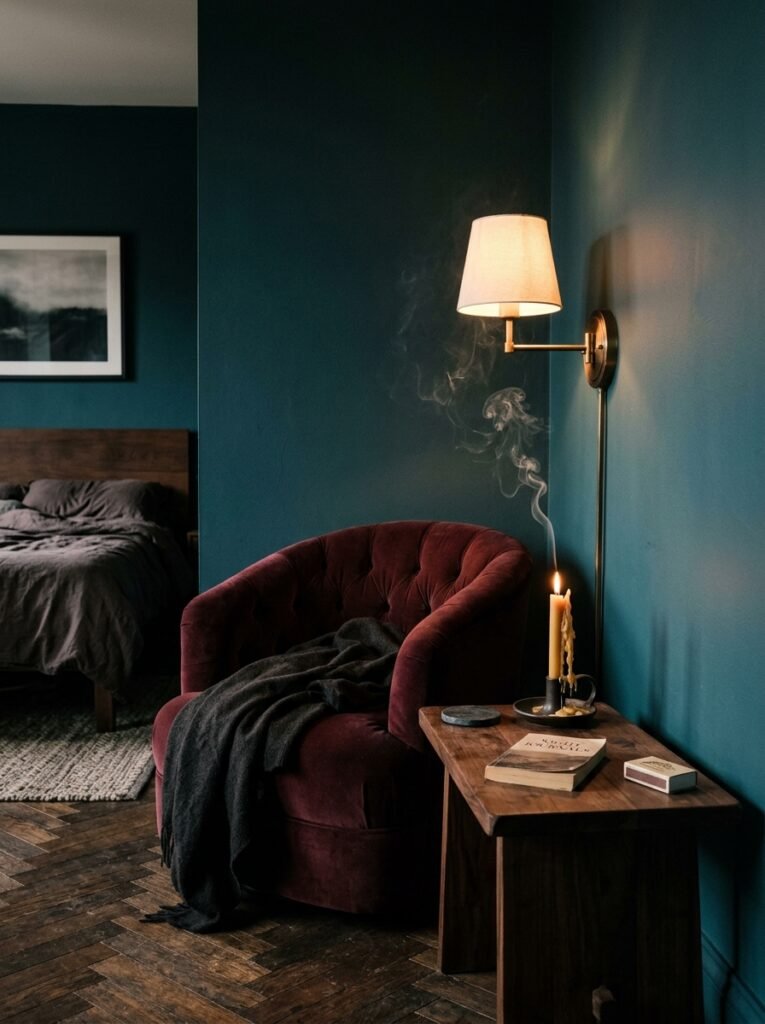
Candles, obviously. Real ones if you’re careful, the wax melts kind if you’re not. The flickering actually matters — it’s kinetic in a way that no static lamp can replicate.
And mirrors. A dark room with a well-placed large mirror suddenly feels twice the size without losing any of its moodiness. Position one to catch lamplight and it’ll do things you didn’t expect.
—
5. The Bed Styling Trick Most People Skip
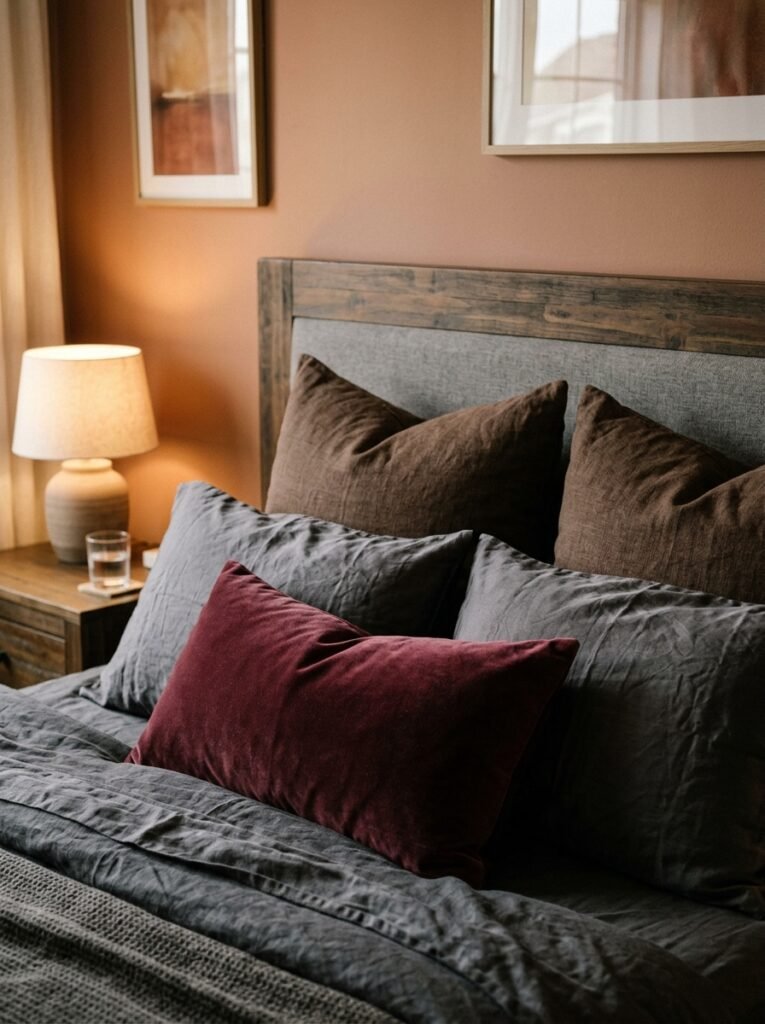
Most people make their bed and call it done. In a dark feminine room, the bed is the main event. It has to be STYLED.
Start with your fitted sheet — go dark here, something that blends. Charcoal, deep wine, chocolate brown. Then your pillowcases can go lighter or stay dark but in a different texture. Then you layer: a flat sheet loosely folded, a duvet that’s slightly oversized (the drape at the sides matters), then a throw across the foot of the bed that contrasts.
The real trick is the pillow situation. Don’t go symmetrical. Two main sleeping pillows, then one or two euro shams behind them, then ONE interesting accent pillow slightly off-centre. That slight asymmetry is what makes it look styled rather than just… a bed that someone made.
Headboards deserve their own conversation. A tall, upholstered headboard does enormous things for a room. It adds vertical interest, it’s a massive texture anchor, and it makes even a basic bedroom feel like it has architecture. If you can only invest in one piece, make it the headboard.
—
6. Metals That Feel Modern Rather Than Ornate
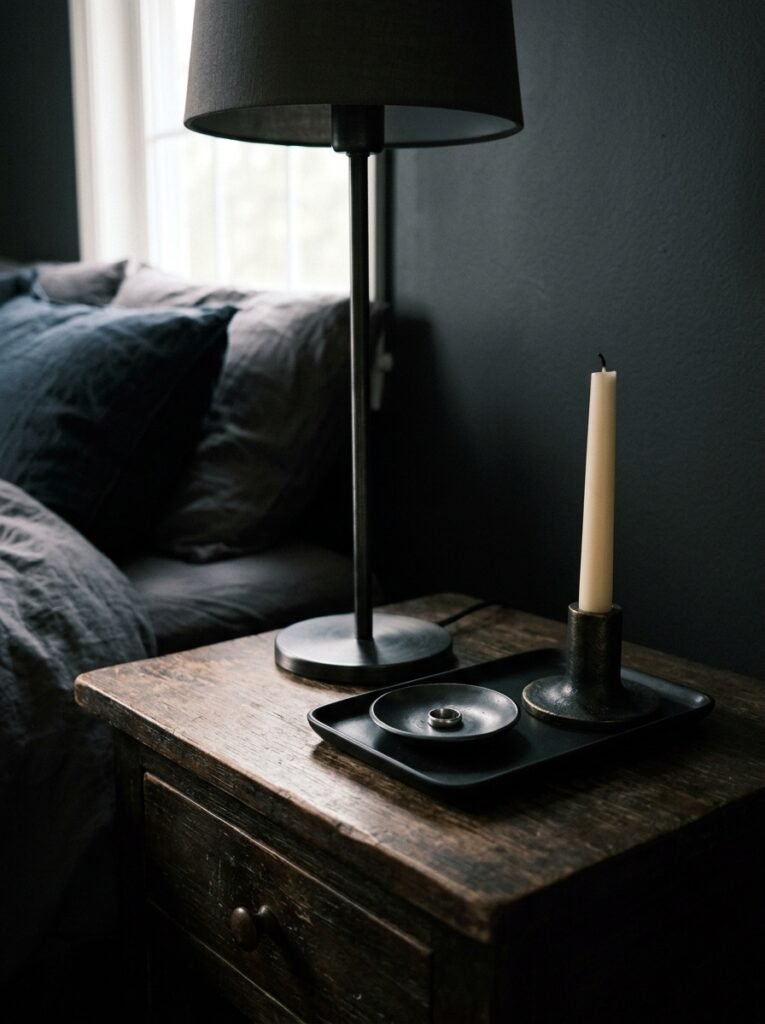
There’s a version of dark feminine that’s all about gold — heavily ornate, lots of filigree, very Baroque. That’s one direction. But the more modern interpretation uses metals much more sparingly.
Aged brass is the one I keep coming back to. Not shiny gold, not yellow — the kind that looks like it’s been there a while. A single brass lamp base. Door handles that have gone slightly warm-toned. A small gilded picture frame.
Matte black hardware is the other go-to. Mixed with dark walls it becomes almost tonal and invisible, which sounds like a bad thing but is actually incredibly chic. Like the room just KNOWS.
Don’t mix too many metals. Pick one warm (brass or copper) and either keep everything that metal, or contrast just ONE element in matte black. More than that starts to feel like you couldn’t decide, which is very different from intentional eclecticism.
—
7. Plants That Actually Work in Low-Light, Dark Bedrooms
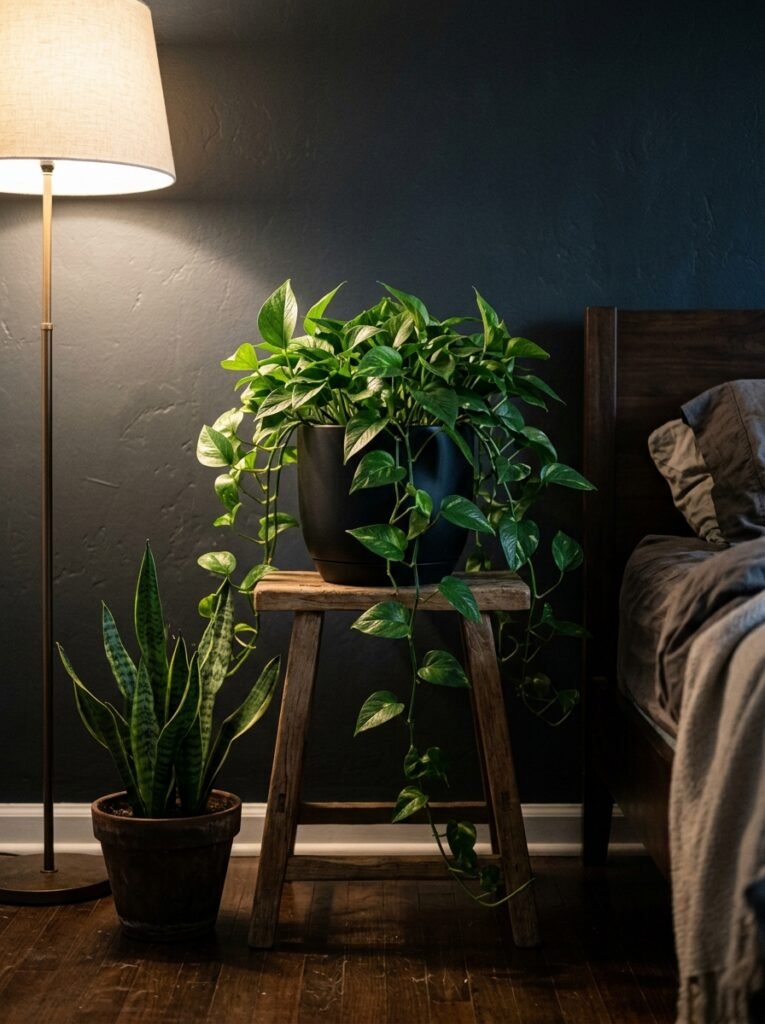
Can I be honest? I’ve killed a lot of plants trying to make them work in a dark bedroom. Here’s what I’ve learned.
Most plants that people style in moody rooms for photographs are being photographed, not actually living there. Dark walls and heavy curtains mean low light, and low light means very specific plant choices.
What actually survives and still looks beautiful: pothos (trails beautifully down a shelf), ZZ plants (almost indestructibly low-light tolerant and have this gorgeous waxy leaf), snake plants, and peace lilies. Peace lilies are underrated in dark feminine rooms — the white flower against dark greenery against a dark wall is genuinely stunning.
For aesthetic purposes, dried botanicals are your best friend. Dried pampas, dried black wheat, eucalyptus that’s gone silvery-grey — these don’t need light and they photograph beautifully. Mix fresh low-light plants with dried arrangements and suddenly you’ve got a whole botanical corner that works.
—
8. The Art That Belongs in This Kind of Room
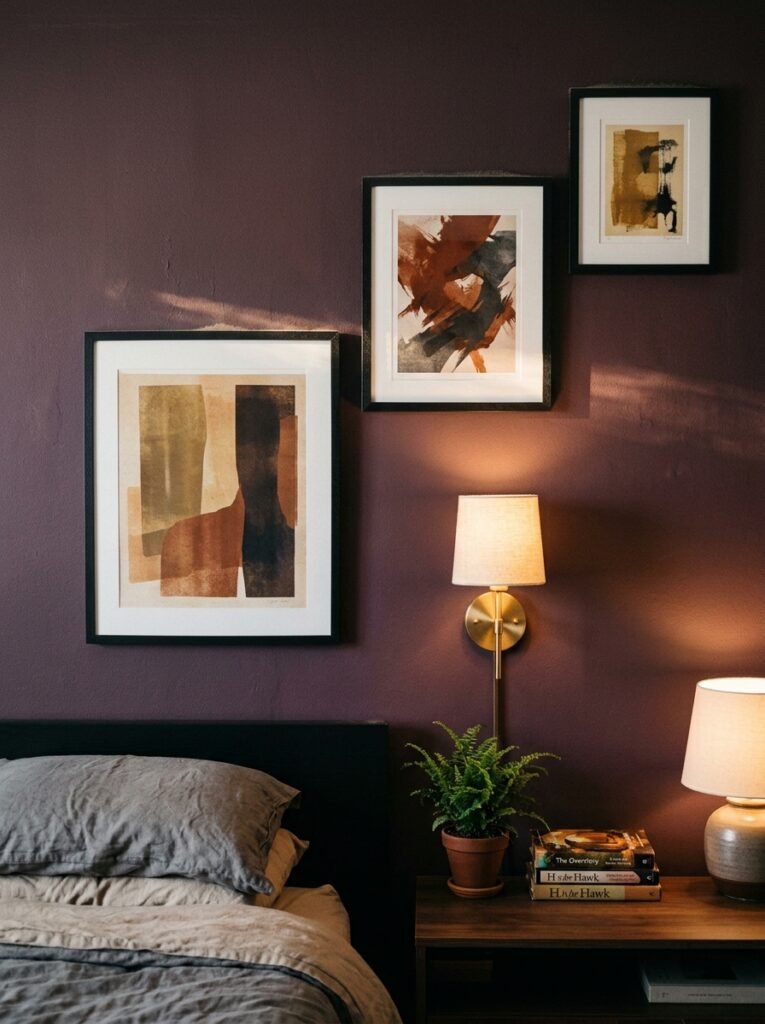
Art choices can make or break the whole thing. The wrong art and a dark feminine room starts to look like a teenage bedroom circa 2012 (a lot of roses and skulls, not that there’s anything wrong with that — but it’s a specific vibe).
What works: abstract pieces with depth in the palette rather than bright flat colors. Dark botanicals — a big print of dark-leafed plants, a moody orchid, dried flowers under glass. Gestural portraits that feel loose and expressive. Vintage-style illustrations with a slightly aged feel.
What to avoid: anything too bright and primary-colored (it fights with everything), anything too busy and patterned when you already have textured walls, and inspirational quotes that you’ll be tired of in six months. Be ruthless about this.
Gallery walls can work but go monochromatic with the frames — all black frames or all that aged brass we talked about. Mix sizes, leave small gaps between frames, and group them asymmetrically. The moment a gallery wall looks too perfectly spaced it goes from collected to clinical.
—
9. The Scent Layer People Always Forget to Mention
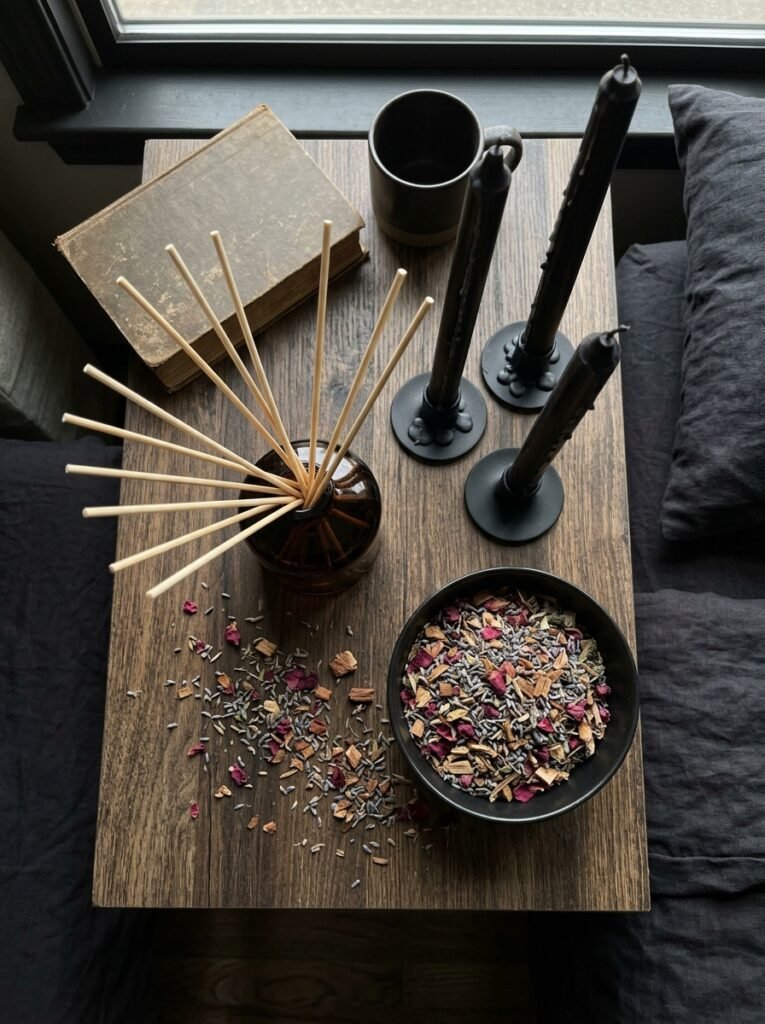
I don’t see this talked about enough in bedroom decor articles and it drives me a little bit mad, honestly.
A room can look exactly right and still feel wrong if it doesn’t smell like anything. Or worse, if it smells like synthetic air freshener. In a dark feminine bedroom, scent is part of the atmosphere.
Warm, resinous scents work best: amber, oud, sandalwood, vetiver. Lighter florals like rose work if they’re not too sweet — dark rose, not pink rose, if that distinction makes sense. Black fig. Smoke and wood.
A diffuser is fine but candles are better for this aesthetic — both for the scent and for what they do visually. Keep them in clusters of odd numbers. Three candles of different heights on a side table creates this little altar effect that photographs beautifully but also just looks genuinely good in real life.
“Scent is the texture of air, and in a moody room, it’s the thing that makes someone walk in and immediately relax their shoulders.”
—
10. What to Do With Dark Feminine Decor in a Rented Space
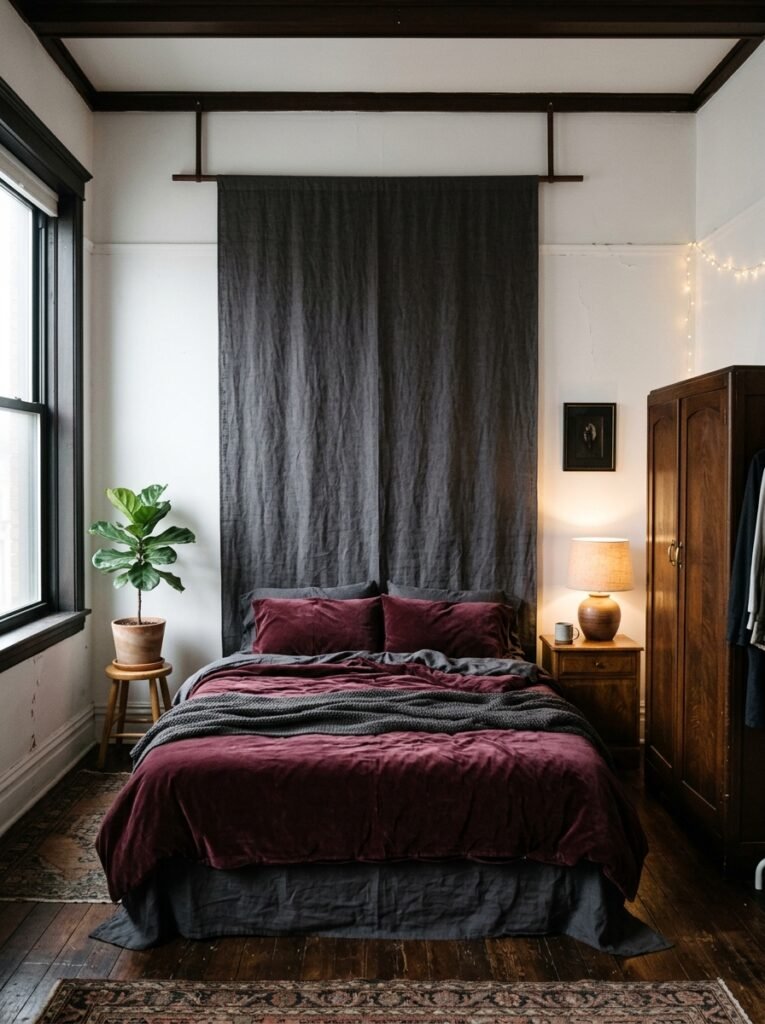
Not everyone can paint their walls and that’s genuinely frustrating when you’re trying to create something moody.
But there are real solutions. Dark, heavy curtains (floor to ceiling, hung as high as possible — even on a normal-height wall, hanging curtains near the ceiling makes the room feel taller and the curtains darken the whole perimeter of the room). A large dark rug that anchors the whole space. Dark bedding. A tall, dark-framed mirror.
You can also use peel-and-stick wallpaper on a feature wall behind the bed — there are some genuinely good options now that don’t look DIY and come off cleanly when you leave. Go for a dark floral, a dark abstract pattern, or a deep textured look. That one wall can transform the whole room’s feel without touching a single thing your landlord owns.
Renters have more options than they think. The key is thinking in terms of furniture and textiles rather than walls — and those are things you get to take with you anyway.
—
11. The One Thing Most Dark Feminine Rooms Get Wrong
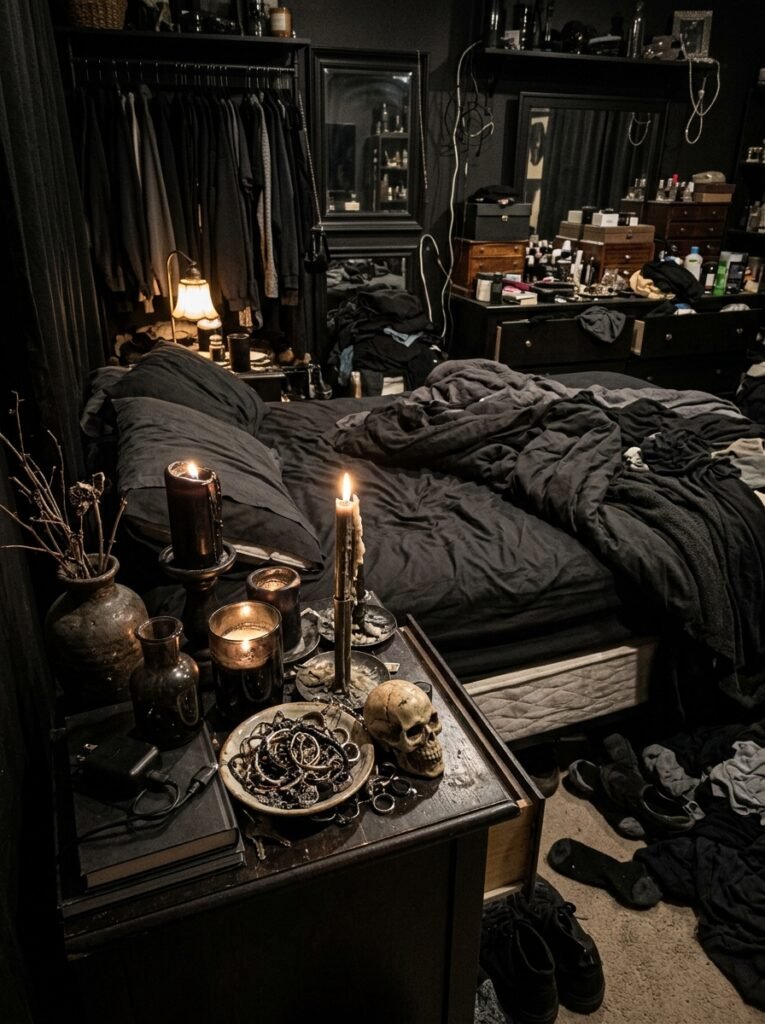
Too much of the same thing. Dark walls, dark rug, dark bedding, dark curtains, dark furniture — and then the room just looks heavy and sad. There’s no light to bounce around, nothing to catch your eye.
The contrast points are EVERYTHING. A cream linen pillow on dark bedding. A pale ceramic vase against a dark wall. White or warm-cream candles in the cluster of dark decor on the shelf. A light wood piece among darker furniture.
These light elements aren’t diluting the aesthetic. They’re making it work. They give the darker elements something to push against. Without contrast, your eye has nowhere to rest, and the room starts to feel less sophisticated and more just… dim.
The best dark feminine rooms have a 70/30 split roughly — 70% deep, moody, textured, and dark, and 30% softer, lighter, breathing room. Or maybe it’s more like 75/25. Honestly, you’ll feel when it tips too far either way.
—
12. How to Make the Room Feel Modern Rather Than Gothic
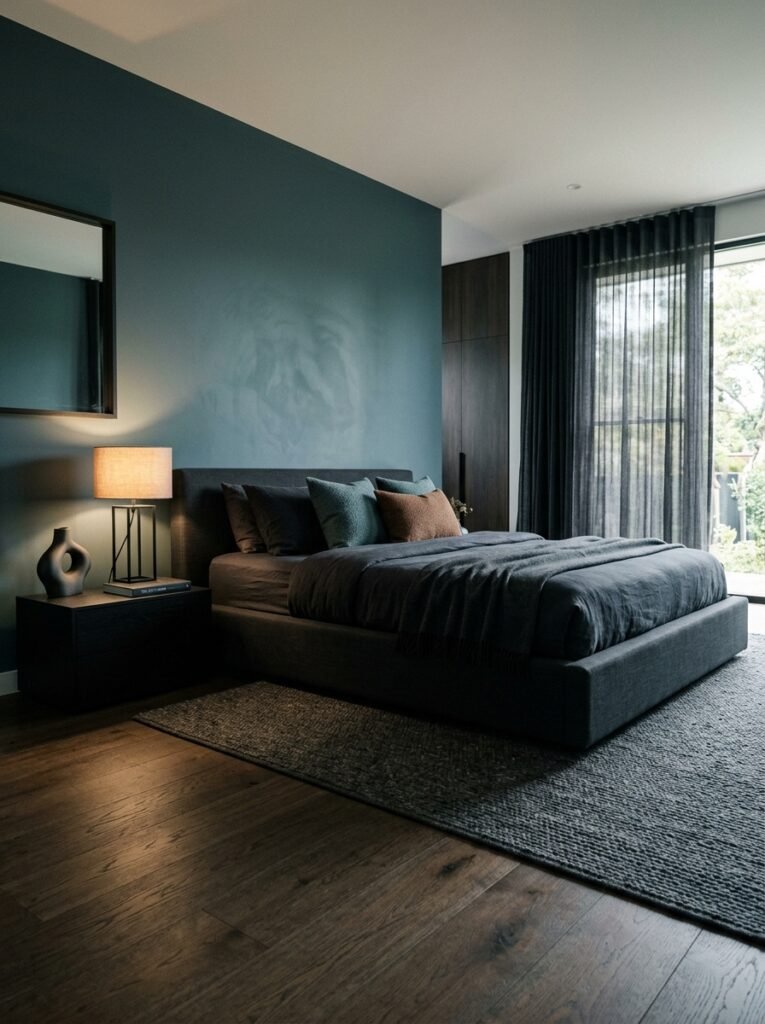
The line between dark feminine modern and dark feminine theatrical is a fine one and worth being deliberate about.
Clean lines in furniture help enormously. A sleek, low platform bed with a simple upholstered headboard reads very differently than a heavily carved wooden frame with posts. Both can work in the right space, but if you want modern, go simple in the silhouettes even while being rich in the colors and textures.
Keep surfaces edited. In a darker room, clutter reads as claustrophobia. A few considered objects on a nightstand — a lamp, one book, a candle, maybe a small plant — is so much more impactful than a crowded surface. Same on shelves. If you’re going to style a shelf, leave more empty space than you think you need.
And the ceiling. So many people stop at the walls and ignore the ceiling entirely. A dark ceiling in the same color as the walls — or slightly deeper — wraps the room and makes it feel FINISHED. Cocooned. That’s the word people use when they walk into a room and immediately want to never leave. If you do one unexpected thing, let it be the ceiling.
—
❓ FAQ
Q: Will a dark bedroom make a small room feel even smaller? A: Not necessarily — and actually a lot of designers argue that dark colors in a small room make it feel cozier and more intentional rather than cramped. The key is lighting: you need multiple warm light sources so the room glows rather than just sits in shadow. A large mirror helps too.
Q: What’s the easiest way to start if I’m not ready to commit to dark walls? A: Start with the bedding and the curtains. Dark, heavy curtains from ceiling to floor completely shift the vibe of a room, and dark bedding is easy to switch out if you change your mind. These two changes alone can move a room significantly toward a moody, dark-feminine feel before you touch a single wall.
Q: Does dark feminine bedroom decor work in a shared bedroom with a partner who has different taste? A: Yes, and more easily than you’d think. The aesthetic tends to appeal to people who lean toward coziness and warmth, even if they’d never use the term “dark feminine.” Focus on agreement points — rich textures, warm lighting, interesting art — rather than leading with “I want dark walls.” Most people come around when they see how the whole thing feels.
—
💭 Final Thoughts
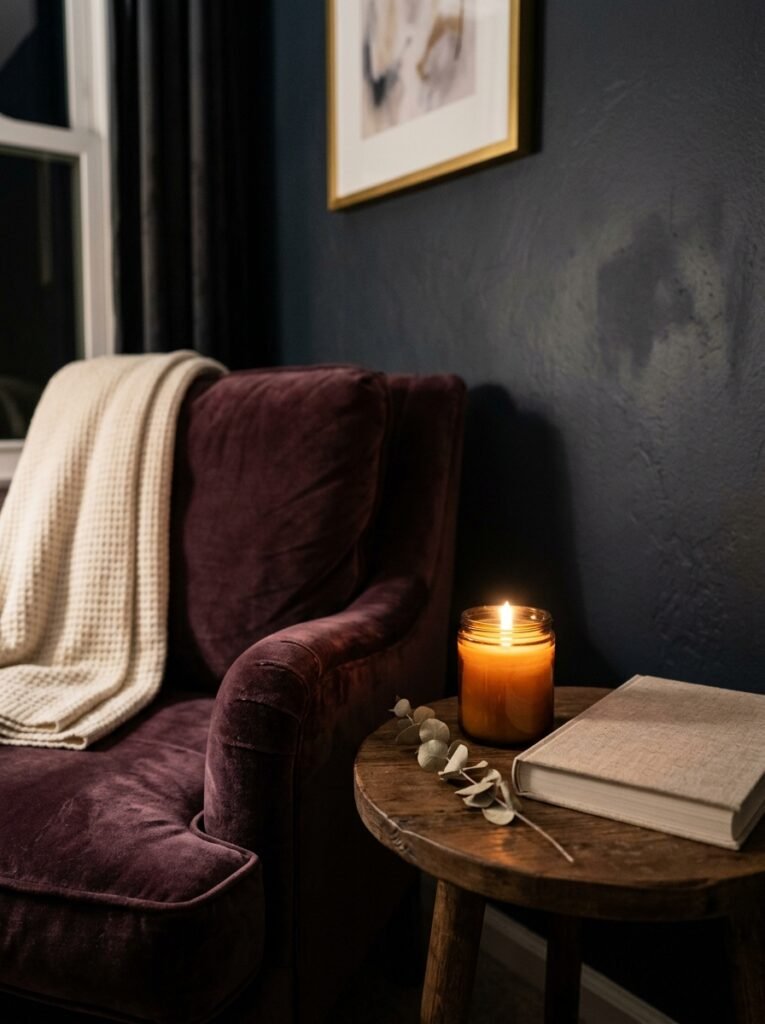
There’s a specific feeling a good dark feminine bedroom gives you — that the room belongs to you completely. Not to a trend, not to a mood board, not to what’s currently everywhere on Pinterest. Just you.
That feeling is worth building toward slowly. One piece at a time. And the rooms that get it most right are always the ones that look like they took years, even when they didn’t.
What’s the one element you’ve been afraid to try in your own bedroom?