
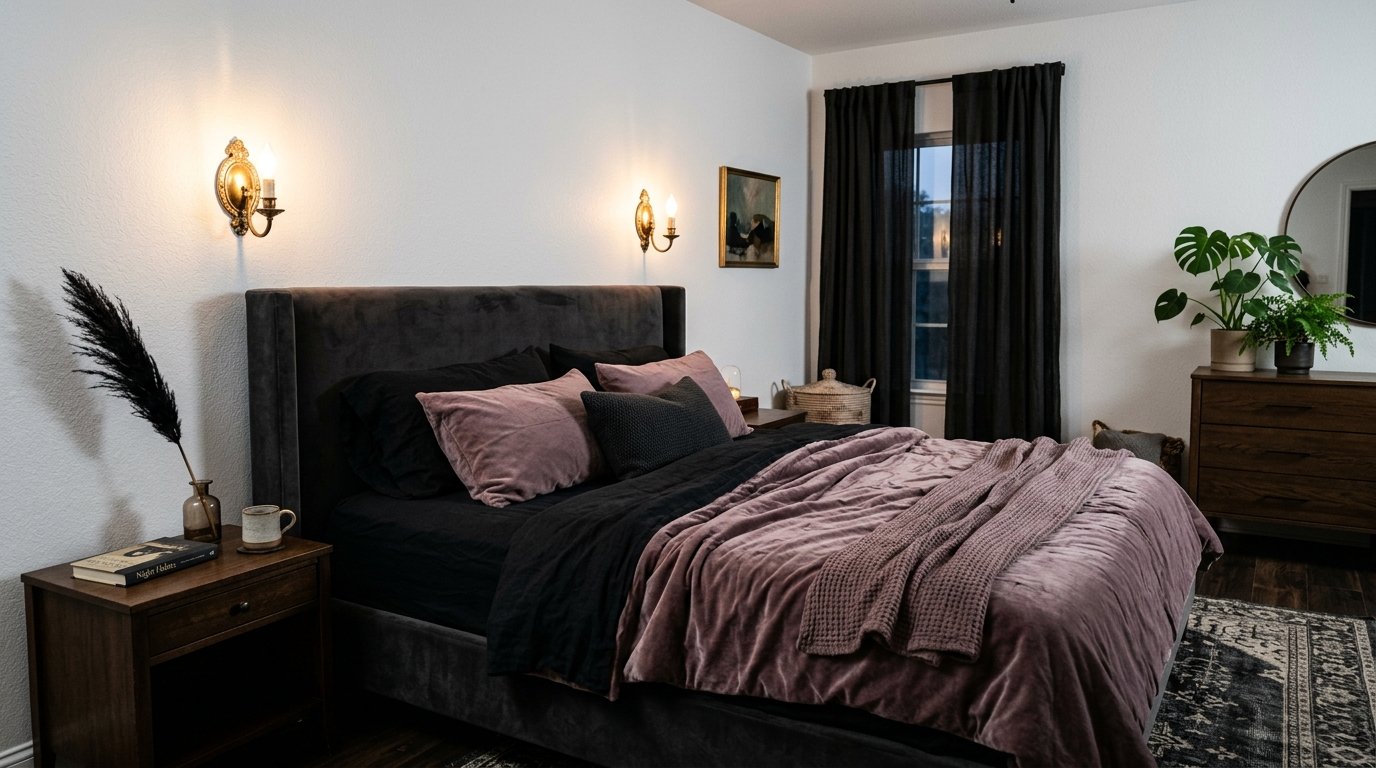
Dark Feminine Bedroom Ideas That Actually Work on White Walls (No Paint Required)
Someone in my DMs last week said “I want my bedroom to feel moody and romantic but my landlord won’t let me paint the walls.” And I thought — okay, same. SAME. White walls feel like a starting point that never quite finishes itself, and that limbo is genuinely frustrating when you have a very specific vision in your head.
But here’s what I’ve figured out, after way too many hours on mood boards and far too much money spent rearranging furniture: white walls aren’t the enemy. They might actually be the whole secret.
—
1. Why White Walls and Dark Feminine Aesthetics Are a Better Match Than You Think
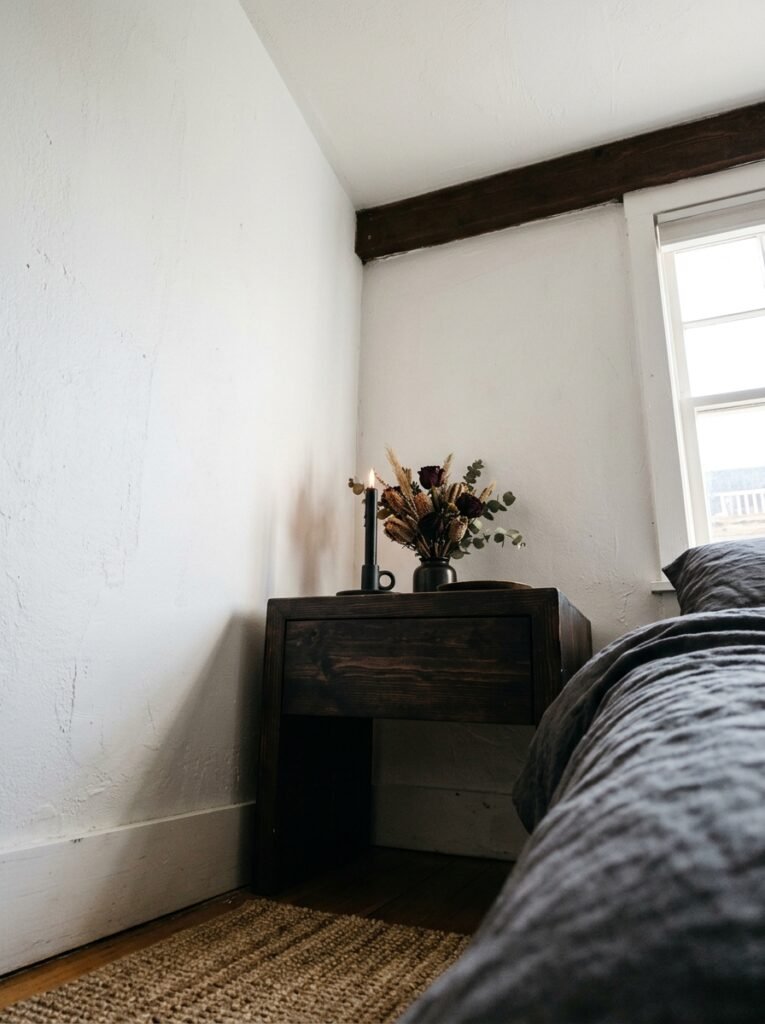
The contrast is doing work you don’t even notice at first. When you layer deep, moody elements — velvet in midnight tones, aged brass, dried botanicals — against a white backdrop, each piece gets its own moment. Nothing drowns. Nothing fights.
Dark feminine design is all about tension. Softness against edge. Pale against deep. And a white wall? It’s already half of that equation. You don’t need to paint anything. You need to think about it differently.
There’s this idea that a moody room needs dark walls, and I’d argue it’s actually the opposite — or maybe it’s somewhere in the middle, honestly. A white-walled room with a black iron headboard and a heavy linen duvet in dusty mauve feels more charged, more deliberate, than the same setup on a grey wall. The contrast creates the tension. The tension creates the atmosphere.
“You don’t build a dark feminine bedroom by darkening everything. You build it by choosing what gets to stay light.”
Start by accepting the white. Then work against it, intentionally.
—
2. The Headboard That Changes the Whole Conversation
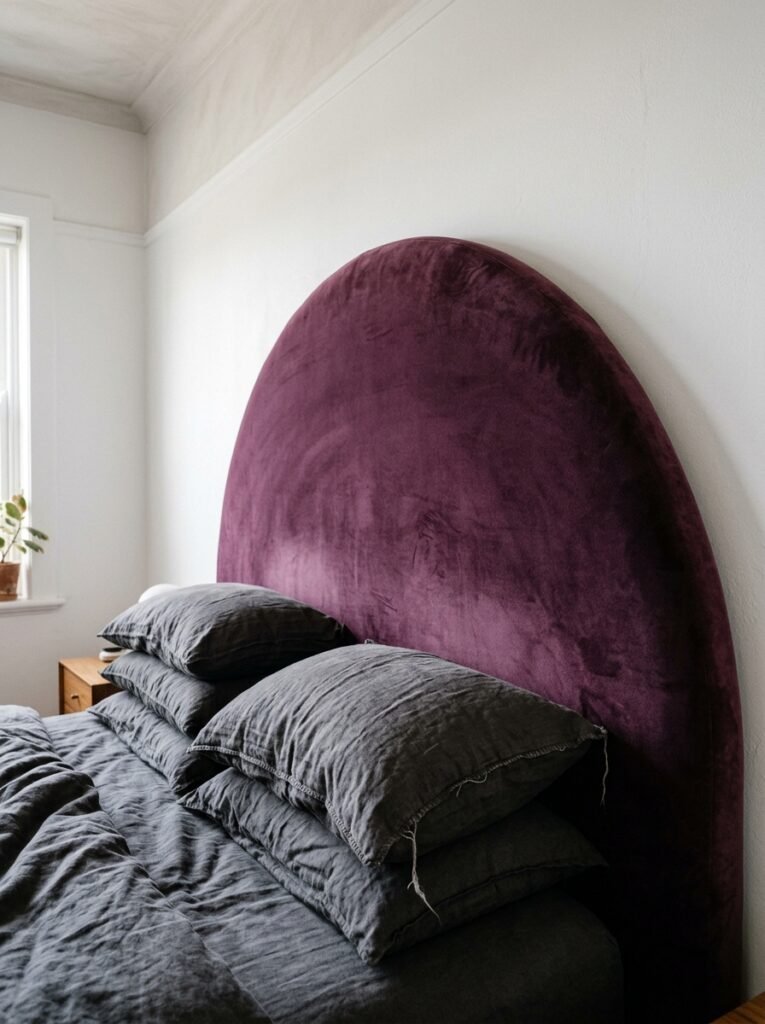
If there’s one place to spend money in this kind of room, it’s the headboard. Full stop.
An ornate iron headboard with curved, almost gothic arches against white walls looks — I can’t explain it without sounding dramatic — it looks like a painting you didn’t plan. Tall, dark, architectural. It pulls every other element into its orbit. Suddenly the white wall isn’t bare, it’s a canvas with intent.
Upholstered headboards work too, but only in the right materials. Velvet in deep plum or charcoal. Boucle, if you want something softer but still textured. Avoid anything that looks too clean or hotel-adjacent. The whole point is that this room belongs to someone with a rich inner world. The headboard should suggest that before they even see anything else.
Don’t overthink the shape. Tall is almost always better. Something that rises above your pillows and commands the wall.
—
3. The Linen and Velvet Combination Nobody Talks About Enough
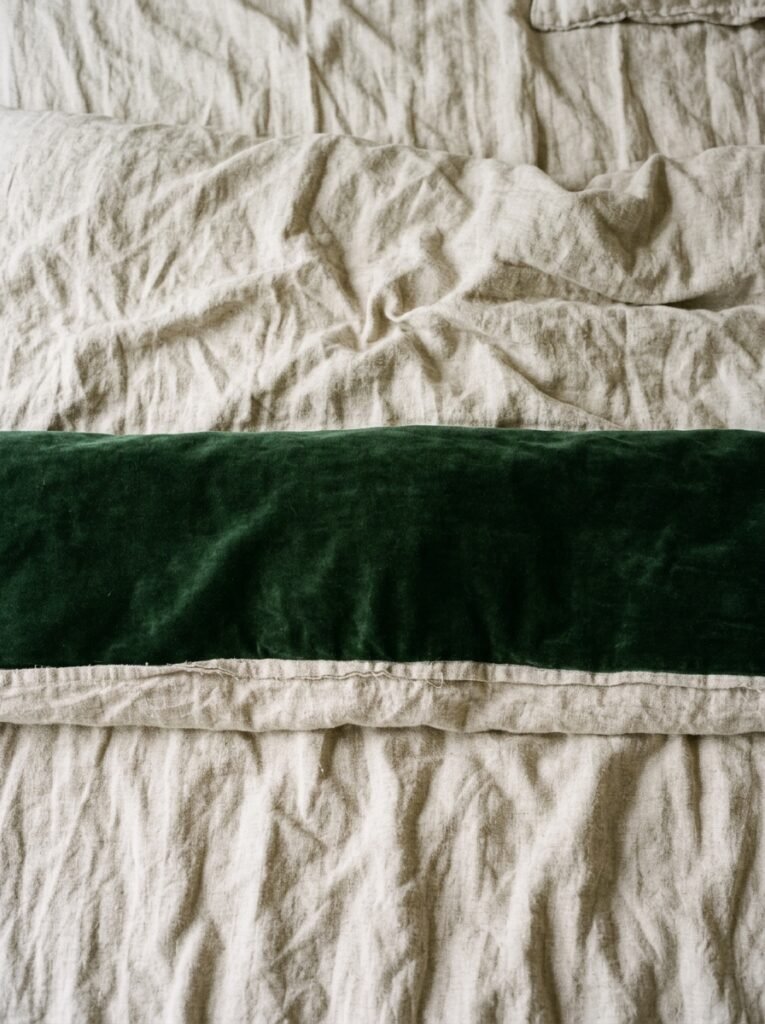
Bedding is where a lot of people chicken out. They go neutral when they should go deeper.
Linen in dusty blush or aged wine — not bright, not brand new looking — layered with a velvet throw in deep forest or near-black is one of those combinations that photographs like you hired someone, but cost almost nothing compared to furniture. The textures do the heavy lifting. The linen is breathable and slightly wrinkled in that effortless way. The velvet is dense, light-absorbing, rich.
Pile the pillows unevenly. Not in that symmetrical hotel stack — like, actually unevenly. Two or three on one side. A cylindrical bolster tucked in somewhere that looks almost accidental. A pillow in a faded floral, very muted, almost washed out. The effect should read as curated without feeling like a showroom.
And don’t match everything. Matching is the enemy of atmosphere.
—
4. The Lighting Decision That Either Makes or Breaks the Whole Thing
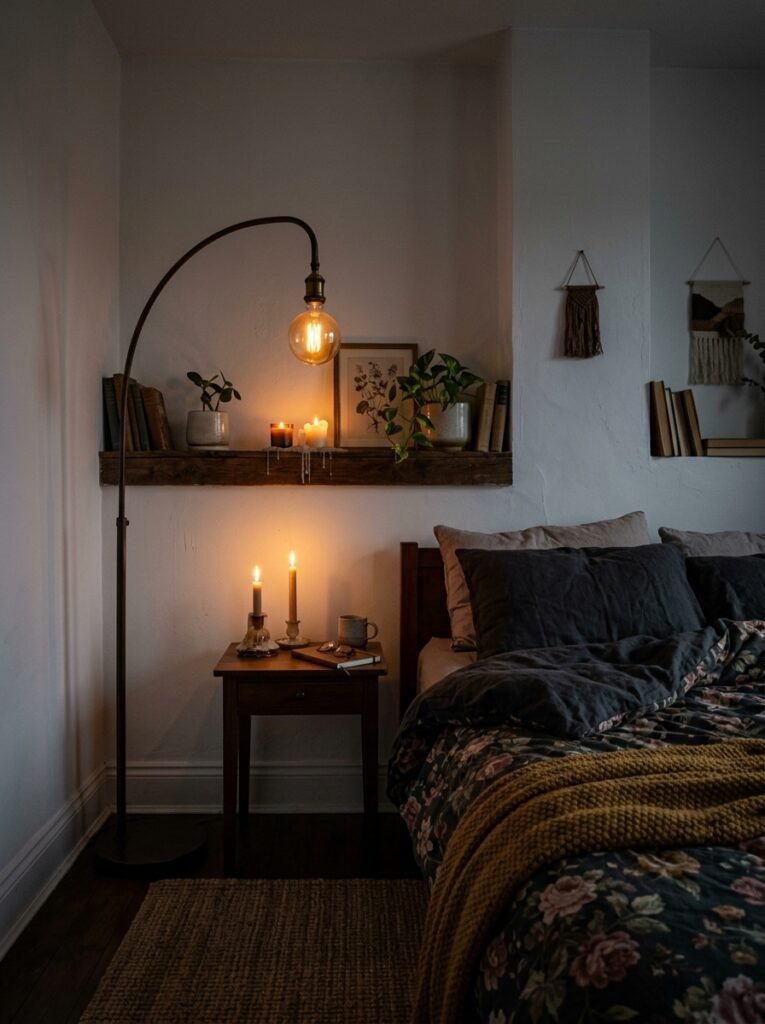
I need to talk about overhead lighting for a second, because so many people are ruining perfectly good bedrooms with it.
Turn it off. Just — off. Or at minimum, get a dimmer switch installed (usually a weekend job, totally worth it). The overhead light in most bedrooms is designed for functionality, not atmosphere, and in a dark feminine space, it’ll flatten everything you’ve worked to build.
What you actually want: a tall arc floor lamp tucked in a corner, something with a sculptural base in aged brass or matte black. A small table lamp on the bedside with a warm amber shade — not a white shade, never a white shade in this kind of room. Candle sconces on the wall if you’re allowed to put a few small holes in it.
“The right light in a bedroom doesn’t illuminate the room. It illuminates the mood.”
Candles everywhere. Real ones, battery ones, pillar candles on a tray, tapers in ceramic holders. The point is the flicker. The amber warmth at eye level. It changes the room completely, even if nothing else changes.
—
5. Mirrors That Feel Haunted in the Best Way
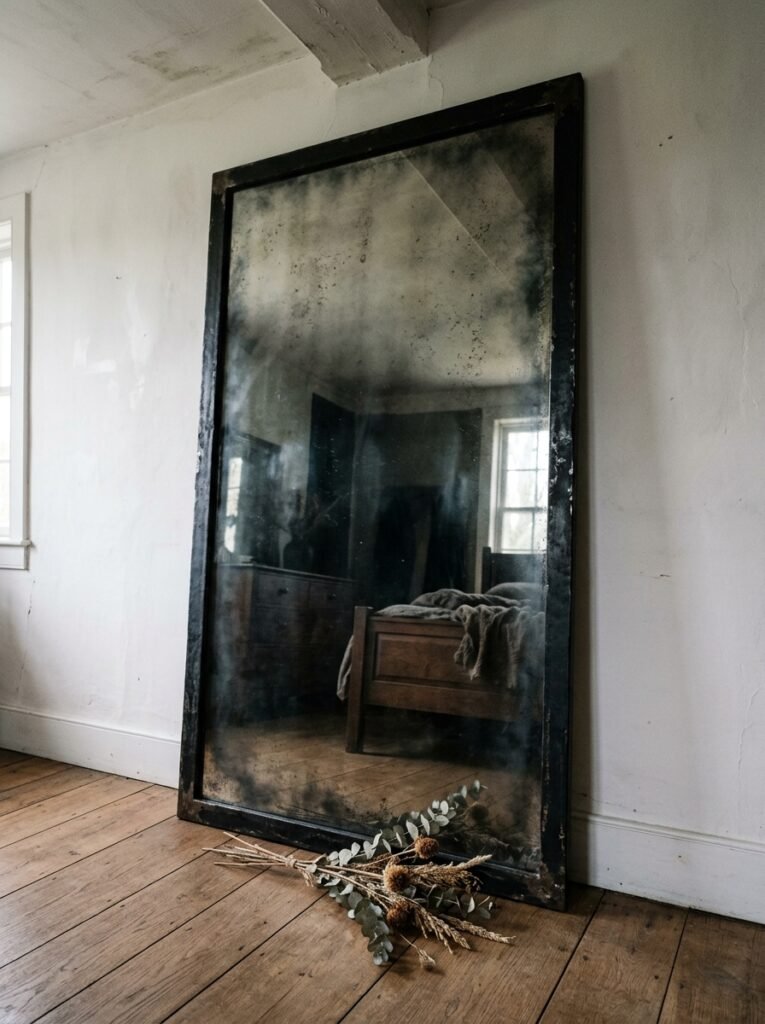
A plain rectangular frameless mirror has no business in a dark feminine bedroom. None.
You want frames that have some story to them. An ornate gilded mirror that looks slightly aged. A round mirror in a heavy iron frame. Arched mirrors are everywhere right now and for good reason — they add height, they add drama, they feel almost architectural, like a doorway to somewhere else.
Lean them against the wall rather than hanging if you’re renting. A large leaned mirror in an ornate frame against white walls creates that same “painting you didn’t plan” effect as the iron headboard. It also makes the room feel bigger without doing that cold, clinical thing that plain mirrors can do.
Place one where it catches the candlelight at night. That’s it. That’s the whole tip.
—
6. The Plants That Actually Belong in This Kind of Room
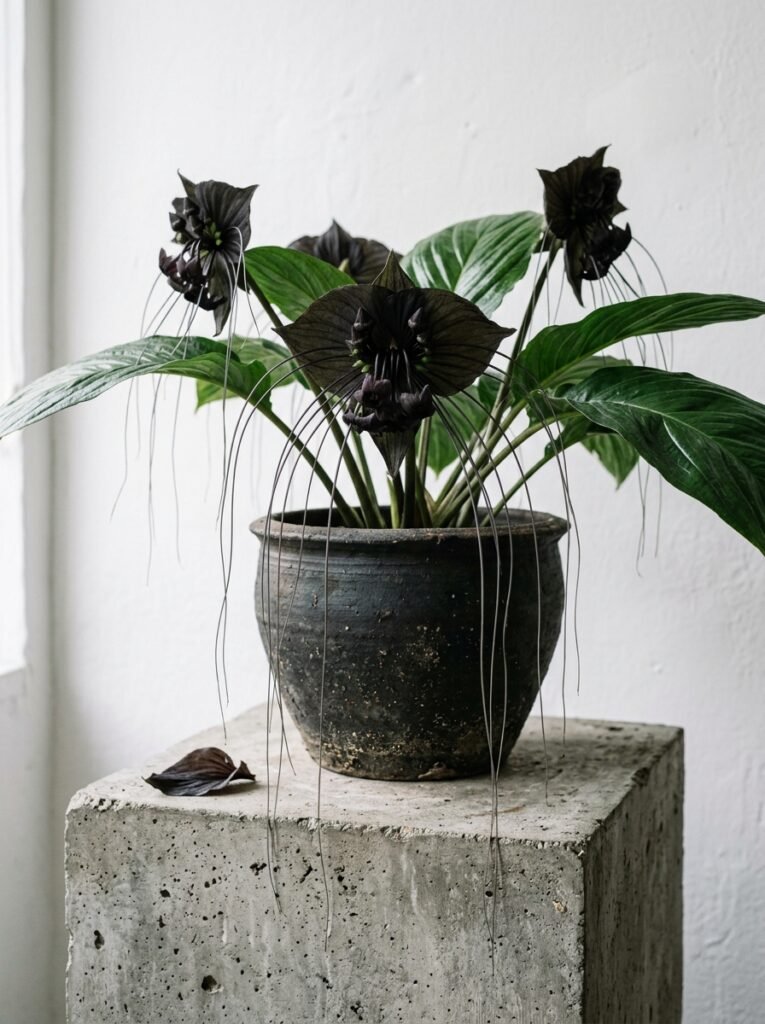
Not every plant is right for this aesthetic. A bright green, cheerful monstera is a beautiful plant that is in the wrong room right now.
You want plants that feel a little more Gothic, a little more witchy, a little more “found in an old library.” Think dried pampas in dusty rose or bleached white. Pressed botanicals in dark frames on the wall. A single trailing plant in an aged ceramic pot — something with trailing vines, something that looks like it’s been there for years.
Black-potted plants always look right in this context. A small succulent or cactus in matte black terra cotta. Dried lavender tied with twine and hung upside down somewhere. Even a vase of dried roses that have gone slightly brown at the edges, which sounds depressing but looks absolutely intentional and beautiful.
Fresh flowers are fine occasionally, but dried is more permanent, more atmospheric, and doesn’t die on you on a Thursday.
—
7. The One Rug That Pulls Every Dark Element Down to Earth
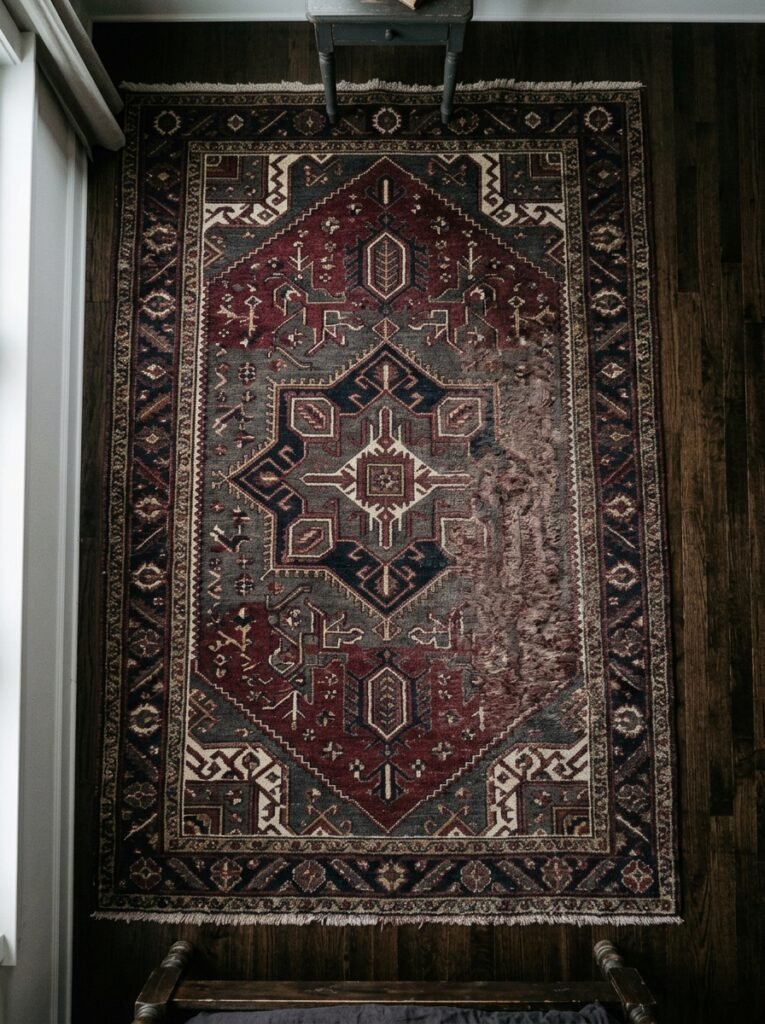
The rug is what grounds the whole room. Without a strong rug, all those moody elements just float.
A large Persian-style rug in deep jewel tones — burgundy, navy, forest green with hints of gold — against white walls and pale or dark wood floors is a combination that has existed for centuries for a reason. It works. The pattern adds richness without you having to add more stuff, which is a distinction that matters in a smaller bedroom.
Or go the other direction: a large woven rug in charcoal or near-black. Flatweave, no pattern. Just texture. It creates a kind of visual gravity, a weight beneath the bed and furniture that makes the whole space feel anchored.
“The rug isn’t the floor covering. It’s the foundation of the entire mood.”
Size matters more than anything here. Go bigger than you think. A rug that’s too small makes the room feel accidental. A rug that goes almost wall to wall makes it feel like a decision.
—
8. Curtains as Architecture, Not Just Window Covering
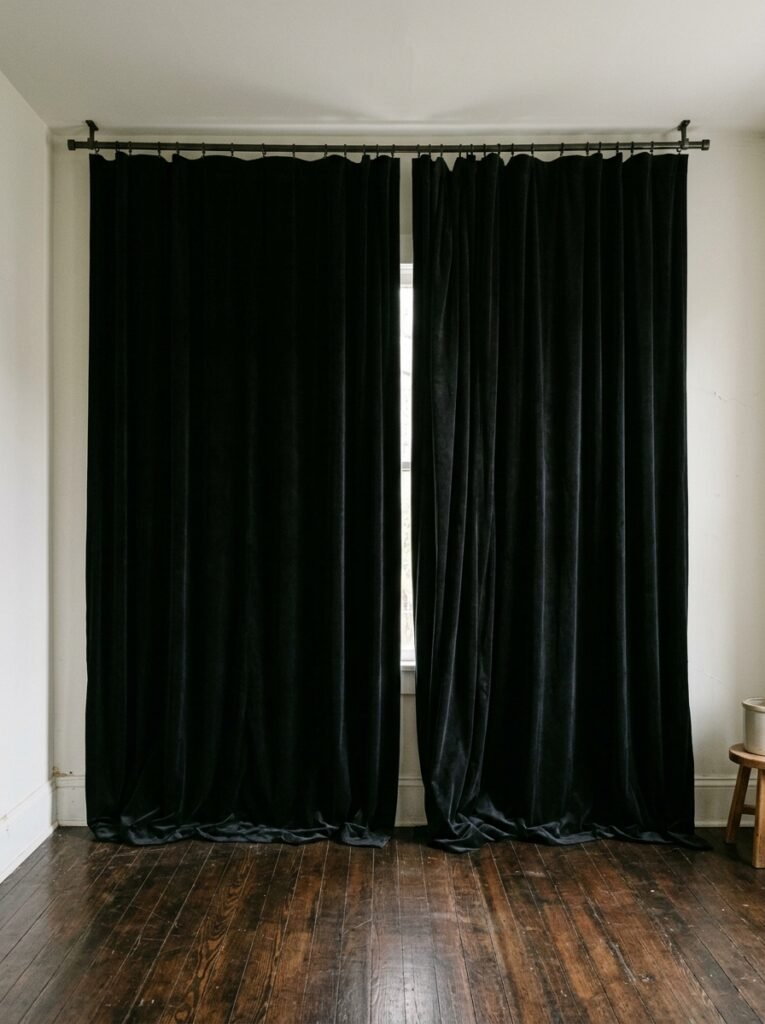
If you hang curtains at the exact width and height of your window, I say this gently — you’re leaving so much on the table.
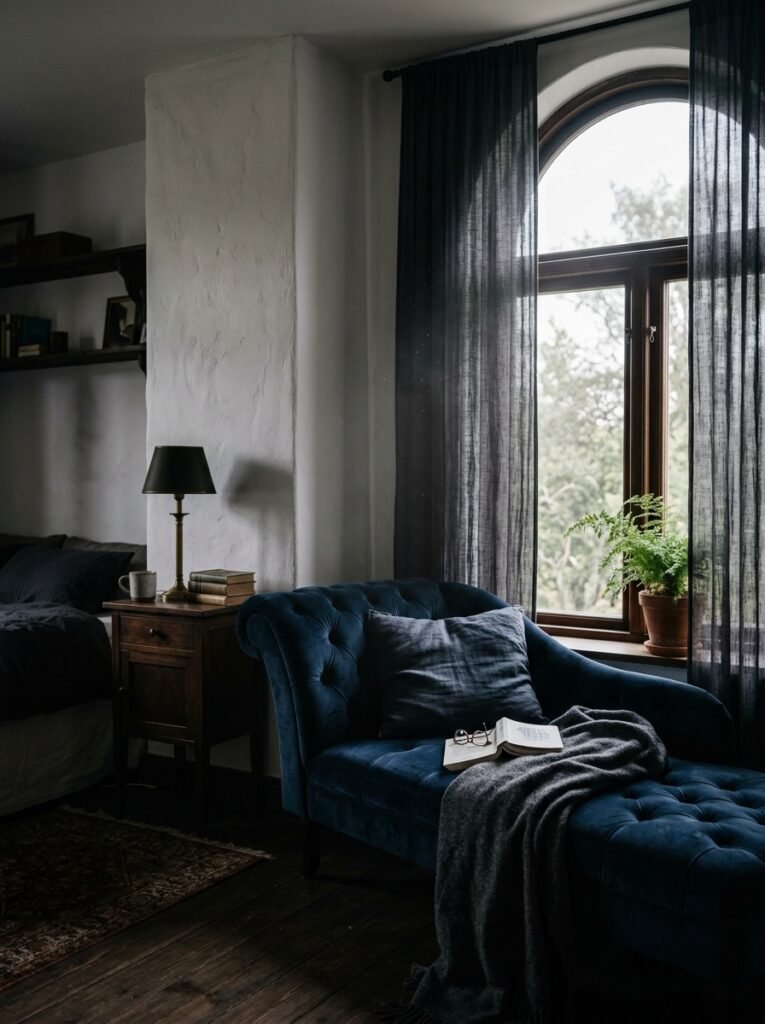
Hang the rod as close to the ceiling as possible. Let the curtains puddle very slightly on the floor. Use heavy fabric — velvet, linen-cotton blend, anything with some weight to it. In deep tones if you want privacy and drama. In sheer black or charcoal if you want light to filter through in that diffused, hazy way.
The visual effect of floor-to-ceiling curtains on white walls is almost architectural. It makes the room feel taller. The white wall between the curtain panels becomes a kind of gallery space, suddenly intentional, suddenly interesting.
For a bedroom where you still want morning light: hang sheer dark curtains behind heavier ones. Layer them. The sheers let in filtered, moody light during the day — not harsh, not bright, but soft and grey-toned. At night, close the heavies.
—
9. The Small Objects That Do the Most Work
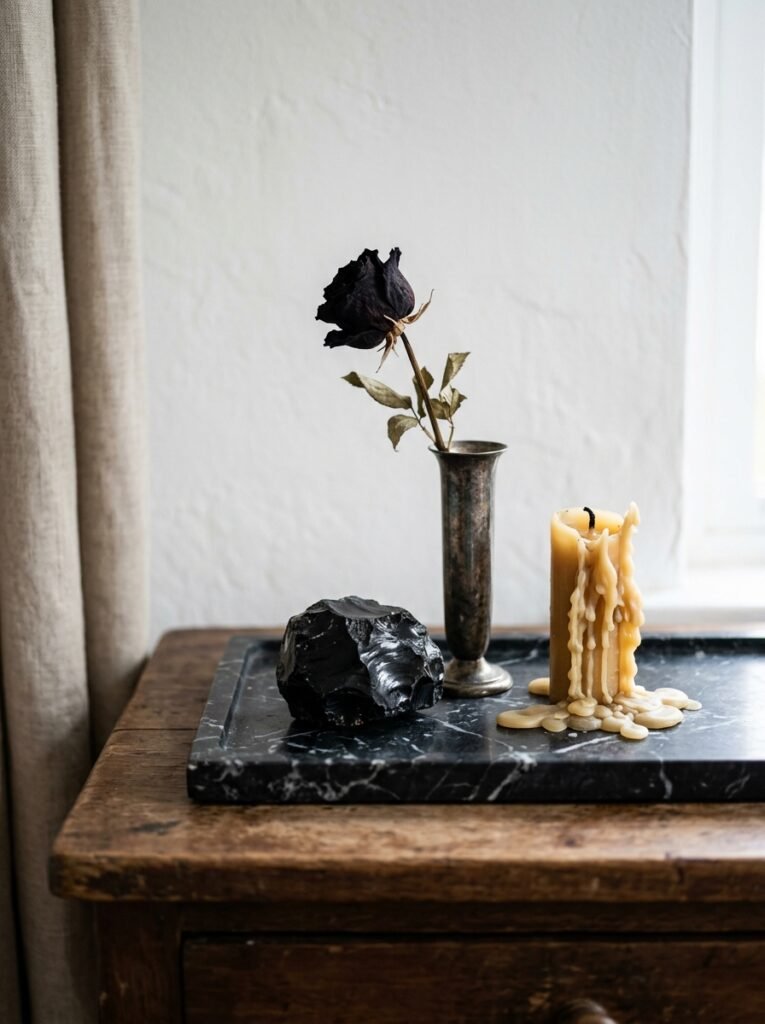
Here’s the thing about dark feminine design that nobody says clearly enough: it’s the objects. The small, deliberate, slightly weird objects.
A glass cloche on the bedside table with a dried flower arrangement inside. A stack of hardback books with their covers turned around so only the pages show (a very specific effect, try it). A vintage perfume tray with a few glass bottles. A single black taper candle in a twisted iron holder. An antique-looking key hung on a small hook by the door that goes nowhere.
None of these cost much. All of them change the feeling of the room in ways that are hard to explain but immediately felt when you walk in.
Restraint matters here, actually. This isn’t about filling every surface. It’s about choosing things that have some mystery to them, some weight, and leaving space around them to breathe.
—
10. Art and Wall Styling That Doesn’t Feel Generic
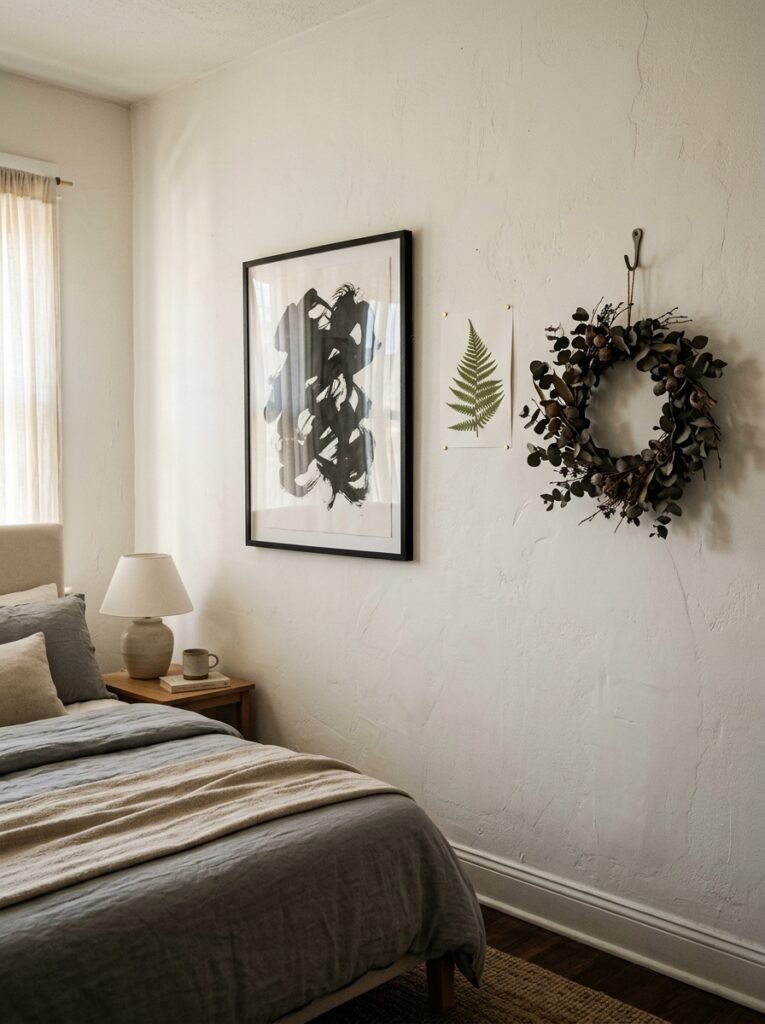
Botanical prints. Abstract in deep tones. Vintage portraiture with a slightly eerie quality. Any art that feels like it has a history, even if you bought it six months ago.
White walls are the best possible backdrop for a carefully chosen gallery wall, and in a dark feminine room, that gallery wall should feel like a collection, not a kit. Mix sizes. Mix frame finishes — gilded, matte black, dark wood. Let things overlap slightly. Hang something at an unexpected height.
A single large-scale dark art print — something moody, abstract, maybe a figure or a landscape in near-black with hints of dusty colour — can anchor an entire wall. You don’t even need a full gallery. One big statement piece, well-framed, hung properly against white walls, is sometimes MORE powerful than a full arrangement.
Side note — check antique stores and vintage markets for old frames. Put different prints in them. The frame itself often does half the work.
—
11. The Ceiling Nobody Thinks to Style
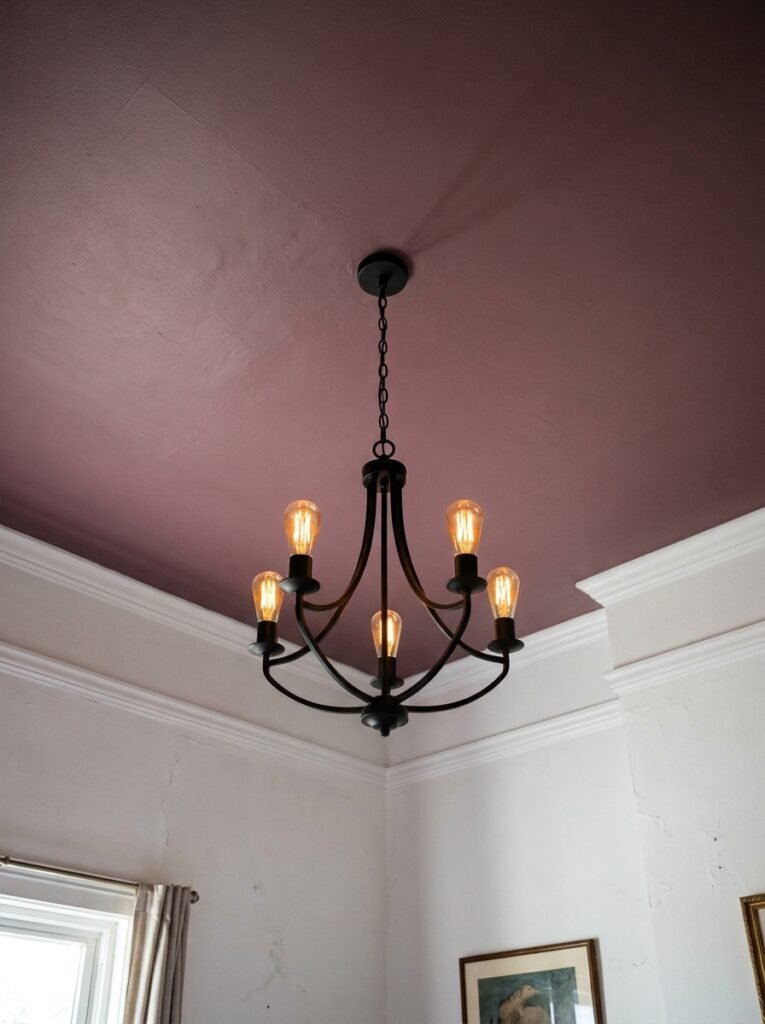
You spend a third of your life looking up at your ceiling from bed. And most ceilings look like absolutely nothing at all.
A dark painted ceiling in a white-walled room is one of the most stunning design moves in interior design right now, and it’s increasingly renter-friendly because some landlords specifically allow ceiling changes. Worth asking.
But even without paint: hang something from the ceiling. A small iron chandelier. A dried floral installation — dried eucalyptus, dried roses, dried thistle, all bundled together and hung from a simple ceiling hook in the corner above the bed. It costs about twenty dollars and looks like a botanical studio.
Fabric canopy draped from a ceiling hook above the bed. Even in sheer dark material, it completely transforms the area around the bed into something that feels like its own world.
The ceiling is underused. Always. Fix that.
—
12. How to Make the Whole Room Feel Finished, Not Decorated
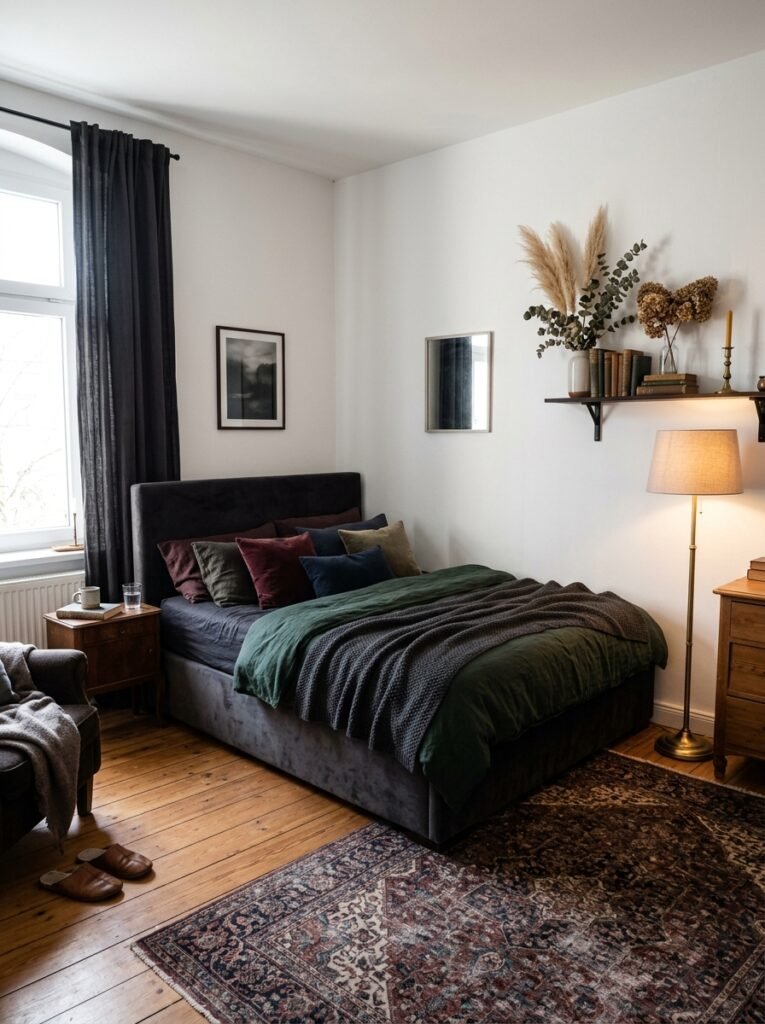
There’s a difference between a room that looks decorated and one that feels finished. And the gap between them is almost always scent and habit, not stuff.
A room with a signature scent feels like a world. Dark musk, black rose, sandalwood, cedarwood — these are the notes that build on themselves, that greet you when you walk in and remind you where you are. A reed diffuser, a wax melt, a candle you only light in this room. It becomes part of the atmosphere without anyone even seeing it.
Then: keep the bed made. Not perfectly — somewhat. The dark feminine aesthetic is intimate but never chaotic. A pulled-together bed with the layers slightly tousled is the right energy. A completely messy room, however many beautiful objects it contains, won’t read as intentional.
And finally, trust the white walls. Don’t keep fighting them. The white is what lets the deep tones breathe. It’s what makes the brass gleam and the velvet look rich. It’s doing something. Let it.
—
❓ FAQ
Q: Can I achieve a dark feminine look without painting my white walls? A: Absolutely — and in many ways white walls are easier to work with than dark ones. The contrast between white walls and dark, rich textiles and furniture creates a visual tension that genuinely makes each element stand out more. Headboards, curtains, rugs, and lighting do far more work than wall colour in creating atmosphere.
Q: What colours work best for a dark feminine bedroom? A: Deep plum, burgundy, dusty mauve, forest green, charcoal, midnight navy, and warm near-black are your best friends. Pair them with aged gold, tarnished brass, or matte black for hardware and accessories. Avoid anything overly bright or cool-toned — you want depth, not vibrancy.
Q: Is dark feminine design just the same as gothic decor? A: Not quite — though there’s overlap. Gothic leans into more extreme, architectural, sometimes medieval elements. Dark feminine is more nuanced: it’s romantic, a bit mysterious, very tactile, and tends to include softer elements like florals, linen, and candlelight alongside the darker tones. Think less haunted castle, more enchanted library.
—
💭 Final Thoughts
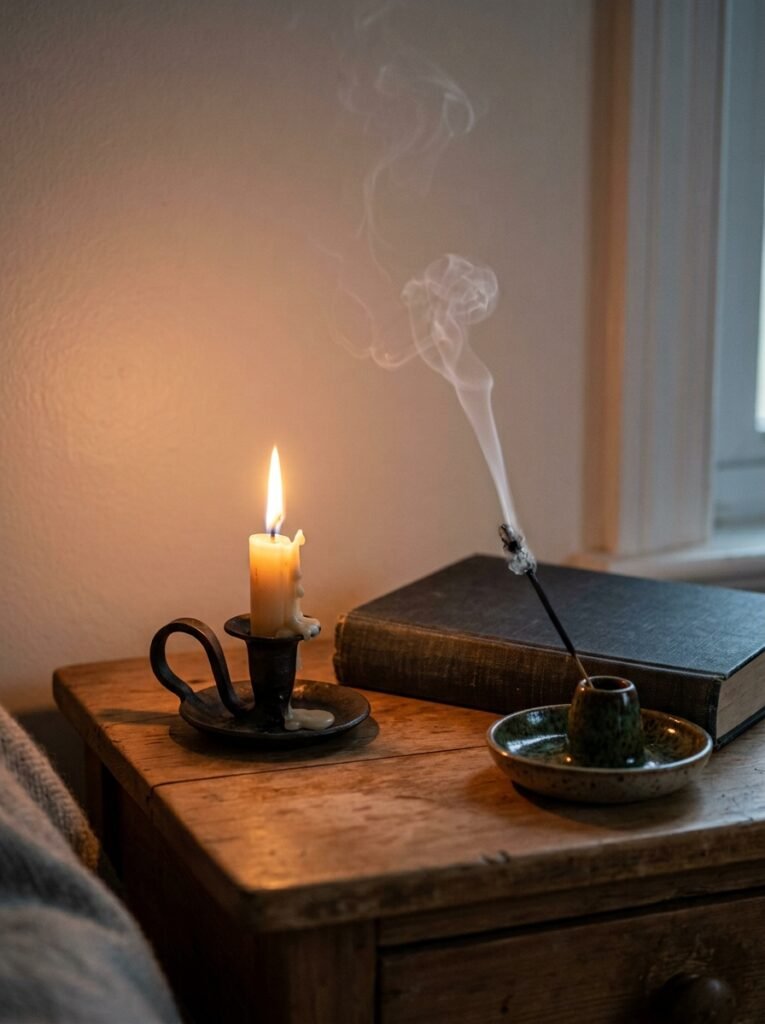
White walls were never the problem. They’re the pause, the breath, the thing that lets everything dark and deliberate become visible. The best dark feminine bedrooms I’ve seen — whether in tiny London flats or sprawling American homes — all had one thing in common: each piece felt chosen, not just bought. Not filled, but considered.
If you could only do three things tomorrow, do the lighting, the headboard, and something with scent. The rest will follow.
What’s the one thing your bedroom is missing that would change the whole feeling of it?