
Blue Sofa Living Room Ideas That Will Make You Fall in Love With Your Home Again
There’s something quietly powerful about a blue sofa — the way it anchors a room without demanding attention, the way it makes you want to curl up with a blanket and a warm drink and just be there. If you’ve been staring at your living room wondering why it doesn’t feel quite right yet, the answer might be simpler than you think.

—
1. Why a Blue Sofa Is the Smartest Furniture Investment You’ll Ever Make
Let’s start with the truth that interior designers have known for decades: blue is the most emotionally versatile color in existence. It can be bold or serene, modern or timeless, dramatic or deeply restful — often all at once, depending on the shade and the space around it.
A blue sofa isn’t a trend. Trends come and go every eighteen months, and suddenly your living room looks like a time capsule of three years ago. But blue sofas? They’ve graced the rooms of French country cottages, mid-century modern apartments, Scandinavian lofts, and maximalist Victorian parlors. They belong everywhere, because they carry a kind of quiet authority that other colors simply can’t replicate.
From a practical standpoint, blue is also one of the most forgiving sofa colors for real life. Navy and deep indigo hide wear beautifully. Dusty blue and slate tones are surprisingly stain-resistant in velvet textures. And psychologically, blue has been shown in color research to reduce anxiety and promote a sense of calm — which is exactly what a living room should deliver at the end of a hard day.
“A blue sofa doesn’t just furnish a room — it changes the feeling of the entire home.”
The investment pays emotional dividends every single day.
—
2. The Shade of Blue That Will Transform Your Specific Room
Not all blues are created equal, and this is the part most people skip — then wonder why their room feels off. Before you fall in love with a sofa online, you need to understand your room’s natural light, because light transforms blue more dramatically than almost any other color.
North-facing rooms receive cool, indirect light. In these spaces, very pale blues can feel almost gray and cold. You’ll want to warm things up — reach for deep navy, rich cobalt, or warm-toned teal instead. These shades feel grounded and cozy rather than chilly.
South-facing rooms flood with warm, golden light throughout the day. Here, lighter blues absolutely sing — dusty blue, powder blue, and pale sky tones look luminous and airy rather than washed out. Even a bright royal blue becomes something spectacular in afternoon light.
East-facing rooms have beautiful morning light that turns cool by afternoon. A medium-toned blue like slate or denim works magic here — energizing in the morning, grounding in the evening. West-facing rooms, flooded with warm late-afternoon sun, can handle bold choices: deep peacock blue or rich jewel-toned sapphire look extraordinary in that golden light.
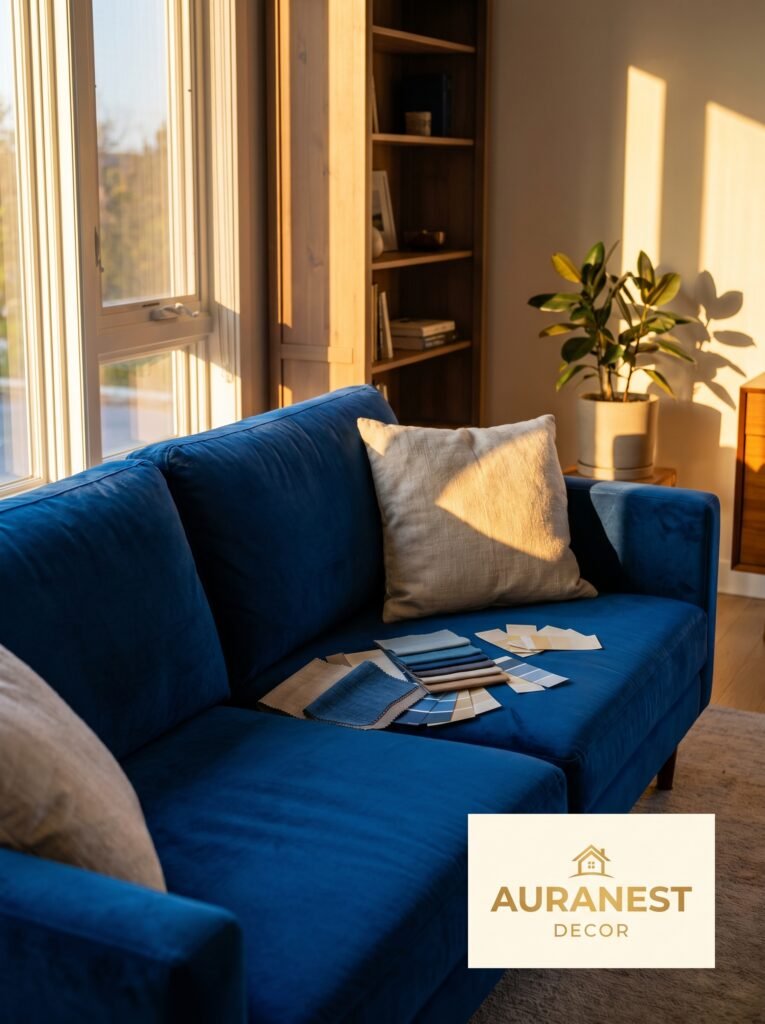
Take a paint chip or fabric swatch home. Live with it for three days in different light conditions. That thirty-second step will save you from a very expensive mistake.
—
3. The Wall Colors That Make a Blue Sofa Look Absolutely Stunning

This is where so many people get stuck — and honestly, it’s the most exciting creative decision in the whole process. Your walls are the backdrop for your sofa, and the relationship between them will define the entire mood of the room.
Soft white and warm cream walls are the classic choice for a reason. They let the blue sofa do all the talking without competition. This pairing feels clean, fresh, and timeless — and it works equally well with a casual linen sofa or a formal velvet one.
Warm greige (that beautiful gray-beige hybrid) is perhaps the most sophisticated pairing of all. Against a greige wall, a deep blue sofa looks rich and intentional — like something you’d see in an architectural digest editorial. Add natural wood tones and woven textures and you’ve created something truly beautiful.
For the brave decorator: deep blue walls paired with a slightly lighter or complementary blue sofa creates a moody, enveloping room that feels like stepping inside a painting. Use plenty of contrast through lighter rugs, white trim, and warm metallics to keep the space from feeling heavy.
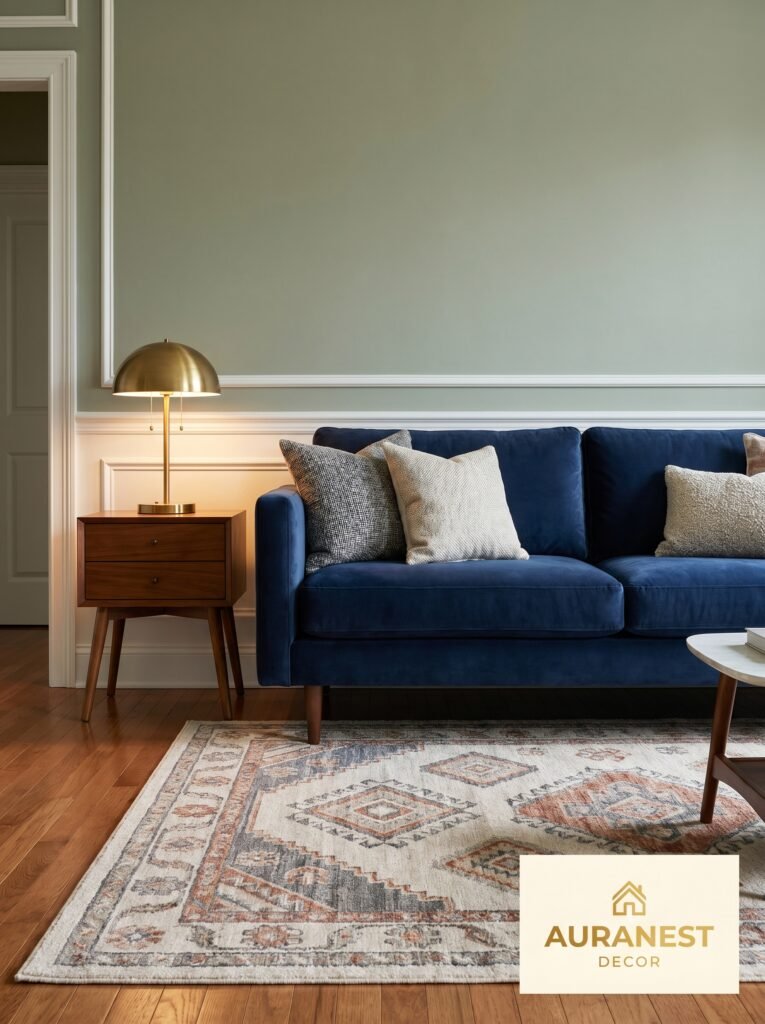
Sage green is having a cultural moment, and for very good reason — it’s the perfect foil for navy and teal. The organic warmth of green against the cool depth of blue creates a palette that feels drawn from nature itself.
—
4. How to Choose the Right Rug to Ground Your Blue Sofa
A rug does something that walls and paint can’t — it literally grounds the sofa, anchoring it to the room and creating a defined conversation space. Without the right rug, even the most beautiful blue sofa can feel like it’s floating.
The first rule is size. The rug should be large enough that at least the front two legs of the sofa rest on it. A rug that’s too small looks like an afterthought — a small island beneath a sea of floor. When in doubt, go bigger.
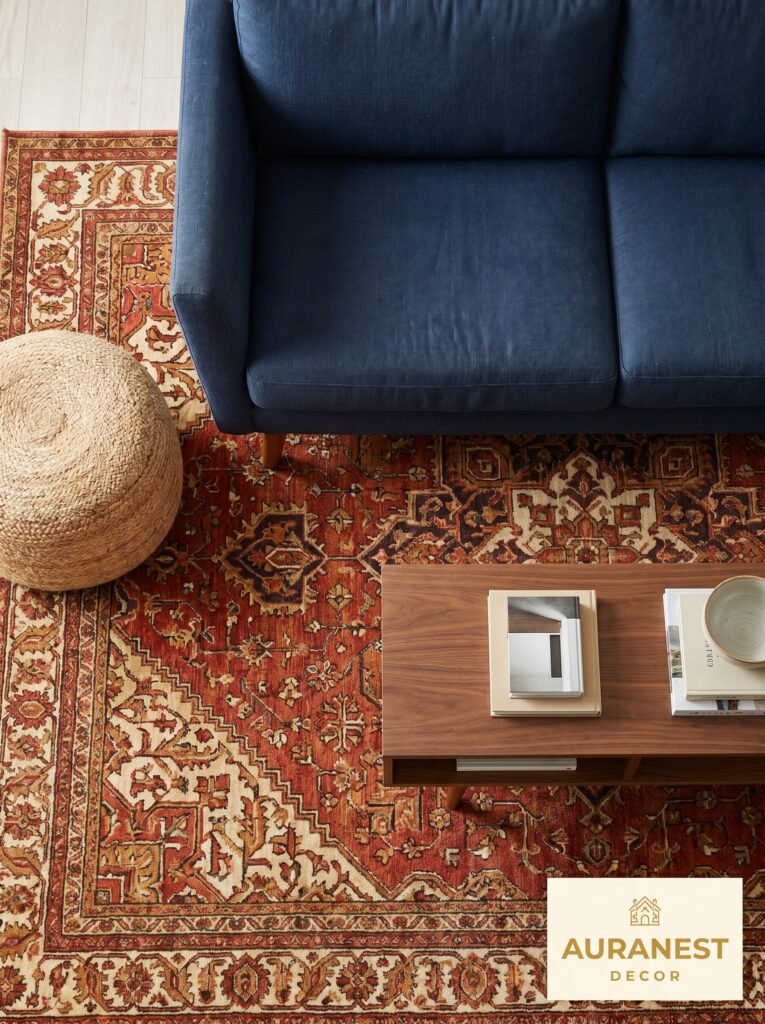
For navy or dark blue sofas, natural fiber rugs in jute or sisal bring warmth and organic texture that stops the space from feeling cold. A Persian or vintage-style rug with warm reds, oranges, and golds creates an unexpectedly magical contrast with navy — bold but grounded.
For lighter blue sofas — powder blue, sky, or pale teal — a soft ivory or cream wool rug creates a serene, airy room that feels lifted and light. Layer a smaller printed runner over it for dimension.
Geometric rugs in black and white pair beautifully with cobalt or bright blue sofas for a graphic, modern edge. And if you love pattern-on-pattern, a floral or botanical rug actually works brilliantly with a deep blue sofa — nature always knows how to use blue.
—
5. The Throw Pillow Formula That Pulls Every Blue Sofa Together
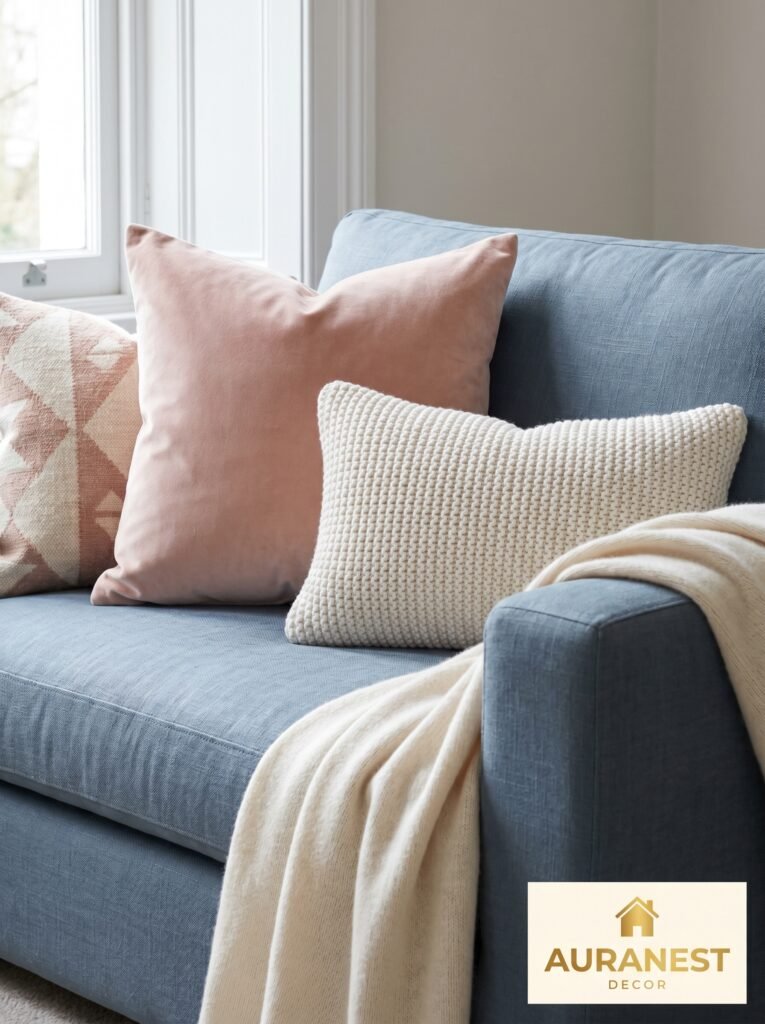
Throw pillows are where personality lives. They’re also where most people accidentally create visual chaos. The key is having a formula — not a rigid rule, but a framework that creates harmony without making the room feel staged.
Start with three to five pillows depending on your sofa size. The most successful arrangements mix scale, texture, and pattern rather than creating a perfectly matching set. A matching set says “furniture store display.” A curated mix says “a real person with real taste lives here.”
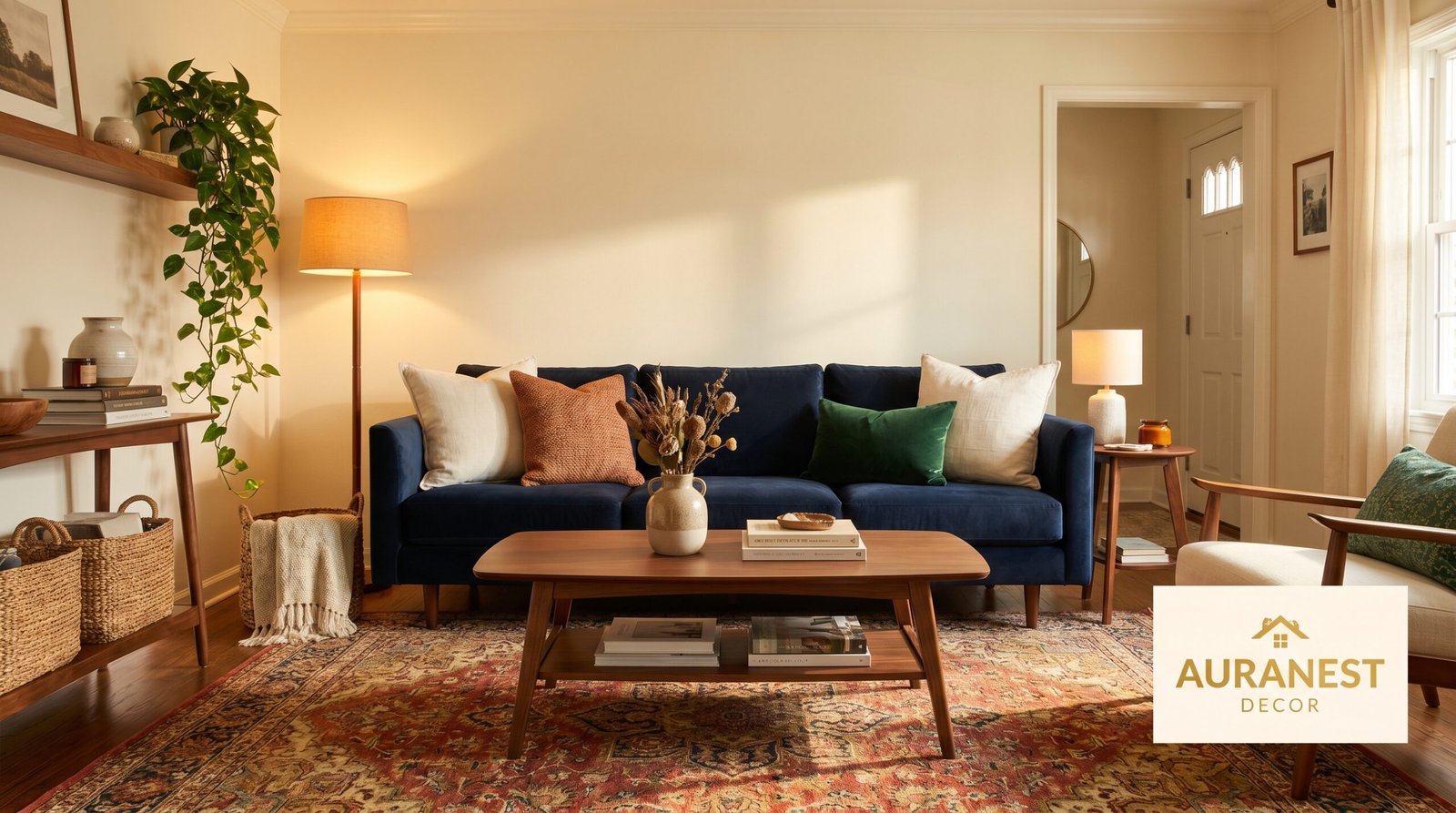
For a navy sofa, try ivory linen, terracotta woven, and a small geometric print in cream and rust. That combination is warm, layered, and quietly stunning. Add a single velvet pillow in deep green for a jewel-toned moment that stops the scroll.
For a dusty blue or slate sofa, blush pink and warm white pillows create a soft, romantic atmosphere. Add a textured knit throw draped casually over one arm — the kind that makes guests want to reach out and touch it — and the whole thing becomes irresistible.
For a bold cobalt sofa, lean into contrast. Crisp white and black pillows keep things graphic and modern. A single mustard yellow pillow adds warmth and prevents the whole arrangement from feeling cold.
“The right throw pillow isn’t decoration — it’s an invitation to sit down and stay a while.”
—
6. Blue Sofa Styling Ideas for Small Living Rooms
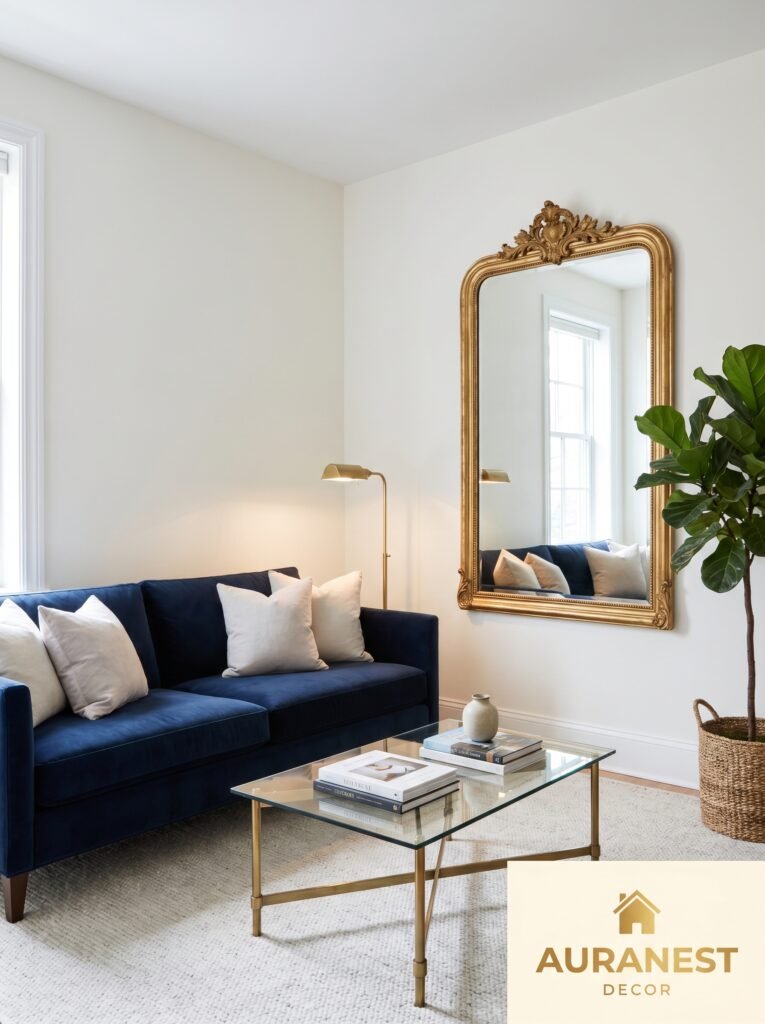
Small living rooms require intention. Every piece of furniture, every color choice, every accessory must earn its place — and a blue sofa, chosen thoughtfully, can actually make a small room feel larger rather than smaller.
The secret is contrast. A deep navy sofa against pale walls creates a strong focal point that draws the eye inward and downward — making walls feel taller and the room feel more deliberate. This is far more effective than a pale sofa that blends into pale walls and creates a fuzzy, undefined space.
Keep the furniture around the sofa lean. A glass or lucite coffee table is extraordinary in a small blue sofa room — it takes up visual space without blocking sightlines, and the transparency keeps things feeling open. Pair it with a slim-profile accent chair rather than a bulky sectional.
Mirror placement matters enormously in small spaces. A large mirror positioned directly across from a blue sofa reflects light and doubles the perceived depth of the room. Frame it in gold or warm brass to add warmth against the cool blue.
Vertical elements help too. A tall plant, a floor lamp with a slim pole, or floating shelves that draw the eye upward all amplify a sense of height and space that a small room desperately needs.
—
7. How to Make a Blue Sofa Work in an Open Plan Living Space
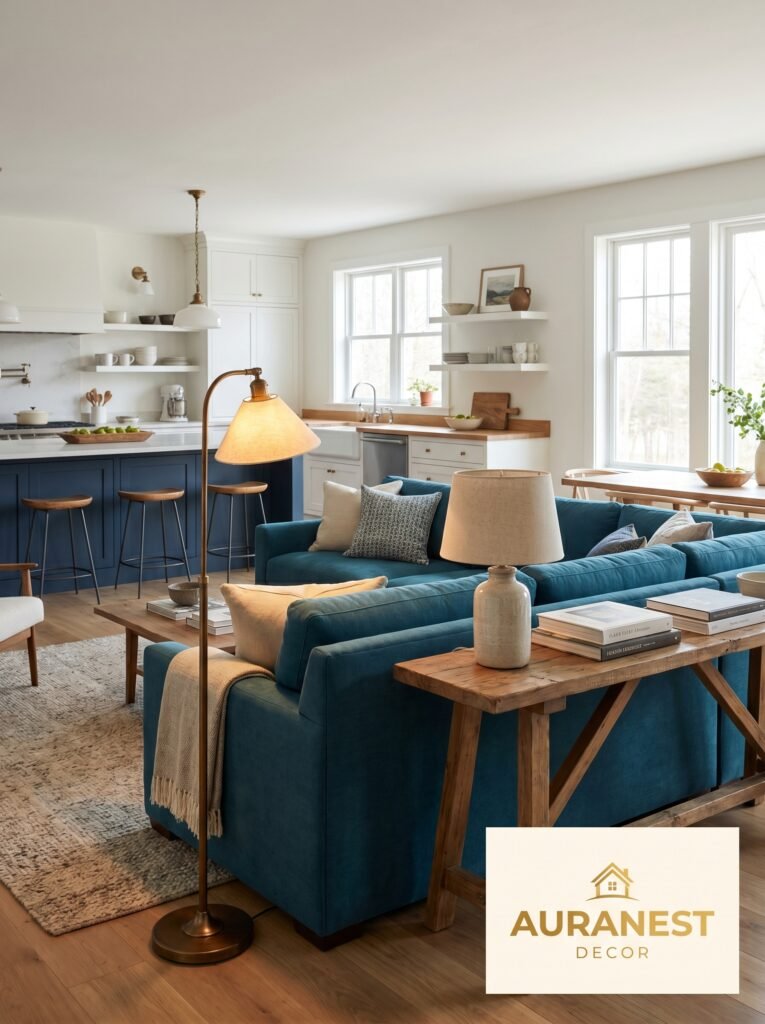
Open plan living brings its own beautiful challenge — without walls to define spaces, the sofa has to work harder to create a sense of “room.” A blue sofa is particularly well-suited to this task because its color naturally defines a boundary and creates visual weight.
Use your blue sofa to anchor the living zone within the open plan. Position it so that its back faces the kitchen or dining area — this creates a psychological separation between spaces without any physical barrier. A sofa table placed directly behind it reinforces that boundary with a functional surface for lamps and books.
In open plan spaces, the blue of your sofa should have a conversation with the rest of the palette. If your kitchen features deep navy cabinet hardware or a navy island, a blue sofa creates visual cohesion across the space. If your dining chairs have a blue upholstered seat pad, the eye connects the spaces beautifully.
Lighting zones are your best friend in open plan design. A floor lamp positioned beside the sofa creates a pool of warm light that makes the living area feel cozy and distinct — even when it’s technically the same floor as the kitchen.
—
8. The Best Wood Tones to Pair with a Blue Sofa

Wood brings warmth to blue — full stop. But the tone of the wood you choose creates dramatically different atmospheres, and it’s worth thinking carefully about which version of cozy you’re after.
Light woods — blonde oak, ash, pine, and natural rattan — pair beautifully with lighter blues like powder blue, dusty blue, and coastal teal. Together they create a space that feels fresh, airy, and Scandinavian-influenced — all clean lines and organic warmth. This combination is endlessly Pinterest-worthy and ages incredibly well.
Mid-tone woods — warm walnut, chestnut, and honey oak — work with nearly every shade of blue and are perhaps the most versatile pairing available to you. Walnut coffee table legs against a navy sofa is one of the most quietly beautiful combinations in contemporary interior design.
Dark woods — ebony, dark mahogany, and blackened oak — create drama. Paired with a deep navy or sapphire sofa and warm gold accents, this combination feels rich, intentional, and deeply sophisticated. It’s the living room equivalent of a great suit.
—
9. Blue Sofa Décor Ideas for Every Design Style
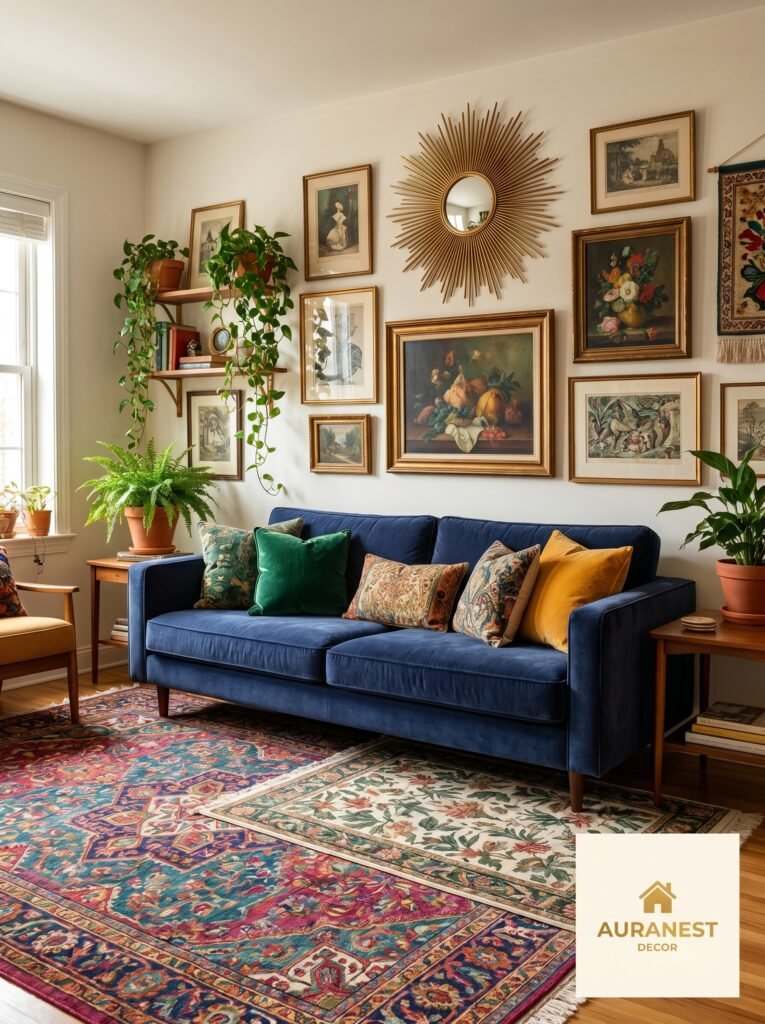
One of the most remarkable things about a blue sofa is how fully it commits to whatever design story you’re telling. Change the accessories, the textures, and the palette around it, and the exact same sofa reads completely differently.
In a coastal or relaxed nautical space, a blue sofa is pure magic. Pair it with natural linen, whitewashed wood, glass accents, shells, and soft sea-glass greens. Keep the palette light and the layers loose and relaxed.
In a mid-century modern room, a teal or petrol blue sofa with clean lines on tapered walnut legs is absolutely iconic. Add a sunburst mirror, a shag rug, and geometric side tables, and you’ve recreated something that design historians study.
In a maximalist space, a deep blue velvet sofa becomes the centerpiece of a room filled with pattern, texture, and color. Layer in botanical prints, Persian rugs, gallery walls, and rich jewel tones. The blue holds everything together with its gravity.
In a minimalist Nordic space, a slate or denim blue sofa in a clean fabric with simple cushions against white walls and pale wood floors is quietly breathtaking in its restraint. Sometimes less is the most powerful design choice of all.
“Your sofa doesn’t just fill a space — it tells people who you are before you say a single word.”
—
10. How to Layer Lighting to Make Your Blue Sofa Room Glow

Lighting is the element most people forget until they’re standing in a room that’s beautifully decorated but somehow still doesn’t feel right — and it’s almost always the lighting. Blue, in particular, is deeply affected by the quality of light around it.
Warm white bulbs (2700K–3000K) are essential in any room with a blue sofa. Cool daylight bulbs will amplify the blue into something cold and institutional. Warm bulbs wrap the blue in a golden embrace that makes the whole room feel like evening candlelight, even on an ordinary Tuesday.
Layer your lighting across three levels: ambient (ceiling or recessed), task (floor and table lamps), and accent (a small lamp on a shelf or under a console). This three-level approach creates depth and dimension that overhead-only lighting can never achieve.
A floor lamp positioned over one arm of the sofa creates the coziest reading corner on earth — especially against a blue sofa, where the warm light and cool fabric create a contrast that’s quietly beautiful. Add a small stack of books and a candle on the side table, and you’ve built a space people will genuinely not want to leave.
—
11. Seasonal Styling: How to Refresh Your Blue Sofa Room All Year Round
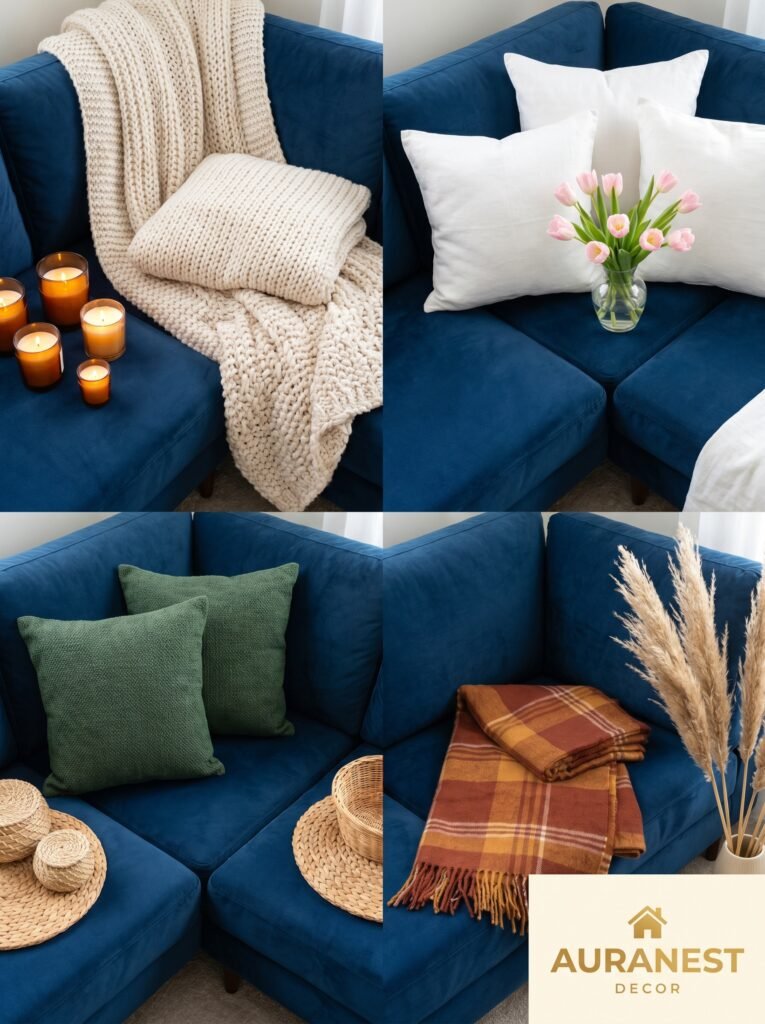
One of the greatest gifts of choosing a blue sofa is how endlessly adaptable it is to seasonal change. You don’t need to redecorate — you simply need to shift your accessories, and the whole room transforms.
In winter, layer in deep warmth — chunky knit throws in cream or caramel, faux fur cushion covers, amber candlelight, and dried pampas grass in warm terracotta vases. The blue sofa becomes a cozy anchor in a room that feels like a refuge from the cold.
In spring, swap the heavy textures for lighter linens. Fresh white cushion covers, a small vase of tulips or ranunculus in soft pink, and a lighter cotton throw. The blue sofa suddenly feels breezy and alive.
In summer, go botanical. Deep green cushions, white throws, wicker side tables, and fresh citrus in a bowl on the coffee table — the blue sofa becomes part of a room that feels drawn from nature.
In autumn, layer in rust, ochre, and warm terracotta. Dried flowers, wooden candle holders, and a warm plaid throw transform the blue sofa into the heart of a deeply cozy, harvest-feeling space.
—
12. The Small Details That Elevate a Blue Sofa from Good to Unforgettable
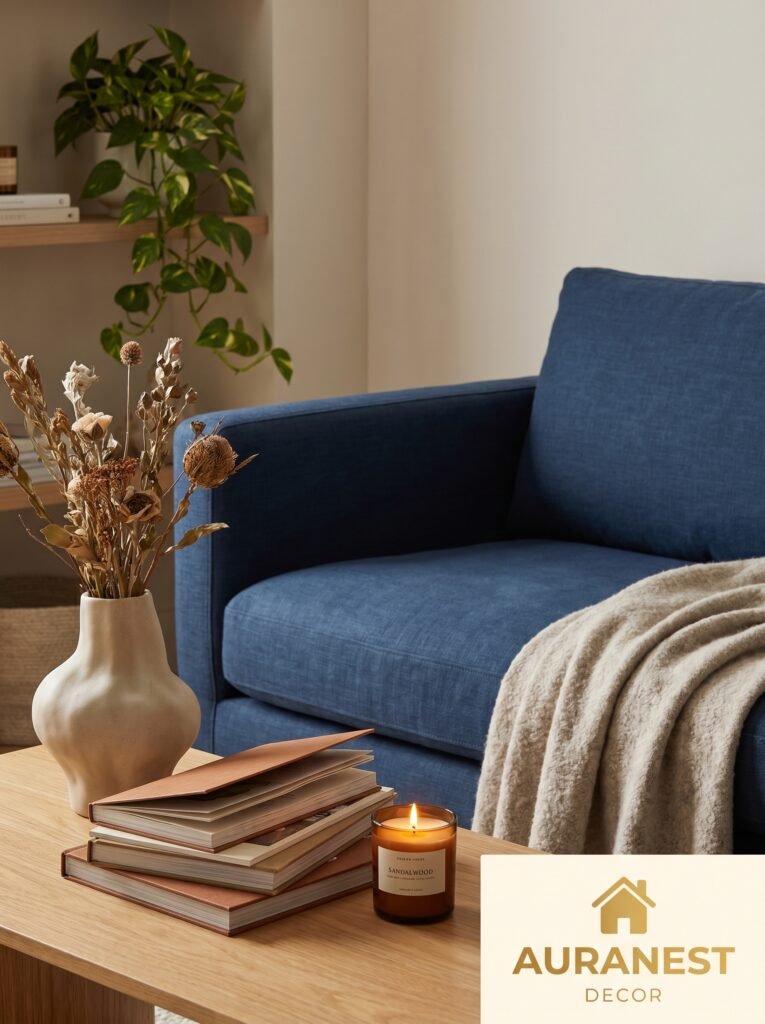
Every beautiful room has secrets — small details that create feeling without being immediately obvious. These are the touches that make people walk into your living room and say, “I just love how this feels” without quite being able to explain why.
A coffee table book collection in complementary colors, casually stacked at an angle. A single sculptural object — a ceramic vase, a small abstract figure, a piece of driftwood — that creates a point of focus without clutter. The way a throw is draped, never perfectly folded, always slightly lived-in.
Scent matters in ways that interior design rarely acknowledges. A candle beside the blue sofa in a warm, grounding fragrance — sandalwood, amber, or cedar — contributes to the feeling of the room in a way that is real and powerful even if invisible.
Plants breathe life into a blue sofa room like nothing else. A large fiddle-leaf fig or a trailing pothos near the sofa introduces organic color and texture that makes the whole space feel cared for and alive.
And finally: make sure there’s always something to reach for. A book, a throw, a warm lamp to switch on. A beautiful room is ultimately a room that invites you to be human inside it — to rest, to think, to feel something good.
—
🌿 How to Take Care of Your Blue Sofa
A blue sofa is an investment, and protecting it is simpler than most people think. Start by understanding your fabric — velvet, linen, and performance fabrics all have different needs, and checking the care code (usually found under the cushion) takes thirty seconds and saves you from a cleaning disaster.
For velvet blue sofas, use a soft velvet brush regularly to lift the pile and prevent flattening — it takes about two minutes and makes a visible difference. Blot spills immediately with a clean white cloth, never rubbing, always working inward from the edges of the spill.
For linen or cotton blue sofas, a fabric protector spray applied seasonally creates an invisible barrier against stains and everyday wear. Fluff and rotate cushions weekly to distribute filling evenly — this alone will add years to your sofa’s life.
Keep blue sofas out of direct sunlight where possible, as UV rays fade fabric over time. If your room is particularly sunny, invest in UV-filtering window film or simply shift the sofa a few feet out of the direct sun path. The color will thank you for years to come.
—
❓ FAQ
Q: What colors go with a blue sofa in a living room? A: The most successful color pairings for a blue sofa are warm whites and cream, greige, sage green, warm wood tones, and terracotta or rust accents. The key is balancing the cool nature of blue with warm organic elements so the room feels inviting rather than cold. Metallics like brass and gold also add beautiful warmth and sophistication.
Q: Is a blue sofa a good choice for a small living room? A: Yes — and often a better choice than a neutral sofa. A blue sofa creates a strong focal point in a small room, which makes the space feel more intentional and designed. Keep surrounding furniture light and transparent (glass tables, slim-profile pieces), and ensure your walls are pale to let light move freely through the room.
Q: What style of blue sofa is most timeless? A: A classic silhouette in deep navy or dusty blue in a quality fabric like velvet or tightly woven linen is the most enduring choice. Avoid very trendy shapes or very bright shades that may feel dated in a few years. Clean lines, quality construction, and a rich but not overwhelming shade of blue will look as beautiful in fifteen years as it does today.
—
💭 Final Thought

A blue sofa is more than a piece of furniture — it’s a quiet declaration that your home is a place of comfort, beauty, and intention. It says that you took care with this space, that you thought about how it would feel to live here, that the details matter to you. And when you walk into a room like that at the end of a long day and sink into those cushions, surrounded by warmth and light and color, you’ll understand exactly why it was worth every thoughtful decision you made.
So here’s what I’d love to know: if you could choose any shade of blue for your sofa right now — navy, dusty blue, cobalt, teal, or something else entirely — which one feels most like home to you?