
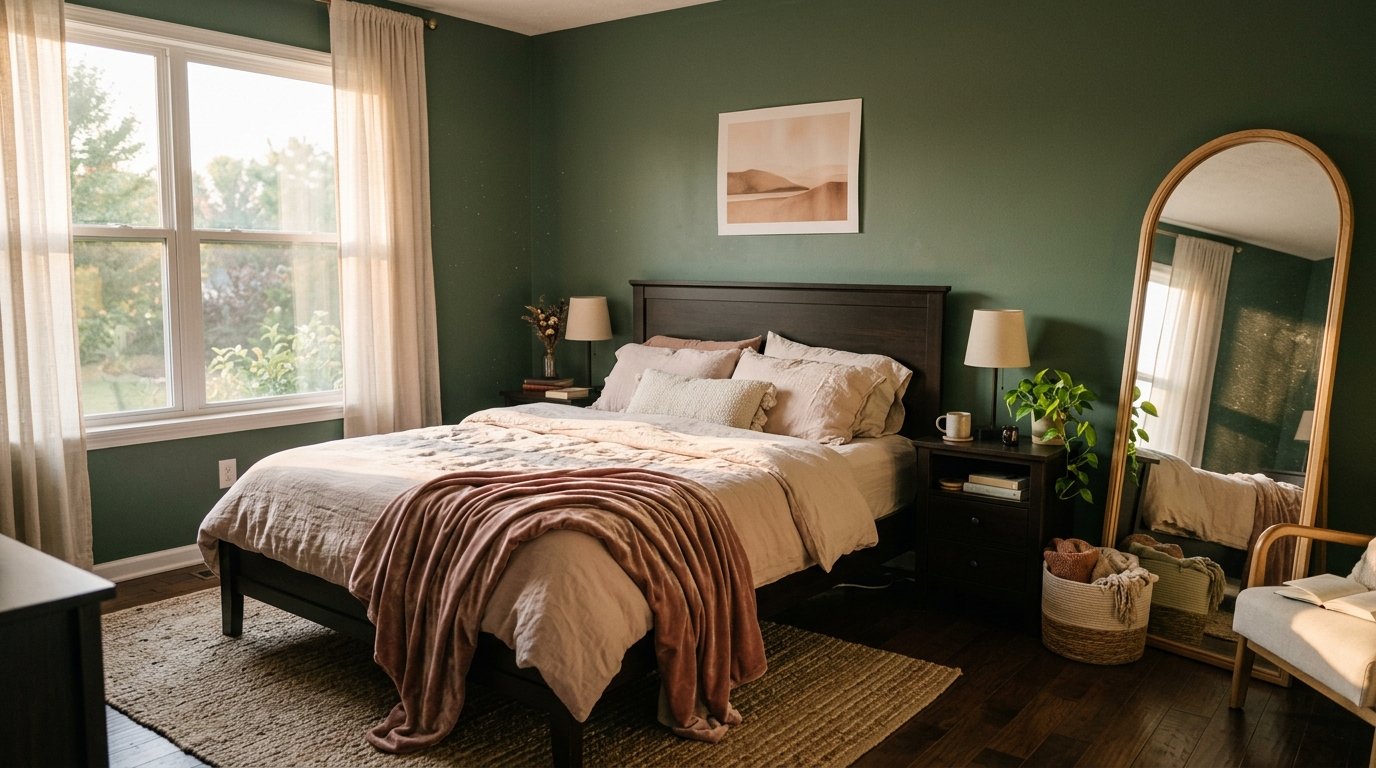
Dark Furniture, Soft Soul: How to Make a Moody Bedroom Feel Unmistakably Feminine
My friend called her bedroom “the cave.” Not in a good way. She’d inherited a set of dark walnut furniture from her grandmother — heavy, beautiful pieces — and just couldn’t figure out how to make them feel like her. The room felt austere. Kind of masculine. A little sad, honestly.
Two weekends, some linen, and a string of warm fairy lights later? It looked like something from a boutique hotel in the Cotswolds.
—
1. Why Dark Furniture and Femininity Were Always Compatible — We Just Forgot
Somewhere along the way, we decided “feminine” meant white. Blush. Pale wood, rattan, boucle everything. And sure, that’s gorgeous. But go back a hundred years and look at the bedrooms women actually chose for themselves — dark mahogany, rich velvet drapes, heavy bedframes with carved details. Opulent, personal, deeply beautiful.
Dark furniture has weight to it. Presence. And when you know how to work with that instead of against it, it doesn’t fight femininity — it grounds it. There’s something incredibly powerful about a dark bed frame draped in the softest linen imaginable. The contrast does everything.
So if you’ve got a dark furniture set and you’re worried it’s working against you — it isn’t. You just haven’t found the right conversation yet.
“Dark furniture has weight to it. Presence. And when you know how to work with that instead of against it, it doesn’t fight femininity — it grounds it.”
—
2. The Bedding Formula That Makes Everything Else Click
Start here. Seriously. Before you think about wall color or lighting or any of the fun stuff — get the bedding right, because it’s covering the largest surface in the room and it sets the whole emotional temperature.
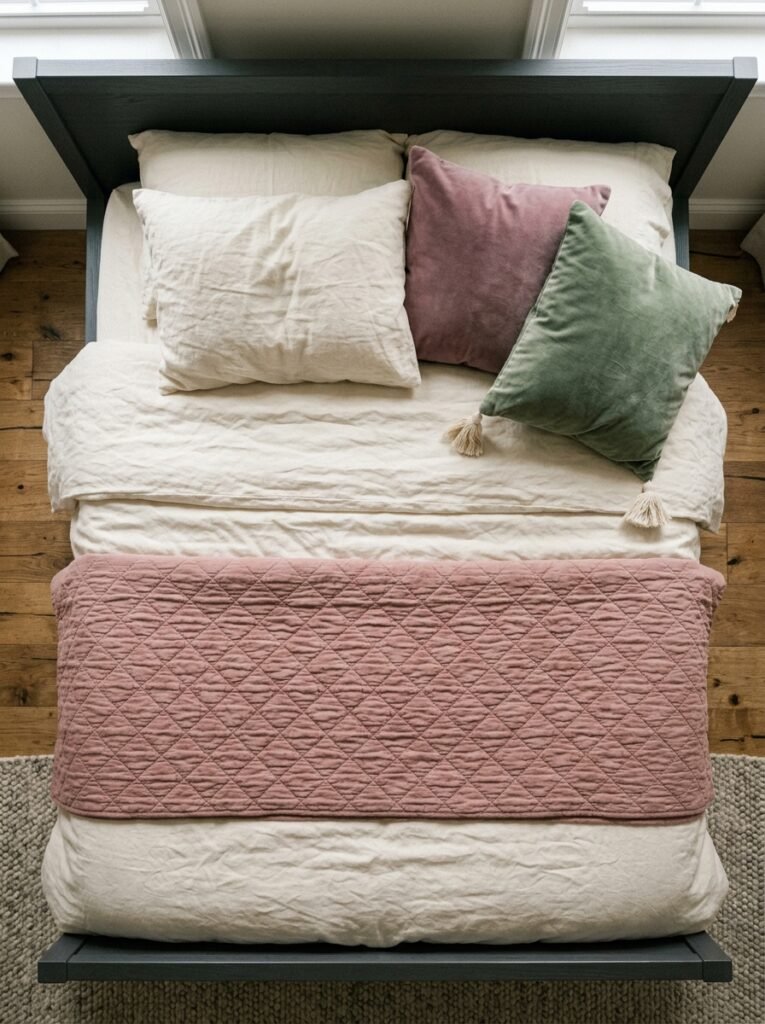
For dark furniture, you’ve got two directions that actually work. One: go soft and pale — ivory, warm white, the color of old linen that’s been washed fifty times. That contrast between heavy wood and whisper-light bedding is genuinely beautiful and a little romantic. Two: lean INTO the moody aesthetic. Deep plum. Forest green. Dusty burgundy. Layered textures — a velvet throw, a knitted blanket, something that looks like it belongs in an October bedroom.
What doesn’t work? Bright white (too clinical, too stark), overly patterned duvet covers that compete with the furniture, and anything that looks like it belongs in a generic hotel chain.
If you can only do one thing, get a linen duvet cover in either warm white or dusty rose. Nothing else does the work that linen does.
—
3. The Wall Color Decision Is Easier Than Everyone Makes It
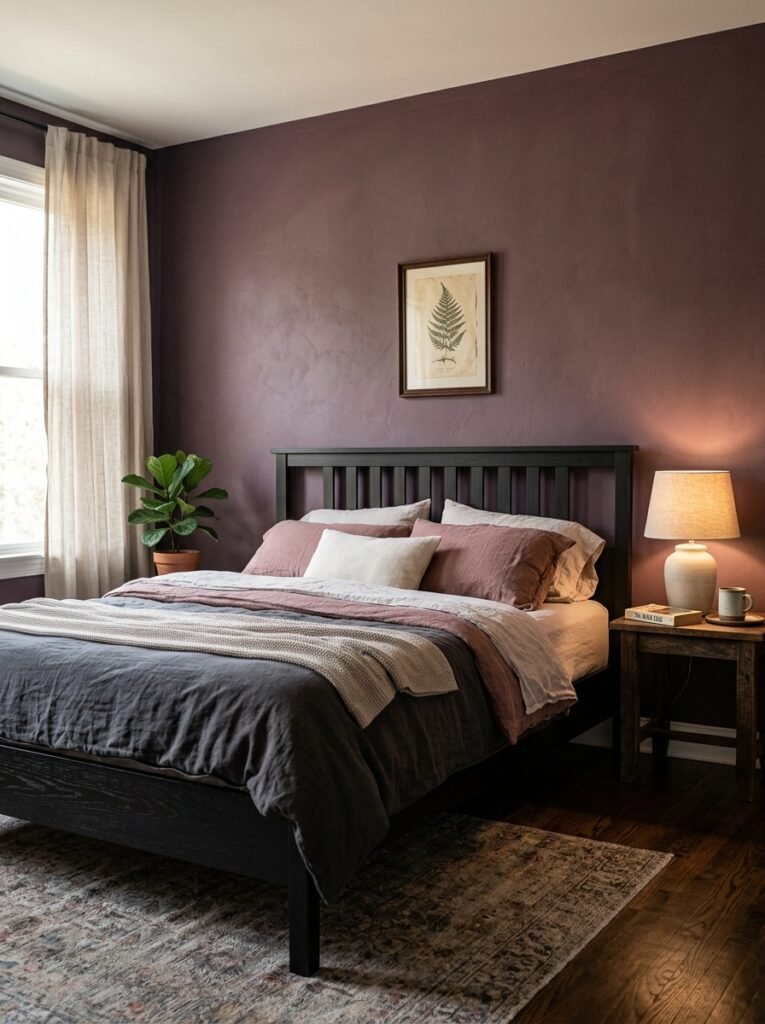
People overthink this. They assume dark furniture means you need bright walls to “balance” it, and they go stark white and wonder why the room still feels off.
Here’s what I’ve actually seen work: not stark white. Ever.
Go warm. A soft warm white — the kind that reads almost cream in lamplight — is miles better than a cool bright white. Or go the other way entirely and consider a deep, moody wall color that leans INTO the drama. Charcoal. Dusty sage. A warm, dark terracotta. When the walls and the furniture are in the same family of depth, something magical happens — the room feels INTENTIONAL rather than heavy.
The rooms that don’t work are the ones where cold white walls make dark furniture look like it was left there by accident. You want the whole room to feel like it chose itself.
Side note — if you’re in a rental and can’t paint, fabric wall hangings and large prints do a surprising amount of work here.
—
4. The One Lighting Trick Every Moody Bedroom Absolutely Needs
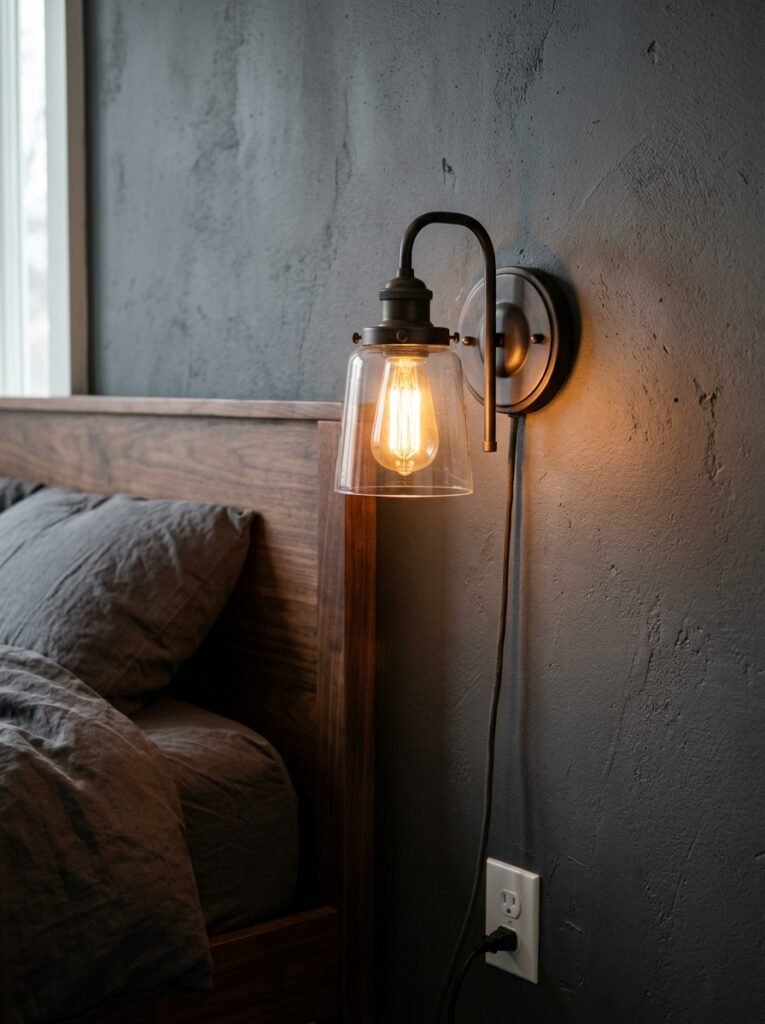
Overhead lighting will ruin everything you’re trying to do. I know that sounds dramatic but I mean it.
A single ceiling light in a room with dark furniture just… flattens everything. Kills the shadows that actually make dark wood look expensive. Washes out the warmth.
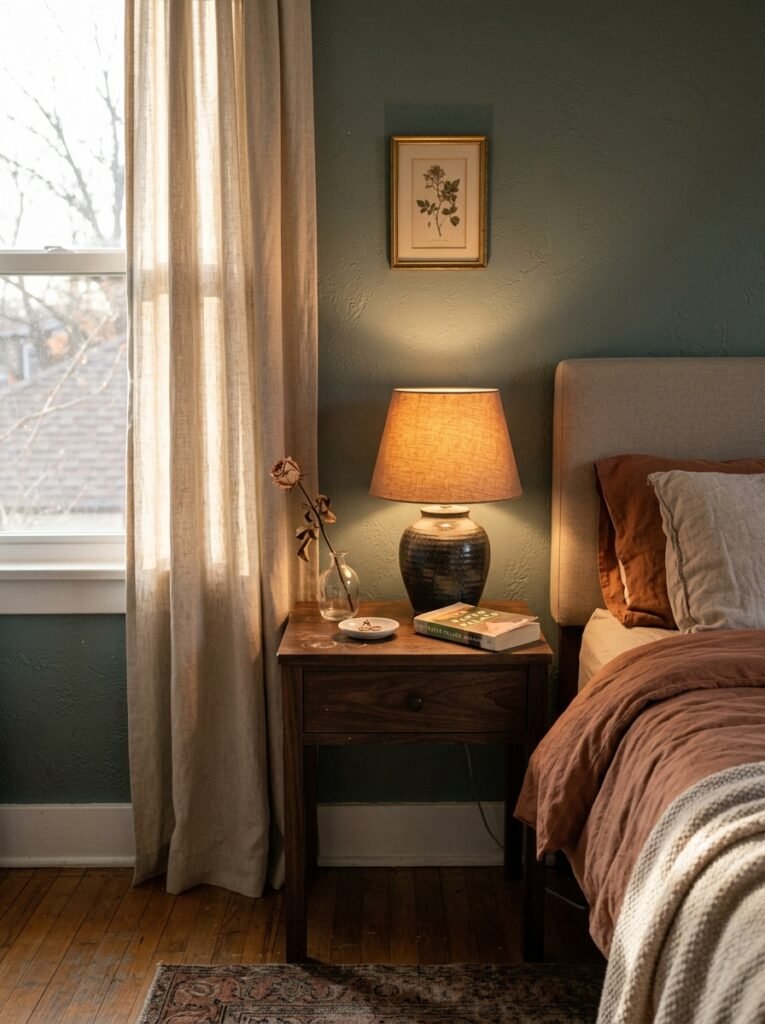
What you want is LAYERS. A lamp on each bedside table — something with a warm-toned bulb, the amber glow kind, not daylight. Fairy lights or a string of warm Edison bulbs somewhere unexpected, maybe woven through a headboard or draped along a shelf. A floor lamp in a corner if you’ve got space, pointing up at the wall.
The goal is pools of warm light, not full illumination. When everything’s lit from low, soft sources, dark furniture suddenly looks intentional and atmospheric rather than dark and heavy. It’s honestly the biggest single change you can make.
“The goal is pools of warm light, not full illumination. When everything’s lit from low, soft sources, dark furniture suddenly looks intentional and atmospheric.”
—
5. Soft Textures Are the Secret Language of This Whole Aesthetic
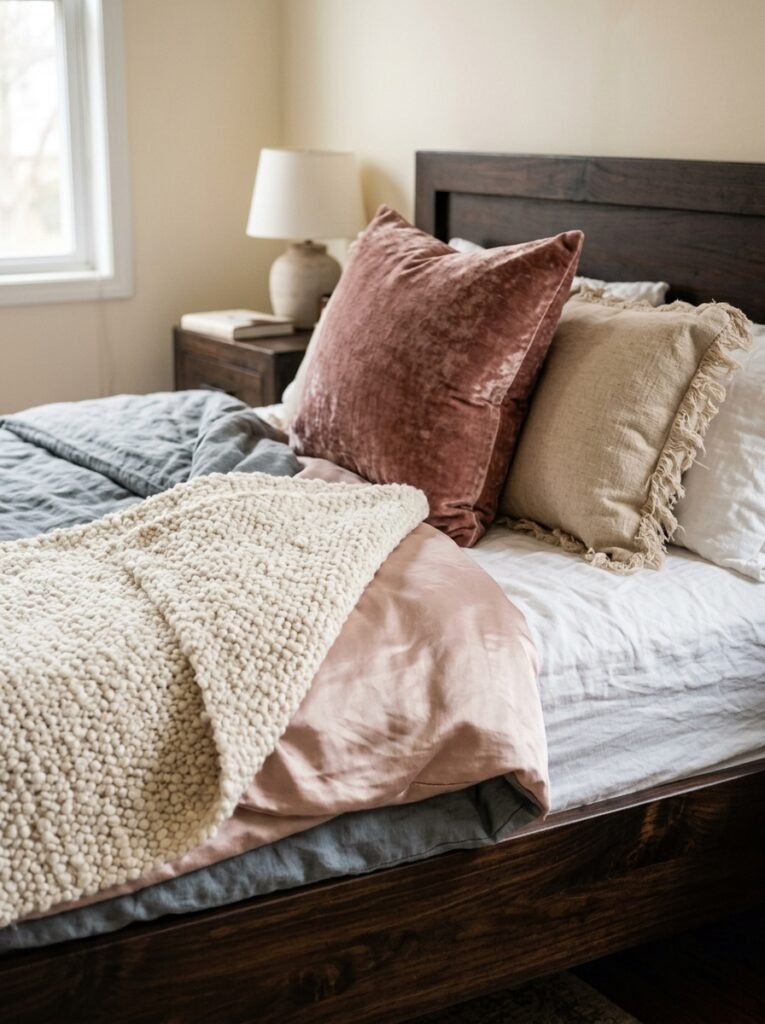
This is where the “feminine” part actually lives — not in the color of the furniture, but in what surrounds it. Texture is everything.
Think: velvet cushions in dusty rose or deep sage. A faux fur throw draped at the foot of the bed. Heavy curtains that pool slightly on the floor. A woven rug that’s soft underfoot when you step out of bed in the morning. Little things — a ceramic trinket dish, a glass perfume bottle on the dresser, a dried flower arrangement that’s slightly imperfect.
None of this is expensive to achieve. A lot of it comes from secondhand shops and markets. The point is that you’re building softness and warmth AROUND the hard dark lines of the furniture, and that contrast is genuinely, deeply pleasing to look at.
The texture layers are also what make a room photograph beautifully, by the way. All those Pinterest bedrooms? They’ve got five different textures in every shot.
—
6. Choosing the Right Mirror — This Gets Overlooked Constantly
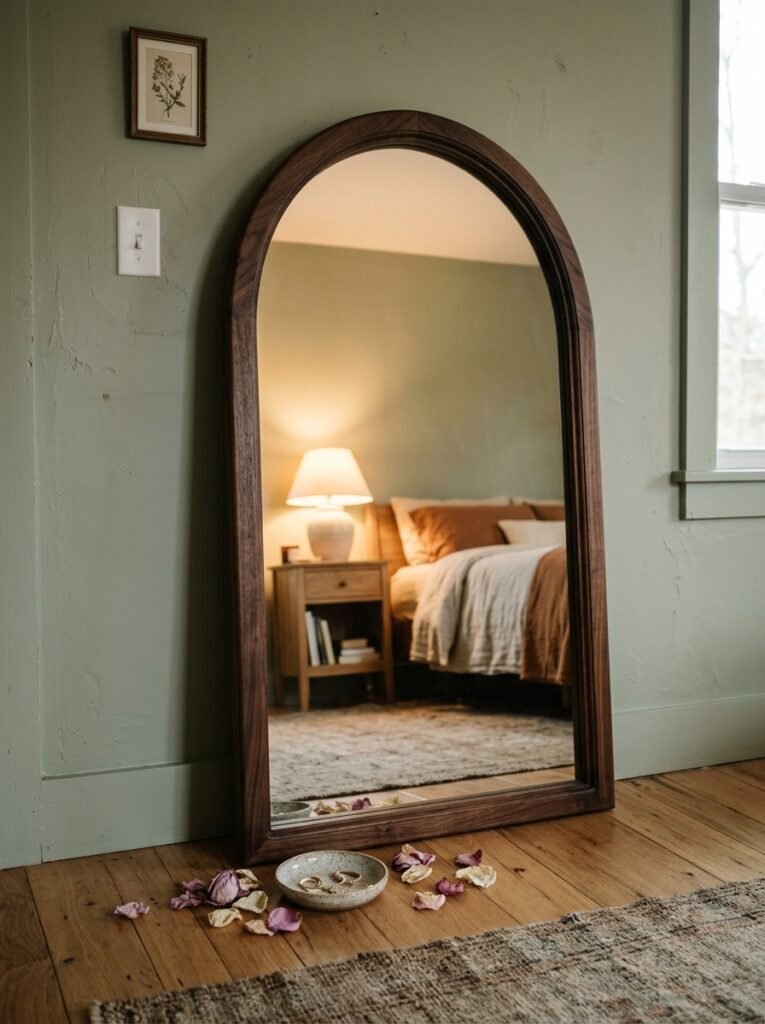
A mirror in this kind of bedroom isn’t just functional. It’s a design decision that can either pull the whole room together or quietly wreck it.
Dark furniture needs a mirror with the right frame. Not a frameless modern rectangle — that usually looks cold and out of place. What works: a vintage-style ornate frame in gold, bronze, or even dark wood that echoes the furniture. An arched mirror. Something that looks like it might have a story.
The shape matters too. Arched mirrors — very much having a moment, not going anywhere soon — are genuinely perfect for this aesthetic. They add something soft and structural at the same time.
Put the mirror somewhere it catches light, not the overhead. If your mirror reflects a lamp or a window, the whole room opens up. You get depth, you get glow, and dark furniture suddenly stops feeling like it’s crowding the space.
—
7. What to Do With a Dark Wood Dresser That Feels Too Masculine
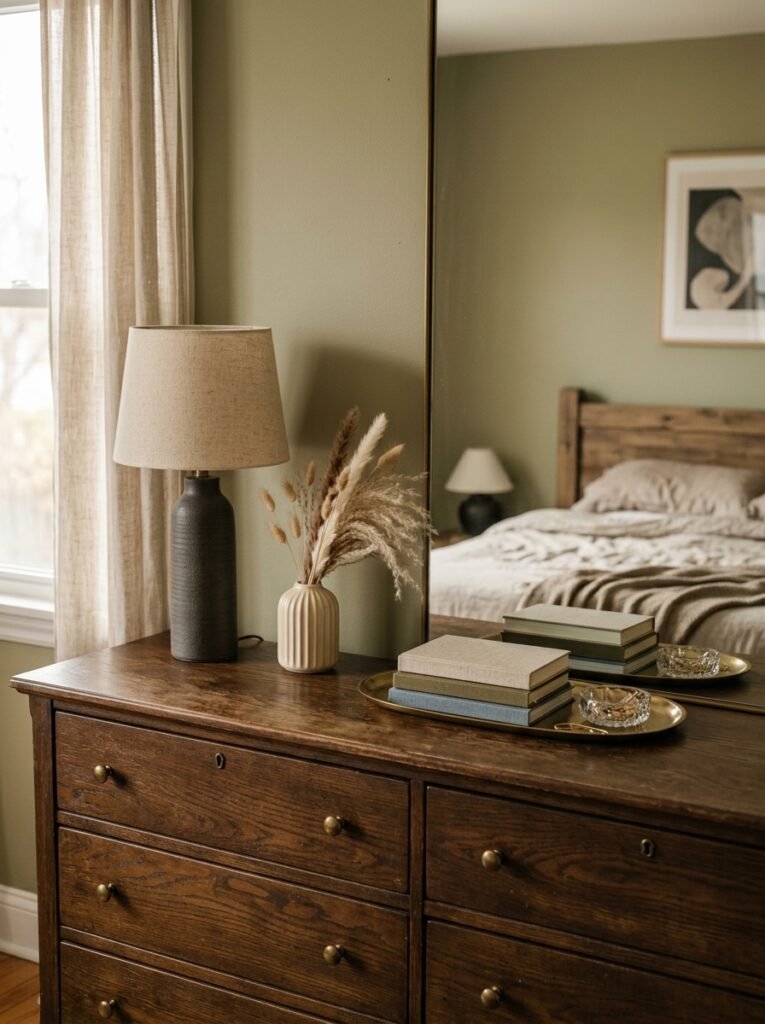
This comes up A LOT and the answer is almost always: style the top of it.
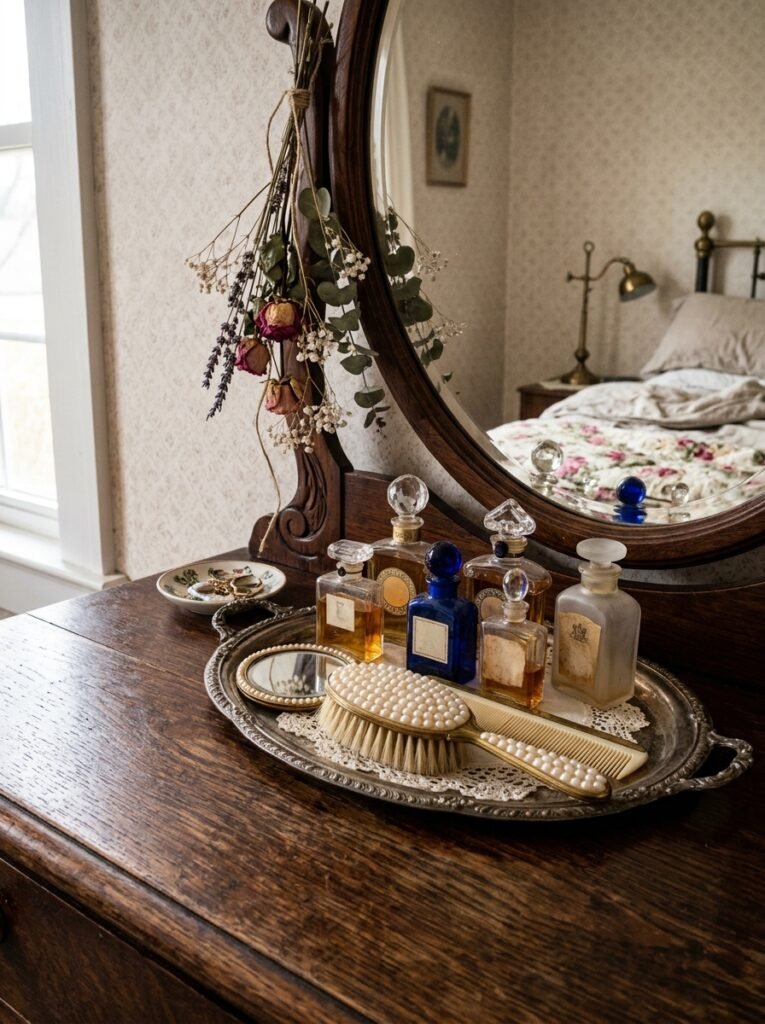
A bare dark wood dresser is just furniture. But a dark wood dresser with a small vase of dried pampas or eucalyptus, a tray holding your jewelry, a little ceramic pot with a candle, and a framed print leaning against the wall behind it? That’s a vignette. That’s a bedroom that looks lived-in and considered.
The objects you place on dark furniture do an enormous amount of feminizing work. Soft curves. Organic shapes. Things that catch light — glass, ceramic, a small crystal. Nothing too matchy or sterile.
Also: don’t underestimate drawer hardware. Swapping out basic knobs for something in brushed gold, antique brass, or ceramic with a floral detail is a twenty-minute project and it changes the whole feeling of a piece. Genuinely one of the best value-for-effort swaps in bedroom styling.
—
8. The Curtain Situation — Go Longer Than You Think You Should
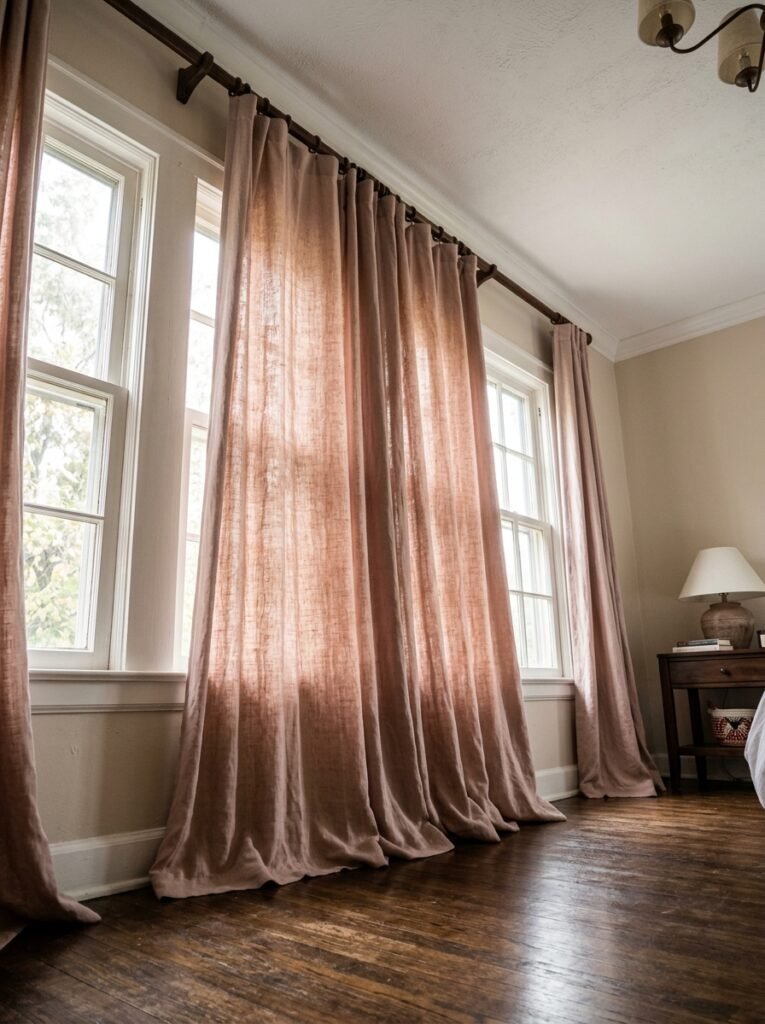
If there’s one thing I’d tell someone styling a room with dark furniture, it’s this: get curtains that are longer than the window. Floor length at minimum. If you can get them to pool slightly — even better.
Heavy, long curtains make a bedroom feel finished in a way nothing else quite does. They frame the window, they soften the hard lines of dark furniture, and they add height to the room. In a space with lots of dark wood, full curtains in linen, velvet, or heavy cotton add the kind of softness that balances everything out.
Color-wise: warm neutrals work with almost anything. Dusty blush. Warm oat. Deep forest green if you’re going full moody. Just avoid anything with a pattern that fights the furniture grain — it tends to look busy rather than layered.
Hang them HIGH, too. As close to the ceiling as you can manage. The room will look twice as tall.
—
9. Plants That Actually Belong in a Room Like This
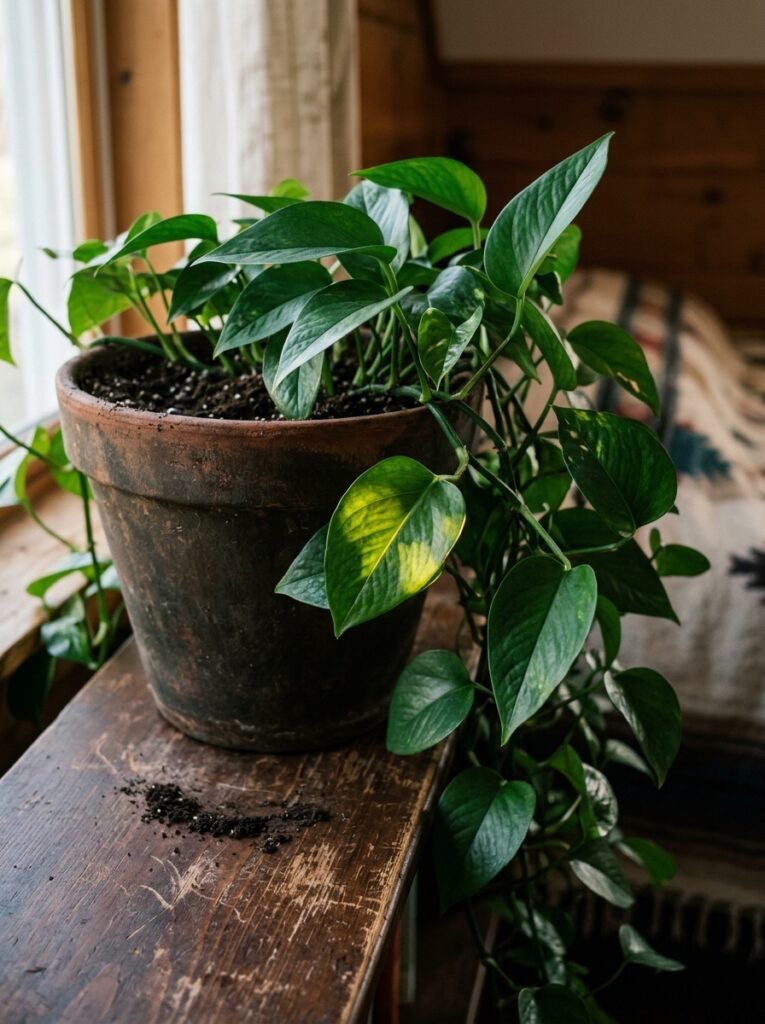
Not all plants read the same way in different room aesthetics, and in a dark, feminine bedroom, you want things that look a little wild, a little romantic — not surgical and geometric.
Trailing plants are PERFECT for this. Pothos tumbling off a shelf. A string of pearls hanging from a high surface. Something long and soft that moves a little. A small, imperfect dried flower bunch — cotton stems, dried roses, pampas — in a simple vase on the windowsill.
Large statement plants can work too, but they need to feel organic, not architectural. A big trailing monstera in a terracotta pot near a window. Or a fiddle leaf if you love a challenge, but honestly, a trailing pothos does more for this aesthetic with a lot less drama.
The texture of leaves against dark wood is genuinely lovely. Don’t skip greenery in here.
—
10. The Color You Keep Seeing in Beautiful Dark-Furniture Bedrooms Right Now
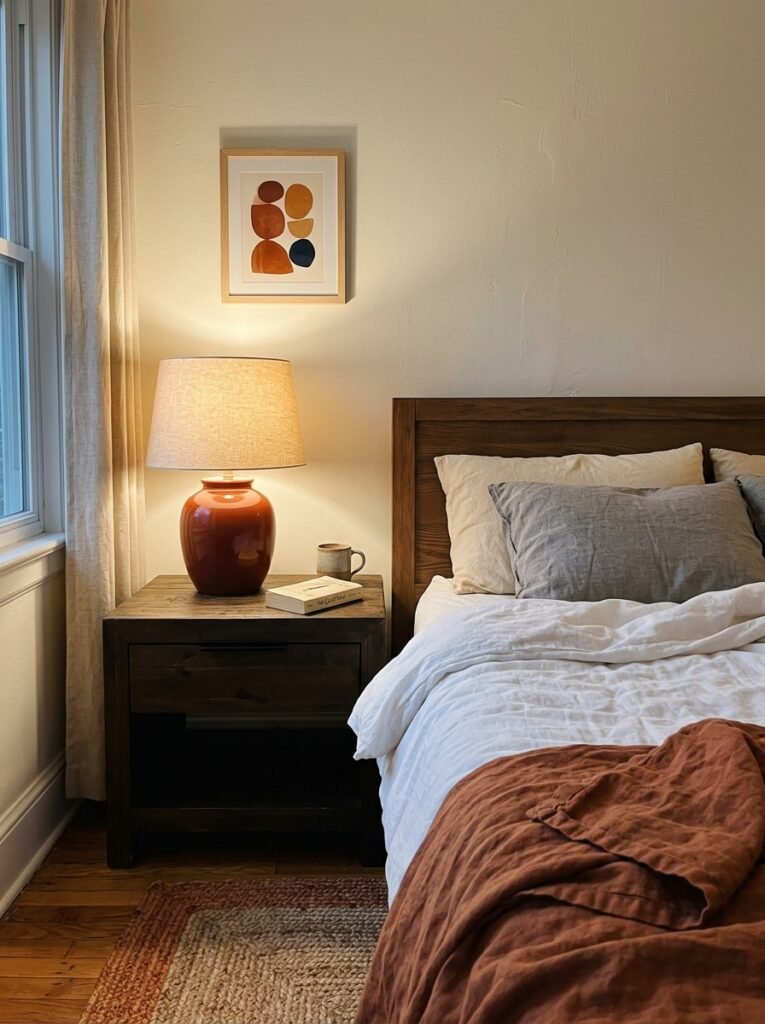
Dusty rose is everywhere, but it’s not the only answer. The color I keep coming back to — the one that consistently works — is warm, muted sage green.
Not bright green. Not olive. Dusty, warm, grayed-out sage. In cushions, in a throw, maybe in a set of curtains. Against dark wood, it’s STUNNING in a way that’s hard to predict until you see it. There’s something about the earthy, organic quality of sage that feels soft and a little romantic without ever tipping into anything too sweet.
The other one: deep dusty mauve. Not purple. Mauve. That slightly-brown-pink color that looks like dried flowers. Absolutely gorgeous against walnut, mahogany, or dark-stained pieces.
Both of these read feminine, warm, and sophisticated all at once — which is basically the whole goal here, right?
“There’s something about the earthy, organic quality of sage that feels soft and a little romantic without ever tipping into anything too sweet.”
—
11. The Headboard Question When Your Bed Frame Is Already Dark
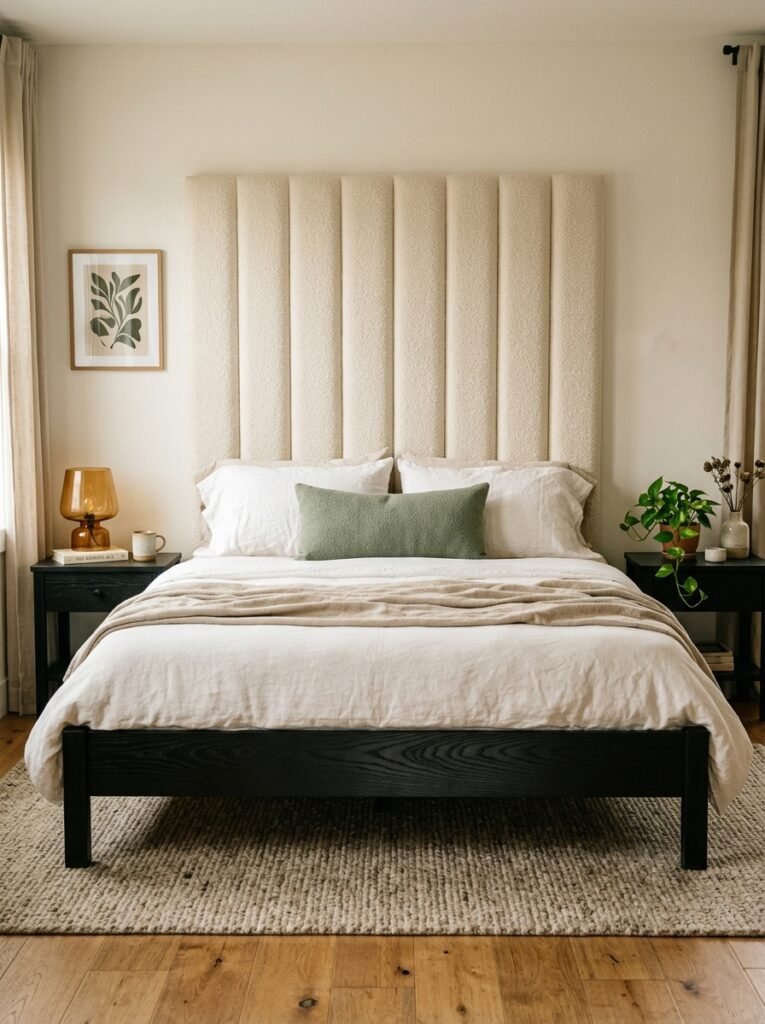
If your dark furniture set includes a bed frame — especially one without an upholstered headboard — you might be wondering whether to add one. And the answer is almost certainly yes.
An upholstered headboard against a dark wooden bed frame is one of the best styling moves in this whole process. It adds softness, height, it gives the eye a different texture to land on, and it immediately shifts the mood of the room. In a velvet fabric — dusty pink, forest green, warm cream — it looks effortlessly expensive.
You don’t need to replace the whole bed to do this. There are freestanding headboards that sit behind the frame. Or even a large piece of fabric stretched and hung on the wall behind the bed works beautifully.
The principle is the same either way: you’re interrupting the hard lines of dark wood with something soft, and that interruption is doing a lot of the aesthetic work.
—
12. Little Details That Sound Small but Actually Change Everything
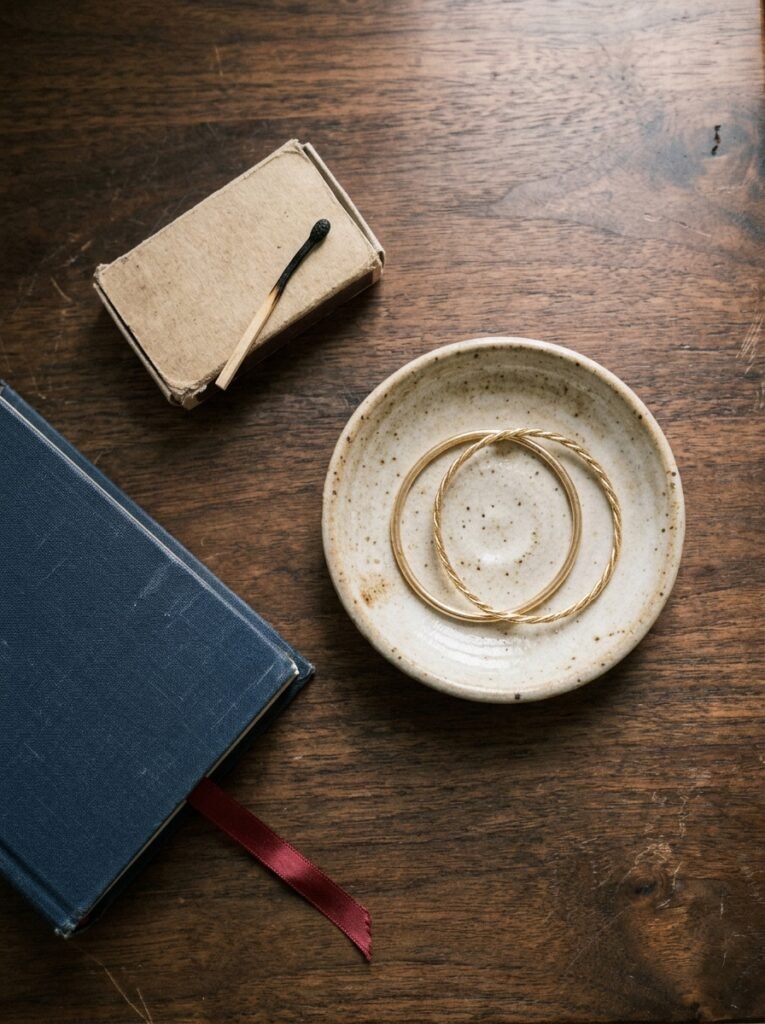
The difference between a room that’s nice and a room that stops you in the doorway — it’s usually the details. And in a dark-furniture bedroom, the right small choices compound.
A glass or ceramic lamp base rather than a metal one. A picture frame leaning against the wall instead of hanging flat — more casual, more personal. Scented candles in a scent that matches the mood (warm amber, rose, something green and woody). A folded throw at the end of the bed that’s casually, imperfectly folded, not military neat.
Vintage and secondhand pieces mix especially well into this kind of room. An old perfume tray on the dresser. A small framed botanical print from a market. A ceramic vase that’s not quite perfect.
The goal isn’t a showroom. It’s a room that looks like someone who has very good taste actually LIVES there. Warmth, softness, a few beautiful things, great lighting. That’s the whole formula, honestly.
—
❓ FAQ
Q: Can a feminine bedroom work with very dark or almost black furniture? A: Absolutely — actually, near-black furniture can be the most dramatic and beautiful version of this. The key is balancing it with very soft, warm textures and lighting. Think cream linen, warm lamplight, velvet cushions, and lots of organic texture. The contrast between near-black furniture and very soft, pale bedding is genuinely striking.
Q: How do I make a dark bedroom with dark furniture feel bigger, not smaller? A: Mirrors, lighting, and curtains hung high are your best tools. A large arched mirror that reflects a lamp source will open the space up considerably. Hanging curtains from ceiling height adds perceived height. And avoiding clutter on surfaces — keeping styling minimal and intentional rather than busy — keeps the room from feeling crowded.
Q: Does dark furniture work in a small bedroom? A: It can, but it takes more intentional styling. Go lighter on the walls (warm cream or dusty sage rather than a deep color), keep the floor as clear as possible, choose a rug with a light ground color, and lean on lighting heavily. The goal is that the furniture reads as intentional and grounded rather than overwhelming the space.
—
💭 Final Thoughts
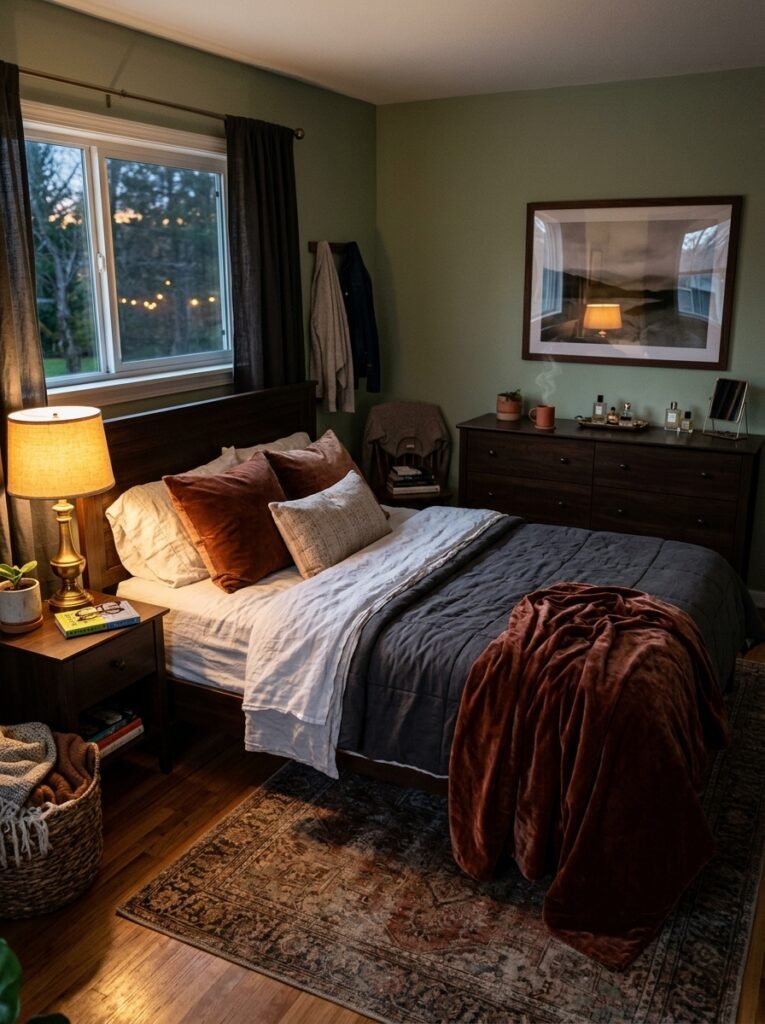
Dark furniture isn’t working against you — it’s waiting for you to meet it halfway. Give it soft textures, warm light, a bit of organic chaos in the styling, and it becomes one of the most beautiful backdrops a bedroom can have. Moody and feminine aren’t opposites. They never really were.
What’s the one piece of dark furniture you’re working with right now — and what’s the part that still doesn’t feel quite right?