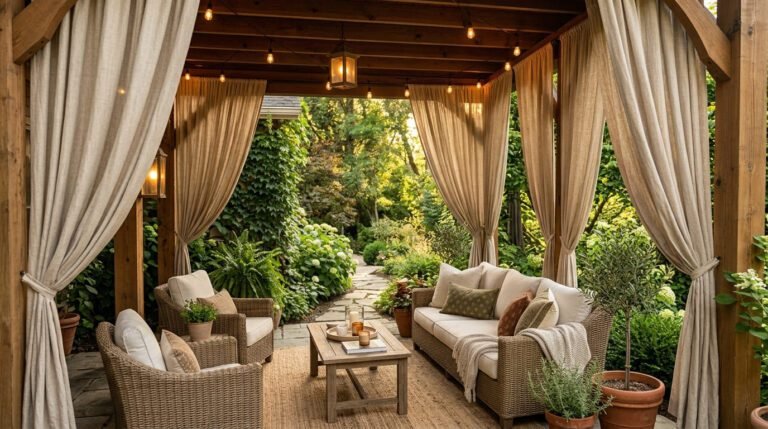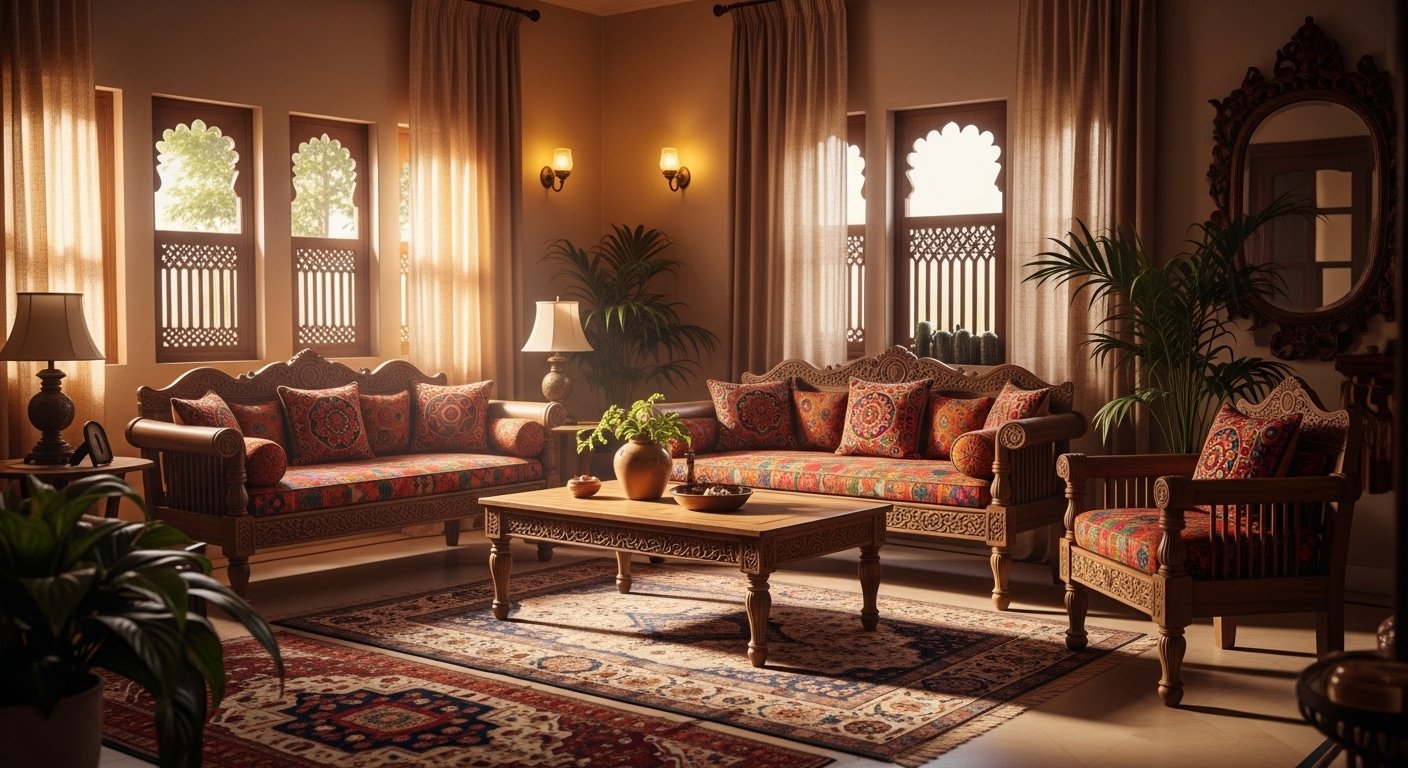
Desi House Interior: Traditional Elegance with Modern Comfort
Blog > Home > Modern interior > Desi House Interior: Traditional Elegance with Modern Comfort
A desi house interior reflects the rich cultural heritage, warm aesthetics, and timeless design traditions of South Asian homes. It blends traditional elements like carved wood, vibrant textiles, and handcrafted decor with modern comfort and functionality. Whether inspired by Pakistani, Indian, or broader South Asian styles, desi interiors are known for their welcoming atmosphere and detailed craftsmanship. These homes often use warm colors, natural materials, and decorative accents that create a cozy and rooted feeling. In this guide, you will explore 12 unique desi house interior ideas that beautifully combine tradition with modern living.
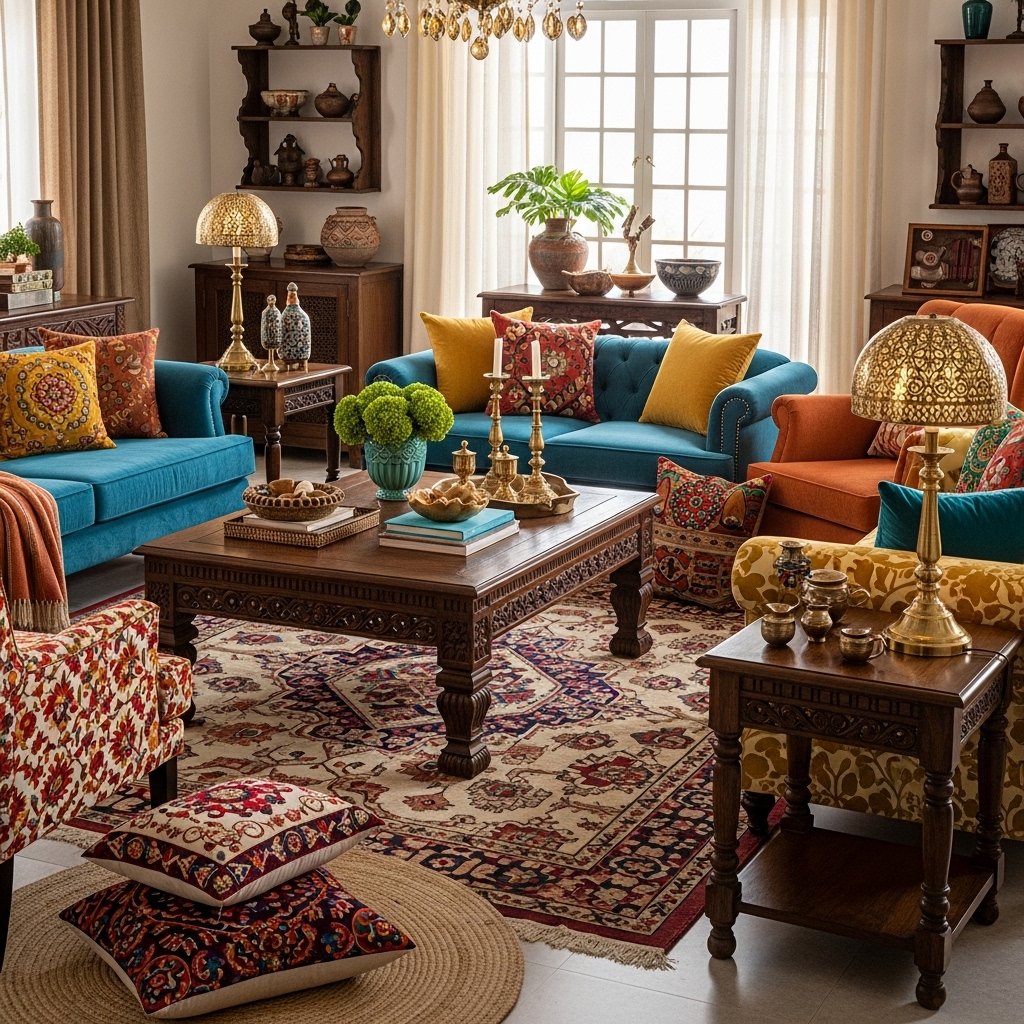
Table Of Content
1. Traditional Wooden Carved Interior Design
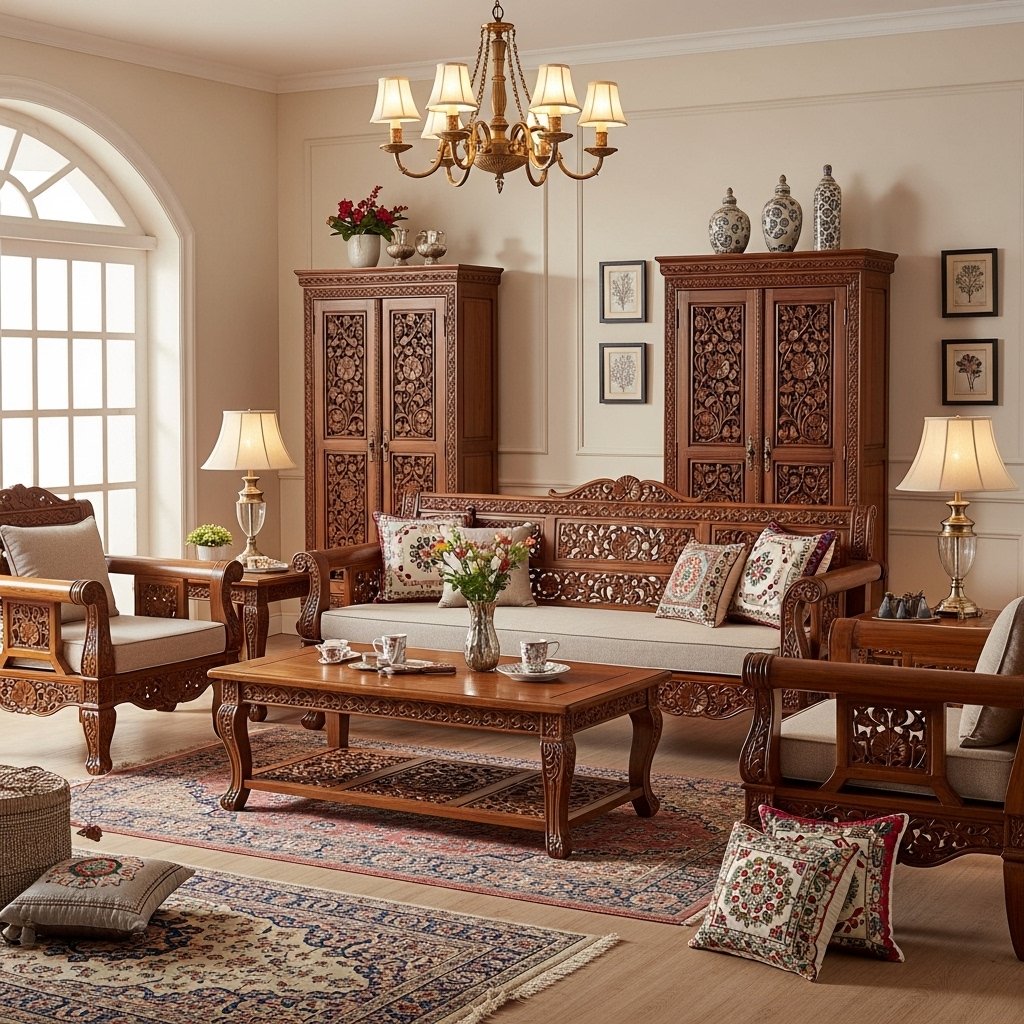
A classic desi house interior often begins with beautifully carved wooden furniture and detailing. Intricate woodwork on doors, chairs, and cabinets adds depth and cultural richness to the home. Teak or walnut wood is commonly used for its durability and elegant finish. These carvings often feature floral or geometric patterns inspired by Mughal and regional art. This style instantly brings warmth and authenticity to any living space.
2. Courtyard (Sehan) Inspired Design
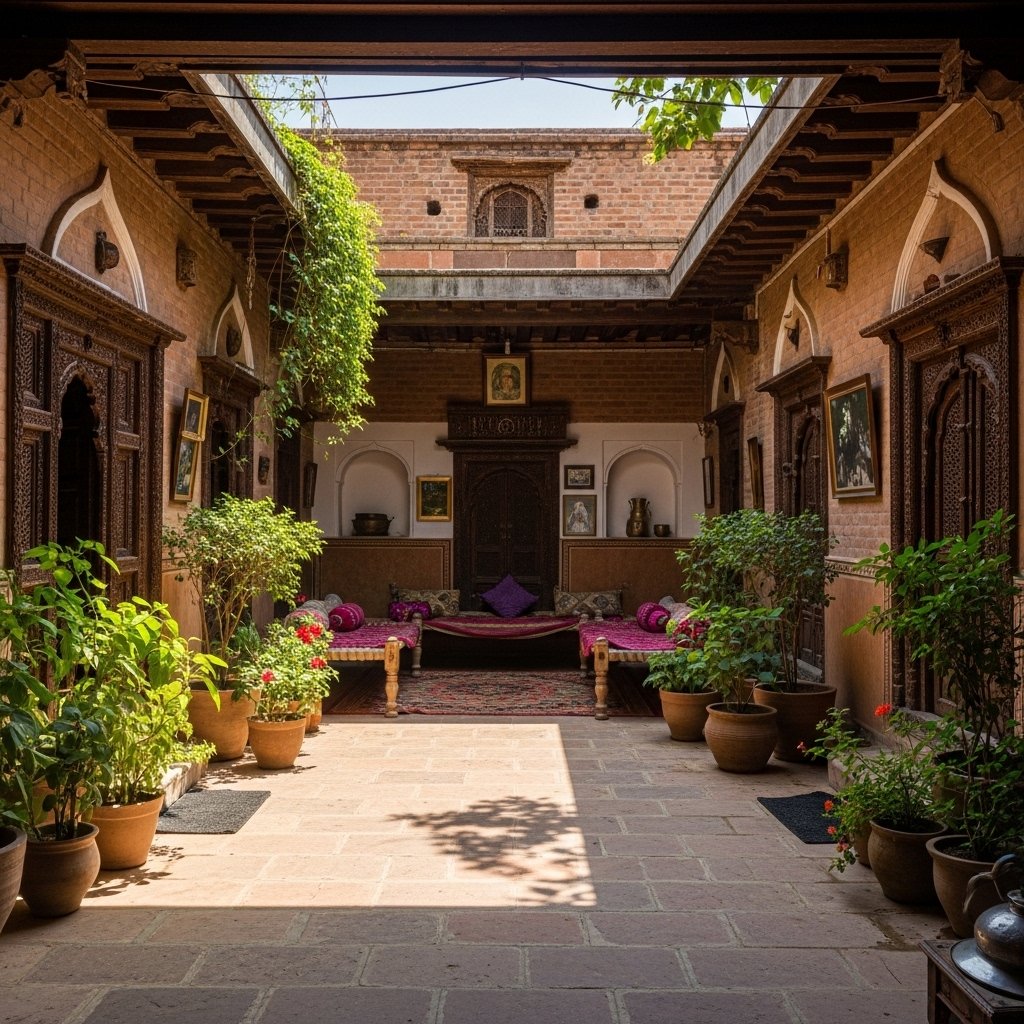
A central courtyard is a signature feature in traditional desi homes, especially in South Asia. This open space allows natural light and ventilation to flow throughout the house. It is often decorated with plants, clay pots, and seating areas for relaxation. Families gather here for tea, conversations, and cultural bonding. Incorporating a courtyard-inspired design adds freshness and openness to modern homes.
3. Vibrant Textile and Rug Styling
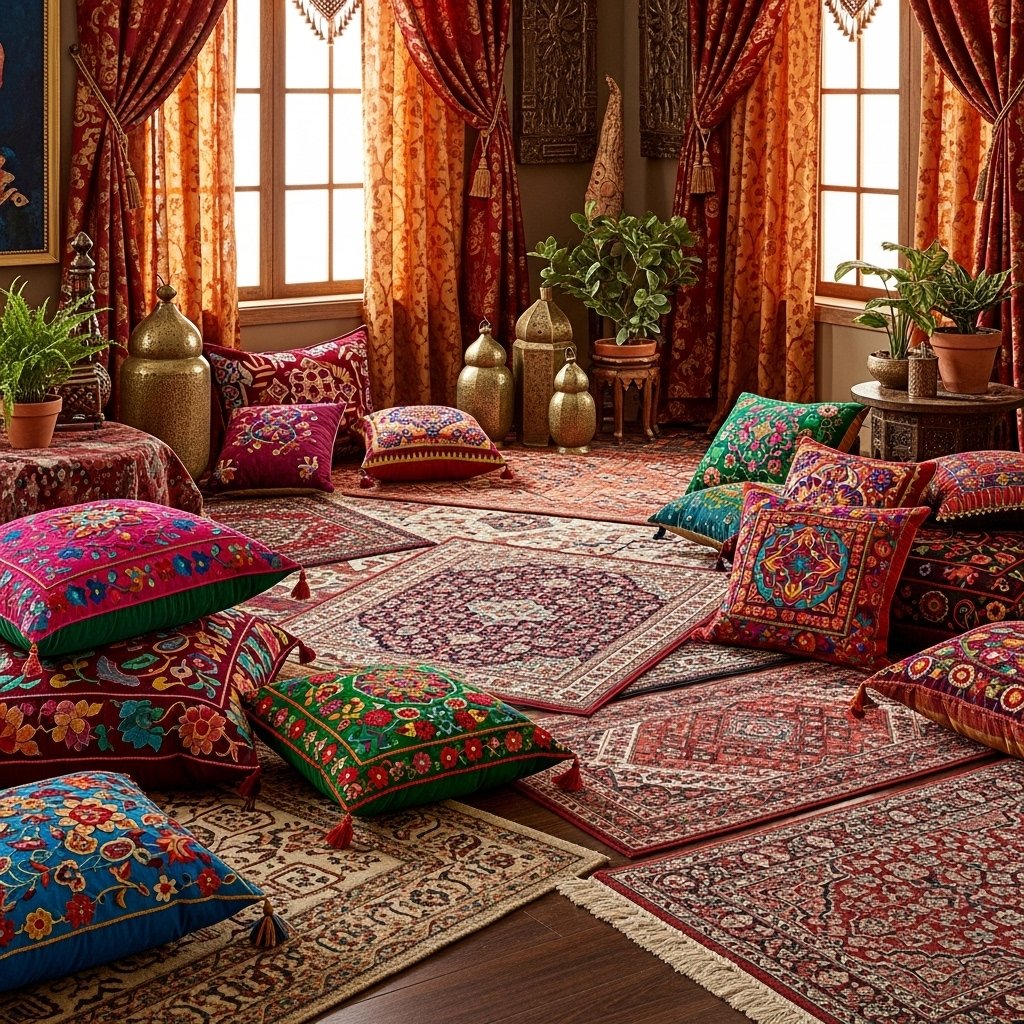
Desi interiors are famous for their colorful textiles, including rugs, cushions, and curtains. Rich fabrics like cotton, silk, and embroidered linen are commonly used for decoration. Traditional patterns such as paisley, floral, and block prints enhance the visual appeal. Layering different textures creates a cozy and inviting environment. This idea is an easy way to add desi charm without major renovations.
4. Mughal-Inspired Interior Elegance
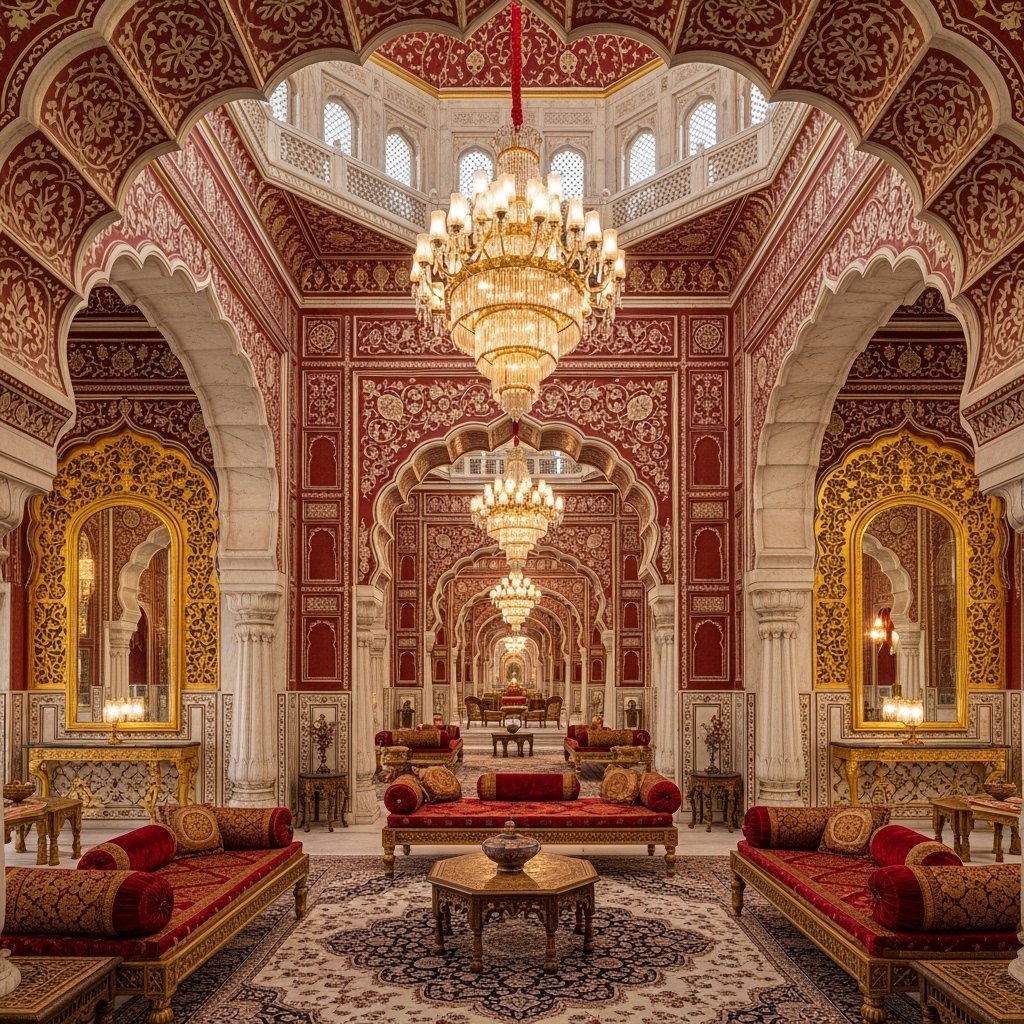
Mughal-inspired design brings royal aesthetics into a desi house interior. Arched doorways, intricate wall patterns, and marble accents define this style. Soft lighting and symmetrical layouts enhance its luxurious feel. Gold, cream, and deep red tones are often used to create a regal atmosphere. This design is perfect for those who love historical and royal-inspired interiors.
5. Modern Desi Fusion Interior
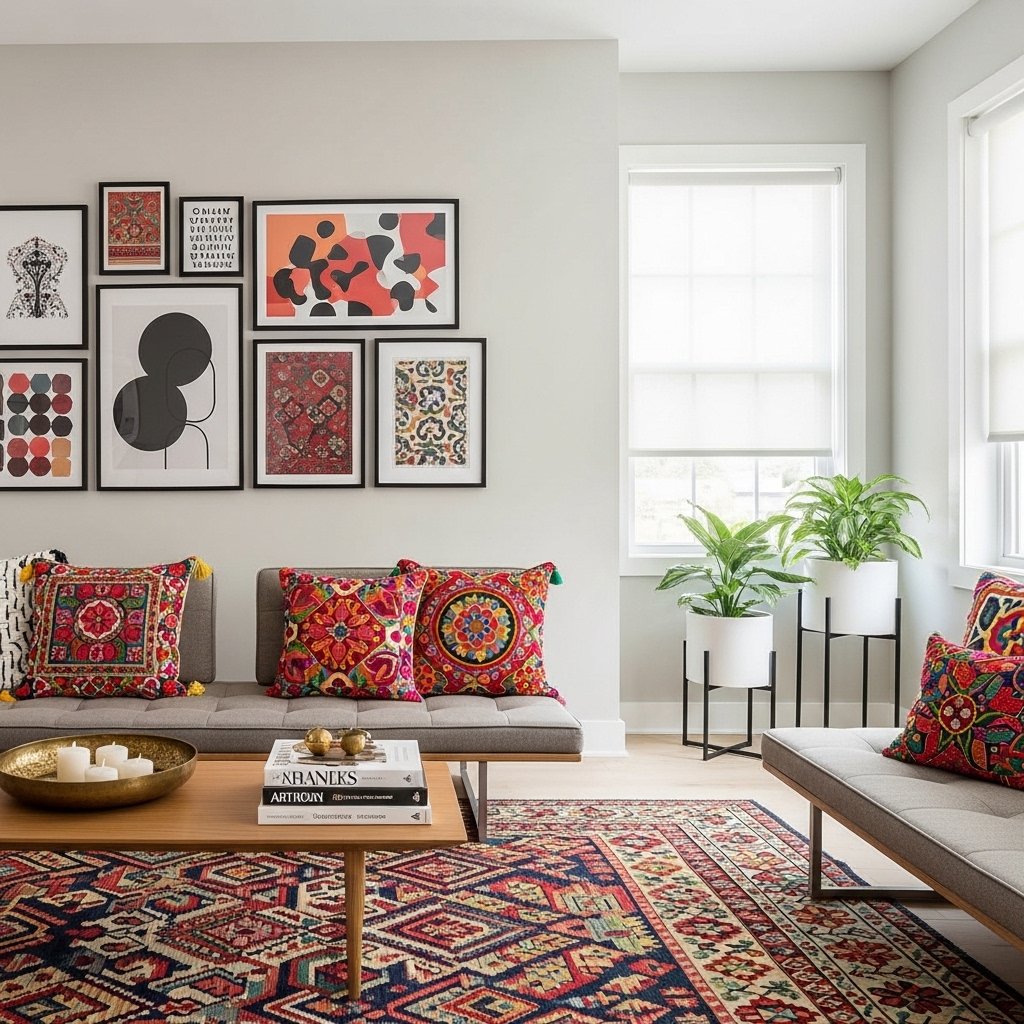
A modern desi fusion interior combines traditional elements with contemporary design. Sleek furniture is paired with ethnic patterns and handcrafted decor pieces. Neutral wall colors balance vibrant desi accents like cushions or wall art. This style is ideal for urban homes that want cultural identity without heavy traditionalism. It creates a perfect balance between comfort and heritage.
6. Handcrafted Wall Art and Calligraphy
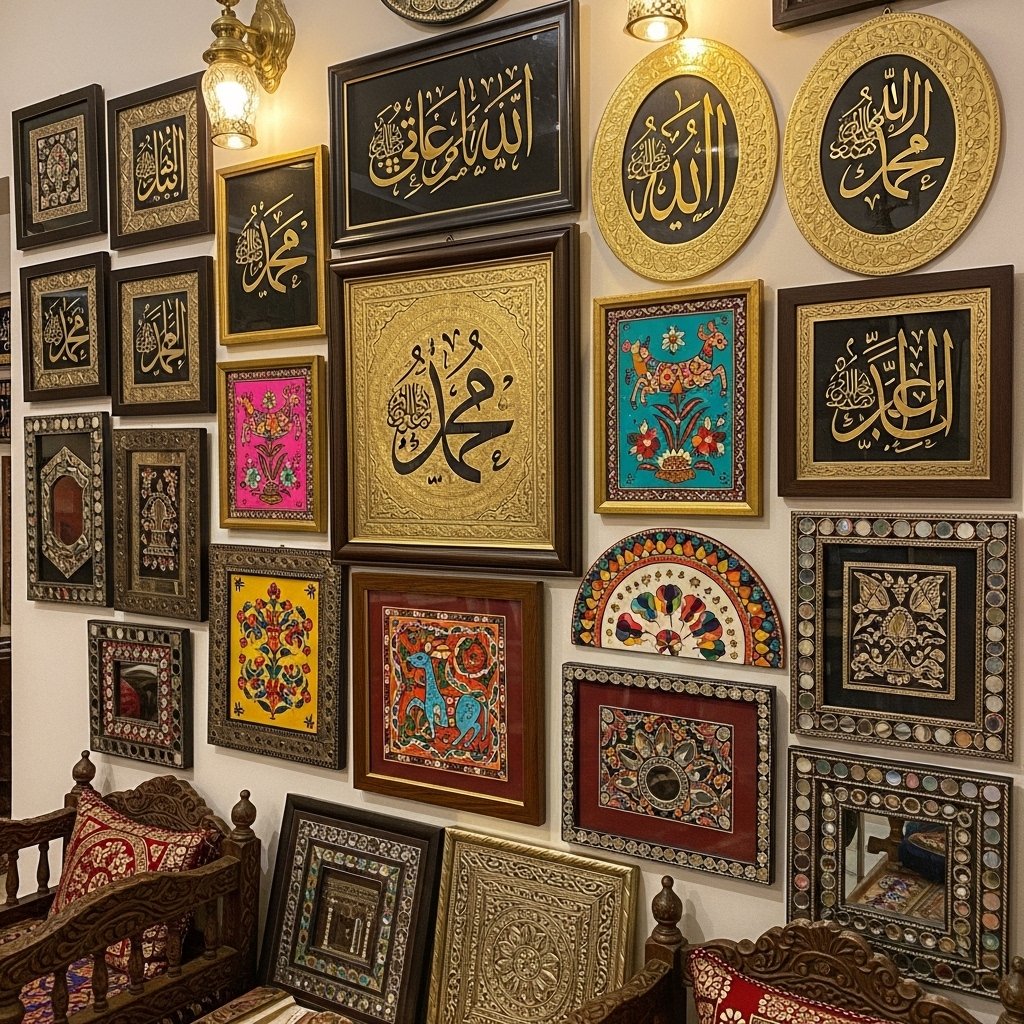
Wall art plays a key role in desi house interiors, especially handcrafted or cultural pieces. Islamic calligraphy, truck art, and folk paintings are commonly used for decoration. These artworks add personality and cultural depth to the home. Wooden or brass frames enhance their traditional appeal. This idea helps transform plain walls into meaningful visual stories.
7. Warm Earthy Color Palette Design
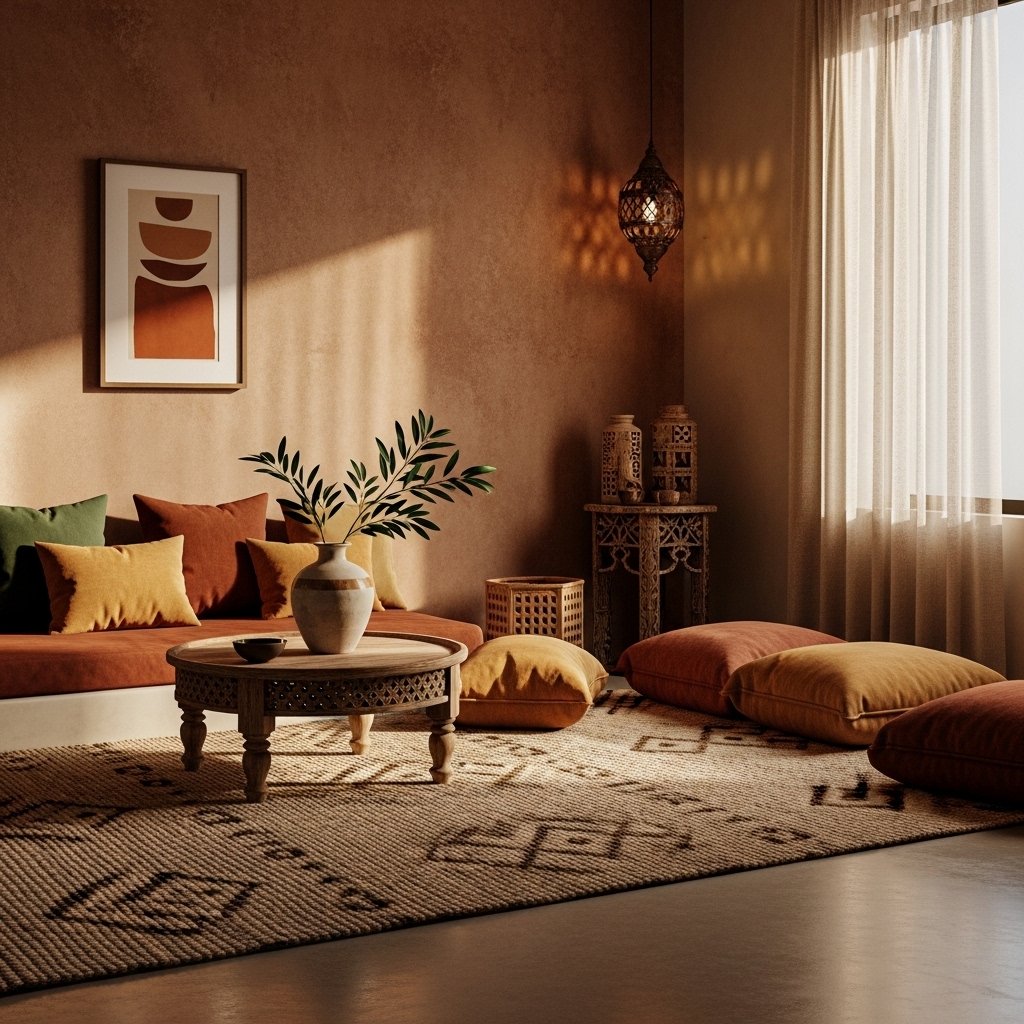
A desi interior often uses warm and earthy tones like beige, brown, terracotta, and gold. These colors create a calming and grounded environment. Accent colors such as deep green, maroon, or mustard yellow add vibrancy. Painted walls paired with textured finishes enhance the overall aesthetic. This color scheme makes the home feel welcoming and naturally balanced.
8. Traditional Floor Seating (Gadda Style)
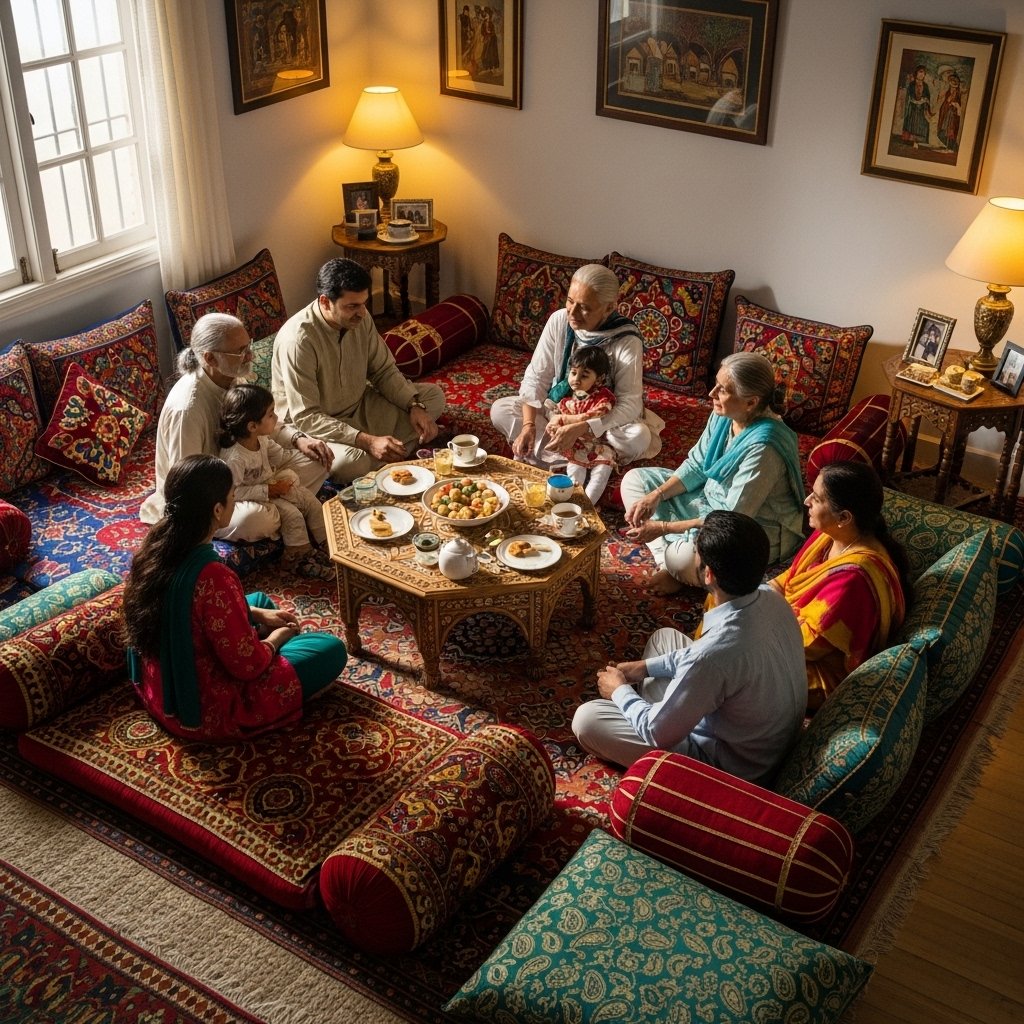
Floor seating is a common feature in traditional desi homes, especially in living and family rooms. Cushions, mattresses, and low tables create a relaxed seating arrangement. This setup encourages closeness and informal gatherings. It is especially popular for tea time and family discussions. Adding floor seating brings authenticity and cultural warmth to the interior.
9. Brass and Copper Decor Accents
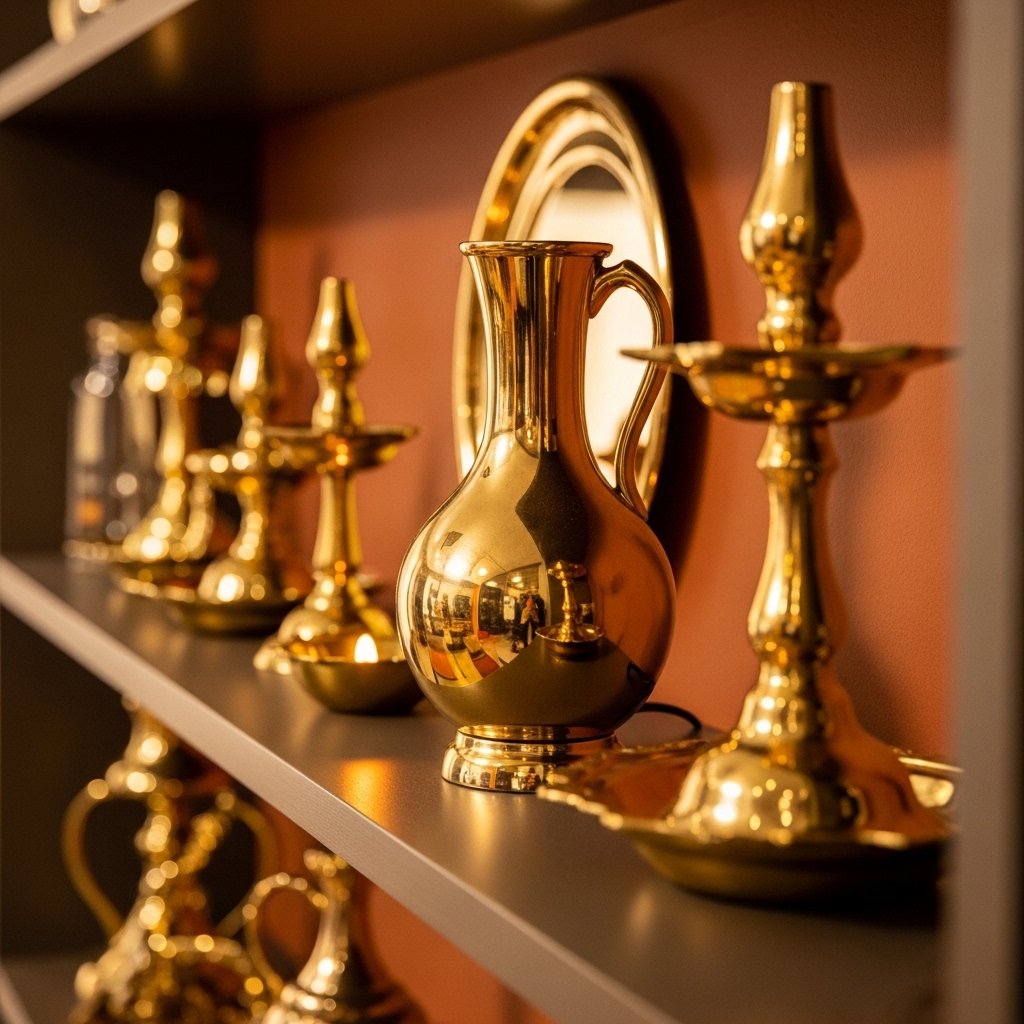
Metal decor elements like brass and copper are widely used in desi house interiors. Items such as lamps, trays, vases, and utensils add a vintage charm. These materials reflect traditional craftsmanship and cultural heritage. When placed strategically, they enhance both beauty and elegance. This design idea works well in both modern and traditional homes.
10. Jharokha Window Style Design
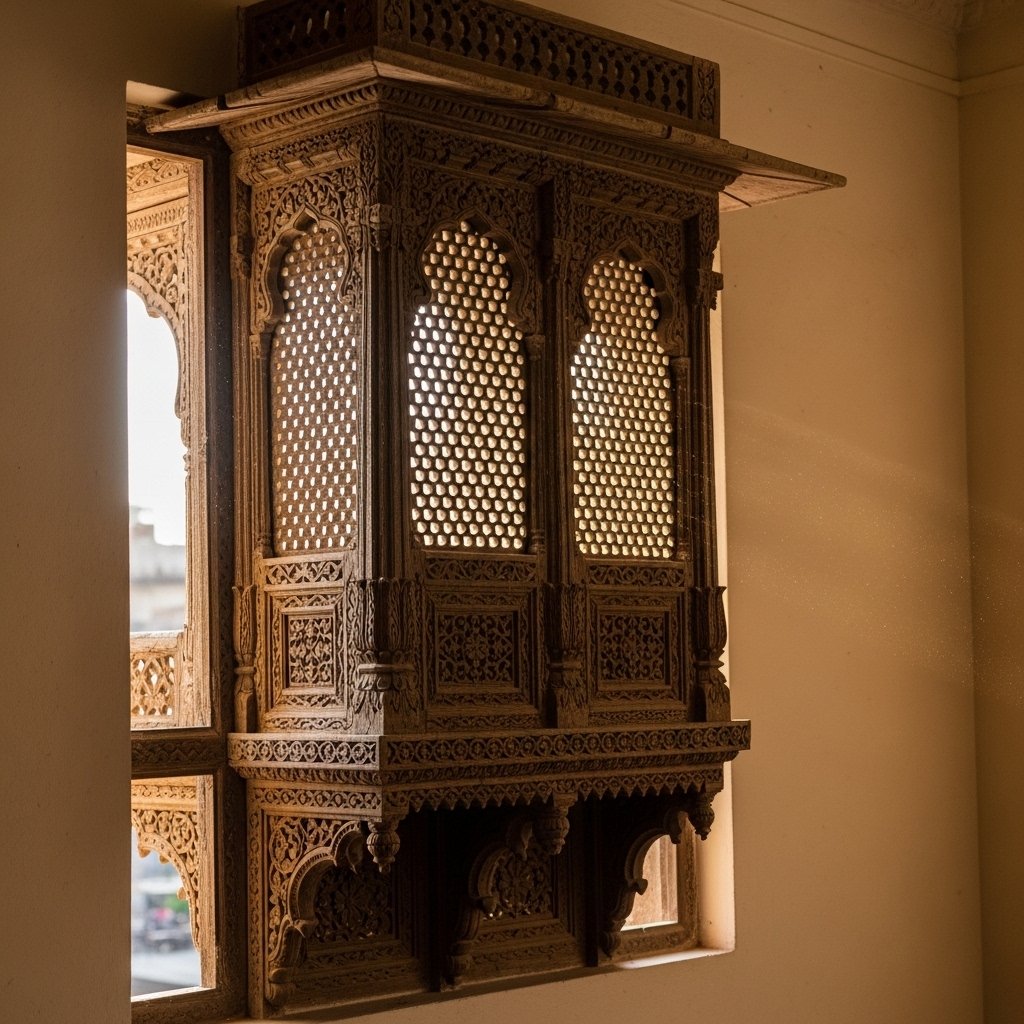
Jharokha-style windows are inspired by traditional South Asian architecture. These decorative window frames often feature carved wood or ornate detailing. They allow natural light while maintaining privacy and aesthetic appeal. Adding jharokha designs gives a royal and historical touch to interiors. This feature is perfect for enhancing living rooms or balconies.
11. Desi Kitchen with Traditional Touch
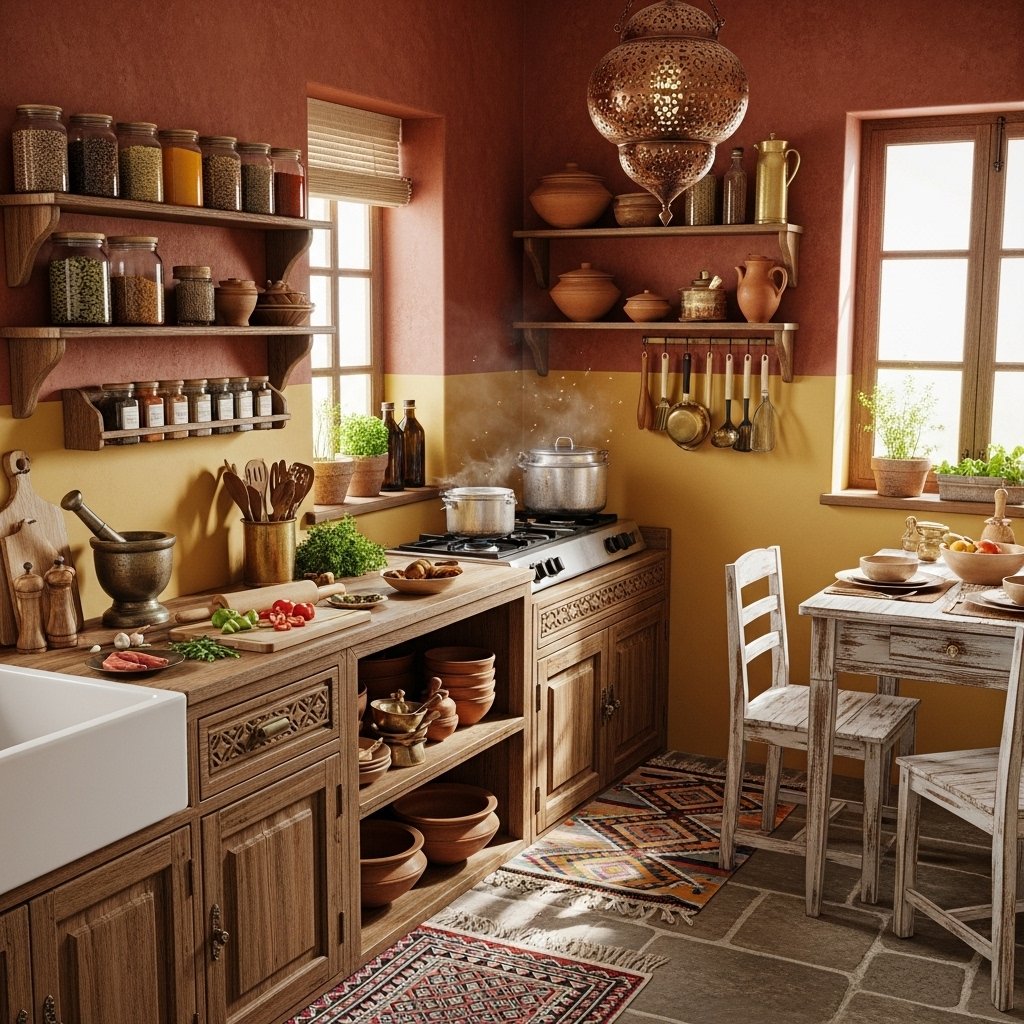
A desi kitchen interior combines functionality with cultural cooking traditions. Wooden cabinets, clay pots, and spice storage jars define this space. Open shelving is often used to display traditional utensils and cookware. Warm lighting and earthy tones enhance the cooking environment. This design makes the kitchen feel homely and culturally connected.
12. Handmade Decor and Artisan Pieces
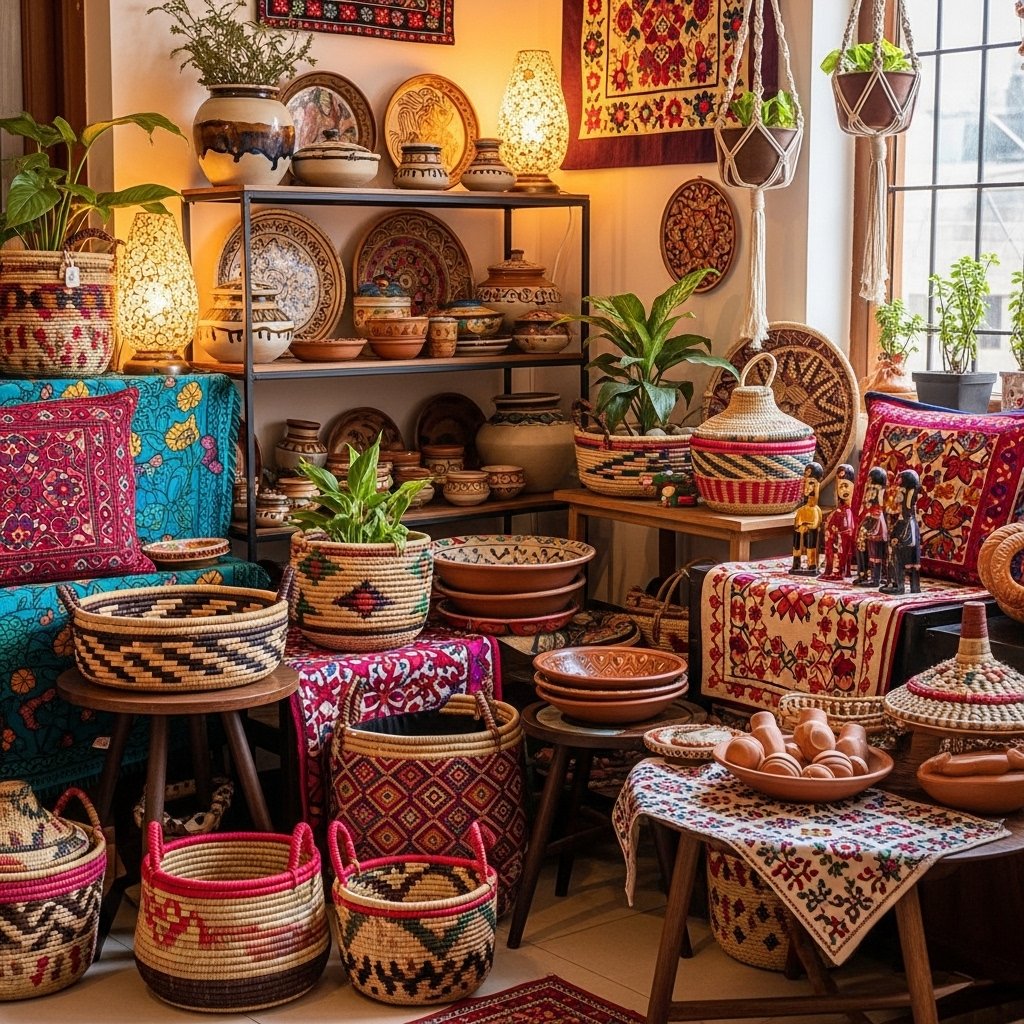
Handmade decor items are essential in creating an authentic desi house interior. Items like pottery, woven baskets, and embroidered crafts add uniqueness. These pieces often come from local artisans, supporting traditional craftsmanship. Each item tells a story and adds character to the home. Incorporating handmade decor ensures a personal and culturally rich interior.
13. How to Care for Desi House Interior
- Keep it Clean – Dust furniture, shelves, and decor regularly to maintain a fresh look.
- Protect Fabrics – Wash curtains, cushions, and upholstery carefully to preserve colors and texture.
- Maintain Wooden Furniture – Use polish and avoid direct sunlight to prevent fading or cracks.
- Organize Decor Items – Arrange accessories and small items neatly to avoid clutter.
- Refresh Occasionally – Rearrange decor, add small accents, or update wall art to keep the space lively.
13.1. FAQ
13.2. What is a desi house interior❓
A desi house interior refers to home design inspired by traditional South Asian styles, especially from countries like Pakistan and India. It includes cultural elements such as wooden furniture, traditional patterns, vibrant colors, and handcrafted decor items. This style creates a warm, welcoming, and homely environment that reflects heritage and local traditions.
13.3. What colors are used in desi house interior❓
Desi house interiors often use rich and warm colors like brown, maroon, mustard, green, and gold. These colors give a royal and cozy feel to the home. Bright shades can also be added through cushions, rugs, and curtains to make the space look more lively and traditional.
13.4. What furniture is common in desi home design❓
Common furniture in desi home design includes wooden sofas, carved beds, traditional charpai, and heavy dining tables. These pieces are often detailed with carvings and strong materials. The furniture is usually durable and gives a classic and cultural look to the home.
14. Final Thoughts
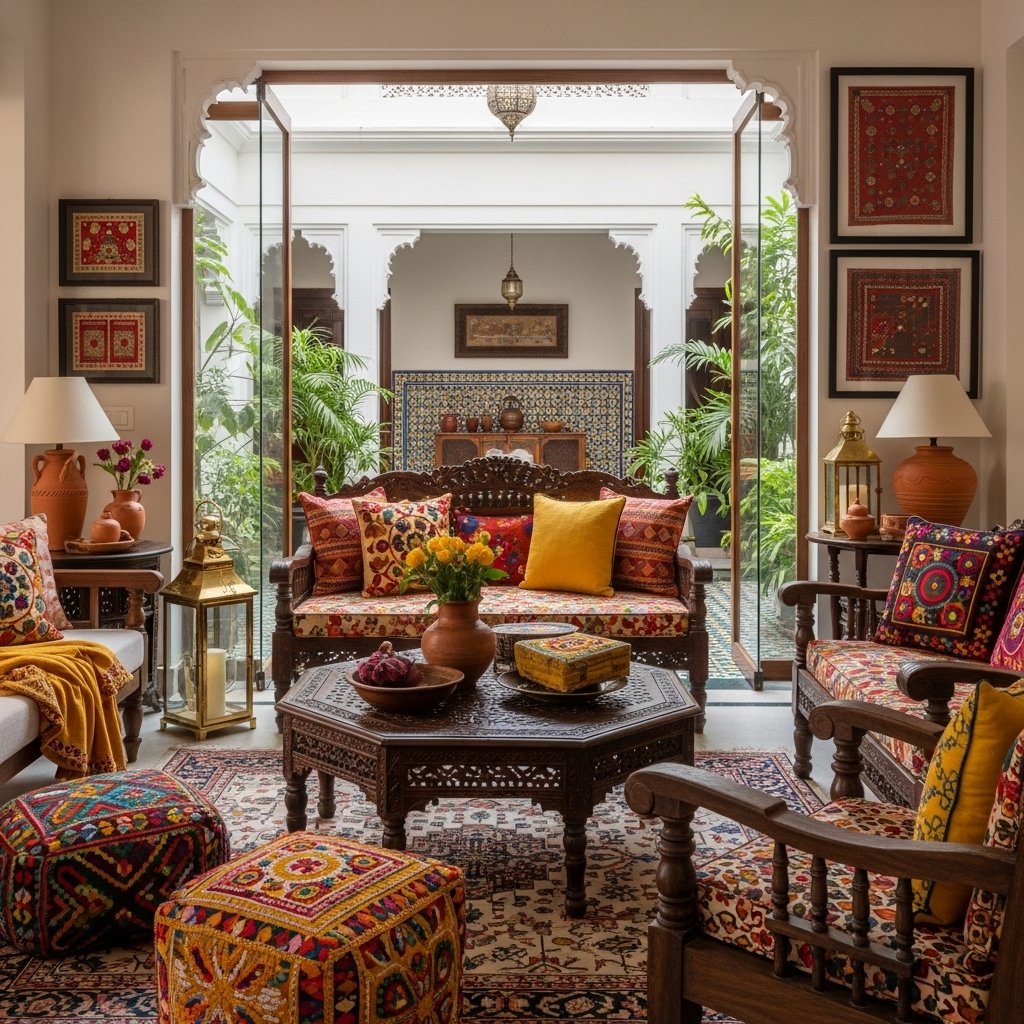
A desi house interior beautifully represents tradition, culture, and warmth in every corner of the home. From carved woodwork and vibrant textiles to modern fusion designs, each element plays a role in creating a meaningful living space. These 12 ideas show how you can blend heritage with modern comfort to design a home that feels both stylish and deeply rooted in culture. Whether you prefer a fully traditional look or a subtle modern desi touch, the key is to maintain warmth and authenticity. A well-designed desi interior is not just about aesthetics—it is about creating a space that feels like home in the truest sense.