
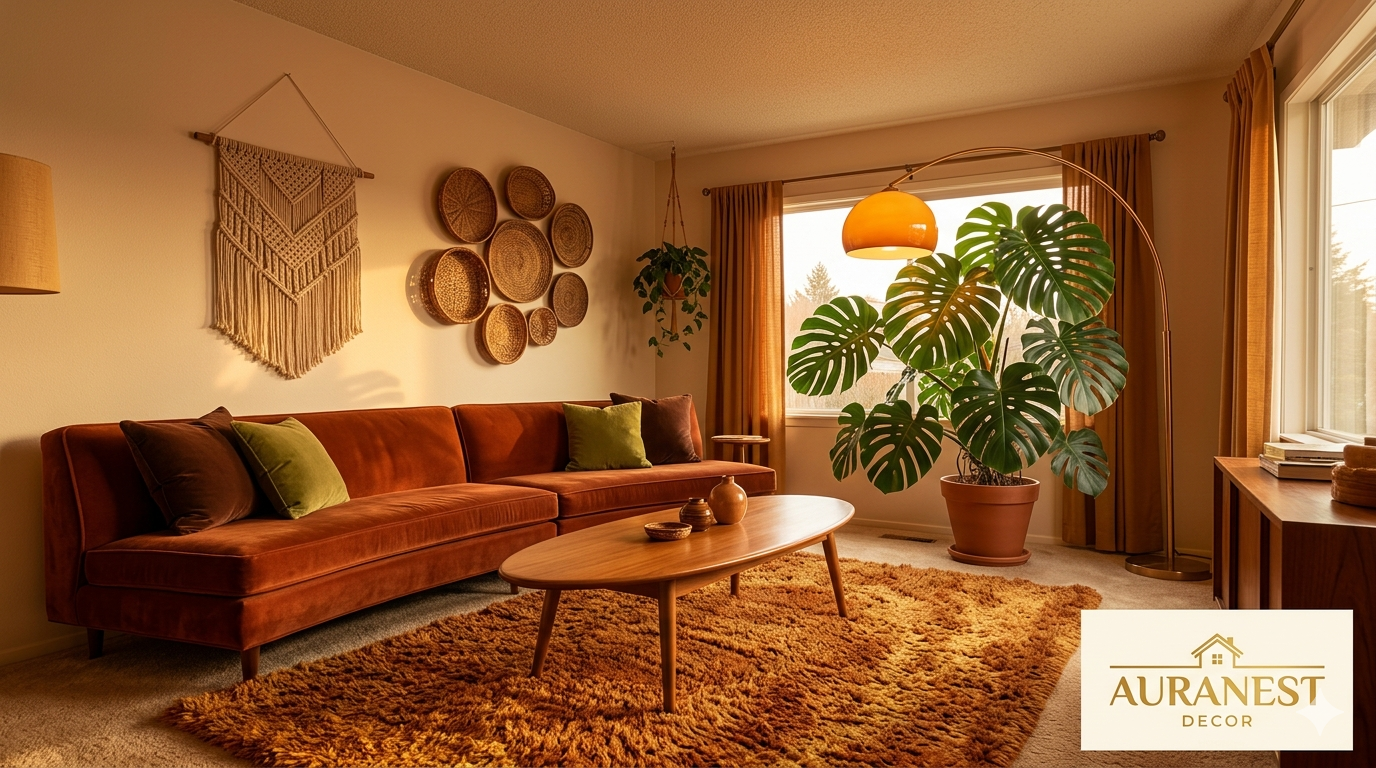
How to Create a Vintage 70s Living Room That Feels Like a Warm Hug You Never Want to Leave
There’s a particular kind of magic that happens when you walk into a room that feels like it was pulled straight from 1973 — warm, unhurried, and deeply alive with texture and color. Maybe you’ve seen it on your Pinterest feed and felt something shift in your chest, a quiet longing for a space that feels less like a showroom and more like a soul. That’s exactly what the vintage 70s living room does, and this guide will show you how to create one that’s genuinely yours.
—
1. Why the 70s Aesthetic Is Having the Most Meaningful Design Comeback of Our Time
It’s no accident that this decade keeps returning to our mood boards. We’re living in an era of clean lines, cold neutrals, and digital everything — and somewhere deep down, we’re exhausted by it. The 1970s represented something gloriously opposite: warmth, tactile richness, and a design philosophy that said comfort is not a compromise. Shag rugs, curved furniture, earthy terracotta, and macramé wall hangings weren’t just trends. They were a full-bodied rejection of sterility, a declaration that a home should feel like an embrace.
What makes the 70s revival feel so powerful today is that it’s not mere nostalgia. It’s a conscious choice to prioritize sensory experience over aesthetic minimalism. People are craving rooms that smell like warm wood and beeswax, that feel soft underfoot, that glow amber in the evening. The vintage 70s living room answers that craving completely.
“A room should feel like it was made for living in — and the 70s never forgot that.”
2. The Color Palette That Makes Everything Feel Like Golden Hour
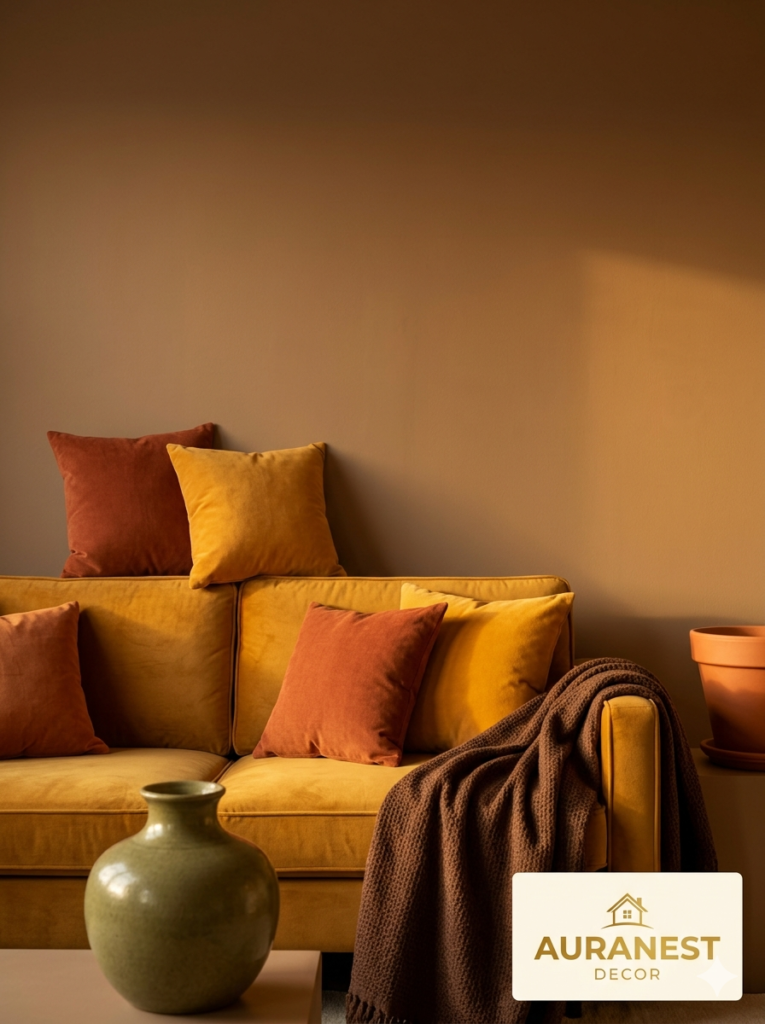
If you want to nail the vintage 70s feel, start with color — because nothing sets a mood faster. The palette of this era was essentially a love letter to the earth itself. Think deep burnt orange, harvest gold, avocado green, chocolate brown, and the most beautiful shade of rust you’ve ever seen. These aren’t colors you’d describe as “neutral,” but they somehow create a profoundly calming environment when layered thoughtfully.
The secret is warmth. Every color in the 70s palette has a yellow or red undertone that mimics natural, candlelit light. When you paint a wall in warm terracotta or drape a velvet sofa in mustard, you’re essentially building a room that looks permanently bathed in late-afternoon sun. Start with one hero wall in a deep, saturated tone — maybe a smoky caramel or a muted olive — and let the rest of the room breathe around it. Layer in your accent colors through textiles, ceramics, and art, and you’ll find the palette practically composes itself.
3. Furniture That Curves, Breathes, and Refuses to Be Uptight
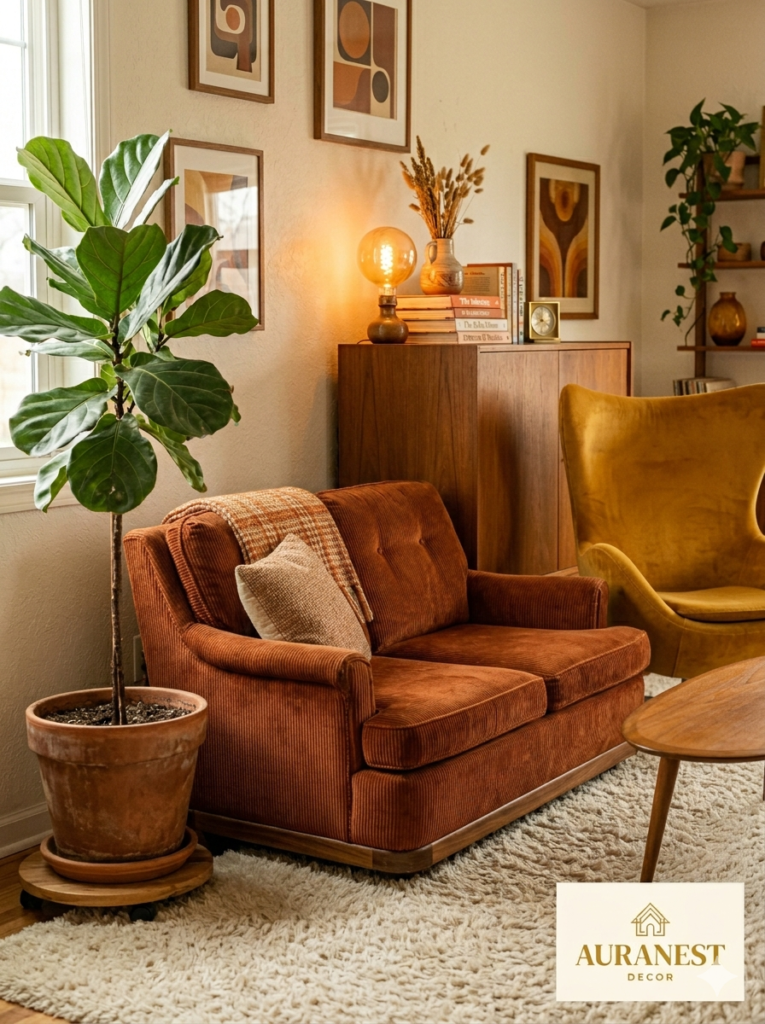
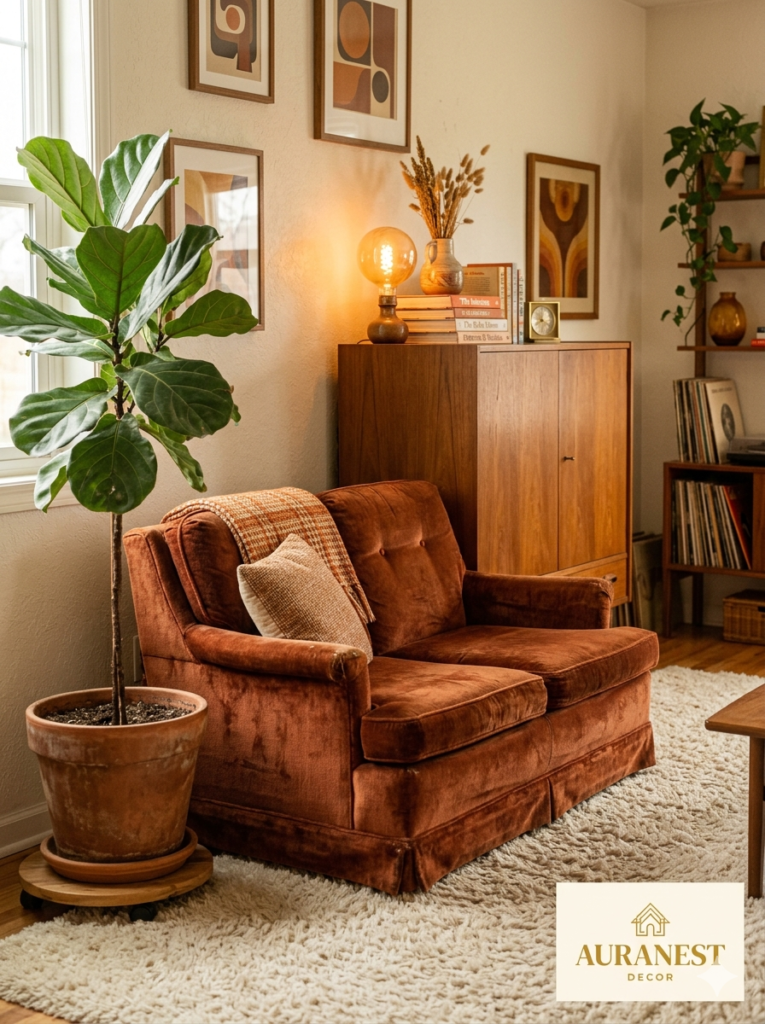
One of the most distinctive features of 70s furniture is its shape — and by that, we mean its beautiful, unapologetic curves. Long, low sofas with rounded arms. Egg chairs that wrap around you. Oval coffee tables with splayed wooden legs. This was an era that had zero interest in sharp corners or rigid silhouettes. And honestly? That design instinct was ahead of its time, because modern ergonomic research tells us that curved forms genuinely feel more psychologically comforting to the human eye.
When sourcing furniture for your vintage 70s living room, look for pieces with these key characteristics: low profiles (everything sits closer to the ground), generous cushioning, natural wood frames in teak or walnut, and fabric in velvet, boucle, or corduroy. Thrift stores and estate sales are absolute goldmines for authentic pieces. A worn velvet loveseat in burnt sienna or a genuine teak coffee table can cost a fraction of reproduction furniture and carries a lived-in warmth that no new piece can replicate. Don’t rush this process — finding the right piece is part of the pleasure.
4. The Floor Is Not an Afterthought — It’s the Foundation of Everything
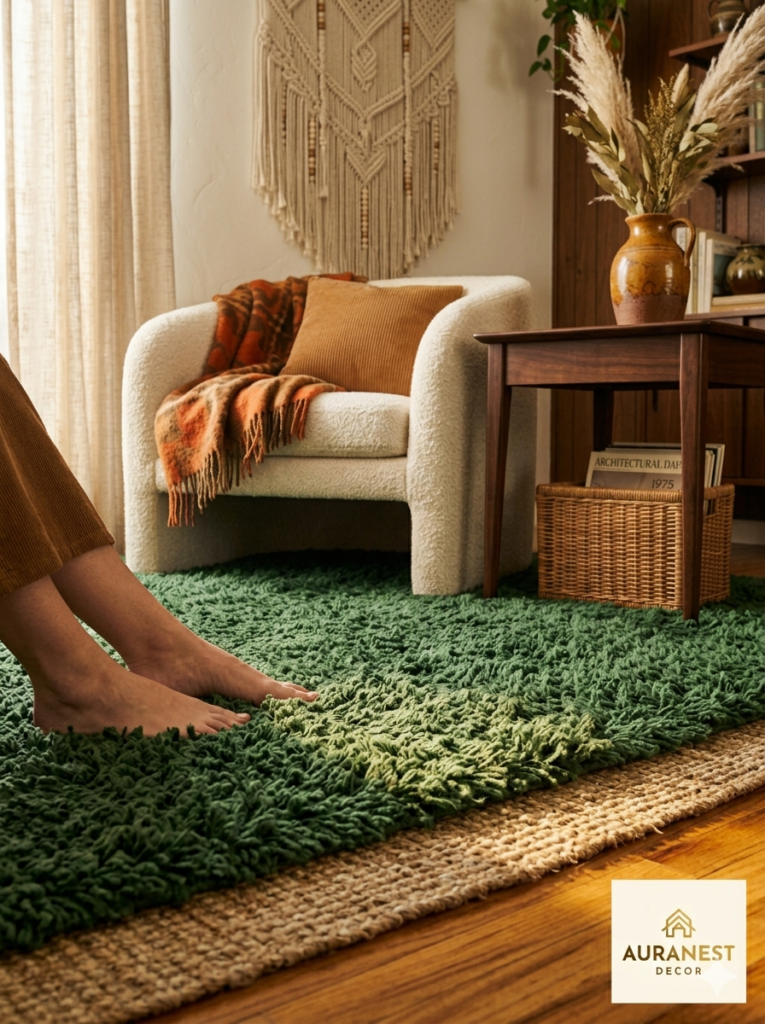
Imagine sinking your bare feet into a thick, cloud-like shag rug on a Sunday morning. That single sensory detail is almost synonymous with the 1970s aesthetic, and for good reason — it transforms the feeling of an entire room instantly. Shag rugs in warm neutrals, rust, gold, or a deep forest green anchor a space and add an almost theatrical sense of luxury. They say, without a word, slow down, stay here.
If a full shag rug feels like too much commitment, consider layering — a natural jute rug as a base with a smaller, plush shag rug layered over the top. This adds depth and dimension while still capturing that signature 70s warmth. For hardwood floors peeking out from the edges, leave them bare and let the natural wood tones do their work. A little beeswax polish goes a long way in bringing out the amber richness that complements the era perfectly.
5. Macramé, Rattan, and Woven Textures — Nature’s Artwork on Your Walls
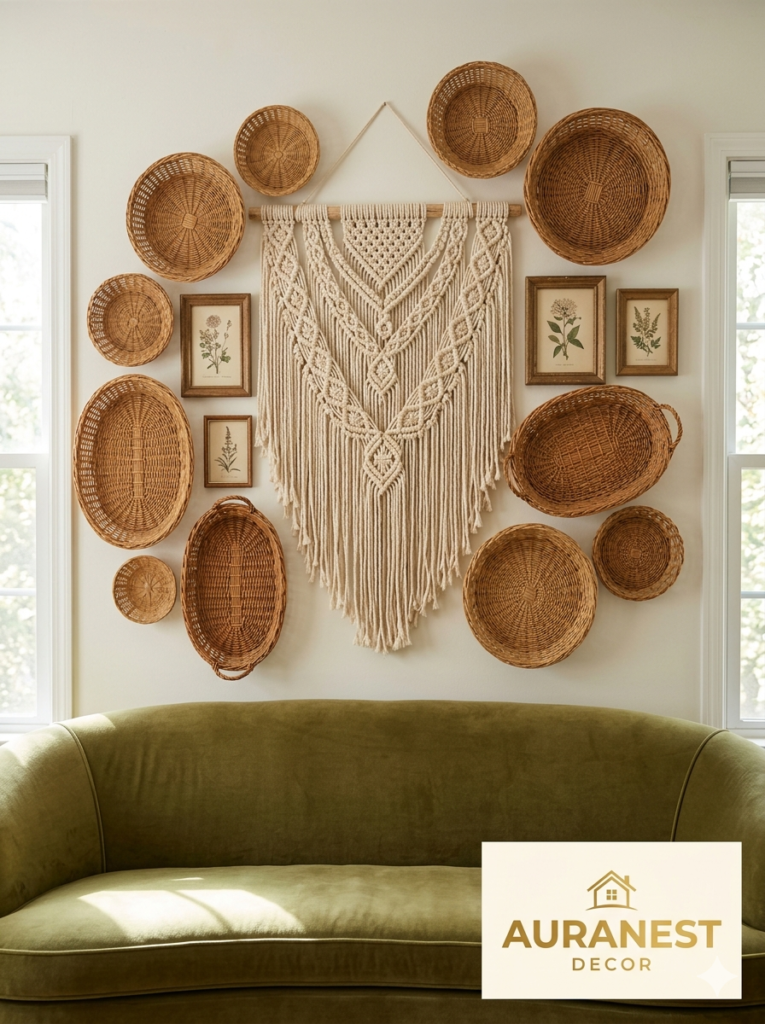
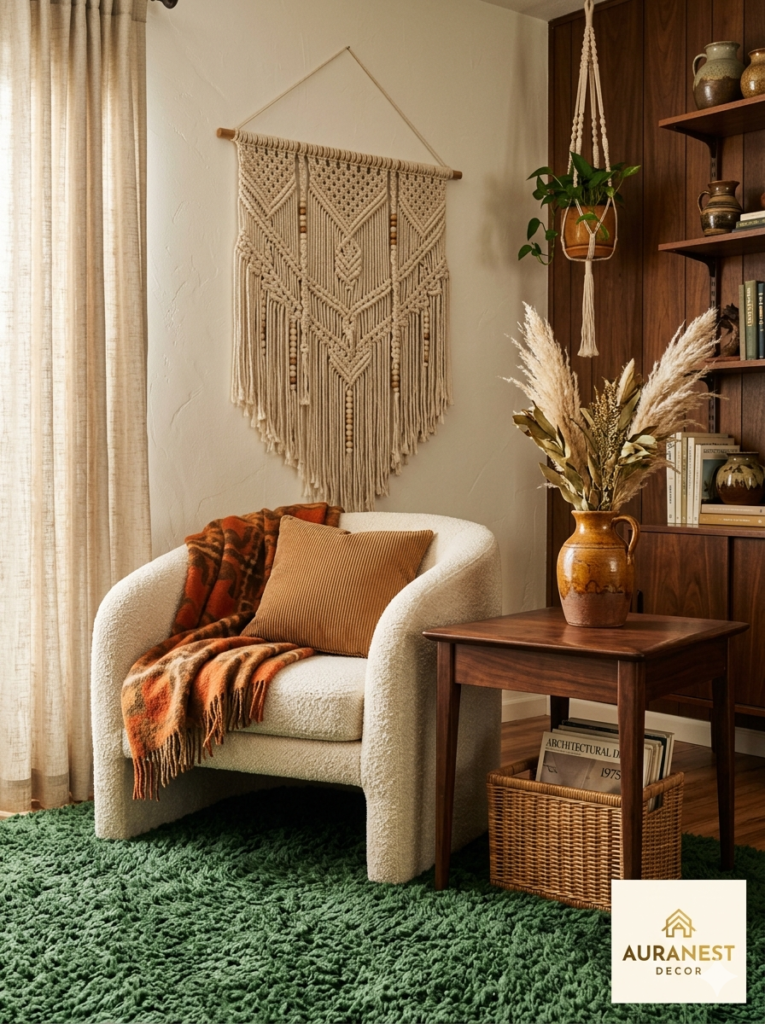
The 70s had a profound love affair with natural materials, and nowhere is that more beautifully expressed than in wall décor. Macramé wall hangings — those intricate, hand-knotted fiber pieces — weren’t just decorative. They were a slow craft in a fast-moving world, a testament to the value of handmade things. Hanging one above a sofa or fireplace instantly adds a layer of organic texture that no canvas print can replicate.
Rattan and wicker also belong on your walls, not just your furniture. Woven baskets arranged in a curated cluster are one of the most Pinterest-worthy and budget-friendly ways to add authentic 70s character to a room. Mix different sizes and shapes — oval, round, asymmetric — and don’t worry about perfect symmetry. The beauty here lies in an organic, collected-over-time look. Pair this with some vintage botanical prints in simple wooden frames, and you have a gallery wall that feels like a warm, well-traveled home.
“Handmade things carry a heartbeat that mass-produced objects simply cannot — and your walls should feel that difference.”
6. Lighting That Whispers Rather Than Shouts
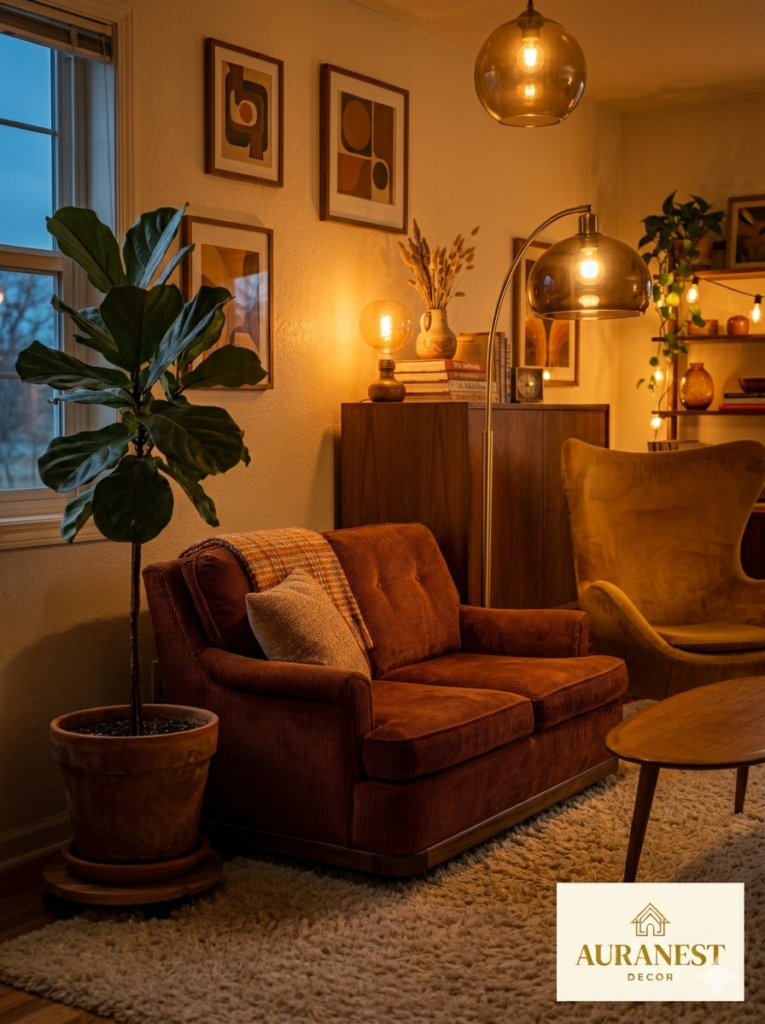
Lighting might be the single most underestimated element in recreating a vintage 70s atmosphere. The lighting of that era was intentionally warm, low, and layered — it created intimacy rather than clarity. Think amber-toned Edison bulbs, arc floor lamps with wide, sculptural shades, and globe pendant lights in smoked glass or amber tint. The goal is to banish that cold, overhead fluorescent feeling entirely.
Lava lamps, though iconic, are just one small piece of the puzzle — and they work best as accent pieces rather than primary light sources. What truly captures the 70s glow is the combination of multiple light sources at varying heights. A tall arc lamp in one corner, a warm table lamp on a sideboard, a string of Edison bulbs along a bookshelf — all of these together create a layered, intimate atmosphere that is the very heartbeat of the era. Dimmer switches are a genuine game-changer here. The ability to dial your room down to a warm, amber hush in the evening costs very little but changes everything.
7. Plants Were Not Optional in the 70s — They Were Practically Furniture
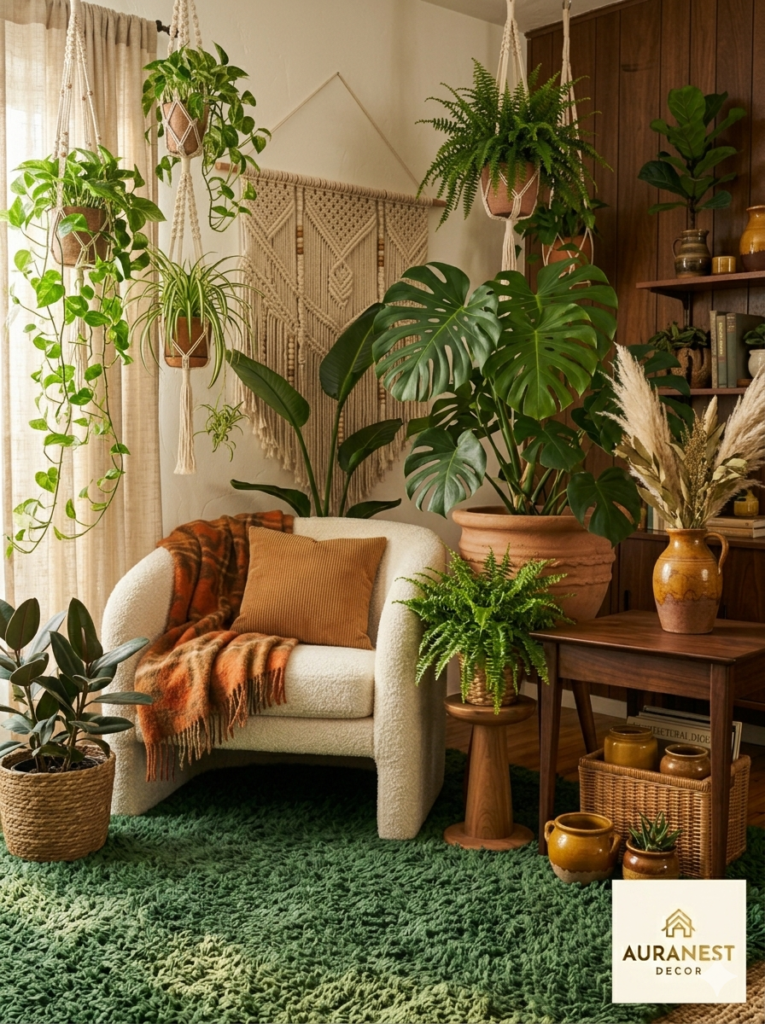
The 1970s was the original golden age of indoor plants. Before Scandinavian minimalism made us think a single potted succulent was sufficient, homeowners of the 70s understood that plants weren’t decoration — they were life, brought indoors deliberately and abundantly. Hanging planters dripping with trailing pothos and spider plants, enormous fiddle leaf figs in terracotta pots, and lush Boston ferns on pedestals were all signatures of the era.
Incorporating plants into your vintage 70s living room isn’t just aesthetically necessary — it’s scientifically backed as mood-boosting and air-purifying. Choose varieties that feel a little dramatic: monstera deliciosa, bird of paradise, rubber plants, or a towering philodendron. Place them in terracotta pots, woven baskets, or vintage ceramic planters in earthy tones. A macramé plant hanger holding a trailing plant near a window is one of the most instantly transportive details you can add to a 70s-inspired room.
8. The Power of Pattern — Embracing Bold Without Chaos
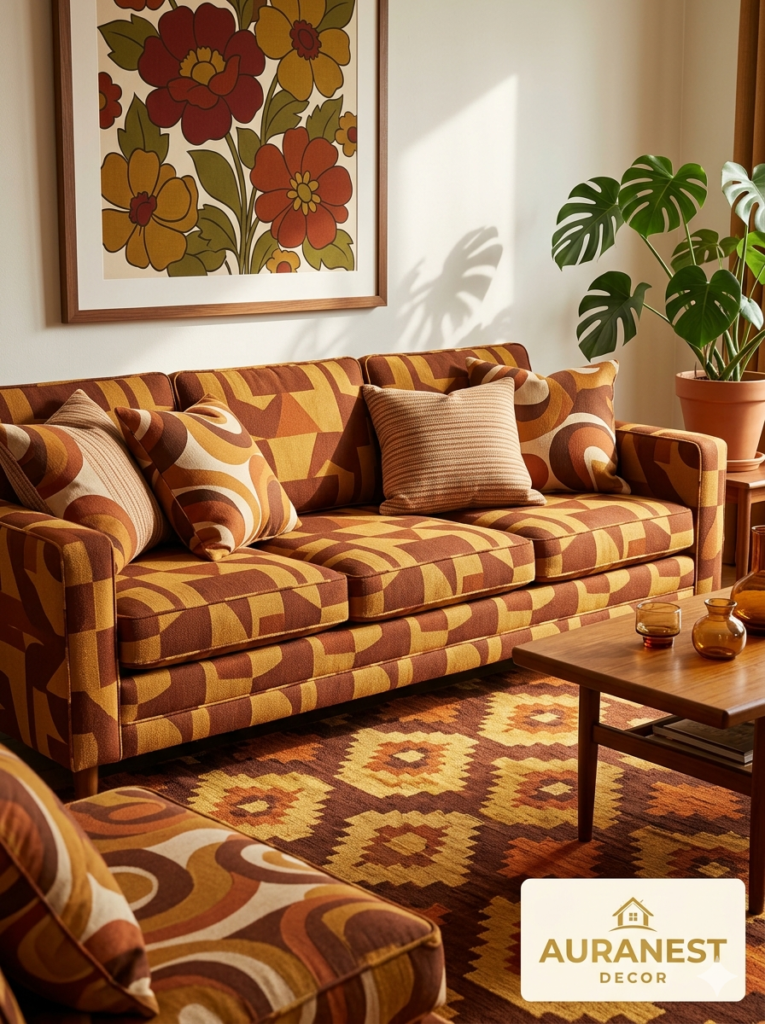
The 70s were not afraid of pattern. Geometric prints, bold florals, abstract swirls — they were everywhere, and they worked because of one simple principle: staying within a cohesive color family. A sofa upholstered in a large-scale geometric print in rust, brown, and gold isn’t overwhelming when the surrounding room speaks the same color language. It’s dynamic and alive.
When introducing pattern into your vintage 70s living room, let the 70s color palette be your guide. A bold printed throw pillow, an abstract art print, or a geometric area rug all become anchors rather than eyesores when they share the same warm tonal family. The key rule is this: if it’s in the 70s palette, it can probably coexist in your room. Mix scales — a large-scale pattern with a smaller geometric, a bold floral with a subtle stripe — and the room will feel layered rather than chaotic.
9. Vintage Accessories That Make a Room Feel Like It Has a Story
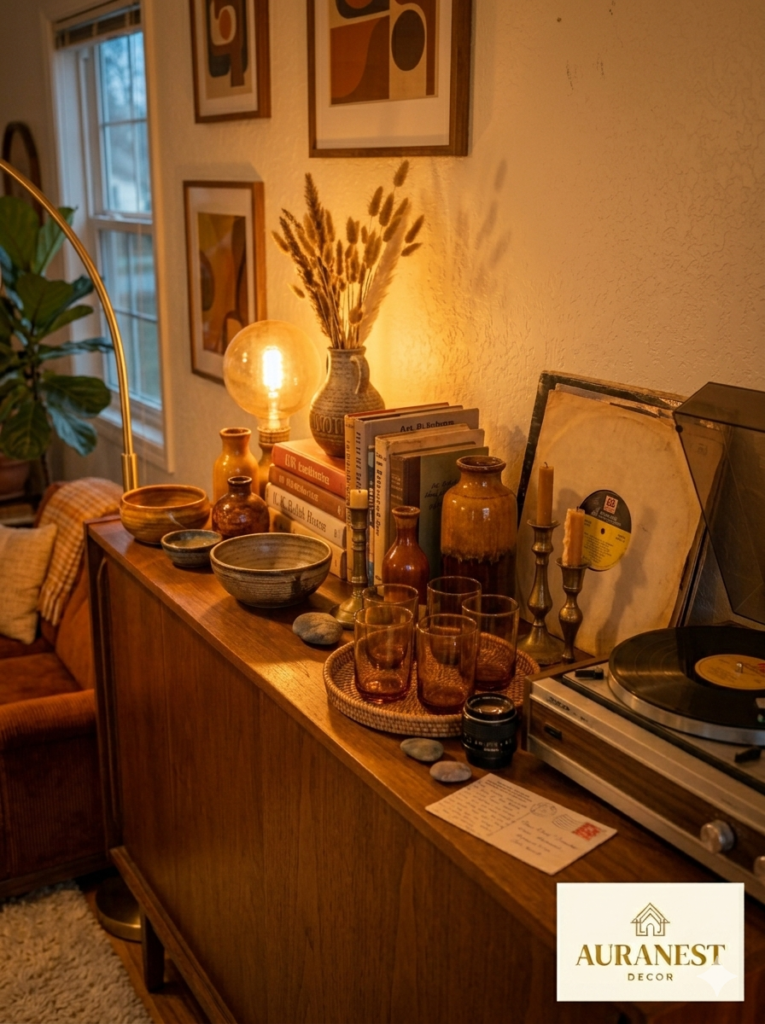
The accessories in a vintage 70s living room are what give it soul — and they should look as if they’ve been found, inherited, and loved, not ordered from a catalog. Think ceramic vases in earthy glazes, vintage brass candleholders, stacked art books with faded spines, hand-thrown pottery bowls, and maybe a vintage record player sitting on a credenza with actual records leaning casually nearby.
Thrifting is your greatest ally here. Estate sales, flea markets, and vintage shops are full of exactly the pieces that make this look feel authentic. A $12 ceramic lamp base, a set of vintage amber glass tumblers, a woven tray — these small finds accumulate into something genuinely personal and irreplaceable. The best vintage 70s living rooms look like they weren’t designed at all, but rather gathered slowly by someone with curious eyes and a warm heart.
“The most beautiful rooms look like they have a past — like someone actually lived and loved within their walls.”
10. How to Blend Vintage 70s Style With Modern Living Without Losing the Magic

One of the biggest concerns people have when attempting this aesthetic is: will it look outdated rather than vintage? The answer lies in balance and intention. You’re not trying to recreate a 1973 time capsule. You’re borrowing the soul of the era — the warmth, the texture, the organic richness — and weaving it into a home that functions beautifully in the present.
Keep technology discreet. Your television doesn’t have to disappear, but it can be housed in a vintage credenza or styled on a low wooden console with plants and candles flanking it. Keep one or two sleek, modern pieces in the mix — a clean-lined floor lamp, a contemporary art print — so the room breathes and doesn’t feel costume-like. The contrast actually makes the vintage pieces feel more intentional, not less.
11. Small Space Strategies — Bringing the 70s Into an Apartment or Tiny Living Room
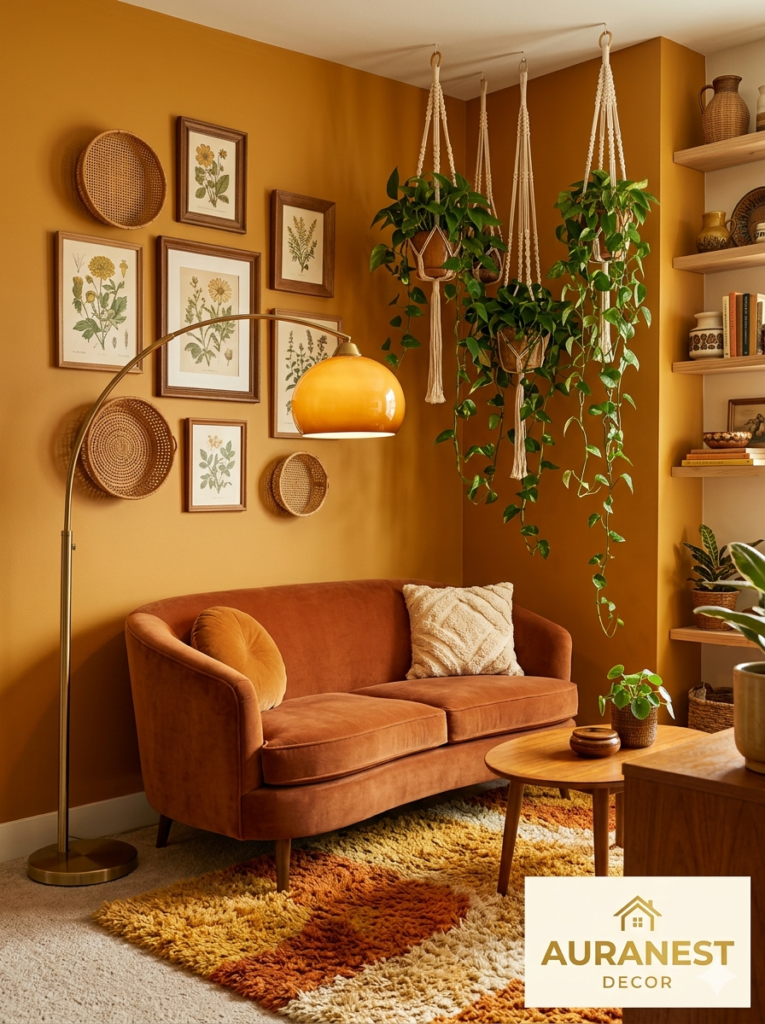
You don’t need a sprawling mid-century ranch house to pull off the vintage 70s living room look. In fact, smaller spaces often benefit enormously from this aesthetic because the warmth and layering naturally make a room feel more intimate and intentional rather than empty. In a small living room, scale is everything — a single curved loveseat rather than a full sectional, one well-placed arc floor lamp rather than multiple pendants, and a smaller shag rug that defines the seating area without overwhelming the floor.
Use vertical space generously. Tall, trailing plants in hanging planters draw the eye upward and add drama without taking up floor space. A gallery wall of vintage botanical prints and woven baskets adds enormous visual richness without requiring a single extra square foot. In small spaces, the 70s palette works especially hard — those warm, saturated tones make walls feel closer together in the best possible way, creating a cozy, womb-like sense of shelter.
12. The Mood a Vintage 70s Living Room Creates — And Why Your Home Deserves That Feeling
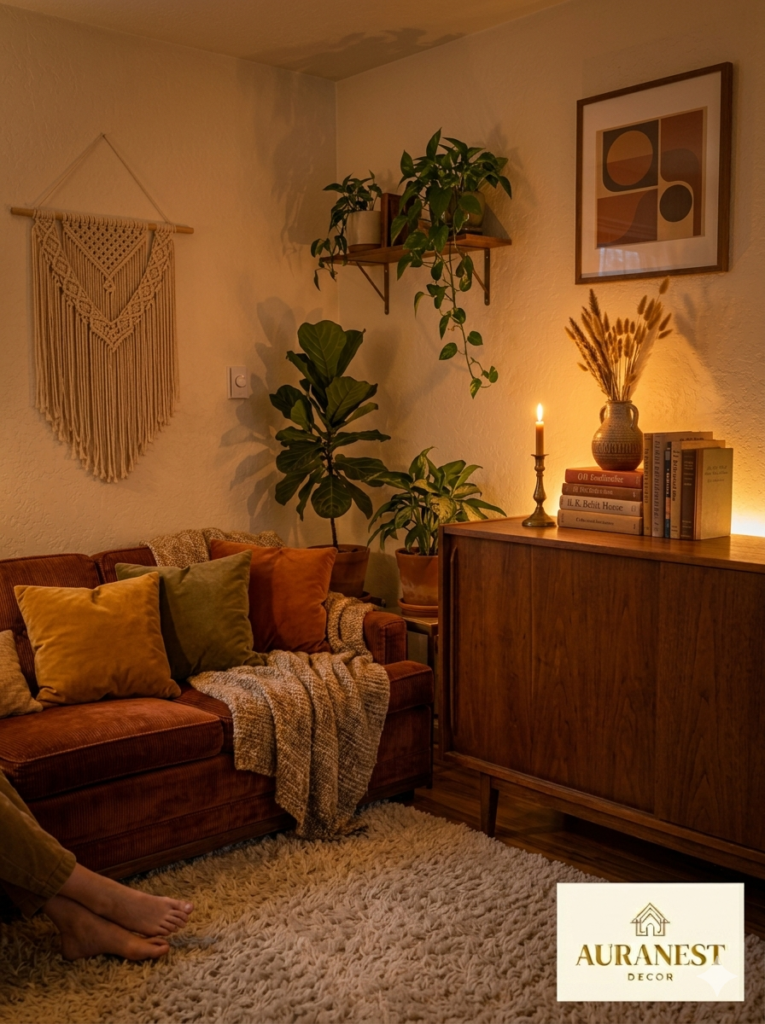
Here is the most important thing to understand about this aesthetic: it isn’t just a design choice. It’s a philosophy of how you want to feel in your own home. The vintage 70s living room is a room that says slow down. It says sit here, stay a while, pour something warm. It says that your home is not a backdrop for your life, but an active participant in it. Every shag rug, every macramé hanging, every amber lamp is a small act of intention — a decision to prioritize warmth, texture, and human comfort over trend-chasing or visual perfection.
When you walk into a room like this, something physiological actually happens. The warm colors activate a sense of calm. The soft textures invite touch. The layered lighting signals to your nervous system that it’s safe to exhale. This is design as self-care, and perhaps that’s why the 70s aesthetic resonates so deeply in the world we’re living in right now. We need rooms that hold us. And this one does exactly that.
—
🌿 How to Take Care of Your Vintage 70s Living Room
Maintaining this warm, layered aesthetic is genuinely simple — it actually gets better with time, like a good story.
Keep natural materials hydrated and nourished. Regularly condition your wooden furniture with beeswax or natural oil to keep that warm amber glow alive. Teak and walnut will actually deepen in color and richness as they age, which only enhances the vintage feel.
Refresh your textiles seasonally. Shag rugs benefit from regular gentle vacuuming and an occasional shake outside. Velvet upholstery should be brushed in one direction to prevent crushing. These small rituals take minutes and make a profound difference.
Tend your plants like the living décor they are. Water consistently, rotate toward the light, and repot when roots outgrow containers. A thriving plant instantly lifts the entire atmosphere of a room — a struggling one does the opposite.
Curate slowly and intentionally. Resist the urge to buy everything at once. The most authentic vintage 70s living rooms are assembled over time, piece by piece, with genuine thought and feeling behind each addition. That patience is part of what makes them beautiful.
—
❓ FAQ
Q: Is the vintage 70s living room style difficult to achieve on a budget? A: It’s actually one of the most budget-friendly design aesthetics you can pursue, largely because thrift stores, estate sales, and flea markets are full of authentic pieces from the era. A shag rug, some macramé, a few warm-toned ceramics, and a vintage lamp can completely transform a room for well under $200. The key is patience and a willingness to look for unexpected gems in unexpected places.
Q: Can I mix 70s vintage style with other design aesthetics like boho or mid-century modern? A: Absolutely — in fact, the 70s style blends beautifully with both. Boho shares the love of natural materials, plants, and handmade textiles, while mid-century modern aligns perfectly with the low-profile, teak-and-walnut furniture that defines the era. The key is keeping your color palette cohesive and warm so that even diverse influences feel like they belong together.
Q: What’s the single most impactful change I can make to start creating a vintage 70s feel today? A: Change your lighting first. Swap out any cool-toned or bright overhead bulbs for warm, amber-toned Edison or incandescent-style bulbs, add one arc floor lamp with a warm shade, and install a dimmer switch if possible. This single shift will transform the atmosphere of your room more immediately and dramatically than almost any other change you can make.
—
💭 Final Thought
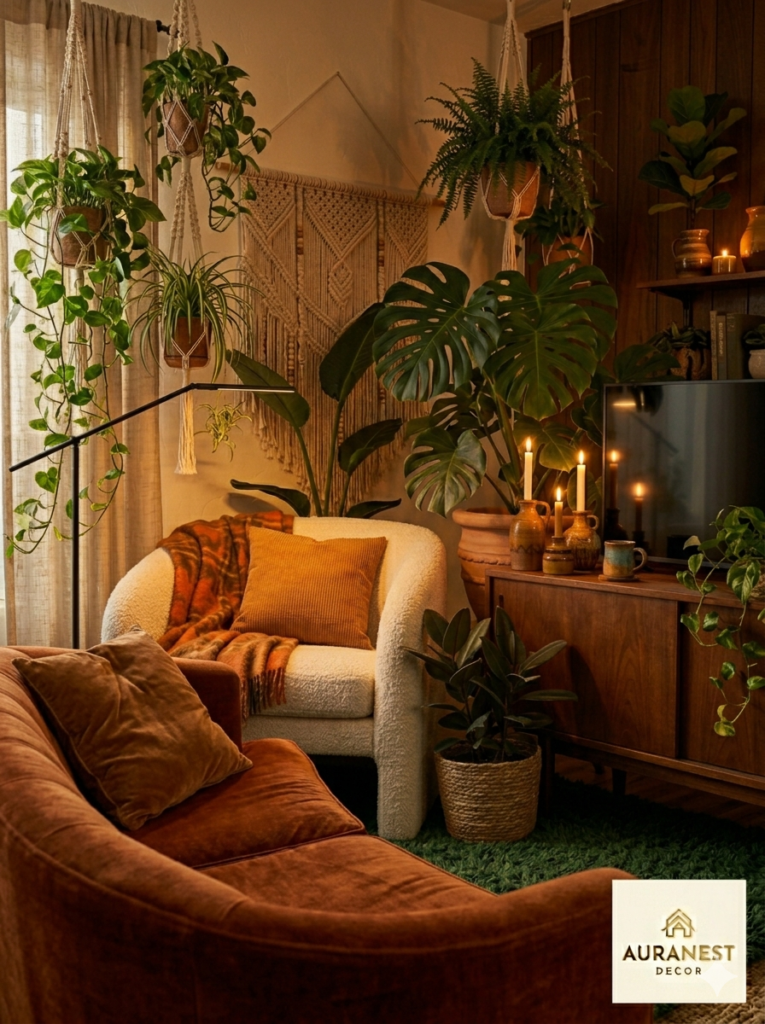
A vintage 70s living room isn’t a trend you decorate toward — it’s a feeling you come home to. It’s the quiet decision to surround yourself with warmth, texture, and beauty that ages like a good memory rather than an expired style. Every macramé knot, every amber lamp, every worn velvet cushion is a small act of saying: this home is worth caring for, and so am I.
So here’s the question worth sitting with: what does your living room currently feel like — and what do you want it to feel like every single time you walk through the door?