Small Cabin Interiors: 12 Cozy Living Room Ideas for a Warm Retreat
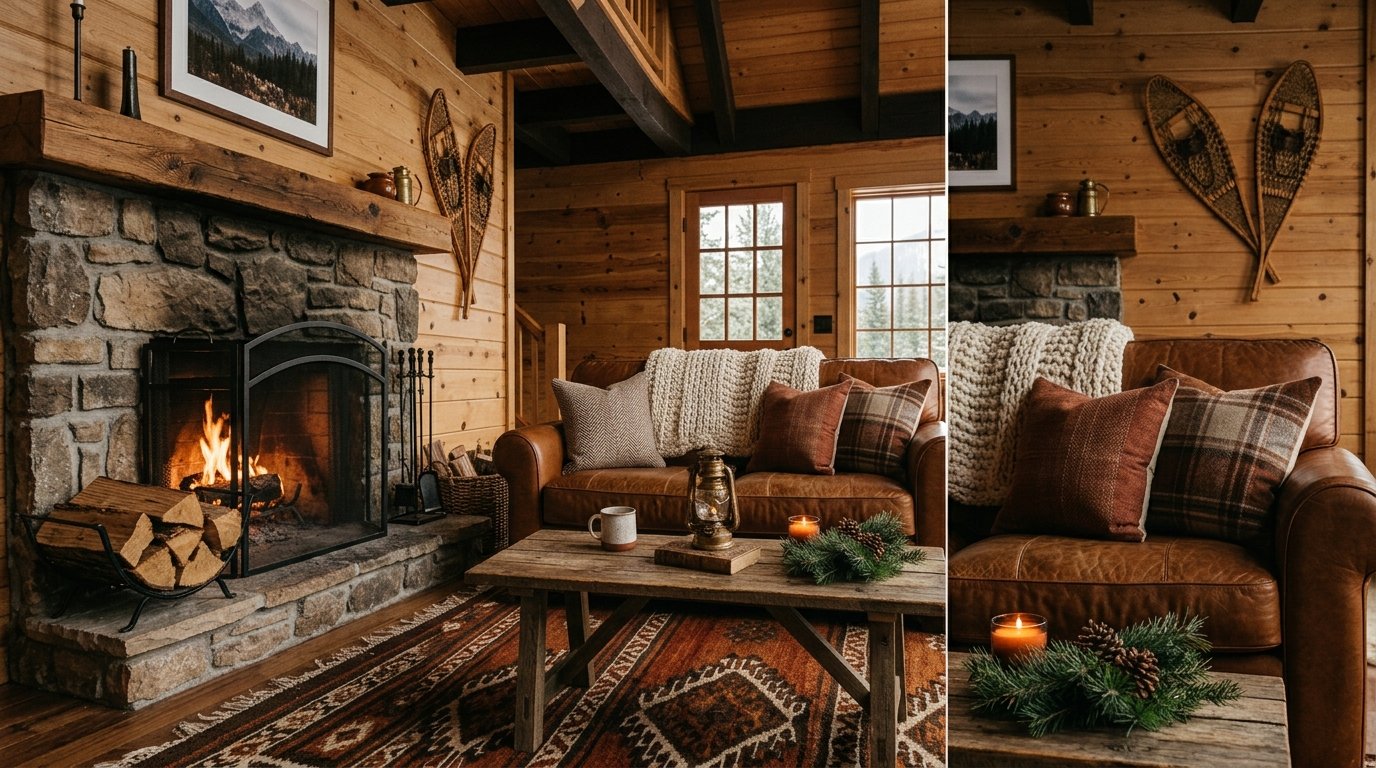
There’s something undeniably charming about a small cabin living room, where every design choice works together to create warmth, comfort, and a true sense of escape from the outside world. Unlike larger homes, small cabin spaces require thoughtful planning to maximize both function and coziness without feeling cluttered or cramped. The best cabin living rooms lean into natural materials, soft lighting, and layered textures to create an inviting atmosphere that feels rustic yet refined. Whether you’re designing a full-time mountain retreat or a weekend getaway cabin, small living rooms offer a unique opportunity to create an intimate, memorable space. In this article, we’ll explore 12 cozy small cabin living room ideas that make the most of limited square footage while maximizing warmth and charm.
1. Exposed Wood Beams and Paneling
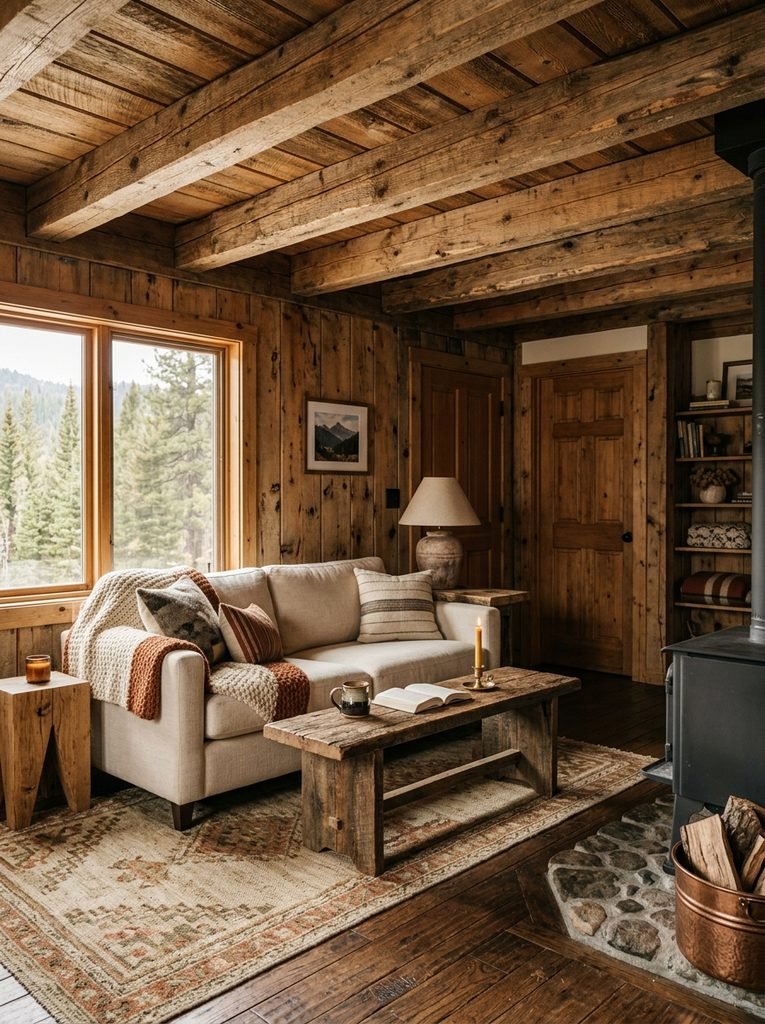
Exposed wood beams running across the ceiling, paired with wood paneling along the walls, instantly establish that classic cabin aesthetic while adding warmth and architectural interest. Natural wood tones, whether left raw or lightly stained, create a cohesive backdrop that pairs beautifully with almost any furniture style or color scheme. This design choice also has a practical benefit, since wood paneling tends to hide scuffs and wear better than painted drywall in a heavily used space. Mixing different wood tones, such as a darker floor with lighter wall paneling, adds depth without making the room feel too monochromatic. This foundational element sets the tone for the entire cabin’s cozy, rustic atmosphere.
2. Stone or Brick Fireplace as the Focal Point
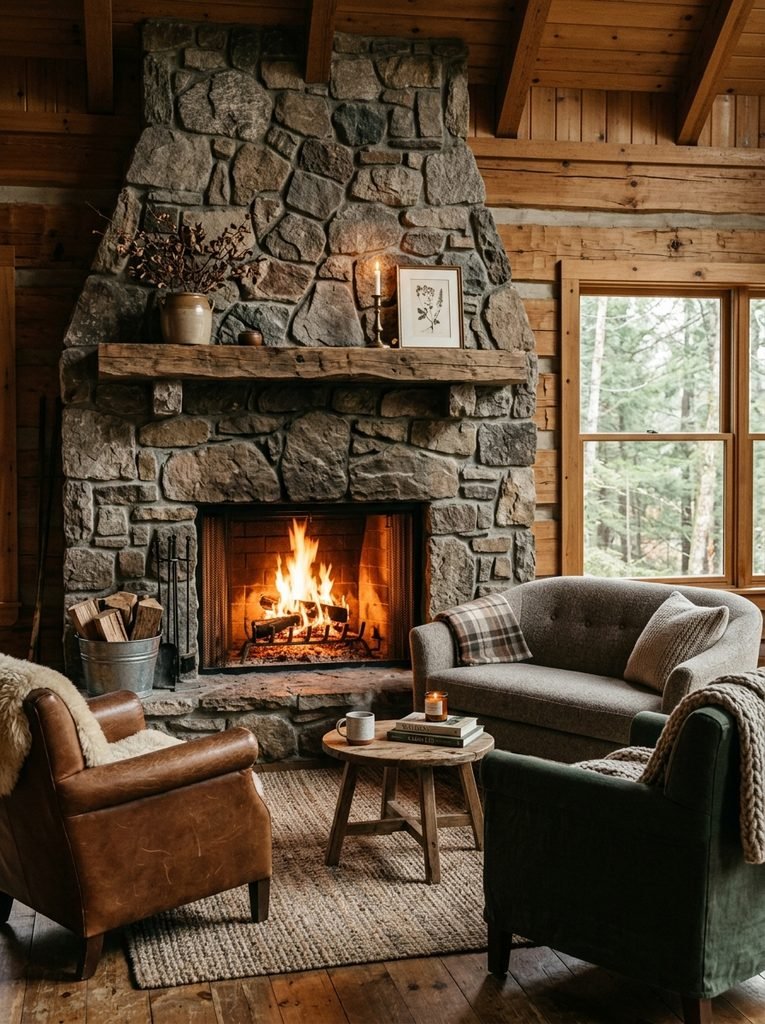
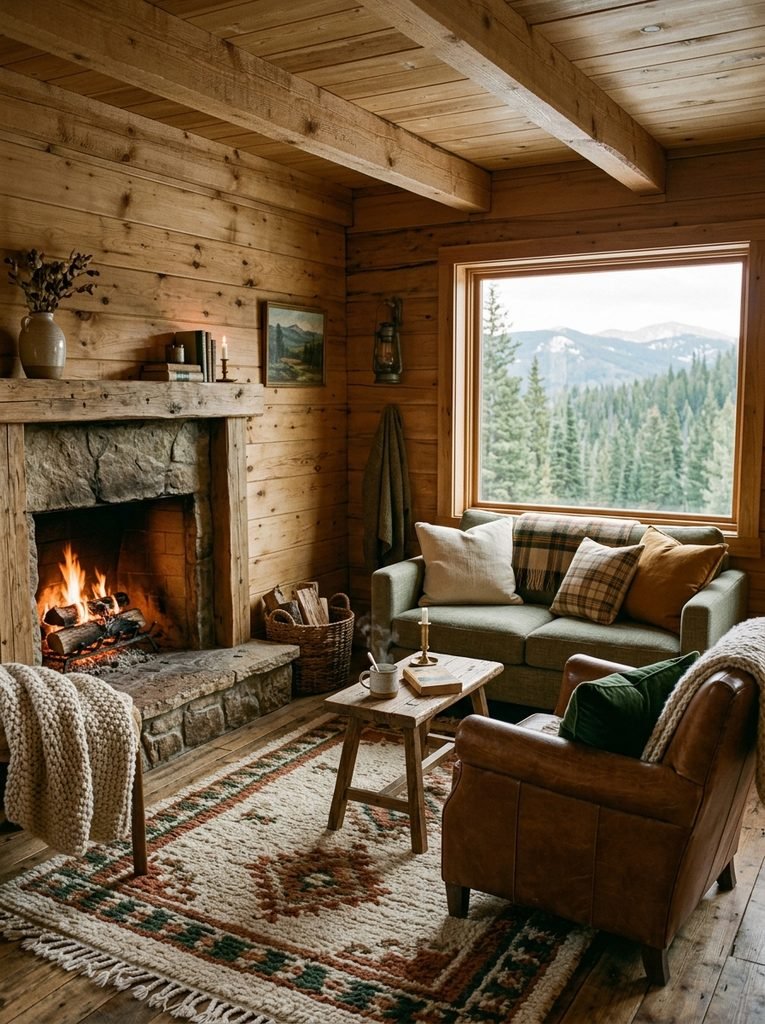
A stone or brick fireplace serves as both a functional heat source and a striking visual centerpiece in a small cabin living room. Positioning seating around the fireplace naturally draws the eye toward this focal point while also creating a cozy, gathering-oriented layout. The rough, natural texture of stone contrasts beautifully against smoother wood surfaces elsewhere in the room, adding visual interest and depth. Even in warmer months when the fireplace isn’t lit, its presence alone contributes significantly to the room’s rustic charm and sense of permanence. This classic feature remains one of the most requested elements in cabin design for good reason.
3. Layered Textiles for Maximum Coziness
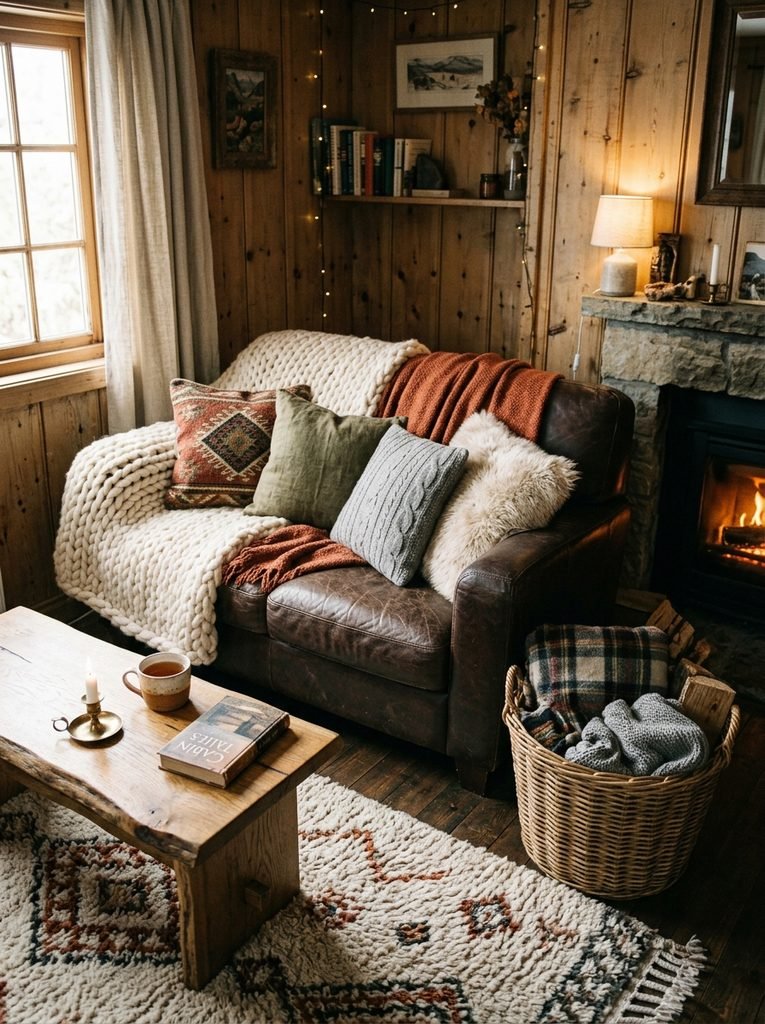
Layering textiles like chunky knit throws, faux fur pillows, and soft area rugs throughout the living room adds tactile warmth that’s essential to achieving a truly cozy cabin feel. Mixing different textures, from smooth leather to nubby wool, creates visual and physical interest without requiring a large color palette. These soft elements also help absorb sound in a small space, making the room feel quieter and more intimate compared to hard, echoey surfaces. Rotating textiles seasonally, such as heavier wool blankets in winter and lighter cotton throws in summer, keeps the space feeling fresh year-round. This layering technique is one of the easiest and most affordable ways to instantly boost coziness.
4. Warm, Ambient Lighting Instead of Harsh Overheads
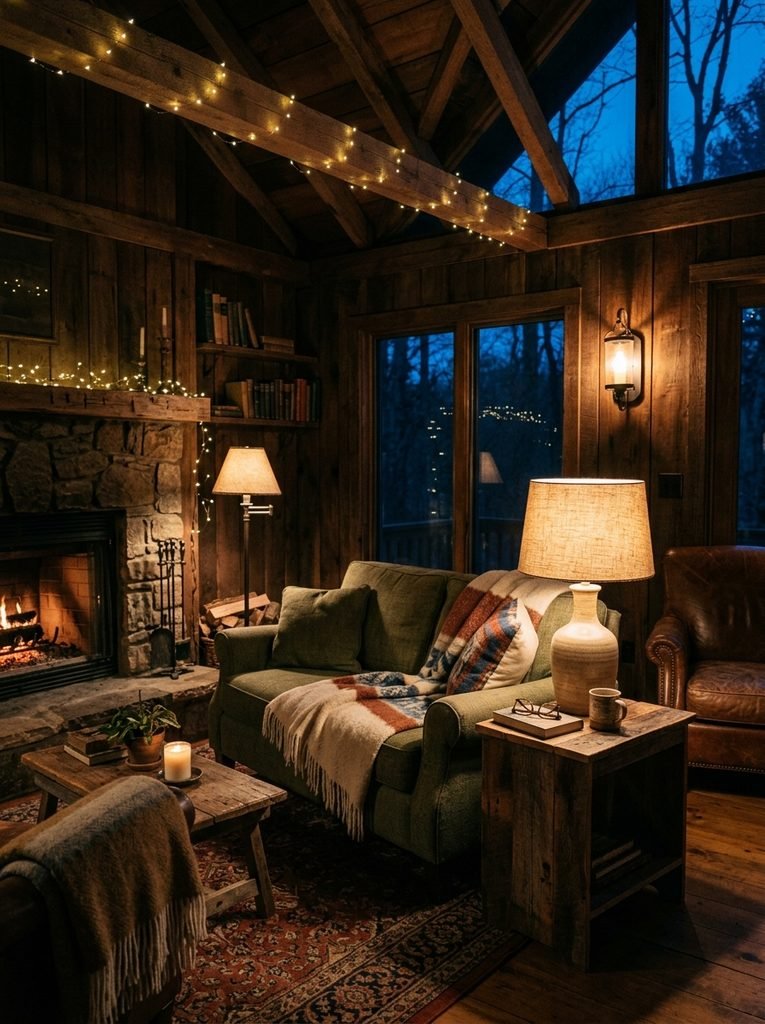
Replacing bright overhead lighting with warmer, softer light sources, such as table lamps, wall sconces, and string lights, creates a much more inviting atmosphere in a small cabin living room. Warm-toned bulbs, typically in the 2700K to 3000K range, mimic the soft glow of firelight and candlelight, reinforcing the cozy cabin aesthetic. Layering multiple light sources at different heights throughout the room also helps eliminate harsh shadows while adding a more dynamic, welcoming ambiance. Dimmer switches offer an easy way to adjust brightness depending on the time of day or occasion. This lighting approach transforms even a small, simple room into a warm, relaxing retreat after dark.
5. Multi-Functional Furniture for Small Spaces
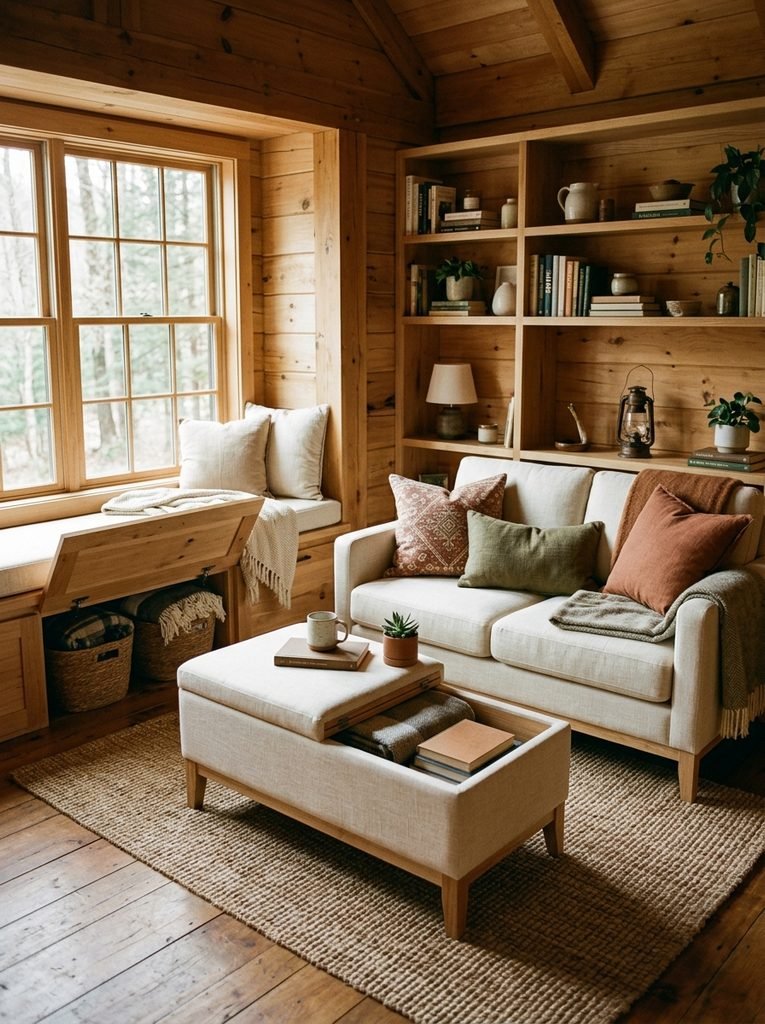
In a compact cabin living room, choosing multi-functional furniture pieces, like a storage ottoman that doubles as a coffee table or a daybed that converts into extra sleeping space, maximizes both comfort and practicality. This approach helps reduce clutter, since fewer individual pieces are needed to serve multiple purposes throughout the day. Built-in shelving or window seats with hidden storage underneath also make excellent use of otherwise wasted space in smaller rooms. Selecting furniture with a smaller visual footprint, such as exposed wooden legs rather than bulky upholstered bases, helps the room feel more open despite its limited square footage. This thoughtful approach to furniture selection is essential for making small cabin spaces feel functional rather than cramped.
6. Plaid and Buffalo Check Accents
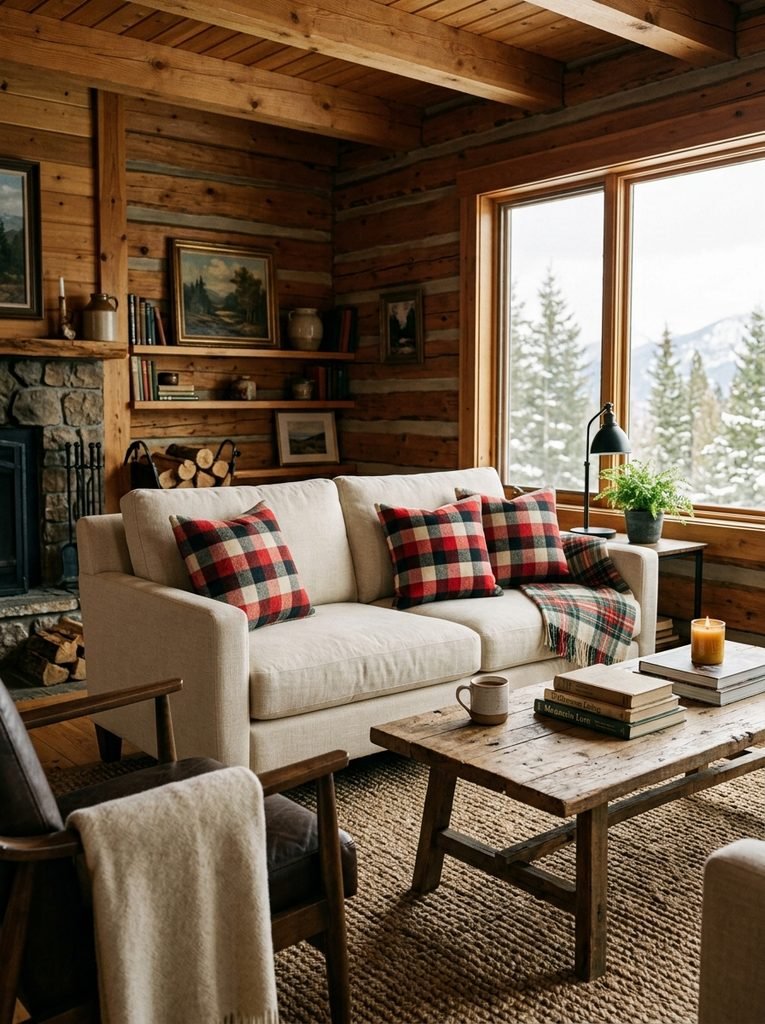
Incorporating plaid or buffalo check patterns through throw pillows, blankets, or even upholstered furniture adds a classic, cozy cabin charm that instantly signals a rustic, welcoming atmosphere. These patterns work particularly well in red, black, and cream color combinations, though softer color palettes like navy and white offer a more subdued alternative. Using these patterns sparingly as accents, rather than covering every surface, prevents the room from feeling overly themed or costume-like. Pairing plaid accents with solid, natural-toned furniture allows the pattern to stand out as a delightful accent rather than overwhelming the space. This classic textile choice remains one of the most recognizable elements of cozy cabin design.
7. Vintage and Antique Furniture Pieces
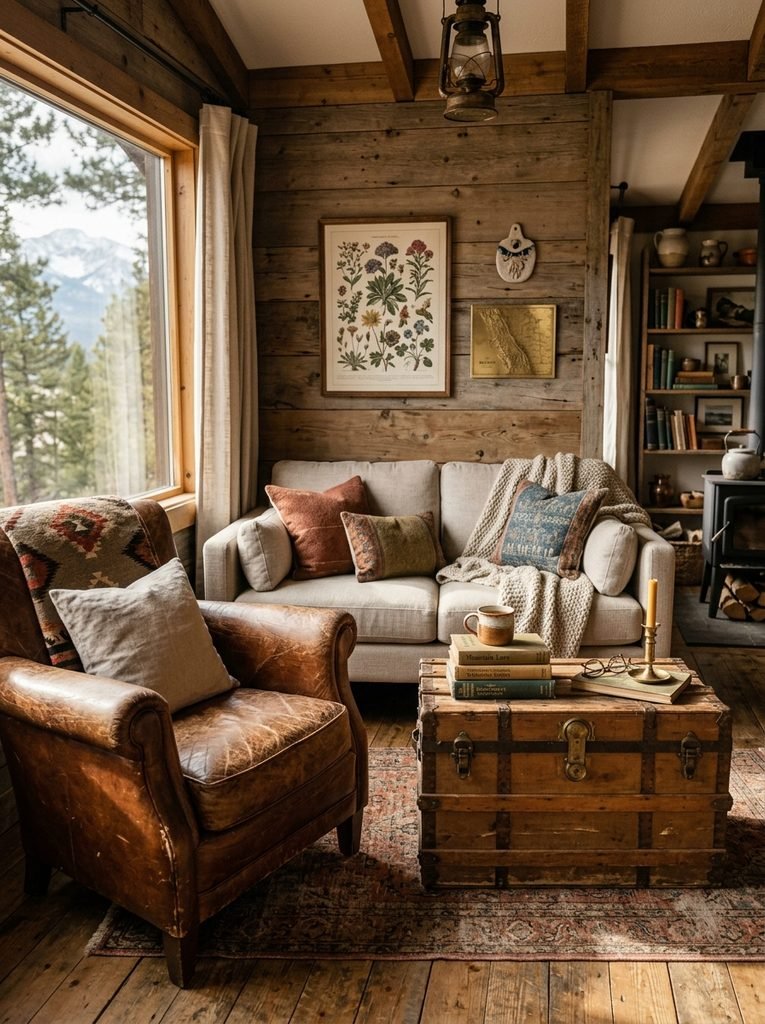
Incorporating a few vintage or antique furniture pieces, such as a weathered leather armchair or an old wooden trunk used as a coffee table, adds character and history to a small cabin living room. These pieces often carry a sense of story and authenticity that brand-new furniture simply can’t replicate, reinforcing the cabin’s cozy, lived-in feel. Shopping at estate sales, antique shops, or even inheriting family pieces can add sentimental value alongside aesthetic charm. Mixing a few vintage pieces with more modern, comfortable seating strikes a balance between nostalgic character and everyday practicality. This approach to furnishing helps a small cabin feel curated and personal rather than generic or showroom-perfect.
8. Nature-Inspired Decor and Accessories
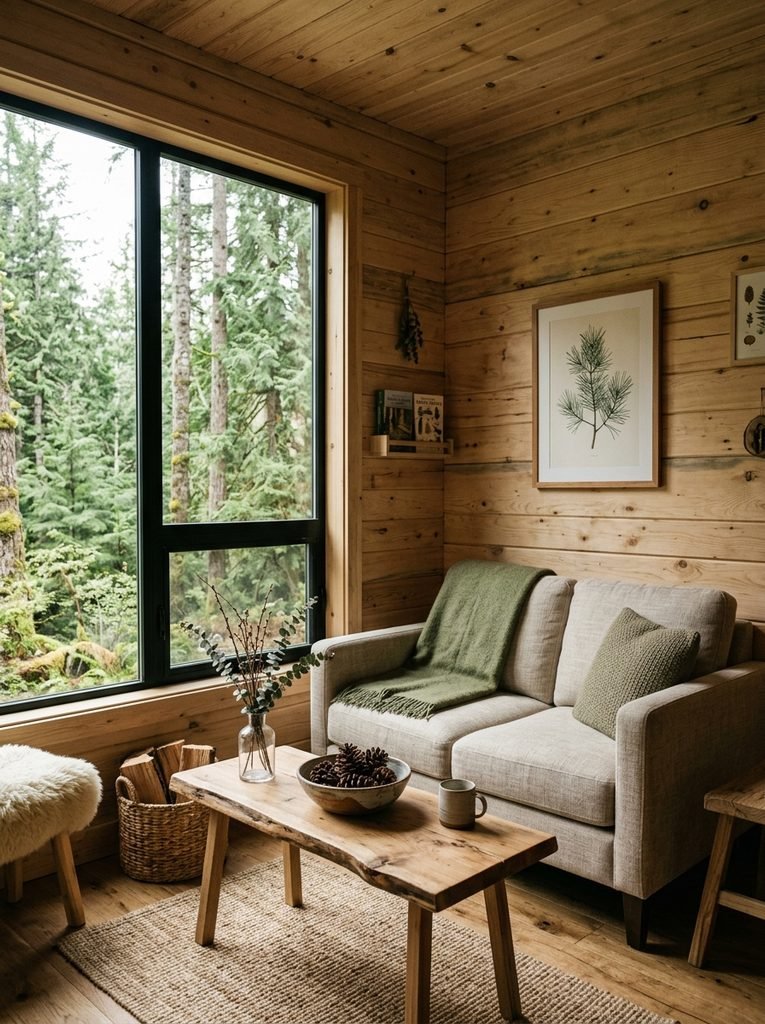
Bringing in nature-inspired decor, such as antler accents, pinecone arrangements, or botanical prints, reinforces the connection between a cabin and its surrounding natural environment. Displaying a few carefully chosen natural elements, like a bowl of pinecones or a vase of dried branches, adds organic texture without requiring a large decorating budget. Framed nature photography or simple botanical illustrations also work well on cabin walls, adding visual interest without clashing with the room’s rustic wood tones. This design approach helps blur the line between indoors and outdoors, which is central to the overall cabin living experience. Even small, subtle nature touches can significantly enhance the room’s overall cohesive theme.
9. Cozy Reading Nook by the Window
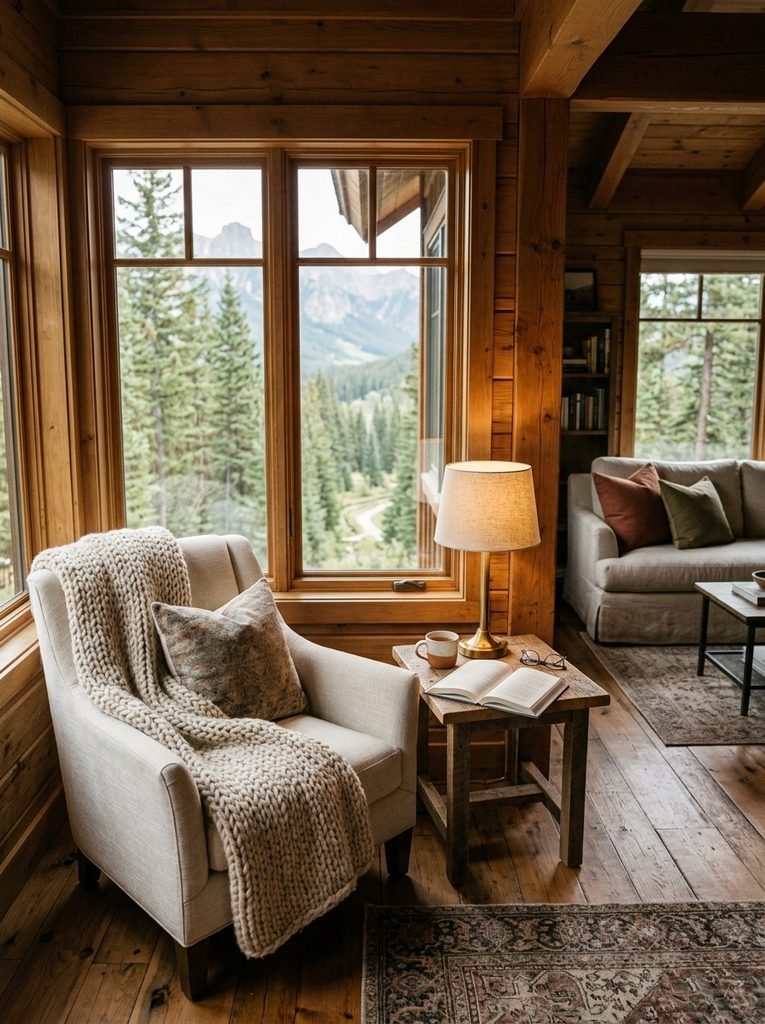
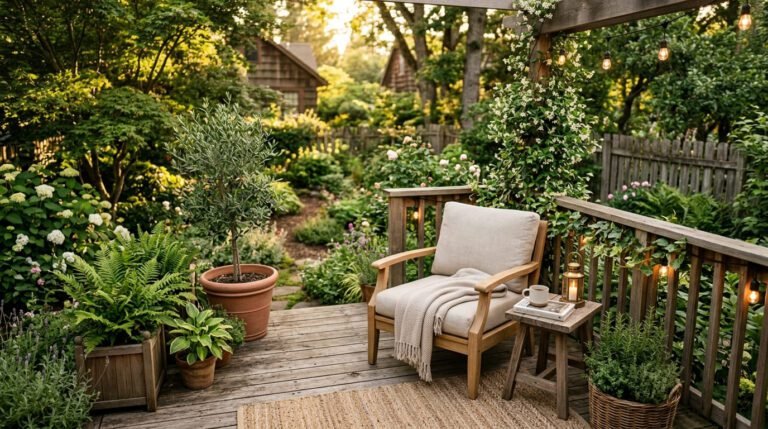
Carving out a small reading nook near a window, complete with a comfortable chair, a soft throw blanket, and a small side table, creates a peaceful retreat within the already intimate cabin living room. Positioning this nook to take advantage of natural light during the day and a view of the surrounding landscape adds to its appeal as a relaxing escape. Adding a small reading lamp ensures the space remains functional and inviting even after the sun goes down. This idea works particularly well in cabins with limited square footage, since it makes efficient use of an often-underutilized corner near a window. A dedicated reading nook adds both function and charm without requiring significant additional space.
10. Neutral and Earthy Color Palette
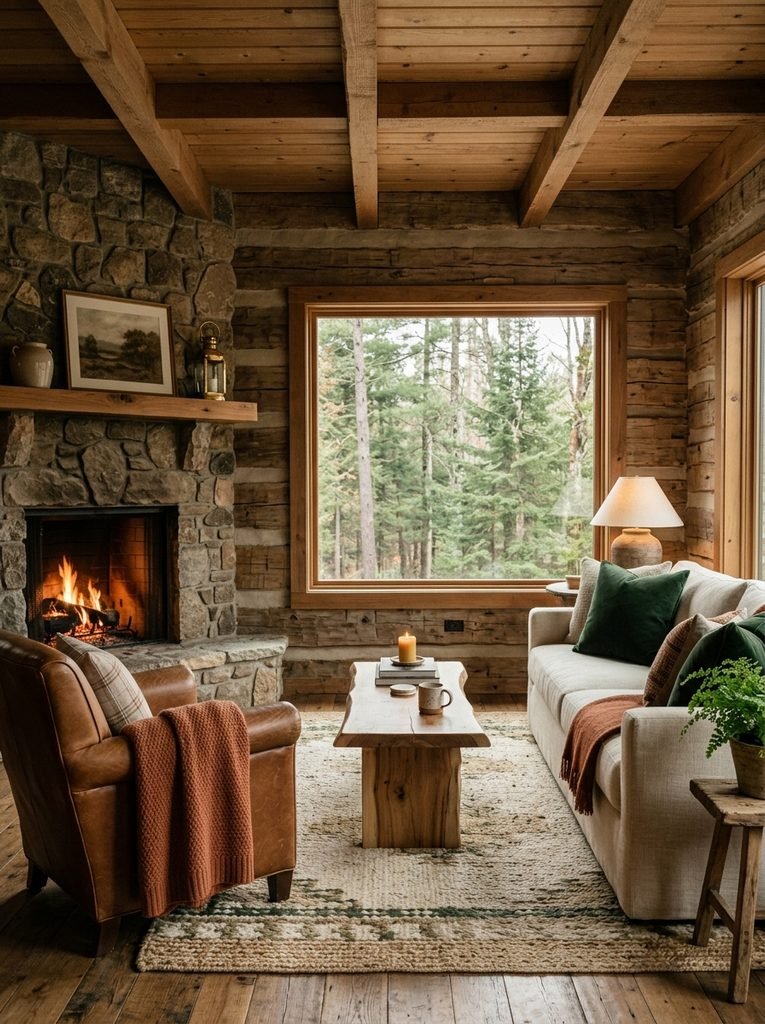
Sticking to a neutral, earthy color palette featuring tones like warm browns, deep greens, cream, and soft rust creates a cohesive backdrop that enhances the natural materials found throughout a cabin interior. This color scheme allows wood tones, stone accents, and natural textiles to remain the visual stars of the room rather than competing with bold or bright wall colors. Earthy palettes also tend to feel timeless, meaning the room won’t feel dated or require frequent updates as design trends shift. Adding small pops of color through accessories, like a deep forest green throw pillow or rust-colored curtains, keeps the palette from feeling flat or one-dimensional. This grounded color approach reinforces the calm, natural atmosphere central to cozy cabin design.
11. Ladder Shelving for Vertical Storage
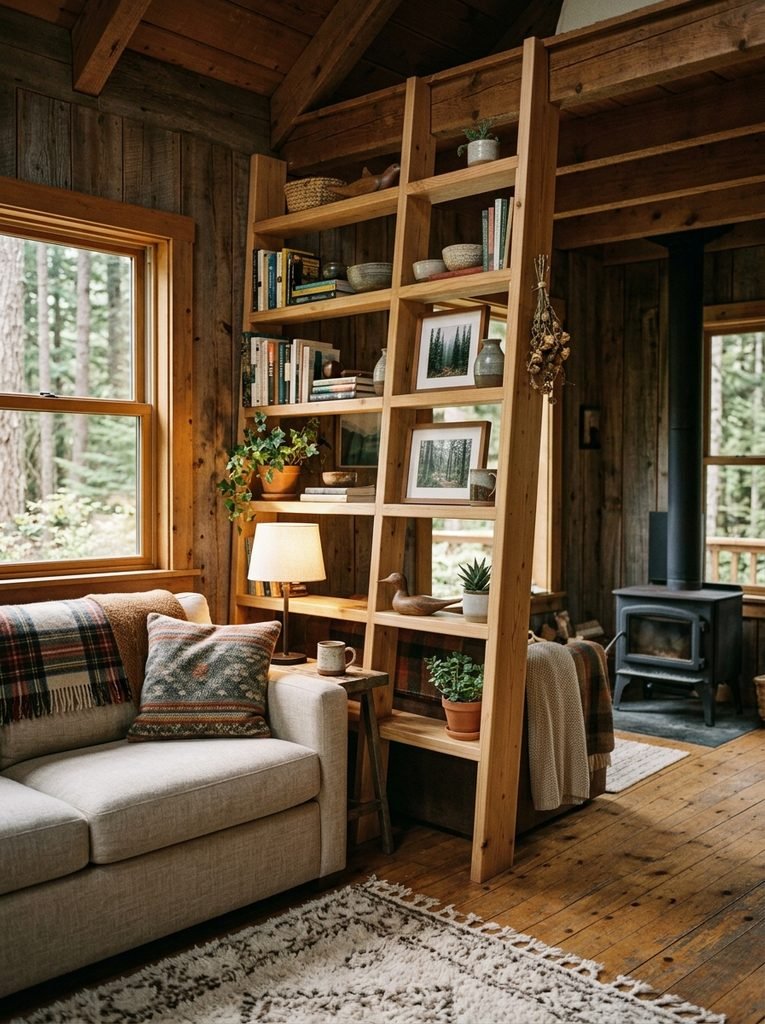
In a small cabin living room, utilizing vertical space through ladder-style shelving or tall, narrow bookcases helps maximize storage without sacrificing valuable floor space. These shelving units are perfect for displaying books, decorative objects, and personal keepsakes while keeping the overall footprint minimal. Choosing shelving made from natural wood keeps the piece consistent with the cabin’s overall material palette rather than introducing a jarring design element. This vertical storage solution is especially useful in cabins with lower ceilings, since it draws the eye upward and can make the room feel slightly taller and more open. It’s a practical and stylish solution for small space storage challenges.
12. Statement Area Rug to Anchor the Space
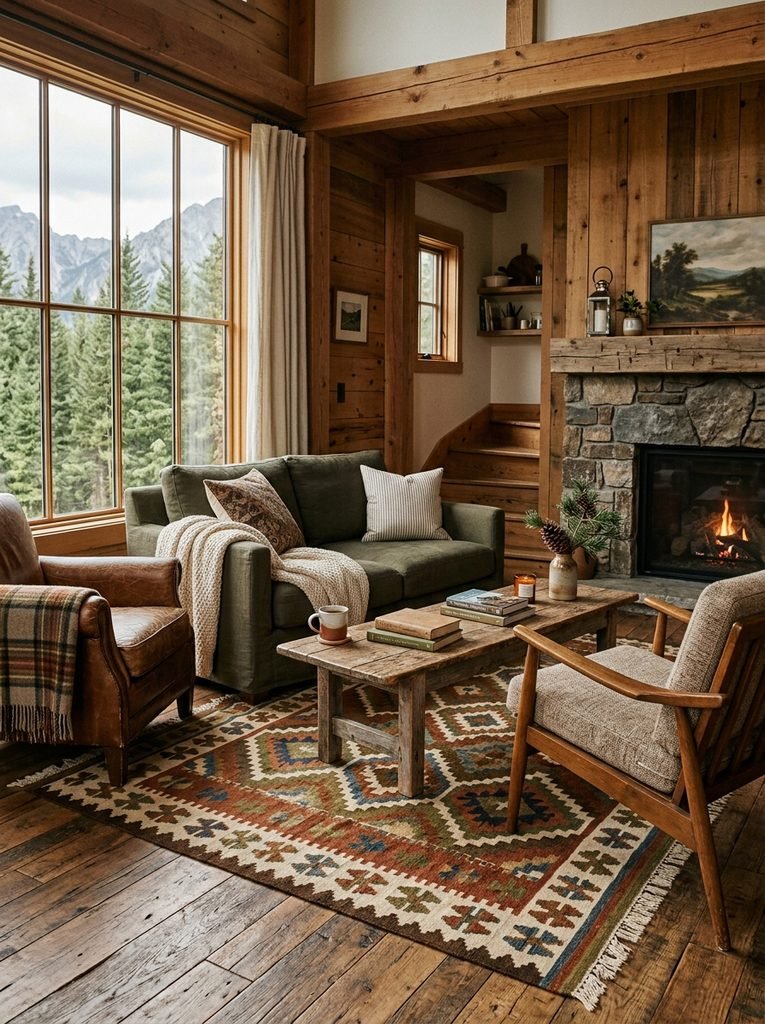
A well-chosen statement area rug, whether a traditional patterned design or a simple natural jute weave, helps anchor the furniture arrangement and define the living room within an open cabin floor plan. Rugs also add an important layer of warmth underfoot, which is especially valuable in cabins with hardwood or stone flooring that can otherwise feel cold. Choosing a rug in a complementary earthy tone ties together the various wood, stone, and textile elements already present throughout the room. Proper rug sizing, ensuring at least the front legs of major furniture pieces sit on the rug, helps create a cohesive, intentional layout rather than a scattered one. This finishing touch pulls the entire cozy cabin living room design together seamlessly.
Final Thoughts
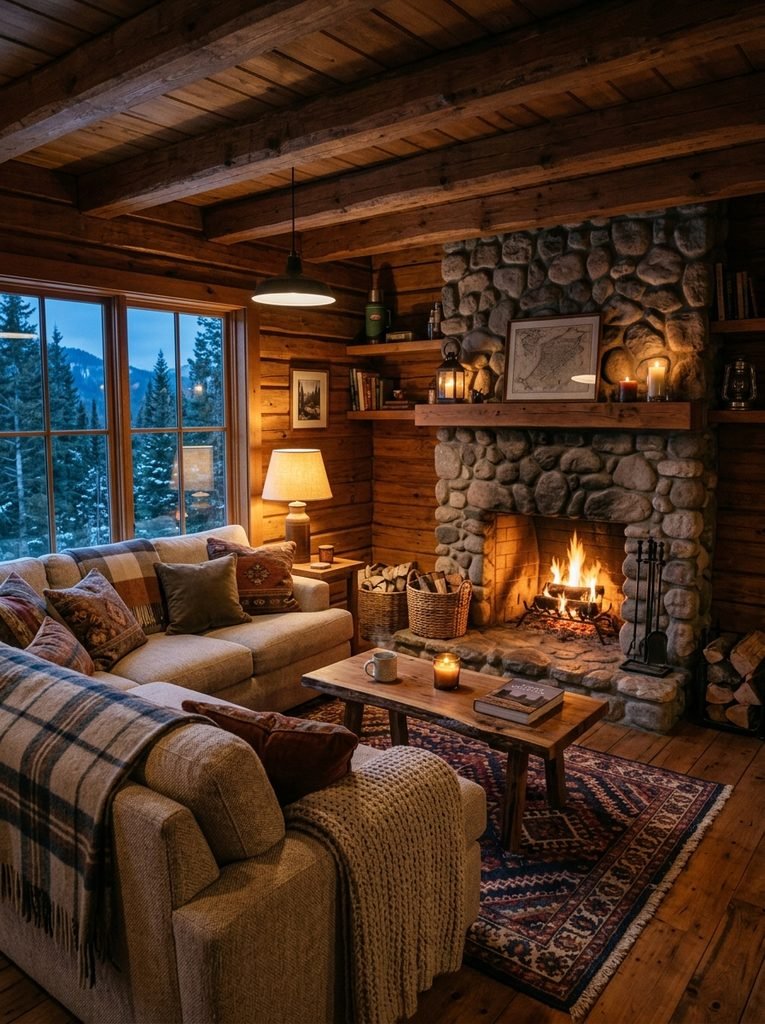
Designing a cozy small cabin living room is all about layering warmth, texture, and natural materials to create a space that feels both intimate and inviting despite its limited square footage. These 12 ideas prove that with thoughtful furniture choices, warm lighting, and a cohesive earthy color palette, even the smallest cabin living room can become a beloved retreat. From exposed wood beams to a well-placed reading nook, every design choice contributes to the overall sense of comfort and escape that makes cabin living so appealing. Best of all, many of these ideas are budget-friendly and can be implemented gradually over time as your space evolves. With a little creativity and attention to detail, your small cabin living room can become the coziest spot in the entire home.