Small Shared Bedroom Ideas: 12 Smart Ways to Make Every Inch Work
Introduction
Small shared bedroom ideas can make a big difference when two people need to sleep, store belongings, and relax in the same limited space. Sharing a bedroom can sometimes feel challenging, especially when the room needs to accommodate two beds, clothing, toys, books, and personal items without becoming cluttered. With the right furniture, colors, layouts, and storage solutions, even a compact room can feel comfortable, organized, and stylish. These small shared bedroom ideas focus on making the most of every inch while giving each person enough space to feel like the room is truly their own.
1. Use a Bunk Bed to Save Floor Space
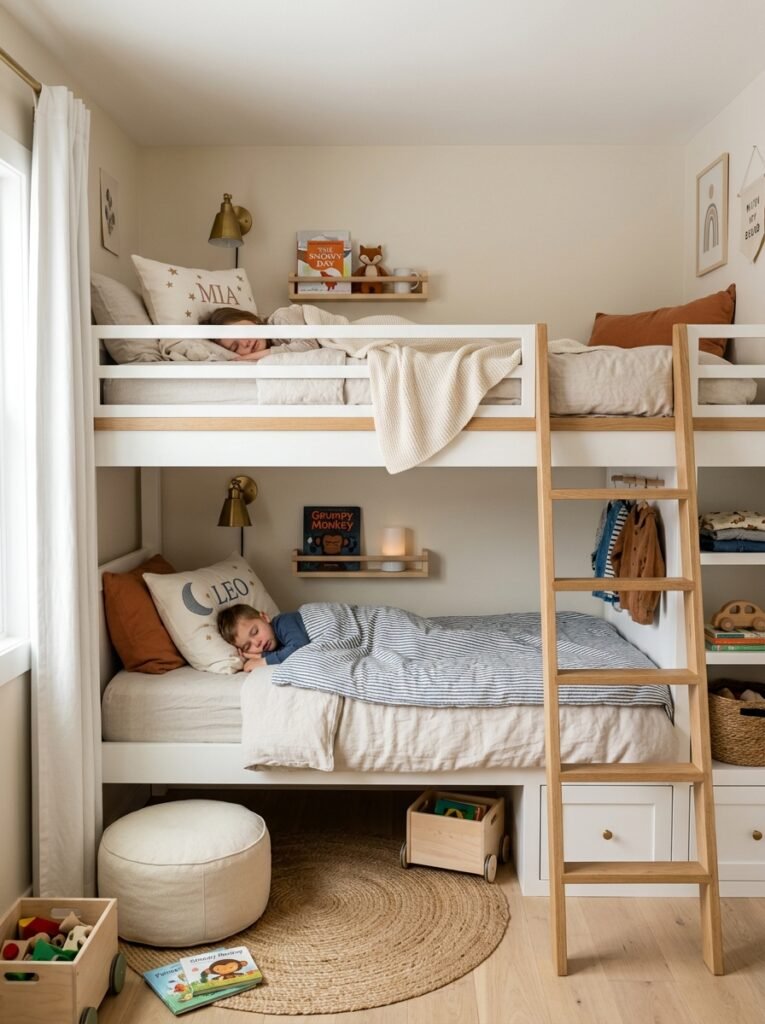
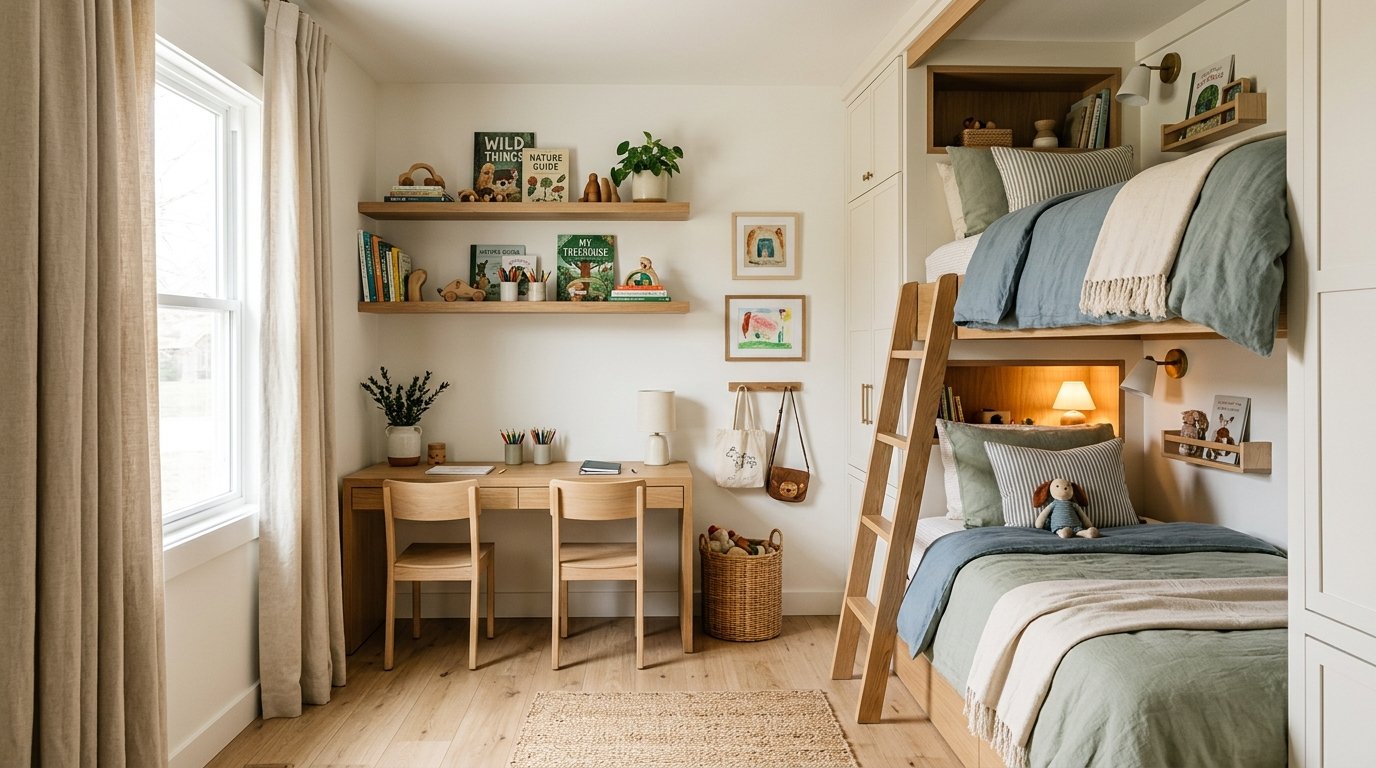
One of the most practical small shared bedroom ideas is choosing a bunk bed instead of placing two beds side by side. A bunk bed uses vertical space, leaving more floor area available for storage, a desk, or a play zone. Choose a sturdy design with built-in drawers or shelves underneath to add even more functionality. Keeping the surrounding furniture simple can help the room feel open rather than crowded.
For a stylish look, choose a bunk bed in white, natural wood, or another soft neutral finish that works with the rest of the room. Matching bedding can create a cohesive appearance, while different pillows or blankets can give each person a chance to show their personality. Wall-mounted reading lights are another useful addition because they provide individual lighting without taking up bedside table space. This simple layout can completely change how spacious a small shared bedroom feels.
2. Try Two Twin Beds With a Narrow Layout
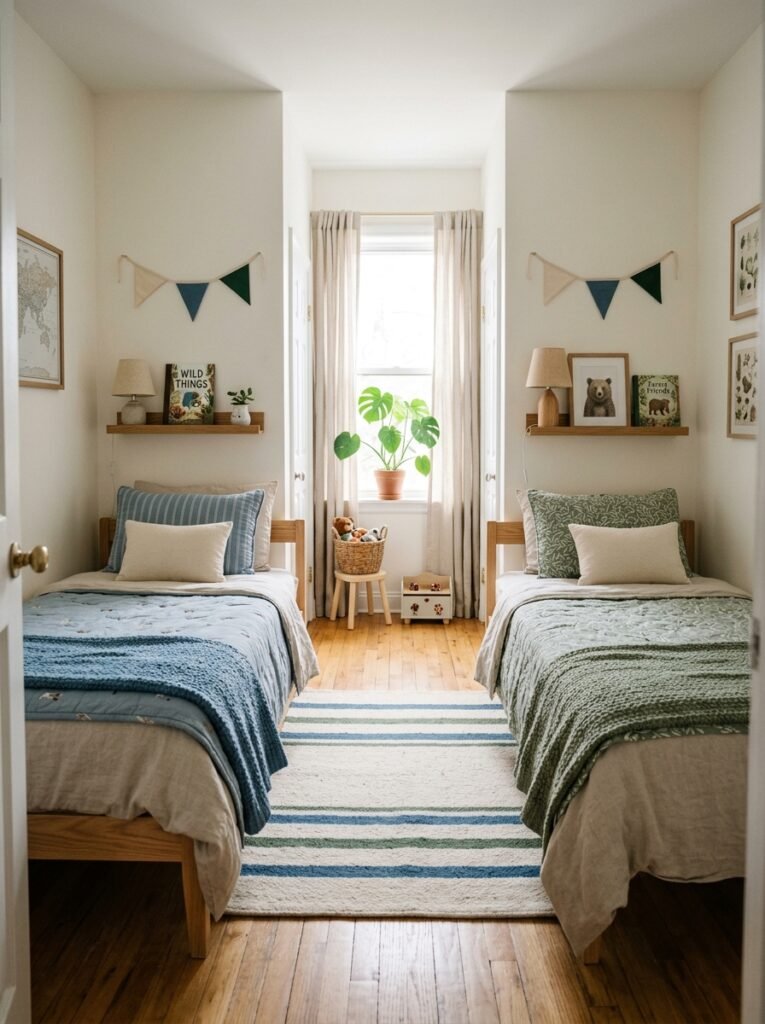
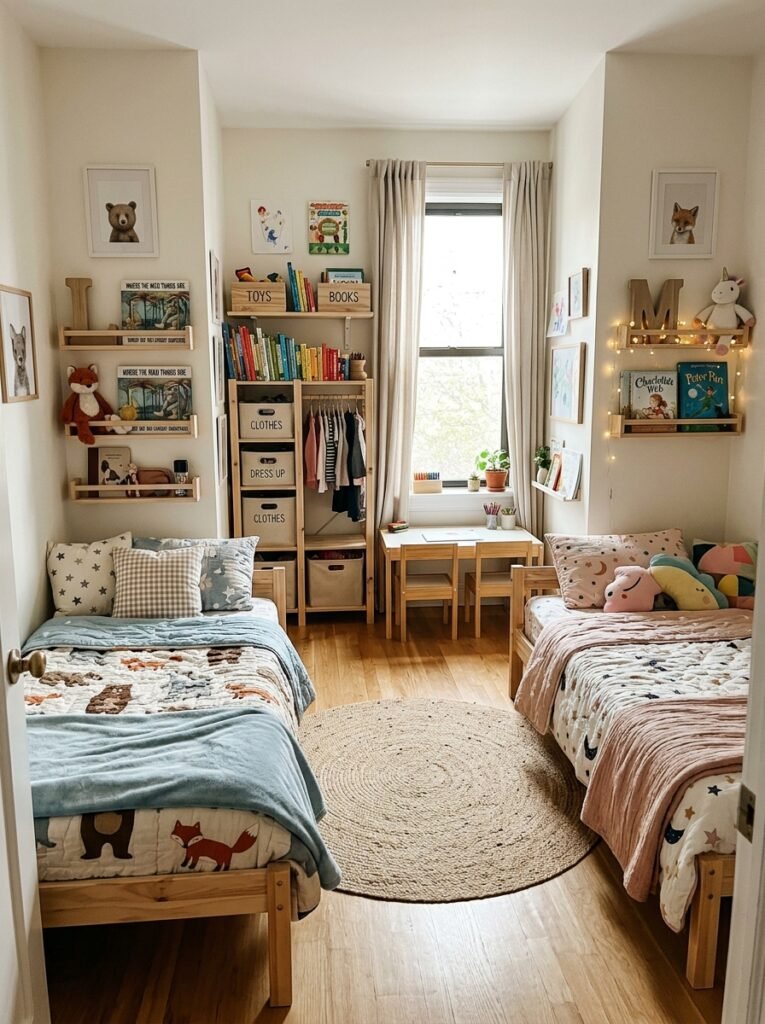
If bunk beds are not practical, two twin beds can still work beautifully in a small shared bedroom. Place the beds along opposite walls or position them parallel to create a simple, balanced layout. Choose slim bed frames and avoid oversized headboards that take up unnecessary space. Keeping a clear walkway between the beds makes the room easier to navigate and prevents the layout from feeling cramped.
Use bedding in coordinating colors instead of making every element identical. For example, one bed could feature soft blue accents while the other uses muted green, with matching neutral sheets tying the look together. Narrow nightstands or floating shelves can provide each person with a small personal surface without consuming valuable floor space. This arrangement is especially useful for siblings who prefer having clearly defined sleeping areas.
3. Create Individual Zones
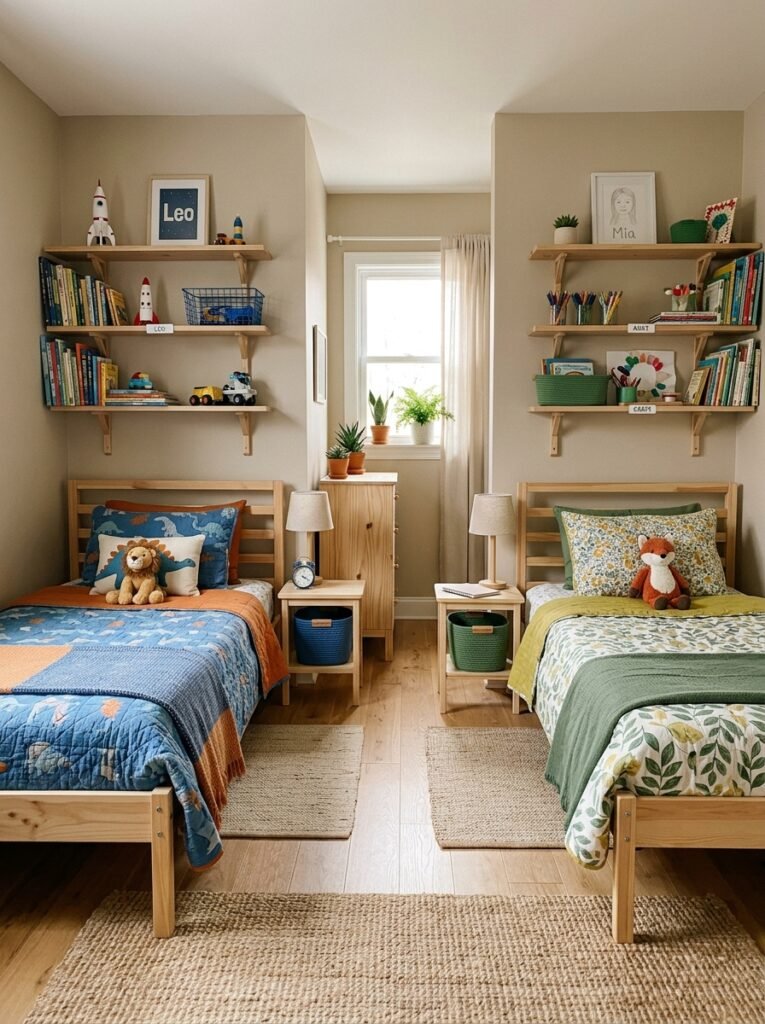
When two people share a bedroom, creating individual zones can make the space feel more personal and organized. Give each person their own bed area, storage section, wall space, and small place for personal belongings. Even a simple visual divider, such as different bedding colors or separate wall shelves, can establish a sense of ownership. The goal is to make the room feel shared without making either person feel like they have no personal space.
You can use rugs, artwork, baskets, or decorative shelves to visually separate each side of the room. Matching furniture keeps the overall design cohesive while individual accessories allow each person to express their personality. If the room is extremely small, avoid bulky physical dividers because they can make the space feel even tighter. Instead, use color and organization to create subtle boundaries.
4. Choose Beds With Built-In Storage
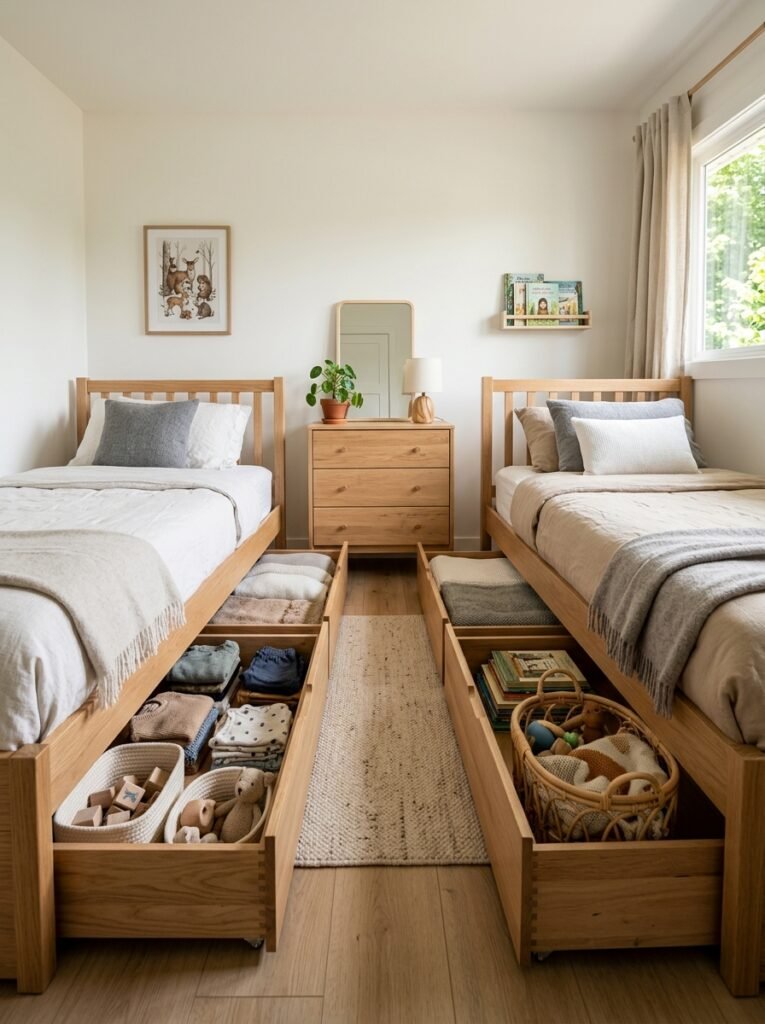
Beds with built-in drawers are excellent for small shared bedroom ideas because they combine sleeping space with essential storage. Under-bed drawers can hold clothing, extra blankets, shoes, toys, or seasonal items that would otherwise require another piece of furniture. This is especially helpful when there is little room for a large dresser or wardrobe. Choose beds with smooth-opening drawers so everyday items remain easy to access.
Another option is using lift-up storage beds where the entire mattress platform provides hidden storage underneath. Labeling storage containers can make it easier for each person to find their belongings without disturbing the other person’s items. Neutral bedding and simple furniture can also prevent the room from appearing visually busy. By using the space beneath the beds, you can free up valuable floor and wall space elsewhere in the bedroom.
5. Make the Most of Vertical Storage
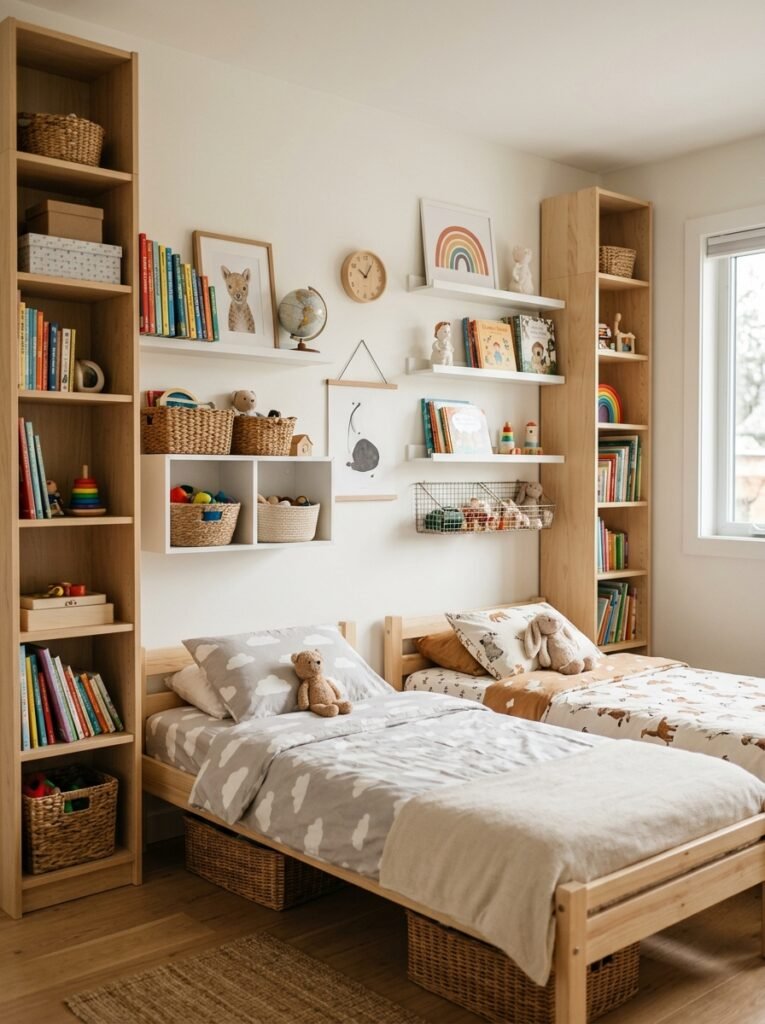
When floor space is limited, look upward and use the walls for storage. Tall bookcases, floating shelves, wall-mounted baskets, and pegboards can provide useful storage without taking up much floor area. Place frequently used items at an easy-to-reach height and reserve higher shelves for seasonal or less frequently used belongings. This approach can help a small shared bedroom stay organized without adding bulky furniture.
Vertical storage can also become part of the room’s decoration. Display a few favorite books, framed prints, plants, or small decorative objects alongside practical storage baskets. If two people share the room, divide the shelves evenly so each person has a clearly designated area. Keeping shelves organized and avoiding excessive decoration will help maintain a clean, spacious appearance.
6. Use a Shared Desk for Homework
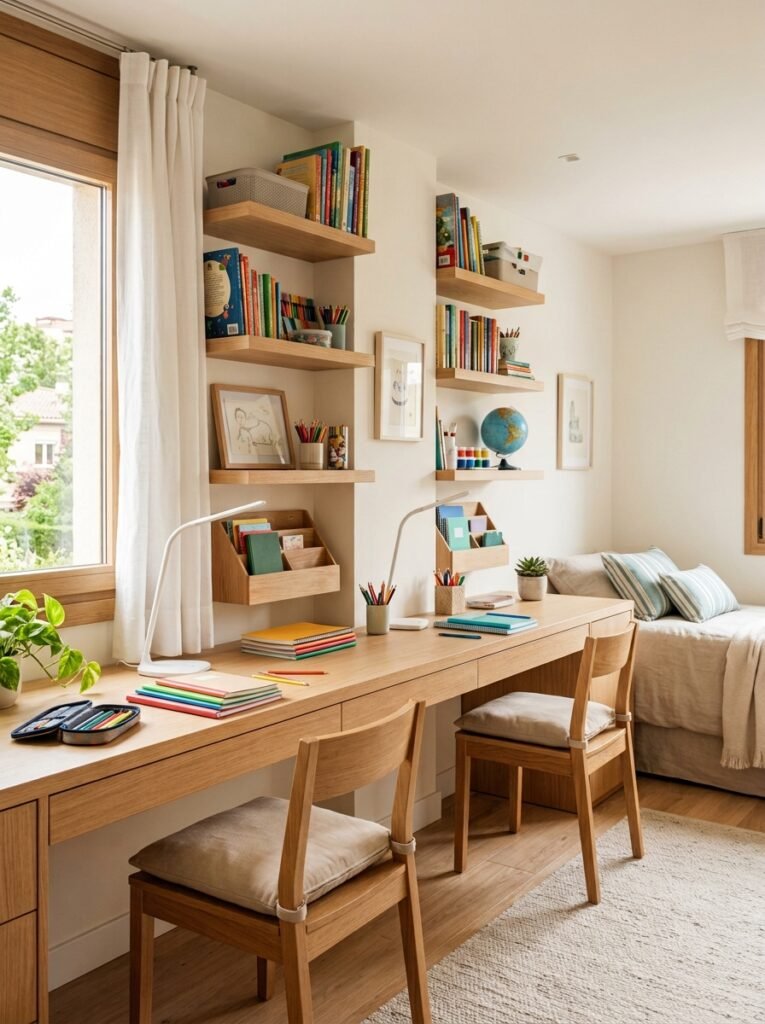
A shared desk can be a smart solution when two children need workspace but the bedroom cannot accommodate two separate desks. Choose a long, narrow desk that can fit against one wall and provide enough room for two chairs. Wall-mounted shelves above the desk can store school supplies while keeping the desktop clear. If possible, add separate desk organizers so each person has their own dedicated supplies.
For very small rooms, consider a wall-mounted folding desk that can be closed when it is not being used. This creates a flexible workspace without permanently taking up floor space. Individual task lamps can provide focused lighting for each person without requiring large desk lamps. A simple, clutter-free desk area can make a shared bedroom feel much more functional.
7. Add a Curtain for Extra Privacy
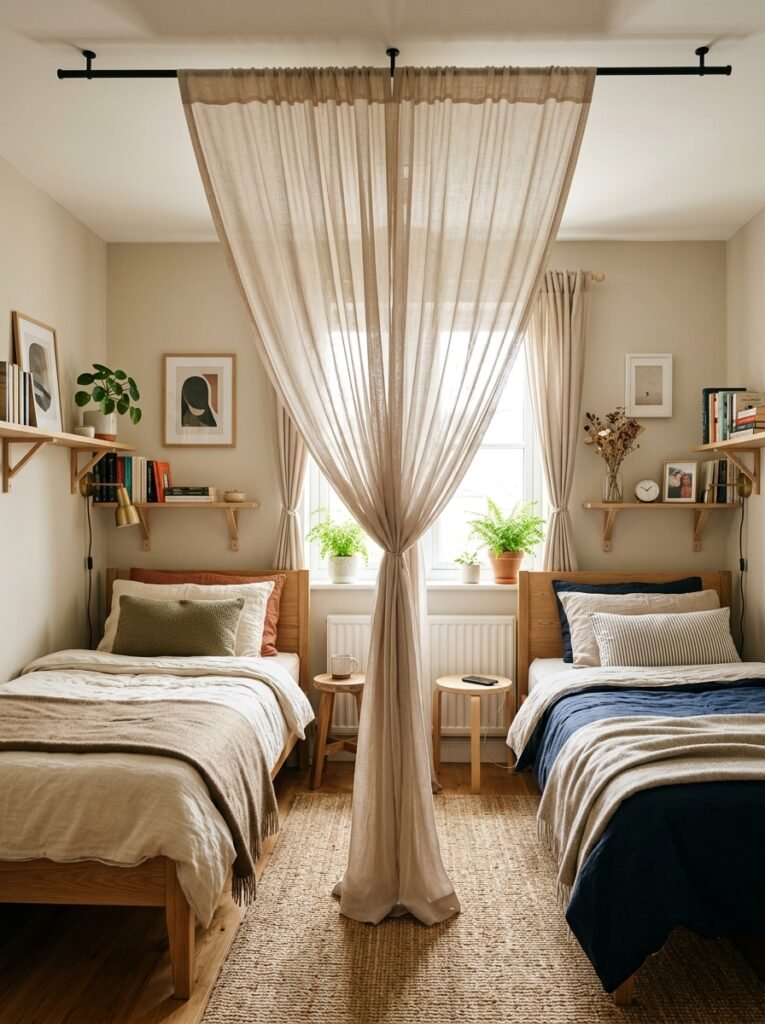
A curtain can provide a simple way to create privacy in a shared bedroom without installing a permanent wall. Hang a ceiling-mounted curtain track between the two sleeping areas so each person can close off their space when they want quiet time. Choose lightweight curtains in a soft neutral color to avoid making the room feel visually smaller. When the curtains are open, the room can still feel connected and spacious.
This idea is particularly useful for older children, teenagers, or siblings with different schedules. It can also help create separate zones for sleeping and changing clothes. If the bedroom receives limited natural light, avoid heavy blackout curtains as permanent dividers because they may make the space feel dark. Sheer or lightweight panels can provide a sense of separation while maintaining an airy atmosphere.
8. Use Light Colors to Make the Room Feel Bigger
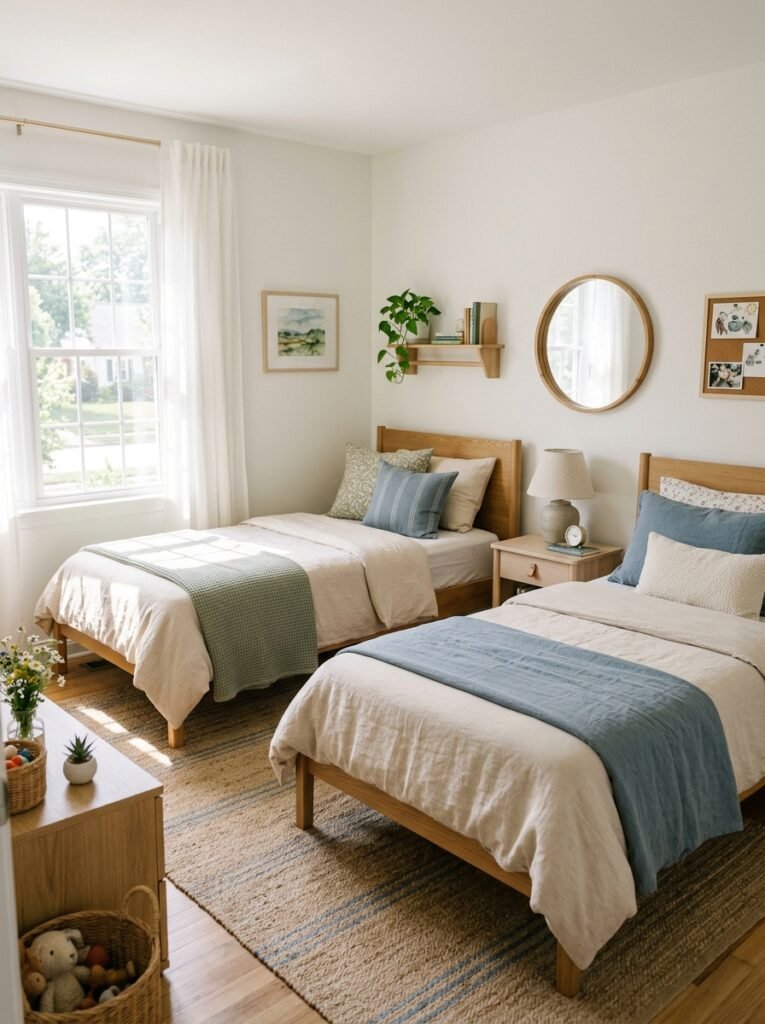
Light colors are one of the easiest ways to make a small shared bedroom feel brighter and more spacious. Soft white, warm beige, pale gray, light sage, dusty blue, and other gentle shades can reflect natural light and create an open atmosphere. Use one main color on the walls and bring personality into the room through bedding, artwork, rugs, and accessories. A consistent color palette can prevent the room from feeling visually crowded.
You do not have to make the entire room plain or boring. Add subtle patterns and small pops of color through pillows, blankets, wall art, or storage bins. If each person wants a different favorite color, choose two complementary accent colors against a neutral background. This creates individuality while maintaining a cohesive shared bedroom design.
9. Use a Loft Bed With a Study Area
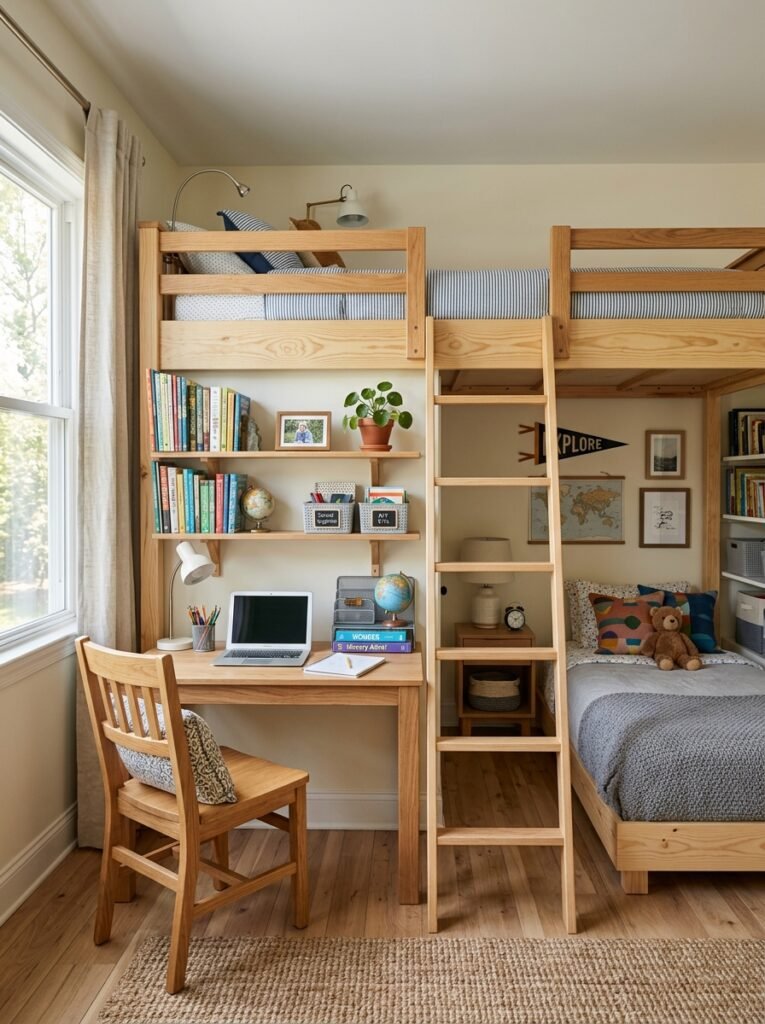
A loft bed can be an excellent solution when a small shared bedroom needs both sleeping and working areas. By lifting the bed above the floor, you can use the space underneath for a desk, reading corner, storage, or even a small wardrobe. This creates multiple functional zones within the footprint of a single bed. For safety, choose a properly designed loft bed appropriate for the user’s age and follow the manufacturer’s safety recommendations.
A loft configuration can also make the room feel more creative and personalized. Add a small reading light, organized shelves, and a comfortable chair underneath to create a useful mini workspace. If two people share the room, a loft bed can be paired with a standard twin bed to create different levels and visual interest. This arrangement is especially helpful when every square foot needs to serve a purpose.
10. Install Floating Nightstands
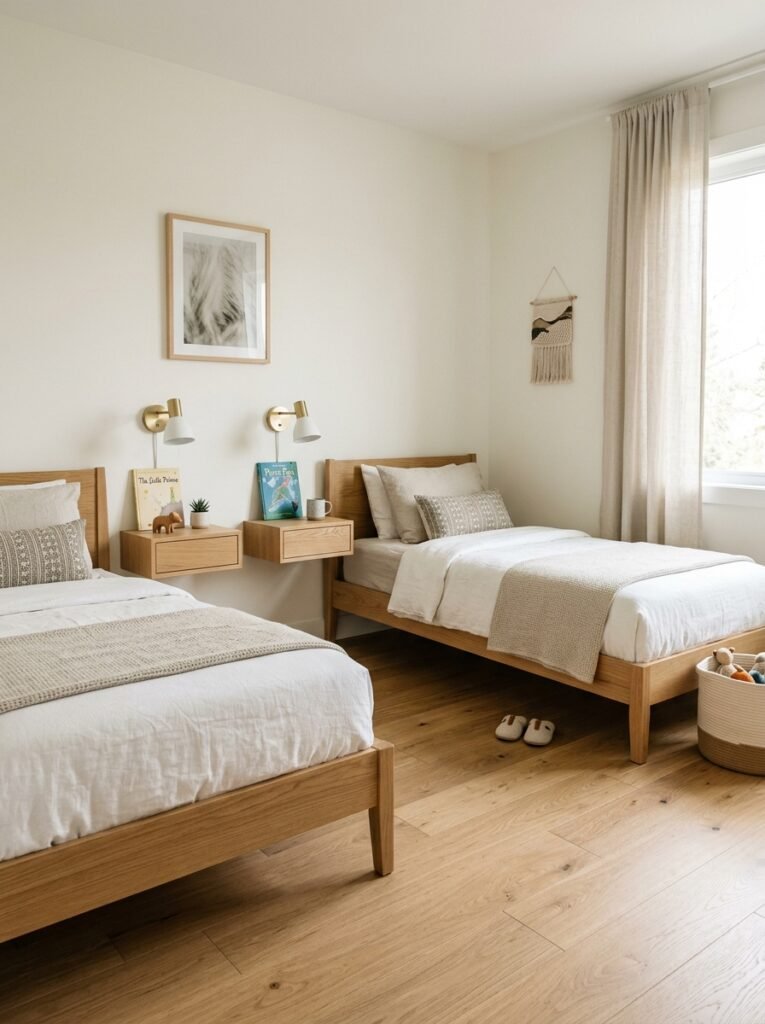
Traditional nightstands can take up surprisingly valuable floor space in a small shared bedroom. Floating nightstands or wall-mounted shelves provide a convenient place for books, glasses, small lamps, and personal belongings without requiring additional floor area. Install one beside each bed so both people have an equal amount of accessible storage. Choose compact shelves with a small drawer if you need hidden storage for personal items.
Floating furniture also makes cleaning easier because the floor remains open underneath. This can make a small bedroom appear more spacious while giving it a streamlined, modern appearance. Pair the shelves with wall-mounted lights to eliminate the need for bulky bedside lamps. The result is a practical sleeping area that feels clean, organized, and intentionally designed.
11. Add Personality Without Adding Clutter
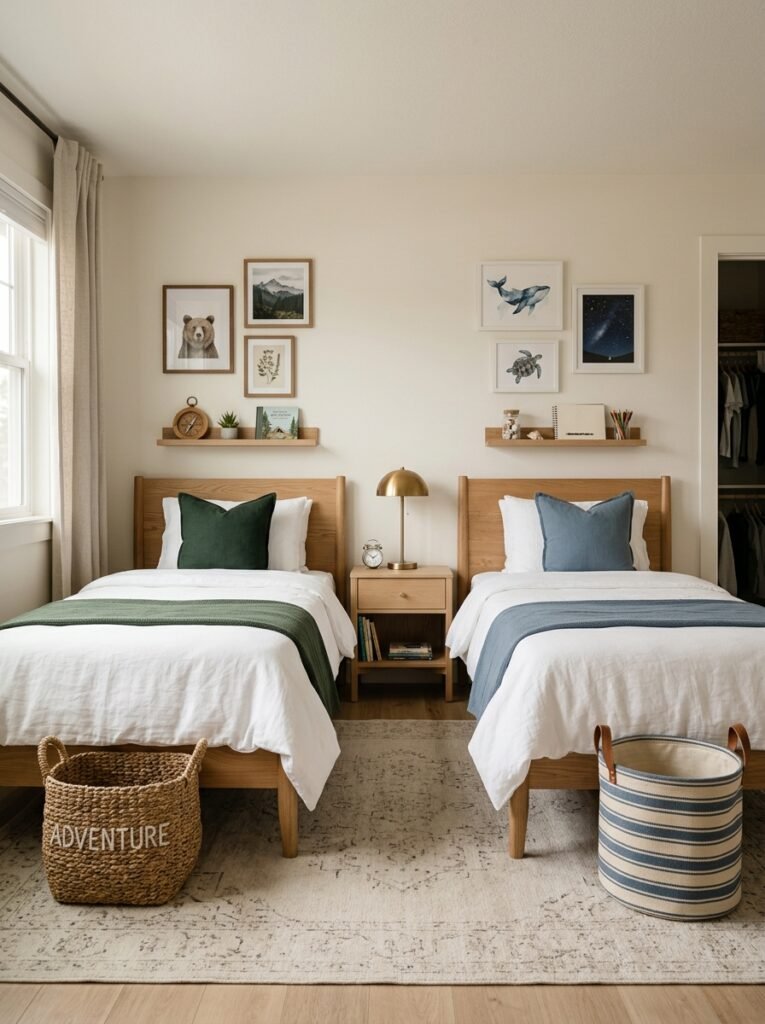
A shared bedroom should feel personal to both people, but too many decorations can quickly overwhelm a small room. Instead of filling every wall and surface, choose a few meaningful pieces for each person. Personalized name signs, framed artwork, favorite colors, photo displays, or themed bedding can make each side feel unique. Keeping decorations within a consistent color palette helps the room remain visually calm.
You can also personalize storage instead of adding more decorative objects. A favorite basket, labeled drawer, colorful pillow, or small display shelf can give each person a dedicated area. Rotate seasonal decorations rather than keeping everything in the bedroom year-round. This keeps the room fresh while preventing unnecessary clutter from taking over valuable space.
12. Create a Flexible Multi-Purpose Layout
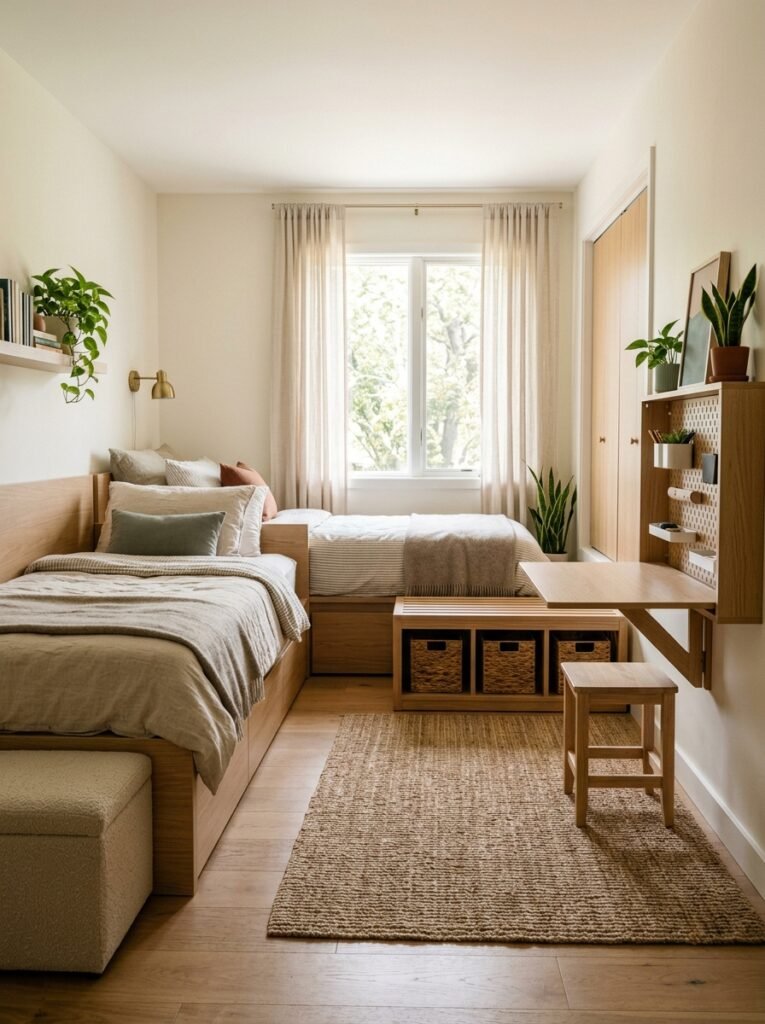
The most effective small shared bedroom ideas often involve furniture that can serve more than one purpose. A storage ottoman can provide seating and hidden storage, while a bench at the end of a bed can hold blankets and clothing. A dresser can double as a changing surface or display area, and a folding desk can become a workspace only when needed. Choosing flexible furniture allows the room to adapt as the occupants’ needs change.
Keep the central floor area as open as possible so the bedroom does not feel cramped. Use furniture with clean lines, hidden storage, and a relatively small footprint wherever possible. Before buying anything, measure the room and create a simple floor plan to make sure doors, drawers, closets, and walking paths remain accessible. With thoughtful planning, even a very small shared bedroom can become a comfortable space for sleeping, studying, relaxing, and storing everything neatly.
Final Thoughts
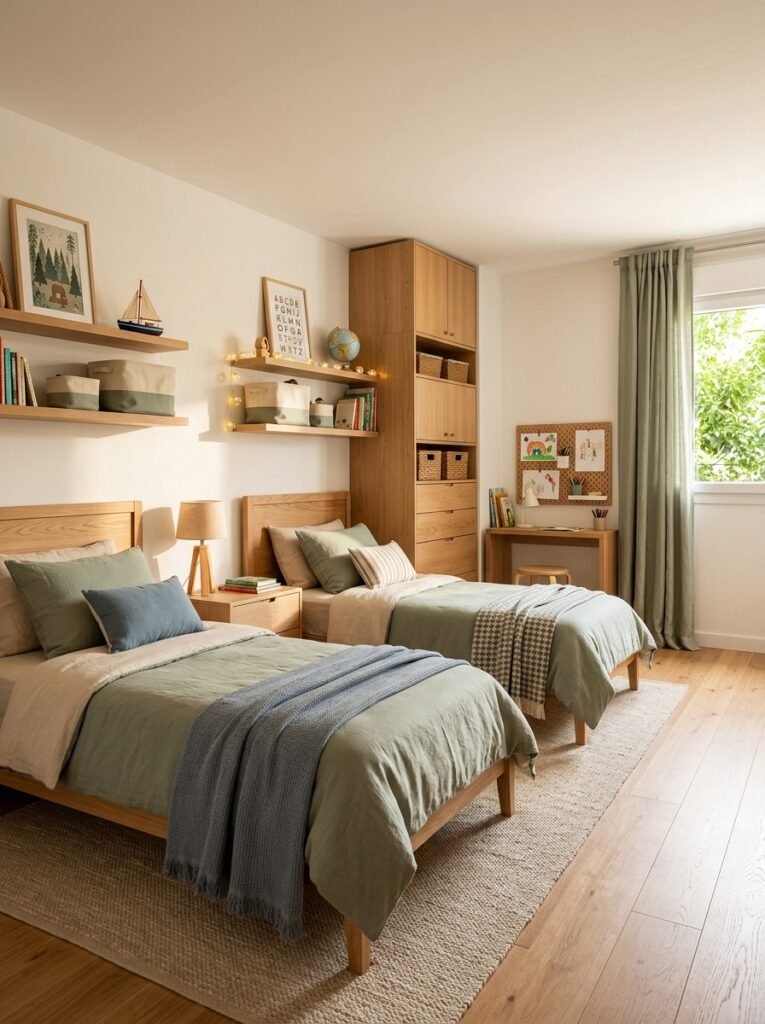
Small shared bedroom ideas are all about making smart choices with the space you already have. Bunk beds, loft beds, under-bed storage, floating shelves, shared desks, and individual zones can help two people comfortably share one compact room without sacrificing style or organization. A light color palette and carefully selected decorations can make the bedroom feel larger while still giving everyone a sense of personality and ownership. Whether you are designing a sibling bedroom, a kids’ shared room, or a small space for older children, thoughtful layout planning can turn limited square footage into a cozy, functional, and beautiful bedroom.