The BESTA IKEA Living Room That Changed How I Think About Storage Forever
There’s something quietly revolutionary about a living room that finally makes sense — where every remote, book, and blanket has a home, and the space breathes instead of suffocates. That’s what a well-planned BESTA system can do, and once you see it done right, you’ll never look at a cluttered living room the same way again.
—
1. Why the BESTA System Feels Like a Secret the Design World Kept to Itself
Walk into almost any professionally designed Scandinavian living room and you’ll notice something — the storage doesn’t announce itself. It just exists, quietly, beautifully, holding everything together without stealing the spotlight. That’s the BESTA philosophy in a nutshell, and it’s why interior designers and savvy homeowners alike have been quietly obsessing over this IKEA system for years.
BESTA — which funnels from the Swedish word for “best” — is a modular storage system that IKEA has refined over decades. Its genius lies not in one single piece, but in the combination of units, frames, doors, legs, and inserts that let you build something that looks entirely custom. Whether you’re drawn to a sleek wall-mounted configuration that floats above the floor like something from an architectural magazine, or a grounded floor unit that doubles as a media console, the system adapts to your vision rather than forcing your room to adapt to it.
What makes it feel like a secret? Because so many BESTA builds, done well, don’t even look like IKEA. They look like something you commissioned.
“The best storage solution is the one you never notice — because it fits your life so naturally it becomes invisible.”
2. The One Living Room Problem BESTA Was Born to Solve
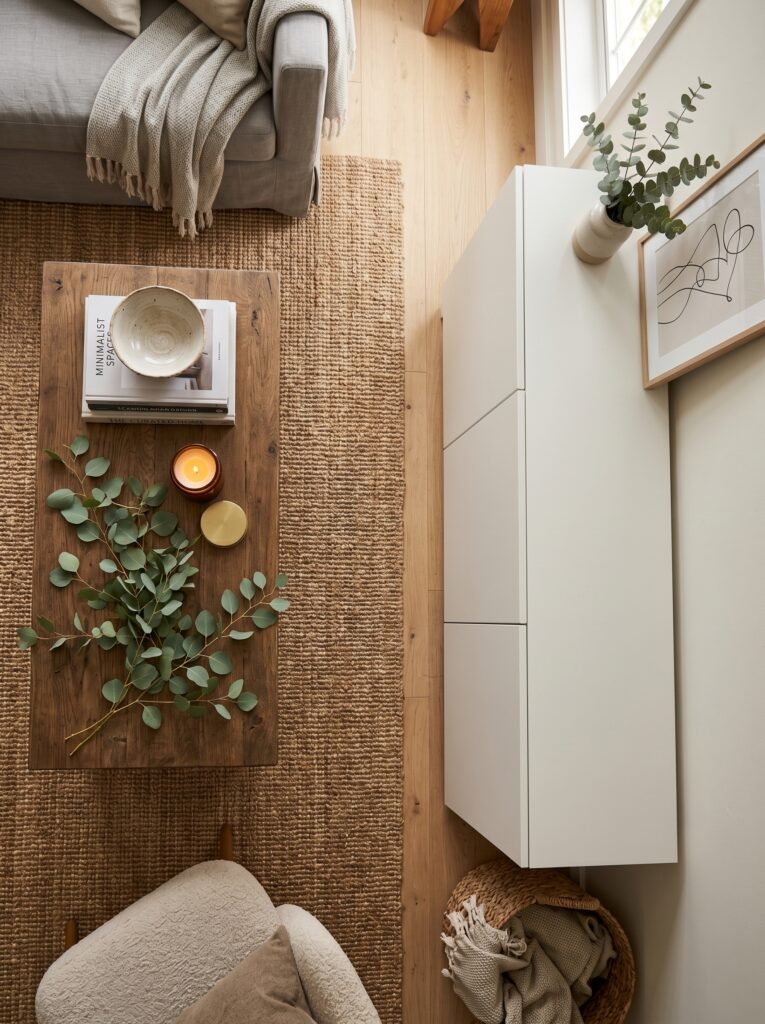
Let’s be honest about something. Living rooms are the hardest rooms in the house to keep organized — not because we’re lazy, but because they hold the most contradictory collection of objects under one roof. Your television and gaming controllers live alongside candles and art books. Children’s toys share floor space with your grandmother’s ceramic bowl. It’s a beautiful mess, and it’s entirely human.
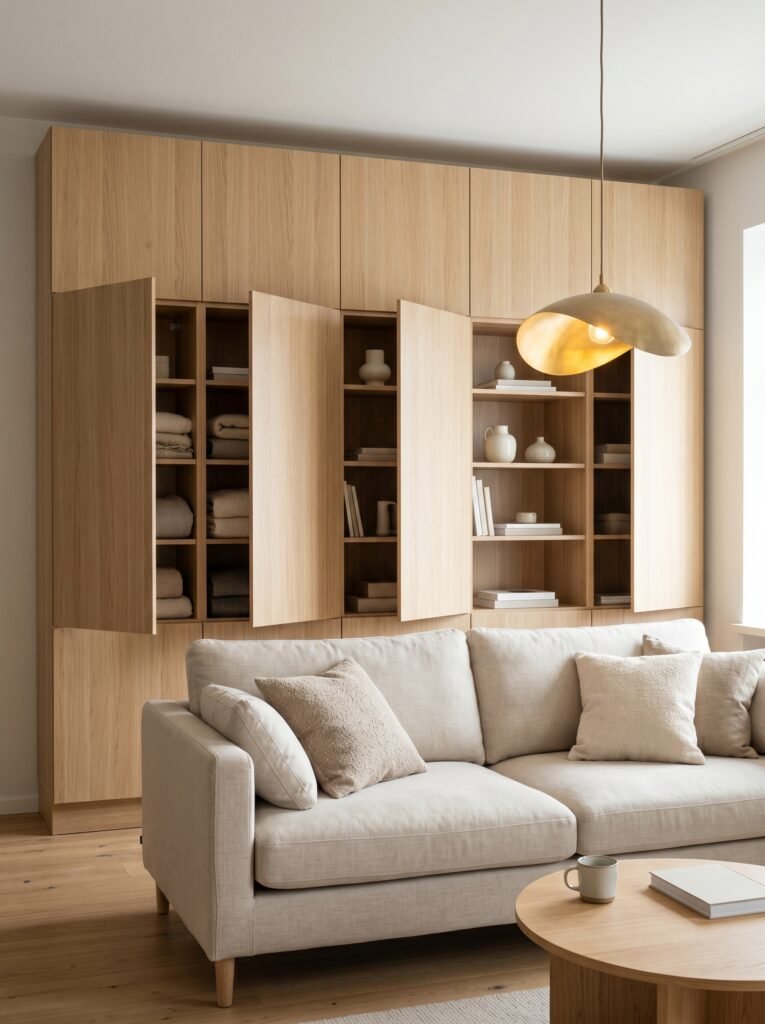
BESTA exists to honor all of it. The system’s modular nature means you can dedicate one section to open shelving — for the books you actually want people to see — and another to closed cabinets with soft-close hinges that hide the things you’d rather keep to yourself. The router, the backup chargers, the stack of bills you keep meaning to sort. There’s room for all of it, without making the room feel like a storage unit.
This balance between concealment and display is the quiet art form of a great living room, and BESTA gives you the tools to practice it.
3. How to Choose the Right BESTA Configuration for Your Space
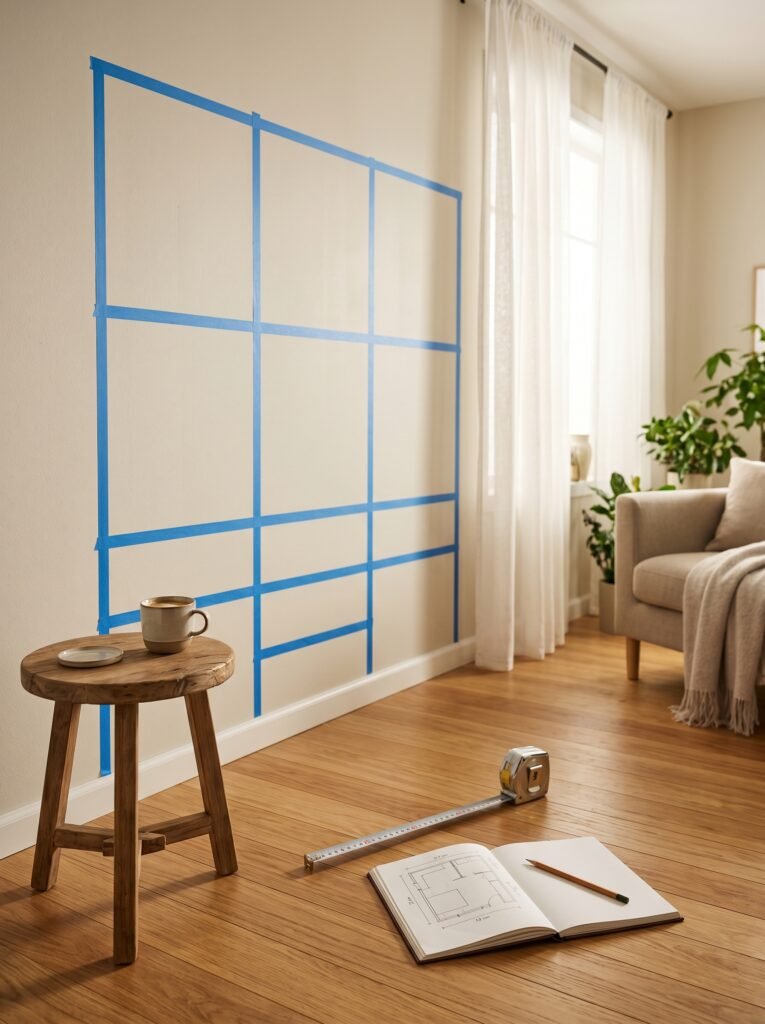
Before you order a single piece, sit down with a cup of coffee and really look at your living room. Not the room you wish you had — the one you actually live in. Where does the light come from? What wall gets the most foot traffic? How wide is the space where you picture your entertainment setup sitting?
BESTA units come in three widths — 60cm, 80cm, and 120cm — and two heights, which allows for incredibly flexible combinations. If your living room is long and narrow, a horizontal configuration with two or three 120cm units side by side creates a sweeping, expansive look that anchors the space. If your room is more compact, a single unit flanked by two taller vertical towers on each side creates the illusion of a built-in without requiring a contractor.
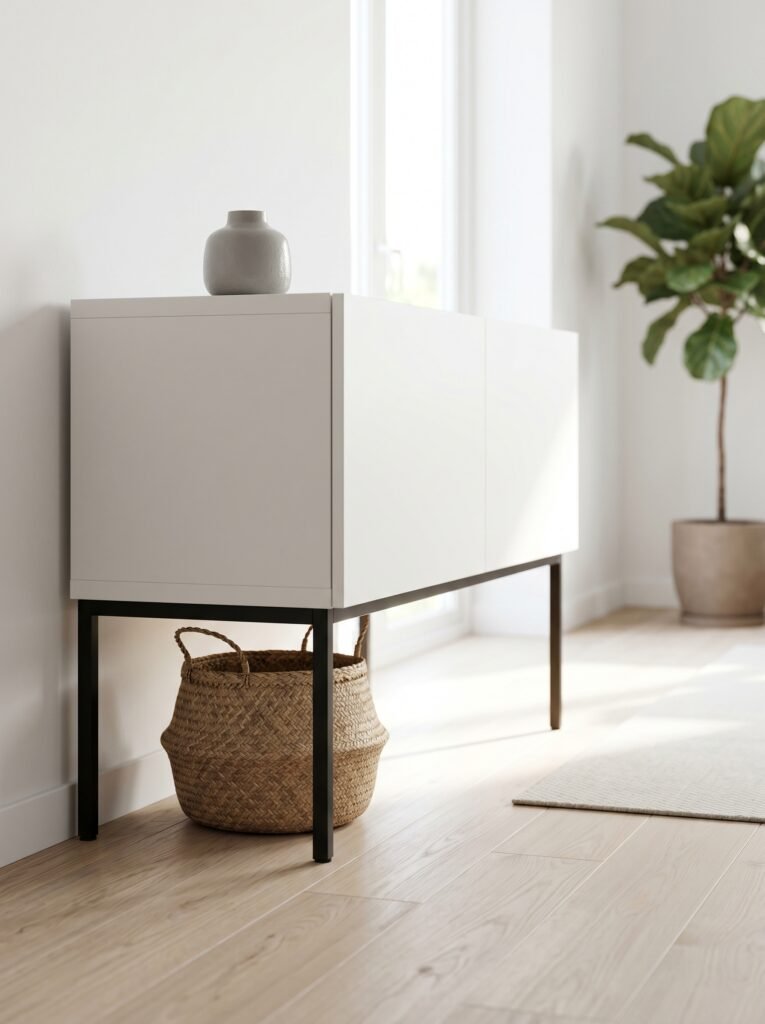
One underrated consideration: do you want legs or no legs? BESTA units can sit flush to the floor, or you can raise them on legs for a lighter, more contemporary feel. That gap beneath the unit creates visual breathing room and makes a smaller space feel less boxy. It’s a small decision with a surprisingly large impact on the overall mood of the room.
4. The BESTA TV Unit — The Anchor Every Living Room Deserves
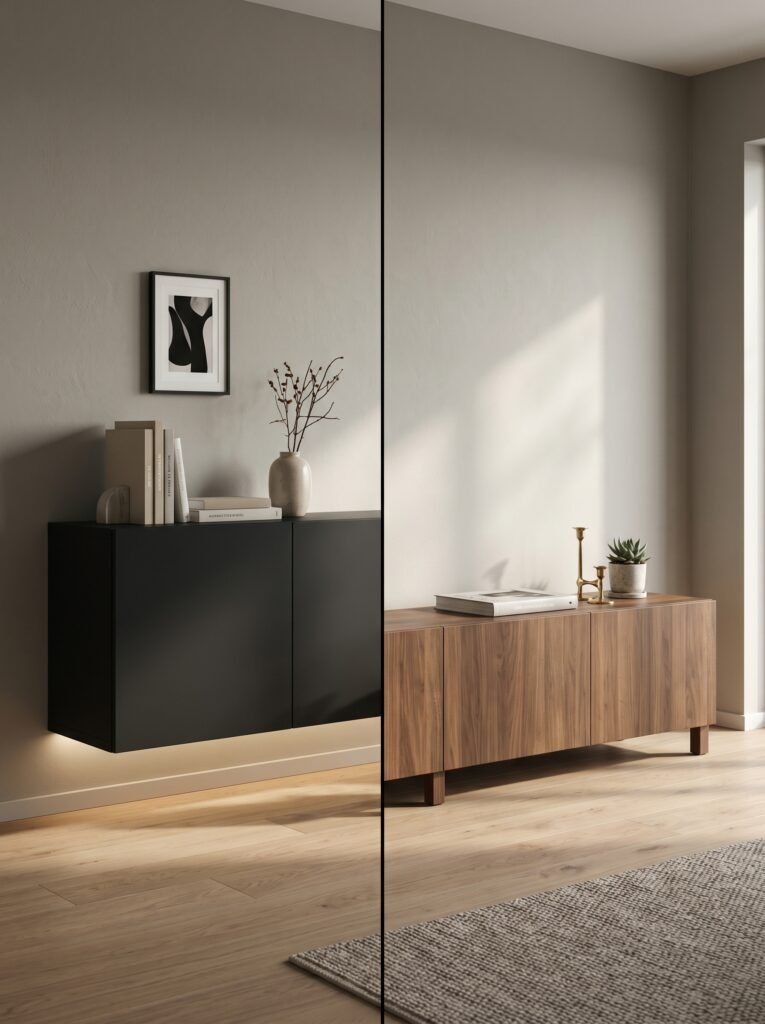
There’s a reason the BESTA media console is one of IKEA’s most searched and pinned items. A television, when not handled thoughtfully, can dominate a living room like an unwelcome guest who takes up too much space at the dinner table. A well-designed TV console grounds the screen, balances the wall, and turns that entire zone into a considered, cohesive vignette.
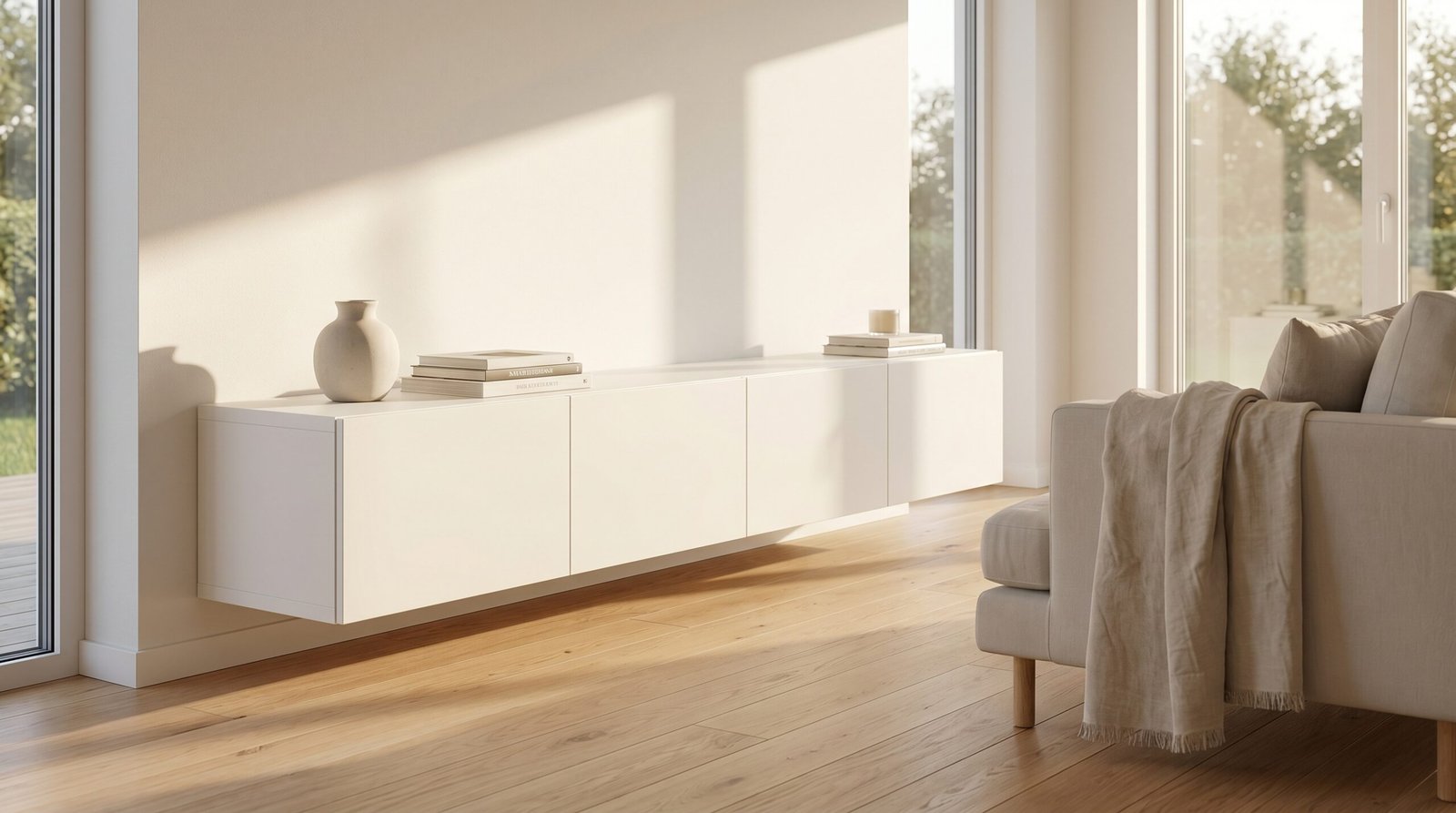
A low-profile BESTA combination — think two or three 120cm units with push-open doors in a matte white or a warm Lappviken wood-look finish — creates a console that feels architectural. Style the top with a sculptural lamp, a trailing pothos, a stack of coffee table books, and one or two objects that mean something to you. The television becomes part of a composition rather than the room’s sole focal point.
If you go wall-mounted, the visual effect is even more dramatic. A floating BESTA unit with legs or a wall-mount bracket lifts the entire room. The floor stays visible, the space feels taller, and cleaning becomes infinitely easier — a deeply underrated benefit.
5. The BESTA Doors and Fronts That Transform “IKEA” Into “Is That Custom?”
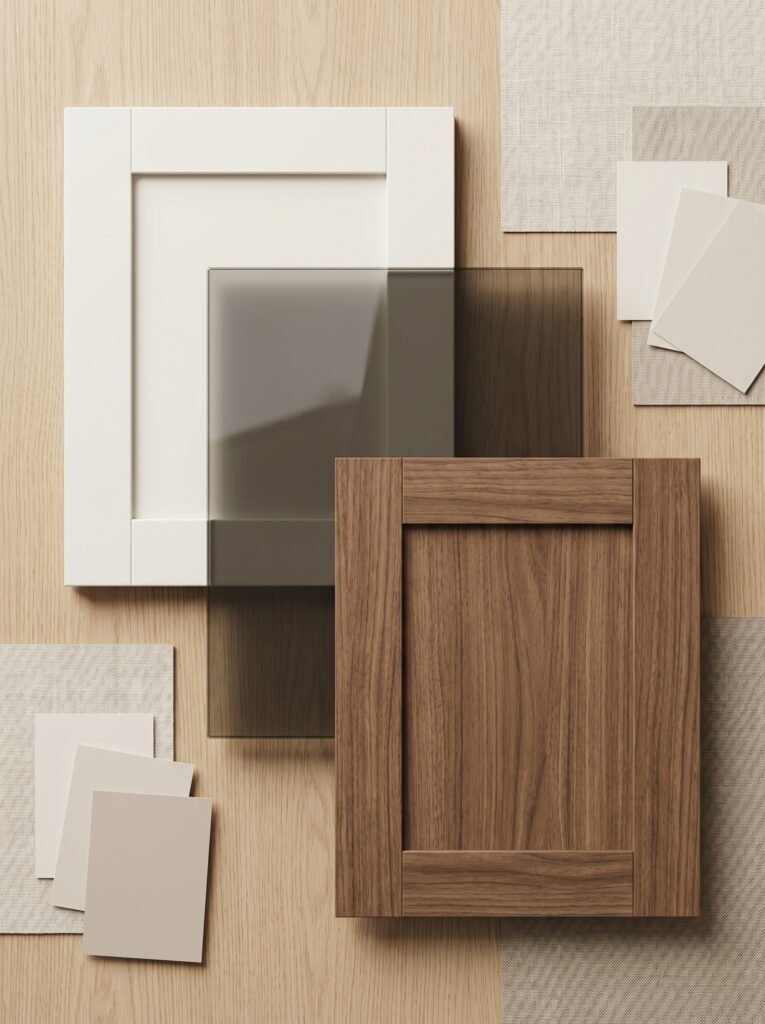
Here’s where the magic really happens, and where most people don’t dig deeply enough when planning their build. IKEA’s own door fronts are lovely — but the world of third-party BESTA fronts is where the system truly becomes extraordinary.
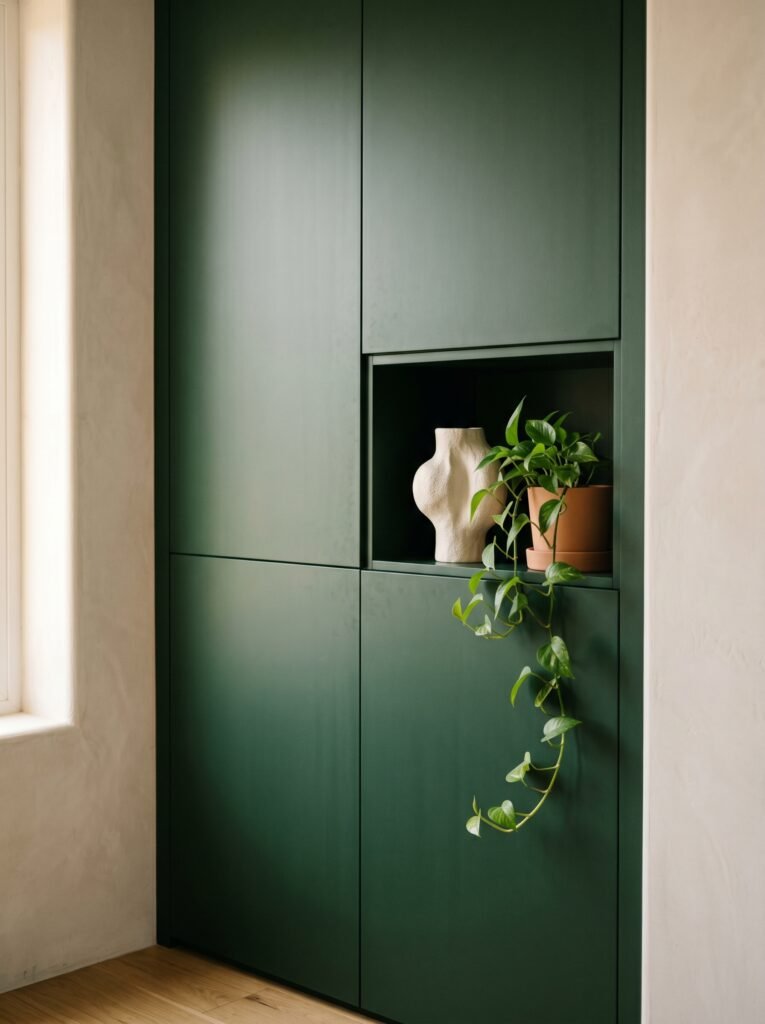
Brands like Superfront, Reform, and Plykea make replacement fronts that turn a BESTA carcass into something that could hang in an architectural digest spread. Think fluted oak fronts that catch the light like linen fabric. Think matte black panels with brass handles that would look at home in a high-end London apartment. Think soft sage green that makes your entire living room feel like a breath of fresh air.
Even within IKEA’s own range, the Studsviken, Selsviken, and Lappviken fronts offer genuine beauty. Mixing an open shelf section with a closed door section creates rhythm — that visual variation that keeps a space from feeling flat and utilitarian.
“A door front is never just a door front. It’s the personality of an entire piece of furniture.”
6. Color Psychology and the BESTA Living Room — What Your Choice Says About You
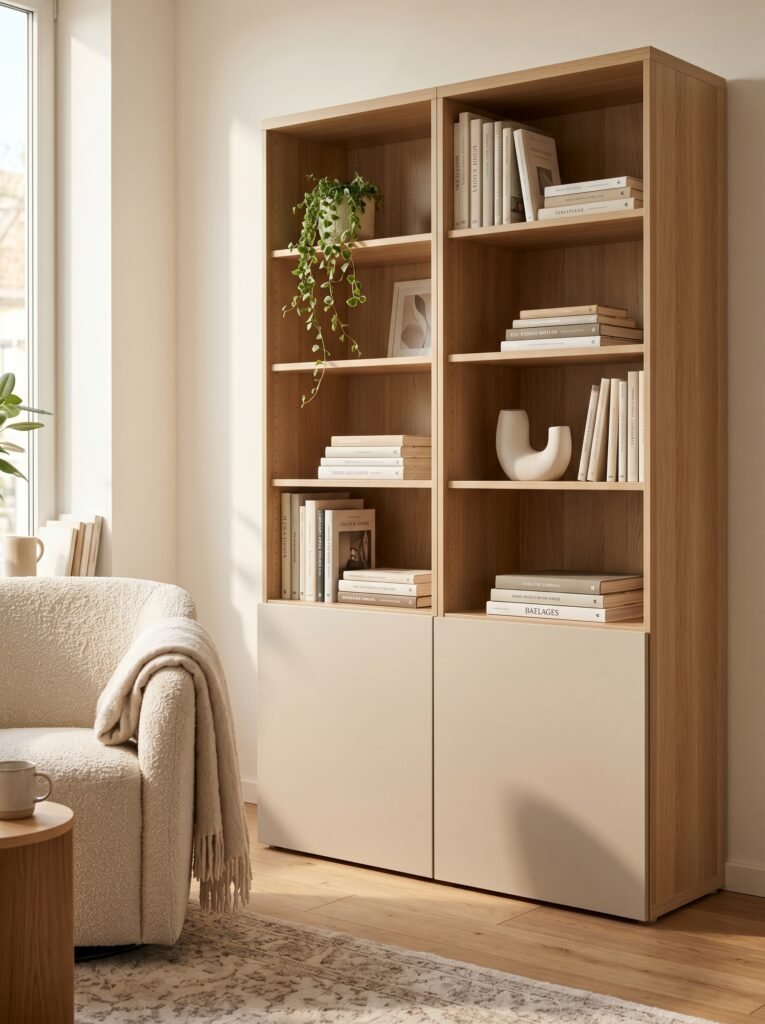
Interior designers speak often about the emotional register of a room — how color, texture, and scale affect mood in ways we often feel before we can articulate them. Your BESTA configuration is a major player in that emotional register, because it typically spans a significant portion of your primary living wall.
A white BESTA build amplifies light and creates calm — it reads as spacious, clean, and quietly optimistic. A warm wood-look finish brings the kind of groundedness that makes you want to curl up with a book. A dark finish — deep navy, black-brown, or anthracite — creates sophistication and drama, making other elements in the room pop with contrast.
If you live in a north-facing room with limited natural light, lean into warm tones and open shelving to prevent the wall from closing in. If you have glorious natural light flooding a south-facing space, you can afford to be braver — a dark finish will anchor the room rather than weigh it down.
7. The Open Shelf Styling That Makes People Stop Scrolling on Pinterest
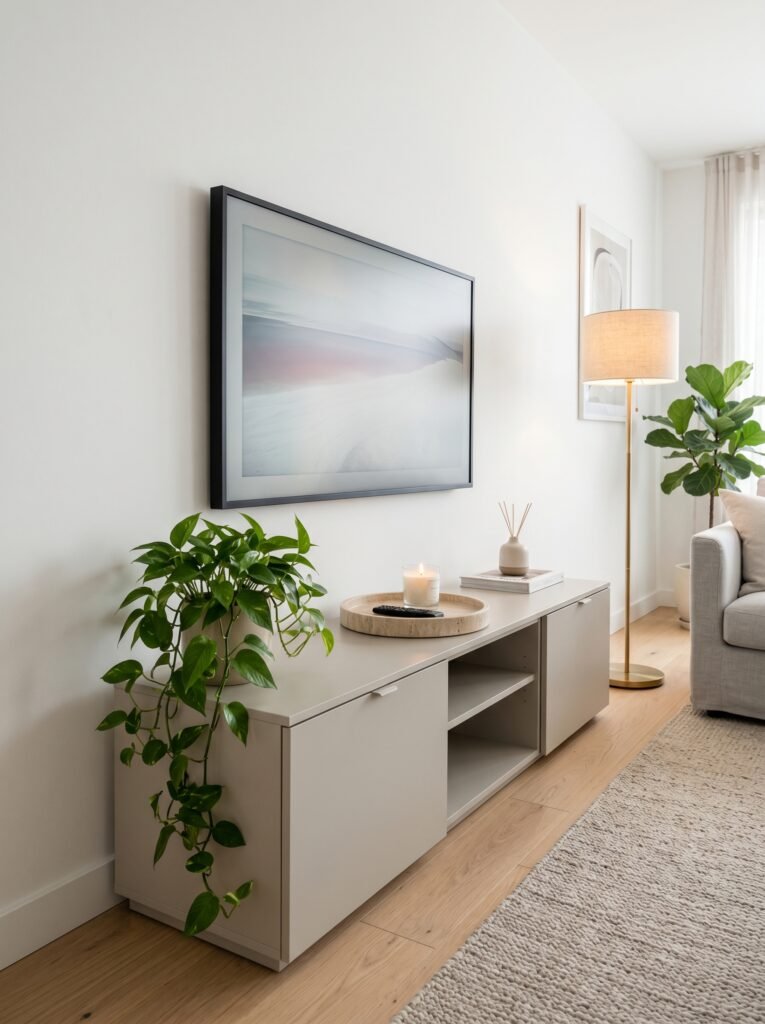
Let’s talk about the shelves — because even the most thoughtfully chosen BESTA unit will fall flat if the open sections aren’t styled with intention. This is where homeowners often feel most uncertain, and it’s also where a room can feel most alive.
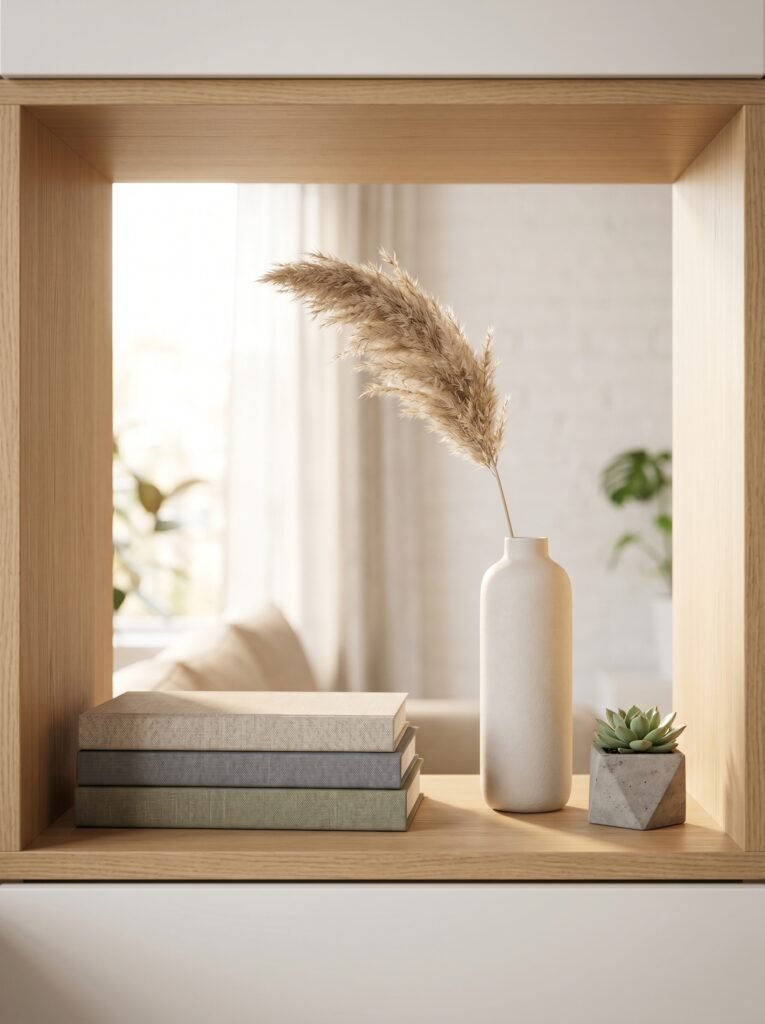
The rule of three is your starting point: group objects in odd numbers, vary their heights, and mix textures. A tall vase next to a small stack of books next to a round ceramic bowl — that’s a trio with visual tension and resolution. Add a trailing plant, because greenery softens the geometric edges of shelving in a way that nothing else does.
Resist the urge to fill every inch. White space on a shelf is not wasted space — it’s breathing room, and it’s what separates a styled shelf from a cluttered one. Display only what you genuinely love or find beautiful. A living room shelf should tell a quiet story about who lives there.
8. BESTA as a Room Divider — The Open-Plan Trick Nobody Tells You About
Open-plan living is beautiful in theory and occasionally chaotic in practice. When your living room, dining area, and kitchen share one continuous space, the visual noise can become overwhelming — everything competes and nothing wins.
A back-to-back or peninsula-style BESTA configuration can act as a soft divider between zones without closing the space off or requiring any structural work. A tall BESTA unit placed perpendicular to the wall with open shelving on both sides creates definition — this side is the living room, that side is the dining area — while keeping the sightlines open and the light flowing freely.
It’s one of the most elegant spatial solutions available at a price point that won’t require a home equity loan, and it photographs beautifully for Pinterest, which doesn’t hurt.
9. Budget Planning Your BESTA Living Room Without Compromise
Here’s a truth that interior design culture sometimes obscures: a beautifully designed room is about decisions, not budget. A single well-chosen, well-placed piece of furniture does more for a room than ten mediocre ones crowding each other for attention.
A basic BESTA frame starts at a remarkably accessible price point — often under $100 for a single unit — which means a full, impressive combination can be achieved for several hundred dollars rather than several thousand. The investment comes in choosing premium fronts, quality hardware, and thoughtful accessories.
Prioritize the fronts and handles first, because they’re what the eye lands on. If budget allows for one upgrade, make it there. Use IKEA’s basic frame, add a third-party front, swap the standard hardware for something with weight and finish, and the entire build reads at a level far above its actual cost.
“A beautiful living room is built on decisions, not dollars — every choice either earns its place or costs you more than money.”
10. The Hardware Details That Elevate Everything
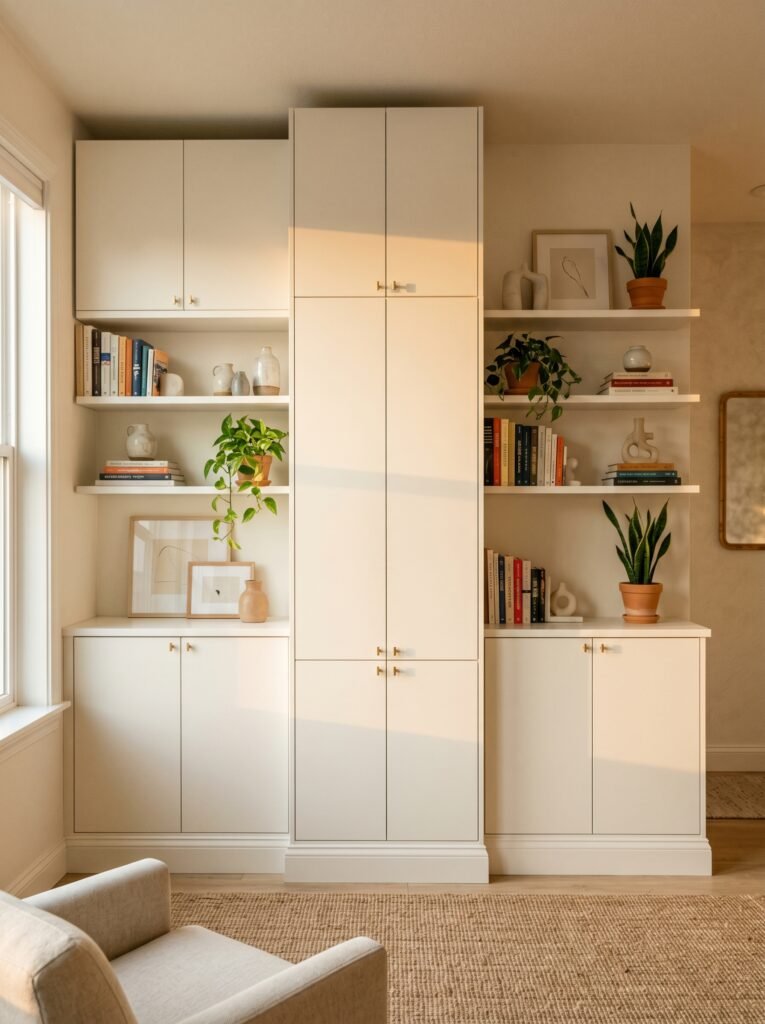
Handles are the jewelry of furniture, and nowhere is this truer than on a BESTA unit. The standard IKEA hardware is perfectly functional, but swapping it out for something more considered — slim brass bar handles, matte black t-bars, ceramic knobs in a dusty white — adds a level of craftsmanship that makes the entire build feel considered and intentional.
Hardware shopping has become delightful in the age of Etsy, where independent makers and small businesses offer handles in materials and finishes you simply won’t find in a big box store. A set of unlacquered brass handles on a sage green BESTA front, for example, looks like it belongs in a room featured in a design magazine. The total cost of that upgrade? Often less than $50 for an entire unit.
Don’t underestimate the power of this small, specific detail. Visitors rarely know why a room feels elevated — but the handles are often the quiet reason.
11. Living With BESTA — What Happens After the Styling Is Done
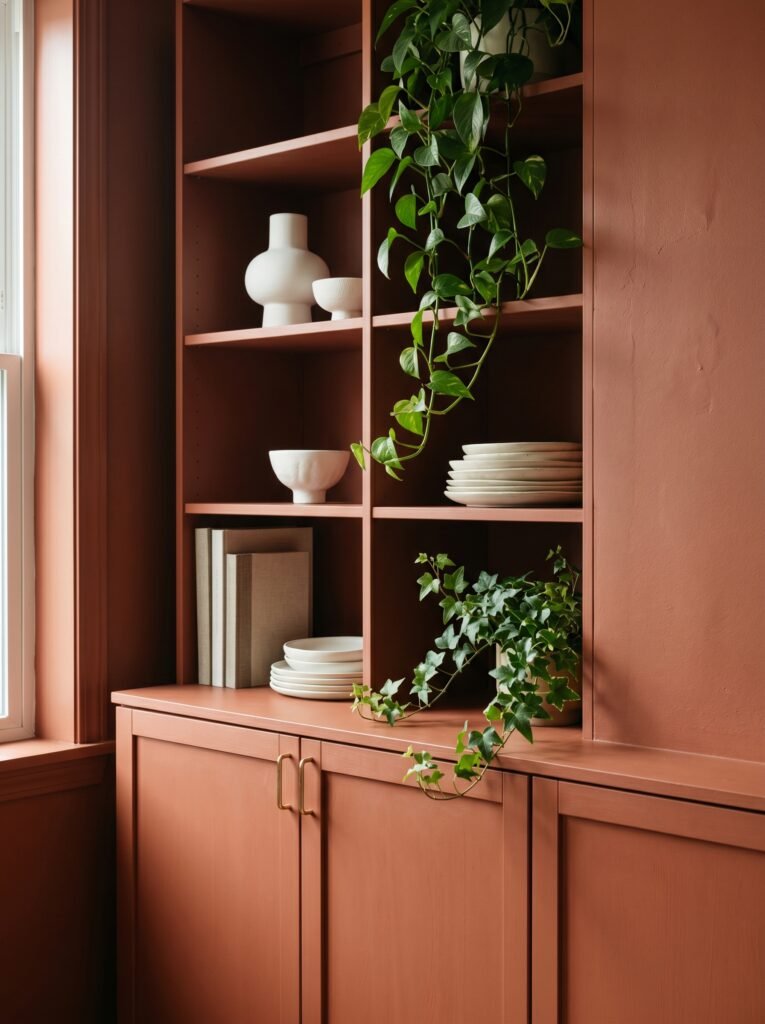
A BESTA living room, in practice, is a deeply livable thing. The closed cabinets mean that on the evenings when life gets full and busy and imperfect, you can open a door, sweep in the clutter, close it again, and your living room still looks pulled together. That functionality is not a small gift — it’s a daily quality-of-life improvement.
The modular nature also means your BESTA build can grow and change with your life. When a new baby arrives, add a section with deep drawers for toy storage. When the children leave home, remove the drawers and replace them with open shelving for the art collection you’ve been wanting to display. A BESTA build isn’t a single purchase — it’s a long-term relationship with a piece of furniture that can evolve as you do.
12. The Pinterest Pins That Prove BESTA Is in Its Design Era Right Now
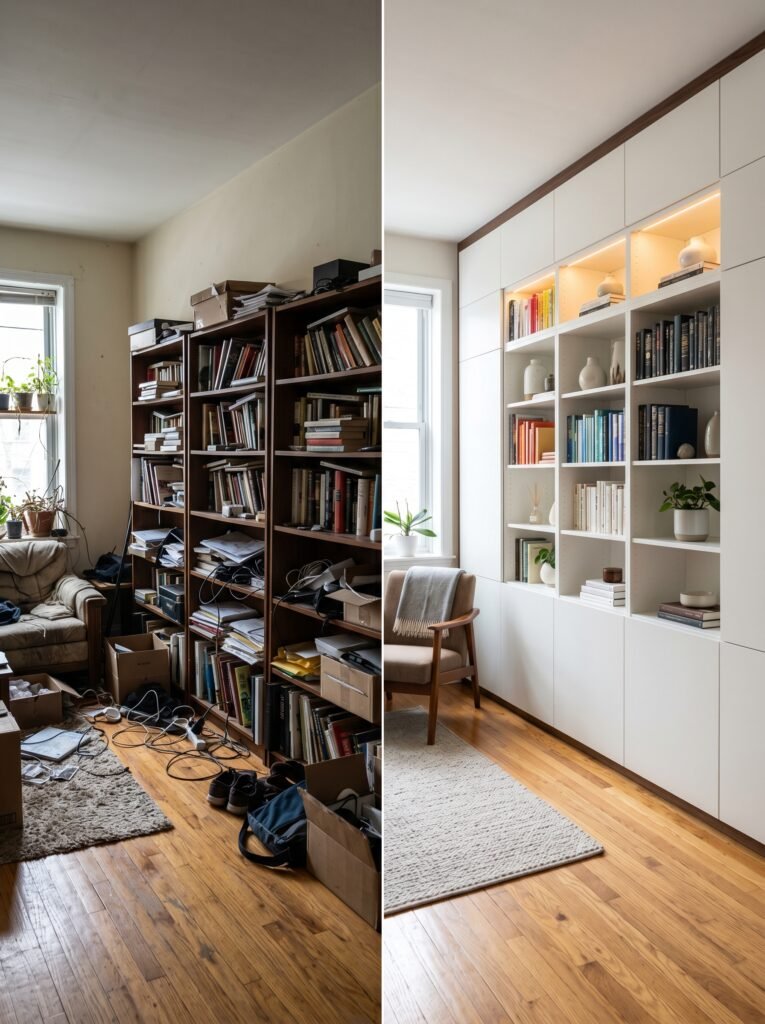
If you spend any time on Pinterest — and as a reader here, you likely do — you’ve seen the BESTA renaissance in full bloom. The most saved living room images of recent years share a common thread: they feature that low, horizontal, wall-spanning storage unit with just enough personality to feel individual, just enough restraint to feel calm.
What makes these images so persistently shareable isn’t the furniture itself — it’s the feeling they evoke. A room that’s organized but not sterile. Styled but not staged. Personal but not chaotic. BESTA, when done with care, hits that precise emotional note that makes someone stop mid-scroll, save the image, and think: I want to feel like that in my own home.
That aspiration — the feeling of a room that holds your life beautifully — is what makes a BESTA living room not just a furniture decision, but a deeply personal one.
—
🌿 How to Take Care of Your BESTA Living Room Over Time
BESTA is built to last, but like any furniture investment, it rewards a little consistent attention.
Wipe down surfaces monthly with a damp cloth — avoid harsh chemical cleaners on any of the fronts, particularly wood-look laminates, as these can cause premature fading or surface damage. Use only mild dish soap diluted in water for anything more stubborn.
Check the soft-close hinges every six months and tighten any loose screws before they become a problem. IKEA hinges are adjustable in three directions, so if a door drifts slightly out of alignment over time, a simple screwdriver fix takes under two minutes.
If you have open shelving, make a habit of editing the display seasonally — remove items that no longer feel right, rotate objects from other rooms, and bring in fresh greenery. This seasonal refresh keeps the space feeling alive and prevents it from becoming visual wallpaper that you stop seeing altogether.
For hardware, a light polish with a dry microfiber cloth keeps brass and metal finishes looking their best without stripping any protective coatings.
—
❓ FAQ
Q: Can BESTA units be wall-mounted for a floating look? A: Yes — IKEA makes a specific wall-mounting bracket for BESTA units, and many configurations are designed with this in mind. Wall mounting requires locating studs in your wall and using the correct hardware for your wall type, and it’s worth having a second person help with the installation. The floating result is genuinely stunning and worth the extra effort.
Q: Are BESTA fronts from other brands compatible with IKEA frames? A: Most third-party fronts from brands like Superfront, Reform, and Plykea are designed specifically to fit BESTA frames and use standard IKEA hinges. Always check the compatibility specifications before ordering, as there can be small variations depending on the year your frame was manufactured.
Q: How do I make my BESTA look built-in without hiring a carpenter? A: The most effective tricks are filling the gap between the unit and the ceiling with a thin filler panel (cut to size at a hardware store), adding trim or molding along the top edge, and painting the wall behind the unit the same color as the unit itself. This simple trifecta creates a truly built-in look for a fraction of the cost of custom cabinetry.
—
💭 Final Thought
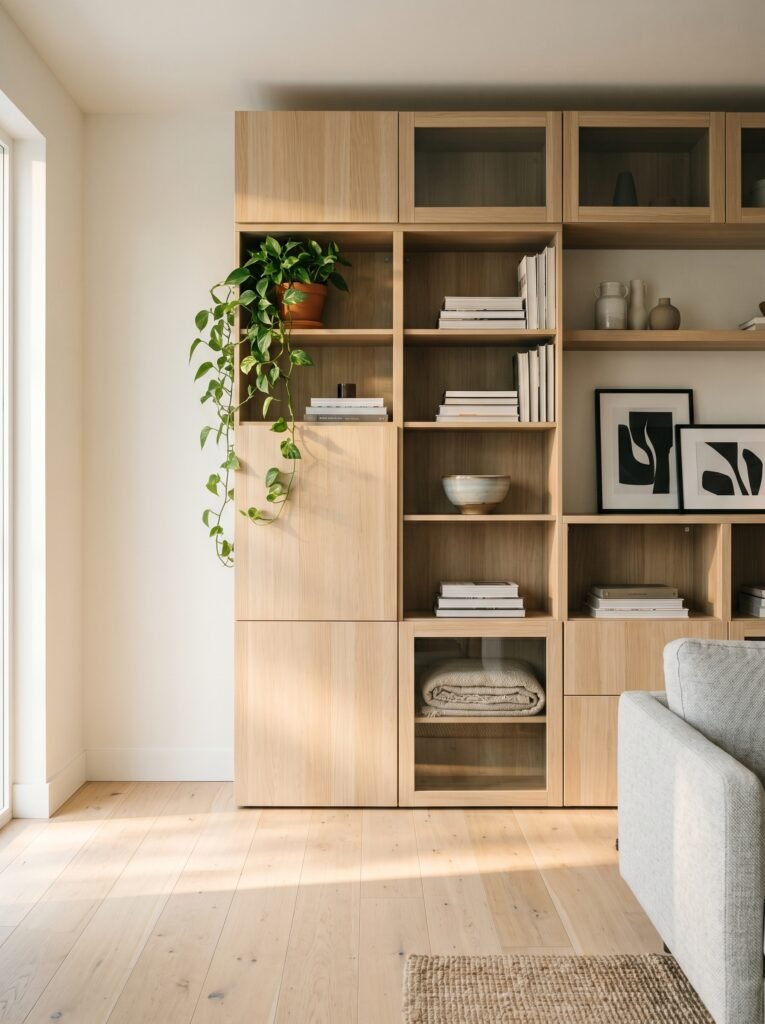
A living room is never just a room — it’s the space where your days begin and end, where people you love gather, and where the ordinary moments of your life quietly accumulate into something meaningful. A BESTA build, at its best, honors all of that by creating a space that holds your life with grace and without chaos. It’s furniture that serves you rather than demanding to be served.
So here’s the question worth sitting with: what would your living room feel like if everything in it finally had exactly the right place?