
The Blind Spot: What Your Living Room Windows Are Actually Saying About Your Style
My friend looked at my living room last spring and said, “Why does it feel like the windows are apologizing?” She was right. I had these sad, builder-grade faux wood blinds that were doing nothing — not blocking light well, not looking good, not even failing interestingly. They were just… there. Beige. Defeated.
So I went down a rabbit hole. A long one.
—
1. Why Most People Get This Wrong From the Start
The mistake isn’t choosing ugly blinds. It’s treating blinds like a purely functional purchase — like buying a smoke detector. You pick something cheap, hang it up, and forget about it for twelve years until it breaks and you replace it with the same thing.
But blinds are HUGE. Visually, I mean. They cover your windows, which are the focal points of most rooms. They affect how natural light enters, which changes how every other design decision you’ve made looks throughout the day. A bad sofa can be hidden with a good throw. Bad blinds? There’s no hiding them.
And here’s the thing nobody tells you in the store: the wrong blinds don’t just look bad. They make the whole room feel off in a way you can’t quite name. Like something’s wrong but you can’t figure out what. So you buy a new rug. New cushions. New lamp. The room still feels wrong. It’s the blinds.
—
2. The Only Window Treatment Rule That Actually Holds Up
Hang them high. Higher than feels right.
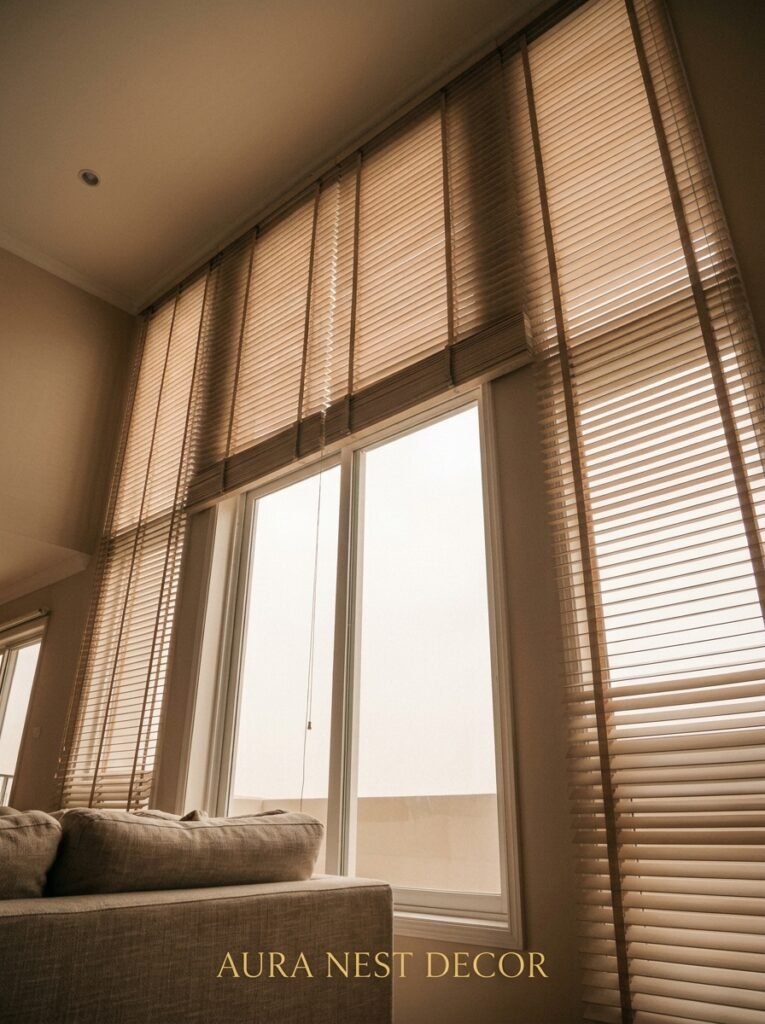
I know. It sounds like some design blogger thing. But honestly it works every time. Hanging your blind or curtain track as close to the ceiling as possible — or at least 4 to 6 inches above the window frame — makes the ceiling feel taller, the window feel bigger, and the room feel more intentional.
This works in a cramped London flat and in a wide-open suburban American living room. Physics doesn’t care about square footage.
“The height you hang your window treatment is doing more for your room than the window treatment itself.”
Width matters just as much. Let blinds extend 2 to 4 inches beyond the frame on each side. When they’re open, you get the full window. When they’re closed, you don’t lose light to the frame overlap. It’s a small thing that changes everything.
—
3. The Fabric Roller Blind Glow-Up Nobody Warned You About
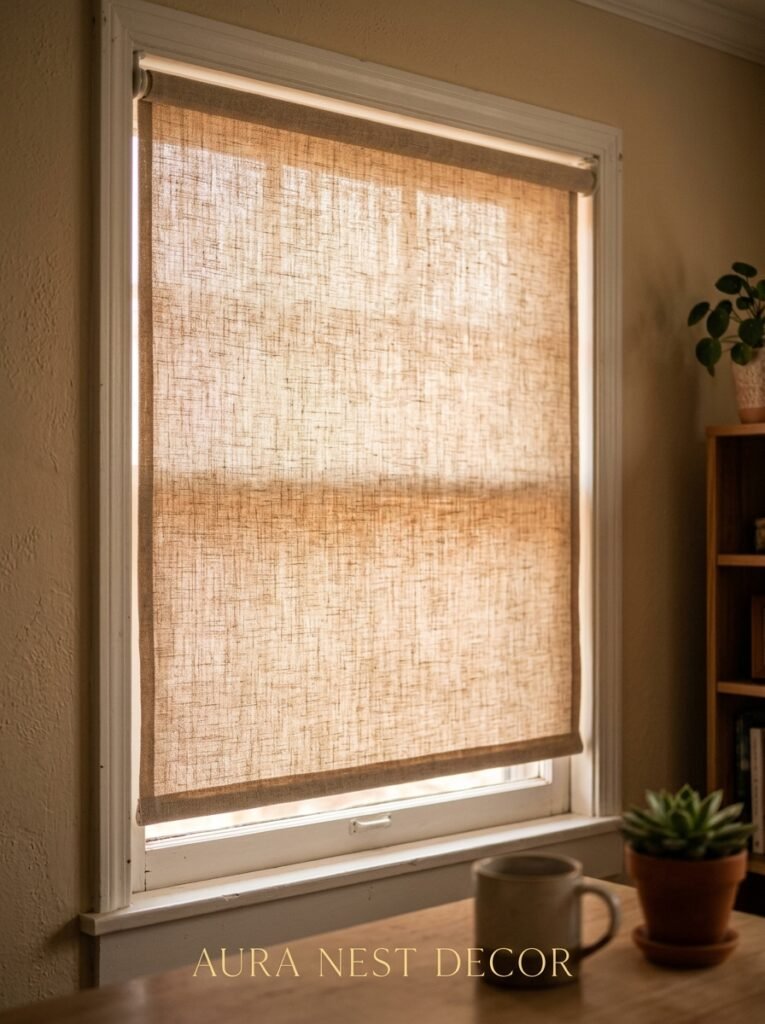
Roller blinds got a reputation for being boring, and I don’t think that’s entirely fair. The boring ones exist, sure — but the category has quietly become one of the most versatile things you can put on a window.
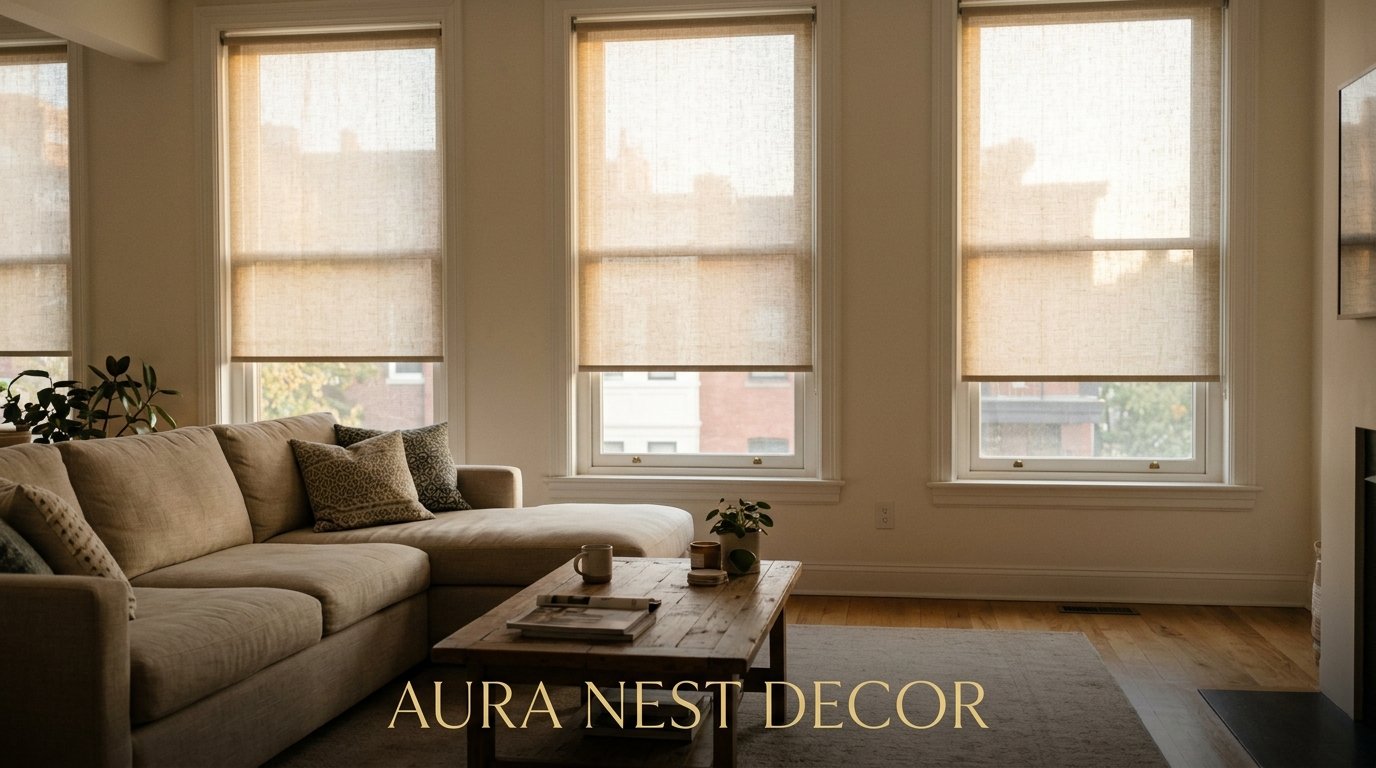
The trick is fabric weight and texture. Not color, not pattern — though those matter too — but the actual physical weight of the fabric. A heavy linen-look roller blind in off-white has a completely different energy than a thin polyester one in the same color. The heavy one catches the light differently. It looks substantial. It doesn’t flutter weirdly when someone opens a door.
For living rooms in the US and UK, I’d keep the color within two shades of your wall color or go for a clean, quiet contrast. The rooms that look effortlessly good on Pinterest almost always have blinds that don’t fight the wall for attention. The window dressing is calm, so everything else can speak louder.
—
4. The Color That Keeps Showing Up in Every Beautiful Living Room Right Now
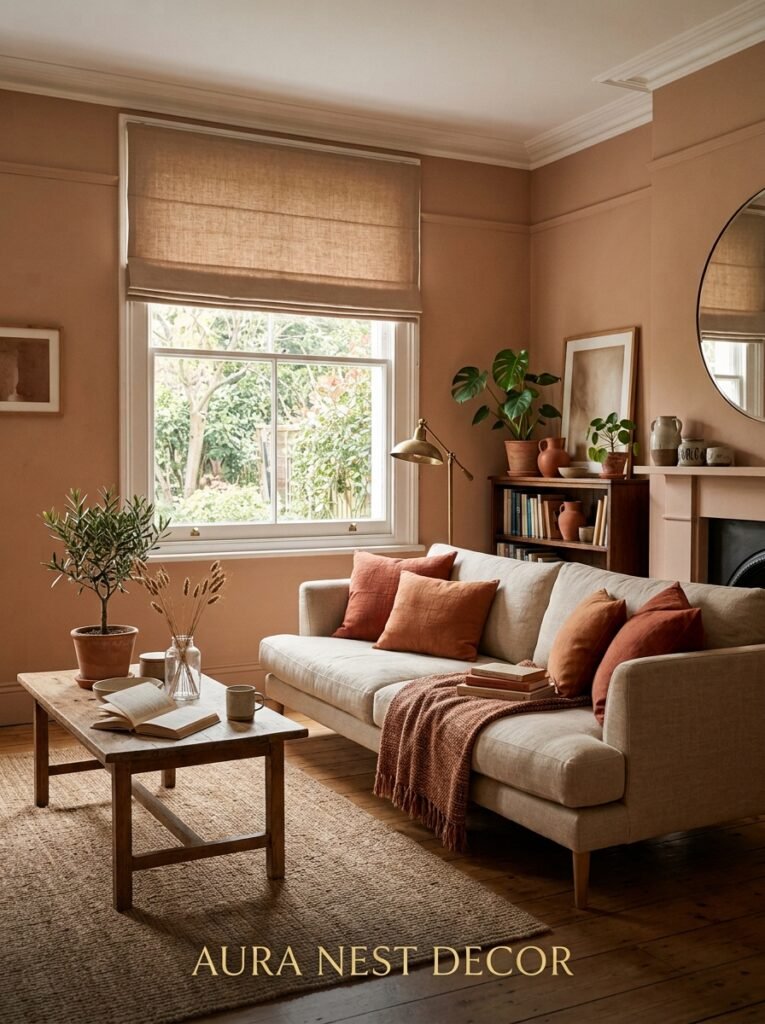
Warm greige. Specifically that dusty, barely-there greige that sits between cream and mushroom. Not gray — gray has had its moment. Not white — white is too stark against most walls in natural light.
This particular shade works in both US and UK homes because it reads differently depending on the light. In a bright California morning, it looks like warm linen. In a grey British afternoon, it looks like the softest possible neutral. Same blind. Totally different rooms.
If your living room runs cooler — think north-facing in the UK, or a shaded room in the US — push toward the warmer side of that range. A blind that reads cool in your specific light will make the room feel colder than it already is, and you’ll blame the radiator.
—
5. Venetian Blinds: The Design Community’s Most Complicated Relationship
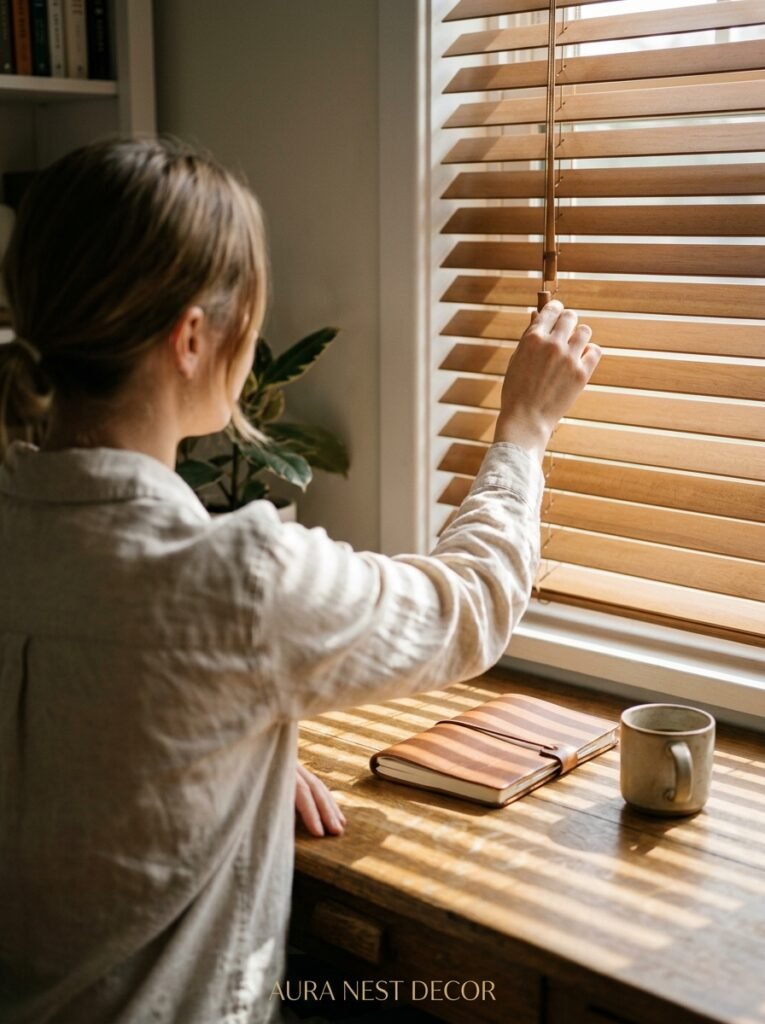
Nobody talks about this. But there’s a real divide over Venetian blinds in interior design circles and I kind of understand both sides.
The case against them: the slats collect dust at an almost impressive rate. Cleaning them is miserable. When they get damaged — which they will — they look terrible and you can’t easily replace one slat, you have to redo the whole thing. And they make a noise when the wind hits them that I personally find deeply annoying.
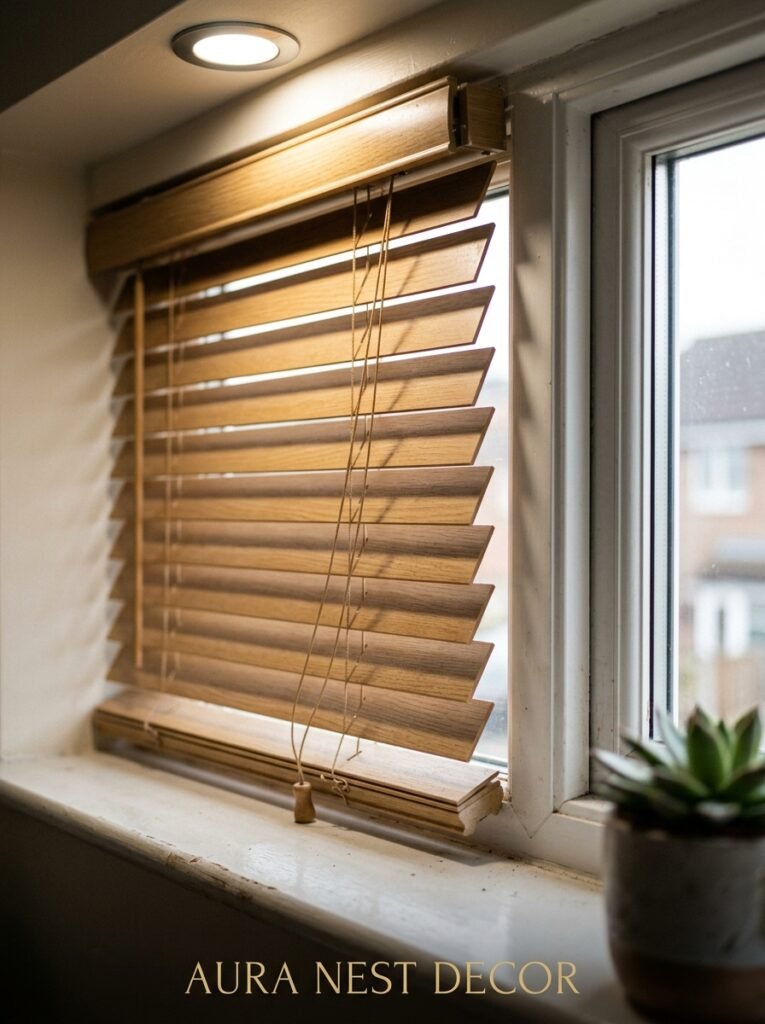
The case for them: nothing else controls light in quite the same way. That angled, sliced light through half-open Venetians at 4pm is genuinely beautiful. It’s cinematic. It’s a whole mood. Real wood Venetians in particular — dark walnut or natural oak — add warmth to a living room in a way that fabric blinds can’t quite replicate.
My take? In a living room, go wood or don’t go Venetian. The aluminum ones belong in offices and kitchens. Real wood, in the right room, is worth it.
—
6. Why Roman Blinds Feel More Expensive Than They Cost
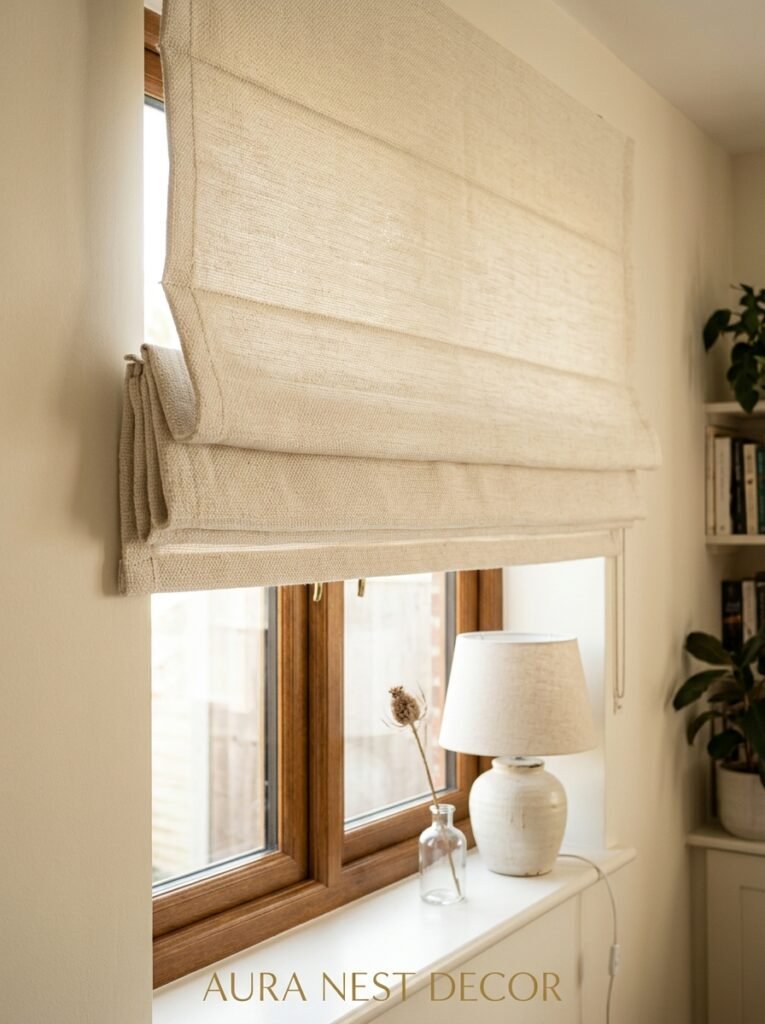
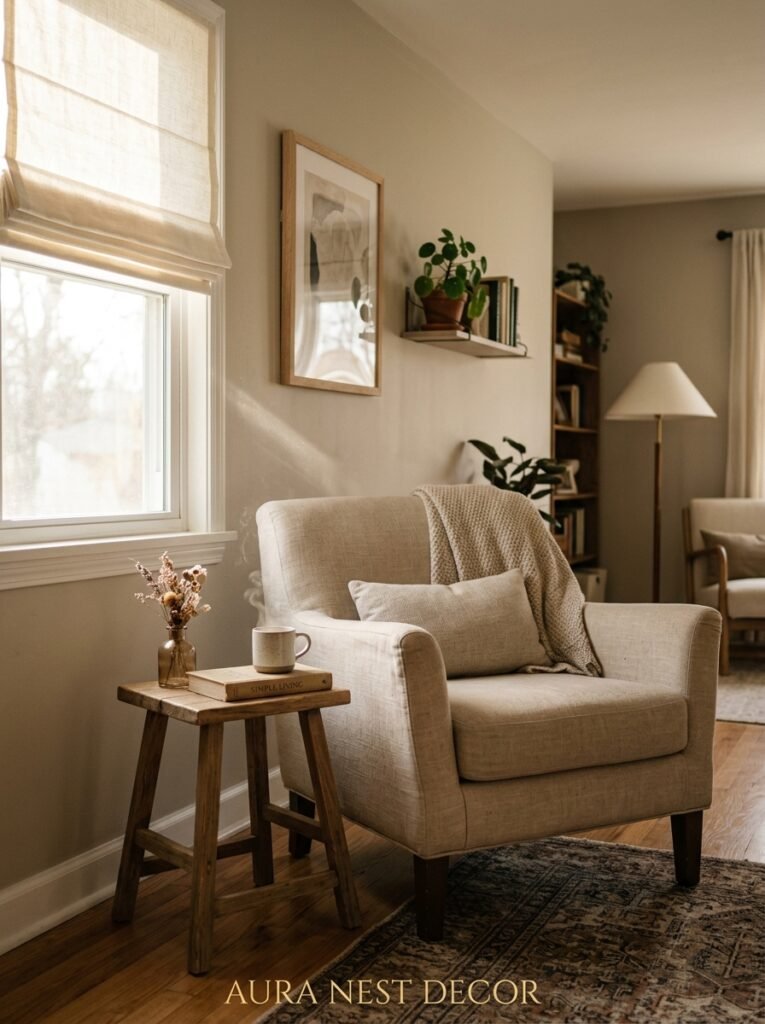
Roman blinds are the quiet overachiever of the window world. They look tailored, they add fabric texture and pattern to a window without being fussy, and when they’re up, they fold into a neat horizontal stack that actually looks like a design feature.
“A Roman blind in a print you love does more interior design work than three decorative pillows.”
The key is the fabric. A thin Roman blind looks cheap because it flops. A lined Roman blind — particularly one with a blackout or thermal lining — holds its structure, folds properly, and feels like something you spent more on than you did.
If you’re in the UK and dealing with cold single-glazed windows, a thermal-lined Roman blind isn’t just pretty, it’s genuinely useful. It traps air between the fabric and the glass and makes a noticeable difference in how cold the room feels by the window. Worth knowing.
For US homes, the same principle applies in colder states. Minnesota, Vermont, anywhere that gets real winters — line those Romans.
—
7. The One Mistake That Makes Cheap Blinds Look Cheaper
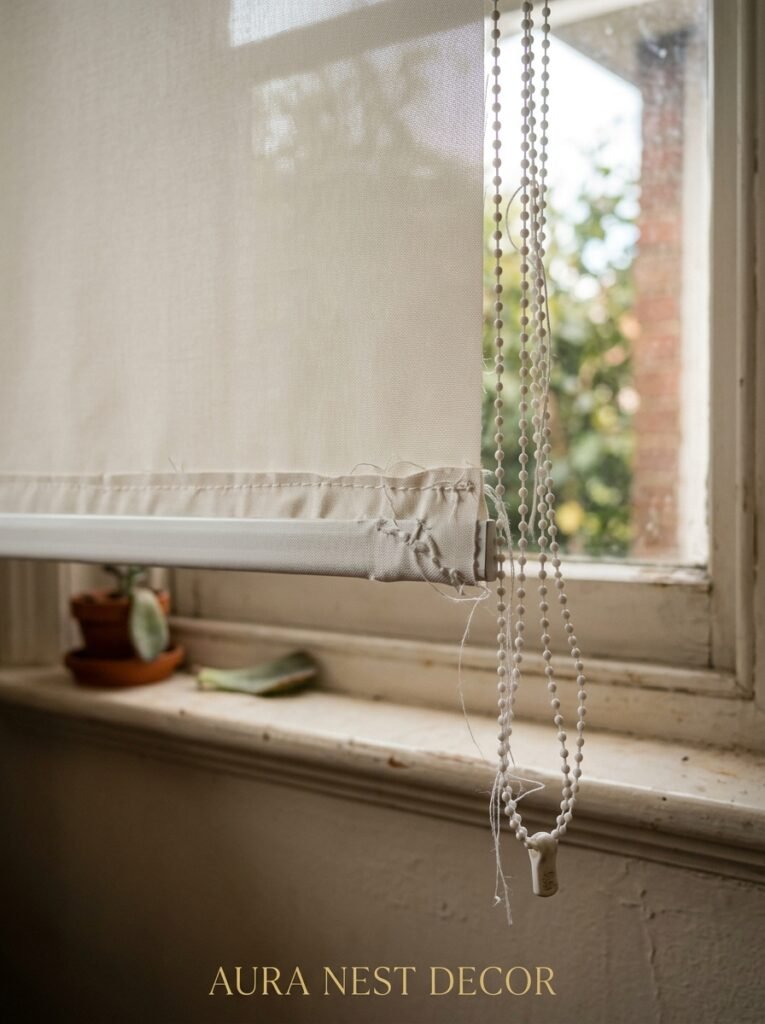
Wrong length. Every time.
Blinds that hit the sill look like an afterthought. Blinds that stop 3 inches above the sill look like something went wrong. The sill or slightly past it is actually fine for most living rooms — but the very worst option is that awkward gap between the bottom of the blind and the windowsill where you can see daylight underneath.
I see this constantly in rental apartments. The landlord bought the wrong size, didn’t bother fixing it, and now the whole window looks wrong. If you’re renting and this is your situation: a tension rod and some inexpensive fabric can fix this fast.
But if you own the space? Get the measurement right. It’s not hard, and the difference between a blind that fits and one that doesn’t is immediately visible to anyone who walks in.
—
8. Layering Blinds and Curtains Without It Looking Like Too Much
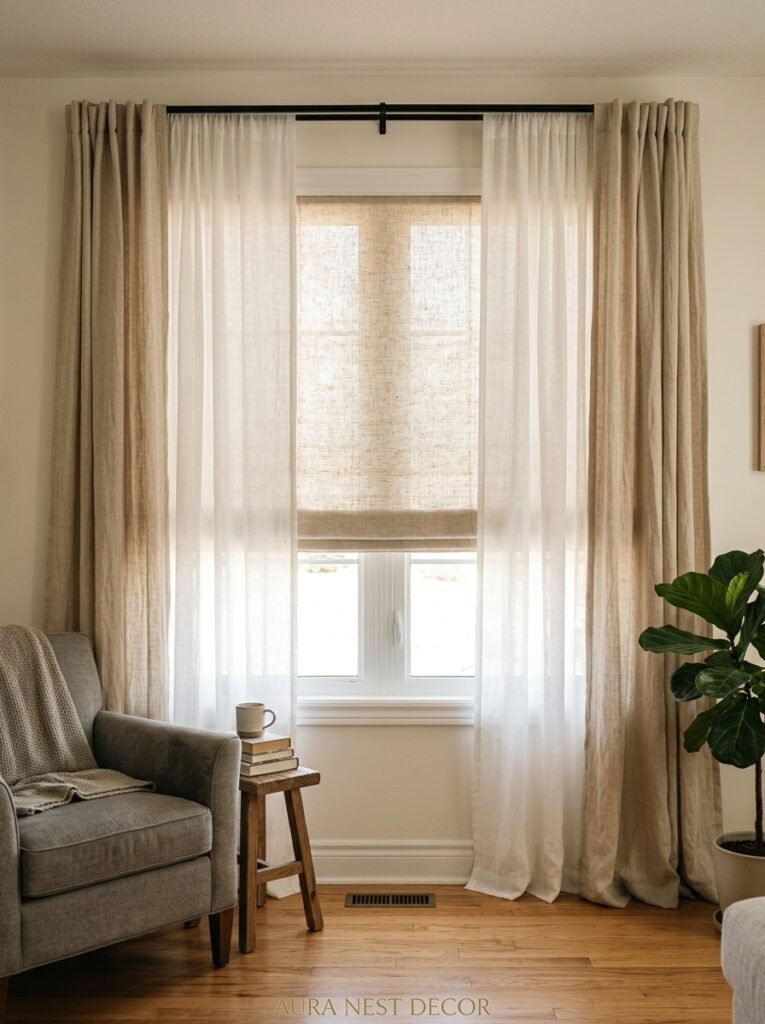
This is where living rooms can go from good to really good. Or from good to overwhelming. The line is thin.
The rule — okay, it’s not really a rule, more of a starting point — is that blinds handle function and curtains handle softness. The blind controls light and privacy. The curtain adds warmth, movement, and a sense of intention to the window.
Keep them in the same color family and it almost always works. A warm white roller blind with cream linen curtains either side. A warm greige Roman blind with taupe drapes. The two elements should whisper to each other, not argue.
What doesn’t work: a heavily patterned blind under a heavily patterned curtain. One can have pattern. One should be quiet. The room needs somewhere to rest.
—
9. The Budget Option That Actually Looks Good (No, Really)
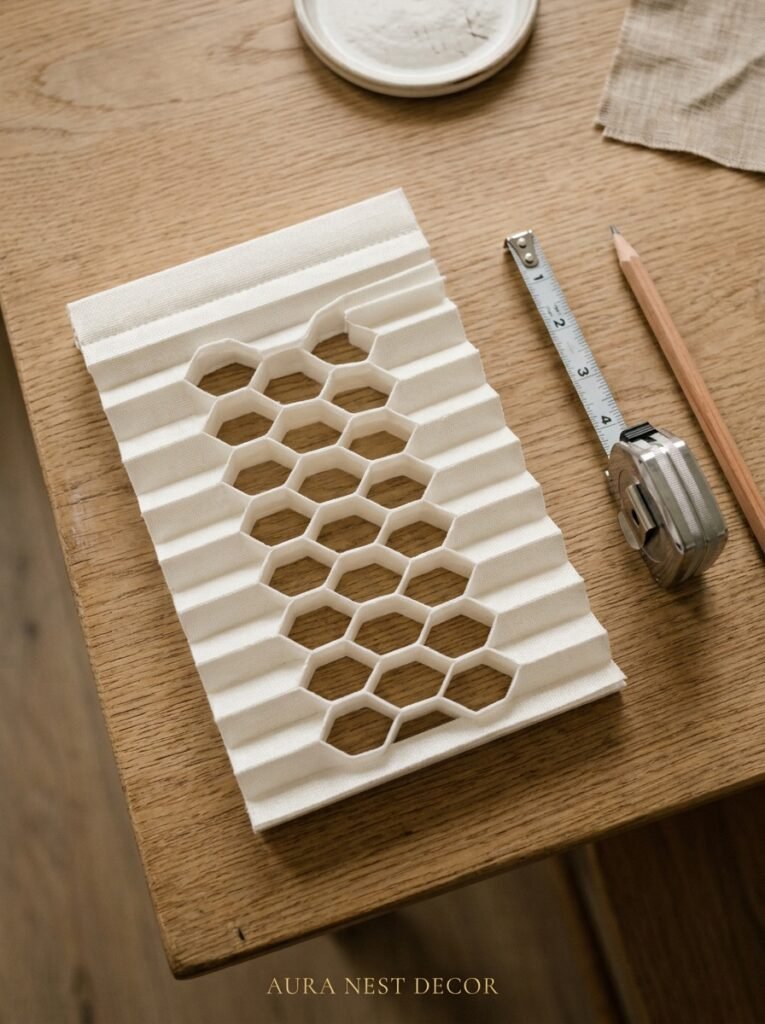
IKEA’s TRETUR roller blinds. I’m not going to pretend that’s an exciting recommendation, but hear me out — they come in a blackout version that genuinely blocks light well, they’re priced at a point where you can buy multiples without crying, and the clean minimal design works in almost any living room.
The trick is to install them properly, hang them high, and pair them with good curtain panels either side. The curtains do the heavy lifting aesthetically and the IKEA blind does the practical work underneath.
Side note — this combo actually photographs really well for Pinterest, which is maybe why it keeps showing up there. The layered look reads as more expensive than it is.
If you’re in the UK, John Lewis own-brand roller blinds do a similar thing at a slightly higher price point, but the quality jump is real. If budget allows, worth it.
—
10. Motorised Blinds: Luxury or Just Laziness?
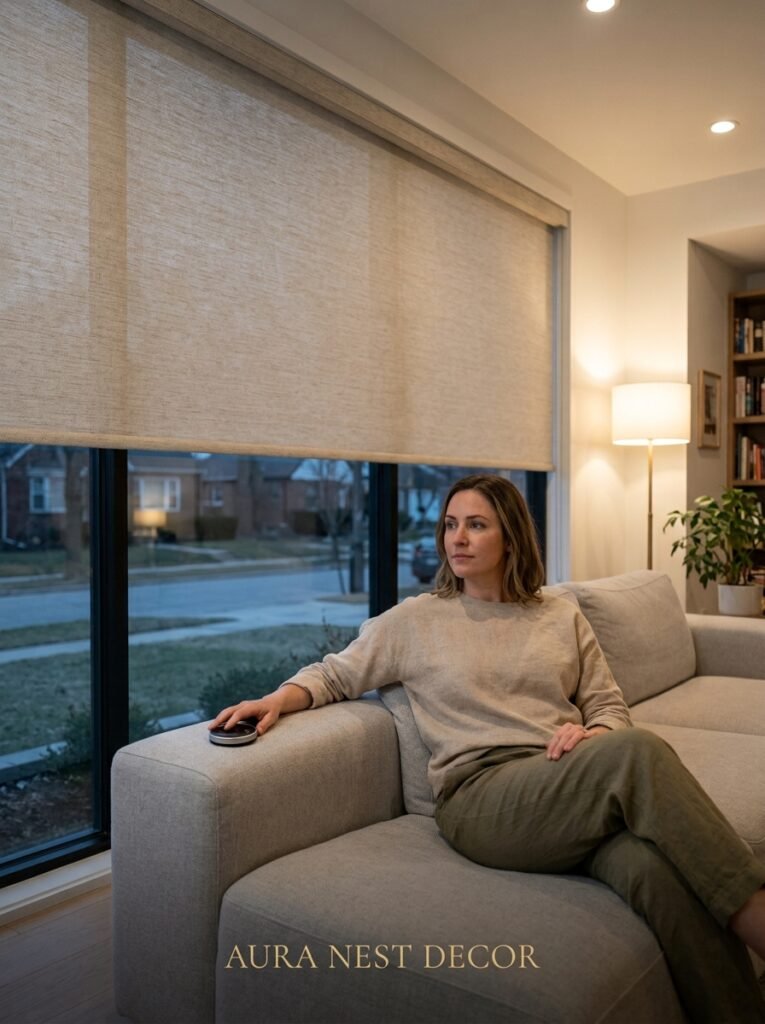
Okay, honestly? Both. And I mean that in the best way.
Motorised blinds — ones controlled by a remote or a phone app — used to be a thing only in renovated penthouses and fancy self-builds. They’ve become genuinely affordable in the last few years and I think they’re worth considering for living rooms specifically, because living room windows tend to be large and awkward to reach.
The practical upside is real: you can adjust light without getting up, programme them to close at sunset, and integrate them with smart home systems if that’s your thing. The aesthetic upside is also real: no cords. Nothing dangling. The window looks completely clean.
“The absence of a cord does more for a window’s appearance than you’d expect until you see it.”
For US homes using smart devices like Alexa or Google Home, the integration is fairly simple. UK homeowners — particularly anyone renovating or doing a new build — should at least consider the wiring while walls are open. Retrofitting is messier, though still doable.
—
11. The Specific Details That Actually Elevate the Whole Thing
This section is short because these are small but they matter.
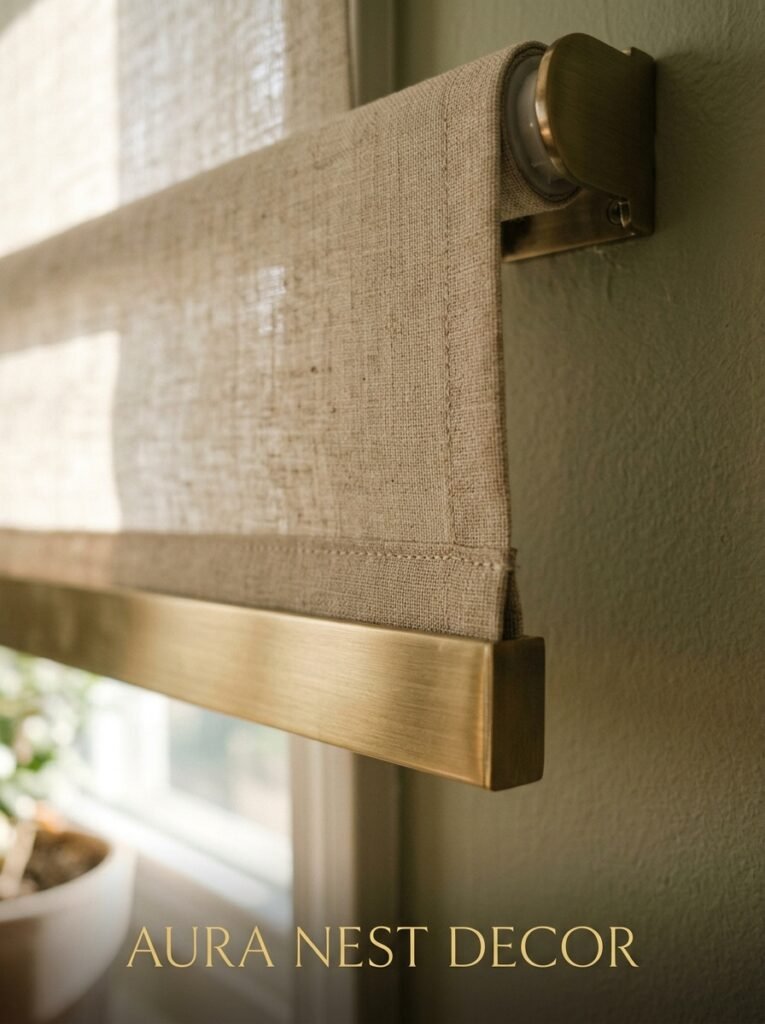
Matching your blind colour to your window frame rather than your wall. Choosing a blind cassette — the box at the top — in white if your walls are white, wood tone if your frames are wood. Checking that the pull cord hangs on the side closest to the wall, not in the middle of the window. Making sure your slats are all tilted the same direction before anyone photographs your room.
None of these take time. All of them make a visible difference. It’s the kind of thing you notice in a room that looks put-together even though you can’t say exactly why.
—
12. The Room That Changed My Mind About All of It
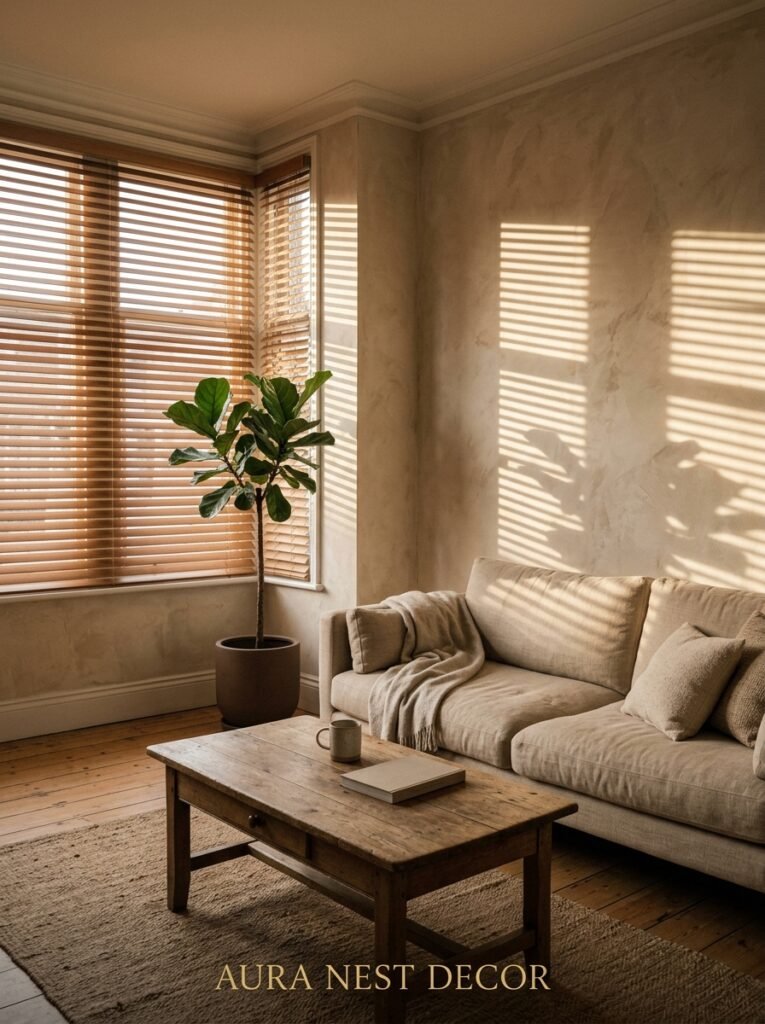
I ended up going with a natural linen-look roller blind in that warm greige I mentioned, hung about 5 inches above the window frame, extending past the frame on each side, with simple cream curtain panels hanging wide. No pattern on the blinds. A subtle texture in the curtain fabric.
The room looks completely different. Not because the blinds are spectacular — they’re not. They’re calm. Quiet. They let the evening light in beautifully and block it when I need to. They don’t apologize and they don’t shout.
That’s the whole goal, really. The best window treatment is the one you stop noticing because it just works.
—
❓ FAQ
Q: Should living room blinds match throughout the whole room? A: They don’t need to be identical, but they should feel related. Same tone family, similar style — that’s enough. Mixing a roller blind on one window and Roman blind on another can work if the fabrics are close in color. What looks off is wildly different colours or styles in the same sightline.
Q: How do I measure blinds properly for a living room window? A: For inside-mount blinds (fitting inside the frame), measure width at three points — top, middle, bottom — and use the narrowest. For height, measure from the top of the frame to the sill. For outside-mount (on the wall above), add at least 2 to 4 inches on each side and hang as high as you comfortably can.
Q: Are blackout blinds worth it in a living room? A: Depends on how the window faces. A south-facing living room in the US or a west-facing one in the UK can get brutal afternoon glare — blackout or at least high-opacity blinds are worth every penny. North-facing rooms that already feel dark? Stick to light-filtering. You need all the natural light you can get.
—
💭 Final Thoughts
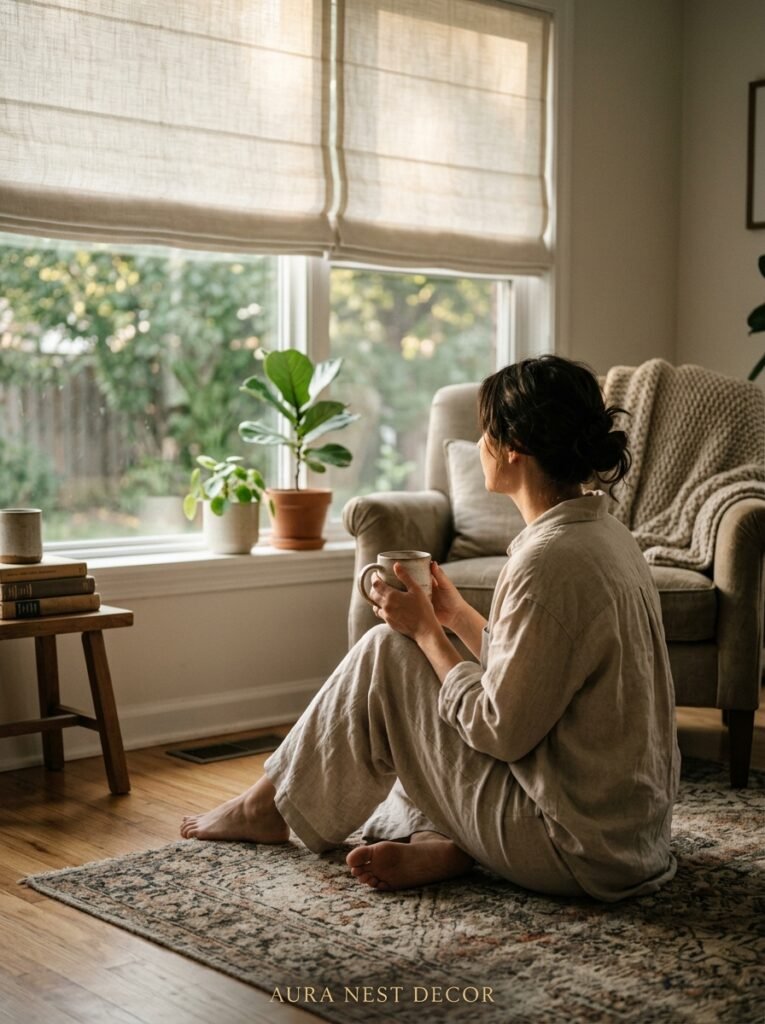
Windows are the one thing in a living room that every visitor sees, every day, in every kind of light. They’re not a footnote — they’re part of the room’s whole personality. The right blind doesn’t make the room; but the wrong one quietly undermines everything else you’ve done.
So: how are your windows doing right now?