
The Living Room Decorations That Make a House Finally Feel Like Home
There’s a moment — you’ve probably felt it — when you walk into someone’s living room and something just settles inside you. The air is warm, the light is soft, and every corner feels intentional without feeling stiff. That feeling isn’t accidental. It’s the quiet result of thoughtful living room decorations that speak a language beyond furniture and color — they speak belonging.
—
1. Why Your Living Room Deserves More Than a Pinterest Scroll
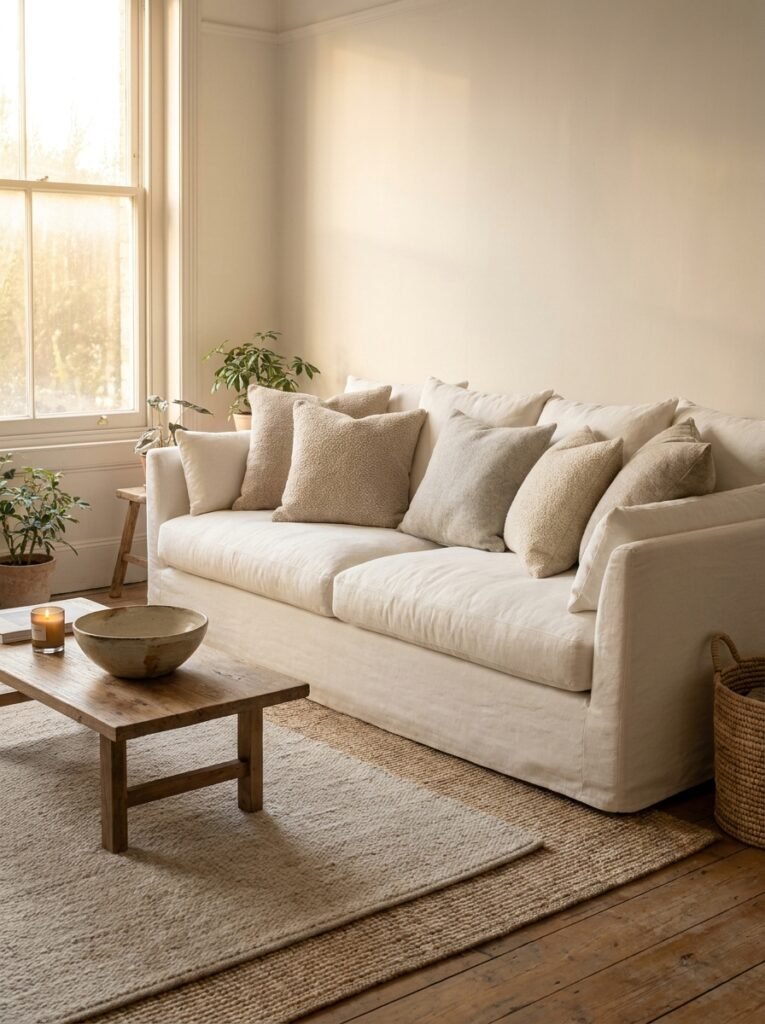
Most of us have spent hours pinning gorgeous living rooms — linen sofas, layered rugs, the perfect gallery wall — and then looked around at our own space and felt a quiet defeat. The gap between inspiration and reality can feel enormous. But here’s the truth that gets lost in the aesthetic overwhelm: the most beautiful living rooms aren’t the most expensive ones. They’re the most considered ones.
Every piece has a story. Every corner has a purpose. The decorations you choose for your living room aren’t just visual — they’re emotional anchors. They’re what your eyes find when you come home tired, when you sit quietly on a Sunday, when you host people you love. Getting them right is worth every ounce of intention you can give.
“A living room that feels like you is worth more than a living room that looks like a magazine.”
—
2. The Emotional Architecture of a Cozy Living Room
Before you buy a single throw pillow or hang a single frame, there’s a foundational question to ask yourself: How do I want to feel in this room? Not how do I want it to look — how do I want to feel? Calm? Energized? Creative? Deeply at ease?
This question is the emotional architecture beneath every great living room design. A room built for calm will lean into soft neutrals, organic textures, layered lighting, and minimal visual clutter. A room built for energy might embrace bold art, jewel-toned accents, and open, flowing furniture arrangements. There’s no wrong answer — but skipping the question leads to spaces that look assembled rather than alive. Start from the inside out, and every decoration decision becomes clearer, easier, and more meaningful.
—
3. The Secret Power of Layered Lighting in Living Room Decor
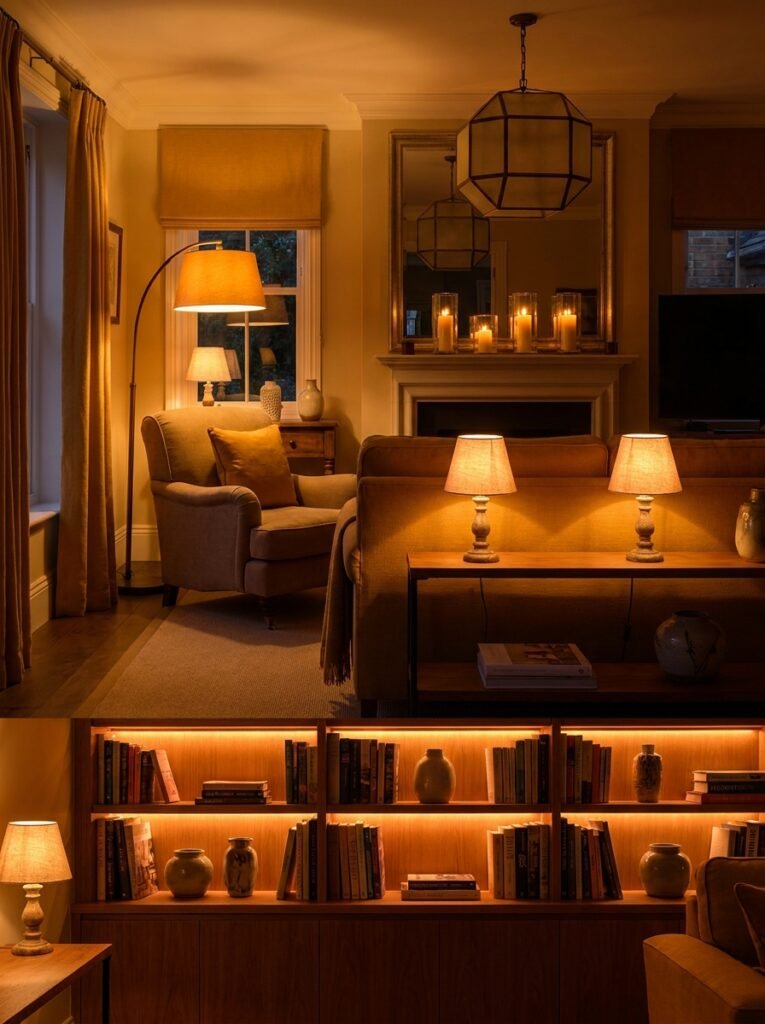
If you’ve ever wondered why a beautifully decorated room still feels flat in photographs — or in person — the answer is almost always lighting. Overhead lighting alone creates a clinical, shadowless effect that no amount of throw blankets can fix. The real magic lives in layers.
Think about three distinct lighting tiers. Ambient lighting gives the room its overall glow — a ceiling fixture, recessed lights, or a statement chandelier. Task lighting adds function and intimacy — a floor lamp beside the reading chair, a table lamp on the console. Accent lighting is the secret weapon — candles, LED strips behind a bookcase, a small light inside a glass cabinet. When all three work together, the room stops feeling like a room and starts feeling like an experience. Swap harsh bulbs for warm-toned ones (2700K to 3000K is the sweet spot), and watch your existing decorations transform overnight.
—
4. Gallery Walls That Tell a Story Worth Reading
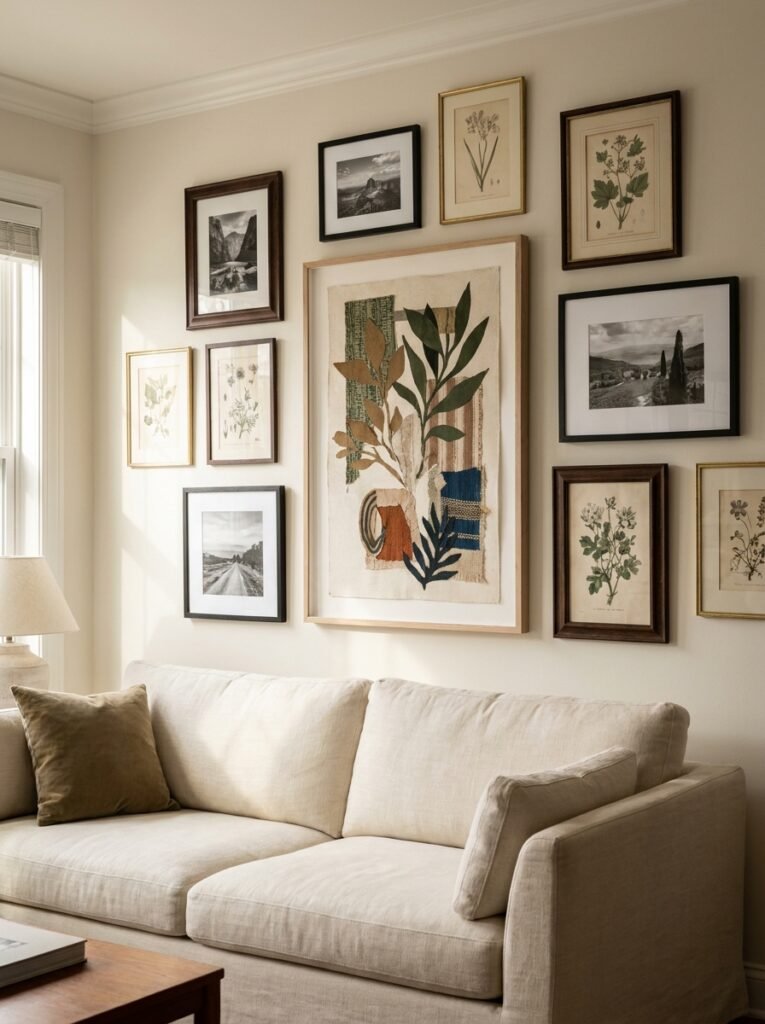
A gallery wall done well is one of the most personal things you can put in a living room. A gallery wall done poorly is just a collection of frames that confuse the eye. The difference is narrative — does the arrangement tell a story, or just fill space?
Begin by choosing a theme that means something to you. It doesn’t have to be grand. It could be travel memories, botanical prints you’ve collected over years, black-and-white family photographs, or a mix of original art from local markets. The key is cohesion — either in color palette, frame finish, or subject matter. Lay everything on the floor first, adjust the arrangement until it feels balanced, then use paper templates taped to the wall before you put a single nail in. Give the arrangement breathing room — overcrowding kills the effect. And always anchor the wall with one statement piece before building outward.
—
5. The Underrated Magic of Textiles in a Living Room
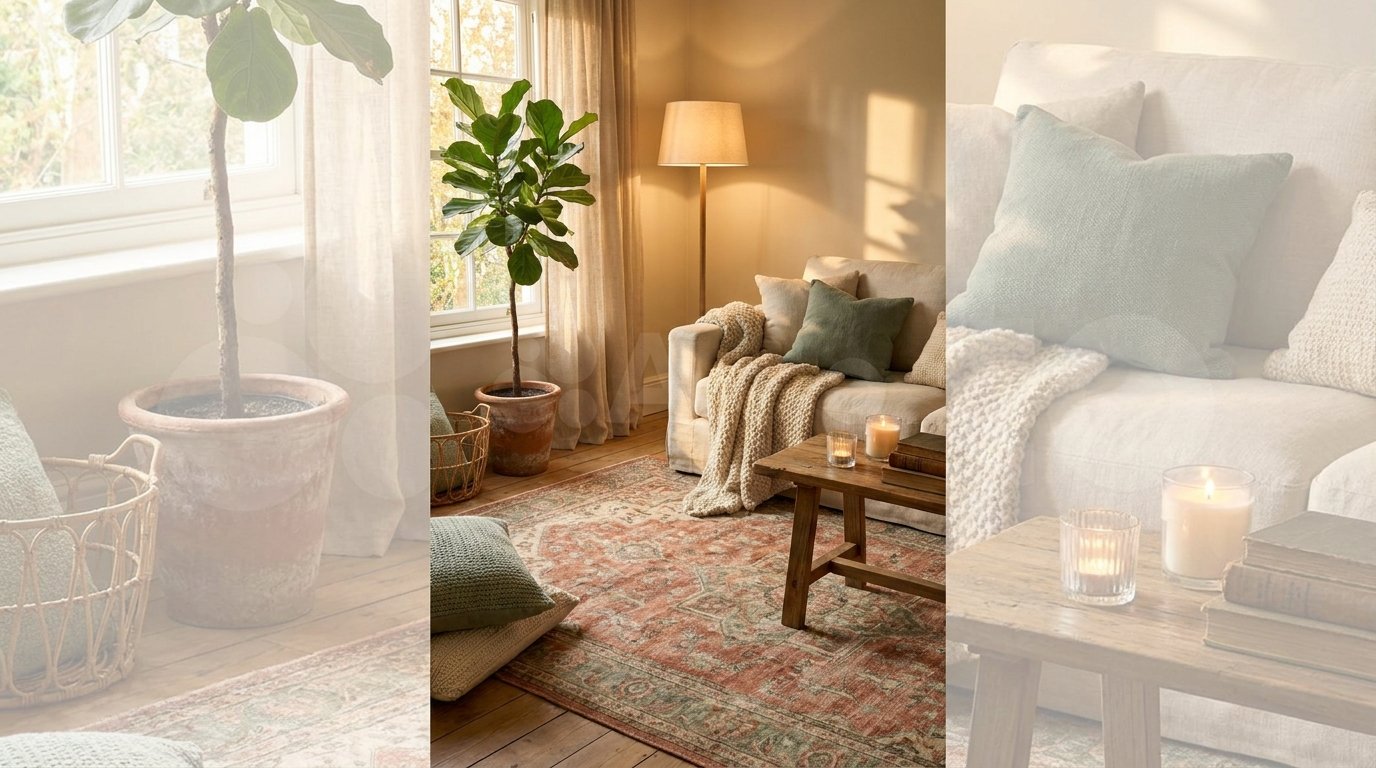
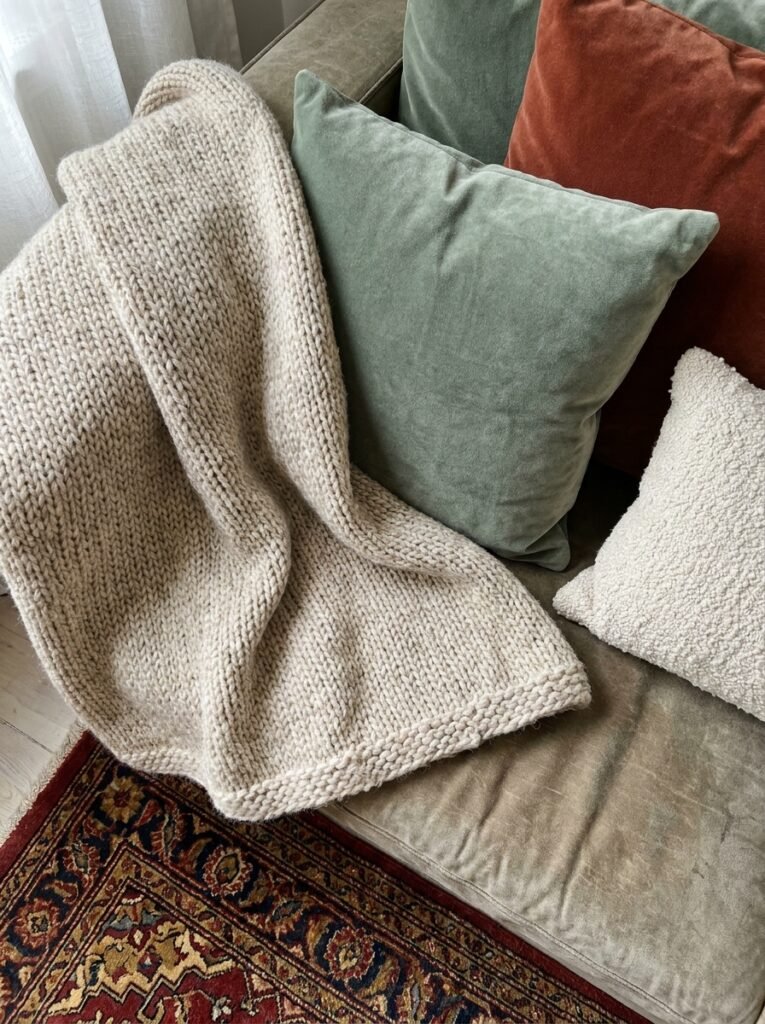
Textiles are the fastest, most affordable way to transform a living room — and they’re also the most emotionally resonant. There’s something deeply human about softness. A chunky knit throw draped over a sofa arm. A Persian-style rug that ties warm and cool tones together. Velvet cushions in a dusty sage that make you want to sit down immediately.
Layering textiles adds dimension that paint and furniture alone can’t achieve. Start with your rug as the foundation — it anchors the entire seating area and sets the tone. Then add your sofa cushions in varying sizes and textures (mix linen with velvet, cotton with boucle). Finish with a throw or two that aren’t perfectly folded but artfully casual — like someone just got up from reading. The room suddenly feels lived in, warm, and genuinely welcoming rather than staged.
“Softness is a design principle. The rooms we love most always invite us to touch something.”
—
6. Choosing a Color Palette That Feels Like You
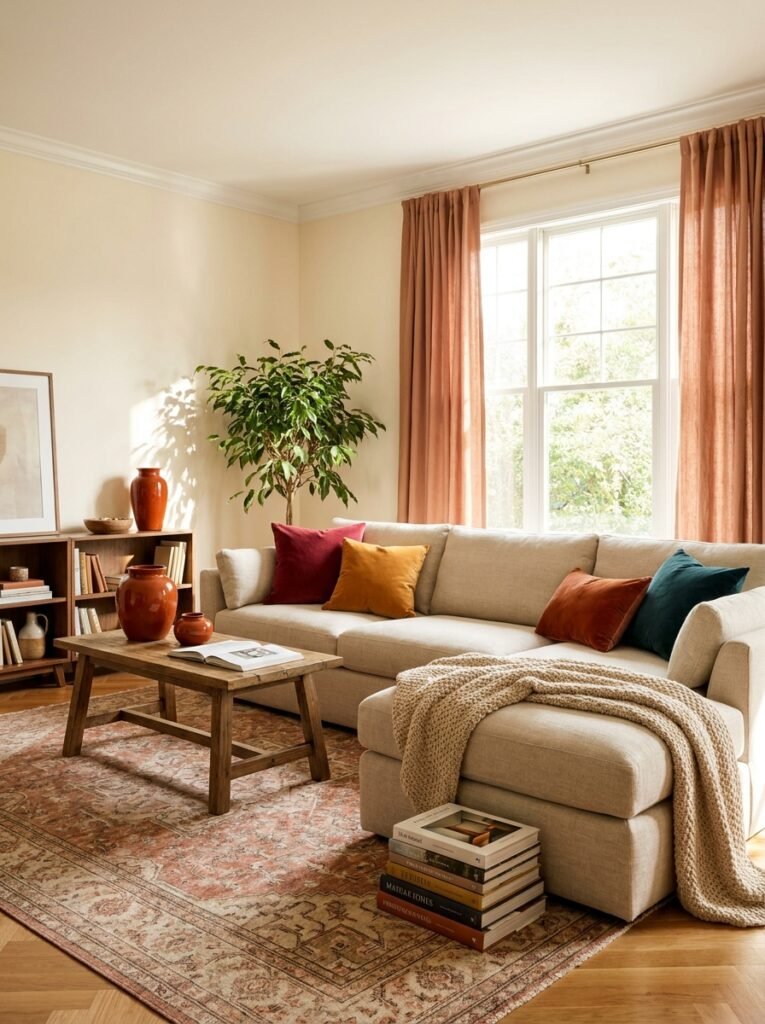
Color is one of the most psychologically powerful tools in living room decoration, and yet most people choose colors by looking at paint swatches alone — which is the least reliable method possible. Colors shift dramatically depending on your light, your furniture, and what surrounds them.
A few principles that hold true regardless of style: warm neutrals (creams, taupes, warm whites) create a cocoon-like effect that most people find universally comforting. Cool neutrals (greys, blues, greens) bring calm and are especially effective in rooms with good natural light. Bold accent colors — terracotta, deep green, navy, burnt orange — work best in small doses, used on a single wall, through accessories, or in artwork. The 60-30-10 rule is a reliable guide: 60% dominant color (walls, large furniture), 30% secondary color (curtains, accent chairs, rugs), 10% accent color (cushions, art, objects). Follow this rhythm and your palette will feel intentional rather than random.
—
7. Furniture Arrangement: The Design Decision Most People Get Wrong
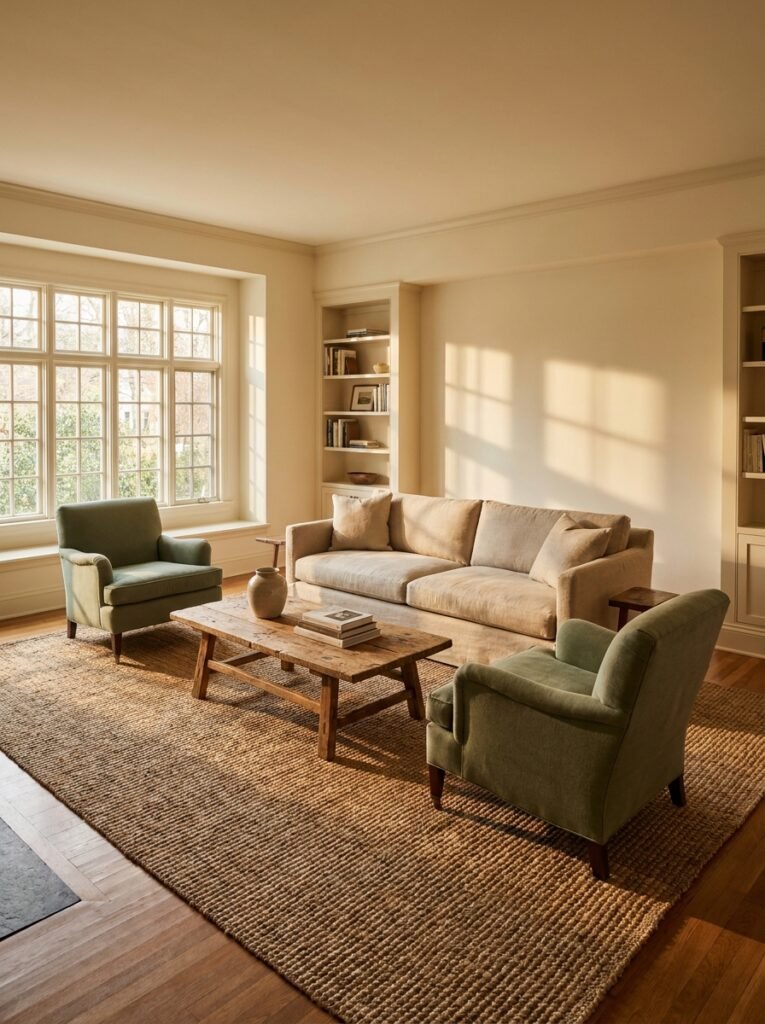
You could have the most beautiful individual pieces in the world, and if they’re arranged poorly, the room will feel awkward. Furniture arrangement is spatial storytelling — it determines how people move through a room, where they instinctively sit, and how conversations naturally flow.
The most common mistake is pushing every piece of furniture against the walls. It feels logical (more floor space!) but creates a disconnected, waiting-room effect. Instead, float your sofa and chairs inward, angled toward each other, with the rug grounding the grouping. Leave a 45-to-50-centimeter walkway around the arrangement — enough to move comfortably but close enough to feel intimate. If your room is long and narrow, create two distinct seating zones rather than forcing one oversized arrangement. And always ensure that no seat in the room feels isolated — every chair should feel like it’s part of the conversation.
—
8. Bringing Nature Inside — and Why It Changes Everything
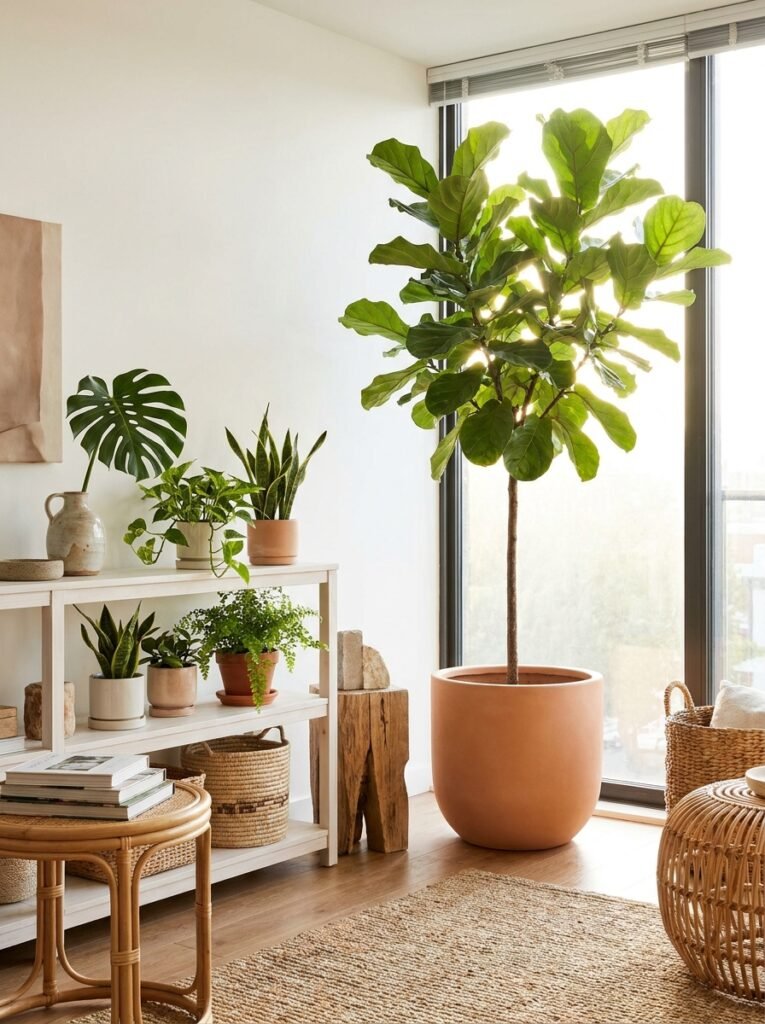
There is decades of research behind biophilic design — the human instinct to connect with nature — and it explains why plants, natural materials, and organic shapes make living rooms feel so fundamentally better. You don’t need a greenhouse. You just need intention.
A single large plant — a fiddle-leaf fig, a monstera, a tall olive tree — can anchor an entire corner and bring a room to life in a way that no purchased decoration can replicate. Smaller plants grouped on a shelf or coffee table create a lived-in, curated feel. If you truly struggle to keep plants alive, high-quality faux varieties have advanced dramatically and are now genuinely convincing. Beyond plants, incorporate natural materials wherever possible — rattan, jute, linen, wood, stone. These textures communicate to your nervous system that you are somewhere safe, somewhere grounded, somewhere real.
—
9. The Art of the Intentional Shelf
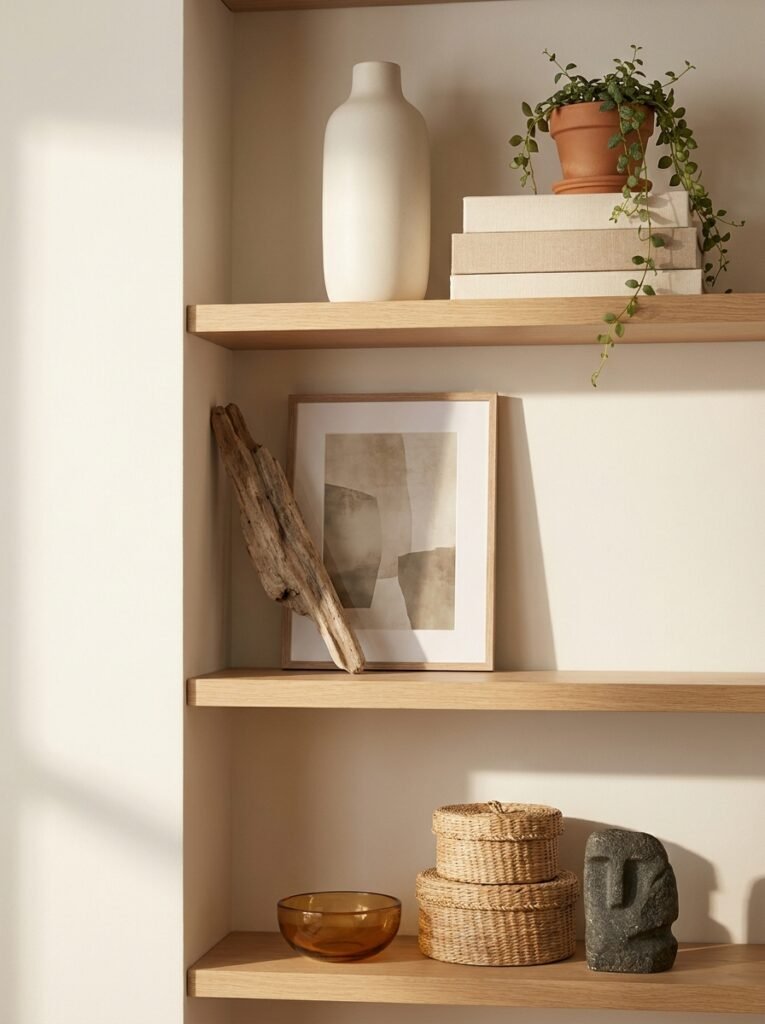
Shelves are one of the most misunderstood surfaces in a living room. They either become a dumping ground for everything that doesn’t have a home, or they’re styled with such clinical perfection that they look more like a showroom than someone’s home. The sweet spot — the one that photographs beautifully and feels authentic — lives between these extremes.
The principles of great shelf styling are relatively simple. Group objects in odd numbers (threes and fives feel more natural than twos and fours). Vary height dramatically — tall items, medium items, and low items should all exist on the same shelf. Mix textures: a ceramic vase beside a stack of linen-covered books beside a small plant beside a found object from a walk or a trip. Leave some open space — negative space is not wasted space, it’s breathing room. And rotate your objects seasonally. Your shelves should reflect who you are right now, not who you were when you moved in.
“The best-styled shelves hold objects that mean something — not just objects that match.”
—
10. Small Living Room Decorations That Make Big Spaces Feel Larger
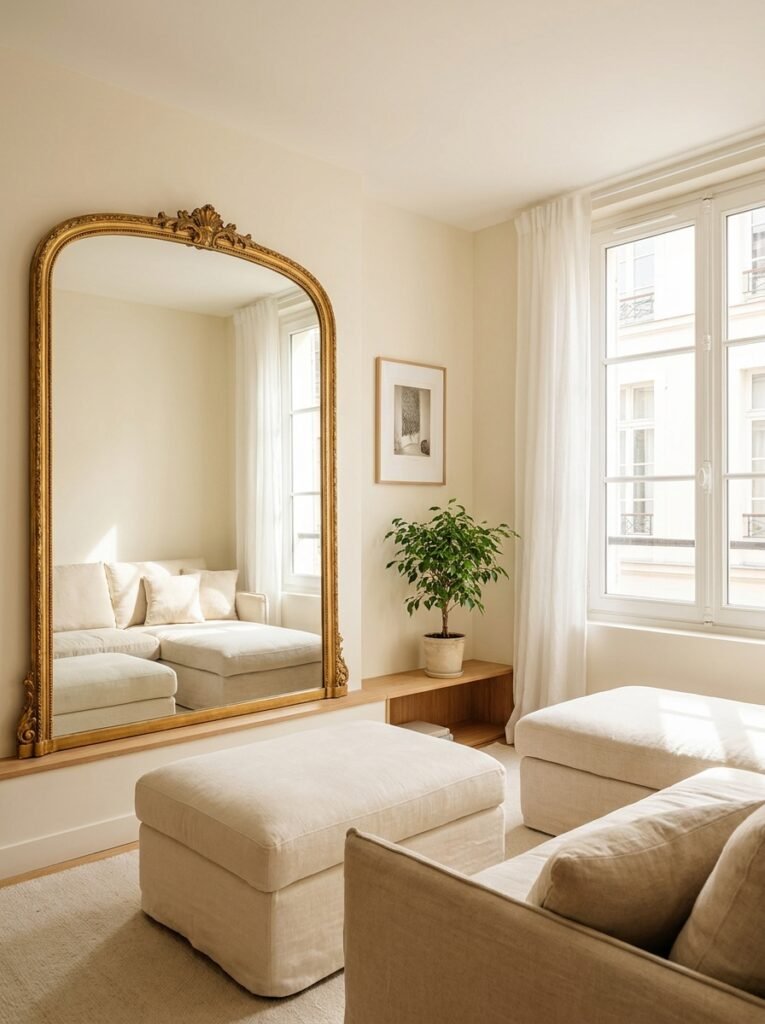
Small living rooms are not a design problem — they’re a design opportunity. With the right decorations and spatial choices, a compact room can feel more intimate, more curated, and more personal than a sprawling one.
Mirrors are your first and most powerful tool. A large mirror placed on a wall opposite natural light will visually double the space and bounce warmth throughout the room. Choose statement frames — ornate gold, bold black, arched — because the mirror itself becomes a decoration. Beyond mirrors, keep your color palette light and consistent (minimal contrast between walls and trim reads as spacious). Choose multi-functional furniture — an ottoman that stores blankets, a coffee table with lower shelves for books, a sofa with chaise that doubles as a reading nook. And edit ruthlessly: in a small room, every piece must earn its place.
—
11. Seasonal Decorating: How to Keep Your Living Room Feeling Fresh All Year
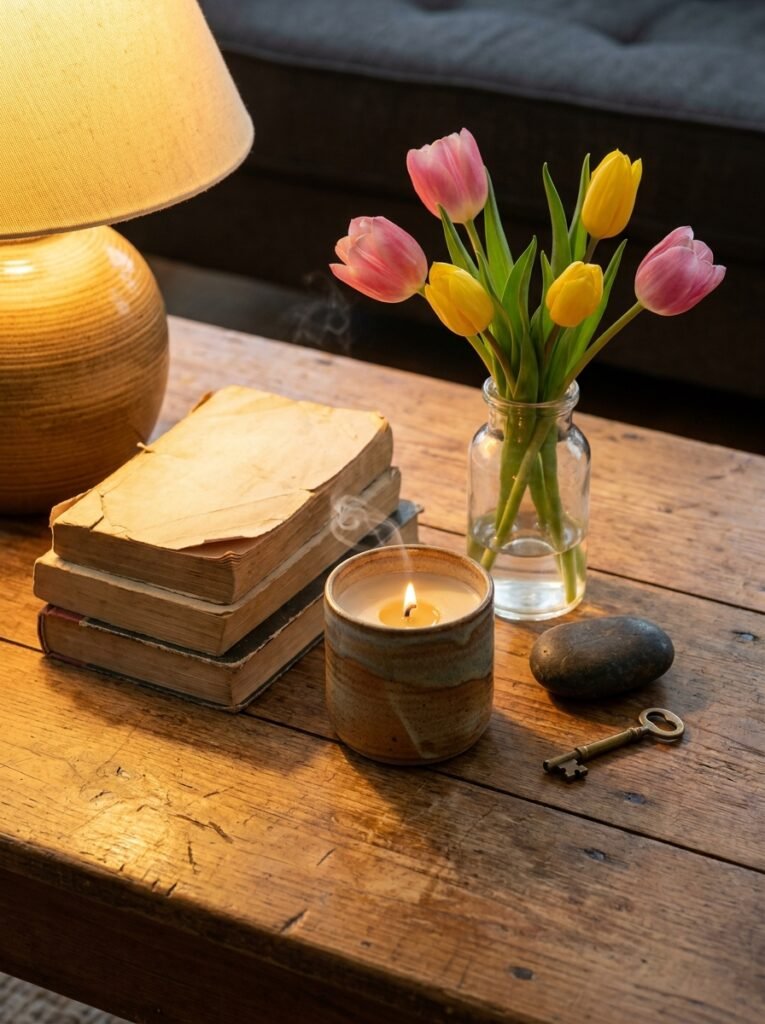
One of the most overlooked strategies for a living room that stays inspiring is seasonal rotation. The same room can feel entirely different in January versus July if you approach it with intentional seasonal updates — and this doesn’t require new furniture or major investment.
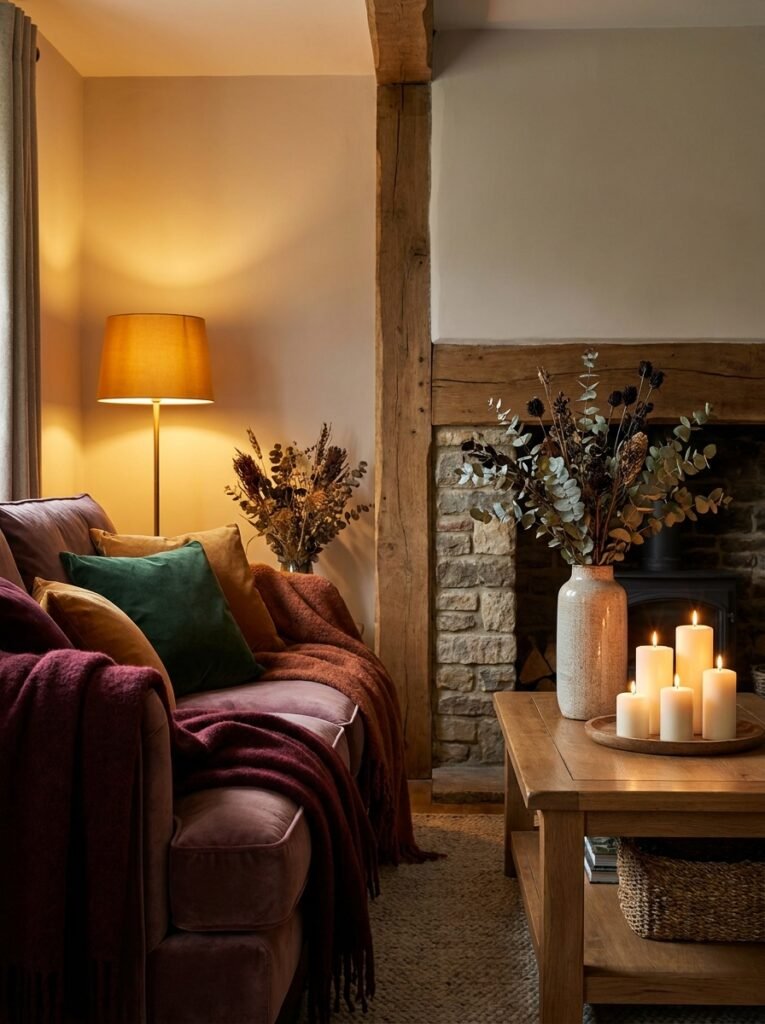
In autumn and winter, layer in warmth: add an extra throw, swap out light cushions for deeper-toned velvet ones, introduce candles, bring in dried botanicals or a vase of branches. In spring and summer, strip back the layers: lighter linen covers, fresh flowers, brighter art swapped in for darker winter pieces, windows opened to bring in outdoor sounds and light. Seasonal decorating keeps your relationship with your home dynamic — it gives you a reason to look at your space with fresh eyes every few months and reminds you that your home is a living, evolving thing.
—
12. The Finishing Touches That Separate Good Rooms from Unforgettable Ones
There are rooms you sit in and rooms you remember. The difference almost always lives in the details — the finishing touches that signal deep care and genuine personality. These are the things that guests can’t quite name but absolutely feel.
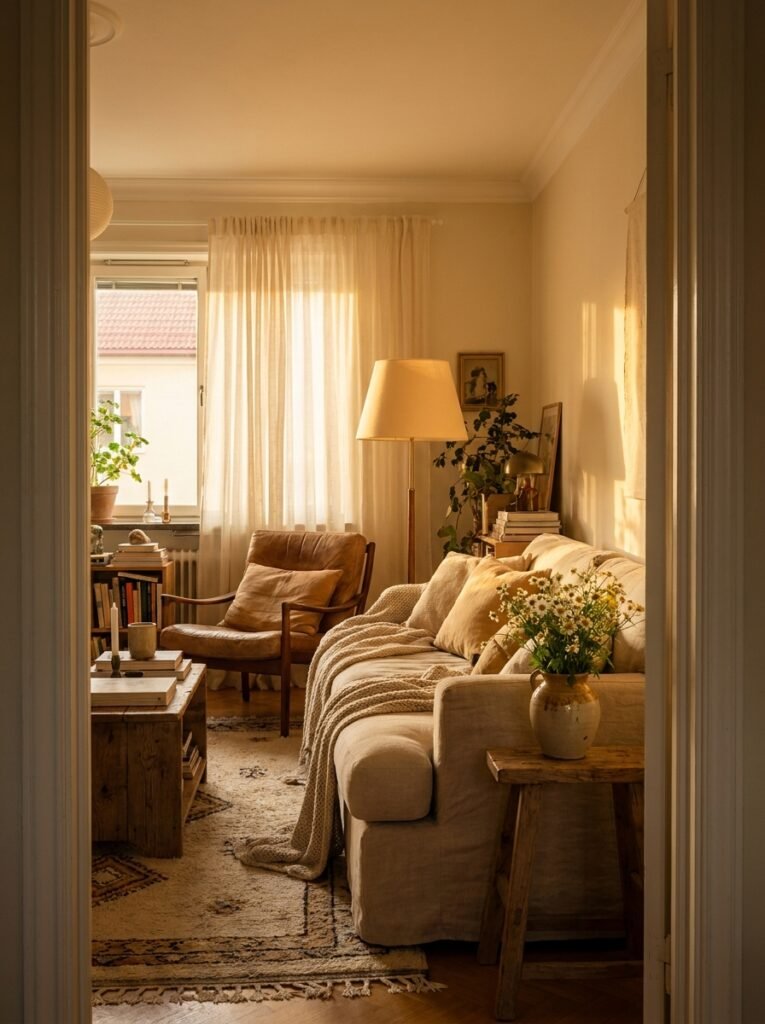
A stack of books on the coffee table that you’ve actually read. A scented candle whose fragrance you specifically chose because it reminds you of somewhere you love. A piece of art that makes you stop and look every single time you pass it. A throw that is genuinely, luxuriously soft — not just decorative but actually used. Fresh flowers, even a simple bunch from the grocery store, in a vessel that means something to you. These finishing touches are not afterthoughts. They are the soul of the room, the evidence that a real person lives here and loves being here.
—
🌿 How to Take Care of Your Living Room Decorations
Living room decorations require a little ongoing attention to stay looking and feeling their best — and the routine doesn’t have to be complicated.
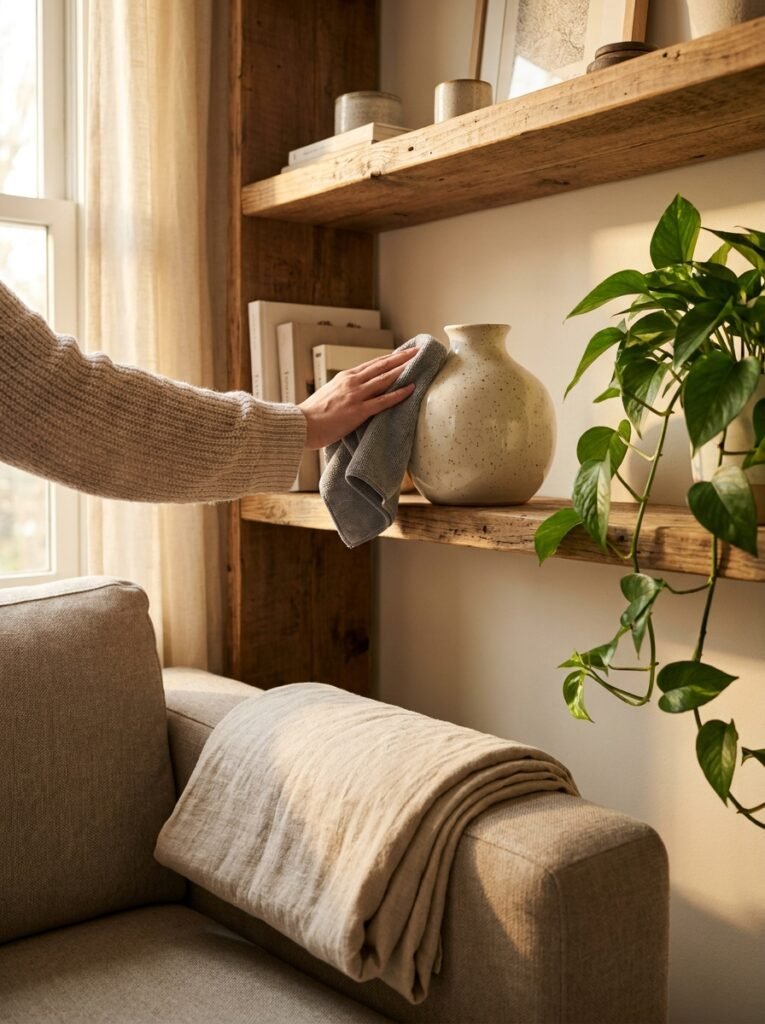
Dust regularly and with care — decorative objects collect dust quickly, and a layer of grime dulls even the most beautiful piece. A soft microfiber cloth works for most surfaces; ceramics and glass can be wiped with a slightly damp cloth. Rotate your textiles seasonally, washing throws and cushion covers at least twice a year to keep them fresh and soft. Check your plants weekly — not just for water, but for light, dust on the leaves, and signs of outgrowing their pots. Rotate small accessories every few months to keep the room feeling new; what felt tired may feel fresh again after six months in a drawer. And once a year, stand in the doorway and look at your room as if seeing it for the first time — remove anything that no longer belongs, and give space to something that does.
—
❓ FAQ
Q: How do I decorate a living room on a tight budget without it looking cheap? A: Focus first on textiles, lighting, and plants — three of the most impactful categories and also the most affordable. A beautiful rug (look at vintage or discount stores), warm-toned bulbs, and a few well-placed plants will transform a room more than expensive furniture will. Thrift stores and online marketplaces are also extraordinary sources for unique decorative objects at a fraction of retail cost.
Q: What’s the biggest decorating mistake people make in living rooms? A: Buying everything at once from the same store. Rooms that feel curated and personal are almost always built slowly, with pieces gathered from different sources over time. When everything matches perfectly, a room looks assembled. When pieces come from different places and eras, it looks lived in — which is always more beautiful.
Q: How do I make a rental living room feel like home without permanent changes? A: Rugs, textiles, removable wallpaper, plants, lighting (floor and table lamps bypass overhead fixtures entirely), and art hung with damage-free strips are your best friends. You can transform even the most beige, forgettable rental living room with these tools alone — and take everything with you when you leave.
—
💭 Final Thought
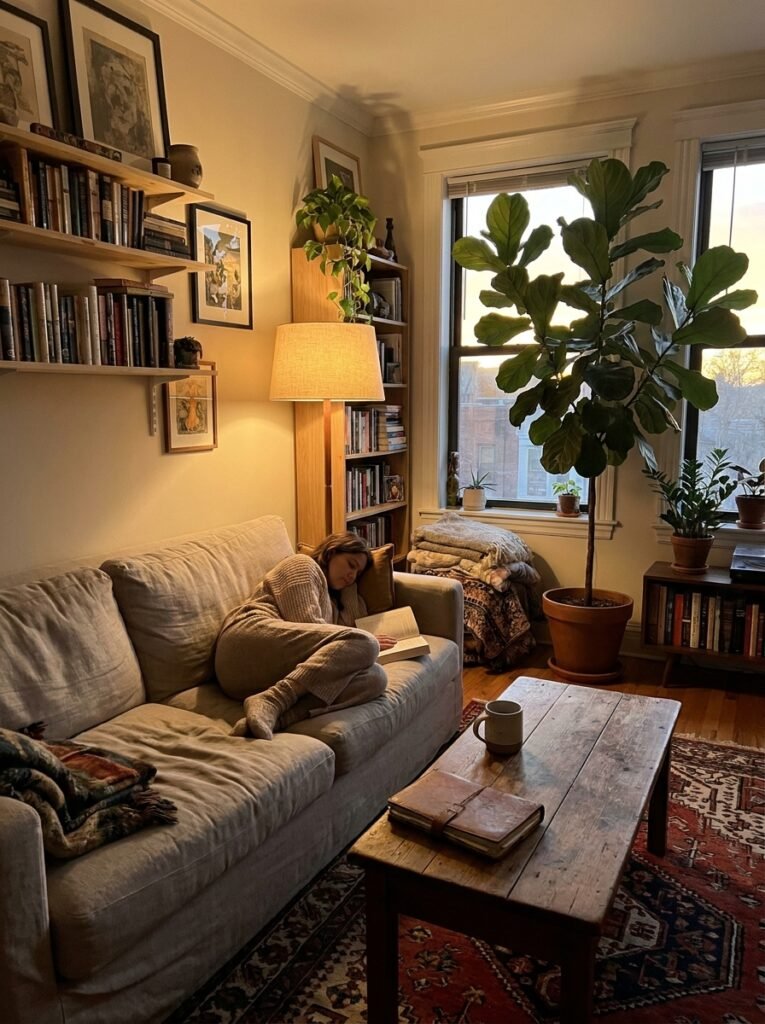
Your living room is not a showroom, a set, or a statement. It is the place where your actual life happens — where you rest, connect, daydream, and come back to yourself at the end of long days. The decorations you choose for it matter not because they impress anyone, but because they quietly shape how you feel every single day you’re home. So here’s the question worth sitting with: when you look at your living room right now, does it feel like you — and if it doesn’t, what one small change would bring it a little closer?