The Living Room Glow-Up Nobody Talks About (But Everyone Notices)
You walk into someone’s house and something just hits. The room feels right. You don’t know why, you can’t name it, but you want to sit down and stay forever. That’s not accident. That’s intentional living room design — and most of the tricks behind it are simpler than you’d think.
—
1. The Light That’s Actually Doing All the Work
Here’s the thing nobody tells you when you’re decorating: your overhead light is probably ruining everything.
I mean that genuinely. That flat, top-down light from your ceiling fixture? It flattens faces, kills shadows, and makes even the most beautiful room look like a waiting area. And we’ve all been living with it because it came with the house and nobody questioned it.
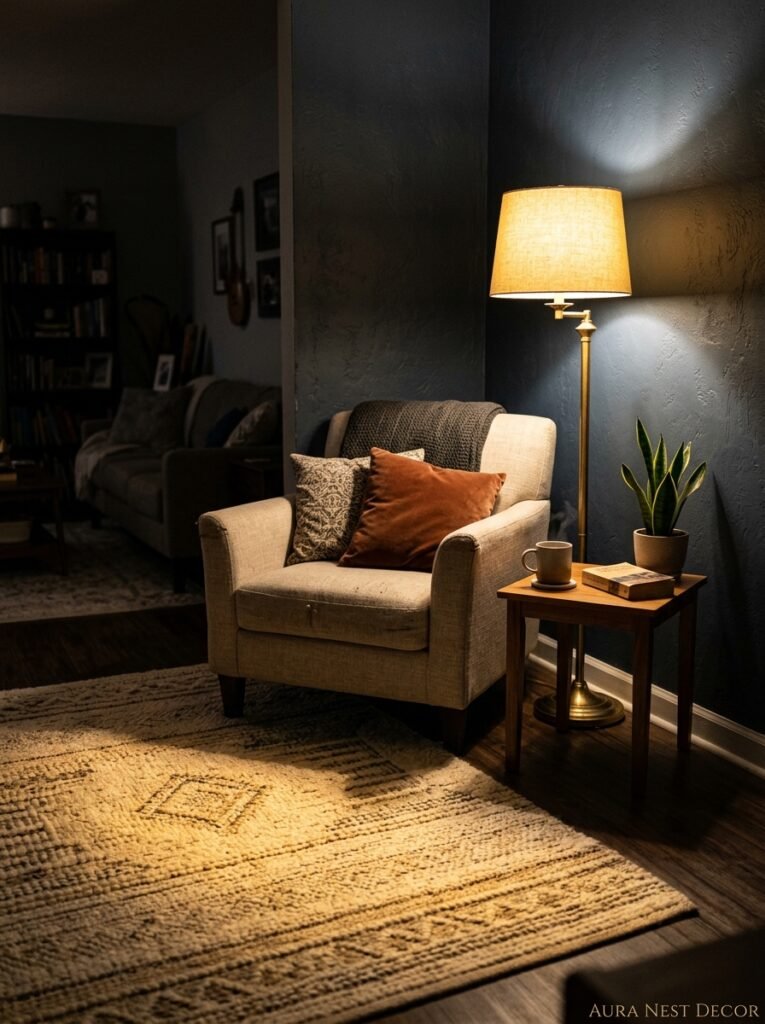
The rooms that feel alive — the ones on your saved Pinterest boards, the ones you screenshot and send your friends — they’re almost never lit from above. They’re lit from the sides, from below, from warm little pools of amber scattered around the room. An Edison bulb table lamp on a side table at 7pm does more for a living room than any ceiling fixture could dream of.
So before you buy a new sofa or repaint the walls, I’d start here. Get yourself two or three inexpensive table lamps and a floor lamp. Put them in corners. Plug them in at dusk and stand back. You’ll actually gasp a little.
“Your overhead light is working against you. Turn it off and watch what happens.”
Warm bulbs only — 2700K or lower. That’s not a preference, that’s just correct. Cool white light belongs in offices and hospitals, not in the room where you want to feel like yourself at the end of the day.
—
2. The Sofa Rule Nobody Warned You About Before You Bought Yours
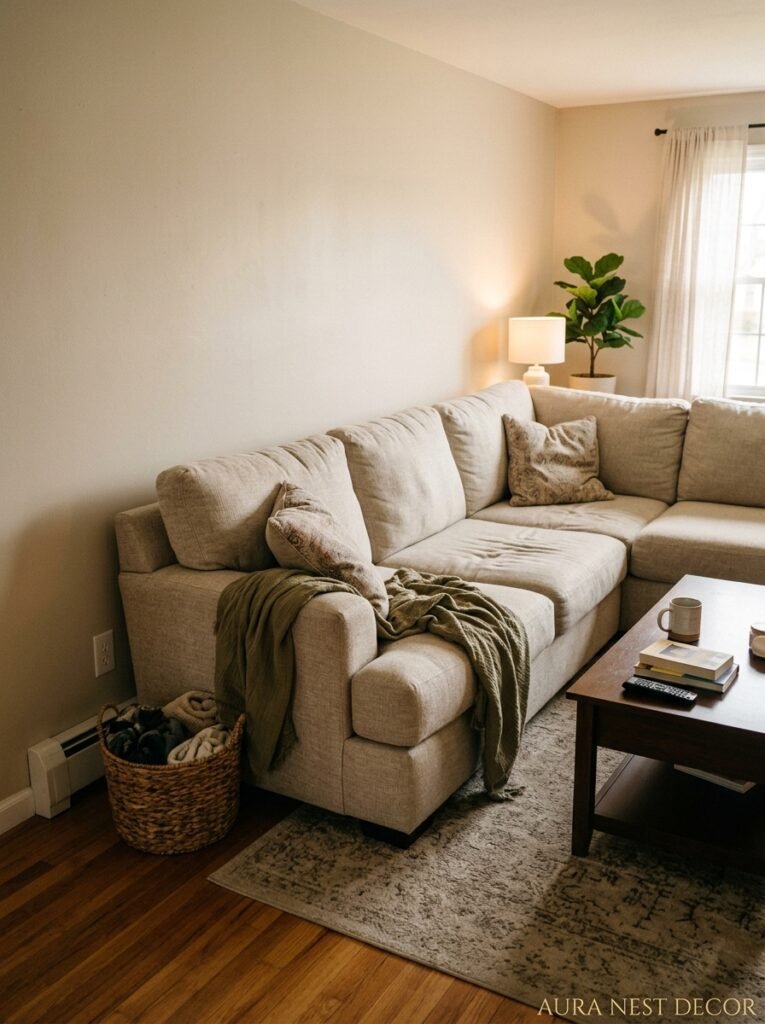
The sofa is always the first thing people fixate on, which makes sense because it’s enormous and expensive. But the most common mistake isn’t the color or the style. It’s the size. Specifically — too small, pushed against the wall.
A sofa floating in the middle of a room, even a modest-sized sofa, makes a space feel intentionally designed. A sofa pressed against the wall reads as… uncertain. Like someone wasn’t sure where to put it and defaulted to the edges.
Pull it forward. Even six inches makes a difference. Even twelve inches off the wall and suddenly you’ve got room for a console table behind it, which is one of those styling tricks that makes everyone ask who did your room? You put a lamp on that console, a little vase, maybe a stack of books, and now your sofa has a whole moment happening.
And if your sofa is too small for the room, you’ll know because everything will look weirdly spread out, like furniture floating in space with no relationship to each other. The fix isn’t buying a bigger sofa necessarily — it’s often just a large rug that ties everything together and creates visual boundaries. More on that in a second.
—
3. The Color That Keeps Showing Up in Every Beautiful Living Room Right Now
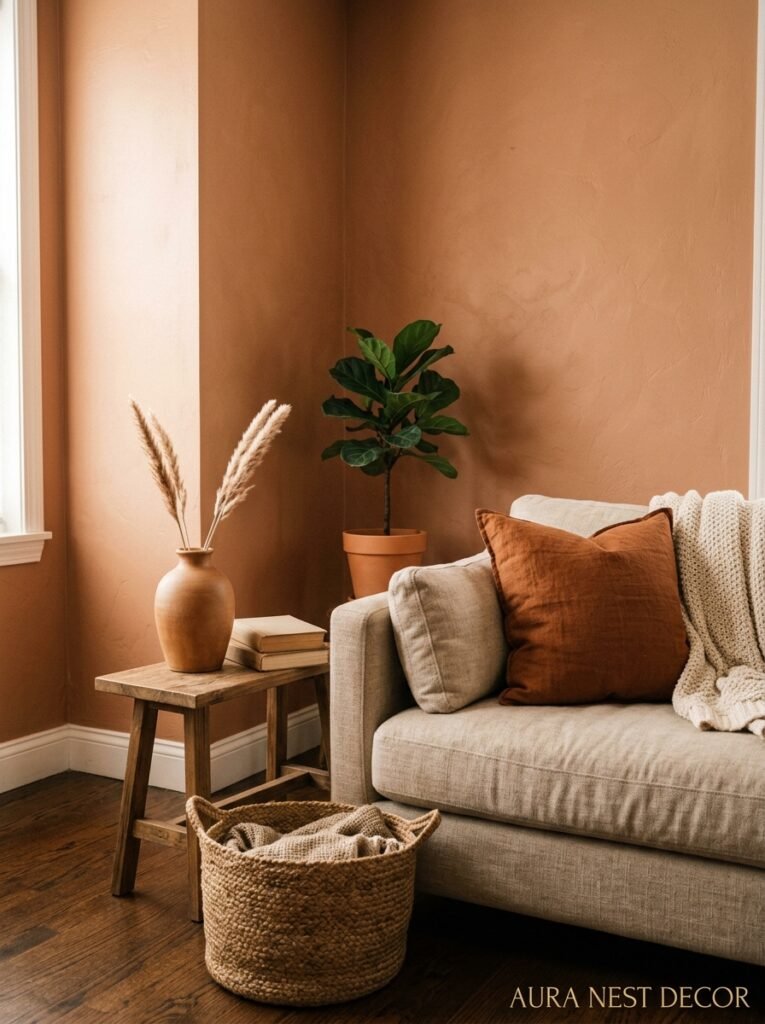
Not gonna lie, I resisted it for a long time. Warm terracotta, deep clay, dusty brick tones — I thought it was a moment that would fade fast. And maybe it will eventually. But right now? In 2025? It’s everywhere, it works, and I kind of love it.
It’s not just terracotta as a wall color (though that’s stunning in a north-facing room that needs warmth). It’s terracotta as an accent. A single terracotta ceramic lamp base. A rust-toned velvet cushion. A woven throw in burnt sienna. These things do something warm and alive to a room that a grey or navy accent just… doesn’t.
The British approach to this is slightly more muted — more of a rosy mushroom, a warm clay, something that works with the grey skies and period architecture. American living rooms are going slightly bolder, especially in sunbelt states where the warmth reads differently against strong natural light.
Either way: the principle is the same. Your room probably needs more warmth than you think it does. And terracotta tones deliver it without making you feel like you’re decorating a Mexican restaurant. The key is keeping everything else pretty neutral — creams, linens, warm whites, natural wood — and letting one or two warm-toned pieces do the talking.
—
4. Why Your Rug Might Be the Reason Your Room Feels Off
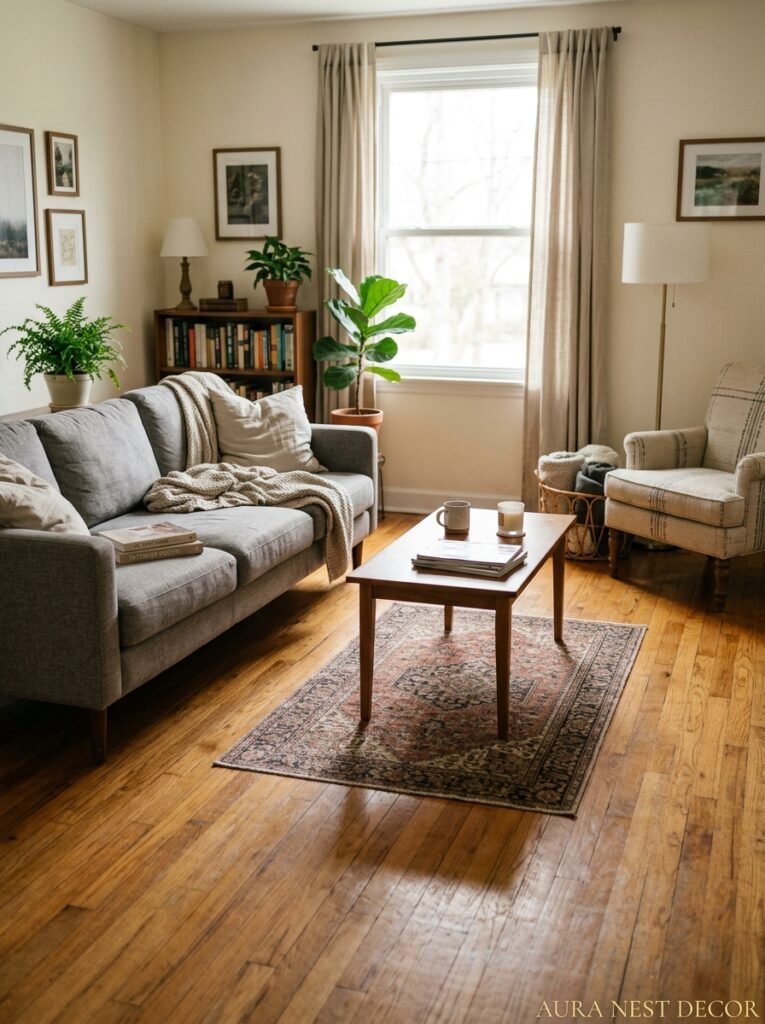
This is the one I come back to over and over because it’s SO common and SO fixable.
Rugs that are too small are an epidemic in living rooms. I see it everywhere — a little 5×7 rug tucked under the coffee table while all the furniture hovers around it awkwardly. It looks like someone put a postage stamp in the middle of the floor and called it done.
A rug should be big enough that at least the front legs of every piece of seating rests on it. Ideally ALL legs on it, but the front legs rule works fine if you can’t quite get there. When furniture sits on the rug, the whole seating area becomes one unified thing. It has edges. It has definition. The room suddenly makes sense spatially in a way it didn’t before.
“If you think your rug is big enough, it probably isn’t. Go one size up. Always.”
For a typical living room, you’re usually looking at an 8×10 minimum, often a 9×12. Yes, that costs more. But a cheap large rug will do more for your room than an expensive small rug. Prioritize size, then quality, then pattern. In that order.
And if you’re in a rental or on a tight budget — layering rugs is genuinely not just an Instagram thing. A large jute base rug with a smaller patterned rug on top can look brilliant and it’s a great way to get coverage without the cost of one giant statement rug.
—
5. The Thing You Think Is Decorating But Is Actually Clutter
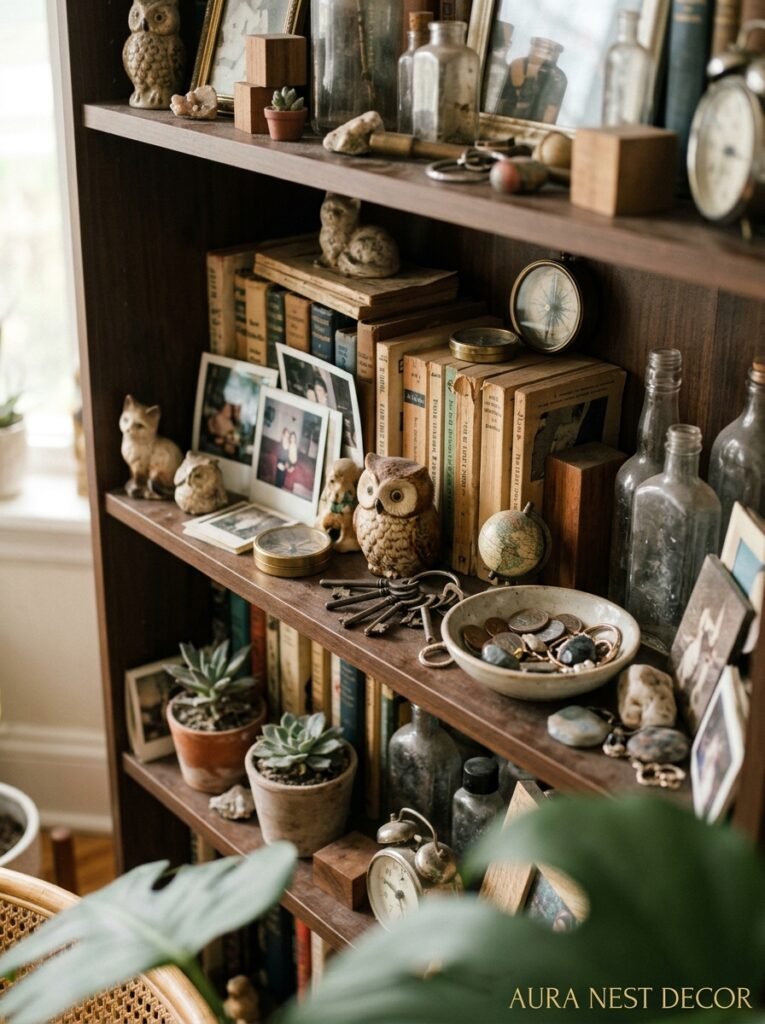
Collections. We need to talk about collections.
Sentimental items, trinkets, candles, small sculptures, little ceramic bits — I love all of it in theory. The problem is that “a few decorative objects on every surface” crosses into visual noise FAST. And once you’re in the noise, the room never relaxes.
Editing is the skill that separates styled rooms from decorated-but-overwhelmed rooms. And it feels brutal but it’s actually freeing: take everything off your shelves and surfaces. Everything. Set it all in another room. Then put back only the things you genuinely love and only the things that are big enough to hold their own.
A single oversized ceramic vase does more than seven small ones grouped together. A large piece of art does more than a gallery wall of fifteen frames (I know, I know — but hear me out). Scale matters enormously and when you go bigger with fewer things, the room breathes.
Side note — this is why hotel rooms feel calm even though they’re often not that interesting. It’s not the furniture, it’s the restraint.
—
6. How Every Gorgeous Pinterest Living Room Gets That Layered Texture Thing
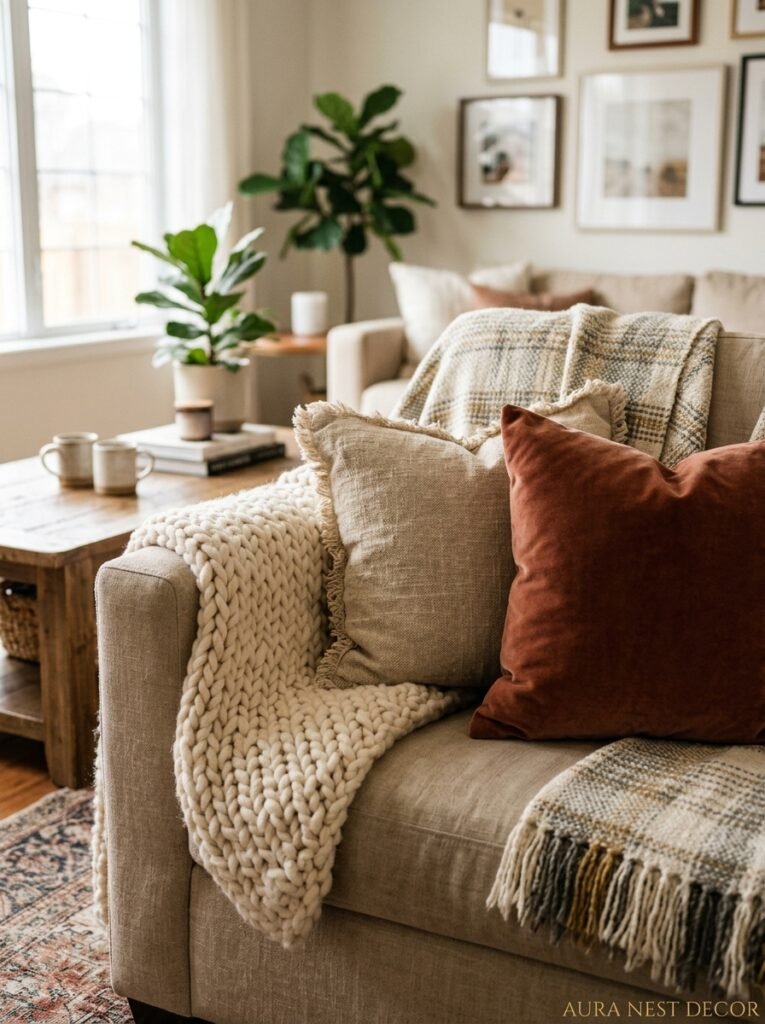
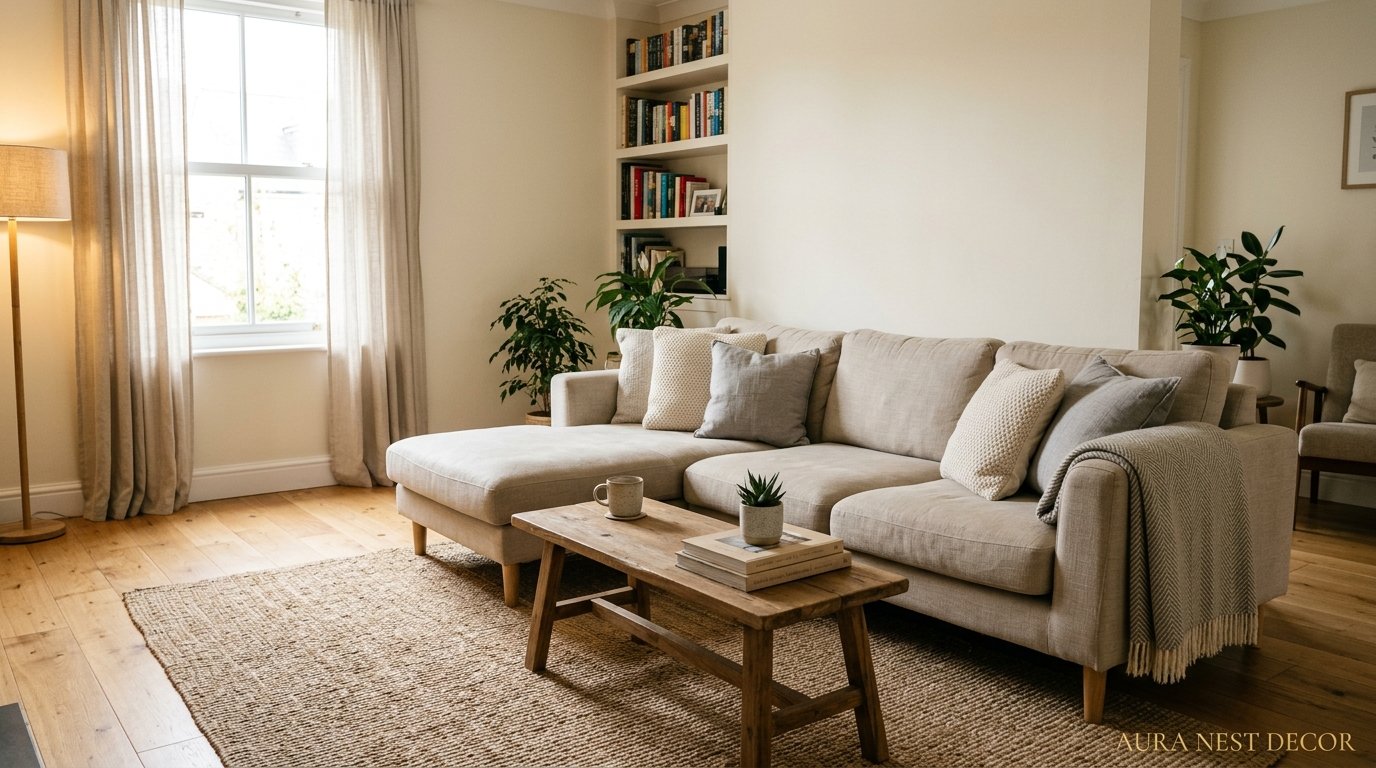
You know the look. Linen sofa, chunky knit throw, woven rug, a few velvet cushions, some rattan somewhere. It doesn’t read as any single material, it reads as warmth. That’s texture layering and it’s genuinely one of the easiest things you can do that has immediate visual impact.
The rule, if you can call it that, is to vary your textures and keep your color palette restrained. So you might have three or four materials — smooth, rough, woven, soft — but they’re all in the same tonal family. Cream linen, natural jute, oatmeal wool, pale oak wood. Everything’s a slightly different shade of the same feeling.
You don’t need to buy new furniture. This is mostly a cushions-and-throws exercise, honestly. Get a woven cushion cover, a boucle cushion, a linen throw. Put them together on a sofa that might be a bit boring on its own and suddenly it’s not boring anymore. That’s the thing — texture forgives a lot of sins.
—
7. The One Rule That Makes Any Tiny Living Room Feel Intentional
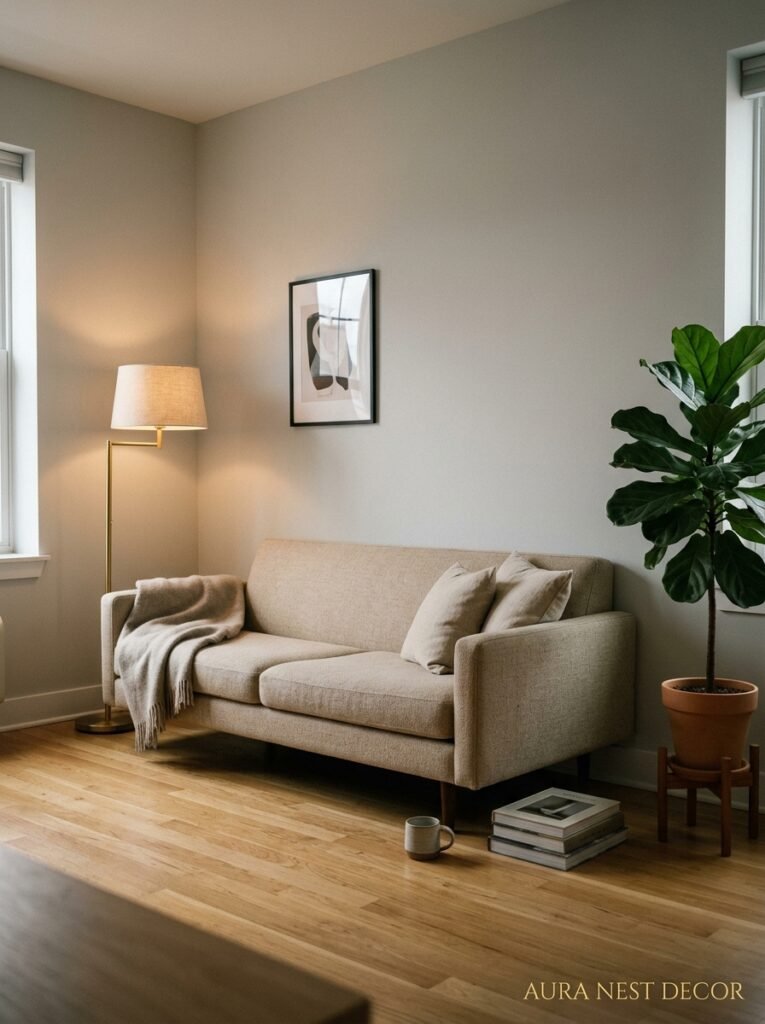
Small rooms don’t need small furniture. This is genuinely counterintuitive and I get why people fight me on it, but stay with me.
When you fill a small room with small furniture, it looks like a jumble sale. Everything’s the same scale and nothing reads. But put one larger piece in — a properly-sized sofa, a substantial coffee table — and suddenly the room has a focal point. It has a visual anchor. Everything else arranges itself around that anchor and the whole room looks considered.
In the UK especially, where Victorian terraces and older homes mean smaller reception rooms, this comes up ALL the time. A tiny sitting room with one beautiful three-seater sofa and one great lamp feels like a room. The same space with a love seat, two armchairs, a tiny coffee table, and three little side tables feels chaotic.
“Small rooms don’t need small furniture. They need fewer, bigger pieces.”
Mirrors help too — obviously, classic advice, but there’s a reason it’s classic. A large mirror on a wall opposite a window doubles the light and creates visual depth. Just don’t do the gallery-wall-of-small-mirrors thing. One large mirror. That’s it.
—
8. What Your Coffee Table Is Really Saying About You
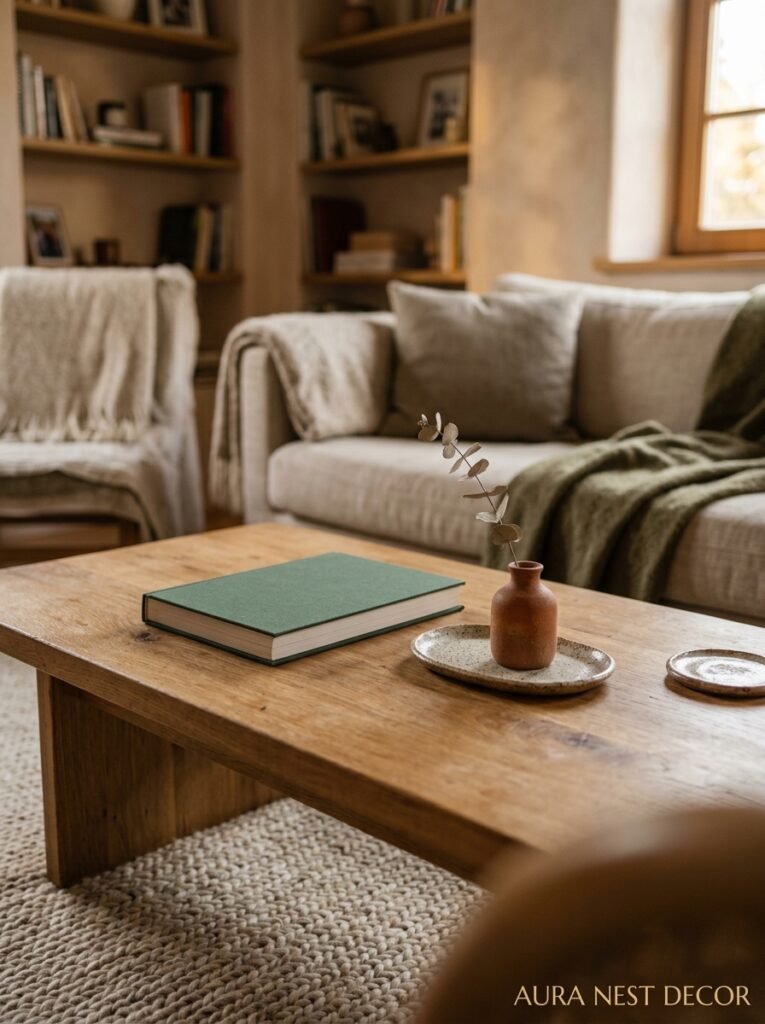
Not in a judgmental way! But your coffee table is often the most neglected piece in the room from a styling perspective, and it’s literally the center of the whole space.
A great coffee table setup has three things: something tall, something with texture or interest at a lower level, and something practical that you actually use. A stack of hardback books with a small plant or object on top hits the height. A decorative tray with a candle hits the mid-level. Your TV remote in the tray keeps it real.
The tray is doing a LOT of heavy lifting here, by the way. It corrals randomness. It makes “a candle and a remote and some mail” look like “a curated vignette.” A round or rectangular tray in rattan, lacquer, or marble is worth every penny.
And if you’re choosing a coffee table itself: look for something with storage or a lower shelf. A coffee table with a shelf underneath gives you somewhere to stack books or put a basket, which adds that layered look without more surface clutter.
—
9. The Plant Conversation We Need to Have
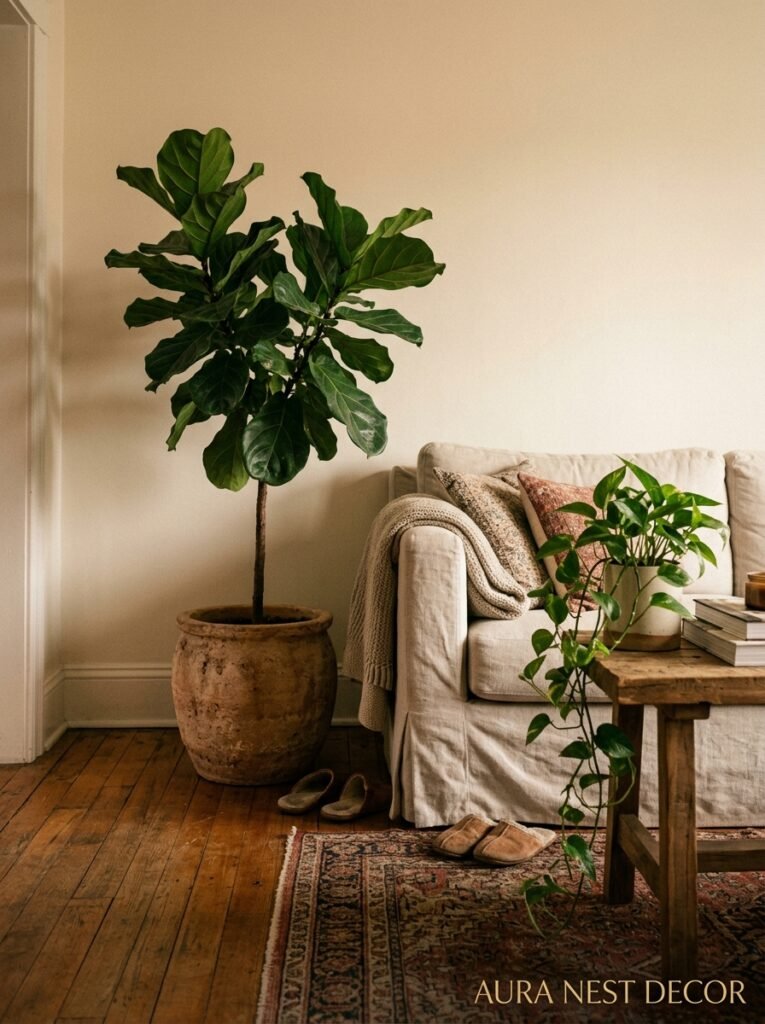
Every beautiful living room has at least one plant. But there’s a way to do this that looks intentional and a way that looks like you bought some plants and put them places.
Size matters. One large plant — a fiddle leaf fig, a monstera, a tall snake plant, even a big fern in a good pot — does more than a collection of small succulents scattered around. The large plant has presence. It fills vertical space, which is almost always underused in living rooms. It brings in that organic, alive quality that no amount of decor can fake.
The pot matters almost as much as the plant. A great pot — something ceramic, textured, or in a good earthy color — makes even a moderately interesting plant look deliberate. A plastic nursery pot makes even a gorgeous plant look like an afterthought.
Don’t stress about keeping rare or difficult plants alive. A robust monstera or a peace lily is beautiful and genuinely hard to kill, which is a feature, not a compromise.
—
10. The Art Problem and the Only Solution That Actually Works
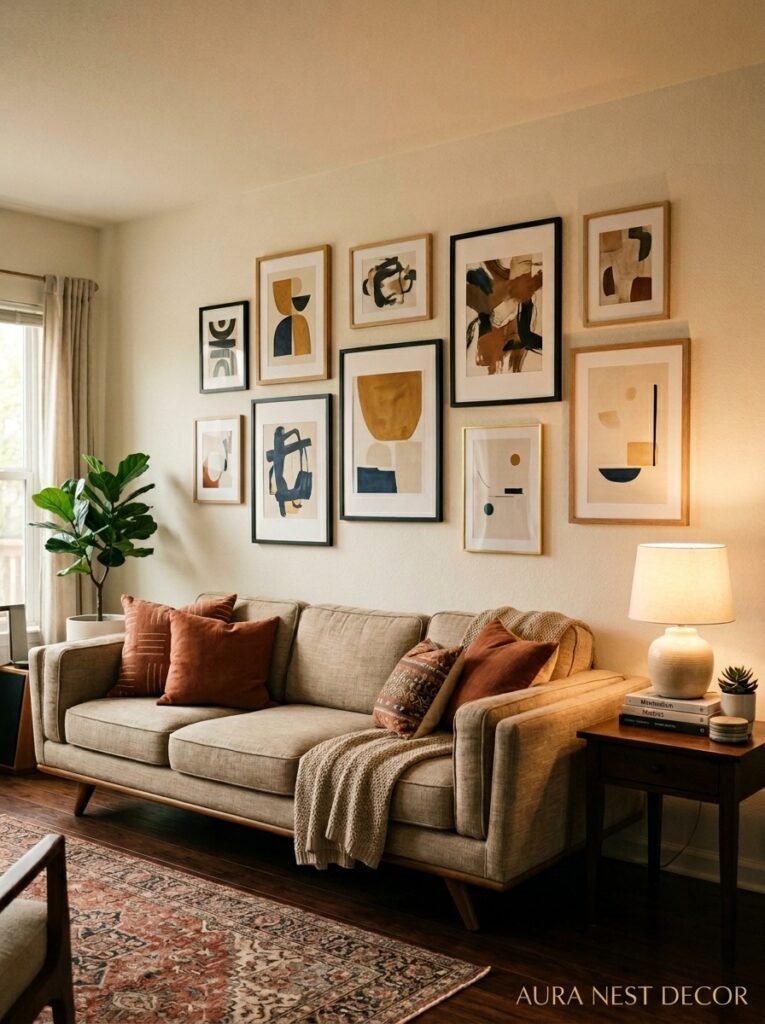
Hanging art at the wrong height is one of the most common mistakes in living room design and honestly it drives me a bit mad when I see it. Art hung too high — and it’s almost always too high — disconnects from the furniture below it and floats in space looking confused.
The center of a piece of art should sit at roughly eye level when standing, which is typically around 57-60 inches from the floor. Above a sofa, the bottom of the artwork should sit about 6-8 inches above the back cushions. Not a foot. Not more.
And when you’re doing a gallery wall — if you’re doing a gallery wall — lay it all out on the floor first. Arrange it until it looks right on the floor, measure the spacing between frames, then transfer that to the wall. It takes longer but you’ll put maybe four holes in the wall instead of forty.
Scale up on art. A single large canvas or print makes more impact than a cluster of little frames. If you can’t afford original art, there are brilliant print shops — both on Etsy and places like Society6 — where you can get large format prints for not a lot of money. Frame it properly and nobody will ever ask what it cost.
—
11. The “Collected Over Time” Look vs. The “I Just Moved In” Look
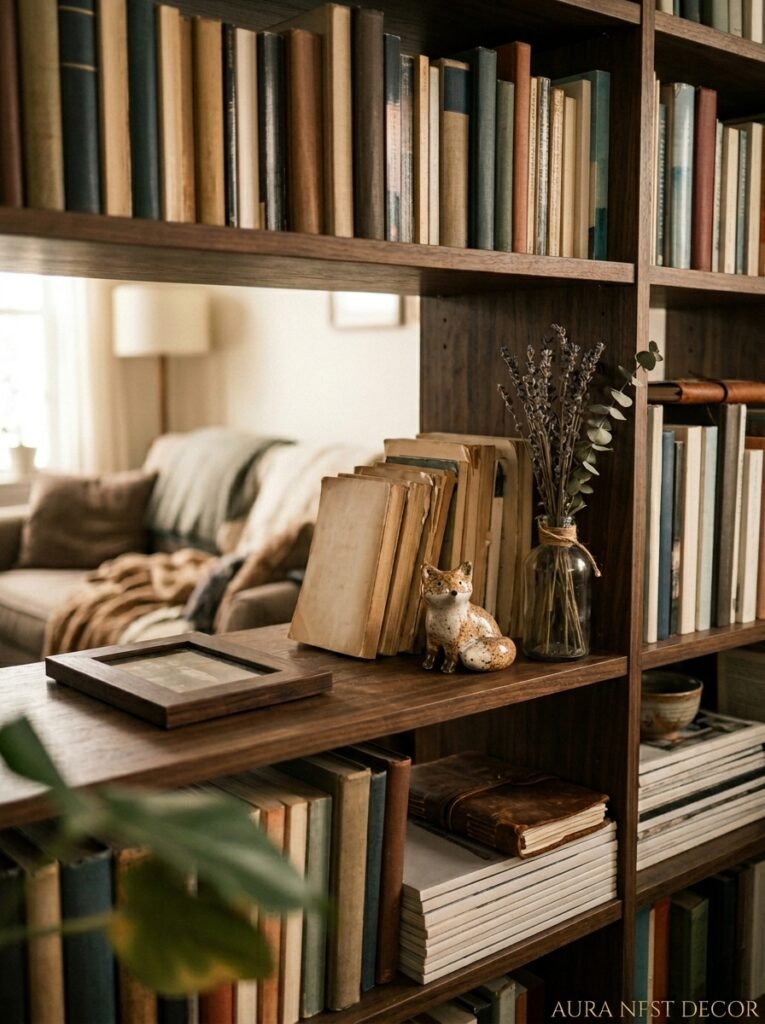
There’s a quality that the most beautiful living rooms have that’s hard to name. It’s the sense that the room grew, that pieces arrived at different times, that some things were inherited or found or saved up for. That’s the “collected over time” look and it’s basically the holy grail of residential interior design.
The opposite of it is a room where everything is from the same store, the same collection, the same year. It’s coordinated but it’s cold. It reads as a showroom.
The fix is relatively easy: mix your sources deliberately. One piece of furniture from a vintage market or secondhand shop. One textile from a trip or an independent maker. A lamp that’s a bit different from everything else. These contrast pieces don’t break the room — they’re the reason the room has character.
And don’t be afraid of inherited furniture, even if it’s not exactly your style. A grandmother’s side table in a slightly different wood tone, a vintage mirror with slightly aged glass — these things add that “this room has a life” quality that flat-pack furniture from a single source simply cannot.
—
12. The Five-Minute Reset That Changes How the Room Feels Every Day
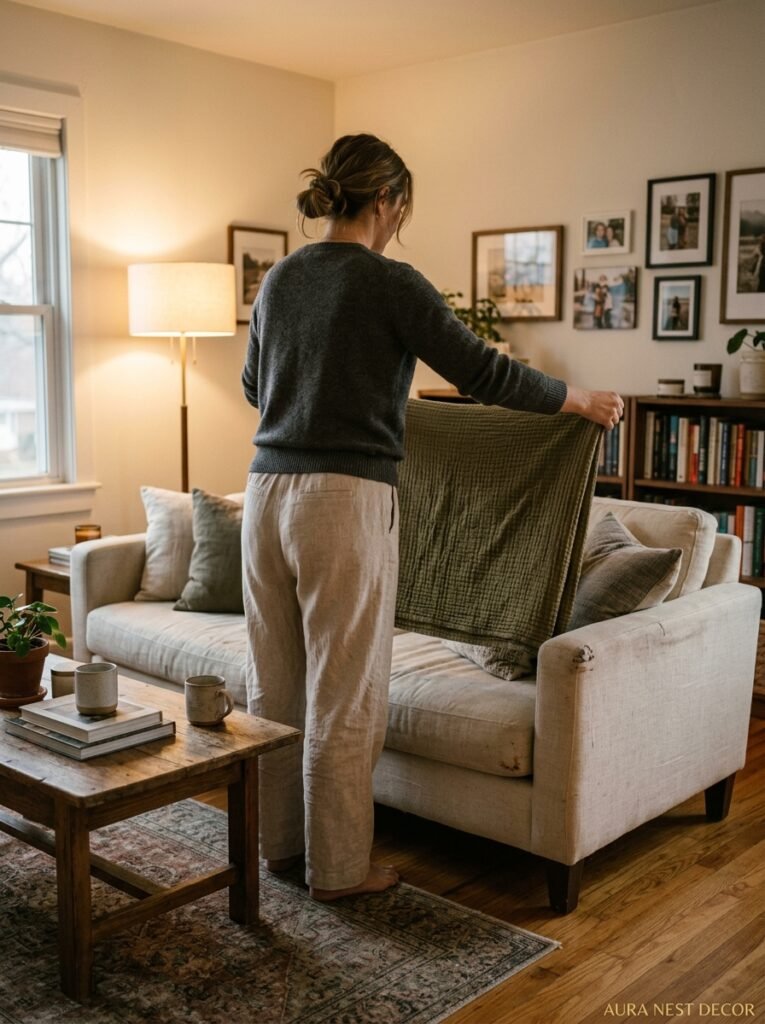
This sounds small but it’s actually kind of life-changing. A living room that’s kept in one static arrangement from January to December starts to disappear. You stop seeing it. Your guests stop seeing it. It becomes background noise.
The reset is this: every few weeks, move one thing. Swap the cushions to different positions. Put the throw on a different chair. Move the coffee table books to a shelf and put something new on the table. Rotate the plants to different spots — they’ll grow toward different light sources and change shape, which is interesting in itself.
Or maybe it’s the opposite, honestly — sometimes the reset is just tidying the surfaces and putting everything exactly where it should be, because the room looks great when it’s neat and you’ve just stopped noticing.
The point is: interact with your room. Treat it like something that’s alive. The best-looking living rooms aren’t the ones that were styled once and left — they’re the ones where someone clearly keeps paying attention.
“The most beautiful rooms aren’t finished. They’re maintained, tweaked, and quietly loved.”
—
❓ FAQ
Q: What’s the fastest way to make a living room look more expensive without spending much? A: Lighting and editing — those two things first. Swap your bulbs for warm 2700K ones, add a lamp or two, and then take half the stuff off your surfaces. The restraint and the warm light together will make the room look like you spent thousands.
Q: My living room is long and narrow — how do I make it feel less like a corridor? A: Create two distinct zones rather than one long arrangement. A seating area at one end, a reading nook or desk at the other. Use a rug to define each zone. This actually turns the awkward shape into an asset — you’ve got a room with two personalities instead of one awkward one.
Q: How do I make a rented home feel cosy without being able to paint the walls? A: Textiles. Rugs, curtains hung high and wide, cushions, throws — these do the work your walls can’t. A large warm-toned rug transforms a cold white rental room more than almost anything else. Also: lots of lamps, no overhead lights, and plants.
—
💭 Final Thoughts
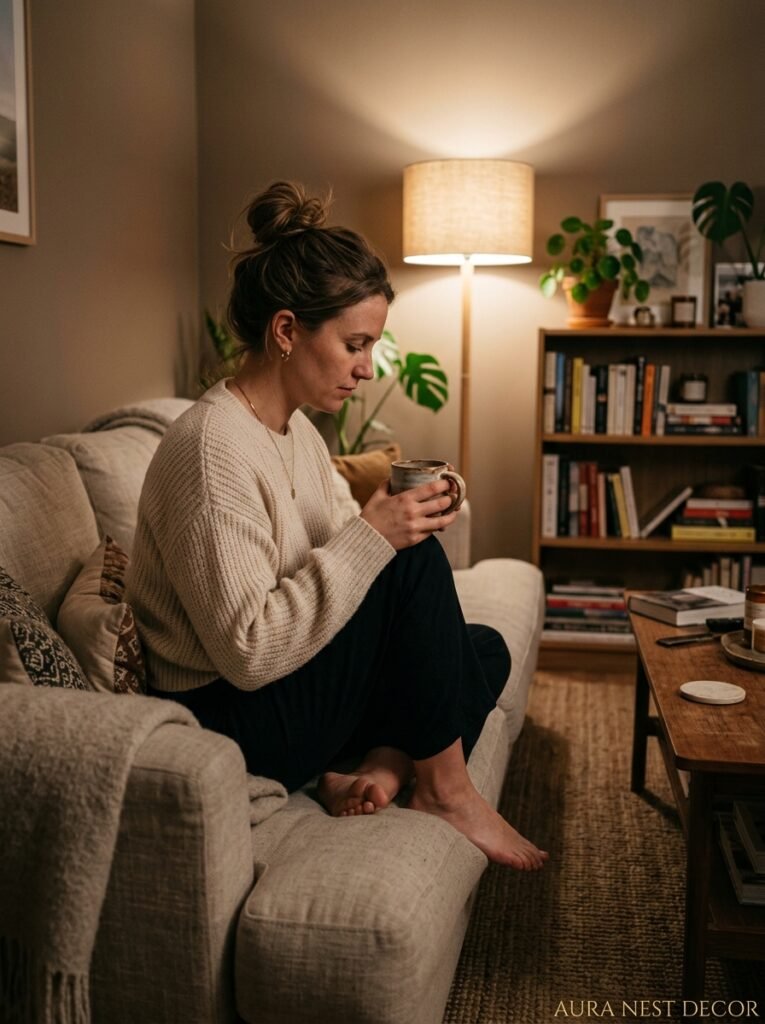
A living room should feel like the best version of you — not a catalogue page, not someone else’s aesthetic, yours. The best ones are a little imperfect, a little personal, and clearly loved by whoever lives there. Start with the light. Edit ruthlessly. Then let it grow slowly into itself. What’s the one thing about your living room right now that you’ve been meaning to change for months?