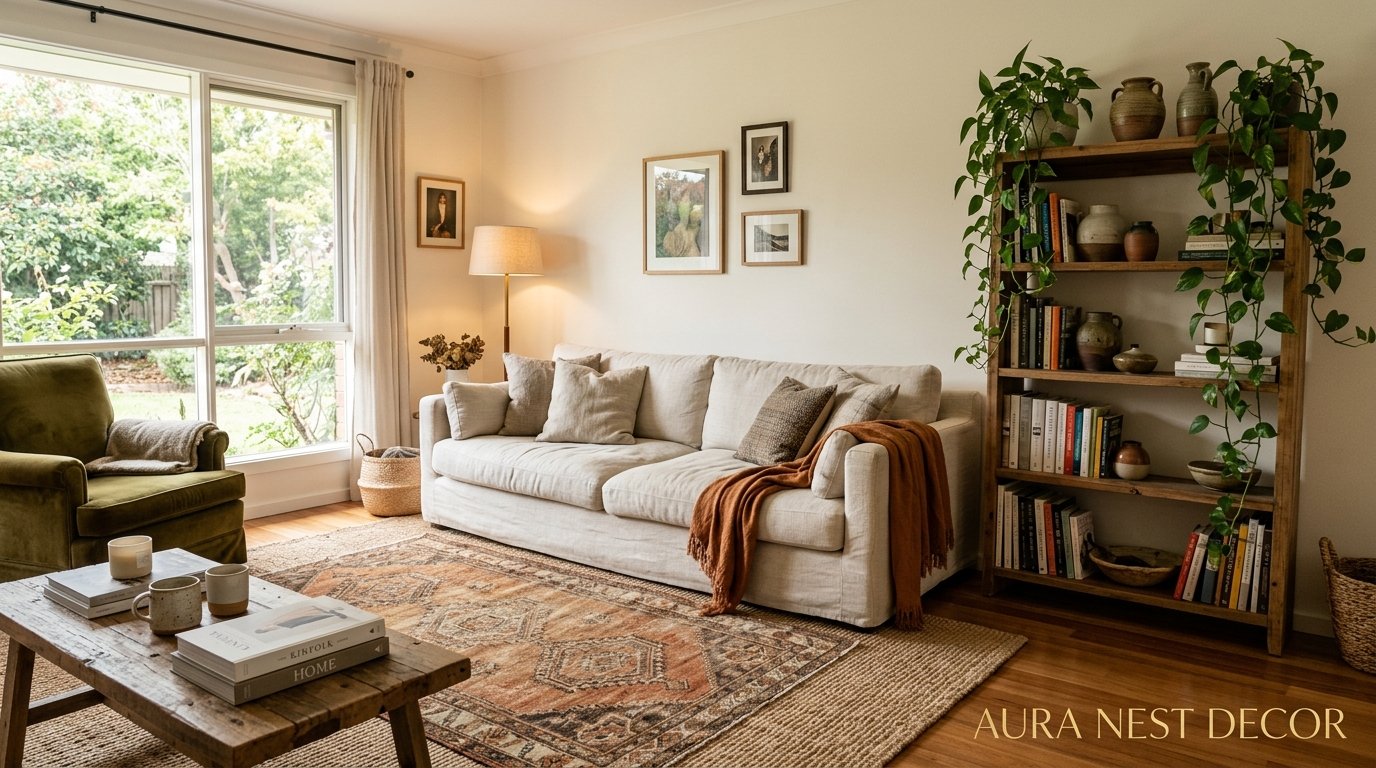
The Living Room Rules I Broke — and Why My Space Finally Feels Like Mine
You know that feeling when you walk into someone’s home and immediately want to sit down, stay a while, maybe never leave? That’s not an accident. And it’s also not about having a massive budget or calling in a designer.
—
1. Why “Pick a Style and Stick to It” Is the Worst Advice I Ever Got
I spent two years trying to commit to a style. Scandinavian minimalism for a bit. Then a very short-lived farmhouse phase I don’t love to talk about. Then modern rustic, whatever that even means. I kept buying things that “fit the aesthetic” and ending up with a room that felt like a mood board rather than a home.
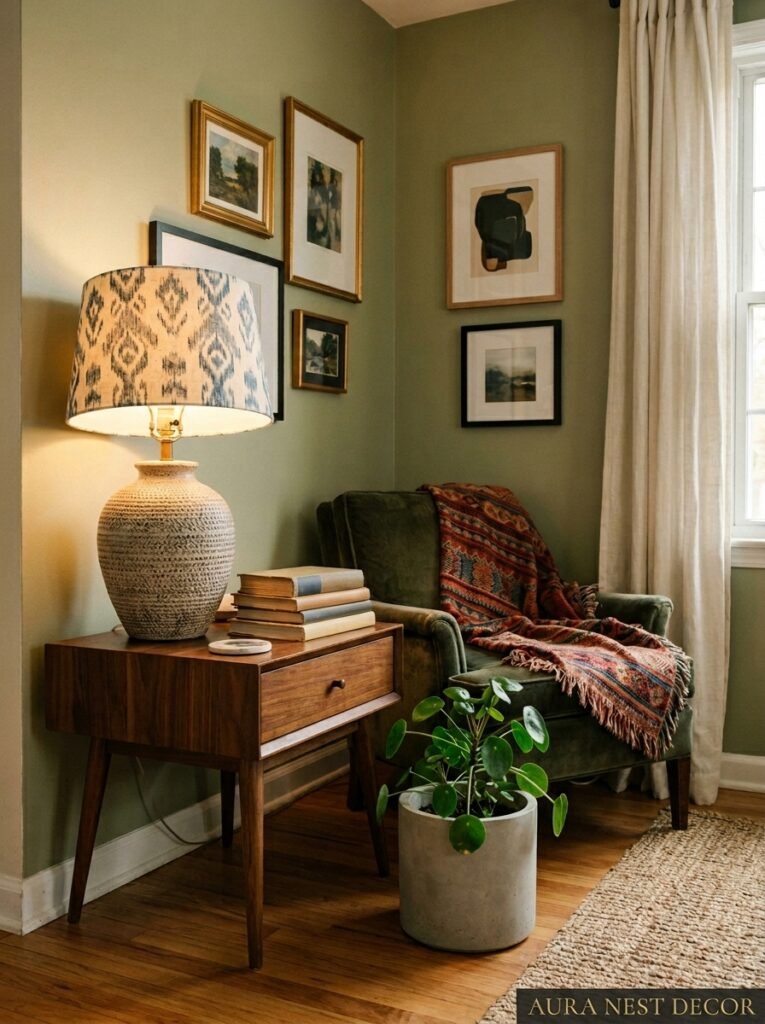
The thing nobody tells you is that real living rooms don’t have a genre. They have a feeling. And that feeling comes from layering things you actually love, not things that match a label someone invented on Pinterest in 2019. My great-aunt’s brass candlesticks sit next to a very modern concrete lamp on my sideboard right now, and honestly? It’s the best corner in the house.
Stop trying to be coherent in the catalogue sense. The rooms that stop people mid-scroll are almost always a little contradictory. A velvet sofa against raw plaster. A very old rug under very new furniture. The tension is the point. Lean into it.
“The rooms that stop people mid-scroll are almost always a little contradictory.”
—
2. The Sofa Color That Interior Designers Are Quietly Recommending Right Now
Not gray. I know. WILD.
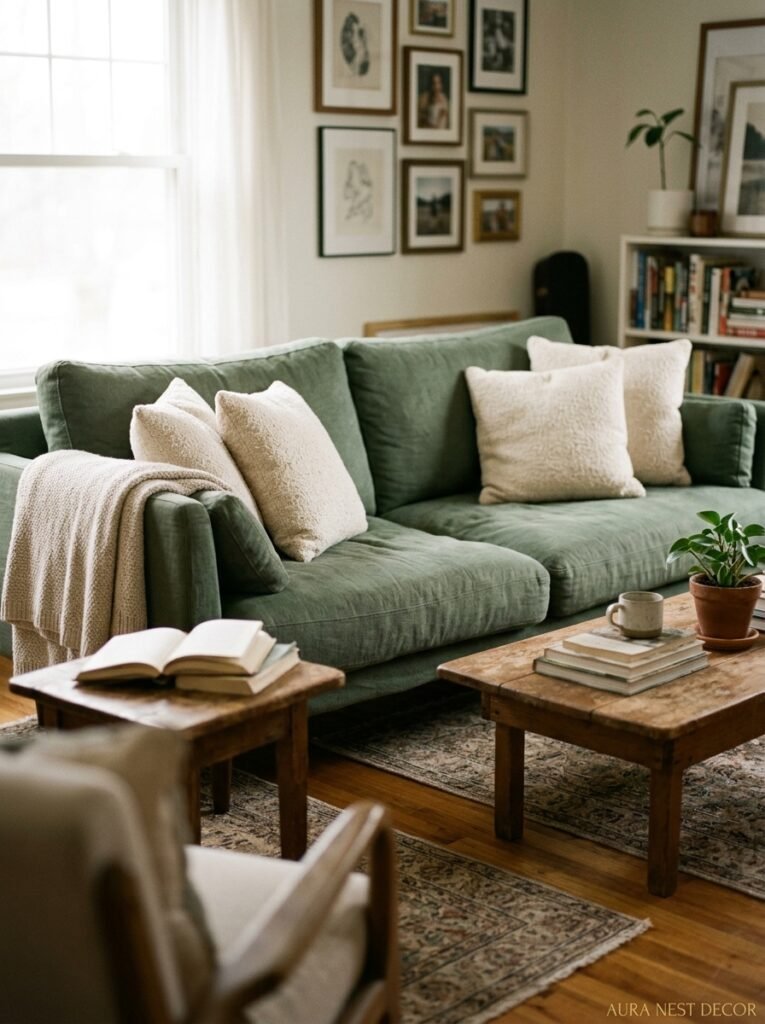
Gray sofas had a whole decade. They’re not bad — they’re just safe in a way that reads a little tired now. What I’m seeing everywhere (in the design accounts I actually trust, not just the sponsored ones) is warm, earthy seating. Terracotta. Ochre. Deep forest green. A kind of dusty blush that isn’t pink enough to be pink.
These colors do something that gray can’t: they make the room feel inhabited. Like someone chose it on purpose. And weirdly, they’re easier to style around than you’d think. A terracotta sofa with linen cushions in natural white and one dark navy throw? Done. Beautiful. Took me ten minutes and cost me the price of two cushions from HomeSense.
If you’re in the UK and you’re nervous, start with Dunelm or Next Home. Both have had really strong warm-tone sofa ranges lately. US readers — Article and Joybird are worth a look if you want that earthy color with actually decent quality. Don’t go all-neutral around it. The whole point is that the sofa is the thing.
—
3. What Low Lighting Actually Means (Because “Ambience” Is a Useless Word)
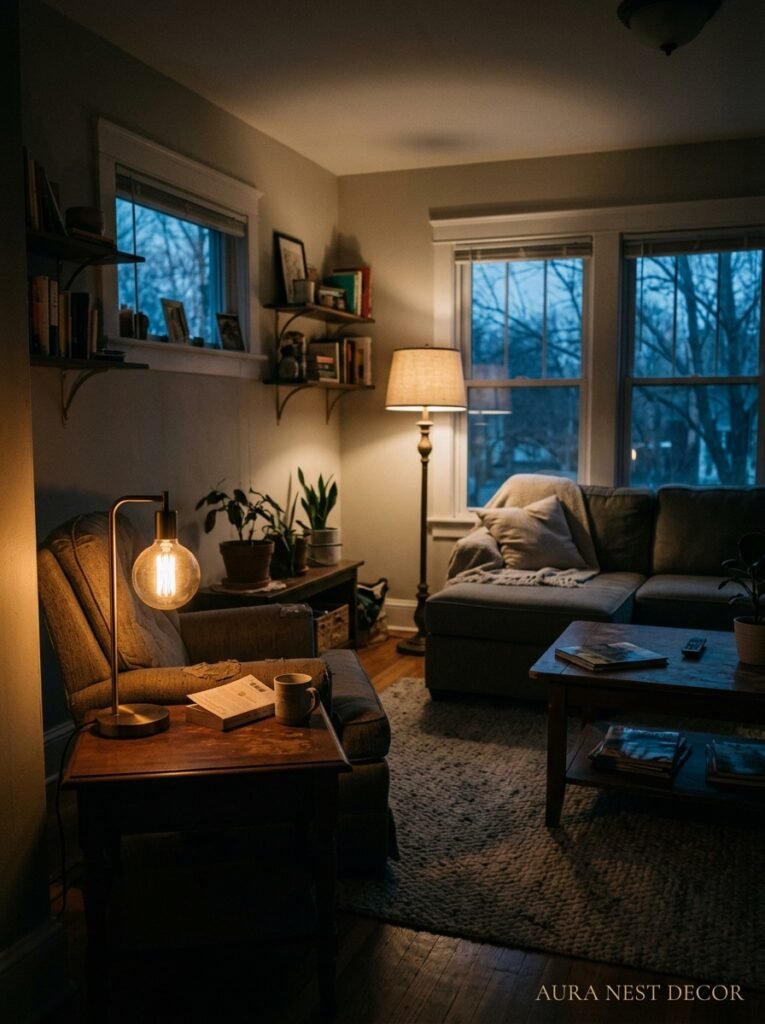
Ambience. Everyone says it. Nobody explains it.
Here’s what it actually means in a living room: you should be able to turn off every overhead light by 7pm and still feel comfortable. That’s the bar. If you can’t do that right now, your lighting isn’t right yet.
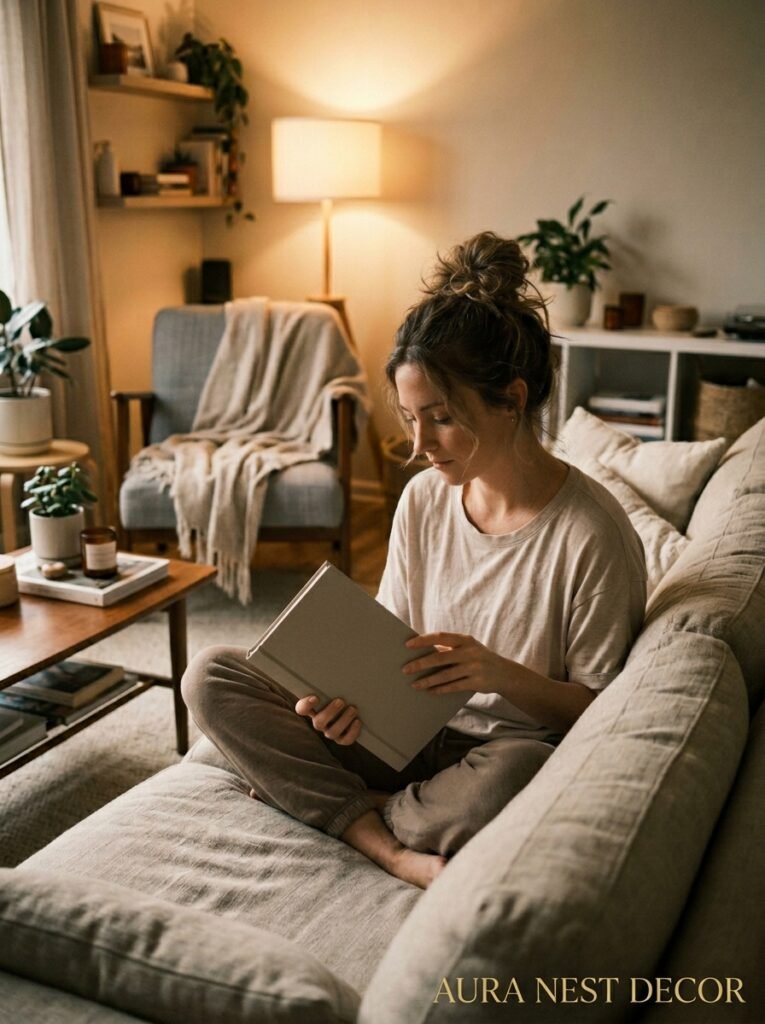
The amber glow of an Edison bulb at that hour is genuinely different from a 5000K overhead. Different mood, different brain response, different conversation. Side tables with lamps. Floor lamps in corners. Candles — real ones, not just decorative. Even a string of warm fairy lights behind a bookcase can shift the whole room from “functional” to “I want to be here.”
I have a cheap IKEA floor lamp I’ve had for six years and it’s in every photo I take of my living room because the light it throws is just perfect. Not everything needs to be expensive. The trick is layering sources at different heights so the light feels like it comes from everywhere and nowhere at once. Try it one evening — turn off the main light, switch on everything else, and just sit with it for a minute. You’ll feel the difference immediately.
—
4. The Rug Mistake Almost Everyone Makes in a Living Room
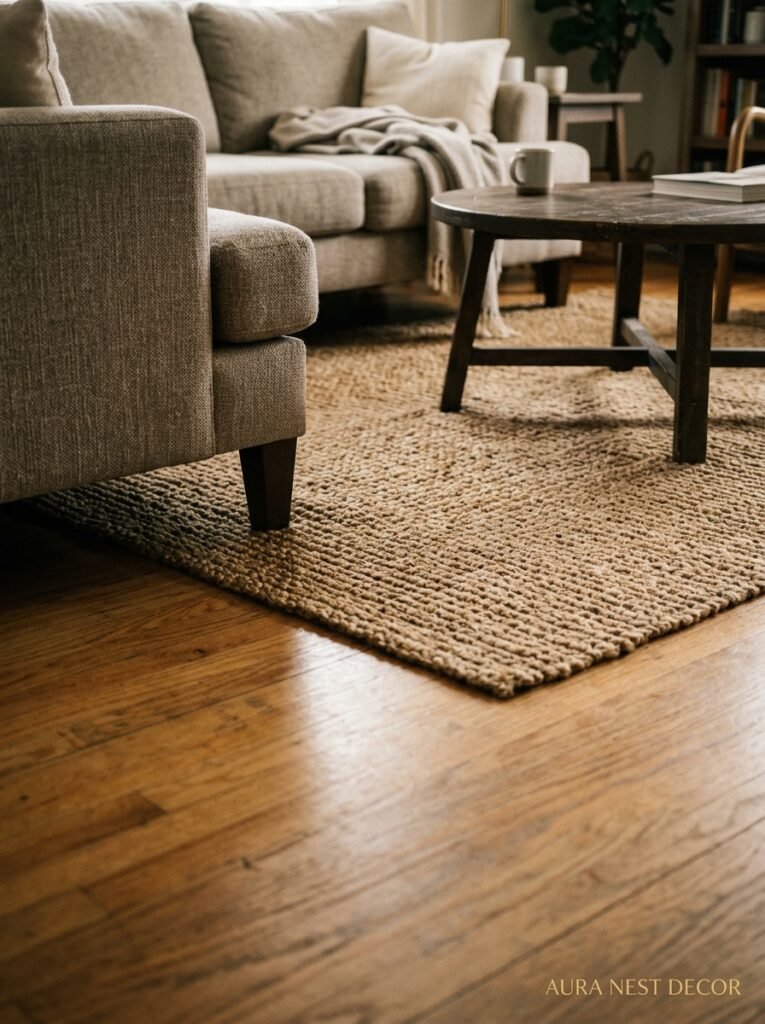
Too small. Always too small.
I’ve been in so many beautiful homes where the rug is just… floating in the middle of the floor, touching nothing, connected to nothing. A rug that only goes under the coffee table is like a picture frame without a picture in it. It doesn’t anchor anything. The furniture looks like it’s drifting.
The rule — and this one I actually do stand behind — is that at minimum your front sofa legs should sit on the rug. Ideally all the furniture is mostly on it, with just the back legs trailing off. This makes the whole seating arrangement read as one intentional grouping rather than a bunch of separate pieces arranged in a room.
“A rug that only goes under the coffee table is like a picture frame without a picture in it.”
In the UK, a 200x300cm rug is the standard ‘go bigger than you think’ size for most living rooms. In the US, 8×10 or 9×12 feet for a medium room. Yes, it costs more. It’s worth it — the proportional difference is so dramatic that you’ll wonder how you ever lived with the small one.
—
5. The Gallery Wall Question (And Why I Finally Have an Opinion)
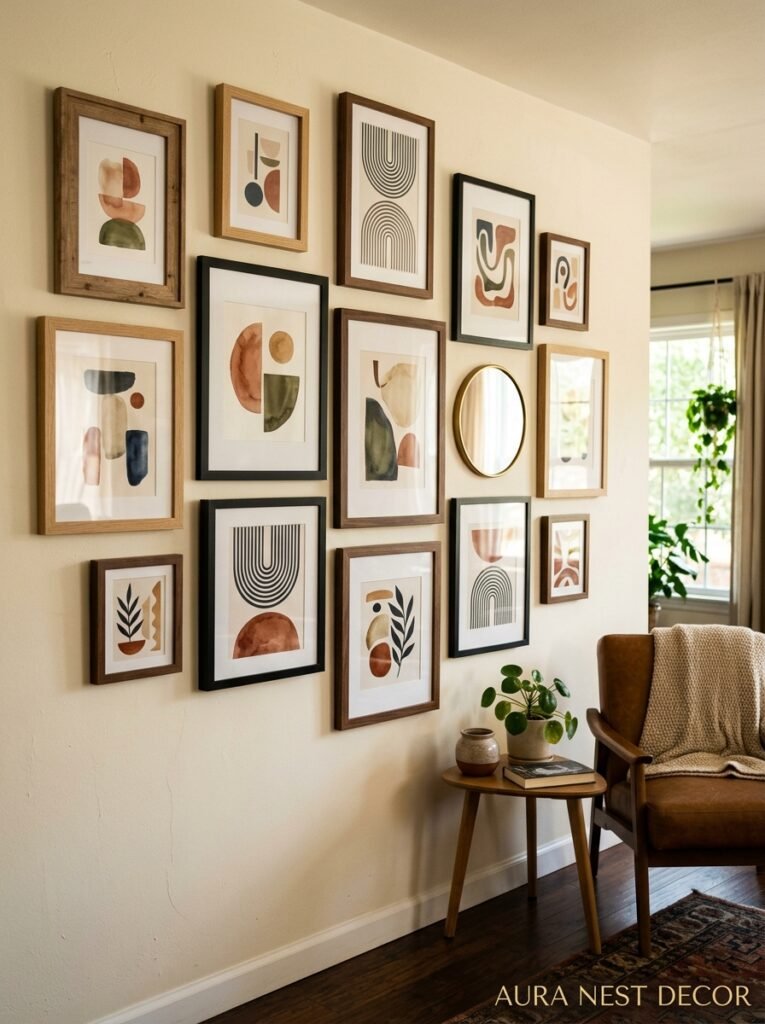
For or against? Honestly, both. But with conditions.
Gallery walls get a bad reputation because of execution, not concept. A gallery wall of matching Ikea frames in a perfect grid is just a more expensive version of nothing. But a collection of things that actually mean something — your grandmother’s watercolor, a print you bought in a market in Lisbon, a photo your kid took that accidentally turned out stunning — arranged with some breathing room and a bit of confident chaos? That’s a story on a wall.
The size thing matters enormously here. Every piece needs to be bigger than you think. Side note — this is the same error as the rug mistake. We consistently go too small with everything on walls. One large piece of art does more for a room than five tiny ones clustered together in the vague hope they’ll feel significant.
If you’re starting fresh, my honest advice: one large anchor piece, two medium pieces around it, and then fill in with smaller things only if it genuinely needs it. Leave more space than feels comfortable. The wall is part of the composition.
—
6. The Color That Keeps Showing Up in Every Beautiful Living Room Right Now
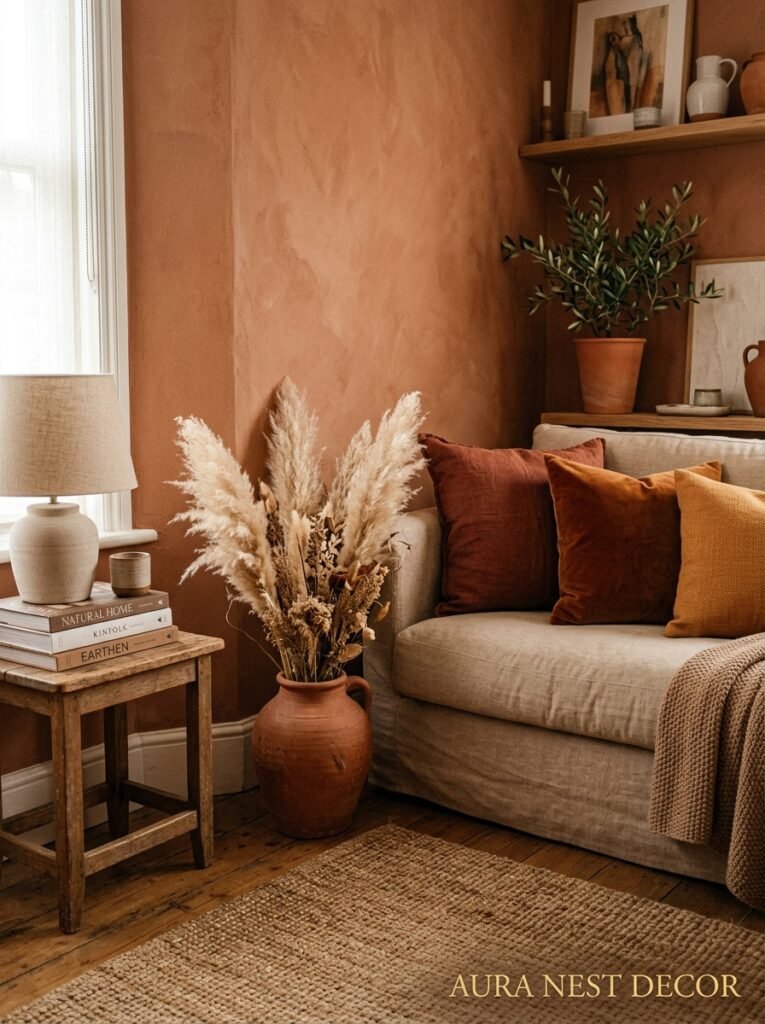
Warm white. But specific warm white.
Not beige. Not cream. Not greige (please, not greige). I’m talking about the kind of white that has just enough yellow or pink in it to feel like the walls are glowing from within. Farrow & Ball’s “Pointing” does this. So does Dulux “White Cotton” if you’re in the UK and don’t want to spend F&B prices. US readers — Benjamin Moore “White Dove” or “Pale Oak” are the ones people keep going back to.
The reason this color is everywhere right now is that it works as a reset. After years of very dark, very dramatic rooms (which I LOVE but which are not for everyone), warm white lets everything else in the room breathe. Your furniture becomes the color story. Your textiles matter more. Artwork pops without competing with the wall itself.
Also — and this is the part people don’t talk about — a warm white room photographs well in natural light, which if you’re reading this on Pinterest is probably something you’ve already thought about. Just saying.
—
7. Why Your Bookcase Probably Needs to Be Edited, Not Decorated
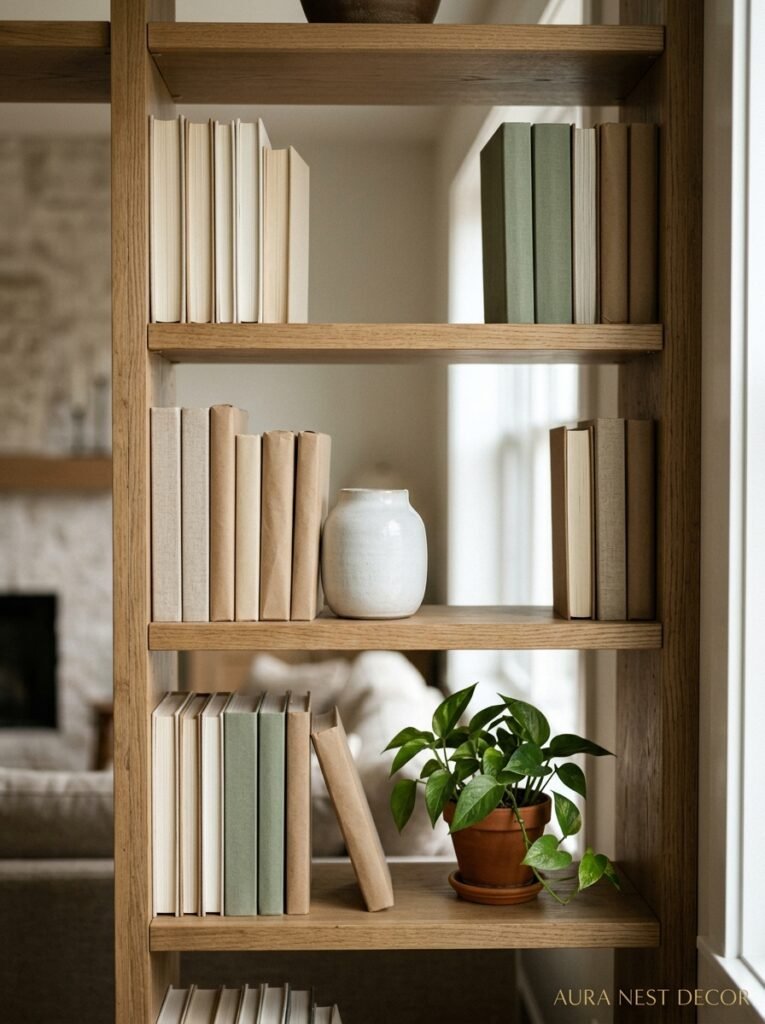
More is not more on a bookcase. Or rather — it’s often too much more.
I love books. Genuinely, not performatively. But a bookcase that’s just jammed with spines of every color, a few random candles, a plant that’s seen better days, and that ceramic thing from a craft fair in 2021… it’s not a styled bookcase. It’s just a storage unit that you haven’t dealt with yet.
The editing matters as much as the adding. Take everything off. Put back only what you actually want to see. Books can be grouped by color if you care about that, or just by genre or size if you don’t. Leave gaps. Not every shelf needs to be full. An empty shelf with one beautiful object on it reads as intentional in a way a crammed shelf never will.
“An empty shelf with one beautiful object on it reads as intentional in a way a crammed shelf never will.”
Objects in threes work because odd numbers create natural movement for the eye. But don’t do it mechanically — not every trio needs to be a tall-medium-small-repeat pattern. Sometimes two things and a lot of space is exactly right.
—
8. The Texture Trick That Makes a Room Look More Expensive Than It Is
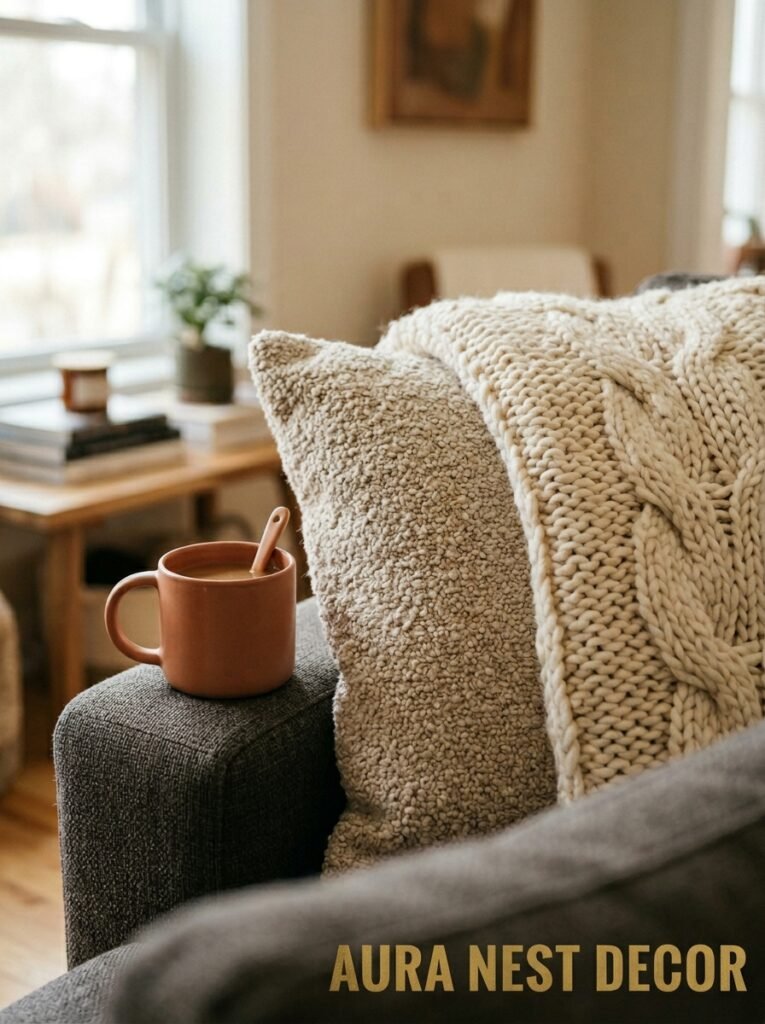
Different materials at the same price point will always look richer than the same material repeated.
What I mean: a sofa with velvet cushions, a jute rug underfoot, a linen throw, and a ceramic lamp all touching different textures? That room feels considered. A sofa with matching sofa fabric cushions, a synthetic rug, and a plastic lamp? Even if it all cost the same amount, it reads as cheaper, flatter, less interesting.
So when you’re buying, think about what material you don’t already have in the room. Got a lot of soft, woven things? Add something hard and matte — a stone bowl, a raw terracotta pot, an unfinished wooden tray. Got a very sleek, hard room? Pile in the softness. A chunky knit throw. A shaggy cushion. A sheepskin.
This honestly doesn’t cost extra money. It’s just a different way of making decisions when you’re shopping.
—
9. The One Furniture Layout Rule That Changes Every Room
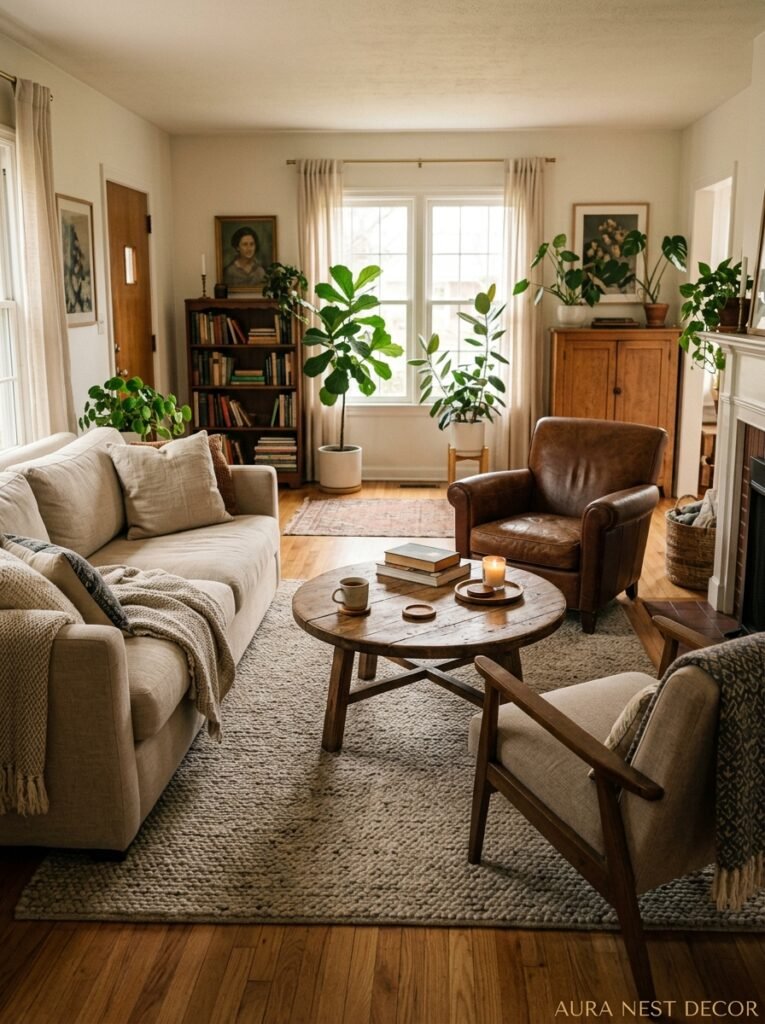
Furniture pushed against walls? Wrong. Almost always wrong.
I know it feels like it makes the room bigger. It doesn’t. What it actually does is create a big empty void in the middle and then a series of isolated pieces around the edges that don’t talk to each other. The room feels bigger when things float.
Pull your sofa away from the wall. Even six inches. Create a conversation zone with the chairs actually facing each other, or angled in. Let there be a gap between the backs of things and the walls. This is the single layout change I’ve seen transform the most rooms, and it feels completely counterintuitive until you try it.
In a small UK living room — the kind with bay windows and radiators in inconvenient places — this can feel impossible. It’s not. Even small rooms benefit from furniture that’s pulled in a little. You don’t lose space; you gain a room that actually functions as a place to be.
—
10. Plants That Actually Survive in a British Living Room in February
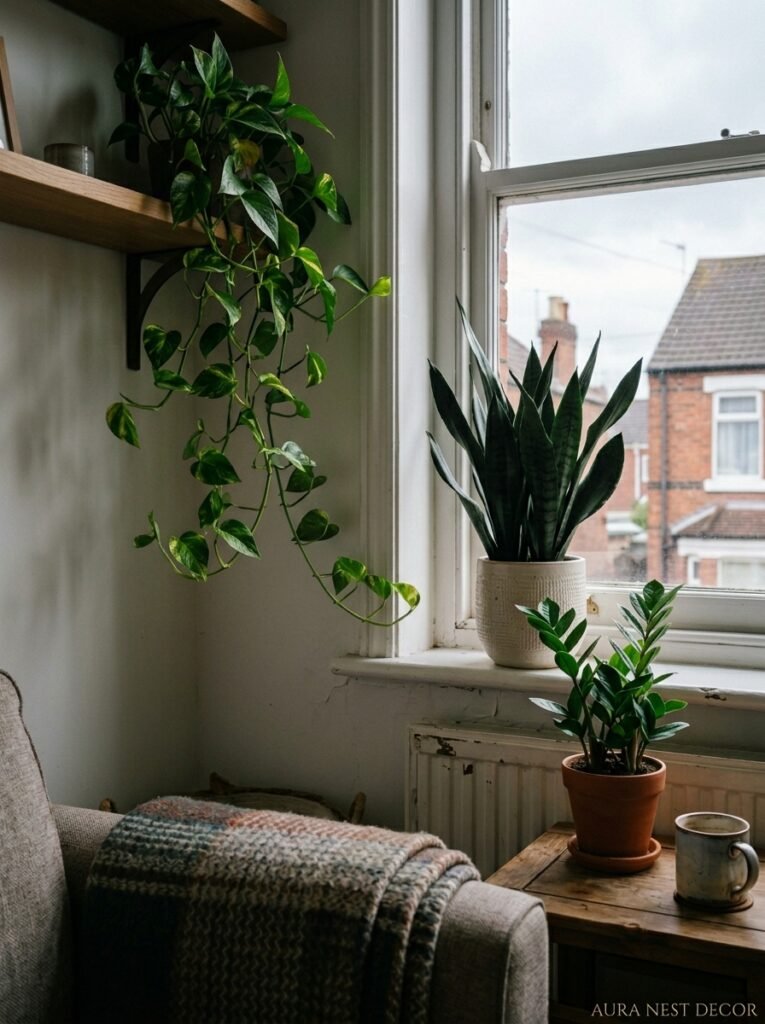
Because we can’t all have a south-facing conservatory.
Pothos, first. Unkillable, trailing beautifully from a high shelf, looks incredibly expensive for a £4 plant from a garden centre. Snake plants — again, completely indestructible, architectural shape, and they genuinely don’t care if you forget about them for three weeks. ZZ plants are having a very long moment and deserve it. Dark, glossy leaves, tolerates low light, looks absolutely great in a terracotta pot.
The mistake I see most often is buying a big gorgeous fiddle leaf fig, putting it in a dark UK living room where it gets approximately forty minutes of usable light per day, and then wondering why it’s dropping leaves. Some plants need coddling. Others just… live. For most of us, the latter category is the right call.
In the US you’ve got generally more light to work with, so stretch out — a rubber tree, a birds of paradise in a sunny corner, monstera that’ll genuinely grow enormous if you let it.
—
11. What Pinterest Living Rooms Get Wrong About Minimalism
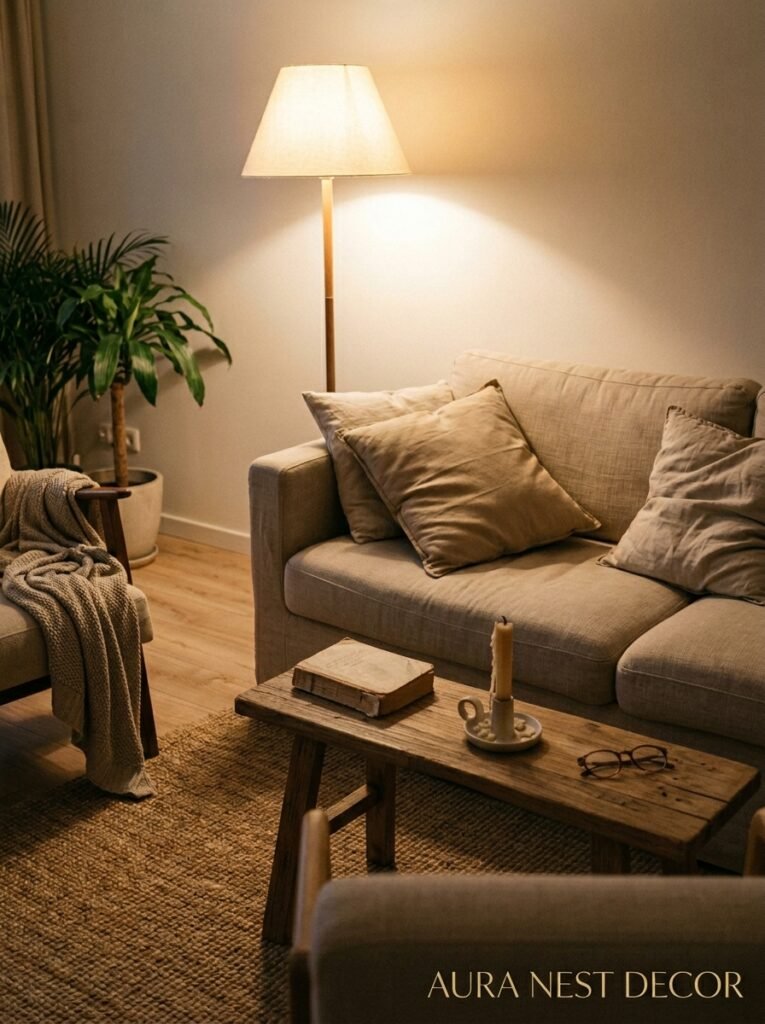
They’re not minimal. They’re just staged.
True minimalism is a philosophy about what you keep, not about clearing surfaces for a photo. The Pinterest version — white room, one plant, one book, one candle — looks calm but feels lifeless to actually live in. Nobody really lives like that. Or if they do, they’re probably not that relaxed about it.
What most of us want isn’t minimalism. It’s clarity. A room where everything has a place, where there’s no visual noise you didn’t choose, where you can sit down and not feel like there’s a to-do list hiding behind the clutter. That’s achievable without going full empty room.
Keep the things you love. Remove the things you’re just tolerating. That’s the whole practice, and it takes maybe a Saturday afternoon and some honesty with yourself.
—
12. The Small Detail That Ties Every Living Room Together and Gets Noticed Every Time
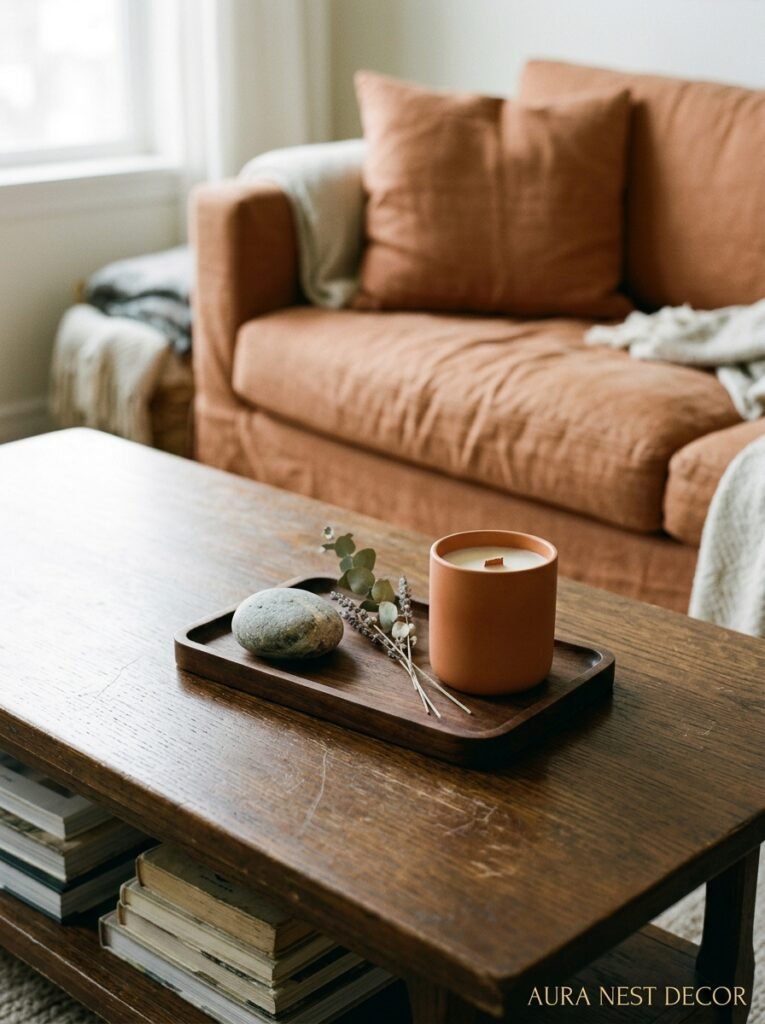
Repetition of one small element throughout the room.
Not a color palette — that’s a given. I mean something more specific. A single metal finish repeated in small touches: brass in the lamp base, the picture frame, the candle holder, the door handle. Or a repeated shape — arches on a mirror, echoed in a lamp shade, echoed in a curved sofa arm. These details create a sense of curation that makes a room feel designed rather than just furnished.
It doesn’t have to be obvious. It shouldn’t be obvious, honestly. It’s the kind of thing that people feel rather than name. They walk in, they feel settled, and they can’t quite explain why. The reason is usually these small repeated moments whispering quietly across the room to each other.
That’s the magic of a really well-done living room. It doesn’t announce itself. It just works.
—
❓ FAQ
Q: How do I make a small living room feel bigger without knocking down walls? A: Pull your furniture away from the walls, go with one large rug instead of a small one, and use mirrors strategically — a large mirror on the wall opposite a window doubles your light. Consistency of color also helps; a room where the walls, sofa, and larger pieces are in a similar tonal family reads as more spacious than a room with lots of contrast.
Q: What’s the best way to mix old and new furniture without it looking chaotic? A: Repeat one metal finish or one wood tone across both old and new pieces — that shared element does the visual work of tying them together. Also, don’t be scared of contrast. An antique side table next to a modern sofa works when the proportions are right and the room around them feels intentional.
Q: How much should I realistically spend on a living room makeover without starting from scratch? A: Honestly, some of the biggest transformations come from rearranging what you already have, adding one quality rug, and improving your lighting — that could be under $300 or £250 and the difference can be dramatic. New cushion covers, a plant or two, and one piece of art you genuinely love will do more than a full furniture set that doesn’t really suit you.
—
💭 Final Thoughts
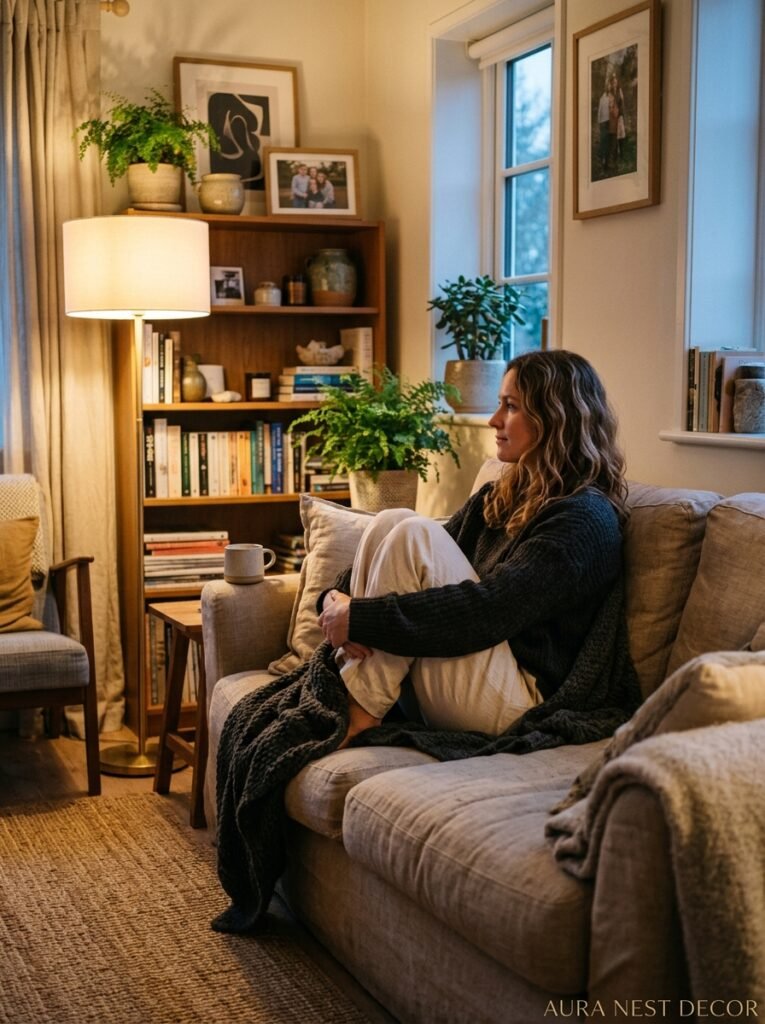
Your living room doesn’t need to be finished. It needs to be yours — honest, a little layered, full of things with actual reasons for being there. The best spaces I’ve ever been in weren’t styled, they were accumulated, slowly, by people who knew what they liked and weren’t afraid to put it out. What’s the one thing in your living room you’ve been meaning to change for months — and what’s actually been stopping you?