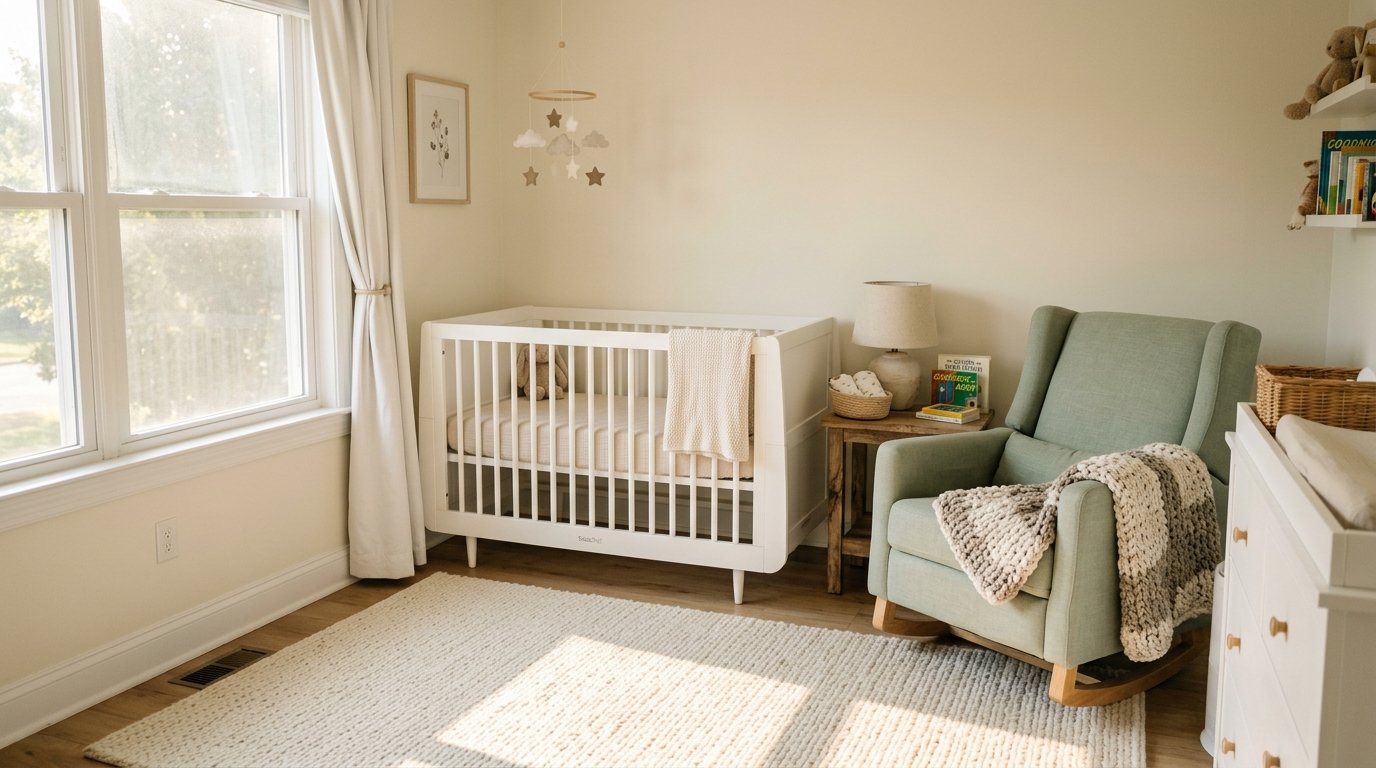
The Nursery You’ll Actually Want to Sit in at 3am
My sister called me crying last week. Not because the baby was hard — she said that part she’d expected. It was the room. “I don’t want to be in here,” she said. “It feels like a storage unit with a crib.”
I knew exactly what she meant.
—
1. Why Most Nurseries Feel Slightly Off (And How to Fix It Before You Start)
Here’s the thing nobody says out loud: most nurseries are decorated FOR the baby, as if a six-week-old has opinions about wall decals. They don’t. But you do. And you’re the one who’s going to be in that room for cumulative hours every single day — feeding, settling, sitting on the floor in the dark willing a tiny human to just please go to sleep.
So the first shift in thinking that actually changes everything? Design the nursery for the adult who has to function in it. The baby needs warmth, safety, softness. That’s a short list. You need a room that doesn’t drain you just by being in it.
That means lighting you can actually control. A chair that doesn’t make your back scream. Colors that don’t feel like the inside of a candy shop. And enough visual calm that when you’re in there at 3am, half-dead, you’re not also visually overwhelmed.
Start there. Seriously.
2. The Color Decision That Haunts Every New Parent — Here’s How to Land It
Not gonna lie, I’ve watched people repaint nurseries twice before the baby even arrived because they got this wrong the first time. The pressure around nursery color is weirdly intense.
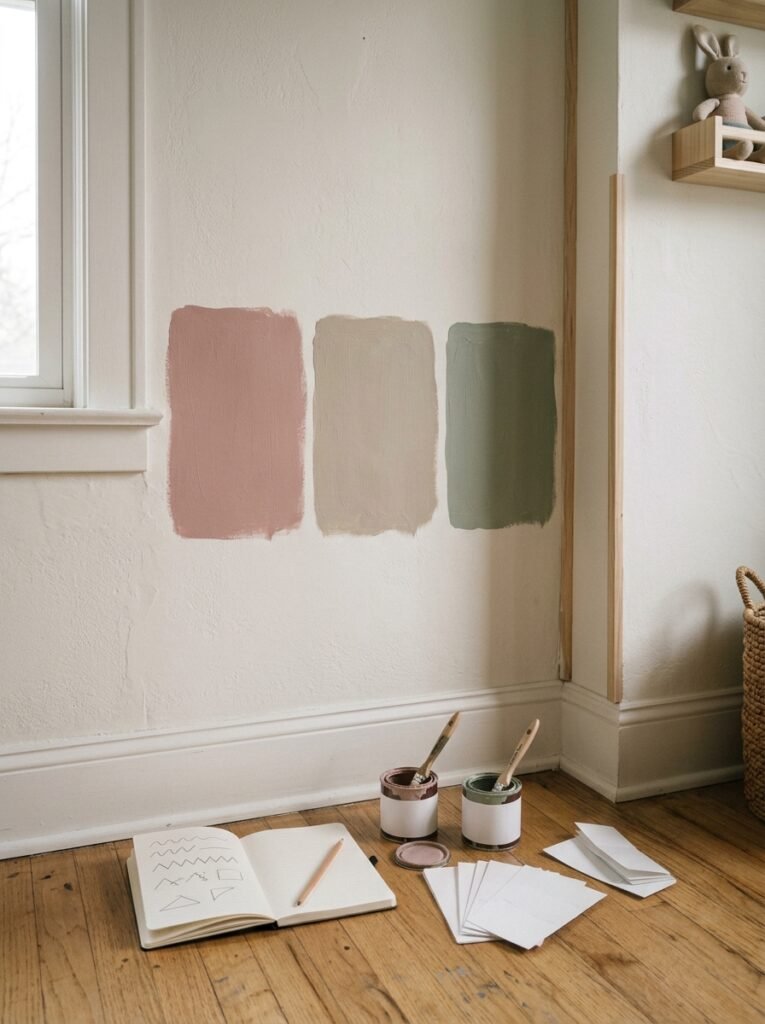
But here’s what I’ve noticed: the rooms that look best in photos AND feel best to be in are almost never bright. They’re soft. Dusty, almost. Think sage green that leans gray in low light, or a warm off-white that goes almost buttery in the evening. A muted terracotta that reads neutral in daylight but feels genuinely warm at night.
“The rooms that look best in photos AND feel best to be in are almost never bright. They’re soft. Dusty, almost.”
In the UK especially, natural light tends to be cooler and more diffuse — so colors that read warm on a paint chip can go cold and flat on your wall. Test your shortlisted shades at different times of day. Morning light, midday, and after 5pm when the room changes completely.
And honestly? Consider painting just one wall. The wall behind the crib. Let it be the moment. The rest can stay quiet.
3. The Crib Wall, and What to Actually Put Behind It
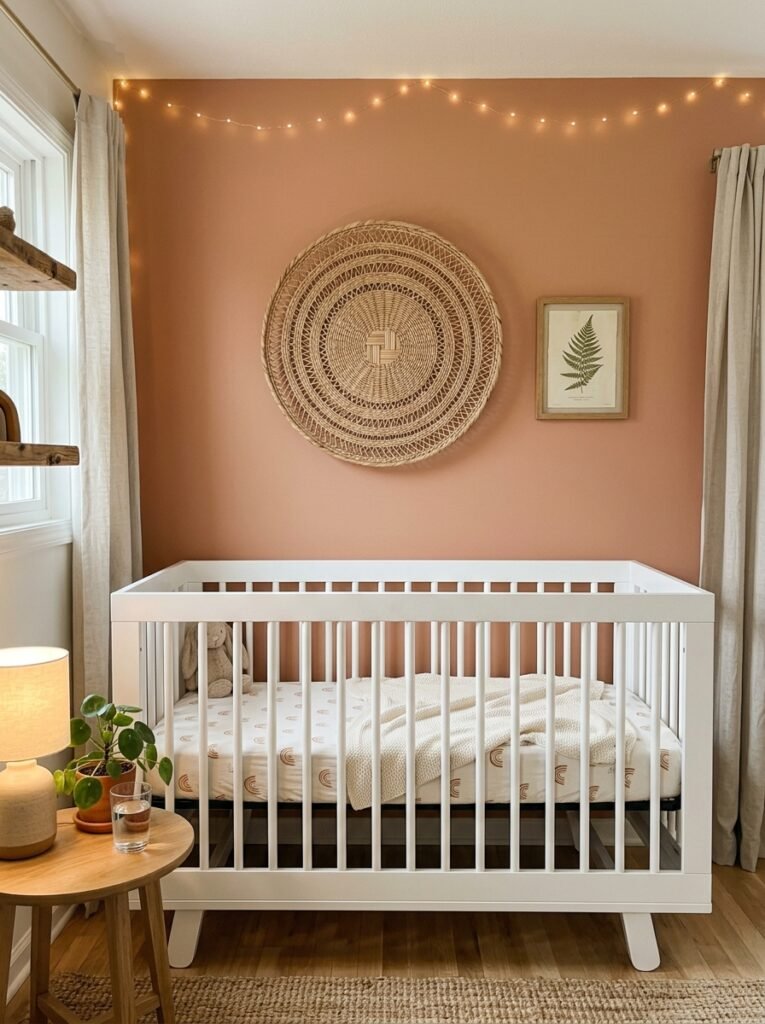
This is where a lot of people overshoot. They’ve seen the Pinterest boards with the macramé sunburst and the framed prints and the shelf with the trailing plant, and it all looks incredible in the photo, but — deep breath — some of that stuff is directly behind where the baby sleeps. Which means you never move it once the baby’s actually home, because you’re not risking waking them for a gallery wall.
So the crib wall doesn’t need to be maximalist. It needs to be intentional.
One really good thing done well beats five okay things crowded together. A simple wooden letter, a single textile hanging, a painted arch shape directly on the wall — these read beautifully because they have SPACE around them. That space isn’t emptiness, it’s breathing room. And it photographs well, which matters when you’ve spent real money on this room.
If you want layers, go lower. A rug in front of the crib. A small stack of books on a low shelf nearby. Things that are below eye level and don’t compete with what’s up high.
4. The Chair That Will Actually Save You
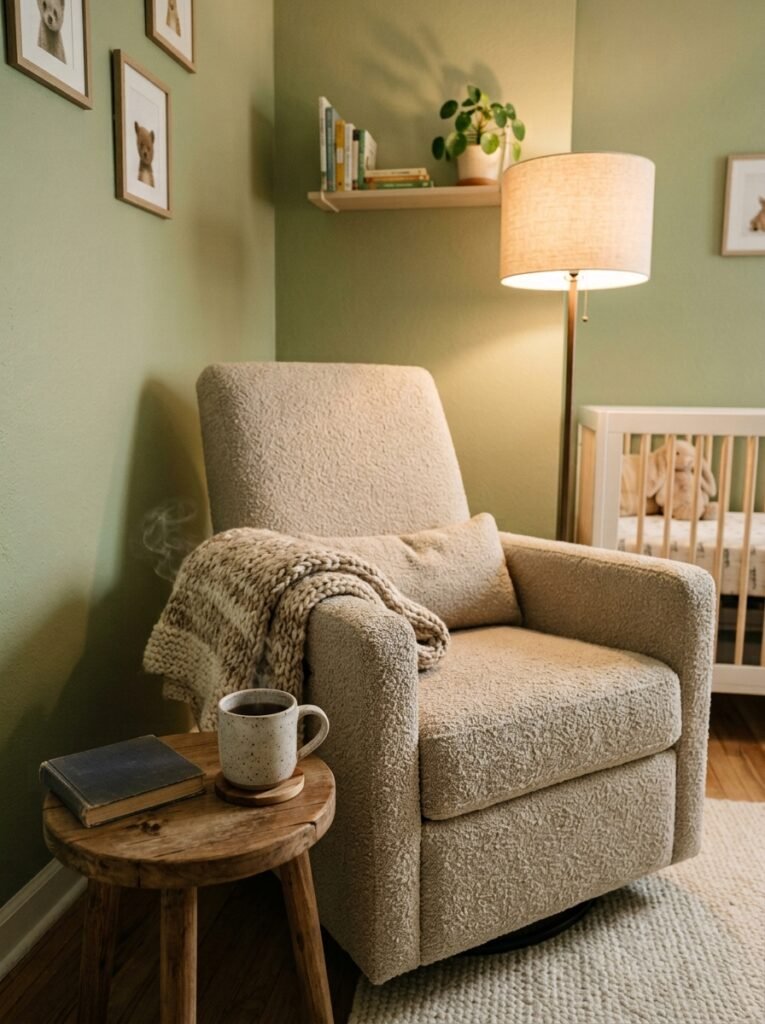
I cannot stress this enough. The nursing chair, the glider, the reading chair — whatever you’re calling it — is the most important piece of furniture in that room and it’s the one people budget least for.
You will sit in it for hours. Sometimes consecutive hours. You’ll sit in it half-asleep. You’ll sit in it when you’re frustrated and when you’re overwhelmed and when you’re just quietly watching your baby breathe because you can’t quite believe they’re real.
It needs to be comfortable in a way that’s almost unfair. Deep enough that you can shift positions. Armrests at the right height — not too low, not so high your shoulders creep up. And the base matters: I know gliders look a bit clunky and they’re not the most beautiful thing in the room, but the rocking motion is genuinely useful at 4am when nothing else is working. Some people regret choosing the pretty linen accent chair over the functional one. I’ve never heard anyone regret the opposite.
Put it near a window if you can, or near a lamp you love. Because you’ll be reading there eventually. And that matters too.
5. Lighting That Actually Works After Dark
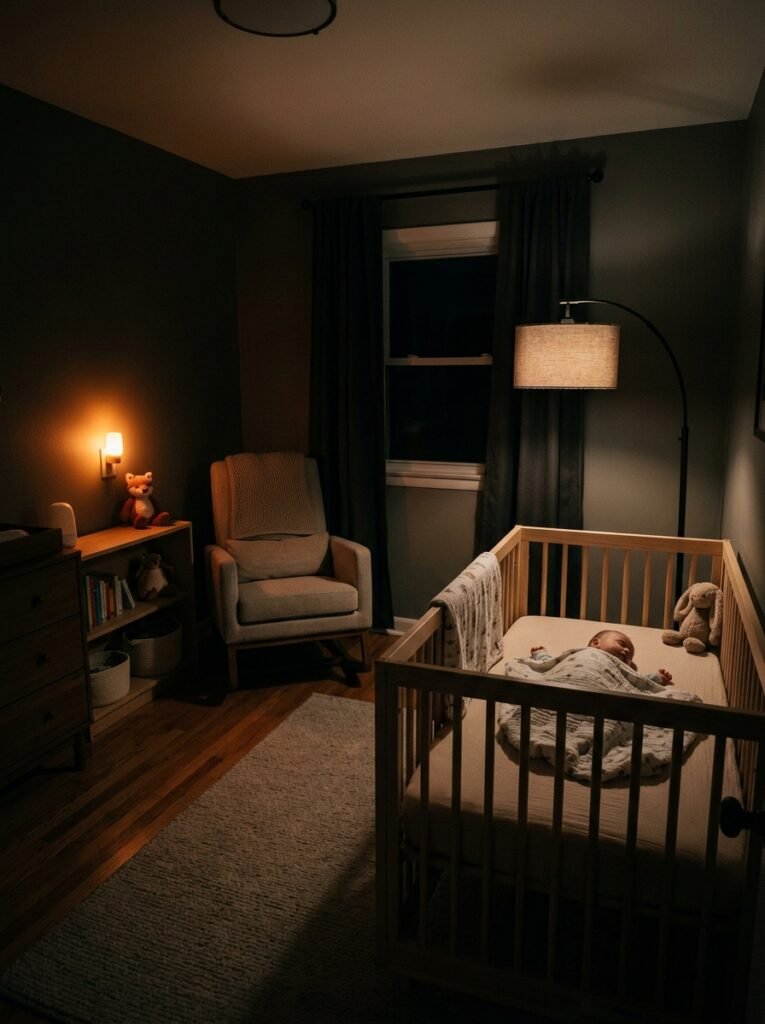
Generic overhead lighting in a nursery is, in my opinion, a small domestic crime. It’s flat and it’s harsh and it turns the room into a fluorescent nightmare exactly when you need the opposite.
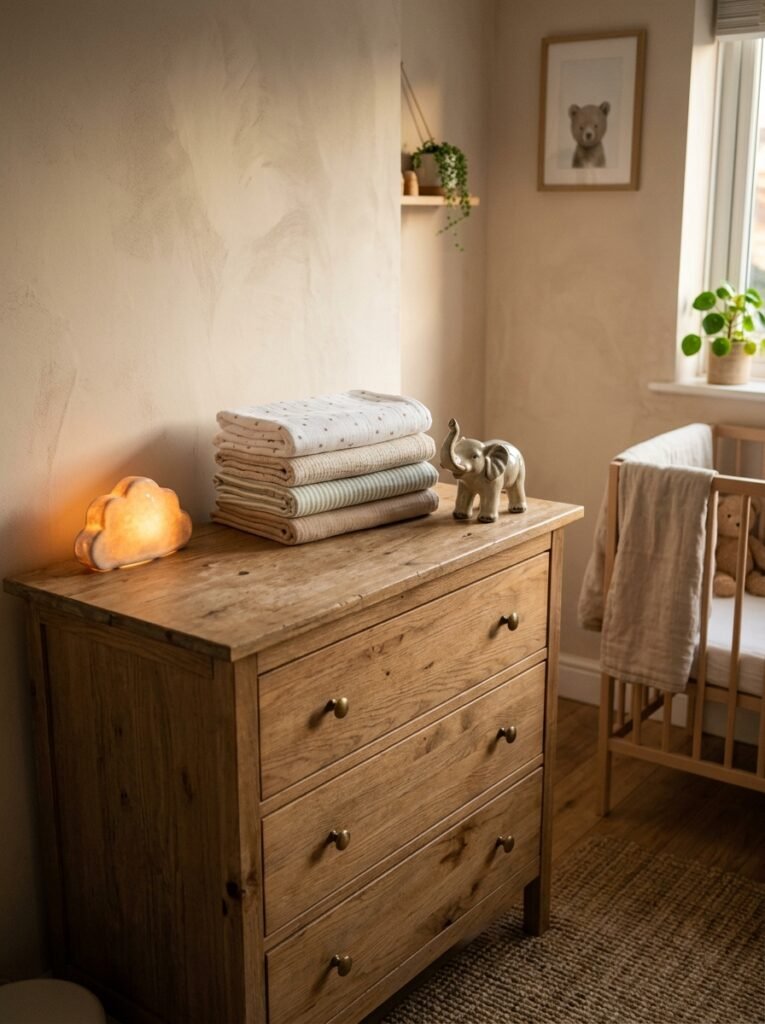
You want layers. A dimmer switch on whatever main light you have — non-negotiable, actually, just do it. Then a lamp somewhere lower, maybe beside the feeding chair, something with an amber-toned bulb that makes the whole room feel warmer and slower. And a really dim nightlight somewhere near the floor, for those middle-of-the-night moments when you need just enough to see without shocking yourself awake.
The nightlight is underrated. Get one that stays warm rather than going white or blue — color temperature matters enormously here and most people find this out too late.
Side note: if you’re in a room with no dimmer and no electrician budget, a smart bulb in a lamp is a genuinely good workaround. Set your scenes in advance so you’re not fumbling with an app at 2am.
6. Rugs: The One Thing That Ties the Floor Together and Keeps Your Knees Happy
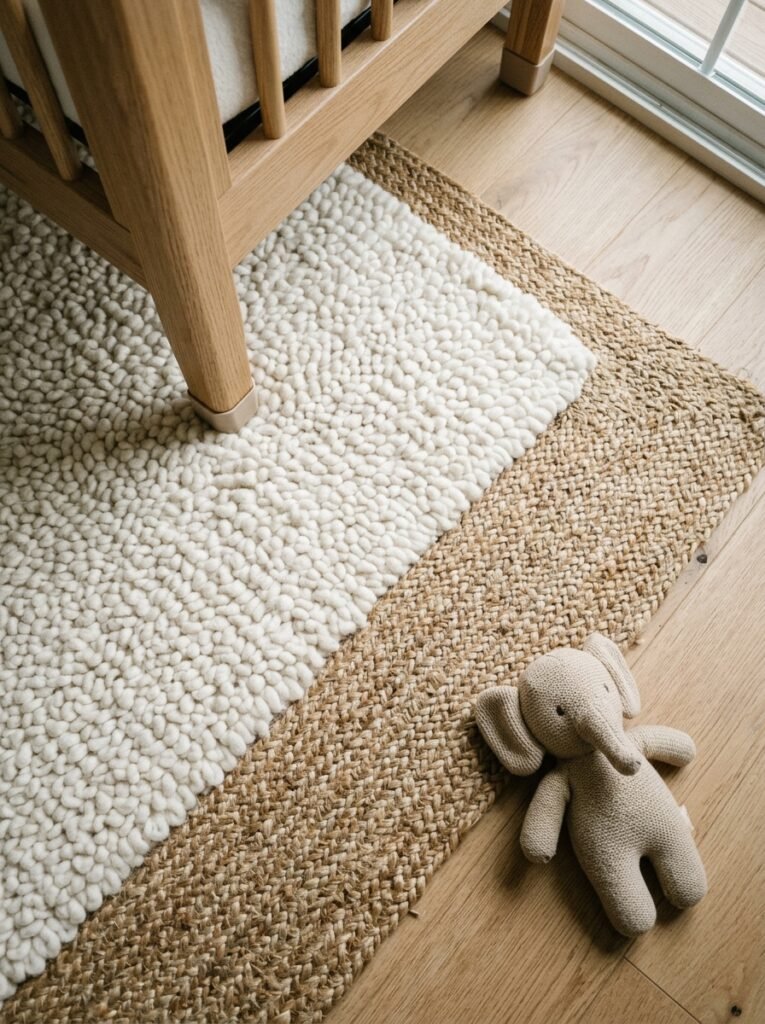
You will be on the floor. A lot. Tummy time, play mats, sitting cross-legged watching your baby discover their own hands — the floor is basically a second furniture situation in a nursery.
A rug isn’t decorative here, it’s functional. And luckily it gets to be both.
“A rug isn’t decorative here, it’s functional. And luckily it gets to be both.”
Go bigger than you think you need. Smaller rugs look lost in nurseries because the room tends to have a lot of low-level stuff already — the crib takes up serious real estate visually. A large rug grounds everything and makes the room feel considered.
In terms of texture: something with a low pile is easier to clean and safer for when your baby’s moving around on it. Woven cotton, flat-weave wool, or a simple jute-blend all work well. Avoid the ultra-fluffy shag rug, however tempting it looks, because it’s a nightmare to actually keep clean and it’s not great once you’ve got a mobile baby on it.
Pale rugs with a subtle pattern hide things better than you’d expect. Solid dark rugs show EVERYTHING.
7. Storage That Doesn’t Look Like a Bomb Hit It by Month Three
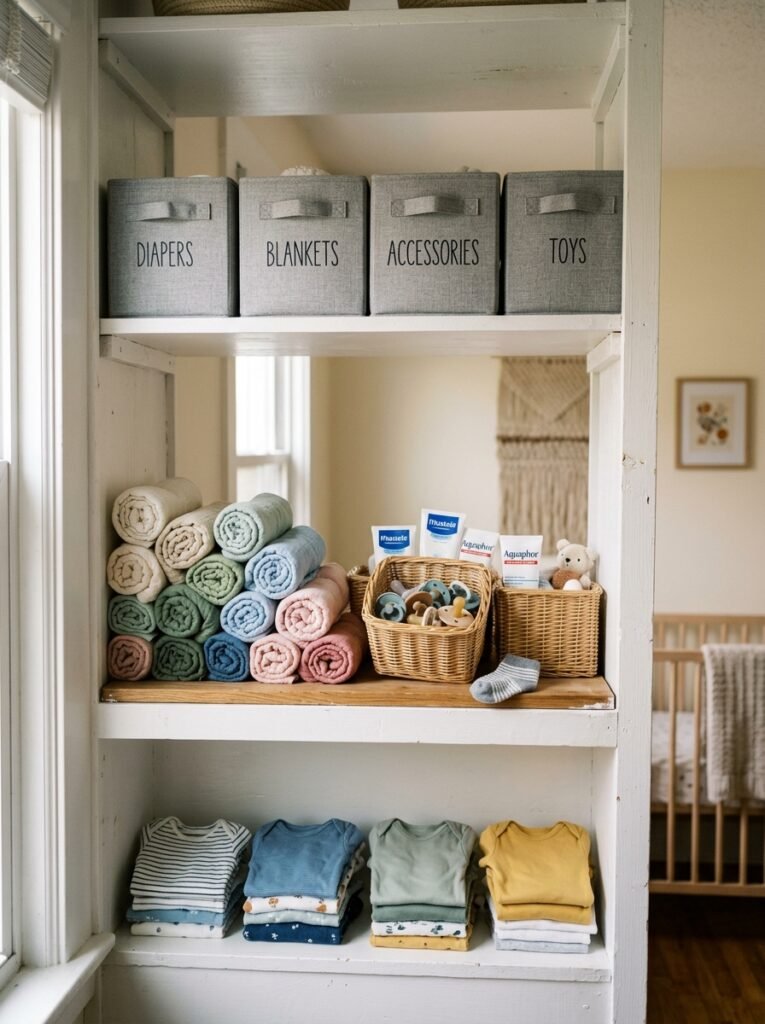
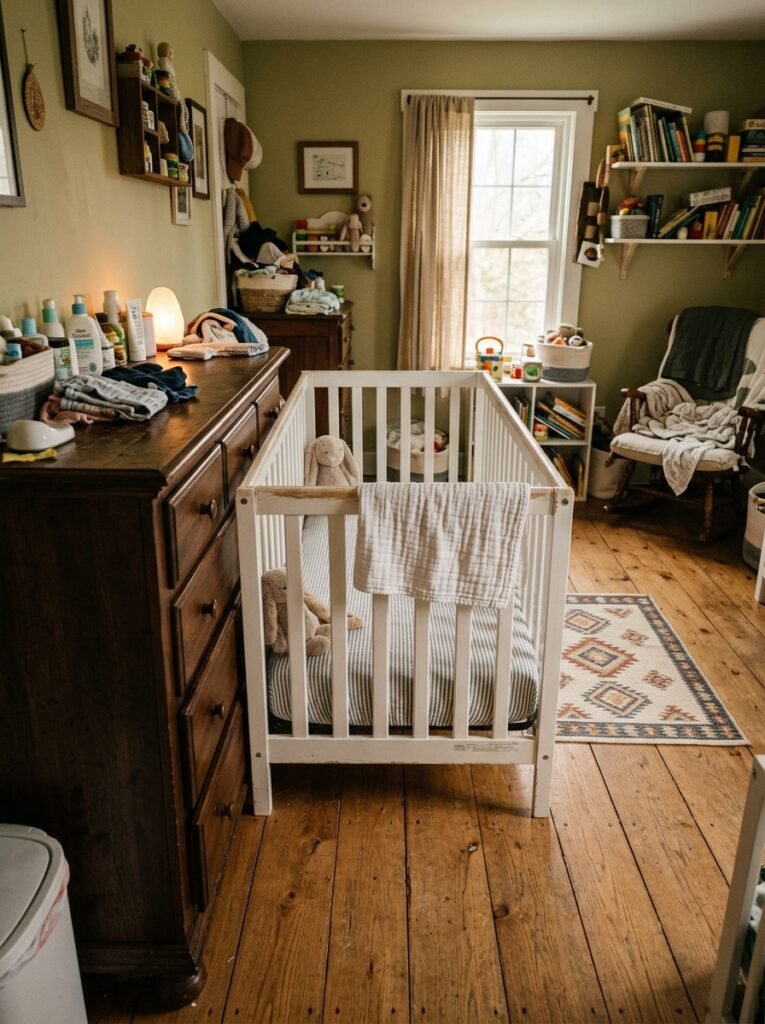
Here’s something that happens in almost every nursery: people underestimate storage by about 40%. You’ve got the dresser and maybe a small shelf and you think, surely that’s enough for someone who weighs eight pounds. It is not enough.
Babies come with an extraordinary amount of stuff. Nappies and wipes and creams and swaddles and spare swaddles and the swaddles you got as gifts that you haven’t tried yet. Clothes in four different sizes because they grow fast and you’ll have overlapping size stages. Books, toys, the things you didn’t ask for but someone gave you anyway.
So. Storage strategy, briefly:
- Baskets are your best friend, specifically ones that close or have lids for the visual chaos stuff
- A tall-ish shelving unit with some closed drawers beats a row of open cubbies every time
- Label what’s inside if it’s not visible — a small handwritten tag or a stamp on masking tape is fine and it genuinely reduces the 2am “WHERE IS THE THING” problem
- Keep the most-reached-for things at adult height, not baby height
The room will look calmer if the majority of storage is contained rather than open. That’s just true.
8. The Small Thing That Makes the Room Feel Finished (When Everything Else Feels Chaotic)
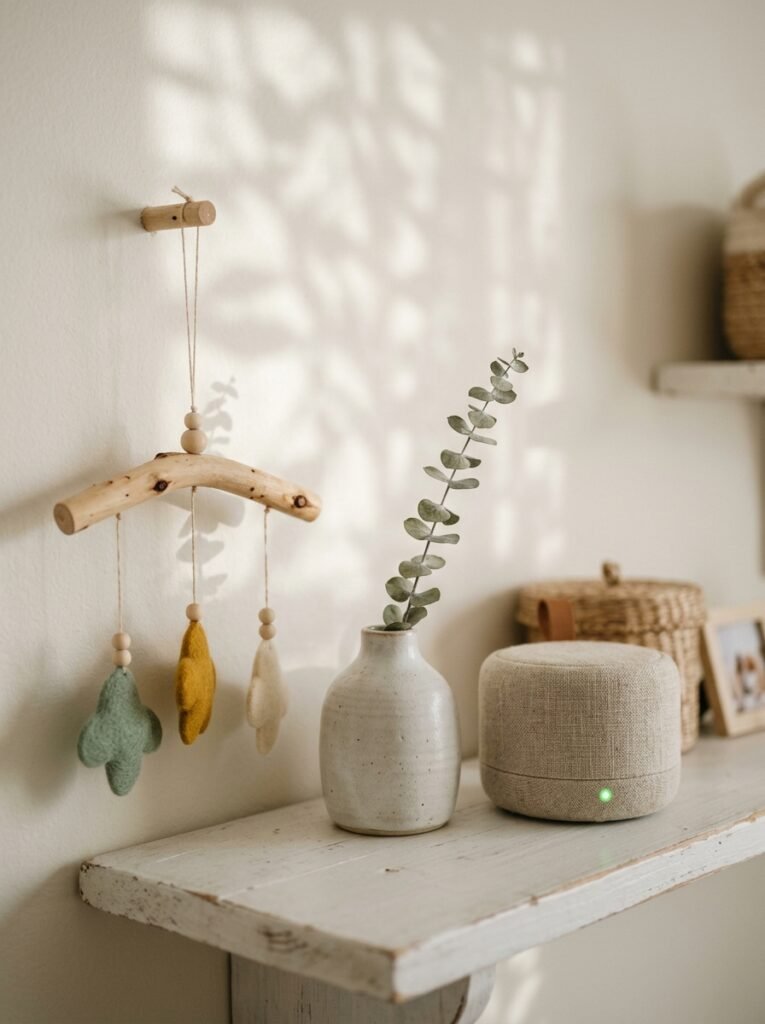
It’s almost always textiles.
Curtains that pool slightly at the floor. A knit blanket folded over the side of the crib. A small cushion in the nursing chair in a fabric that’s completely different from everything else in the room — maybe a linen texture against a painted wood finish, or a subtle check against a plain wall.
The mix of textures is what reads as “designed” versus “furnished.” When everything in a room is the same material weight — all smooth, all matte, all the same — the eye sort of glazes over. But when you’ve got something rough next to something soft, something draped next to something structured, the room comes alive in a way that’s genuinely hard to put into words.
You don’t need much. Two or three thoughtful textile choices and the room shifts.
9. Plants: Yes or No, and What to Actually Do
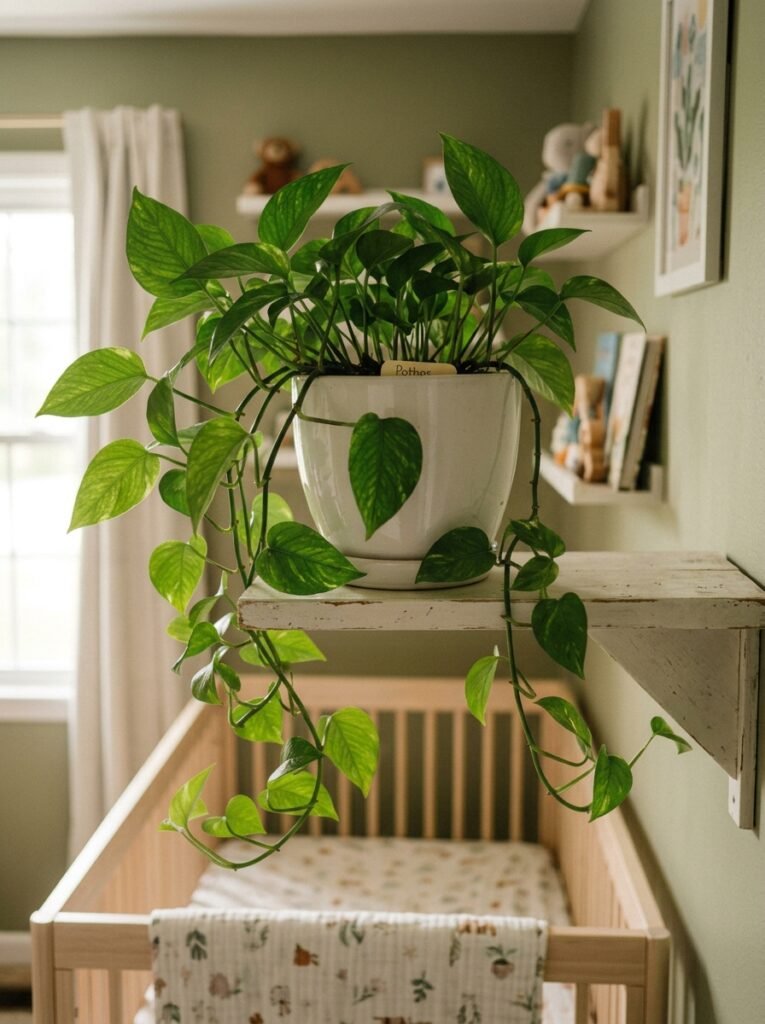
Yes, if you want them. No, if they stress you out.
The concern people have about plants in nurseries is usually about toxicity, which is fair — some common houseplants are genuinely harmful if chewed on, and once your baby is mobile and pulling at things, that matters. So avoid anything from the lily family, and anything with small berries or bright-colored anything that could be tempting.
But a spider plant on a high shelf? A trailing pothos completely out of reach? A small succulent on the windowsill? All fine. And they do something for the room that nothing else does, which is add the suggestion of the outside world. Of something living and growing. In a room that can sometimes feel very sealed and controlled, a plant is a small exhale.
If you can’t commit to a plant or your light conditions are genuinely bad, a good quality dried arrangement in a clay pot does a similar visual job without the watering.
10. What to Do When the Nursery Is Also a Second Bedroom or an Awkward Space
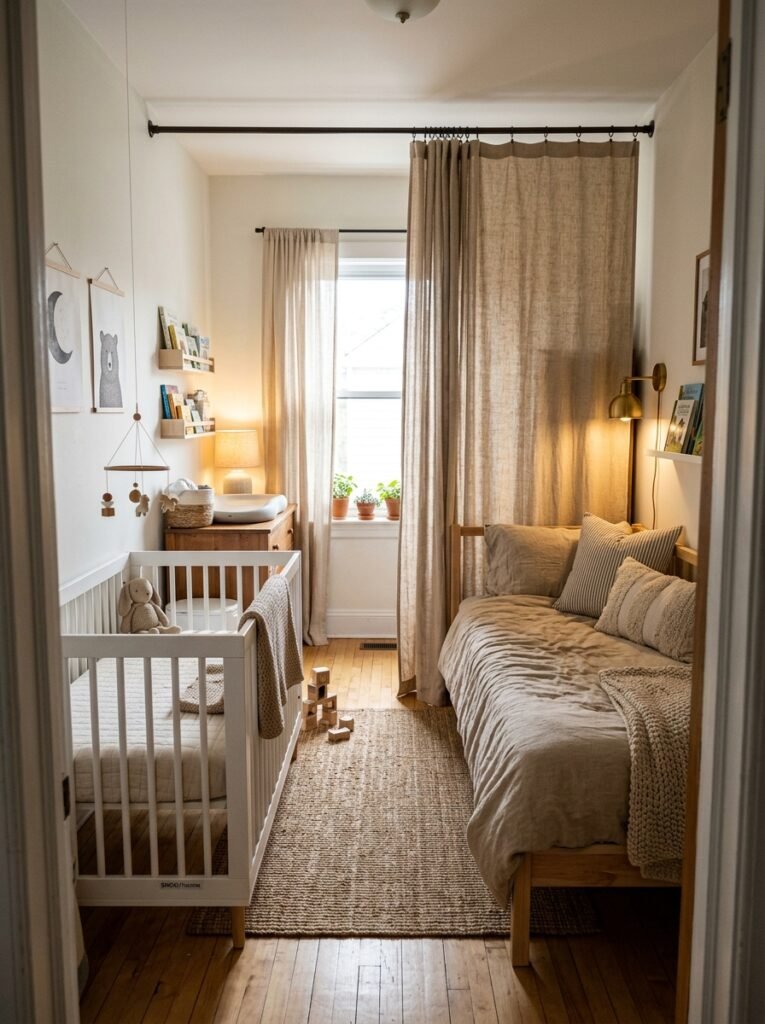
Honestly? This is most people’s reality and the Pinterest boards don’t really acknowledge it.
The room that’s going to be the nursery is often the smallest room, or the one with the weird alcove, or the box room that’s technically a bedroom but also where the router lives and there’s a sloped ceiling on one side. Welcome to it.
The sloped ceiling thing is actually solvable — paint the sloped section a slightly different shade than the main walls, and suddenly it reads as intentional rather than architectural compromise. The alcove is genuinely useful for a crib if it fits, because it creates a cozy enclosed feeling that babies seem to actually like.
For really small rooms: keep the furniture count low. Crib, chair, one storage piece. That’s the skeleton. Add vertically — shelves go UP rather than out, which keeps floor space free and makes the room feel taller.
“Keep the furniture count low. Crib, chair, one storage piece. That’s the skeleton.”
And choose light over dark for the walls almost always in a small room — not because it “makes it look bigger” in some magical way, but because dark walls in a room with limited natural light can feel oppressive over time. You’ll notice it more at 6am in November than you will on the day you paint.
11. The Theme Trap and How to Avoid Regret in Two Years
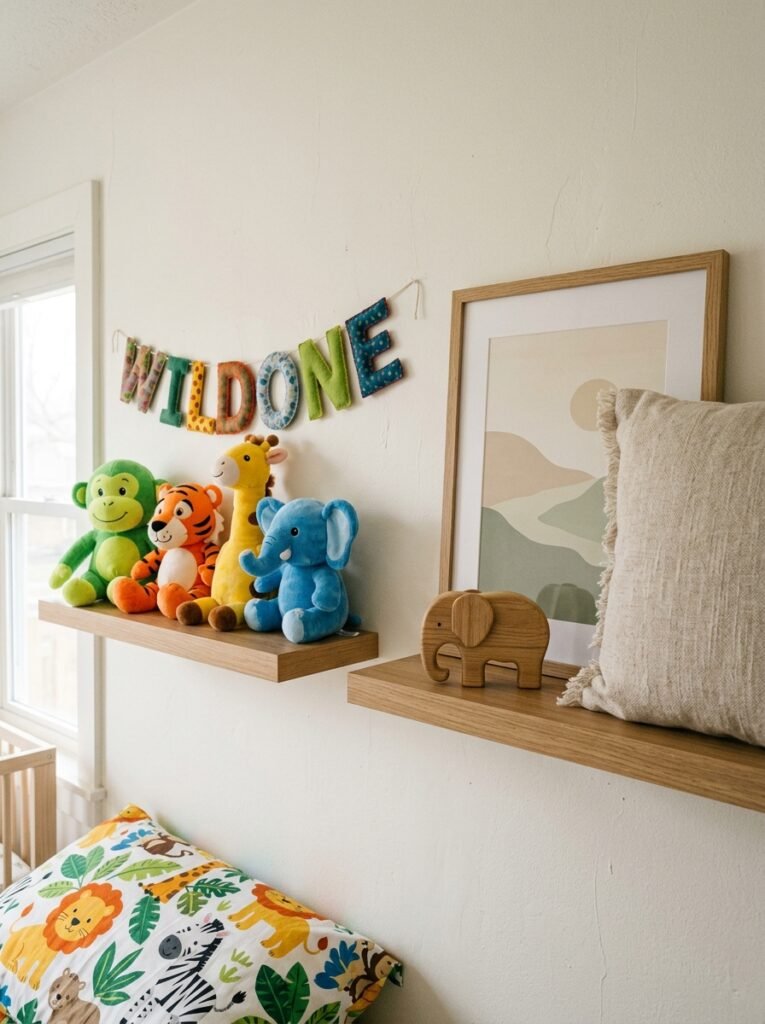
Themes are seductive. The woodland creature theme. The celestial theme. The classic navy nautical thing. They look GREAT in the shop, everything coordinates, it comes together fast.
But themes date quickly. And more than that, they’re specific in a way that limits you. Once you’ve got ten forest animals on the wall, you’ve committed. You can’t add something that doesn’t fit. The room stops evolving.
What works better — and what tends to get the most “how did you do that” comments — is a color palette held together with a loose aesthetic feeling rather than a specific theme. Warm neutrals with natural materials has longevity. Dusty blue with white oak and linen reads beautiful now and will still read beautiful when your kid is four. Soft terracotta with rattan and woven textures won’t feel dated the same way a specific character-theme will.
Keep the playful, character-specific things in the washable, replaceable category: the printed muslin cloth, the soft toy propped on the shelf, the small framed print you bought from an independent shop. These can change. The painted walls and the furniture can’t, at least not easily.
12. The Last Thing You Do Before the Baby Arrives
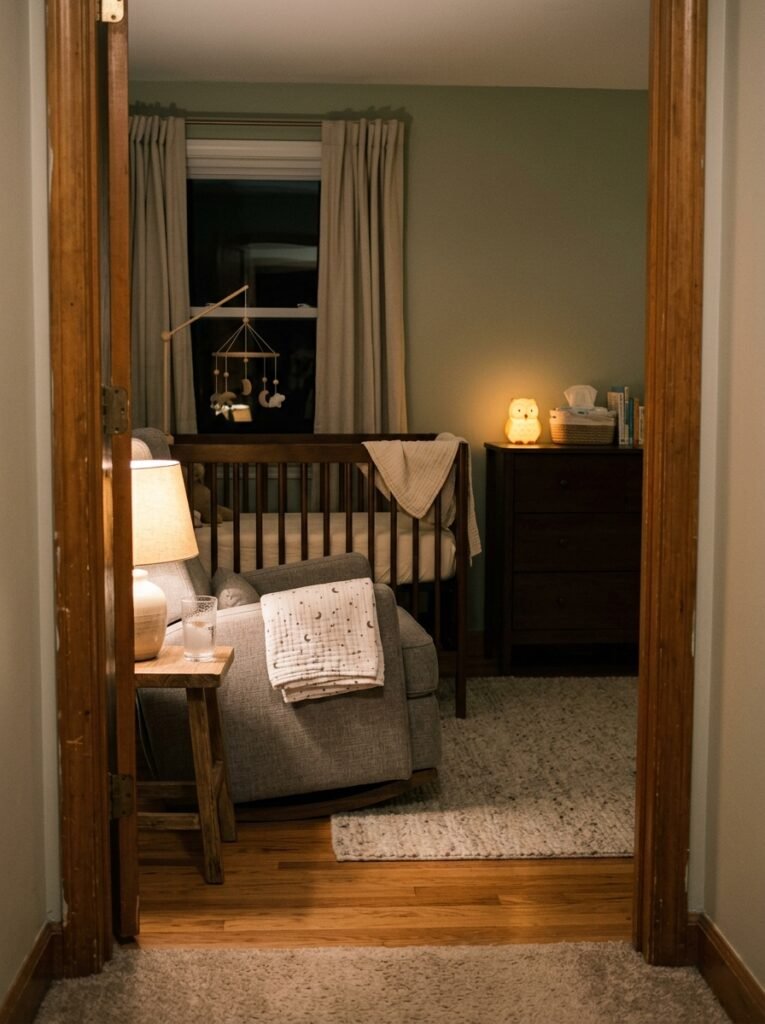
Sit in the room alone for a while.
Not to check the list or photograph it for Instagram, but just to sit in it. In the chair you chose. At different times of day. See how it feels in the morning when the light comes in, and how it feels in the evening with just the lamp on, and whether the room makes you feel calm or tense or quietly happy.
Because that feeling — that’s the whole point. The rest is furniture.
A nursery doesn’t need to be perfect. It needs to be somewhere you want to be when everything else feels impossible. Get that right and the rest honestly doesn’t matter.
—
❓ FAQ
Q: What’s the best wall color for a gender-neutral nursery that doesn’t feel boring? A: Anything in the dusty, muted range tends to work brilliantly — sage that leans toward gray, a warm putty or greige, or a very soft terracotta. These feel gender-neutral without defaulting to plain white, and they hold up beautifully as the child grows.
Q: Do I need a separate changing table or can I just use the dresser? A: Most people find a changing topper on a sturdy dresser works perfectly well and saves floor space. A freestanding changing table gets used intensively for maybe 18 months, so unless your room is large, the dresser-with-topper option is more practical and longer-lasting.
Q: How early should I set up the nursery before the baby arrives? A: Most people aim for having it done by around 34-36 weeks, which gives you time to actually use the space, notice anything that’s not working, and make small adjustments without the pressure of having a newborn at home. That said, babies don’t care about timing — “whenever you feel ready” is genuinely the right answer.
—
💭 Final Thoughts
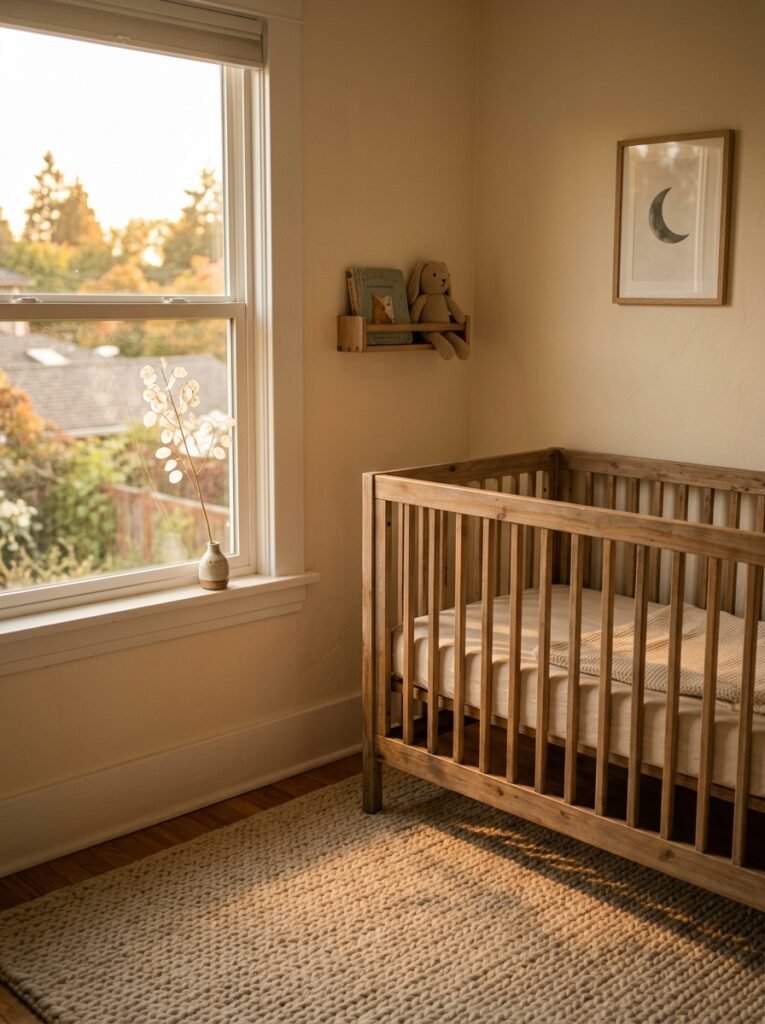
The nursery my sister repainted? She went warm white with a sage accent wall, a big secondhand glider she recovered in a textured cream fabric, and one trailing plant on the highest shelf. She sent me a photo at 11pm and it looked like somewhere I’d want to sit.
She texted me the next morning: “I fed him in there last night and I didn’t want to leave.”
That’s the whole thing, really. What would it feel like to not want to leave?