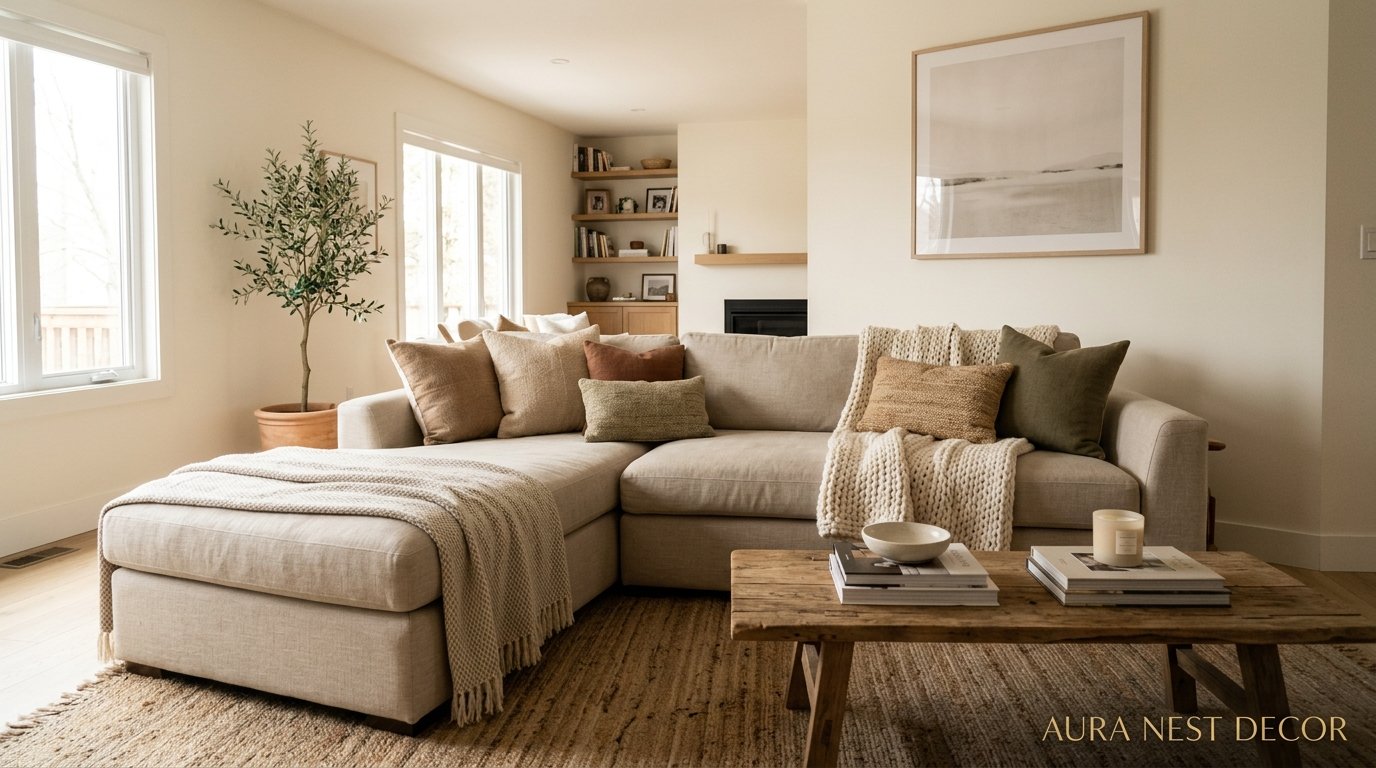
The Sectional Sofa Decision That Changes Everything About Your Living Room
You know that moment when you finally sit down in a room that just works — and you can’t explain exactly why, but something about it makes you exhale? Nine times out of ten, it’s the sectional. It’s the thing doing the most heavy lifting in any living room, and most people spend more time picking a throw pillow than they spend really thinking about it.
That ends today.
—
1. Why Your Current Sofa Is Making Your Room Feel Like a Waiting Room
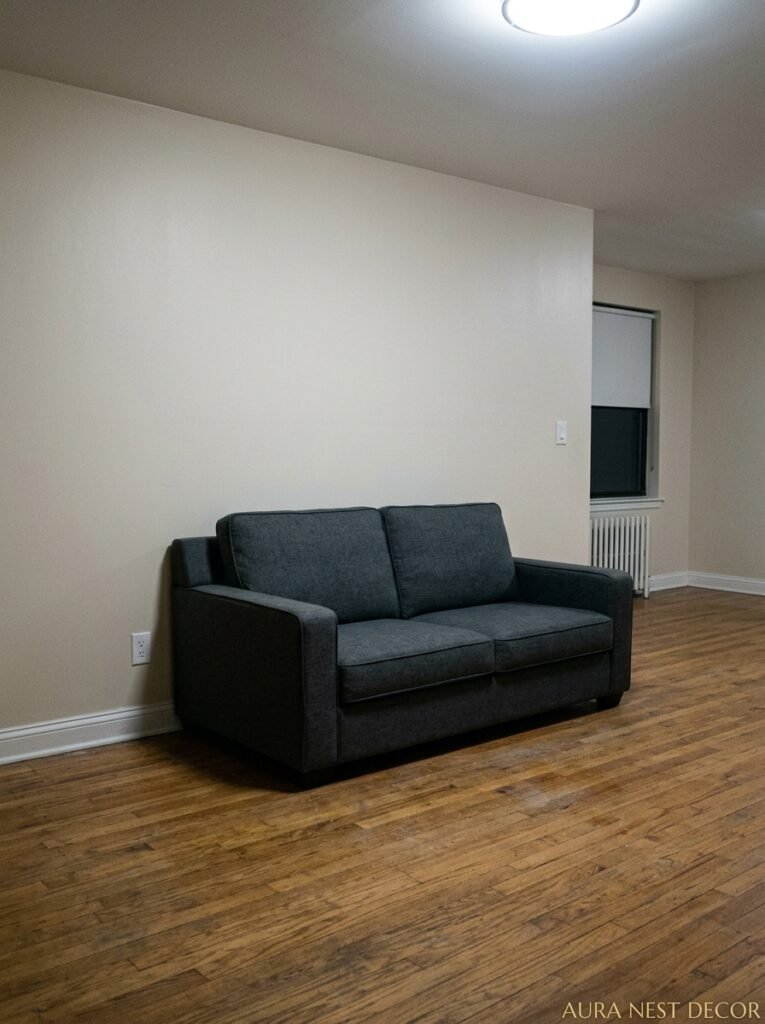
There’s a specific kind of sadness that comes from a sofa that’s too small for the wall it’s pushed against. That gap. That empty stretch of flooring where people are supposed to gather but don’t because there’s nowhere comfortable to land. If your living room feels weirdly formal even when you’re trying to relax in it, the sofa is almost always the culprit.
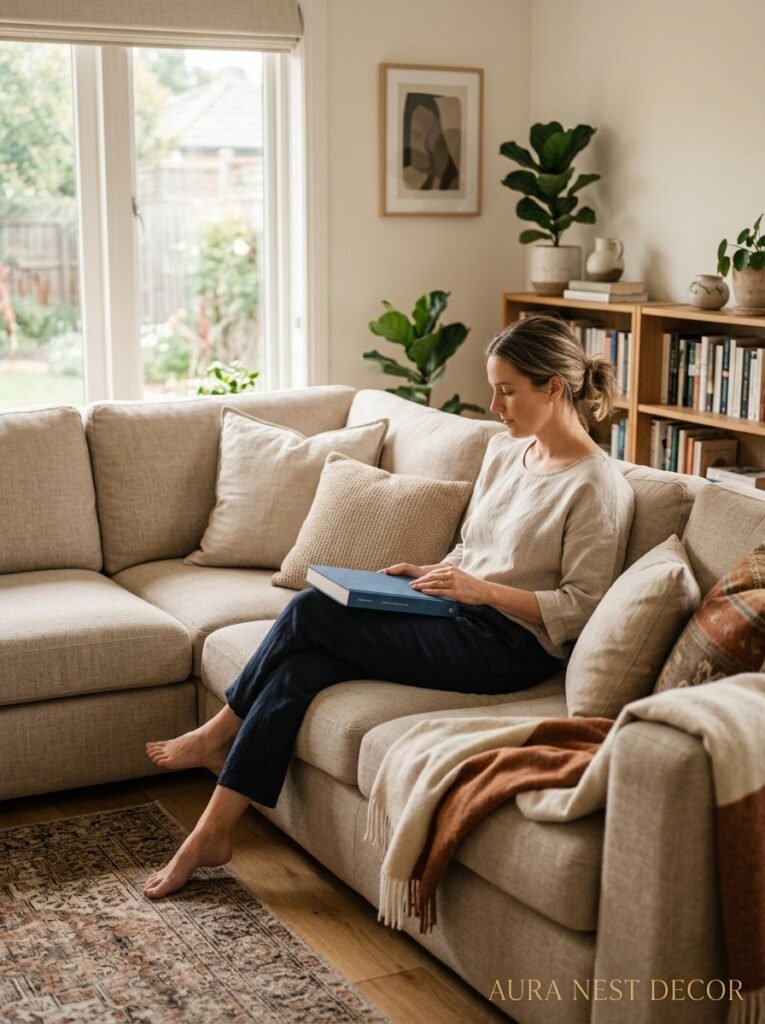
A sectional changes that completely. Not because bigger is always better — it’s not, and I’ll get to that — but because a sectional is designed around how people actually live. Multiple people facing each other. Someone sprawled out with a book. A corner that becomes a reading nook without even trying. The shape does the work that furniture arrangement usually fails to do.
And here’s the thing people don’t say enough: a correctly sized sectional can make a small room feel MORE intentional, not more cramped. It fills the space with purpose. It says “this room is for living in” instead of “this room is for occasionally sitting in while feeling slightly awkward.”
“The right sectional doesn’t just fill a room — it gives everyone somewhere to actually land.”
2. The L-Shape vs. the U-Shape: What Nobody Tells You Before You Buy
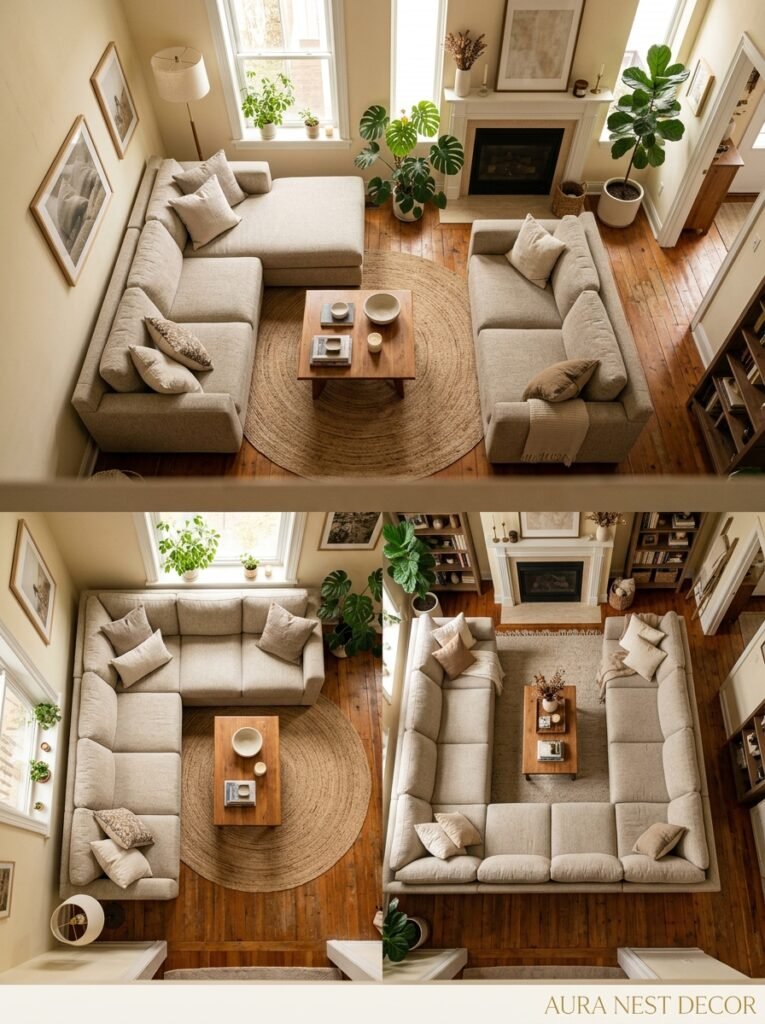
Right. So you’ve decided on a sectional. Now the internet presents you with about four thousand options and two main configurations, and most buying guides gloss over the actual functional difference between them in favor of showing you beautiful styled rooms that look nothing like your flat or your house.
Here’s the honest breakdown. An L-shaped sectional is a sofa with one extended arm — it creates a corner seating area and works brilliantly in rooms where you need to define a space without blocking flow. Living in a terrace house with a combined living-dining room? L-shape, almost every time. It keeps things open while still feeling substantial.
U-shaped is a whole different commitment. It wraps around a coffee table and basically says “this is the gathering spot, full stop.” It’s incredible for family rooms, for houses with kids who eat snacks horizontally across the furniture, for anyone who regularly has six or more people wanting to sit together. But it eats floor space. In a smaller room, a U-shape can feel like you’re living inside the sofa rather than near it.
So the question isn’t which looks better in photos. It’s how many people actually live in your home and how do you actually USE that room. Those are different questions than you think they are.
3. The Measurement Rule That Will Save You From a Furniture Catastrophe
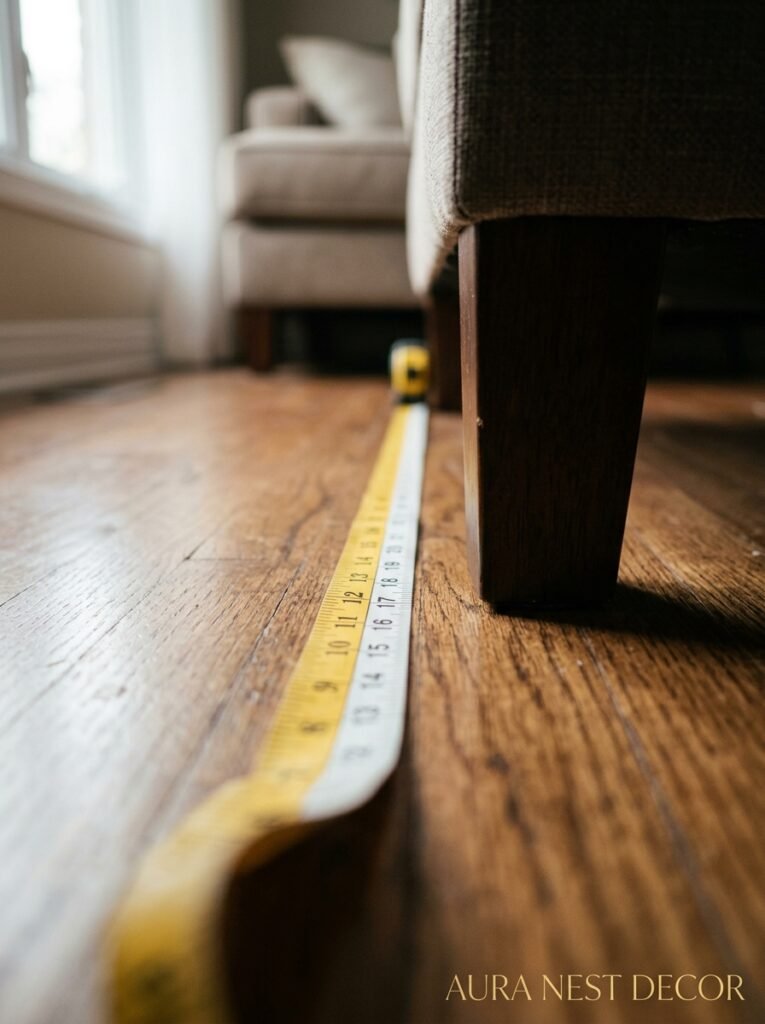
I cannot stress this enough. Measure twice. Measure the room again. Measure the doorway. Measure the hallway leading to the doorway. I’m only slightly joking — there are entire Reddit threads and honestly quite a few tears that resulted from skipping this step.
A sectional typically runs anywhere from around 95 inches to 130+ inches on its longer side. Your wall might be 12 feet wide and look enormous, but once you account for end tables, a TV unit, and a walking path that doesn’t require you to turn sideways, you’ve got less space than you think. The general rule most designers use is leaving at least 18 inches between your sectional and any other major piece of furniture — coffee table included — for comfortable movement.
For UK homes especially, where Victorian terraced houses and converted flats tend to have longer, narrower living rooms, this matters. A lot. A wide U-shape in a long narrow room creates this bizarre corridor effect that feels less “chic” and more “hospital waiting area.” The L-shape almost always wins in those proportions.
Tape it out on the floor first. Seriously. Get masking tape or painter’s tape, mark the actual footprint of the sectional you’re considering, and live with that for a day. Walk around it. It sounds obsessive but you’ll either feel instant relief or instant panic, and both of those are useful pieces of information BEFORE you’ve spent $1,500 to $4,000 on a sofa.
4. Chaise Left or Chaise Right: The Decision That Haunts People
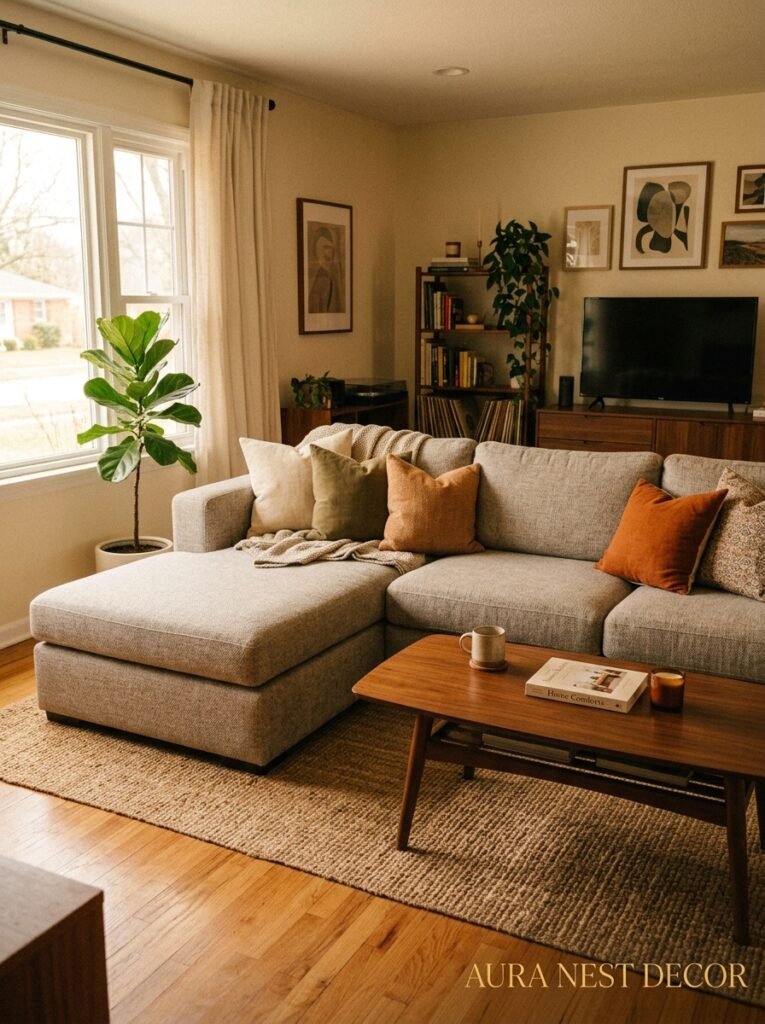
Oh, this one. This is the one that sends people into genuine spirals, and I get it, I really do.
For anyone new to sectional terminology — the chaise is the extended side with no back, where you stretch out your legs. And you have to choose which side it goes on at the point of purchase, which means you need to know your room layout before you order, not after.
Here’s how to think about it: stand where your TV or focal point is, and look at where you want people to be facing. The chaise should extend AWAY from that focal point so the person lying on it is still oriented toward the room, not facing a wall with their back to everyone. When it goes the wrong way, the person on the chaise is basically in their own separate island — which might sound appealing honestly, but it breaks the room socially.
Also, and this is practical: the chaise tends to be where people spend the most time. It’s where the good napping happens. So if you’ve got a window on one side of the room with nice afternoon light, think about whether you want the chaise positioned to catch it. Small thing, but once you notice it you’ll never un-notice it.
“Get the chaise direction wrong and you’ll spend years explaining to guests where to sit.”
5. The Fabric Question Everyone Asks Way Too Late
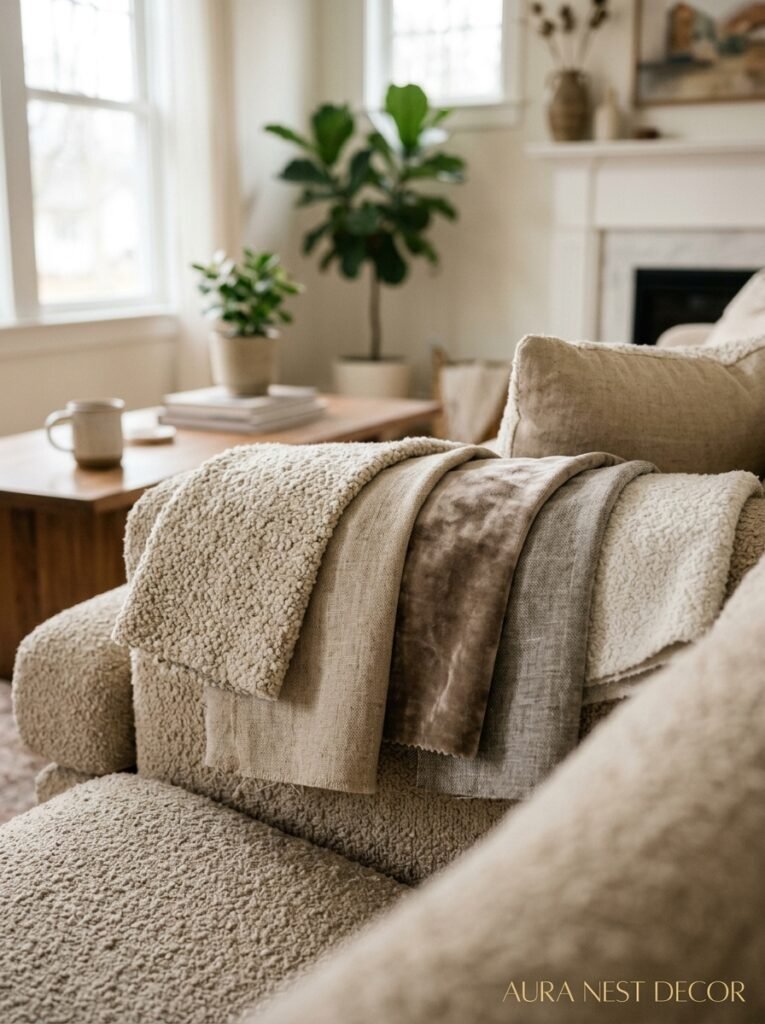
Performance fabric. Say it with me. Performance. Fabric.
If you have kids, a dog, a partner who spills things, a tendency to eat dinner on the sofa, or any kind of real human life — please, please look at performance fabrics before you fall in love with a beautiful Belgian linen sectional. I’m not saying linen isn’t gorgeous. It absolutely is. But if you’re wiping down your sofa with a damp cloth twice a week because of a labrador named something like Dave, linen is going to make you miserable.
Performance fabrics — things like Crypton, Sunbrella, or any tightly woven microfiber blend labeled as “stain resistant” — have come SO far in the past five years. They don’t all look like the wipeable pleather hospital sofas of the 1990s anymore. Some of them look genuinely beautiful. Textured, warm, interesting. And you can clean them with soap and water or sometimes just a dry cloth, which after a real spill feels like an actual miracle.
In the US, velvet performance fabrics are having a massive moment and they’re more durable than they sound. In the UK, the bouclé trend is still going strong — and yes, you can get bouclé-style performance fabric now, which kind of feels like cheating in the best possible way.
6. The Color That Keeps Showing Up in Every Beautiful Living Room Right Now
It’s not grey. Grey had its decade, grey is tired, grey is over unless you do it in a really specific, warm, almost putty-toned way.
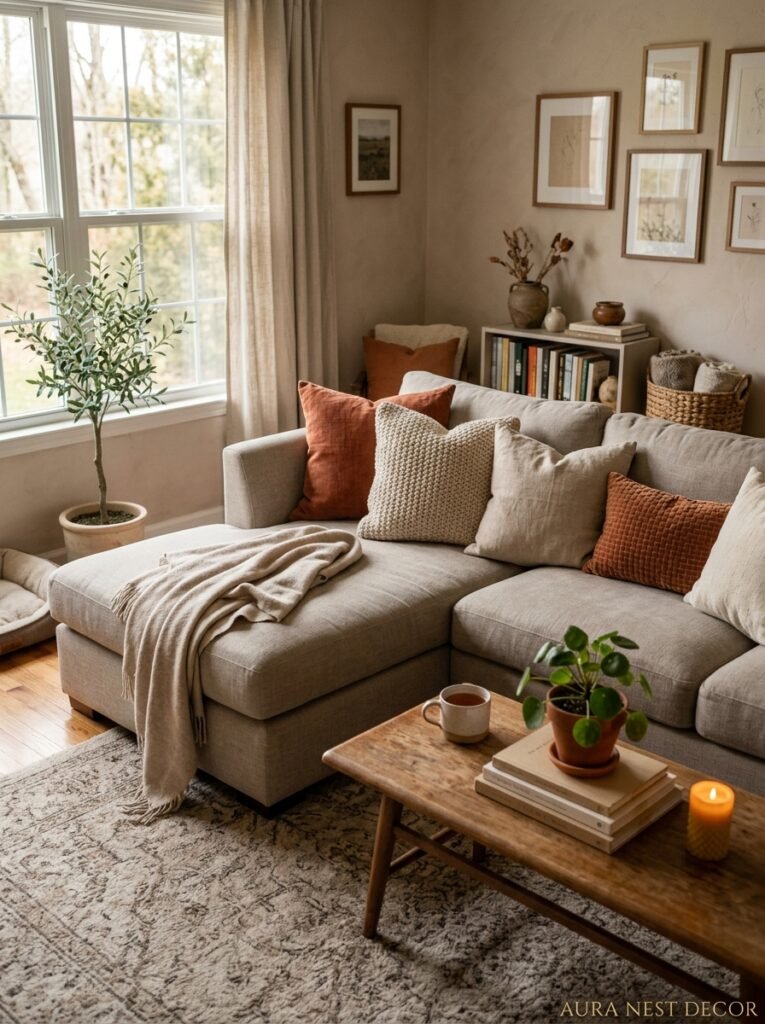
What’s actually showing up everywhere — in the Pinterest boards I keep going back to, in the rooms that stop me mid-scroll — is warm terracotta, deep forest green, and a kind of camel or tobacco brown that somehow works with literally everything. These aren’t new colors but the way people are using them on sectionals specifically is different. Less statement piece, more anchor. The idea is that the sofa itself has depth, and everything around it gets to be lighter and more relaxed.
If you’re nervous about committing to a colored sectional — fair — go for something in that warm neutral range. A camel or cognac-toned boucle or performance fabric sectional works with cool white walls, warm greige walls, dark moody walls, wood paneling, you name it. It’s not a beige sectional, which can feel a bit corporate. It’s WARM. There’s a difference.
And if you’re in a rental or you just genuinely can’t bear to commit, an ivory or warm white sectional styled with deeply colored throw pillows and a textured blanket reads just as intentional. Just… wash the covers.
7. What Actually Makes a Small Living Room Work With a Sectional
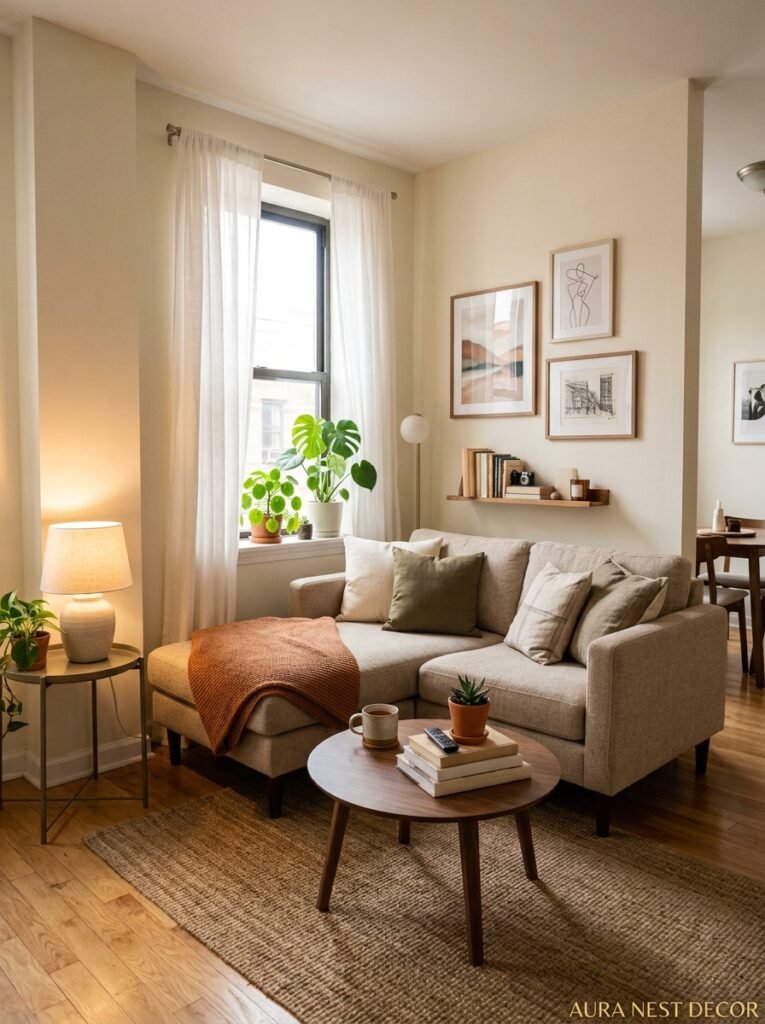
People assume sectionals are only for big rooms. Completely wrong. I’ve seen tiny living rooms absolutely transformed — a 12-by-14-foot room that felt like nothing much, given an apartment-sized L-shape sectional in a warm cream, and suddenly there was a proper seating area, a visual anchor, and actually MORE floor space than there was when a sofa and two chairs were awkwardly arranged around the edges.
The key in a smaller room is scale and legs. An apartment sectional or compact L-shape usually tops out around 95-100 inches on its longest side, which is genuinely workable in most UK and US living rooms. And legs matter enormously — sectionals with visible legs instead of a solid skirt to the floor let light pass underneath, which makes any piece of furniture feel less heavy. It’s almost like the room gets to breathe a little.
One more thing: don’t push it flat against the wall. I know this feels counterintuitive when space is tight, but a sectional that floats slightly into the room — even just 3 or 4 inches — looks deliberate and designed. Pushed to the wall it looks like it got stuck there.
“The sectional doesn’t need to earn its place in a small room. It just needs the right size and the right legs.”
8. The Styling Details That Separate “Nice Sofa” From “That Room”
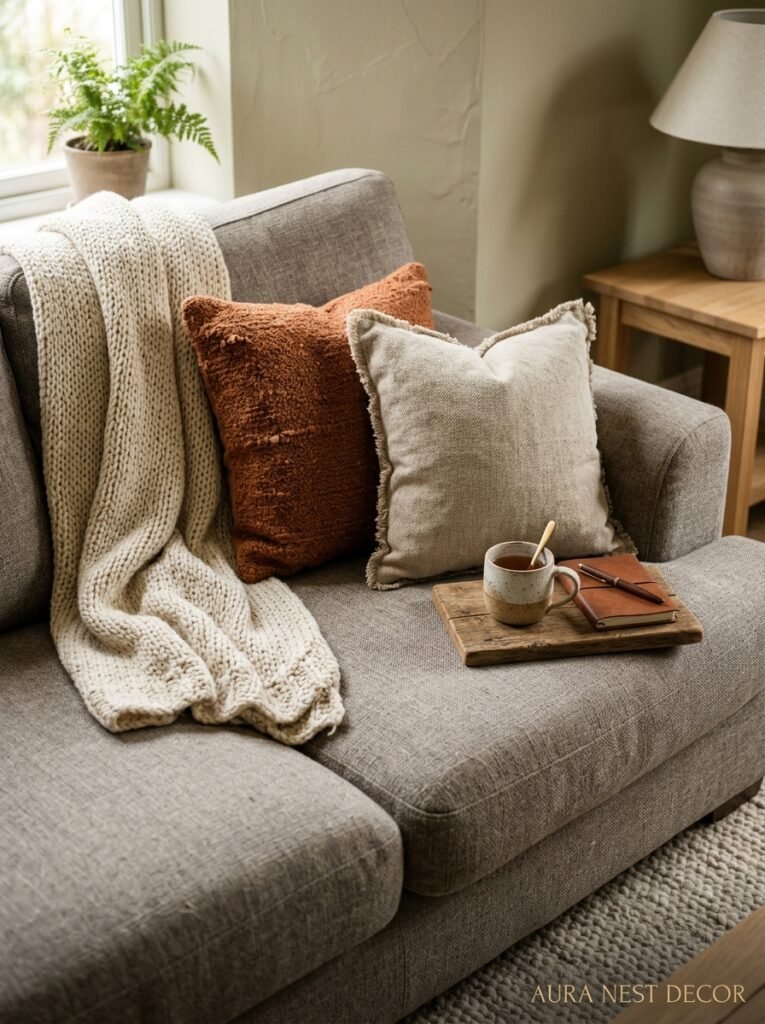
Okay so you’ve got the sectional. Now what? Because I see a lot of sectionals that are perfectly fine sofas and just… sit there. They don’t SING. Here’s the difference.
Throw pillows in an odd number. Not four matching squares, not six perfectly arranged cushions — three or five, different sizes, different textures, at least one pattern. The corner of the sectional (where the two sides meet) usually benefits from one oversized pillow or a lumbar pillow tucked in at an angle. Slightly chaotic. Deliberately lived-in.
A chunky knit or linen throw draped over one end. Not folded neatly. DRAPED. Like someone just got up from using it.
And the coffee table — for a sectional, a round coffee table almost always works better than a rectangular one. The sectional already has all the angles; a circle softens everything and makes moving around the room feel less like an obstacle course. A big rattan or natural wood round table is probably the safest, most timeless choice you can make here.
9. How the British Living Room and the American Den Actually Want Different Things
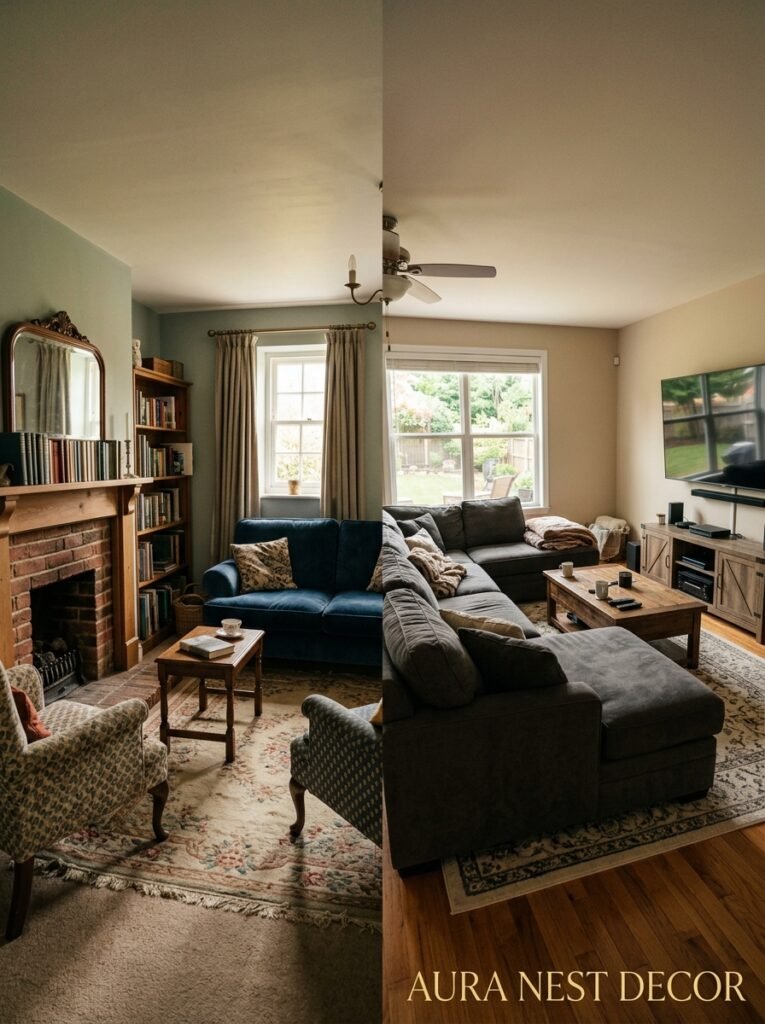
Not gonna lie, this is something I find genuinely interesting. The way people use their living rooms in the UK versus the US is different in ways that actually affect sectional choices.
In British homes — and I’m generalising here, obviously — the living room tends to be a bit more formal, a bit more the “front room” that people care about aesthetically, sometimes more than they care about pure comfort. There’s also the Victorian and Edwardian layout factor: those bay windows, those fireplaces as focal points, those slightly asymmetrical room shapes that don’t love a massive U-shaped sectional barging in.
American living rooms, especially in newer builds, tend to be bigger, more open-plan, often combined with the kitchen, and much more oriented around the TV wall. That’s where a U-shape or large L-shape absolutely thrives — there’s a clear focal point, there’s space, and it makes sense to have everyone clustered comfortably around it.
So if you’re in a UK Victorian terrace, an L-shape in a rich color that complements your fireplace is going to look infinitely better than trying to make a large U-shape “work.” And if you’re in an American open-concept ranch or colonial, go bigger. Go comfortable. The room can take it, and so can your life.
10. The Sofa Brands Worth Knowing (and the Traps to Avoid)
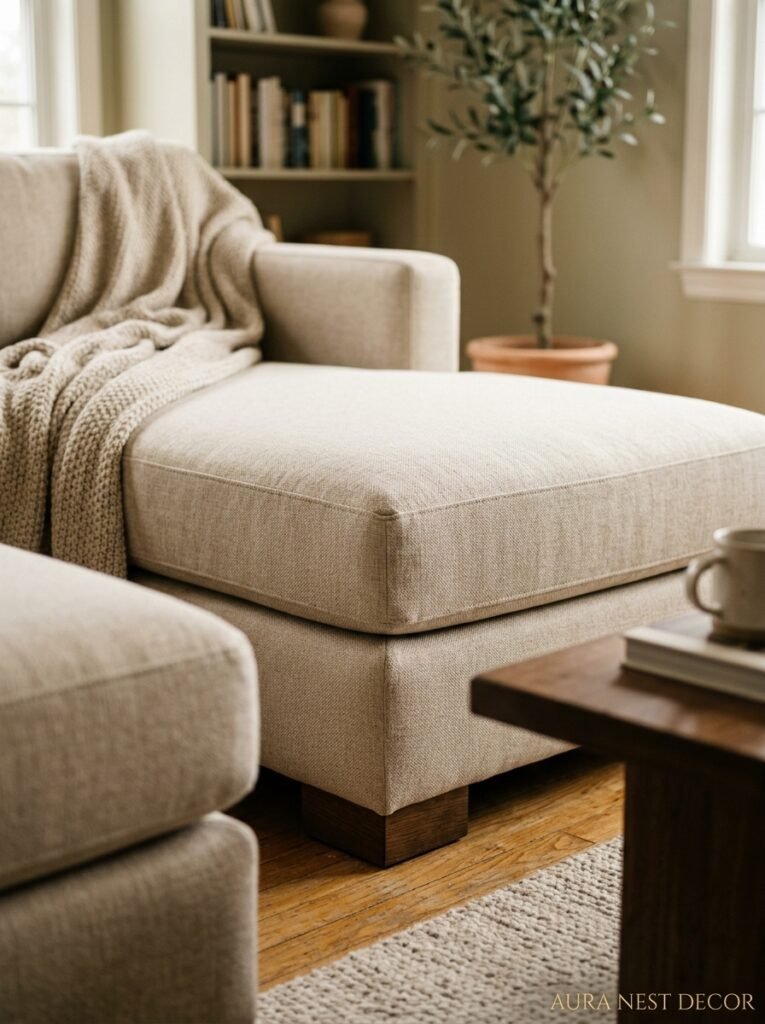
I’m not here to sell you anything specific. But there are things worth knowing before you start shopping.
In the US, there’s been a boom in direct-to-consumer sectional brands — Joybird, Article, Burrow, Albany Park — that offer genuinely decent quality at a mid-range price point, with the major selling point being a shorter wait time than traditional furniture stores. Quality varies. Read reviews specifically about the cushion longevity, because that’s where cheaper sectionals fall apart — literally — after a couple of years. Cushions that go flat after eighteen months are the single most common complaint, and it’s fixable by getting a sectional with a down-blend cushion insert (pricier) or by ordering replacement inserts.
In the UK, MADE.com’s closure left a gap that brands like Arlo & Jacob, Neptune, and Loaf have partially filled in different price tiers. DFS gets mocked endlessly but honestly their higher-end ranges have improved, and the ability to see and sit on something in person before committing to a fabric and configuration is genuinely valuable with sectionals specifically.
Avoid sectionals with very long lead times if you’re in a rental or likely to move. Some custom sectionals take 16-20 weeks. That’s fine if you’re settled. Catastrophic if you’re not.
11. The Room Layout Mistake People Make After They Get the Sectional Right
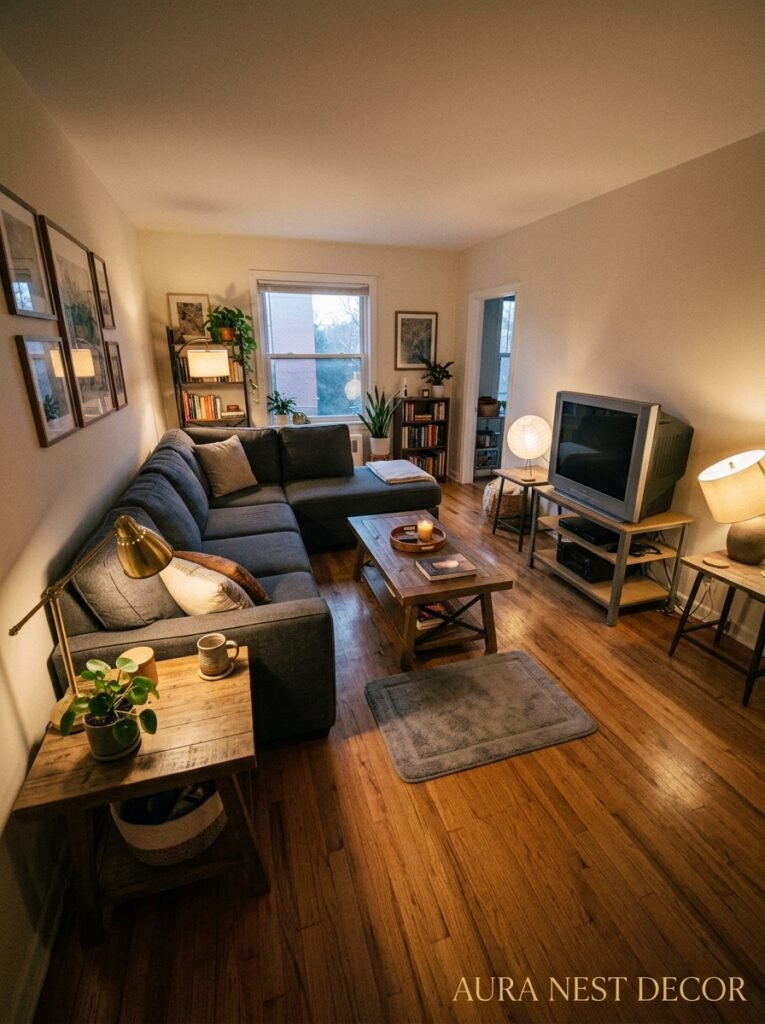
So you’ve got the perfect sectional, correct size, great color, right chaise direction. And then it goes slightly wrong because of what happens AROUND it.
The most common error: the rug is too small. This one is everywhere. A sectional needs a rug that at least has its front two legs sitting on it — ideally all legs, but at minimum the front ones. A rug that sits completely in front of the sectional with no legs touching looks like an island that got separated from the mainland. It makes the whole room feel unanchored. Size up. When in doubt, size up again.
Second most common error: no layered lighting. An overhead light alone makes any room feel flat and a bit depressing, especially once you’ve got a beautiful sectional that deserves better. You want light coming from multiple heights — a floor lamp at one end of the sectional, maybe a table lamp on a console or side table at the other end. The amber glow of a warm-toned bulb at 9pm in a room with a good sectional and layered lighting is genuinely one of the nicest domestic feelings that exists. It costs twenty dollars and a trip to a lamp section.
12. When to Just Pull the Trigger (and Stop Waiting for the Perfect Room)
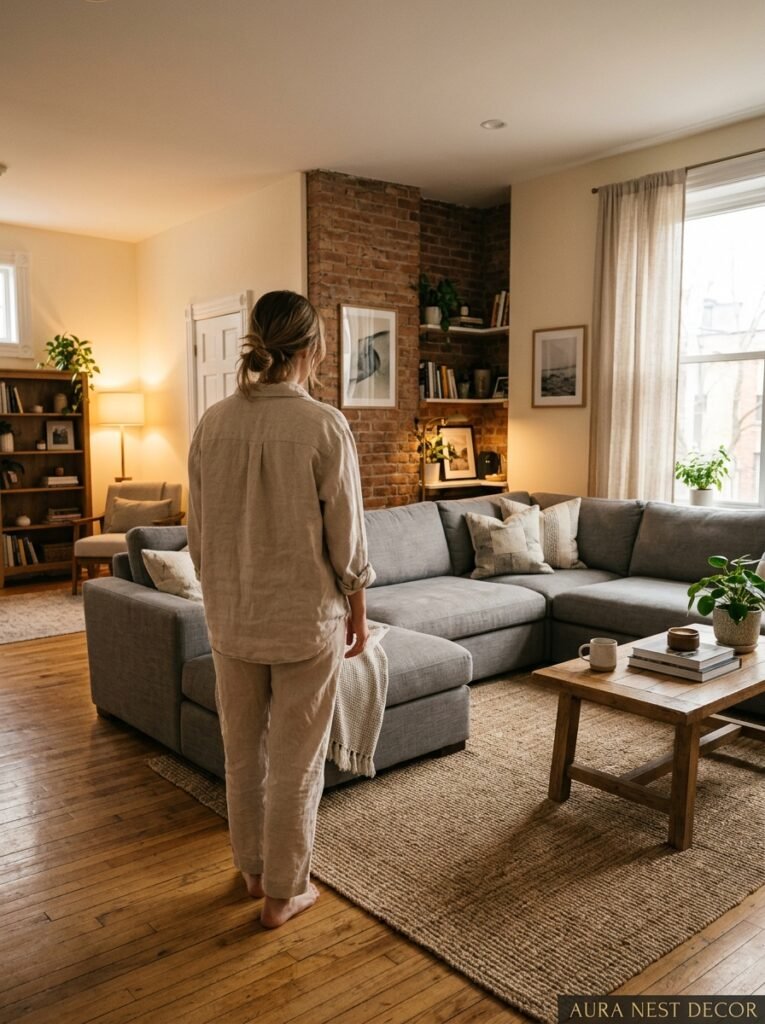
Here’s where I’ll be a bit direct. Some people spend years — YEARS — waiting until they’ve got the right room, the right budget, the right wall color, the perfect everything, before they let themselves have the living room they actually want. And in the meantime they’re living with a too-small sofa they hate, a room that doesn’t quite work, and a Pinterest board that mocks them gently.
A sectional is a commitment, sure. But so is living with furniture you don’t like for five years. The “perfect time” to get a sectional that fits your life is when you can afford a decent one and you’ve done the measuring. That’s it. Rooms evolve around furniture all the time. The sectional doesn’t have to be the last piece — it can be the first right piece, the thing everything else starts to make sense around.
Get the tape measure out. Sit with your floor plan for a week. Then just do it.
—
❓ FAQ
Q: Can a sectional work in a small living room? A: Absolutely, and often better than you’d expect. The key is going for an apartment-sized or compact L-shape (look for a longest side under 100 inches), choosing a piece with visible legs to keep it feeling light, and resisting the urge to push it flat against the wall. A well-chosen smaller sectional can actually make a tight room feel more purposeful than a sofa-and-loveseat combo that never quite clicks.
Q: How do I know if I need a left-facing or right-facing chaise? A: Stand at your room’s main focal point (usually the TV or fireplace) and picture someone lying on the chaise. You want them facing into the room, not toward a wall or away from the action. Draw a quick floor plan sketch — it sounds basic but it genuinely takes the guesswork out of a decision you’ll live with for years.
Q: What’s the most durable fabric for a sectional with pets or kids? A: Performance fabrics are the move — look specifically for tightly woven microfiber, performance velvet, or anything labeled with Crypton or Sunbrella technology. They’ve improved dramatically and many look genuinely beautiful now. Avoid linen and loosely woven natural fabrics unless you’re committed to a strict no-pets-on-the-sofa policy, which, good luck with that.
—
💭 Final Thoughts
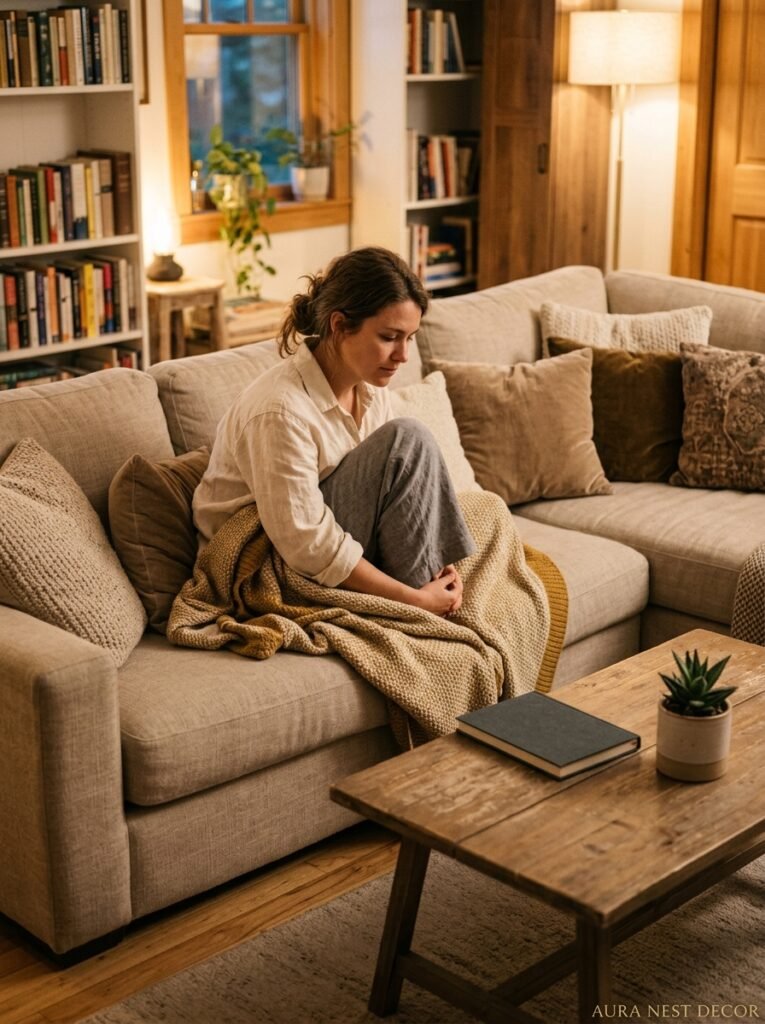
The sectional you choose is going to be the thing you come home to, the thing your people pile onto on a Sunday morning, the thing that makes your living room feel like a room worth being in. That’s worth doing thoughtfully. But it’s also worth doing — not endlessly planning, not perpetually waiting for conditions to be perfect.
What does your living room feel like right now, and what do you actually want it to feel like?