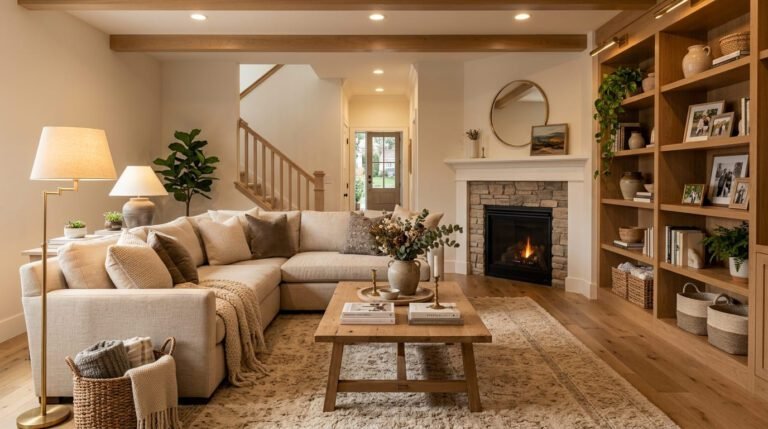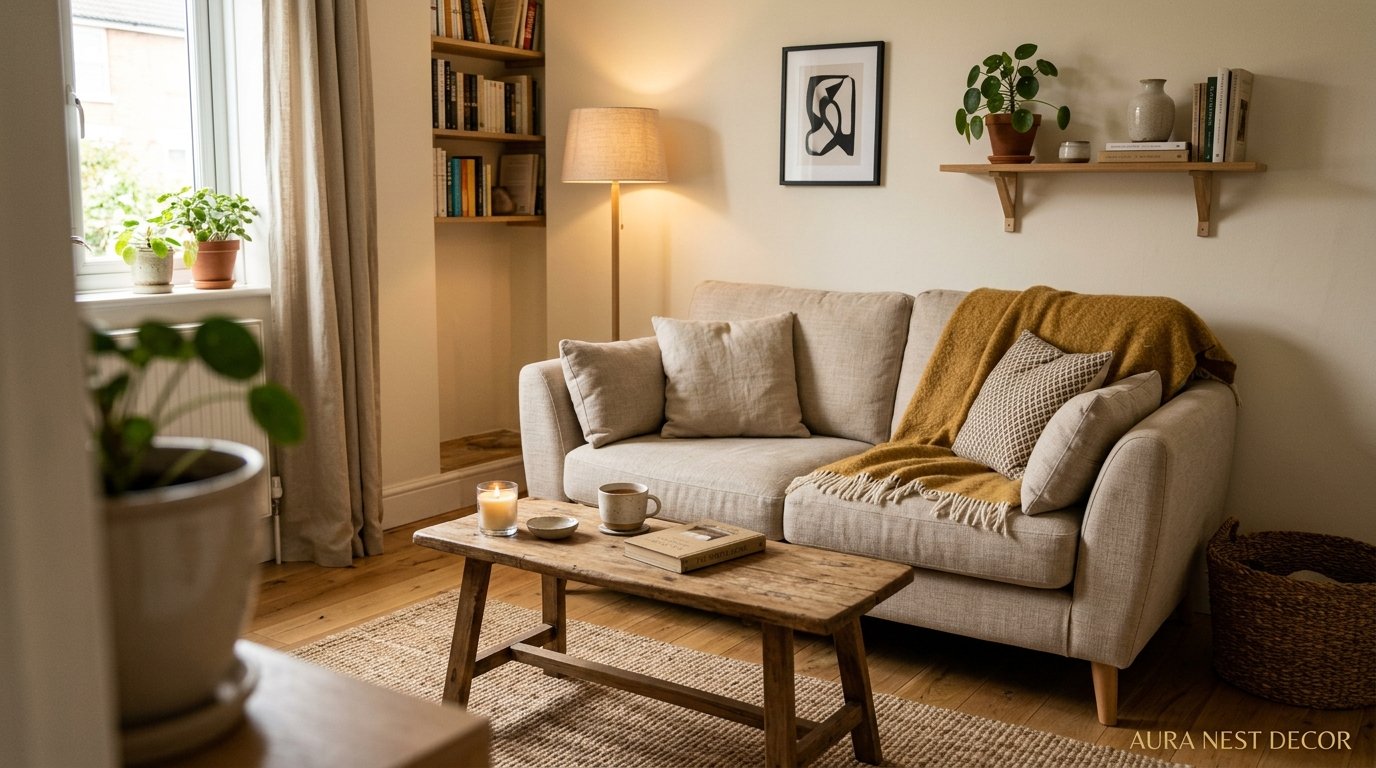
The Small Living Room Glow-Up That Doesn’t Require Knocking Down a Single Wall
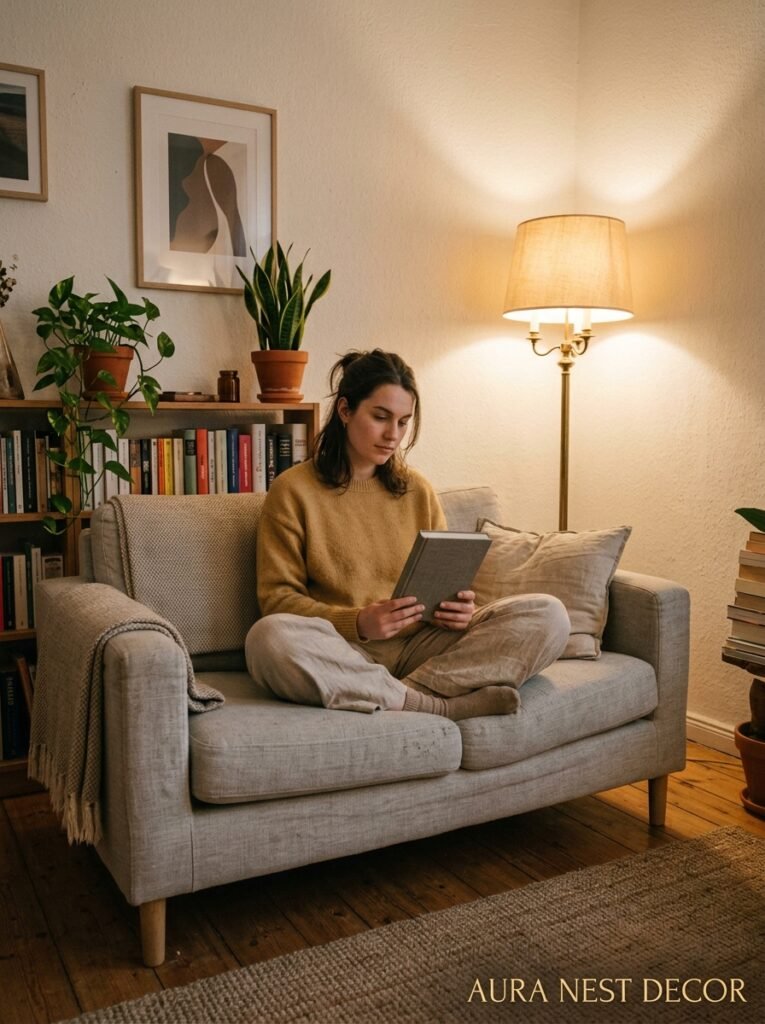
You sit down on the sofa and your knee almost touches the coffee table. Again. And you’ve rearranged this room three times already, so you’re starting to wonder if it’s just… the room. It’s not the room.
—
1. The Furniture Mistake Almost Everyone Makes First (And How to Undo It)
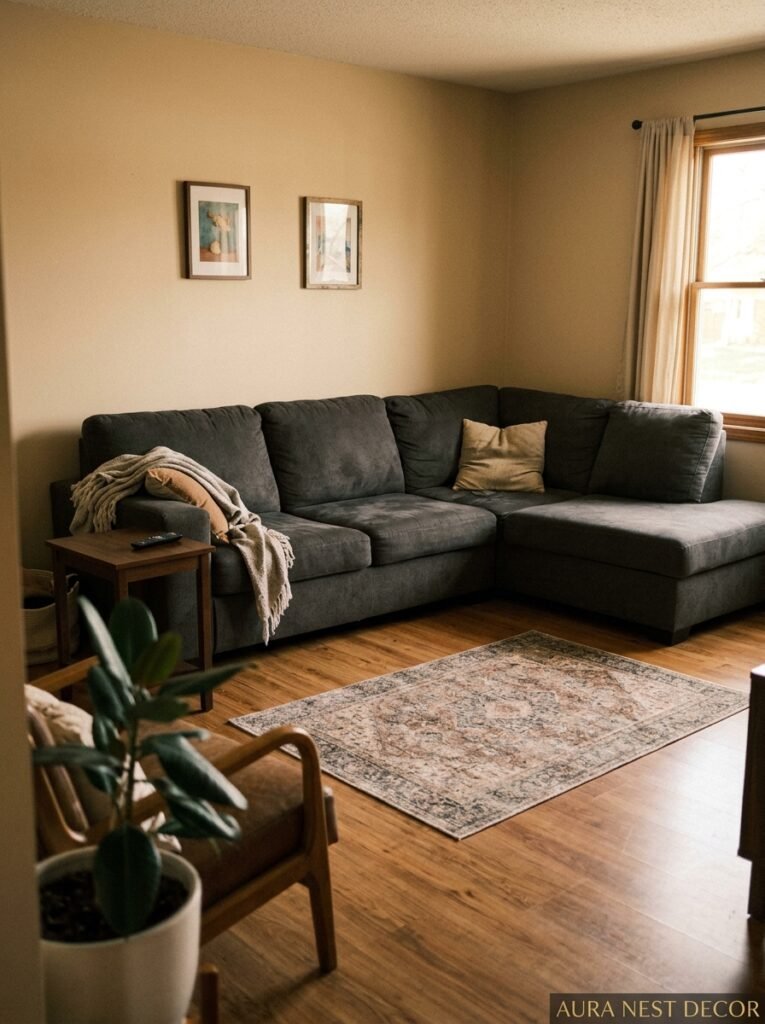
Here’s the thing nobody tells you when you move into a small living room: big furniture doesn’t make a small room feel smaller. Wrong-scaled furniture does. There’s a difference.
A huge, hulking L-shaped sofa in a tiny lounge will eat you alive, yes. But a weirdly tiny loveseat surrounded by acres of empty floor? That actually feels worse. The room looks confused. Like it doesn’t know what it wants to be.
What works is choosing ONE statement piece — a proper sofa, something with presence — and then keeping everything else low-profile. A slim coffee table. A chair that doesn’t scream for attention. The sofa does the heavy lifting, and the rest of the room breathes.
I’d also say: ditch the matching suite. The three-piece set where the sofa and both armchairs are identical twins feels incredibly dated, and in a small space it just… crowds the eye. Mix a sofa with a single accent chair in a different silhouette. That slight contrast tricks the brain into reading the room as curated rather than crammed.
And legs. For the love of good design, buy furniture with legs. When you can see the floor underneath your sofa, your coffee table, even your TV unit, the room opens up visually in a way that’s almost unfair how well it works.
“It’s not how big the room is. It’s whether the furniture looks like it belongs there.”
—
2. The Paint Color That Keeps Showing Up in Every Beautiful Small Living Room Right Now
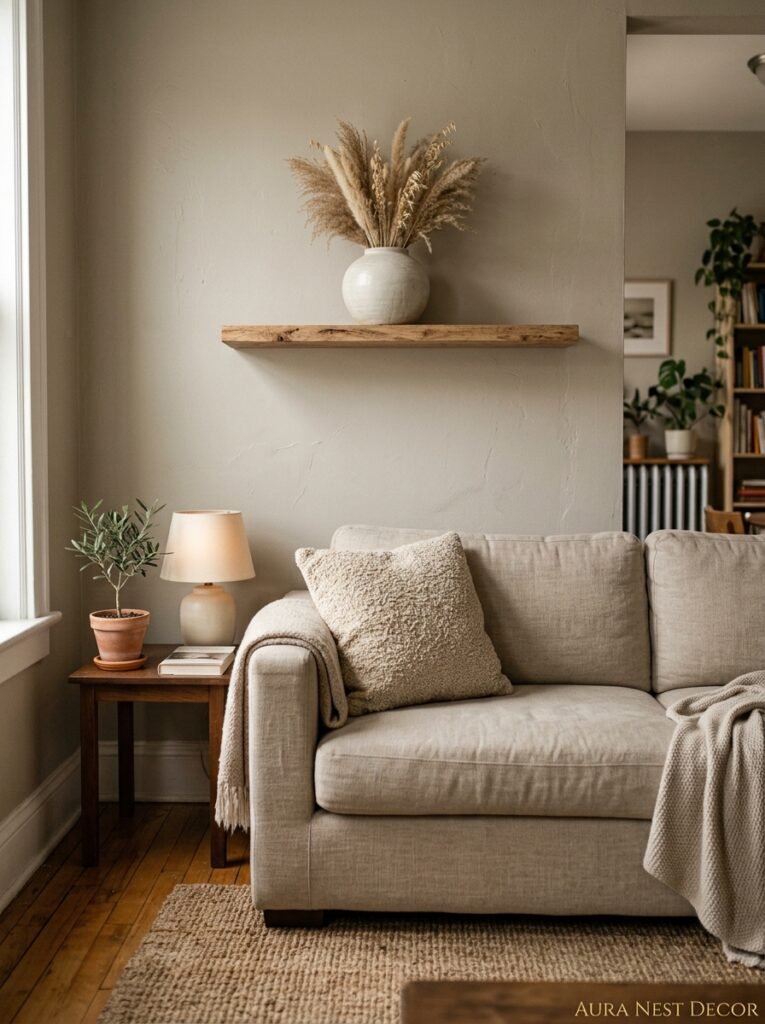
Everyone’s going dark.
I know, I know. You’ve been told your whole life that small rooms need white walls, light colors, keep it pale, keep it bright. And sure, that’s not wrong exactly. But it’s not the whole story either.
A deep, moody color — forest green, dusty navy, a warm charcoal — on ALL four walls (and sometimes the ceiling) can make a small room feel like a deliberate, cozy destination rather than just a room that didn’t turn out very big. The trick is full commitment. Half-measures don’t work here. One dark accent wall in a pale room just looks like an accident.
What makes this work is the light. Dark walls in a room with good warm lighting — table lamps, a floor lamp in the corner, maybe a string of Edison bulbs somewhere — feel like a hug. Dark walls under harsh overhead lighting feel like a waiting room. So if you’re going dark, you’re also committing to layered lighting. Non-negotiable, honestly.
For those who genuinely can’t handle dark walls, the 2025 move in the UK and US right now seems to be warm white or off-white with colored woodwork. Paint the skirting boards, the door frames, maybe even built-in shelving a contrasting tone. It adds depth without darkness. Kind of the best of both worlds.
—
3. Why Your Small Living Room Doesn’t Feel Cozy — It’s the Lighting
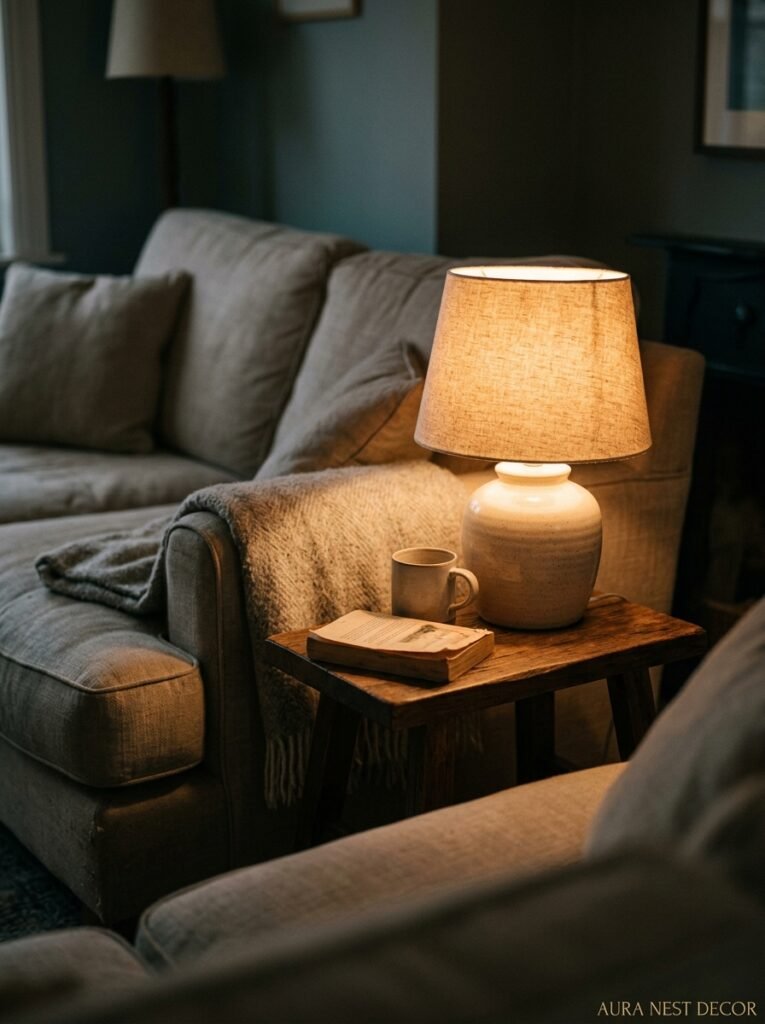
There’s a specific hour — around 7pm in winter — when a well-lit room looks like something out of a slow-living Instagram account and a badly lit room looks like the inside of a supermarket. The difference is rarely about the room. It’s entirely about the lamps.
Overhead lighting is the enemy of small living rooms. One central ceiling light casting even, flat illumination tells your brain you’re in a functional space, not a relaxing one. Dining halls are lit like that. Offices. Not rooms you want to spend Sunday afternoons in.
The fix is almost embarrassingly simple: add lamps. Plug-in floor lamp in a dark corner. Table lamp on a side table or a stacked pile of books (very Pinterest, also actually good). Even battery-powered LED candles on a windowsill do something. You want POOLS of light, not a flood of it.
The color temperature matters too. Bulbs should be warm white — 2700K is your number if you’re buying online. Anything above 3000K starts reading as cold and clinical, and that’s not the vibe.
Side note — if you’ve got a small living room and a dimmer switch, you’re basically already halfway there. That one switch does more for the atmosphere of a small room than almost any furniture arrangement I’ve ever tried.
—
4. The One Rug Rule That Makes Any Living Room Feel Intentional (Not Cramped)
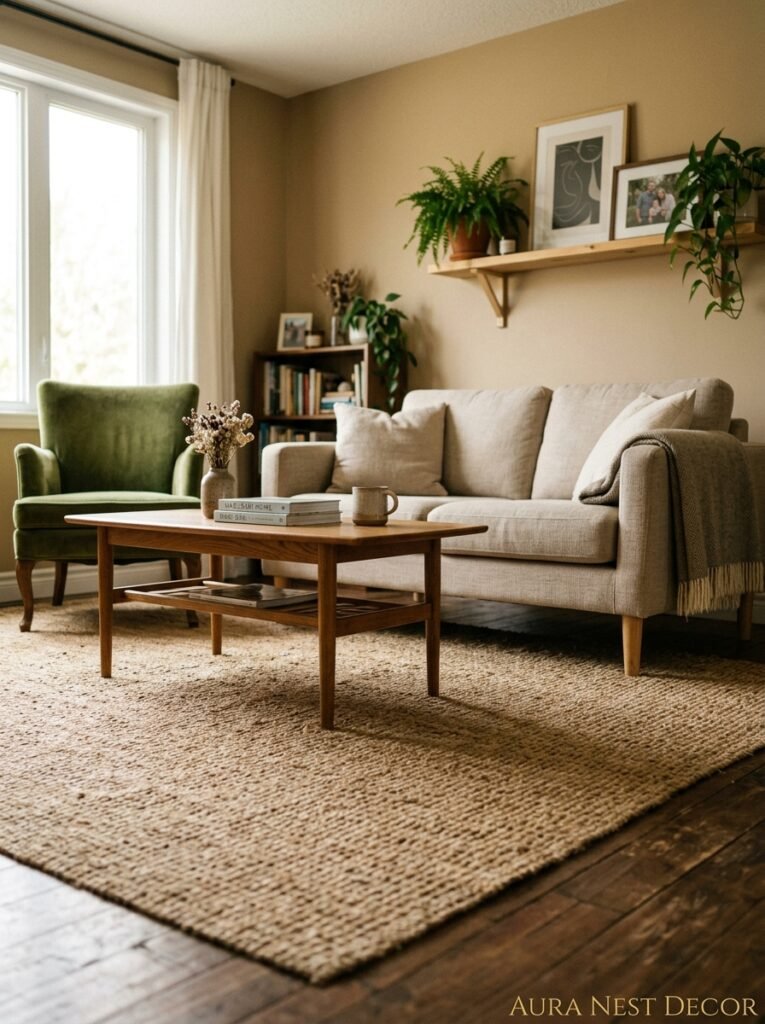
Go bigger than you think.
Seriously. The most common rug mistake in small living rooms is choosing one that’s too small, so it ends up floating in the middle of the space like a little island that doesn’t connect to anything. It makes the room feel fragmented. And in a small room, fragmented is the LAST thing you want.
The right rug should have at least the front legs of your sofa and chairs sitting on it. Ideally the whole sitting area. When the rug is large enough to anchor all the furniture, it creates a visual zone — a defined “room within a room” — and that’s what makes small spaces feel purposeful rather than accidental.
Pattern is another conversation. A large-scale pattern on a rug in a small room can feel completely overwhelming, or it can be the single most interesting thing in the space. Depends on what else is going on. If your walls are fairly neutral and your furniture is quiet, a bold rug is your best friend. If you’ve got patterned cushions and a gallery wall, maybe choose something textural but solid.
“The rug is the room’s foundation. Get it wrong and nothing else sits right.”
—
5. Gallery Walls That Don’t Make a Small Room Feel Like a Dentist’s Waiting Room
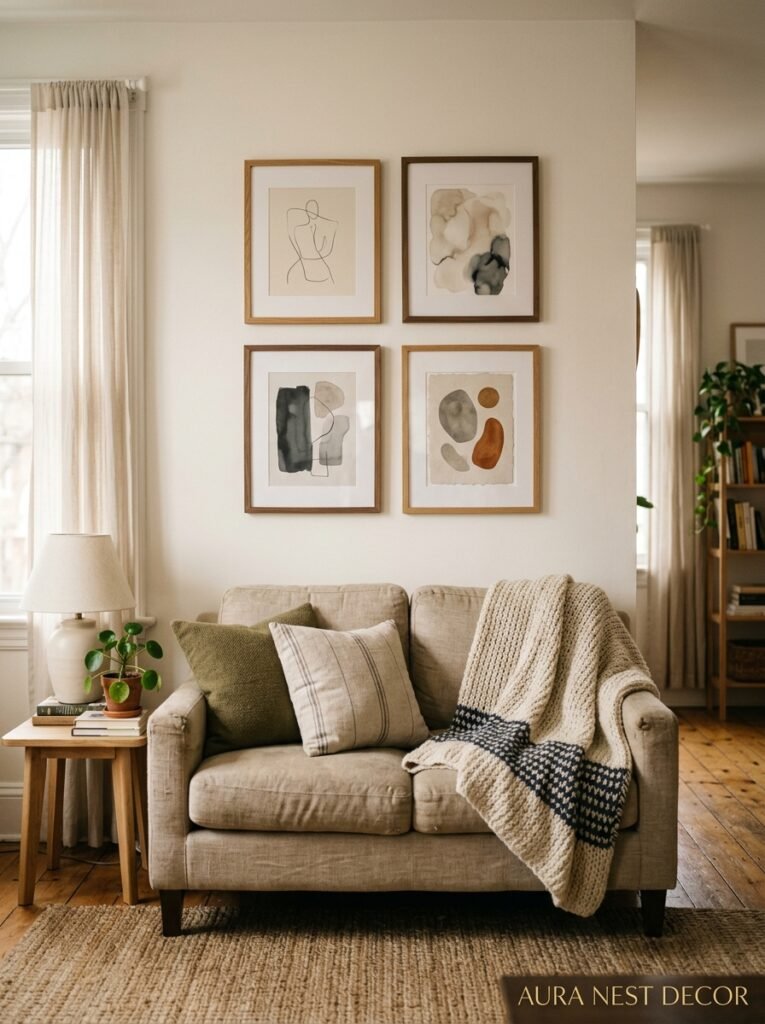
Gallery walls got a bad reputation for a bit, and honestly, I get it. The random mix of mismatched frames, inspirational quotes in serif fonts, and that one print of a mountain that doesn’t go with anything — yeah, that’s a lot.
But a well-done gallery wall in a small living room is one of the few things that can add personality, height, and visual interest all at once without taking up an inch of floor space.
The trick is restraint and intention. Pick a palette — two or three tones max — and stick to it. Mix frame sizes but keep the color of the frames consistent. And leave a bit more space between pieces than feels natural. Crowded art in a small room just adds to the sense of overwhelm.
The other option, if you want something that feels more current, is a single large piece. One properly sized artwork on a wall will do more for a small living room than twelve small ones fighting for attention. A canvas that’s genuinely 24×36 inches or bigger on a key wall? Stops the eye. Creates a focal point. Makes the room feel like someone with taste lives there.
—
6. The Bookshelf Styling Approach That Adds Depth Without Adding Clutter
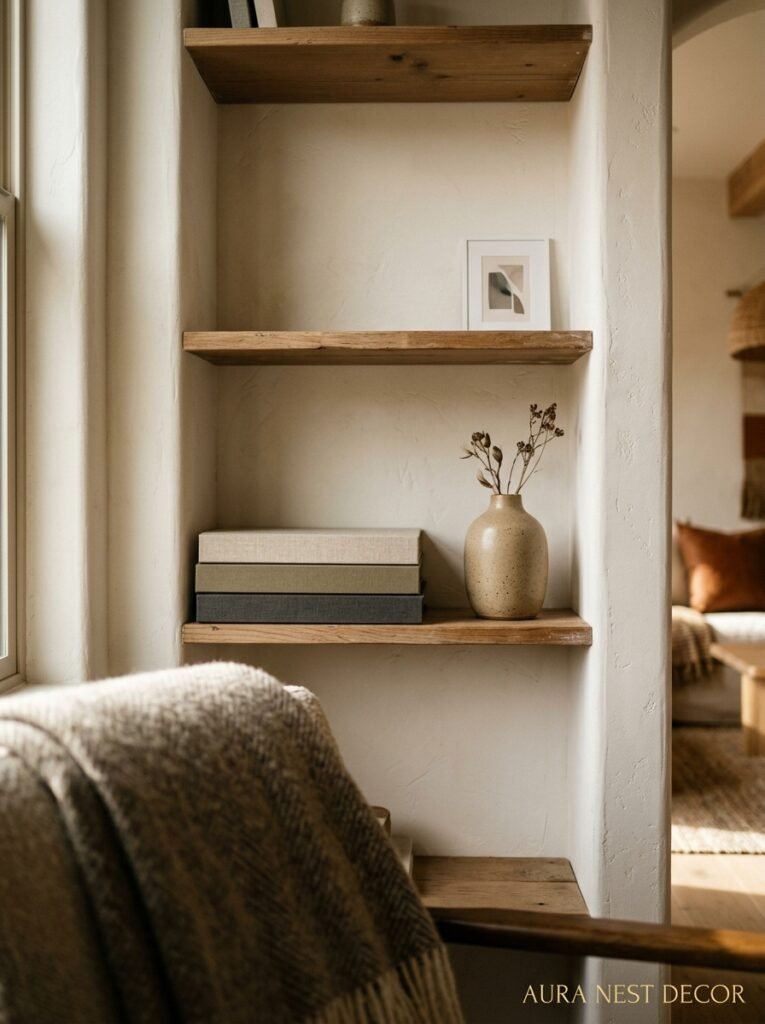
Books are free decor. People forget this.
A full bookshelf is texture, color, and personality all in one go. But the styling matters, because a messy shelf in a small room just reads as mess, even if it’s technically organized.
Here’s what actually works: mix vertical and horizontal stacking. Some books standing up, a few laid flat with a small plant or object on top. It breaks the monotony without looking chaotic. Leave a few intentional gaps — a small framed photo, a candle, a little ceramic something. The gaps are part of the composition.
Color-coding books is very Pinterest, and I’m not gonna lie, it looks absolutely beautiful if you have enough books in complementary tones. But it’s also kind of annoying to actually use your bookshelf when you can’t find anything. So maybe do it for the top two shelves that are more display than function, and keep the lower shelves organized how you actually need them.
For small living rooms specifically: a tall, narrow bookshelf draws the eye UP, which makes ceilings feel higher. That’s a win.
—
7. What Nobody Talks About: The Power of a Mirror Placed Exactly Right
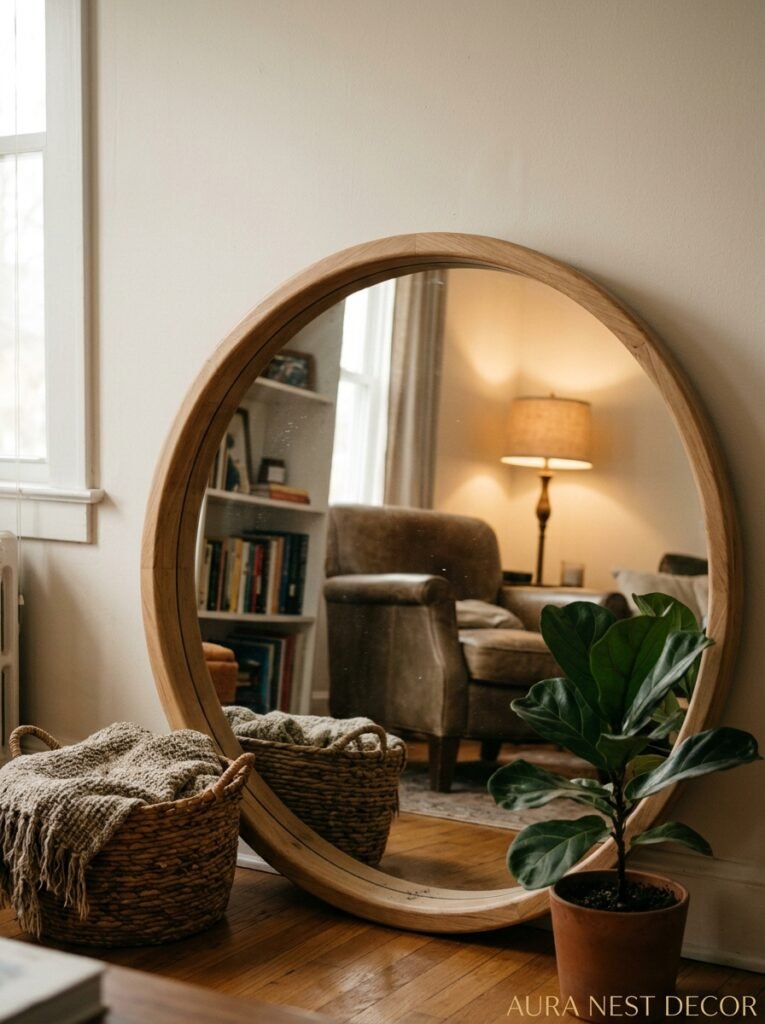
Mirrors are the oldest trick in the small-room playbook and somehow still massively underused. Or used wrong — which might be worse.
A small mirror above a sofa does almost nothing. A large mirror leaning against a wall, or hung at a specific angle to reflect the best part of the room (a window, a lamp, something with light or life), can genuinely make you do a double take. Like, for a moment your brain processes the room as twice the size.
The reflection matters. If your mirror reflects a blank wall or the back of your front door, it’s not helping. Place it so it catches a window, a lamp, or the most interesting corner of the room. Then it’s actually doing the work it’s supposed to do.
Arched mirrors are everywhere right now and honestly they deserve to be. The curved shape softens everything in a small room, especially if you’ve got a lot of straight lines and sharp corners.
“A mirror isn’t decoration. It’s architecture. Put it where it earns its spot.”
—
8. The Curtain Height Trick That Changes the Entire Feeling of a Room for Under $50
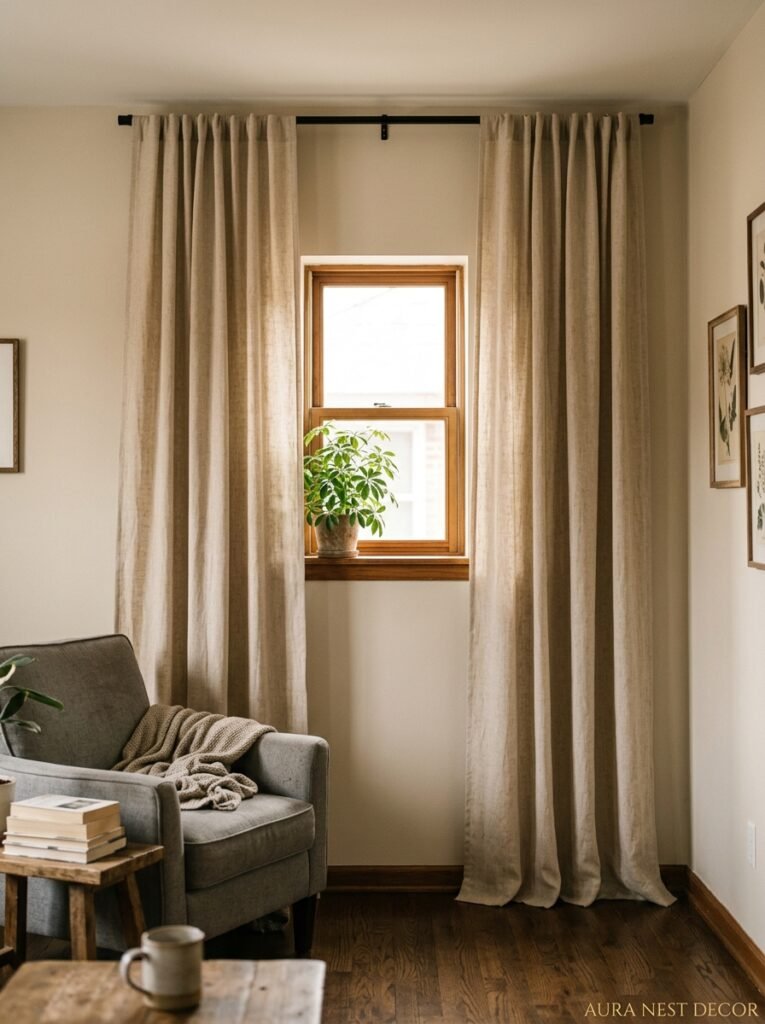
Hang your curtains high.
Not at the top of the window frame. Not a few inches above it. At the ceiling, or as close to it as you can get. And let them drop all the way to the floor.
This is, genuinely, the highest-impact change you can make to a small living room for almost no money, and it works because it’s optical. Floor-to-ceiling curtains trick the eye into reading the windows — and therefore the whole wall — as taller than they are. The room feels like it has more vertical space. And vertical space in a small room is everything.
The fabric matters too. Linen is having a long, well-deserved moment. It drapes beautifully, filters light in that soft, diffused way that photographs like a dream, and it reads as warm even in rooms that are a little on the cold side.
For color: curtains that are either close to your wall color or very slightly lighter tend to disappear into the wall in the best possible way, making the room feel seamless and expanded. Harsh contrast between curtain and wall can chop the space up visually.
—
9. Hidden Storage That Actually Looks Good (Not Like You’re Hiding Something)
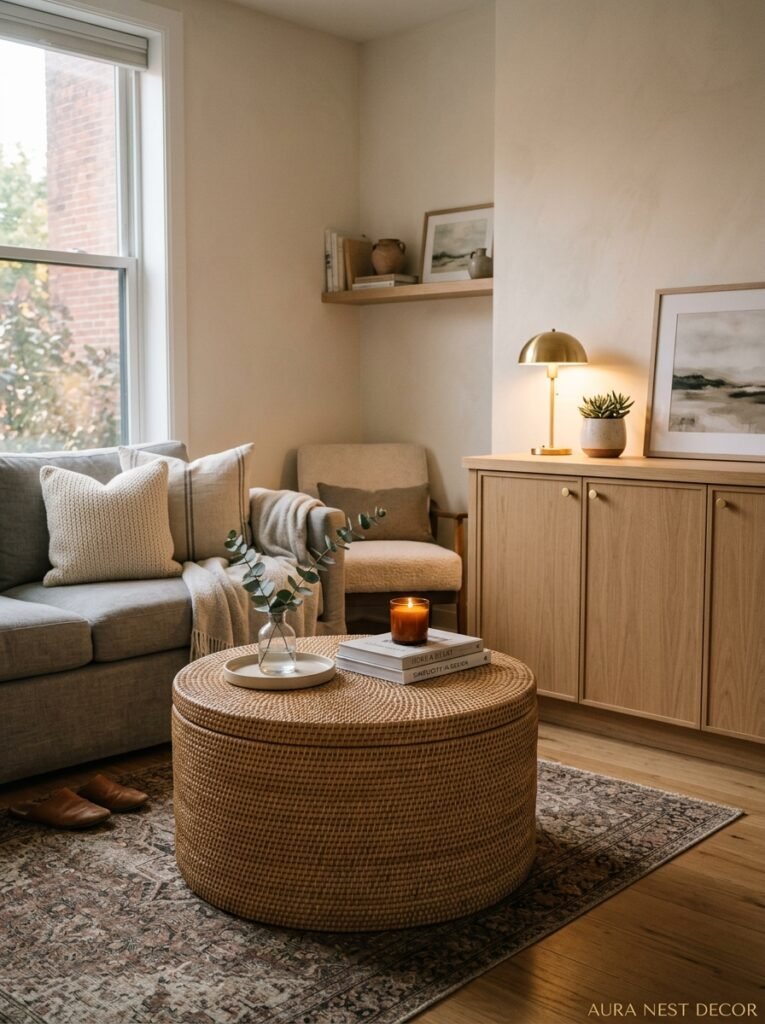
Storage in small living rooms needs to do two jobs at once: hold stuff, and not look like it’s working hard.
Ottoman coffee tables are probably the most obvious version of this and they really do earn their spot. The ones with a tray on top look intentional. They become a surface for a candle and your cup of tea, and then you open the lid and there’s a blanket, some board games, the TV remote. Magic.
Built-in shelving — if you own your place and can make that call — is genuinely the long game. A fitted shelf around a chimney breast or alcove gives you storage that looks architectural, not tacked-on. In the UK especially, those old Victorian alcoves next to original fireplaces were basically MADE for built-ins. Use them.
For renters: floating shelves, console tables with drawers, side tables with a lower shelf. Anything that gets stuff off the floor without adding visual bulk at eye level.
—
10. The Plant Rule for Small Living Rooms That Instagram Doesn’t Tell You
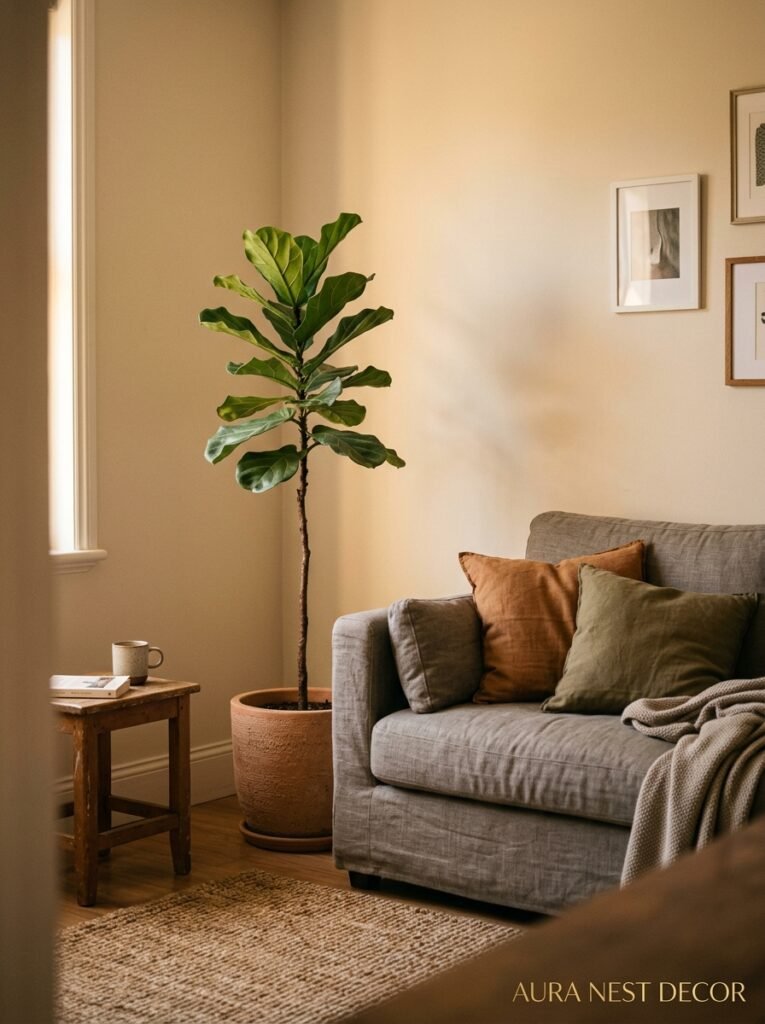
One big plant beats six small ones every single time.
Small clustering of little succulents on a windowsill is lovely. But in terms of adding life, texture, and that slightly untamed feeling that makes a room feel genuinely lived in? One large fiddle leaf fig. One big trailing pothos hanging in a corner. One substantial palm near a window.
A large plant in a small room draws the eye, softens corners, adds a vertical element, and costs less than most accent chairs. It also — and I say this as someone who’s killed more plants than I’d care to admit — tends to be easier to keep alive than lots of smaller ones because you actually notice it and remember to water it.
The pot matters as much as the plant. A beautiful ceramic pot in a muted tone elevates any plant above its station. A plastic nursery pot sitting on the floor does the opposite.
—
11. The Coffee Table Shape That Actually Works Best in a Tiny Living Room
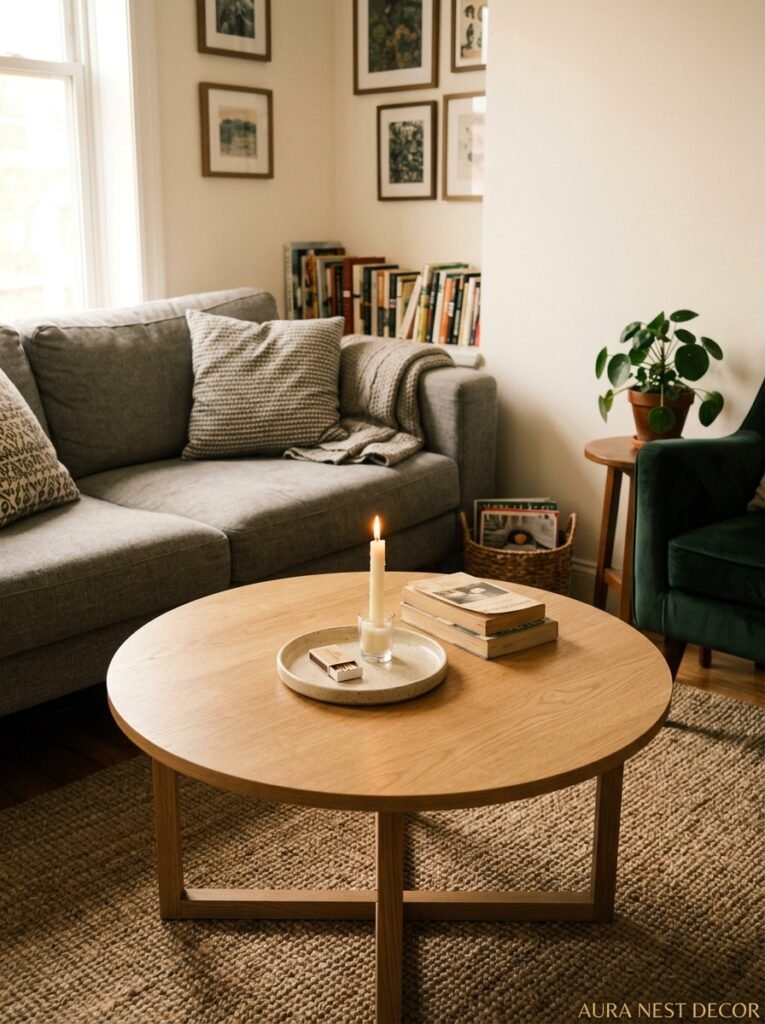
Round.
This sounds almost too simple, but the number of people I know who’ve wedged a big rectangular coffee table into a small living room and then wondered why the whole space feels impossible to navigate — it’s a lot.
Round coffee tables remove hard corners from the equation. In a small room where you’re constantly squeezing past furniture, that’s not just aesthetic, it’s practical. You stop bruising your shins, which feels like a minor point until you stop bruising your shins and you realize how much that was bothering you.
Round tables also make conversation easier. Everyone is kind of equidistant from the center, which works especially well if you’re using a small room to do a lot of social living.
Go for one with a lower profile if you can — something that sits below the sofa cushion line. It visually recedes rather than competes.
—
12. The Edit You Actually Need to Do (And Keep Doing)
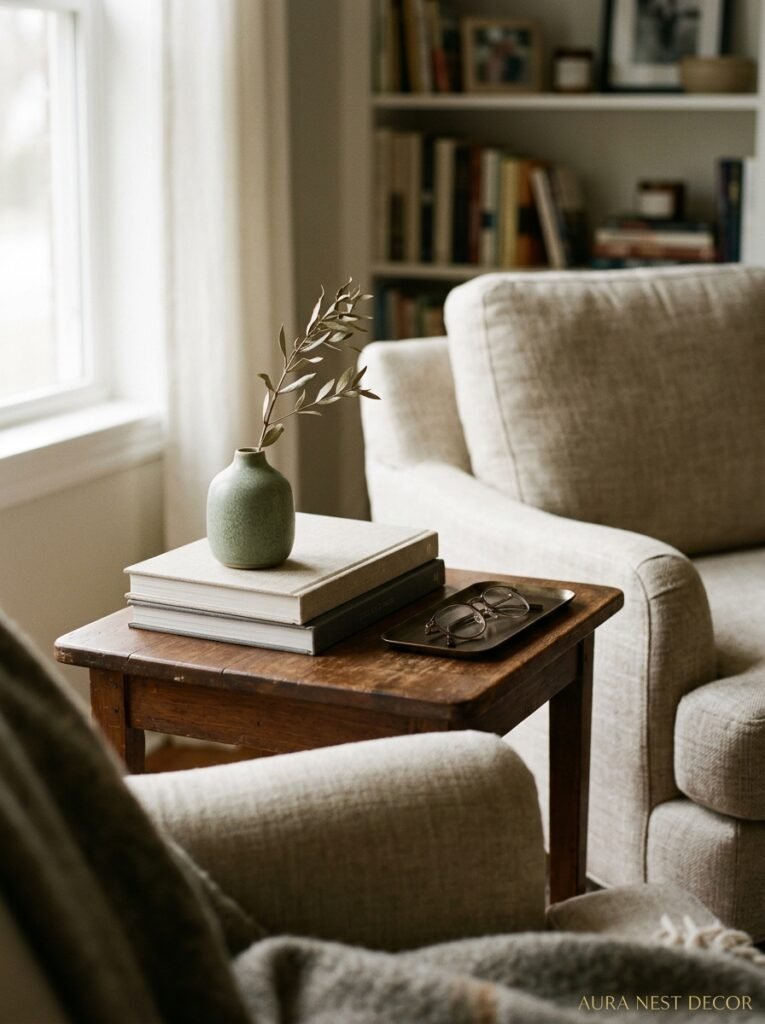
Here’s the honest one.
Small living rooms don’t just suffer from bad furniture choices or wrong paint colors. They suffer from too much stuff. And adding more stuff — even beautiful stuff, even stuff that technically fits — isn’t the answer.
The edit is the work. What do you actually need in this room? What’s earning its space? The stack of old magazines on the floor — gone. The decorative basket you put decorative things inside and then never looked at again — gone. The lamp that never really worked but you kept because you paid a lot for it — really gone.
What’s left after an honest edit tends to be the things that actually make the room feel like yours. The print you love. The throw blanket that’s seen a hundred movie nights. The books you’ve actually read, or plan to.
A small room that’s been edited is one of the most peaceful things to sit in. Spacious in a way that has nothing to do with square footage.
—
❓ FAQ
Q: What’s the best sofa color for a small living room? A: Honestly, it depends on your wall color and lighting, but warm neutrals — camel, sand, terracotta — tend to photograph well and work in most small spaces without fighting with everything else. A sofa in a color close to your wall creates that seamless, expanded look. Dark sofas can work beautifully in small rooms too, especially against lighter walls, as long as you’ve got good lamp lighting.
Q: Can I have a sectional sofa in a small living room? A: You can, but you need to be really specific about size. A smaller sectional — sometimes called an apartment sectional — in the right configuration can actually work well if it fits the footprint without blocking pathways. Measure obsessively before buying. The general rule is to leave at least 18 inches between the sofa and any other furniture for walkability.
Q: How do I make my small living room look bigger on a tight budget? A: Curtains hung at ceiling height are free if you already have curtains. A strategically placed mirror is usually under $30-50. Decluttering costs nothing. Repositioning lamps you already own to create pools of light rather than overhead flooding — also free. Honestly the biggest improvements in small rooms are almost never about buying more things.
—
💭 Final Thoughts
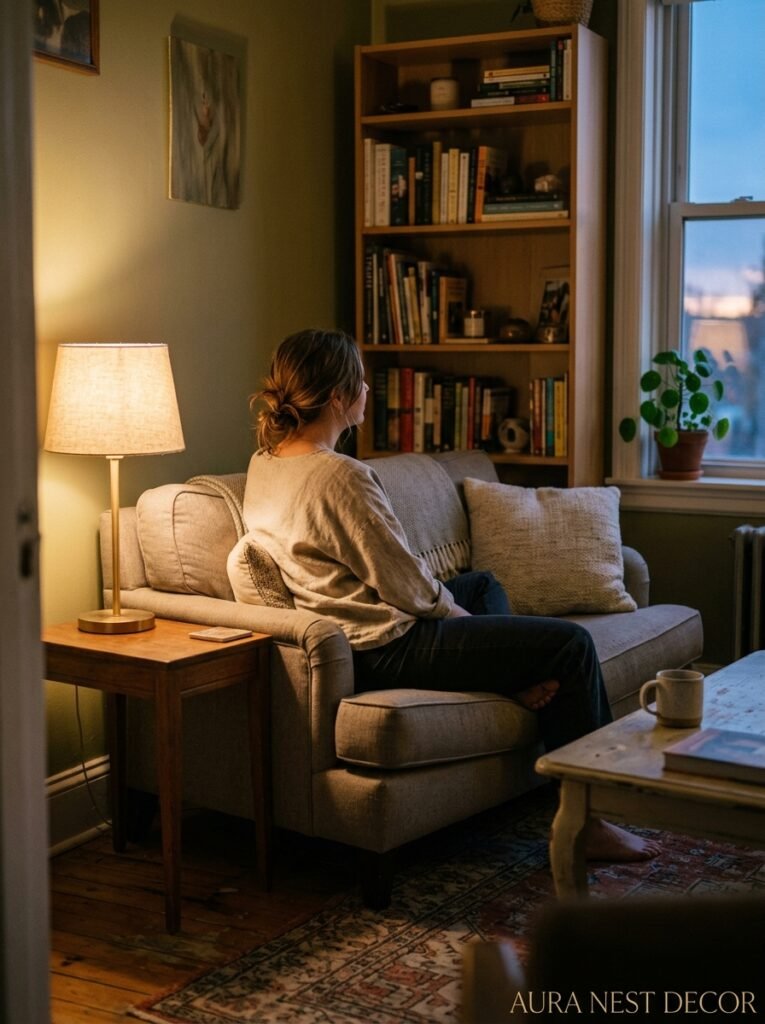
Small living rooms ask you to be intentional in a way that big ones don’t. Every piece has to earn its place. And there’s something kind of freeing about that, when you stop fighting the size and start working with it.
The rooms I keep saving on Pinterest, the ones that stop me mid-scroll — they’re almost never the enormous open-plan spaces. They’re the small, considered, deeply personal rooms where someone clearly knew exactly what they wanted and wasn’t trying to make the space look like something it’s not.
What’s the one thing in your living room right now that you’ve been keeping out of habit rather than love?