
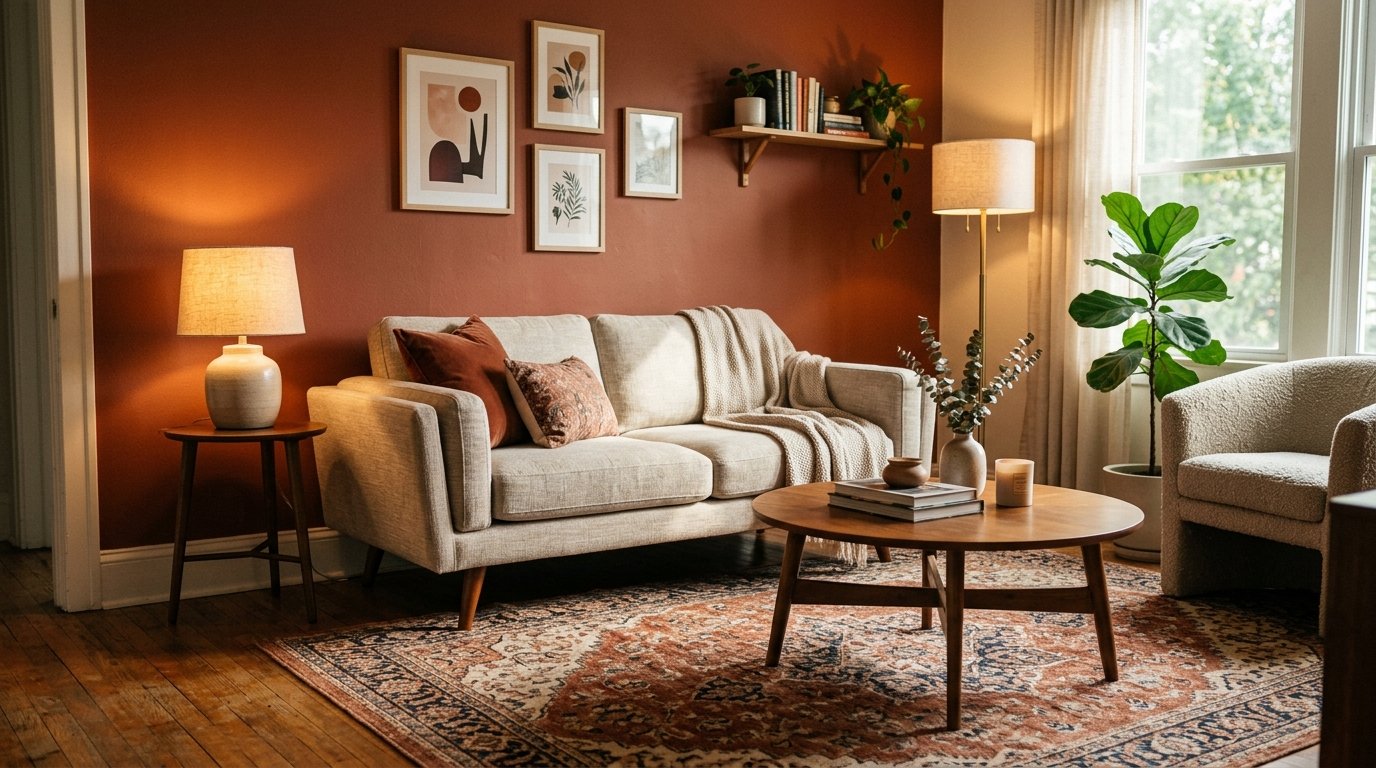
The Small Living Room Isn’t the Problem — Your Approach Is
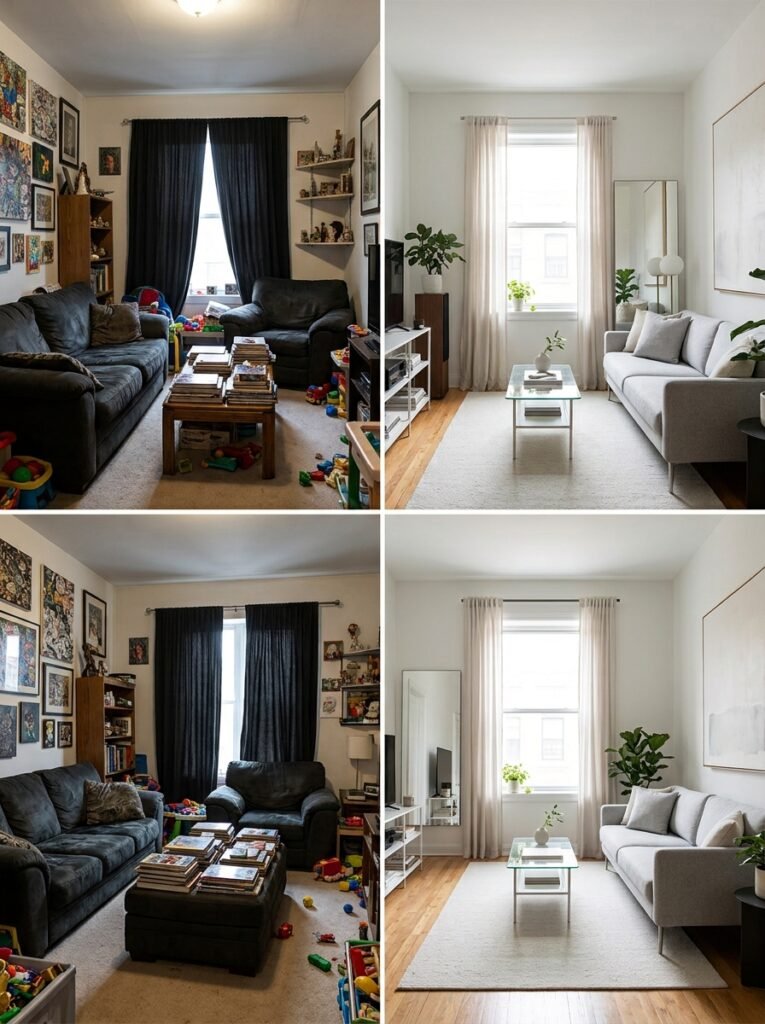
My friend walked into my flat last spring and said, “Wait, why does this feel bigger than mine? We have the same square footage.” I didn’t have a good answer in the moment. But I’ve been thinking about it ever since.
—
1. The Furniture Trap That Makes Small Rooms Feel Smaller (Not Larger)
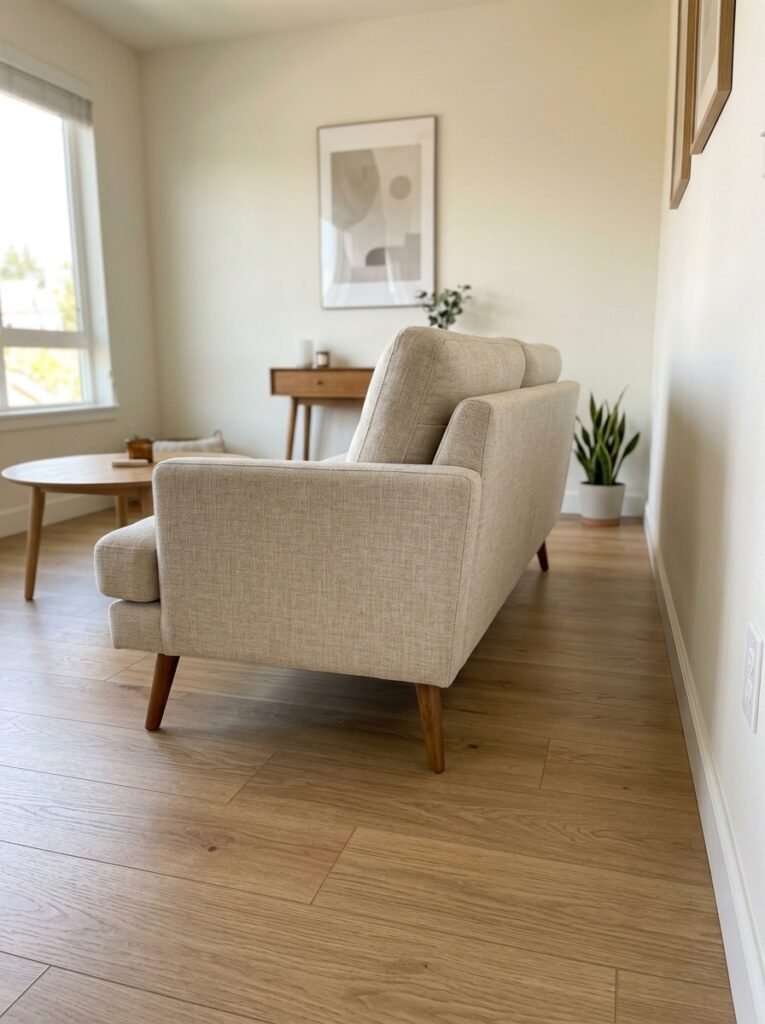
Here’s the thing nobody tells you when you’re staring at a tiny living room: big, chunky furniture doesn’t automatically make a space feel grounded. It makes it feel stuffed. And the reflex to push everything against the walls — which almost everyone does — doesn’t help either. It actually flattens the room.
Floating your sofa a foot or two away from the wall is uncomfortable the first time you try it. Feels wrong. But it creates a pocket of air behind it, and that pocket does something almost magical to the perception of depth. The room starts to feel like it has layers.
The other trap is buying “small furniture” that’s just scaled-down versions of oversized pieces. A tiny blocky sofa is still a blocky sofa. What you actually want is furniture with visible legs — sofas, chairs, side tables — because when you can see floor running beneath them, your eye reads the floor as continuous. More floor, more room. That’s really all it is.
—
2. The Color Rule That Designers Keep Quiet About
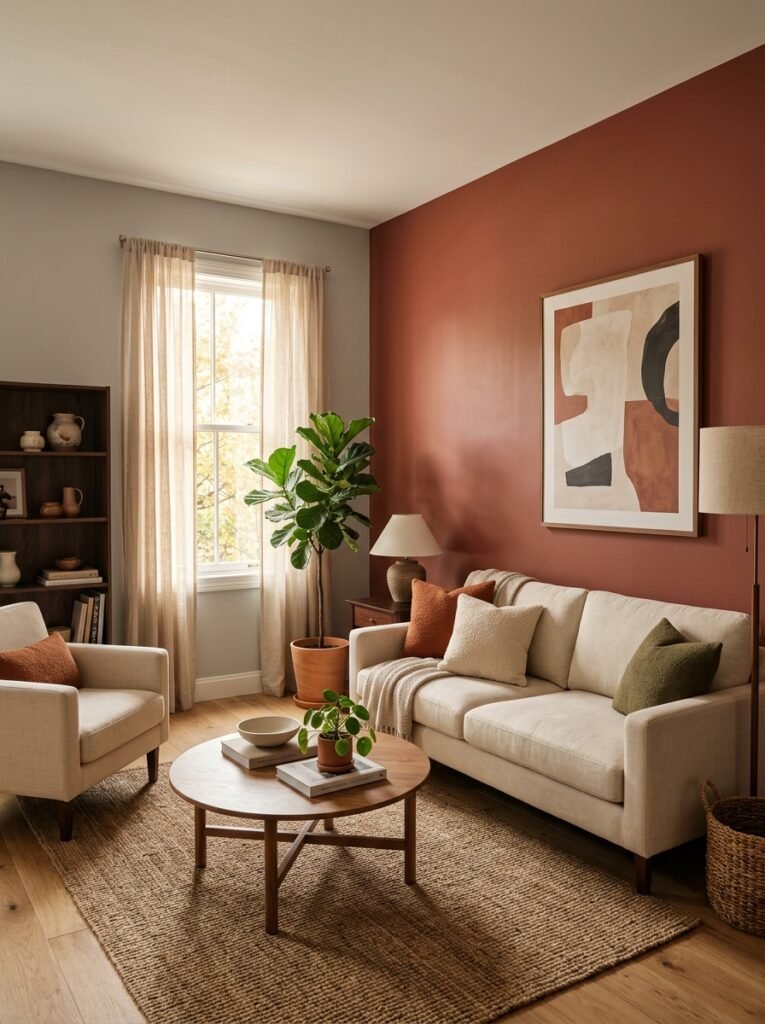
Everyone says go light, go white, go pale. And yes, light walls do open up a room. But that’s only half the story, and the half nobody mentions is this: contrast matters MORE than color choice.
A room with soft grey walls, white trim, and cream furniture doesn’t automatically feel spacious — it can feel like a cloud of nothing. But put one deep-toned wall in that same room, paint it a dusty green or a warm terracotta, and suddenly everything else looks intentional. The eye knows where to land.
“One strong, deliberate color choice in a small room makes everything else feel curated — not cramped.”
In small rooms, wishy-washy palettes actually register as clutter. Your eye can’t find a resting point so it keeps scanning. One anchor color — on a single wall, or carried through in cushions and a rug — gives the room a spine.
—
3. Why the Rug You’re Considering Is Probably Too Small
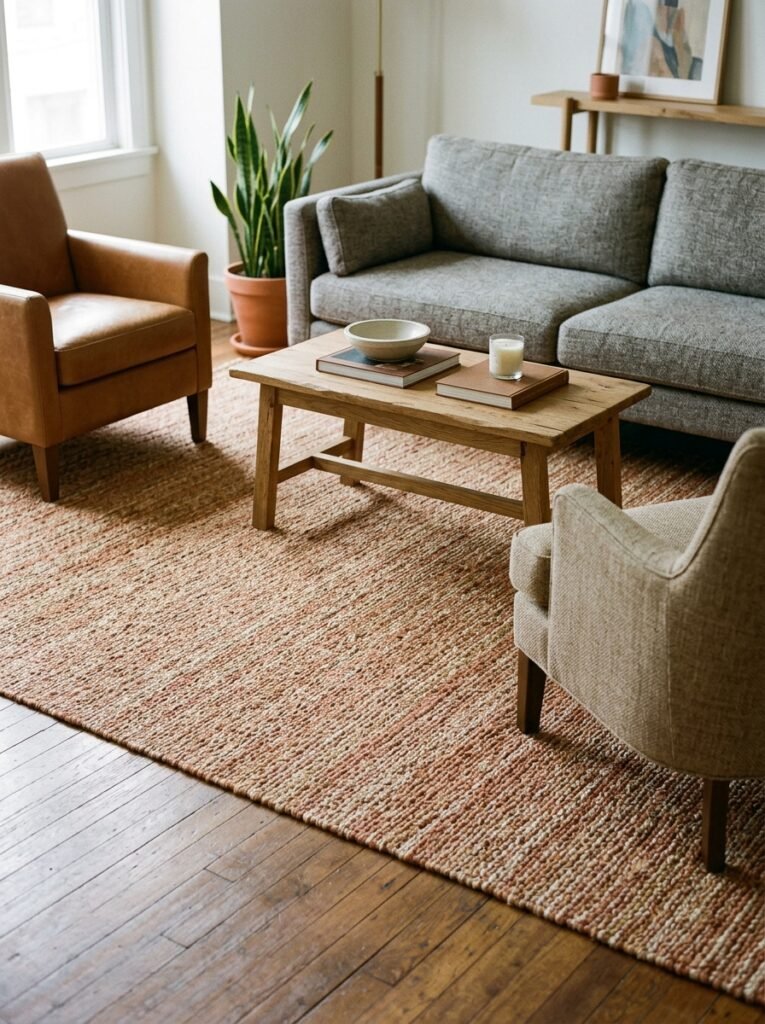
I cannot say this enough. The rug is almost always too small.
A small room does not need a small rug. It needs a large rug that makes sense of the seating area and creates a defined zone within the space. When the rug is too small — when the front legs of the sofa don’t even reach it — the whole room starts to look like the furniture is floating randomly in the middle of nowhere.
The goal is for at least the front two legs of every main seating piece to sit on the rug. Ideally more. A large woven rug in a warm, natural material grounds everything, and suddenly the “living room area” feels like a deliberate, cosy zone rather than just… stuff in a room.
—
4. That One Specific Lighting Trick That Changes Everything After 5pm
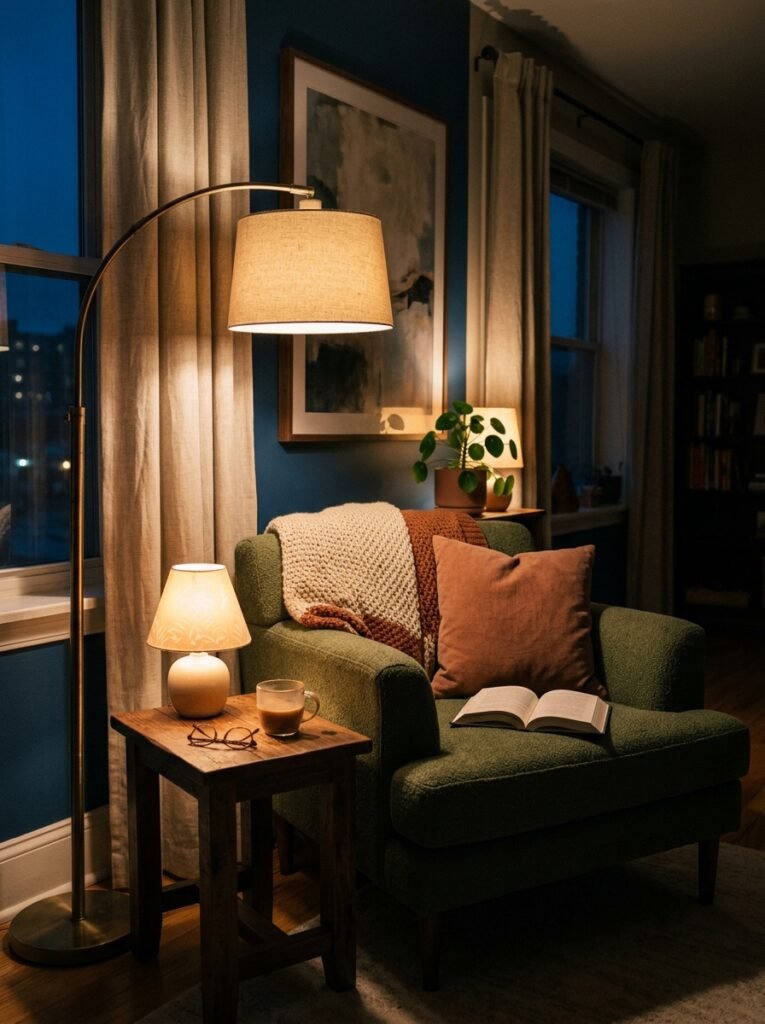
Overhead lighting is fine during the day. After 5pm it’s basically hostile.
Harsh overhead light flattens a room, makes the ceiling feel lower, and — honestly? — makes everyone look tired. In a small living room, that flattening effect is even worse. So the fix is layers. Not overhead only. Multiple light sources at different heights, creating pools of warmth rather than one uniform wash of brightness.
A floor lamp in the corner. A small table lamp on a shelf or side table. If you’ve got a fireplace, even just candles on the mantle. The amber glow of a warm-toned bulb at seven in the evening does more for a small living room than any furniture arrangement.
Side note — bulb temperature matters enormously and almost nobody thinks about it. Anything above 3000K starts to feel clinical. Stick to 2700K, warm white. That little number on the bulb box is doing a LOT.
—
5. The Vertical Trick That Genuinely Makes Ceilings Feel Taller
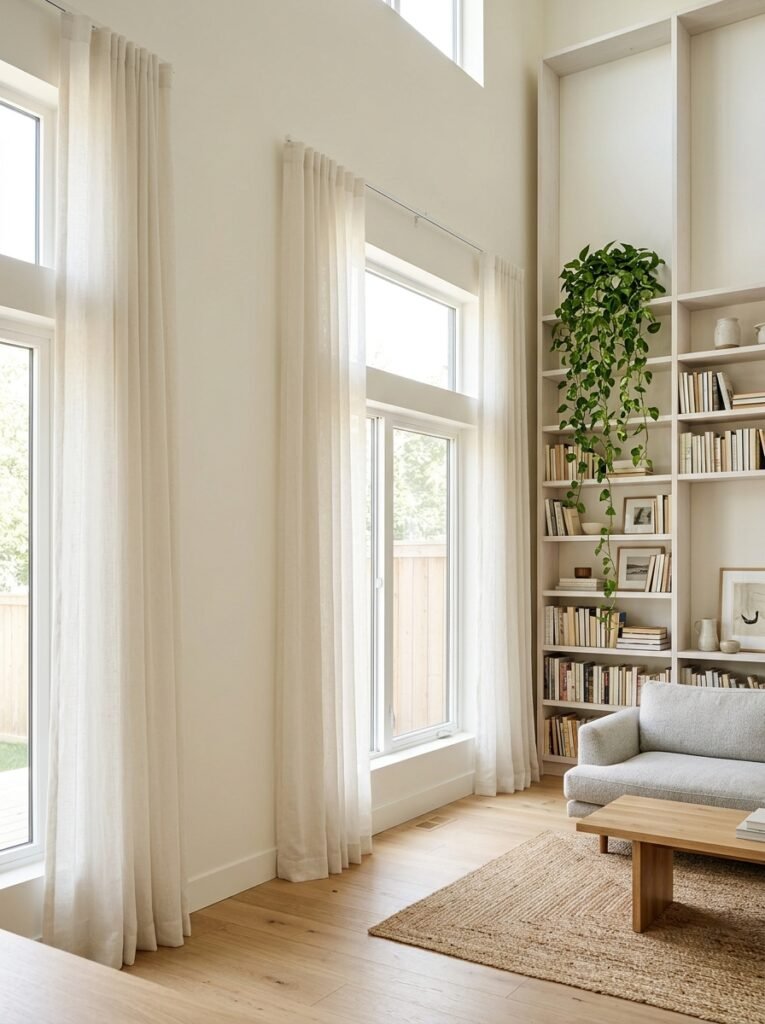
Your walls are probably underselling the room. Here’s why.
Most people hang artwork at eye level, which is right — but they stop there. In a small room, drawing the eye upward is one of the cheapest ways to add perceived height. Floor-to-ceiling curtains hung as close to the ceiling as possible are the classic example. When curtains start from ceiling height even if the window is much lower, the eye reads the full wall as part of the window. The ceiling appears to lift.
Shelving is the same principle. Low shelves make a room cosy, sure, but one set of tall shelves — proper height, close to the ceiling — pulls the eye up and makes the space feel like it has genuine volume. Stack books horizontally, add a plant or two at the top, and don’t fill every single shelf to capacity. The gaps matter.
“Floor-to-ceiling curtains cost almost nothing extra and add the illusion of at least two feet of height. It’s probably the best return on investment in small-room decorating.”
—
6. What “Minimalism” Actually Means in a Living Room (And What It Doesn’t)
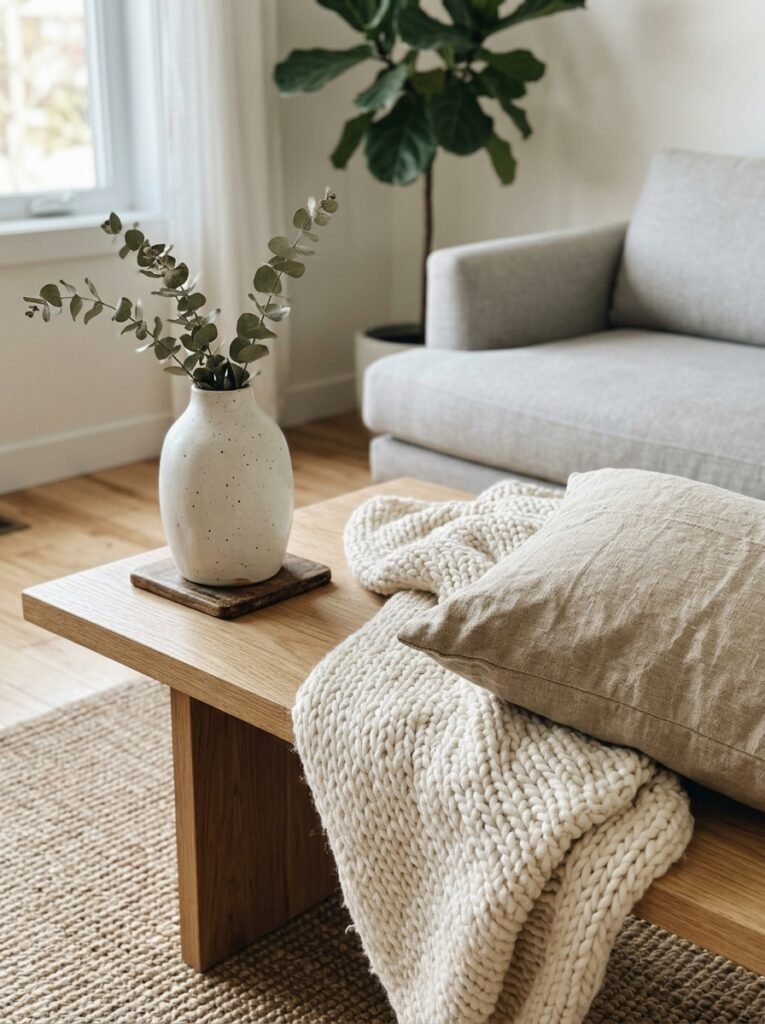
Let me push back on something. Minimalism in a small living room doesn’t mean empty. It doesn’t mean one grey sofa and a sad succulent. That kind of minimalism is just… cold.
Real minimalism in this context means intentional. Everything that’s there should be doing something — visual, practical, or both. A stack of books on a coffee table is fine. A random pile of stuff that accumulated over six months isn’t. The difference is whether you chose it.
The minimalist rooms that actually feel good — warm, alive, like someone who has taste lives there — all have texture. A chunky throw. A slightly rough linen cushion cover. A ceramic vase that isn’t perfectly smooth. Texture reads as warmth even when the colour palette is very calm. You can be minimal and cosy at the same time, they’re not opposites.
—
7. Mirrors: Where to Put Them, Where Not To
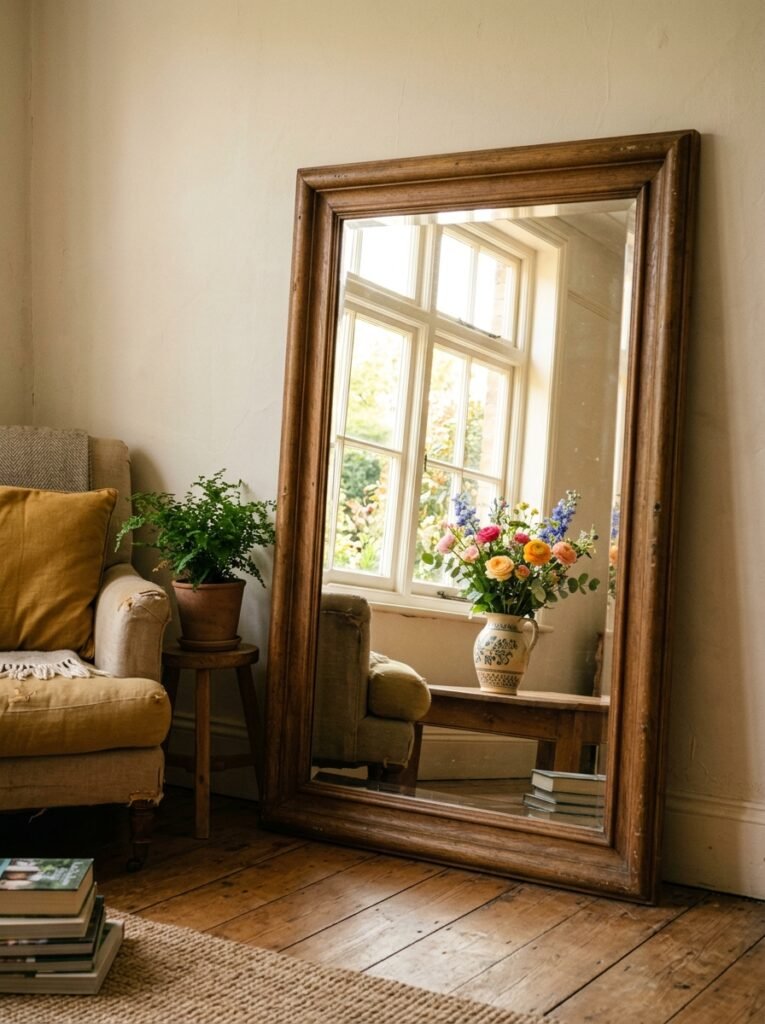
Everyone knows mirrors make a room feel bigger. It’s almost a cliché at this point. But put a mirror in the wrong spot and it just reflects the most boring part of the room back at itself.
The trick is to position a mirror so it reflects something beautiful — a window, a lamp, a vase of flowers. Not a wall. Not the back of your sofa. If you’re putting a large mirror opposite a window, the mirror essentially doubles the amount of natural light in the room. That is genuinely significant in a north-facing room or a ground floor flat in winter.
What doesn’t work: a bunch of small mirrors clustered together in a gallery wall format. In a small room, that just reads as visual noise. One large mirror, well-placed, every time.
—
8. The One Rule for Open Shelving Without It Looking Chaotic
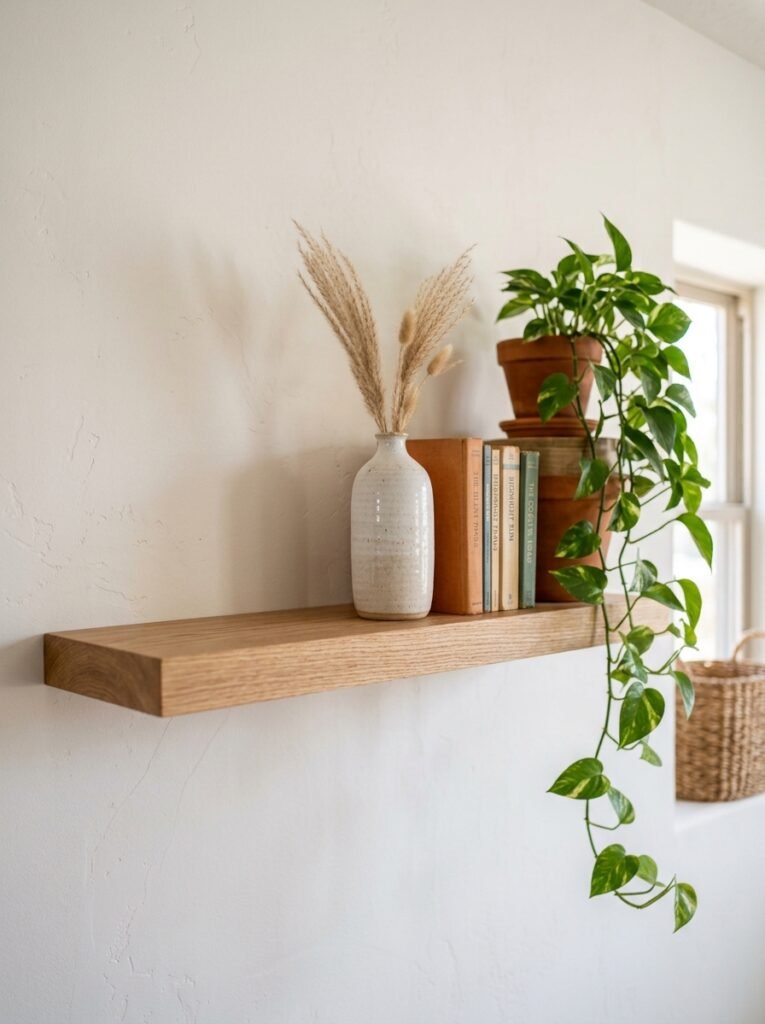
Open shelving in a small living room is a gamble. Done badly, it looks like a storage problem you haven’t solved. Done well, it looks like personality.
The rule that actually works: three-quarters full, never more.
Leave some breathing room on every shelf. Not huge empty stretches, just — gaps. Let a plant trail a little. Lean something instead of standing it upright. Mix heights. One tall vase next to a small stack of paperbacks and a little object you picked up somewhere interesting. The variation in height is what makes it feel styled rather than stored.
And please — group by material and tone more than category. Things that share a colour family or a texture will feel curated even if they’re totally unrelated objects.
—
9. The Underrated Power of a Single Focal Point
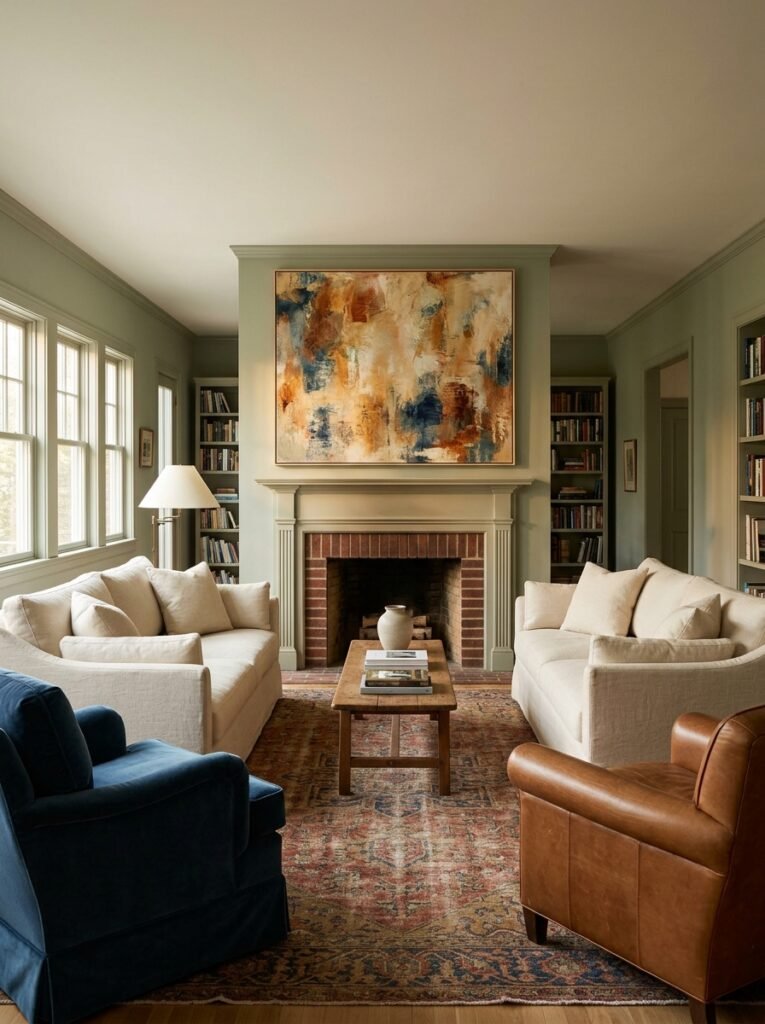
Small rooms get into trouble when there’s no clear focal point. When the eye doesn’t know where to go, it goes everywhere, and the room feels cluttered even if it isn’t.
Pick one thing to be the focal point. A fireplace, if you’ve got one — you’re already done. No fireplace? A piece of art. One large piece, not a gallery wall (not in a small room, not if you’re minimalist). Or a beautiful TV unit styled really well with things around it. Or a bold window treatment.
Then build the rest of the room to support that focal point, not compete with it. The furniture should angle toward it. The rug should define the zone around it. Everything else should be quieter.
That’s really all “composition” means in a living room. One loud thing, everything else in service of it.
—
10. Plants: How Many Is Right, Actually
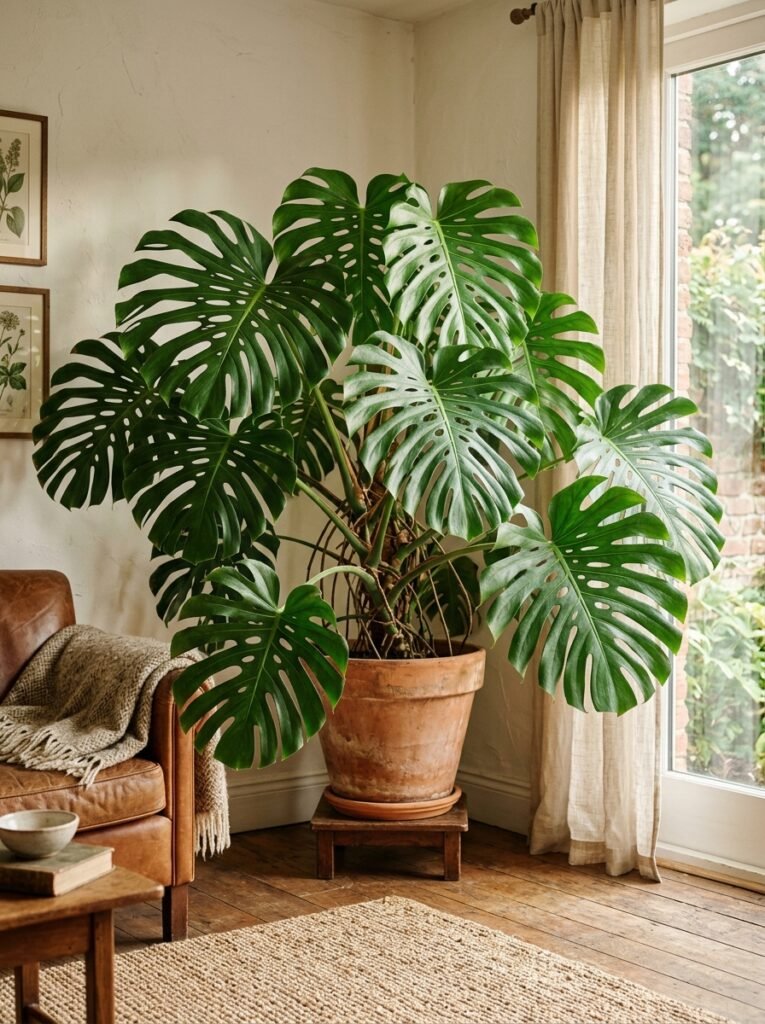
Not zero. But also not fifteen.
In a minimalist small living room, plants work best when they’re either one very large statement plant — a fiddle leaf fig, a big monstera, something with presence — or a small, considered cluster of two or three that share a corner or shelf. The large single plant approach is my personal preference because it reads like furniture. It’s volumetric. It fills a corner in a way that doesn’t visually clutter the room.
The mistake is doing a bit of everything: one plant on the windowsill, one on the shelf, one on the floor in the other corner, one on the coffee table. Each one individually is fine. Together they fragment the eye across the whole room. You’ve accidentally created six places for the eye to land instead of one or two.
Less, but bigger. That’s the plant rule in a small room.
—
11. What to Do With a Small Living Room That Also Has to Be Something Else
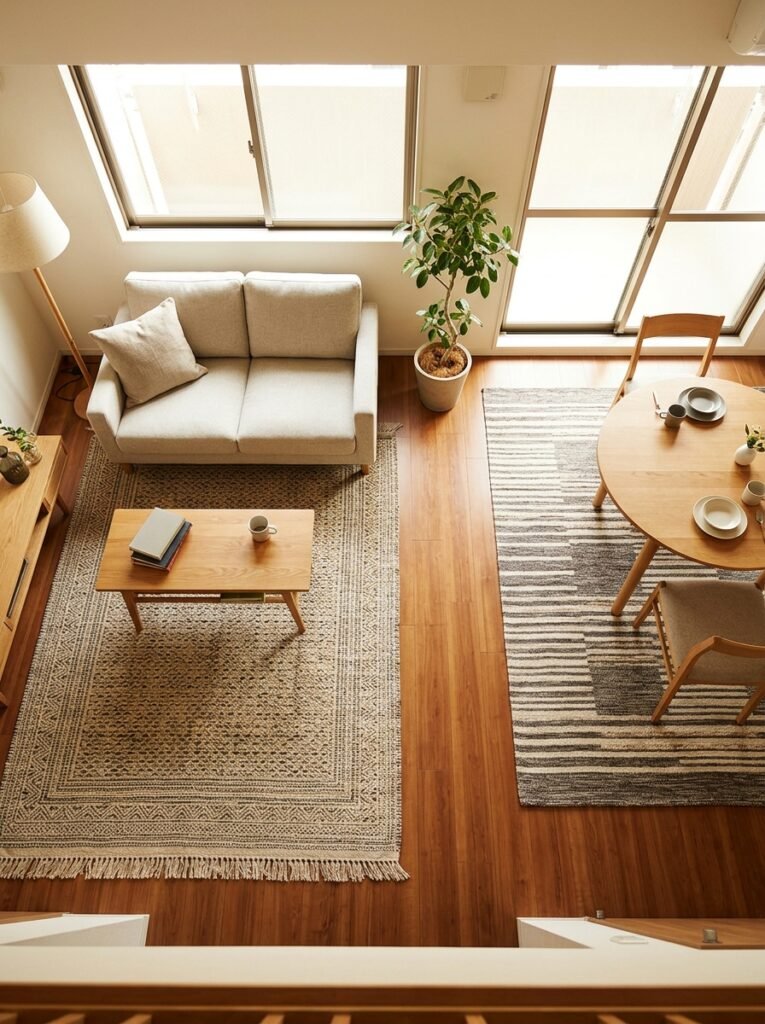
This one comes up constantly — especially in London flats and small American apartments where the living room is also a home office, or a dining room, or both.
Zoning is everything. And the easiest way to zone a space without any structural work is rugs. Different rug for the seating area, different rug (or no rug) for the dining area. Just that — just the rugs — tells the brain that these are two different spaces even if they’re technically the same room.
“A rug doesn’t divide a room — it defines it. That’s a genuinely different thing.”
Beyond rugs: lighting by zone, not universal overhead lighting. A pendant or hanging light over a small dining table signals “dining zone” immediately. A floor lamp by the sofa signals “living zone.” The room can be the same 12 feet of open plan space, but it reads as structured.
For the home-office situation: keep the desk out of the main eyeline of the seating area if at all possible. Face it toward a wall. A small folding or slim-profile desk that doesn’t read as “office” when you’re sitting on the sofa makes a huge difference to how relaxed the room feels in the evenings.
—
12. The Detail That Pulls the Whole Room Together (And Most People Skip It)
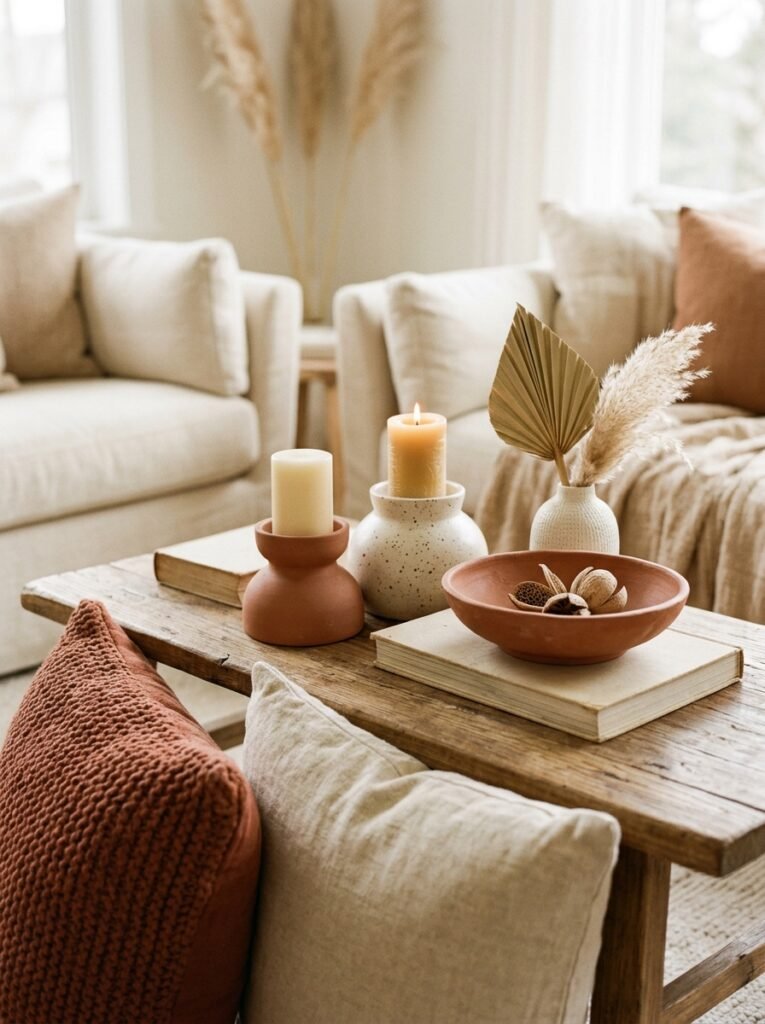
Everything can be right — the furniture, the rug, the lighting, the plants — and the room still won’t feel finished without cohesion in the small things.
What do I mean? The little objects. The cushion covers. The candles. The books you leave out on the table. These all have colours. And if those colours are all over the place, the room feels restless even when you can’t identify why.
Pick two or three tones that run through every small object in the room. Even just two. Warm terracotta and cream. Soft sage and off-white. Navy and natural wood. Repeat those two or three tones through the cushions, any ceramics you’ve got, the candle holders, the throws. It doesn’t have to be matchy-matchy — it just has to rhyme.
It’s the cheapest and most overlooked part of making a room feel designed rather than decorated. And honestly, it’s the thing that makes the difference between “nice room” and “whose room is this and how do I get one.”
—
❓ FAQ
Q: How do I make a small living room feel cosy without making it feel cluttered? A: Texture is your answer. Keep the number of items low, but choose pieces with physical interest — a linen throw, a rough-textured cushion, a ceramic bowl. You get warmth without visual noise. Layer your lighting too — multiple warm sources beat one bright overhead every time.
Q: What’s the best sofa shape for a small living room? A: A two-seater or a compact three-seater with visible legs and a lower back profile. High-backed sofas eat visual space. Anything with legs lifts the sofa off the floor visually and makes the room feel airier. Avoid anything with a chaise or L-shape if your room is genuinely small — it tends to block sightlines.
Q: Do I really need a rug in a small living room? A: Yes, honestly. Without a rug, a seating area feels adrift. The rug is what defines the zone and makes the furniture feel like it belongs together. Just make sure it’s large enough — front legs of all main seating on the rug, minimum. A rug that’s too small looks like an accessory when it should look like a foundation.
—
💭 Final Thoughts
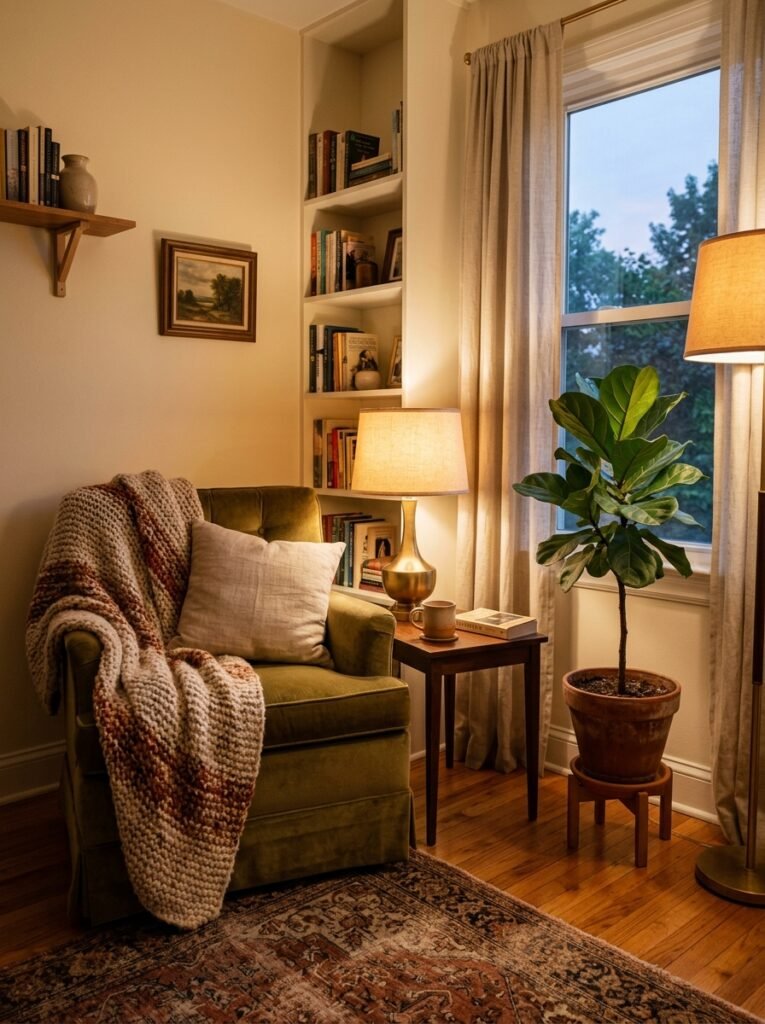
Small living rooms aren’t a compromise — they’re actually a constraint that forces you to make intentional choices, which is where good design lives anyway. The rooms I keep saving to my boards, the ones I think about for days after, they’re almost never the big open-plan showrooms. They’re the small ones that feel completely deliberate, warm, and somehow exactly right.
What’s the one thing in your living room right now that you keep working around instead of actually fixing?