
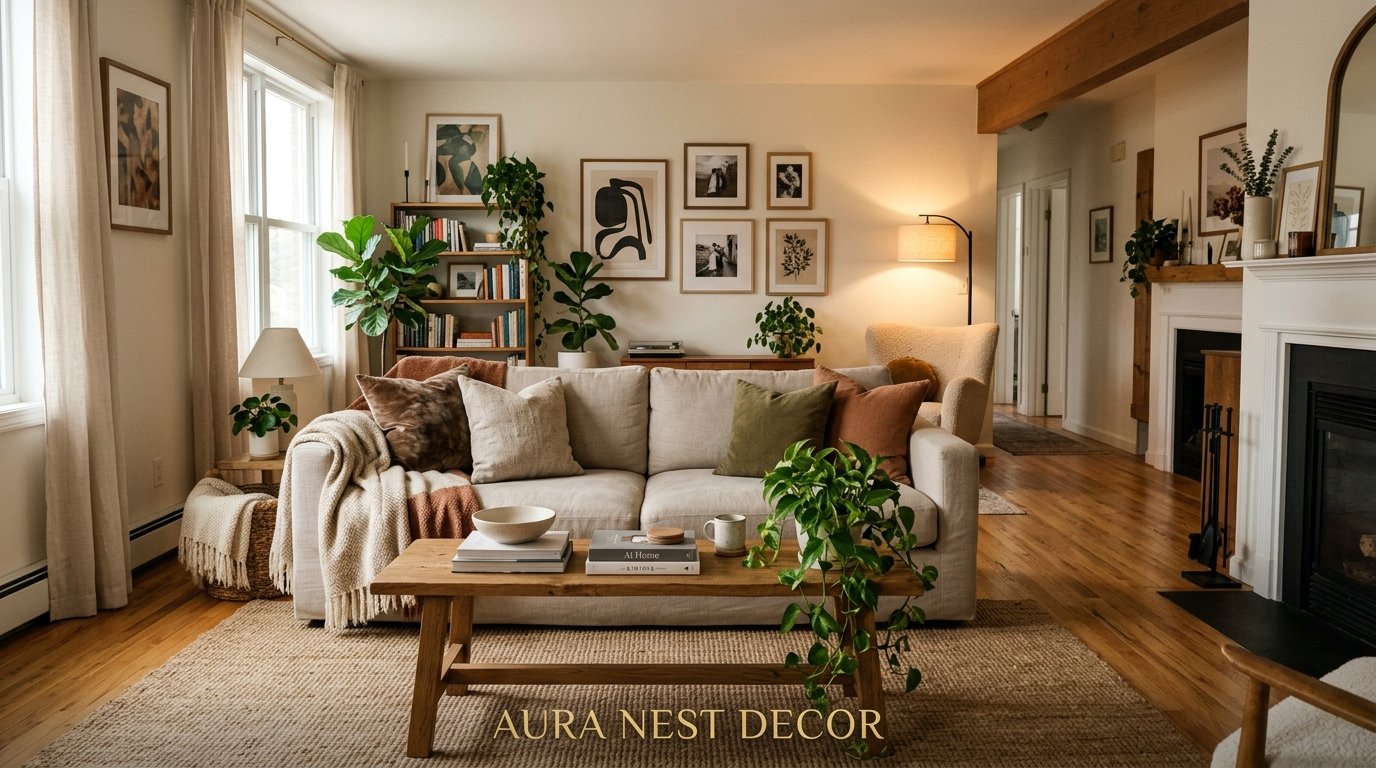
The Tiny Living Room Rules I Ignored for Years (And Why My Space Finally Feels Like Home)
My friend walked into my apartment last spring and said, “Did you redecorate, or did you just… stop being afraid?” And honestly? Both.
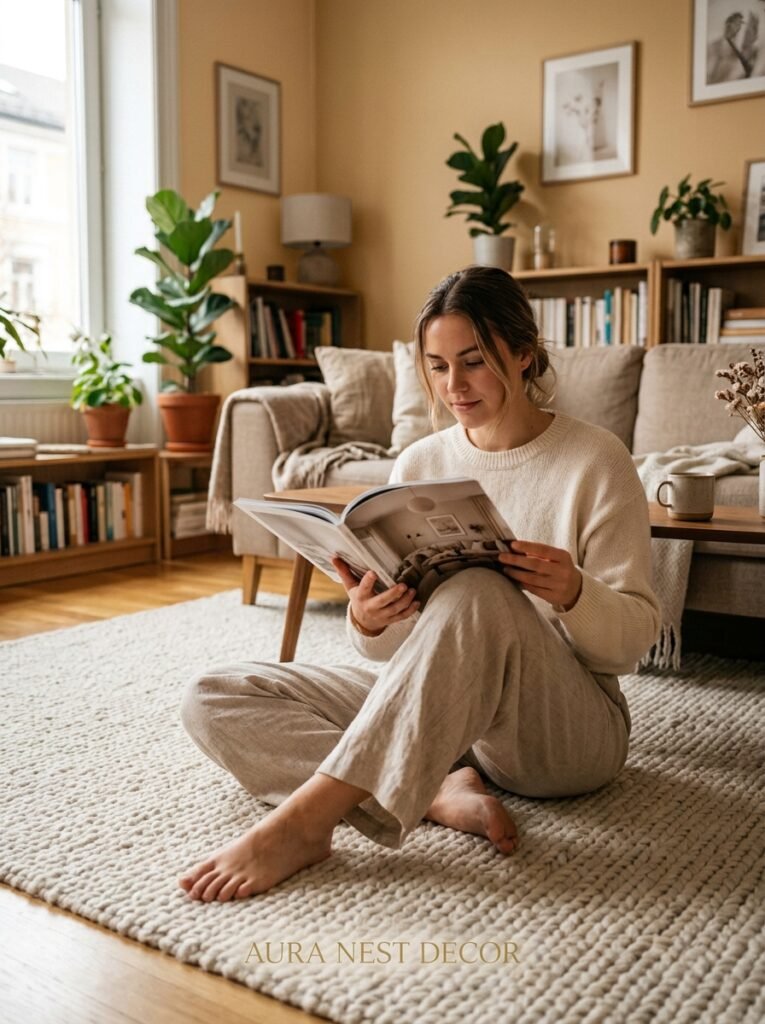
I’d lived in my current place for two years before I stopped treating it like a waiting room. Like the real life — the house, the space, the sofa I actually wanted — was coming later. It wasn’t. This is the space. So I figured I’d better start acting like it.
—
1. The First Thing Everyone Gets Wrong About Apartment Living Rooms
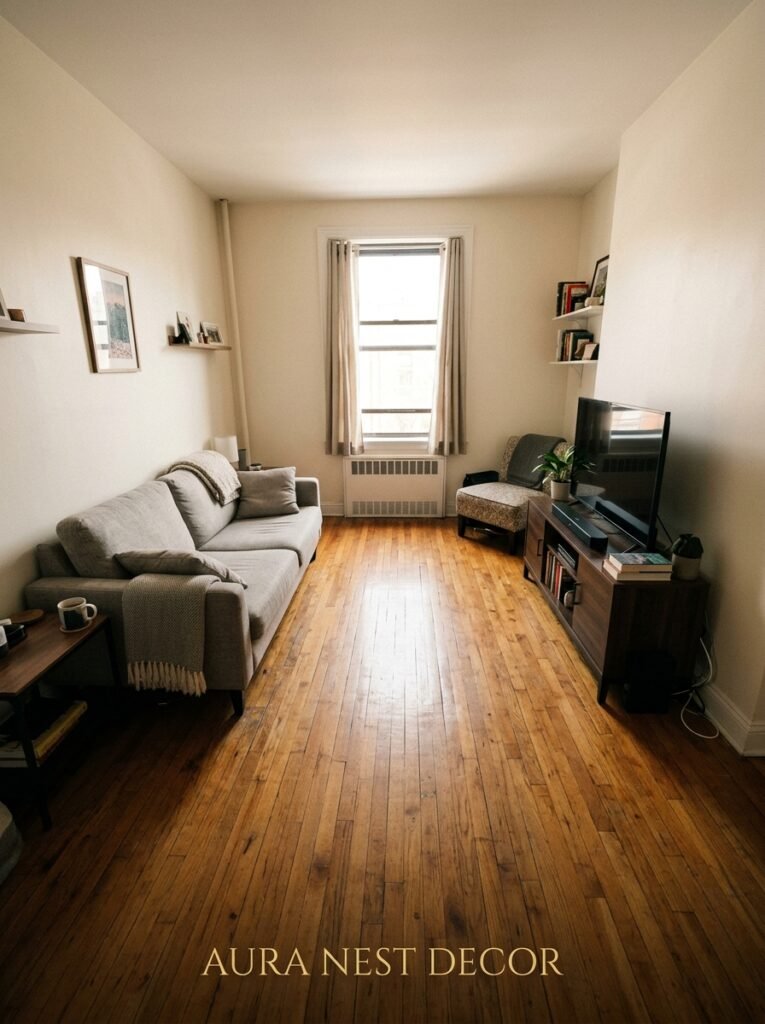
Renting doesn’t mean decorating in pencil. That’s the biggest mental block I see people stuck on, and I was absolutely one of them.
There’s this assumption that you can’t commit to anything because you might move, because the landlord won’t allow it, because why invest in somewhere temporary? But here’s what nobody tells you: furniture isn’t permanent either. Paint can be rented-friendly. And living somewhere that doesn’t feel like YOU — for months, sometimes years — costs something too. It costs you in daily mood. In how often you want to be home.
So the first rule I’d give anyone decorating an apartment living room is to drop the provisional mindset. Fully commit. Buy the bookcase. Hang the art. Get the rug that makes you want to take your shoes off at the door.
The “I’ll sort it properly when I move somewhere bigger” mentality has held back more beautiful rooms than bad taste ever has.
—
2. Why the Sofa Placement Everyone Defaults To Is Usually Wrong
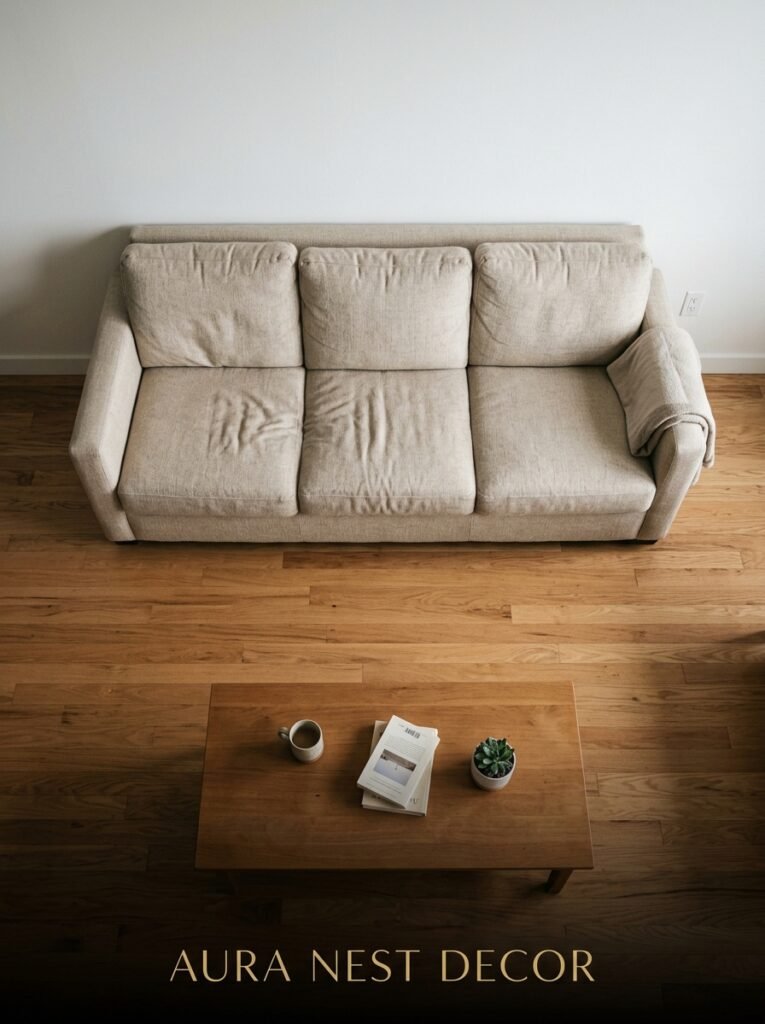
Against the wall. Everyone does it. It feels safe, logical — maximizes floor space, right?
Not exactly.
When you push every piece of furniture to the perimeter of a room, you create this weird hollow feeling in the middle, like a waiting area in a corporate office. The eye doesn’t know where to land. And in a small apartment living room, that feels even more pronounced, not less.
Try pulling your sofa forward. Even six inches away from the wall makes a difference. Float it around a rug — and yes, this means getting a rug big enough that the front legs of the sofa actually sit ON it, not hovering half an inch off the edge. That one adjustment, the rug thing, is genuinely one of those changes that makes a room look like someone intentional lives there.
“The moment I pulled my sofa away from the wall was the moment my living room stopped looking like it was bracing for impact.”
I know it feels counterintuitive when space is limited. But floating furniture around a central anchor point creates a sense of coziness without making things feel cramped. It’s the difference between a room that has furniture in it and a room that has a seating area.
—
3. The Color That Keeps Showing Up in Every Beautiful Apartment Living Room Right Now
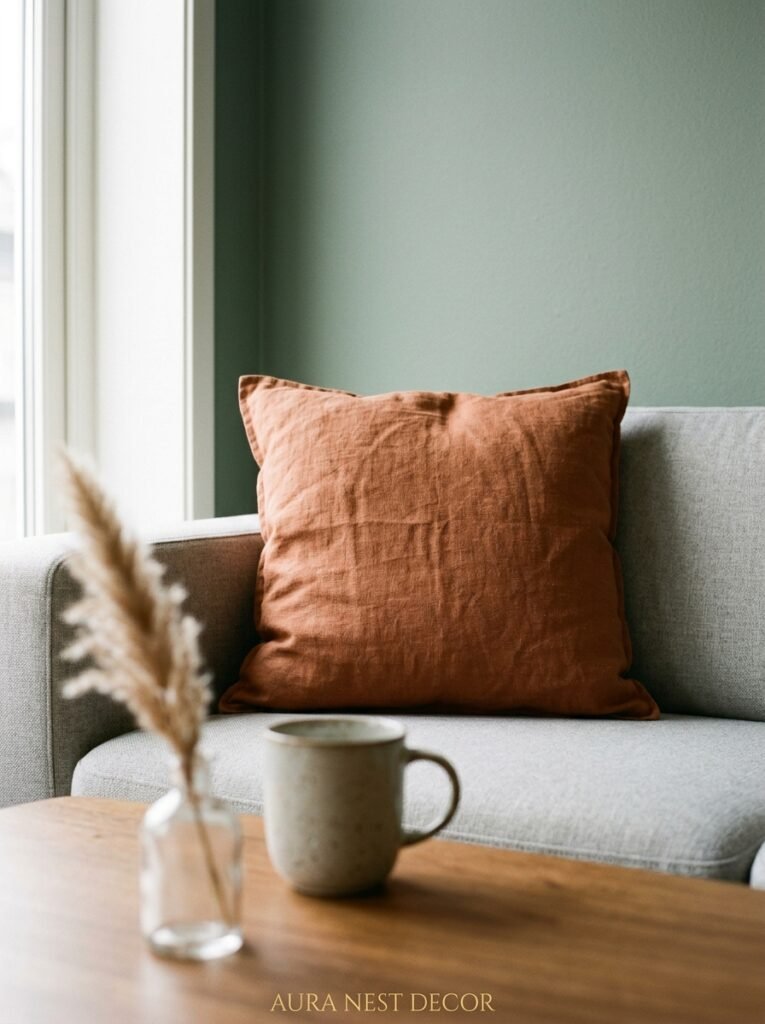
Warm white. Not bright white, not cool gray, not the greige that dominated for a full decade — warm white.
And I get it, this sounds boring on paper. But in practice, against the right textures — linen curtains, a slightly nubby throw, bare wood — it does something really specific. It makes afternoon light look golden. It makes evening light look amber. The room doesn’t have a “color,” technically, but it has a feeling, and the feeling is expensive-looking in a way that’s actually very affordable to achieve.
The UK version of this I keep seeing is something closer to off-white with a barely-there pink undertone. Benjamin Moore’s White Dove does this in the US. Farrow & Ball’s All White or Pointing does it in the UK. Neither of them look “pink” on the wall, they just look… warmer than you expect. And that warmth does all the heavy lifting in a room that doesn’t get a ton of natural light.
Side note — if you’re renting and can’t paint, this is what textiles are for. A warm-toned linen curtain against a cold white rental wall can shift the whole temperature of a space. I’m not exaggerating.
—
4. What Nobody Tells You About Lighting an Apartment Living Room
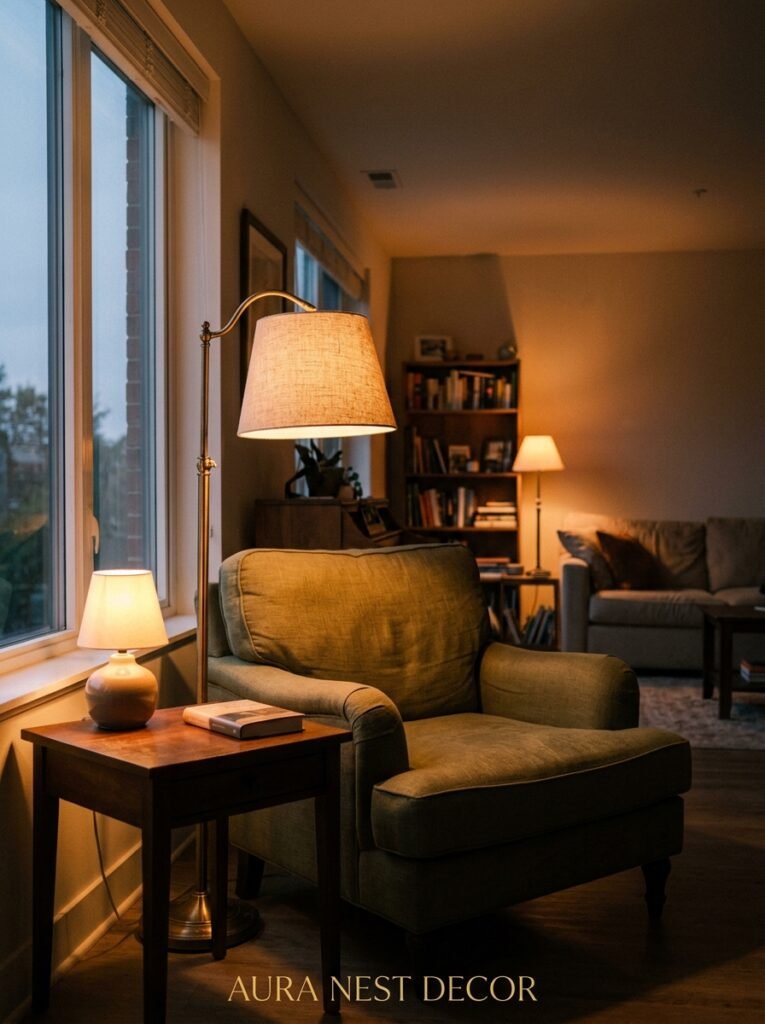
The overhead light is lying to you. Turn it off.
Overhead lighting in most apartments is genuinely hostile to coziness. It’s flat, it’s harsh, and it makes everything look like a before photo. The fix isn’t expensive — it’s just multiple light sources at multiple heights.
A floor lamp in the corner. A table lamp on the bookshelf. Candles on the coffee table, even if they’re just decorative. The goal is to create what I’d call “pools” of light rather than one flat wash of it across the whole room. The amber glow of a warm-bulb lamp at 7pm in October is an entirely different experience than a single overhead LED at full brightness.
Get yourself some smart bulbs if you can — being able to dim from your phone genuinely changes how you use a room in the evenings. But even just buying two secondhand lamps at a charity shop and swapping in 2700K warm-white bulbs will do 80% of the work.
—
5. The One Rule That Makes Any Tiny Living Room Feel Intentional
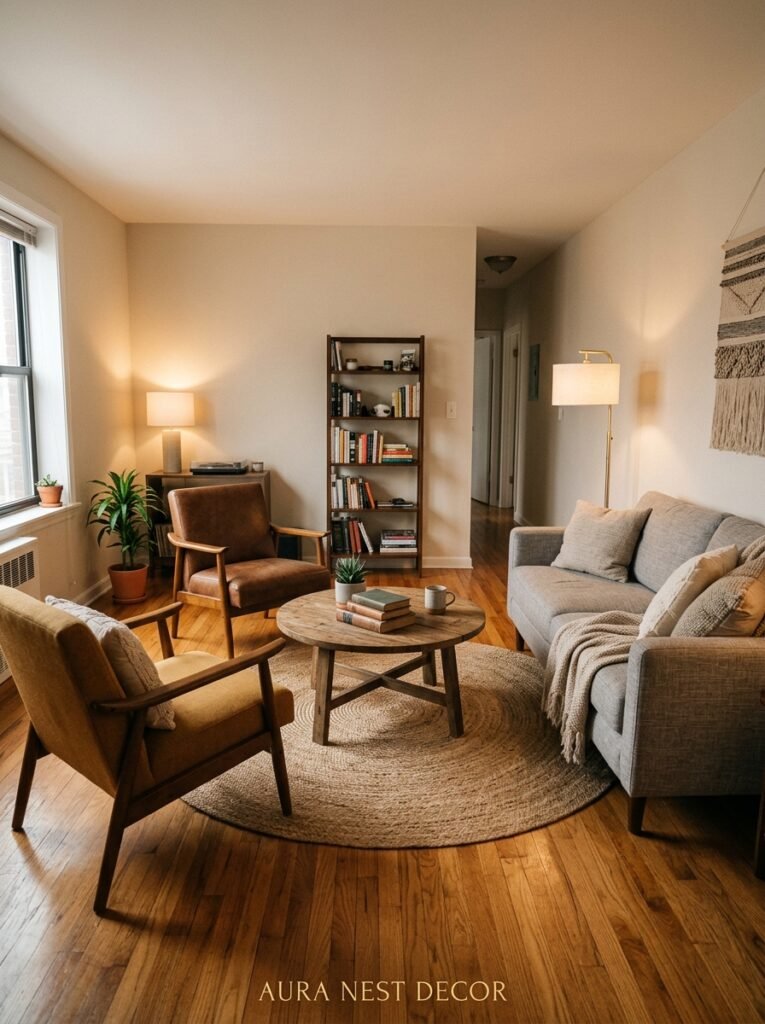
Pick one thing to be the focal point, and then let everything else support it.
This is where a lot of small living rooms fall apart — not because they have bad pieces, but because everything is competing at the same volume. The gallery wall, the bold sofa, the statement lamp, the heavily patterned rug. Every element shouting. Nothing to look at first.
In a small space, restraint is the move. Find one thing you love — maybe it’s a really beautiful piece of art, or a vintage armchair in a color that makes you happy — and anchor the room around it. Let the rest go quieter. Neutral sofa, simple rug, understated shelving. Then your one special thing gets to be genuinely special rather than just another thing competing for attention.
“A living room doesn’t need more things. It usually needs fewer things, shown off better.”
I had a vintage olive green velvet chair I’d bought at an estate sale, and for about a year it was buried under a gallery wall and a floral rug and a lot of other stuff I loved individually but that was collectively just noise. The day I simplified everything around it, that chair became the room. And the room finally had a personality.
—
6. The Rug Mistake That’s Quietly Ruining Your Layout
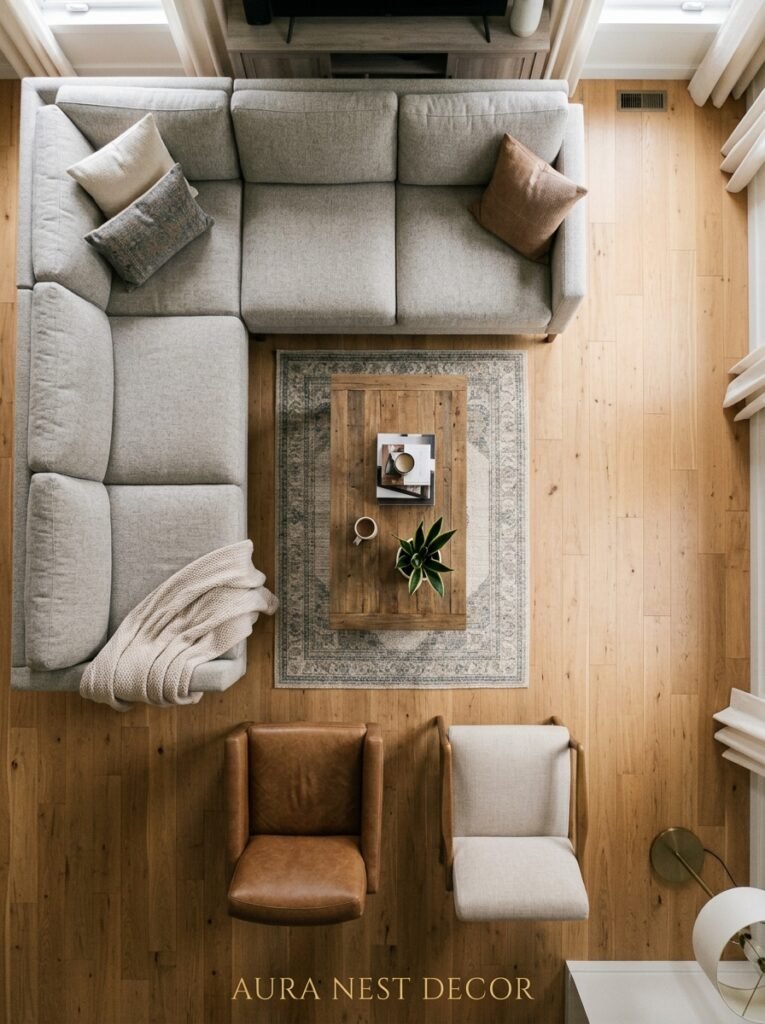
Too small. Almost always too small.
I cannot tell you how many otherwise lovely living rooms I’ve seen where the rug is floating in the middle of the room like a little island, not connected to anything. Furniture legs hanging off the edges. The whole thing looking slightly unmoored.
The standard advice is that in a living room, your rug should be large enough that at minimum the front legs of the sofa and chairs can rest on it. But honestly, bigger is almost always better in this context. An 8×10 in a medium-sized apartment living room is a good starting point. A 9×12 is often even better.
If you’re in the UK and working in metric, you’re looking at roughly 200x290cm as a starting point, 250x300cm or larger if you can manage it.
Yes, large rugs cost more. But a properly-sized rug does more work for a room than nearly any other single purchase. It grounds everything. It makes the space feel designed rather than assembled.
—
7. Why Your Shelves Look Cluttered (When You Think They Look “Cozy”)
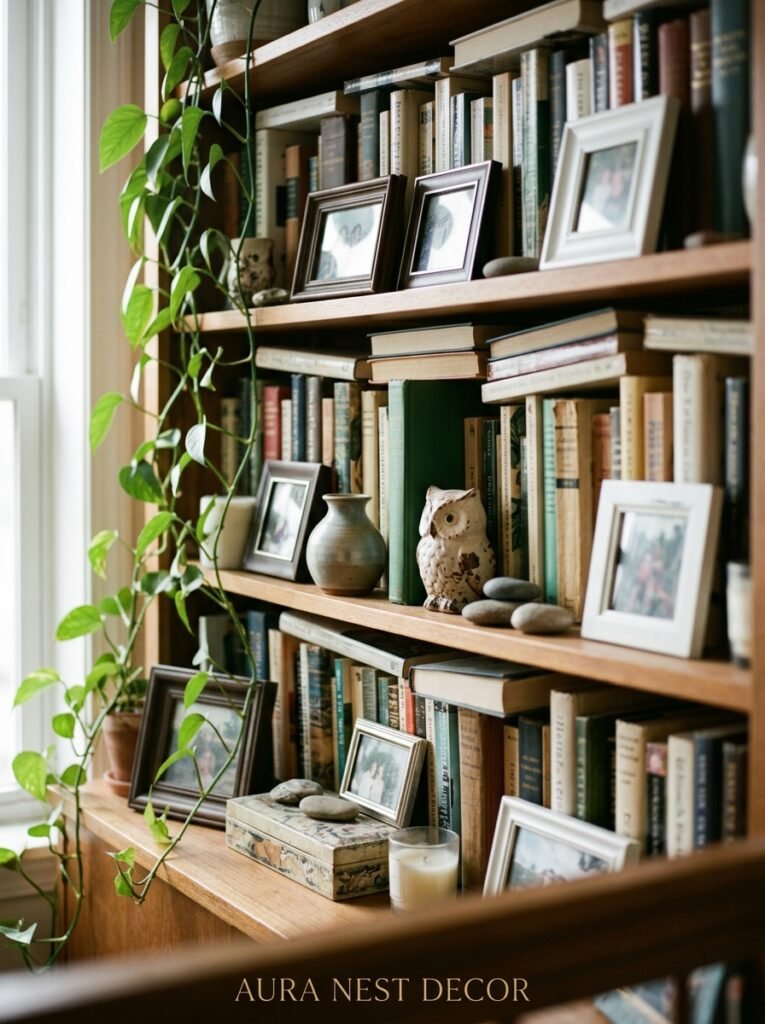
There’s a fine line between styled shelves and shelves that look like a junk drawer at eye level, and I say this as someone who crossed it spectacularly for most of my twenties.
The trick is negative space. Not every shelf needs to be full. Not every surface needs something on it. The eye needs somewhere to rest, and visual breathing room is what makes the books and objects you DO display look curated rather than accumulated.
A rough formula that works: for every shelf, roughly one-third should be books (stacked or standing, mixed is fine), one-third objects or art, and one-third just… nothing. Space. Air. It feels weird at first because the instinct is always to fill. But step back after you edit and you’ll see it immediately — the whole thing looks more expensive, more considered, and somehow less chaotic even though you haven’t removed anything major.
Also: group your objects in odd numbers. Three small things together. Five. It’s a very basic design principle but it actually works.
—
8. The Plant Situation (Or: Stop Buying the Wrong Ones)
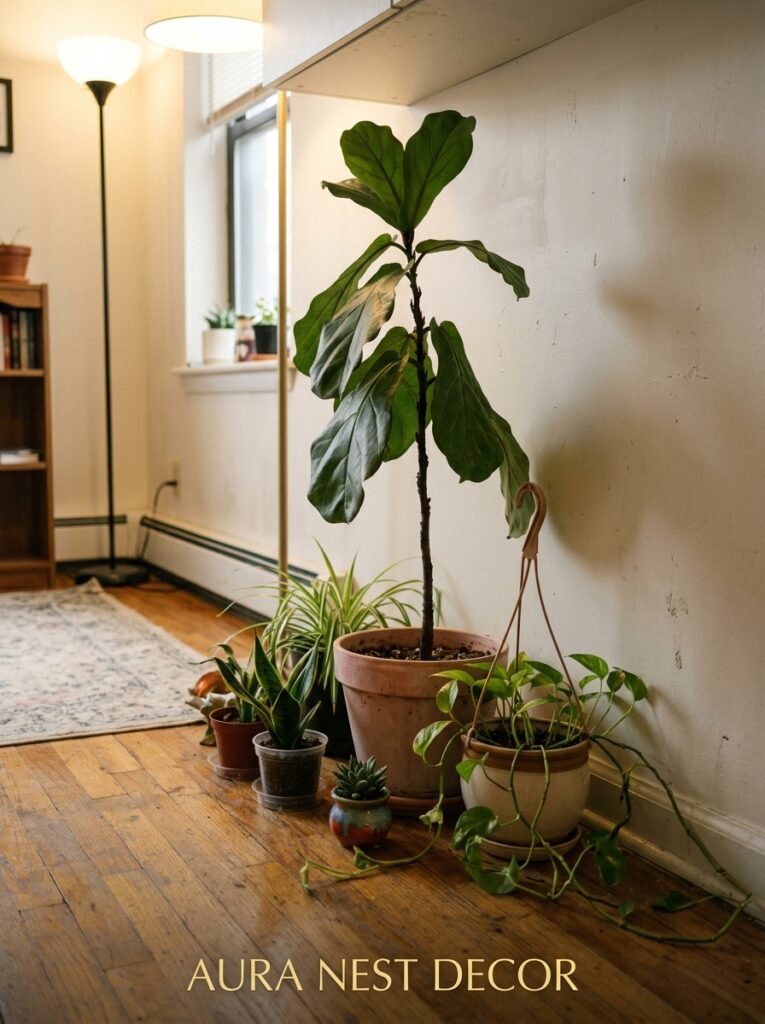
Not everyone can keep plants alive, and that’s fine. I’m not going to tell you that you need trailing pothos or fiddle leaf figs to have a beautiful living room, because honestly there’s something a bit exhausting about that narrative.
But. If you do want plants — and they DO add something genuinely warm and living to a space — apartment living rooms tend to do best with low-drama options. Pothos (yes, the classic, because it literally thrives on neglect). ZZ plants. Snake plants. Large-leafed things that look architectural without needing daily attention.
The styling rule I follow: one large plant is better than several small ones. A big monstera in a terracotta pot in a corner adds more visual weight and warmth than six little succulents scattered around various surfaces. It feels like a choice, not a collection.
—
9. How British and American Apartments Differ — And Why It Actually Changes Your Decorating Strategy
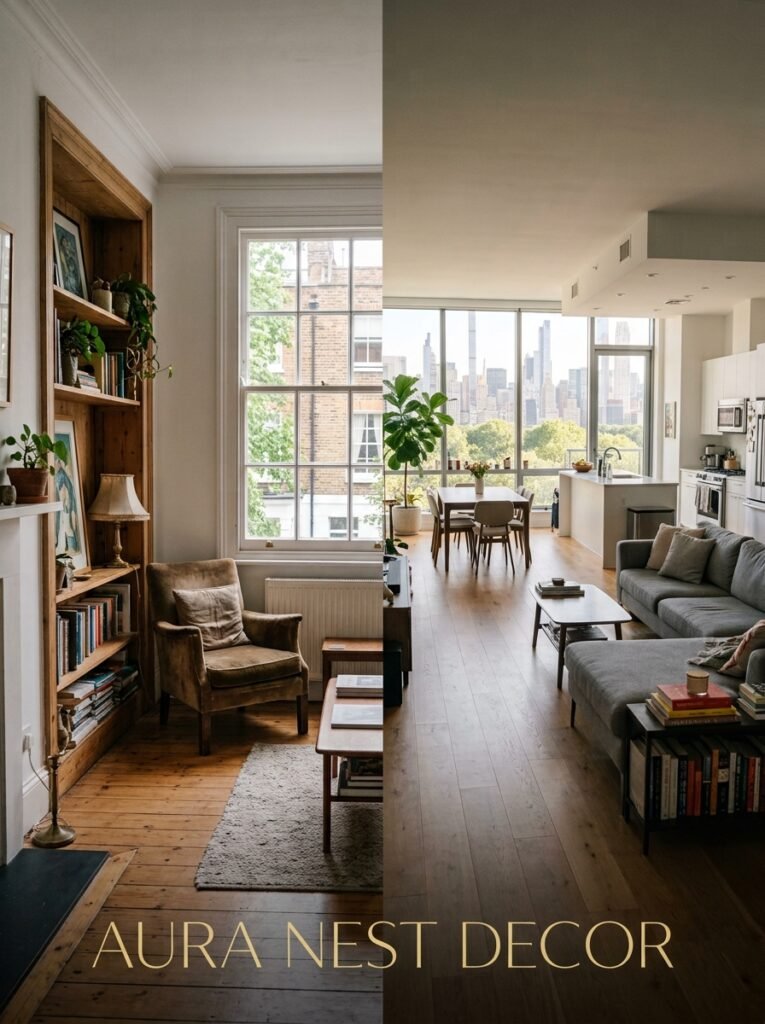
This matters more than people think.
UK flats tend to run smaller, have lower ceilings (especially in older conversions), and often have very little natural light — particularly ground floor and basement flats. American apartments vary wildly by city, but tend to have higher ceilings, larger windows, and sometimes an open-plan kitchen-living layout that doesn’t really exist in older British housing stock.
What this means practically:
For UK flats: mirrors are almost mandatory. A large mirror on the wall opposite your main window doesn’t just make the room look bigger — it actually bounces light back into the space. That’s a functional choice, not just a style one. Go for full-length or oversized. Don’t bother with little decorative ones clustered together; they just add visual noise without doing much for light.
For US apartments: the open-plan layout is your challenge and your opportunity. Define zones. Use rugs to anchor the living area separately from the kitchen/dining space. A sofa facing AWAY from the kitchen — with its back toward that space — creates a psychological separation even without walls.
—
10. The Curtain Mistake That Makes a Room Look Shorter Than It Is
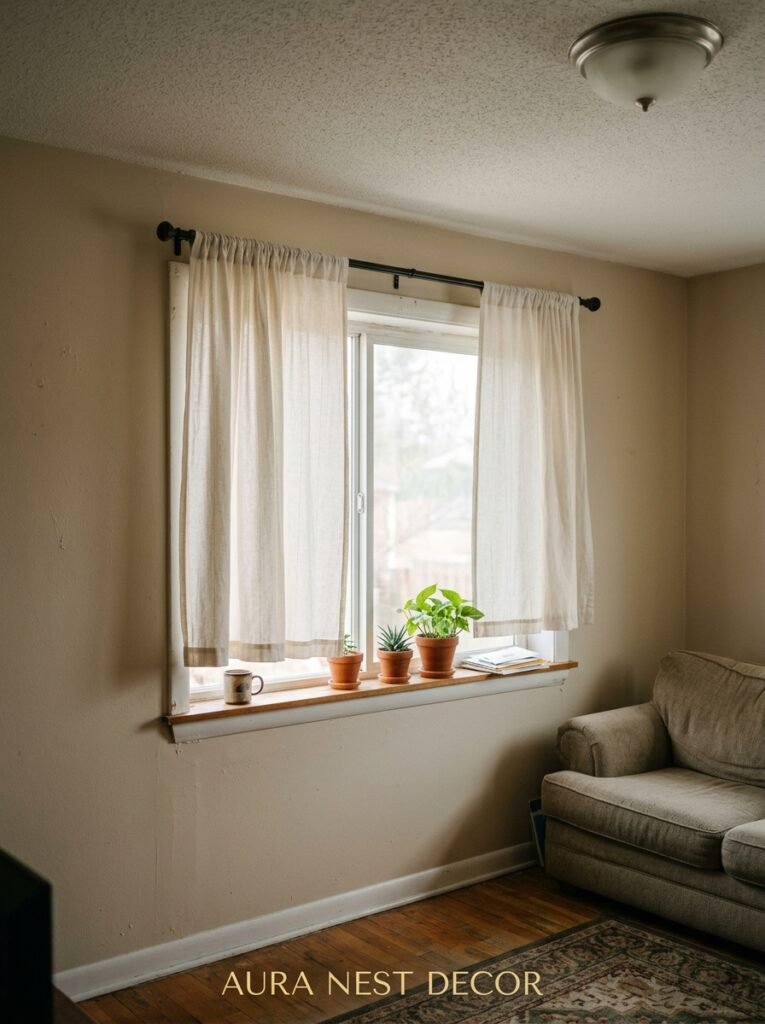
Hanging curtains at window level. Stop.
This is one of those adjustments that costs almost nothing and makes a genuinely shocking difference. Curtain rods should go as close to the ceiling as possible — or at ceiling height if you can manage it — not right above the window frame.
And the curtains themselves should be long enough to just skim or pool slightly at the floor. Not the weird hovering thing where they end a few inches above the ground like they shrunk in the wash.
When you hang curtains high and let them fall long, you’re drawing the eye upward. The room suddenly has HEIGHT. The ceiling feels further away. It’s one of the oldest tricks in interior design and I’m still slightly amazed by how dramatic the difference is every time.
“Curtains hung at ceiling height are basically free square footage for your walls.”
In the UK especially, where rooms in period conversions often have beautifully high original ceilings that renters somehow underuse — please, hang your curtains high.
—
11. The Secondhand Piece That Makes the Whole Room Look Less “Apartment-ish”
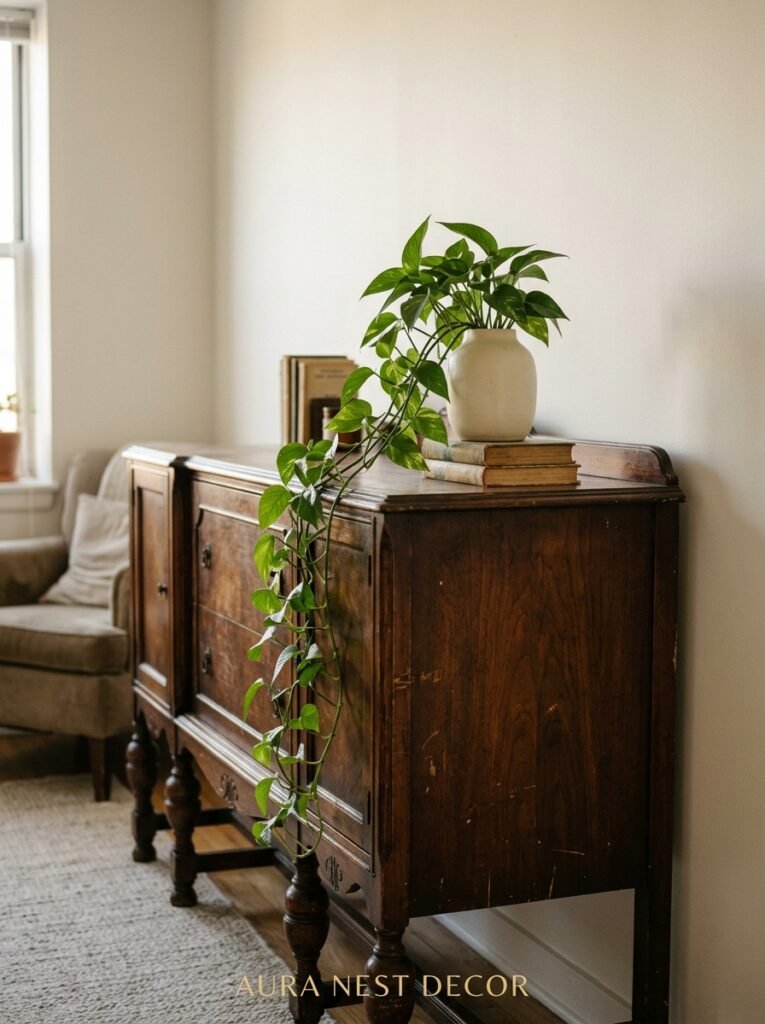
One vintage or antique item. That’s all it takes.
There’s a particular look that new-apartment rooms get — everything is slightly matchy, everything has that same slightly-too-clean new-furniture feel, and the room ends up looking like a showroom for a mid-range furniture brand. It’s not bad, exactly. But it’s not a HOME.
One piece that has obvious history — a worn leather ottoman, a side table with good bones and slightly scratched legs, a vintage mirror with an imperfect gilded frame — breaks that sameness in a way that’s almost magical. The old thing makes the new things look better. Somehow the whole room relaxes.
Facebook Marketplace, eBay, charity shops in the UK, Craigslist in the US, estate sales, vintage markets — there are genuinely good finds everywhere if you’re patient and know what you’re looking for. Focus on pieces with good shape and solid construction. Ugly upholstery can be changed. Scratched wood can be waxed. A good bone is a good bone.
—
12. The Thing I’d Tell Every Person Moving Into Their First Apartment
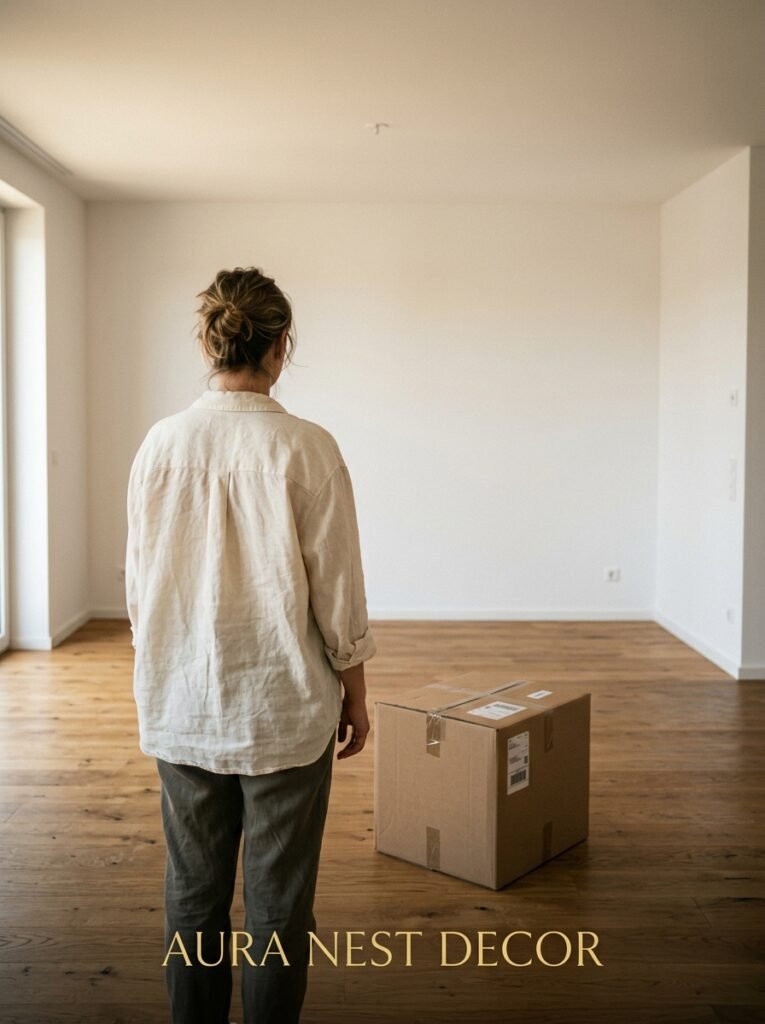
Do it in layers.
Don’t try to get the whole room right at once. Buy the big things first — sofa, rug, lighting — then let the room breathe for a few weeks before you decide what it needs next. Live with it. See where the light falls at 4pm. Notice what bothers you. Notice what’s actually fine.
The rooms that look the most intentional and the most personal were almost never decorated all at once. They built up over time, with pieces that actually mean something, rather than a cart full of stuff from the same store bought in one slightly panicked afternoon.
Apartment living rooms often feel like they have so many constraints — weird angles, no natural light, a landlord who won’t let you touch the walls, an awkward layout that doesn’t make sense. But constraint, honestly, tends to produce more interesting rooms than total freedom does. It forces you to be creative. To think differently.
The best-looking rooms I’ve ever seen have been in apartments. Small, quirky, low-ceiling, south-facing-wall apartments where someone just… made it work. Made it theirs.
Yours can be that room too.
—
❓ FAQ
Q: How do I make a living room look bigger without knocking down walls? A: A few things genuinely work here: hang curtains at ceiling height, choose furniture with legs rather than pieces that sit directly on the floor (legs create visible floor space which reads as “more room”), use a large enough rug to anchor your seating area, and add a large mirror opposite your main light source. You don’t need to do all of these — even two or three make a noticeable difference.
Q: What’s the best rug size for an apartment living room? A: Bigger than you think. For a standard apartment living room in the US, an 8×10 or 9×12 is usually the right call. In the UK, aim for 200x290cm or larger. The key is that the front legs of your sofa and chairs should actually sit ON the rug, not beside it. If you can only afford a smaller rug right now, layer it over a simple flatweave jute — it’s a great way to extend coverage without buying a whole new rug.
Q: Can I hang art on rental walls without losing my deposit? A: Yes, with the right approach. Command Strips work surprisingly well for lighter frames. For heavier art, look into adhesive picture-hanging hooks rated for the appropriate weight — many hold up to 7-10 lbs without damaging walls. If you do use nails, Polyfilla (UK) or spackling compound (US) plus a touch of matching paint makes holes nearly invisible when you move out. Most landlords won’t notice a properly repaired nail hole.
—
💭 Final Thoughts
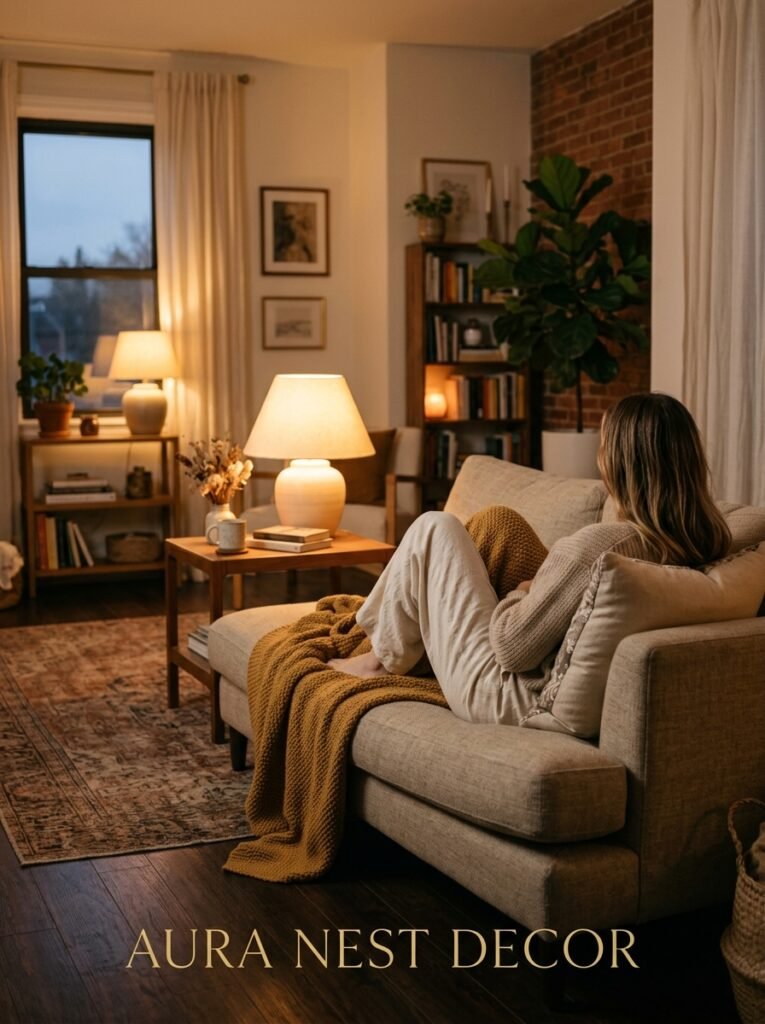
There’s something really specific about an apartment living room that’s finally gotten there — that feeling when you walk in and the space just holds you, instead of you holding it together. It’s not about having the right budget or the right square footage. It’s about enough patience to actually listen to the room.
I still move things around. I still second-guess the curtain length and wonder if the rug is too big (it isn’t). But it feels like home now, which was the whole point.
What’s the one thing in your living room that’s been bothering you for months that you haven’t fixed yet?