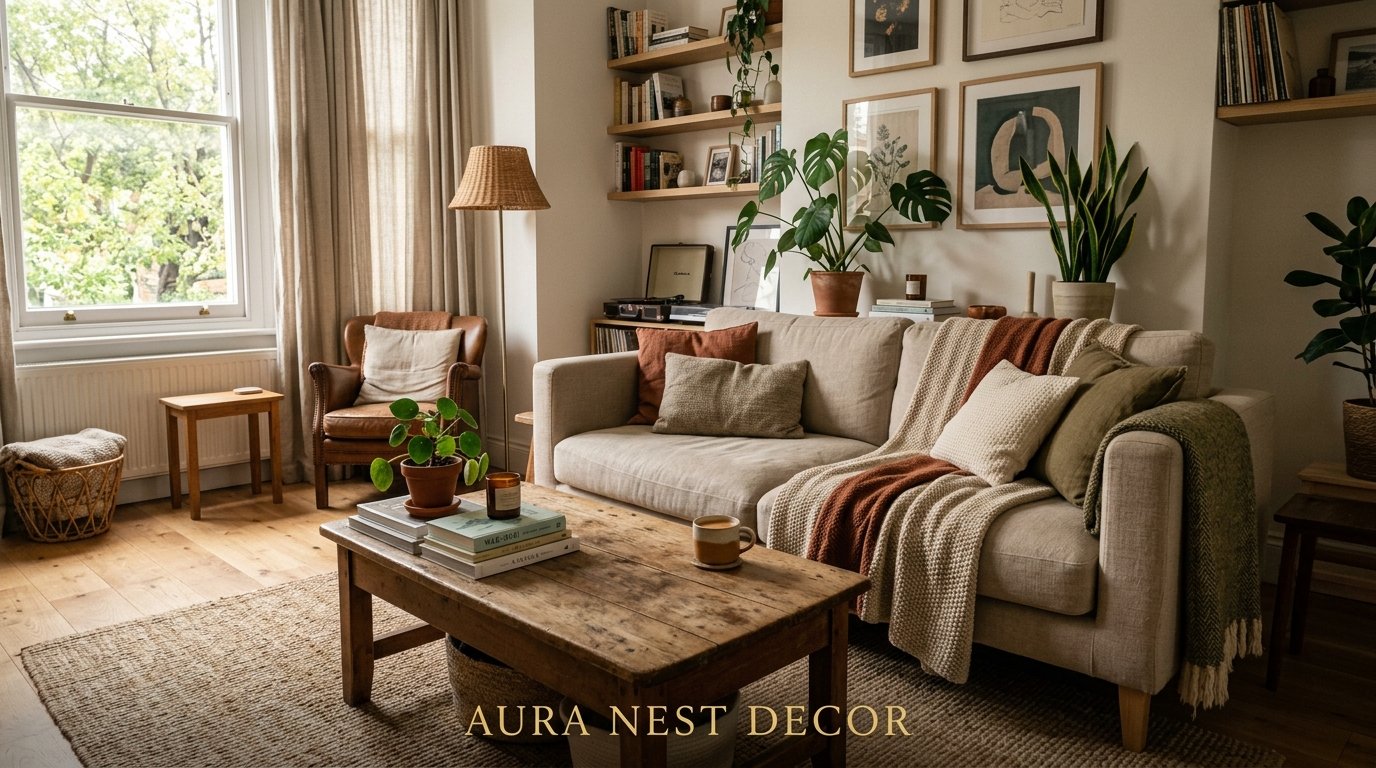
The Tiny Living Room That Made Me Stop Apologizing for My Square Footage
My friend walked into my flat last autumn and said, “Wait — it’s bigger than I thought it was.” It wasn’t. It was exactly as small as it always had been. I’d just finally stopped decorating it like an apology.
—
1. The Moment I Realized Furniture Size Was the Whole Problem
Not color. Not clutter. Not the lack of natural light everyone blames for small rooms feeling sad.
It was the sofa.
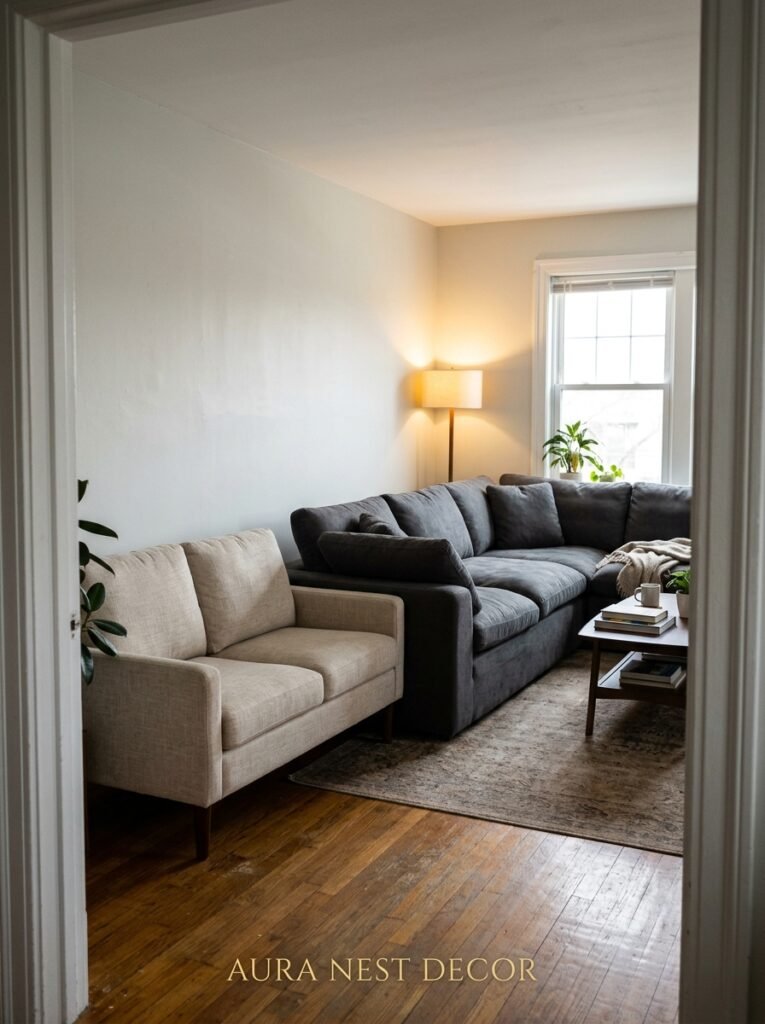
I had a three-seater in a room that didn’t want a three-seater. Every layout looked wrong because I was trying to fit a “normal” living room into a space that didn’t need to be normal. The second I switched to a smaller two-seater with legs — actual legs, not a solid base sitting on the floor — the room breathed. Air under the furniture is not decorating advice, it’s practically science. Your eye reads the floor space underneath as part of the room, and suddenly the floor feels twice as long.
So if you’re doing anything in here, start with your sofa. Is it too big? Because it probably is.
—
2. Why “Cozy” and “Cramped” Are Not the Same Thing (and Most People Get This Wrong)
This distinction matters SO much and nobody talks about it enough.
Cramped is when a space feels like it’s pushing back at you. Like the walls are slightly closer than they should be. Like you can’t put your bag down without thinking about it.
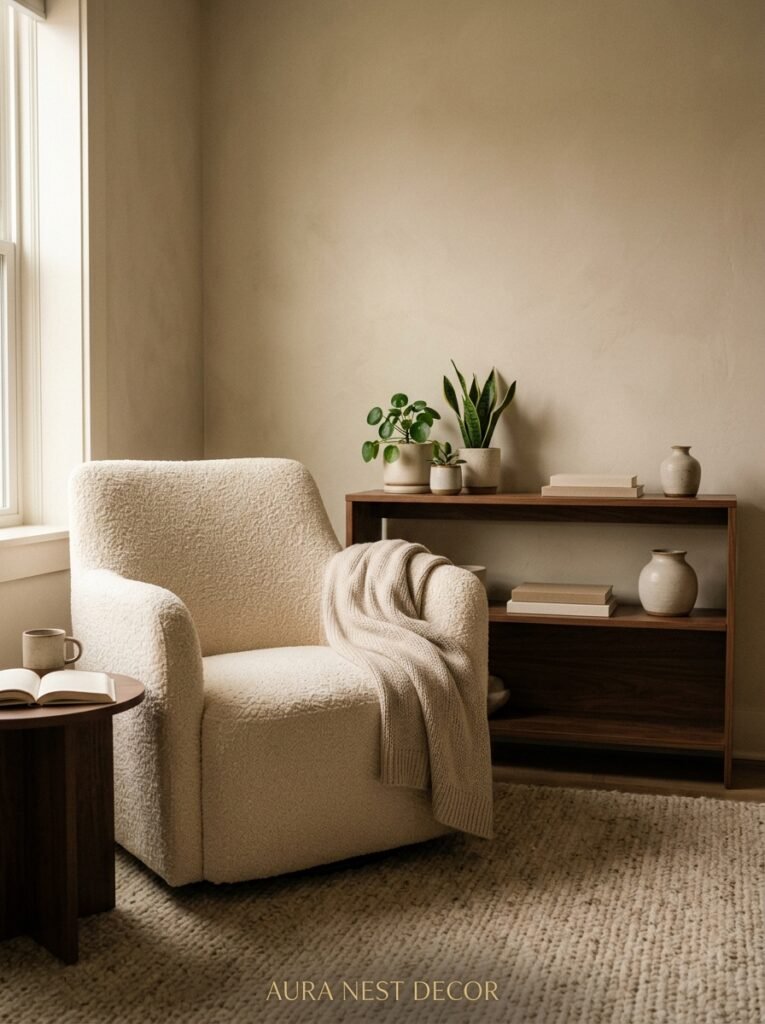
Cozy is the OPPOSITE of that. Cozy is intentional closeness. A room that knows what it is and leans into it. A reading chair angled toward a lamp. A low shelf with a candle and two books on it. The amber glow of an Edison bulb at 7pm when everything outside is grey and cold.
“A cozy room doesn’t feel small. It feels chosen.”
The mistake most people make in tiny living rooms is they try to fight the smallness — mirrors everywhere, nothing on the walls, keep it bright keep it minimal. And sure, that works if you want the room to feel like a hallway. But if you actually want to sit in there and exhale after a hard day? Layer it. Go deeper with the warmth. Let the smallness be the whole point.
—
3. The Color That Keeps Showing Up in Every Beautiful Tiny Living Room Right Now
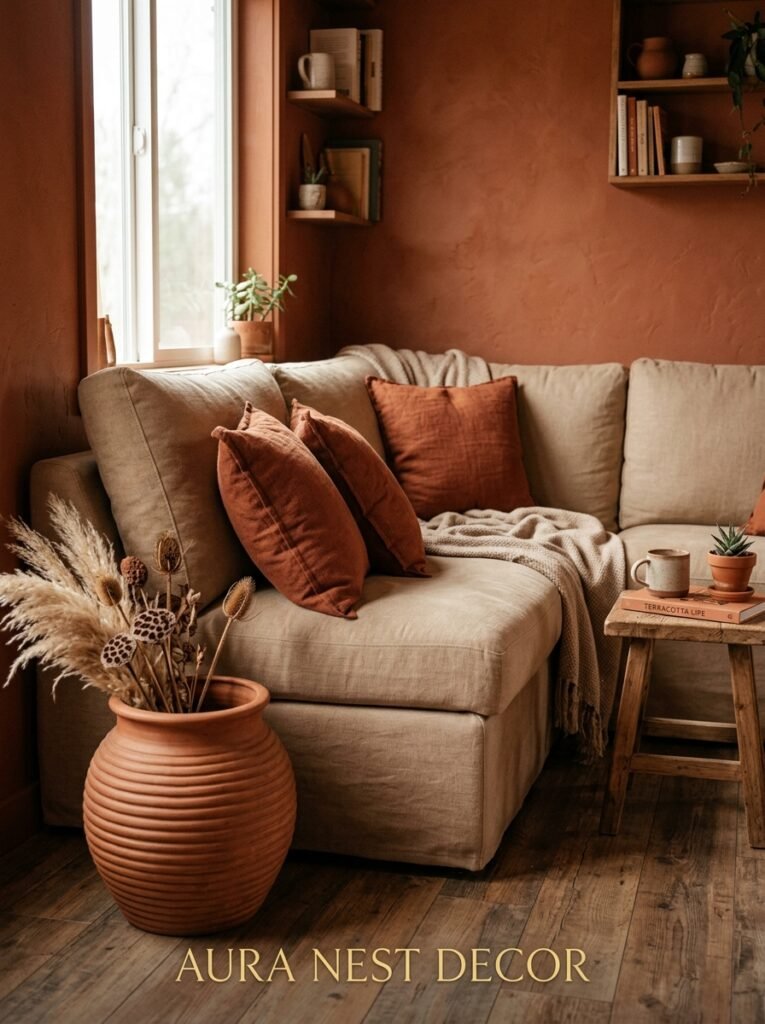
Warm white. But not the cool, clinical white that was everywhere about ten years ago.
I’m talking the creamy, slightly yellowish whites — stuff like Farrow & Ball’s Wimborne White or Benjamin Moore White Dove if you’re in the US. These aren’t stark. They’ve got depth. They absorb the warm light from your lamps instead of bouncing it back harsh and flat.
The thing about small rooms is that paint color affects the feeling way more than the actual square footage. A small room in a cold grey feels like a waiting area. That same room in a warm creamy white feels like somewhere you’d actually want to spend an afternoon. Not gonna lie, I repainted my living room twice before I figured this out. The first time I went with a trendy greige and spent six months wondering why I hated sitting in there.
Dark colors can work too — navy, forest green, deep terracotta — but they work differently. They make the walls disappear INTO themselves rather than reflecting space outward. Some people love this. It’s a whole vibe. But it takes commitment, and you can’t be halfway about it.
—
4. The One Rule That Makes Any Tiny Room Feel Intentional Rather Than Accidental
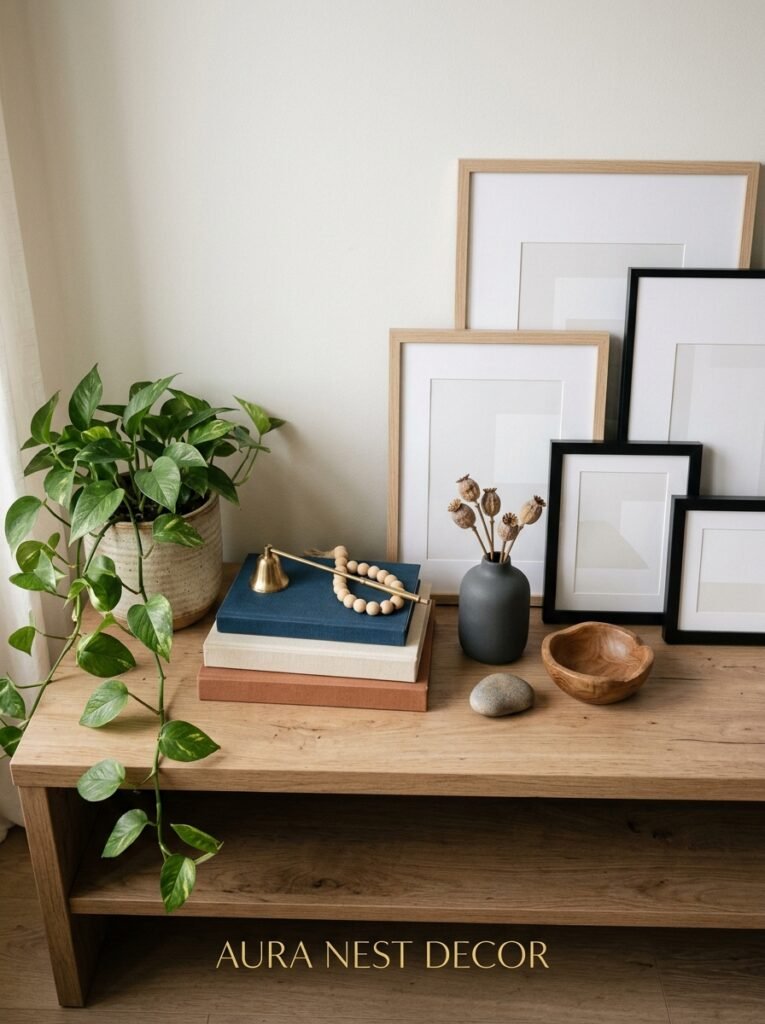
Every item in the room has to earn its place. Not just “does it fit” but “is this the right thing.”
A tiny living room with 20 carefully chosen pieces looks collected and considered. A tiny living room with 40 random pieces looks like a storage problem. The number you’re aiming for is less than you think.
Here’s the exercise I actually do: I take everything off every surface. Everything off the walls. And then I only put back what I reach for, look at, or love. What’s left is usually about 60% of what was there before. The room suddenly looks like an adult lives there, someone who made decisions, someone who’s not just accumulating things and hoping for the best.
Side note — this is also the fastest way to find all the things you’ve been moving around for two years without ever looking at directly. Candles that burned down to nothing. A photo in a frame that you don’t even like anymore. A succulent that did not survive 2021. Out. All of it out.
—
5. Vertical Space Is the Most Underused Thing in a Small Room
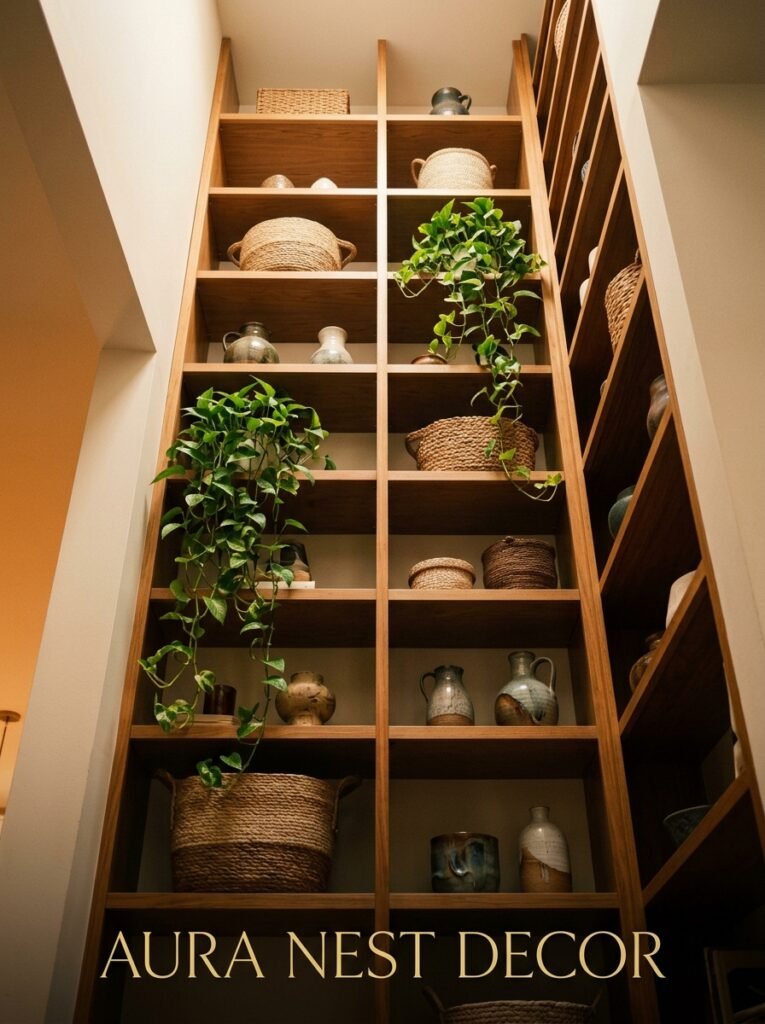
Up. Go UP.
Not enough people think about the wall space above eye level in a small room, and it’s a genuine waste. Floating shelves that go all the way to the ceiling make the room feel taller. A gallery wall that extends higher than you’d normally hang it — same thing. Floor-to-ceiling curtains, even on a tiny window, will make the ceiling feel like it’s miles above your head.
“Most people stop decorating at eye level. The room above your eyeline is where small spaces get their height back.”
The trick with high shelves is keeping them lighter — don’t stack them with heavy books and dark objects. Lighter colored things, a trailing plant, a basket. You want the eye to travel up there happily, not feel like the ceiling is pressing down with weight.
Also: don’t underestimate a tall, thin lamp. A floor lamp that goes to 5’6″ or taller draws your eye up, and a slim silhouette doesn’t eat floor space. I’ve got one in a corner that I’d fight someone over. It’s doing more work than any piece of furniture in the room.
—
6. Why Every Tiny Living Room Needs Exactly One Surprising Thing
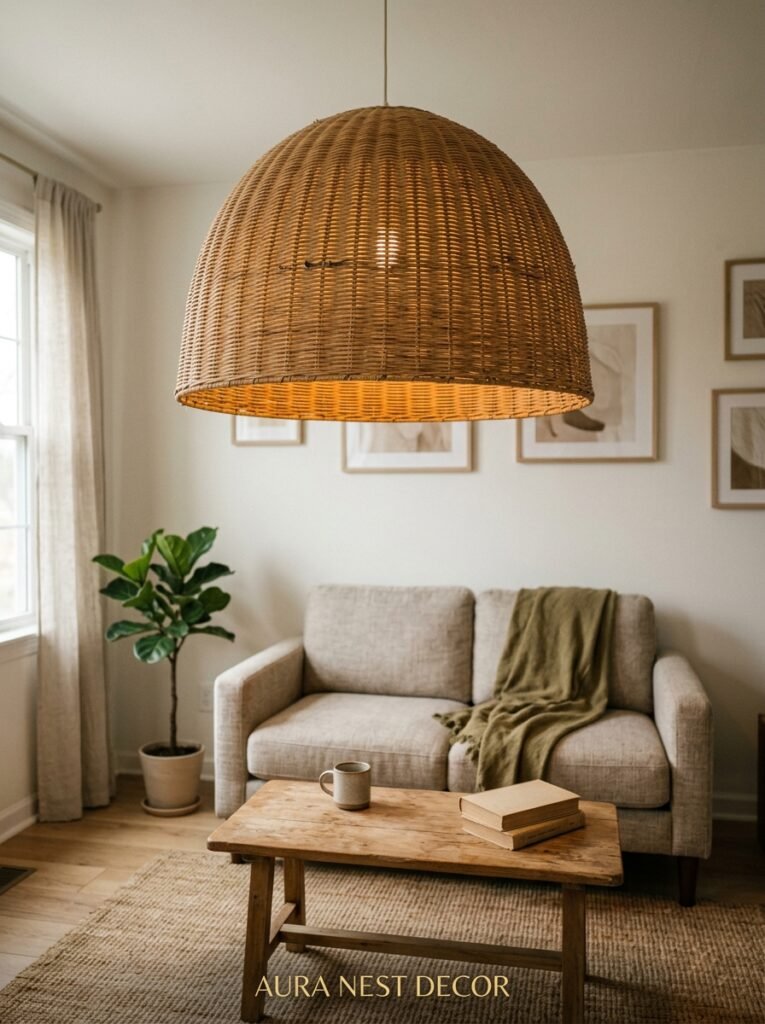
Not quirky for the sake of it. Not a novelty item you saw on Etsy. But one thing that makes someone walk in and go, “oh — interesting.”
For me it’s a large-scale art print. Like, LARGE. Way bigger than you’d expect for the room size. In a small space, big art doesn’t overwhelm — it anchors. It says this room knows what it’s doing. A lot of people in small rooms go small with their art, lots of little frames, and it ends up looking scattered and fussy.
One big piece. Put it on the wall that faces you when you walk in. Done.
Or maybe your surprising thing is an unexpected material — a woven rattan pendant light where you’d expect a standard ceiling fixture. Or a velvet cushion in a color that has absolutely no business being that bold and yet somehow works. One piece of furniture in a wood tone that’s darker than everything else.
The point is contrast. Small rooms get too matchy-matchy sometimes, too careful, too coordinated, and it reads as nervous rather than intentional. One unexpected thing relaxes the whole room.
—
7. The Curtain Trick That Every Interior Designer Uses and Nobody Talks About Enough
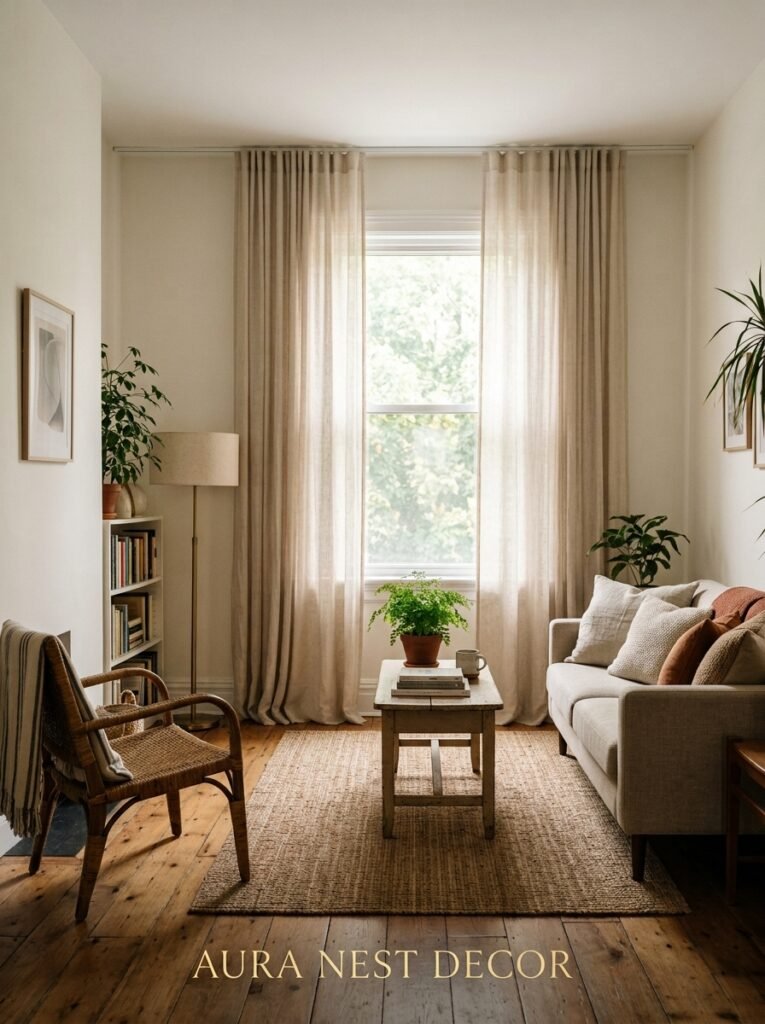
Hang them HIGH. Hang them WIDE.
Your curtain rod should be as close to the ceiling as possible — or actually on the ceiling if you can. Not just a few inches above the window frame, right up there.
And then the rod should extend past the window frame on each side. How far? Far enough that when the curtains are open, the fabric sits almost entirely off the glass. So the window looks as wide as the entire wall.
This is the single most dramatic thing you can do to a small room for under $100 and I cannot stress it enough. The room doesn’t get bigger. But it LOOKS bigger, which in terms of how you feel in a space, is effectively the same thing.
Linen curtains work best for small rooms because they’re light without being sheery. That soft, slightly wrinkled texture doesn’t fight with anything. And in a warm neutral — oatmeal, ecru, soft white — they just disappear into the wall color and let the window do its job.
—
8. What “Modern Cozy” Actually Means (Because It’s Not What Most Mood Boards Show You)
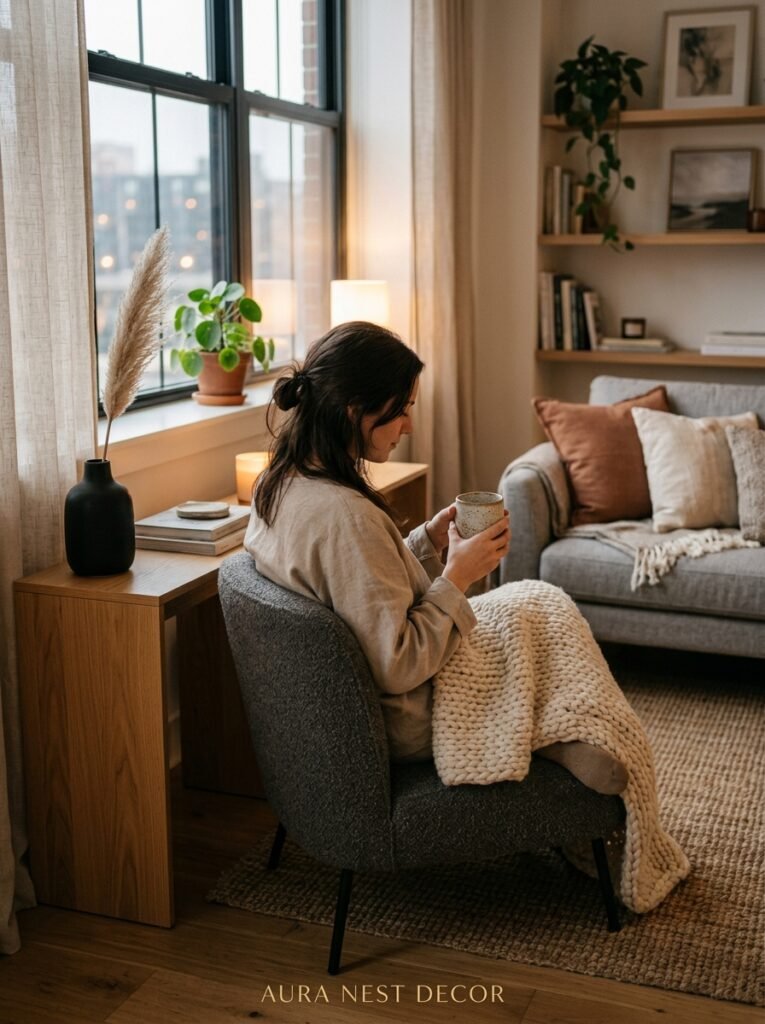
Modern cozy is a specific aesthetic and it’s been kind of diluted by people slapping it onto beige rooms with a candle and calling it a day.
Real modern cozy is clean lines WITH warmth. It’s a streamlined sofa in a warm fabric. Furniture with simple silhouettes but in materials that feel good — boucle, cotton, natural wood. Minimal clutter but textural surfaces. It’s not sparse and it’s not fussy.
Think: a flat-weave rug with a subtle pattern. A wooden coffee table that looks handmade, not manufactured. Cushions in two tones that are both muted but not identical. A stack of actual books, not décor books with the covers turned backwards (I’m sorry but that’s a crime).
The mistake is choosing between “modern” and “cozy” like they’re opposing teams. They’re not. Modern just means unfussy. Cozy means warm. Both can be true at the same time, you just have to be intentional about every single piece.
—
9. Rugs in Small Rooms: Go Bigger Than You Think You Can
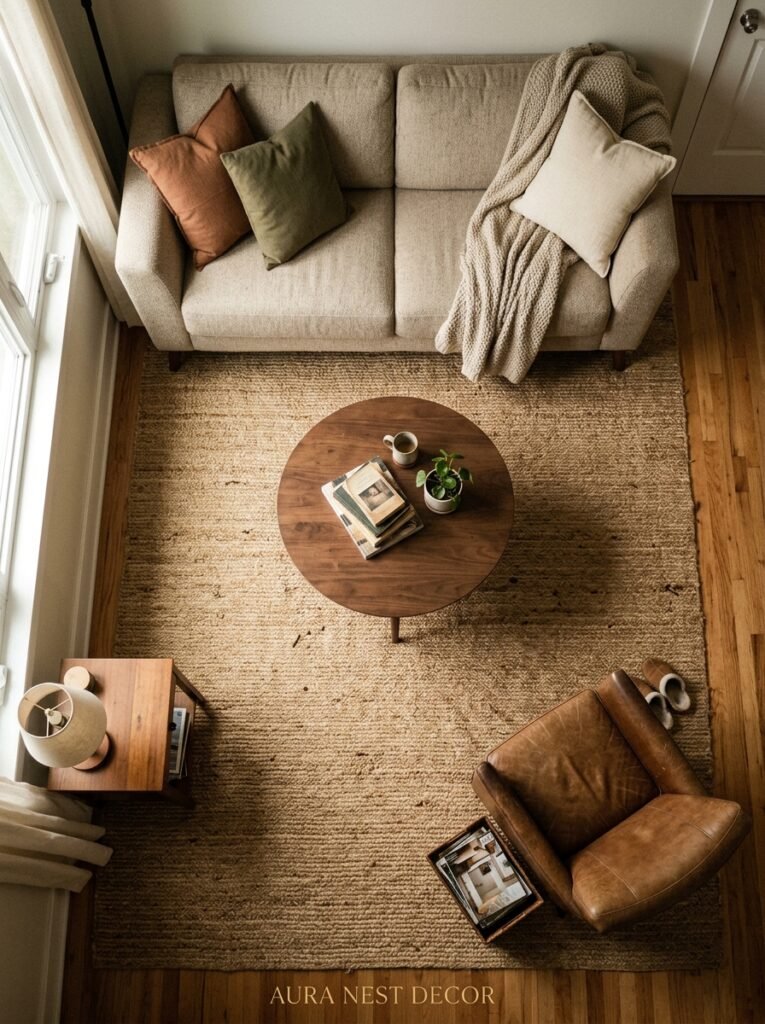
The most common rug mistake in a small living room is going too small.
People measure their coffee table, buy a rug that fits under the coffee table, and then wonder why the room looks unfinished. The rug should anchor the whole seating area. Front legs of the sofa at minimum should sit on it. Ideally all four legs of every seat. It sounds like a lot, but a large rug — even in a small room — makes the space feel defined rather than floating.
A 5×7 rug in a small room looks like a bath mat. A 8×10 rug in a small room looks like a room.
Go bigger. I promise.
—
10. The Small-Room Furniture Combination That Works Almost Every Time
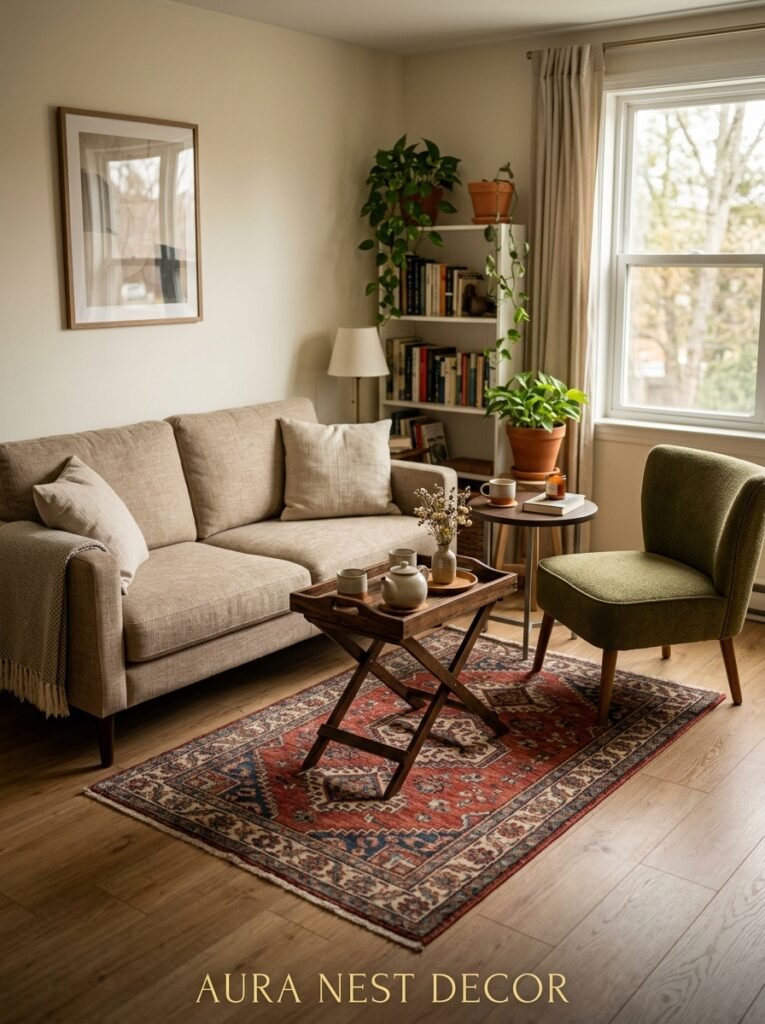
Two-seater sofa or loveseat plus one good accent chair.
That’s it. That’s the formula.
The accent chair doesn’t have to match the sofa. It genuinely shouldn’t, not identically. A textured chair in a complementary color adds visual interest without adding more sofa bulk. You get enough seating without the room being dominated by one big upholstered thing.
The chair also gives you a moveable element — pull it closer for conversation, angle it toward the window for reading, shift it to make space when you need to. A small room benefits enormously from furniture that doesn’t feel bolted down.
“Two-seater plus one chair. You don’t need more than that, and usually the room is better for having less.”
Coffee table: go low and open. Glass tops work well because the eye passes through them. A wooden slatted table works too, anything that doesn’t visually block the floor. Avoid solid, heavy coffee tables that create a visual wall in the middle of your seating area.
—
11. Lighting That Makes a Small Living Room Feel Like a Destination
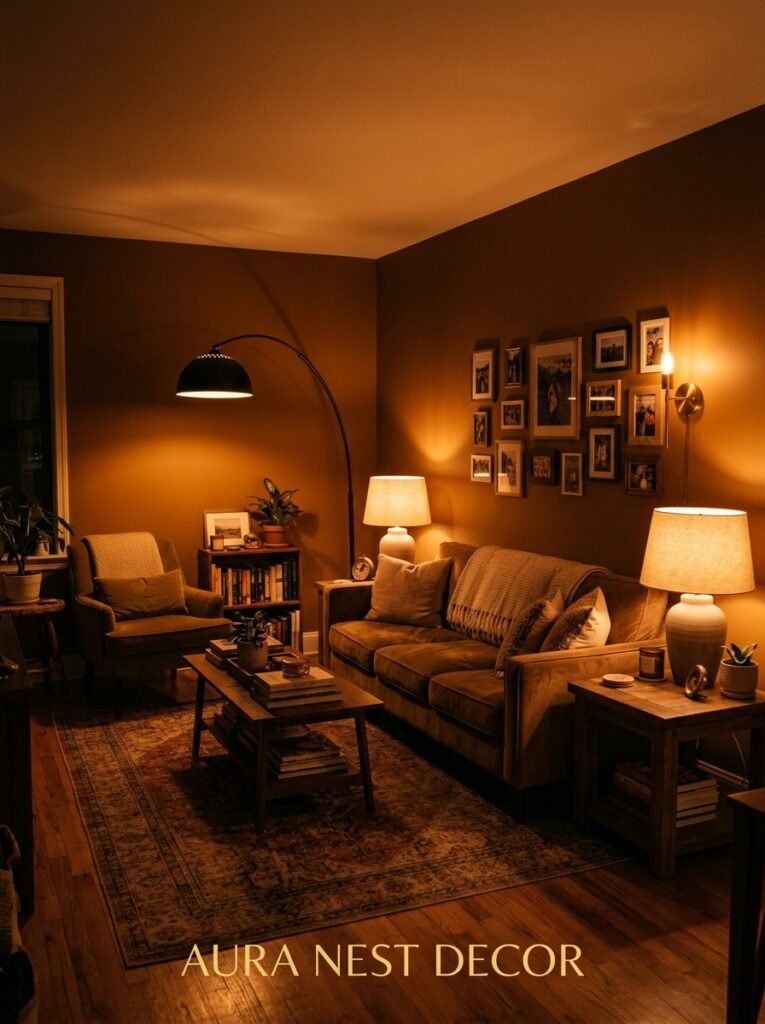
Overhead lighting is the enemy of cozy. There. I said it.
A single ceiling light in a small room creates flat, even illumination with no depth and no warmth. It looks like a bathroom. What you want instead is multiple light sources at different heights — a floor lamp, a table lamp, maybe something on a shelf.
Edison bulbs or warm LED bulbs (look for anything between 2700K and 3000K on the color temperature). Not the daylight bulbs. Those are for kitchens and garages. Warm bulbs make everything look softer, make the walls glow slightly rather than stare back at you.
Dimmer switches, if you can manage it, are life-changing. The difference between 100% and 60% brightness in a small living room in the evening is the difference between functional and actually beautiful. Worth every penny of the electrician’s call-out fee.
—
12. The Final Thing: Stop Saving It for Guests
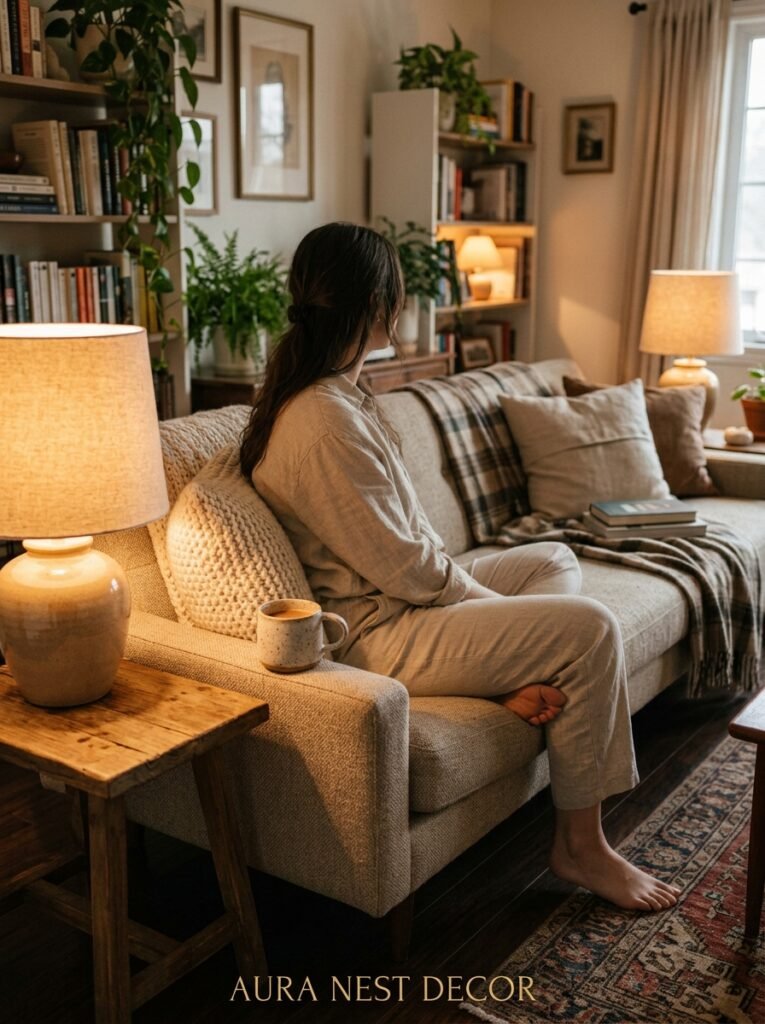
This one’s less about decorating and more about actually living in the space you’ve made.
A lot of people — and I’ve done this too — decorate their small living room to look nice but then don’t really inhabit it. They sit carefully. They don’t put their feet up. They keep the throw folded just so. They’re treating their own home like it’s a show home.
But the coziest small living rooms I’ve ever seen aren’t the ones that look like Pinterest boards. They’re the ones where there’s a half-drunk cup of tea on the side table, a blanket that’s clearly been used, a book with a cracked spine lying open. They look LIVED in. That lived-in quality isn’t an accident — it’s the point.
Let your small living room be small. Let it be yours. Mess it up a bit. It’ll thank you for it.
—
❓ FAQ
Q: What’s the best sofa size for a small living room? A: For most small living rooms, a two-seater or apartment-size sofa (under 70 inches wide) is going to work far better than a standard three-seater. Look for one with legs rather than a solid base — it keeps the room from feeling weighed down. If you’re in a really tight space, a loveseat around 55-60 inches wide can still seat two adults comfortably and leaves actual room to move.
Q: Should small living rooms be light or dark? A: Light generally opens the space up, but warm light specifically — not cool white or grey. That said, deep colors like navy or forest green can work beautifully in a small room if you go all-in with warm lighting to balance it. It creates a moody, intentional feel rather than a cramped one. The mistake is going halfway with a medium-toned color that’s neither bright nor bold — those often make a small room feel its worst.
Q: How do I make a small living room feel cozy without cluttering it? A: Texture is your best tool. You can add enormous warmth through a chunky throw, a woven rug, linen curtains, and a boucle cushion or two without adding any actual clutter to surfaces. It’s the tactile quality of materials that creates coziness, not the number of objects. Keep surfaces relatively clear and let the fabrics and soft furnishings carry the warmth.
—
💭 Final Thoughts
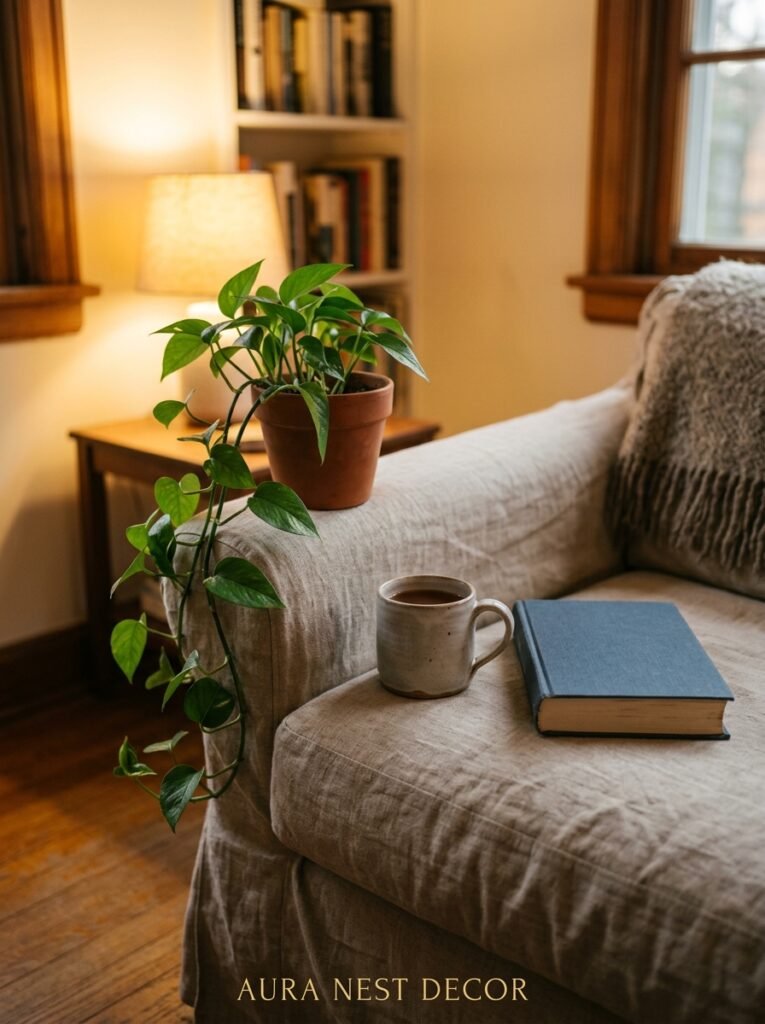
Small living rooms don’t need saving. They just need someone to stop fighting them and start working with what’s actually there. Once you do that — once you let the room be its own thing rather than a smaller version of a bigger room you think you should have — something shifts. It starts to feel like exactly the right size.
What’s the one change you’ve made in a small space that made the biggest difference?