The Victorian Living Room Is Back — And It’s Nothing Like What You’re Picturing
You thought maximalism was a trend. Turns out it’s a whole lifestyle, and Victorian living rooms have been doing it since before Pinterest existed. If you’ve been staring at your beige walls wondering why nothing feels interesting anymore, this might be the sign you needed.
—
1. Why Everyone’s Tired of the Clean-Line Aesthetic (And What They’re Running Toward)
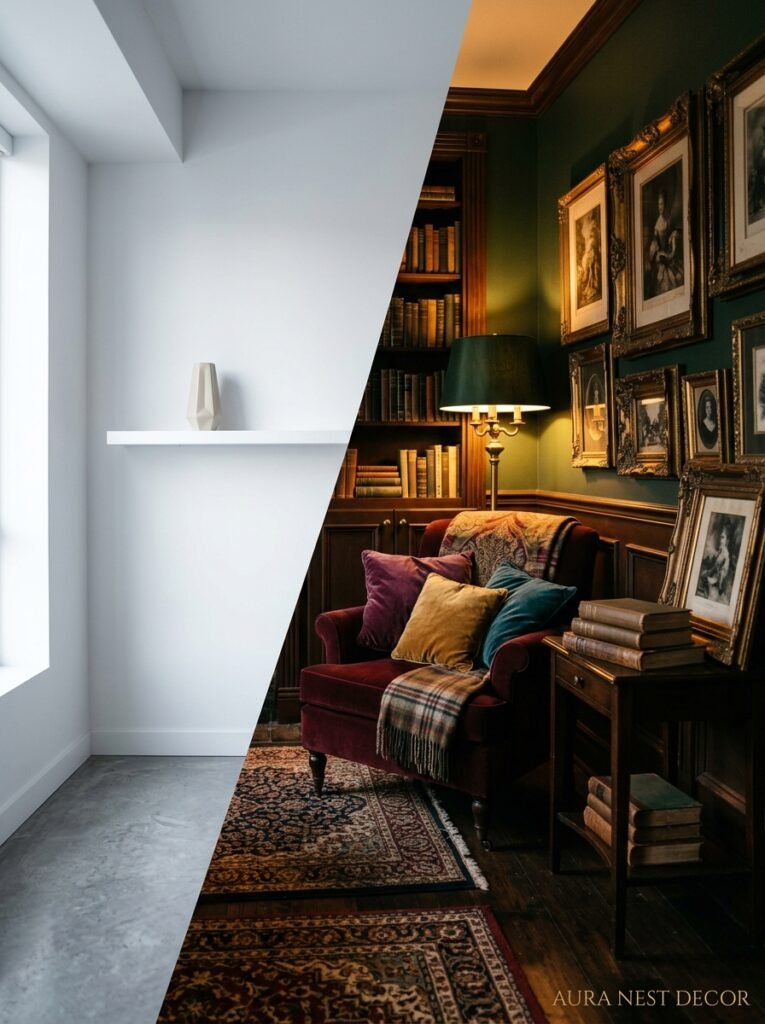
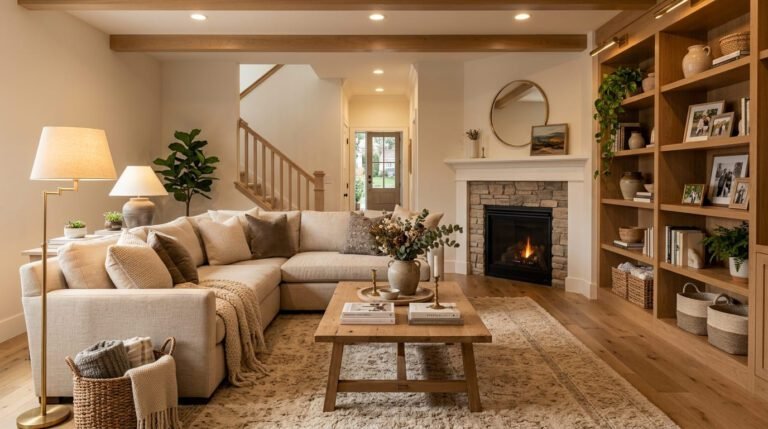
There’s this specific kind of boredom that sets in after a few years of minimalism. You’ve got your neutral sofa, your three decorative objects arranged at exact right angles, your linen throw that costs more than it should. And somehow it still feels… empty? Like a hotel room that’s been styled for a brochure.
That’s exactly why Victorian interiors are surging right now. Not in a dusty, cobwebby way. In a deeply intentional, rich-layered, finally something to look at kind of way. People are realizing that a room can hold personality, history, and warmth all at once — and that more isn’t automatically messy.
The Victorians genuinely believed a room should tell a story. Every object earned its place because it meant something. A mantelpiece wasn’t just a shelf above a fireplace — it was a gallery. A side table wasn’t storage — it was an invitation to notice. And honestly? That philosophy hits different when you’ve been staring at a minimalist living room for three years straight.
This isn’t about copying a period room in a museum. It’s about borrowing the feeling — that sense that someone LIVES here, fully and unapologetically.
“A Victorian room doesn’t ask you to declutter your personality to fit in.”
—
2. The Wall Color That Changes Everything (And It’s Not What the Algorithm Is Telling You)

Okay, so dark walls. I know. Everyone’s a little scared of them.
But here’s what I didn’t understand until I actually did it: dark walls don’t make a room feel smaller. They make it feel CONTAINED. There’s a difference. Contained means cozy, enveloping, like the room is doing you a favor by existing.
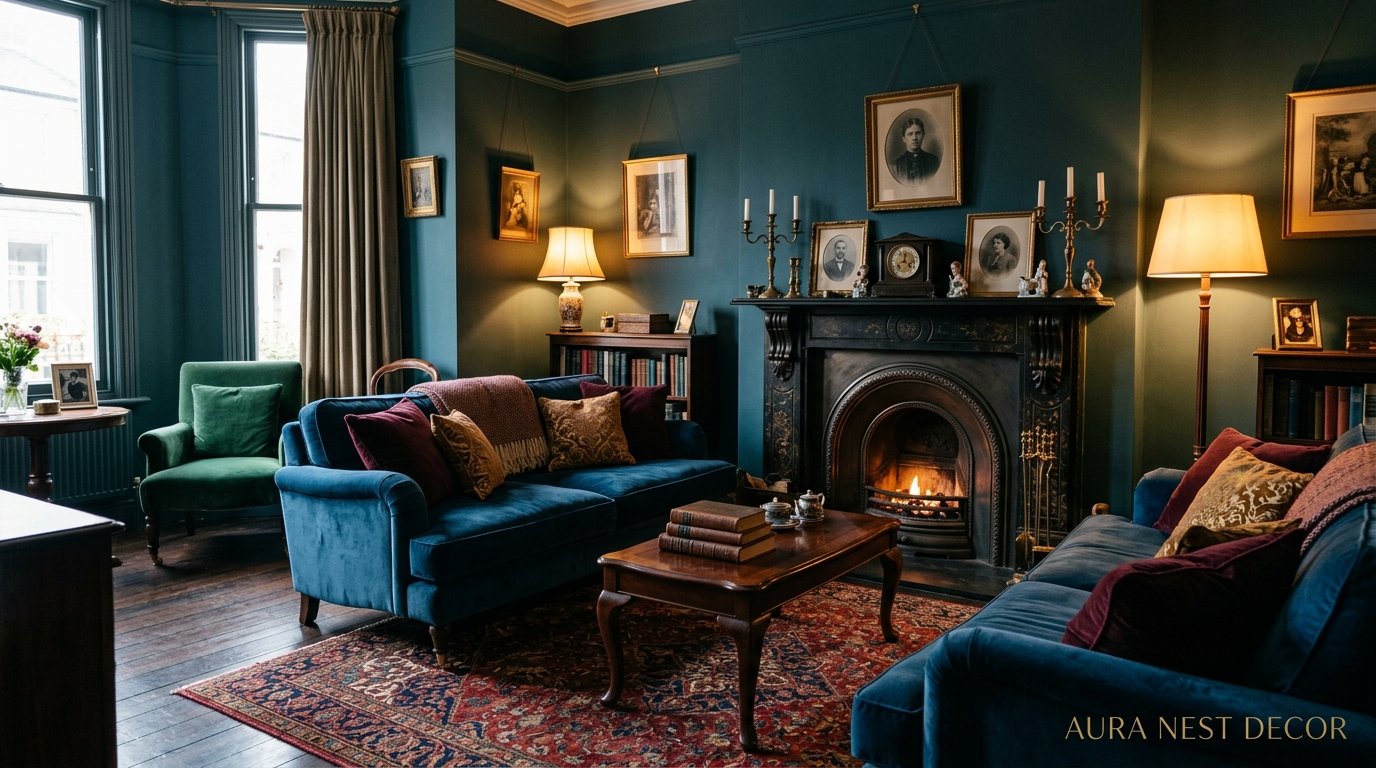
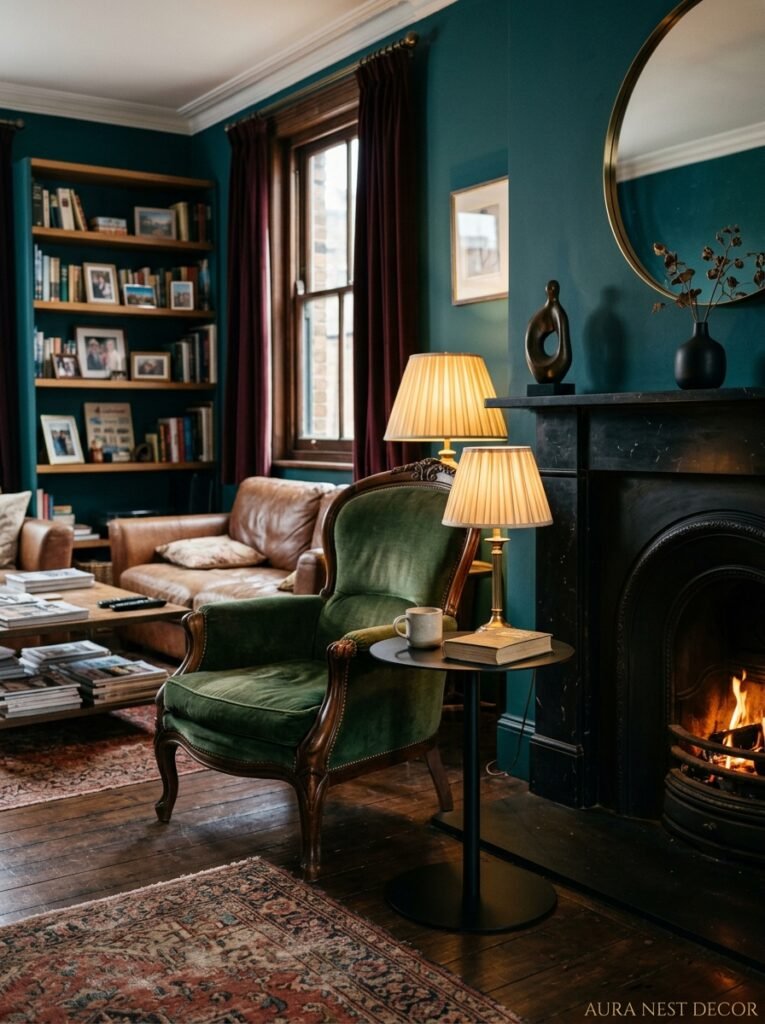
Deep forest green. Inky navy. Oxblood red. Plum so dark it’s almost black. These are the shades that show up again and again in Victorian-inspired rooms that stop you mid-scroll. And the reason they work so well is that they create depth — actual visual depth — that lighter colors simply can’t replicate.
Paint the ceiling too, by the way. I cannot stress this enough. Leaving it white with dark walls is like wearing a tuxedo jacket with sweatpants. The effect gets cut in half. Carry that color up or go with a warm cream that harmonizes rather than contracts. The Victorians painted their ceilings. They knew what they were doing.
One more thing — don’t use satin finish. Eggshell or flat matte all the way. Glossy walls make everything feel cheap and cold, which is basically the opposite of what you’re going for.
—
3. The Fireplace Isn’t Optional — It’s the Whole Point
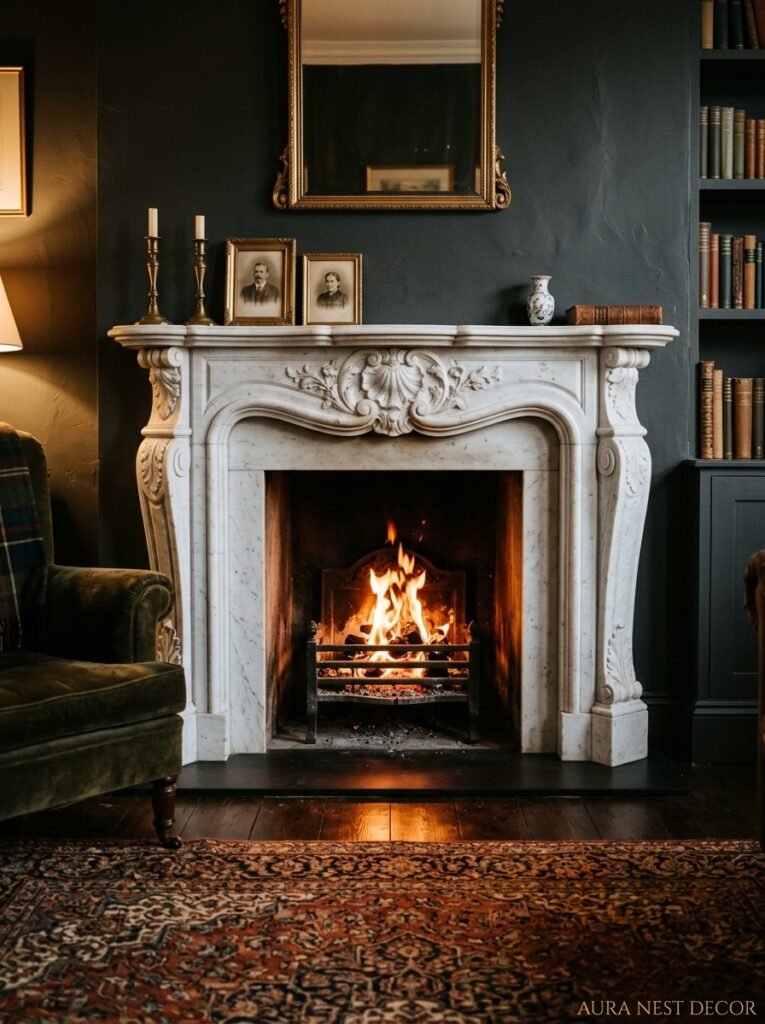
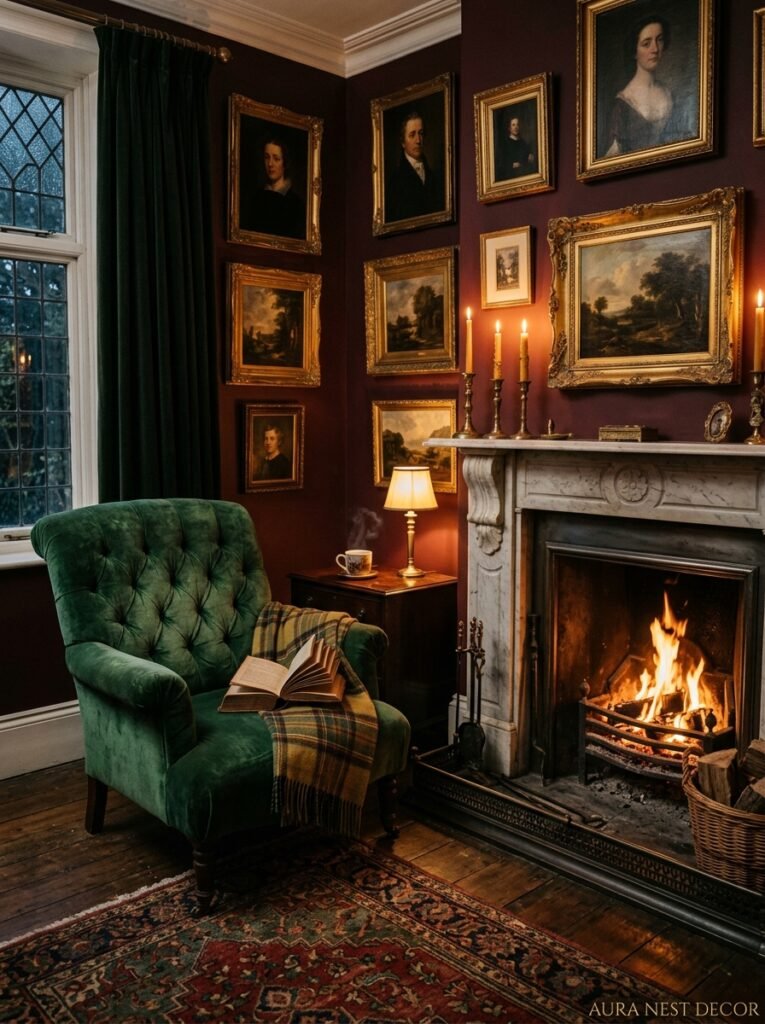
In a Victorian living room, the fireplace is the gravitational center of the room. Everything arranges itself around it. Full stop.
If you have a working fireplace: lucky you. Please use it. Regularly. The Victorians would be appalled at anyone having a working fireplace and choosing a television as the focal point instead. Side note — I’m not saying get rid of the TV. I’m saying don’t let it win.
If you have a non-working fireplace or a decorative one, that’s fine — actually maybe better, because now you can style the firebox however you want. Stack it with candles. Different heights, different widths, white or ivory pillar candles that drip just slightly because the Victorians loved a little drama. Or fill it with a huge arrangement of dried grasses and branches, which looks incredible against a dark painted interior.
The mantelpiece is where you get to go all in. Layered frames — different sizes, mismatched frames in golds and dark wood tones. A clock, because the Victorians were obsessed with clocks. A plant or two, trailing slightly. And something unexpected — a piece of taxidermy (if that’s your thing, no judgment), a ceramic hand holding jewelry, a small oil painting you found at an estate sale. The rule is: there’s no rule about symmetry, but there IS a rule about intentionality.
—
4. Velvet Doesn’t Bite — And It’s the Fastest Way to Feel Victorian
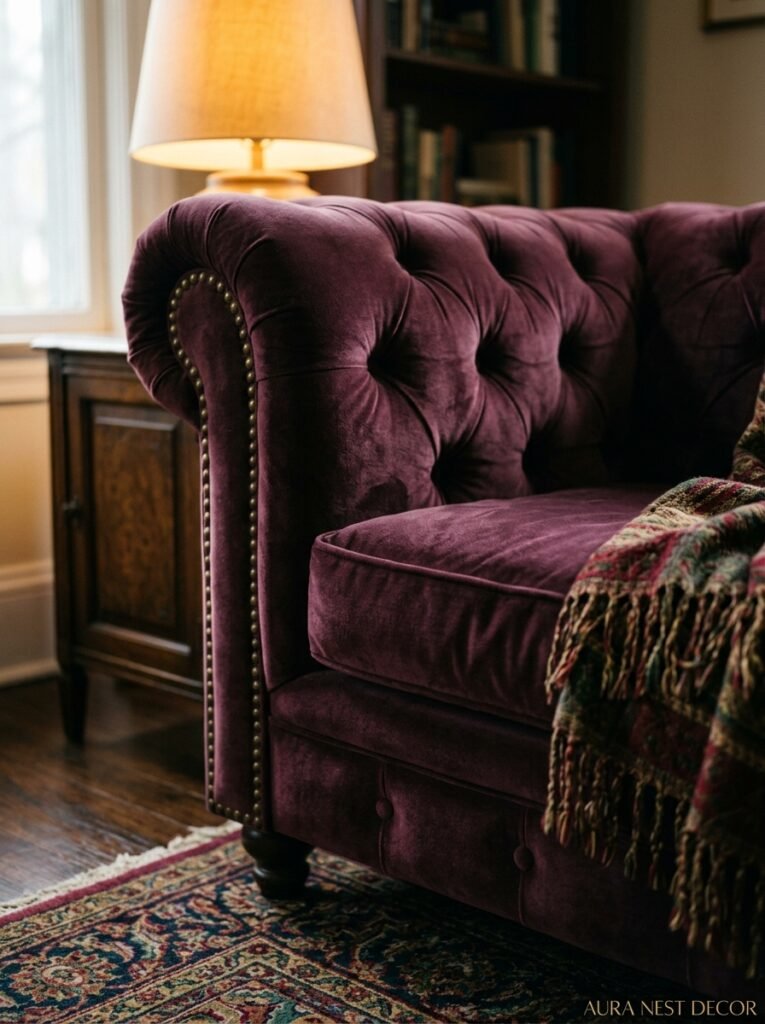
The sofa. Let’s talk about the sofa, because it might be the single most important purchase in this whole endeavor.
You want curves. Not harsh, mid-century angles — curves. A camelback sofa with a slightly tufted back, or a chesterfield in deep emerald or burgundy velvet, or honestly even a simple roll-arm sofa in a jewel-tone fabric works beautifully. The silhouette matters almost as much as the color.
Velvet gets a bad reputation for being high-maintenance, which I sort of understand but also kind of don’t. Modern performance velvet is genuinely easy. It brushes back to its original pile when you’ve sat on it, it doesn’t trap pet hair as badly as you’d think, and it develops this lovely worn quality over time rather than just looking deteriorated like, say, a white linen sofa does.
Dark jewel tones obviously read most Victorian — that deep teal, hunter green, wine, midnight blue. But don’t sleep on warm amber, either. A cognac velvet sofa against dark green walls is one of the most genuinely beautiful combinations I’ve ever seen in person. The light bounces off it differently at different times of day and it looks like something out of a 19th-century novel. In the best possible way.
“Velvet doesn’t photograph well in flat light — which means it only looks better in person, which is honestly the whole goal.”
—
5. The Lighting Rule No One Talks About (But Every Beautiful Victorian Room Follows)
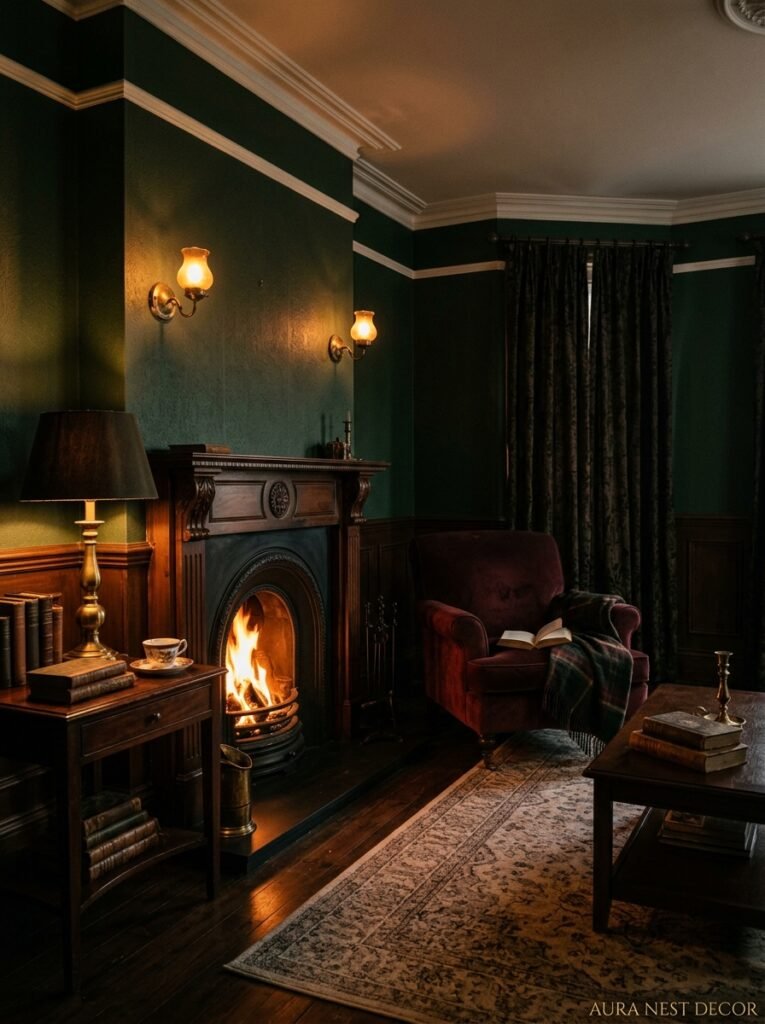
There’s essentially one rule with Victorian lighting: get light sources DOWN LOW. Not just overhead.
The Victorians worked with candlelight and gaslight, which meant illumination came from table height, floor height, mantelpiece height. The effect is warm, intimate, and deeply flattering to both the room and the people in it. Overhead lighting was secondary. Most of us do it completely backwards.
So — table lamps with fabric shades in amber or warm cream. Floor lamps with antique brass bases. Sconces flanking the fireplace. Candles on every available surface (real ones, or very good rechargeable flame-effect ones if you’ve got cats or kids or general chaos in your life). Even a small lit candelabra on a side table is going to do more for the Victorian atmosphere than any overhead fixture.
And if you can install a dimmer on your overhead light and turn it way down in the evenings? Do it. Immediately. The difference between overhead lighting at full blast and a dimmed overhead plus three table lamps is genuinely shocking. It’s the amber glow of an Edison bulb at 7pm versus fluorescent hospital hallway. Same room, completely different feeling.
—
6. Pattern Mixing Is the Skill, Not the Risk
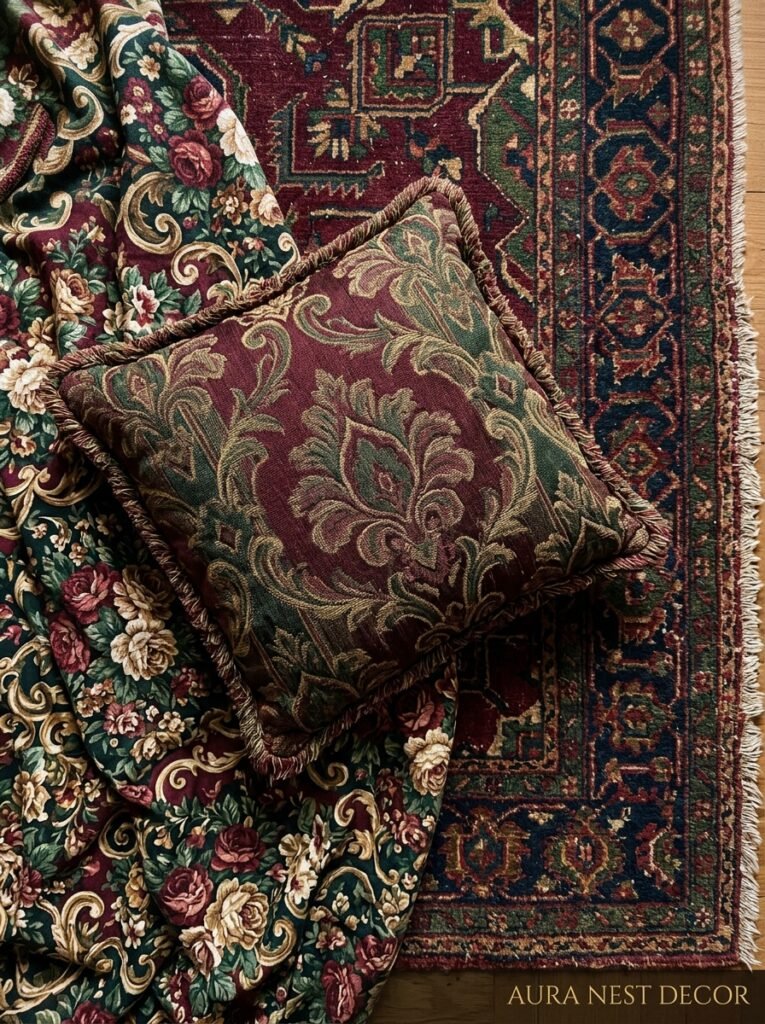
This is where people get scared. And I get it — pattern mixing can absolutely go wrong. But in a Victorian living room, the ABSENCE of pattern is what goes wrong.
The Victorians were fearless about this. Floral wallpaper against a patterned rug against striped accent pillows? Yes, actually. It worked because they understood visual weight and scale. A large-scale floral pattern pairs with a smaller geometric. A busy rug gets balanced by more solid furniture upholstery. The patterns relate to each other through a shared color palette even when the motifs are completely different.
Start with the rug if you’re nervous. A large, rich patterned rug — Persian, Turkish, or a good quality reproduction — anchors the whole room and gives you a color palette to work with. Pull accent colors from it for pillows, lampshades, even the fringe on a throw. Everything starts to feel curated rather than chaotic.
And wallpaper. If you can do wallpaper, do wallpaper. Even one wall. Even a half-wall with picture rail molding above. William Morris designs are the obvious choice and they’re obvious because they’re genuinely stunning, but there are so many Victorian-adjacent patterns available now — botanical, peacock feather, geometric tile — that there’s something for every budget and every level of commitment.
—
7. What a Victorian Gallery Wall Actually Looks Like (Vs. What Instagram Thinks It Does)
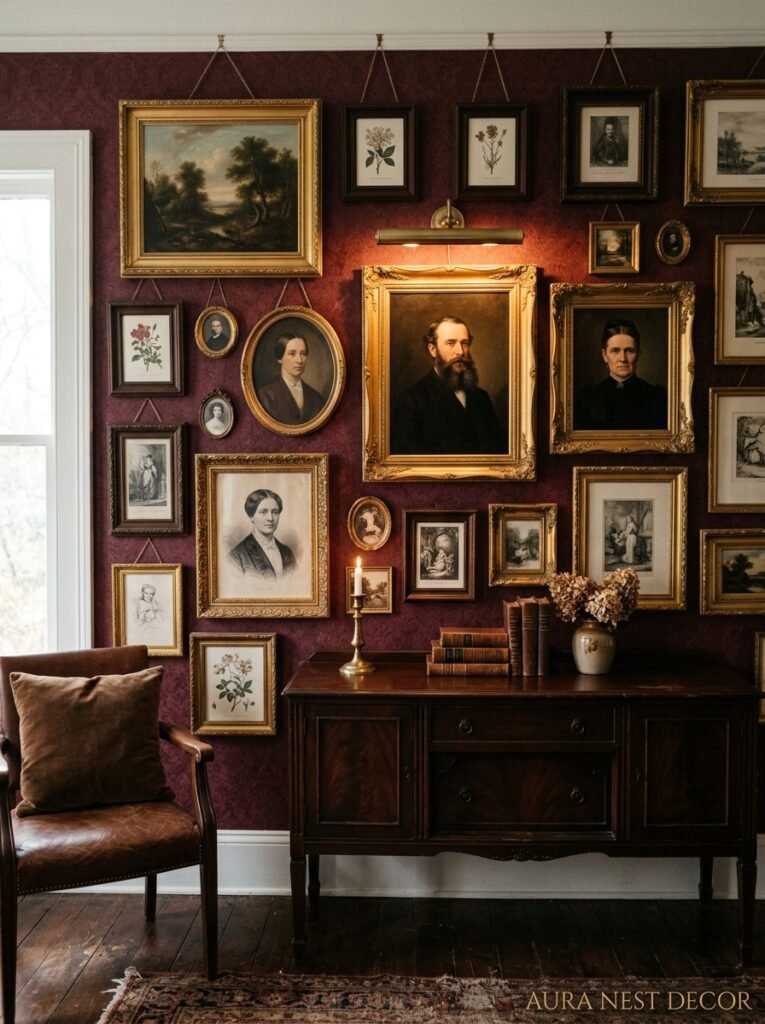
Gallery walls on Instagram tend to be very tidy. Matching frames, same color, perfectly measured spacing, usually a mix of prints that are all the same vibe.
Victorian gallery arrangements were the opposite of this. And it’s the opposite that works.
Gold frames next to dark wood frames next to painted frames. Oil paintings — or prints that look like oil paintings — mixed with mirrors, with botanical prints, with small silhouettes, with watercolors. Different shapes. Ovals and rectangles and squares. Hanging close together, closer than feels comfortable at first.
The key difference is that Victorian arrangements were hung relatively HIGH on the wall, often almost to the ceiling, because ceilings were tall. In a standard modern room with 8 or 9 foot ceilings, you’re going to adjust for that — but still, start higher than you think and fill the space more densely than feels right. It should feel like a collection, not a curated retail display.
Mirrors especially. A large, ornate gilt mirror above the fireplace is such a classic Victorian move because it multiplies the light from all those candles and lamps. It makes the room feel deeper. It adds age and grandeur without any structural changes. It’s doing a lot of work.
“Fill the walls the way the Victorians filled their rooms — like someone who actually lives there and has found beautiful things over time.”
—
8. The Small Details That Signal “Intentional Victorian” vs. “Dusty Antique Shop”
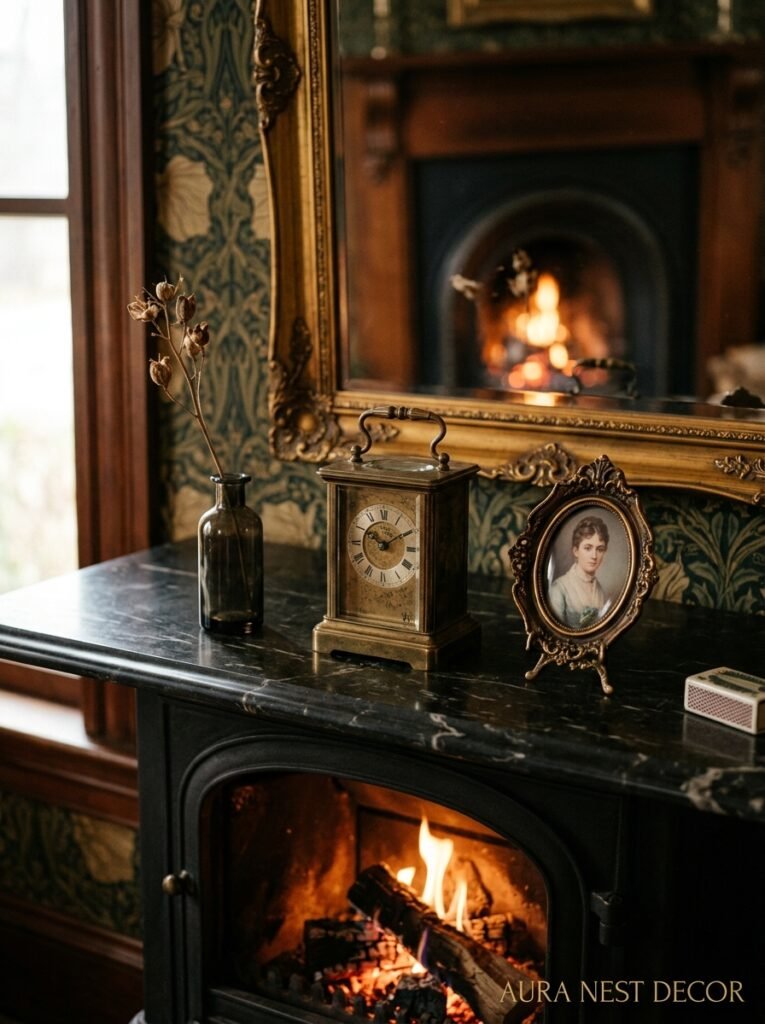
Because there IS a difference, and it’s worth being clear about.
The line between an intentional Victorian room and a jumbled collection of old stuff is mostly about editing. Everything on display should be at least somewhat chosen — not just accumulated. Think about it as: would someone look at this and think “they found that” or “they own that”? Both can be true, but the second feeling is what you’re going for.
Tactile richness matters enormously. Books — real ones, stacked, spilling slightly, NOT color-coordinated with the spines facing backward because that is a crime against books and against reading. Brass hardware everywhere you can manage it. A wooden box or two. A glass cloche with something interesting inside (a dried flower arrangement, a taxidermy piece, a stack of antique coins). Leather.
Plants are non-negotiable. The Victorians were obsessed with exotic plants and botanical curiosities. Ferns work brilliantly. So do fiddle-leaf figs, trailing pothos, dark-leafed begonias. Put them in interesting pots — not white plastic nursery containers, please — terracotta, hand-painted ceramics, wicker baskets that have slightly seen better days. Living things make the whole room breathe differently.
—
9. How to Do This in a Small UK Terrace or a Cramped US Apartment Without It Looking Sad
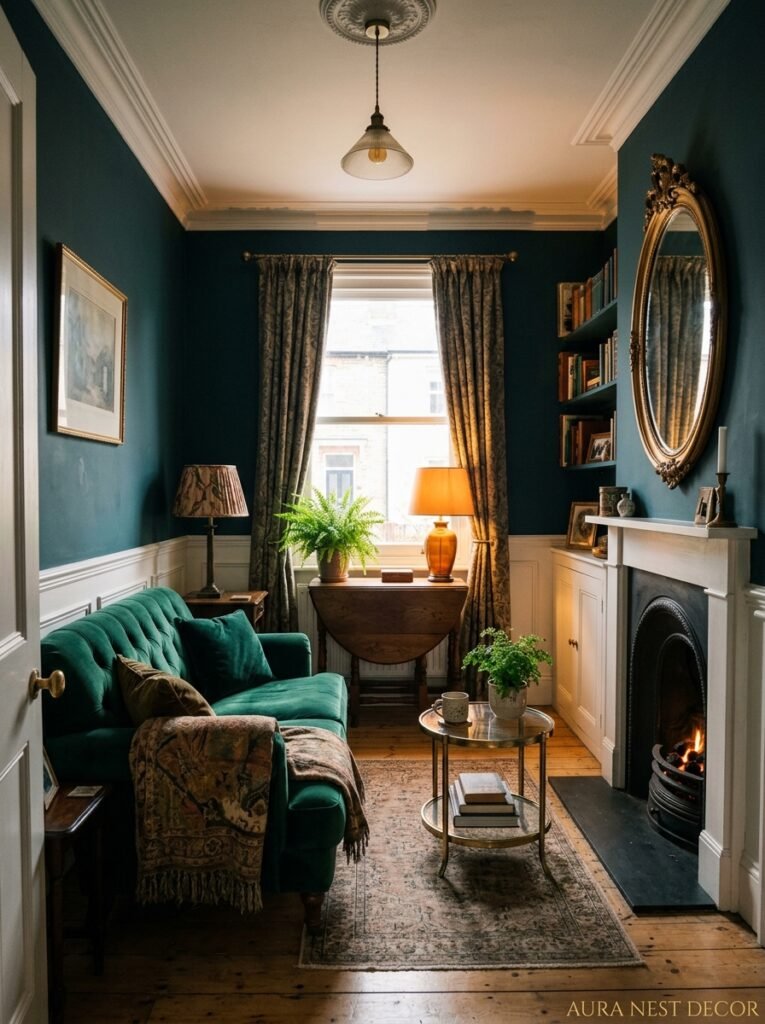
Small spaces are actually GOOD for Victorian style, which surprises people.
Here’s why: Victorian terraced houses — and I’m thinking of the thousands of them in London, Manchester, Edinburgh, Bristol — were not palatial. They were working homes with small-ish rooms and moderate ceiling heights. The maximalist approach worked because it drew the eye inward, into the layers and the details, rather than around the perimeter of the space. A small room done in Victorian style feels intimate. Done in minimalist style, the same small room can feel sparse or unfinished.
In a small room: go dark on the walls even more confidently. One large rug that nearly reaches the walls — it makes the floor feel intentional. A large mirror to add depth. Vertical elements: tall bookshelves, curtains hung HIGH above the window frame and dropping all the way to the floor. That vertical line fools the eye every time.
Resist the urge to use tiny furniture in a tiny room, by the way. One generous sofa reads better than two little armchairs that look lost. Scale it right and the room feels considered.
—
10. The Curtain Situation (And Why Yours Might Be Killing the Room’s Potential)
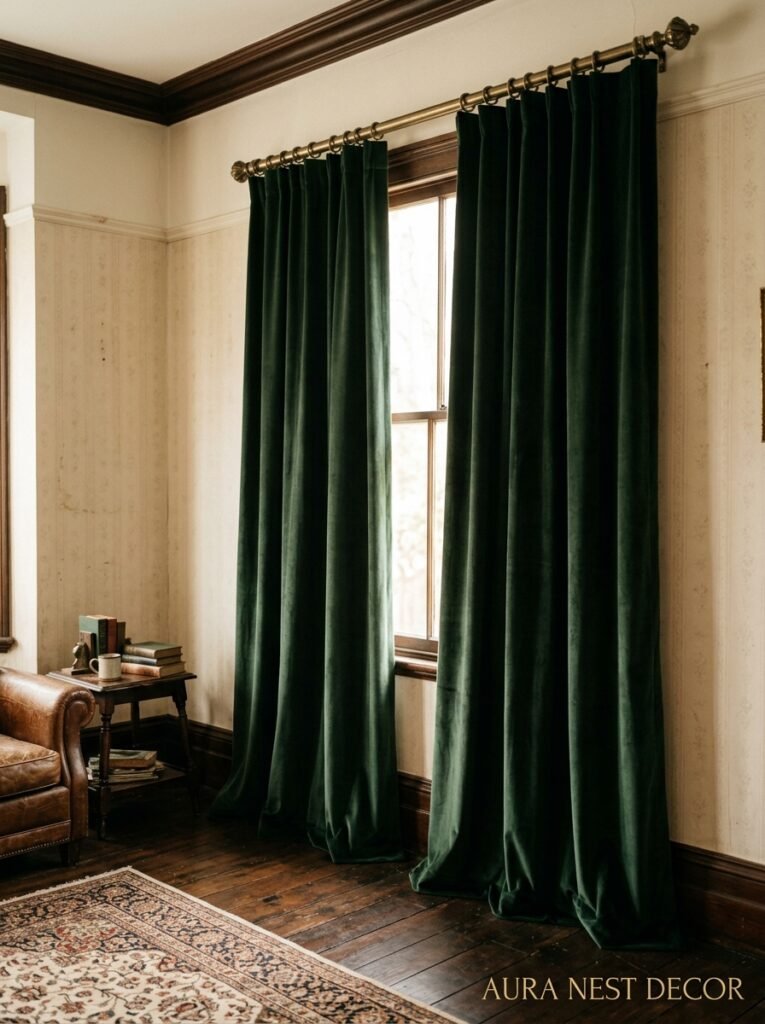
Curtains in a Victorian room should be extravagant. Not necessarily expensive — but extravagant in volume and length.
You want fabric that pools slightly on the floor. Not two inches — an actual generous pool. This reads as luxurious and intentional and slightly dramatic, which is exactly the vibe. The Victorians would never have had curtains that just barely reached the floor. That would have seemed mean, somehow.
Heavy fabrics: velvet (obviously), brocade, heavy linen in a deep color, or even a light-blocking fabric that’s been chosen for its drape rather than its function. Patterns work beautifully here — a large-scale damask or botanical print. Solid jewel tones work just as well.
And hang them WIDE. Well beyond the window frame on either side, so that when they’re open, the maximum amount of window is actually visible. This makes windows look enormous, rooms feel brighter during the day, and the fabric look wonderfully abundant when closed in the evening.
Tie-backs are very Victorian and worth considering. A simple tassel, a brass hook, a twisted cord. Again — detail. The Victorians loved detail.
—
11. Where to Actually Find Victorian-Inspired Pieces Without Spending a Fortune
Estate sales. That’s it. Go to estate sales.
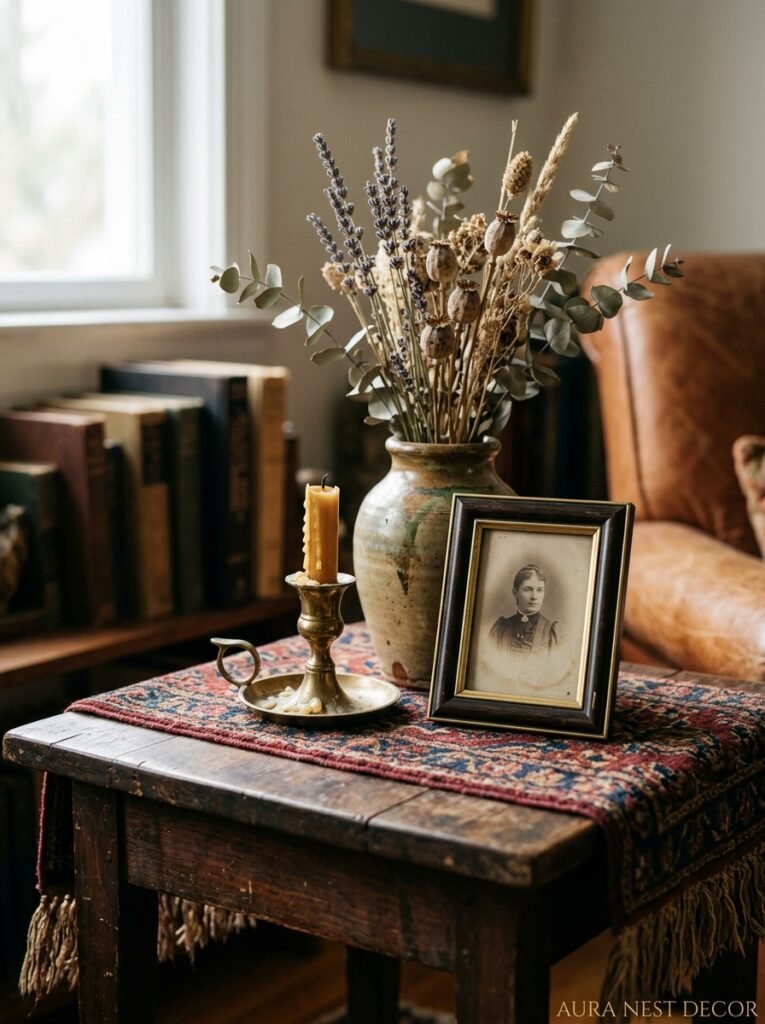
Okay but actually, here’s a more complete answer: UK charity shops (Oxfam especially in bigger towns) regularly turn up gilt mirrors, heavy frames, velvet pieces, interesting ceramics — for almost nothing. US thrift stores are similar though you might have to look harder. Facebook Marketplace and Craigslist for furniture. eBay for hardware, frames, small decorative pieces.
For new pieces that feel Victorian: Graham & Brown has some genuinely excellent wallpaper options. Anthropologie regularly does Victorian-adjacent textiles and decorative items. IKEA’s darker picture frames in their RIBBA line work surprisingly well for gallery walls when mixed with thrifted ornate frames.
The most important thing is that this style REWARDS found objects. That cracked ceramic pitcher you found at a car boot sale? Perfect. The slightly worn velvet footstool from your grandmother’s house? Absolutely keep it. Age is an asset here, not a problem to solve.
—
12. The Modern Edit That Stops a Victorian Room From Feeling Like a Set Design
Because there’s one thing that separates a lived-in Victorian room from a theatrical reproduction, and it’s this: a modern element or two, held on purpose.
A sleek table lamp with a Victorian-style shade but a clean-lined base. Contemporary art mixed in with the vintage frames on your gallery wall. A very modern sofa in an otherwise layered room (this can look incredible — the contrast is the point). Your current tech: phone chargers, laptops, whatever — just keep them tidy and corralled rather than sprawling.
The goal is a room that feels like it belongs to someone living now who also happens to love beautiful old things. Not a period recreation. Not a museum room with a velvet rope across the doorway. An actual home where someone makes coffee and reads and has people over and feels genuinely, completely themselves.
That’s what the Victorians were doing, really. Making a home. They just happened to do it with incredible style.
—
❓ FAQ
Q: Is Victorian decorating too dark and gloomy for everyday living? A: Not if you get the lighting right. The darkness on the walls actually makes warm artificial light look MORE beautiful — those table lamps and candles glow amber against deep green or navy in a way they simply can’t against white. It’s cozy, not depressing. The key is having enough light sources at low-to-mid height.
Q: Can I mix Victorian style with furniture I already own? A: Genuinely yes, and you probably should. Start with the walls (paint or wallpaper), add a patterned rug, and layer in Victorian accessories gradually. A modern sofa can work beautifully if you add the right throw pillows and place it in a room with Victorian bones. It doesn’t have to be all or nothing.
Q: Where’s the best place to start if I’m on a tight budget? A: Paint. Seriously — a pot of deep forest green paint costs around $30-40 in the US or £25-35 in the UK and it will change the entire feeling of the room instantly. Add thrifted frames for a gallery wall, some candles, and a large patterned rug (even a flat-weave reproduction is fine to start) and you’re already there.
—
💭 Final Thoughts
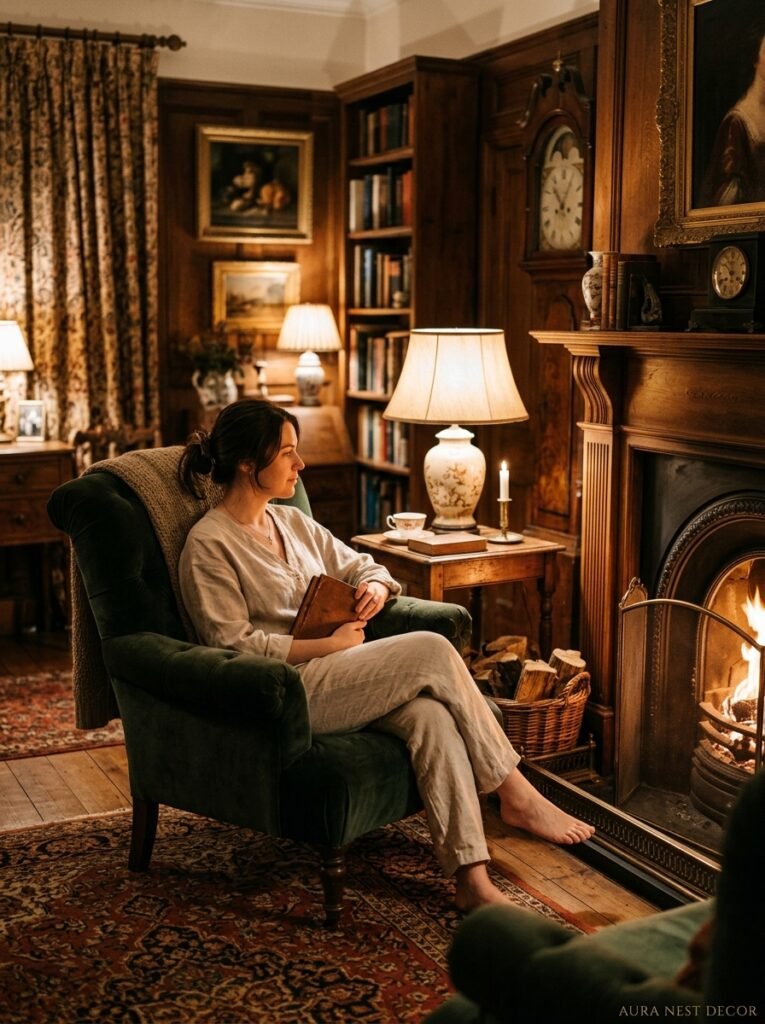
There’s something genuinely freeing about a decorating style that says MORE, not less. That says your objects and your interests and your collections can all share a room and it’ll be better for it. Victorian interiors at their best feel like a room that’s been loved into existence over years — and even if you build yours in six months with thrifted finds and a couple of tins of dark paint, it can feel exactly that way.
So: what’s the one room in your house that’s been feeling too empty, too safe, too finished-but-wrong?