
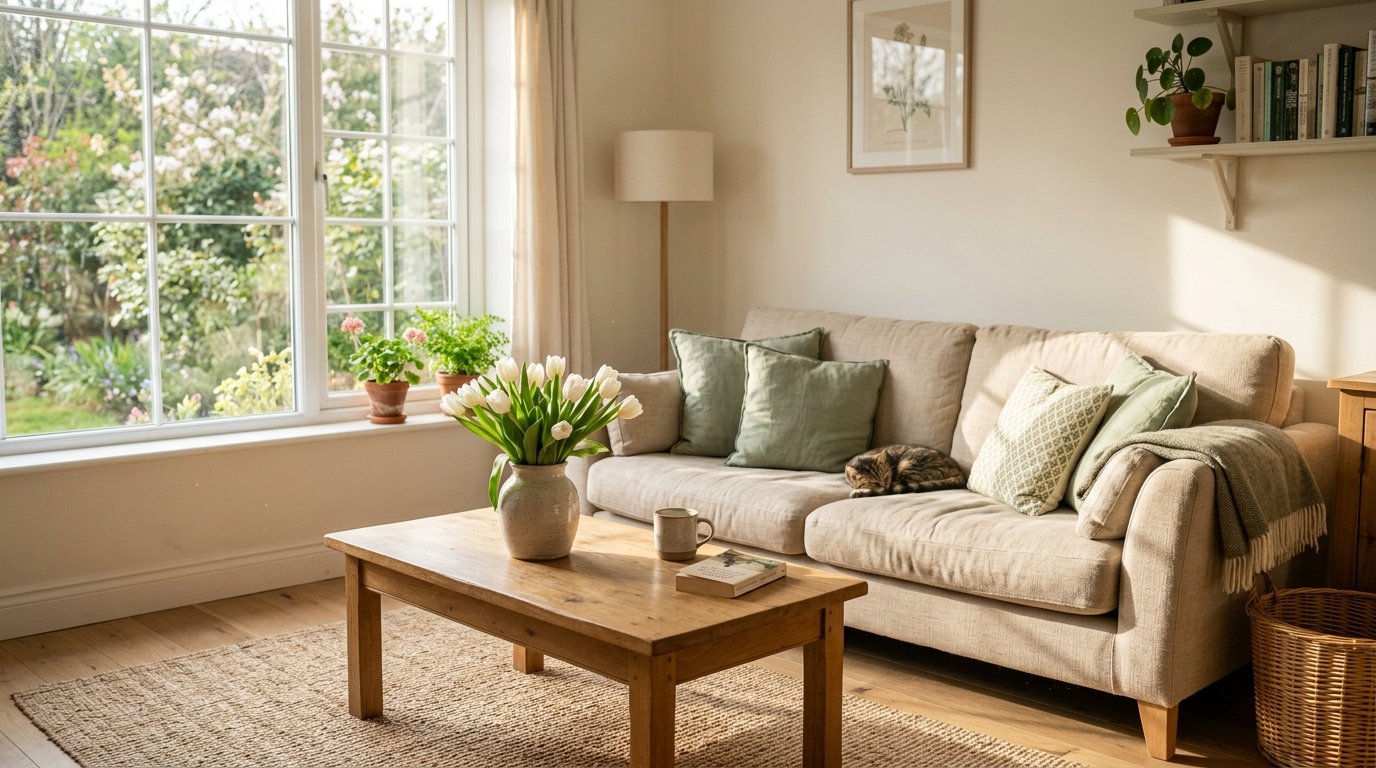
Why Your Living Room Still Feels Like February (And How to Actually Fix That This Spring)
My friend called me last week and said, “I just cleaned my whole house but it still feels so depressing in here.” And I knew EXACTLY what she meant.
—
1. The Real Reason Spring Decor Advice Never Works for You
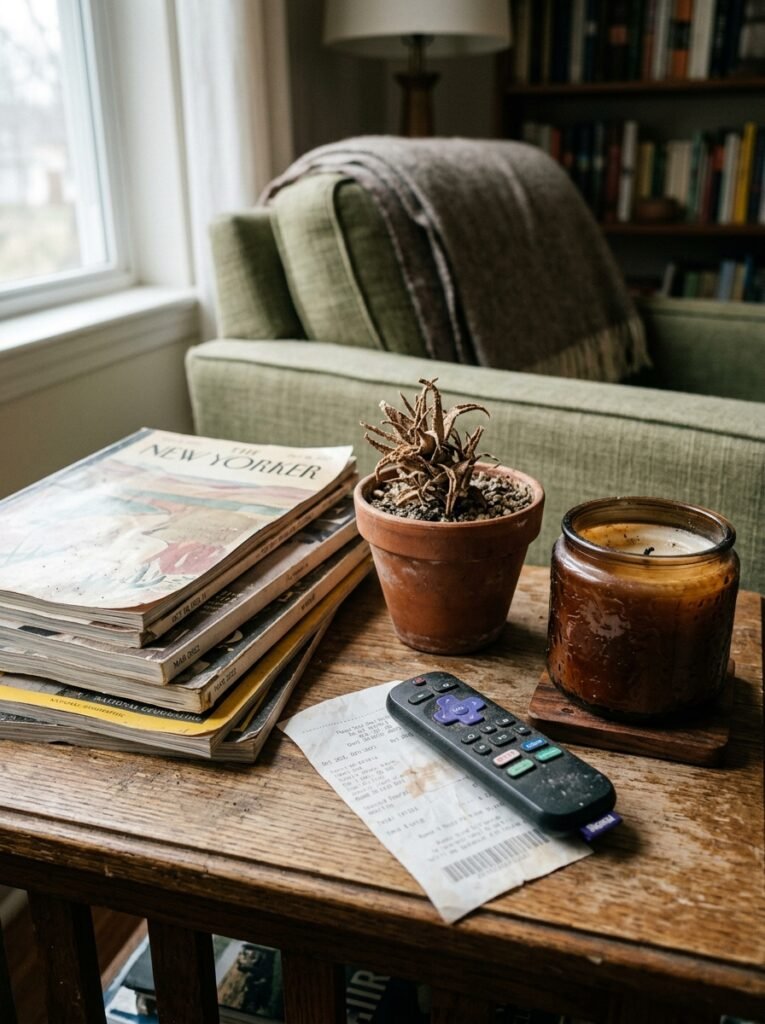
Most of it’s too vague. “Add some florals!” Cool, thanks. “Bring in lighter colors!” Incredibly helpful advice that tells you absolutely nothing about where to start or what to actually change.
Here’s what I’ve figured out after way too many failed seasonal refreshes: spring doesn’t happen in your living room because you added a throw pillow. It happens because you changed the feeling in the room. The weight of it. The light. The way it smells faintly like something other than central heating.
So that’s what we’re actually talking about today. Not a shopping list. A proper rethink — and most of it costs very little.
“Spring doesn’t happen in your living room because you added a throw pillow. It changes when you shift the entire feeling of the room.”
—
2. The First Thing to Do Isn’t Buy Anything — It’s Take Things Away
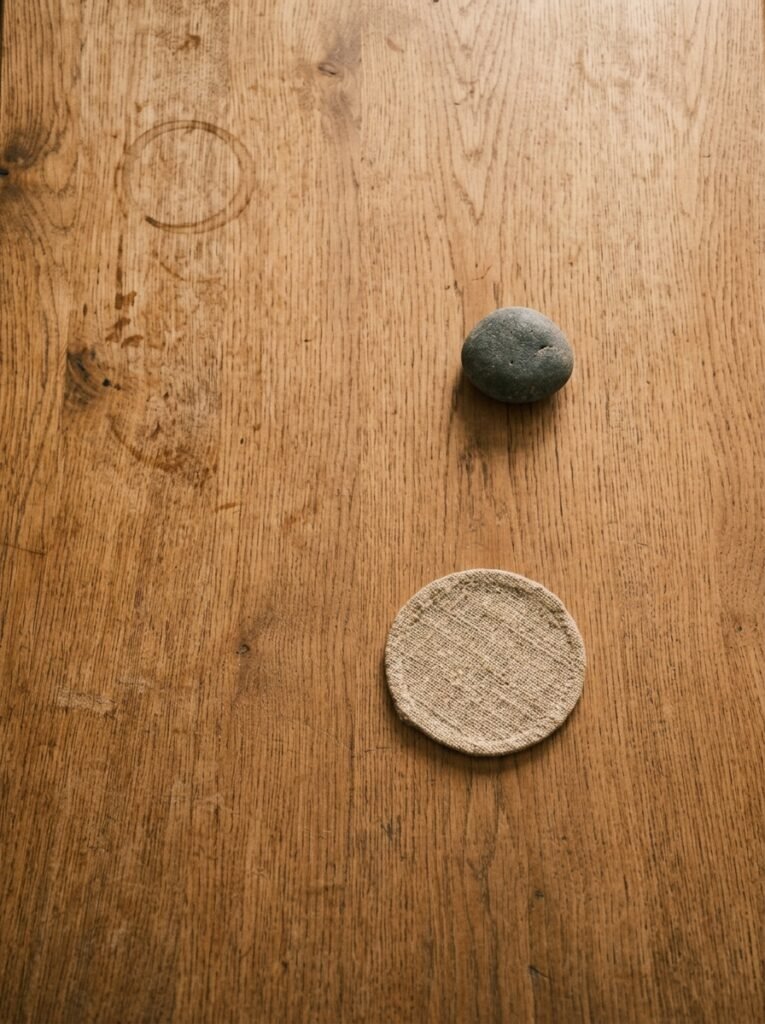
Seriously. Before you even THINK about adding something new, do a sweep.
Those chunky knit blankets? Into a basket in the bedroom. The dark throw pillows that looked so good in November? Off the sofa. The heavy curtains — honestly, can they come down entirely until October? If you’ve got lighter linen panels or sheers stashed somewhere, now is their moment.
Removing the winter weight from a room is the single fastest thing you can do, and it’s free. I know it sounds obvious. But I spent three springs piling new things ON TOP of winter things and then wondering why nothing looked right. It’s because you can’t layer spring over winter, you have to replace it.
Pull the room back first. Then see what you’re actually working with.
—
3. The Color That Keeps Showing Up in Every Beautiful Spring Living Room Right Now
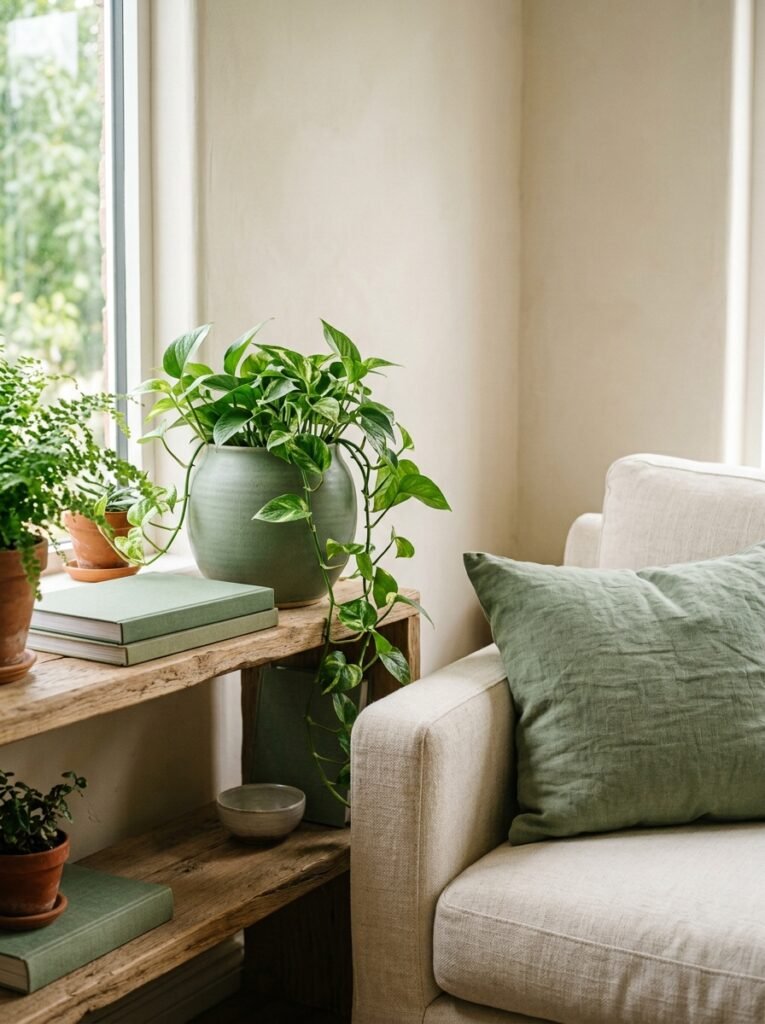
Warm sage. Not minty, not khaki, not the weird grey-green that was everywhere in 2019. Warm, dusty, slightly yellow-toned sage green.
It works because it’s not trying too hard. It doesn’t scream “spring” in a way that feels like a seasonal display at a garden center. It just sits there looking calm and a little bit earthy, and it makes everything around it look better — warm wood tones, cream linen, terracotta, even pale blues.
Where to bring it in without repainting: cushion covers, a single throw, a ceramic vase, a lampshade you swap out seasonally. You don’t need a lot of it. One or two pieces will do more than you think.
If sage feels too safe, dusty lilac is having a genuine moment. Not purple, not lavender — dusty lilac, the kind that looks almost grey in certain lights. Try it once and see how you feel.
—
4. What to Do with Your Sofa When You Can’t Afford a New One
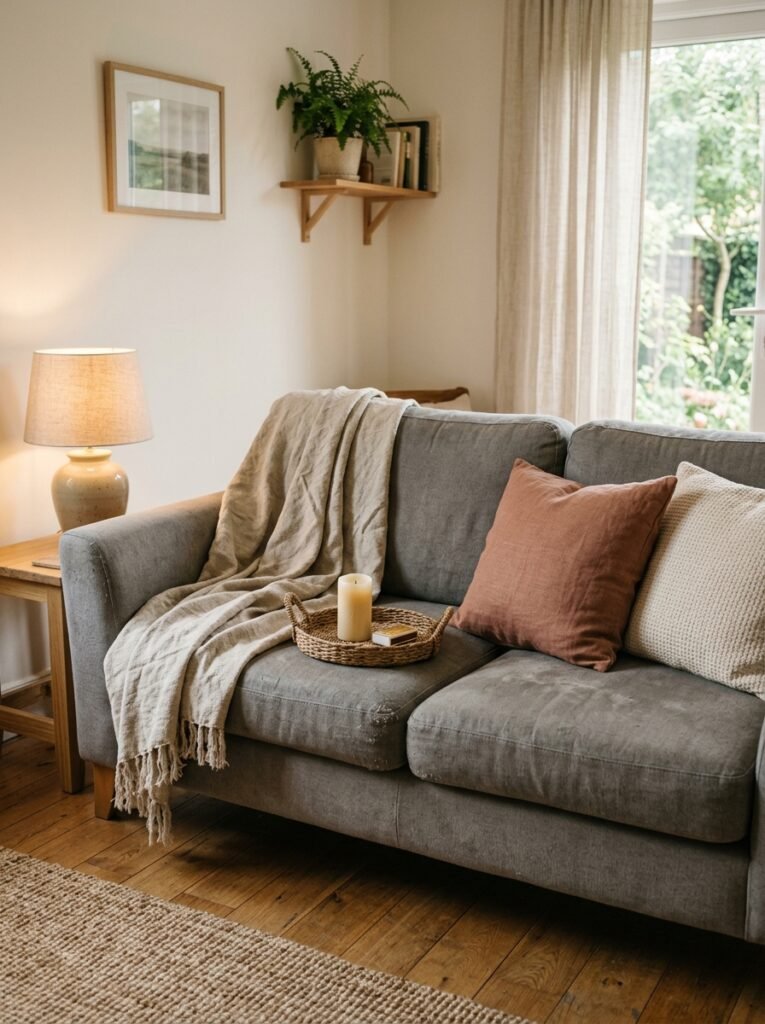
Which is most of us, most of the time. So.
Slipcovers have gotten genuinely good in the last few years. A well-fitted linen or cotton slipcover in oat, warm white, or soft sage can make a dark sofa look like a completely different piece of furniture. The trick is buying one that’s slightly oversized and then tucking it in — it looks more intentional that way, sort of artfully undone rather than covered-up.
If slipcovers aren’t your thing, try this instead: clear off EVERYTHING from around the sofa. Move it slightly away from the wall — even six inches changes how a room feels. Reposition the cushions. Sometimes your sofa doesn’t need anything new, it just needs to not be shoved against a wall with three years of accumulated stuff around it.
I moved my sofa two feet forward once on a whim and it genuinely changed the whole energy of the room. Couldn’t explain why. It just did.
—
5. The One Rule That Makes Any Tiny British or American Living Room Feel Intentional
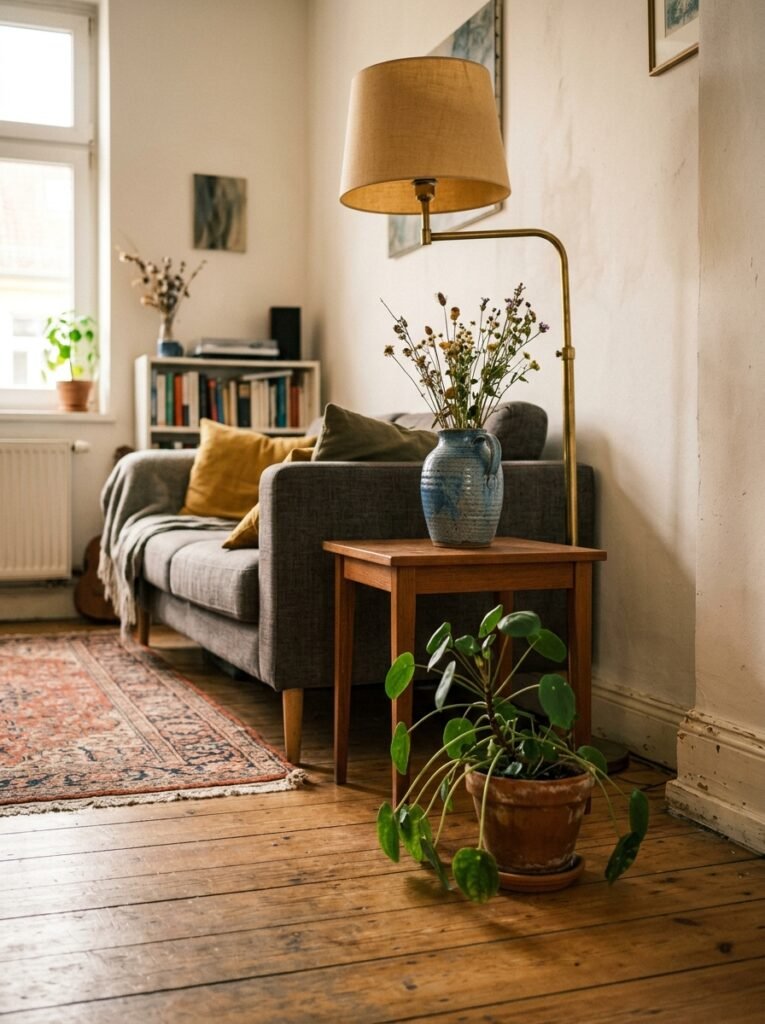
Stop trying to fill every surface.
Seriously, this is the thing. Spring design — the really good kind, the stuff that photographs beautifully but also just feels nice to be in — it has breathing room. There’s negative space. There are surfaces with one or two things on them, not five. There are corners that aren’t trying to justify their existence with a floor lamp AND a plant AND a side table AND a stack of books.
Pick your hero moments. One corner that’s styled. One surface that’s curated. The rest can just… be.
“Pick your hero moments. One styled corner, one curated surface. The rest doesn’t need to justify itself.”
A small living room especially — and look, if you’re in a British terraced house or a New York apartment you know exactly what I mean — a small living room doesn’t get better when you add things. It gets better when you edit ruthlessly and then add one really intentional thing.
—
6. The Plants That Actually Survive (And Look Good While Doing It)
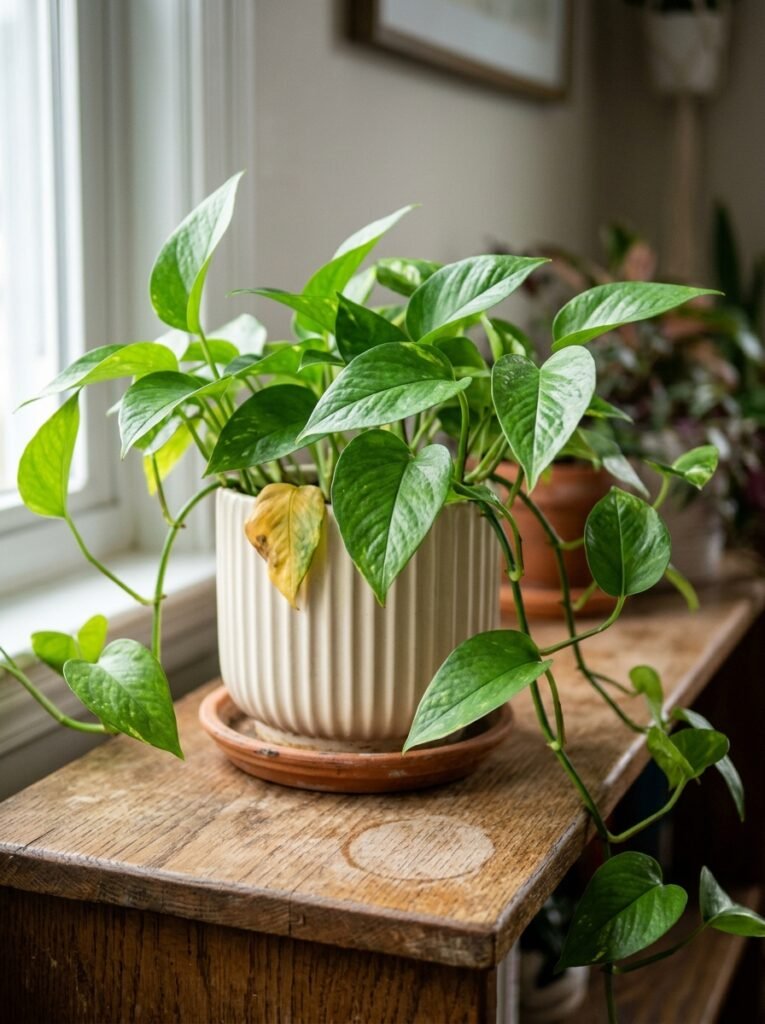
Not gonna lie, I’ve killed a lot of plants in the name of spring decorating. Most of them were impulse purchases — something beautiful at a market that I had no business buying because my living room gets approximately forty minutes of direct light per day.
For real spring energy without the plant graveyard, here’s what actually works in lower light:
- Pothos — trails beautifully, doesn’t care if you forget it for two weeks
- Peace lily — dramatic white flowers, genuinely thrives in low light, very forgiving
- ZZ plant — glossy, architectural, almost impossible to kill, looks more expensive than it is
- Snake plant — you know this one, and yes it’s everywhere, but it’s everywhere for a reason
If you want something with actual flowers and you’ve got decent light coming in, look for indoor jasmine. The scent alone will make your living room feel like a different season. It’s not easy to keep going long-term but as a seasonal splash of something special, it’s worth it.
—
7. How to Style a Mantelpiece So It Doesn’t Look Like a Shelf of Random Objects
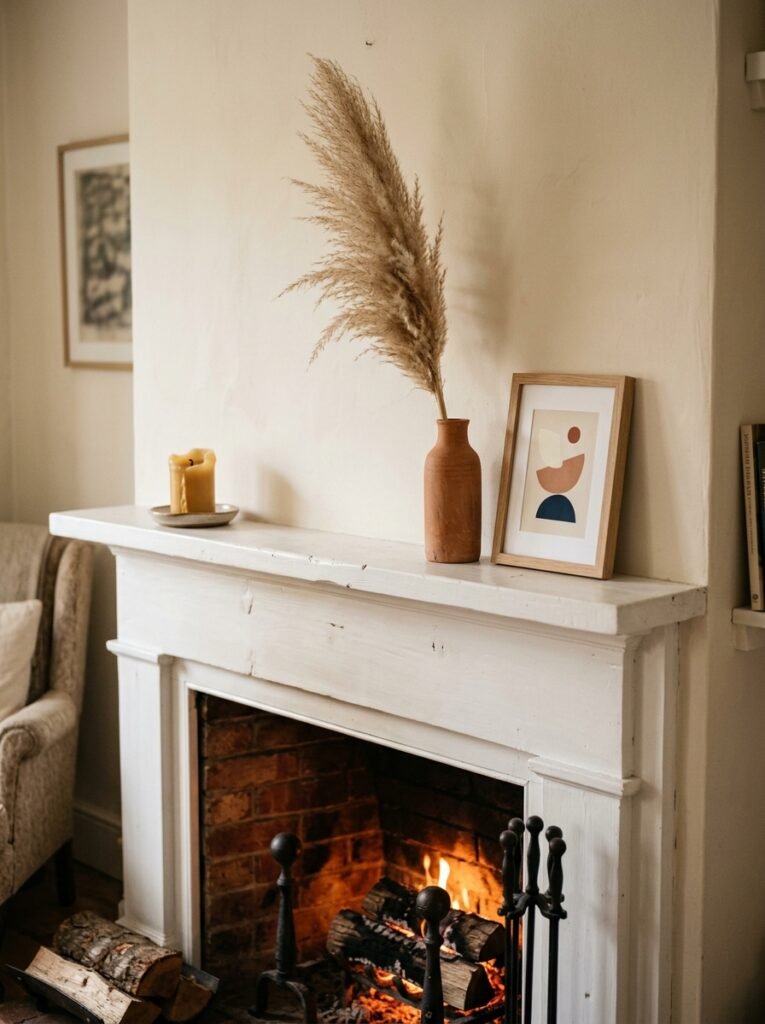
This is something I genuinely struggled with for years. My mantelpiece always looked like a shelf at a charity shop: things I liked individually, completely incoherent together.
The thing that changed it for me was thinking in layers and heights, but also — and this sounds weirdly obvious — leaving gaps. The empty space between objects is what makes them look placed rather than just… put down.
For spring specifically: lean one large piece of art or a framed print at the back. In front of that, a tall vase with something in it — branches, dried pampas if you can handle another year of it, or fresh eucalyptus if you want the scent. Then something lower to one side. Then a small object — a candle, a little ceramic, whatever — pulled slightly forward on the other side. And then stop. Don’t keep adding.
Odd numbers tend to look better than even. Three things feels curated. Four things feels like you couldn’t decide.
—
8. The Lighting Swap That Makes the Biggest Difference in Spring
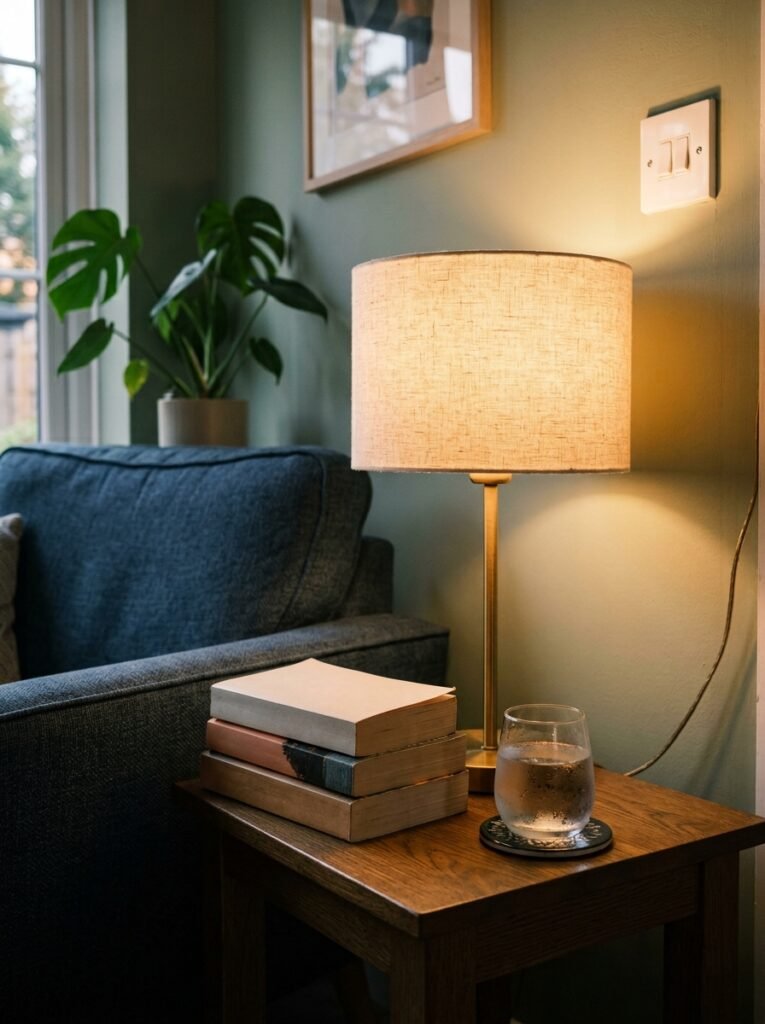
Take away one lamp.
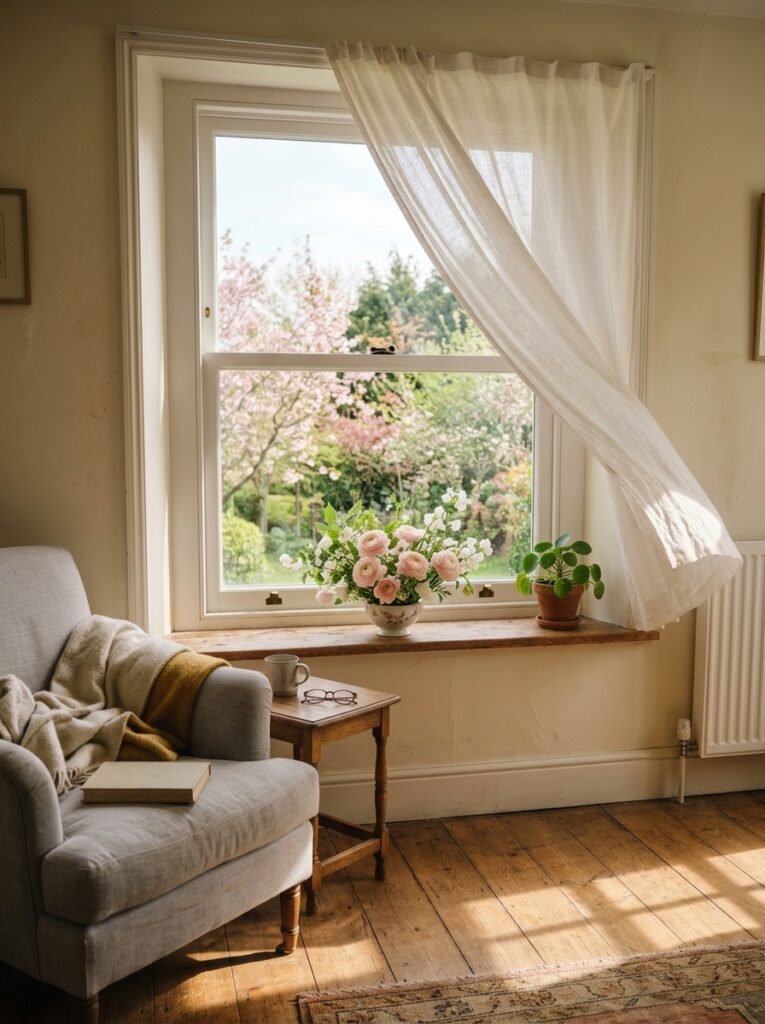
I know. You’ve probably got a good lamp situation going. But spring light — actual spring light, the kind that comes in low through the windows in the late afternoon and makes everything golden — it gets competed with, not complimented, by too many artificial light sources.
For spring, I switch to warmer, dimmer, more directional light. One floor lamp in a corner, on a lower setting. Candles in the evening — proper wax ones in interesting holders, not fake flickering LED ones that never quite convince anyone. The overhead stays off as much as possible.
The amber glow of a lamp at 7pm in a room that still has some natural light coming in from the west — that’s the thing. That specific moment is what you’re actually decorating toward, even if you don’t realize it. Everything else should support that.
—
9. Textiles: What Stays, What Goes, and What to Bring In
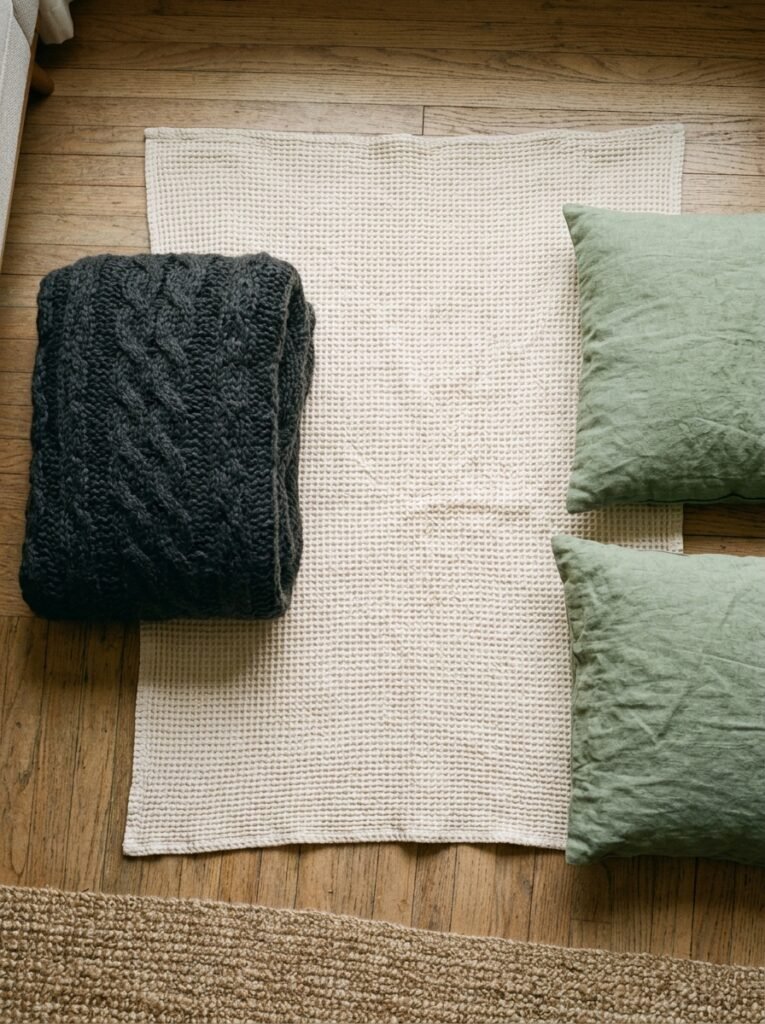
The rule I use: if it’s chunky, thick, or wool-based, it probably needs to rest until September. This includes the beautiful cable-knit throw you got for Christmas. I know. But it’s time.
What works for spring:
Linen is the obvious answer and it’s obvious because it’s RIGHT. Linen cushion covers in warm neutrals or soft color. A light linen throw in oat or sage draped once, loosely, over the arm of a sofa. It doesn’t try to look cozy, it just looks easy and a bit European, which I’m fully here for.
Cotton also works — printed cotton cushions with a bit of vintage pattern to them, the kind that look like something from a French market, can add spring color without being too literal about it.
And if you’ve got a rug that’s dark and heavy, consider rolling it up for a few months. A lighter, flatweave rug — jute, cotton, a pale wool flatweave — makes the whole room feel two seasons lighter. It’s sort of a strange trick but it works.
“A lighter rug makes the whole room feel two seasons lighter. It’s a strange trick and I can’t fully explain it, but it works every single time.”
—
10. The Fresh Flowers Situation (And What to Do If You’re Terrible at Styling Them)
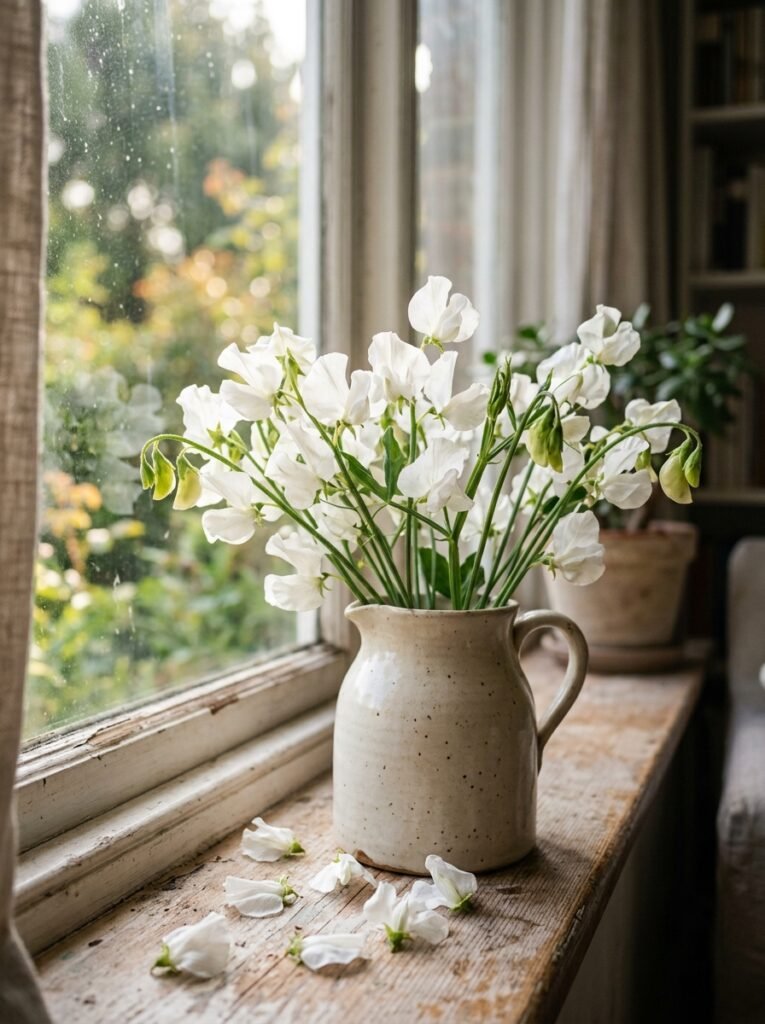
I used to just shove flowers into a vase and wonder why they never looked like the photos. The answer, embarrassingly, is that the photos are styled — the flowers are arranged, not just dropped in.
Here are the only things you need to know:
One type of flower, one color, always looks more intentional than a mixed bouquet unless you’re really good at it. Ranunculus. Tulips. Anemones. Just one, in a bunch, in a vase that’s roughly the right size — meaning the stems should be about one and a half times the height of the vase.
Cut the stems at an angle, remove any leaves that’ll sit below the water, and change the water every couple of days. They last so much longer.
For British readers: farmers’ market bunches are usually better quality and better value than supermarket ones, even if the selection is smaller. Worth the extra trip on a Saturday morning.
—
11. Spring Scent Is Doing More Work Than You Think
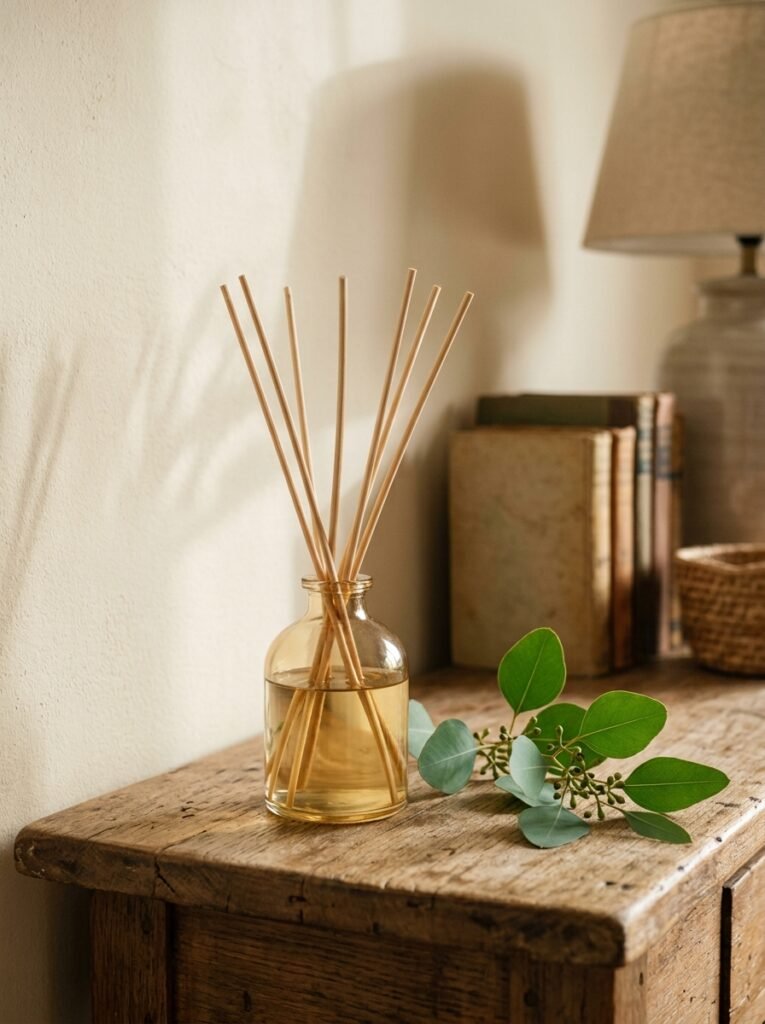
This one gets overlooked in every decor conversation and I don’t understand why.
Scent changes how a room feels before you’ve even looked at it properly. Walk into a room that smells like clean linen and something faintly green — like cut stems or fresh herbs — and your brain files it as “fresh” and “light” immediately. That’s spring. That’s the thing you’re chasing.
In winter you probably leaned on heavier scents — amber, vanilla, sandalwood. For spring: green tea, white florals, clean citrus, fresh cotton. Reed diffusers are great for consistent background scent. A candle lit in the late afternoon adds both scent and light. And if you’ve got the window open — you’ve got a jasmine or hyacinth somewhere near it — honestly, you can skip the candle entirely.
Side note: don’t try to layer too many scents. One diffuser, one candle, or fresh flowers. Pick one.
—
12. The Final 10 Minutes That Pull It All Together
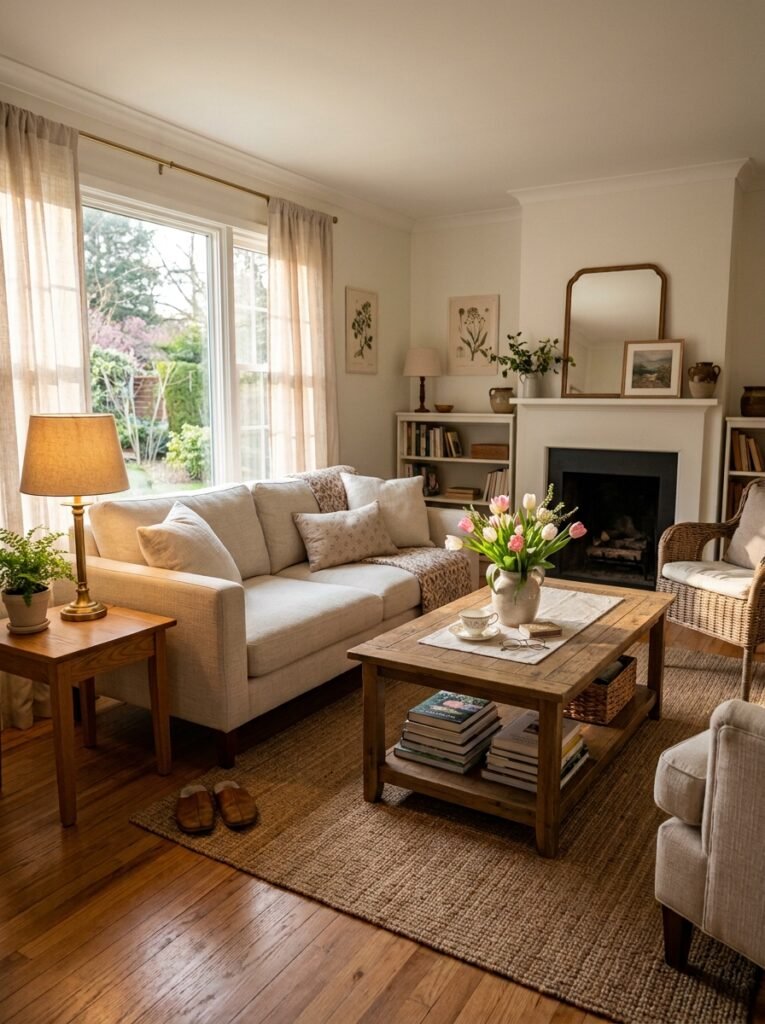
Right, you’ve done the big stuff. You’ve edited the room, shifted the textiles, brought in some color and something green. Now do this:
Walk out of your living room, wait a minute, then walk back in. Look at it the way a visitor would. What’s the first thing your eye goes to? Is that what you want? And what’s pulling you somewhere you don’t want to go — something dark, something cluttered, something that’s just sitting there because it hasn’t been moved in two years?
Deal with those things. Move the lamp. Fold the throw differently. Take the three extra things off the coffee table.
Then leave it alone. Because the mistake is always over-tweaking, adding one more thing when the room actually needs one less. Spring living rooms look good because they’re not trying. The light does the work, the plants do the work, the clean surfaces do the work. You’re just getting out of the way.
—
❓ FAQ
Q: How do I make my living room feel like spring without spending much money? A: The most effective free things are removing heavy winter textiles, moving furniture slightly, and letting in more natural light by swapping heavy curtains for lighter ones you might already own. Beyond that, a fresh bunch of tulips and one new candle will do more than any big purchase.
Q: What colors work for spring living room décor in 2025? A: Warm sage green is the standout right now, alongside dusty lilac, warm terracotta paired with cream, and soft butter yellow used in small doses. The key is staying away from anything too cold or grey — spring palettes in 2025 are leaning warm and a bit earthy, not crisp and minimal.
Q: How long should I keep spring décor out before switching to summer? A: Honestly, there’s a lot of overlap. Most spring changes — lighter textiles, fresh plants, softer colors — work straight through summer without needing another big refresh. You might swap in some brighter or bolder accents in June, but the foundational spring shift usually carries you well into August.
—
💭 Final Thoughts
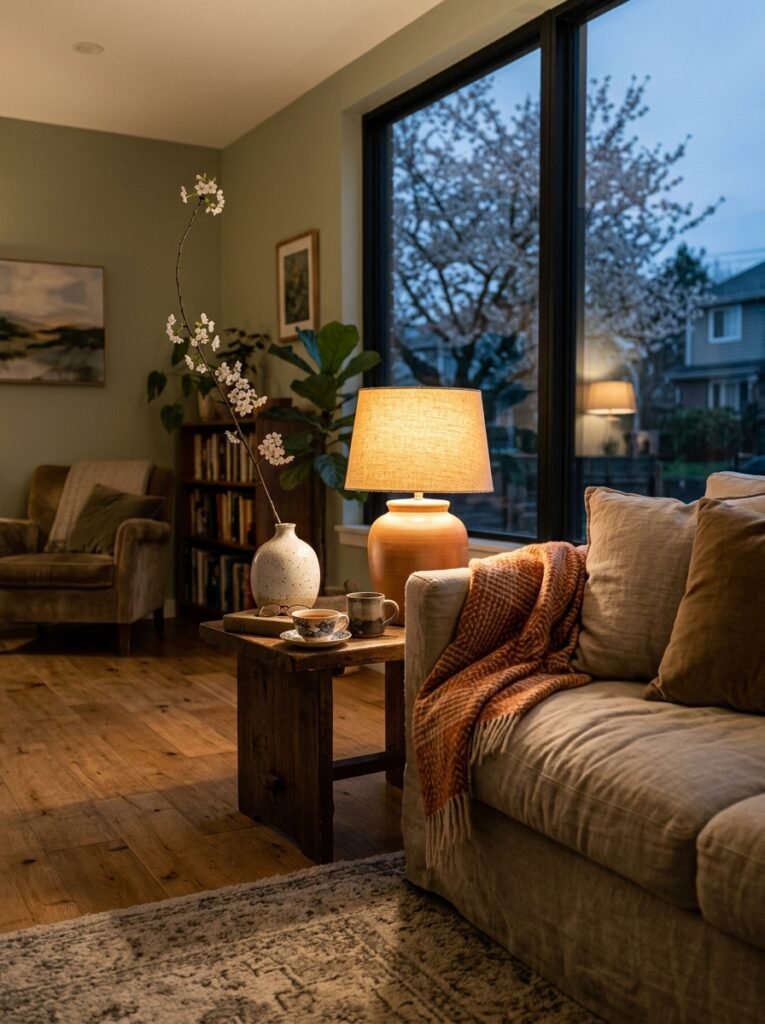
There’s something about a living room that’s been properly refreshed for spring — not styled within an inch of its life, but genuinely lightened up — that changes how you feel in your own home. It’s hard to explain until you do it. The room just stops working against you.
Start with one thing. Take the heavy throw off the sofa and see how the room changes. Then the next thing will usually show itself.
Is there a corner of your living room that’s been quietly bothering you all winter, and you’ve just been waiting for the right moment to deal with it?