
12 Budget Living Room Ideas That Look Like You Spent Way More Than You Did
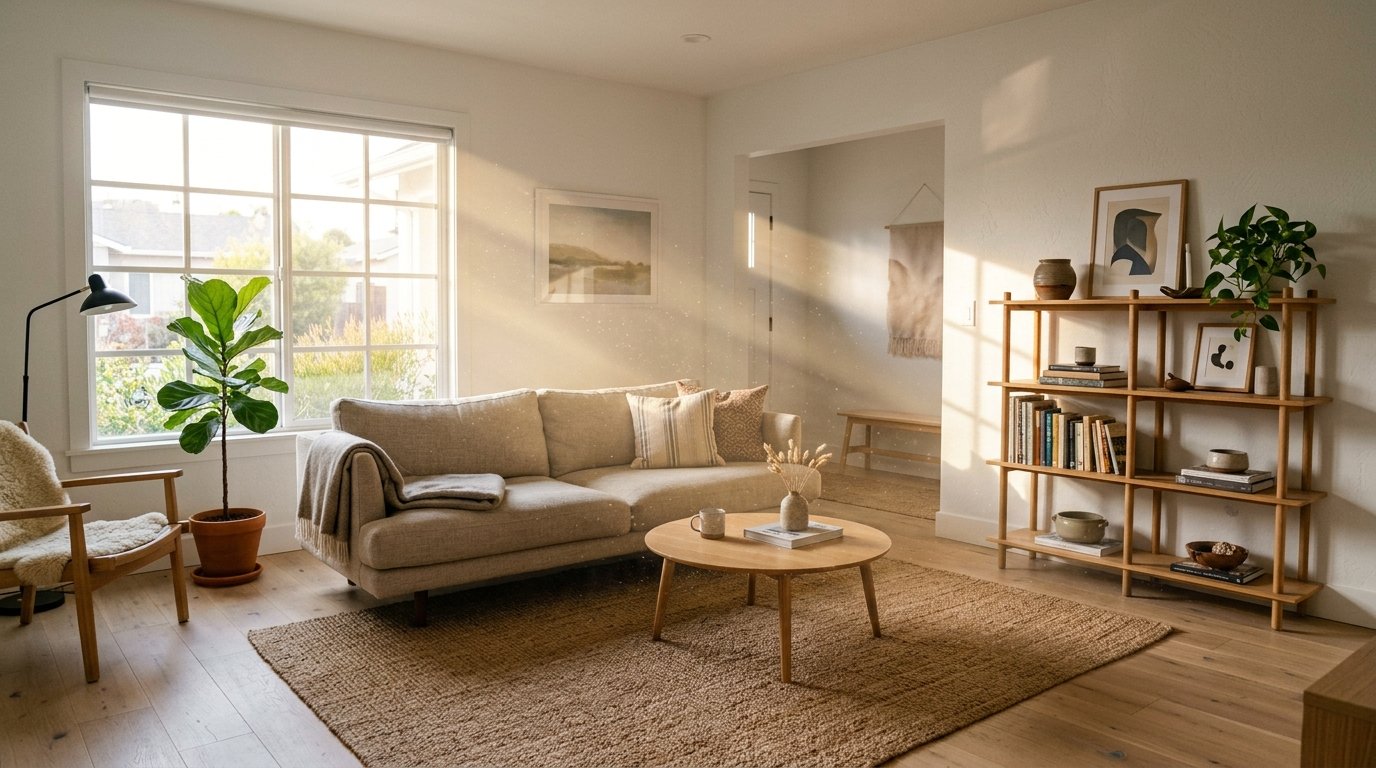
My friend walked into my living room last spring and said, “wait, did you redo this whole thing?” And I had. Sort of. I’d spent maybe £80 / $100 and a Saturday afternoon rearranging, swapping, and adding a few cheap finds. She was genuinely confused. That’s the goal, isn’t it.
—
1. The Rug That Changes Everything (And It’s Never the One You Think)
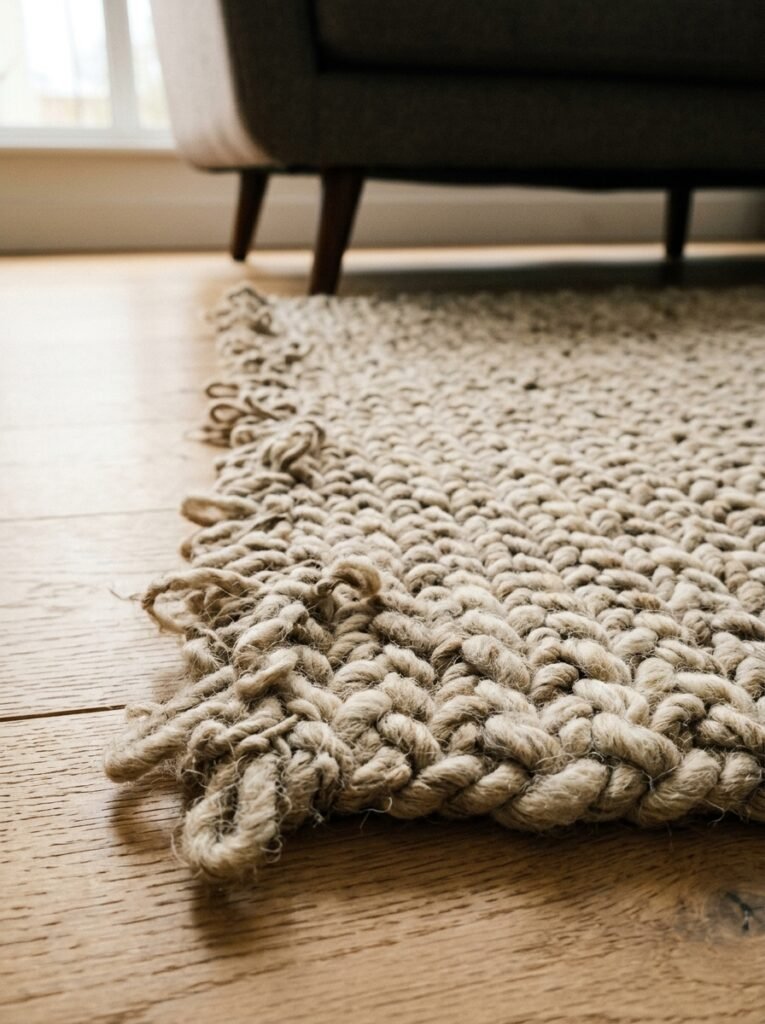
Here’s the thing nobody tells you: a rug that’s too small will make even a beautiful room look accidental. Go bigger than feels comfortable on paper. Way bigger. A large, low-pile rug — especially in a warm neutral like oatmeal, stone, or that faded terracotta everyone’s been obsessed with — anchors the whole space in a way no amount of throw pillows can.
Woven jute, flatweave cotton, wool blends. These textures photograph beautifully and they feel completely different underfoot, which matters more than people admit. I’ve had rooms where the rug was the only real “investment” piece and every single other item was a bargain, and somehow the whole thing looked considered.
Don’t fuss too much about the pattern. Honestly, a solid or very subtle texture will serve you better long-term. Bold geometric rugs are tempting but they’re sort of exhausting to live with after a few months.
“A rug that’s too small makes even a beautiful room look like an accident.”
Put the front legs of your sofa ON the rug. Front legs only is fine. All four legs on the rug is also fine. Zero legs on the rug is the one thing that actually isn’t fine, and yet it’s everywhere.
—
2. Why Your Sofa Probably Isn’t the Problem
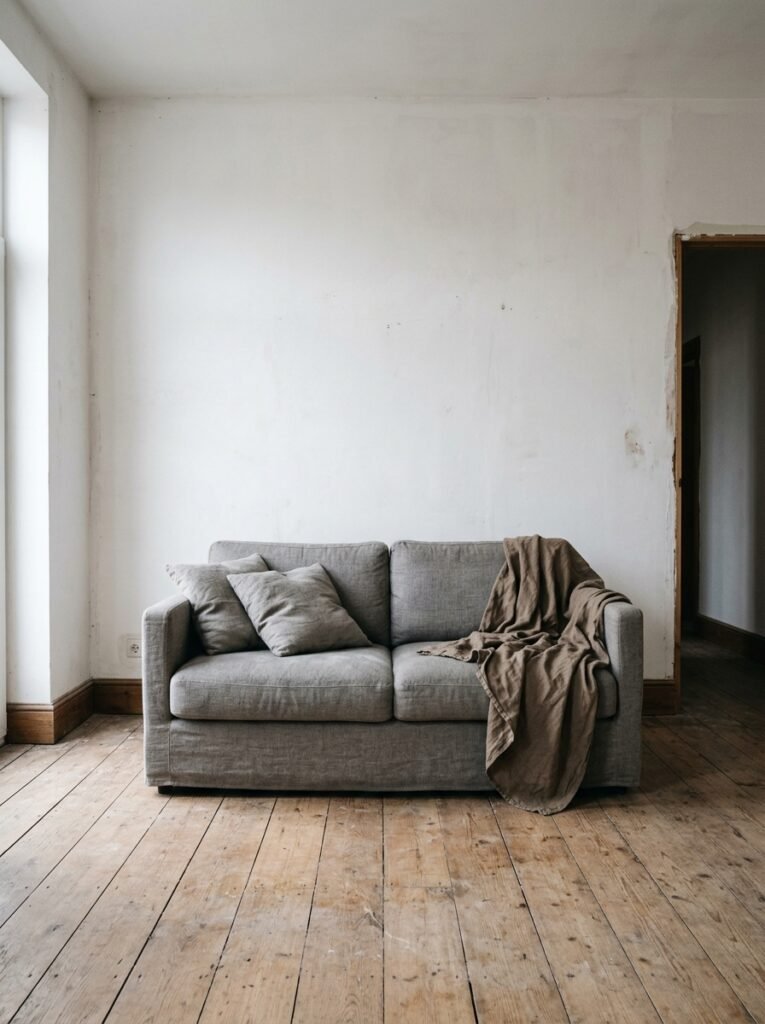
Not gonna lie, I used to think a boring sofa was a death sentence for a living room. It isn’t. A plain, neutral sofa — grey, oatmeal, even a slightly washed-out denim — is actually the most useful thing you can own. It becomes the backdrop.
The problem isn’t the sofa. The problem is usually one of two things: either there’s nothing interesting near it, or everything near it is trying too hard. Layers of cushions in four competing prints, a throw that doesn’t match, a side table that’s a completely different vibe. That’s what makes rooms look messy rather than curated.
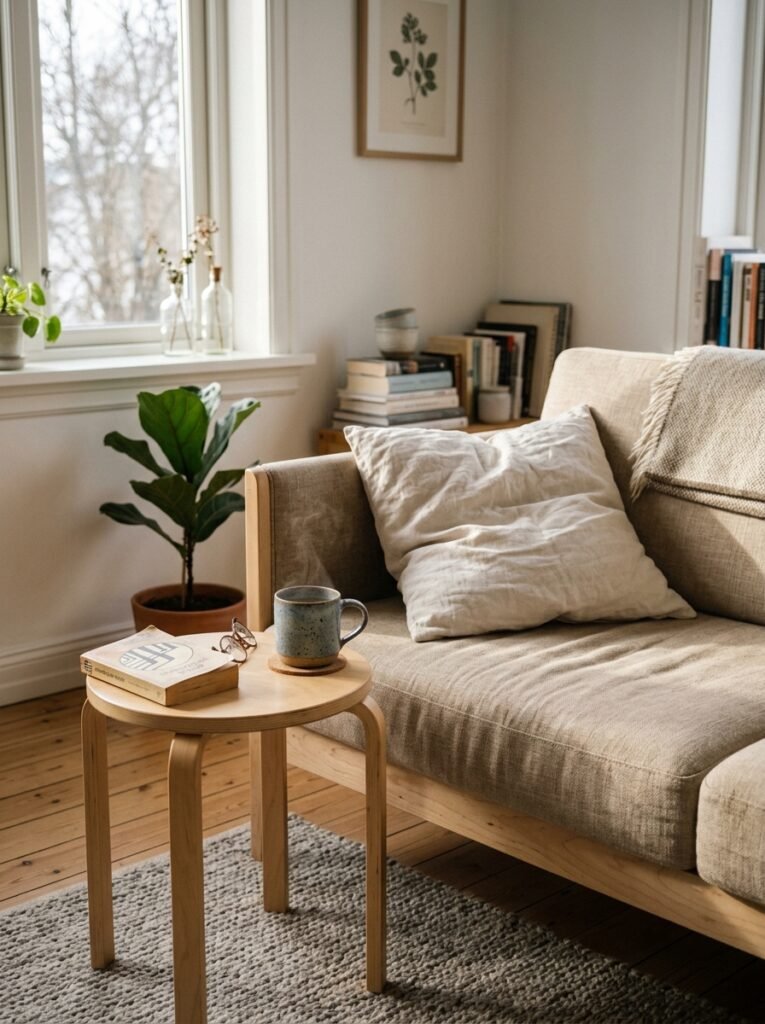
Pick two textures for your cushions. Two. A boucle and a linen, maybe, or a velvet and a cotton weave. Then stop. Add a throw that’s draped, not folded — folded throws look like a hotel. Draped throws look like someone actually lives there.
—
3. The Shelf Styling Moment Everyone Gets Wrong the First Time
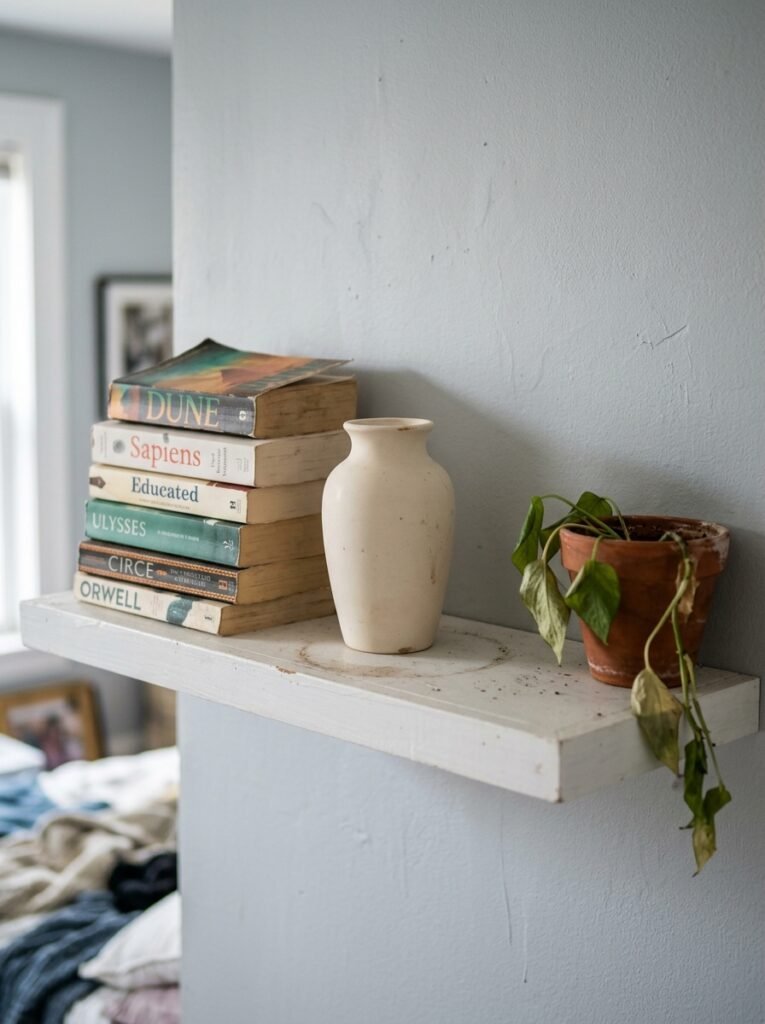
Open shelving. People either avoid it completely or they cram it absolutely full and then wonder why it looks chaotic.
The secret isn’t really a secret — it’s just restraint, and restraint is hard because we all have stuff. But here’s what actually works: group things in odd numbers, leave actual empty space (on purpose), and mix heights aggressively. A tall vase next to a short stack of books next to a small trailing plant next to nothing. That nothing is doing work.
Books are styling tools, not just books. Turn some of them backwards so you see the pages rather than the spines — it sounds weird but it creates this calm, papery, almost Scandinavian effect that’s really satisfying. Side note — this also hides the ones with embarrassing covers, which is a genuine bonus.
One thing per shelf that has a personal story. A ceramic you picked up somewhere, a small framed photo, a candle you’ve actually burned down a bit. Lived-in, not staged.
—
4. Lighting Is the Renovation You Can Do for £30 / $40
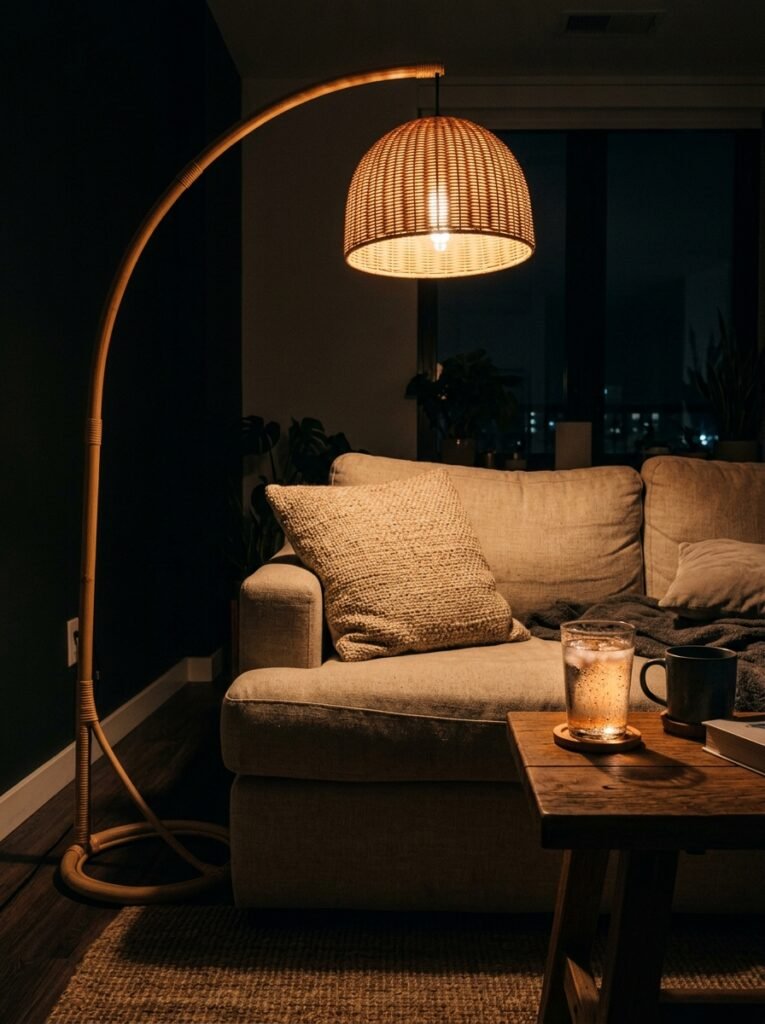
Overhead lighting is almost always the problem. That cold, flat, single-ceiling-fixture light that makes everyone look slightly unwell and makes your room feel like a waiting room. It’s so fixable and so often ignored.
Floor lamps in corners. That’s it, honestly. One warm-toned floor lamp tucked into the far corner of a room does more for atmosphere than almost anything else. The amber glow of an incandescent-style bulb at 7pm, angled slightly upward, bouncing off the ceiling — you can’t replicate that with overhead lighting and you shouldn’t try.
Table lamps on lower surfaces add a second layer. Different heights matter here. You want pools of light at different levels rather than one uniformly lit ceiling. Clip-on lights on bookshelves, a small lamp on a low side table, a candle or two on the coffee table. Layers.
“Overhead lighting is almost always the problem. And it’s so fixable.”
Dimmer switches, if you can manage it. Even cheap ones. They’re probably the single highest-return home upgrade that nobody talks about nearly enough.
—
5. The Coffee Table Styling Formula That Actually Has Give In It
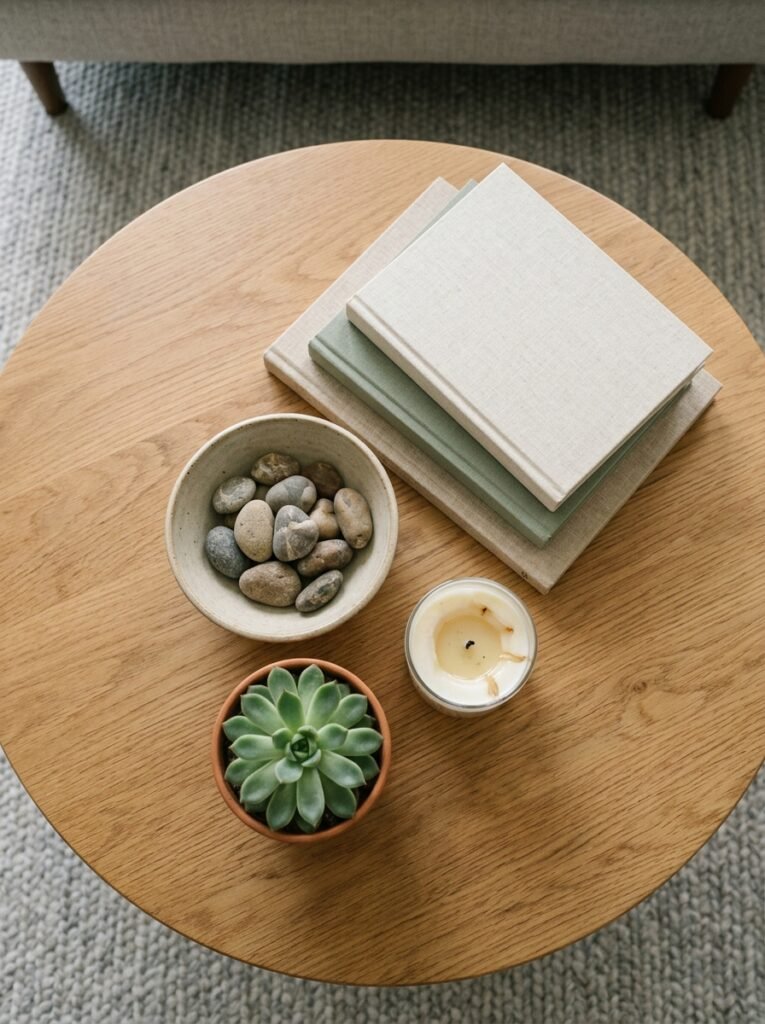
Three things on a coffee table is usually enough. A stack of something (books, magazines, a tray), something living or organic (a small plant, a branch in a vase, a bowl of something), and something purely decorative or functional (a candle, a small sculptural object, a coaster set that’s also pretty).
But you don’t have to hit all three. Sometimes two is better. Sometimes one big thing — a really beautiful large tray with a few items corralled inside it — is the most elegant option and it keeps things feeling clean without feeling sparse.
What doesn’t work: too many small objects of equal height, all spread out evenly. That’s the visual equivalent of a monotone voice. You want drama. You want one thing that’s taller than the rest.
—
6. When the Walls Are the Problem and Paint Feels Too Scary
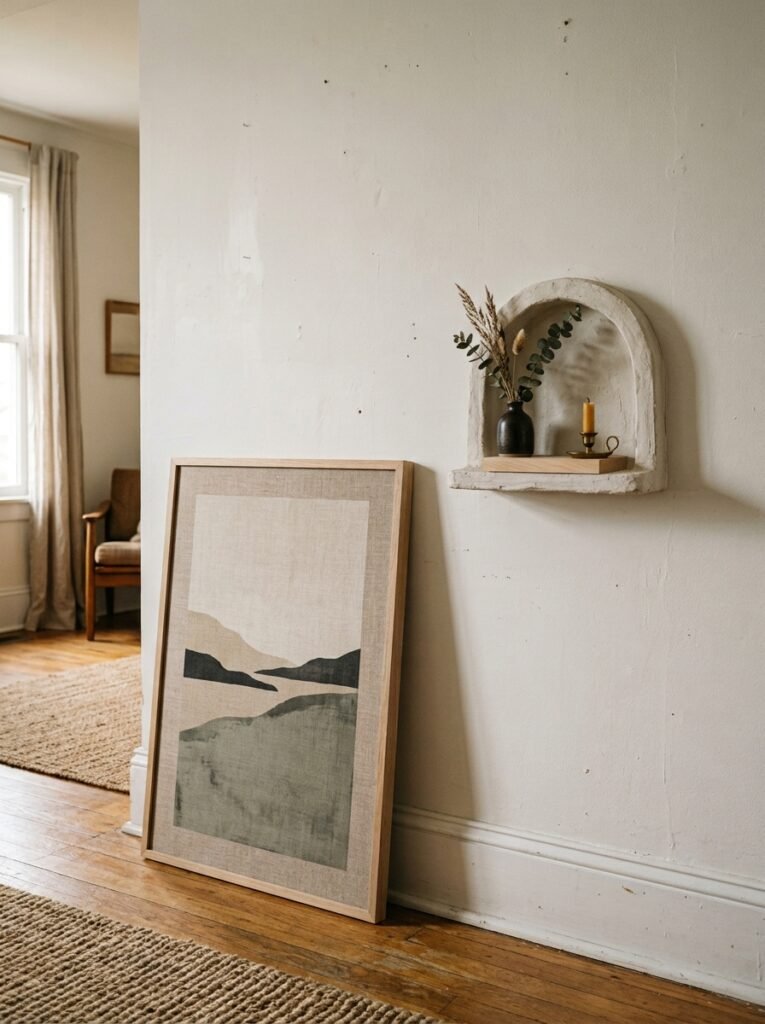
Renting, or just not ready to commit to colour? The walls still matter. A lot.
Gallery walls are still having a moment, and I think they will be for a while because they work. The key is unifying them somehow — either all the same frame colour, or all the same rough vibe (black and white photography, vintage botanical prints, abstract art in similar tones). Mixing framed family photos with a neon print with a motivational quote is… a choice. Not always the right one.
For renters especially — large format art propped against the wall rather than hung is completely acceptable now, and it actually looks incredibly intentional if you lean it right. One big print leaned against a wall above a console table or sideboard, slightly angled. It reads as “I know exactly what I’m doing” even if the truth is “I couldn’t find the drill.”
Mirrors. A large, interesting-framed mirror does two things at once: adds visual interest AND bounces light around the room. A round mirror especially, hung lower than you’d think, feels current and a little unexpected.
—
7. The Exact Kind of Plant That Doesn’t Die and Still Looks Expensive
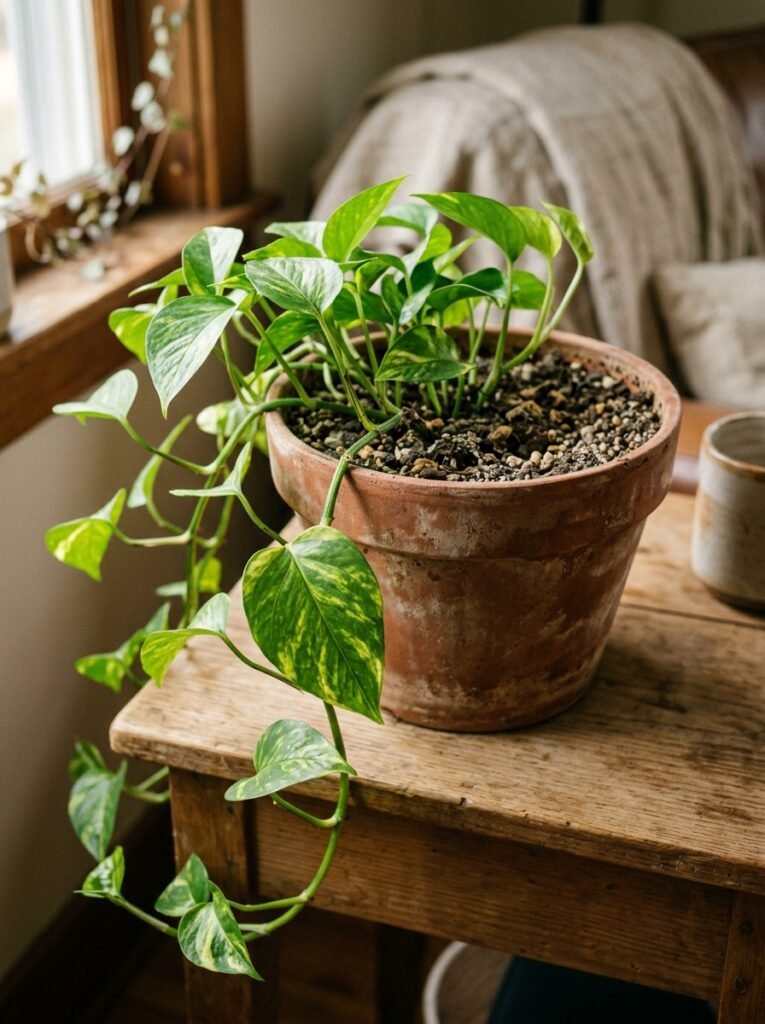
I’m going to be practical here because the internet loves to recommend beautiful plants that half of us will kill within a month.
Pothos. Snake plants. ZZ plants. Rubber trees if you get enough light. These are not boring — they’re reliably alive, which makes them infinitely better than a beautiful dead fiddle leaf fig sitting sadly in the corner. And a healthy, full, trailing pothos on a high shelf looks genuinely lush and a bit wild and completely intentional.
Grouping plants works better than scattering them. Three plants of different heights in one corner reads as a deliberate moment. The same three plants spread around the room individually just looks like you ran out of ideas for surfaces.
The pot matters as much as the plant. Honestly maybe more, for styling purposes. A plain, slightly rough terracotta or a matte ceramic in an earthy tone will make even a basic plant look considered. Cheap plastic grow pots hidden inside nice covers. That’s all it takes.
—
8. One Design Rule That Makes Any Tiny British or American Living Room Feel Less Cramped
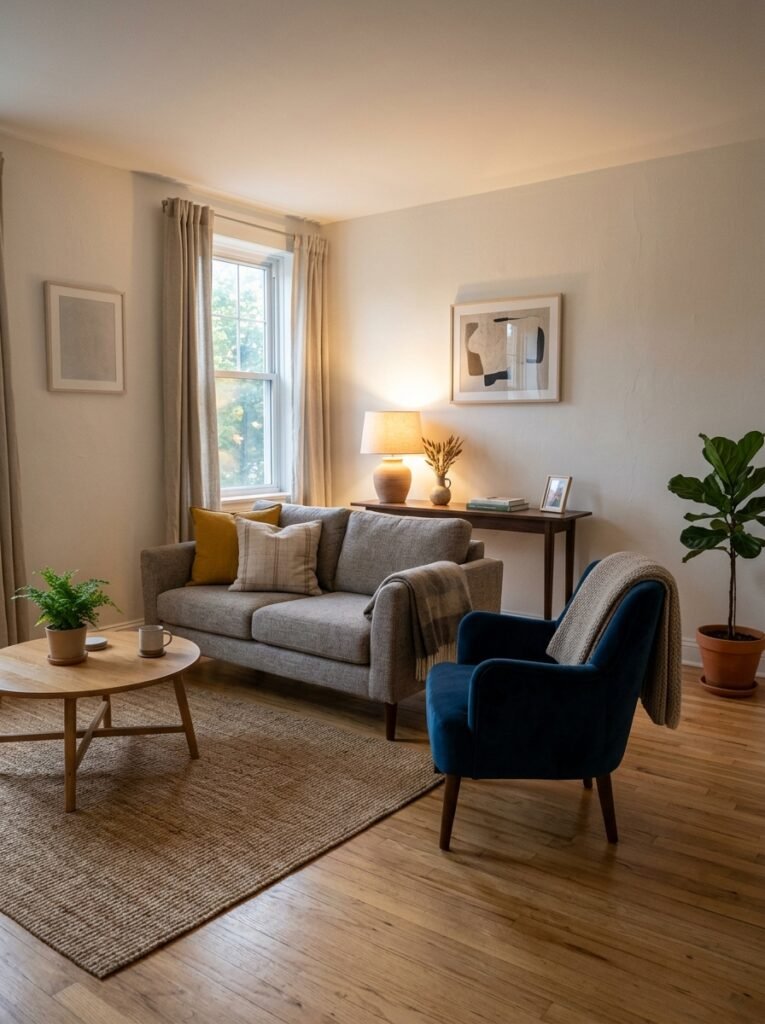
It’s not the mirror trick (though that helps). And it’s not light colours (though those help too).
It’s this: keep the floor as clear as possible.
Visible floor space reads as space. When furniture is stuffed to the walls, when there’s stuff on the floor, when the sightlines between pieces of furniture are blocked — the room shrinks. Pull the sofa away from the wall even by just a few inches. Float furniture in the room rather than pushing everything to the edges. Weird as it sounds, a sofa in the middle of a small room often makes it feel bigger, not smaller.
And don’t block the windows. Whatever’s happening with the curtains — hang them HIGH and wide, so the whole window is revealed when they’re open. Curtains hung low and narrow make windows look small. Hung high (close to the ceiling) and wide (well past the frame on both sides), they make any window look architectural.
—
9. The Texture Equation Nobody Explains Properly
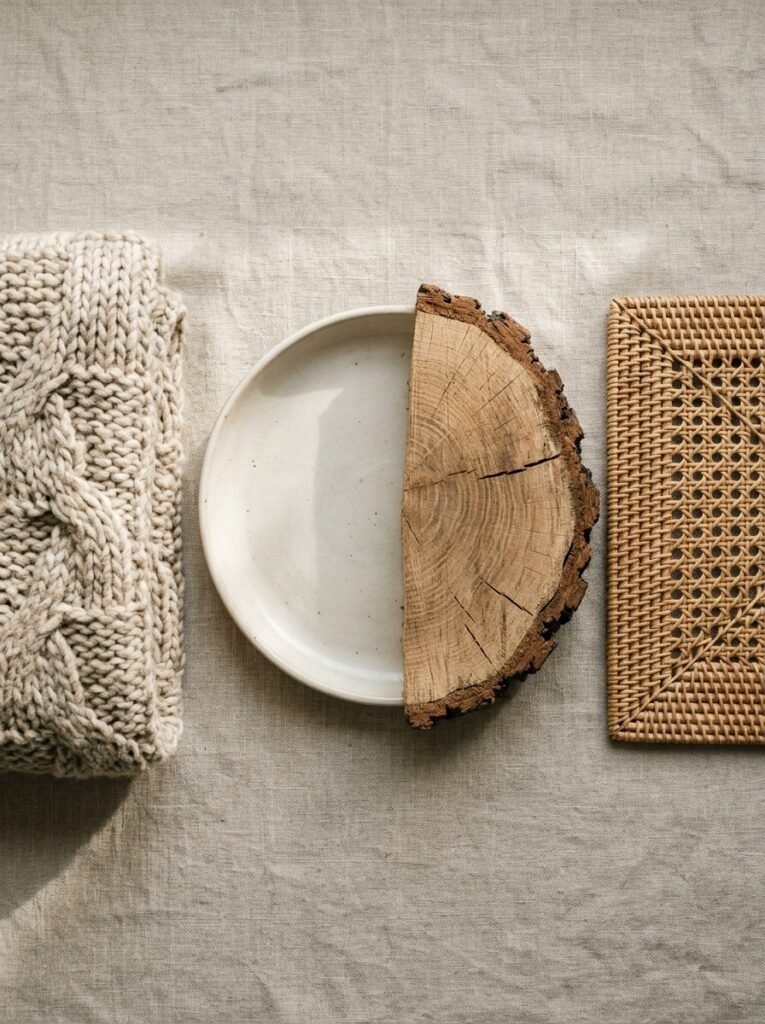
You’ve probably heard “mix textures” a thousand times. But nobody explains what that actually means in practice, and it’s left a lot of rooms looking vaguely confused.
Here’s how to think about it: every surface in your room has a texture quality, and you want a mix of rough, smooth, and soft. Rough might be a jute rug, a concrete planter, raw wood. Smooth might be a lacquered tray, a ceramic vase, a glass candle holder. Soft is the obvious one — cushions, throws, upholstery.
If everything in your room is smooth and hard, it’ll feel cold and showroom-like. If everything is soft, it reads as shapeless. The rough/hard elements are what give a room its backbone.
“Every room needs something rough in it. Without it, the whole thing goes soft in the wrong way.”
A single rough-textured piece — a woven basket, a chunky knit throw, a piece of driftwood, a raw clay pot — can completely change the feel of a room that’s been feeling “off” without you knowing why.
—
10. Corners Are Wasted More Than Any Other Part of the Room
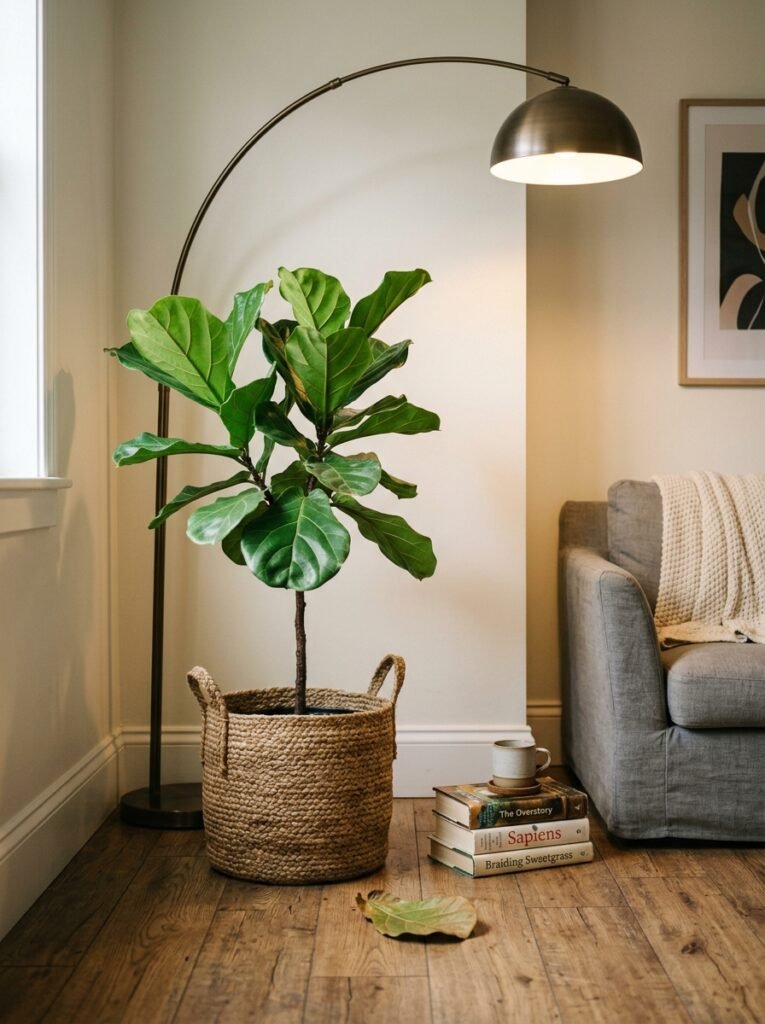
The dead corner. Everyone has one. Usually it’s behind the sofa, or it’s the corner diagonally opposite the TV, or it’s the awkward narrow strip between the window and the wall.
These spaces are opportunities and most people just… ignore them. A floor lamp alone in a corner is a start. A floor lamp PLUS a small side table PLUS a plant is a full vignette. That corner now has purpose. It has atmosphere. It’s doing something.
Tall bookshelves in corners make them feel architectural. A large plant in a corner softens a room that’s too hard and geometric. A chair in a corner — even a small accent chair you never actually sit in — makes a living room feel like it has more than one moment worth noticing.
Don’t force it if the corner genuinely doesn’t have room for anything. But look at your corners honestly. Most of them have more potential than they’re getting credit for.
—
11. The Colour Story That’s Working in Living Rooms Everywhere Right Now
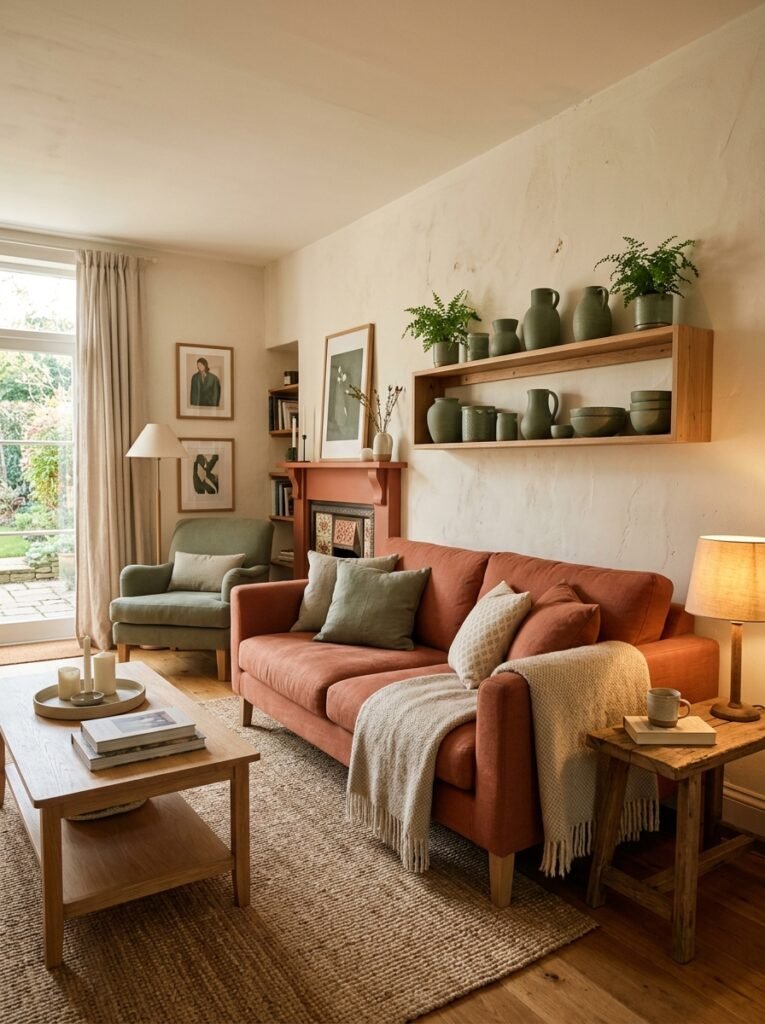
Not gonna lie, I’m a bit tired of writing “white walls with warm accents” but… it’s still working, and it’s working because it’s genuinely flexible. The trick is which warm accent and how much of it.
Right now, the palette that keeps appearing in rooms that feel current is warm white or off-white walls, a deeply saturated anchor colour (burnt sienna, forest green, dusty terracotta, inky navy), and then one or two natural neutrals to soften the whole thing. The saturated colour doesn’t have to be big — a cushion, a lampshade, the spines of a few books, a small piece of art. It just has to be PRESENT enough to feel intentional rather than accidental.
Sage green is everywhere and it’s staying. Dusty pinks that lean more mauve than bright. Warm ochre used very sparingly. These are the colours showing up in rooms that feel styled rather than decorated-by-committee.
What’s fading: very cool greys everywhere, ultra-minimalist white-on-white with zero warmth, that specific shade of greige that was everywhere from 2015 to 2020. Not dead. Just tired.
—
12. The Part Where I Tell You to Stop Shopping and Start Moving Things Around
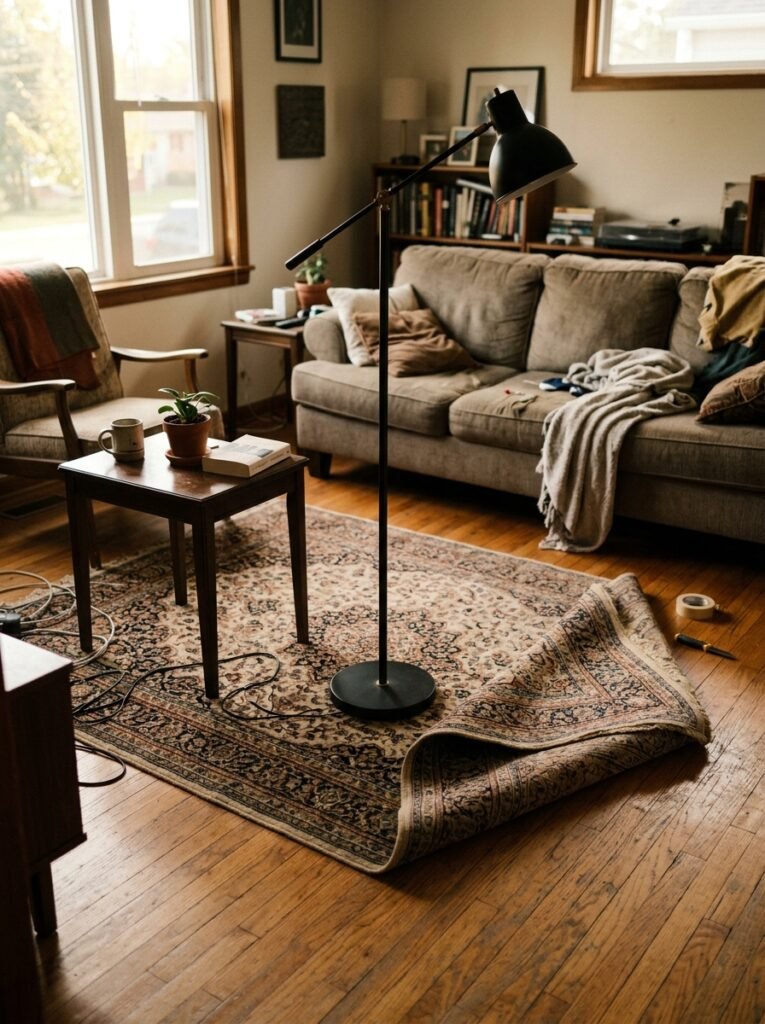
This is the section I mean most sincerely.
Before you buy anything else, move what you already have. Take the thing from the bedroom shelf and put it in the living room. Turn the sofa. Swap the side tables. Put the lamp in a different corner. Stare at it for a few days.
You already own things that could look completely different in a different context. That plant that’s been sitting in the same corner since you moved in — move it. That stack of books on the coffee table — take half of them to a shelf. That throw you’ve had folded neatly on the armchair — drape it. Actually drape it.
Most rooms don’t need more stuff. They need their existing stuff to be better arranged, better lit, and better edited. Adding more before you’ve really worked with what’s already there is how rooms get cluttered instead of curated.
But if you do need to buy something? One good lamp. That’s always the answer.
—
❓ FAQ
Q: How do I make a small living room look more expensive without spending much? A: Focus on lighting first — swap overhead bulbs for warm-toned ones and add a floor lamp or two in corners. Then clear visual clutter from the floor and surfaces. A room that’s well-lit and uncluttered reads as considered and expensive even when it isn’t.
Q: What’s the best way to style a living room on a really tight budget? A: Honestly, start with what you have and rearrange before buying anything. After that, a new throw or two cushions in a complementary texture can shift the whole feel of a room for under £20 / $25. Thrift shops and charity shops are genuinely great for interesting objects, frames, and vases — things that add character without costing much at all.
Q: My living room always looks cluttered no matter what I do — where do I start? A: Pick one surface and edit it down to three items maximum. Then do the next surface. Clutter usually comes from too many small objects of similar height spread across every horizontal surface. Grouping things, reducing quantity, and adding a tray or bowl to corral small items will make a big difference faster than you’d think.
—
💭 Final Thoughts
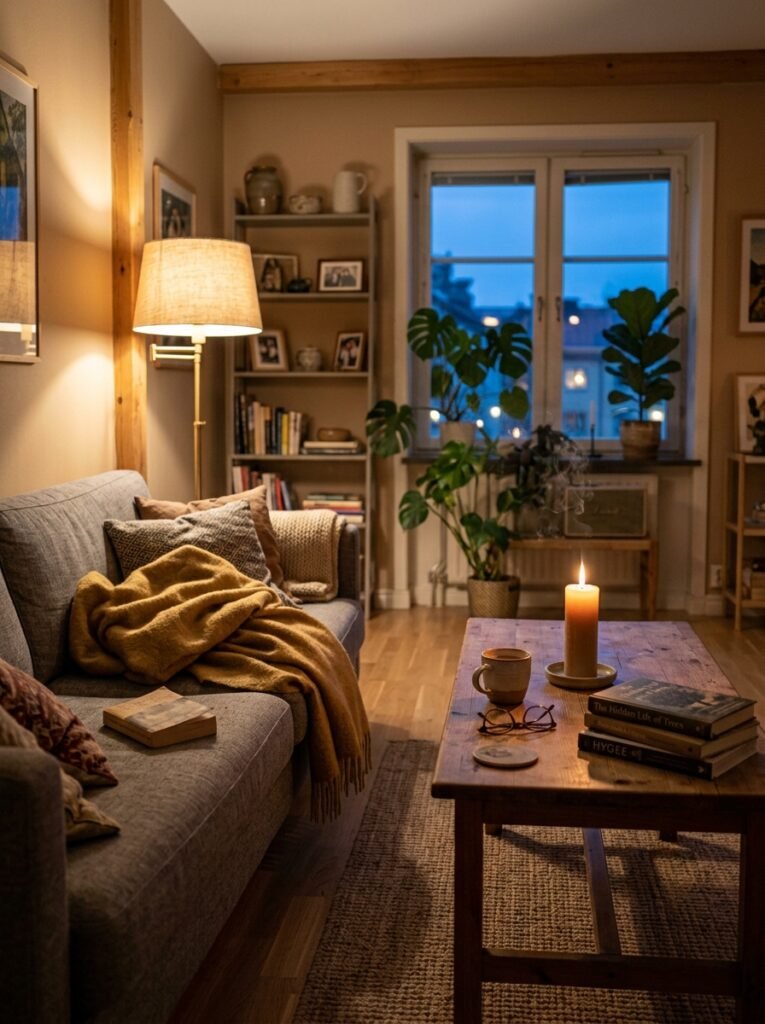
A room that feels like you doesn’t happen in one shopping trip. It’s built slowly, layer by layer, through noticing what feels right and quietly removing what doesn’t. The best rooms I’ve ever been in didn’t have the most expensive pieces — they had the most considered ones. A lamp in exactly the right place. A rug that made you want to sit down on the floor. Something personal on a shelf that made you ask about it.
What’s the one thing in your living room that’s been bothering you for months that you just haven’t fixed yet?