
How to Style an Altbau Interior That Feels Like It Has Always Belonged There
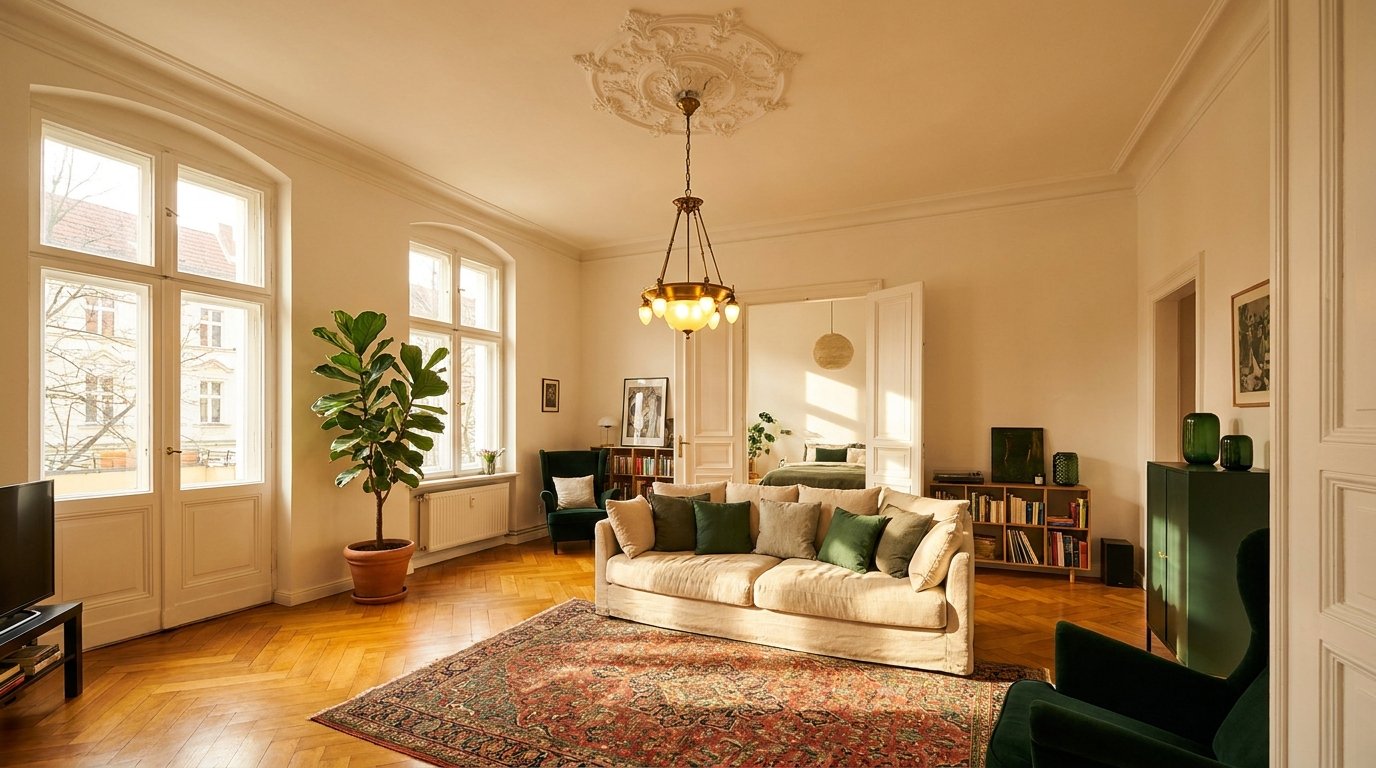
There’s a particular kind of magic that happens when you step into a well-loved Altbau apartment — the way afternoon light spills through tall windows onto original hardwood floors, the way a plaster ceiling medallion frames the room like a painting. These old buildings don’t just house people. They hold stories.
—
1. What “Altbau” Actually Means — and Why It Changes How You Decorate
Before you can style an Altbau interior, you need to understand what you’re working with — not just architecturally, but emotionally.
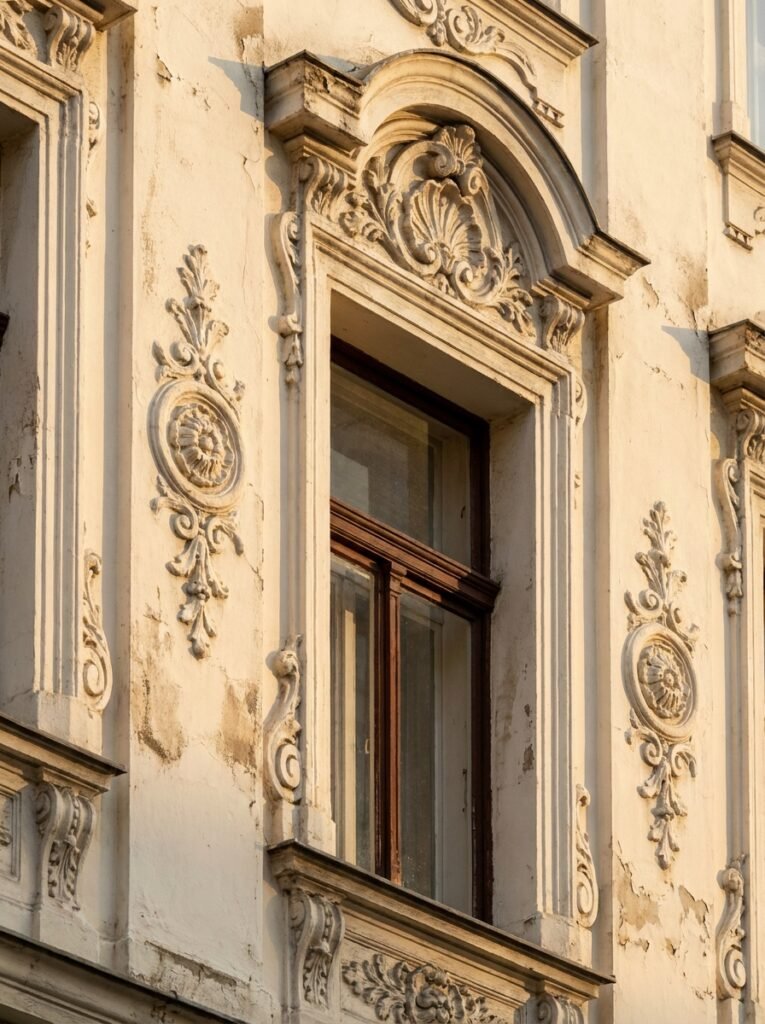
The word Altbau is German, literally translating to “old building.” In Central European design culture, particularly in cities like Berlin, Vienna, and Zurich, it refers to residential buildings constructed before World War II — most commonly between the 1870s and 1930s. These are the buildings with stucco ornamentation on the facades, high ceilings that reach four meters or more, original parquet floors in herringbone or chevron patterns, double-casement windows that take up half the wall, and a kind of structural generosity that modern construction rarely replicates.
But here’s what makes Altbau interiors so different from any other decorating challenge: you are not starting with a blank canvas. You’re starting with a canvas that already has meaning. The walls have absorbed decades of life. The floors carry the imprint of thousands of footsteps. Your job, as a decorator, is not to impose a style onto this space — it’s to have a conversation with it.
“In an Altbau, the architecture is not the backdrop. It is the protagonist.”
That shift in perspective changes everything. Rather than asking “how do I decorate this room,” you begin asking “what does this room already want to be?” And that question, surprisingly, leads to much better design decisions.
—
2. The Altbau Ceiling: The Most Underestimated Design Element in the Room
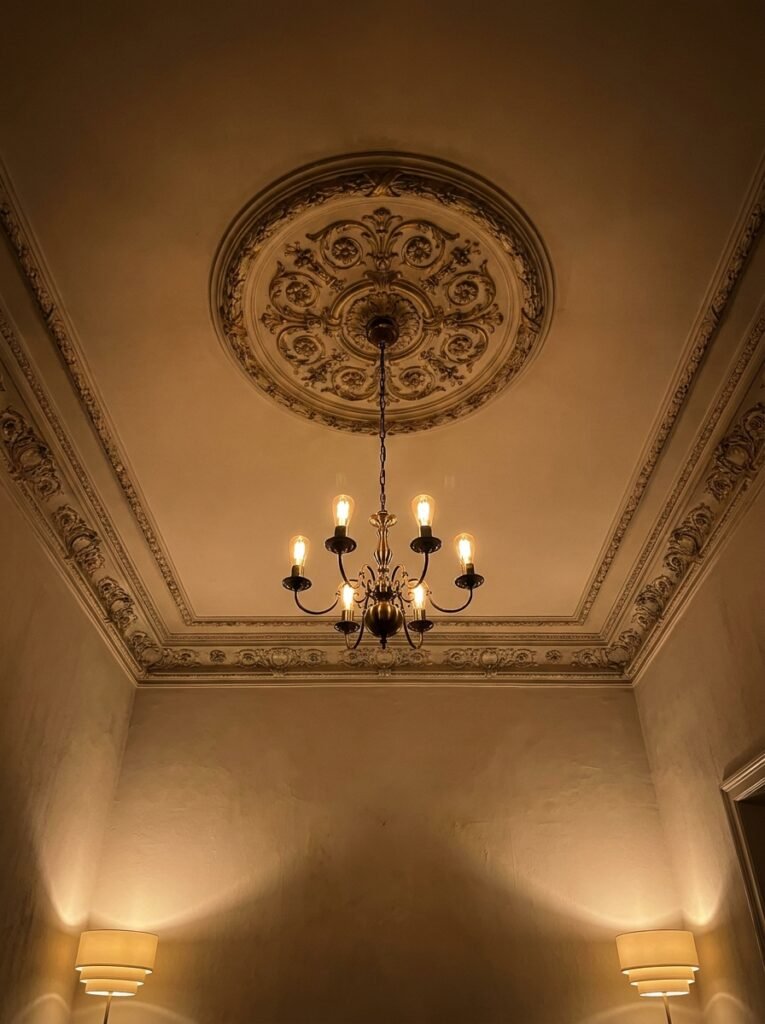
If you’re lucky enough to have original stucco ceiling details — the medallions, the cornices, the elaborate plasterwork borders — please, resist the urge to paint over them in the same shade as the ceiling and let them disappear. Those details are irreplaceable, and they’re having a quiet conversation with every piece of furniture you place below them.
High ceilings — typically 3.2 to 4.5 meters in a traditional Altbau — are one of the defining features of the style, and they demand a completely different approach to lighting and proportion. A single flush-mounted ceiling light will look lonely and out of place. Instead, lean into drama: a large-scale chandelier or pendant in brass, matte black, or smoked glass brings the eye upward and acknowledges the ceiling’s presence rather than ignoring it.
Layered lighting matters enormously here. Floor lamps with warm Edison bulbs tucked into corners, wall sconces positioned at eye level, and a statement fixture overhead — this combination creates the kind of atmospheric depth that makes a room feel both grand and genuinely livable.
If your Altbau ceilings are plain — which happens, especially in post-war renovations that stripped original detail — consider adding simple plaster molding yourself, or using a contrasting paint color on the ceiling to give it visual weight. A ceiling painted in deep navy, terracotta, or warm greige reads as intentional and elegant rather than simply unfinished.
—
3. Original Parquet Floors: Work With Them, Not Against Them
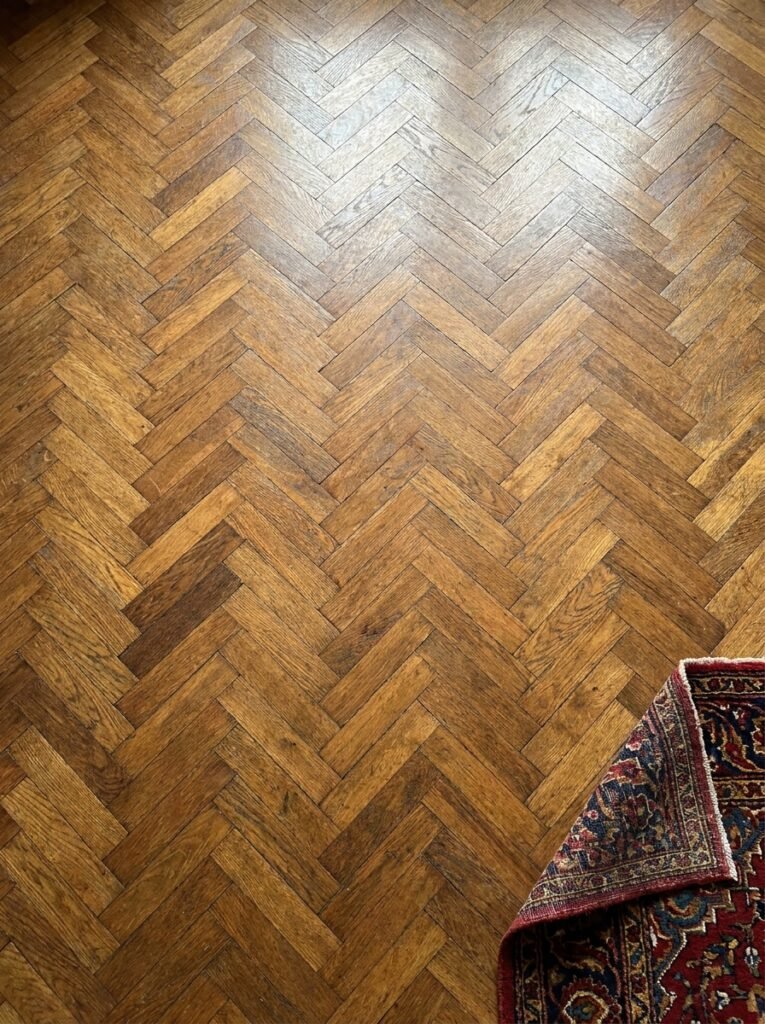
Few design elements are as immediately recognizable — or as emotionally powerful — as original Altbau parquet. The herringbone pattern, the narrow strips of aged oak, the subtle variation in tone where sunlight has kissed certain planks for a century — this is a floor that earns your respect.
The most common mistake decorators make with original Altbau parquet is covering too much of it. A large, densely patterned rug that fills most of the floor essentially erases the one feature that most defines the room’s character. Instead, choose rugs that feel like punctuation: a well-placed Persian or Moroccan rug under a seating area, a simple runner in a hallway, a smaller jute or linen rug beneath a dining table. Let the floor breathe.
When it comes to refinishing, tread carefully. Original parquet has a patina that cannot be reproduced. If you sand and seal aggressively, you’ll lose the warmth that decades of foot traffic and old wax have built up. A light buff and an oil-based finish that enhances rather than conceals the natural variation is almost always the better choice.
—
4. The Color Palette That Honors History Without Freezing It in Time

One of the most persistent myths about Altbau interior design is that it requires muted, dusty, exclusively historical colors — all faded ochres and muddy greens and exhausted creams. While those tones certainly feel at home in old buildings, the truth is that Altbau spaces can carry a much wider range of color than people expect, precisely because the architectural bones are so strong.
The key is understanding which colors respond to the architecture rather than competing with it.
Warm whites and off-whites — think linen, chalk, warm ivory — are classic for good reason. They reflect the extraordinary natural light that floods through large Altbau windows without feeling clinical. But don’t stop there. Deep, saturated colors work remarkably well in rooms with high ceilings: a library or study painted in forest green or midnight blue feels cocooning rather than oppressive. A dining room in terracotta or burnt sienna gains warmth that pairs beautifully with brass fixtures and dark wood furniture.
What to avoid? Anything that leans too corporate or too sterile — bright white with cool undertones, flat gray without warmth, trendy pastels that read as temporary. These colors look like they’re visiting the space rather than belonging to it.
“Color in an Altbau isn’t decoration — it’s dialogue between the present and the past.”
—
5. Furniture That Belongs in a High-Ceilinged Space
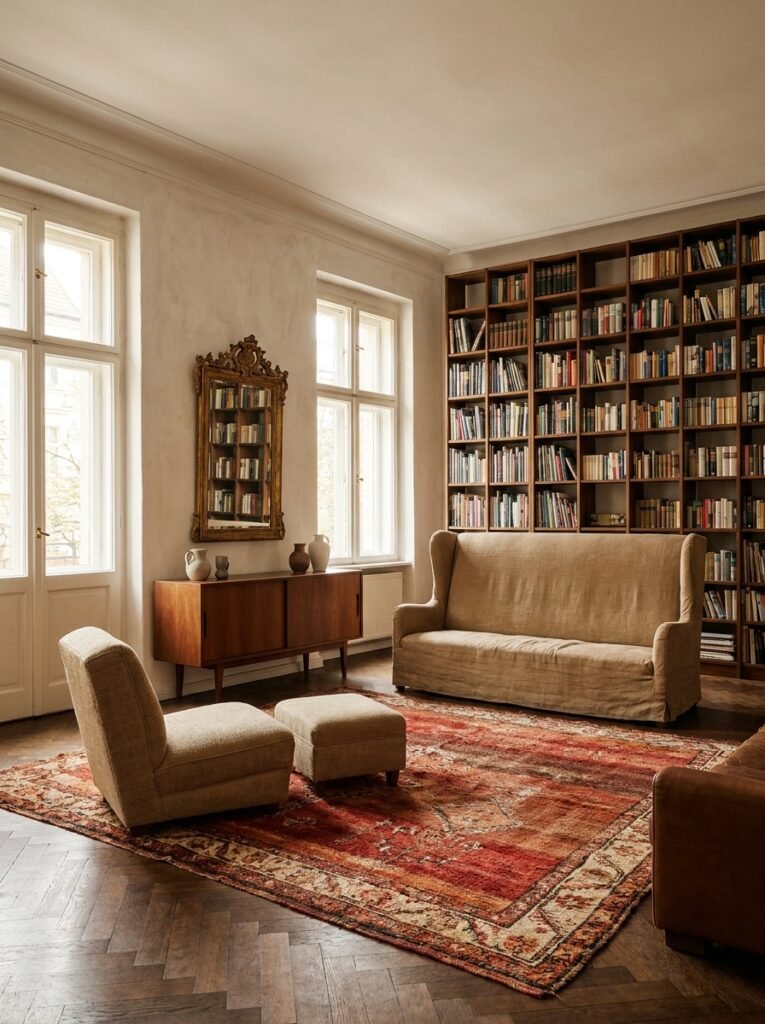
Scale is everything in Altbau interior design, and it’s the area where most people struggle. Modern furniture — particularly the low-slung, minimalist pieces that dominate contemporary design — can look stranded in a room with four-meter ceilings and double windows. The proportions are simply mismatched.
This doesn’t mean you need to fill your Altbau apartment with heavy Victorian antiques. It means being thoughtful about vertical scale. A large, upholstered sofa with a high backrest holds its own in a tall room. A substantial bookcase that reaches the ceiling — whether original built-ins or freestanding — anchors the wall and makes the height feel intentional rather than awkward.
Mixing periods works beautifully in Altbau spaces: a mid-century modern sideboard against a stucco wall, a contemporary dining table surrounded by vintage chairs, an antique wardrobe beside a modern bed frame. The architecture provides enough visual cohesion that furniture periods can mix freely, as long as the scale remains consistent and the materials feel warm rather than industrial.
—
6. Windows as a Design Feature, Not Just a Light Source
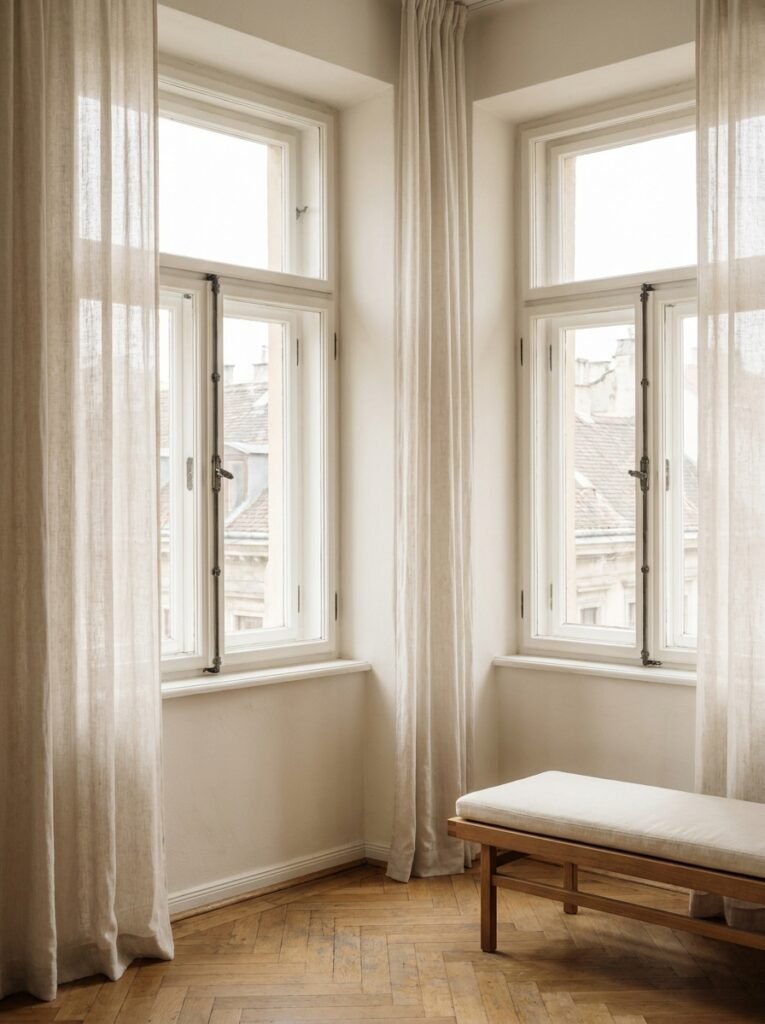
The windows in a traditional Altbau apartment are extraordinary — often stretching nearly floor to ceiling, framed by deep plaster reveals, sometimes fitted with the original wooden shutters or casement hardware. And yet, window treatment is one of the most frequently mishandled aspects of Altbau interior styling.
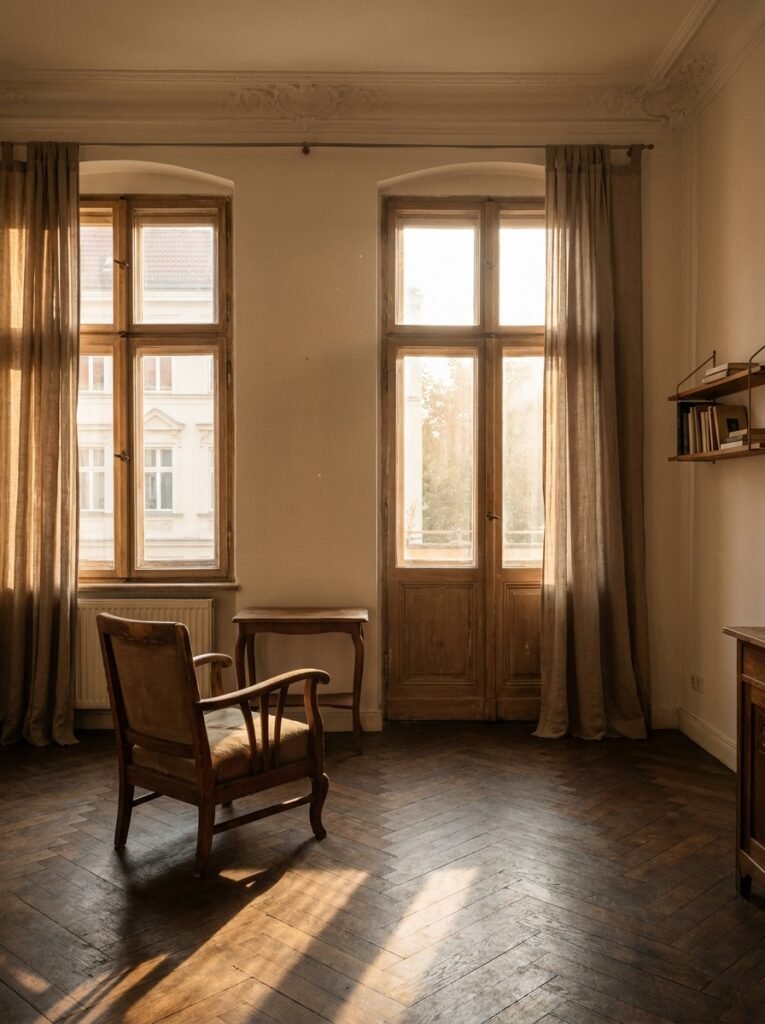
Heavy, opaque curtains that block light defeat the entire purpose of those generous windows. Instead, consider linen or cotton curtains in natural tones that filter light rather than eliminating it. Mount the rod at ceiling height rather than just above the window frame — this draws the eye upward, elongates the room visually, and makes the window feel even more dramatic.
If privacy isn’t a concern, consider going without curtains entirely in certain rooms. An unobstructed tall window, framed by clean plaster and filled with natural light, is genuinely one of the most beautiful things a room can contain.
—
7. The Altbau Kitchen: Where History Meets Function
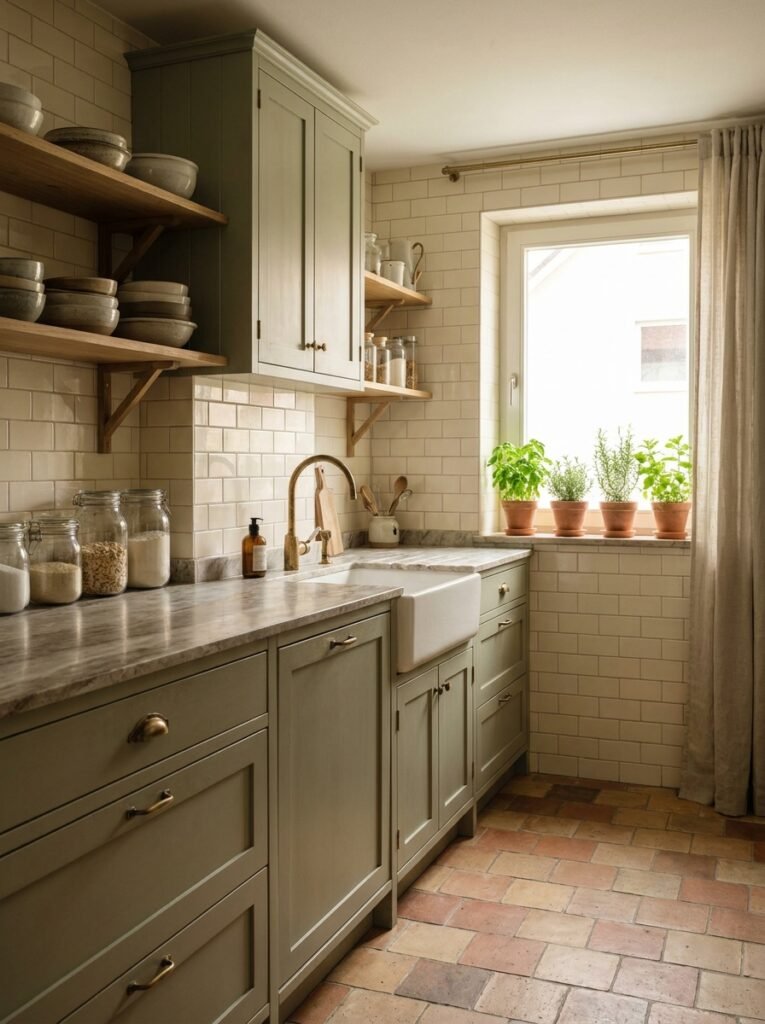
Kitchens in older Altbau buildings often present a specific challenge: they tend to be smaller than modern open-plan layouts, with original tile details, old plumbing configurations, and sometimes very little natural light. But they also carry enormous potential for character.
Rather than gutting an Altbau kitchen and replacing everything with sleek modern cabinetry, consider a more layered approach. Keep or replicate period-appropriate details where possible — subway tile in a warm cream or sage green, simple Shaker-style cabinets in a muted color, open shelving to display ceramics and glassware. A farmhouse-style sink, a freestanding dresser used for storage, vintage brass hardware — these choices acknowledge the kitchen’s age without making it feel like a museum.
The materials matter enormously. Natural stone countertops, aged wood shelving, concrete floors, terracotta tile — these age gracefully and sit comfortably alongside old plaster walls in a way that polished white quartz never quite manages.
—
8. Incorporating Modern Comfort Without Erasing Character
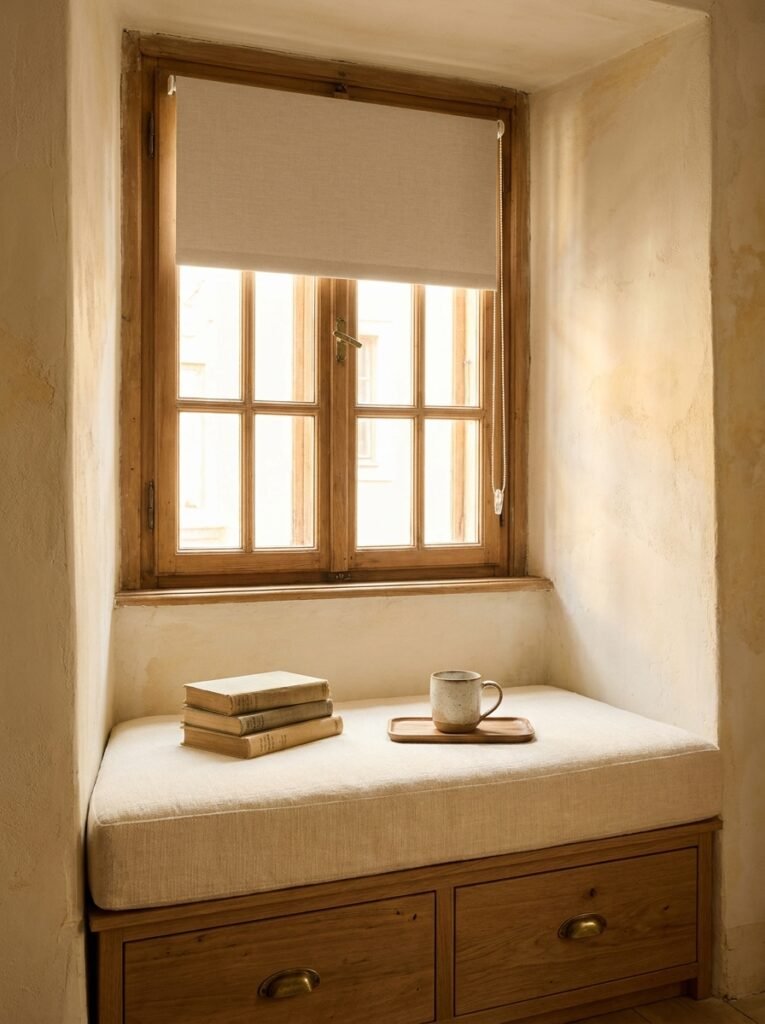
Living in an Altbau is romantic — until the radiators bang at three in the morning and the single-pane windows let in a February draft. The real skill of Altbau interior design is making the space not just beautiful but genuinely comfortable to live in, without compromising its character.
Modern underfloor heating can be installed beneath existing parquet if you work with the right specialists — it eliminates the visual intrusion of large radiators while keeping the floor warm underfoot. High-quality roller blinds or secondary glazing address the insulation problem without touching the original window frames. Integrated storage solutions — built into alcoves, beneath window seats, inside original niches — solve the practical storage deficit that older apartments often carry.
The goal is invisible modernity: modern systems that serve you without announcing themselves, tucked behind original details, working quietly so that the architectural beauty remains uninterrupted.
—
9. Textiles and Layering: How to Make a Grand Space Feel Intimate
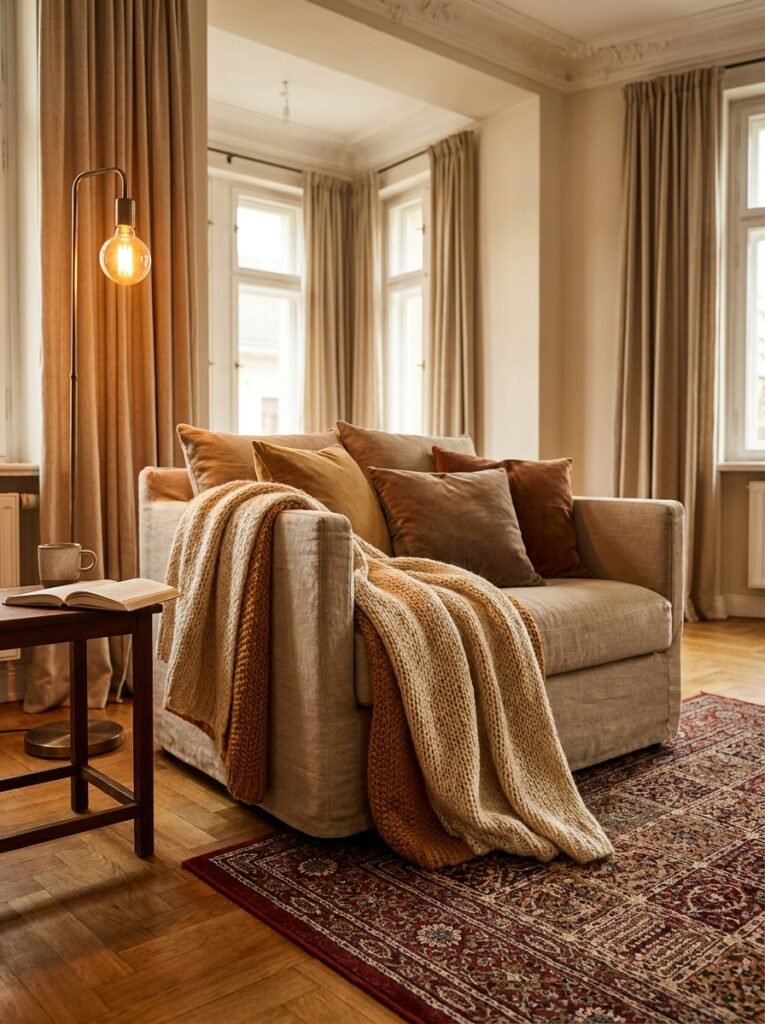
High ceilings and large rooms are beautiful, but they can feel cold or echoey without careful attention to soft furnishings. The secret to making an Altbau interior feel genuinely warm and lived-in lies in layering — not in the maximalist sense, but with intention.
Layer rugs over parquet. Layer cushions in different weights and textures across a sofa. Use curtains made of heavier fabric in winter and swap them for linen in summer — this seasonal shift in textiles changes the entire mood of a room without changing its structure. Add a throw draped over a reading chair, a linen runner across a dining table, a wool blanket folded at the end of a bed.
“Grand spaces don’t need more furniture. They need more warmth.”
The tactile dimension of a room — how it feels to the hand, how it absorbs sound, how it registers at body temperature — is what separates a beautiful photograph of a space from a place that actually feels good to be in.
—
10. Art and Wall Treatment in Rooms That Already Have Architecture
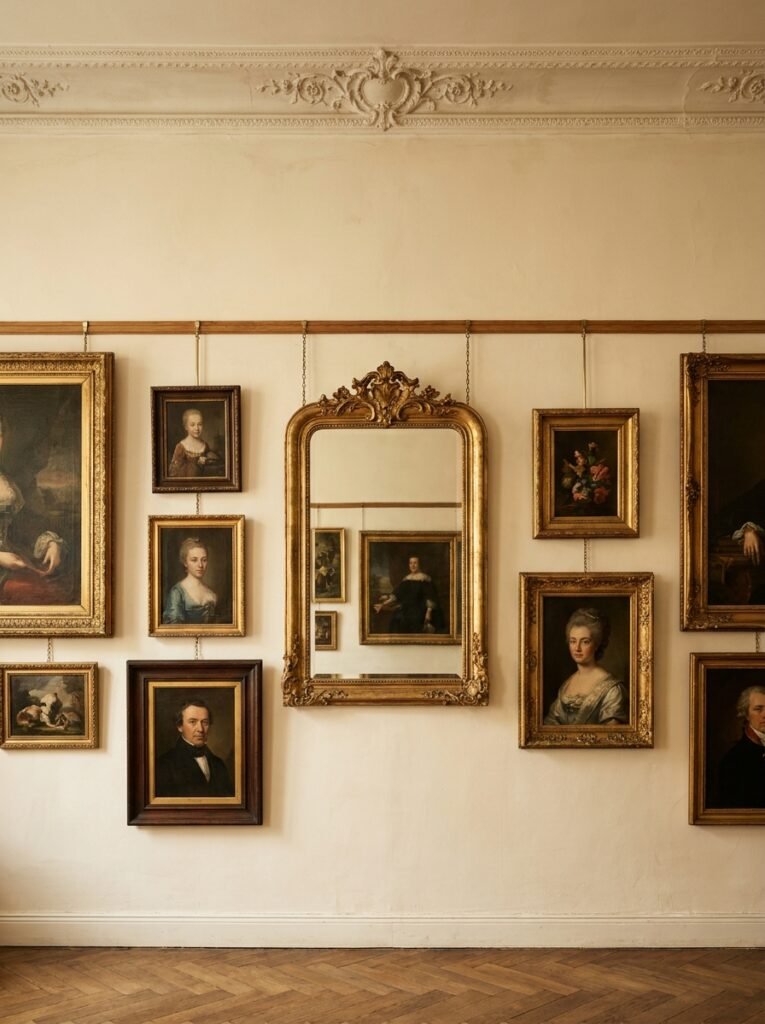
When your walls have plaster cornices, picture rails, and sometimes original hand-painted borders, the question of how to hang art becomes genuinely interesting. These rooms were designed in an era when art was expected — the picture rail wasn’t decorative, it was functional, and it’s still the most elegant way to hang large art without putting a single nail into original plaster.
Use the picture rail. Hang paintings at varying heights. Group works in salon-style arrangements that respect the scale of the wall. In Altbau interiors, modest-sized art can look dwarfed — lean toward larger canvases, oversized mirrors, or gallery walls with enough pieces to fill the vertical space.
Wall treatment beyond art can include: limewash paint, which has a depth and variation that flat paint can’t replicate and which reads beautifully against original plaster; stripped walls where the plaster itself becomes the texture; or simple, large-format wallpaper in a botanical or abstract pattern that complements rather than competes with the architectural detail.
—
11. Plants and Natural Elements in Altbau Spaces
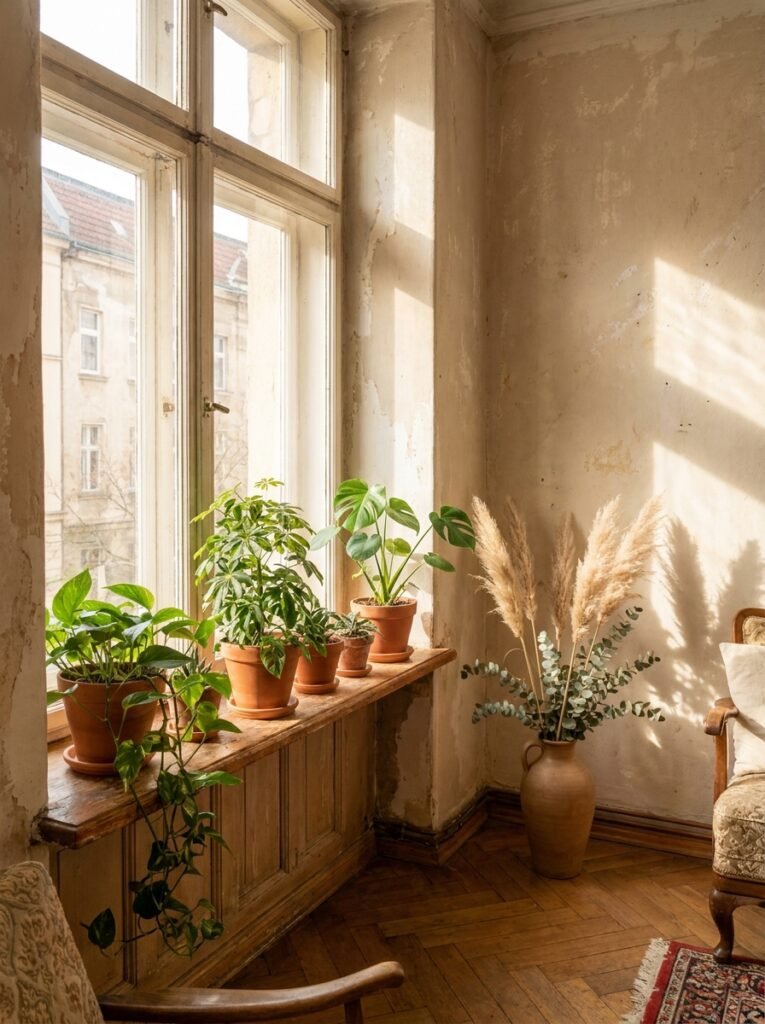
There’s something about the combination of aged plaster, warm wood, and abundant natural light that makes Altbau apartments extraordinarily good environments for plants. Large-leafed tropical plants — a fiddle leaf fig, a monstera, a bird of paradise — read in proportion with tall ceilings and fill vertical space beautifully.
Trailing plants on shelving or above cabinetry soften hard architectural lines. A cluster of terracotta pots on a deep windowsill creates a domestic, human scene in front of those tall windows. Dried botanicals — pampas grass, dried eucalyptus, pressed flowers in vintage frames — add a quieter kind of natural element that requires no maintenance and ages beautifully.
The presence of living things in a historical space creates a particular kind of beauty — it signals that this is not a preserved artifact but an actively lived-in home.
—
12. Letting Imperfection Be Part of the Design
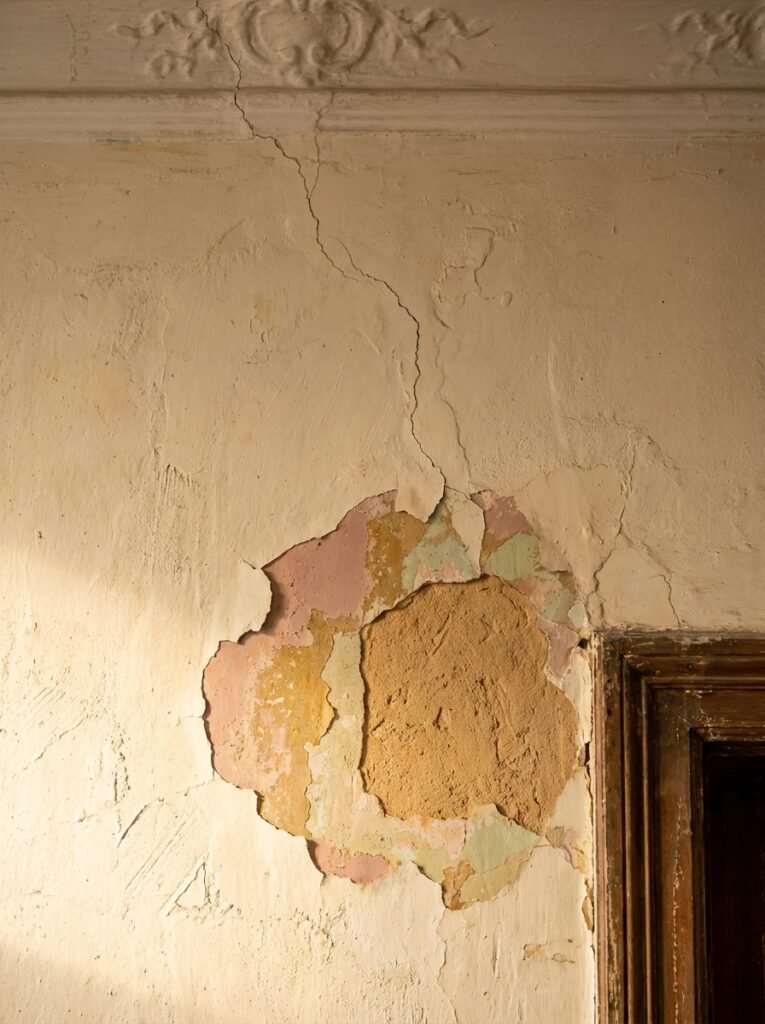
This is perhaps the most important principle of all, and the one that takes the longest to internalize: in an Altbau interior, imperfection is not a flaw. It is the point.
The crack in the plaster that runs from the cornice to the door frame. The parquet board that has been replaced and doesn’t quite match. The window that sticks slightly in humid weather. The slight unevenness of a wall that no amount of paint will fully conceal. These are not problems to be solved — they are evidence of time, and time is exactly what makes these buildings irreplaceable.
The decorating approach that serves Altbau spaces best is one that works with imperfection rather than against it: embracing exposed plaster rather than covering it, choosing furniture that shows its own age and wear, selecting materials that will develop patina over years rather than maintaining a pristine factory finish.
The spaces that feel most alive — most genuinely human — are the ones that aren’t trying to be perfect.
—
🌿 How to Care for Your Altbau Interior
Maintaining an Altbau interior is less about preservation and more about stewardship — treating what’s already there with enough respect that it continues to age gracefully.
Clean original parquet with as little water as possible — a slightly damp mop and a wood-appropriate cleaner, followed by a dry pass, is sufficient. Avoid steam mops entirely, as they can lift the adhesive beneath older parquet panels.
Check your plaster ceilings seasonally for hairline cracks, particularly after temperature changes. Small cracks can be filled and repainted, but if you notice recurring or widening cracks, consult a specialist — it may indicate movement in the building that deserves professional attention.
Keep original window hardware clean and lightly oiled. Original casement handles and hinges are often irreplaceable if they break or corrode, so preventative care is always easier than restoration.
Be patient with imperfect walls. Rather than over-skim and repaint repeatedly, allow the wall texture to be part of the design. A limewash or clay-based paint can transform an imperfect wall from a source of frustration into a genuine aesthetic feature.
Finally, resist the urge to change too much too quickly. Altbau interiors reveal themselves over time — what bothered you in the first month often becomes your favorite detail by the end of the first year.
—
❓ FAQ
Q: Can I mix contemporary furniture with Altbau architectural details? A: Absolutely — and in many cases, contemporary furniture actually looks stunning against historical architecture. The key is scale and warmth. Choose contemporary pieces with visual weight appropriate to tall ceilings, and favor natural materials like oak, linen, leather, and stone over plastic or cold metals. The architectural detail provides enough historical context that the furniture can be fairly modern without the combination feeling discordant.
Q: How do I deal with Altbau windows that let in drafts and noise? A: The most effective solution that doesn’t compromise the original windows is secondary glazing — a thin inner panel installed inside the existing frame that creates an insulating air gap. It’s far less disruptive than replacement windows and preserves the original character entirely. For drafts specifically, high-quality draft excluders on the frames and heavy curtains make a meaningful difference for a fraction of the cost.
Q: Is it expensive to decorate an Altbau apartment well? A: Not necessarily — and in many ways, Altbau spaces are actually more forgiving of budget decorating than modern apartments, because the architectural bones do so much heavy lifting. Second-hand and vintage furniture fits naturally in these spaces. Original details like parquet floors and stucco ceilings are free design features that money can’t easily replicate. Focus your budget on quality textiles, good lighting, and a few thoughtfully chosen large pieces rather than filling the space with many smaller, cheaper items.
—
💭 Final Thought
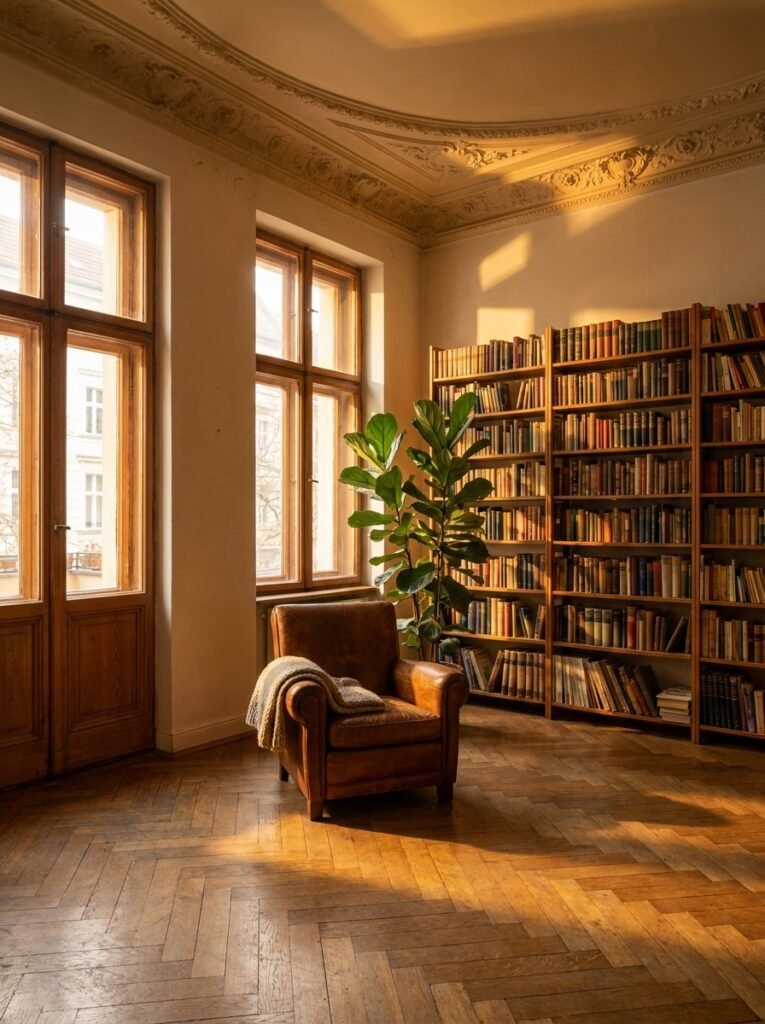
An Altbau interior, at its best, is not a style choice — it’s a way of being in relationship with history. The people who live most happily in these spaces are the ones who stop trying to conquer the apartment’s character and start listening to it instead. There’s a particular kind of satisfaction that comes from a room that feels like it has always been exactly this way, even though you built it yourself, piece by piece, over months and years.
So as you stand in your high-ceilinged room with its beautiful old light, the question worth sitting with is this: what does this space already know that you haven’t learned to see yet?