
Mirrors in Living Room Ideas That Make Every Space Feel Like a Dream
There’s a moment — you know the one — when you walk into a room and it just feels right. The light is perfect, the space feels open, and somehow everything looks more beautiful than it has any right to. Nine times out of ten, there’s a mirror involved. Mirrors are one of the most quietly powerful tools in interior design, and once you understand how to use them, your living room will never look the same again.
—
1. Why Mirrors Are the Secret Weapon Every Living Room Needs
Let’s start with the honest truth: mirrors are not just decorative accessories. They are architectural tools — the kind that can completely transform the perceived size, light, and mood of a room without knocking down a single wall. A mirror placed thoughtfully in a living room can double the sense of depth, bounce natural light into shadowy corners, and create the illusion of a second window where there is none.
Interior designers have quietly relied on this trick for decades. The reason you walk into a high-end hotel lobby and immediately feel like the space is grand and luminous? Mirrors. The reason that boutique apartment in a design magazine looks three times bigger than your own identically sized space? Mirrors, strategically placed.
“A mirror doesn’t just reflect your face — it reflects possibility. It shows a room what it could be.”
What makes mirrors particularly brilliant for living rooms is their versatility. Unlike paint, which commits you to a color, or furniture, which anchors a layout, a mirror can be moved, restyled, and repurposed as your tastes evolve. It’s the most flexible piece of decor you can invest in.
2. The Leaning Mirror Moment — Casual Elegance You Can Create Today
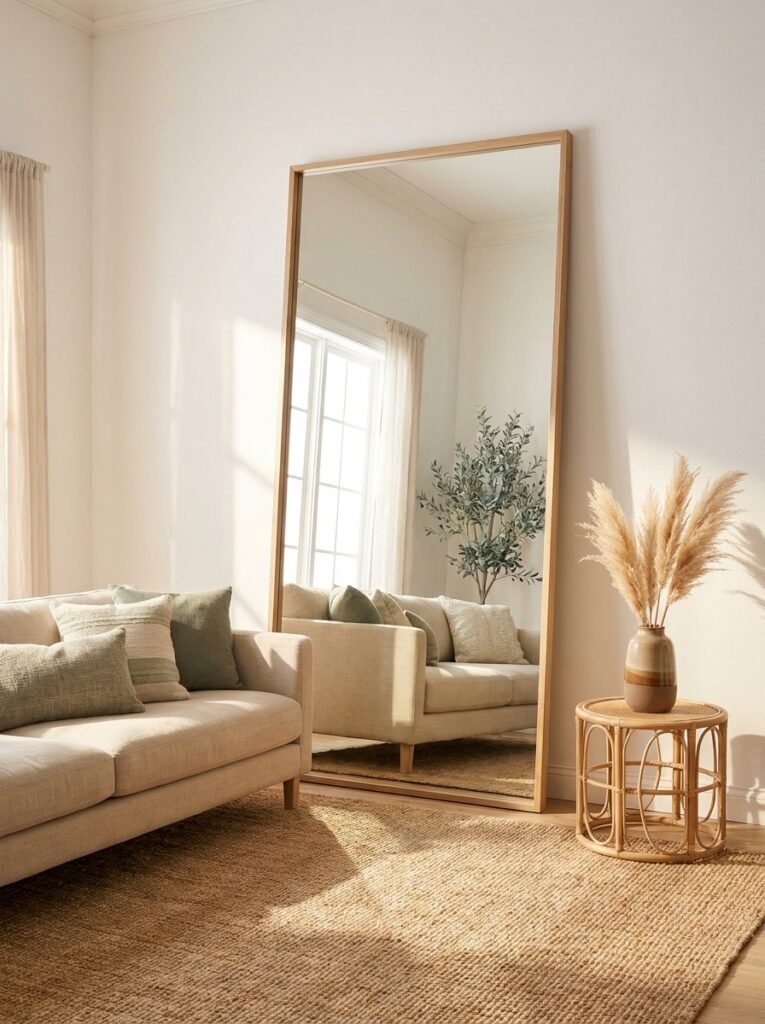
Imagine a tall, oversized mirror simply leaning against the wall behind your sofa — no hammers, no hanging hardware, no commitment. It sounds almost too simple, but the leaning mirror has become one of the most beloved living room styling trends for a reason. It brings an effortless, lived-in quality to a space that feels simultaneously curated and relaxed.
The magic of the leaning mirror lies in its scale. When you choose a mirror that reaches close to the ceiling — we’re talking anything above five feet tall — it draws the eye upward, creating the feeling of higher ceilings without a single structural change. Pair it with a simple linen sofa and some natural textures like rattan or jute, and you have the kind of space that gets pinned ten thousand times.
For maximum effect, lean your mirror in a corner or behind a piece of furniture rather than flat against a blank wall. The slight angle catches light differently throughout the day, creating subtle shifts in the room’s atmosphere that feel almost cinematic.
3. How to Use Mirrors to Steal More Natural Light (Even in Dark Rooms)
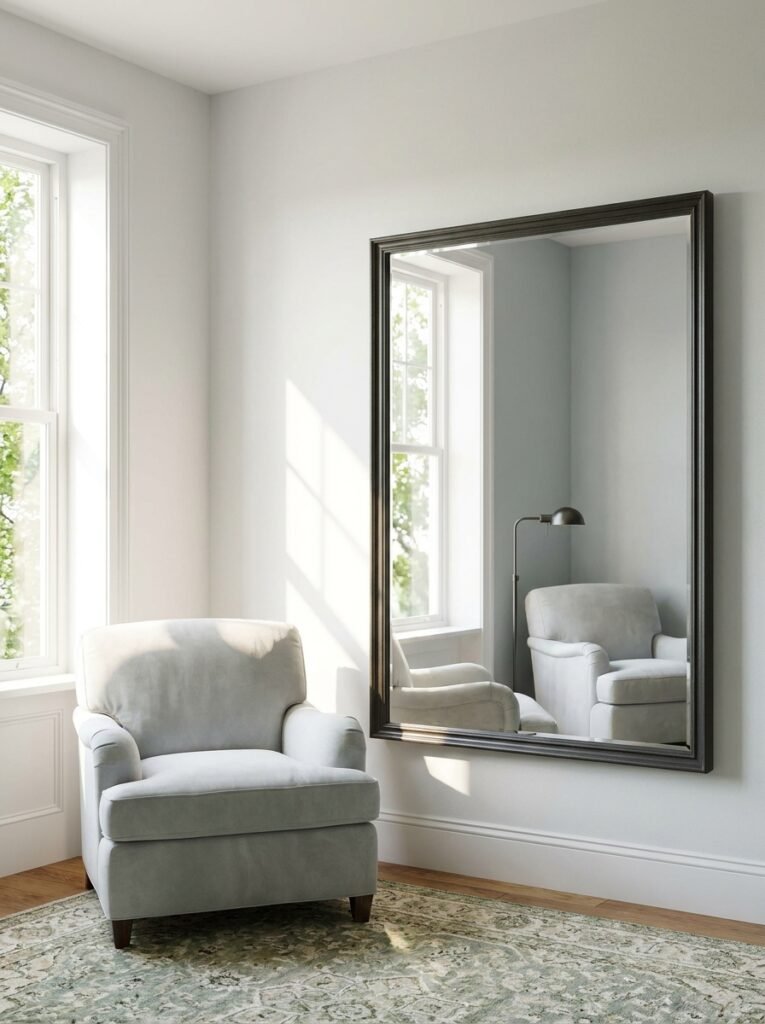
If your living room feels like it’s constantly fighting a losing battle against dim lighting, a mirror might be the most practical solution you haven’t tried yet. The physics is beautifully simple: mirrors reflect light. Place one opposite or adjacent to a window, and it bounces that natural light deeper into the room, illuminating corners that would otherwise stay perpetually shadowy.
The key is placement with intention. A mirror hung directly opposite a window doesn’t just reflect the light — it reflects the view. Suddenly, your living room appears to have two windows instead of one. If your window looks out onto a garden, a tree, or even just a pleasant sky, that reflected view adds a layer of organic beauty to your interior that no artwork could quite replicate.
For rooms with very little natural light — think north-facing spaces or ground-floor apartments — consider grouping multiple smaller mirrors together to create a gallery wall that functions like a collective light reflector. The effect is subtle but genuinely transformative over the course of a day.
4. The Gallery Wall of Mirrors — Creating Art From Reflection
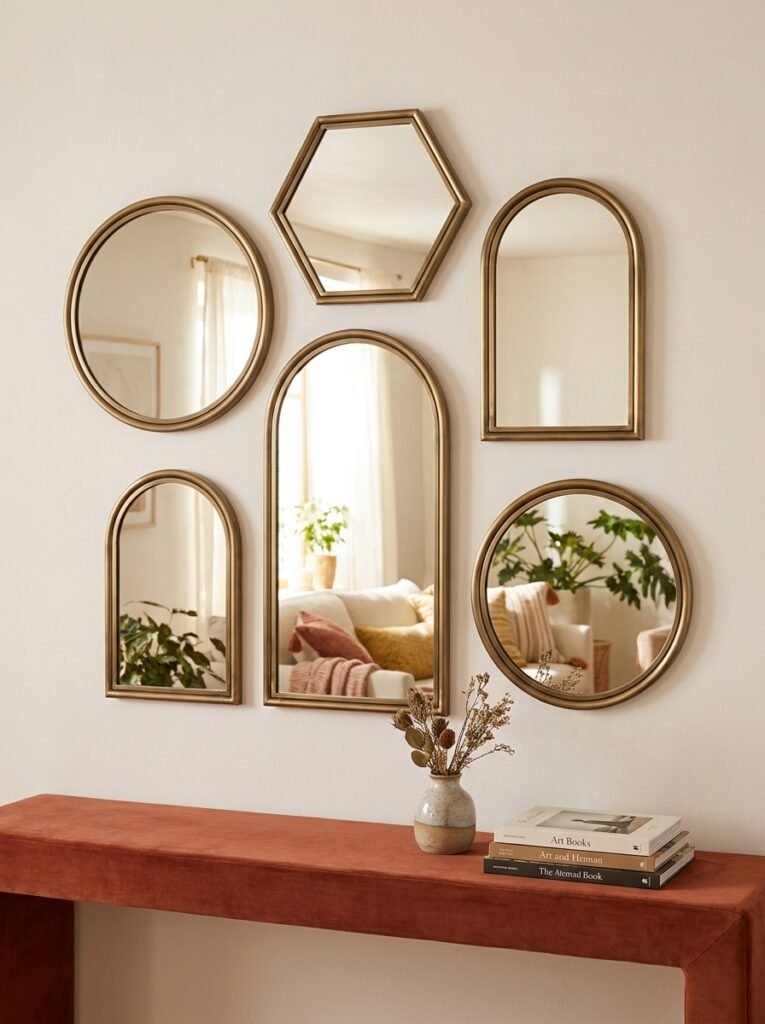
Speaking of gallery walls, let’s talk about one of the most creative and Pinterest-worthy ways to use mirrors in a living room: arranging them in a gallery-style cluster. This approach treats mirrors not as functional objects but as art pieces — and the results can be genuinely stunning.
The trick to making a mirror gallery wall look intentional rather than chaotic is variation with coherence. Vary the shapes — round, rectangular, arched, hexagonal — but anchor the collection with a consistent theme. That theme might be frame material (all brass, all black, all natural wood), frame style (all ornate, all minimal), or simply scale (all small, creating an intimate mosaic effect).
Odd numbers tend to arrange more naturally than even numbers — three, five, or seven mirrors grouped together have a visual rhythm that feels organic. Start by laying your arrangement out on the floor before committing anything to the wall. Take a photo on your phone, step back, and study it. Only when it feels right should you start marking your wall.
5. Mirror Frame Styles That Tell a Story About Who You Live
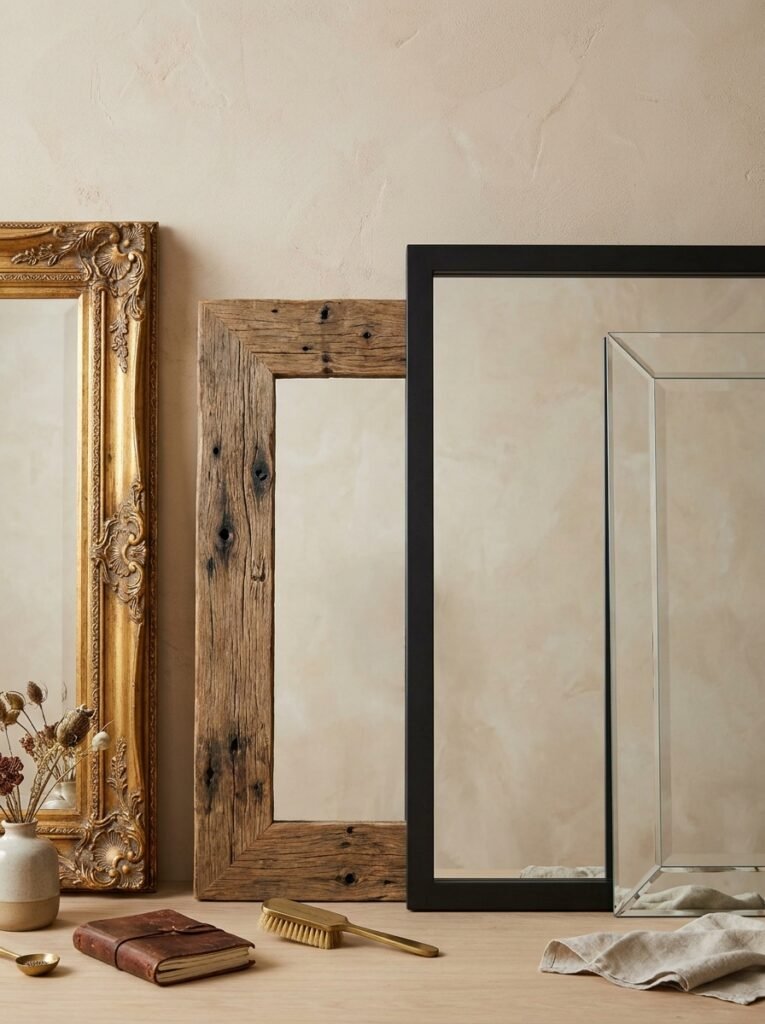
Here’s something worth sitting with: your mirror frame is not just trim. It’s a character statement. The frame you choose communicates something about your aesthetic, your personality, and the story you’re telling with your living room.
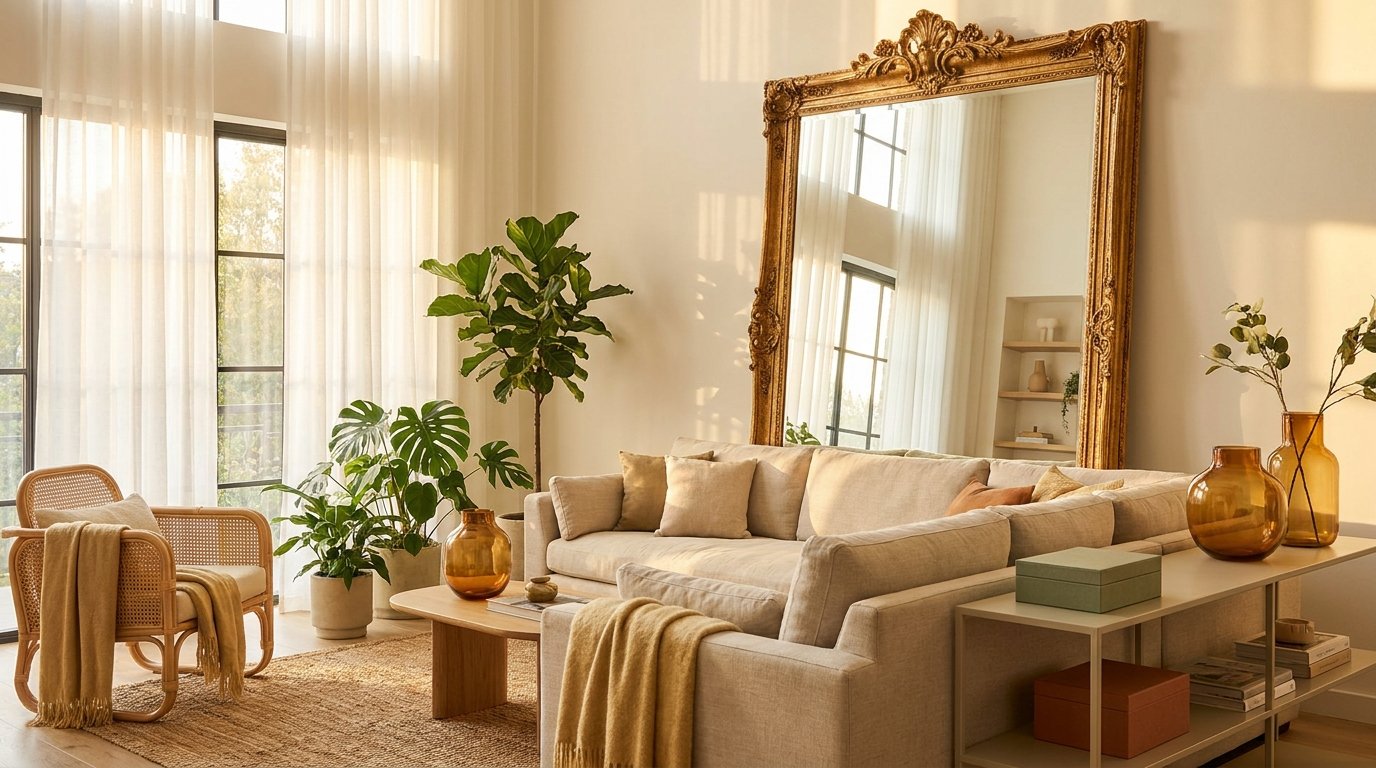
An ornate gilded frame with intricate detailing whispers of European grandeur — it pairs beautifully with velvet sofas, rich jewel tones, and layered textiles. A raw, reclaimed wood frame speaks to an earthy, grounded sensibility that feels at home alongside linen, terracotta, and hand-thrown ceramics. A sleek black metal frame with clean lines says modern and confident — the kind of frame that belongs in a space with concrete floors, leather accents, and architectural plants.
“The frame you choose isn’t just decoration — it’s the first sentence of your room’s story.”
Frameless mirrors, on the other hand, are the quiet achievers. Their barely-there presence makes them architectural rather than decorative, allowing the reflection itself to be the focal point. In minimalist or Scandinavian-inspired living rooms, a frameless mirror can feel like a window into another dimension — clean, calm, and perfectly placed.
6. Round Mirrors and Why They Soften Every Living Room They Enter
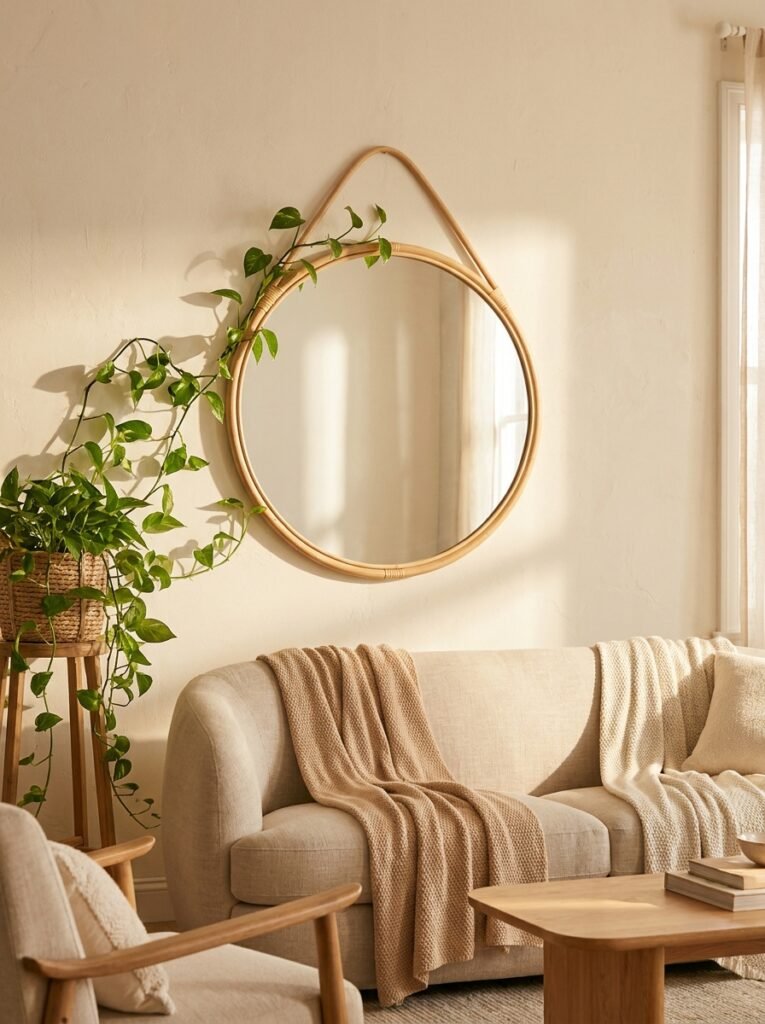
There is something almost meditative about a round mirror. In a world full of right angles — rectangular sofas, square coffee tables, boxy televisions — a circle is a breath of fresh air. Round mirrors introduce a softness and flow to living rooms that instantly makes the atmosphere feel warmer and more welcoming.
This is why the round mirror has become such a staple of interior design over the past several years, and why it shows no sign of fading. It works in almost every style — bohemian, coastal, modern farmhouse, mid-century modern, and contemporary minimalist. Its circular form is inherently harmonious, and its placement above a fireplace, sofa, or console table creates an immediate focal point that draws the eye without demanding too much attention.
One beautiful way to use a round mirror is to hang it slightly lower than you might expect — closer to eye level when seated rather than standing. This creates a more intimate relationship between the mirror and the furniture below it, and makes the space feel scaled and intentional rather than accidental.
7. Mirrors Above the Fireplace — The Classic Combination That Never Gets Old
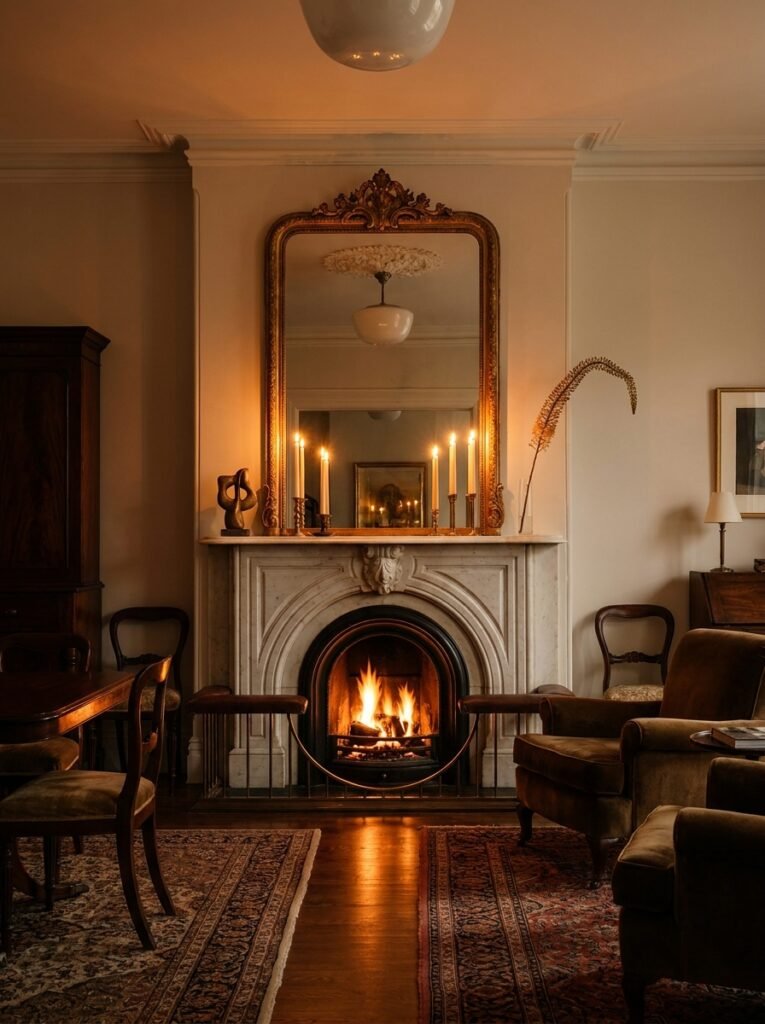
Few living room combinations have the staying power of a mirror above a fireplace. It’s a pairing that has appeared in everything from Victorian drawing rooms to contemporary loft apartments, and for good reason: it works. The mirror amplifies the fireplace as a focal point, reflects the flickering warmth of the flames, and creates a vertical presence that anchors the entire room.
The fireplace is already a natural gathering point — a place where people gravitate and conversation flows. A mirror above it elevates that energy. It creates a moment of grandeur, a sense that something important lives in this corner of your home. Style the mantel beneath it with candles, books, small sculptures, or a single statement plant, and you have a vignette that belongs in a design magazine.
What size mirror should you choose for above a fireplace? As a general rule, aim for a mirror that is roughly two-thirds the width of your fireplace opening. This creates visual balance without overwhelming the mantelpiece. If your ceilings are particularly high, you can push toward a taller, more dramatic mirror — the proportions can handle it.
8. Arched Mirrors — The Architectural Detail Your Living Room Has Been Missing
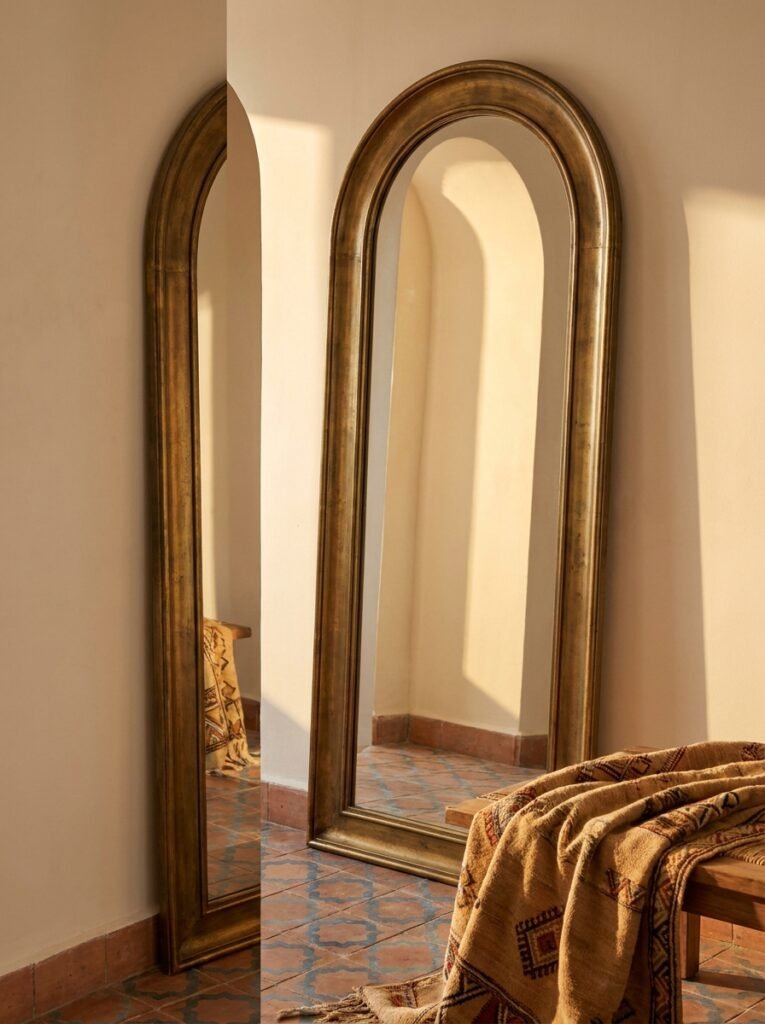
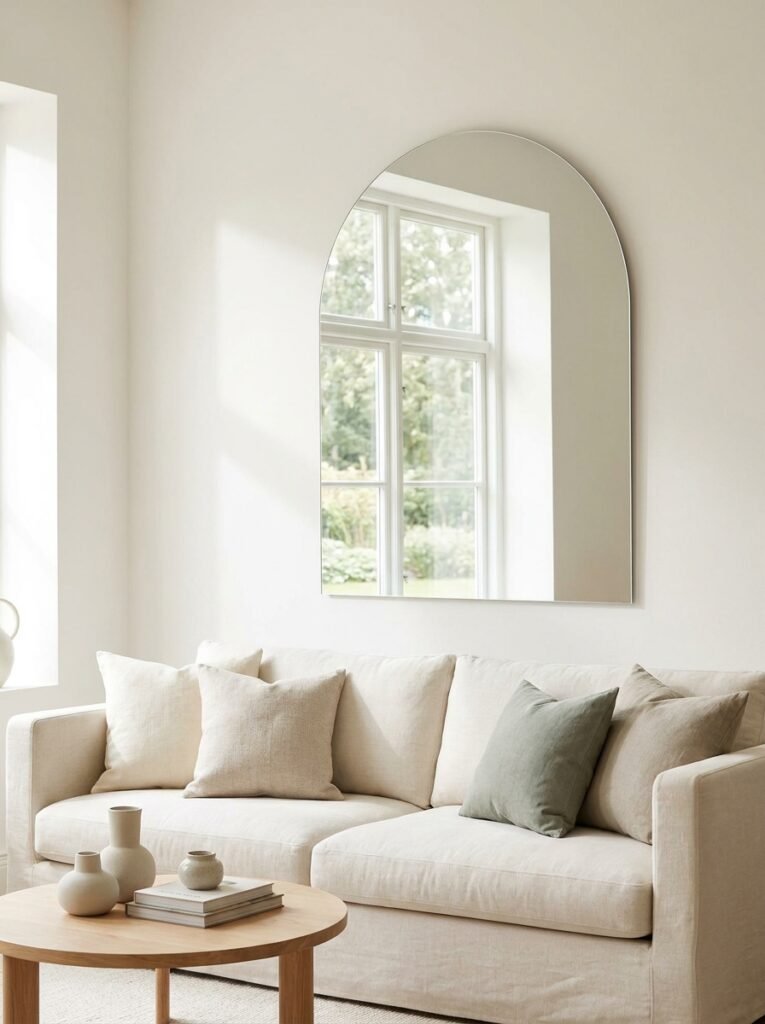
The arched mirror is having its cultural moment, and it has earned every bit of the attention. With its curved top that mimics the shape of a doorway or window, an arched mirror introduces an architectural quality to a living room that feels both timeless and fresh simultaneously.
What makes arched mirrors so versatile is their ability to reference history while feeling completely current. A tall, slender arched mirror in antique brass feels vaguely Moroccan — layered with pattern, warmth, and texture, it becomes deeply evocative. That same shape in matte black against a white wall feels razor-sharp and contemporary. In natural wood with a simple finish, it leans Scandinavian and serene.
Place an arched mirror near a doorway or hallway entrance to amplify the architectural lines of your space. The repetition of the arch shape — mirror plus doorway — creates a visual rhythm that makes even the simplest room feel designed.
9. Small Living Room? Here’s Exactly How to Use Mirrors to Make It Feel Larger
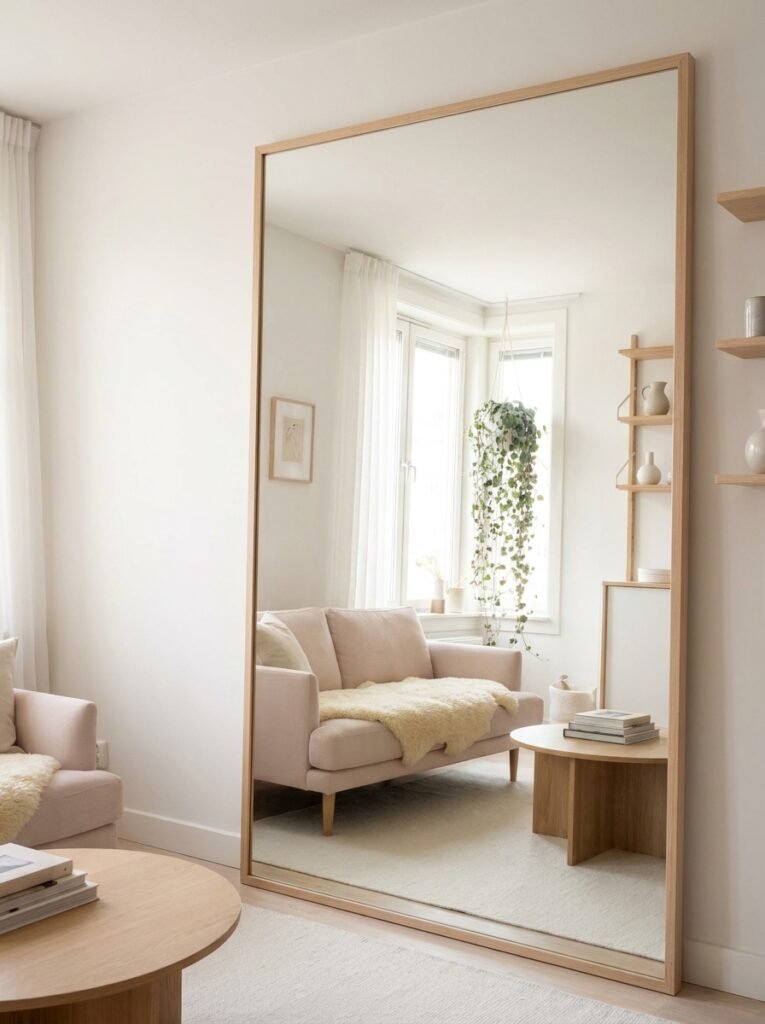
If you live in a small apartment or a compact home, mirrors are not just decorative — they are genuinely functional tools for improving how a space feels to live in. The right mirror in the right position can make a small living room feel remarkably spacious, airy, and considered.
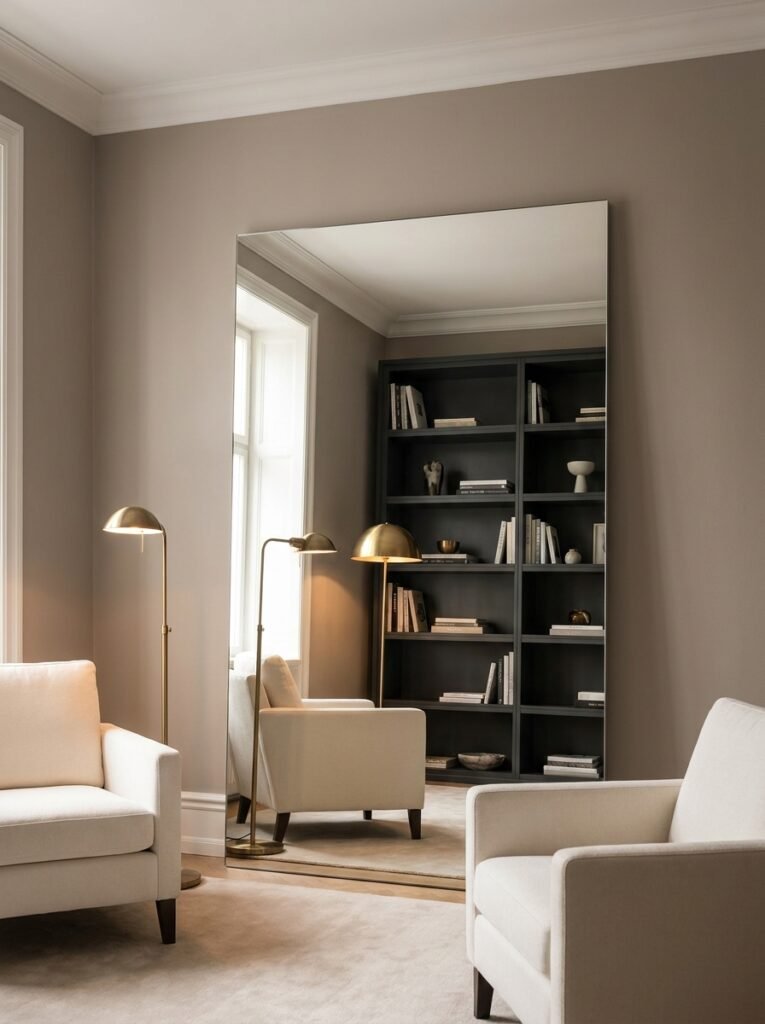
The most powerful placement for small spaces is the full-length or near-full-length mirror on a longer wall, placed vertically. This elongates the room’s perceived dimensions in both height and depth, tricking the eye into reading the space as larger than it actually is. Pair this with light-coloured walls, minimal furniture, and good lighting, and the transformation can feel almost miraculous.
“In a small space, a mirror isn’t a luxury — it’s the smartest design decision you’ll make.”
Another strategy for small living rooms is to avoid hanging mirrors too high. A mirror that reflects the ceiling tells your eye that the ceiling is the dominant surface — which makes the room feel lower and more compressed. A mirror that reflects the rest of the room, including furniture, windows, and light sources, creates a sense of spatial continuity that expands the perceived boundaries of the space.
10. Mixing Metals and Mirrors — A Styling Trick That Feels Luxurious
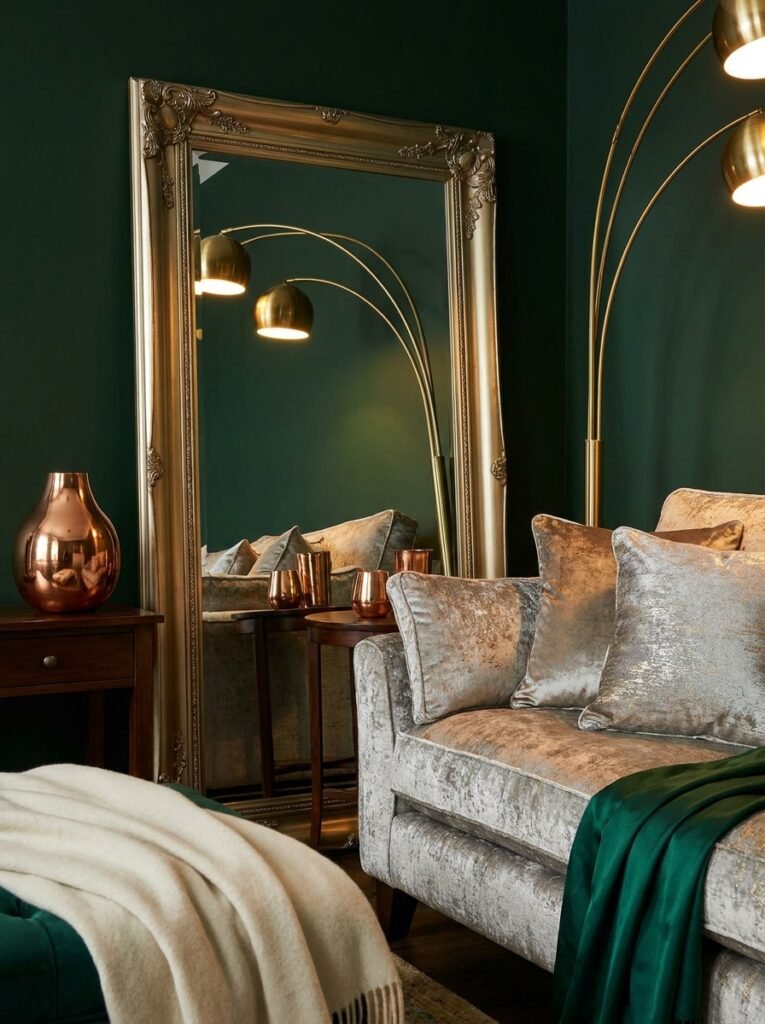
If you’ve ever wondered why some living rooms feel rich and layered while others — with equally good furniture — feel flat, the answer is often in the mixing of metals. And mirrors, with their reflective surfaces and metal frames, are the perfect opportunity to introduce this layering into your space.
The contemporary rule of mixing metals is this: choose one dominant metal and one or two accent metals. Your dominant metal might be brushed gold — appearing in your mirror frame, your light fixture, and your side table legs. Your accent metals might be a touch of silver in your cushion fabric or a hint of copper in a small vase. The mirror, because it literally reflects everything in the room, becomes the connective tissue that ties these metallic elements together visually.
This approach works particularly well in living rooms that aim for a warm, maximalist aesthetic — think deep walls, layered rugs, mixed textiles, and abundant plants. The mirror introduces a note of glamour without tipping into excess.
11. Styled Corners with Mirrors — Making the Forgotten Spaces Shine
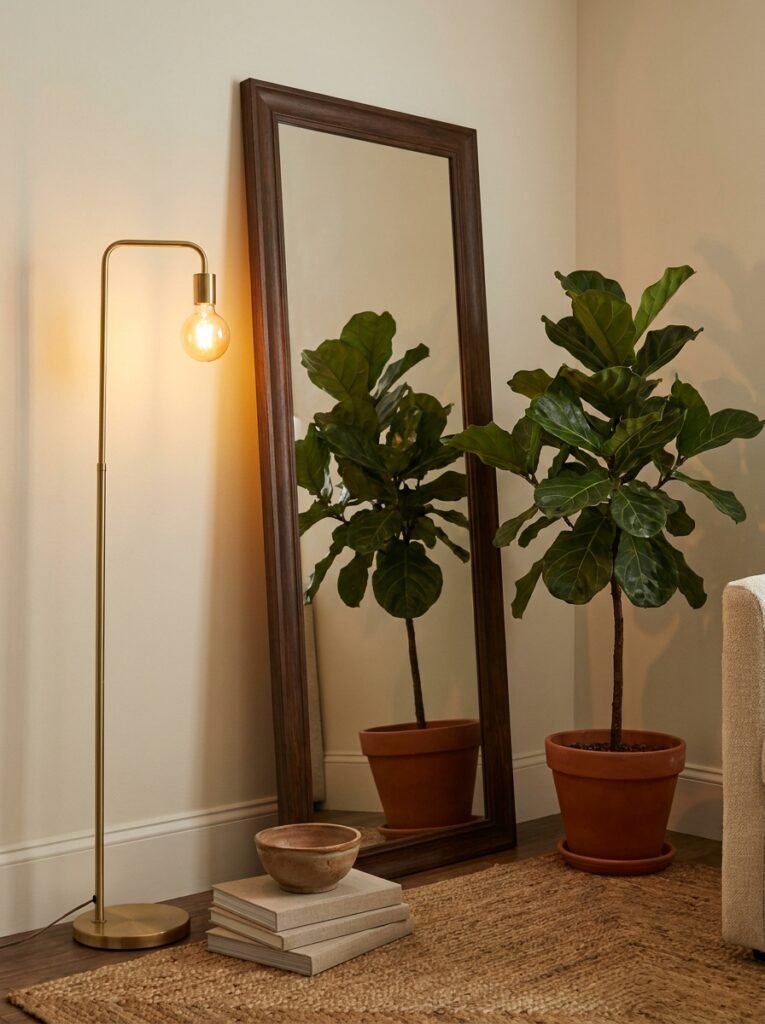
Corners are the most underutilized spaces in any living room. They collect shadows, dust, and the vague sense that something is missing. A mirror can change all of that. Placing a tall mirror in a corner — especially leaning at a slight angle — reflects light into that shadowy space and transforms an afterthought into a genuine design moment.
Style your corner mirror with intention. A tall plant positioned beside it, with its leaves reflected in the glass, creates a lush, almost botanical atmosphere. A small floor lamp tucked nearby will have its light amplified by the reflection, making the corner feel warm and inhabited rather than neglected. Add a low stool or a stack of beautiful books at the mirror’s base, and you’ve created a vignette that people will notice the moment they walk into your home.
12. Seasonal Mirror Styling — How to Keep Your Living Room Fresh All Year
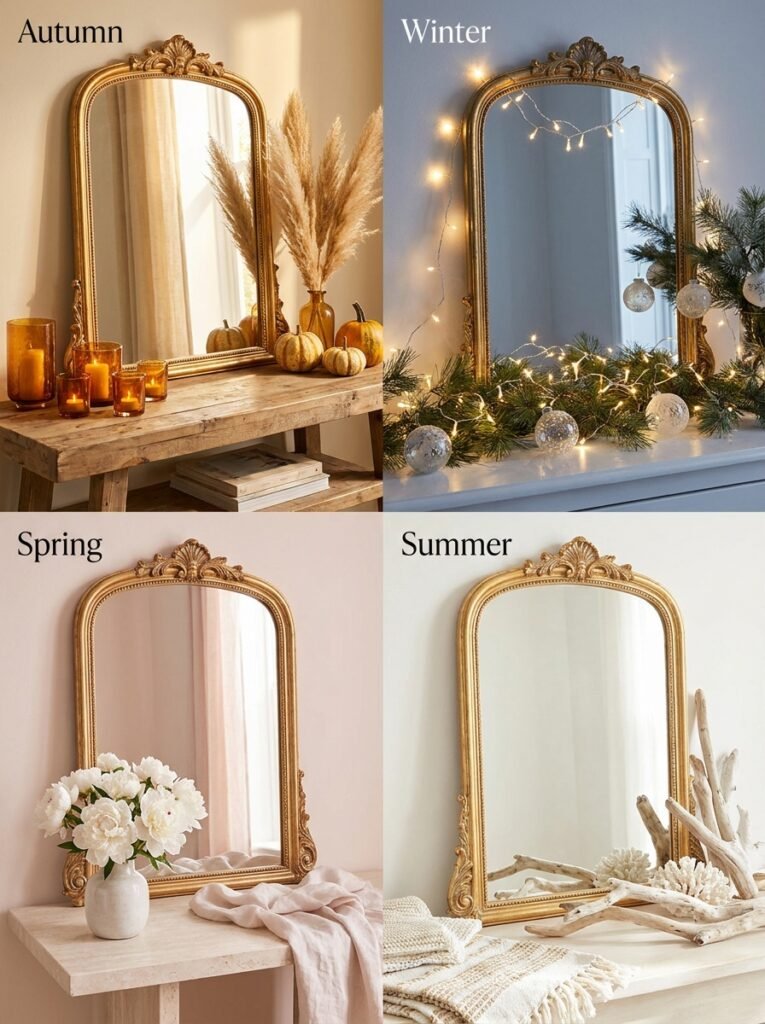
One of the most underrated joys of having a statement mirror in your living room is how easy it is to restyle around it with the changing seasons. The mirror itself becomes a permanent anchor — the frame stays, the reflection stays — but the objects you arrange around it and below it can shift with the season, keeping your space feeling alive and intentional throughout the year.
In autumn, style your mirror’s reflection with a cluster of amber candles, dried grasses, and bowls of seasonal fruit placed on the furniture below or opposite it. In winter, add fairy lights that will multiply in the mirror’s surface and create a glittering warmth. Spring calls for fresh flowers, pale linens, and delicate ceramic pieces that reflect as something almost watercolor-soft. Summer brings coastal textures — driftwood, shells, and sun-bleached tones that turn your living room into a serene retreat.
The mirror is your stage. The seasons are your set design. All you have to do is lean into it.
—
🌿 How to Take Care of Your Living Room Mirrors
A beautiful mirror deserves a little care to keep it looking its best. Start with a simple routine: clean the glass with a soft microfibre cloth and a diluted solution of white vinegar and water. Avoid harsh chemical sprays, especially on antique or gilded frames, as they can damage the finish over time. Wipe in circular motions rather than straight lines to avoid streaking. For frames — especially wooden or painted ones — dust regularly with a dry brush and treat with an appropriate polish or oil once or twice a year. If your mirror has a vintage or foxed glass surface (that beautiful mottled, aged look), avoid moisture near the edges, as water can get behind the glass and accelerate the silvering deterioration. And finally, make sure your mirror is properly and safely secured — especially large, leaning mirrors — to ensure it’s safe for everyone in your home, particularly if you have young children or pets.
—
❓ FAQ
Q: Where is the best place to put a mirror in a living room? A: The most effective placement is opposite or adjacent to a window, where the mirror can reflect natural light and make the room feel brighter and larger. Above a fireplace or behind a sofa are also classic, beautiful choices that anchor the room’s focal point.
Q: Can a living room have too many mirrors? A: Yes — balance is important. When every wall has a mirror, the reflections start to compete with each other, creating visual noise and a slightly disorienting atmosphere. As a general guide, one large statement mirror or a curated grouping of smaller mirrors is usually enough to transform a space without overwhelming it.
Q: What size mirror should I choose for my living room? A: Scale to your wall and your furniture. A mirror should generally be no wider than the piece of furniture it hangs above, and large enough to be seen clearly from across the room. As a rule of thumb, err on the side of larger rather than smaller — undersized mirrors tend to feel lost and decoratively timid.
—
💭 Final Thought
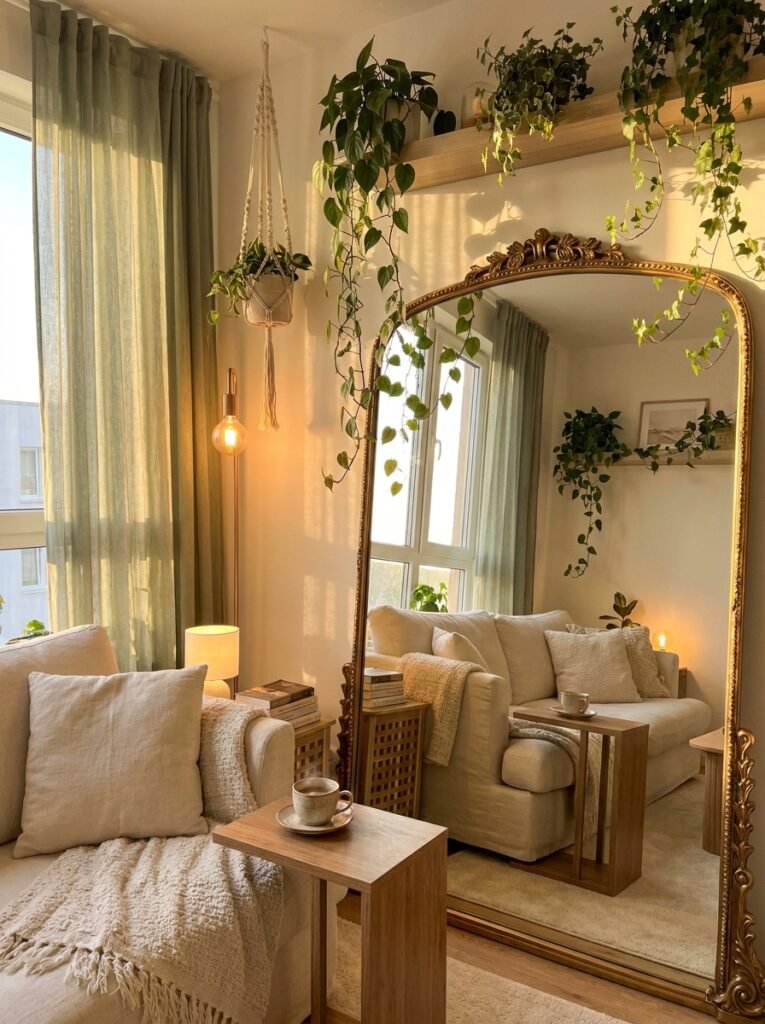
A mirror is, at its heart, an act of optimism — it takes what’s already in your living room and says, look, there’s more here than you think. More light, more space, more beauty hiding in the ordinary moments of your day. The right mirror, placed with care and styled with intention, has the power to make your home feel like the space you always imagined it could be. So as you think about your own living room — the light it holds, the corners it forgets, the walls that are waiting — ask yourself this: what might your space look like if it could finally see itself clearly?