
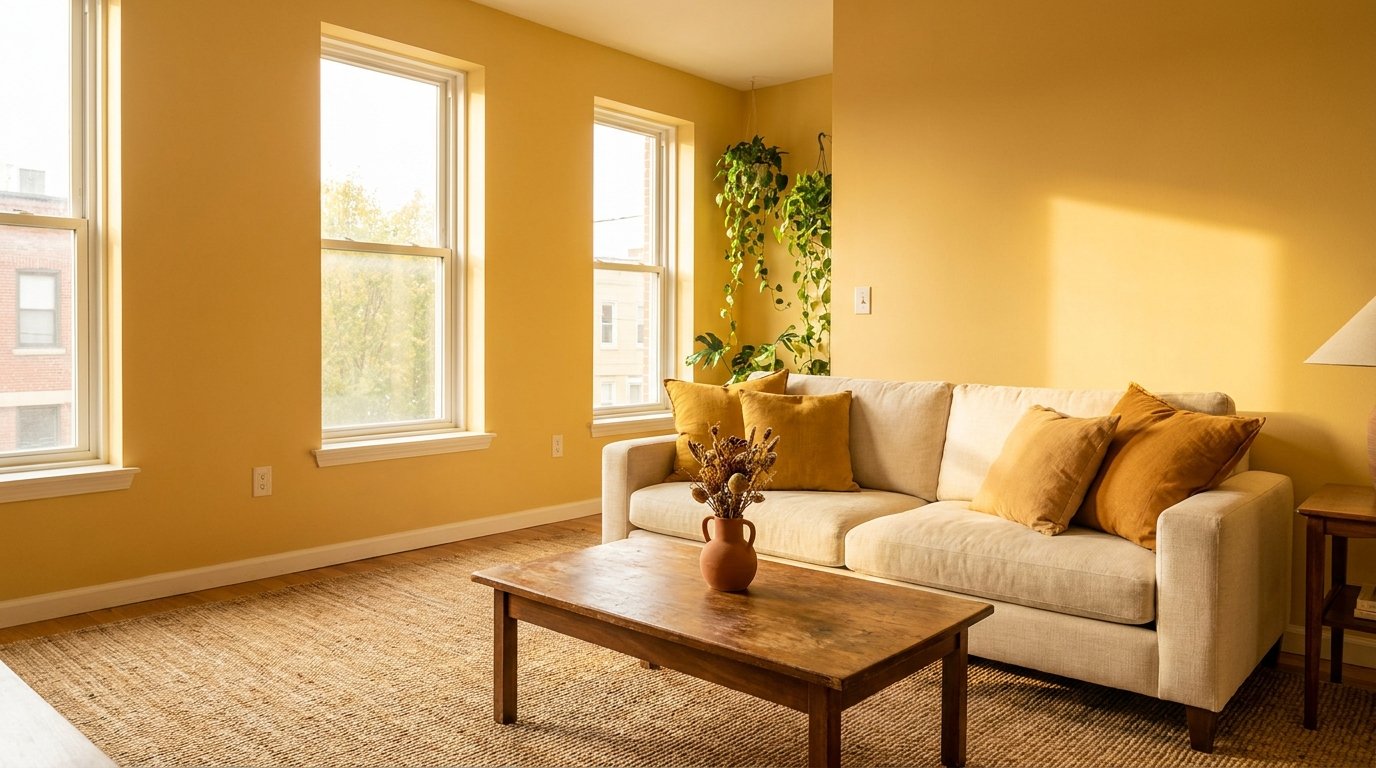
Why a Yellow Living Room Might Be the Warmest Decision You Ever Make for Your Home
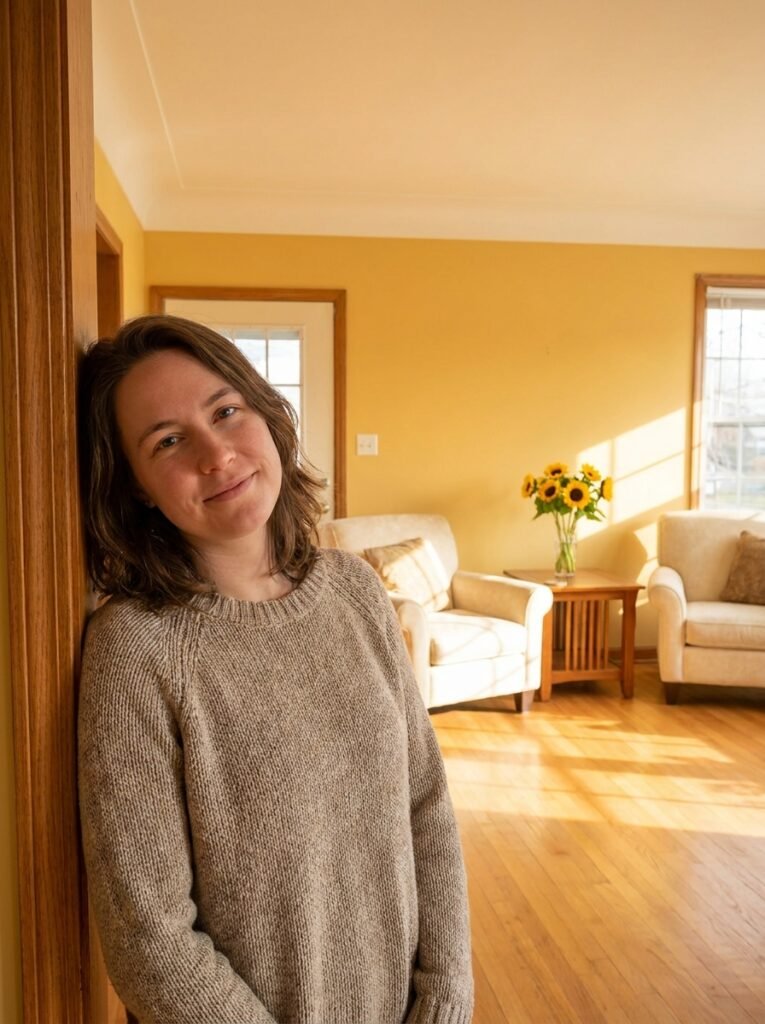
There’s a moment — you’ve probably felt it — when you step into a room and something inside you exhales. The tension in your shoulders loosens. You smile without quite knowing why. More often than not, that feeling has a color behind it, and that color is yellow.
—
1. The Quiet Power of Yellow That Most People Completely Underestimate
Yellow is one of the most misunderstood colors in interior design. People either love it boldly or dismiss it nervously, worried it’ll feel too loud, too childish, too risky. But here’s the truth that professional designers have understood for decades: yellow, used thoughtfully, is one of the most emotionally intelligent colors you can bring into a living space.
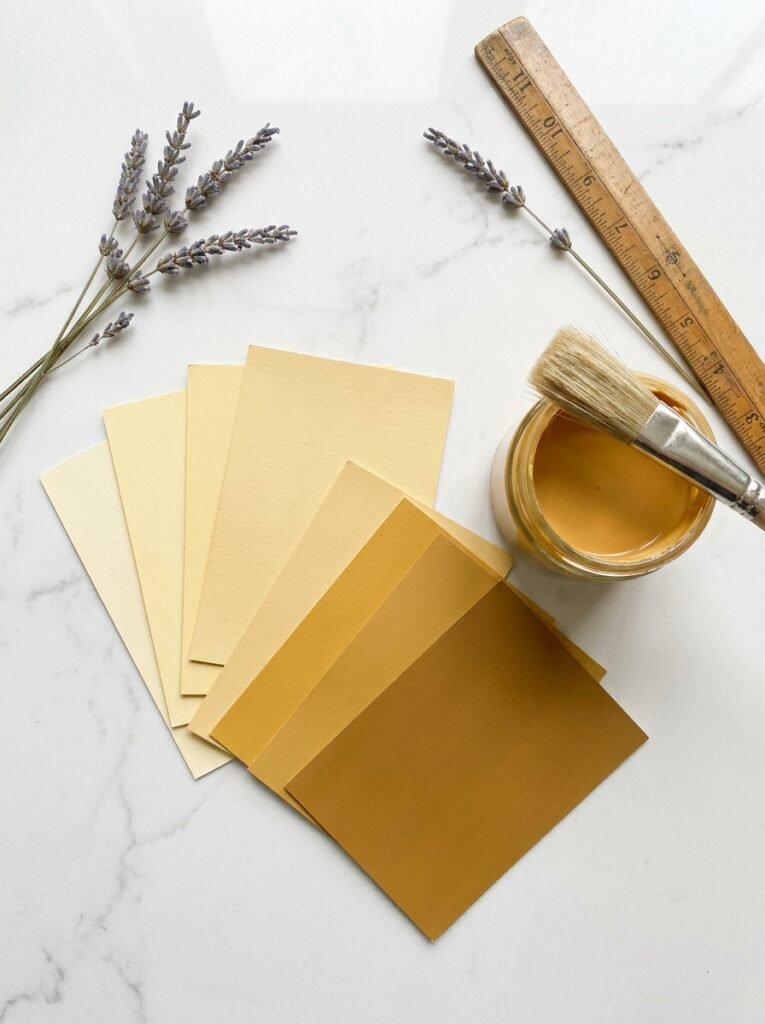
It’s not about painting every wall a screaming sunflower and calling it a day. It’s about understanding that yellow exists on a breathtaking spectrum — from the palest butter cream that barely whispers its presence, to the warm ochre that feels like it was borrowed from a Tuscan afternoon. There’s a version of yellow for every personality, every architecture style, and every level of design confidence.
The science backs up what our instincts already know. Yellow stimulates the release of serotonin, that quiet, steady chemical that tells your nervous system everything is okay. It catches light in a way no other color does — bouncing it around a room, making spaces feel generous even when they’re physically small. A yellow living room doesn’t just look bright. It feels bright, and there’s a meaningful difference between those two things.
“Yellow doesn’t just fill a room with color — it fills a room with feeling.”
2. Choosing the Right Shade of Yellow Without Getting Overwhelmed
Walk into any paint store and ask for yellow, and you’ll be handed a fan deck that could genuinely make your head spin. Lemon yellow. Honey yellow. Mustard. Goldenrod. Marigold. Buttercup. Cream. Straw. The choices feel endless, and without a framework, they absolutely are.
The most reliable way to choose your yellow is to start with the light in your room. North-facing rooms receive cooler, bluer light — and in these spaces, a yellow with warm undertones (think golden honey or soft amber) will feel welcoming rather than washed out. South-facing rooms that flood with natural light can handle deeper, more saturated yellows beautifully, like a rich mustard or a vintage ochre. East-facing rooms glow in the morning and soften in the afternoon, making them ideal for medium-warm yellows that feel energizing without being aggressive.
West-facing rooms are, in many ways, the jackpot for yellow walls — the way evening light pours in and turns everything to gold is one of those small domestic pleasures that costs nothing and means everything.
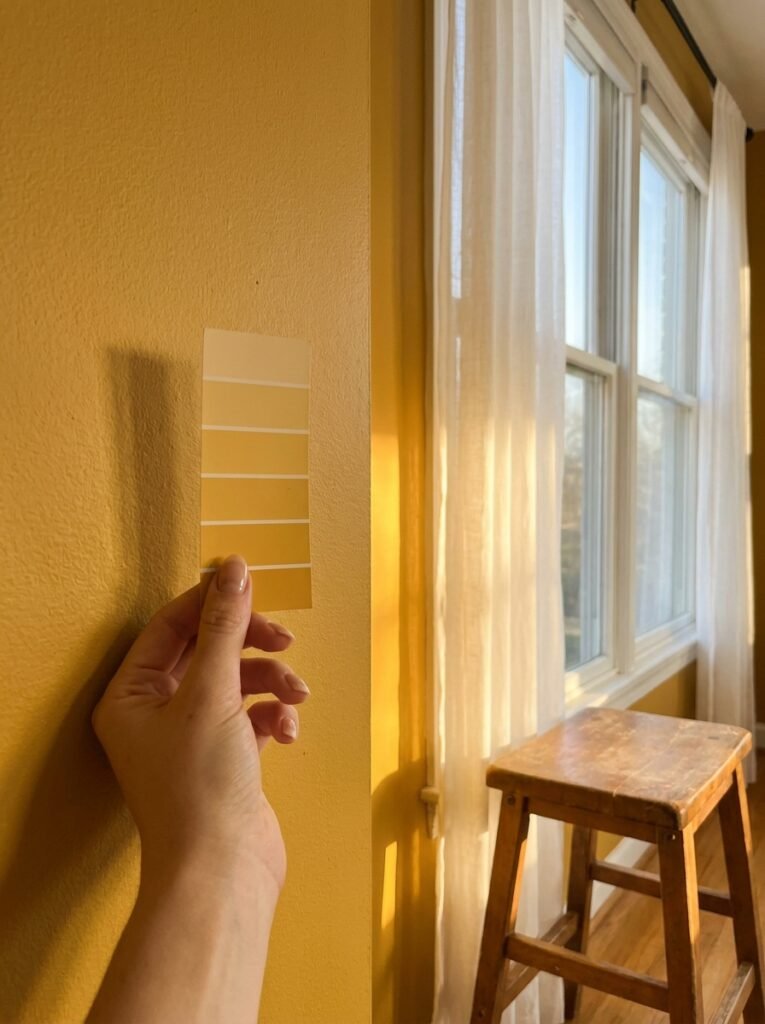
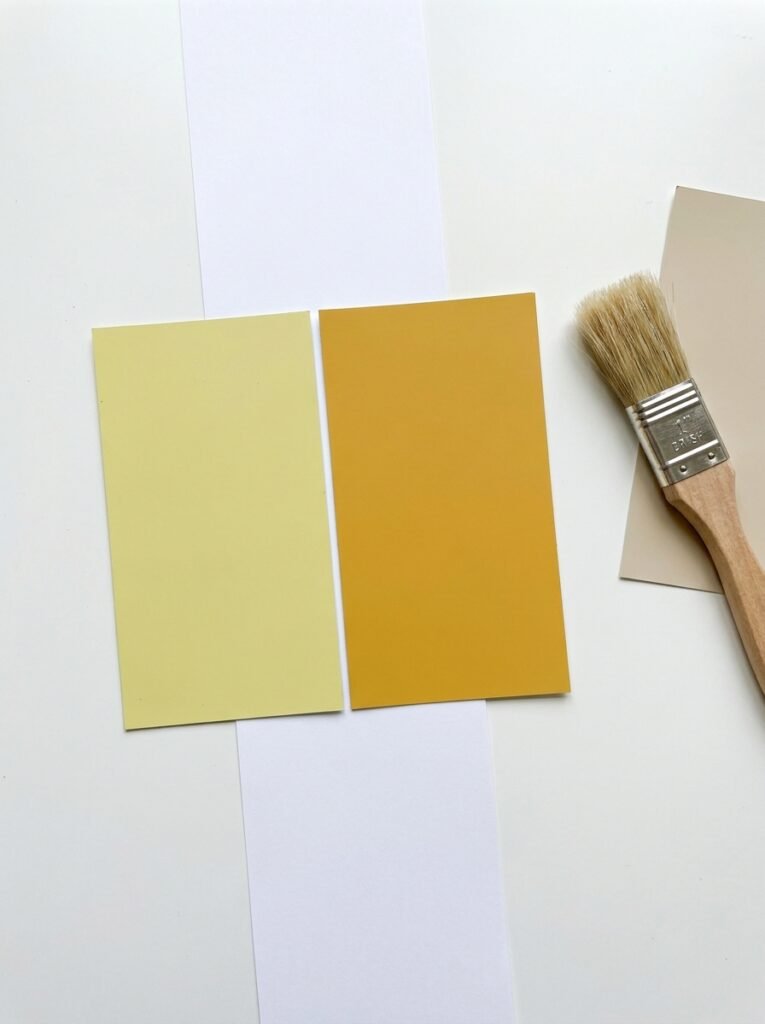
Don’t skip the step of testing swatches on your actual wall and living with them through different times of day. A paint chip under fluorescent store lighting is a completely different creature from that same color under your evening lamp. Give it 48 hours. You’ll know.
3. The Living Room Styles That Fall in Love With Yellow Every Time
Yellow doesn’t belong to just one design aesthetic — it’s genuinely versatile in a way that surprises people. But certain styles embrace it so naturally that the relationship feels almost inevitable.
In a farmhouse or cottagecore-inspired living room, soft butter yellows paired with white shiplap, linen sofas, and worn wooden coffee tables create the kind of warmth that makes guests ask to stay just a little longer. It’s unpretentious, layered, and deeply cozy.
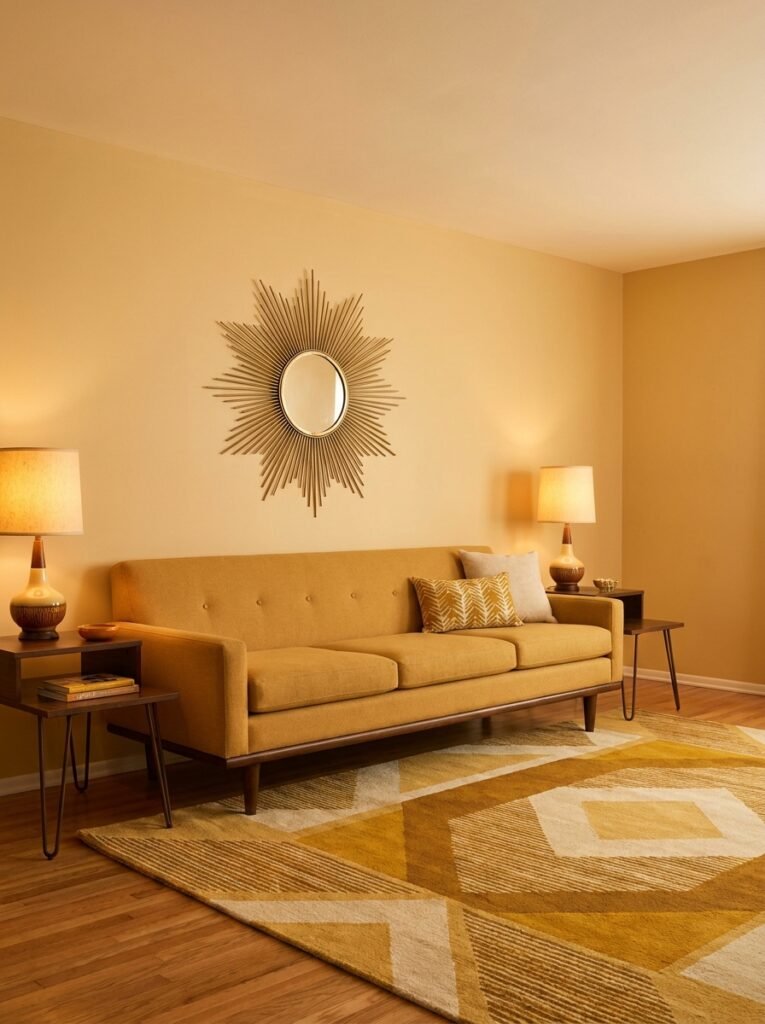
In mid-century modern spaces, mustard yellow is practically a signature. Think walnut furniture with hairpin legs, a low-profile sofa in warm mustard fabric, a sunburst mirror on the wall — it’s a look that’s been beloved for 70 years and shows absolutely no signs of slowing down.
Bohemian living rooms thrive on golden and ochre yellows layered with pattern, texture, and collected pieces. A saffron-yellow wall behind an eclectic gallery, jute rugs, and trailing plants creates a space that feels curated and deeply personal rather than decorated by formula.
Even in contemporary minimalist rooms, a single yellow accent wall can do something quietly extraordinary — grounding the space, preventing that sterile emptiness that minimalism sometimes struggles with, adding a humanity that cool whites and grays alone can’t quite achieve.
4. How Yellow Plays With Every Other Color in the Room
One of yellow’s most underrated qualities is how generously it shares the spotlight. It doesn’t compete — it collaborates. Understanding its color relationships gives you almost unlimited flexibility in how you build a room around it.
Yellow and white is the most effortless pairing in the designer’s toolkit. It keeps spaces feeling light, airy, and timeless — the kind of living room that photographs beautifully in every season without ever feeling trendy in a way that will embarrass you in five years.
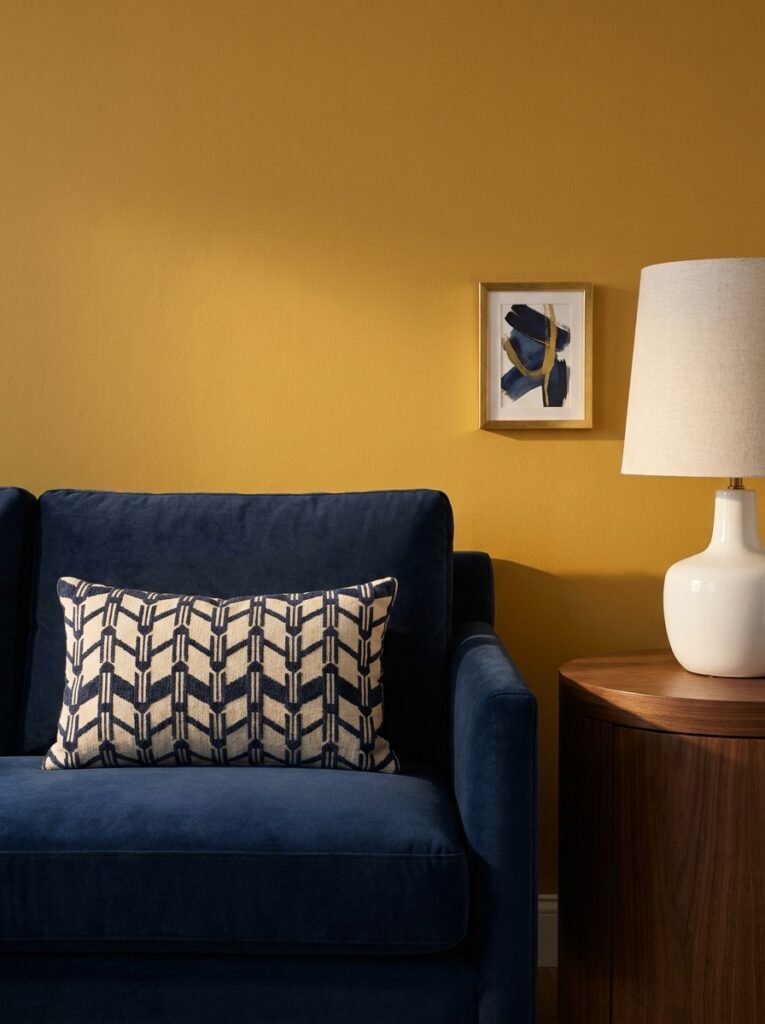
Yellow and navy is bold, confident, and surprisingly classic. It has the energy of a designer’s room and the approachability of a family home — a combination that works in both formal and casual spaces with equal grace.
Yellow and grey has been one of the most reliably popular combinations in residential design for over a decade. The coolness of grey anchors the warmth of yellow, creating a balanced, sophisticated palette that feels neither cold nor overwhelming.
Yellow and green is nature’s own pairing — think of how a sunflower stands against its leaves. In a living room, this combination reads as vibrant and organic, particularly beautiful with plants and natural wood textures woven through the space.
“Color is the cheapest and most powerful redesign tool available to any homeowner.”
5. The Furniture Choices That Make a Yellow Living Room Sing
Once you’ve committed to yellow as your primary color story — whether that’s on the walls, in a statement sofa, or woven through your accessories — the furniture decisions become an exciting puzzle rather than a stressful one.
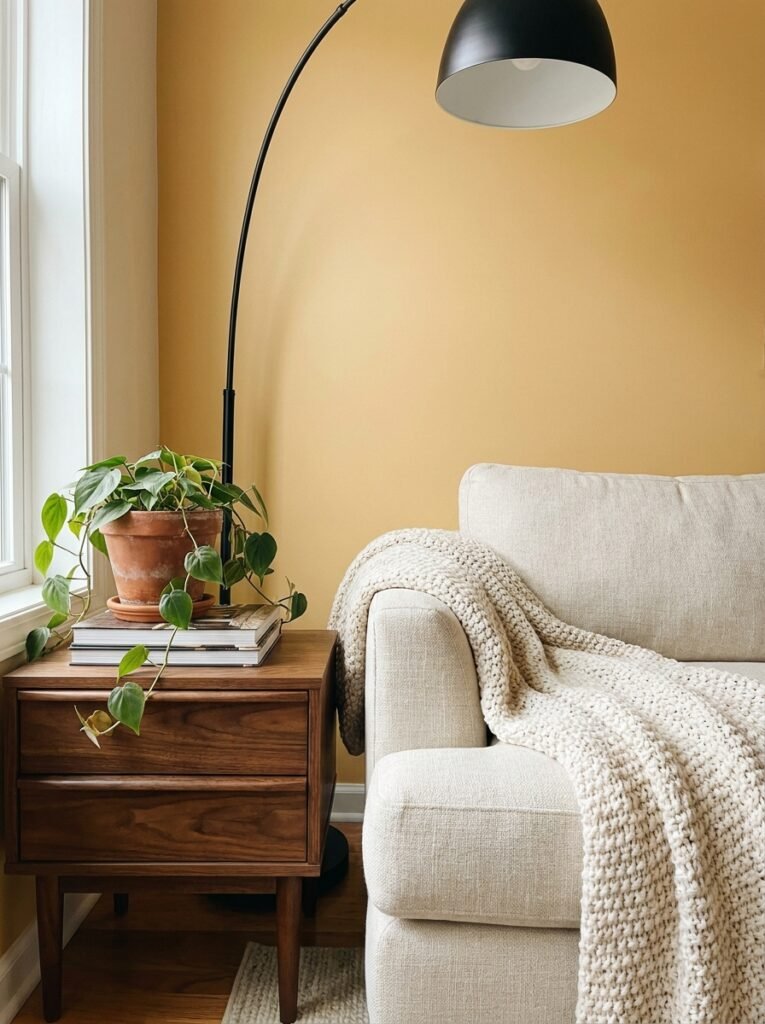
Neutral furniture in creams, warm whites, and soft greys lets the yellow breathe and lead without competition. A linen sofa the color of fresh cream against a warm yellow wall is one of those combinations that makes a room feel like it was designed, not just furnished.
Wood tones are yellow’s natural partner. Medium to dark woods — walnut, teak, oak with a warm stain — ground the lightness of yellow and add that sensory richness that makes a room feel genuinely livable rather than showroom-polished. There’s something about wood grain against yellow paint that feels instinctively right, the way good combinations often do.
If you want to lean into the boldness of yellow, consider furniture in earthy terracotta, burnt orange, or deep rust. These warm, saturated tones sit naturally in yellow’s extended family and create a living room that feels both energetic and grounded.
For a more serene, gallery-like quality, black metal accents — a slender-legged side table, a matte black floor lamp, thin-framed art — cut through the warmth of yellow with a quiet sophistication that prevents the room from feeling too sweet.
6. The Small Yellow Living Room That Feels Bigger Than It Is
If you’re working with a compact living space, yellow might be the single smartest color choice you can make. The way it reflects and amplifies light is genuinely transformative in smaller rooms — the kind of difference that no furniture arrangement trick alone can achieve.
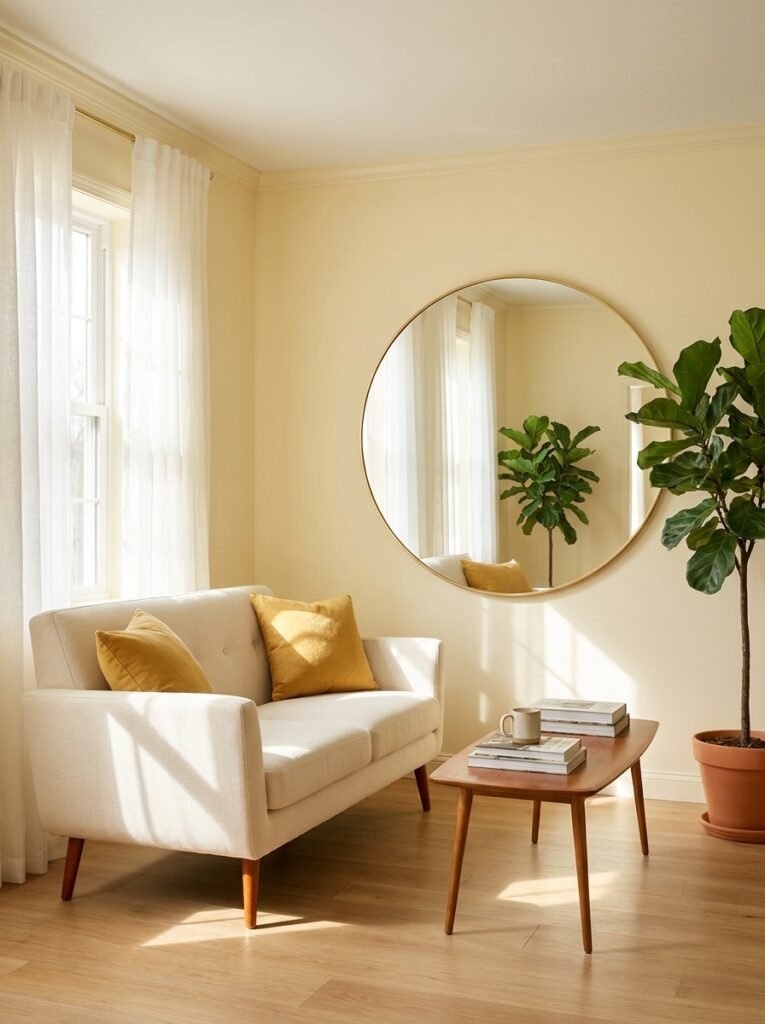
Pale yellows — buttermilk, cream-yellow, the faintest primrose — push walls visually outward. Paired with mirrors strategically placed to bounce that warm light further, and furniture that sits on legs rather than flush to the floor (so your eye can travel beneath it), a small yellow living room feels, in the best way, like a generous gift of a space.
Keep the palette relatively contained in smaller rooms — yellow with white and one or two accents rather than a full spectrum of colors. This cohesion tricks the eye into perceiving more space, and the warmth of yellow makes that space feel intentional rather than cramped.
7. Yellow Accents When You’re Not Ready for Yellow Walls
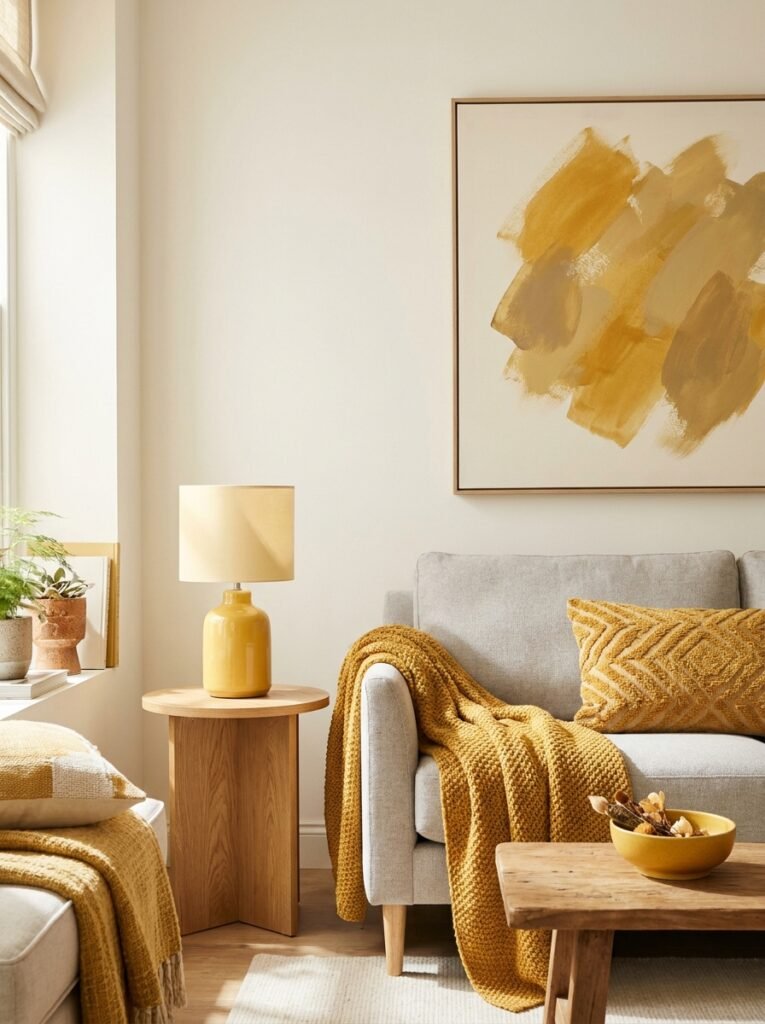
Not everyone is ready to commit to yellow walls, and that is entirely reasonable. Design confidence is something you build over time, and there’s no rule that says transformation has to be total to be meaningful.
Yellow accent pillows on a neutral sofa can shift the entire emotional temperature of a living room. A mustard yellow throw draped casually over the arm of a grey chair adds warmth and personality without permanence. A yellow ceramic lamp base on a side table catches the eye and anchors a corner that might otherwise feel forgotten.
Art is one of the most powerful and most underused accent tools. A large print with significant yellow in its palette can do the work of a yellow wall without the commitment — and it’s removable, repositionable, and replaceable as your tastes evolve.
Even a yellow rug is a full-room transformation. It grounds the seating area, defines the space, and carries warmth from floor to eye level in a way that changes how the entire room reads.
“You don’t have to paint every wall to change how a room feels — sometimes one deliberate choice is everything.”
8. Lighting a Yellow Living Room for Maximum Warmth and Atmosphere
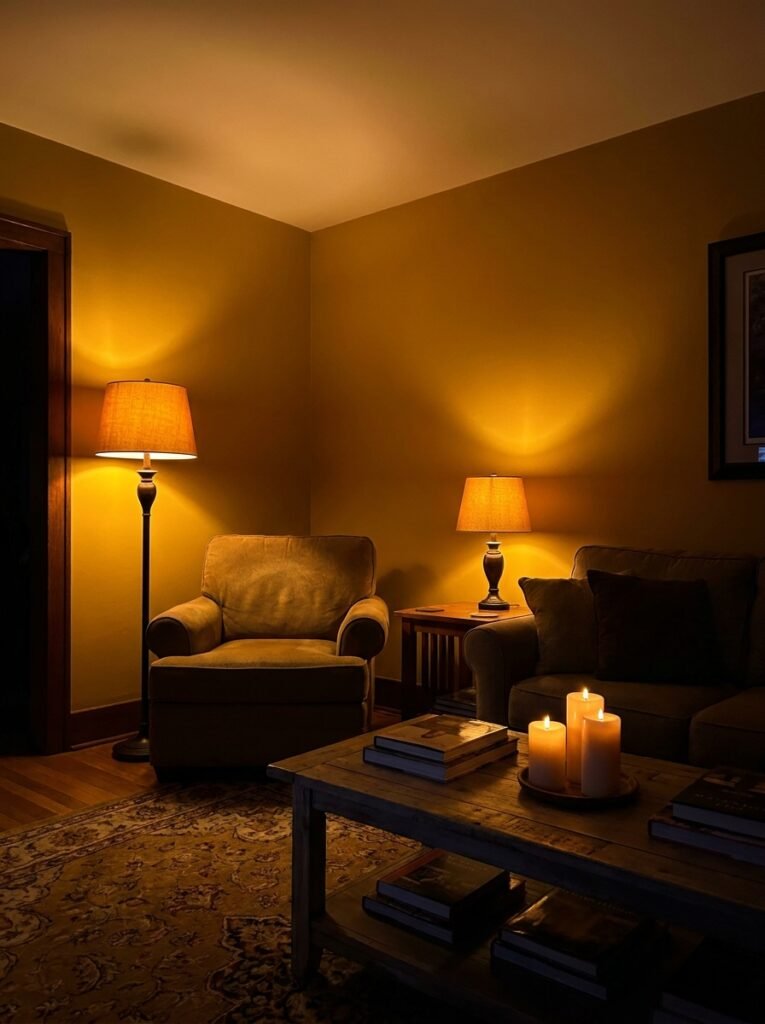
Here is the detail that separates a merely nice yellow living room from one that feels genuinely magical: the lighting. Yellow is extraordinarily sensitive to its light source, more so than most other colors, and getting this right rewards you every single evening.
Warm-toned bulbs — in the 2700K to 3000K range — deepen yellow walls into something richer, more honeyed and inviting as daylight fades. Cool daylight bulbs, by contrast, can flatten yellow and strip it of the warmth that makes it special. This is such an easy fix, and so transformative, that it should honestly be the first adjustment anyone makes when their yellow room isn’t feeling the way they imagined.
Layer your lighting. Overhead lighting alone makes any room feel flat regardless of color. Add floor lamps with warm shades, table lamps at different heights, perhaps a string of soft Edison bulbs. This layering creates pools of warmth and shadow that make a yellow room feel dimensional and alive, particularly in the evenings.
Candles, of course, are yellow’s oldest and most faithful companions. Even the glow of two or three candles in a yellow room does something to the atmosphere that no manufactured light source fully replicates.
9. Seasonal Styling That Makes Your Yellow Living Room Feel New Year-Round
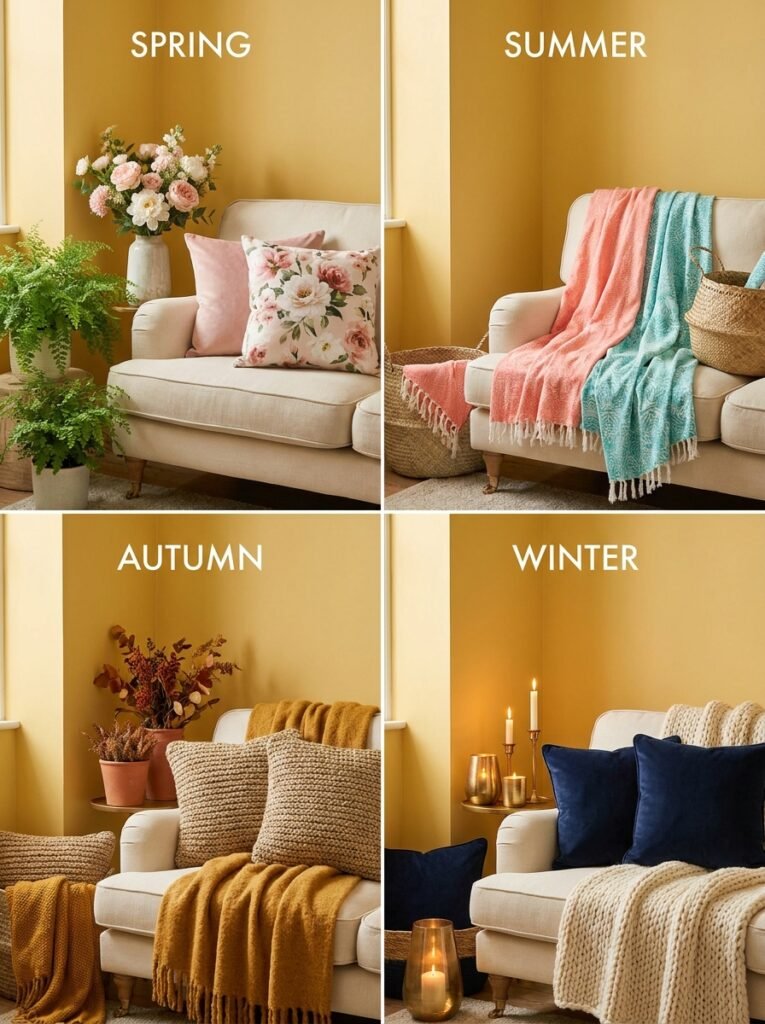
One of the great gifts of a yellow living room is how naturally it adapts to seasonal styling. Yellow doesn’t just belong to one season — it has a version of itself in every one of them, and leaning into that is one of the most enjoyable parts of designing around it.
In spring, surround yellow walls with soft greens — houseplants coming back to life, floral prints in blush and white, light linen throws that feel fresh and new. The room practically blooms.
Summer styling in a yellow living room can go tropical and vivid — layering in coral, turquoise, and pattern, with ceiling fans and lightweight cotton textiles that make heat feel like an adventure rather than a burden.
Autumn is, arguably, yellow’s finest hour. Deep ochres, burnt oranges, terracotta, dark wood, chunky woven blankets — a yellow living room in autumn feels like the inside of a lantern. Warm, golden, enclosed in the most beautiful way.
Winter styling introduces navy, forest green, and the shimmer of metallics. Candles multiplied. Heavier textiles. The yellow walls hold all of this warmth like cupped hands, and the result is one of the coziest rooms imaginable.
10. The Psychology of Yellow Rooms and How They Change the Way You Live
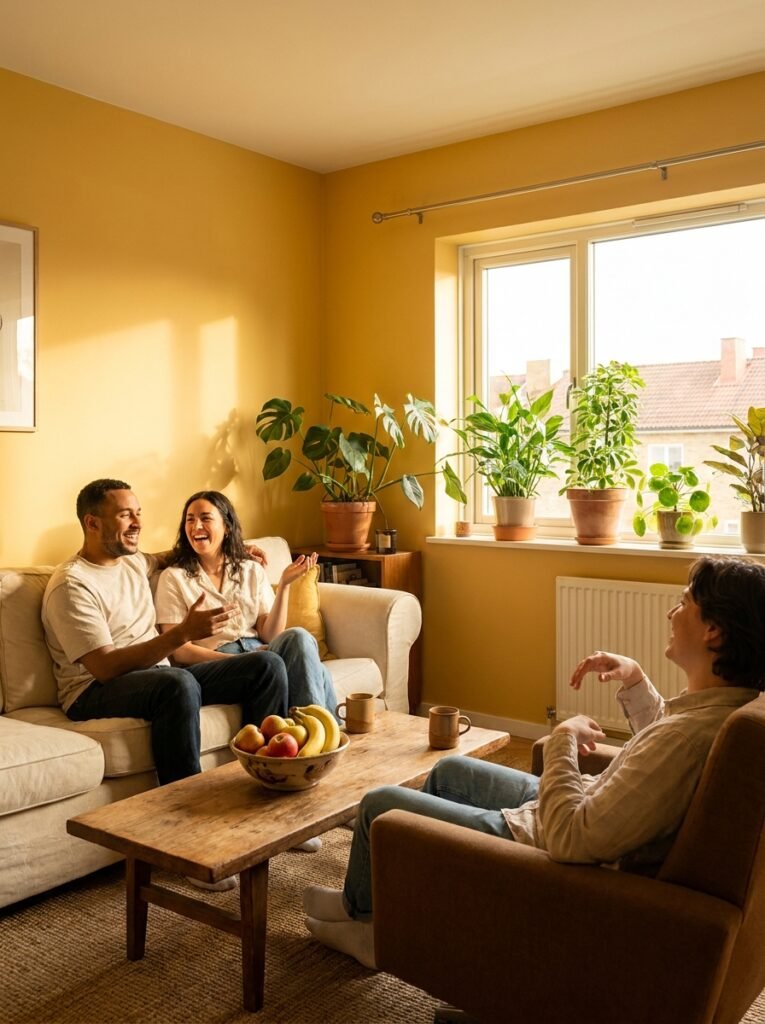
This is not a small thing. The color of your living room — the space where you rest, gather, entertain, recover from the day — genuinely shapes how you feel inside your own home. This is not marketing language. This is documented, researched, and deeply human reality.
Yellow rooms have been shown to make people feel more optimistic, more communicative, and more energized at low levels. This makes a yellow living room particularly interesting for social spaces — rooms where conversation flows, where people linger after dinner, where you want the atmosphere to feel alive without being anxious.
The key is saturation and balance. Very high-intensity yellows can tip from energizing into overstimulating — hence the importance of pairing yellow with calming neutrals, soft textures, and layered lighting that lets you modulate the energy of the room. A living room should do many things: stimulate and soothe, energize and comfort. Yellow, handled well, is capable of all of them.
11. Budget-Friendly Ways to Build a Yellow Living Room Without Compromise
The idea that beautiful interiors require enormous budgets is, simply, not true. A yellow living room can be one of the most accessible transformations in home design, precisely because so much of its power lives in color — and color, whether in paint or textiles, is one of the most affordable tools available.
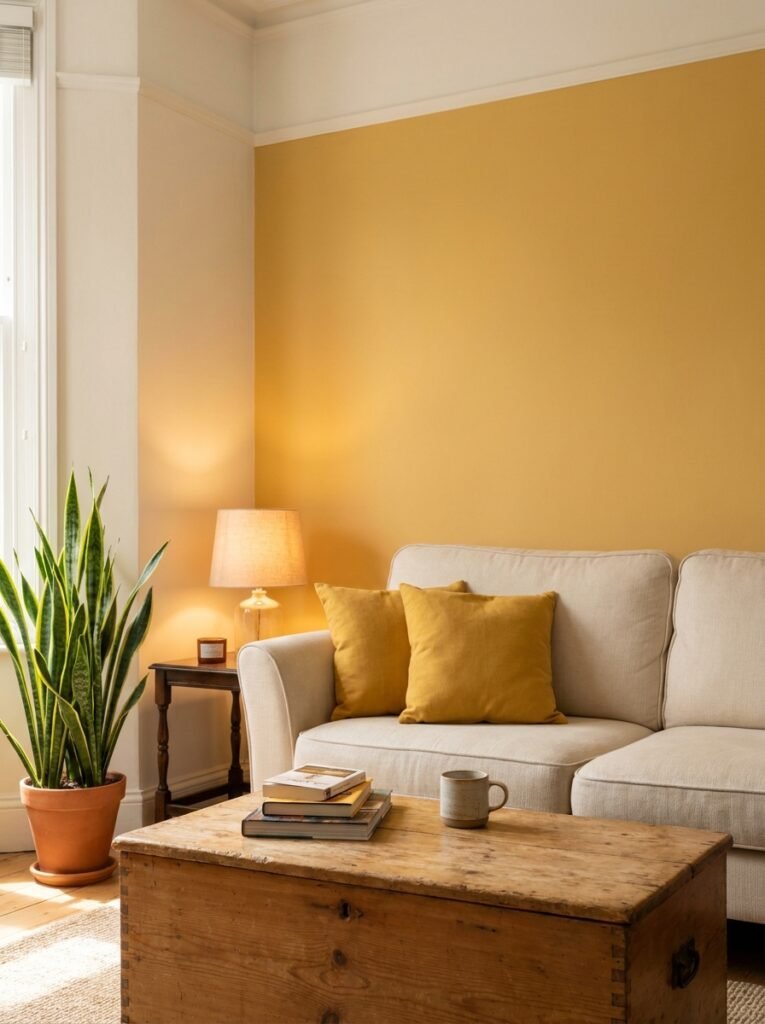
A can of paint remains the single highest-return investment in home decorating. Even painting one accent wall in a warm honey yellow costs very little and can redefine the entire character of a room. Add two mustard yellow cushion covers found at a discount retailer, one secondhand wooden side table with good bones, and a tall houseplant in a terracotta pot — and you have a living room that feels curated, warm, and absolutely intentional.
Thrift stores and second-hand marketplaces are particularly generous to people building warm-toned rooms. Wood furniture — the natural partner of yellow — tends to age beautifully and can be found affordably in vintage markets. A worn wooden chest as a coffee table in a yellow room feels like something a designer charged handsomely to source.
“The most beautiful rooms aren’t the most expensive ones — they’re the most considered ones.”
12. The Yellow Living Room Mistakes That Are Easy to Avoid
Even the most enthusiastic designer can stumble, and yellow has a few specific pitfalls that are worth knowing before you begin. Not as warnings to be afraid of — but as simple, practical knowledge that will make your process smoother.
The most common mistake is choosing a yellow that’s too cool or too green-undertoned. These shades can read as sickly or institutional under certain lighting conditions, and no amount of warm-toned decor fully rescues them. Always test for undertones by holding your paint chip next to a piece of pure white — you’ll immediately see whether your yellow leans warm or cool.
The second mistake is going yellow everywhere without visual rest. Yellow needs contrast partners — white trim, neutral furniture, natural textures — to give the eye somewhere to pause. Without this, even a beautiful yellow can feel relentless over time.
The third is underestimating how much yellow changes between day and night. A shade that feels perfect at noon may feel very different at 9 PM under lamp light. Always evaluate your choice across a full day’s cycle before committing.
—
🌿 How to Take Care of Your Yellow Living Room
Maintaining the warmth and freshness of a yellow living room is genuinely straightforward with a few thoughtful habits.
Touch up paint seasonally. Yellow is particularly susceptible to showing scuffs and fingerprints near high-traffic areas like light switches and door frames. Keep a small amount of your original paint stored and refresh these spots once or twice a year — it takes fifteen minutes and makes the room feel brand new.
Rotate your textiles. The beauty of building a yellow room on a neutral furniture base is that seasonal cushion covers, throws, and small accessories can completely refresh the mood of the space without any structural change. Rotate these with intention and the room never feels stale.
Keep windows clean. This sounds simple because it is — but in a room built around light, clean windows are a genuine design tool. The difference in how a yellow room glows with clean versus dusty windows is remarkable.
Feed your plants. If you’ve added greenery to your yellow living room (and please do — it makes an enormous difference), keep them healthy. Yellowing, drooping plants in a yellow room create the wrong kind of yellow story. Thriving green against a yellow wall is one of interior design’s most reliable pleasures.
—
❓ FAQ
Q: Is yellow a good color for a living room with low natural light? A: Yes — in fact, yellow can be one of the most effective colors in a low-light living room precisely because it mimics warmth and sunlight. The key is to choose yellows with warm, golden undertones rather than cool or lemony ones, and to pair them with warm-bulb lighting to amplify the effect.
Q: What colors should I avoid pairing with yellow in a living room? A: Very cool purples and bright reds can clash with yellow in ways that feel chaotic rather than dynamic. Cool blues can sometimes flatten yellow’s warmth, though navy specifically is a beautiful exception. When in doubt, anchor your yellow palette in warm neutrals first, then introduce accent colors gradually.
Q: Does yellow go out of style quickly? A: Yellow in its natural, warm expressions — honey, ochre, mustard, butter — has an extraordinary staying power in interior design. These are earth tones as much as they are bright tones, and they’ve appeared in homes across cultures and centuries. Trend-chasing yellows — very saturated, very fashion-forward shades — may feel dated faster, but a well-chosen warm yellow is genuinely timeless.
—
💭 Final Thought
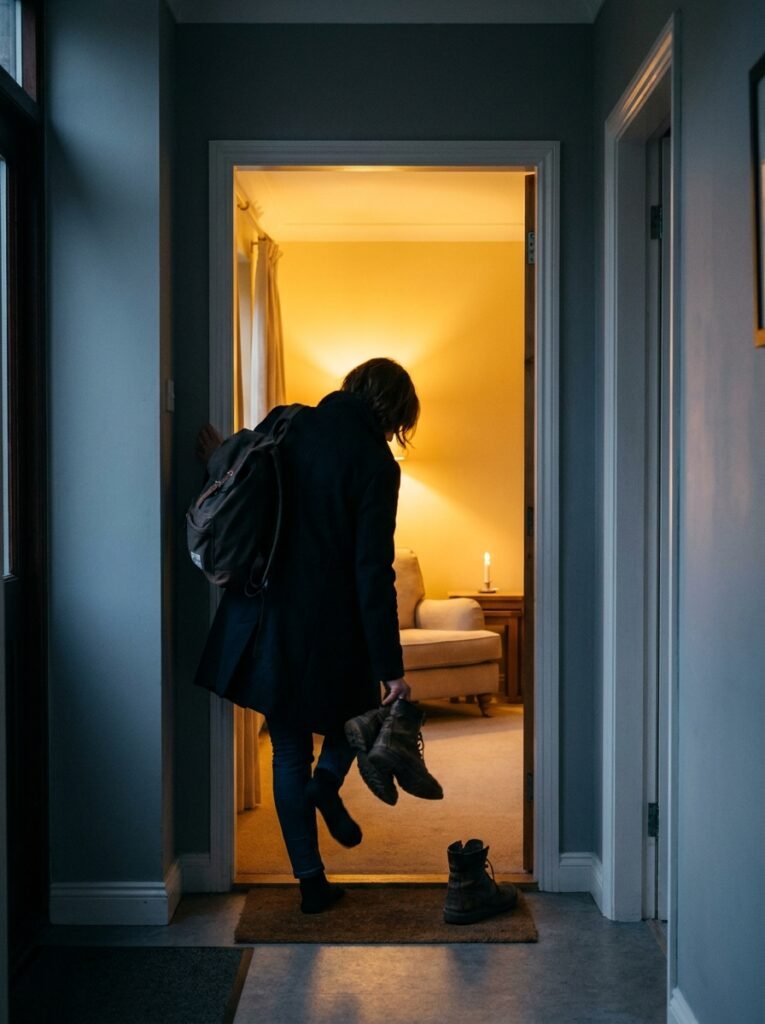
A yellow living room is, at its heart, a choice to come home to warmth — deliberately, intentionally, on purpose. It’s a small but profound act of care for the people who live inside those walls, including yourself. In a world that often feels grey and hurried, there is something quietly radical about walking into a room that greets you like sunshine.
So here’s the question worth sitting with: what would it mean to you, and to the people you love, to live every single day inside a room that made you feel a little more like everything was going to be okay?