
The Secret Life of Ceiling Light: How Living Room Lighting Changes Everything You Feel at Home
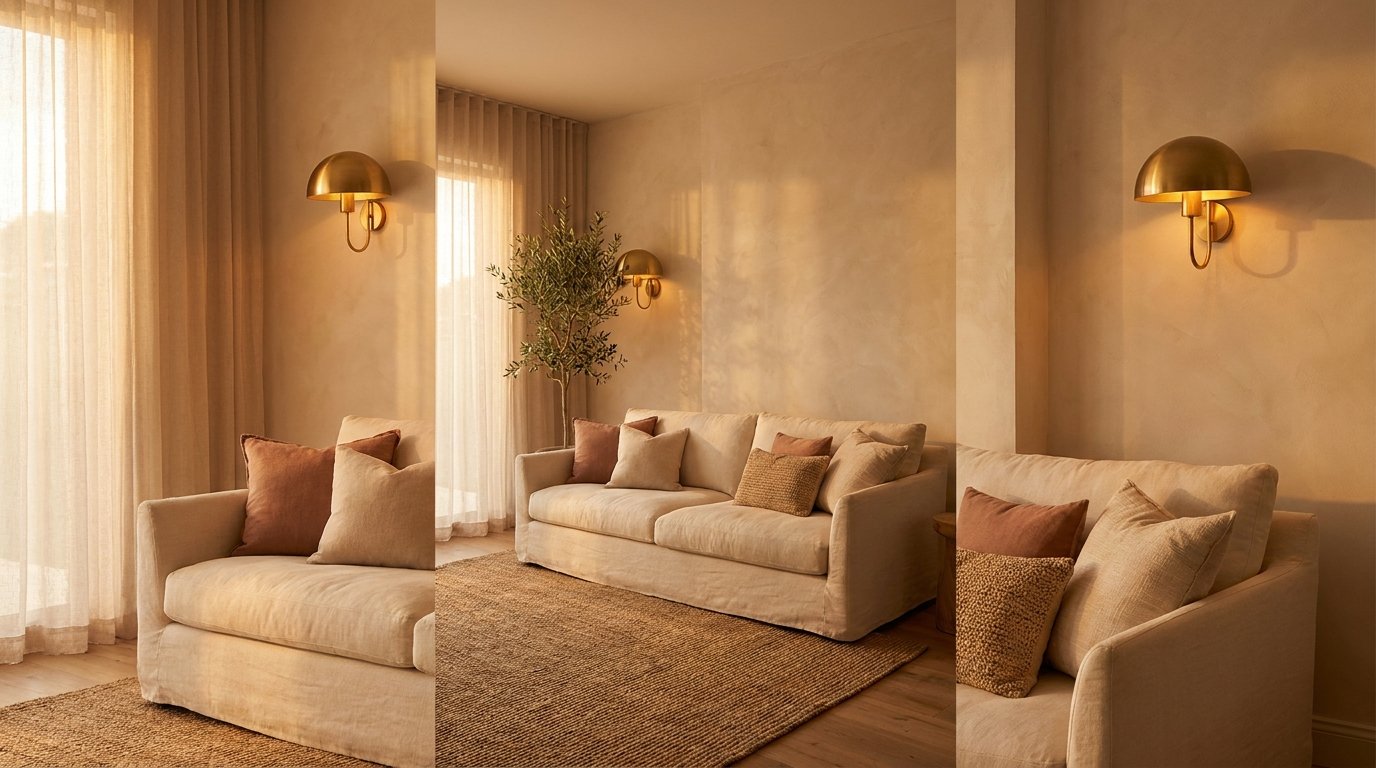
There’s a moment — maybe you’ve had it — when you walk into someone else’s living room and immediately exhale. The tension in your shoulders drops. You don’t know why it feels so good in here, but it does. Nine times out of ten, without even realizing it, you’re responding to the lighting.
—
1. Why Your Ceiling Light Is the Most Underestimated Design Decision You’ll Ever Make
Most people spend weeks choosing their sofa. They agonize over throw pillow colors and scroll through hundreds of rug options. And then they look up at the ceiling, shrug, and screw in whatever bulb came with the fixture.
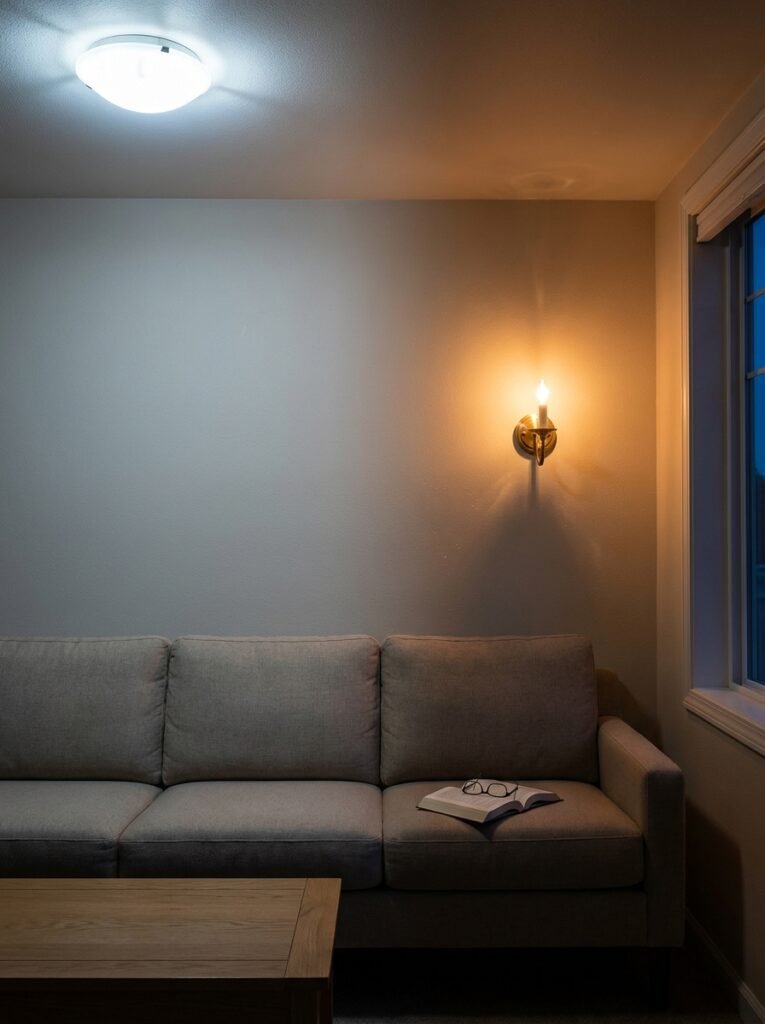
That single act of indifference — that shrug — is quietly responsible for every evening your living room has ever felt flat, harsh, or just off in a way you couldn’t quite name.
Ceiling lighting in a living room isn’t just functional. It sets the emotional temperature of the entire space. It determines whether your room feels like a luxury hotel lobby or a fluorescent-lit break room. It whispers to your nervous system whether this is a place to unwind or a place to stay alert. And yet it’s treated like an afterthought — a box to check after the “real” decorating is done.
The truth is, living room ceiling lighting is the foundation everything else is built on. Get it right, and every other design choice you’ve made looks ten times better. Get it wrong, and even the most beautiful furniture in the world will look tired and cold.
“Lighting doesn’t just illuminate a room — it creates the emotional reality you live inside of every single day.”
—
2. The Three Layers of Light Every Living Room Ceiling Needs
Before we talk fixtures and finishes, let’s talk about a concept that professional interior designers never skip: layered lighting. It’s the reason some rooms feel dimensional and alive, while others feel flat despite being technically “bright.”
There are three layers that work together in a living room: ambient lighting, task lighting, and accent lighting. Your ceiling is primarily responsible for ambient light — the general glow that fills the room — but smart ceiling design can actually support all three layers at once.
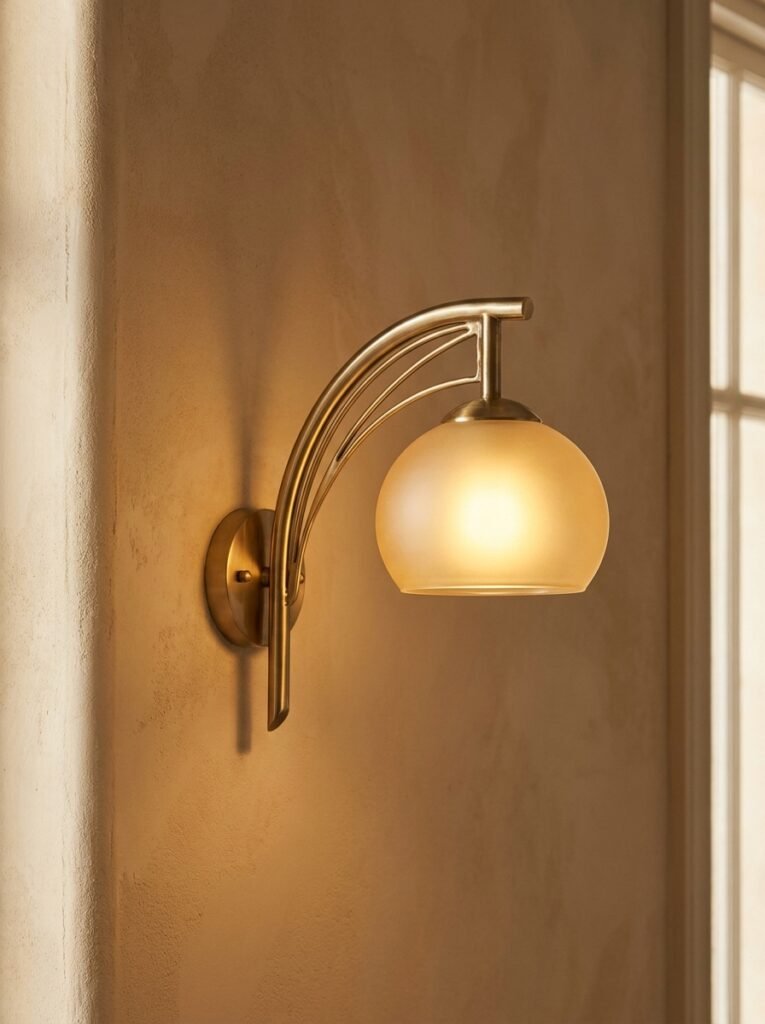
Ambient light from the ceiling gives you your baseline. It’s the “lights on, room visible” layer. Task lighting serves specific functions — reading by the armchair, finding your keys on the side table. Accent lighting is the magic layer, the one that adds drama and warmth by highlighting texture, artwork, or architectural detail.
When your ceiling lighting plan accounts for all three layers — even if just by choosing the right combination of fixtures — your living room stops being a room you live in and starts being an environment you feel.
—
3. The Flush Mount vs. Semi-Flush Mount Question Nobody Tells You the Answer To
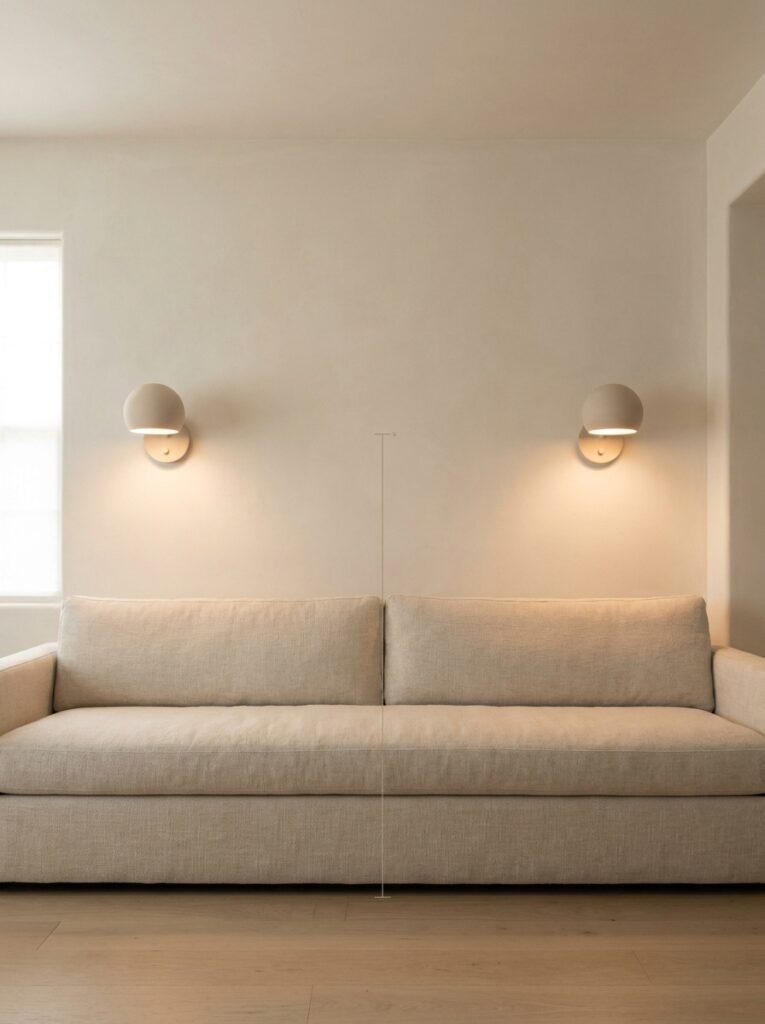
If you’ve ever stood in a lighting store feeling completely overwhelmed, you’re not alone. The flush mount vs. semi-flush mount decision alone can feel paralyzing — and the difference matters more than you’d think.
A flush mount fixture sits tight against the ceiling with no gap, making it ideal for rooms with lower ceilings (under 8 feet). It keeps the visual line clean and uncluttered. The trade-off is that tight placement often means the light disperses less evenly, sometimes creating a slightly harsh central glow.
A semi-flush mount hangs a few inches below the ceiling — typically 4 to 8 inches — which allows light to diffuse both downward and upward, bouncing off the ceiling and creating a softer, more enveloping glow. If your ceiling is between 8 and 10 feet, a semi-flush mount is almost always the more flattering choice.
The practical takeaway: measure your ceiling height first, then shop. Don’t fall in love with a fixture and then try to make the math work. Your ceiling height is non-negotiable. The fixture is not.
—
4. When a Chandelier Is the Right Answer (and When It Absolutely Isn’t)
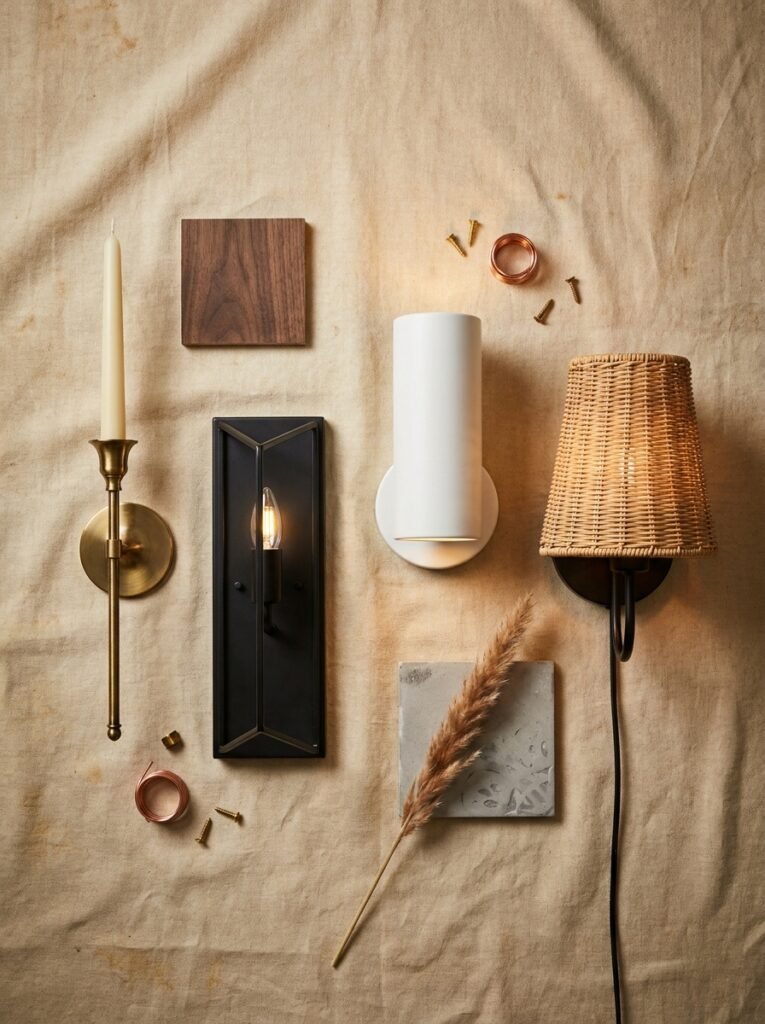
Chandeliers have a reputation problem. Some people think they’re too formal, too fussy, too old-world for a modern living room. Others hang them in spaces where they’re completely wrong for the scale and then wonder why the room looks “off.”
Here’s the honest truth: a chandelier, chosen correctly, is one of the most transformative things you can put in a living room. It adds height, drama, and a sense of intentionality. It tells anyone who walks in that someone cared deeply about this space.
The rule of thumb for sizing is simple: add your room’s length and width in feet, and that number in inches is roughly your ideal chandelier diameter. A 12 x 14-foot room? You’re looking at a 26-inch-diameter fixture as a starting point.
Where chandeliers go wrong is in proportion and placement. A chandelier that’s too small floats awkwardly in the center of the room, looking lost and apologetic. One that’s too large overwhelms and crowds. And a chandelier hung too low — below 7 feet from floor to bottom of fixture in a living room — will make the space feel cramped no matter how beautiful it is.
—
5. The Recessed Lighting Layout That Actually Works (and the One That Doesn’t)
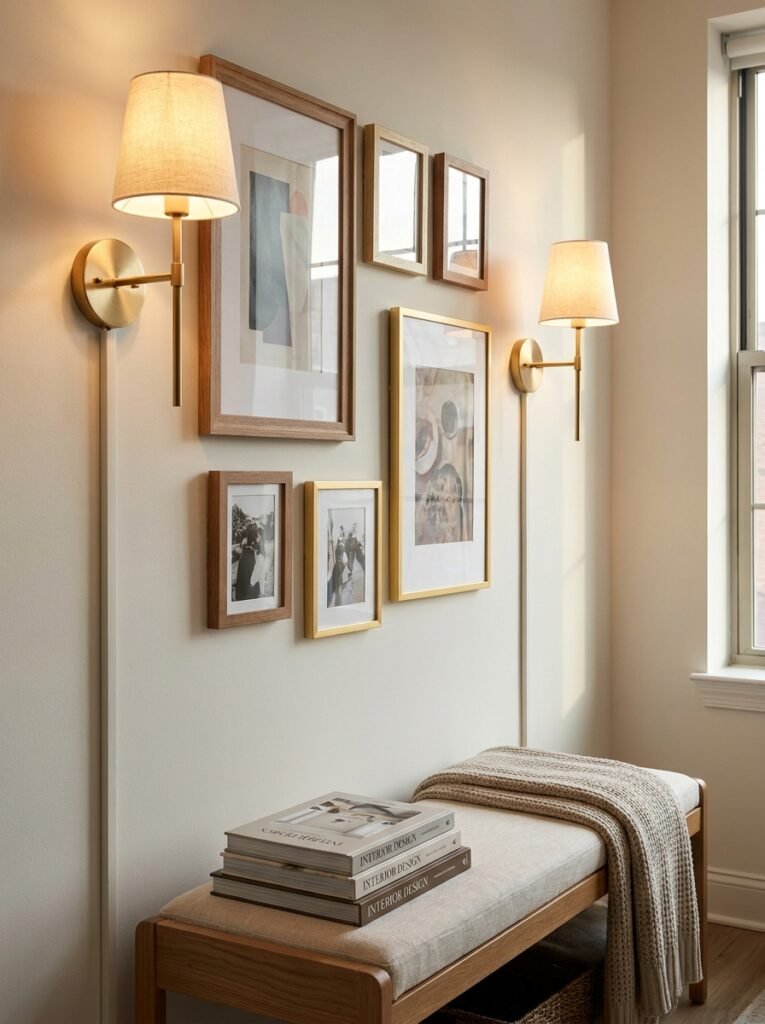
Recessed lighting — those clean little can lights tucked into the ceiling — has become a staple of modern living room design, and for good reason. Done well, it creates a seamless, architectural feel and allows other design elements to take center stage without competing with a statement fixture.
Done poorly, it creates a dotted Swiss pattern of harsh downlights that make every shadow on a person’s face look like a police interrogation scene.
The key to successful recessed lighting is spacing and aim. Lights should generally be spaced 4 to 6 feet apart, depending on ceiling height and the spread angle of the bulbs. They should be positioned to illuminate the room perimeter and key activity zones — not just scattered randomly across the ceiling.
For a living room, recessed lights work best when aimed slightly off-center toward the walls rather than straight down. This “wall washing” technique bounces light off vertical surfaces, filling the room with softer, more even illumination rather than harsh pools of downlight on the floor.
“The goal of recessed lighting isn’t to eliminate shadows — it’s to place them exactly where you want them.”
—
6. Color Temperature: The Number on the Bulb That Changes Your Entire Mood
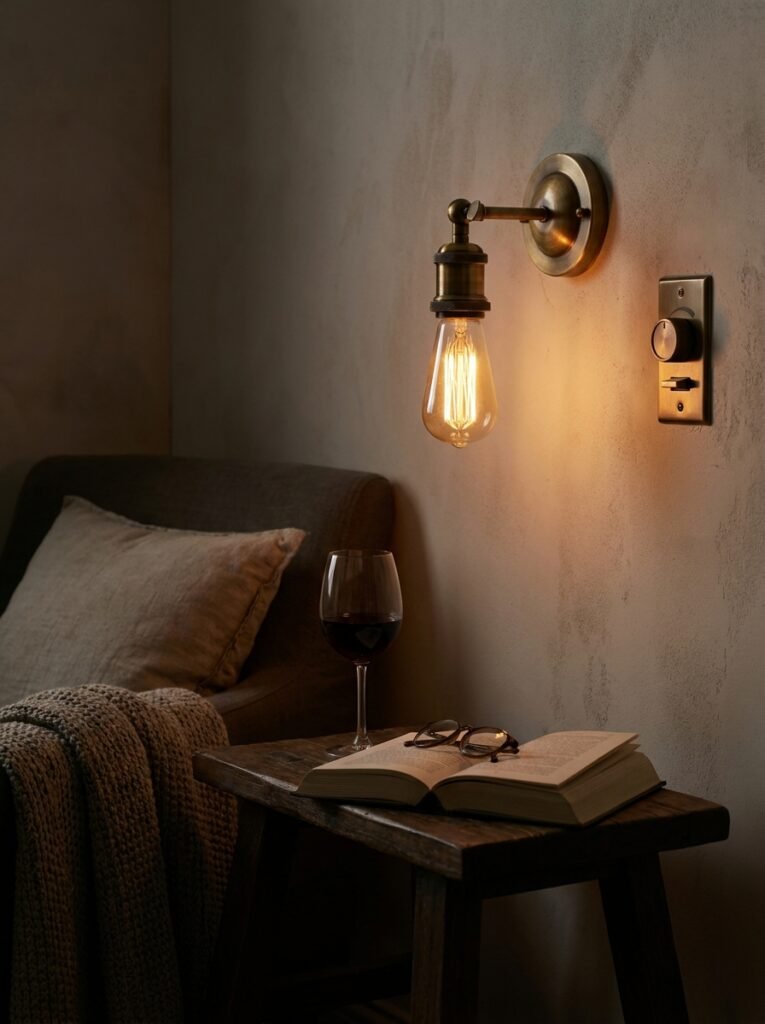
This is the detail most people have never been told, and it explains so many “I don’t know why, but this room just feels wrong” moments. Color temperature — measured in Kelvin (K) — determines whether your light reads as warm, neutral, or cool. And in a living room, it is everything.
Bulbs in the 2700K–3000K range emit warm, amber-toned light. This is the range of a classic incandescent bulb, and it’s almost universally the most flattering and calming choice for a living room. Skin tones glow. Warm wood and earthy textiles come alive. The room feels like a place you want to stay.
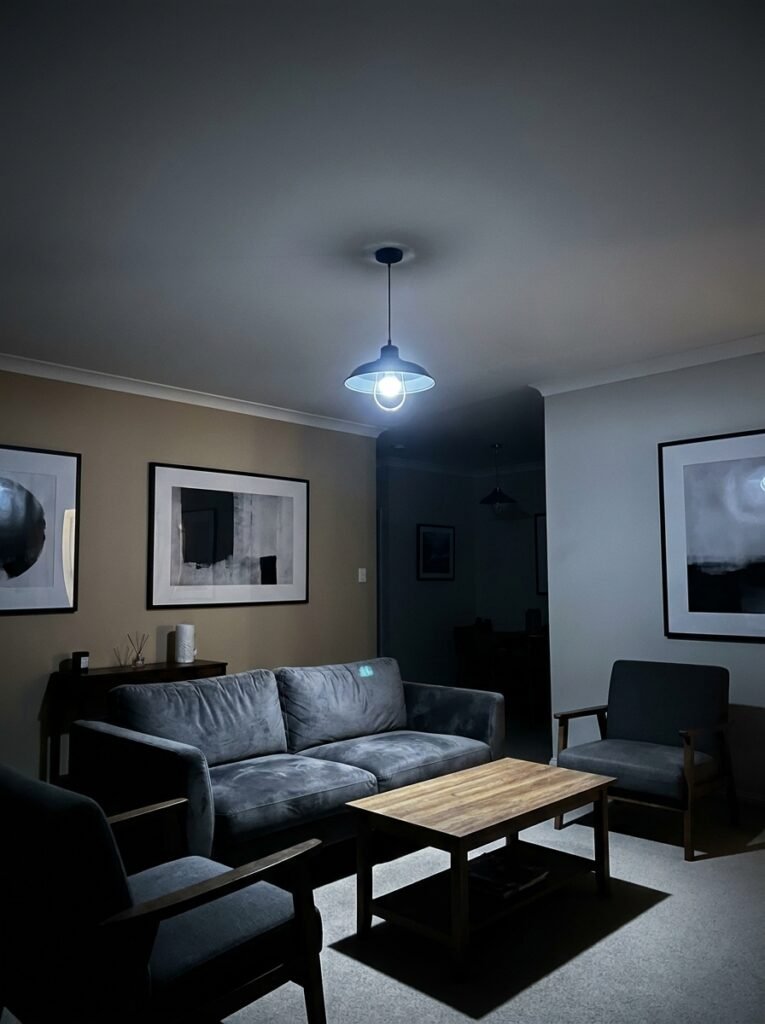
Bulbs in the 4000K–5000K range move into cool, bluish-white territory. This is great for workspaces and kitchens. In a living room, it can make the space feel clinical — sharp and alert, when what you want is soft and restorative.
The simple rule: for living rooms, stay between 2700K and 3000K. Look at the packaging before you buy. It takes three seconds and makes a years-long difference.
—
7. Dimmer Switches: The $30 Upgrade That Feels Like a $3,000 Renovation
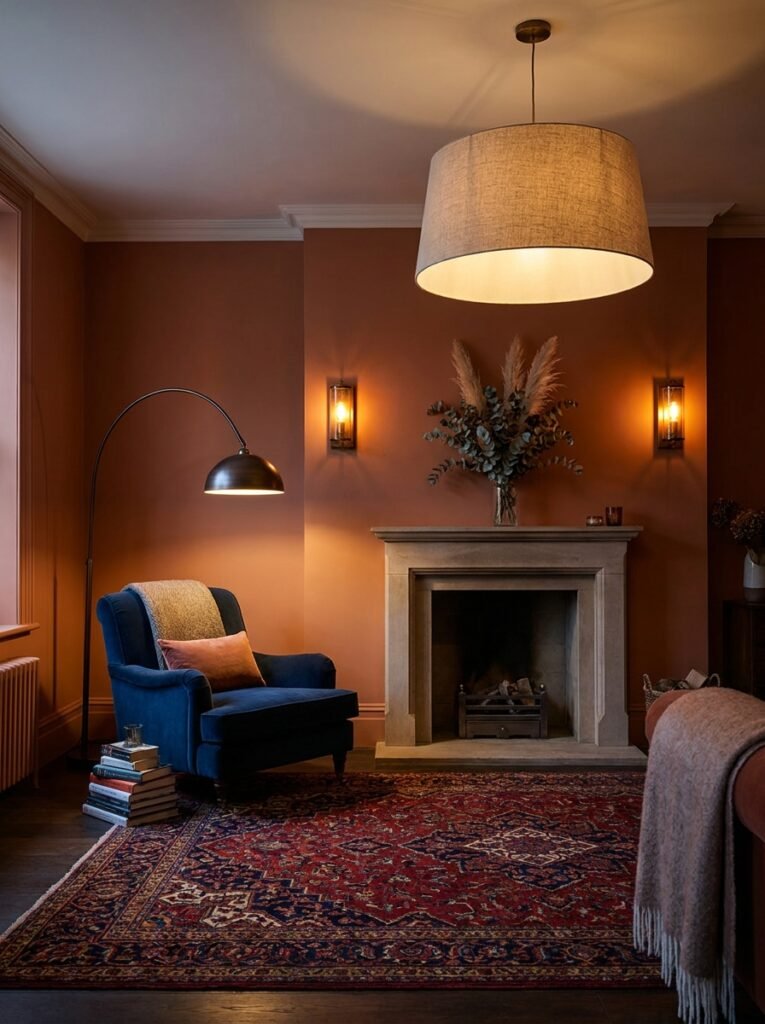
If there is one single, non-negotiable recommendation for living room ceiling lighting, it is this: install a dimmer switch. Full stop.
A dimmer switch transforms your living room from a single-mode space into a room that can become whatever you need it to be. Bright and energized for a Sunday afternoon of reading. Softly lit for a movie night. Warm and dim for an evening with friends that stretches long past dinner.
Most ceiling fixtures are compatible with LED dimmer switches, but you’ll want to check the bulb packaging to confirm “dimmable” — not all LED bulbs are. The switch itself runs $20 to $50 at most hardware stores and is a straightforward swap for anyone comfortable with basic electrical work, or a 20-minute job for an electrician.
The people who’ve installed dimmers in their living rooms always say the same thing: “I can’t believe I waited this long to do this.” It is, quietly, one of the highest-impact, lowest-cost changes in home design.
—
8. The Ceiling Fan Dilemma: How to Make Them Look Intentional Instead of Like an Afterthought
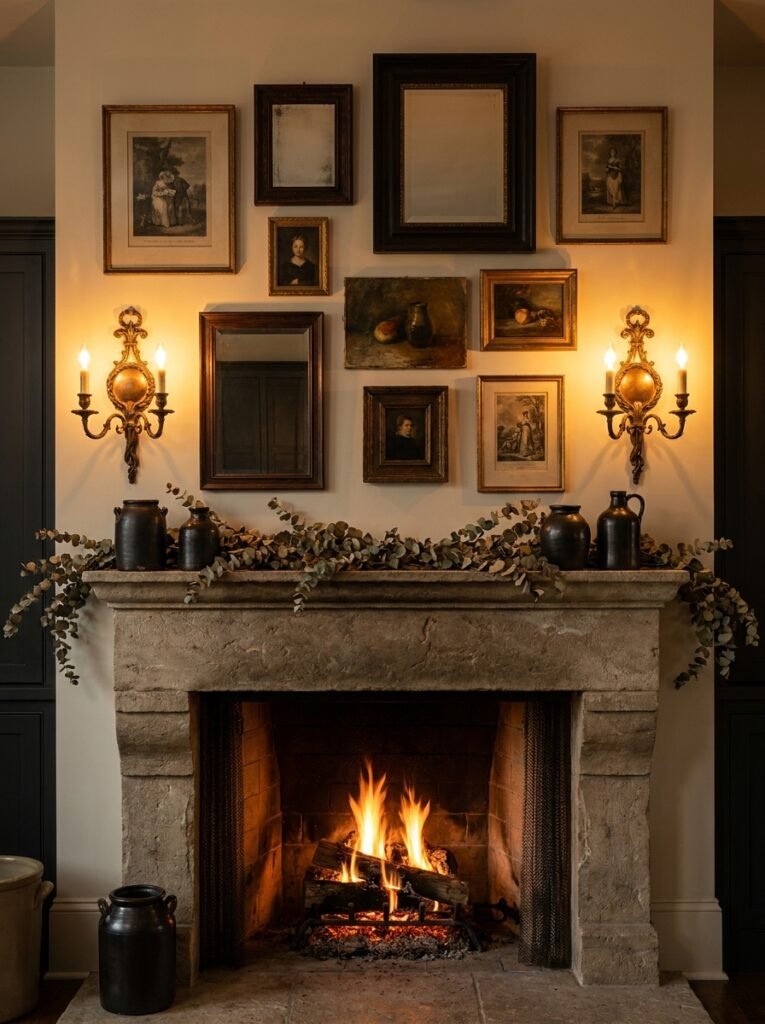
Ceiling fans have a design reputation problem. They’re insanely practical — reducing air conditioning costs, circulating heat in winter, keeping everyone comfortable — but they often look like they were installed by someone who was thinking purely about utility and not at all about aesthetics.
The good news is that ceiling fans have come a very long way. Modern designs in matte black, brushed brass, and even rattan are genuinely beautiful objects. Some are virtually indistinguishable from a sculptural light fixture until you look closely.
The keys to making a ceiling fan work in a living room are blade finish, motor housing design, and integrated lighting. Blades in natural wood or matching the ceiling color visually recede and feel intentional. Sleek, low-profile motor housings look modern and clean. And an integrated light kit that matches the overall fixture design keeps the look cohesive.
If you need a fan but love design, don’t settle for whatever is on sale. The right ceiling fan, thoughtfully chosen, can be a genuine focal point.
—
9. How Ceiling Height Changes Every Lighting Decision You Make
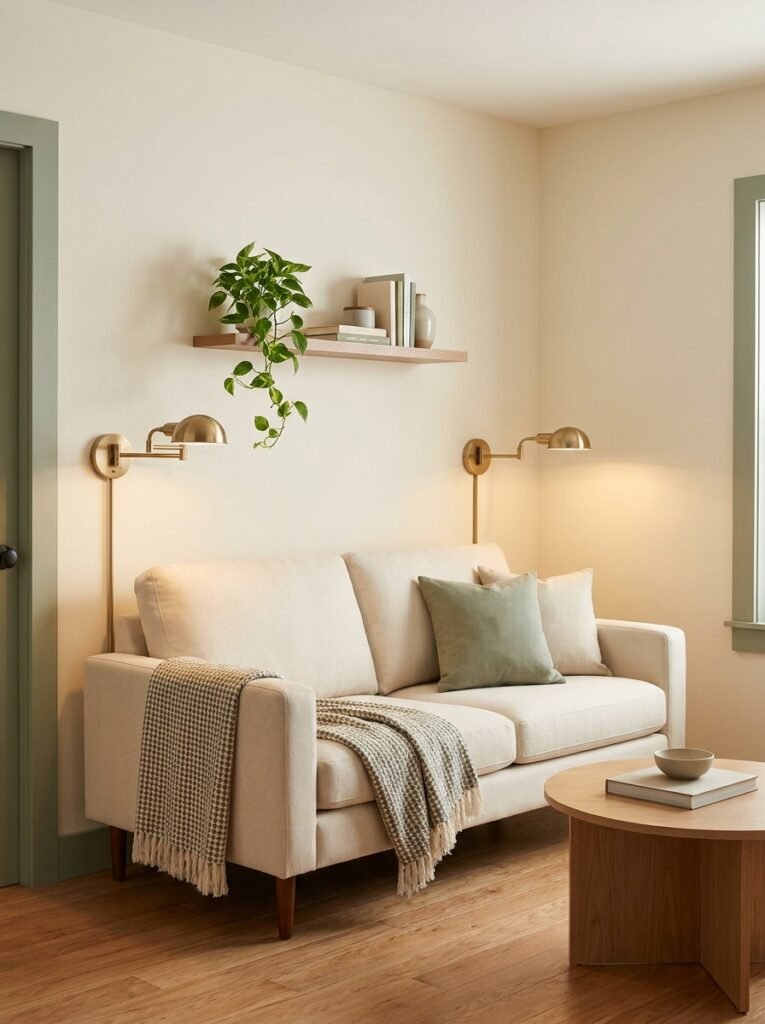
Ceiling height isn’t just a number — it’s the invisible architecture that shapes every lighting decision that follows. An 8-foot ceiling and a 12-foot ceiling require completely different approaches, and treating them the same is one of the most common mistakes in living room design.
For low ceilings (7–8 feet), the goal is to create the illusion of height while keeping fixtures from feeling oppressive. Flush mount fixtures, recessed lighting, and wall sconces that draw the eye upward are your tools. Avoid anything that hangs more than 6 inches below the ceiling — it will make the room feel compressed.
For standard ceilings (9–10 feet), you have real flexibility. Semi-flush mounts, small chandeliers, and pendant clusters all work beautifully here. This is the sweet spot for most ceiling lighting choices.
For high or vaulted ceilings (11 feet and above), scale becomes critical. A tiny fixture in a soaring space looks timid and wrong. Go bold — a large chandelier, a dramatic cluster of pendants, or a series of statement flush mounts that fill the visual field. High ceilings are an opportunity for grandeur; use them.
“Your ceiling height doesn’t limit your lighting choices — it focuses them. Work with it, and your room will feel deliberately designed.”
—
10. The Art of Mixing Ceiling Fixtures for a Room That Looks Professionally Designed
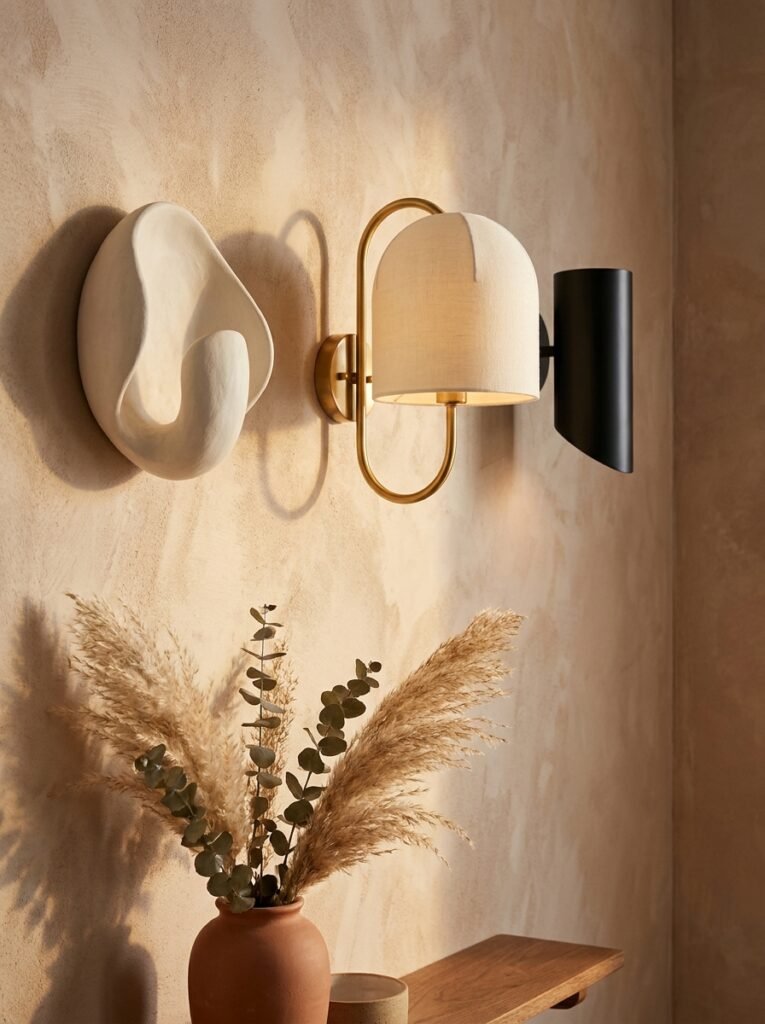
One of the most common pieces of advice in interior design circles is “mix metals, mix textures, layer interest” — and it applies just as much to ceiling lighting as it does to throw pillows and furniture legs.
Using a single type of ceiling fixture throughout a living room creates a certain clean uniformity, which can be beautiful in a very minimal, intentional space. But in most living rooms — particularly those with multiple seating areas, an open floor plan, or distinct activity zones — combining ceiling fixtures adds depth and visual intelligence.
A practical approach: use recessed lighting as your ambient base, then layer in a statement fixture — a chandelier, a large pendant, or a fan with a strong design identity — over the primary seating area. This combination gives you functional, even illumination across the space while creating a clear focal point that anchors the room.
The key to mixing fixtures successfully is cohesion: choose pieces that share at least one element — finish, material, style era — so the combination reads as curated rather than collected at random.
—
11. Trends Worth Following (and the Ones Worth Skipping) in Living Room Ceiling Lighting
Interior design trends in lighting move fast, and not all of them deserve a place in your home. Some are genuinely beautiful and have lasting power. Others are fleeting — photogenic in a staged space but exhausting to live with long-term.
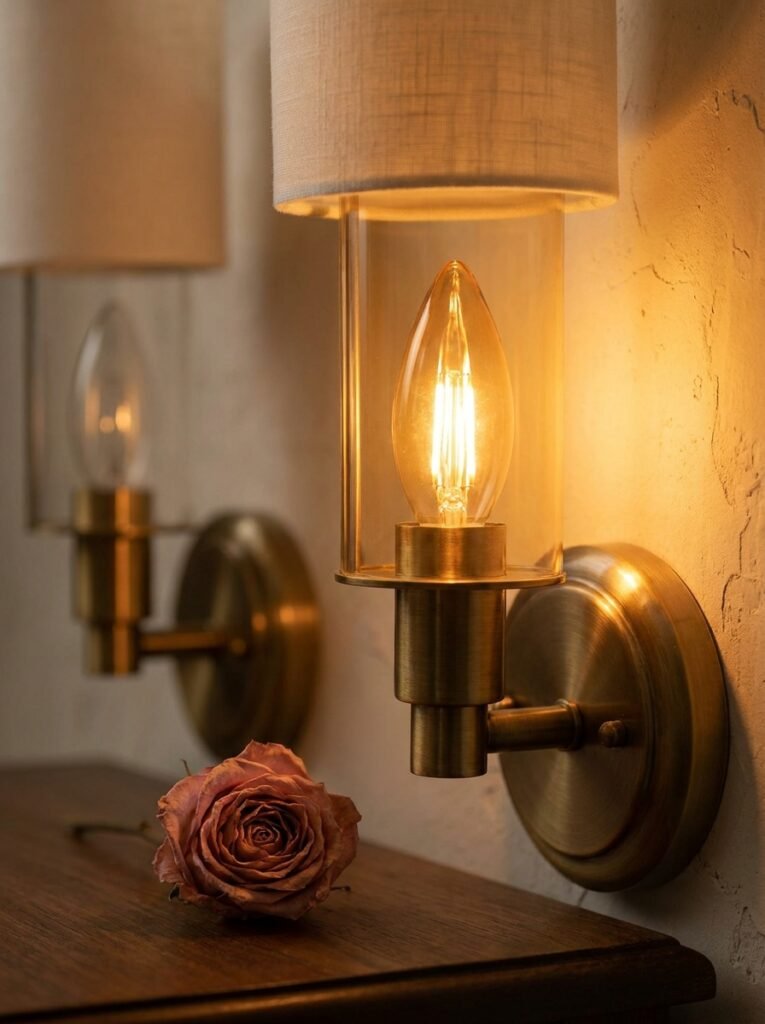
Right now, the trends with real staying power include: warm-toned LED technology that closely mimics incandescent light, sculptural fixtures in organic shapes inspired by nature, aged brass and unlacquered metal finishes, and oversized single pendants that make a quiet but confident statement.
Trends to approach carefully: extremely trendy geometric shapes that may feel dated in a few years, very cool blue-toned lighting (beautiful in photos, difficult to live inside), and overly complex multi-arm chandeliers that are spectacular to look at but nightmarish to clean and maintain.
The timeless question to ask before any purchase: “Does this feel like me, or does it feel like a trend I want to try?” Both answers are valid — but only one of them results in a room you’ll still love in seven years.
—
12. The Final Walk-Through: How to Audit Your Current Living Room Lighting in 10 Minutes
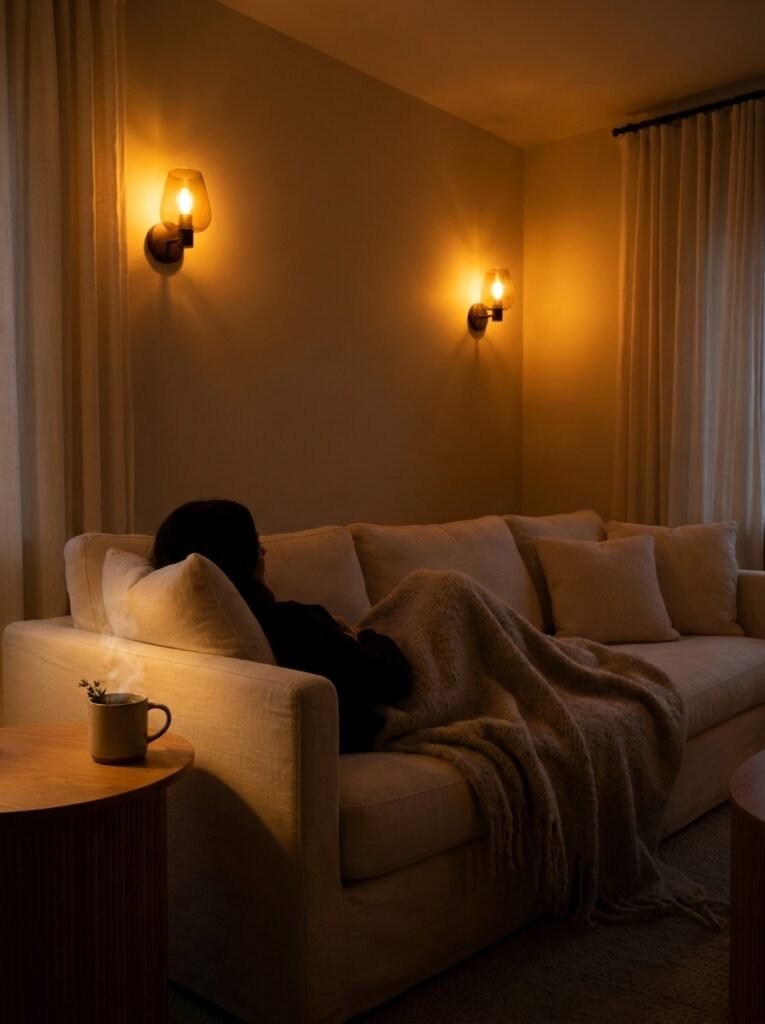
Here’s the thing about living room ceiling lighting: most of us don’t need a full renovation. We need a thoughtful audit followed by a few targeted changes.
Start at night with all your current lights on. Stand in the doorway and look at the room honestly. Are there areas that feel too dark? Corners that look shadowy and uninviting? A central light source that creates harsh downlight with no warmth or spread? Make note.
Next, check your bulb temperatures. Unscrew one bulb (when cool) and read the Kelvin rating. If you’re above 3500K in a living room, you’ve found your first fix.
Then sit in your primary seating position — wherever you watch TV, read, or spend most of your time. Look at the ceiling. Is the fixture positioned to light you from an angle that feels natural, or are you sitting directly under a downlight that creates unflattering shadows? Note that too.
Finally, ask yourself: does this room have a dimmer? If not, that’s likely your highest-impact next step. Walk through these four questions honestly, and you’ll have a clear, prioritized list of changes that will transform your living room — without requiring a complete overhaul.
—
🌿 How to Take Care of Your Living Room Ceiling Lighting
Ceiling fixtures are easy to neglect because they’re out of eye level — but a little maintenance goes a long way toward keeping your lighting both beautiful and functional.
Dust the fixture regularly. Even closed glass shades accumulate dust that visibly dims the light output over time. A quick wipe with a microfiber cloth every few weeks keeps the light output clean and bright. For ceiling fans, dust the blades monthly — especially in winter, when they’re running in reverse and pushing air downward.
Check your bulbs seasonally. If one bulb in a multi-bulb fixture burns out and you replace only that one, the color temperatures can drift slightly, creating an uneven look. Keep a small stock of the same bulb on hand so you’re always replacing like for like.
Test your dimmer annually. Dimmer switches can develop a faint buzzing sound as they age, which usually means they need replacing. A simple fix — but worth staying on top of.
Wipe down glass shades gently with a damp cloth when they start to look cloudy or smudged, and dry them immediately to avoid water spots. A beautifully designed fixture deserves to look beautiful all the time, not just the week after you install it.
Revisit your bulb color temperature when you refresh the room. If you repaint walls or change furniture, the same bulbs can suddenly read differently — warmer or cooler — depending on how the new colors interact with the light. Trust your eyes, and don’t be afraid to experiment with a different Kelvin rating.
—
❓ FAQ
Q: What is the best type of ceiling light for a living room? A: The best type depends on your ceiling height and the mood you want to create. For most living rooms with standard 9-foot ceilings, a semi-flush mount or chandelier paired with recessed lighting gives the best combination of ambient warmth and practical illumination. The most important factor isn’t the fixture type — it’s using warm-toned bulbs (2700K–3000K) and installing a dimmer switch.
Q: How many recessed lights do I need in a living room? A: A general guideline is to place recessed lights approximately 4 to 6 feet apart, depending on your ceiling height and the spread angle of your bulbs. For a typical 12 x 14-foot living room, 6 to 8 recessed lights spaced evenly (with a few angled toward the walls) will provide balanced, even illumination without creating harsh downlight pools. Always work from a scaled floor plan before you commit to placement.
Q: Can I mix different ceiling light fixtures in the same living room? A: Absolutely — and when done thoughtfully, mixing fixtures is what makes a room look professionally designed rather than builder-basic. The key is to choose fixtures that share at least one unifying element: a finish, a material, a design era, or a visual weight. A matte black chandelier over the seating area and matte black recessed lights throughout the room creates cohesion even though the fixtures are completely different in form.
—
💭 Final Thought
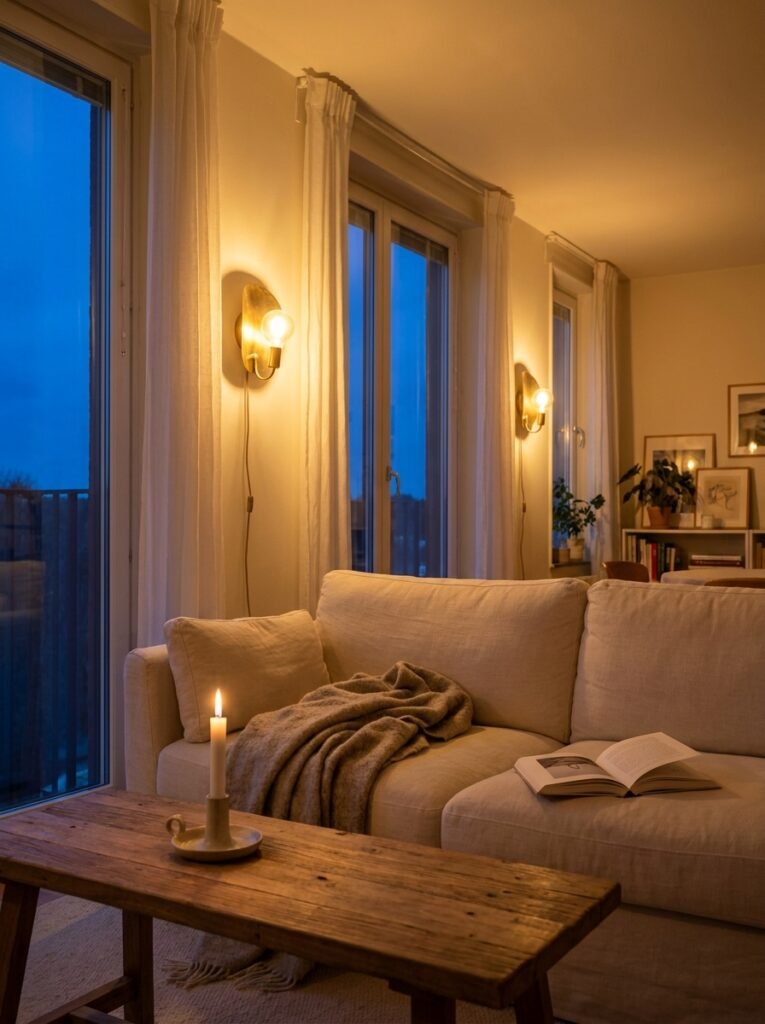
The way your living room feels at 8 o’clock on a Tuesday evening — tired from the day, reaching for your favorite corner of the sofa — is not an accident. It’s a design decision. It’s the ceiling above you, the warmth of the bulb, the height of the fixture, the presence or absence of a dimmer that lets you turn the world down just a little.
Ceiling lighting is one of the most quiet, powerful tools you have to shape the emotional life of your home. And the most beautiful part? Most of the changes are genuinely simple and affordable. Which makes you wonder — what is your ceiling doing for you right now, and what could it be doing instead?