
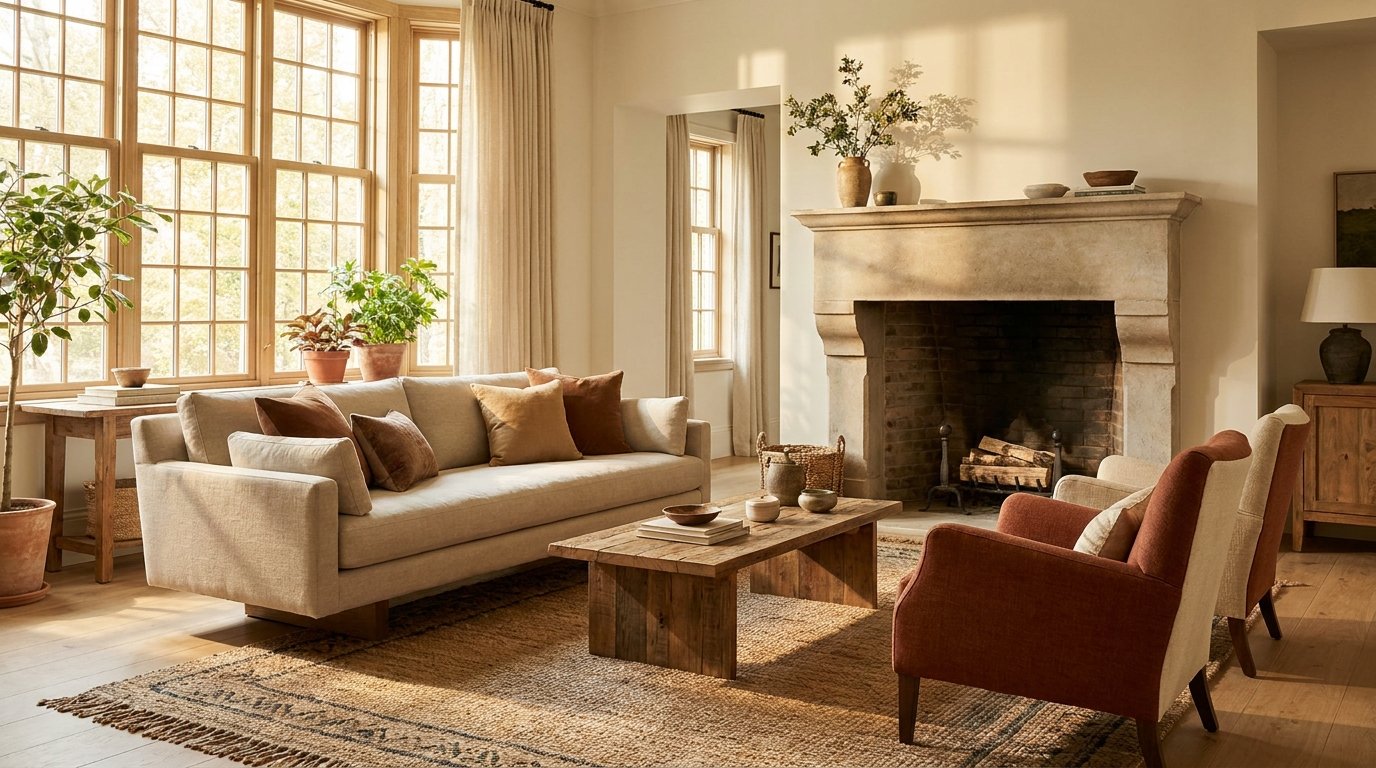
The Living Room Layout That Changed How My Family Actually Lives Together
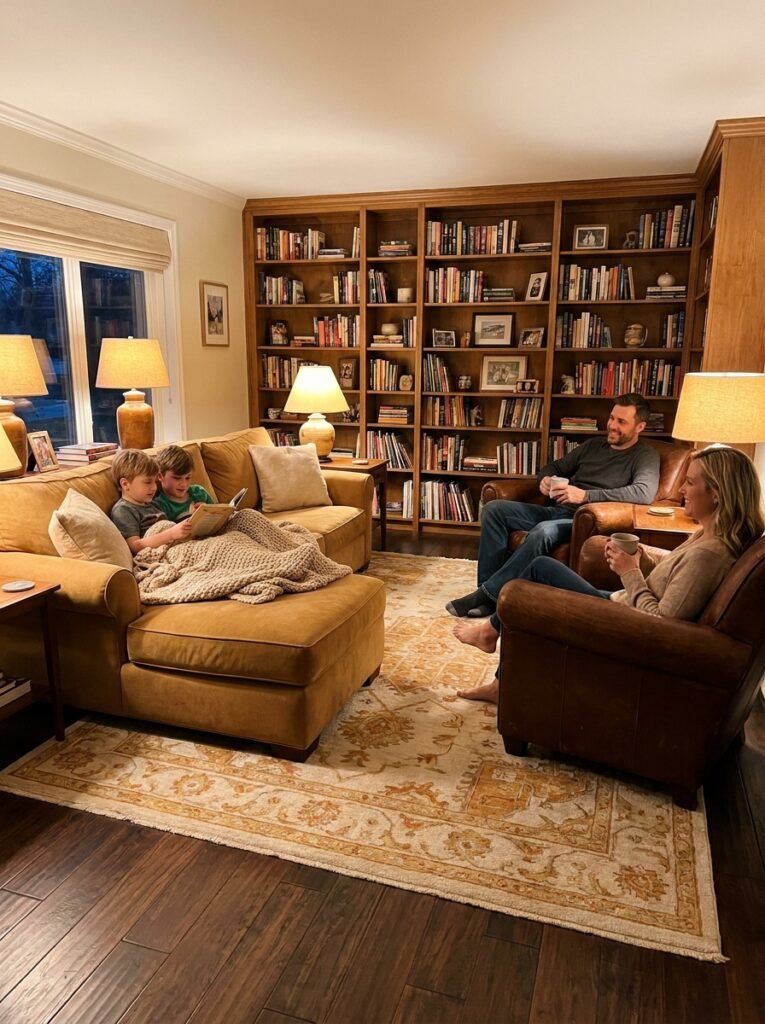
There’s a moment — you’ve probably felt it — when you walk into a living room and something just works. The furniture doesn’t feel placed; it feels settled, like it grew there naturally. That feeling isn’t luck. It’s intention — and once you understand the quiet principles behind a great furniture layout, you’ll never look at a room the same way again.
—
1. Why Your Living Room Layout Is Actually About Human Connection
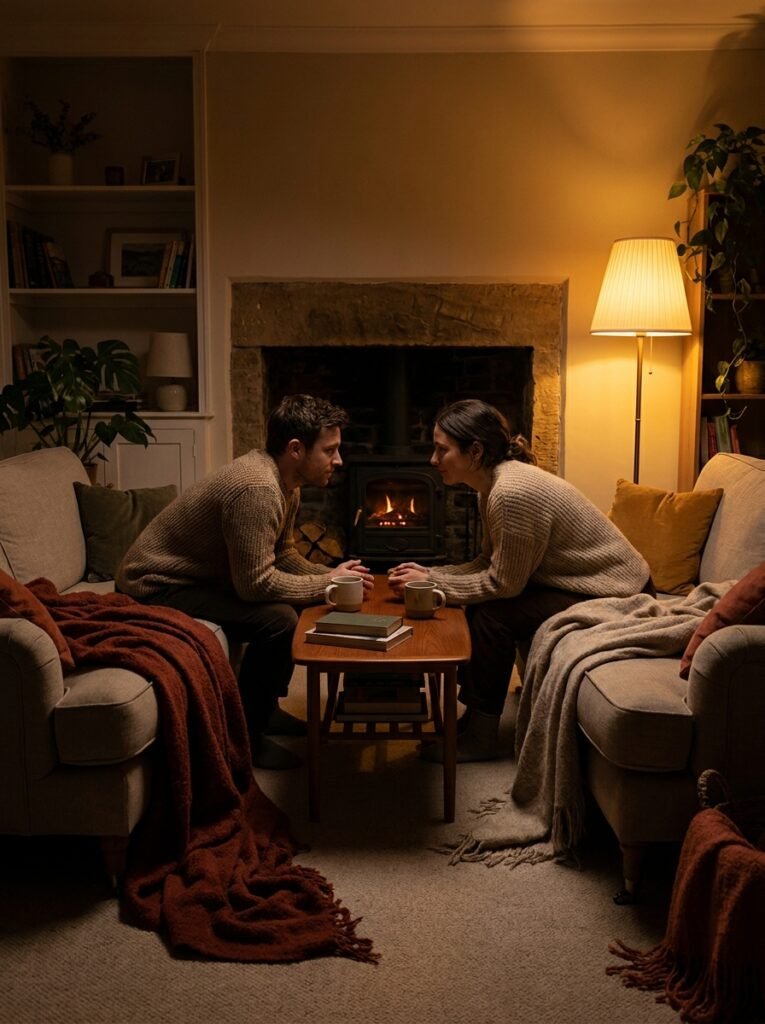
Before we talk about sofas and coffee tables, let’s talk about what a living room is really for. At its core, this room is where your family exhales. It’s where your kids drop their backpacks and fall onto the couch, where you finally sit down after a long Tuesday, where friends gather around something warm to drink and talk until it’s somehow midnight.
When your layout doesn’t support that — when the furniture pushes people apart, creates awkward sightlines, or makes conversation feel like a tennis match — the room fails at its most important job. A beautiful room that doesn’t function is just a showroom. You deserve better than that.
So before moving a single piece of furniture, ask yourself: what do I actually want to happen in this room? That question shapes every decision that follows.
“Your furniture layout isn’t just design — it’s a blueprint for how your family lives together.”
—
2. The First Rule Nobody Tells You: Always Start With the Focal Point
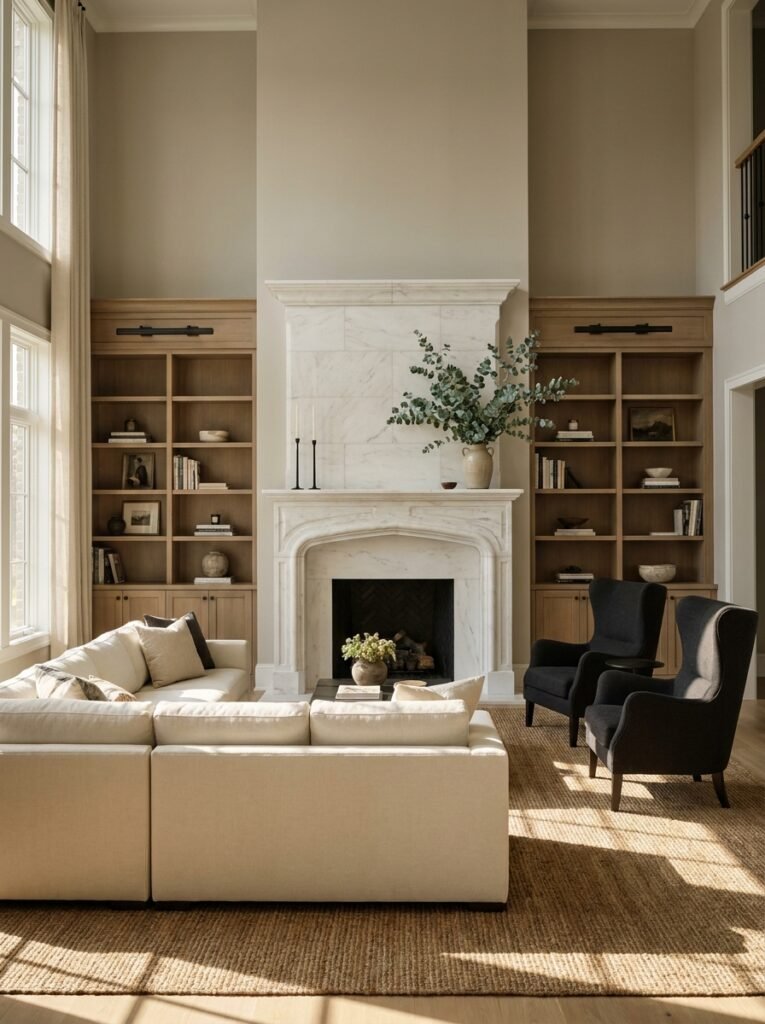
Every great living room layout begins with one anchor — a focal point — and everything else orbits around it. This is usually a fireplace, a large window with a view, an entertainment center, or even a dramatic piece of art. Whatever draws the eye first when you walk into the room? That’s your starting point.
The mistake most people make is arranging furniture based on the shape of the room rather than the energy of the room. They push sofas against walls because it feels safe, because it leaves the middle open — but that actually creates distance between people instead of closeness.
Orient your main seating toward the focal point first. Then layer in secondary pieces. Think of it like a compass: your focal point is true north, and everything else takes its direction from there.
—
3. The Furniture-Against-the-Wall Myth (And Why It’s Hurting Your Room)
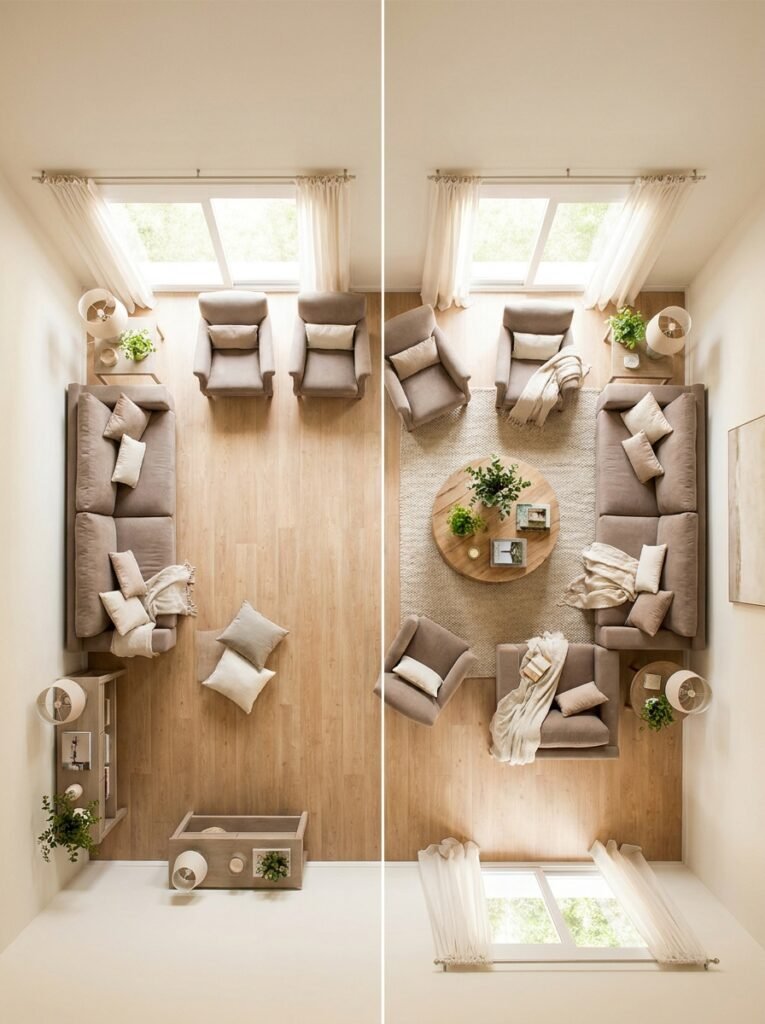
Let’s settle this once and for all — floating your furniture away from the walls is almost always the better choice, and designers have been saying this for decades. It feels counterintuitive. It feels like you’re losing space. But here’s what’s actually happening when you push everything to the perimeter: you create a vast, empty dead zone in the center of the room, and your furniture ends up feeling like awkward strangers at a party, all huddled at the edges.
Floating your sofa even 12 to 18 inches from the wall immediately makes a room feel more curated, more intentional — and paradoxically, more spacious. It creates definition. It says: this is where life happens, right here, in the middle of this room.
If you’re nervous about it, start small. Pull the sofa forward first, live with it for a week, and watch how differently the room feels.
—
4. How to Define a Conversation Zone That People Actually Want to Sit In
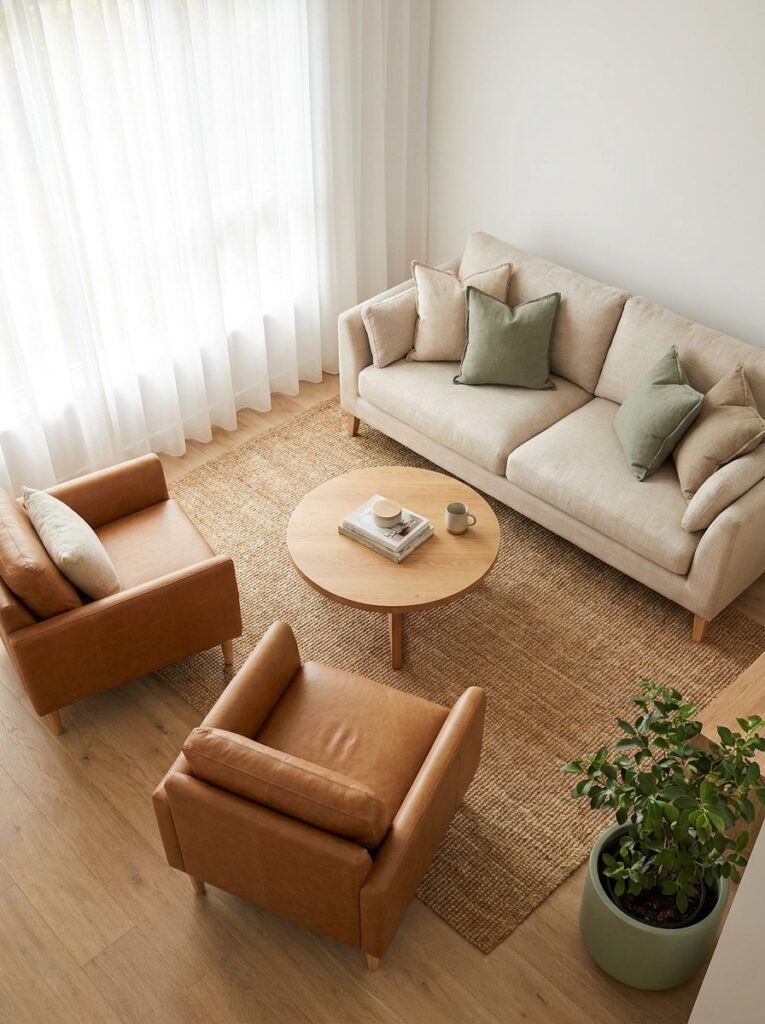
Here’s a truth about interior design that doesn’t get said enough: furniture placement determines whether people talk to each other. Place two chairs too far apart and a conversation dies. Place them at an angle facing each other, within six to eight feet, and something remarkable happens — people lean in.
The sweet spot for a comfortable conversation area is between four and ten feet of distance between seats. Less than four feet starts to feel crowded; more than ten feet and you’re practically shouting. Interior designers call this the “conversational grouping” — a cluster of seating that makes dialogue feel natural and easy.
To create this in your living room, arrange your main sofa with two accent chairs either directly across or at 45-degree angles. Add a coffee table within easy reach — 14 to 18 inches from the sofa edge is the standard — and suddenly the room has a heartbeat. It invites people to sit and stay.
—
5. The Rug Mistake That Makes Your Room Look Smaller Than It Is
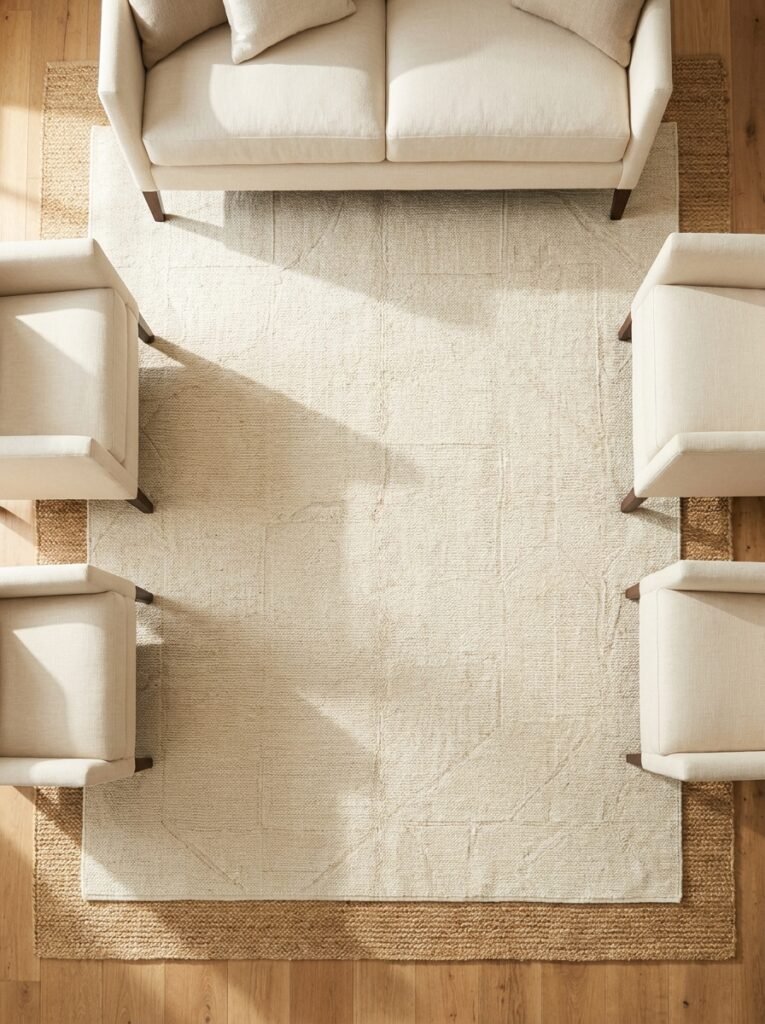
A rug that’s too small is one of the most common living room decorating mistakes, and it quietly undermines everything else in the space. When your rug is undersized, the furniture floats on top of it like islands, and the room looks disjointed — even if every individual piece is beautiful.
The golden rule: at minimum, the front two legs of every seating piece should rest on the rug. Ideally, all four legs of your sofa and chairs are on it entirely. This creates visual cohesion — it tells the eye that these pieces belong together, that this is one unified area with purpose and intention.
For a standard living room, a 8×10 or 9×12 rug is usually the right call. When in doubt, go bigger. You can always anchor a larger rug; you can rarely rescue a small one.
“A rug that’s too small is like a sentence that trails off — it never quite lands.”
—
6. Traffic Flow: The Invisible Architecture of a Well-Designed Room
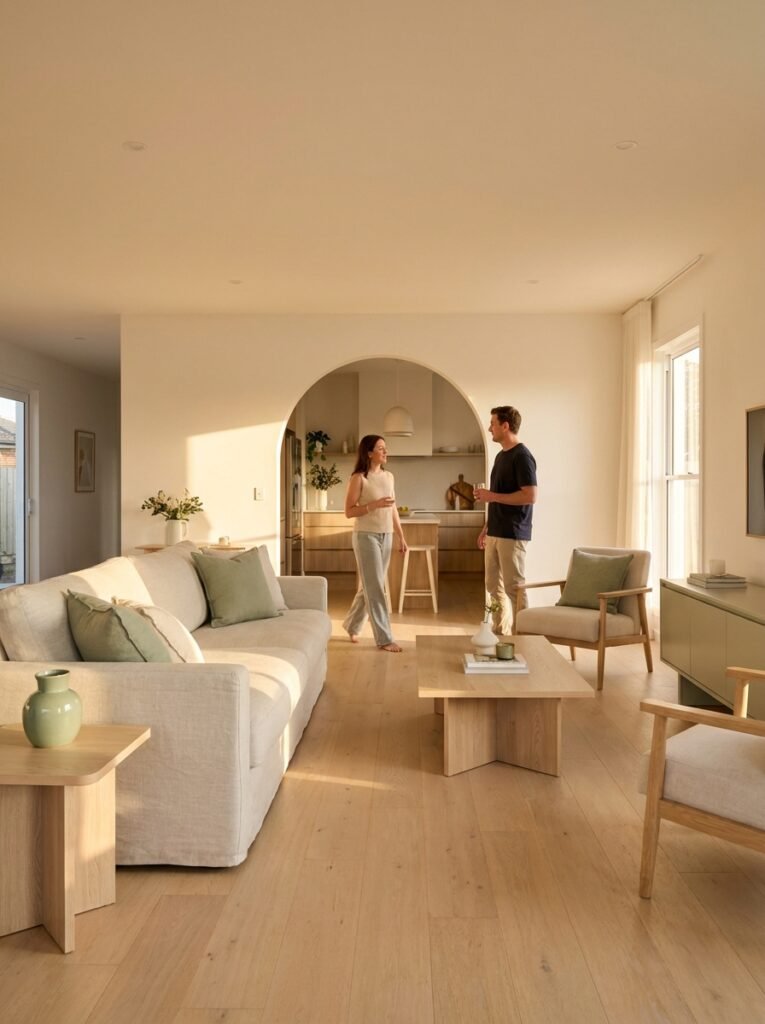
Imagine hosting a dinner party. Your guests move from the front door to the kitchen, from the kitchen to the living room, back and forth through the evening. Now imagine they have to squeeze sideways between the sofa and the console table every single time. The room is technically set up, but it’s fighting against how people naturally move.
Good traffic flow means maintaining at least 30 to 36 inches of clear walkway through any main path in the room. Around the coffee table and between seating pieces, 18 inches minimum keeps things from feeling cramped. These aren’t just numbers — they’re the difference between a room that welcomes movement and one that quietly exhausts everyone in it.
Before you finalize any layout, physically walk through your planned paths. Open the front door and walk to the couch. Walk from the couch to the kitchen. Walk from the TV to the bookshelf. Every path should feel easy, unconstricted, and natural.
—
7. Small Living Rooms: The Layout Strategies That Make Them Feel Twice as Big
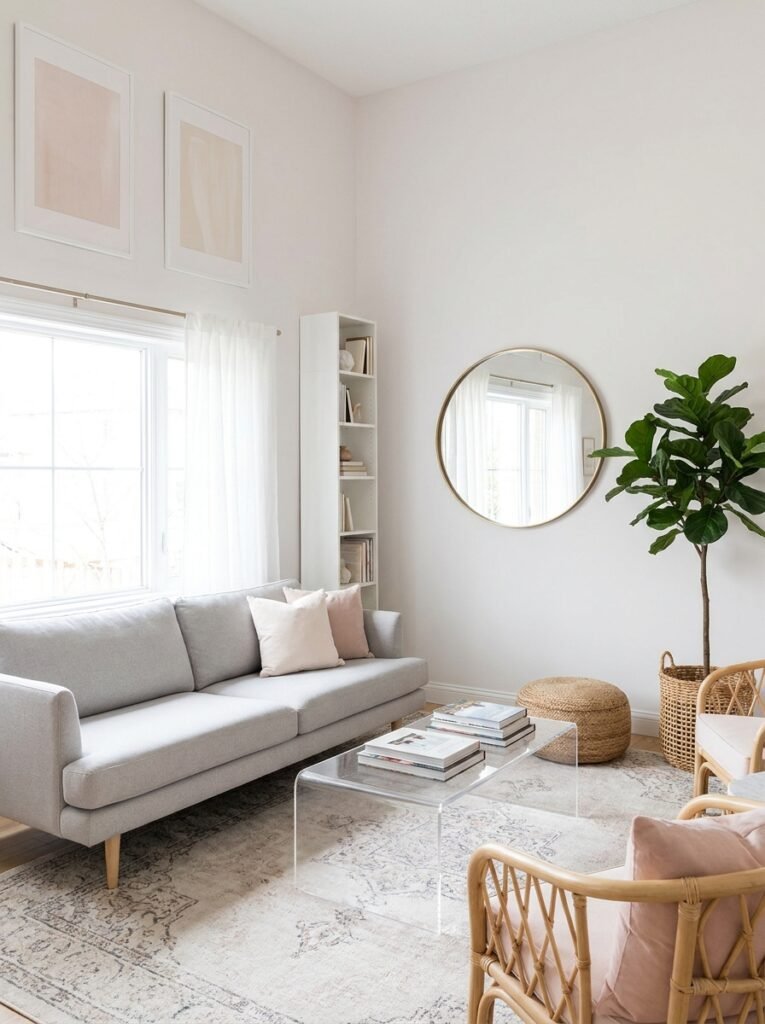
A small living room isn’t a design problem — it’s a design puzzle, and there’s a distinct pleasure in solving it well. The key isn’t making the room look bigger in a superficial way; it’s making it feel bigger through smart, intentional choices.
First: scale your furniture to the room. A massive sectional in a small space isn’t cozy — it’s suffocating. Choose a streamlined sofa with exposed legs (visual lightness matters enormously), keep the coffee table low and perhaps transparent like glass or lucite, and resist the urge to fill every inch with furniture.
Second: use vertical space. Tall bookshelves, artwork hung higher than feels natural, even tall floor plants — these draw the eye upward and expand the perceived height of the room dramatically. A room that feels tall feels spacious, even when it’s square footage is modest.
Third: mirrors. A well-placed mirror — especially opposite a window — doubles your light and creates visual depth that no furniture trick can match.
—
8. The L-Shape, the U-Shape, and Knowing Which One Your Room Needs
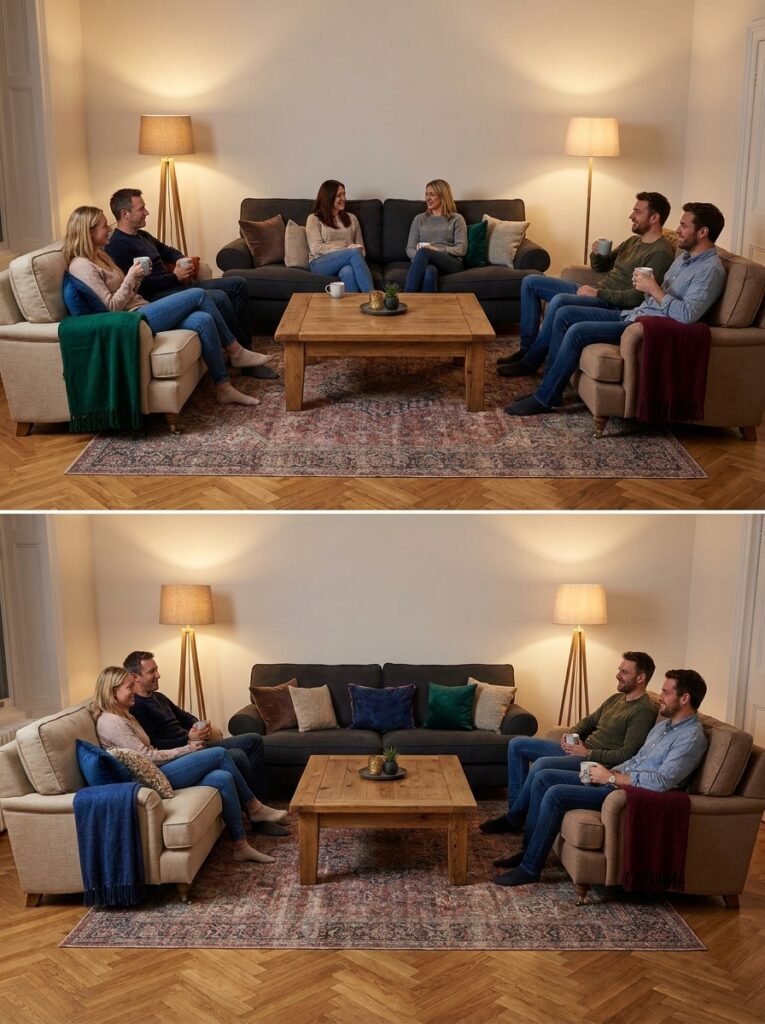
If you’re working with a standard rectangular living room, your two primary layout approaches are the L-shape arrangement and the U-shape arrangement, and choosing between them comes down to two things: the size of your room and how many people you typically need to seat.
The L-shape — typically a sofa plus one chaise or loveseat arranged at a right angle — is ideal for smaller to medium rooms. It’s efficient, it creates a clear conversation zone, and it leaves room for traffic flow on at least two sides. It feels modern and clean without being cold.
The U-shape — a sofa plus two chairs or loveseats facing each other — is made for larger rooms and for people who love to entertain. It’s inherently social, it draws people in, and it creates that warm, enclosed feeling of a room that truly embraces you. The trade-off is space: you need enough room that the U doesn’t feel like a furniture fortress.
Neither is inherently better. The best layout is always the one that suits your specific room, your specific life.
—
9. Lighting and Layout: The Combination That Changes Everything
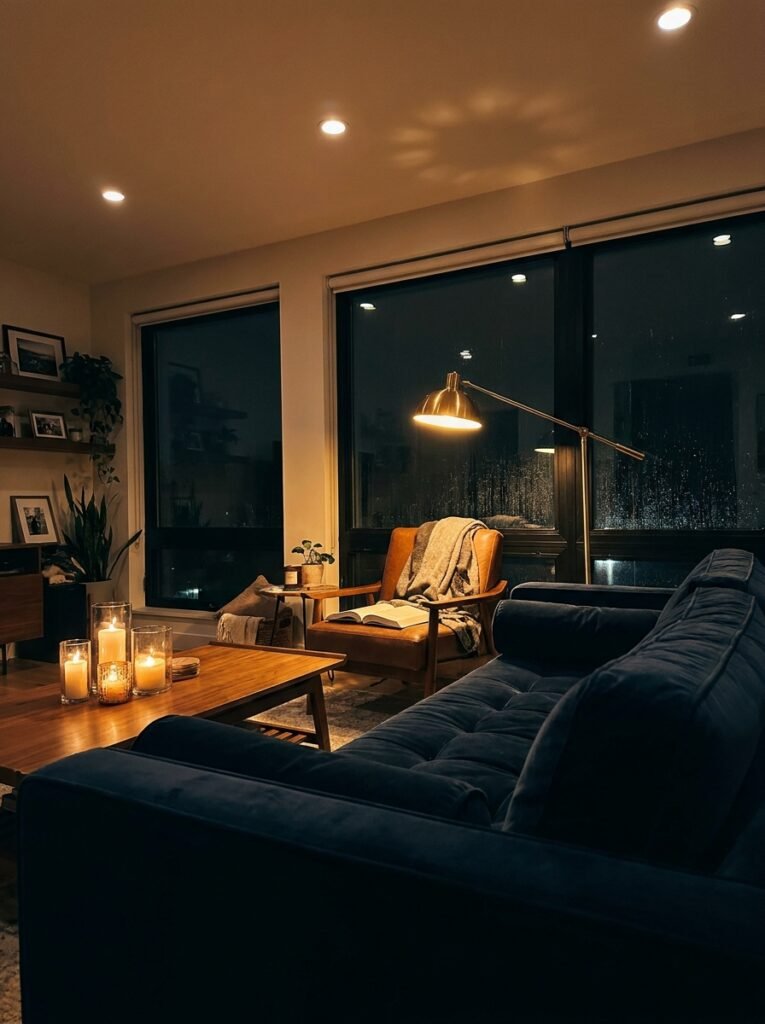
Here’s something that doesn’t come up enough in furniture layout conversations: lighting placement should be part of the layout decision, not an afterthought once everything is already arranged. The position of your lamps, the height of your fixtures, the direction your natural light falls — all of these interact with your furniture in ways that either make the room sing or quietly dim it.
Layer your lighting in three zones: ambient light (overhead fixtures or recessed lighting), task lighting (a reading lamp beside the armchair, a table lamp on the side table), and accent lighting (sconces, LED strips behind shelving, candles on the coffee table). When these three layers work together, the room feels rich and dimensional at any hour of the day.
Position floor lamps behind or beside seating, never in front — you don’t want light shining into your eyes when you’re trying to relax. And wherever possible, keep lamps at roughly eye level when seated. This creates the warmest, most flattering atmosphere in the room.
“Lighting doesn’t decorate a room — it decides how the room feels at 8pm on a rainy evening.”
—
10. How to Use Furniture Layout to Make an Open-Plan Space Feel Intentional
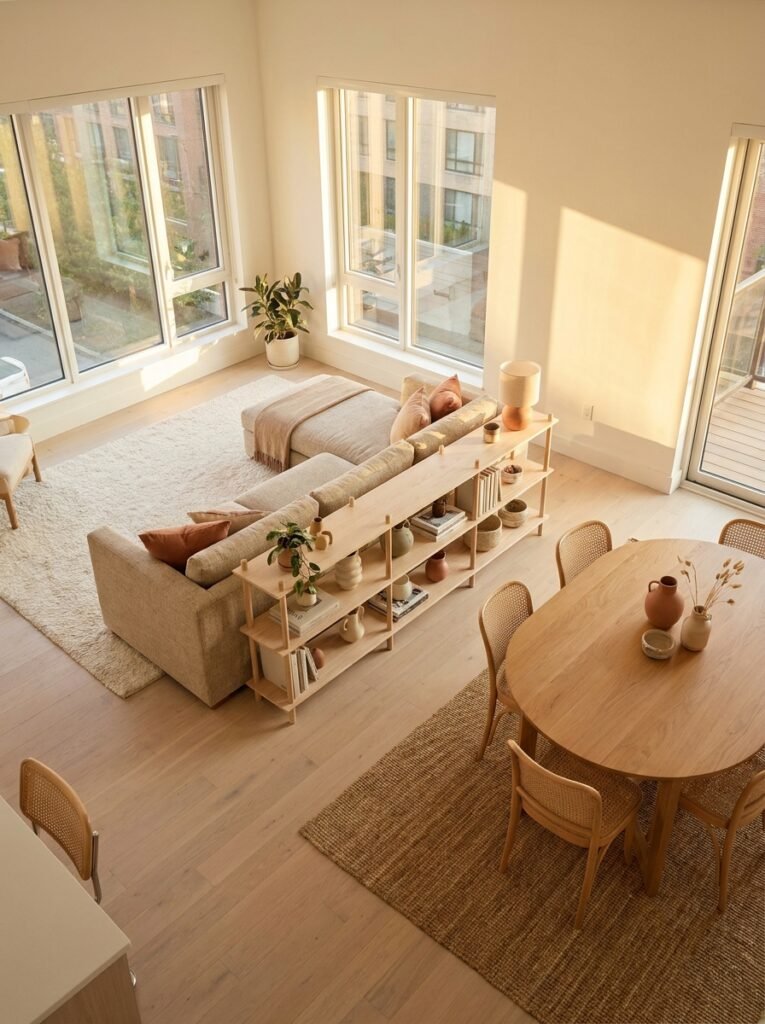
Open-plan living has been a dominant architectural trend for years, and while it creates a beautiful, airy aesthetic, it poses a real design challenge: without walls to define spaces, rooms can blur into one undifferentiated sea of furniture and flooring.
The solution is to use your furniture itself as the architecture. A sofa facing away from the dining area creates an invisible wall. A bookshelf placed perpendicular to the room’s main axis divides zones without closing off light. A distinct rug under the living area and a different texture under the dining table signals: these are two separate spaces that happen to share one footprint.
The goal in an open plan is intentional definition — making sure that each zone feels purposeful and complete, even without a wall to frame it. When this works well, an open-plan space feels both expansive and intimate, which is a rare and beautiful thing.
—
11. Seasonal Layout Changes: The Permission You Didn’t Know You Had
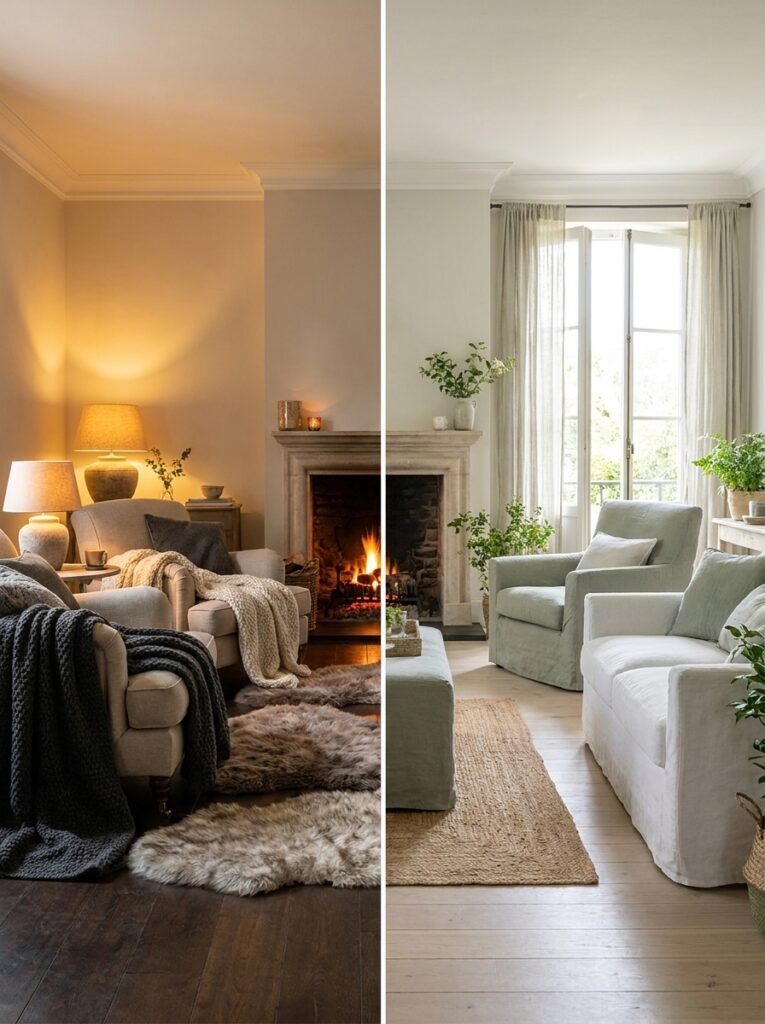
One of the most freeing ideas in interior design is this: your living room layout doesn’t have to be permanent. In fact, shifting your layout seasonally — even subtly — can completely refresh how you experience your own home without spending a single dollar.
In winter, pull seating closer to the fireplace or create a tighter, cozier grouping. Bring in extra throw pillows, a heavier area rug layered over the existing one, and position chairs to face inward. The room becomes a nest.
In summer, create more breathing room between pieces. Open the layout toward windows. Remove the extra throw blankets and let the room feel lighter and more open. The same room, the same furniture — but a completely different feeling.
This isn’t just a decorating trick. It’s a reminder that your home should respond to your life, not the other way around.
—
12. The Final Walkthrough: How to Know When Your Layout Is Truly Right
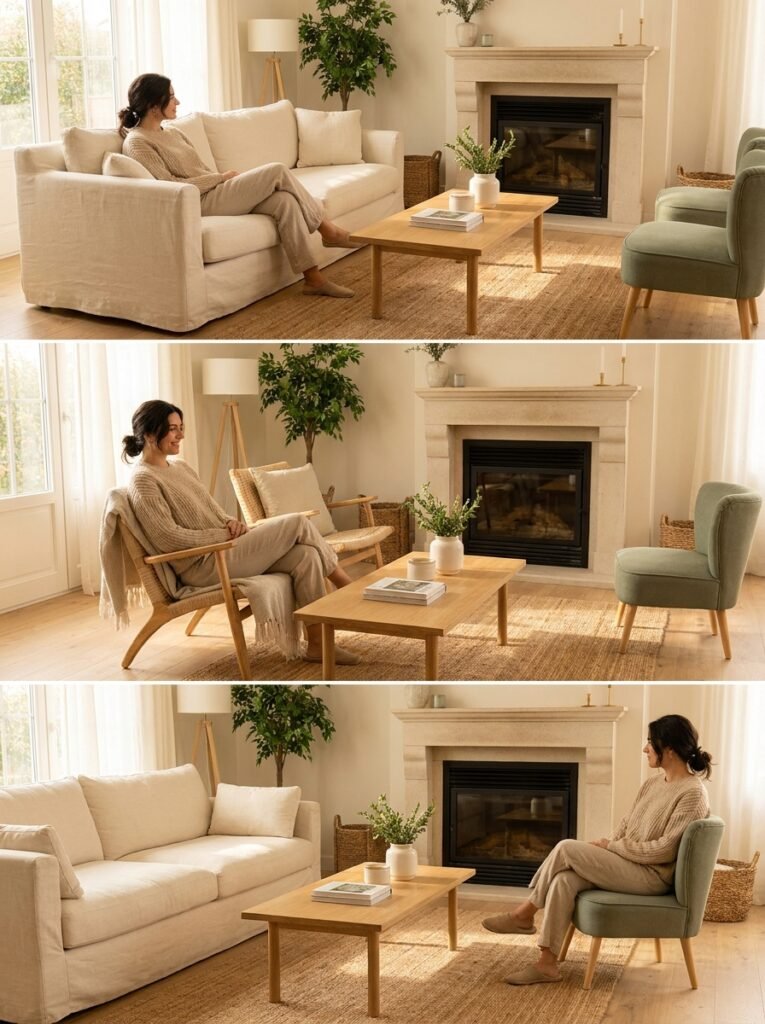
After all the measuring, the moving, the second-guessing — how do you know when you’ve actually landed on the right layout? Here’s a simple test, and it has nothing to do with aesthetics.
Sit in the room. Sit in every seat. Can you see the focal point? Can you reach the coffee table comfortably? If someone else walked in, would you be able to have a natural conversation with them, or would you need to crane your neck? Now walk through the room. Does the path feel easy? Do you feel the furniture working with you or around you?
Finally — and this is the most important test of all — how does the room make you feel? Not how does it look in a photo, not what would someone else think. How does it feel to be in this room, right now? Comfort, calm, and a quiet sense of rightness — that’s what you’re after. When you find it, you’ll know.
—
🌿 How to Take Care of Your Living Room Layout Over Time
A great layout isn’t a one-time event — it’s something you tend to gently as your life evolves.
Revisit it seasonally. Give yourself permission to shift things twice a year, in autumn and spring, and notice how the room changes with you.
Reassess after major life changes. A new baby, a new pet, a teenager who now does homework in the living room — life changes how a space needs to function. Let your layout change too.
Edit, don’t add. When a room starts to feel cluttered or heavy, the instinct is often to redecorate. More often, the room just needs less — one fewer accent chair, one less side table. Subtraction is an underrated design tool.
Trust your own comfort. Design rules are starting points, not laws. If you’ve tried the “right” layout and it still doesn’t feel right to you, keep moving things until it does. You live here; the room exists for you.
Photograph your layouts. Snap a photo before you move things and after. Seeing the room through a camera lens — even your phone camera — shows you things your eye misses when you’re standing in the space.
—
❓ FAQ
Q: How far should a sofa be from the TV in a living room layout? A: The ideal viewing distance depends on your TV size — a general rule is 1.5 to 2.5 times the diagonal screen size. For a 55-inch TV, that means roughly 7 to 11 feet. You want close enough for comfortable viewing, far enough that you’re not straining your eyes or losing the full picture.
Q: Can you have two sofas in a small living room? A: Yes, but scale is everything. Two smaller, streamlined sofas facing each other can work beautifully in a modest room — it creates symmetry and a strong conversational zone. Avoid bulky, oversized sofas and make sure you maintain adequate walkway space (at least 30 inches) around them.
Q: What should I do if my living room is an awkward shape — like an L or very narrow? A: Awkward shapes often benefit from breaking the room into two distinct zones rather than fighting the shape. In a narrow room, create one conversation cluster near one end and a reading nook at the other. In an L-shaped room, let each arm of the L serve a different function. Work with the shape, not against it — and use rugs to define each zone clearly.
—
💭 Final Thought
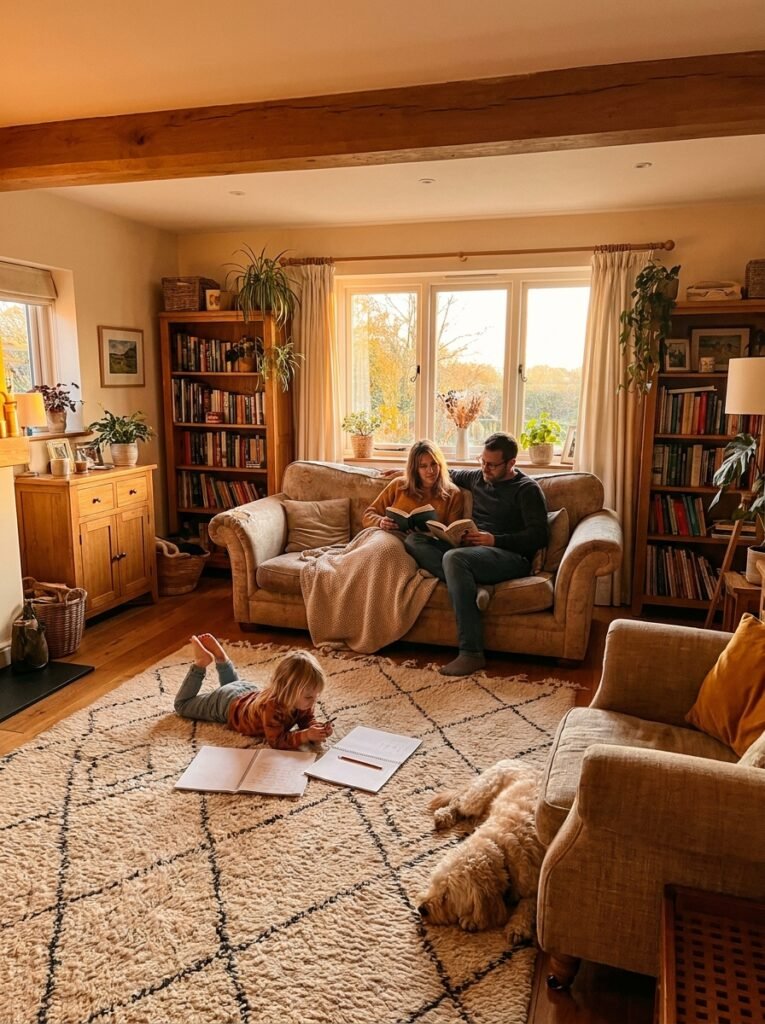
A living room layout, when it’s truly right, does something that no amount of expensive furniture or perfect paint color can do on its own — it makes people want to stay. It pulls them in and lets them exhale. It holds the conversations and the quiet evenings and the ordinary moments that, looking back, turn out to be the extraordinary ones.
The best layout you’ll ever find is the one that fits your life — not a magazine’s vision of it, not a designer’s ideal, but the actual, beautiful, imperfect way your family moves through the world.
So here’s my question for you: what is one thing about your current living room layout that you’ve always known, deep down, just doesn’t feel quite right?