
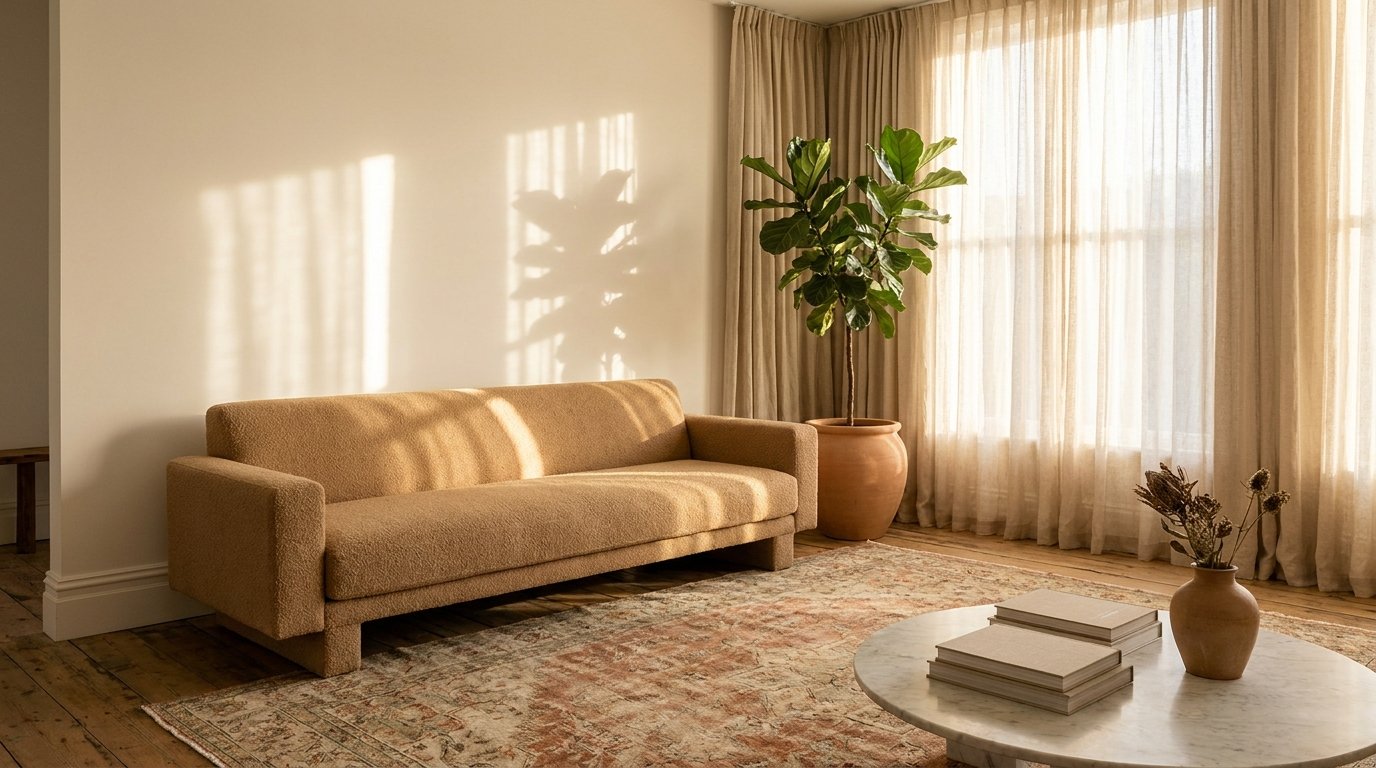
The Chic Living Room You’ve Always Wanted: How to Create a Space That Feels Like a Designer Did It
There’s a moment — you’ve probably felt it — when you walk into someone else’s living room and something quietly shifts inside you. The light hits just right, the colors feel impossibly calm, and every piece of furniture looks like it belongs exactly where it is. You think: I want this. This guide is for that feeling, and how to make it yours.
—
1. What “Chic” Actually Means — and Why Most People Get It Wrong
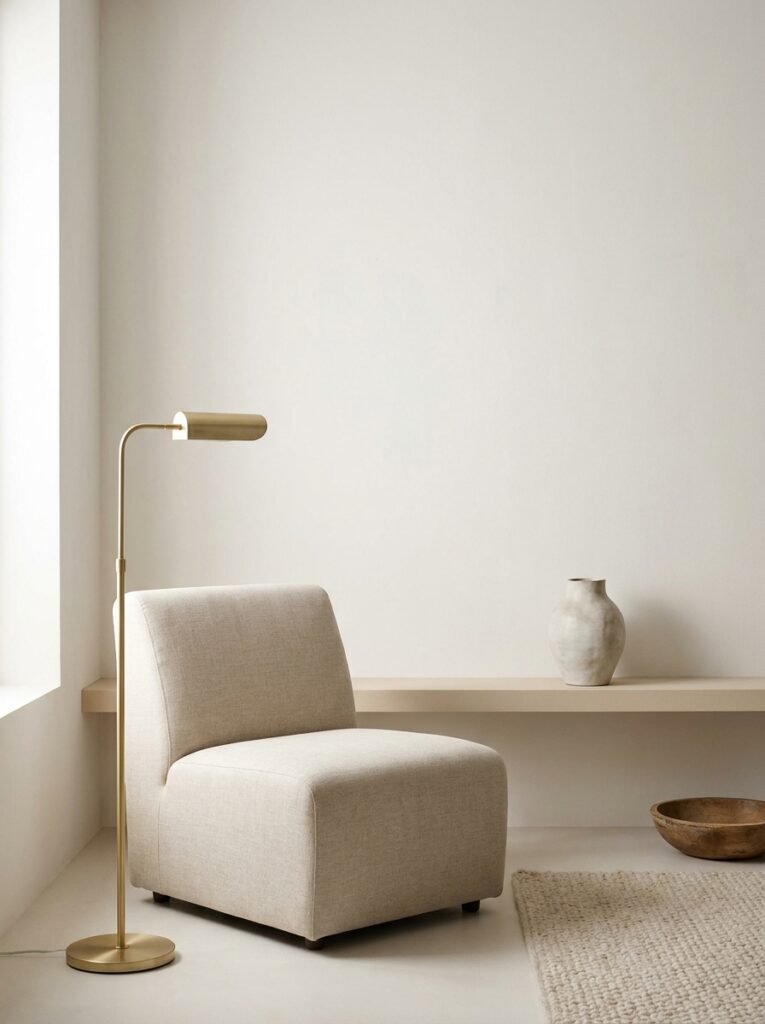
The word “chic” gets thrown around so casually that it’s nearly lost its meaning. People paste it onto Pinterest boards full of contradictory inspirations — a Parisian apartment here, a Californian beach house there — and then wonder why their living room still feels off. But chic has a definition worth holding onto: it means effortless, refined, and intentional. It never screams. It whispers.
A chic living room isn’t about spending more money. It’s about making fewer, better choices. It’s about a room that looks like someone thought deeply about every single element — and then had the confidence to stop. The greatest design mistake people make isn’t choosing the wrong couch. It’s choosing too many things. Chic, at its core, is the art of restraint dressed in beautiful clothes.
“Chic isn’t what you add to a room — it’s what you finally have the courage to leave out.”
When you start thinking of your living room as a carefully edited collection rather than an accumulation, everything changes. You stop buying things because they’re on sale and start asking whether each piece truly belongs. That shift in thinking? That’s where chic begins.
2. The Color Palette That Does All the Heavy Lifting

Color is the invisible architecture of any room. Before you move a single piece of furniture, your color palette is already doing the emotional work — calming you down, energizing you, making the ceiling feel higher or the space feel warmer. In a chic living room, color is never an afterthought.
The most enduring chic palettes share one quality: they feel harmonious without being boring. Think warm whites layered with aged linen and a single deep accent — maybe a dusty olive, a slate blue, or a sun-bleached terracotta. The French call this “ton sur ton,” a tonal approach where shades of the same color family live together in quiet sophistication. It works because your eye can rest instead of darting around the room trying to make sense of competing tones.
Don’t be afraid of white walls. Truly. A warm white — Benjamin Moore’s “White Dove” or Farrow & Ball’s “All White” — gives your furniture and textiles room to breathe and shine. What makes white walls feel chic rather than cold is the warmth you layer beneath: a jute rug, a honey-toned wooden coffee table, cream linen throw pillows with just enough texture to make you want to reach out and touch them.
3. The Sofa Is the Statement — Choose It Like You Mean It
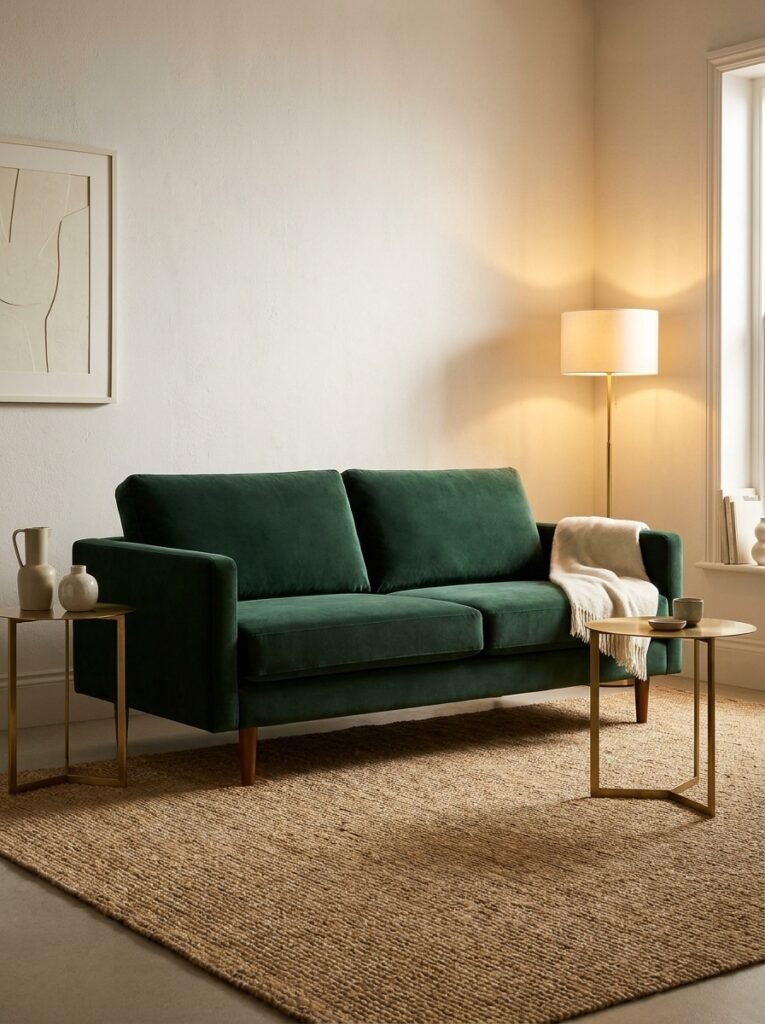
If the color palette is the architecture, the sofa is the heartbeat of your living room. Everything else — the rug, the side tables, the art — orbits around it. And yet, this is where so many people make their biggest compromise. They choose the sofa that’s available, affordable, and “fine enough.” And then they spend years trying to decorate around a piece that never quite fit.
A chic sofa doesn’t have to be expensive, but it does have to be intentional. Consider the silhouette first: clean, low-profile sofas with simple lines read as more sophisticated than overstuffed sectionals, no matter the price point. A camel-colored boucle sofa, a deep velvet two-seater in forest green, a classic linen sectional in warm oatmeal — these are not trendy. They are timeless. And timeless is the backbone of chic.
The rule worth remembering: buy the sofa that makes you say “yes” immediately and then build the entire room around that conviction. A room built around a sofa you love will always feel more cohesive than one built around indecision.
4. Lighting That Transforms a Room After 6 PM
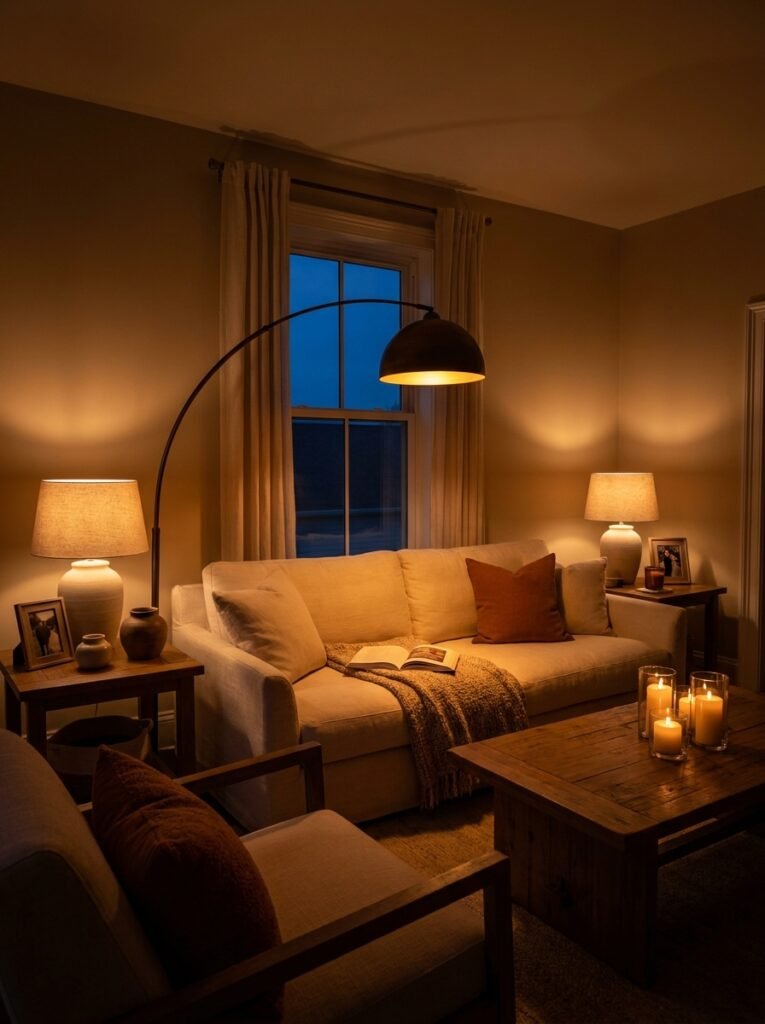
Here is a design secret that decorators charge hourly rates to share: the living room most people want to come home to isn’t designed for noon. It’s designed for 7 PM — when the day is done, the sun is low, and you want to feel wrapped in warmth rather than interrogated by overhead fluorescents.
Chic lighting has layers. It starts with the ambient layer — usually a ceiling fixture or recessed lighting — but it never stops there. The magic lives in the secondary layers: a tall arc floor lamp casting a warm pool of light beside the sofa, a pair of table lamps on either side of the room creating symmetry and intimacy, a few candles on the coffee table that make everything feel a little softer.
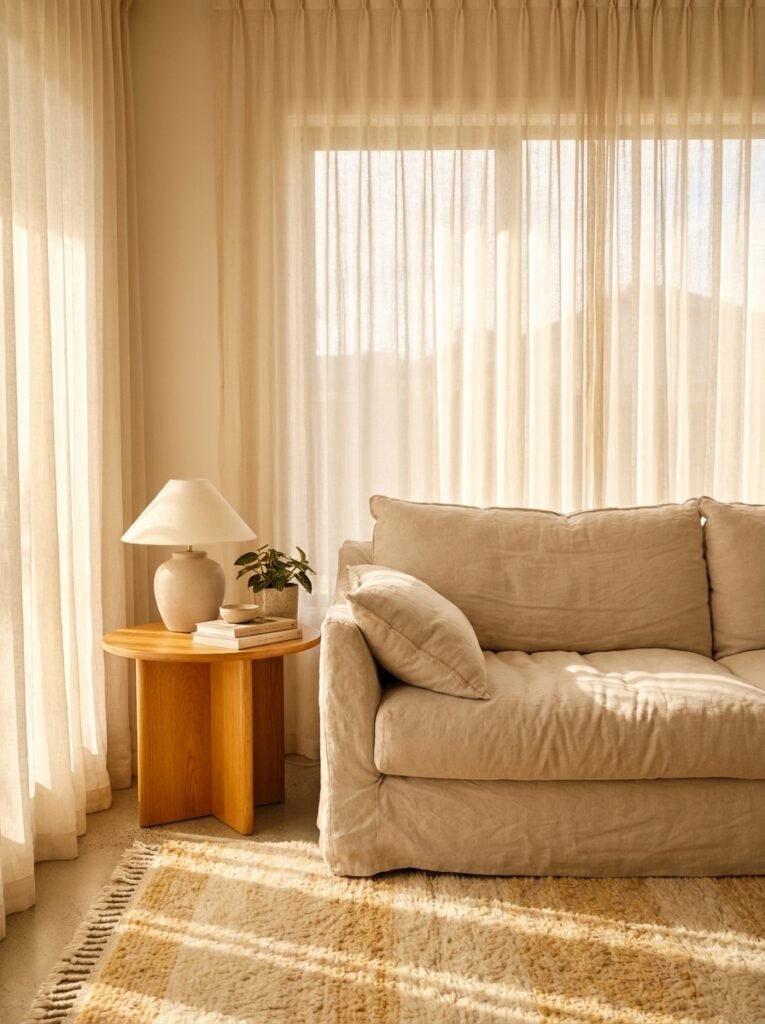
Swap cool-toned bulbs for warm ones (look for 2700K to 3000K color temperature). It costs almost nothing and immediately makes your space feel more welcoming, more human, more lived-in in the best possible way. The right light doesn’t just illuminate a room — it transforms the mood of everyone in it.
5. The Art of Layering Textures Without Creating Chaos
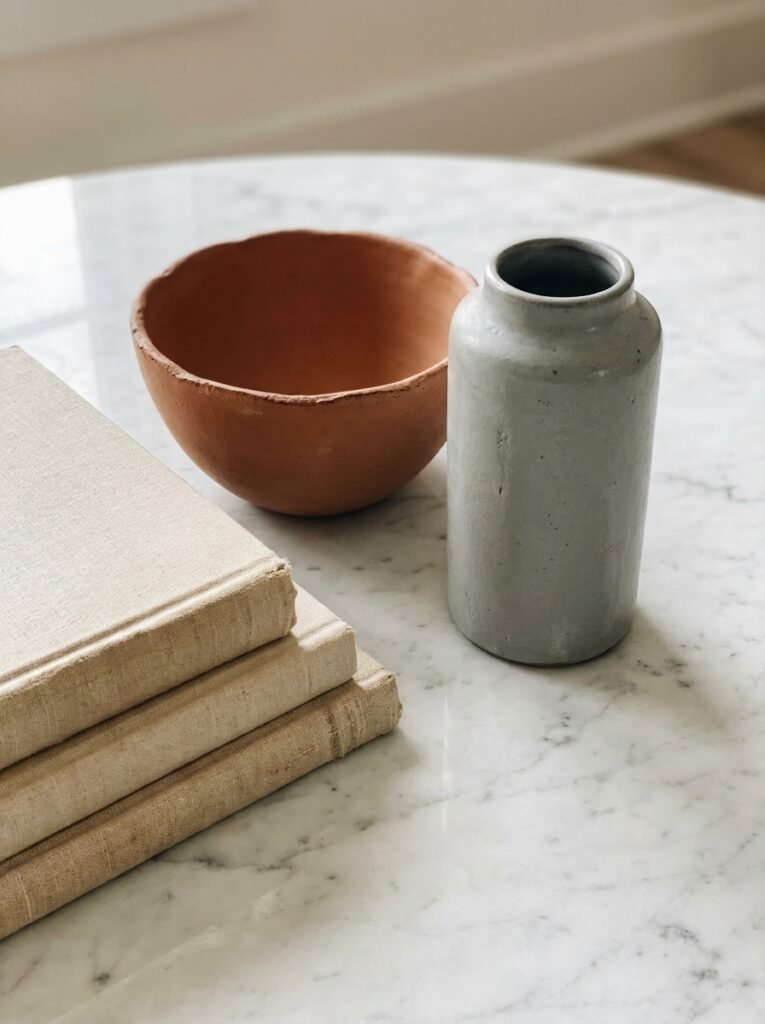
Touch is an underrated sense in interior design. You might not consciously reach out and run your fingers along your sofa cushions every time you walk past, but your eyes are doing the equivalent — scanning for richness, depth, and warmth. A chic living room engages the sense of touch even from across the room.
Texture layering is the practice of combining materials that feel visually different: something smooth against something nubby, something shiny against something matte, something heavy against something light. Think of a marble coffee table (cool, smooth, reflective) styled with a stack of linen-bound books, a rough terracotta bowl, and a single ceramic vase with a matte finish. That small tableau contains four different textures — and it looks like something out of an architecture magazine.
“A room without texture is like a meal without seasoning — technically complete, but somehow deeply unsatisfying.”
The key to keeping texture layering from tipping into chaos is to anchor it all within your color palette. When the tones stay harmonious, the textures can vary wildly — and the result always feels curated, never cluttered.
6. Furniture Arrangement: The Forgotten Foundation of Chic
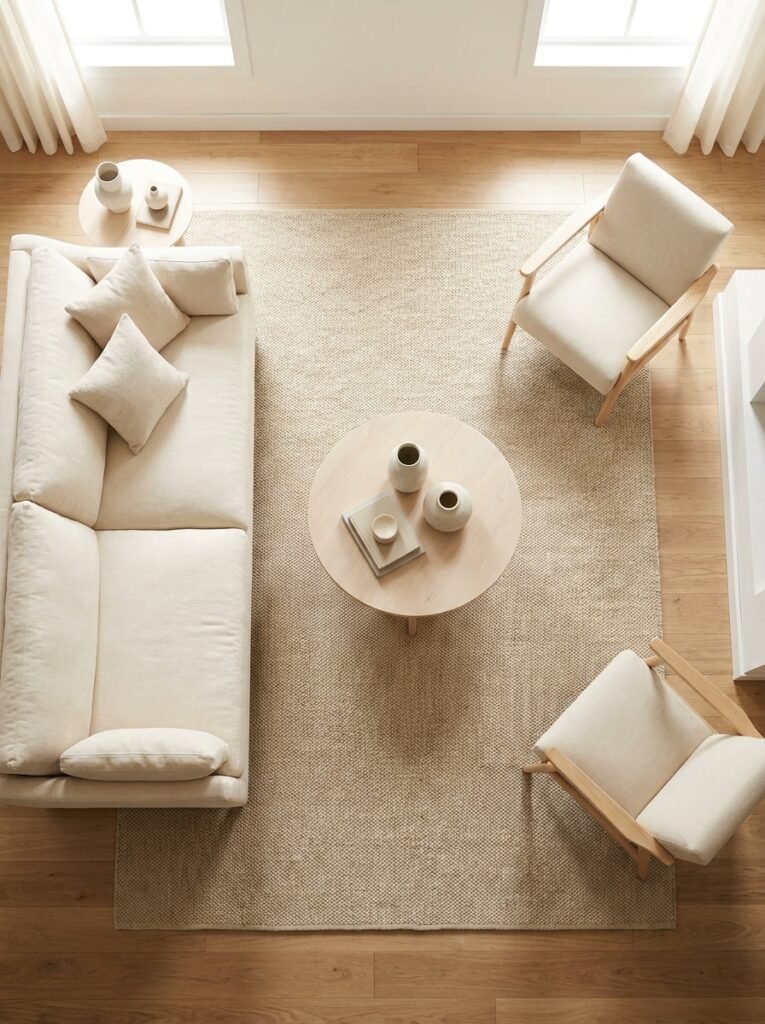
You can have the most beautiful furniture in the world and still have a living room that feels wrong if the arrangement is off. Most people push furniture against the walls in an unconscious attempt to maximize floor space — but this actually makes a room feel smaller, colder, and more like a waiting room than a home.
The chic approach is to float the furniture. Pull the sofa away from the wall — even just a few inches makes a difference. Position two chairs angled toward each other to create a conversation zone. Let the rug anchor everything together, making sure it’s large enough that at least the front legs of every major piece rest on it. This is what designers call “visual anchoring,” and it’s one of the single most transformative moves you can make in a living room.
Think about traffic flow too — but don’t let it tyrannize you. A room should guide movement naturally, not force it. When furniture is arranged thoughtfully, you don’t need to think about where to walk. You just… walk. That kind of ease is the physical feeling of chic.
7. The Rug: Why Size Matters More Than You Think
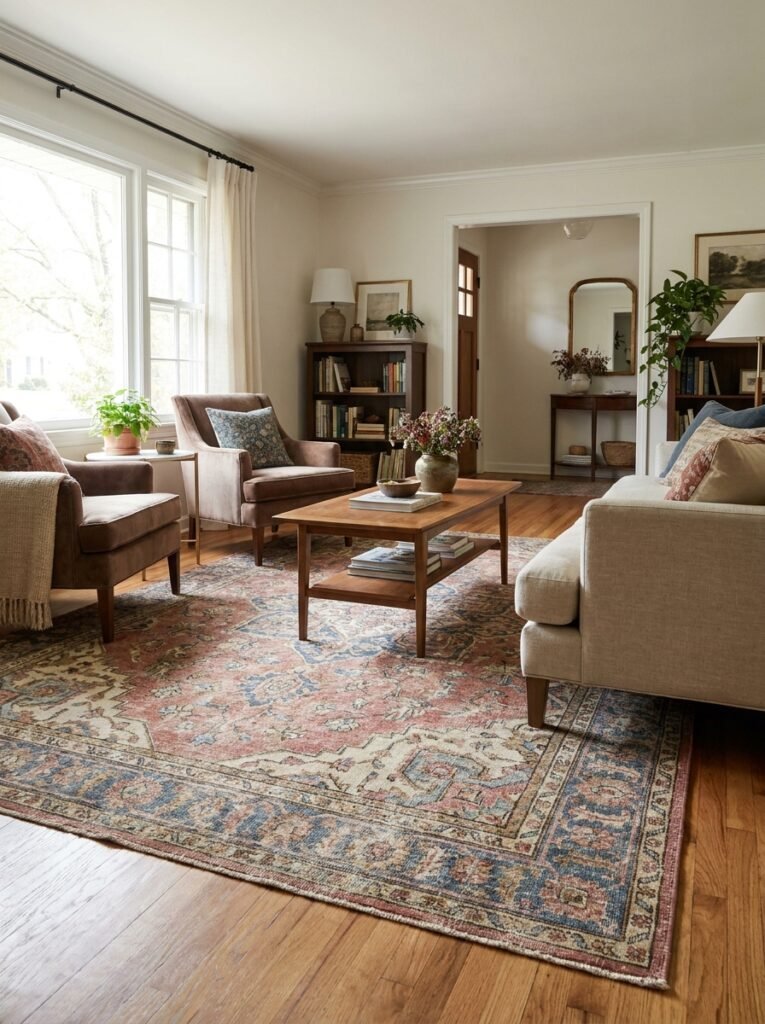
If there’s one mistake that instantly dates or cheapens an otherwise beautiful living room, it’s a rug that’s too small. A timid little rug floating in the center of a room — surrounded by a moat of bare floor — sends an unconscious signal that something is incomplete. It’s the design equivalent of a photo that’s slightly out of focus: you can’t quite name the problem, but you feel it.
In a chic living room, the rug should be large enough for all the main furniture to live on it, or at minimum, for the front legs of the sofa and chairs to rest on its surface. As a general guide, an 8×10 rug is the minimum for most living rooms, and a 9×12 is almost always better. Natural fiber rugs — sisal, jute, seagrass — add organic warmth and age beautifully. A vintage or vintage-inspired Persian rug brings pattern and history without feeling trendy.
8. Styling the Coffee Table Like a Visual Artist
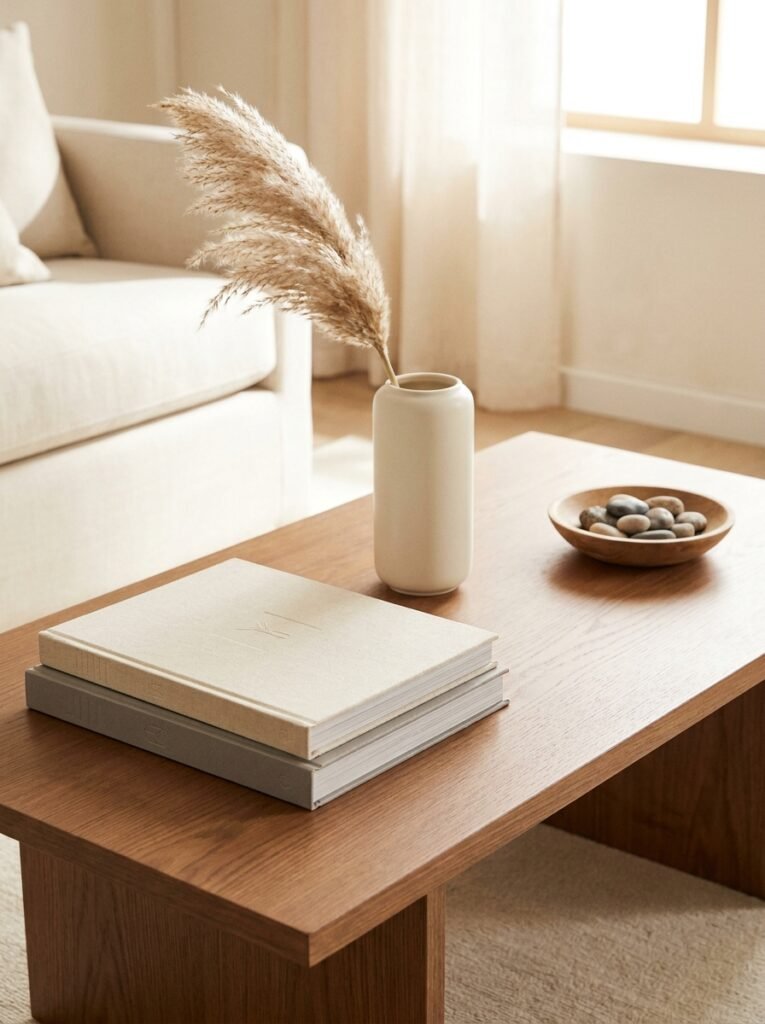
The coffee table is the living room’s stage, and what you place on it either elevates the entire room or quietly undermines it. This is where chic truly lives or dies at a granular level — because a beautifully designed room with a messy, random coffee table will always feel unfinished.
The classic chic coffee table has three elements: height variation, organic material, and a sense of purpose. Stack two or three coffee table books (choose ones with beautiful covers — they’re doing visual work). Add something with height — a sculptural vase, a tall candle, a small plant. Then add something low and unexpected — a geode, a small wooden bowl, a stack of coasters in an interesting material. That’s it. Three elements. Purposeful and spare.
The trap to avoid: sentimental clutter. The coffee table isn’t the place for the TV remote, last week’s mail, and a half-empty water glass. It’s the room’s centerpiece and deserves to be treated accordingly.
9. Plants: The Living Design Element That Earns Its Place
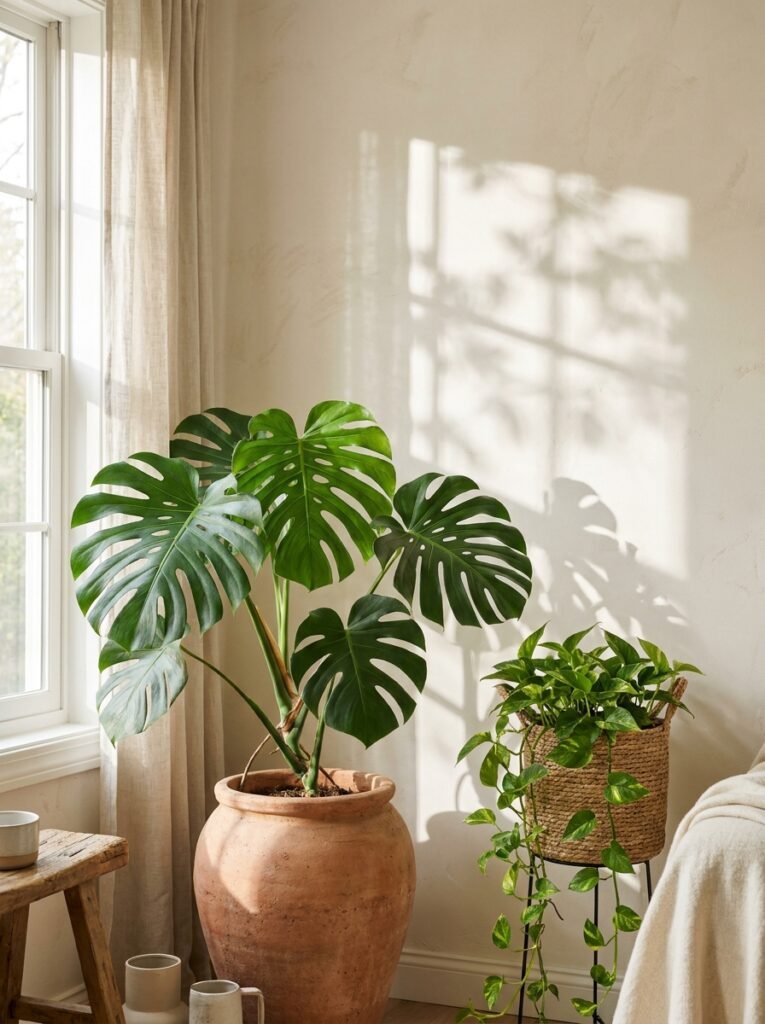
There is a reason every single aspirational living room you’ve ever saved on Pinterest has at least one plant in it. Plants do something that no furniture, no art, and no lighting can replicate: they make a room feel alive. Not just aesthetically — literally. They move subtly in air currents. They grow. They breathe.
“A room with a thriving plant tells you, without a single word, that someone here tends to beautiful things.”
For a chic aesthetic, choose plants with architectural presence — a fiddle leaf fig reaching toward a corner, a sculptural monstera in a clay pot, a cluster of tall snake plants framing a window. The container matters as much as the plant itself. Avoid plastic nursery pots and invest instead in ceramic, terracotta, or woven basket planters that speak the same material language as the rest of your room.
One well-chosen, beautifully potted plant beats ten random ones every single time. Edit mercilessly.
10. Art That Means Something Without Explaining Itself
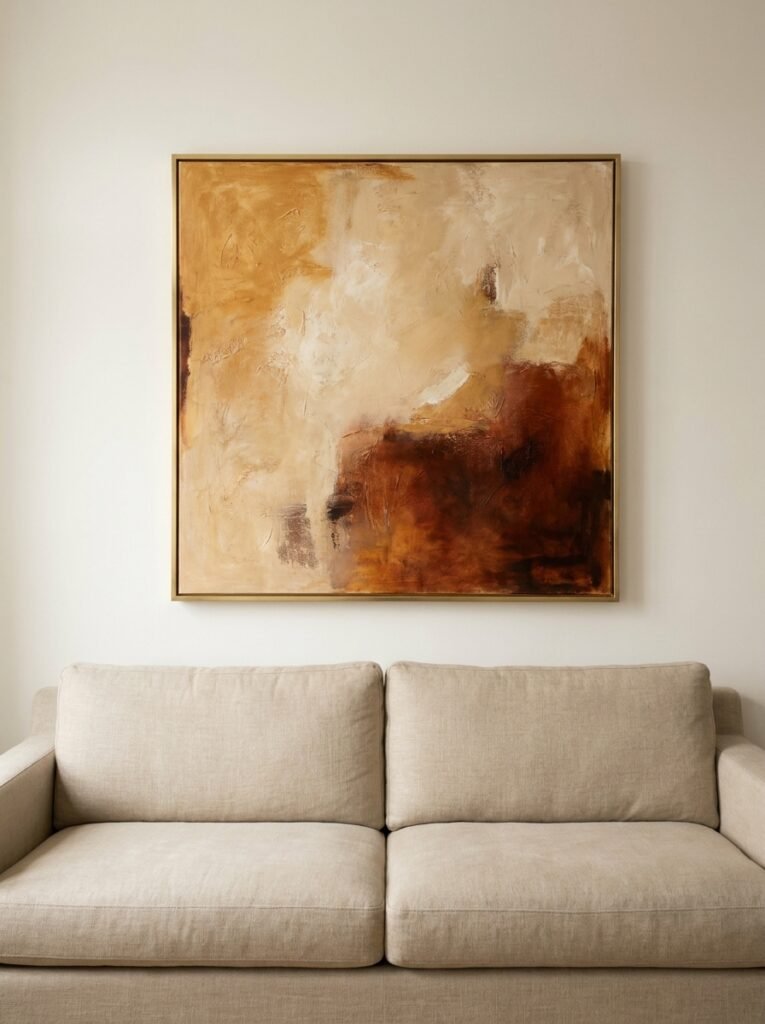
Art is where a living room stops being generic and starts being yours. And yet this is where many people freeze, feeling underqualified to choose or afraid to commit. But here is what the best art in the best living rooms has in common: it was chosen by someone who reacted to it emotionally rather than intellectually.
You don’t need to understand art to choose it well. You need to feel something when you look at it. A large abstract print in warm ochre and cream, hung with intention above the sofa. A simple black-line botanical illustration in a thin brass frame. A vintage map of a city that matters to you. These aren’t gallery decisions — they’re personal ones. And that’s exactly what makes them chic.
Scale matters enormously. Art that’s too small on a large wall is worse than no art at all. When in doubt, go bigger than feels comfortable. A single large piece reads as more sophisticated than a cluster of small ones — and requires far less effort to hang correctly.
11. The Personal Touches That Keep Chic From Feeling Cold
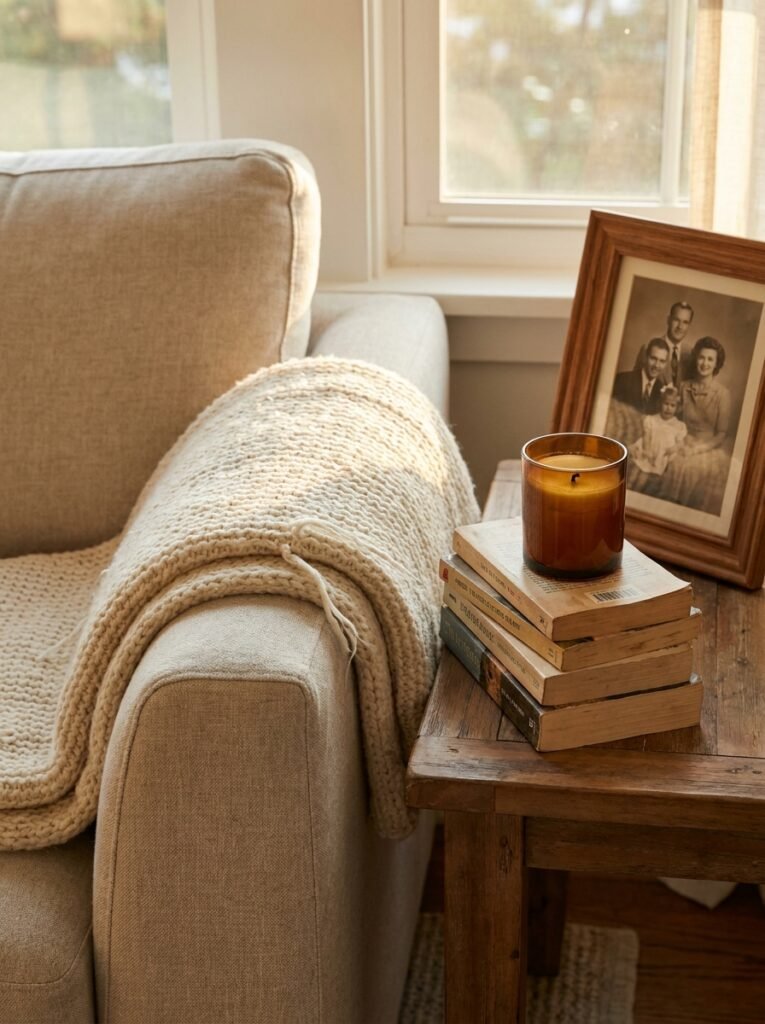
There’s a fine line between chic and sterile, and it’s worth being honest about. A room that’s too perfectly edited — every surface bare, every angle calculated — starts to feel less like a home and more like a showroom. Chic should feel warm. It should feel like someone actually lives there, loves there, laughs there.
The secret is in the personal details. A stack of books you’ve actually read, their spines turned out. A throw blanket draped naturally — not folded with origami precision, but tossed with a lived-in ease. A framed photo that matters to you, not because it matches the color palette, but because it’s real. These small imperfections are what transform a beautiful room into a beautiful home.
Think of it as the 90/10 rule: 90% curated, 10% spontaneous. The 10% is what makes people feel welcome.
12. The Details That Make People Stop and Look Twice
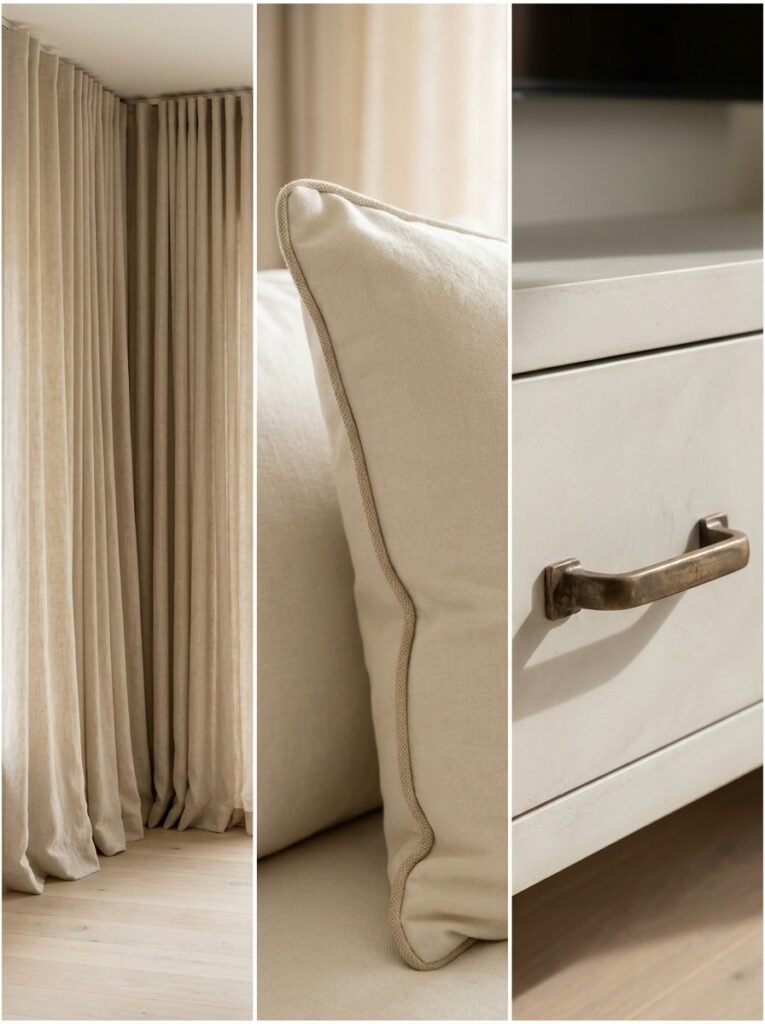
The difference between a living room that’s nice and one that people walk into and audibly say “oh, wow” almost always comes down to finishing details. These are small, inexpensive, often invisible — but their absence is always felt.
Consider the trim on your throw pillows (a piped edge elevates a plain pillow dramatically). Consider the hardware on your media console or coffee table — brass, matte black, and unlacquered bronze all read as far more considered than standard chrome. Consider your curtain height: hanging curtains as high as possible, close to the ceiling, and letting them puddle slightly on the floor adds a sense of grandeur to even the most modest room.
Pay attention to cords. Few things undermine a chic living room faster than a tangle of visible cables beneath the television or trailing from a lamp. A cord cover in a matching paint color, or a simple cord clip system, takes fifteen minutes to install and makes an immediate visual difference.
The cumulative effect of these micro-decisions — each one small in isolation — is what separates a living room that photographs beautifully from one that lives beautifully.
—
🌿 How to Take Care of Your Chic Living Room
A beautifully designed room only stays chic if it’s maintained with the same intention that created it. Here’s how to do that without it ever feeling like a burden.
Do a weekly reset, not just a clean. There’s a difference between cleaning and resetting. Cleaning removes dirt. Resetting restores the visual intention of the room — plumping the pillows, straightening the coffee table books, returning displaced items to their homes. It takes ten minutes and keeps your room feeling curated all week long.
Edit seasonally. Every three months or so, walk through your living room with fresh eyes and ask honestly: does everything here still earn its place? Remove anything that doesn’t. A room that’s regularly edited stays chic far more easily than one that slowly accumulates.
Rotate your textiles. Swapping throw pillow covers and blankets seasonally — lighter linens in spring and summer, heavier wools and velvets in fall and winter — keeps your room feeling current and thoughtful without requiring a full redesign.
Tend to your plants consistently. A dying plant in an otherwise beautiful room is the loudest distraction in the space. Water, trim, and rotate your plants regularly so they remain the living, thriving design elements they’re meant to be.
Treat your surfaces kindly. Marble, wood, and ceramic all require specific care. Use coasters, avoid harsh cleaners on natural materials, and address any water rings or scratches promptly. A beautifully maintained surface speaks to the overall care of the room.
—
❓ FAQ
Q: What’s the most important change I can make to a living room without spending much money? A: Honestly — rearrange the furniture and change the lighting. Floating your sofa away from the wall and swapping cool-toned bulbs for warm ones (around 2700K) costs almost nothing and makes a transformative visual difference. These two changes alone can make a room feel significantly more chic and intentional.
Q: How do I make a small living room feel chic instead of cramped? A: Choose a light, cohesive color palette to visually expand the space, invest in one large rug rather than multiple small ones, and select a few well-proportioned pieces rather than many small ones competing for attention. Mirrors are also enormously effective in small spaces — a large, well-framed mirror reflects light and doubles the visual depth of a room.
Q: How much does it cost to create a truly chic living room? A: Chic is far more about curation than budget. Some of the most beautiful living rooms are assembled slowly, over time, from a mix of investment pieces, vintage finds, and budget-friendly basics. The key is patience and selectivity — waiting for the right piece rather than settling for the convenient one. A $200 secondhand sofa in beautiful condition will always look more chic than a $1,000 one chosen hastily.
—
💭 Final Thought
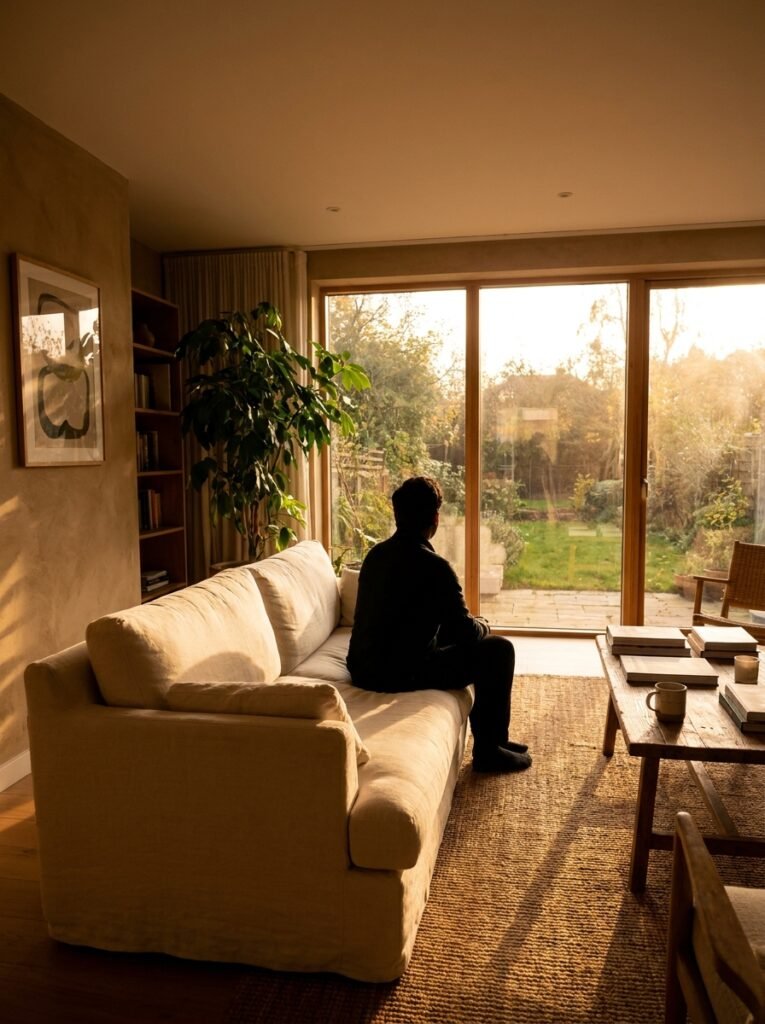
A chic living room isn’t a destination you arrive at all at once — it’s a relationship you build with your space over time, through attention, intention, and a willingness to edit as often as you add. The most beautiful rooms in the world share one quality above all others: they feel like someone genuinely cared. About the light. About the textures. About how it feels to walk in after a long day.
So here’s the question worth sitting with, the next time you look at your living room: Is this space a reflection of who I am, or who I’m afraid people might think I am?