
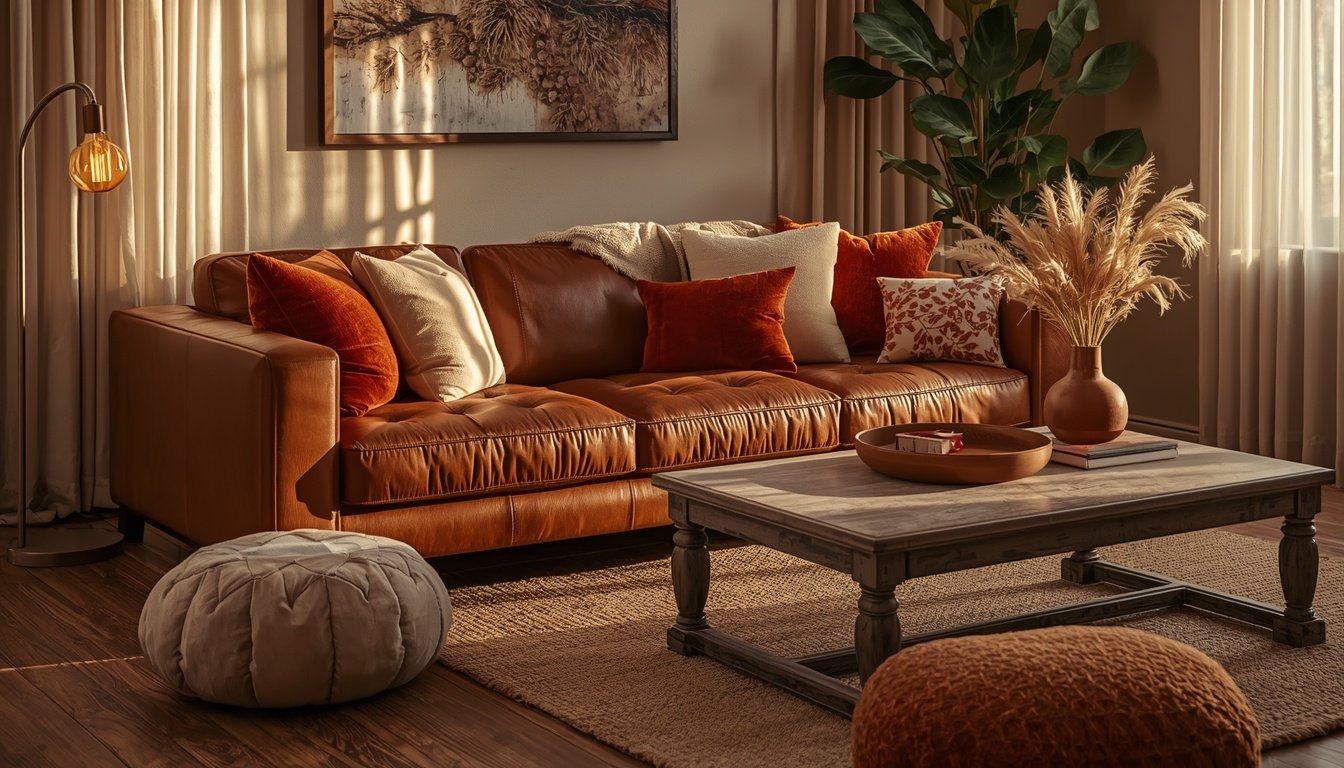
Brown Leather Couch Living Room Decor: The Timeless Anchor That Makes Every Room Feel Like Home
There’s something about a brown leather couch that stops you in your tracks — not because it’s flashy or trendy, but because it feels like it belongs. It’s the kind of furniture that whispers “stay a while,” the kind that holds stories in its grain and warmth in its color, the kind that somehow makes every room around it feel more intentional.
—
1. Why the Brown Leather Couch Has Outlasted Every Design Trend
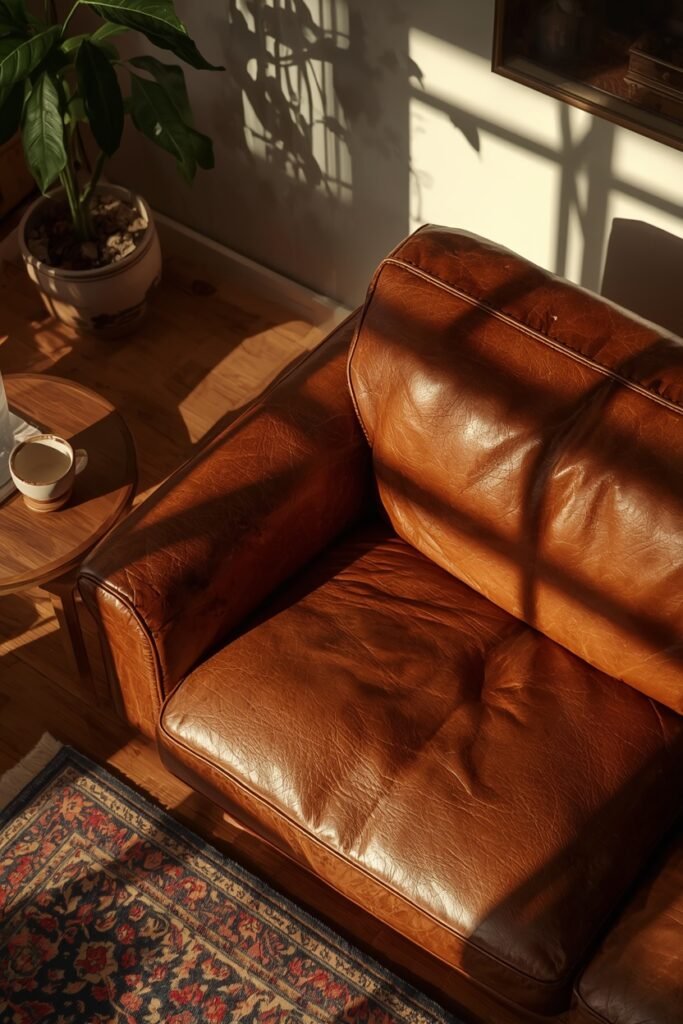
Let’s be honest: most furniture trends come and go so fast it makes your head spin. Remember the all-gray everything phase? The millennial pink moment? The cold, sterile Scandinavian minimalism that made some homes feel like they were waiting to be lived in? Brown leather quietly watched all of it happen — and stayed exactly where it was.
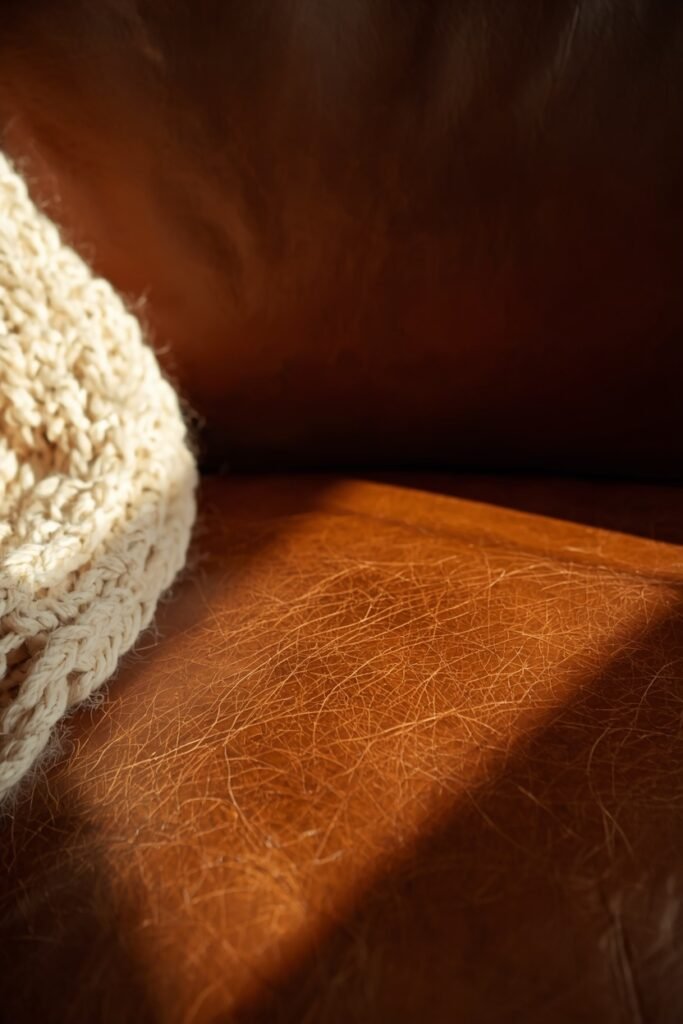
There’s a reason designers keep returning to brown leather as a foundational piece. It carries warmth without effort. It has texture without being busy. It ages beautifully in a way that almost no other material does — developing a patina that tells the story of every good conversation, every lazy Sunday, every movie night where someone fell asleep halfway through.
The brown leather couch isn’t just furniture. It’s a design statement that says: this room is grounded, intentional, and genuinely lived in.
“A brown leather couch doesn’t just anchor a room — it anchors the people in it.”
2. The Surprising Color Palette Pairs That Make Brown Leather Sing
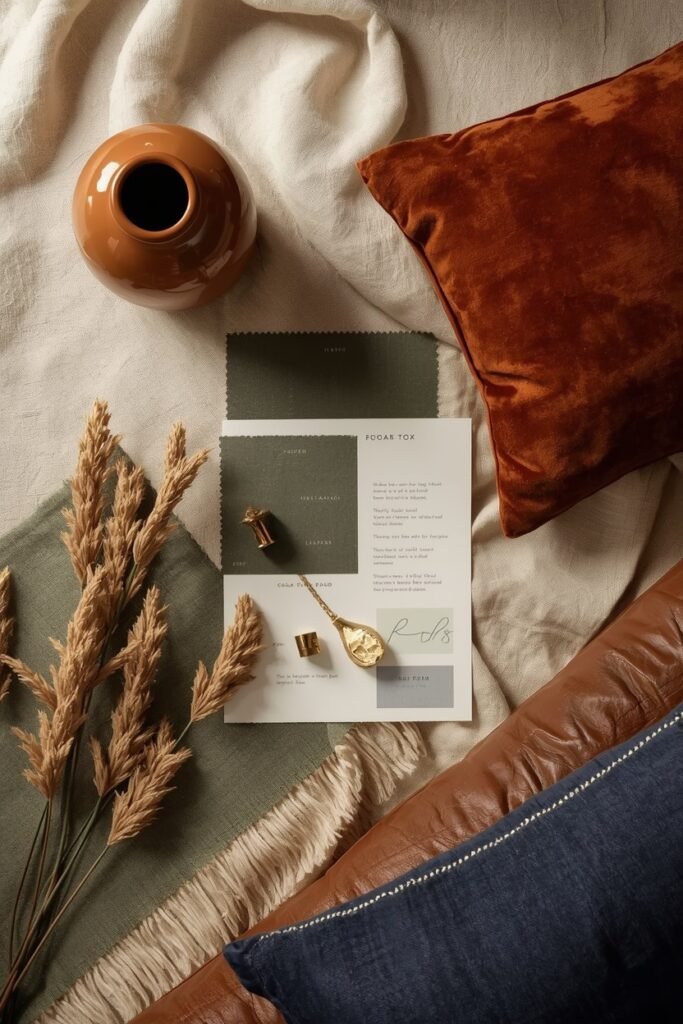
Here’s where most people get stuck: they think brown is limiting. They worry it’ll make the room feel dark or heavy. But the truth is, brown leather is one of the most versatile neutral backdrops you’ll ever work with — and the right color pairings will make your living room look like something straight off a Pinterest board.
Cream and ivory bring out the warmth in caramel and cognac tones. Think creamy linen throw pillows, an ivory wool area rug, sheer curtains in warm white. The contrast is soft and deeply inviting — like a warm hug translated into color.
Terracotta and rust are brown leather’s soulmates. These earthy, sunset-toned hues pull the warmth from the leather and amplify it across the room. A single terracotta-glazed vase on the coffee table can completely transform the energy.
Sage green and olive are unexpected partners that work beautifully. The coolness of green balances the warmth of brown, creating a layered, nature-inspired palette that feels sophisticated without trying too hard. Add a few trailing plants and suddenly your living room feels like a secluded forest retreat.
Deep navy and charcoal add drama. If you want your brown leather couch to feel bold rather than cozy, pair it with deep, moody colors — navy throw blankets, charcoal walls, dark wood accents. The result is rich, masculine, and deeply intentional.
3. The One Rug Rule That Changes Everything
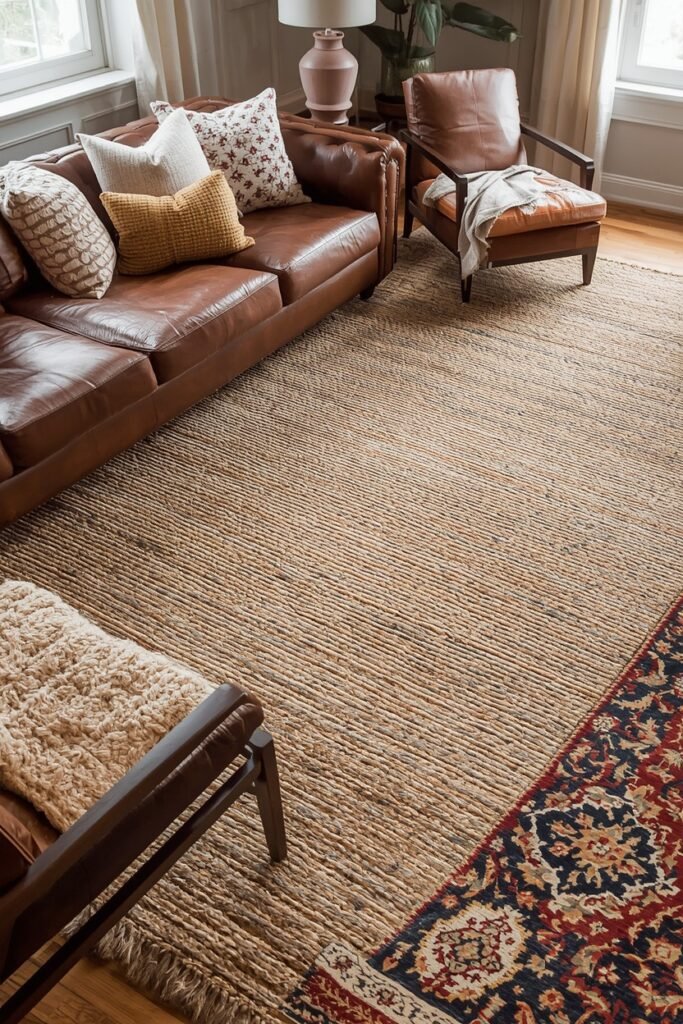
If you’re only going to invest in one additional piece to style your brown leather couch, make it a rug — and not just any rug. The rug you choose will either ground the entire room or quietly undermine everything else you’ve done.
The golden rule: go bigger than you think you need to. A rug that’s too small floats awkwardly under the couch like a decorative island no one can quite reach. The front legs of every main seating piece should ideally rest on the rug — this simple principle visually connects the furniture and gives the space a cohesive, pulled-together feel.
For brown leather, the best rug textures are natural fiber rugs (jute, sisal, seagrass), Persian-style patterned rugs in burgundy and navy, chunky wool rugs in cream or oatmeal, and vintage-inspired faded rugs with warm undertones.
Avoid stark white rugs or anything too cold in tone. Brown leather has warm undertones, and a cold-toned rug will create visual tension that’s hard to pinpoint but impossible to ignore.
4. Throw Pillows: The Fastest Way to Completely Transform Your Leather Couch
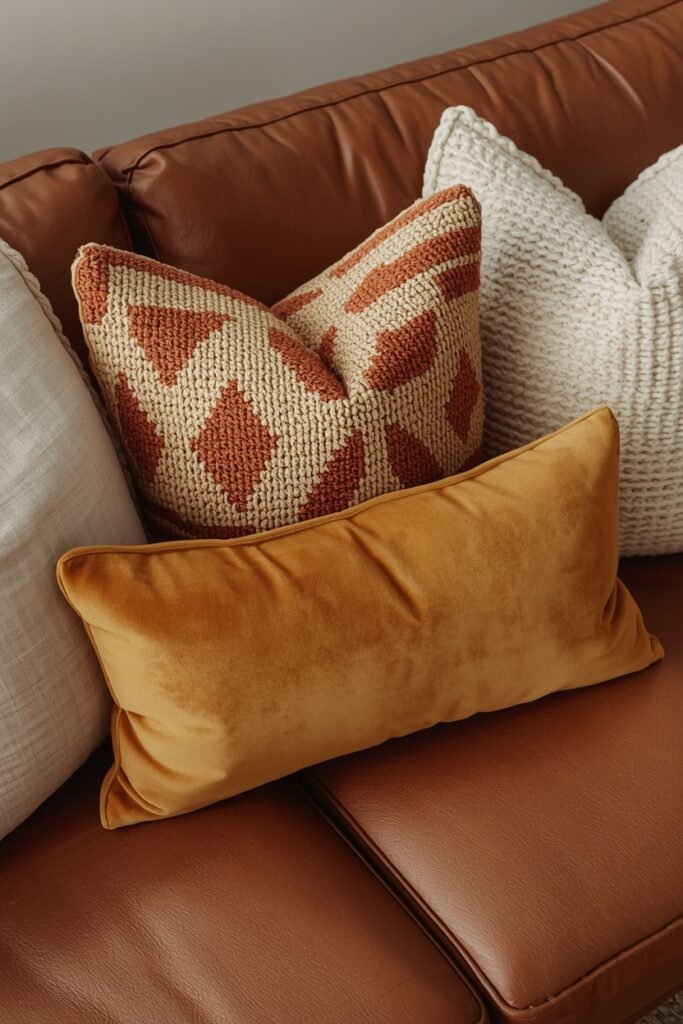
Walk into any room styled with a bare brown leather couch, then add the right throw pillows — and you’ll feel the shift immediately. Pillows are the single fastest, most affordable way to give your leather couch a seasonal refresh, a personality, a mood.
The key is mixing textures rather than just mixing colors. Leather is smooth and cool to the touch, which means it craves contrast. Chunky knit pillows. Velvet in rust or mustard. Woven cotton in cream and natural tones. Linen in earthy hues. Mix these textures together in a cohesive color palette and the couch stops being just furniture — it becomes a destination.
For a foolproof pillow arrangement on a standard three-seater: two large pillows in a solid or subtle texture on the outer edges, two medium pillows in a complementary pattern in the middle, and one lumbar pillow in a rich accent color at the front center.
Don’t be afraid of pattern. Geometric prints in terracotta and cream, botanical prints in sage and tan, traditional block-print patterns in navy — all of these work beautifully against brown leather because the leather itself is the calm, grounding force that lets the patterns breathe.
“Throw pillows are the punctuation of interior design — they complete the sentence your couch started.”
5. Lighting That Turns a Living Room Into a Sanctuary
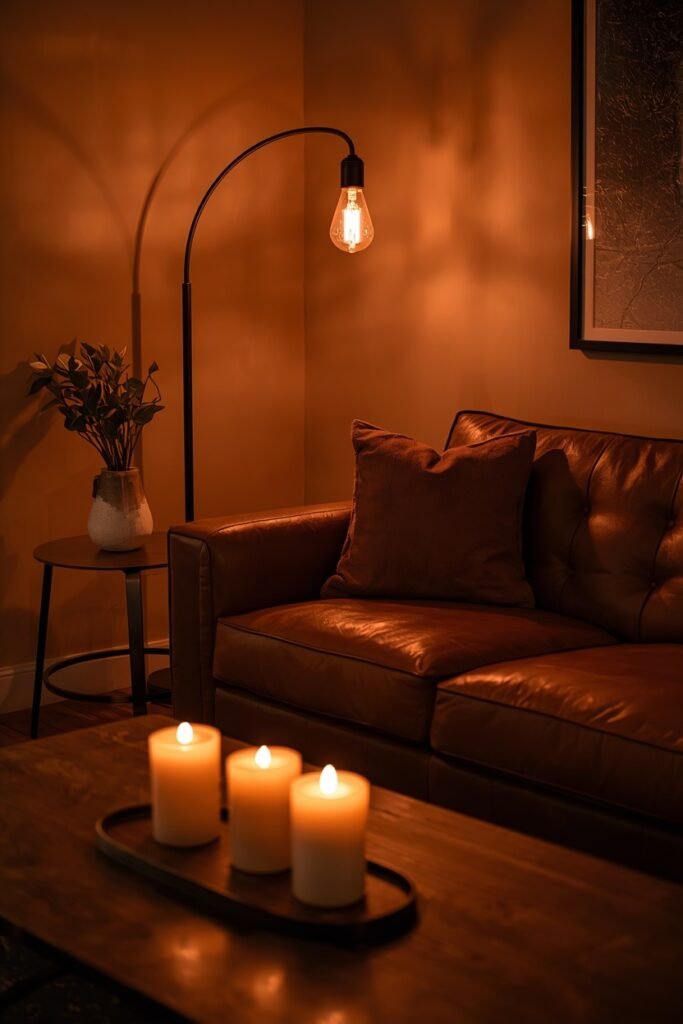
Here’s a design truth that doesn’t get nearly enough attention: brown leather needs warm light to look its absolute best. Under cold fluorescent light, even the most beautiful cognac leather can look flat and slightly off. Under warm, amber-toned light, it glows.
This means your lighting choices matter as much as your furniture arrangement. Layer your light sources rather than relying on one overhead fixture. A floor lamp beside the couch with a warm Edison bulb. Table lamps on side tables at eye level when seated. Candles — real or battery-operated — on the coffee table and console.
The goal is what designers call “layered lighting” — multiple light sources at different heights that create depth, warmth, and ambiance. When the overhead lights are off and the lamps are on, the room should feel like it’s glowing from within.
Soft white bulbs in the 2700K range are ideal for living rooms anchored by warm tones. The difference between 2700K and 4000K (cool white) might seem minor on paper, but in practice, in a room with brown leather and warm wood tones, the difference is transformative.
6. Walls That Work With Brown Leather, Not Against It
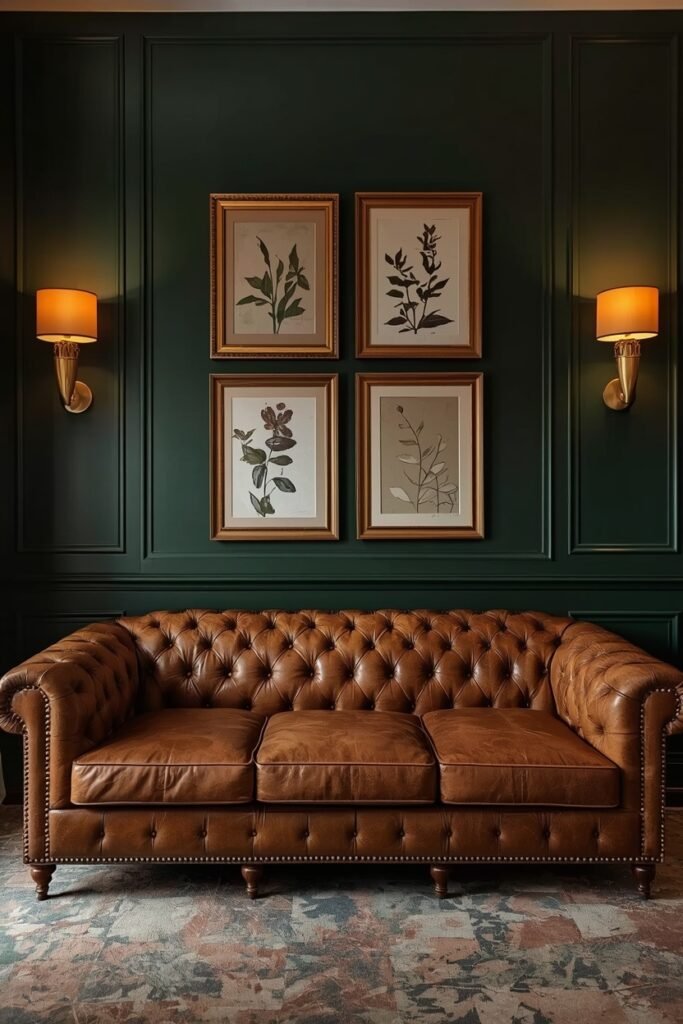
The wall color behind your brown leather couch is doing more work than you might realize. It’s either amplifying the warmth of the leather or fighting against it — and the difference is immediately felt even if it’s not immediately understood.
Warm whites and greiges — that perfect blend of gray and beige — are the safest and most beautiful choices. They don’t compete with the leather; they create a soft backdrop that lets the couch do its job. Benjamin Moore’s White Dove, Sherwin-Williams’ Accessible Beige, and Farrow & Ball’s Elephant’s Breath are perennial favorites for a reason.
If you want drama, consider a deep, saturated wall color. Burgundy wine, forest green, warm chocolate brown (yes, brown on brown works beautifully when the tones are slightly different), or deep slate blue — any of these create a moody, enveloping atmosphere that makes a brown leather couch feel like the centerpiece of a boutique hotel lounge.
Gallery walls work particularly well above brown leather sofas, especially when the frames are in warm metals — gold, brass, antique bronze — and the artwork leans toward botanicals, abstract earth tones, or warm-toned photography.
7. Coffee Table Styling: The Art of the Curated Tabletop
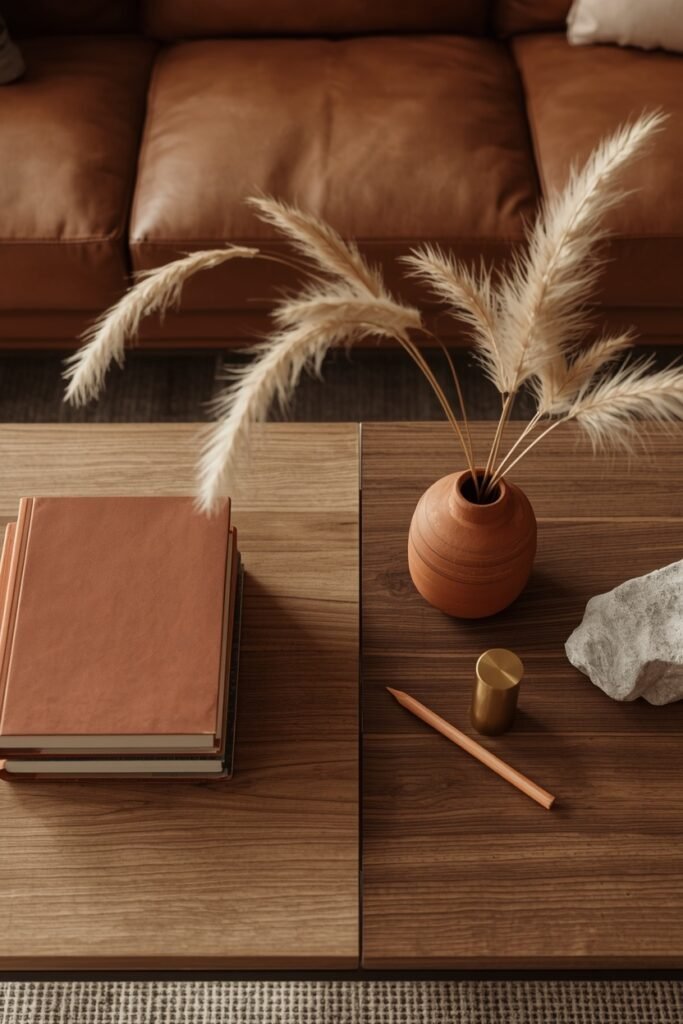
Your coffee table is a stage, and what you put on it tells the story of who lives in this home. Paired with a brown leather couch, the coffee table becomes especially important because it bridges the gap between the warmth of the leather and the rest of the room.
The rule of thirds applies beautifully here: divide your tabletop into thirds and style each section with something at a different height. A stack of coffee table books (with warm, earthy cover tones) as the base. A medium-height vase with dried pampas grass or seasonal branches in the middle. A small, low object — a candle, a small succulent, a decorative object — on the third.
Materials matter enormously on a coffee table next to brown leather. Warm wood, weathered wood, rattan, brass, ceramic in earth tones, natural stone — these all belong in this world. Cold, ultra-modern materials like polished chrome or stark white lacquer will create a jarring contrast that’s hard to reconcile.
8. Plants That Belong in a Brown Leather Living Room
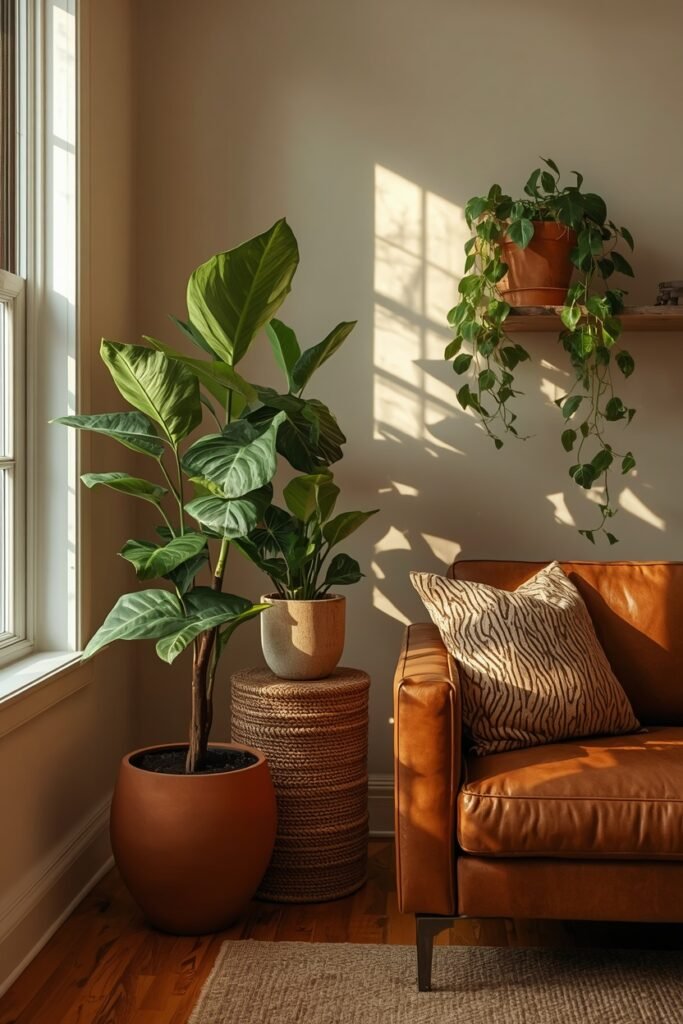
There is a quiet magic that happens when you place living, breathing greenery next to the warm, tactile richness of brown leather. The contrast between the organic softness of leaves and the structured warmth of leather creates exactly the kind of layered, intentional atmosphere that makes a room feel curated rather than decorated.
Fiddle leaf fig trees are the classic choice — and they’re classic for a reason. Their large, sculptural leaves bring height and drama. A snake plant in a terracotta pot on the floor beside the couch adds architectural interest with almost zero maintenance. Trailing pothos on a bookshelf nearby brings softness and movement.
For a truly Pinterest-worthy moment, add a cluster of plants in varying heights near a natural light source — a floor plant, a medium side table plant, and a small trailing plant — and let them create a living, textured corner that no amount of purchased décor can replicate.
“Plants don’t just decorate a room — they bring it to life in the most literal, beautiful way.”
9. The Wood Tones That Pair Perfectly With Brown Leather
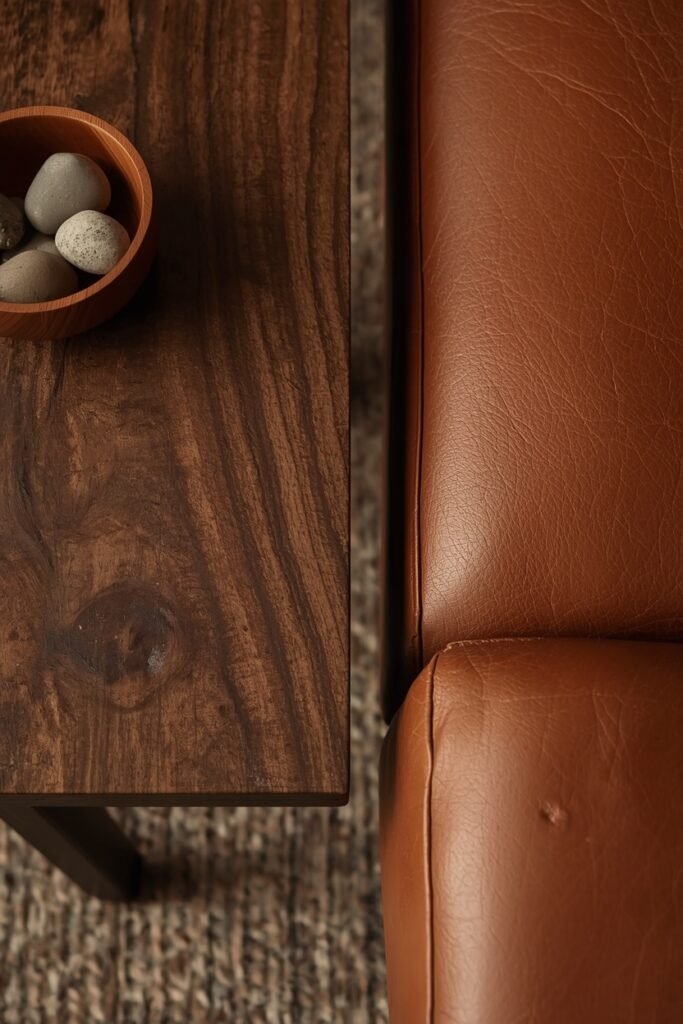
One of the most common mistakes people make when decorating around a brown leather couch is choosing wood tones that clash rather than complement. Not all wood tones are created equal — and the wrong wood can make a beautifully curated room feel visually confused.
With warm, cognac-toned leather, medium to dark wood tones work best — walnut, teak, warm oak, reclaimed wood with warm undertones. These deepen the warmth of the leather and create a cohesive, grounded palette that feels intentional.
With cooler, espresso or tobacco leather tones, you can go lighter — blonde oak, ash, bamboo — to create contrast and keep the room from feeling too heavy.
The one wood tone to use with extreme care is very yellow, honey-toned pine. Without careful balancing, it can clash with warm brown leather in a way that feels unresolved. If you love lighter woods, balance them with plenty of cream, white, and green to mediate between the tones.
10. Small Space Solutions: Brown Leather in Compact Living Rooms
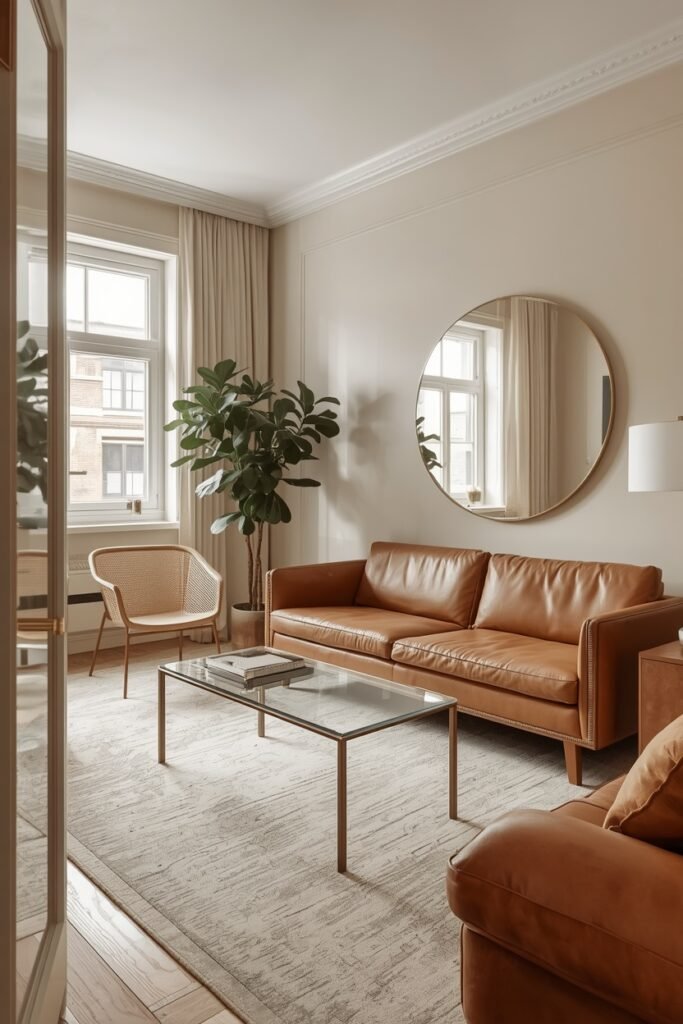
The fear that brown leather is “too heavy” for small spaces is understandable — but it’s also largely a myth, when approached correctly. A brown leather couch in a small living room can actually make the space feel more intentional and curated, not smaller.
The key is proportion. In a small room, opt for a streamlined silhouette — a two-seater or apartment-sized sofa with clean lines and low legs (higher legs visually increase floor space). Avoid overstuffed, oversized profiles that will dominate the room.
Pair your compact leather sofa with furniture in lighter materials — a glass coffee table, a light wood side table, cane or rattan accent chairs — to keep the visual weight balanced. Keep the wall color light and warm to expand the perception of space.
Mirrors are your best friend in a small room with a brown leather couch. A large mirror on the wall opposite a natural light source doubles the perceived space and amplifies the warm glow that brown leather creates.
11. Seasonal Styling: How to Refresh Your Brown Leather Living Room Year-Round
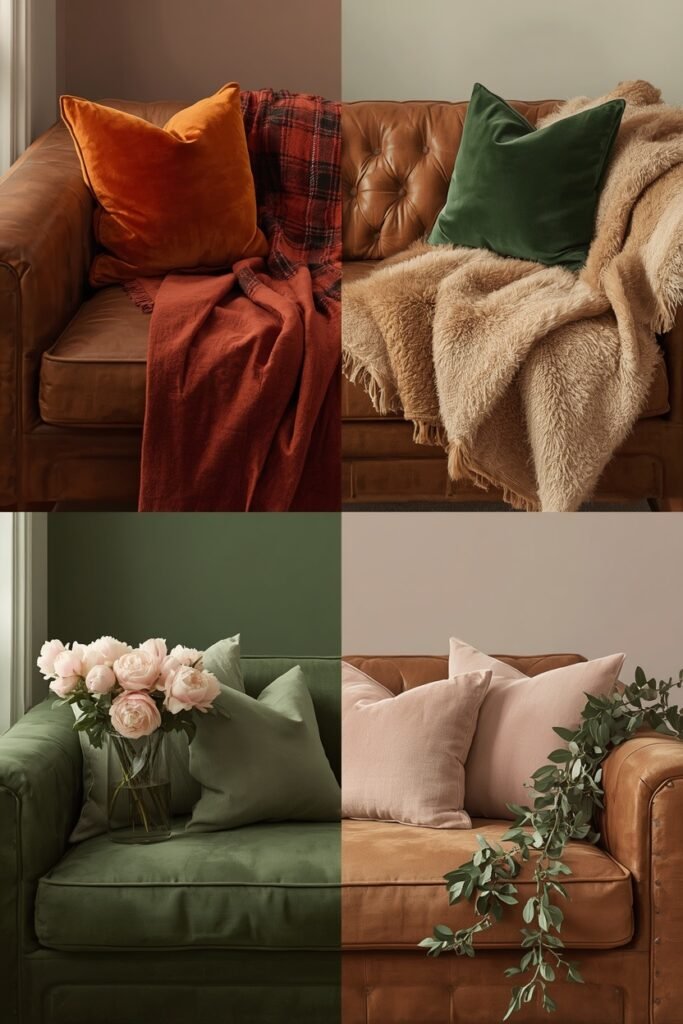
One of the most underappreciated qualities of a brown leather couch is that it’s the perfect canvas for seasonal refreshes. Because leather itself is a neutral anchor, you can completely transform the feeling of your living room simply by changing the textiles and accents around it — without moving or replacing any major furniture.
In autumn, lean into the leather’s natural warmth. Rust, burnt orange, cinnamon, and deep burgundy pillows. A plaid wool throw blanket in warm tones. Candles in amber and vanilla. A bowl of pinecones or a vase of branches on the coffee table.
In winter, add layers and richness. Deep green velvet pillows, faux fur throws, brass candlesticks, and warm string lights that make the leather glow.
In spring, lighten everything. Swap out heavy textiles for linen in soft sage and blush. Add fresh flowers. Let the natural light in. The leather will look entirely different — and entirely fresh — against lighter, airier accents.
In summer, go natural. Jute, rattan, and neutral linen alongside terracotta pottery and trailing greenery. The brown leather becomes a grounding force against the organic, breezy summer palette.
12. The Finishing Touches That Separate a Styled Room From a Furnished One
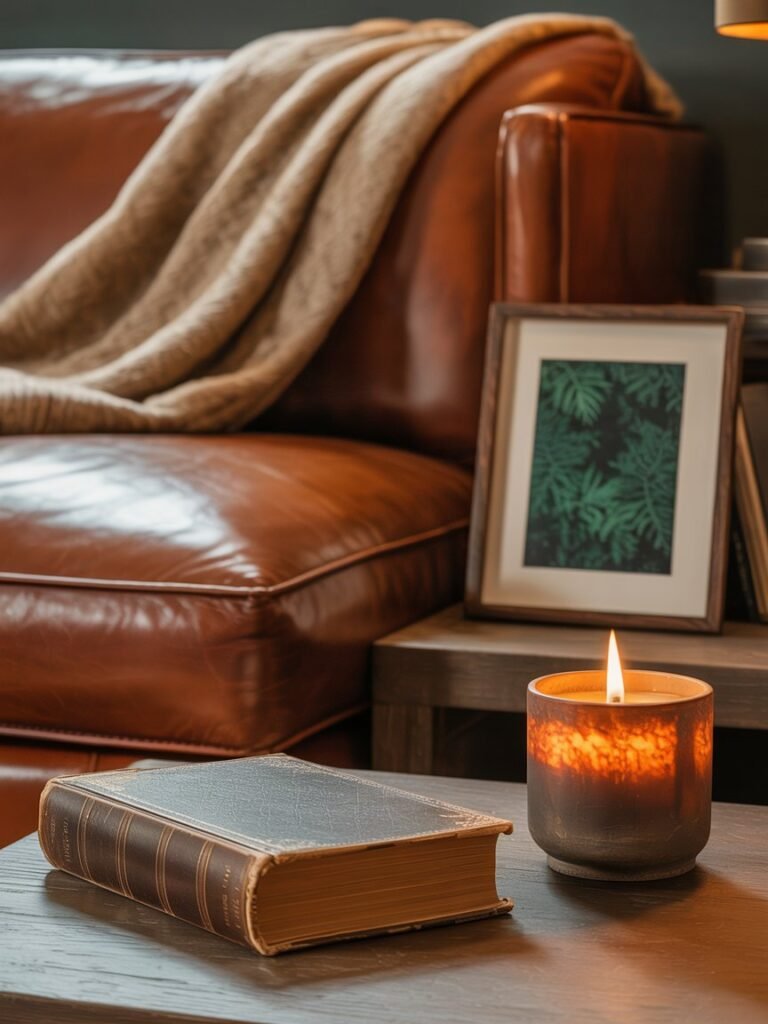
There is a very specific difference between a room that’s been furnished and a room that’s been styled — and that difference lives entirely in the details. When it comes to a brown leather couch living room, those details are what transform a space from “nice” to “unforgettable.”
Books, intentionally placed. A worn leather-bound journal on the coffee table. A vintage wooden tray corralling candles and small objects. A single beautiful throw, casually draped rather than folded. These are the human touches that signal to anyone who walks in: someone thoughtful lives here.
Art that means something. Not art chosen to match the couch, but art chosen because it moves you — and then arranged so that its warm tones feel at home against the leather. A piece of abstract art in terracotta and cream above the sofa. A framed botanical print on the side wall. A small, meaningful piece on the bookshelf.
Scent, which is the most underrated element of any styled room. A leather room already carries a beautiful natural warmth, and complementing it with a candle in amber, sandalwood, or cedar takes the sensory experience of the space to an entirely different level.
—
🌿 How to Take Care of Your Brown Leather Couch
Leather is one of the most durable furniture materials you can invest in — but like anything worth keeping, it rewards a little care and attention.
First, dust and wipe your leather regularly with a soft, dry or slightly damp cloth. Leather breathes, and dust accumulation over time can dull its natural luster. Think of it less as cleaning and more as a quick weekly ritual.
Second, condition your leather every six to twelve months with a quality leather conditioner. Just as skin needs moisture to stay soft and supple, leather needs conditioning to prevent drying, cracking, and premature aging. Apply with a soft cloth in gentle circular motions.
Third, keep your leather couch out of direct prolonged sunlight. Sunlight fades and dries leather faster than almost anything else — position your couch away from south-facing windows, or use sheer curtains to diffuse the light.
Fourth, address spills immediately. Blot — never rub — liquid spills with a clean, dry cloth. Rubbing spreads the liquid and can damage the surface. Most water-based spills will leave no mark at all if handled quickly.
Fifth, embrace the patina. That natural darkening and softening that happens over time isn’t damage — it’s character. A well-loved leather couch that’s been properly maintained becomes more beautiful with age, not less.
—
❓ FAQ
Q: What color walls look best with a brown leather couch? A: Warm neutrals like greige, soft white, warm ivory, and cream are the most universally flattering choices because they complement the leather’s warmth without competing with it. For a bolder look, deep forest green, burgundy, or warm navy create a rich, dramatic backdrop that makes brown leather feel even more luxurious.
Q: Can I mix a brown leather couch with other fabric sofas or chairs? A: Absolutely — and this is actually one of the most beautiful ways to style a brown leather couch. Pairing it with a linen or velvet accent chair in a complementary color (cream, sage, terracotta) adds texture variety and keeps the room from feeling too uniform. The leather becomes the anchor, and the softer fabric pieces add warmth and layering.
Q: Is a brown leather couch a good choice for families with kids and pets? A: Brown leather is genuinely one of the best furniture choices for busy households. It’s easy to wipe clean, it doesn’t trap allergens the way fabric does, and minor scratches and wear actually enhance the look of full-grain leather over time rather than looking like damage. Avoid bonded or faux leather, which peels over time — invest in genuine full-grain or top-grain leather and it will outlast almost any fabric alternative.
—
💭 Final Thought
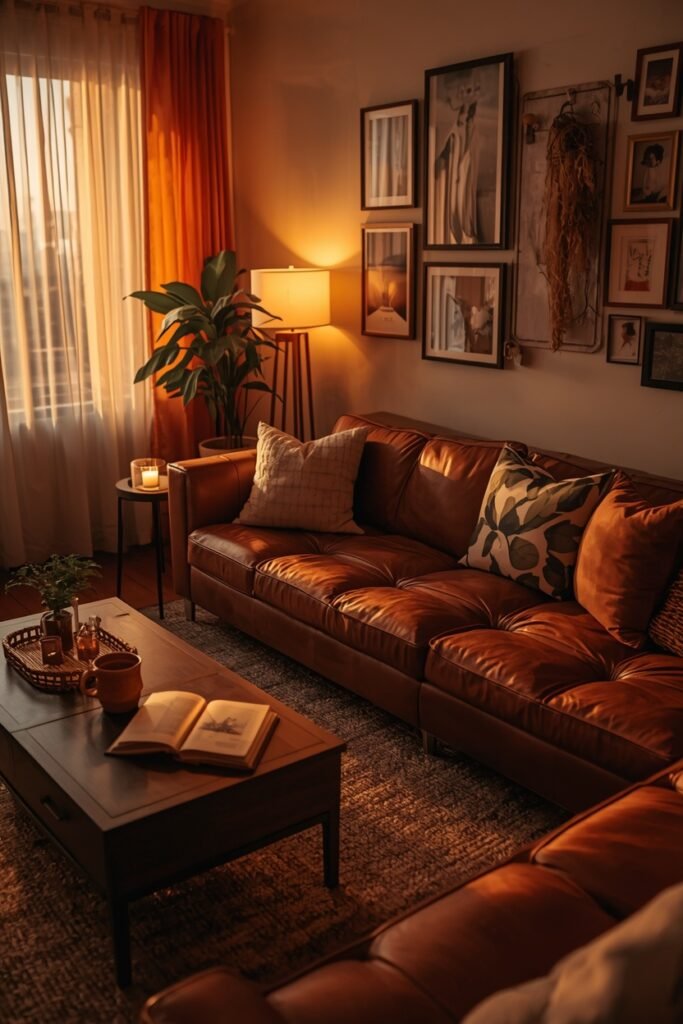
A brown leather couch is so much more than a furniture choice — it’s a commitment to warmth, to longevity, to a home that feels genuinely lived in and deeply loved. Every styling choice you make around it, from the rug beneath it to the light glowing above it, is an act of creating a space where people feel held. And isn’t that, at the end of the day, exactly what a home is supposed to do?
So here’s the question worth sitting with: what feeling do you want people to carry with them when they leave your living room?