
The Living Room With Fireplace and TV: How to Design a Space That Feels Like a Warm Embrace
There’s a particular kind of magic that happens when you walk into a living room and feel it wrap around you like a blanket — and that feeling almost always comes from the same two elements working together: a glowing fireplace and a thoughtfully placed television. Getting these two anchors of a room to coexist beautifully is one of the most searched, most pinned, and most talked-about interior design challenges of our time — and for good reason.
—
1. Why the Fireplace and TV Combo Feels So Universally Appealing
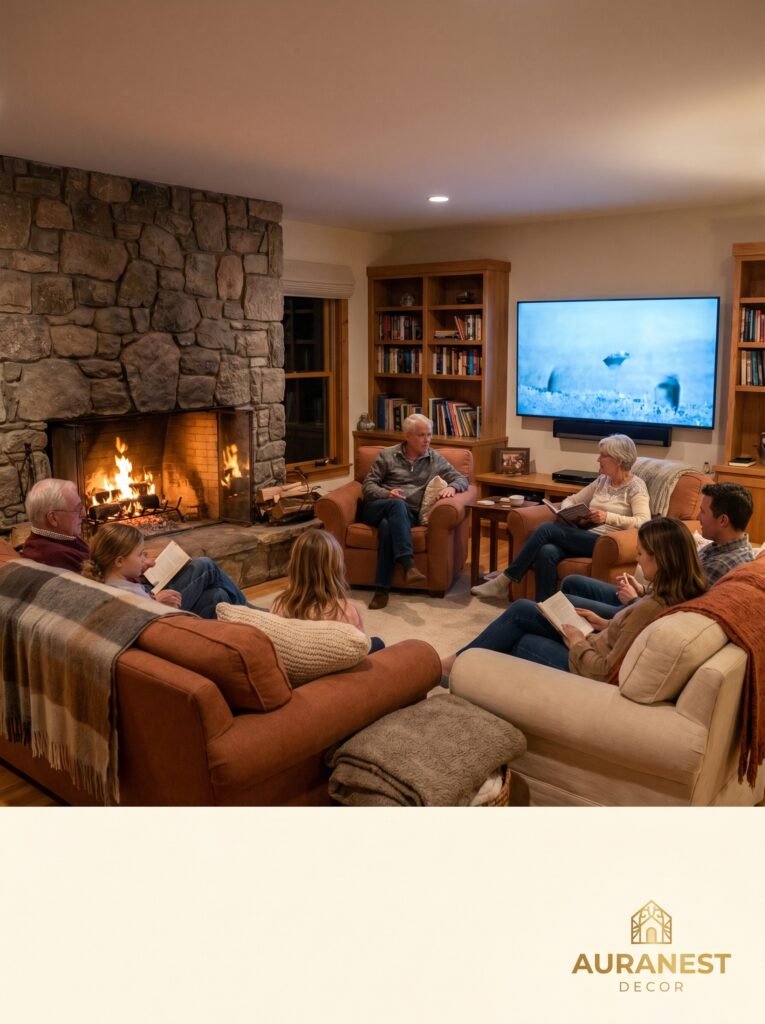
Think about the living rooms you remember most fondly. Maybe it was your grandmother’s house, where a wood-burning fireplace crackled on Christmas Eve while everyone gathered around a glowing screen for a holiday movie. Or maybe it was that vacation rental with the stone mantel and the sleek flat-screen mounted above it — and you thought, I want this in my home.
There’s a deep psychological reason why fire and screens both draw us in. Fire is primal — it signals warmth, safety, and togetherness. A television is modern — it signals entertainment, connection, and shared experience. Together, they create a layered environment that satisfies both our ancient instincts and our contemporary lifestyle. The living room becomes a space where a cozy family movie night and a quiet evening watching flames flicker can happen within the same square footage.
“The best living rooms don’t just look beautiful — they feel like the most comfortable version of home.”
Interior designers have long wrestled with the question of how to honor both elements without one overpowering the other. The good news is that in 2024 and beyond, there are more solutions, more layouts, and more design philosophies than ever before — and most of them are surprisingly achievable on a real-world budget.
—
2. The Great Debate: Should the TV Go Above the Fireplace?
Walk through any home decor section on Pinterest and you’ll find this question lighting up comment sections like — well, like a fireplace. Mounting the TV above the fireplace is the most instinctive solution, because both elements naturally become focal points. The symmetry is pleasing, the logic feels clean, and it works beautifully in certain rooms.
But interior designers and ergonomic experts will gently push back here. The general rule of thumb is that your television screen should sit at — or very close to — eye level when you’re seated. A fireplace mantel, particularly a taller one, can push the screen several feet above that ideal viewing angle, which means hours of movie-watching with your neck craned upward. Over time, this becomes genuinely uncomfortable.
That said, the above-fireplace TV is far from a dealbreaker. Lower fireplace surrounds, recessed mounting, and strategic furniture placement can all bring the screen closer to a comfortable eye level. The key is measuring before committing — and being honest about how much time you’ll actually spend watching versus simply appreciating the aesthetic.
—
3. The Layout That Designers Swear By (And Why It Works)
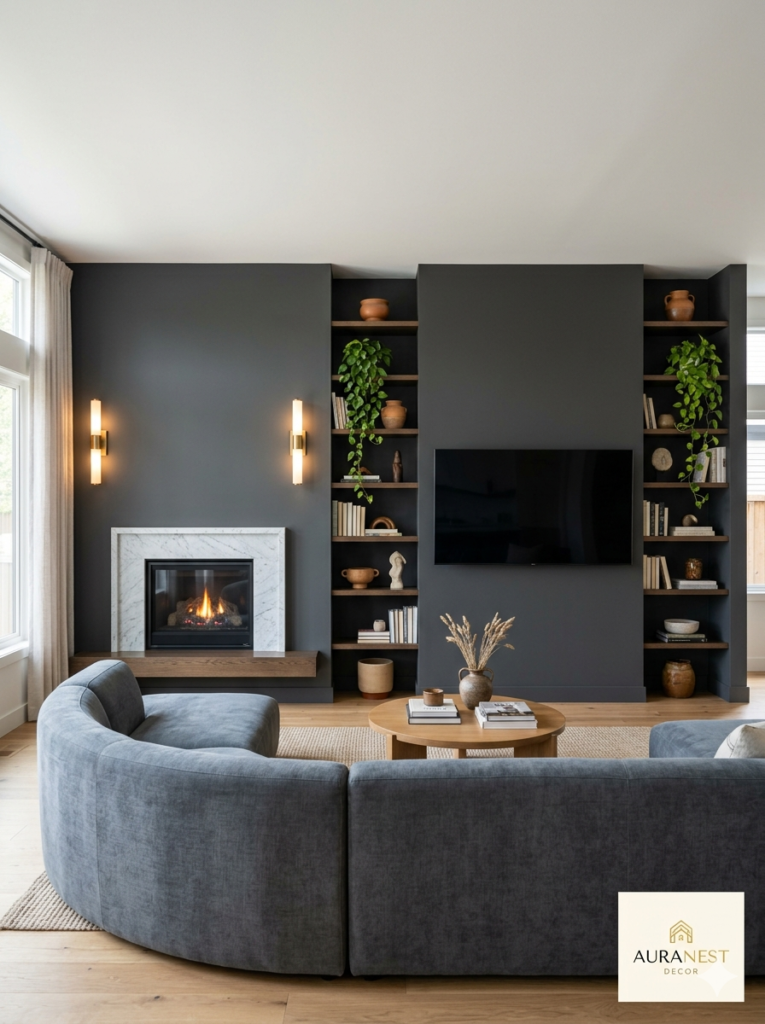
If mounting above the fireplace doesn’t suit your room or your neck, side-by-side placement is the arrangement that interior designers return to again and again. This layout treats the fireplace and the TV as two distinct focal points on the same feature wall — or on adjacent walls — each given room to breathe and shine.
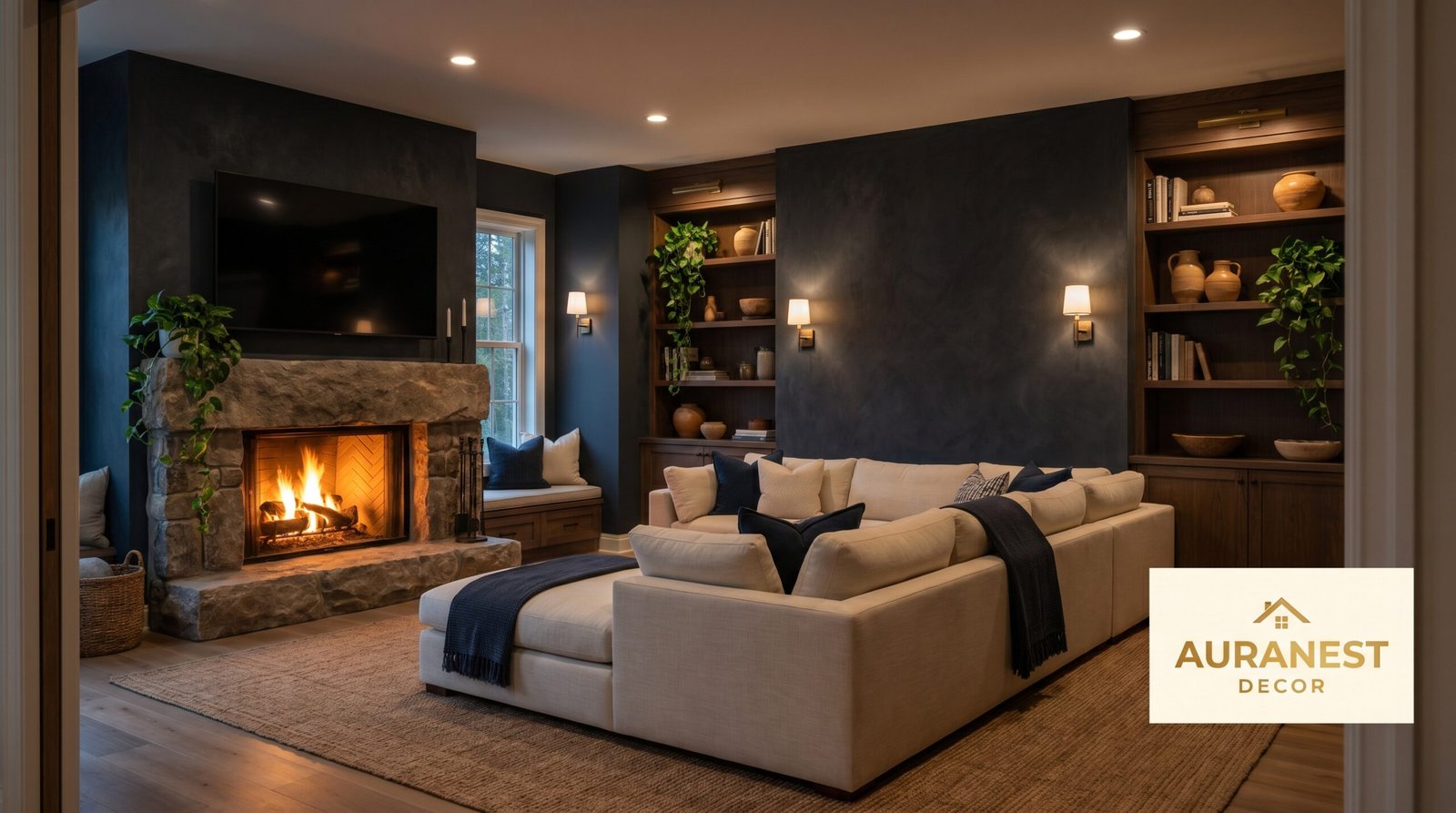
Picture this: a deep charcoal accent wall running the length of your living room. On one end, a built-in fireplace with a marble surround and a low floating shelf. A few feet to the right, a wall-mounted flat screen at perfect seated eye level, flanked by two open shelving units filled with books, trailing plants, and warm-toned ceramics. A large L-shaped sofa curves toward both — positioned so that no matter where you sit, you have a comfortable sightline to whichever element you’re focused on.
This layout works because it distributes visual weight evenly. The room never feels lopsided or dominated by a single feature. It also allows the fireplace to be appreciated as the architectural and atmospheric element it truly is — something to be looked at and felt, not just glanced at from the corner of your eye.
—
4. Built-Ins: The Design Move That Changes Everything
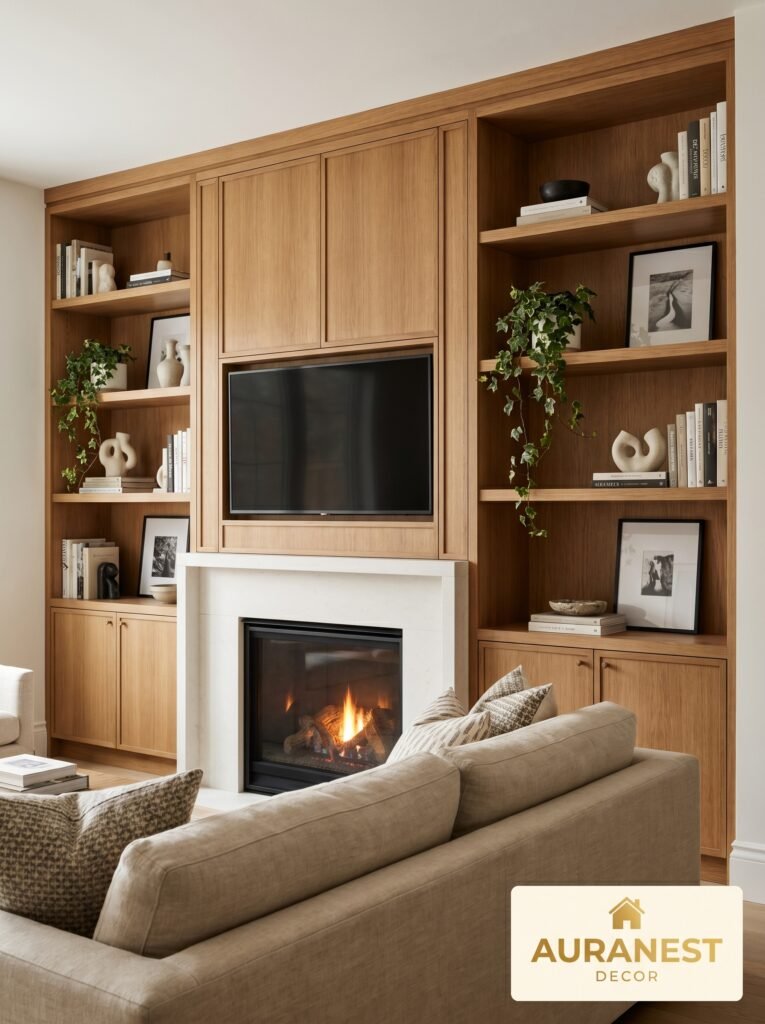
If there is one single investment that transforms a living room with a fireplace and TV from nice into breathtaking, it is built-in cabinetry. Custom or semi-custom built-ins that wrap around a fireplace and incorporate a TV alcove are the backbone of some of the most shared and saved living room photos on Pinterest.
Why do they work so well? Because built-ins solve the clutter problem. They give every cable, every remote, every streaming device a home. They provide space for books, artwork, and decorative objects that bring personality to the room. And visually, they frame both the fireplace and the television within a single cohesive architectural statement — so instead of two separate pieces competing for attention, you have one glorious wall of intention.
Built-ins don’t have to mean a massive renovation budget, either. IKEA hacks using the Billy bookcase or Kallax system, combined with trim work and paint, have produced stunning results that photograph beautifully and genuinely elevate a room.
—
5. Color Palette Choices That Make Both Elements Shine

Color is the silent narrator of any room, and in a living room where you’re balancing the warm amber of firelight with the cool blue-white glow of a television screen, your palette choices matter enormously.
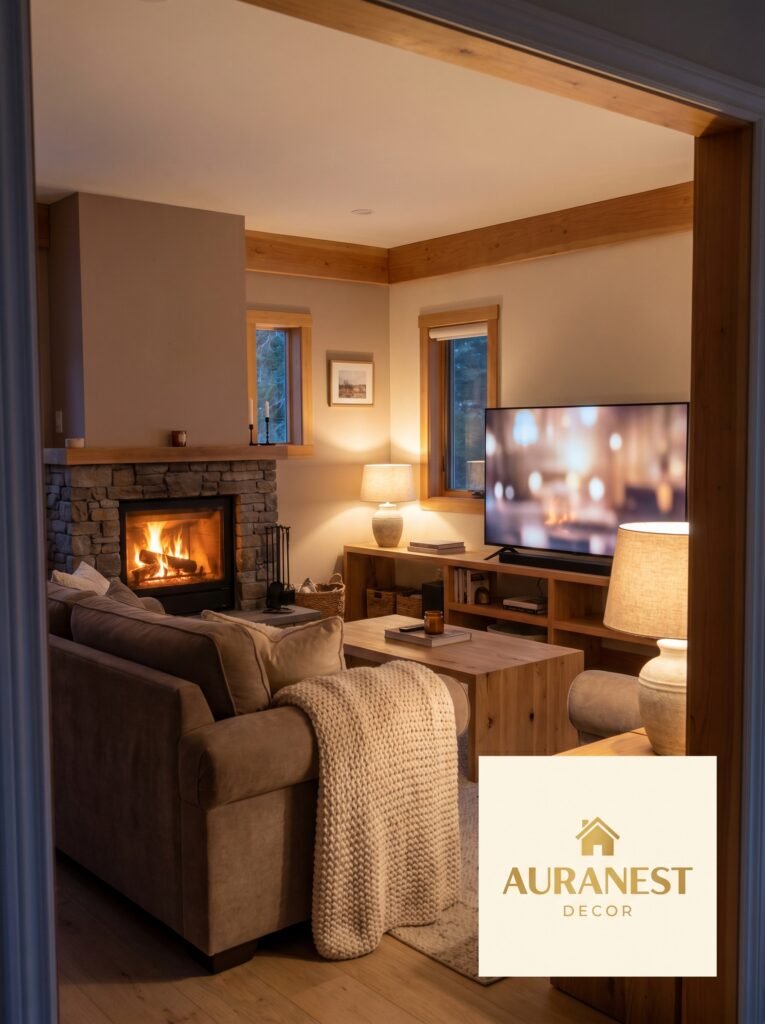
Warm neutrals — think creamy whites, soft taupes, warm greys, and earthy terracottas — create a backdrop that amplifies the glow of a fireplace without making the TV feel jarring or harsh. These tones absorb light gently and create the kind of atmospheric depth that makes a room feel genuinely cozy rather than staged.
Deep, moody tones are equally powerful. A navy blue, forest green, or charcoal feature wall behind the fireplace and TV creates dramatic contrast, makes the flame look more intense, and gives a flat-screen the look of an intentional design feature rather than an afterthought. The darkness of the wall causes the screen to recede when off — making it far less visually intrusive than a black rectangle on a white wall.
“Color isn’t decoration — it’s the emotional temperature of your entire room.”
—
6. Lighting: The Element Most People Forget (And Regret)
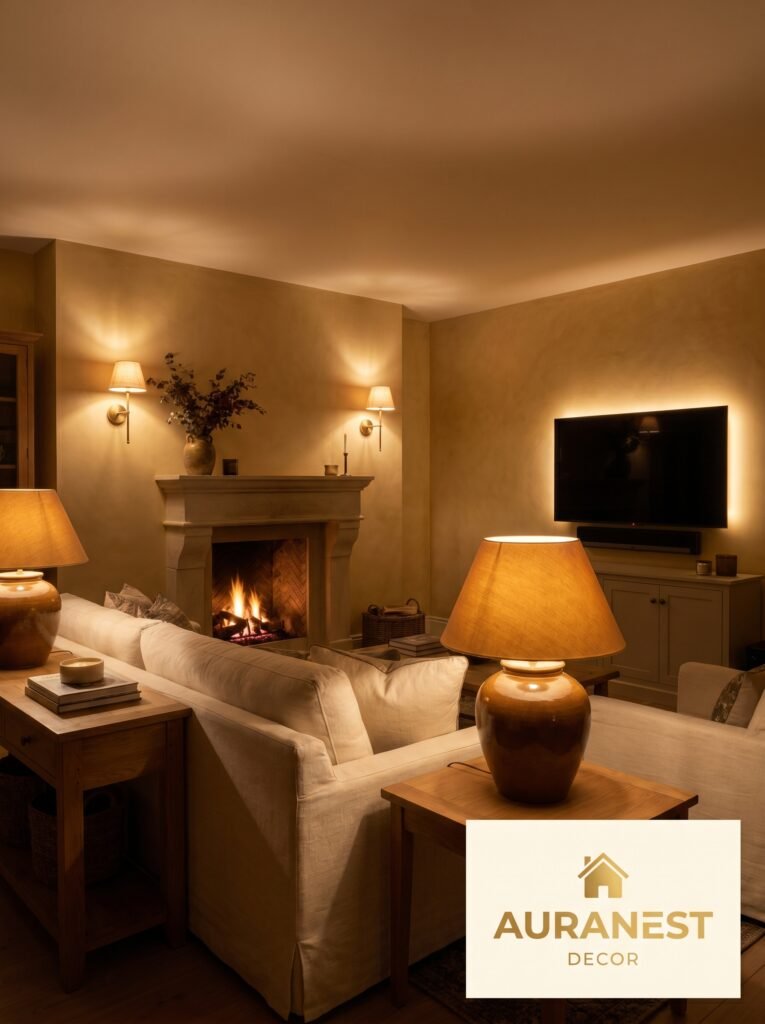
Here is a truth that every interior designer knows and most homeowners discover too late: lighting design makes or breaks a room, especially one where a fireplace and a television are both competing for atmospheric dominance.
Overhead lighting is your enemy in this context. Harsh overhead light flattens the warmth of firelight and creates glare on screens. Instead, layer your lighting. Use table lamps beside sofas and armchairs. Install recessed lighting or picture lights that can be dimmed. Add LED strip lighting behind the TV — yes, this is called “bias lighting,” and it genuinely reduces eye strain while making the screen look more cinematic.
Sconces on either side of the fireplace are a particularly beautiful touch. They frame the mantel like a piece of art and add warm ambient light that fills the room without competing with the fire itself. Together, multiple light sources at varying heights create depth, warmth, and a sense that the room glows from within.
—
7. Furniture Arrangement That Invites Conversation and Comfort
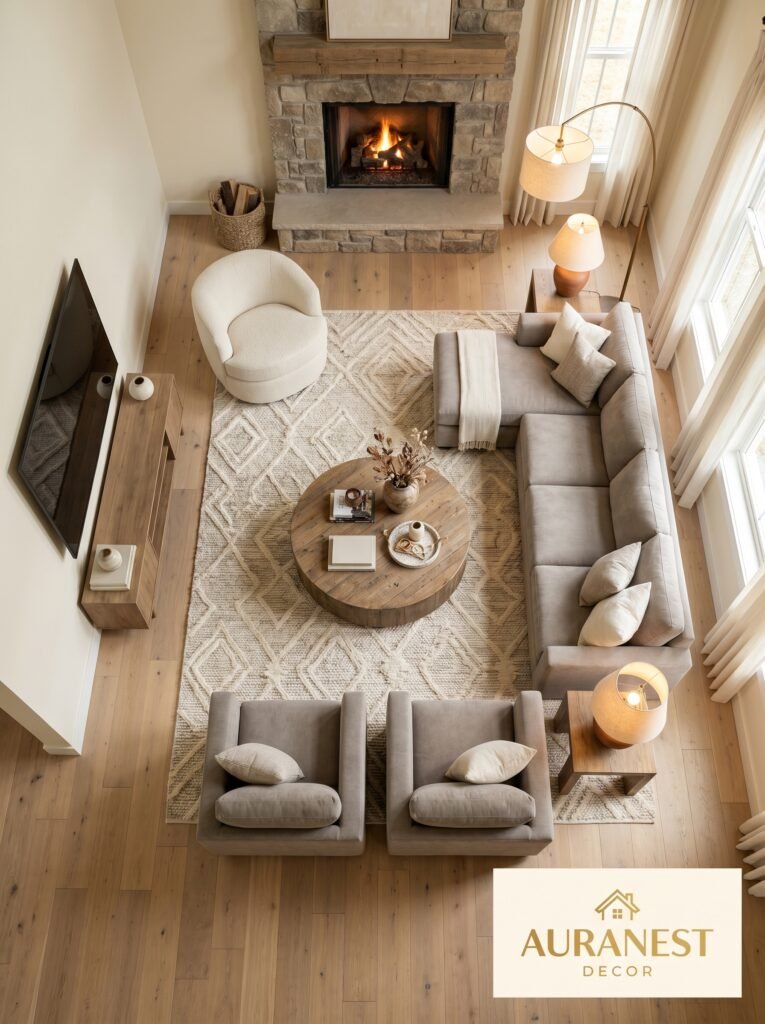
The furniture in a living room with both a fireplace and a TV needs to do something genuinely difficult: face both elements simultaneously, or at the very least, allow effortless attention-shifting between the two.
The golden rule is to avoid pushing all seating against the walls. Floating furniture — a sofa pulled away from the back wall and angled toward the center of the room — actually makes a space feel larger and more inviting. An L-shaped or U-shaped seating arrangement with a coffee table at its center creates a natural conversation zone that also happens to offer good sightlines to both the fire and the screen.
For smaller living rooms, a pair of swivel chairs positioned between the TV wall and the fireplace wall are a designer-approved secret weapon. They can pivot toward whichever element you’re enjoying, without forcing you to crane or shift awkwardly.
—
8. The Mantel: Your Most Underrated Styling Canvas
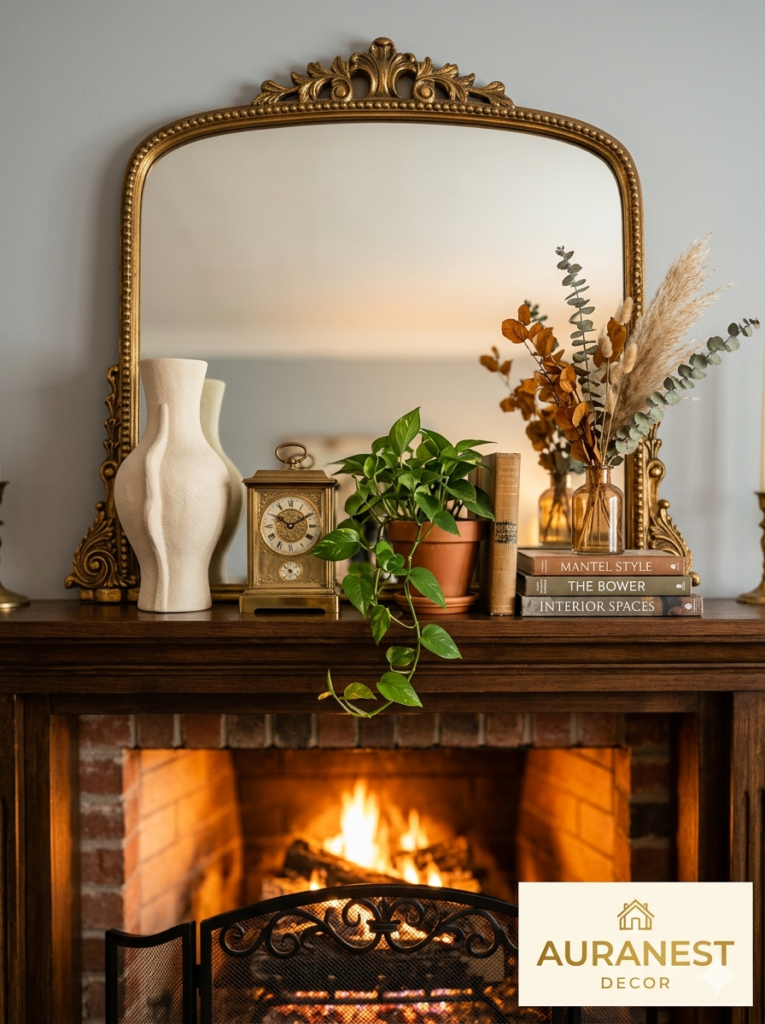
If the fireplace is the heart of the room, the mantel is the face — and it deserves far more attention than a couple of candlesticks and a framed family photo. The mantel is prime real estate for seasonal storytelling, personal expression, and the kind of layered styling that makes Pinterest photos stop thumbs mid-scroll.
The principle of great mantel styling is depth and variation: different heights, different textures, different shapes, all pulling from a cohesive color story. A large mirror or artwork anchors the display at the back. In front of it, a mix of tall and short objects — a vintage clock, a sculptural vase, stacked books, a small plant — creates visual rhythm. Natural elements like dried botanicals, pinecones, or a branch of eucalyptus add organic texture that plays beautifully against the warmth of firelight.
Change your mantel seasonally and your room will feel perpetually fresh and alive, even if nothing else changes.
—
9. Incorporating a TV Above a Fireplace Gracefully
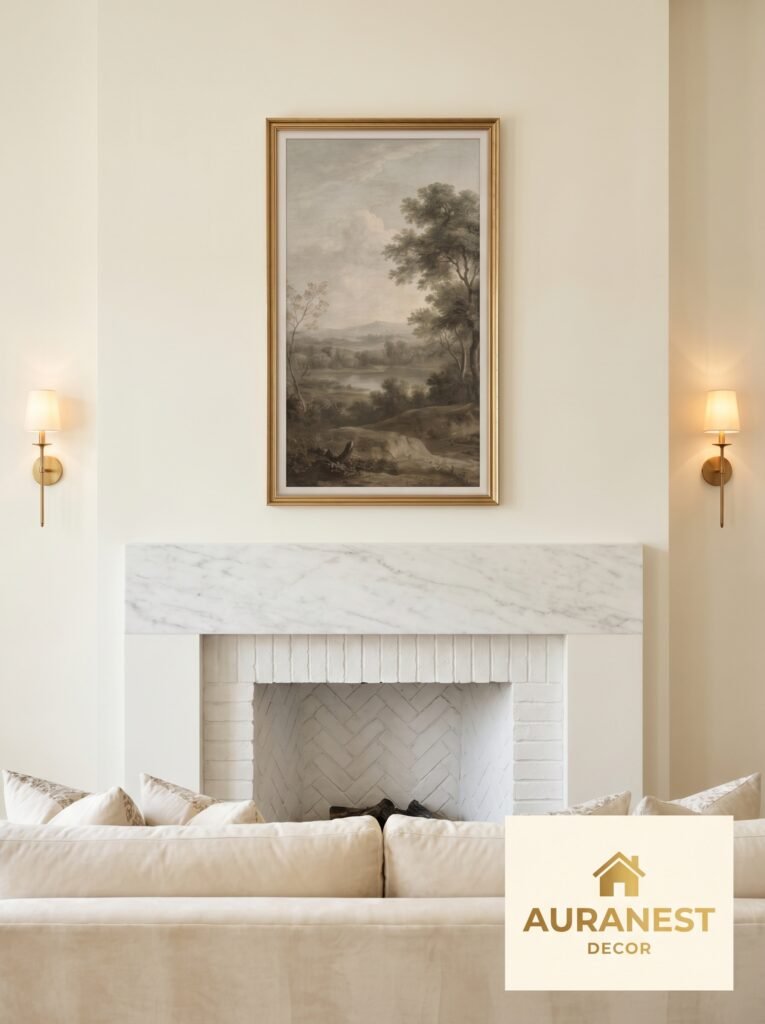
For those committed to the above-fireplace TV placement — and there are many genuinely beautiful examples of this — the execution is everything. The goal is to make the television feel like it belongs there, rather than sitting on top of the fireplace as an afterthought.
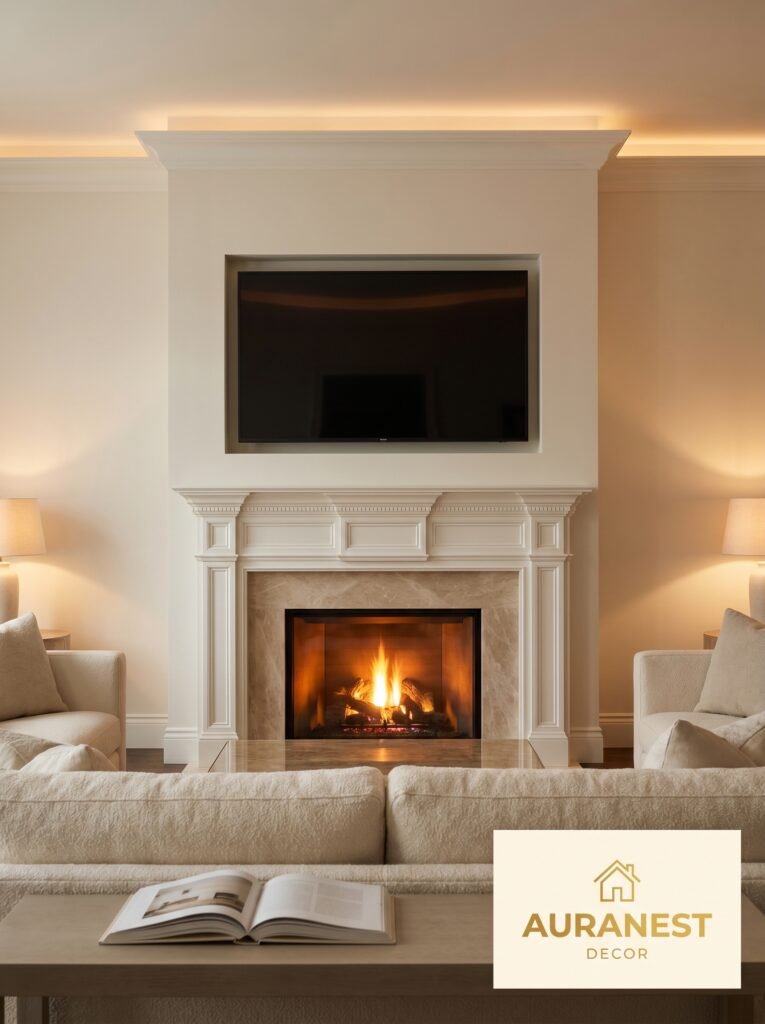
Recessing the TV into the wall above the mantel so that the screen sits flush with the surrounding surface is the most architectural solution. When combined with a deep mantel shelf and a carefully considered surround material — think shiplap, herringbone tile, or white-painted brick — the TV becomes part of the overall composition rather than a visual intrusion.
“A television doesn’t have to be hidden to be beautiful — it just needs to be placed with intention.”
Using a pull-down or tilt-down TV mount can also help bring the screen to a more comfortable viewing angle when in use, while returning it to a neater aesthetic position when not. And choosing a frame TV — like Samsung’s Frame series — when mounted above a fireplace is a genuinely brilliant solution, as it displays artwork when off, making the transition between “decorative wall” and “entertainment center” completely seamless.
—
10. Small Living Rooms: Big Impact With Limited Space
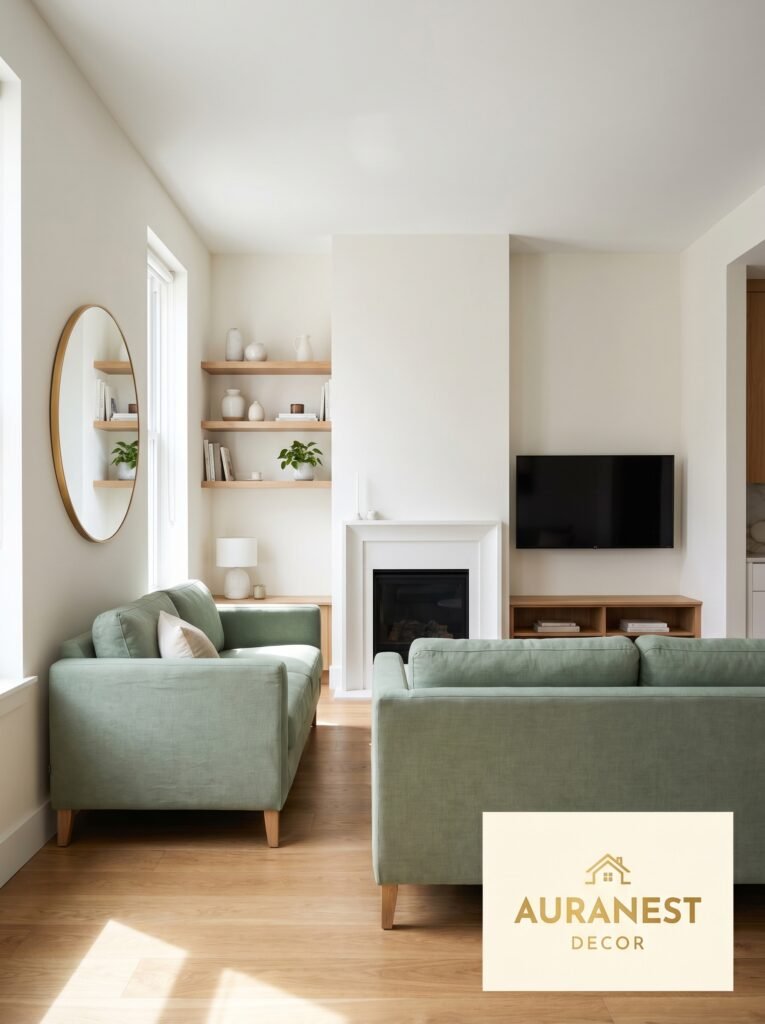
A small living room with a fireplace and TV is not a compromise — it’s an opportunity. Scale, proportion, and intentional placement matter even more in a compact space, and when you get them right, the result can feel more intimate and more beautiful than a larger room ever could.
In small spaces, go vertical. A tall, narrow fireplace surround draws the eye upward and creates the illusion of height. A wall-mounted TV (rather than one sitting on a media console) frees up floor space and reduces visual clutter. Choose a sofa that fits the room — not the room you wish you had — and resist the temptation to fill every corner with furniture.
Light colors, mirrors, and open shelving will all work together to make the space feel airy rather than cramped. And remember: in a small room, every single object you place is visible. Edit ruthlessly, keep only what you love, and the room will reward you with a sense of curated calm.
—
11. Trending Styles That Work Beautifully With Fireplace and TV Rooms
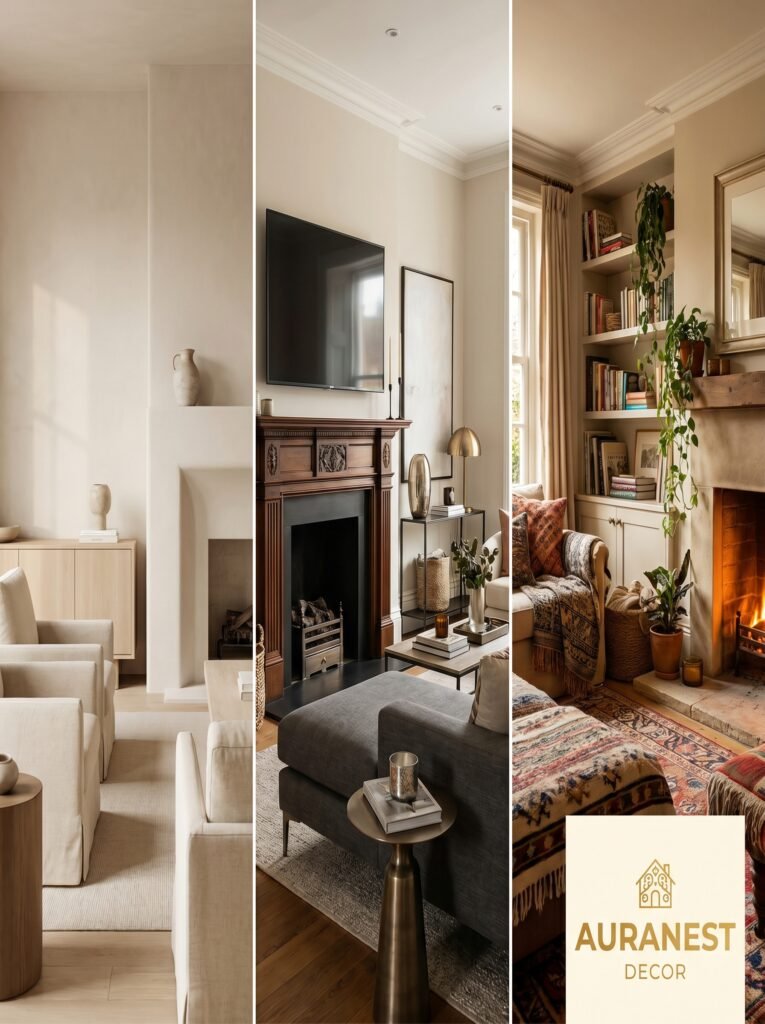
Several interior design trends of the mid-2020s have emerged as particularly well-suited to living rooms anchored by a fireplace and television. Understanding these styles can help you make cohesive design decisions rather than mixing aesthetics that fight each other.
Japandi — the fusion of Japanese minimalism and Scandinavian warmth — is arguably the most harmonious style for this type of room. Low-profile furniture, natural materials like wood and linen, a restrained palette, and the principle of “nothing unnecessary” allows both the fireplace and the TV to exist as intentional design elements rather than competing distractions.
Transitional style, which blends classic architectural details with modern furnishings, is equally effective and deeply popular on Pinterest. A traditional fireplace surround with ornate millwork paired with a sleek flat-screen and contemporary sofa creates the kind of curated contrast that feels sophisticated and lived-in at once.
Cozy maximalism — warm, layered, full of books and plants and textiles — is the third strong contender, particularly for families and those who want their home to feel deeply personal and welcoming. In this style, the fireplace becomes even more of an emotional anchor, and the TV recedes into the warmth of a room that already has so much to offer the eye.
—
12. The Emotional Heart of the Room: Making It Yours
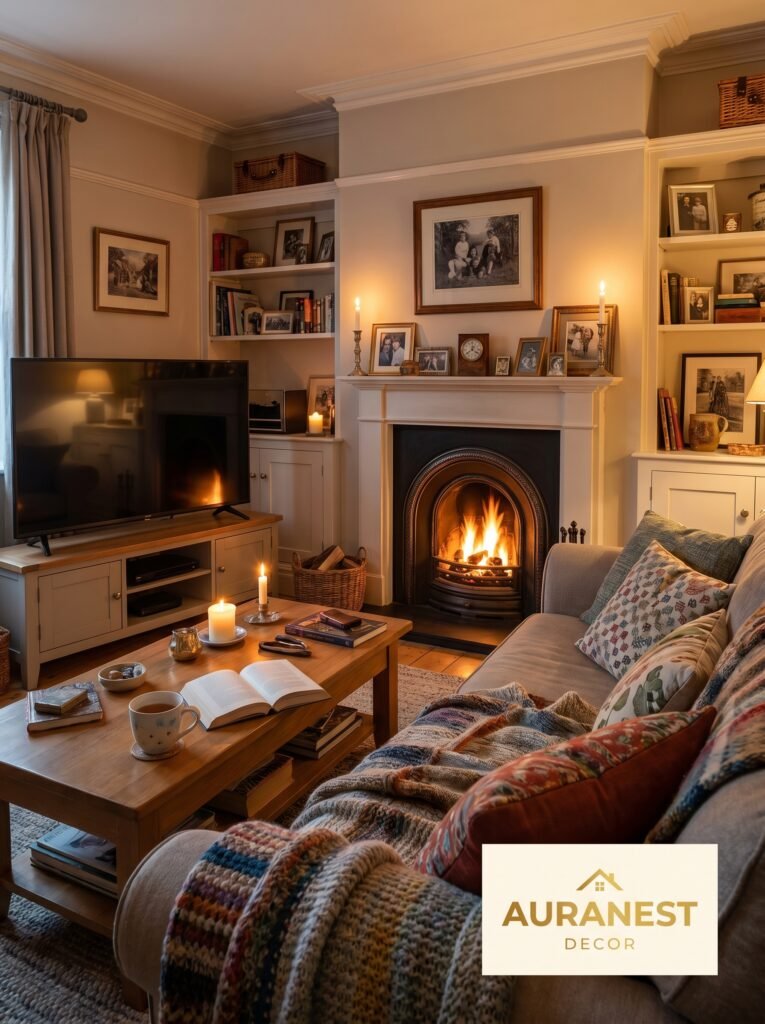
At the end of all the design advice, the layout options, the color theories, and the styling tips, there is one truth that matters more than any of it: your living room should feel like you. Not like a showroom. Not like a Pinterest board brought to static, untouchable life. Like the version of home that makes you exhale when you walk through the door.
A living room with a fireplace and TV has the rare ability to hold two of life’s most universal pleasures — the ancient comfort of fire and the modern joy of shared stories on screen — in the same breath. When those elements are arranged with care, surrounded by colors that make you feel something, lit in ways that flatter both the room and the people in it, and filled with objects that carry personal meaning, something extraordinary happens.
The room stops being a room. It becomes a feeling.
—
🌿 How to Care for Your Fireplace and TV Living Room
Maintaining the beauty and function of this space doesn’t require constant renovation — just consistent, thoughtful attention.
Keep the fireplace clean and inspected annually. Whether you have a wood-burning, gas, or electric fireplace, an annual professional check ensures both safety and efficiency. A clean firebox also photographs far better — and if you’re styling your home for Pinterest content, that matters.
Dust and cable management are your ongoing battles. Use cable conduit, in-wall cable channels, or even strategically placed furniture and rugs to keep cords hidden. Dust your mantel styling objects regularly; firelight beautifully highlights texture, but it also highlights dust.
Rotate your mantel decor seasonally to keep the room feeling intentional and alive. A simple swap of a summer botanical arrangement for an autumn collection of warm-toned objects takes twenty minutes and makes the room feel completely refreshed.
Protect your TV from heat. If your television is mounted above or very near a working fireplace, use a mantel shelf as a heat deflector, or consult a professional about safe clearance distances. Most manufacturers specify minimum clearance in their documentation — always follow this guidance.
Finally, let the room evolve. Your living room should grow and shift with your life. Give yourself permission to rearrange, rehang, and restyle. The most beautiful rooms are the ones that show signs of a real, curious, living person making thoughtful choices over time.
—
❓ FAQ
Q: Is it safe to mount a TV above a working fireplace? A: It can be, depending on the type of fireplace and the clearance distance. Electric fireplaces produce minimal heat and are generally considered safe for above-TV mounting. Gas and wood-burning fireplaces require careful measurement of heat output and a mantel shelf that deflects heat away from the screen. Always check your TV manufacturer’s temperature specifications and, when in doubt, consult a professional installer.
Q: What is the ideal TV height above a fireplace mantel? A: The bottom of the TV screen should ideally sit no more than 12 to 18 inches above the top of the mantel, and the center of the screen should be as close to seated eye level as possible — roughly 42 to 48 inches from the floor for most standard sofa heights. If your mantel pushes the screen significantly higher than this, consider alternative placement options like a side-by-side arrangement or built-in alcove.
Q: How do I style a living room with both a fireplace and TV without it looking cluttered? A: The key is to choose one dominant feature wall where both elements live (or are connected through cabinetry or design continuity) and keep the rest of the room visually restrained. Limit your color palette to three or four tones, invest in smart cable management, and apply a consistent styling language — matching materials, finishes, or textures — across the fireplace surround, TV setup, and surrounding shelving.
—
💭 Final Thought
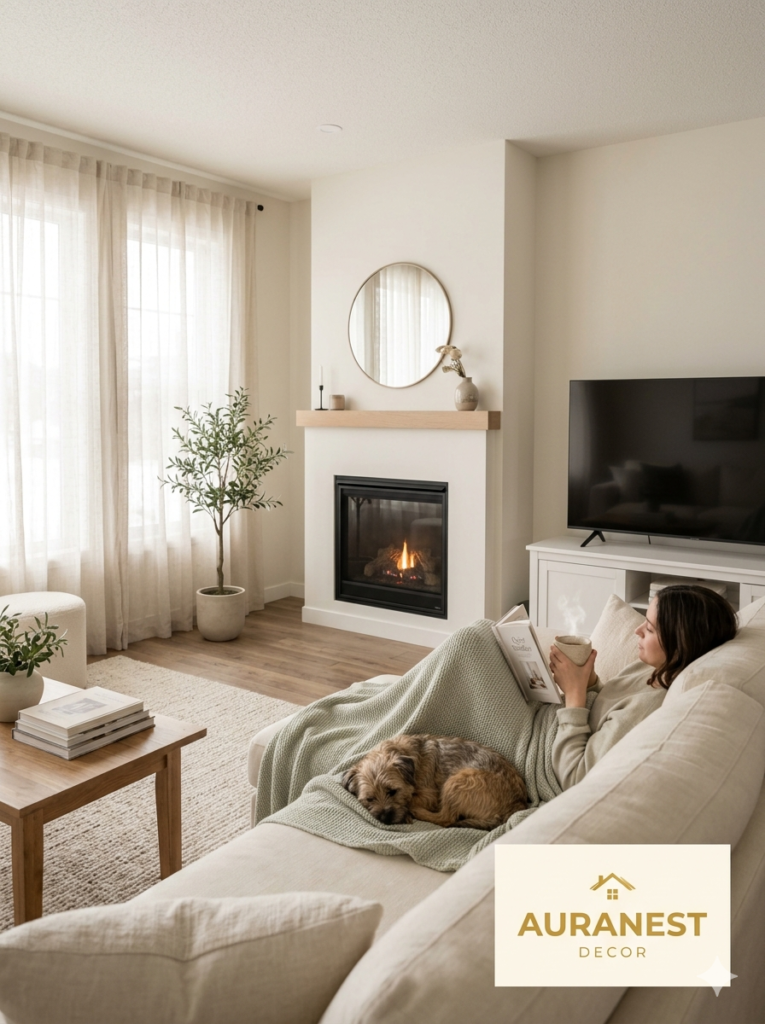
A living room with a fireplace and TV is more than an interior design challenge — it’s an invitation to build a space where real life unfolds in its most beautiful, most ordinary, most human form. The Sunday mornings with coffee and cartoons. The winter evenings when the fire is doing most of the work. The quiet moments between the noise.
When you design this room with intention — not for a photoshoot, but for the actual life you want to live inside it — something shifts. The space begins to give back to you in warmth and ease and comfort.
So here’s the question worth sitting with tonight, curled up next to whatever fire you have: What do you want your living room to feel like — and are the choices you’re making actually taking you there?